13 Entryway Accent Wall Ideas That Make the Entrance Feel Finished
The wall beside the front door has to work around swinging doors, dropped bags, and the light available on a cloudy day. Give one surface a clear role before adding another piece of furniture. A change in color, pattern, or texture can mark the entrance while leaving the walking route open.
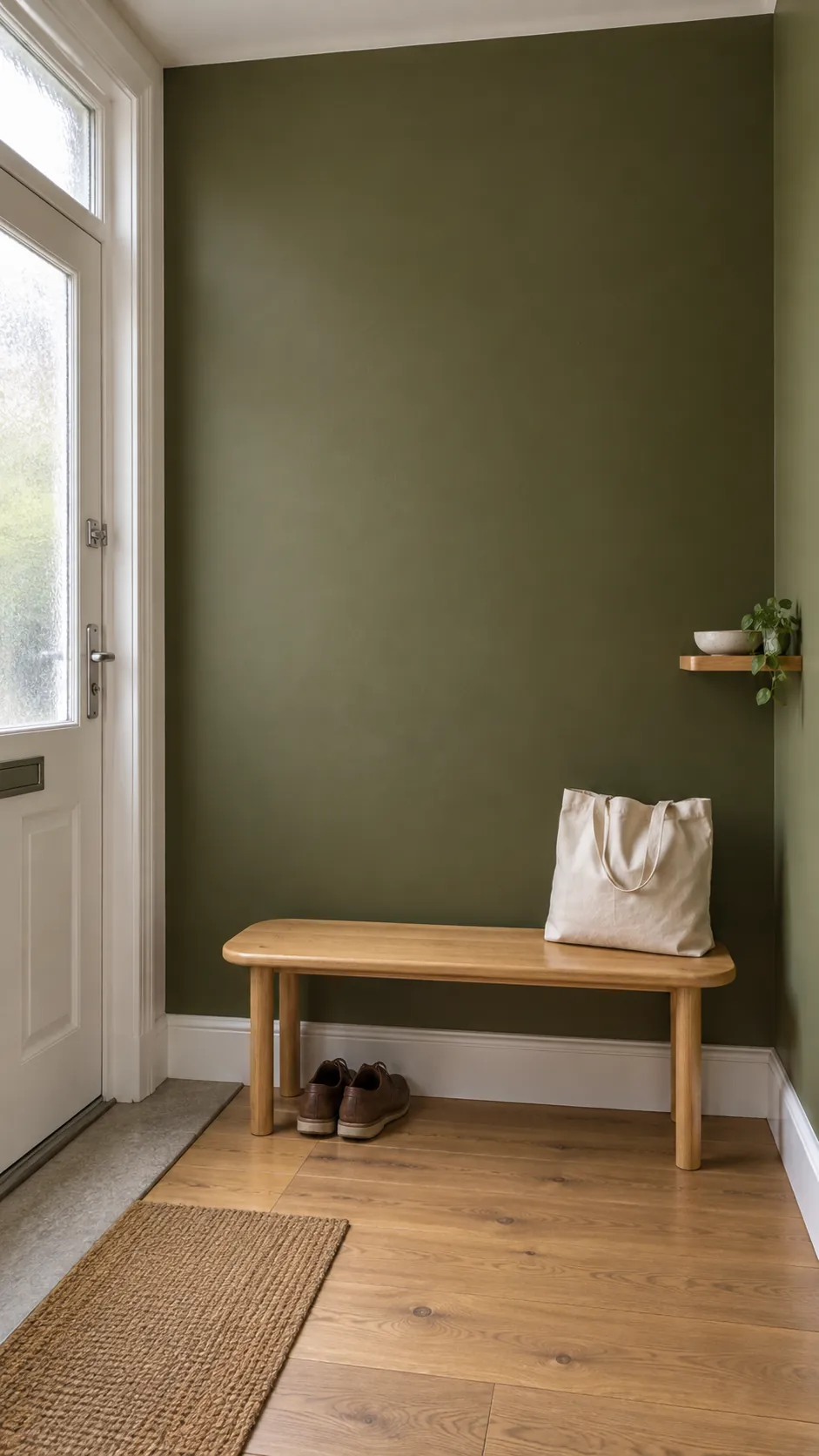
Give a solid wall a deep olive finish
A deep olive wall can give a pale foyer a clear stopping point without filling it with objects. Choose the wall you see after stepping inside, then check the color beside the flooring and front door before committing. A washable finish helps where bags brush the surface, while a slim oak bench keeps the dark plane from feeling heavy.
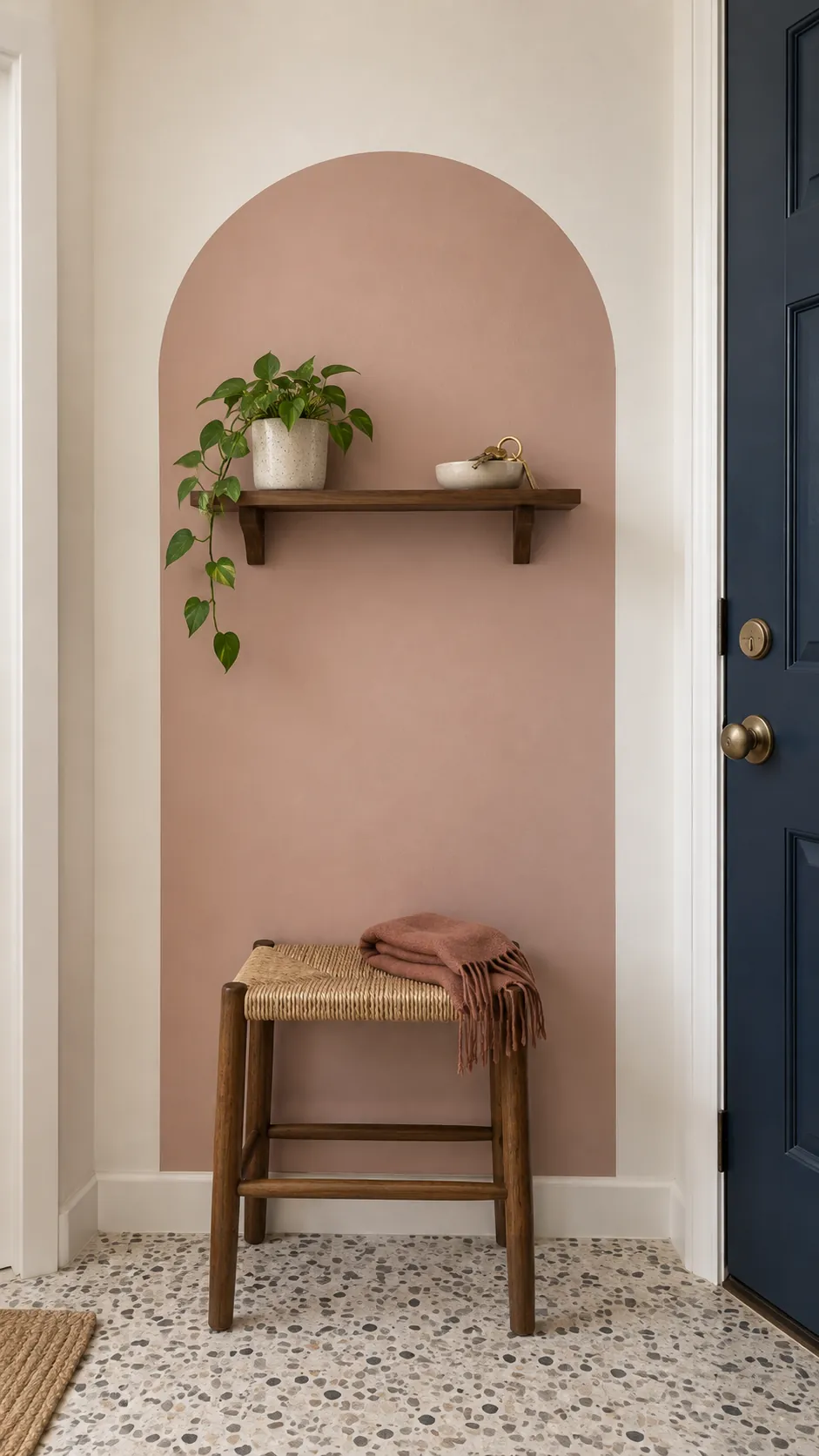
Frame the landing spot with a painted arch
A painted arch works best when it belongs to something useful, such as a key shelf or compact seat. Make the curve wide enough to surround that piece with breathing room instead of tracing its exact outline. In an entry without architectural detail, the shape marks a landing spot while leaving the rest of the wall quiet. Tape a paper outline first and view it with the door fully open, since the handle and swing can interrupt the composition.
Use broad stripes to organize a narrow wall
Broad vertical stripes bring rhythm to a small entryway feature wall without requiring more furniture. Keep the two colors close in tone if the passage already has several doors, because strong contrast can make every interruption more noticeable. Plan the stripe layout around the visible wall width so a tiny leftover sliver does not land beside the casing.
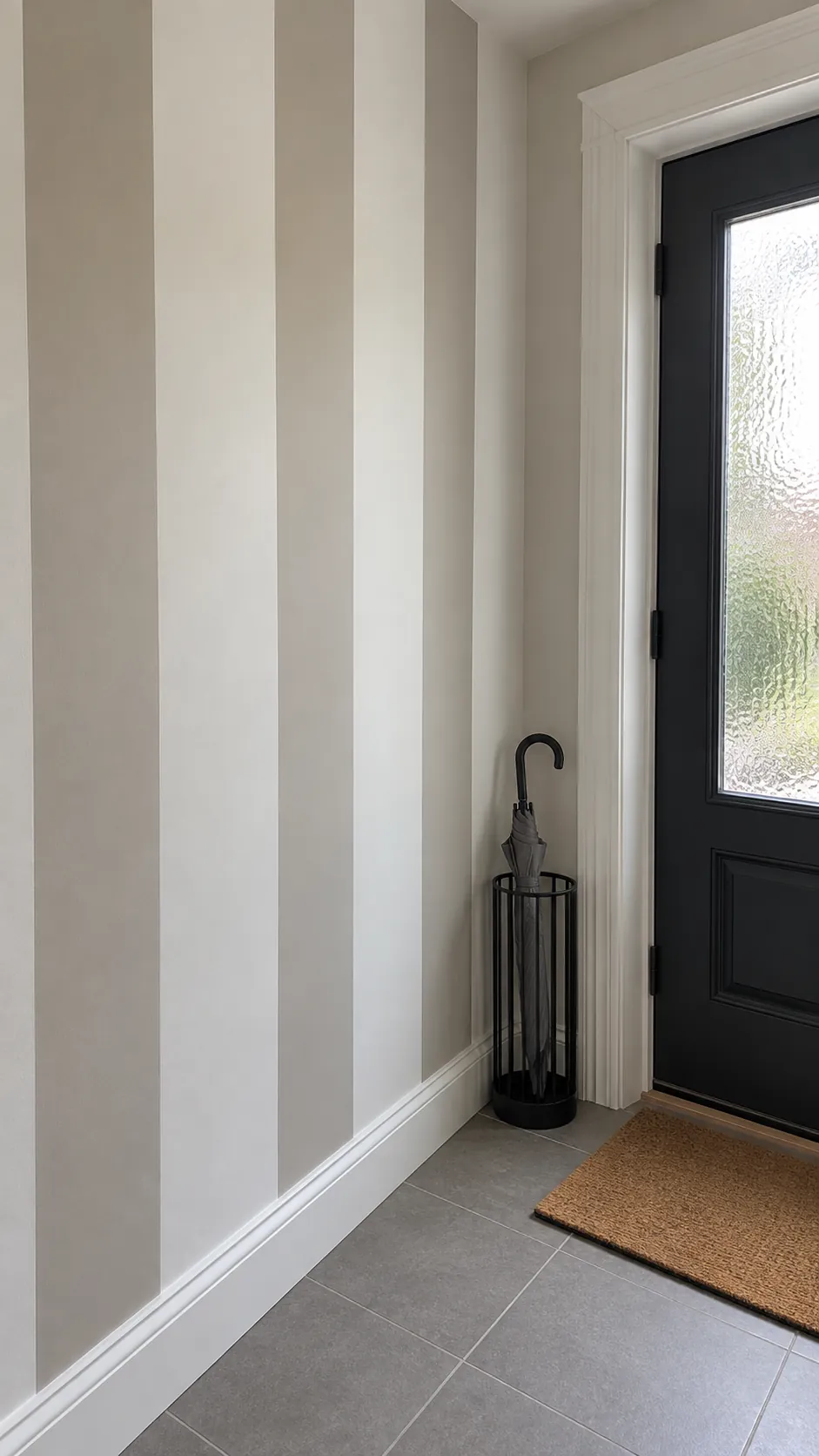
Add practical depth with painted beadboard
Beadboard gives an entry a more substantial lower wall and pairs naturally with a row of everyday hooks. Set the top rail in relation to nearby switches and door trim, then choose a durable coating for frequent contact. Paneling does not repair dampness or damaged plaster, so resolve those problems before covering the surface. A quiet upper wall lets the fine vertical grooves remain the main detail.
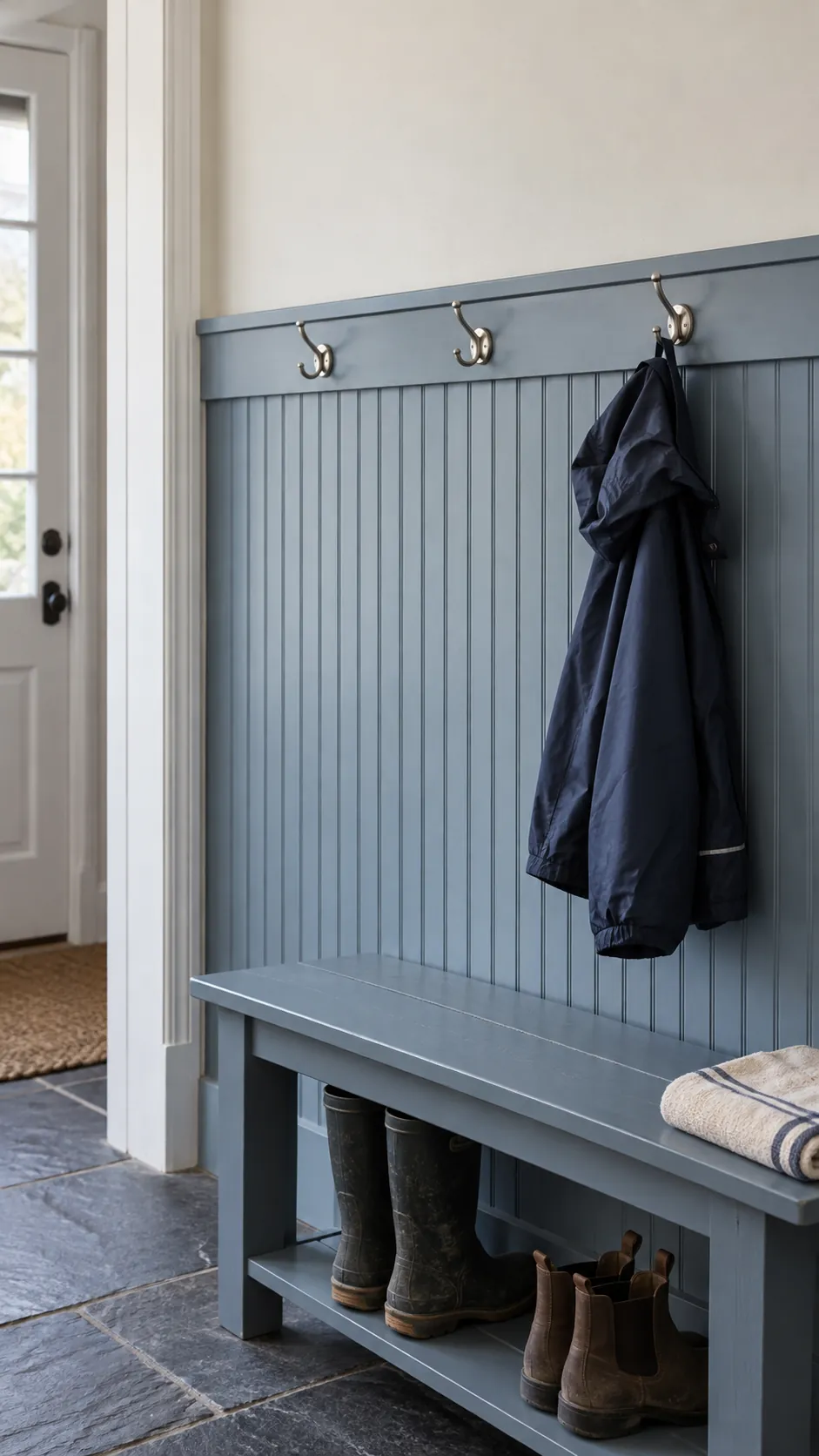
Let a block print pattern carry the room
A small repeating block print can make a short entrance feel intentional even when there is barely space for a shelf. Compare a full sample repeat at standing distance rather than judging a tiny swatch, especially beside patterned floor tile. Keep the mirror frame simple so the wallpaper accent wall in the entryway reads as one background rather than several competing decorations.
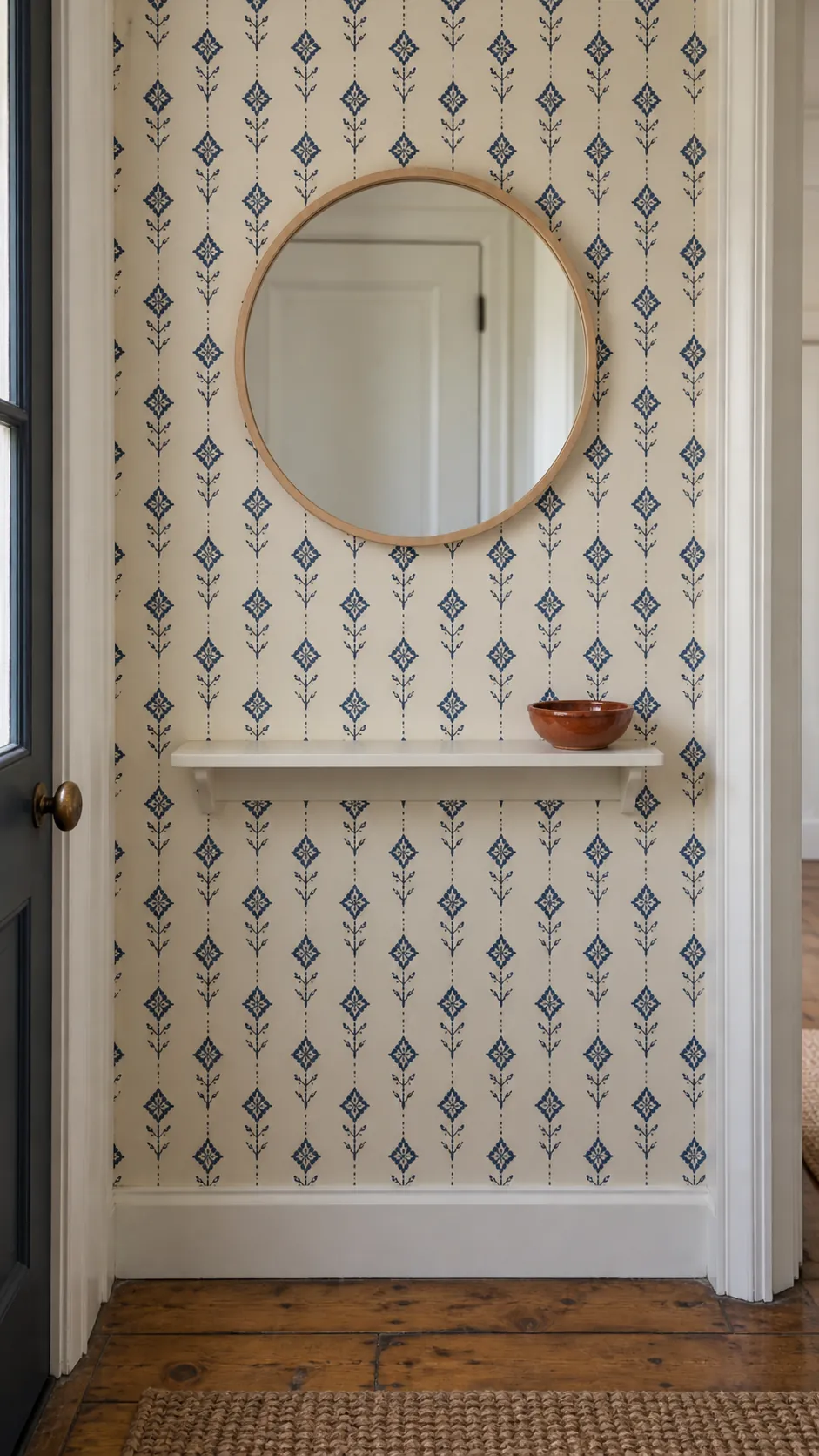
Introduce a measured section of oak slats
A limited oak slat panel adds texture without turning every wall into a feature. Use it behind a bench where the repeated vertical lines have a clear beginning and end, and leave nearby door trim uncovered. Confirm the system suits the wall and follow its fixing instructions, since decorative slats are not a substitute for structural support. Dust can settle in the gaps, so choose a spacing you can clean easily.
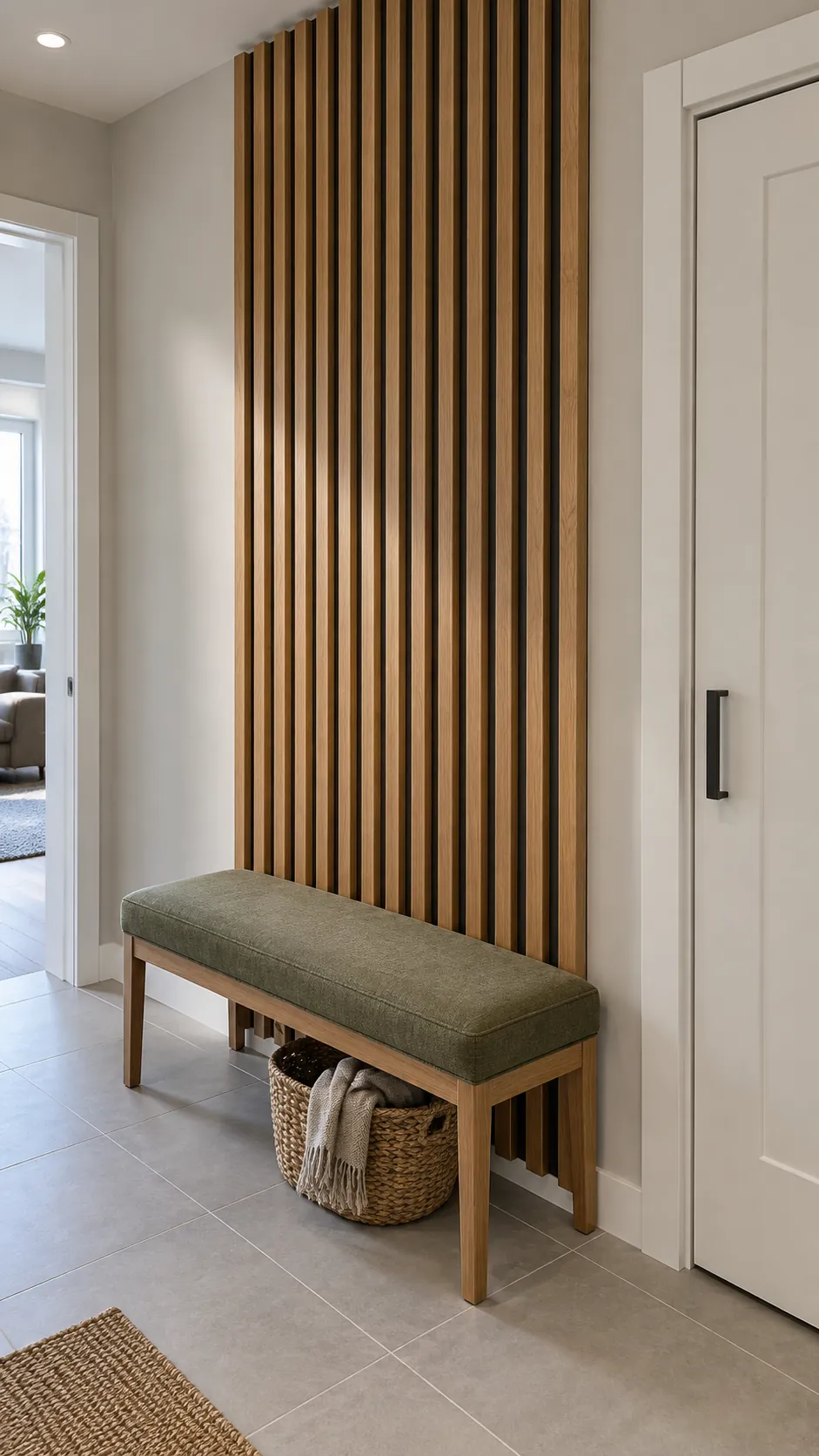
Build subtle movement with a mineral finish
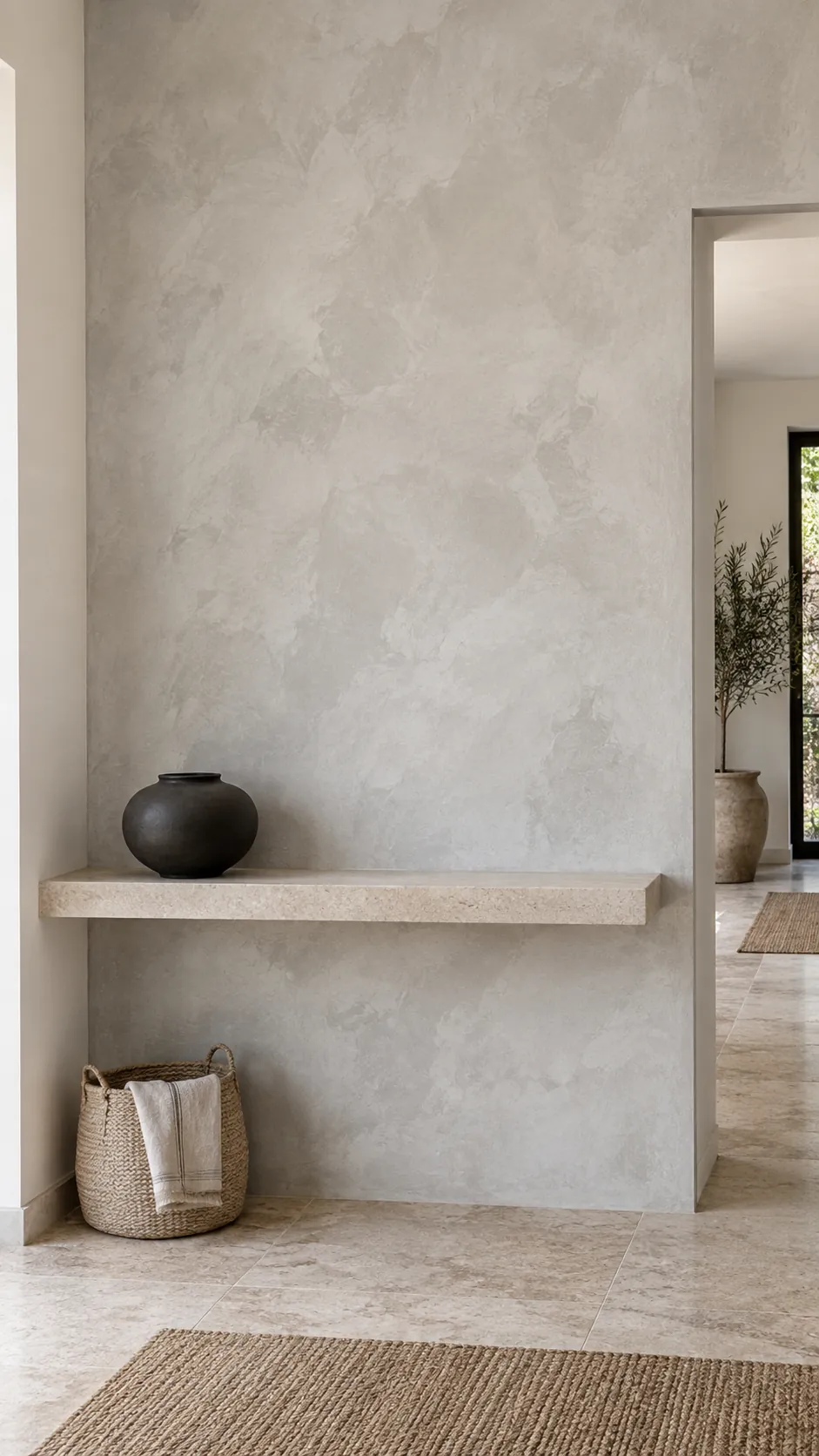
A softly varied mineral finish gives a foyer accent wall depth even when the color stays pale. Test the complete product system on the actual substrate, as limewash and similar finishes need compatible preparation and may vary in wipeability. Keep the application broad and restrained instead of creating conspicuous dark patches. This approach suits an entry where stone flooring or a sculptural light already provides stronger detail.
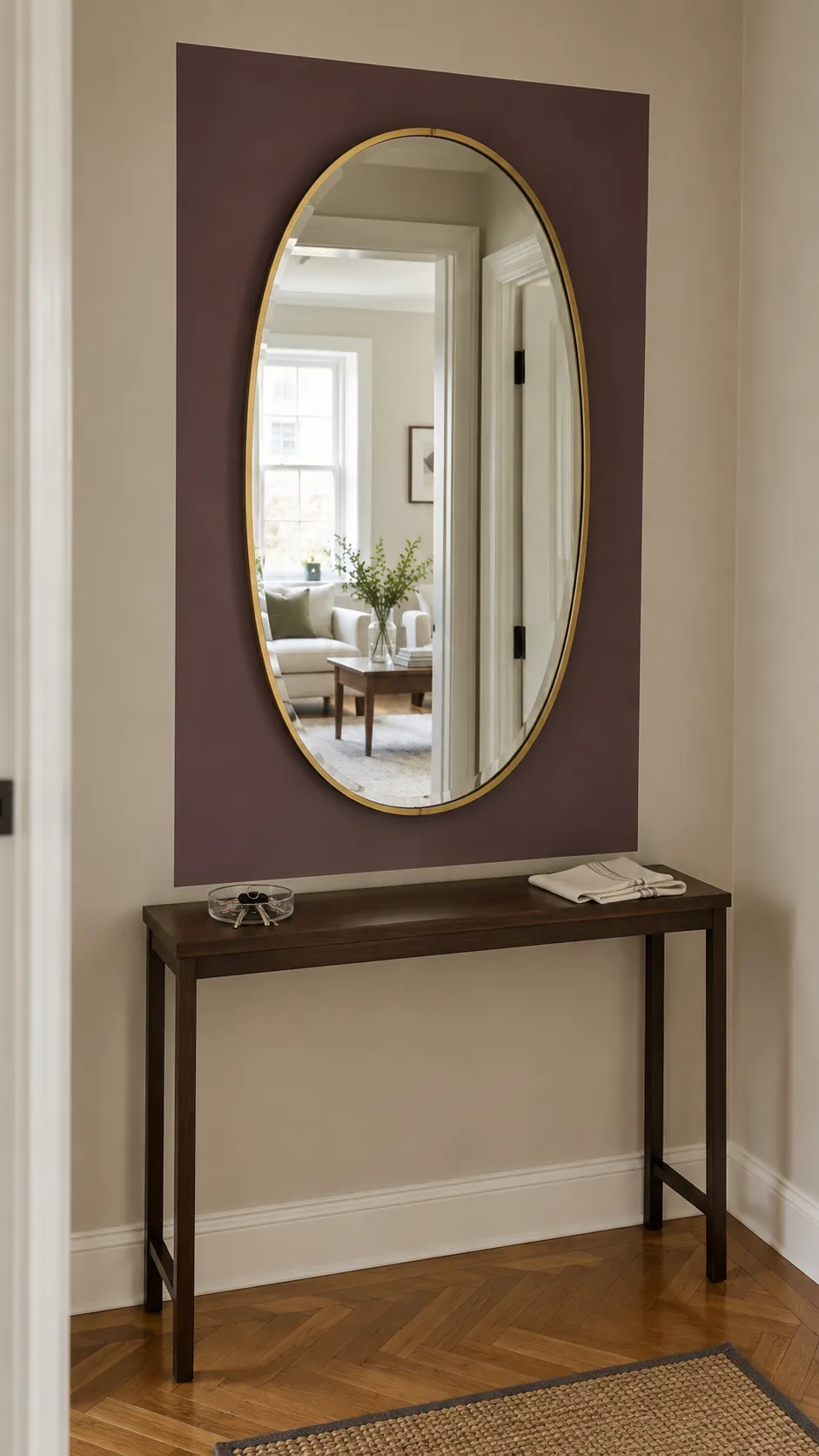
Make a mirror the center of a color panel
A rectangular painted panel can give an ordinary mirror a stronger place on the wall. Size the panel so its edges remain visible around the frame and relate its lower edge to a shelf or console. Before mounting the mirror, check what it will reflect from the front door; a bright adjoining room usually works better than a crowded coat rack. Use fixings suited to the mirror weight and wall construction.
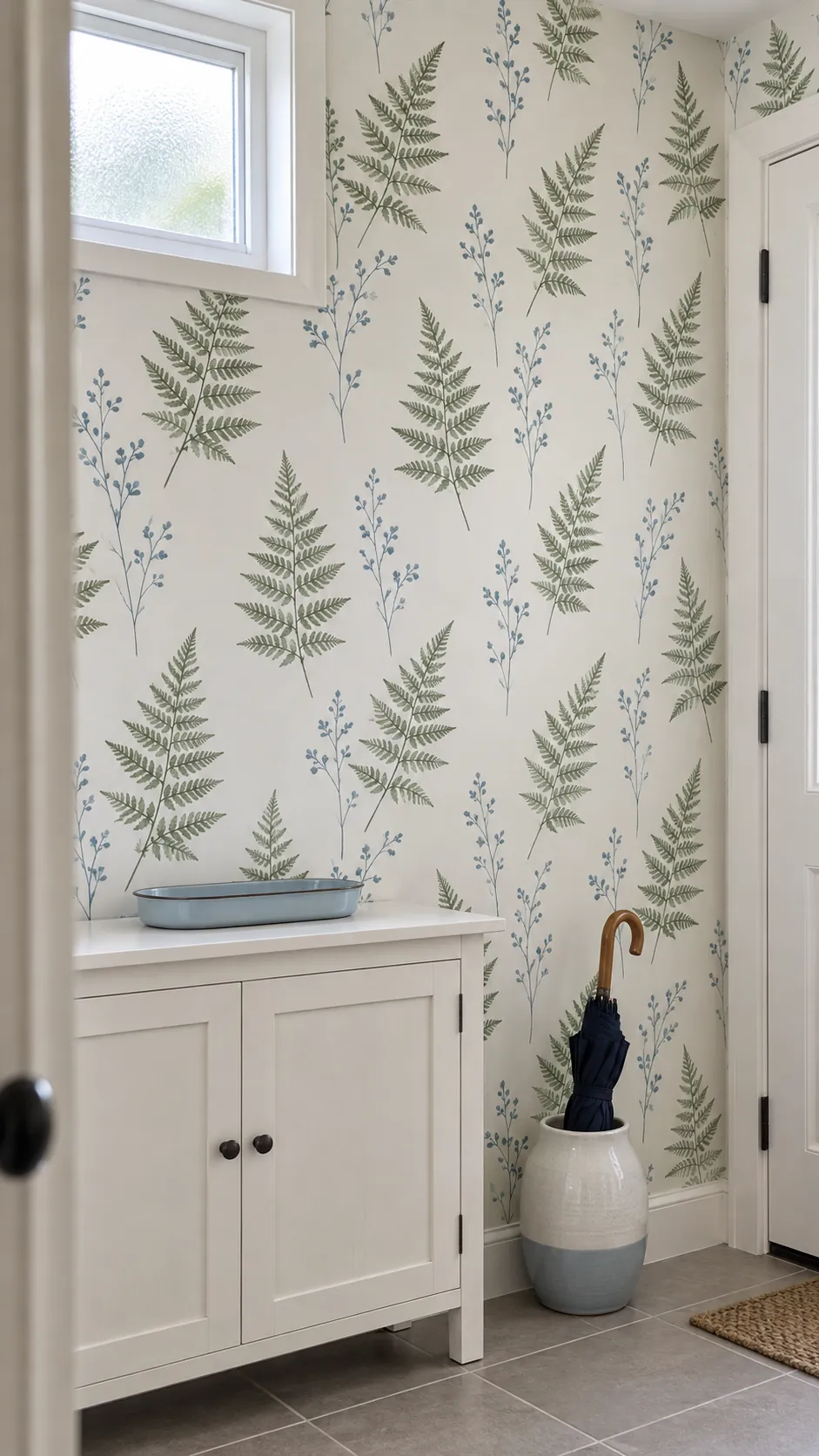
Choose a botanical paper with breathing room
An open botanical pattern adds movement without covering every inch with a dense motif. A light ground can preserve brightness in a shaded entrance, while a few leaf colors connect to a rug or umbrella stand. Check the wallpaper material and cleaning guidance for a busy doorway, since a delicate finish may be a poor match for wet coats.
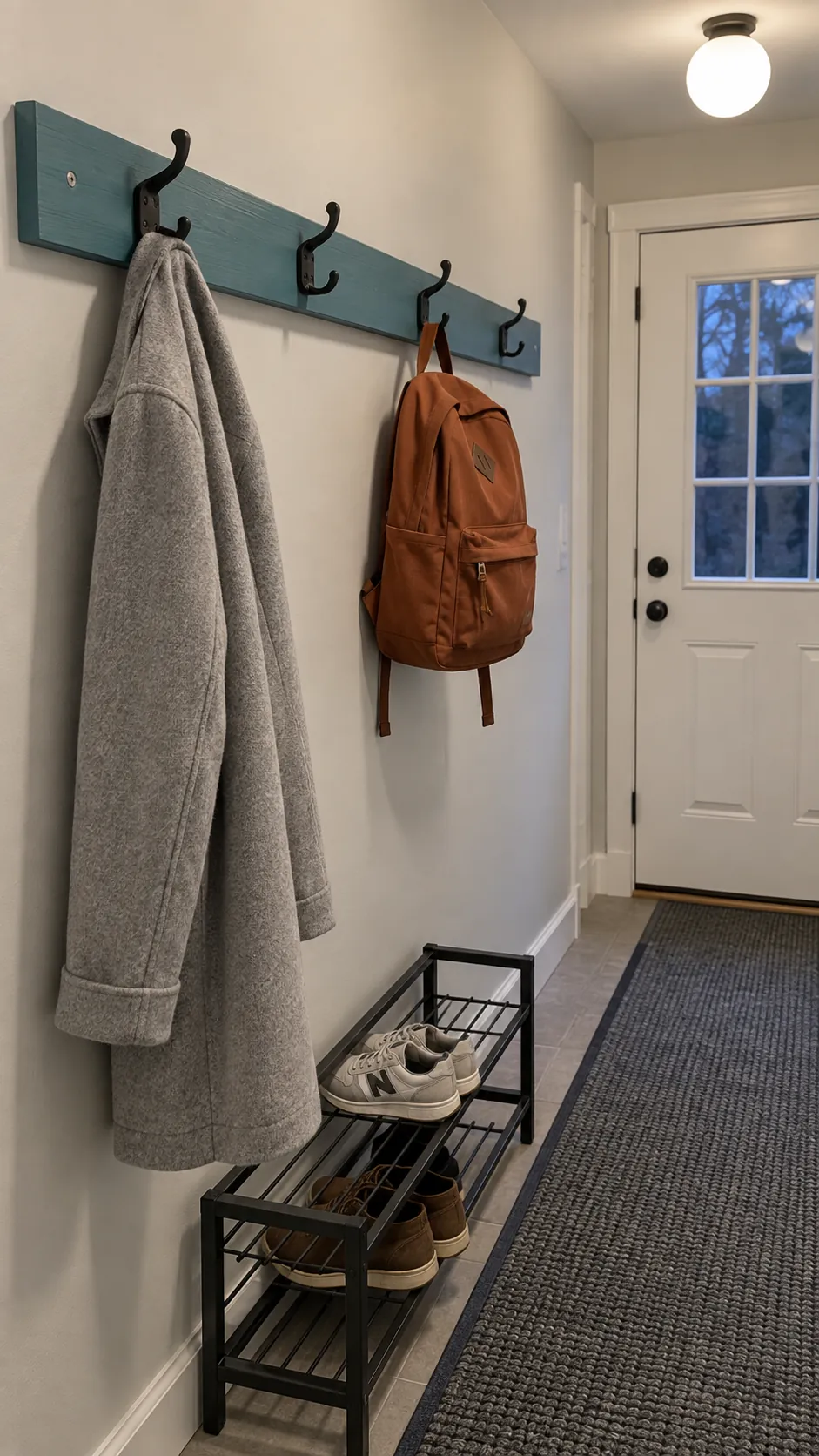
Turn hooks into part of a graphic rail
A painted horizontal rail makes coat storage look planned when there is no separate closet. Match the rail to the wall for a quieter result, or use a restrained contrasting tone to make it the feature. Space hooks for the actual coats and bags they will hold rather than for an empty wall photograph. Leave enough room below for hems and enough distance from the door for loaded hooks to clear its swing.
Use a tiled lower wall at a hardworking entrance
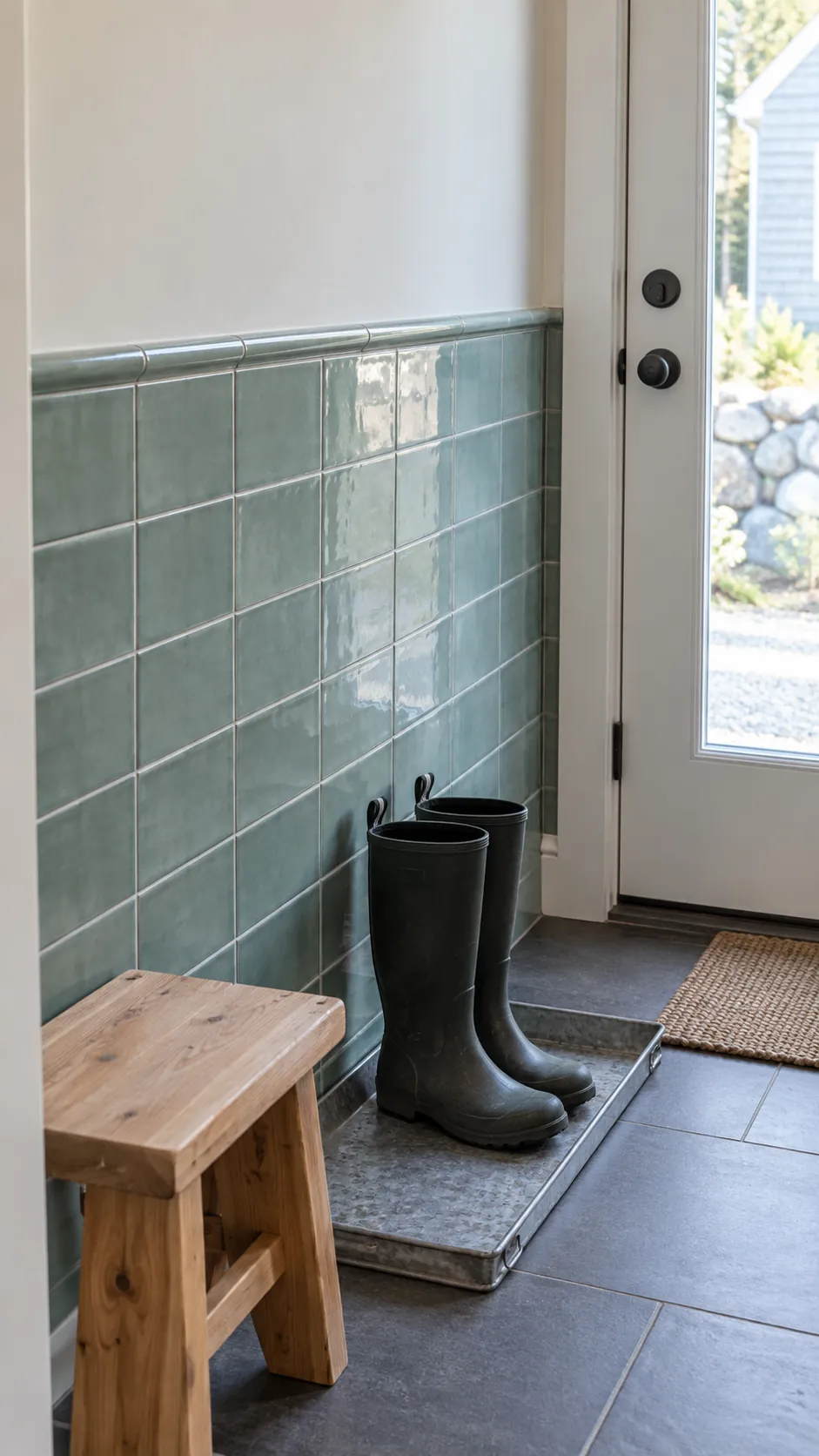
A tiled lower wall can bring color and a wipeable surface to an entrance that regularly meets muddy gear. Choose wall suitable tiles and a compatible installation system, then plan the top edge and outside corners before ordering. Tile does not make a damp wall problem disappear, and grout still needs cleaning. A simple painted upper wall keeps the entryway wall decor from competing with the grid below.
Let shallow picture molding supply the pattern
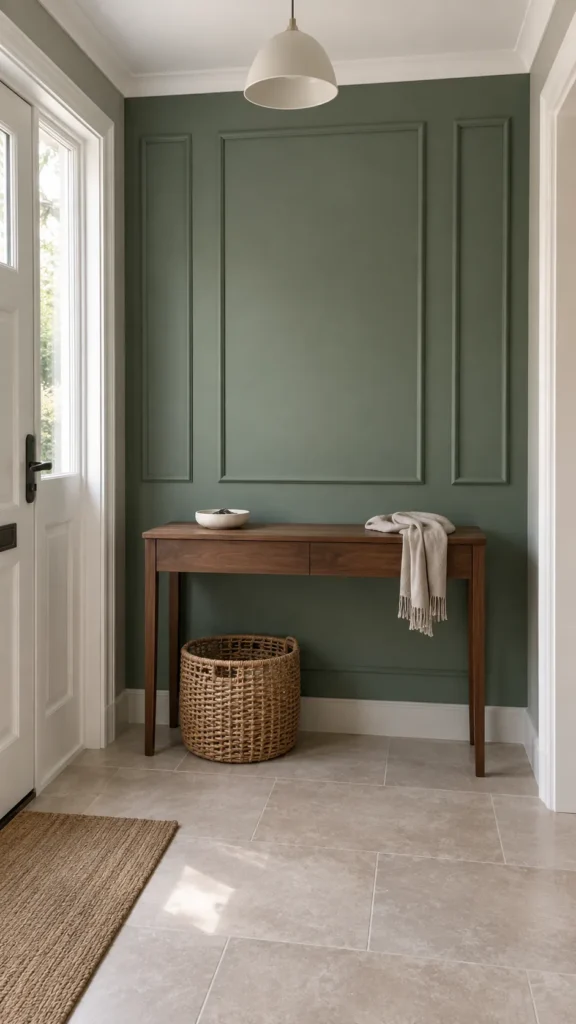
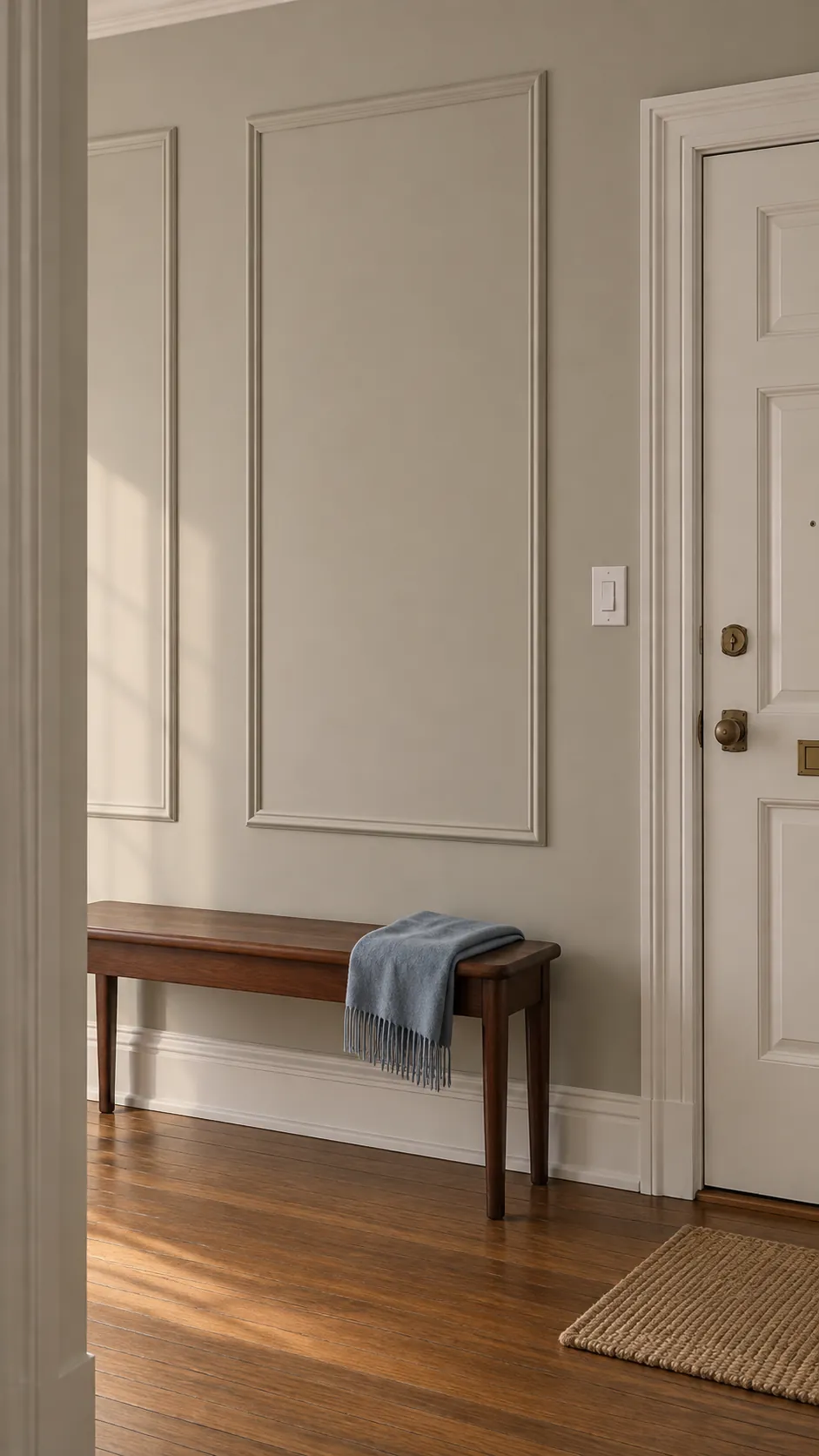
Shallow picture molding adds a quiet architectural pattern when wallpaper would compete with the rest of the house. Draw the full layout around outlets, switches, and the open door before cutting any trim. Paint the molding and wall together for relief that appears through shadow, then keep furniture low enough to leave the panel proportions visible.
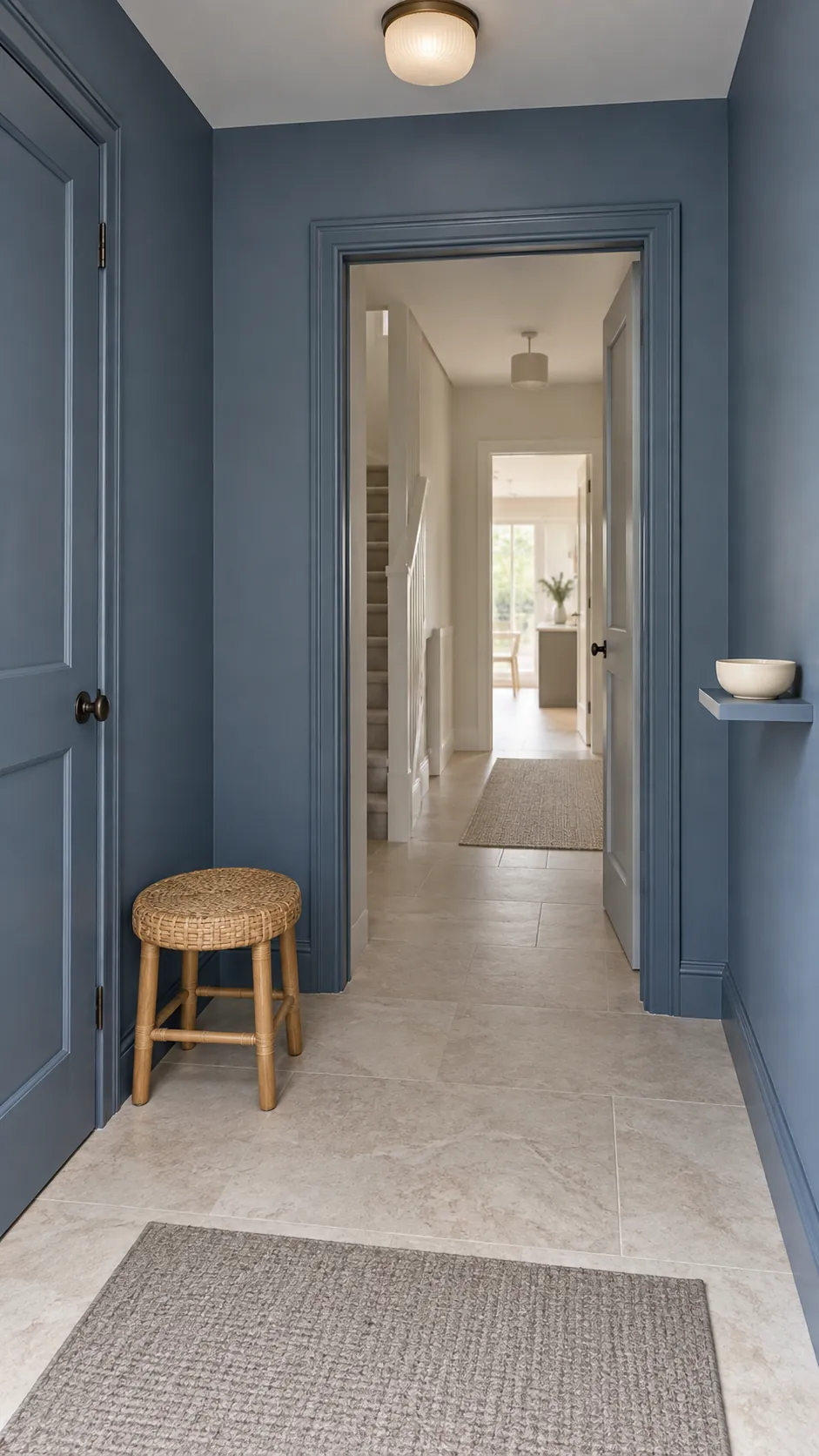
Create a small color drenched vestibule
A compact vestibule can feel like its own room when the walls and compatible trim share one carefully chosen color. Try a muted blue that relates to the adjoining space, and inspect samples under both daylight and the entry light. Different materials may need different primers and sheens even when the color matches. Keep the floor and practical landing spot simple so the enveloping color does the work.