13 Minimalist Above Couch Wall Decor Ideas
A large empty wall can make a finished sofa look temporary, yet adding several small pieces often creates a second problem: visual noise. The useful question is not how to fill every inch. It is how to choose one clear gesture with enough scale to connect the wall and furniture. Each option below keeps the composition restrained while giving the room a distinct point of view.
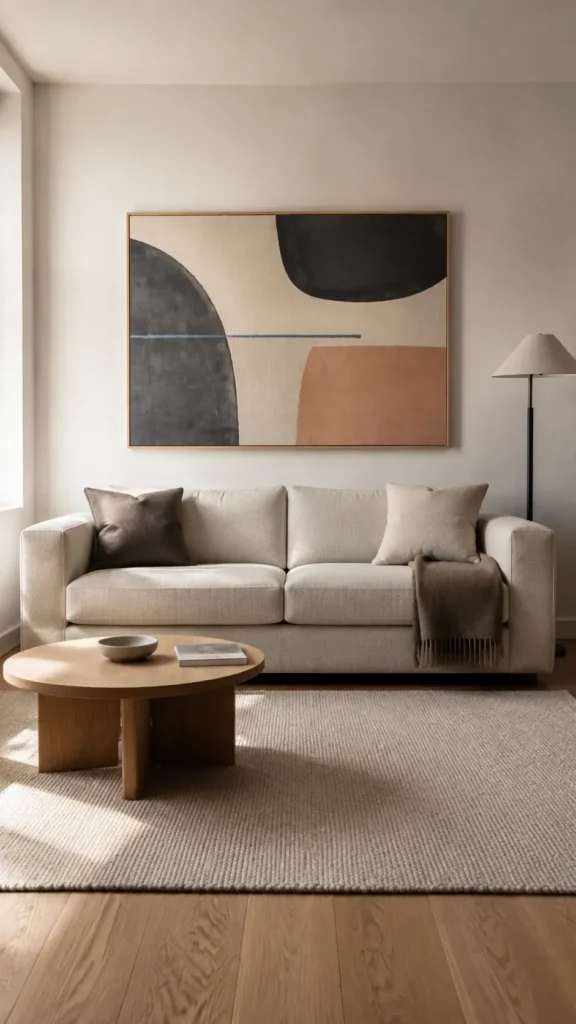
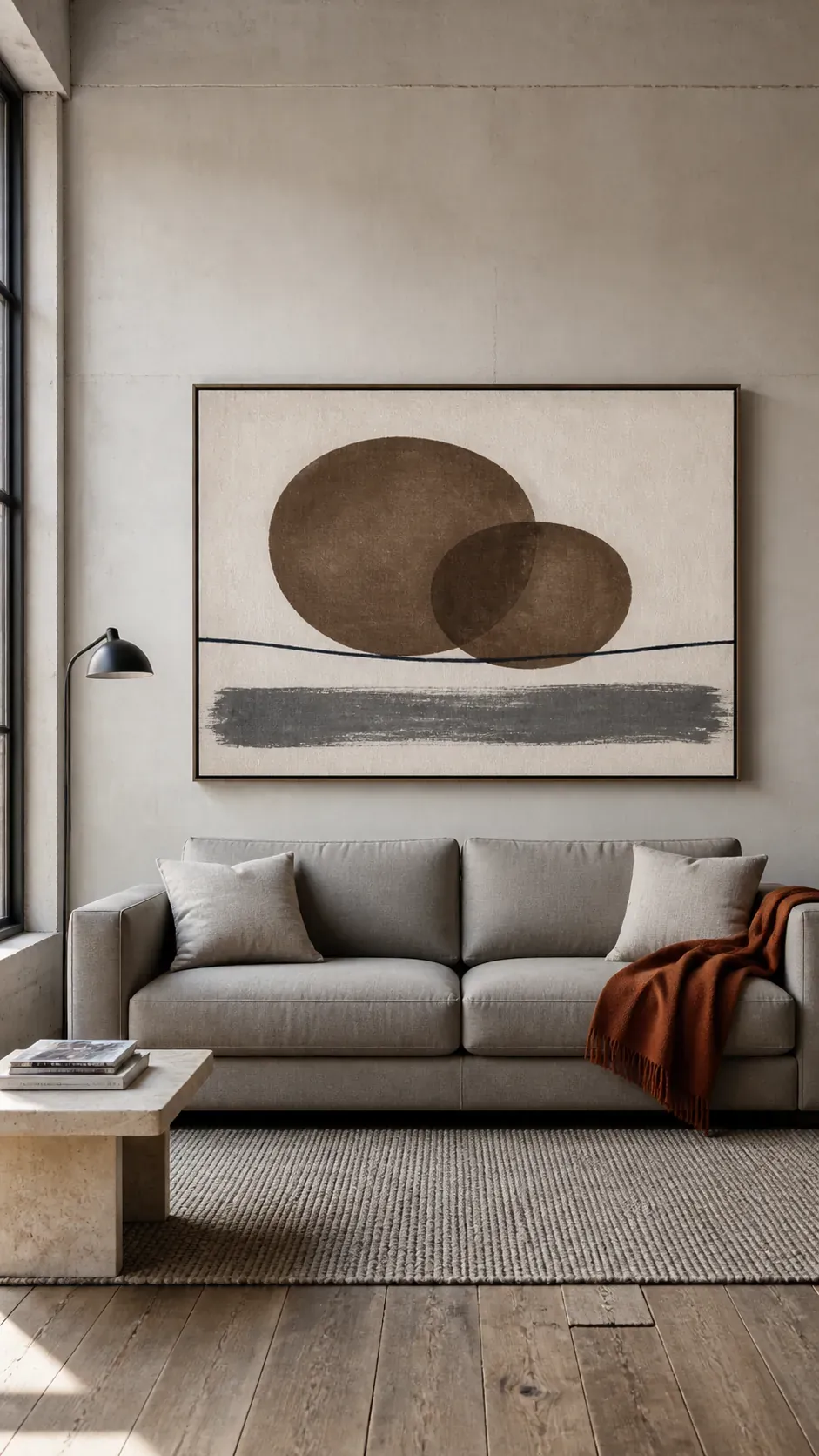
Oversized horizontal abstract
One broad abstract work is the fastest way to anchor a long sofa without introducing many frames. Choose a piece that spans roughly two thirds of the couch width and hang it close enough to read with the furniture. A limited palette can borrow one color from the rug or cushions while leaving the rest quiet. Generous canvas scale matters more than complicated imagery.
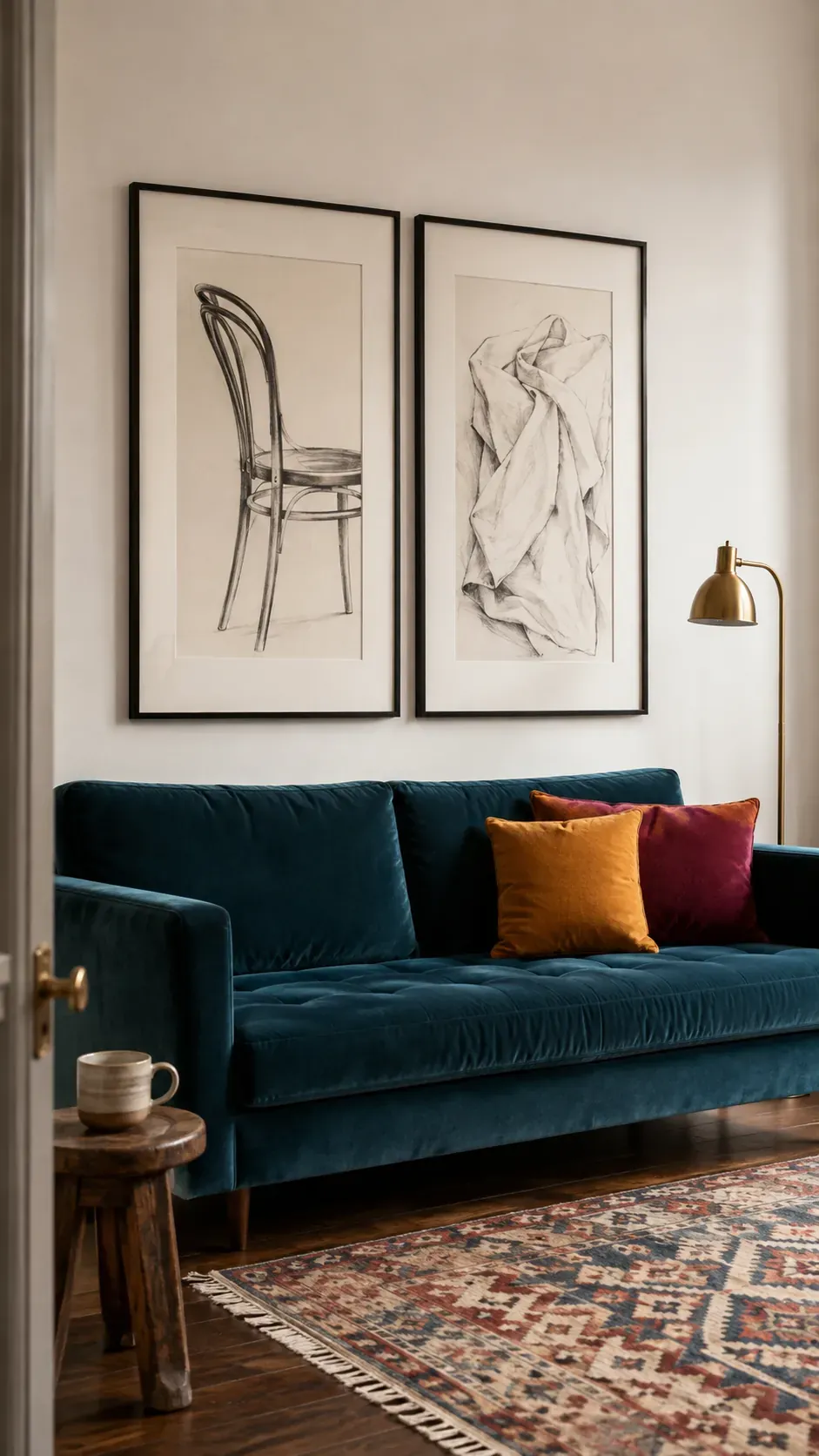
Paired charcoal line drawings
A pair of charcoal drawings adds rhythm while preserving symmetry and calm. Use matching frames and mats, but let the two subjects differ enough to reward a closer look. Keep the gap between them narrower than the outer margins so they read as one unit. This approach works especially well when the room already contains strong color.
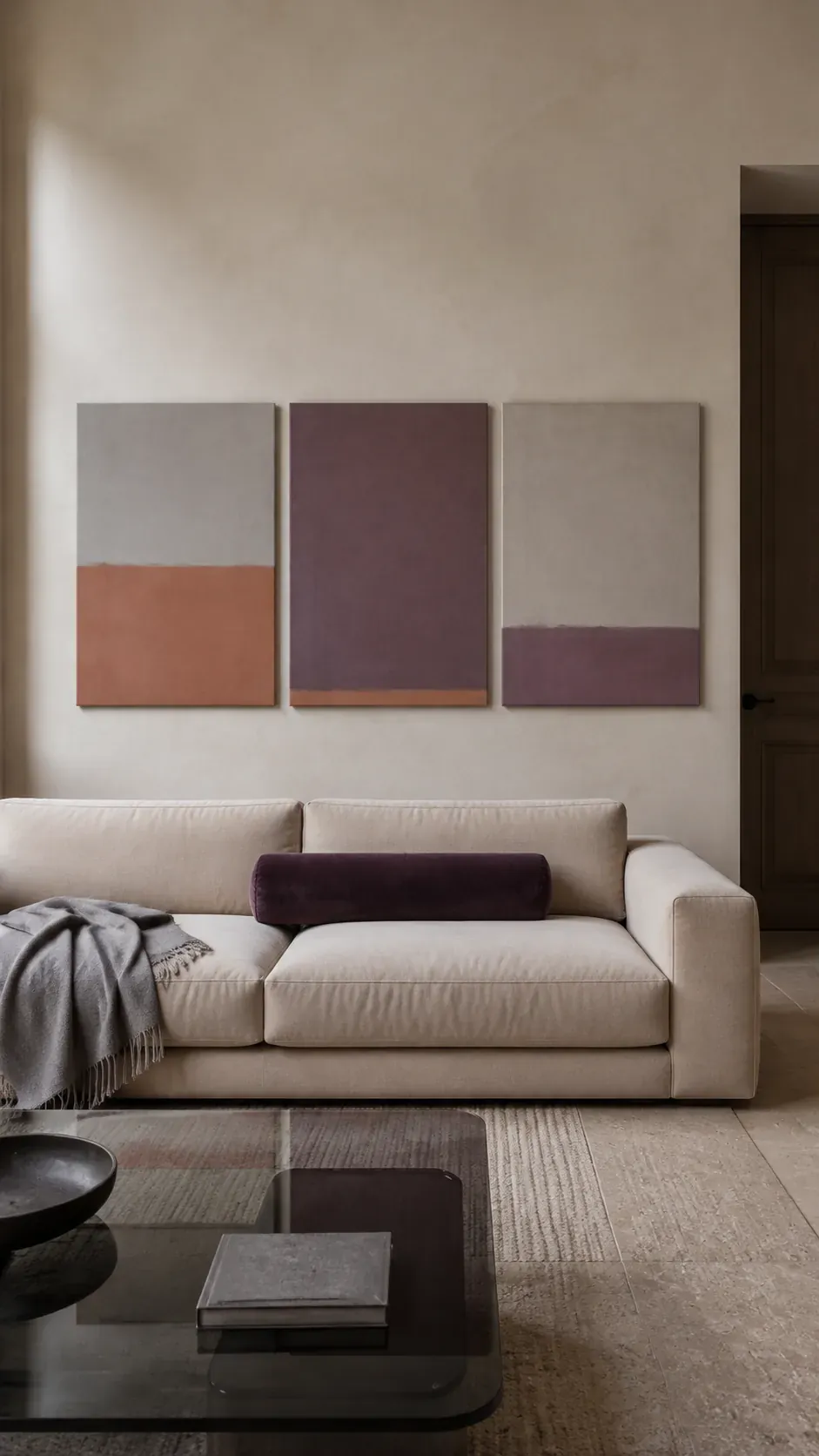
Tonal color field triptych
Three related color fields can cover width without making the wall busy. Keep the canvases equal in size and vary only the proportion of two or three muted tones. Tight consistent gaps make the group behave like one artwork. The result feels modern because the repetition is disciplined rather than decorative.
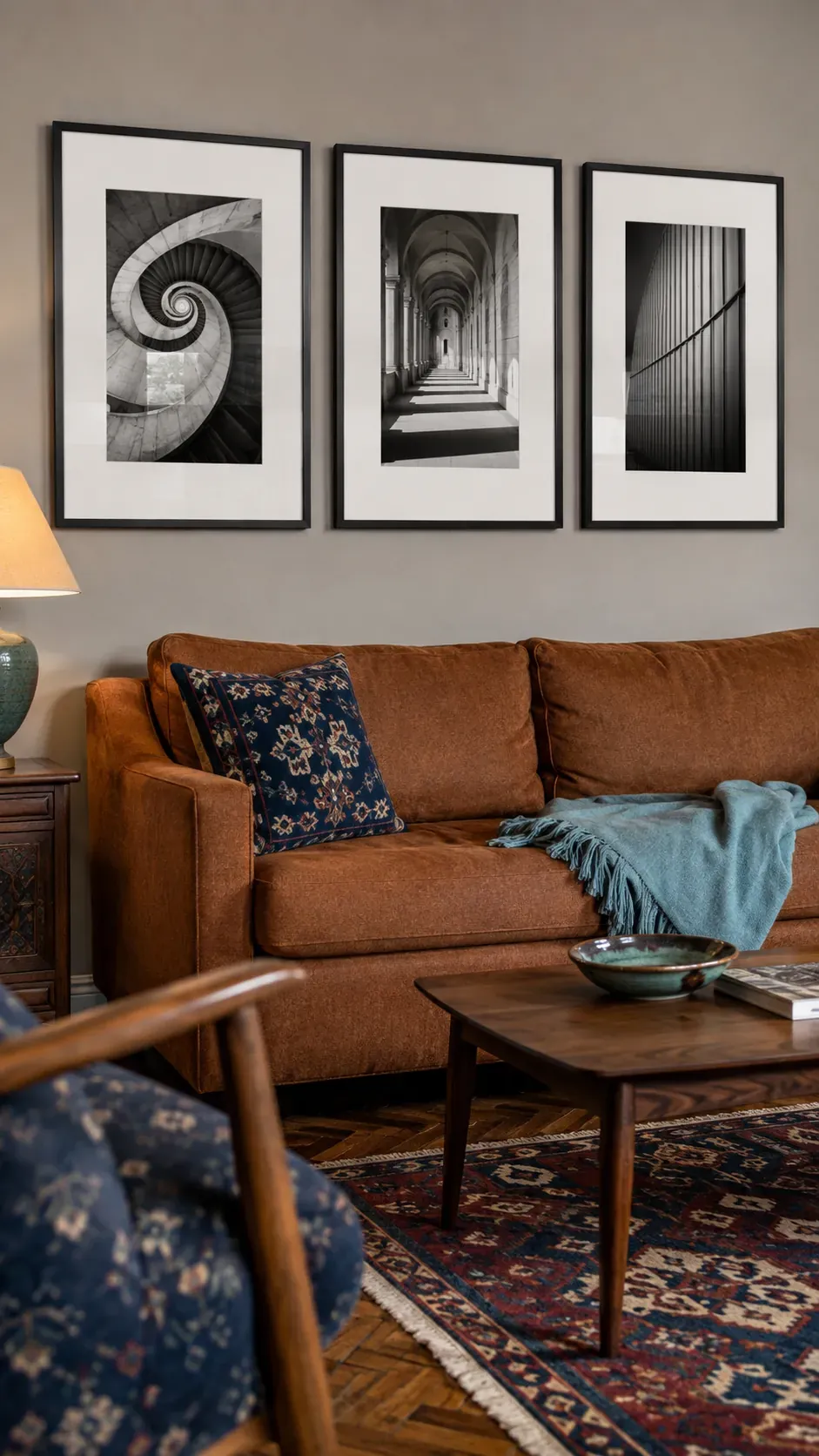
Black and white architecture photographs
Monochrome architecture photographs bring detail into a colorful living room without adding competing hues. Choose images with different subjects but a shared quality of light, such as stairs, windows, and concrete curves. Wide white mats keep the darker photographs from feeling heavy. A row of three frames suits a straight sofa and creates an easy visual horizon.
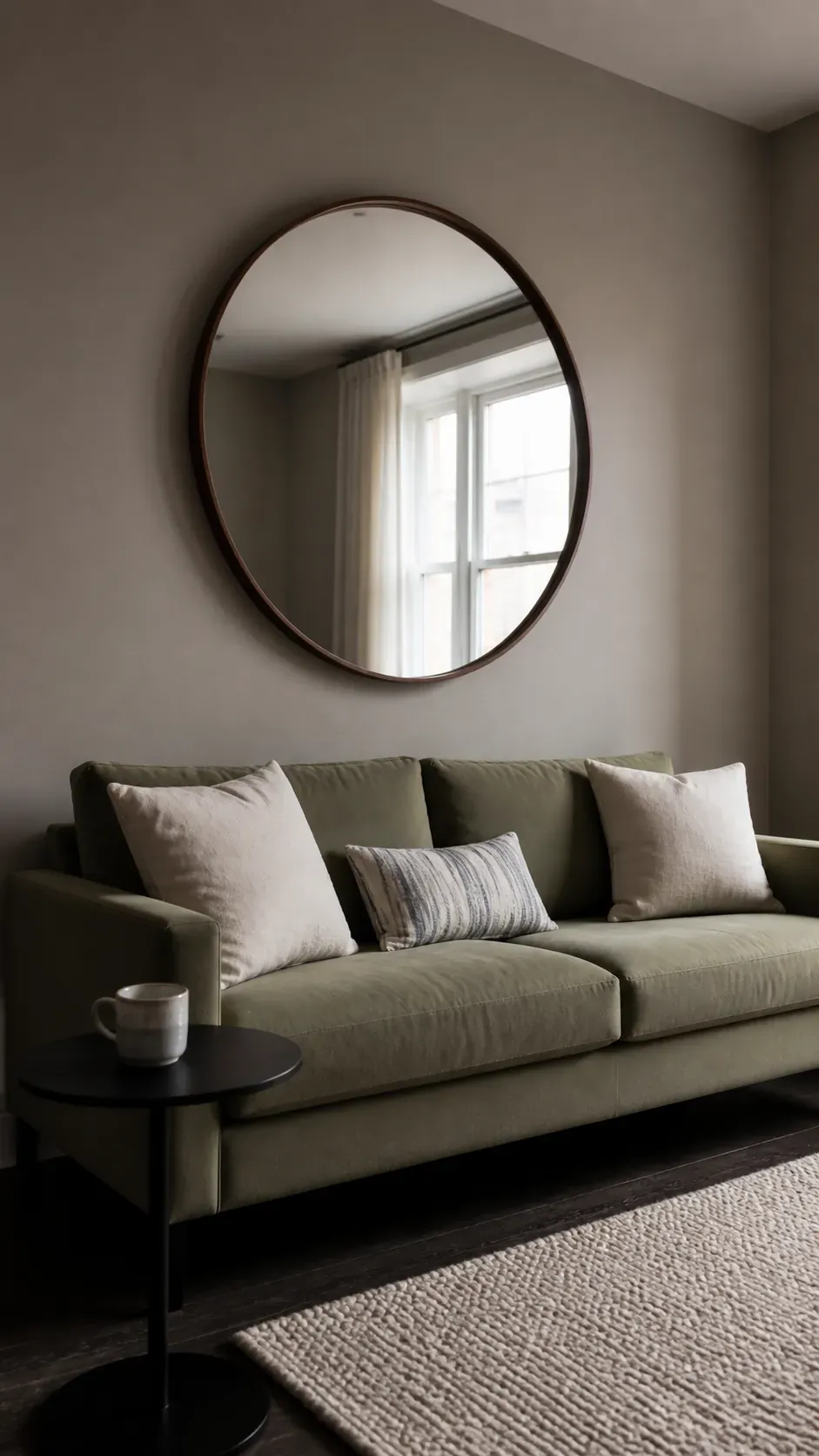
Large round mirror
A round mirror breaks up the rectangles of a sofa, windows, and nearby furniture. Its reflection can also carry daylight deeper into a dark room when the angle faces a window or bright opening. Select a thin frame in black, oak, or aged metal so the circle remains the main idea. Secure it with hardware rated for both the wall and mirror weight.
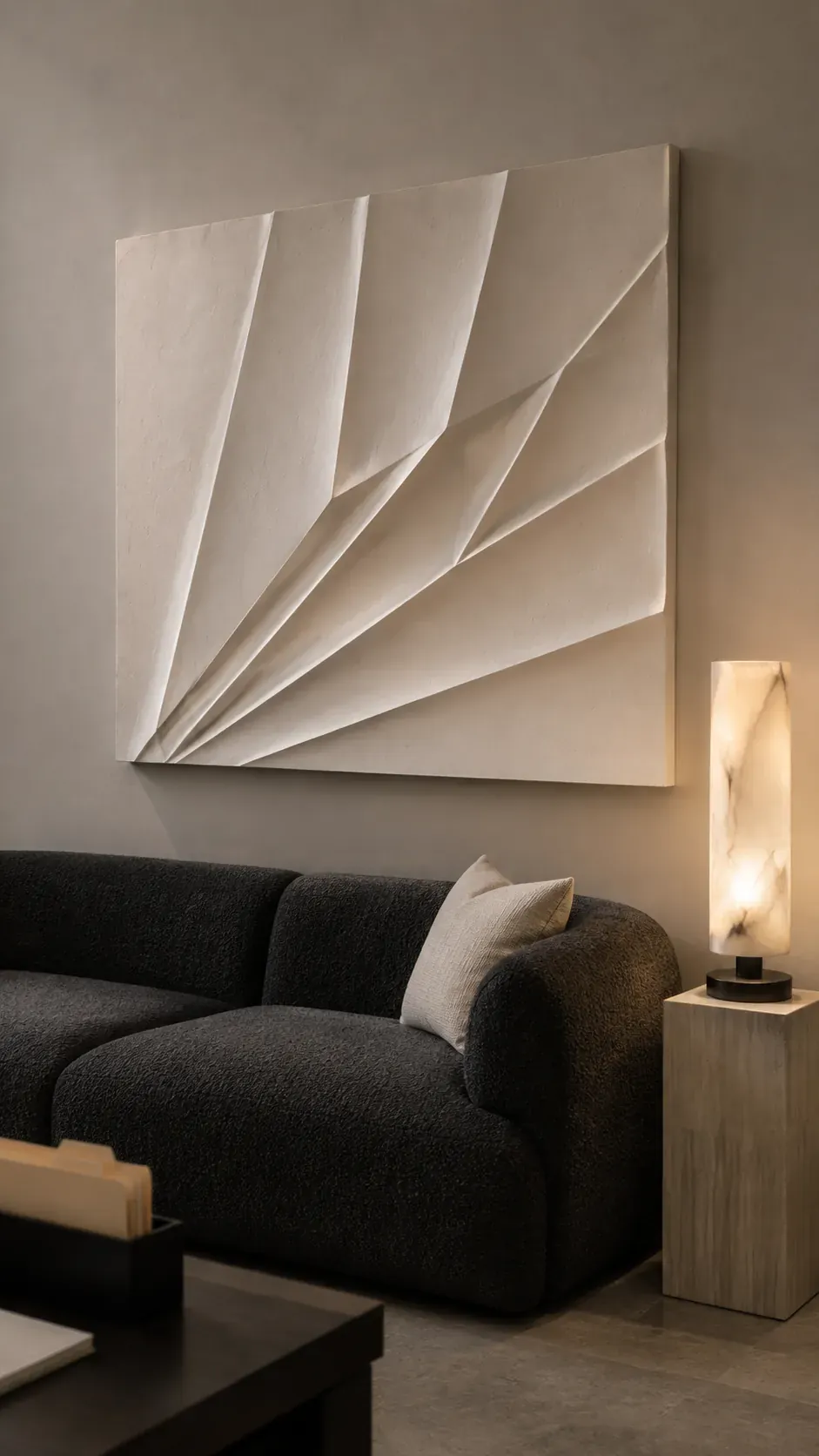
Plaster relief panel
A sculptural plaster relief introduces shadow and texture without relying on strong color. Look for shallow geometric folds or carved linear forms that remain legible from across the room. Side lighting makes the surface change gently throughout the day. A simple frameless edge keeps the panel architectural rather than ornate.
Woven textile hanging
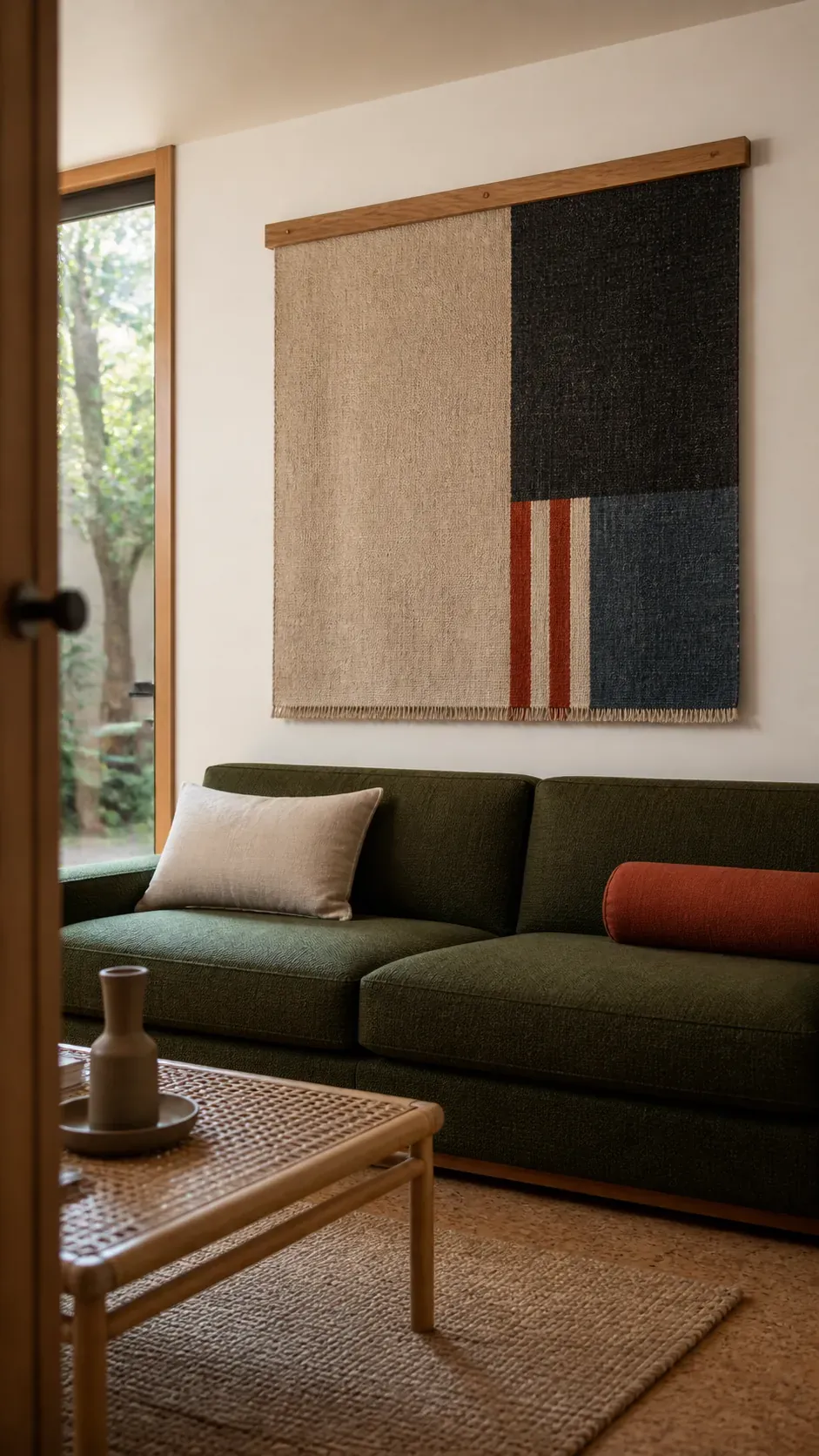
A flat woven panel softens a room filled with hard lines and framed glass. Choose an abstract block pattern or restrained stripe rather than a loose fringe heavy design. The textile should have enough width to match the sofa while remaining safely lightweight. Repeat one fiber color in a cushion or rug to connect the vertical surface with the seating area.
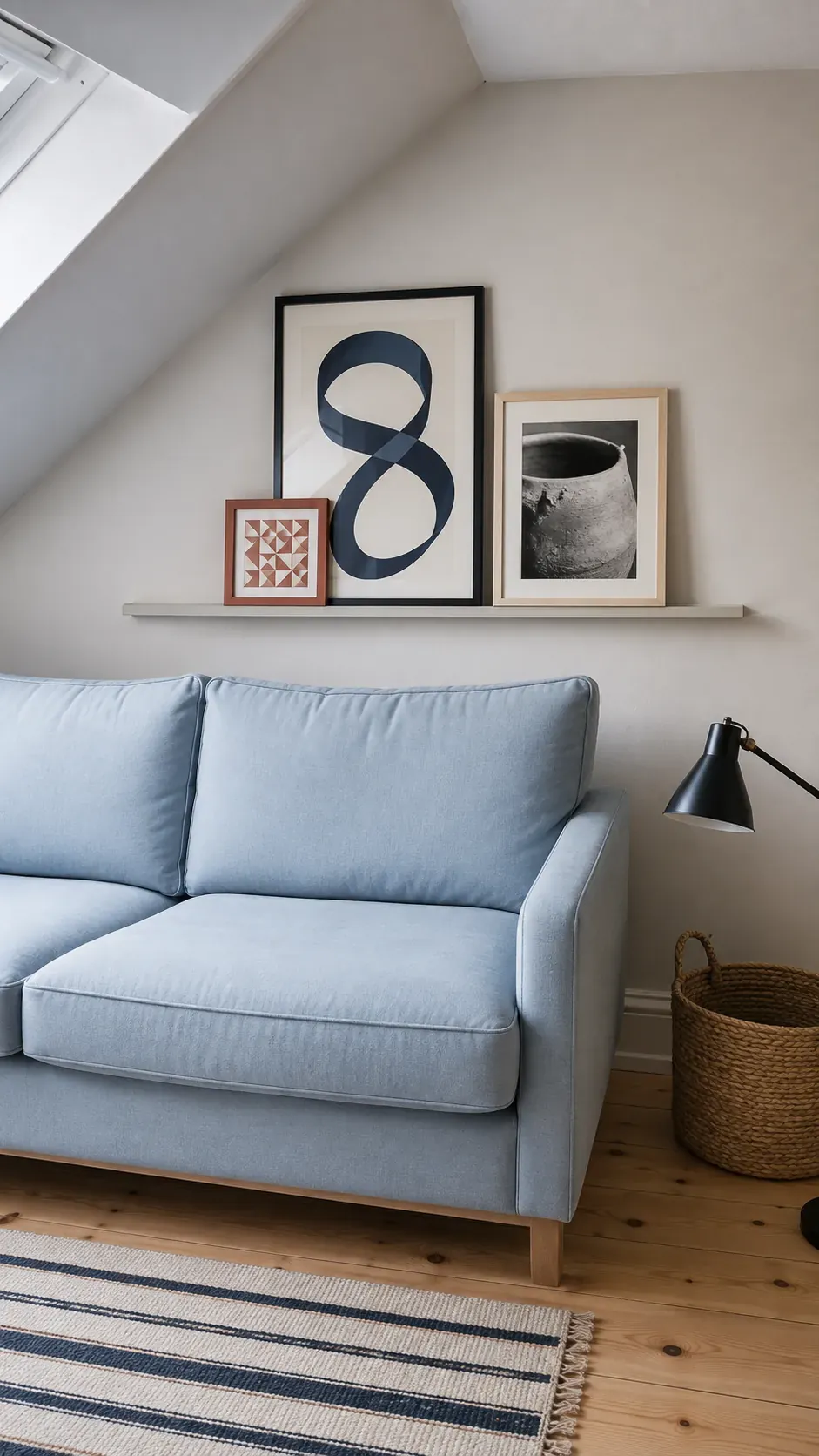
Slim picture ledge with three frames
A picture ledge allows art to change without turning the wall into a dense gallery. Limit the first arrangement to three frames with clearly different heights and one modest overlap. Leave visible shelf at both ends and avoid scattering small accessories between every frame. The display stays minimalist when the ledge is treated as one composition rather than storage.
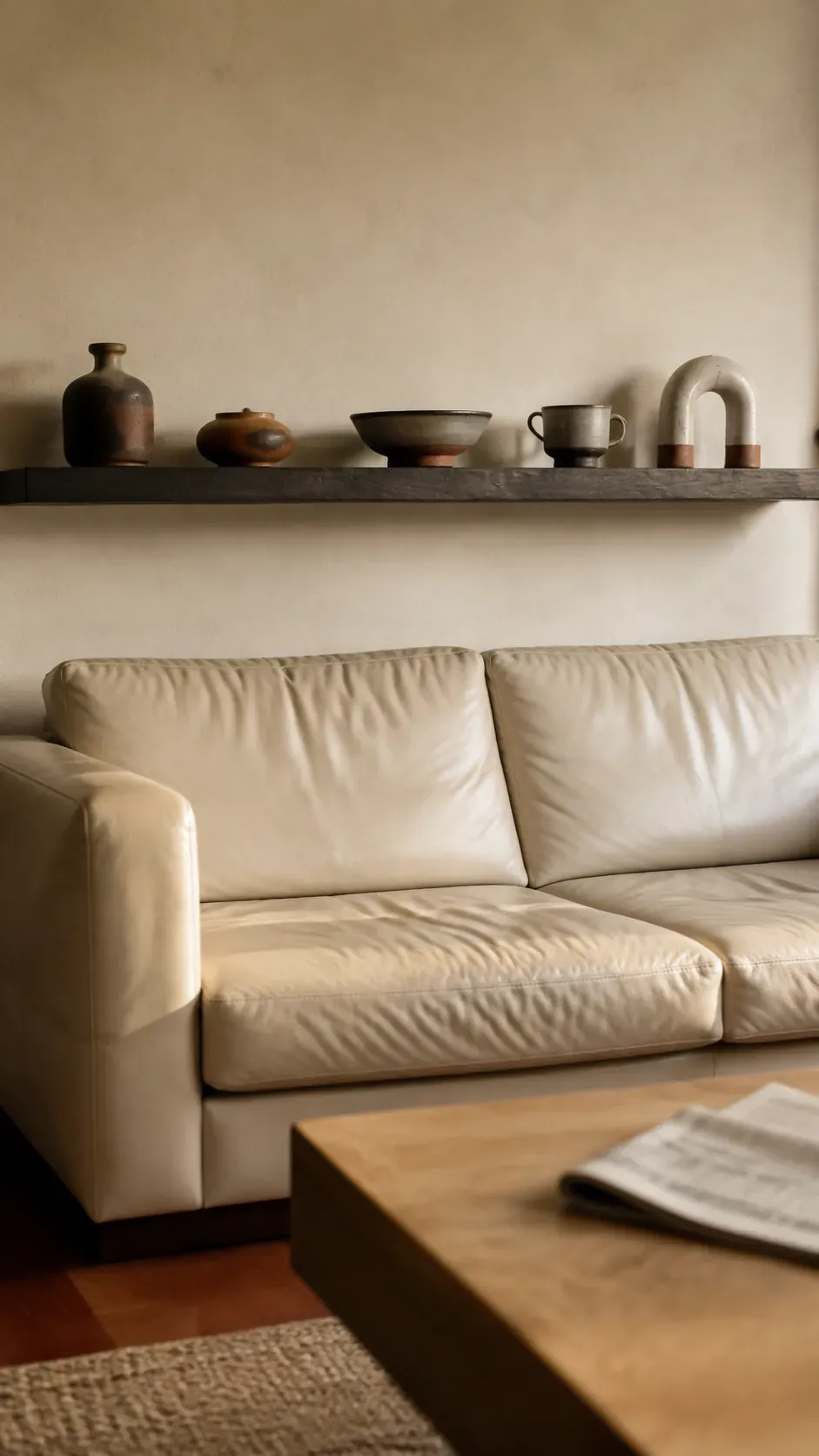
Single shelf with ceramics
One shallow shelf can display a small ceramic collection without adding several picture frames. Use vessels with varied silhouettes but a shared clay body or glaze family. Keep heavy pieces low, stable, and away from the central head zone, then confirm the shelf is mounted into suitable structure. Empty surface between the objects is essential to the look.
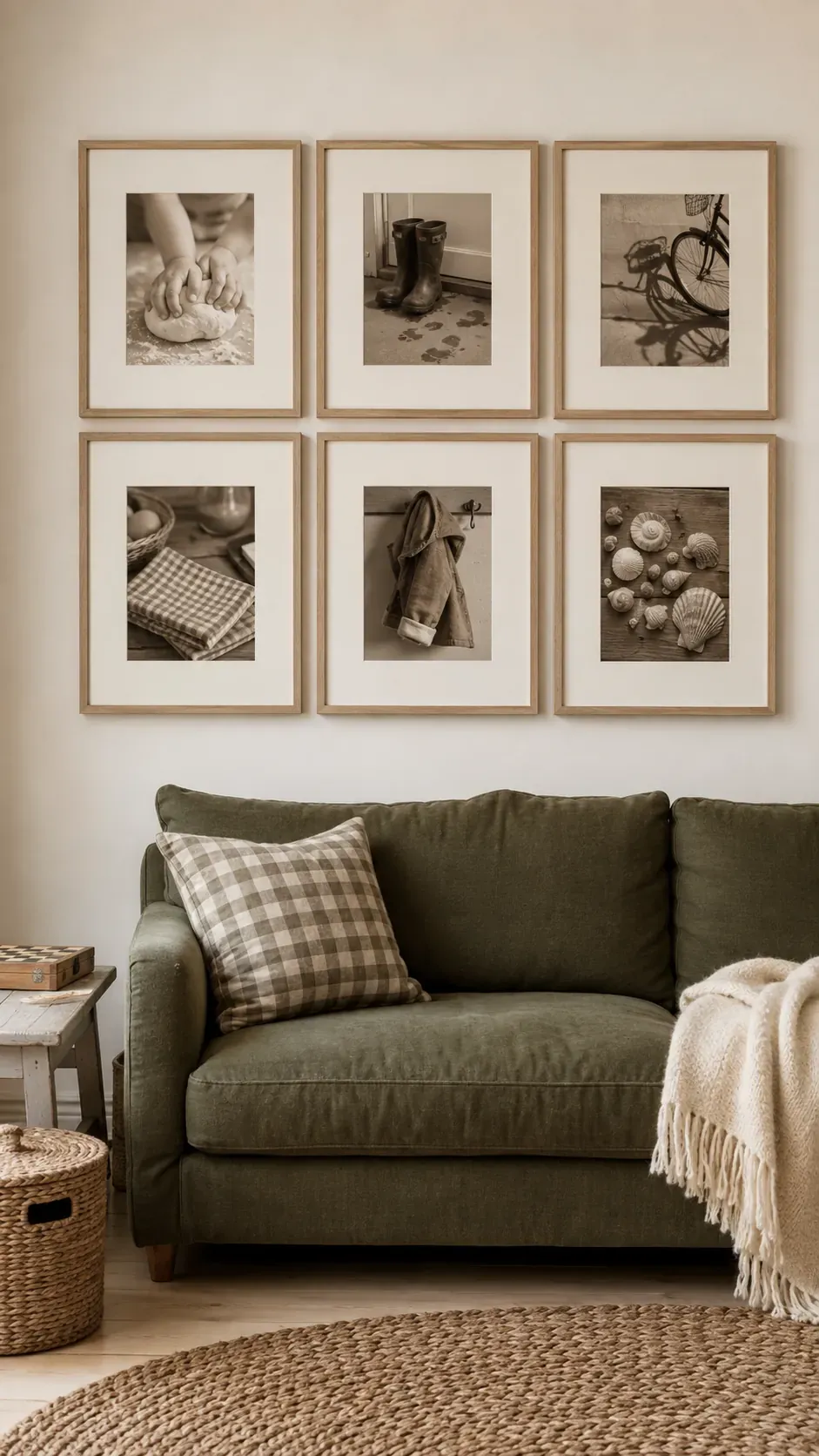
Tonal family photograph grid
A family photograph grid can feel orderly when every image shares the same tonal treatment, mat, and frame. Select quiet candid moments with uncluttered backgrounds rather than trying to include every favorite photograph. Six frames arranged in two rows create presence while keeping the outline simple. Consistent spacing is what turns personal pictures into modern wall decor behind a couch.
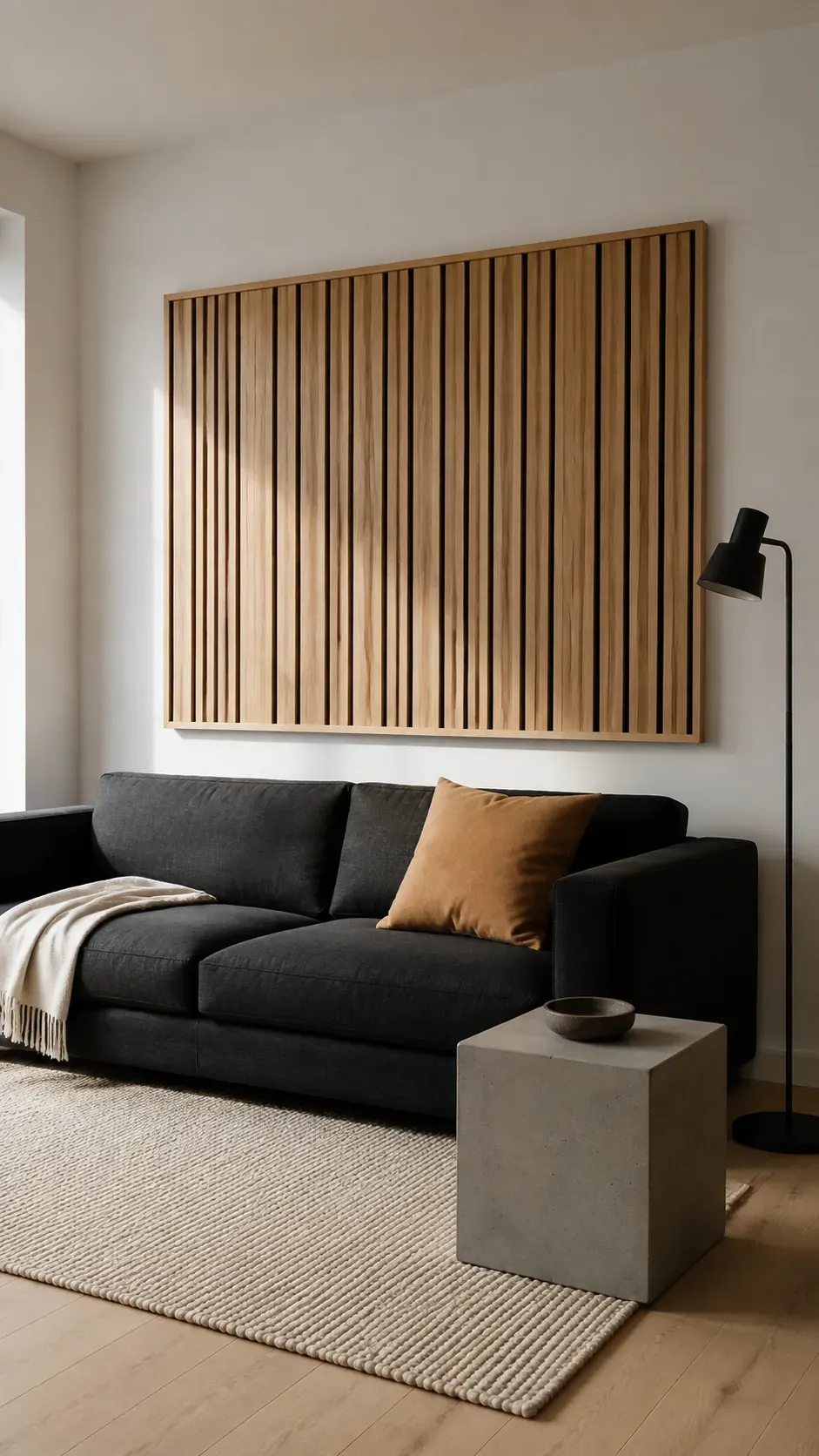
Wood slat accent panel
A framed section of narrow wood slats adds warmth without introducing another image. Keep the panel narrower than the sofa and surround it with painted wall so it reads as intentional decor, not unfinished construction. A natural matte finish reveals grain while avoiding glossy visual noise. This works well in rooms where simple wall decor above a sofa needs architectural depth.
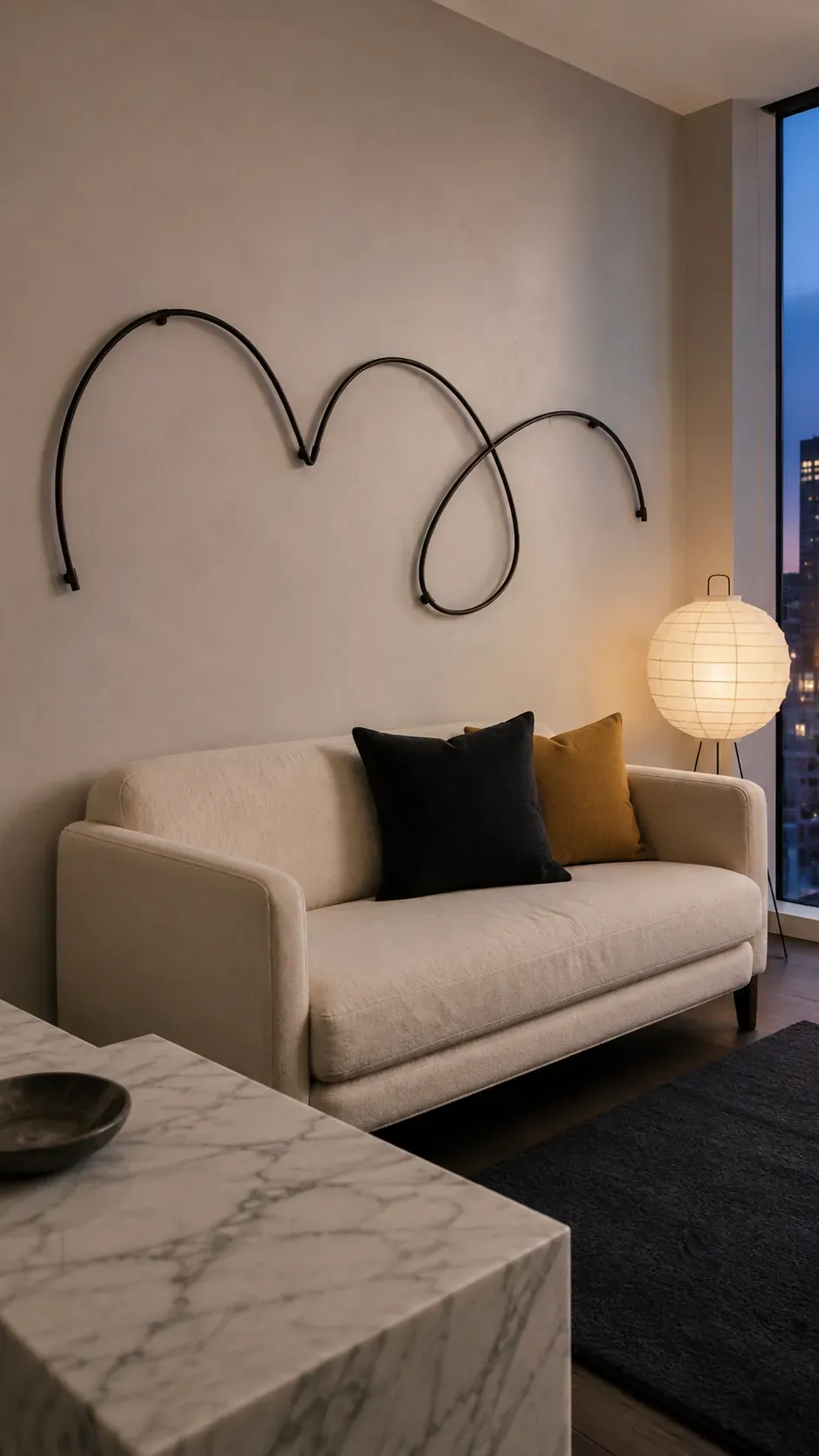
Linear wall sculpture
A linear metal sculpture can trace a wide shape while using very little visual mass. Choose a powder coated or darkened metal form with secure mounting points and no sharp projection into the room. The wall color remains visible through the piece, which helps a small living room feel open. A single curved composition offers more calm than several unrelated metal accents.
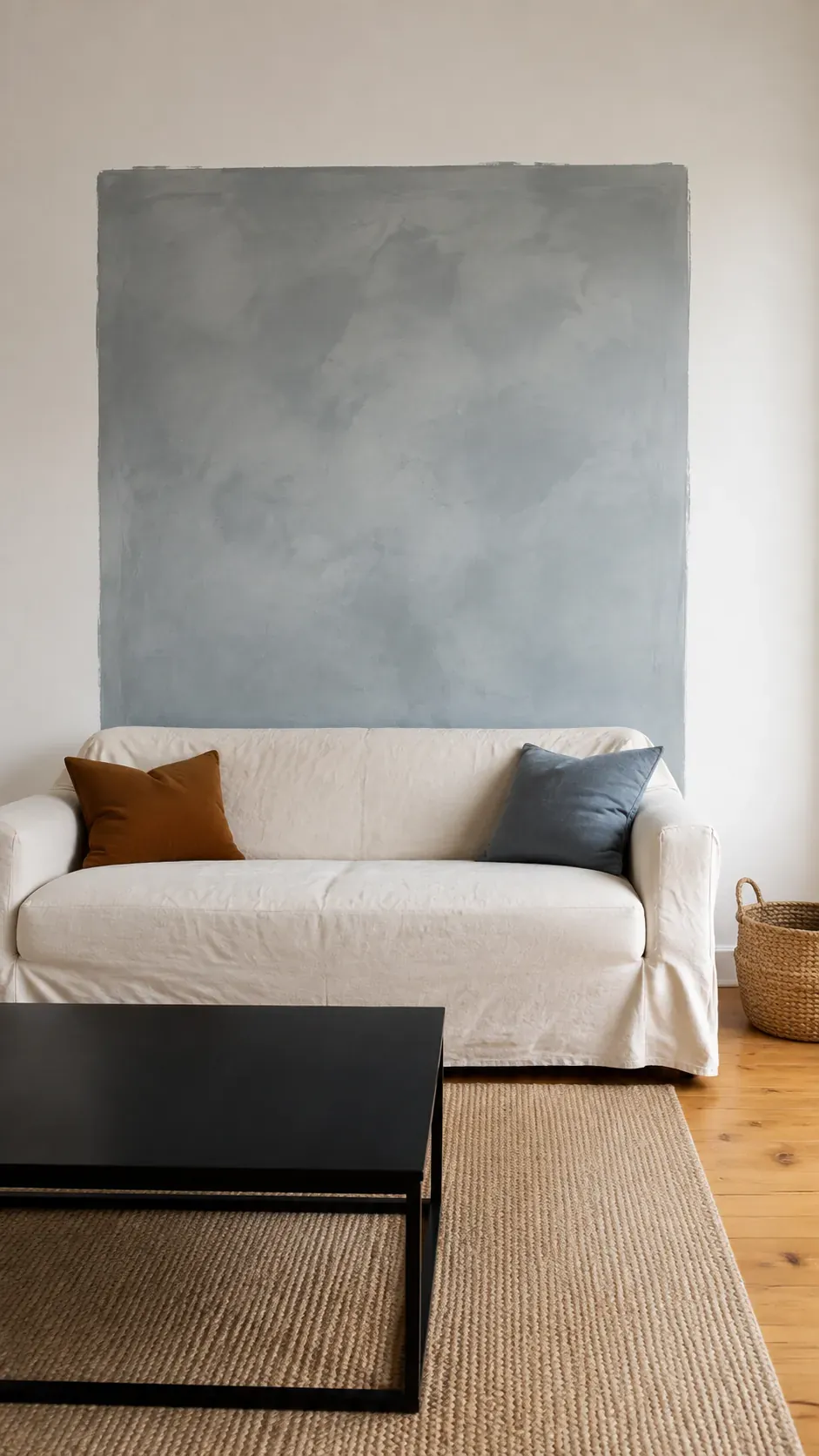
Soft limewash color block
A hand painted limewash color block can define the sofa zone without adding an object above anyone. Use a broad rectangle with softly varied mineral texture and leave a clean border of the original wall around it. The block should follow the sofa width and begin close enough to connect with the furniture. This final idea gives neutral above sofa decor a visible focal point while keeping the surface almost empty.