16 TV Wall Decor Ideas That Don’t Look Cluttered
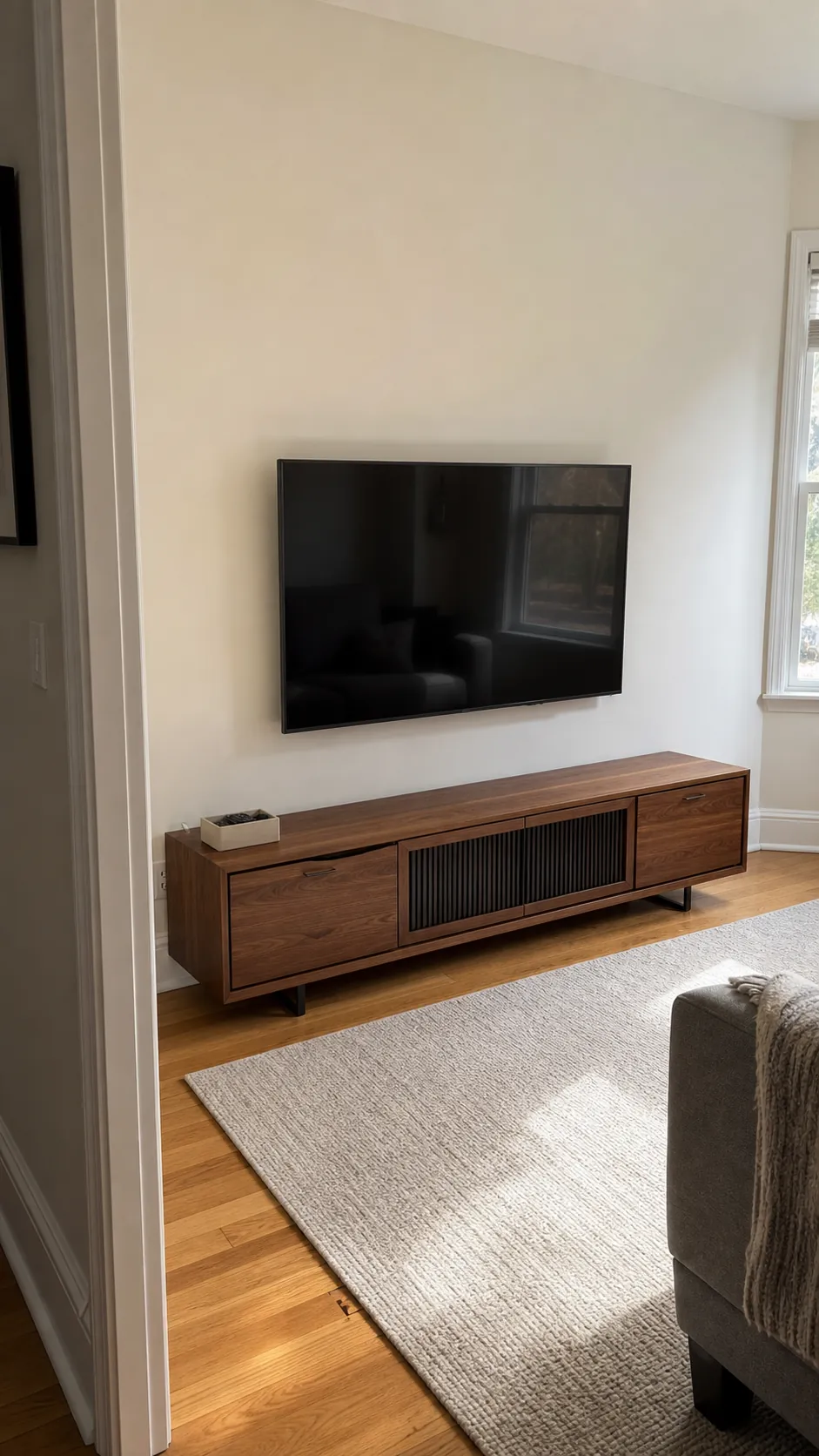
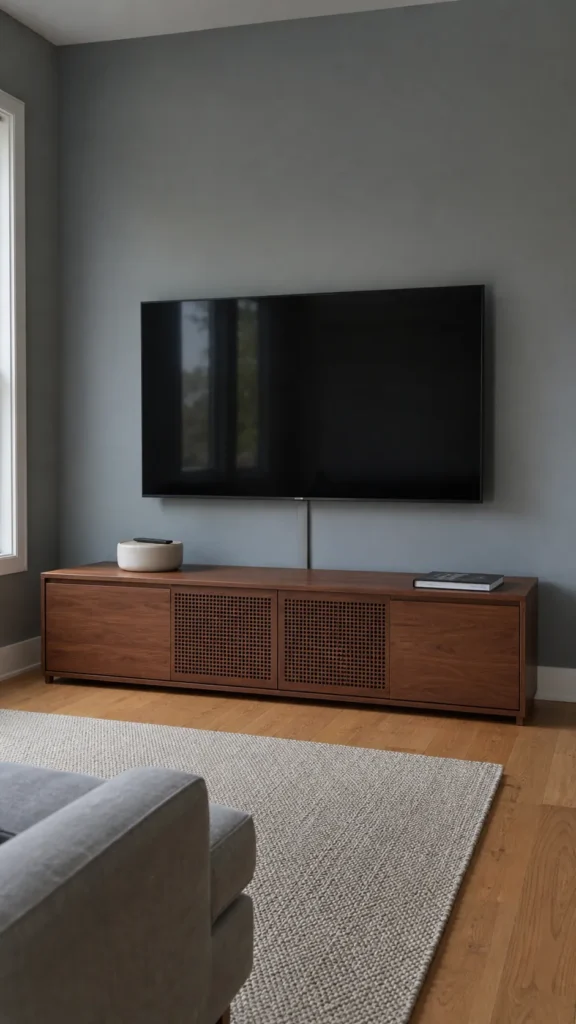
A television already behaves like a large dark rectangle, so adding lots of small decor around it often creates the clutter people were trying to fix. The best TV wall decor ideas do one of three jobs: calm the contrast, organize the equipment, or create one larger visual structure that includes the screen. They do not ask framed pictures, shelves, cables, plants, and accessories to compete equally.
Start with comfort and safety before styling. Set the screen at a comfortable viewing height, route power and signal cables through approved methods, preserve the ventilation clearances in the television and console manuals, and check glare in daytime and at night. Do not hide ordinary power cords inside a wall unless the product and installation method are specifically rated for that use. Once the functional setup works, one of these 16 approaches can make the media wall feel intentional.
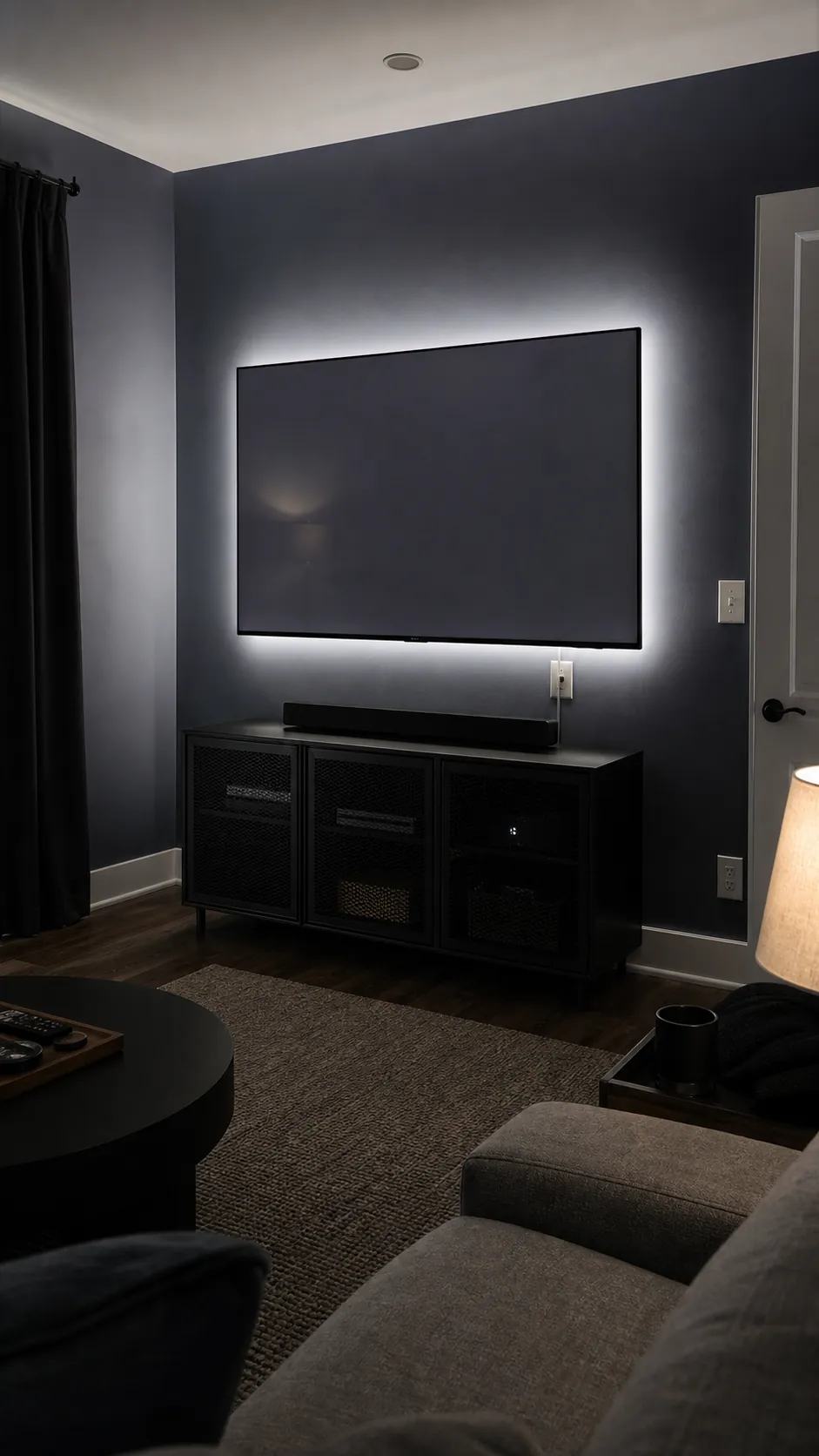
Matte Charcoal Accent Wall
A deep matte wall reduces the sharp contrast between a black screen and pale paint. Charcoal, ink blue, or smoky green usually feels softer than pure black and still works when the TV is off. Keep the surrounding wall mostly empty so color does the work. Test a large sample at different times of day; glare and undertones can change dramatically under windows and lamps.
Console Wider Than the Screen
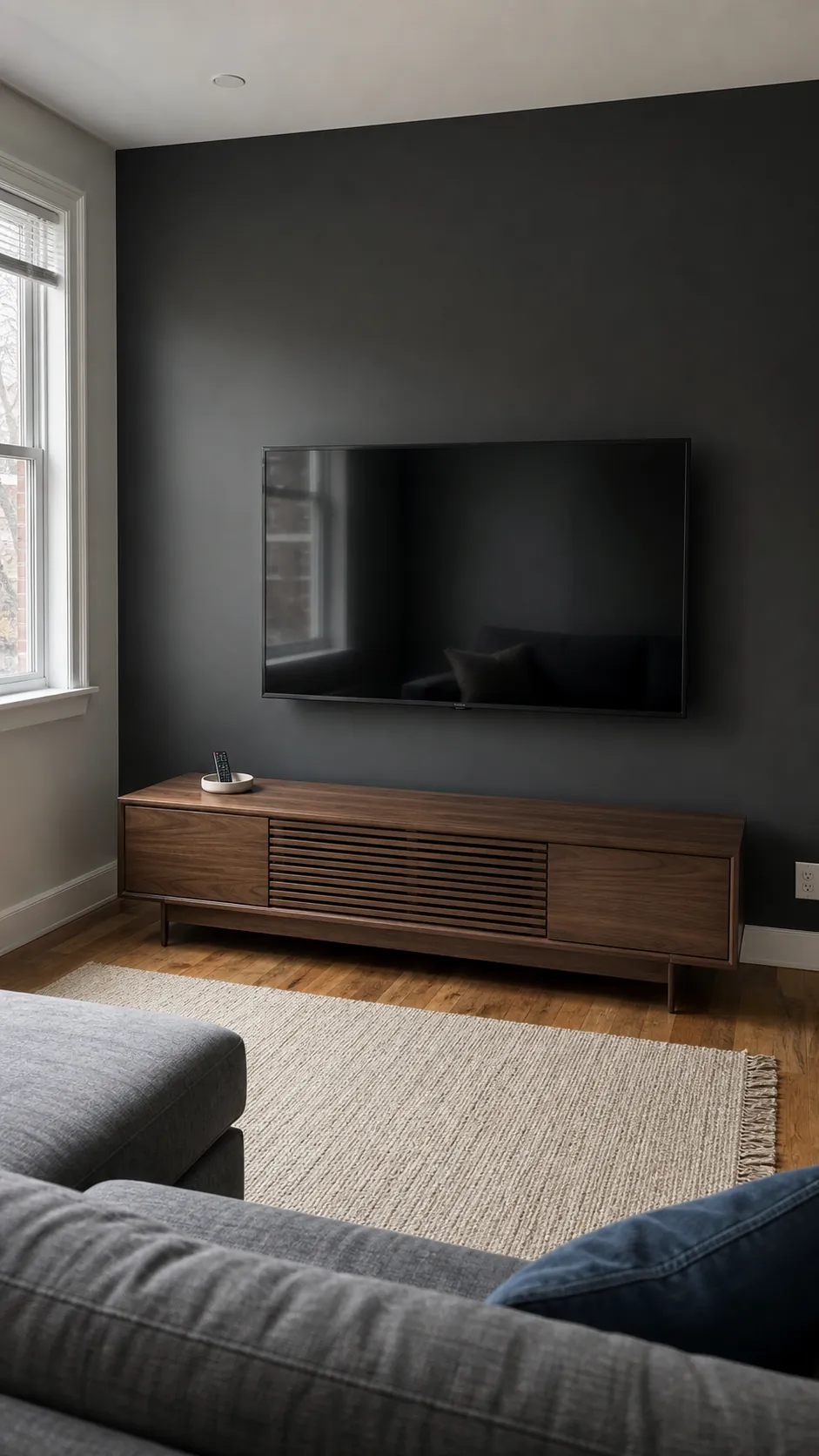
A media console that is visibly wider than the television gives the screen a stable base and supplies closed storage for remotes, games, and cables. Choose a low profile that keeps viewing height comfortable, then style only one or two small groups on the top. Storage removes more visual clutter than another piece of wall art can disguise.
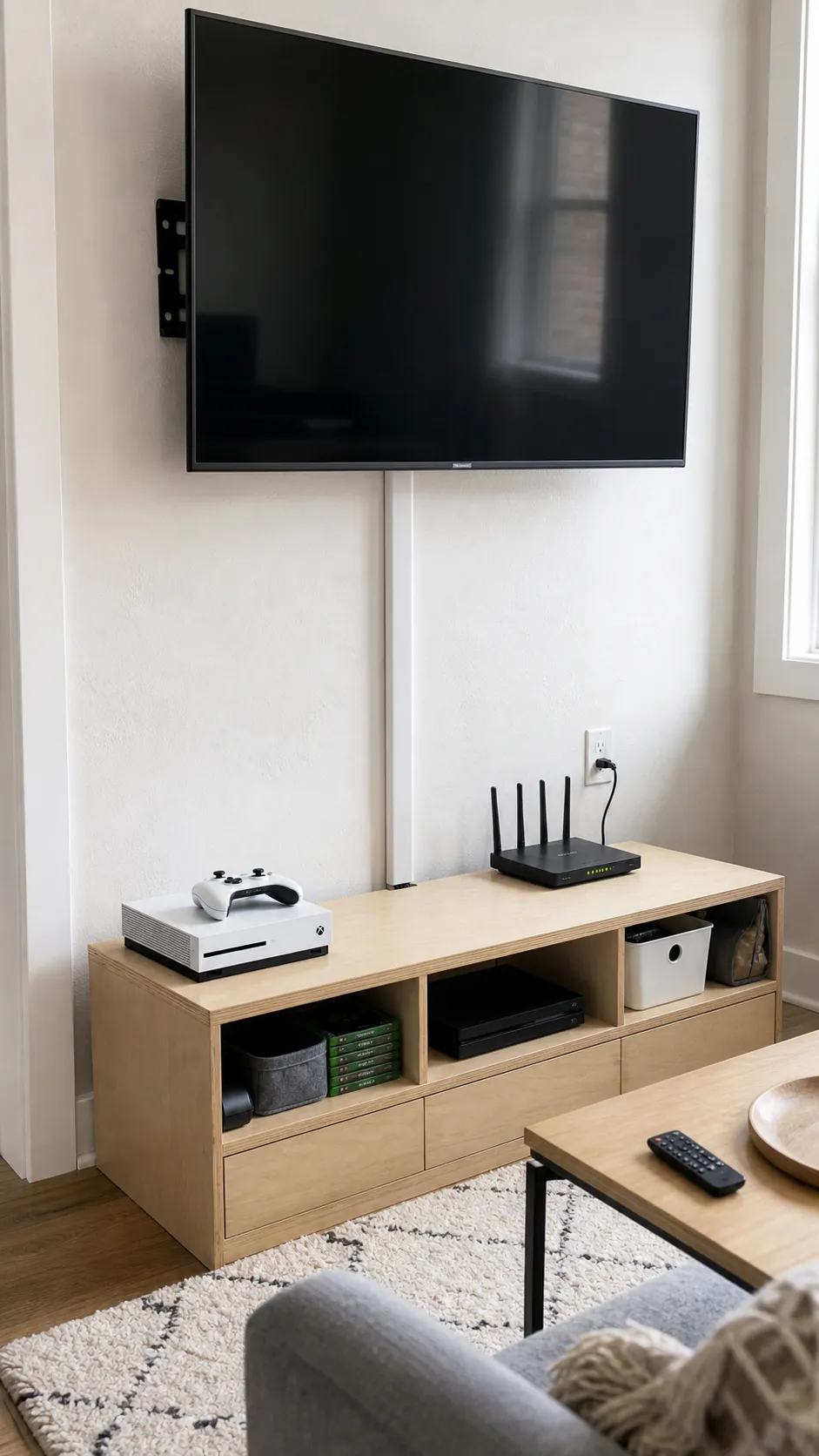
Clean Cable Channel
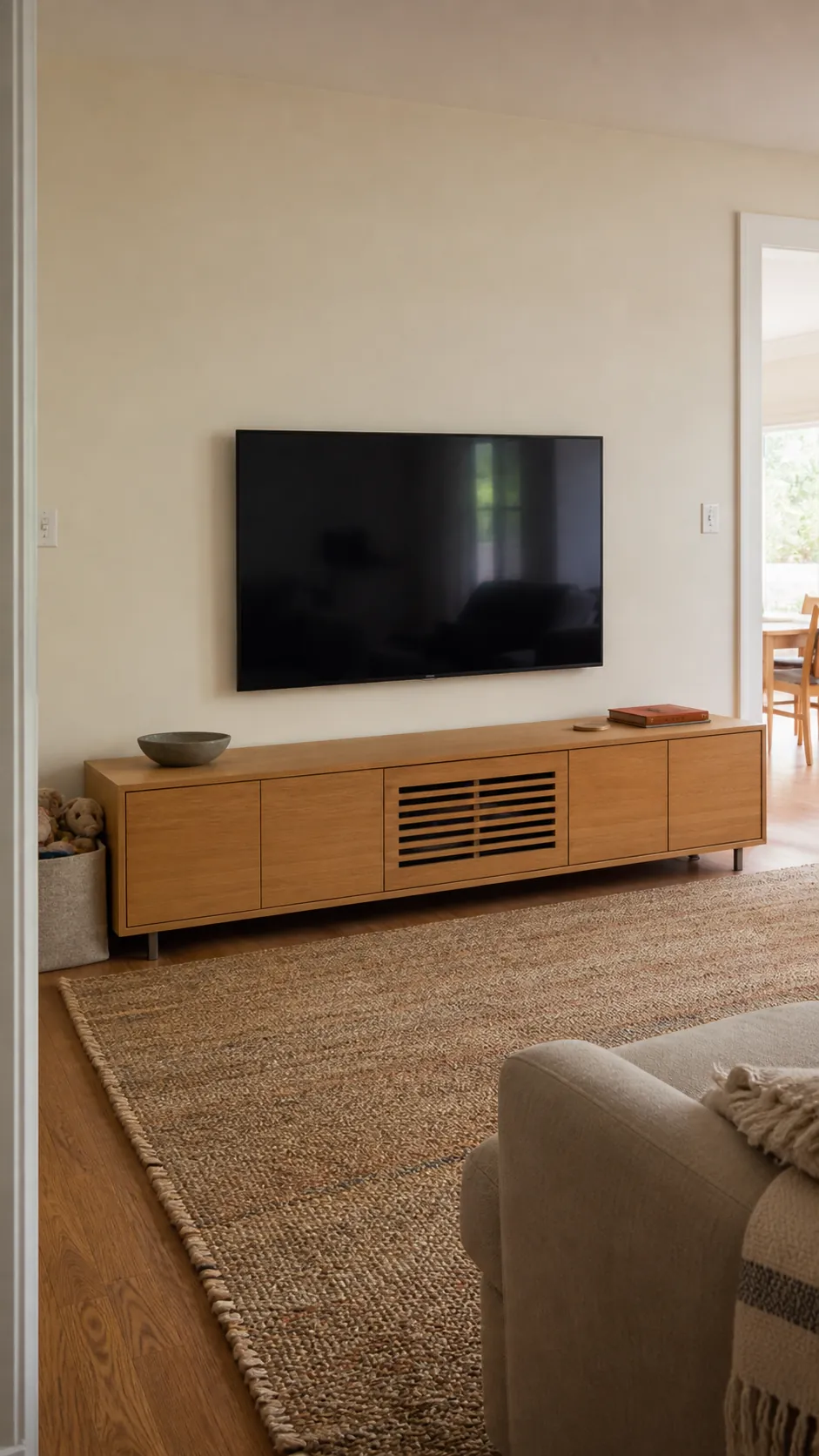
If cords are visible, the wall will look unfinished no matter what hangs nearby. A paintable surface raceway can create a tidy vertical route in a rental or masonry home, while a qualified installer can advise on code-compliant in-wall power and signal routing. Bundle excess cable behind the mount without blocking vents or forcing tight bends, and label both ends before hiding anything.
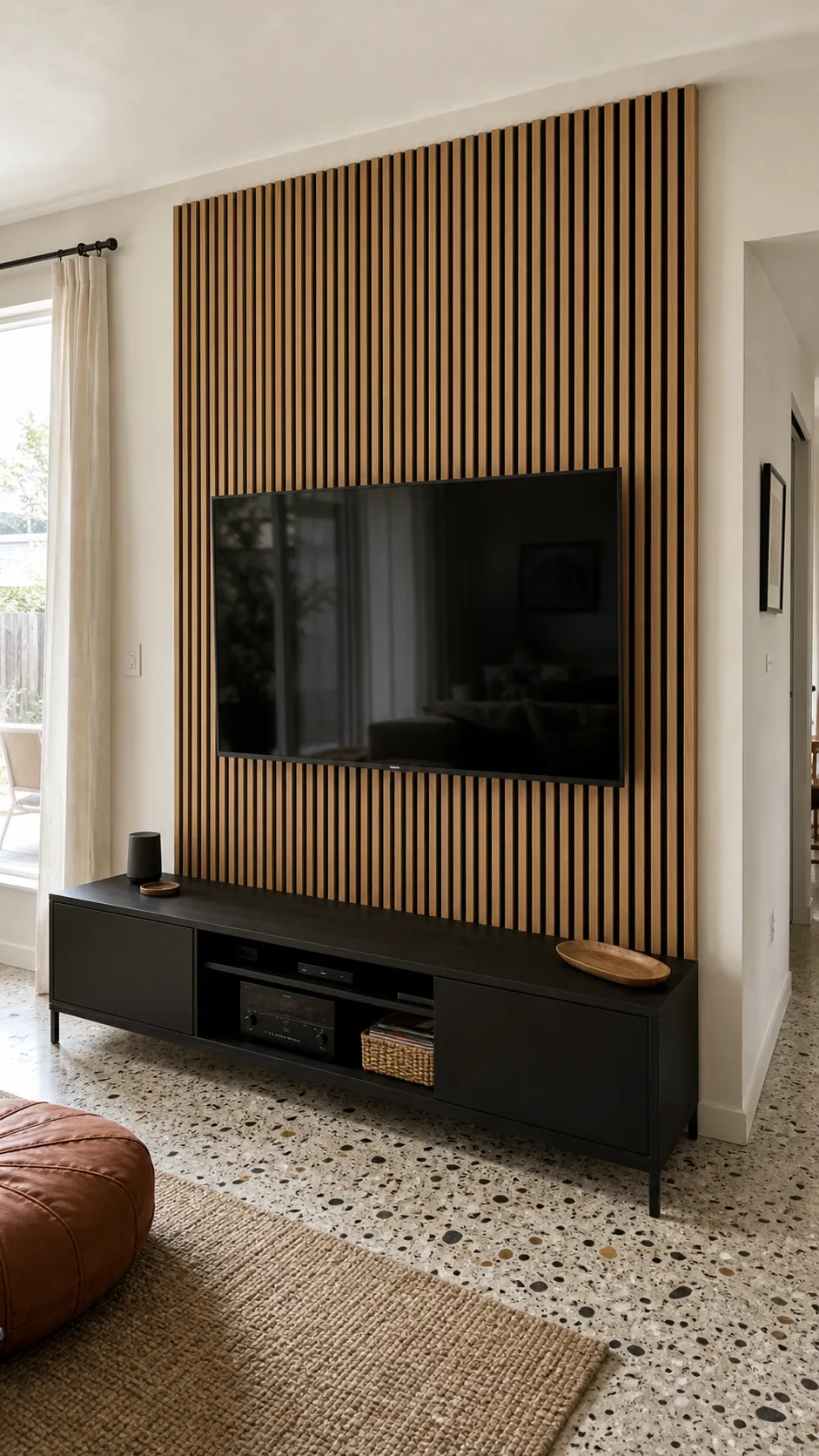
Vertical Oak Slat Panel
A vertical slat panel can turn the TV and console into one architectural feature while adding warmth and subtle acoustic texture. Limit it to a clearly defined section rather than covering every wall. Plan the mount, outlets, cable route, ventilation, and removable access panels before installing slats; decorative rhythm should never trap heat or make future connections impossible.
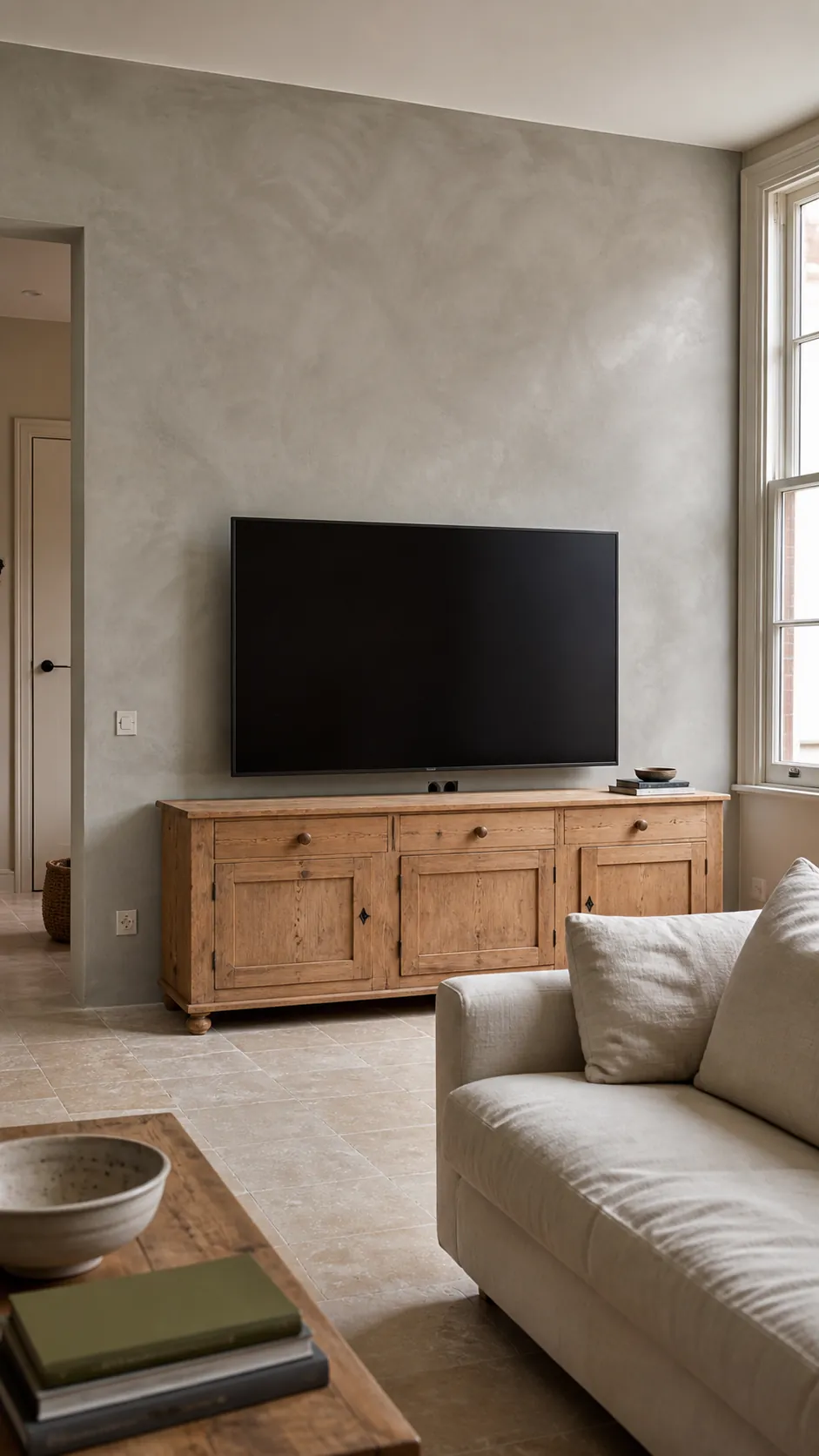
Quiet Limewash Texture
Limewash-style variation gives a TV wall depth without adding objects. A cloudy taupe, mineral gray, or muted olive finish breaks up a flat surface while remaining visually quiet. Follow the chosen product’s preparation and application requirements, especially on previously painted walls. Keep speakers, vents, and electronics protected during work and allow the finish to cure fully before reinstalling equipment.
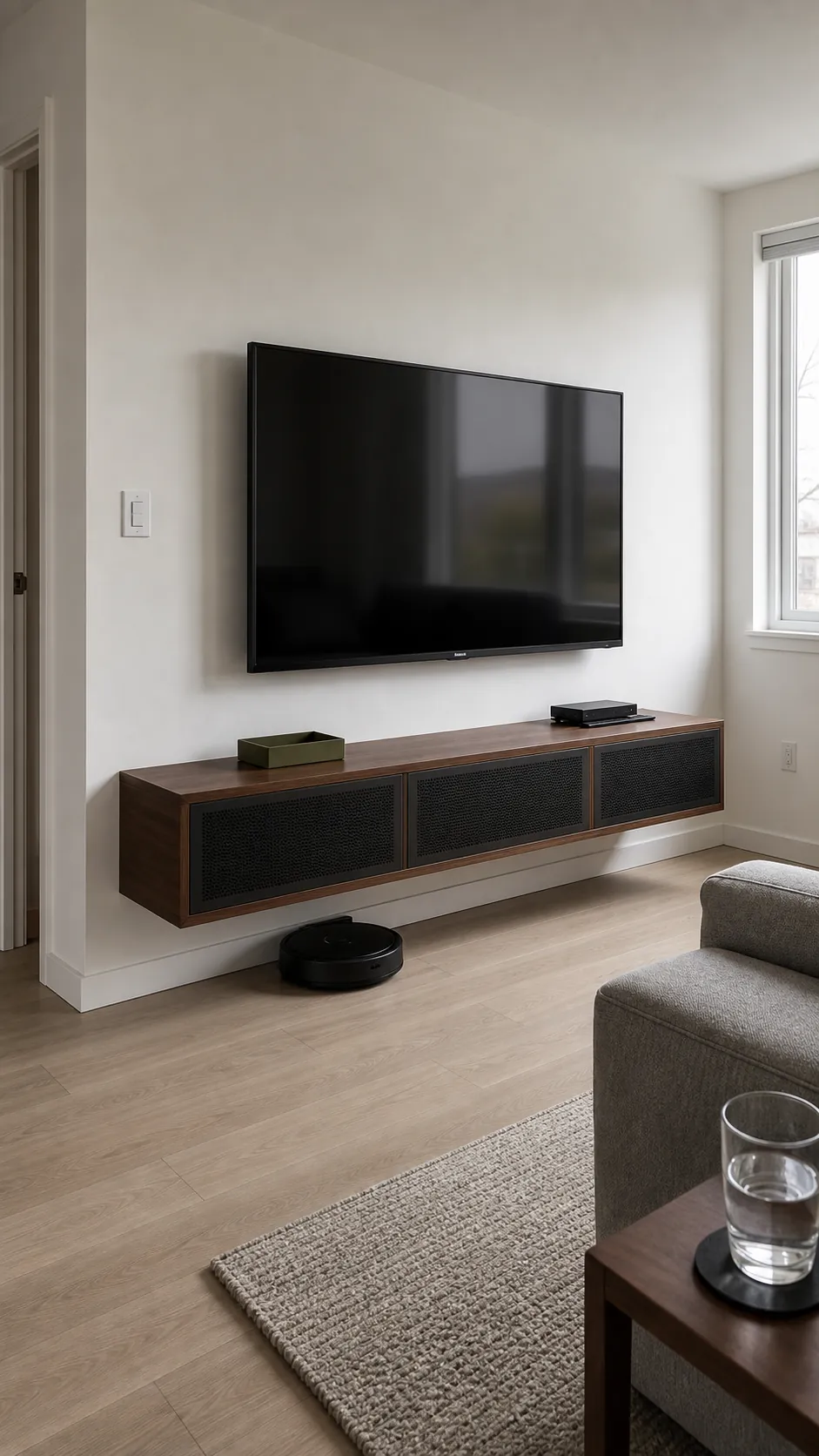
Low Floating Media Cabinet
A floating cabinet creates an easy-to-clean strip of floor and makes a small room feel less crowded. Closed fronts hide equipment, but the cabinet still needs suitable airflow, cable openings, and wall fixing for its loaded weight. Align the television with the cabinet rather than the whole wall. Leave the top mostly clear so the long horizontal line can visually settle the screen.
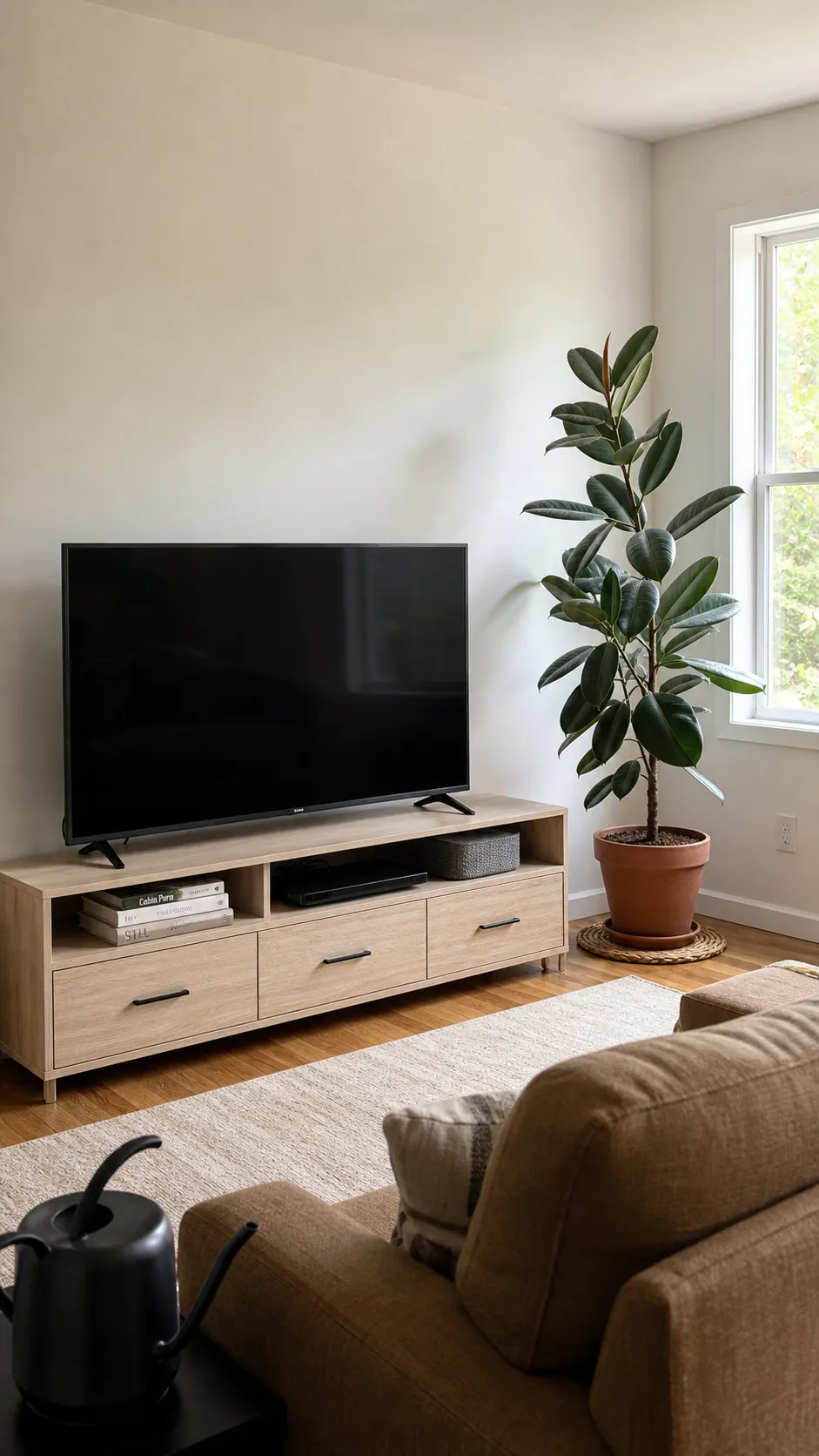
One Tall Plant Beside the Console
When one side of a TV wall feels empty, a floor plant can add height without covering the wall in frames. Choose a species suited to the actual light, keep foliage outside the screen edge, and protect electronics and flooring during watering. The asymmetry works because the plant is one strong shape. Do not “balance” it with several small objects on the other side.
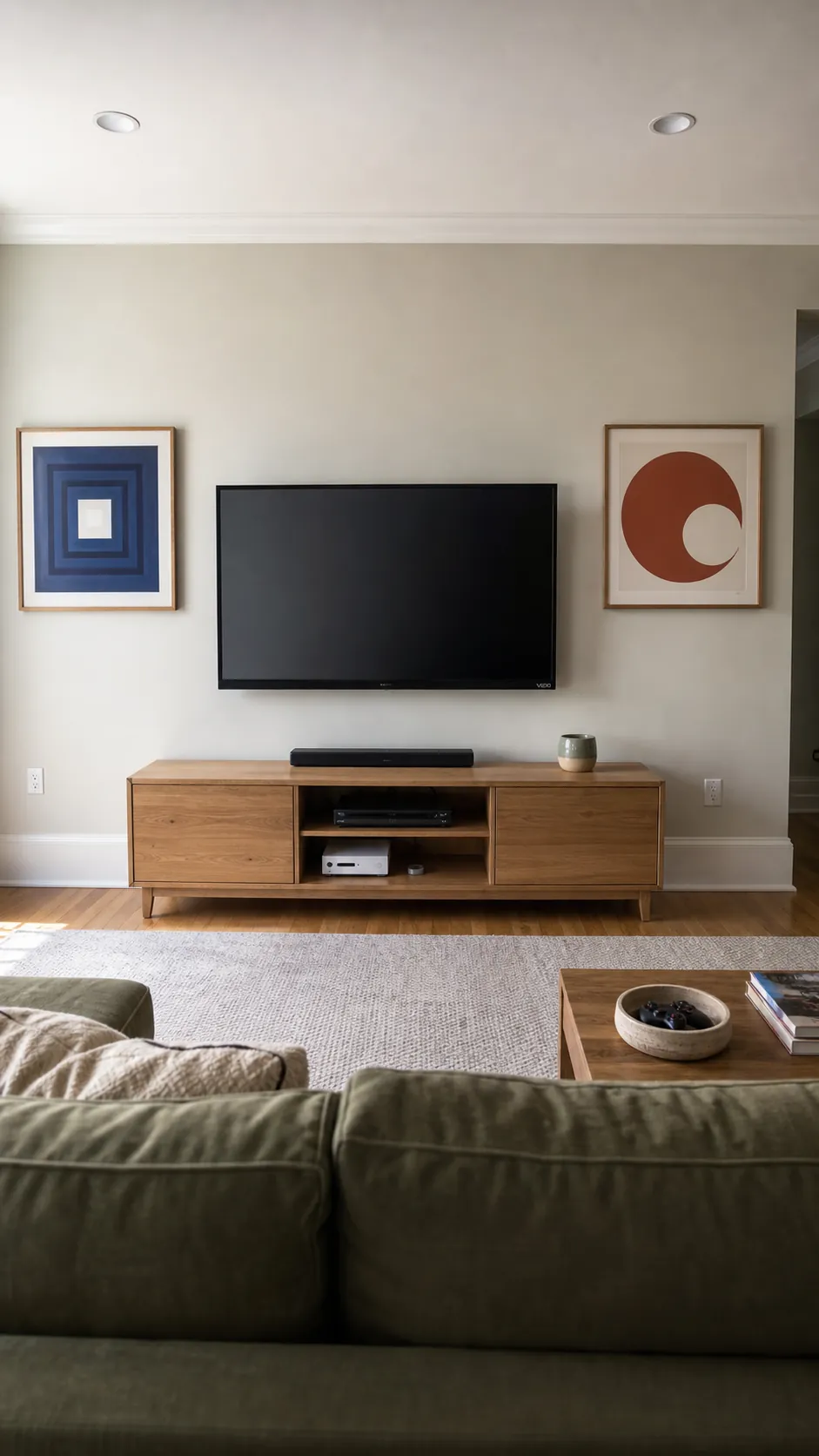
Matching Prints Outside the Screen
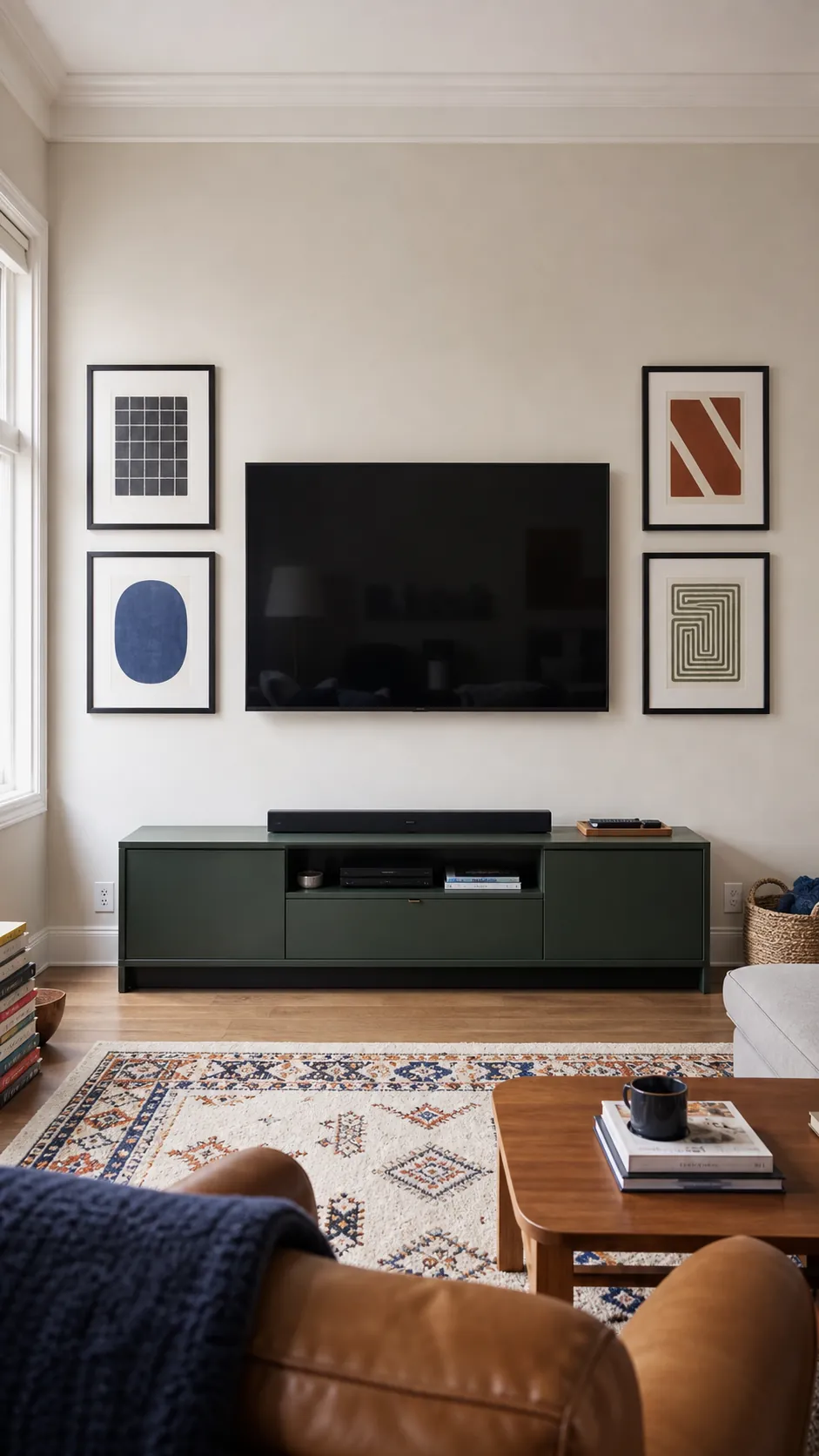
Two medium prints can widen a narrow media setup when they sit beyond the TV edges rather than crowding the display. Use the same frames and related abstract subjects, align their centers, and preserve a generous gap from the screen. This works best on a broad wall with a centered console. If the room is tight, blank wall will usually look cleaner.
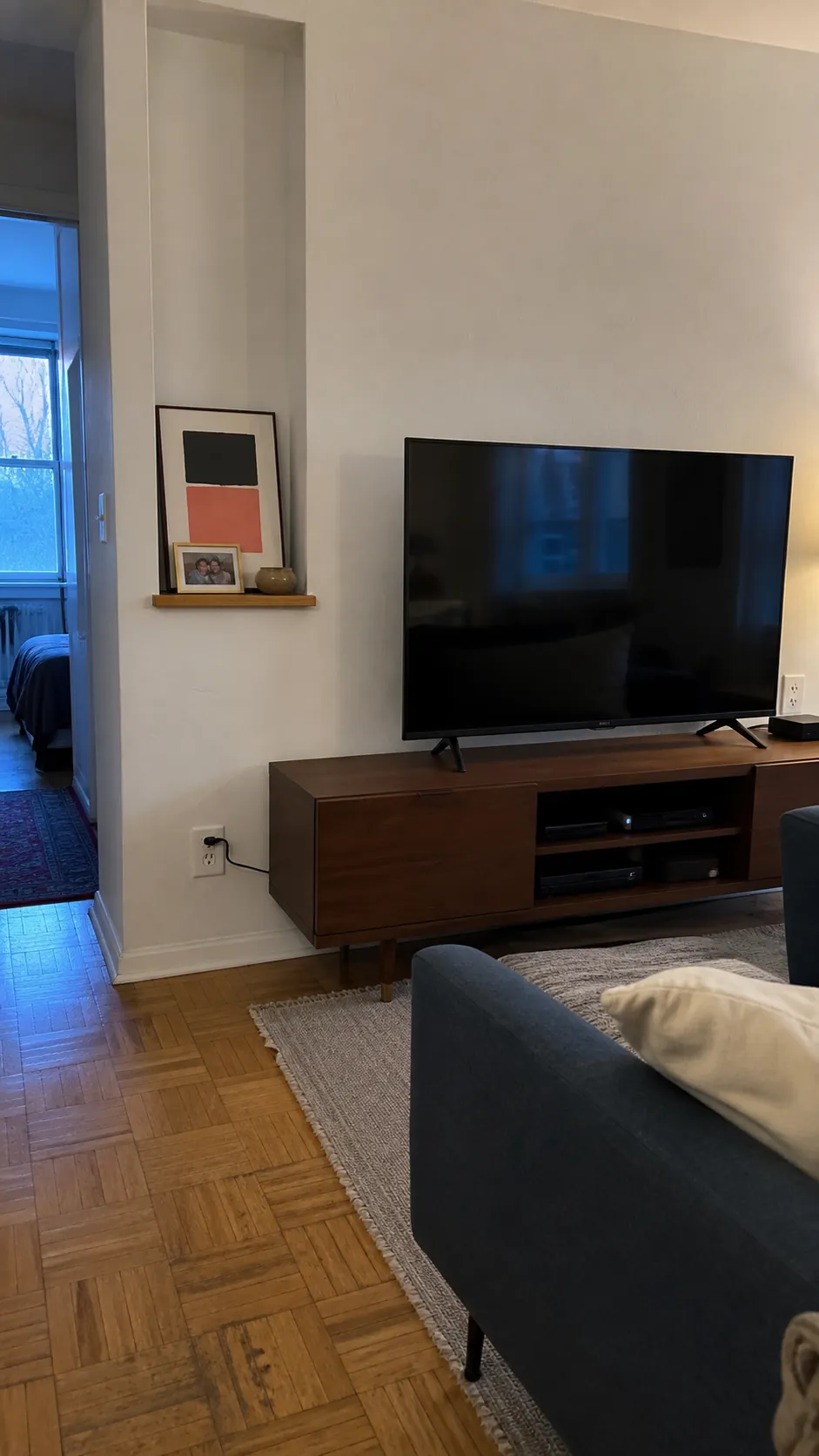
Short Side Picture Ledge
A short picture ledge on an adjacent zone can add personality without stacking another horizontal directly over the television. Keep it shallow, position it outside the screen’s ventilation and movement area, and display only lightweight pieces with a raised lip. One leaning print and a small object are enough. A full-length shelf crowded with accessories usually makes the screen wall busier.
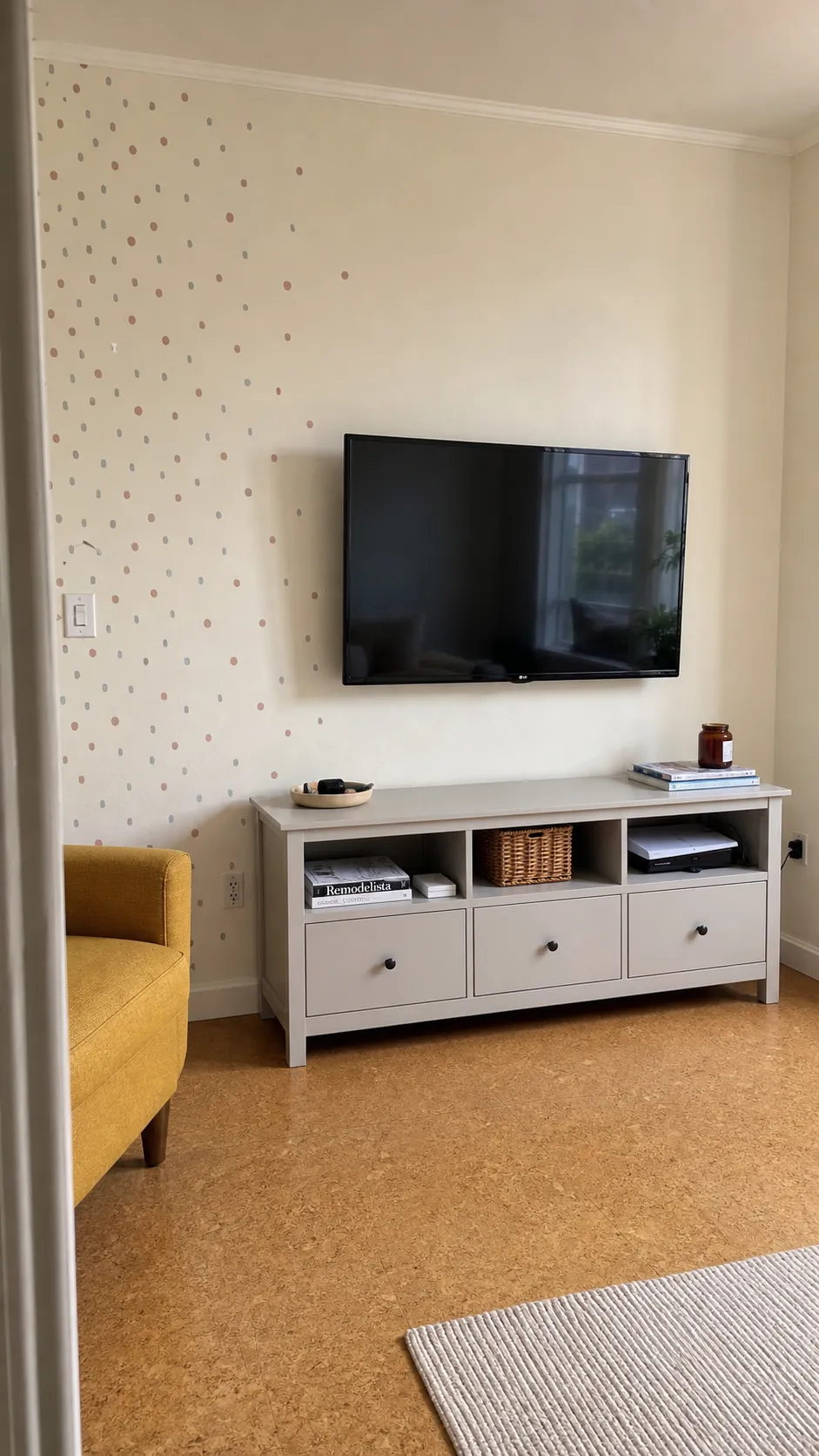
Sparse Dot Wall Decals
Wall decals around a TV work when they act like a low-contrast pattern, not a border tracing every screen edge. Scatter matte dots or short dashes across one side and let them fade before reaching the display. Preserve ventilation and access, test removable vinyl on the paint, and avoid glossy material that catches screen light. The television should remain the clearest rectangle.
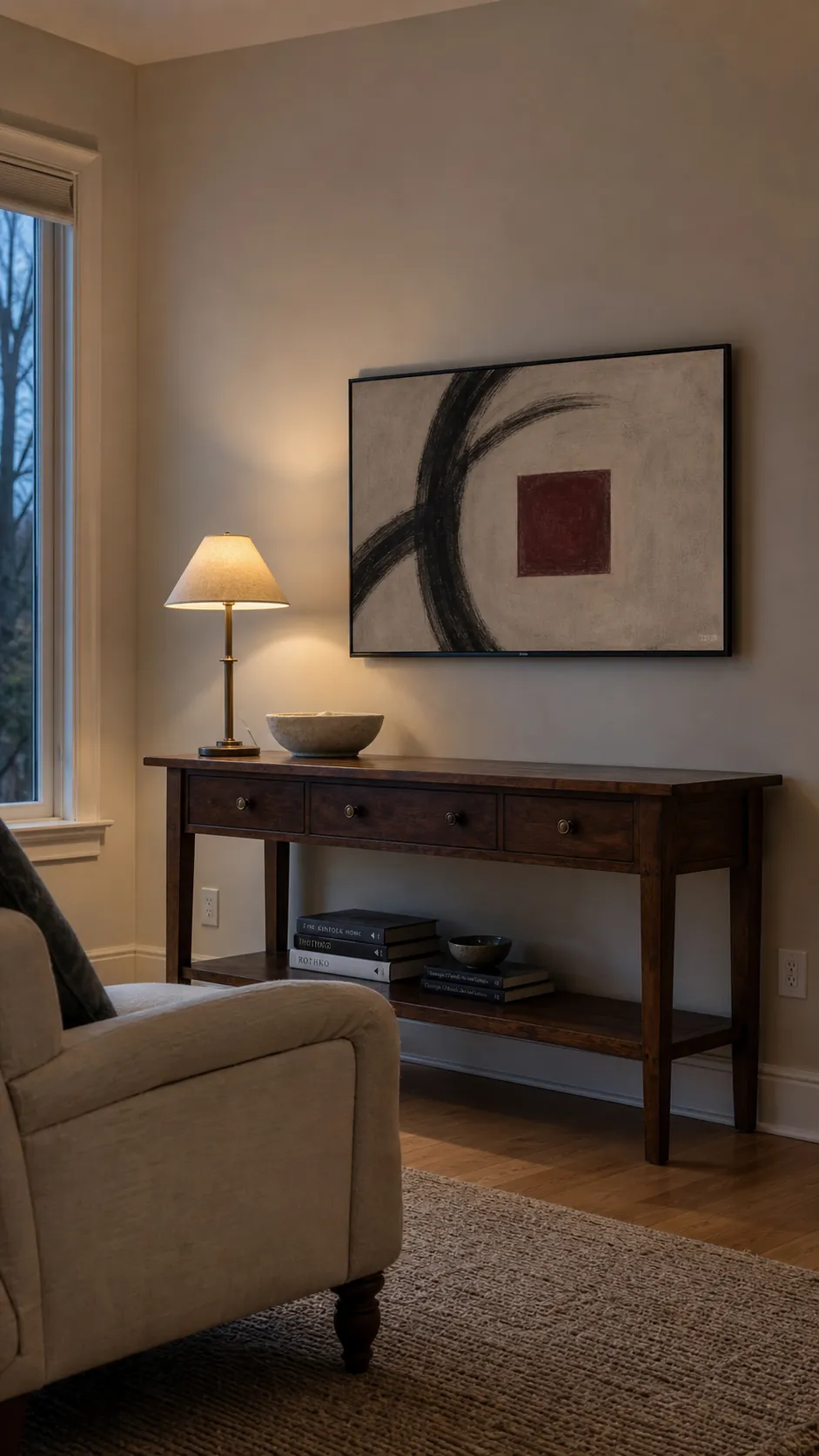
Art Mode with an Empty Surround
If your television offers a low-power art display, use one quiet abstract image and leave the surrounding wall empty. Match screen brightness to the room rather than making it glow like a light box, and use energy-saving settings that fit your habits. This approach works because the screen itself becomes the only art. Additional frames around it would dilute the effect.
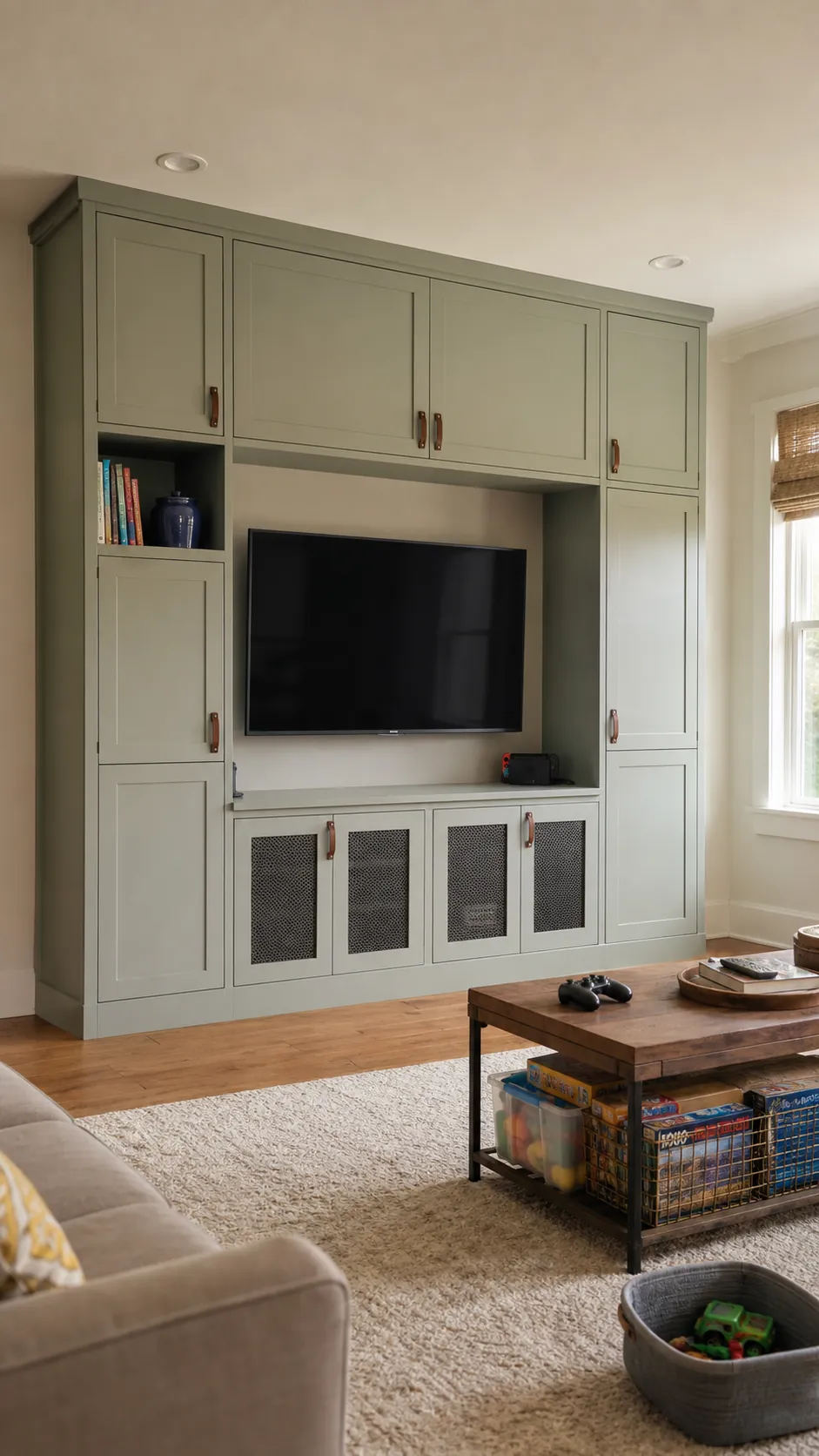
Closed Storage Towers
Two closed storage towers can frame a television without the visual noise of fully open bookcases. Use plain fronts, align their tops, and leave open space around the screen for access and airflow. Internal shelves can hold games, toys, and devices, but active electronics need the ventilation their manuals specify. A few open niches are enough; every compartment does not need styling.
Soft Bias Lighting
A restrained light source behind or beside the screen can soften the contrast between a bright picture and a dark wall. Use a product intended for the purpose, choose a neutral white rather than changing rainbow colors, and route its cable with the rest of the system. The effect should reduce eye strain and add a faint halo, not turn the media wall into a nightclub feature.
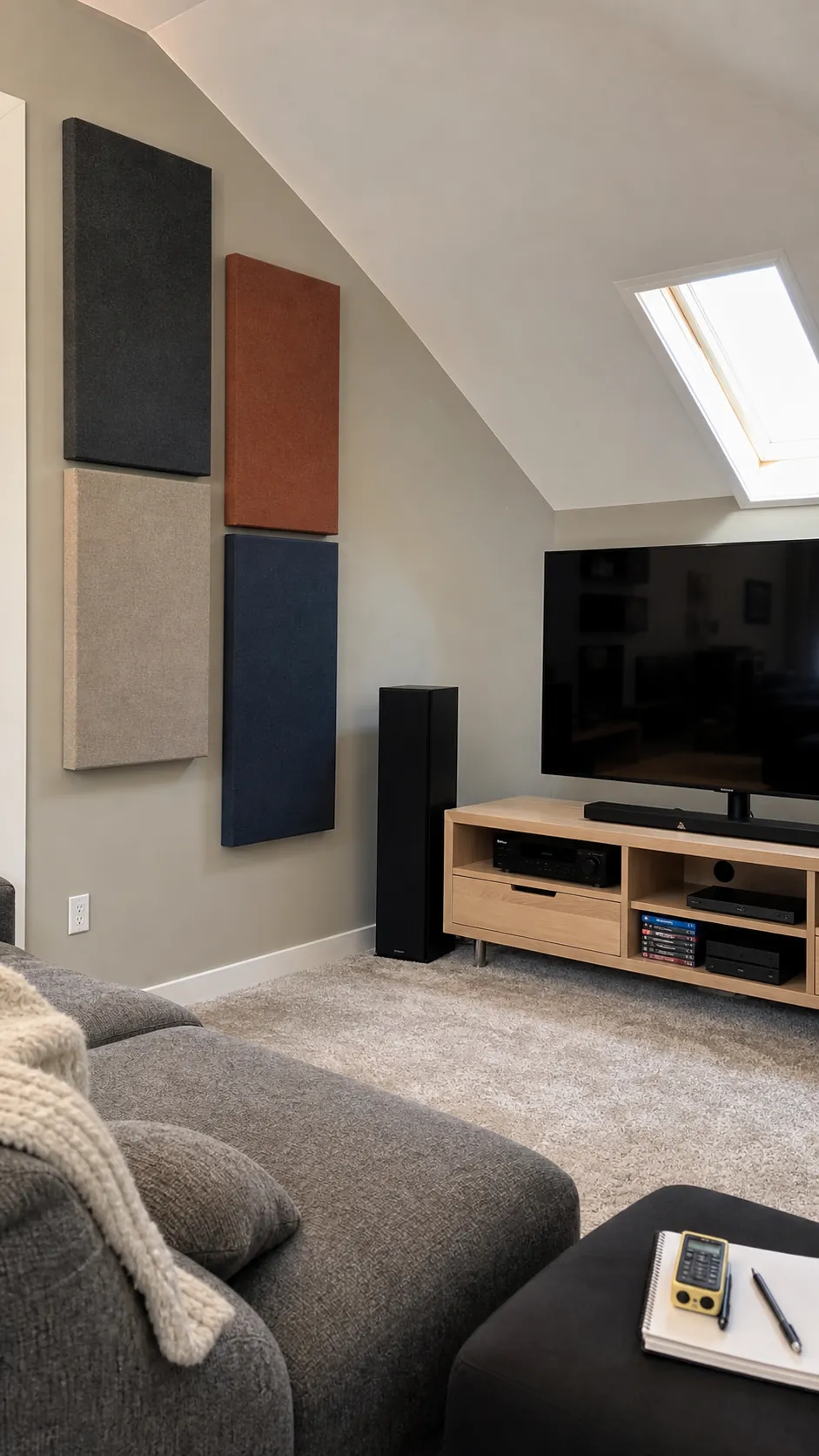
Acoustic Panels on One Side
In an echoing room, a cluster of fabric-wrapped acoustic panels can add texture and serve a practical purpose. Place them in one side zone rather than boxing the TV with perfect symmetry. Verify the panels’ tested performance and choose plain fabric colors that relate to the rug or sofa. Keep them clear of screen vents, speakers, and any movable mount.
Four-Frame Gallery with One Palette
TV gallery wall ideas stay calmer when the number of works is limited. Use four frames with one mat color and related non-scenic prints, placing them outside—not tight against—the screen. Treat the television and frames as a single low rectangle when checking the outer silhouette. If small gaps and mixed subjects make your eye dart constantly, remove two pieces rather than adding more.
Deliberate Breathing Room
The least cluttered TV wall may need no added wall decor. A correctly sized console, hidden cables, one closed box for remotes, and open wall around the display can make the television look considered rather than unfinished. This is especially effective when nearby walls already carry art or shelves.
Remove everything temporary, photograph the wall, and live with the simpler version for several evenings. Check the screen height, glare, cable route, ventilation, and storage before deciding anything is missing. When the equipment works comfortably and the eye has one clear place to land, empty space is not a gap—it is the organizing element.