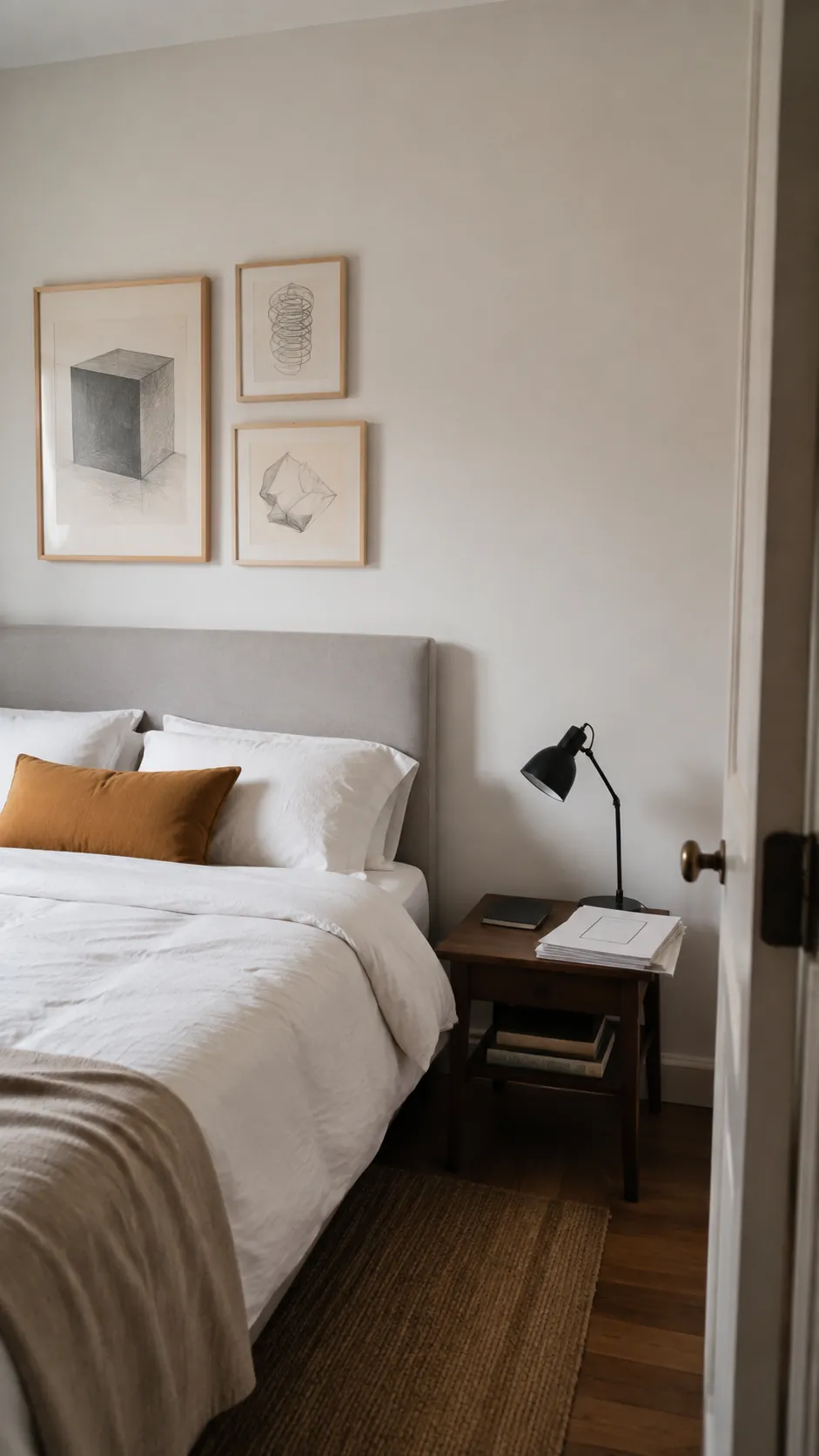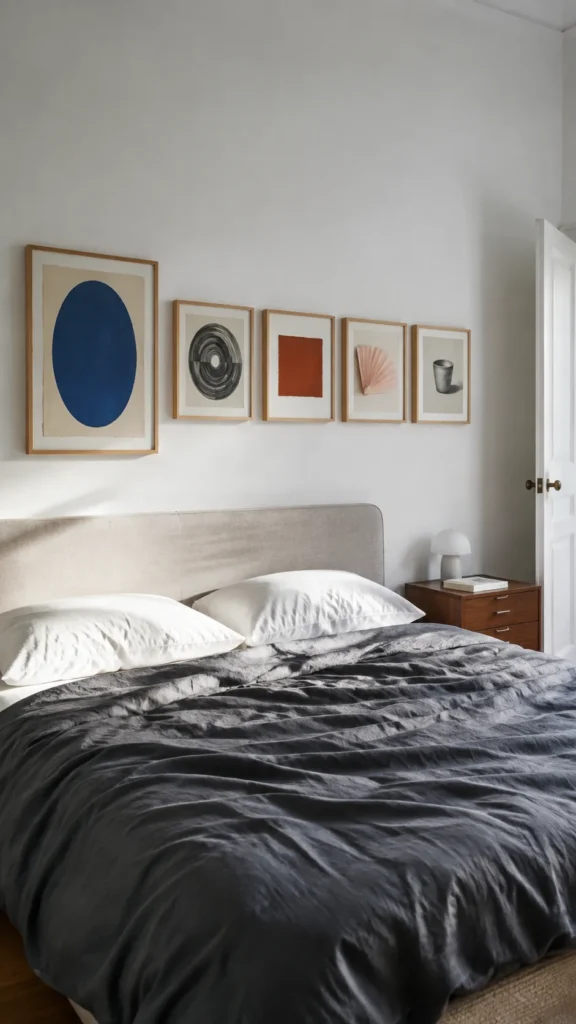
17 Above Bed Gallery Wall Ideas for a More Personal Bedroom
The awkward part is rarely choosing a picture you like. It is making several pictures belong together above a bed without crowding the headboard or turning the room into a noticeboard. Choose one organizing rule first, then let the artwork bring the personality.
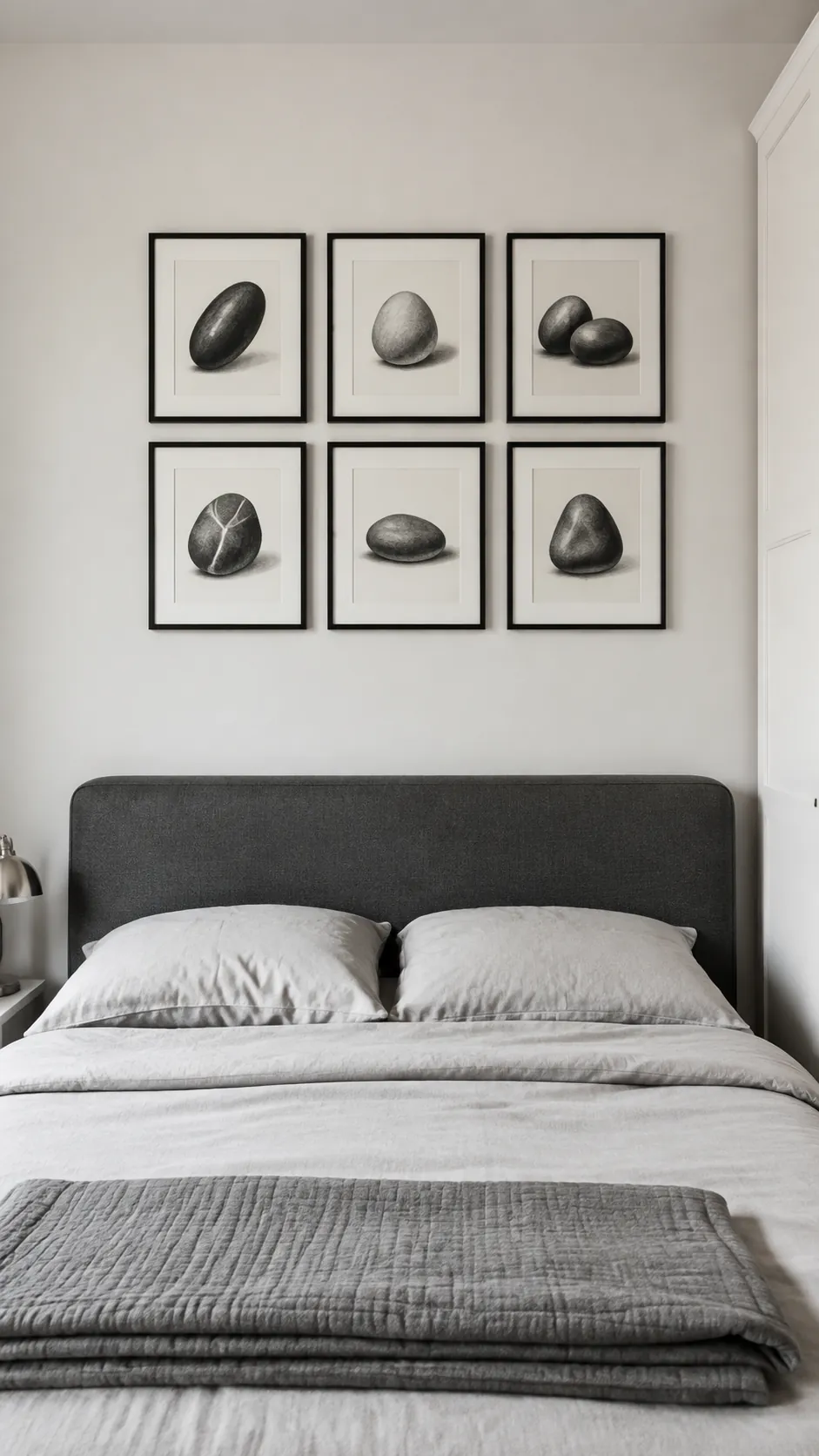
A calm grid of six matching frames
Six matching frames give a scattered collection an immediate sense of order. Use two rows of three and keep the outer edges aligned, especially when the headboard already has strong vertical lines. Matching mats can unite photographs with different crops without forcing every image into the same proportions. Start with paper templates and compare the full rectangle with the headboard width before making holes. The grid should read as one composition from the doorway, with enough space below it that someone sitting against the pillows cannot touch the frames.
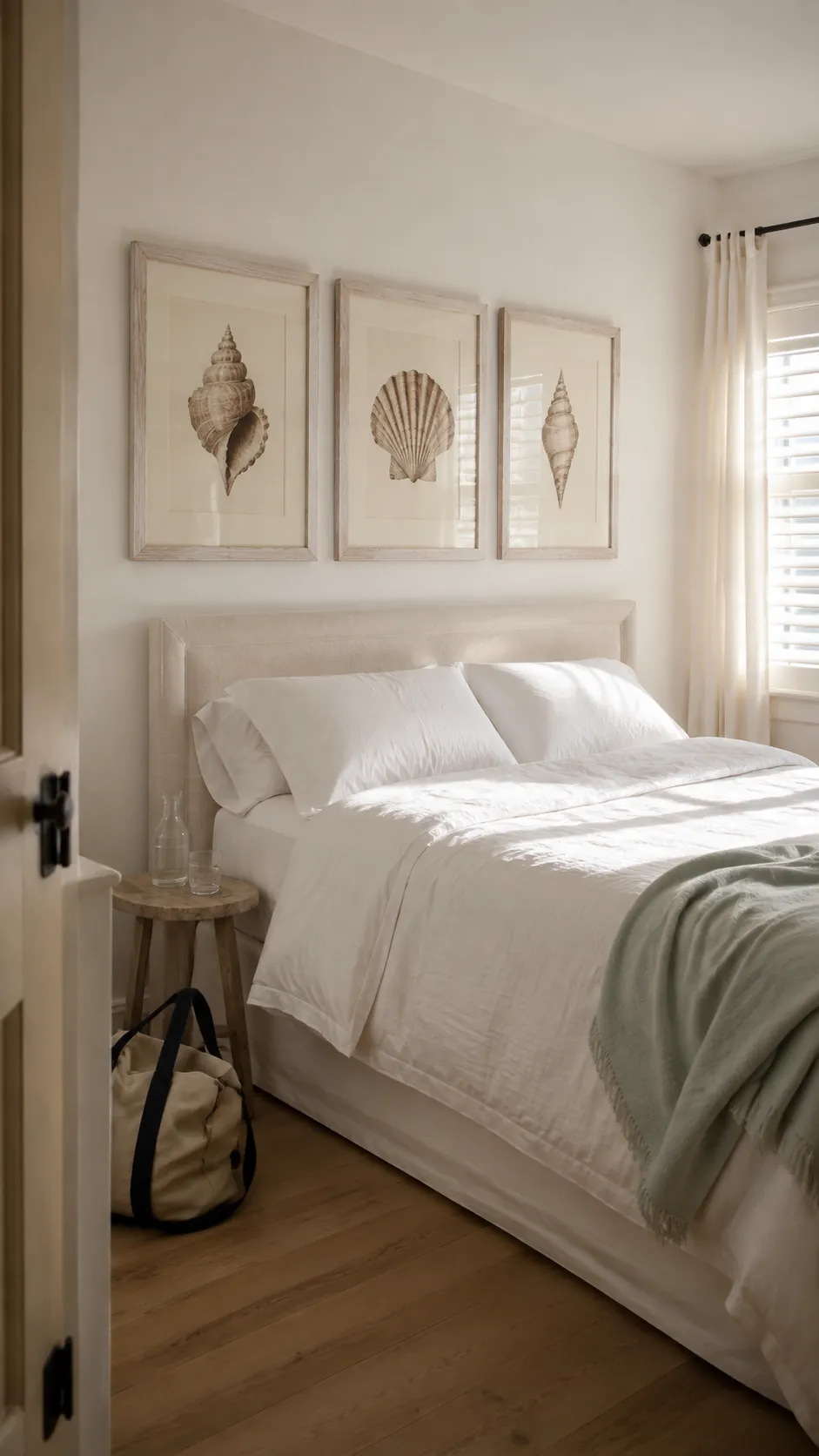
Three generous prints in a single row
A trio works when you want a gallery wall above the headboard without a dense cluster of small objects. Choose prints large enough to read across the bedroom, then give them equal gaps so the eye travels smoothly from one to the next. A shared subject, such as studies of shells, makes the relationship obvious while allowing each picture to stand alone. Check the total width of all three frames plus both gaps before ordering. If the group spills beyond a narrow headboard, smaller frames usually solve the problem more cleanly than squeezing the gaps.
One anchor picture with smaller companions
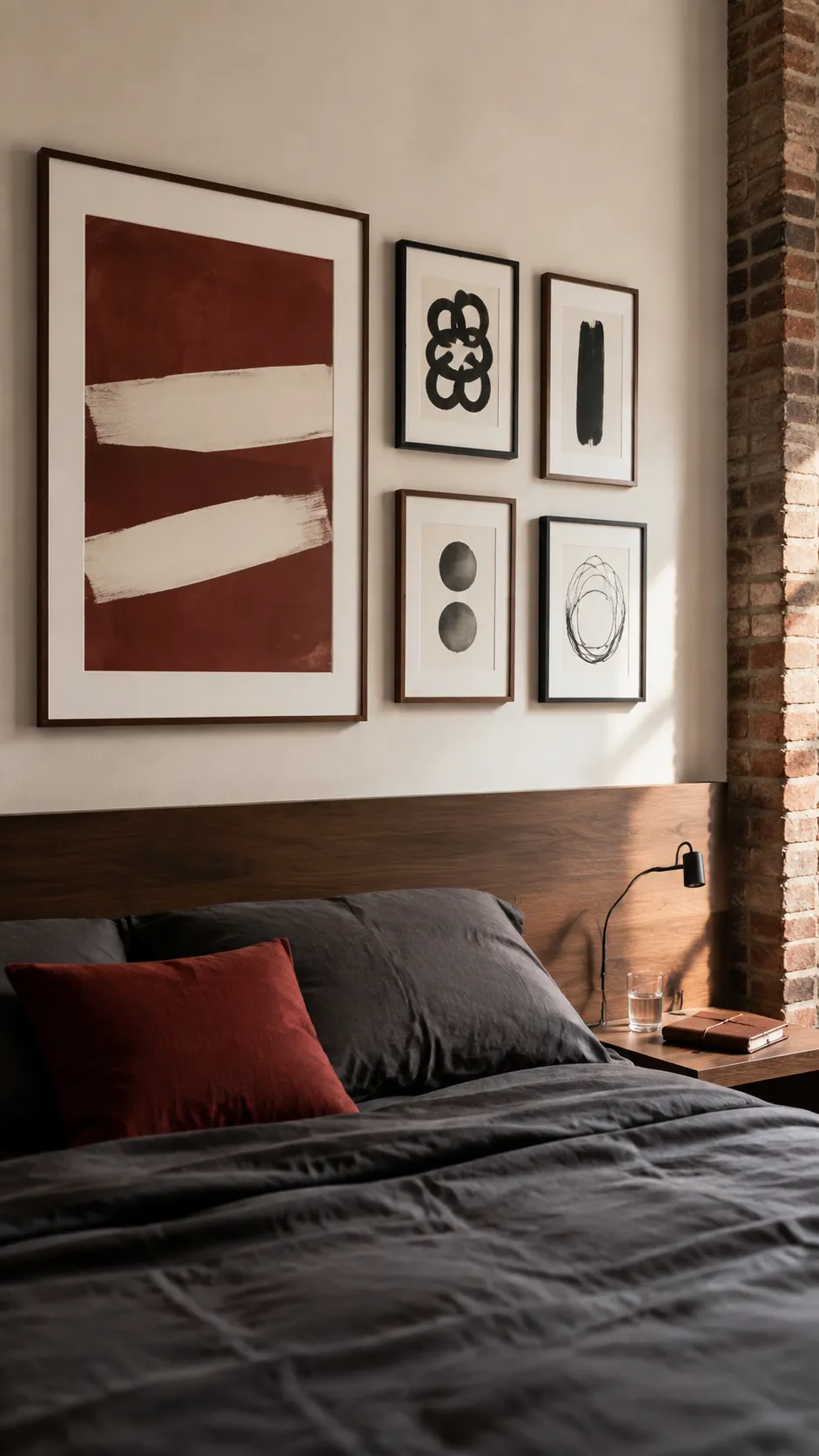
Build outward from a favorite picture instead of shopping for a complete matching set. Place the largest frame slightly away from the center, then balance its visual weight with several smaller pieces on the opposite side. Repeat one color from the anchor in those companions so the arrangement feels connected. Keep the small frames close enough to belong to the same group rather than drifting toward the ceiling. This is a useful frame layout above bed for a collection that includes one meaningful original and several affordable prints.
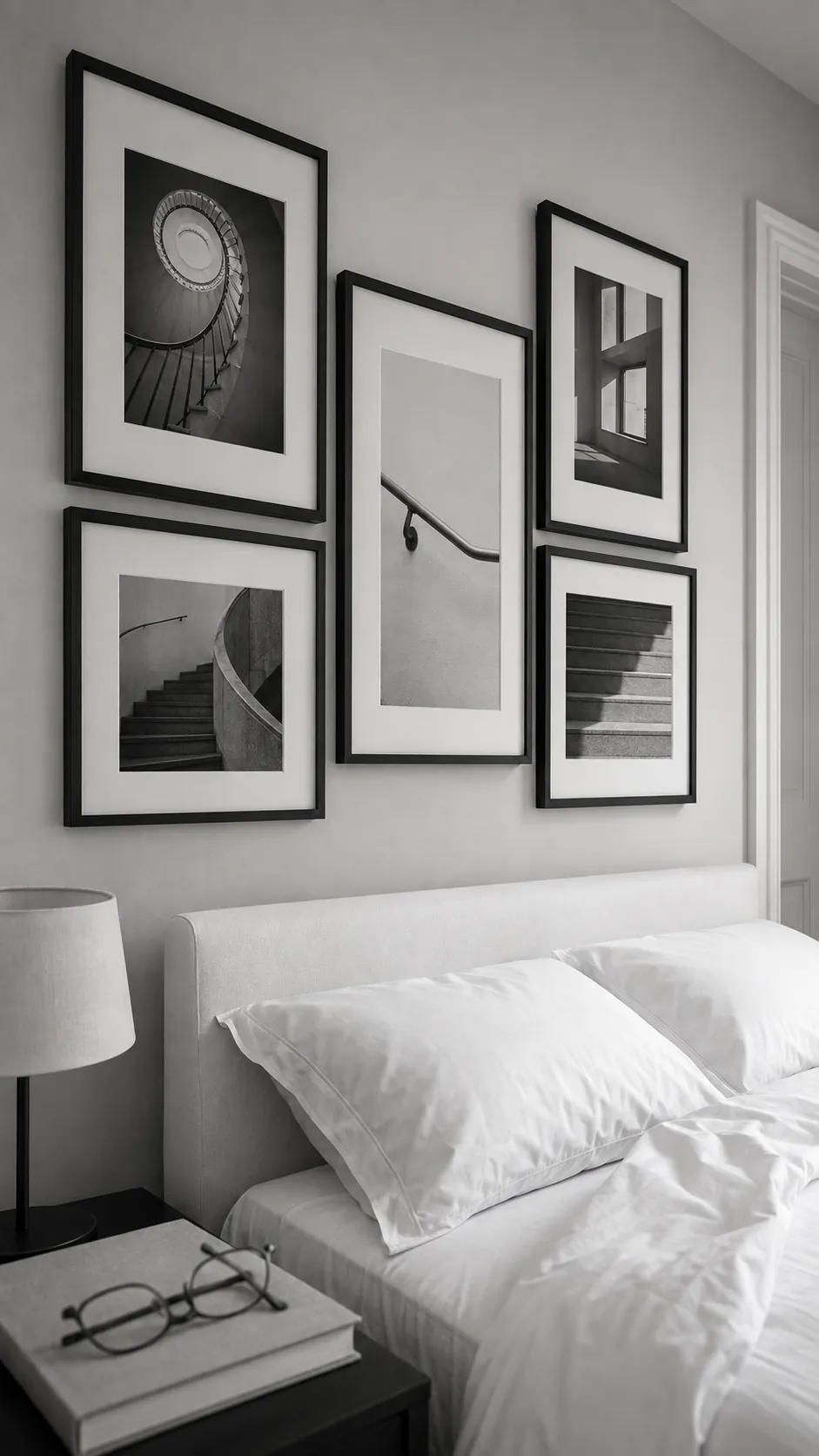
Black and white photographs with wide mats
Black and white photographs can bring different places and moments into the same bedroom picture wall. Wide white mats give busy images breathing room and make a modest print feel deliberate. Choose a mix of close details and open compositions rather than several equally crowded photographs.
Thin black frames work well against pale walls, but their outer edges become visually strong, so uneven gaps show quickly. Lay out the frames on the floor and photograph the arrangement before transferring it to the wall. Use acrylic glazing where appropriate and hardware rated for the frame and wall construction.
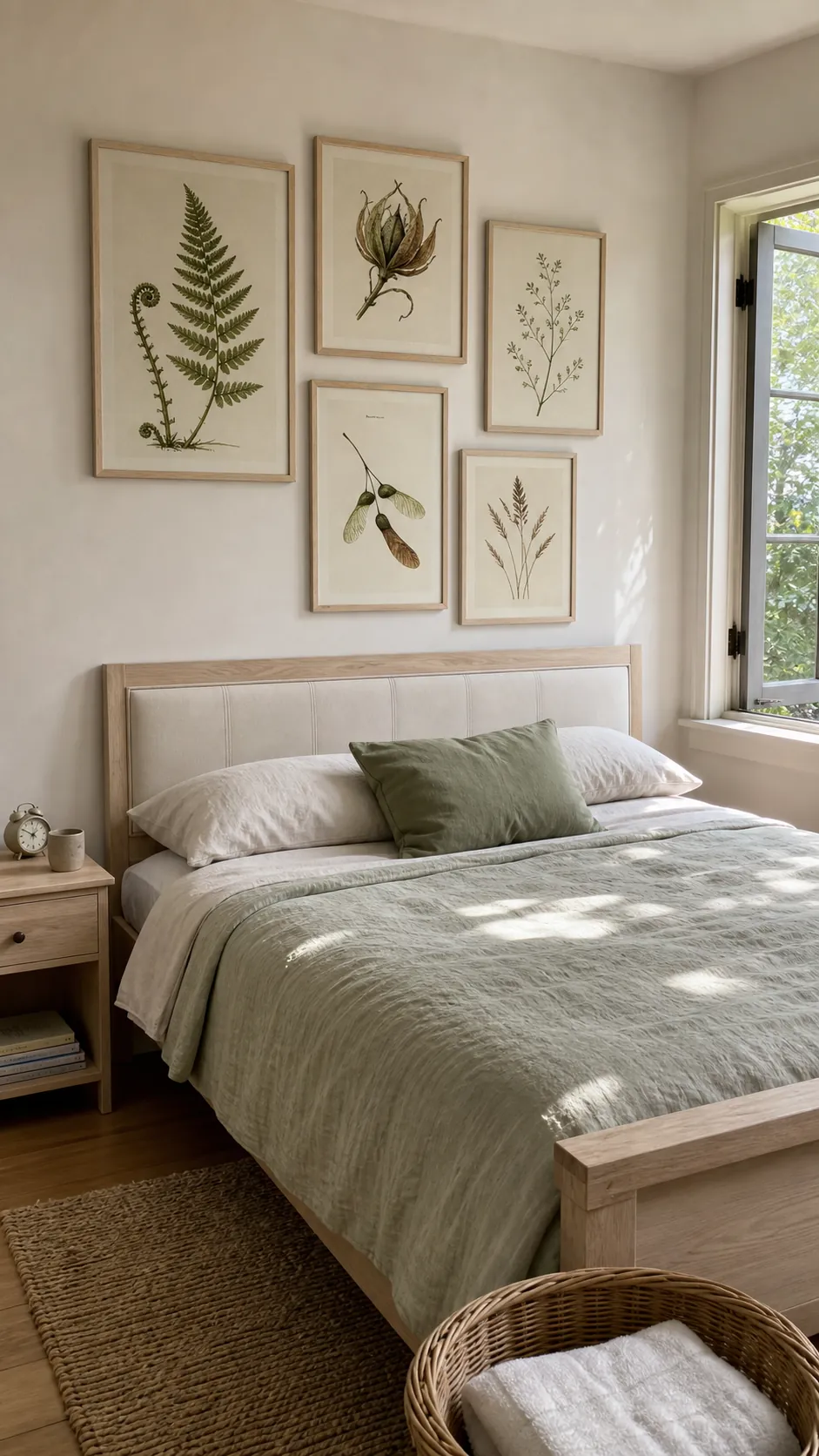
Botanical studies in pale wood frames
Botanical prints offer detail without requiring a bedroom full of plants. Combine different leaf shapes or flower structures while keeping the paper backgrounds similar. Pale timber frames suit a fabric headboard because they introduce another natural texture without a sharp color break. A small cluster can look intentional when its center aligns with the bed, even if the individual frames are not symmetrical. Avoid filling every open patch with another print, since the blank wall helps the fine stems and leaves remain readable.
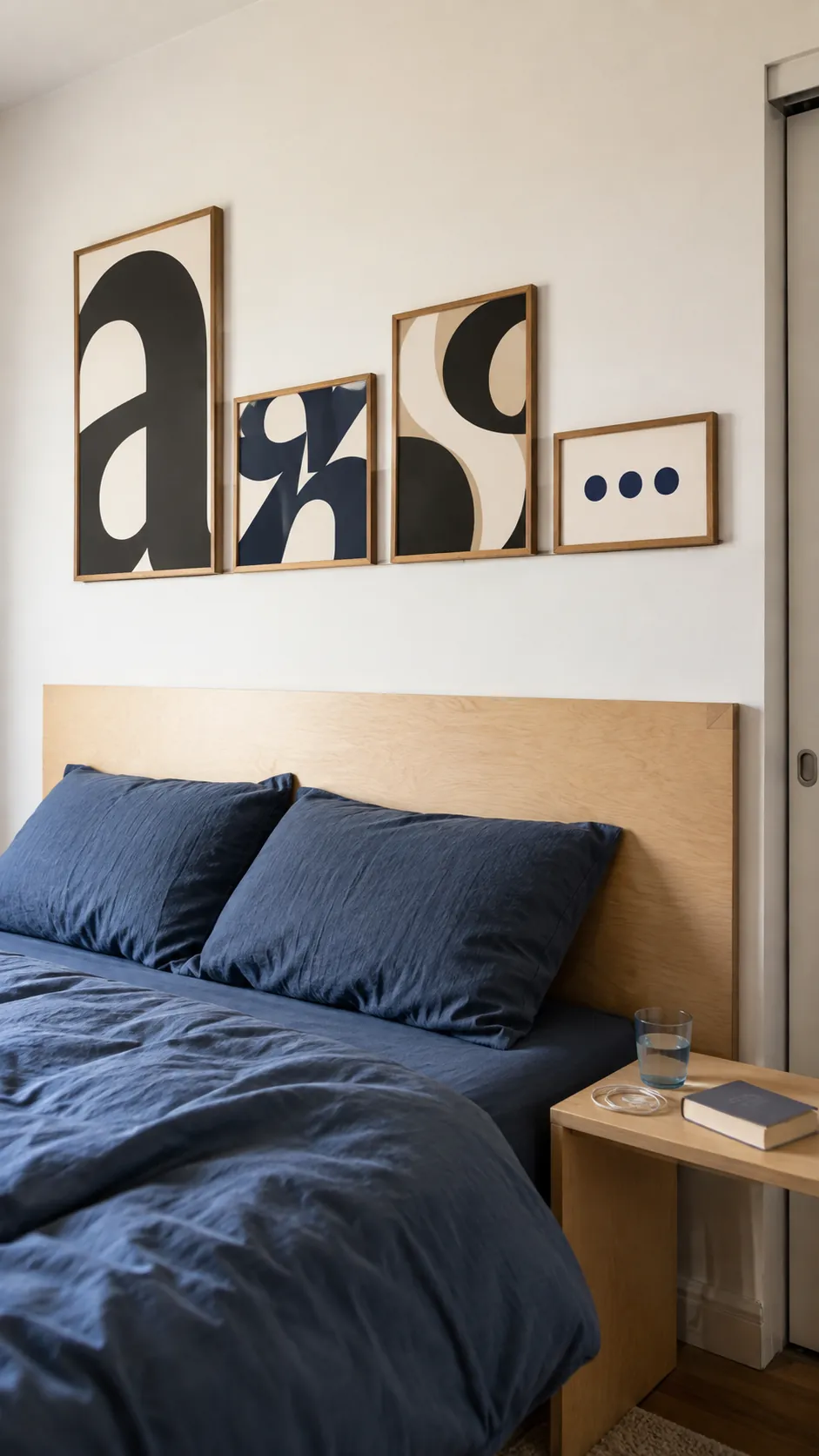
A shared lower edge for mixed frame sizes
Aligning the bottom edges gives mismatched frames a clear organizing rule. The tops can rise and fall while the straight lower line connects the group to a horizontal headboard. This arrangement is especially helpful when you already own a tall portrait and several shorter pictures. Keep the gaps reasonably consistent, then test the group from the bed entrance rather than judging each piece separately. Leave enough clearance for bedding, seated heads, and routine movement instead of relying on a universal hanging distance.
An airy pair above a tall headboard
A tall headboard leaves less usable wall than a low platform bed. Two restrained prints can fill that remaining space without crowding the ceiling. Select artwork with quiet backgrounds and slim frames so the headboard retains its role as the main furniture feature. Match the pair by frame size and allow the subjects to differ, such as two ink studies of everyday vessels. If the available clearance feels tight when you sit upright, move the art to an adjacent wall rather than forcing a low installation.
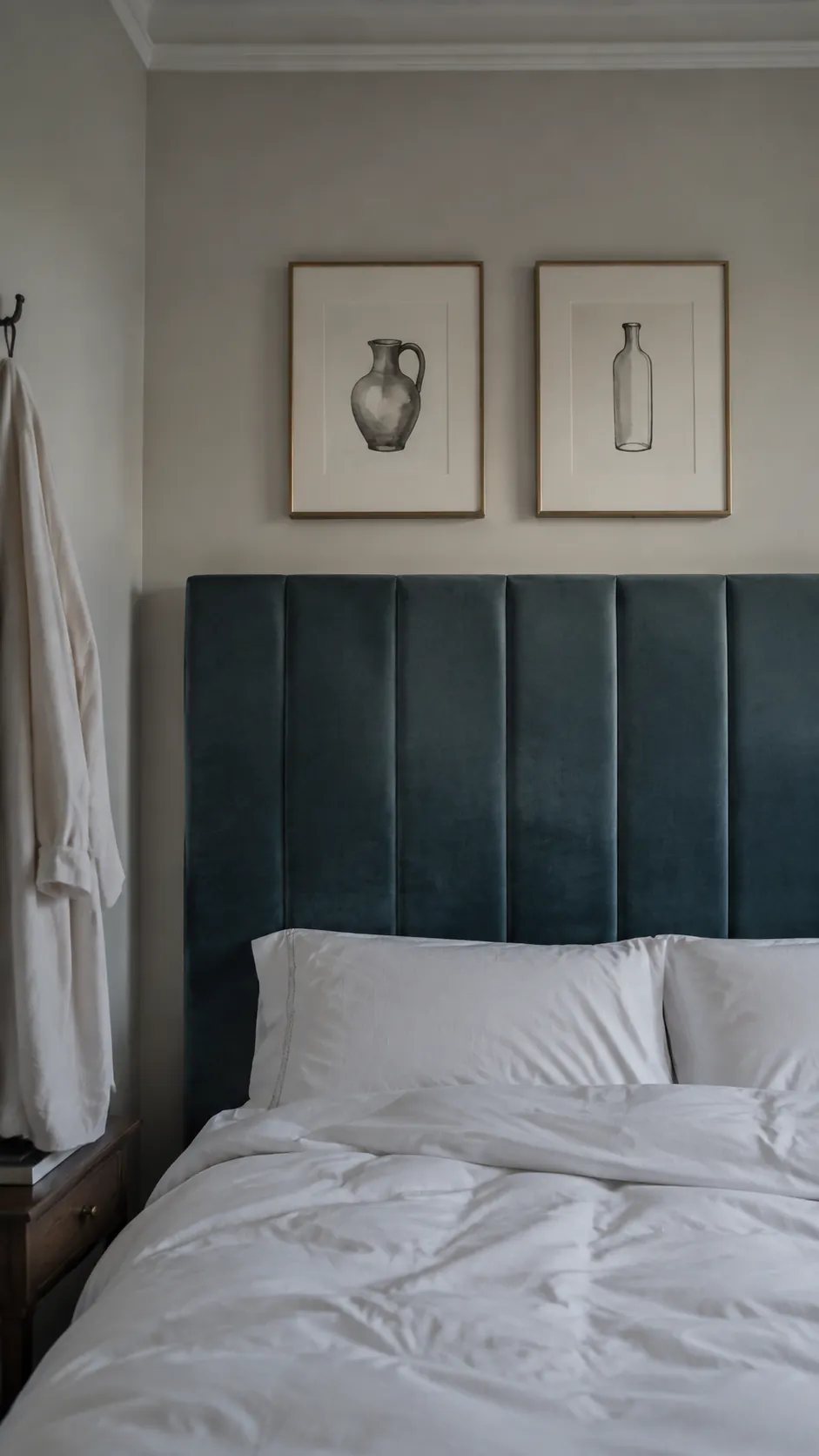
A collected salon arrangement with repeated color
A salon arrangement succeeds when the variety has a boundary. Mix frame shapes, picture sizes, and media, then repeat a limited palette across the collection. Sketch an imaginary rectangle around the whole group to stop a few small pieces from trailing away.
Leave narrow but visible wall gaps so ornate frame edges do not collide visually. This approach suits collected work, but it still benefits from a paper layout before hanging. Choose lighter pieces for the area above sleepers and reserve heavy objects for another wall.
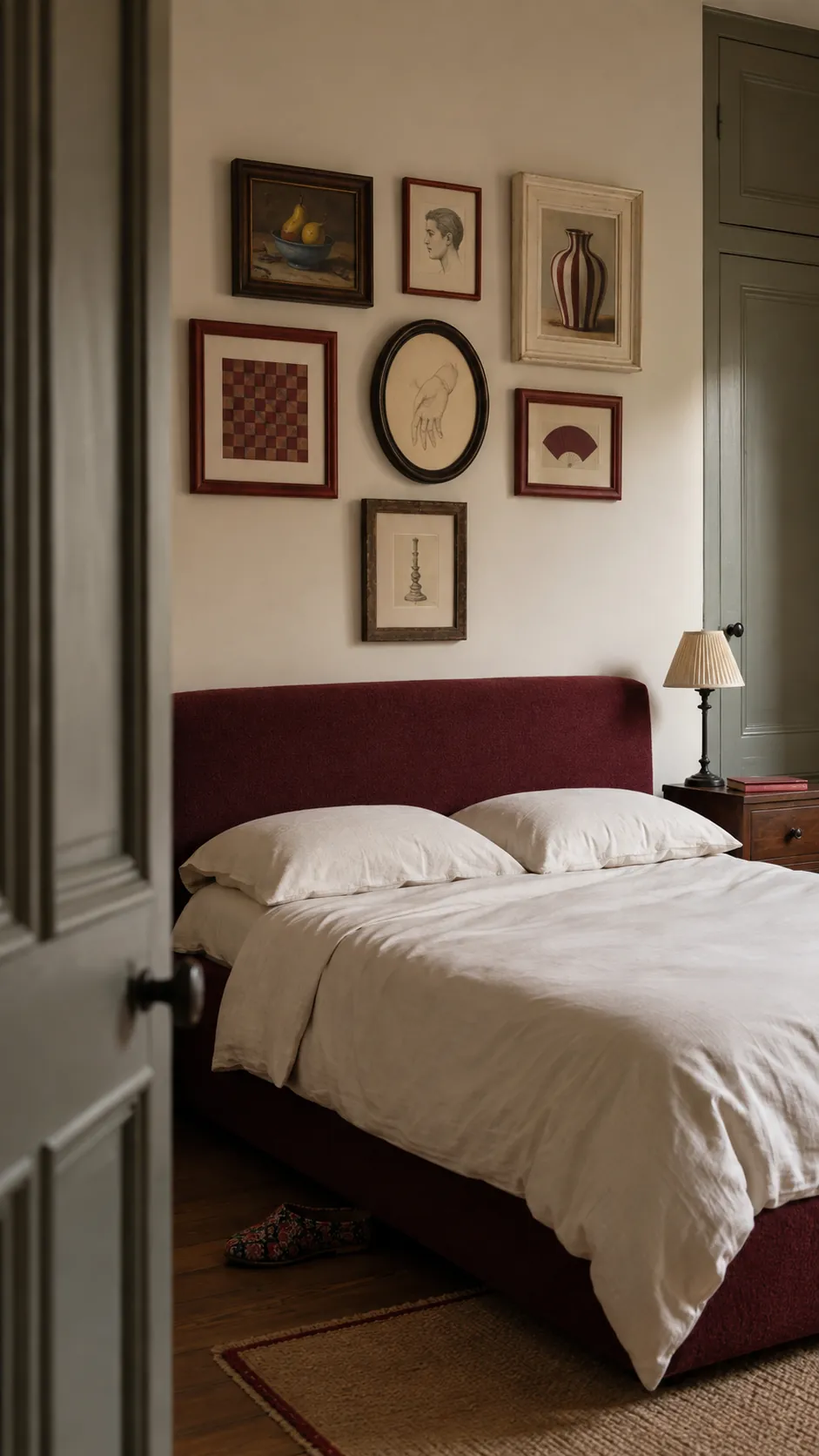
Travel memories without a souvenir shop effect
A personal gallery can include travel memories without covering the bed wall in unrelated souvenirs. Pair a street photograph with a ticket reproduction, a small map, or an architectural sketch that recalls the same trip. Similar mats do more to unify these different formats than buying identical images. Keep readable text secondary so the wall remains a quiet bedroom feature. Scan fragile paper originals when fading or damage would be upsetting, and display the reproductions instead.
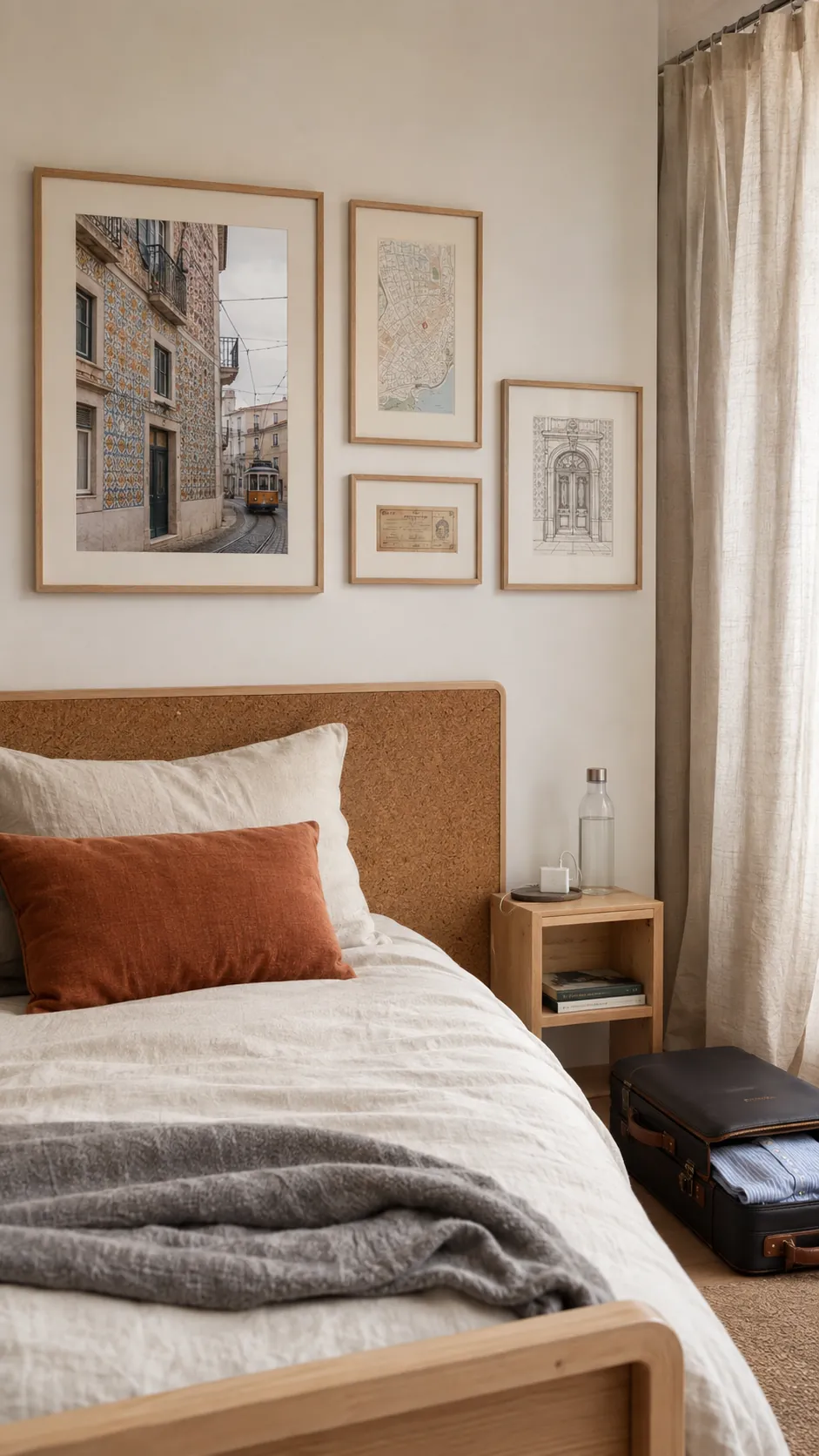
A gallery centered on an off center bed
An off center bed does not automatically need to move. Center the picture group on the headboard when door clearance, a wardrobe, or a radiator determines the furniture position. The bed and gallery will then read as one zone instead of competing with the room perimeter. Keep the nearest frame clear of the adjoining wall so the arrangement does not look wedged into the corner. A narrow bedside table or a simple lamp can finish the compressed side without sacrificing the walkway.
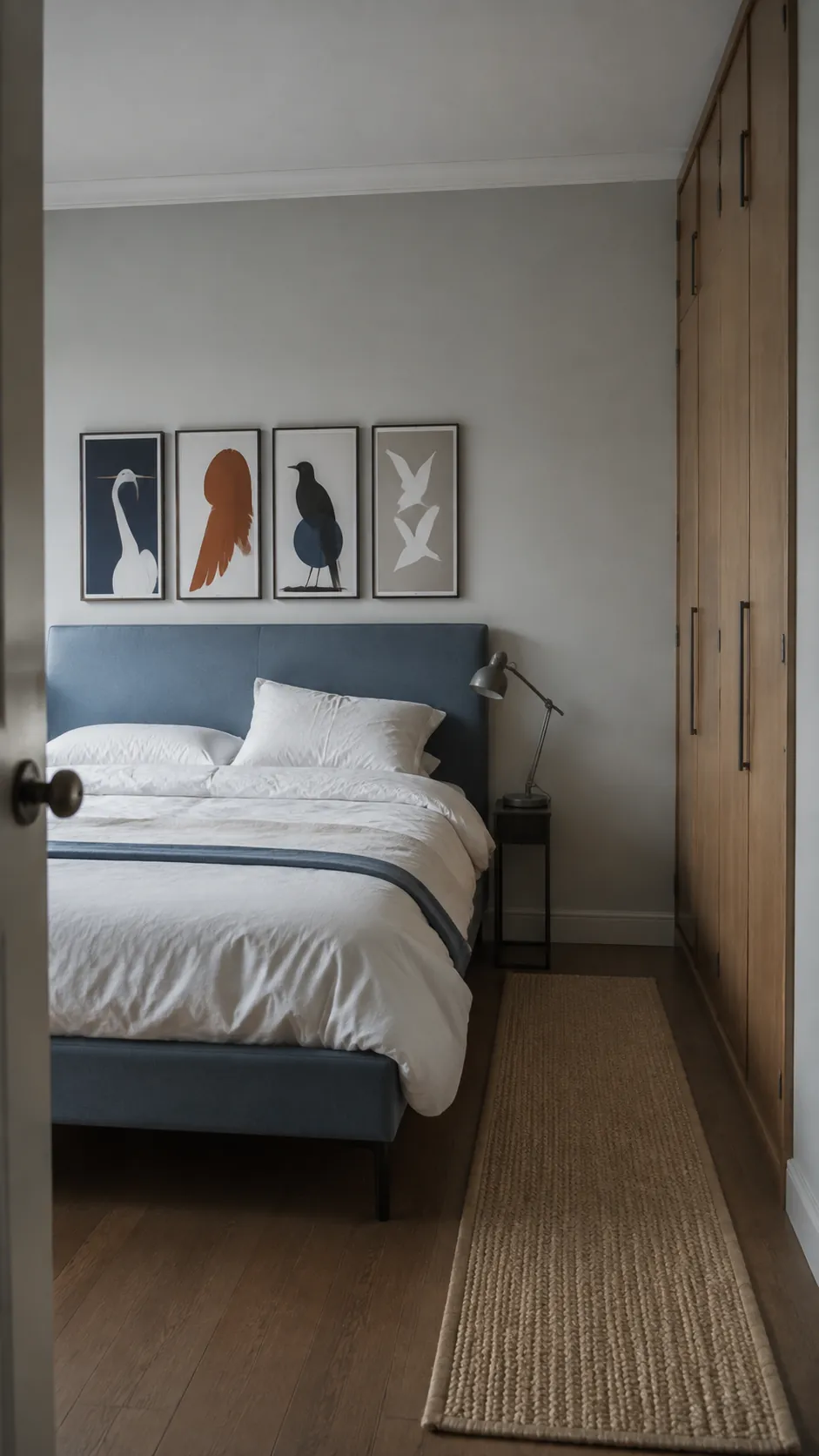
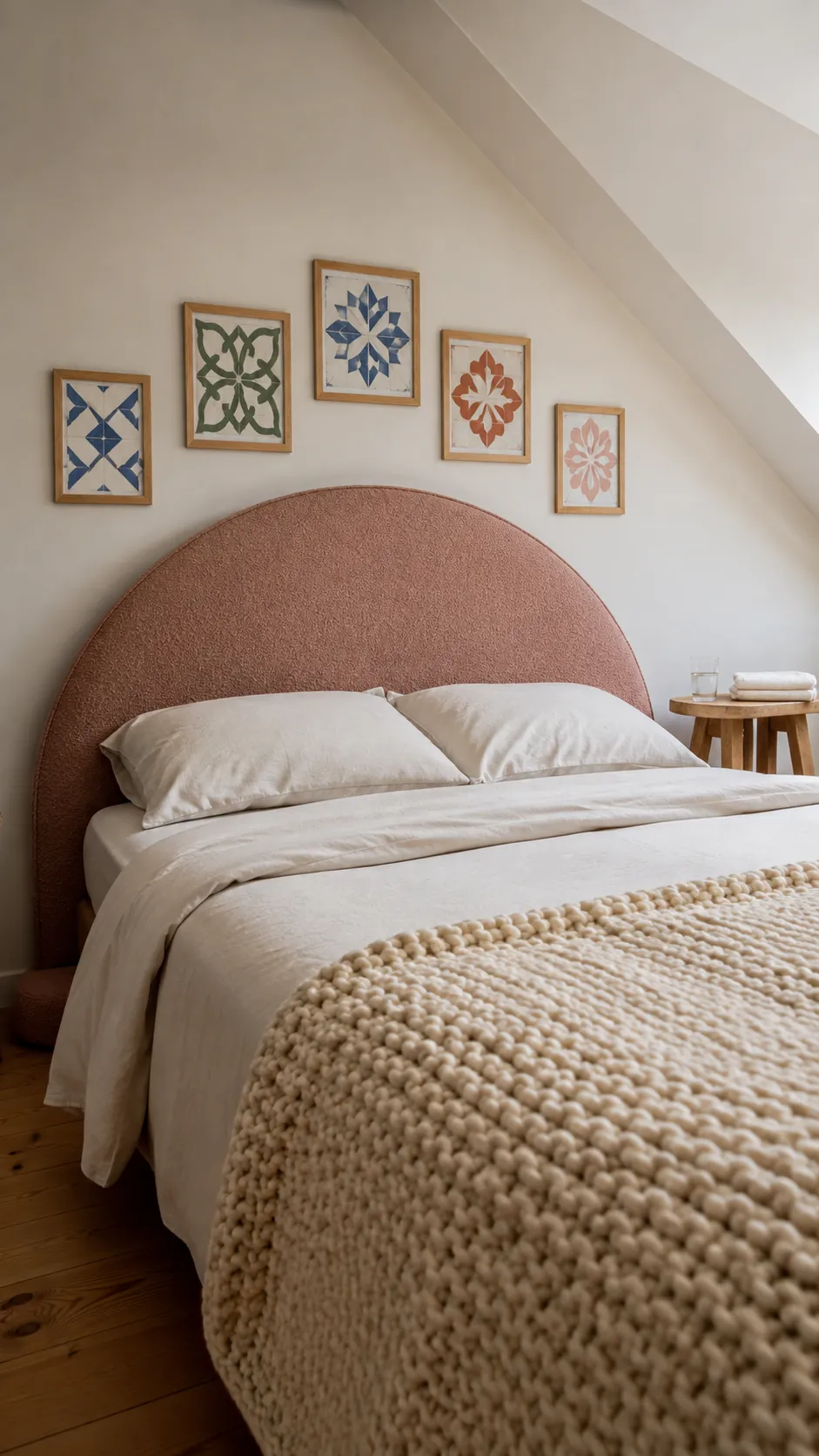
A soft arch of pictures above a curved headboard
A curved headboard can guide the outline of the gallery without dictating every frame shape. Place the highest picture near the middle and step the neighboring pieces down gently to create a loose arch. Leave breathing room between the curve and the lowest frames so the two outlines remain distinct. Rectangular frames can still work because the overall silhouette supplies the movement. Try this with a small group first, since too many tiny pieces can make the curve difficult to read.
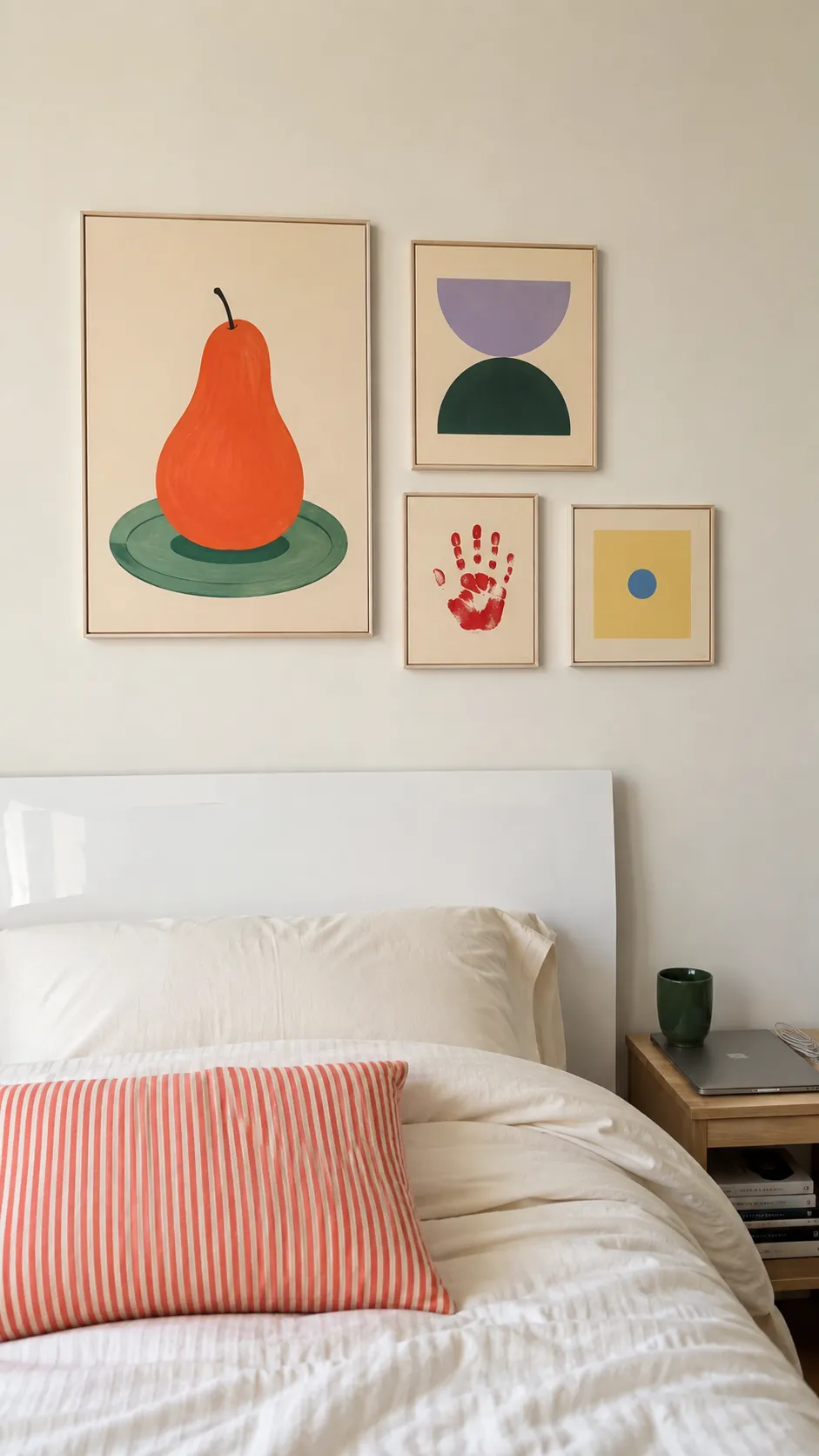
Colorful prints connected by the same paper tone
You can keep playful prints and still make the bedroom feel considered. Choose pictures with a shared cream or white paper background, then allow the subjects to introduce stronger color. That common ground links a bold abstract to a fruit study or a graphic shape without making them a matching set. Repeat just one of the print colors in a pillow or throw to connect the wall with the bed. Keep other patterns quiet if the pictures are already carrying several distinct motifs.
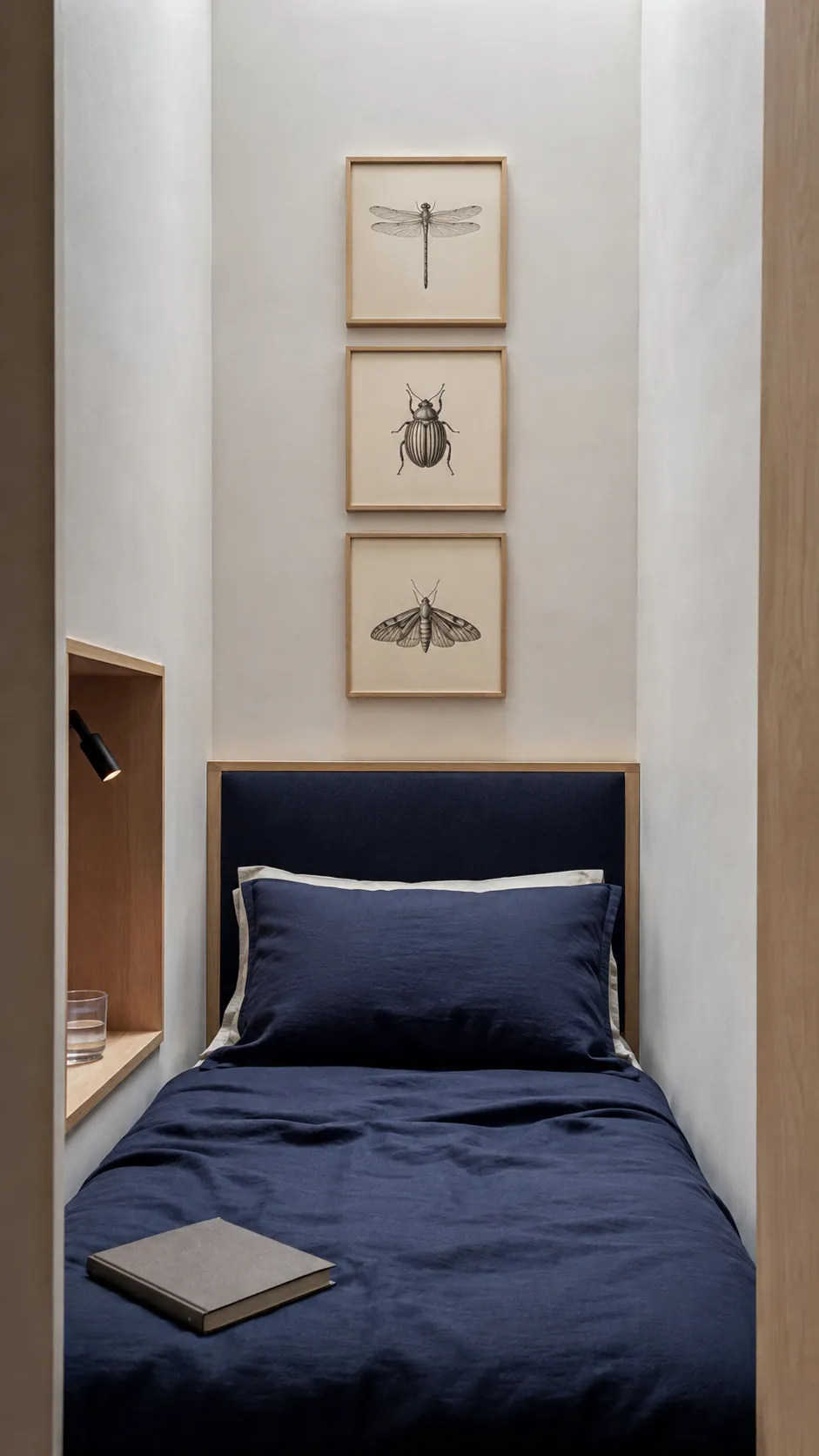
A narrow vertical stack for a compact sleeping nook
A narrow bed alcove may have more height than width available. Stack three small frames vertically over the bed center to use that shape without spilling onto nearby shelving. Long mats or portrait formats can reinforce the vertical rhythm, while generous wall space keeps the arrangement from feeling like a crowded noticeboard. Check the top frame from the normal entrance angle so it does not disappear beneath a sloped ceiling. This compact approach works best with light frames and simple subjects that remain legible at a glance.
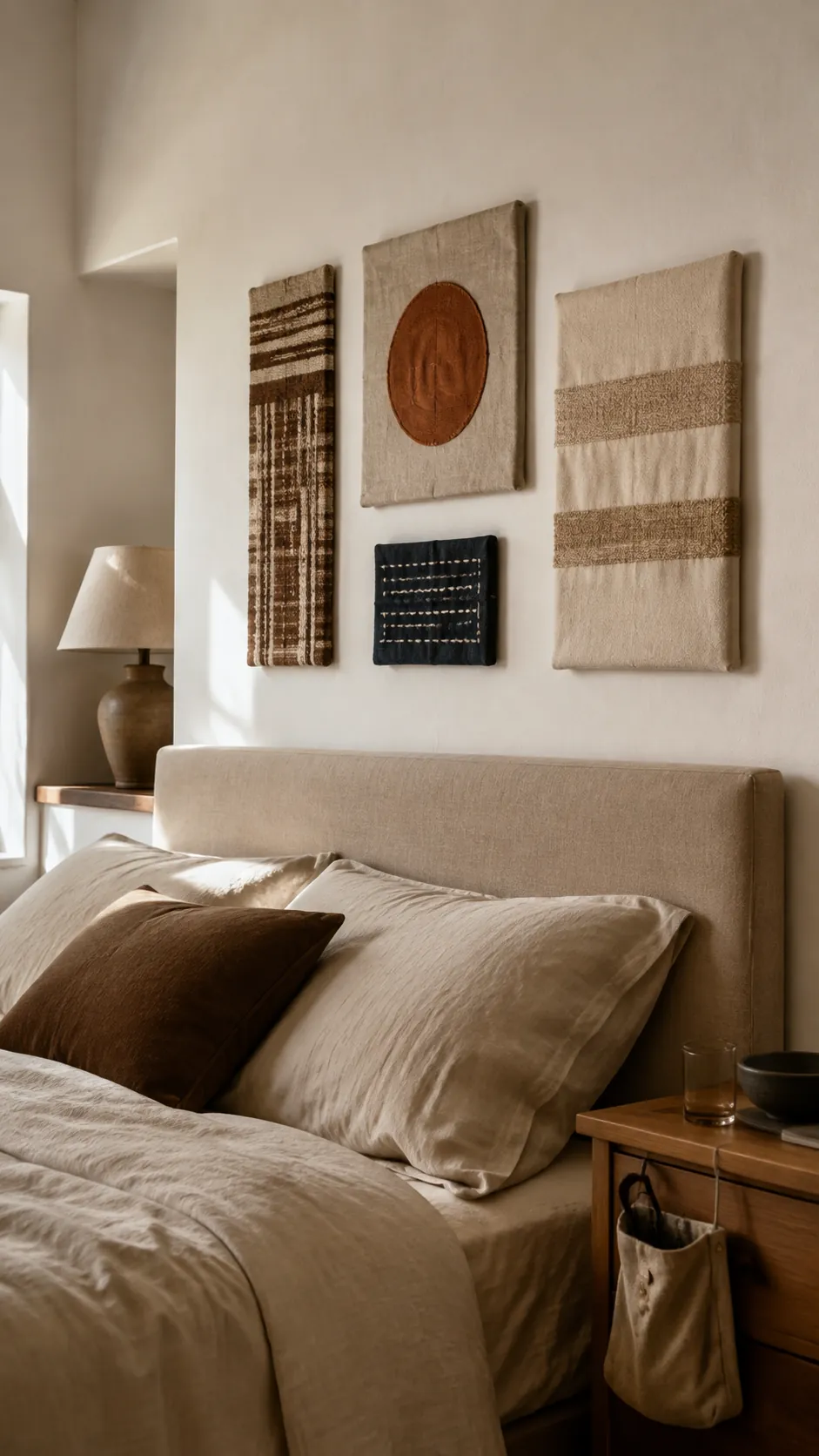
Unframed textile panels for a softer gallery
Small textile panels can create a gallery effect without a collection of glazed pictures. Mix stitched geometric shapes, woven bands, or fabric compositions while keeping the hanging system tidy. Shallow panels are easier to integrate above a bed than deep objects that project into the sitting area. Secure each piece according to its weight and construction, and keep loose cords out of reach. The texture is the point here, so a plain wall and uncomplicated bedding let the fibers do the visual work.
Dark frames against a colored bedroom wall
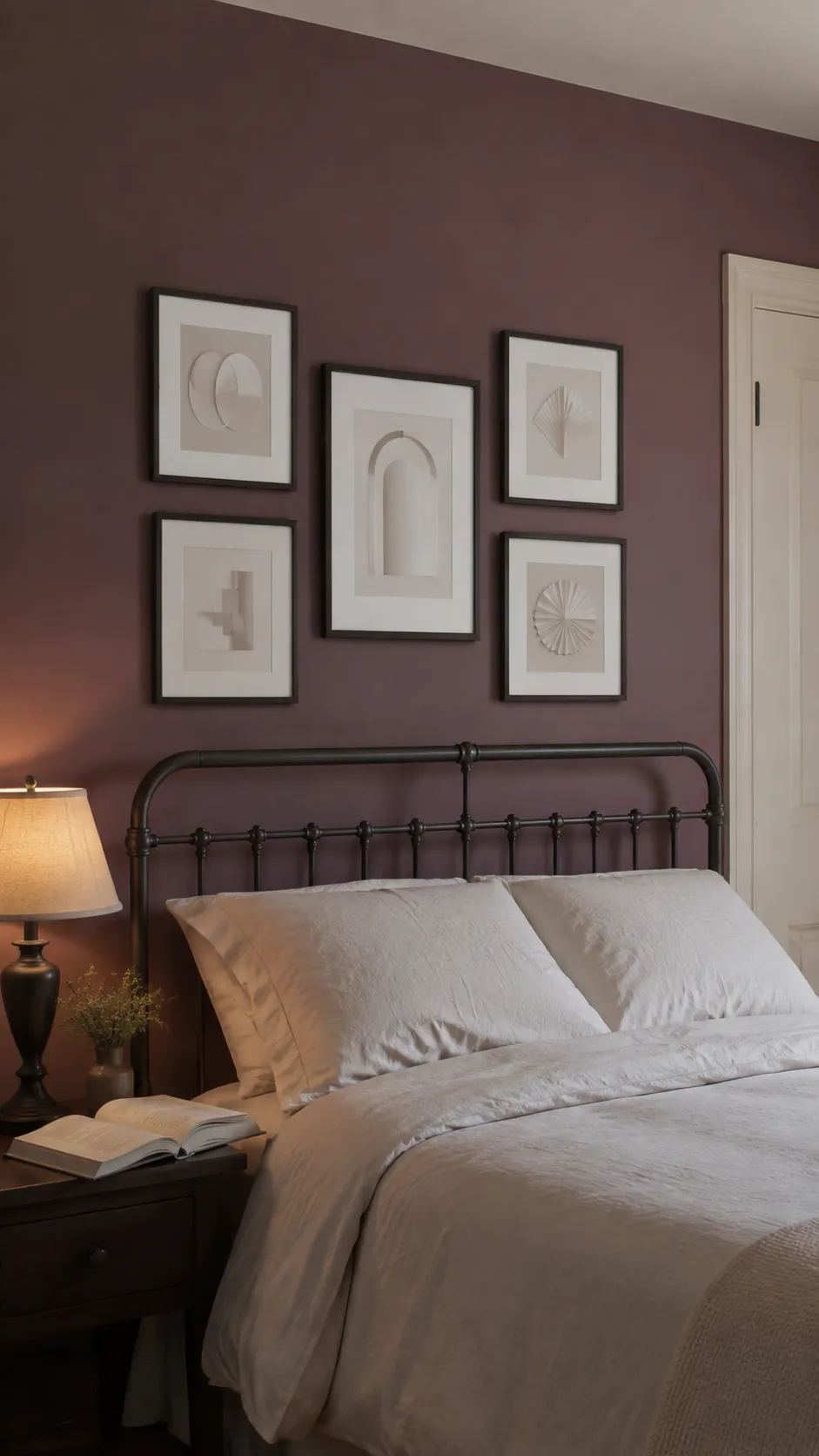
A colored wall changes how frames and mats read together. On a muted plum or blue surface, pale mats create a clear separation between the pictures and the background. Dark frames can echo a metal bed while the art supplies a lighter focal point. Sample the paint beside an actual framed print in both daylight and lamplight before committing. Avoid judging the combination from a screen, where the wall color and paper tone may shift substantially.
A small gallery between bedside sconces
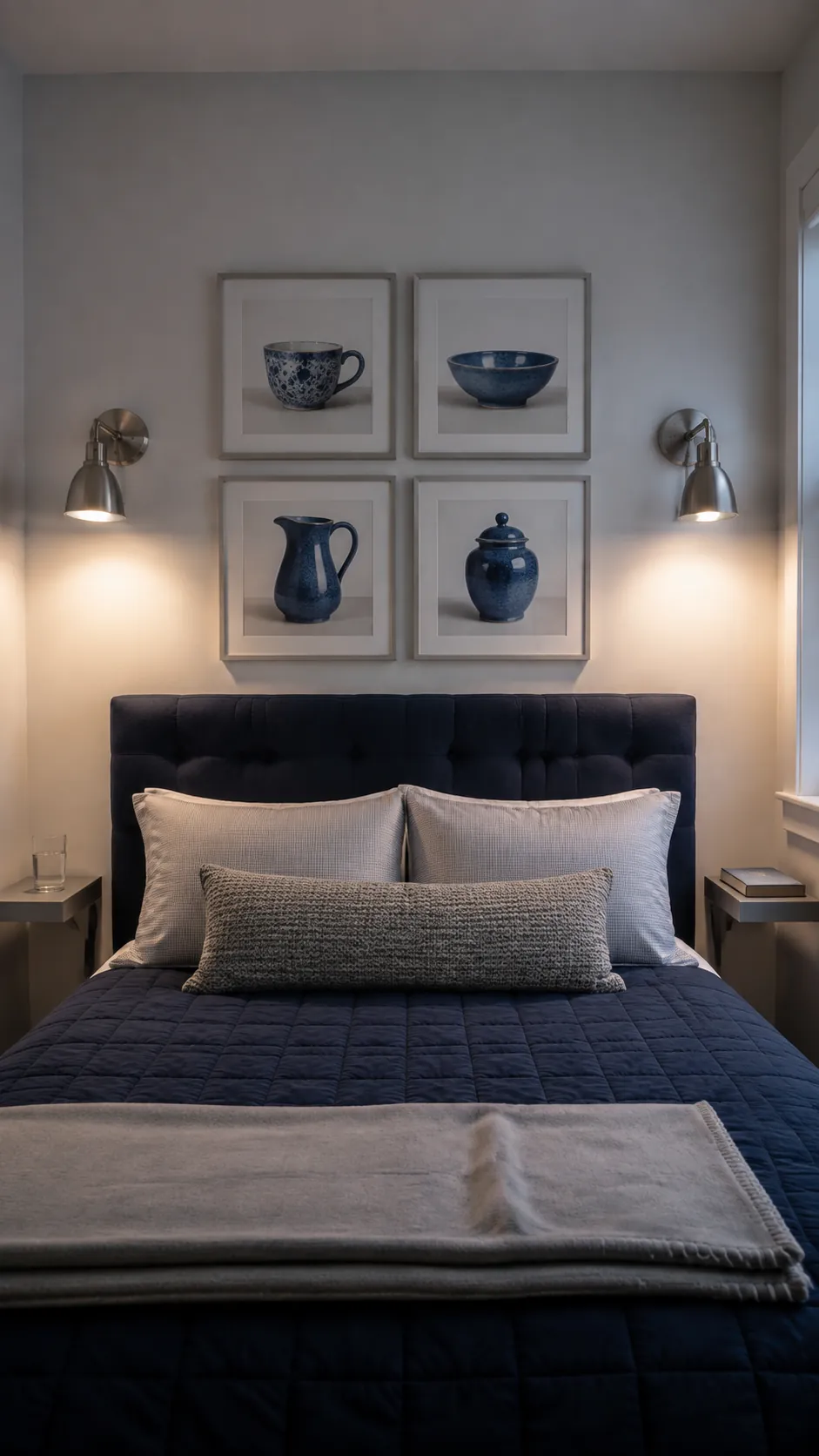
Bedside sconces can establish the outer limits of a gallery over bed. Fit a compact group between them while preserving clearance from the fixtures and their heat or movement requirements. A restrained four frame arrangement often suits this bounded space better than a sprawling collection. Turn the lights on during the paper template stage to see where glare lands on the glazing. If reflections obscure the pictures, adjust placement or glazing choice before hanging the finished group.
A lightweight gallery that can grow gradually
Start with a few lightweight pieces when budget or a changing collection makes a complete gallery unrealistic. Plan the eventual outer boundary with paper, but hang only the pictures you already enjoy. Leave deliberate room at one side instead of distributing small frames across the entire future area.
For a rental, confirm permitted fixings with the landlord and follow the hanging product instructions for the wall surface and load. Adhesive products are not automatically suitable above a bed, and a frame that feels light in your hand still needs secure support. Choose the first three pictures, test their placement while sitting up, and build the rest around a layout that works in daily use.