17 Accent Wall Behind TV Ideas for a Calmer Living Room
A television already creates a strong dark rectangle, so extra pattern around it needs a purpose. Start with the view from your sofa and notice glare, loose cables and anything that pulls your eye away from the screen. The most useful wall treatment improves that everyday view while still making sense when the television is off.
Matte charcoal paint
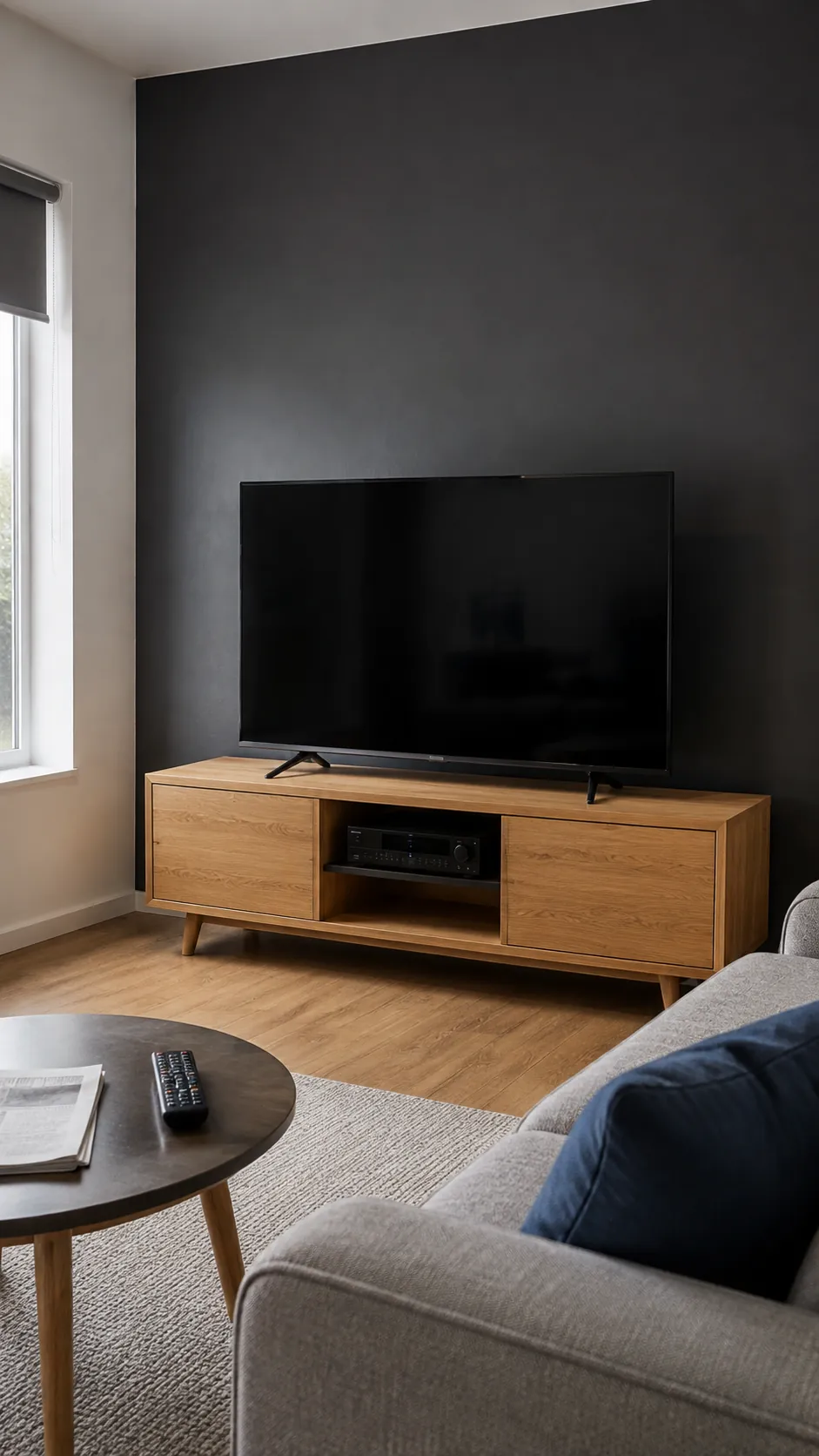
A matte charcoal wall softens the contrast between a black television and its surroundings when the screen is off. Try a large sample behind the set before painting, because charcoal can read blue or brown under different bulbs. Keep the adjacent walls lighter if the room already struggles for daylight. Dark paint will not remove reflections on the screen itself, so address bright windows separately.
A deep navy alcove
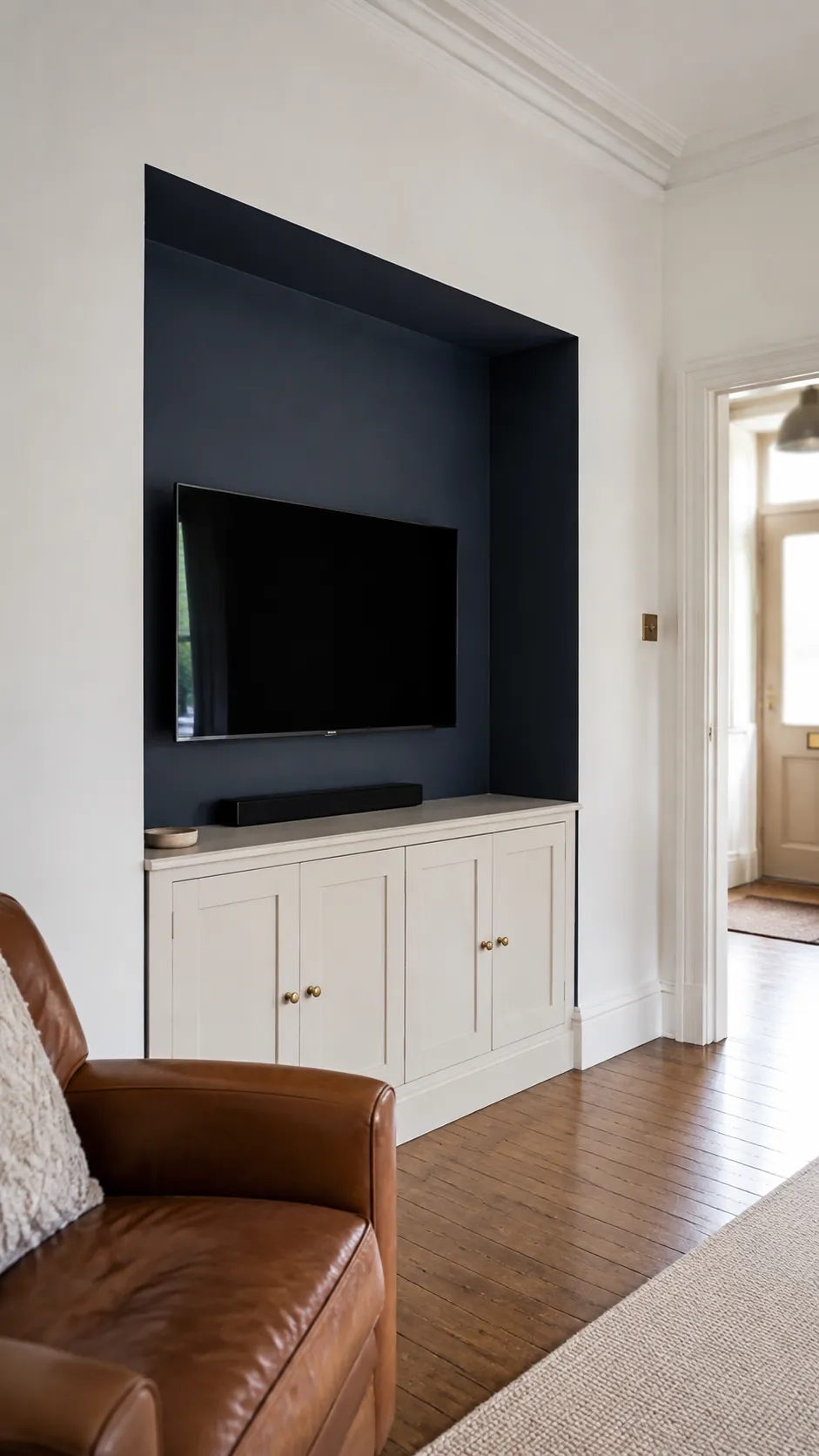
Paint an existing TV alcove navy to define the viewing area without darkening the whole living room. Carry the color onto the side returns for a finished recess rather than a floating rectangle. Check the television manufacturer’s ventilation guidance before placing a set inside any tight opening.
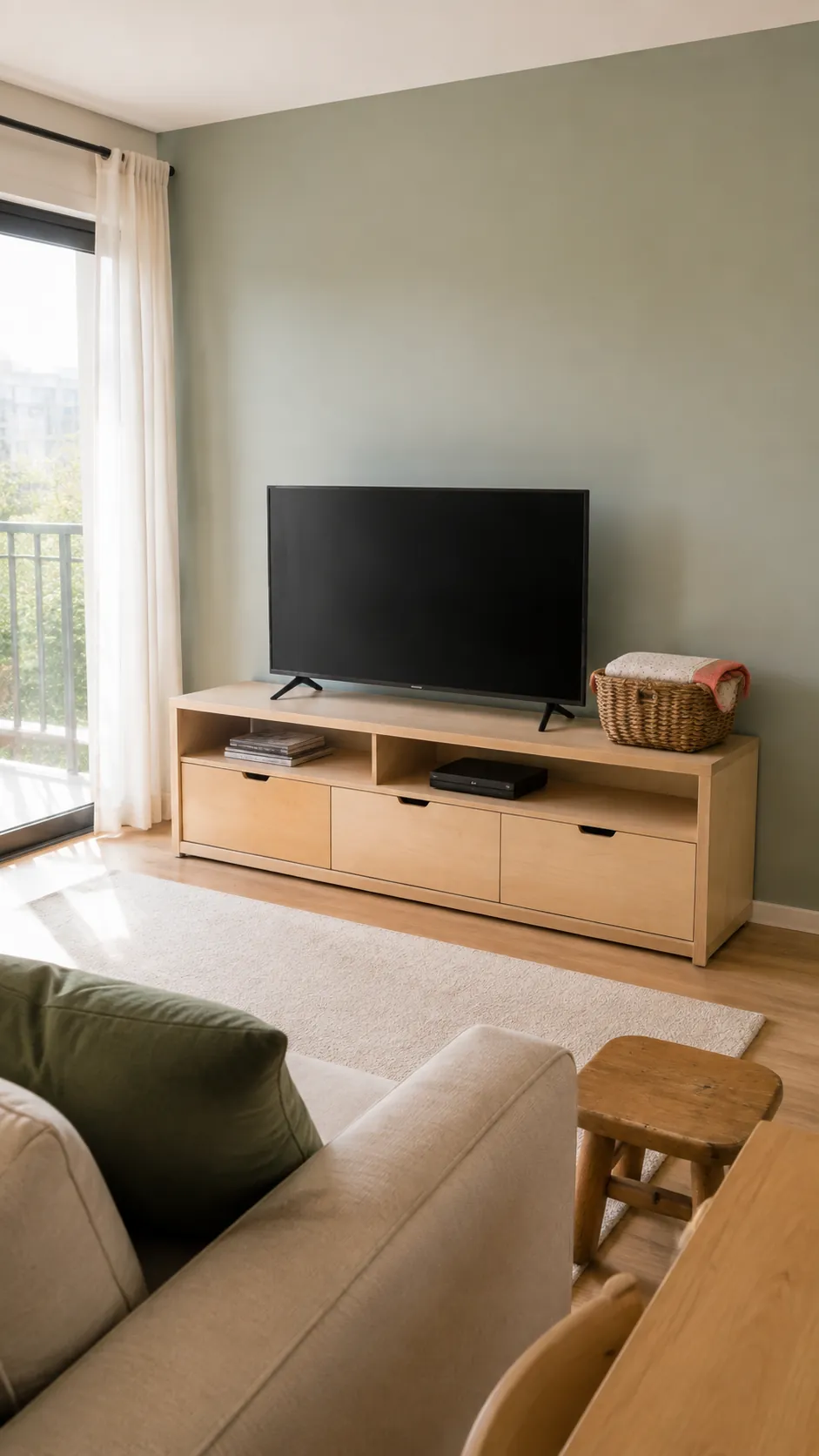
Soft sage mineral color
A muted sage painted wall offers gentle contrast when black feels too heavy for a daytime family room. Choose a restrained finish with little sheen so side light does not create a glossy patch around the screen. Repeat the green once in a cushion or nearby textile to connect the wall to the room. Test the color beside the floor, since warm timber can shift how the green looks.
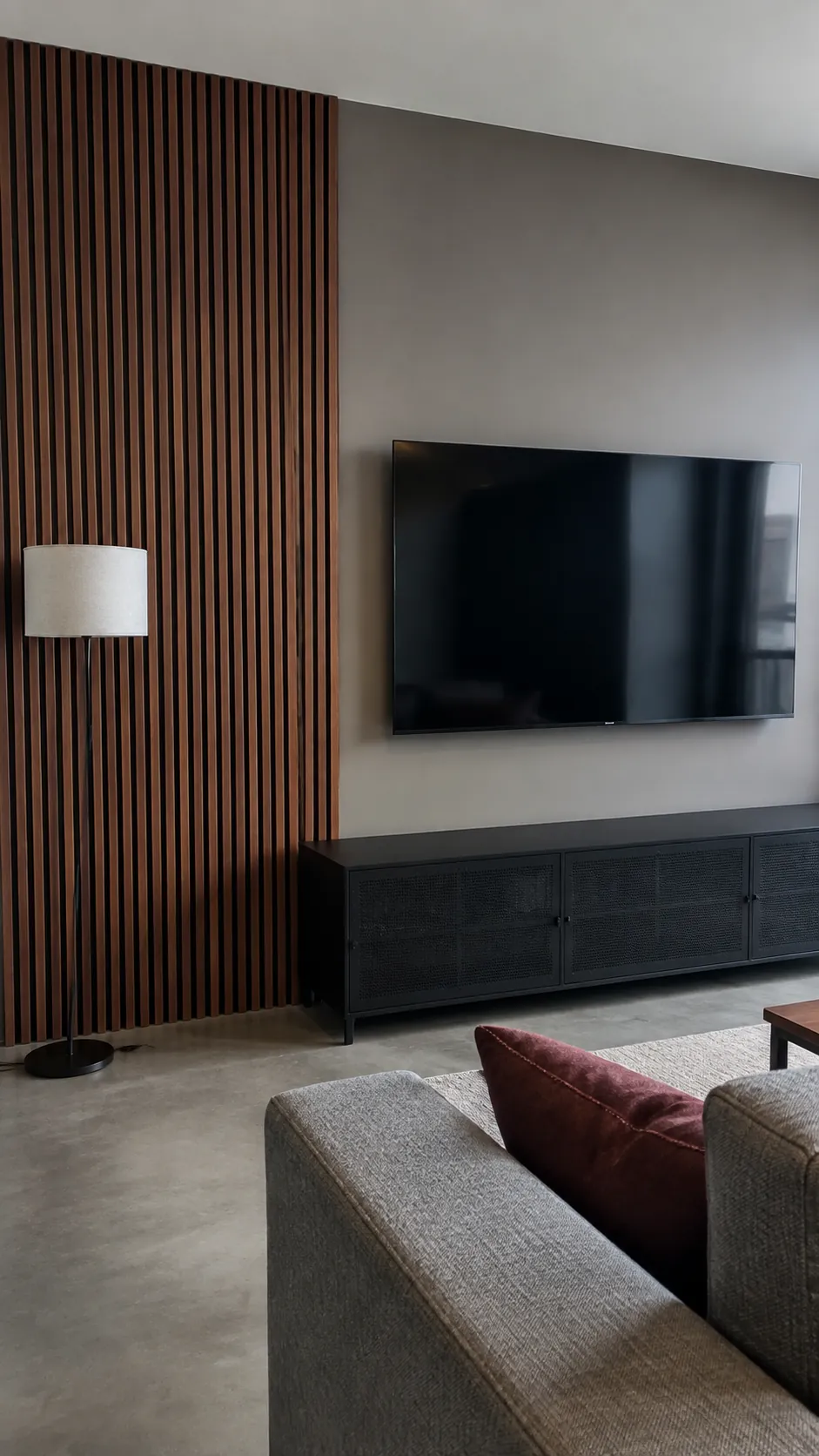
Walnut slats beside a quiet screen zone
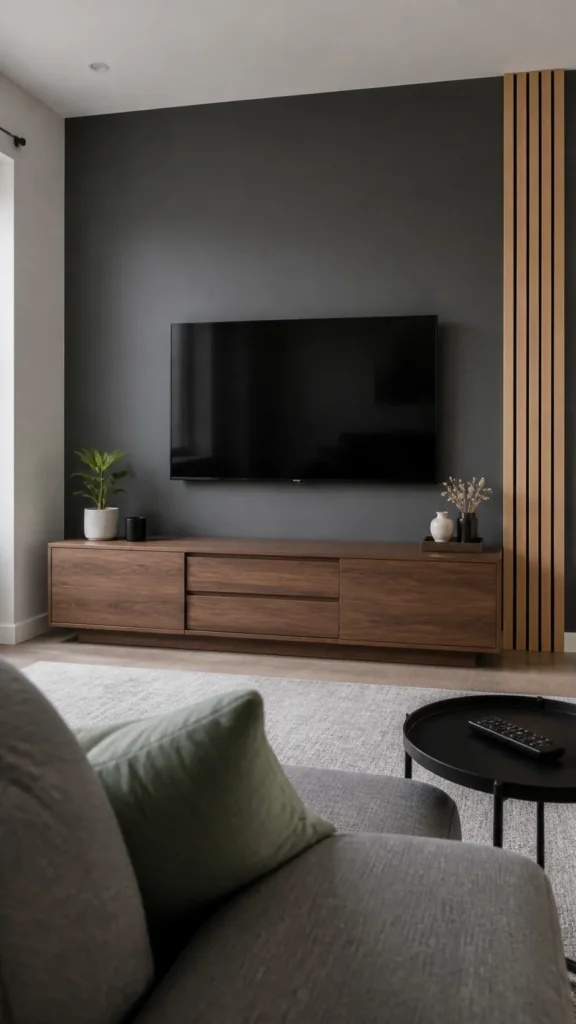
Place walnut slats along one side of the TV wall and leave the area immediately behind the screen plain. This gives you the warmth of timber with less repetitive detail in your viewing field. Plan the bracket fixings through to suitable structural support rather than relying on decorative slats. Leave cable connections accessible so changing a device does not require dismantling the accent.
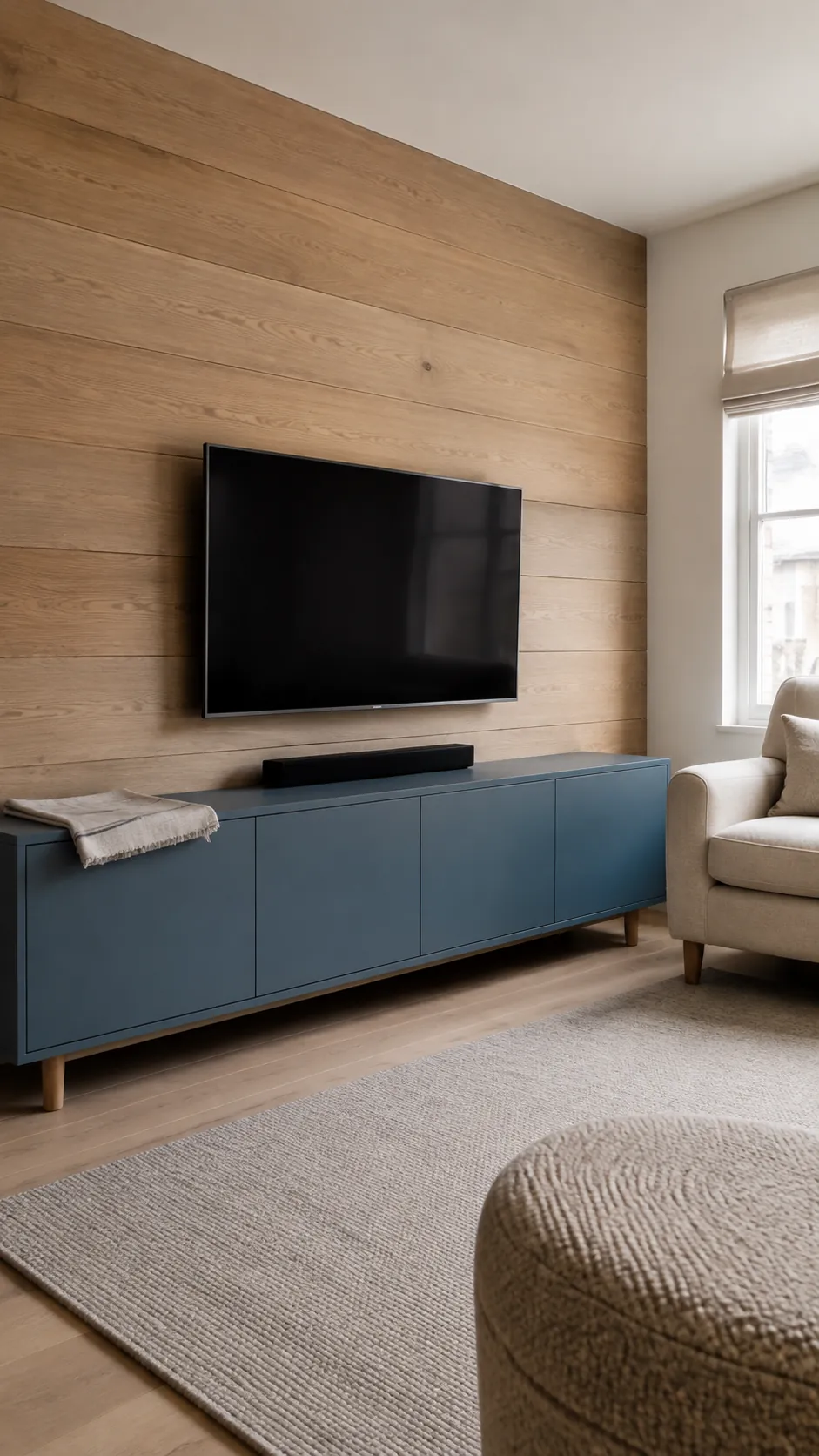
Wide horizontal oak boards
Wide oak boards bring a slower, calmer rhythm than many narrow vertical strips. A horizontal layout can suit a long low media console, especially when the board joints are carefully planned. Allow for the chosen timber system’s movement and installation requirements. Use a restrained finish that does not turn glossy under a window opposite the television.
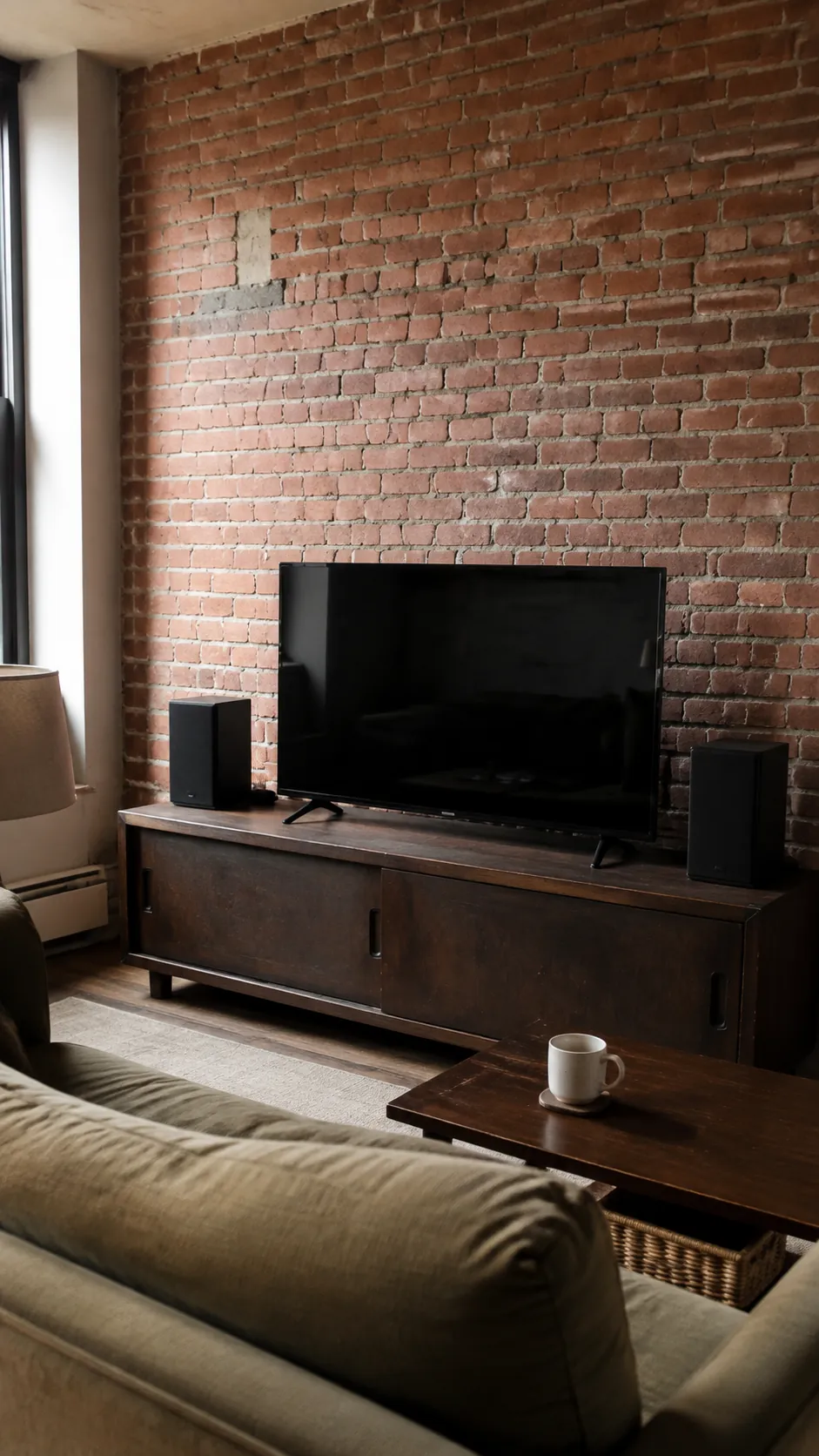
An exposed brick backdrop
An existing brick wall can provide enough texture without another layer of decoration. Clean and assess the masonry before choosing any coating, especially where older brick sheds dust. Keep the console simple so the brick joints remain the dominant pattern. Mounting into masonry requires fixings chosen for the actual substrate and load, not a generic wall plug.
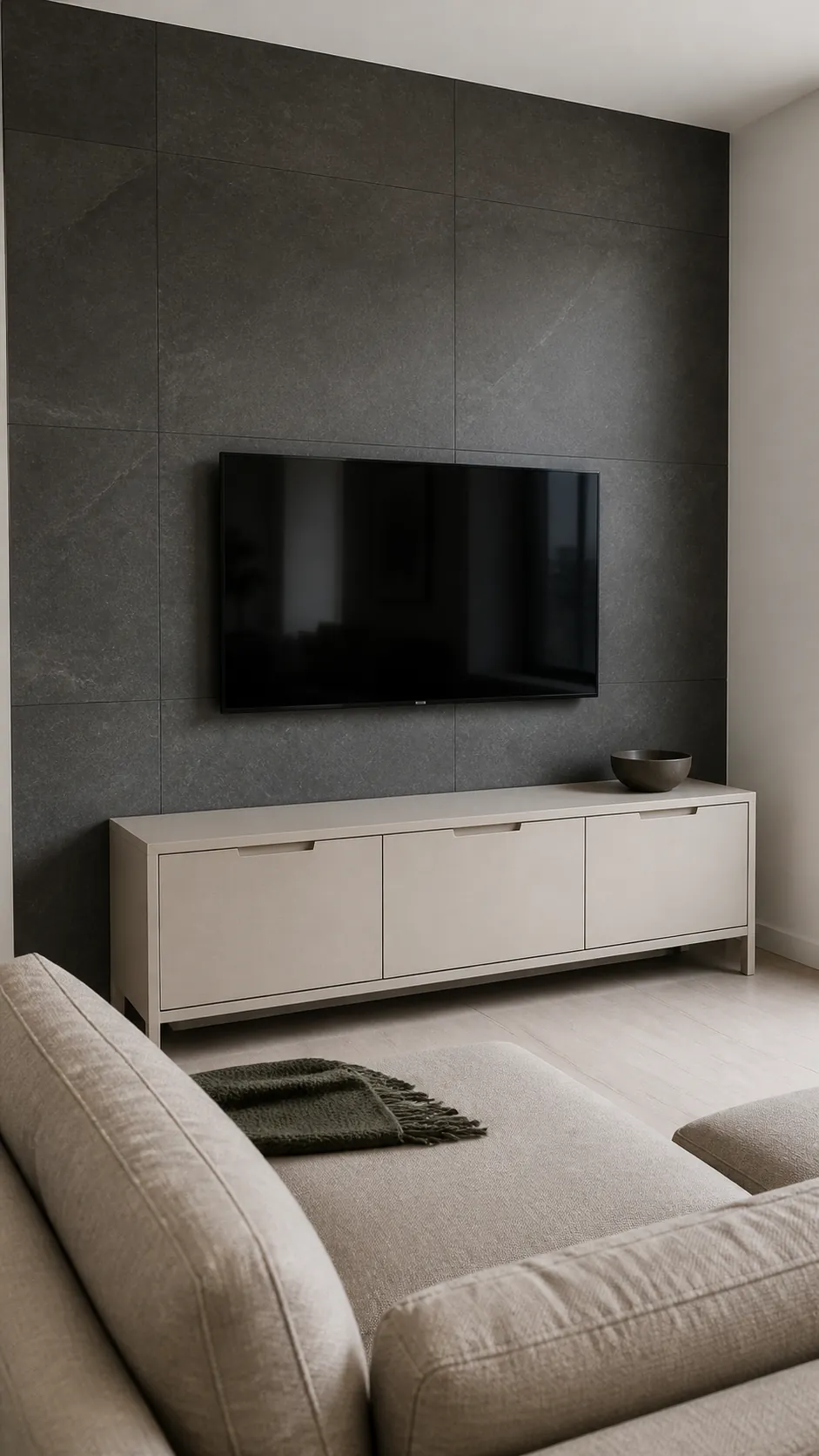
Large matte slate look tiles
Large slate look tiles create a dark TV wall with fewer grout lines than small decorative tiles. Compare samples in daylight and evening light to avoid a surface that sparkles around the screen. Plan outlets, cuts and mounting points before installation. The supporting wall and fixing method must suit both the finish and the television load.
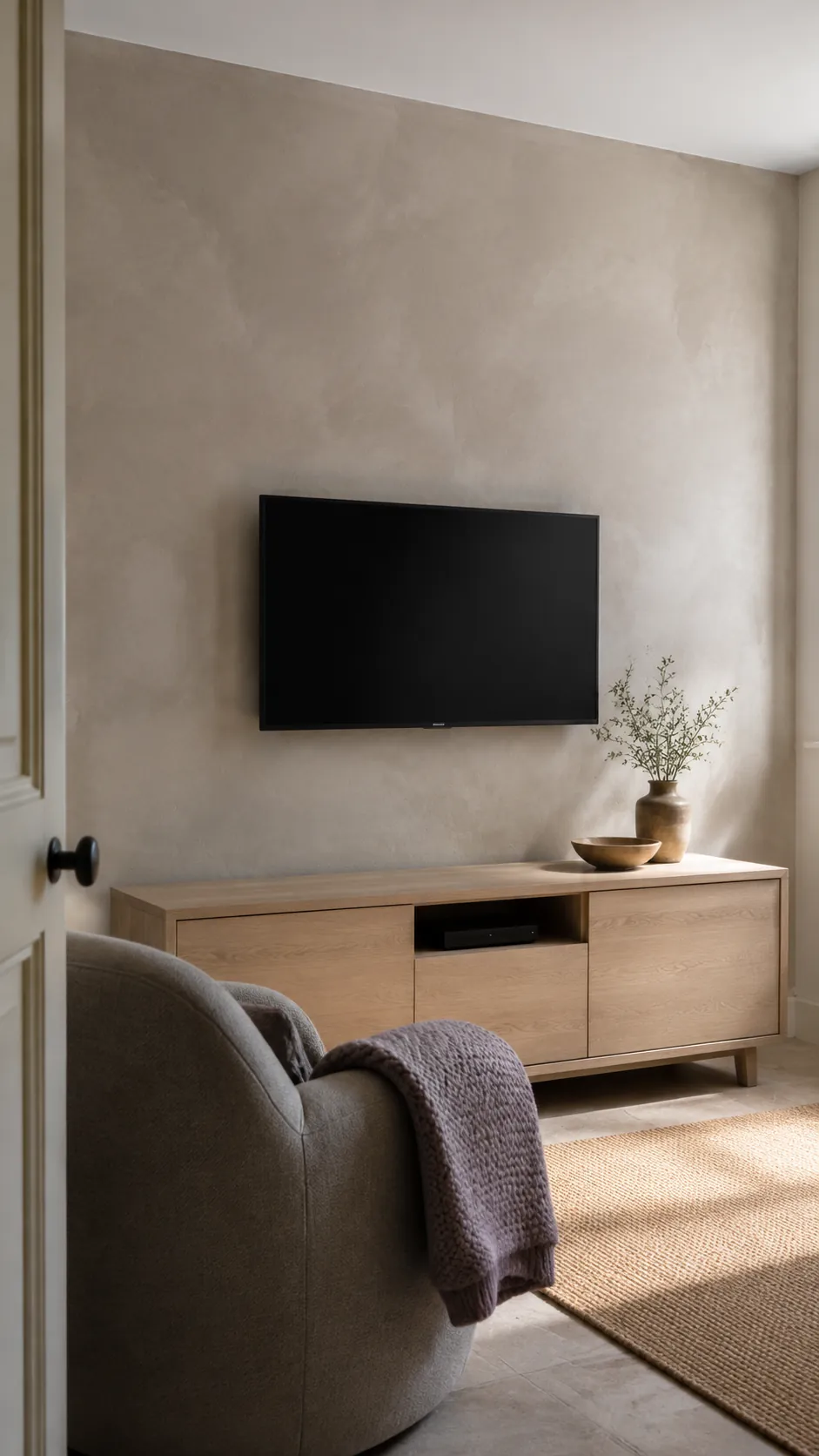
Quiet plaster texture
A softly textured plaster finish adds depth without a busy printed motif. Keep the variation subtle near the screen so the wall stays easy to live with during a film. Ask the installer for a sample panel rather than approving color from a photograph alone. Some decorative finishes are difficult to patch invisibly, which matters if you expect to move the bracket later.
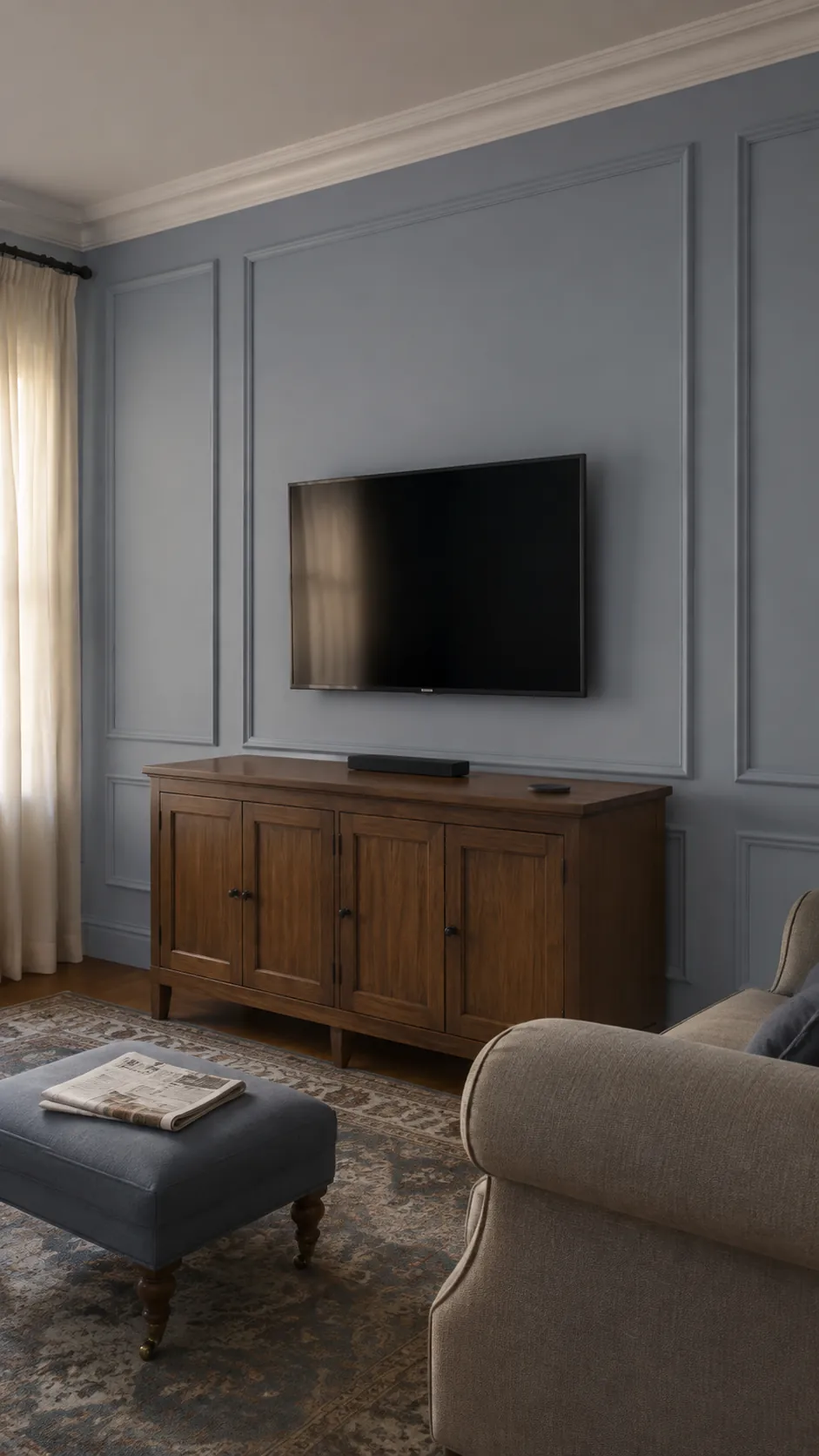
Simple picture frame molding
Wide rectangular molding can make a television wall feel connected to a traditional room. Lay out the boxes around the actual screen and console dimensions before attaching trim. Leave generous space between the screen edge and the molding instead of drawing a tight decorative border around the set. Paint the trim and wall the same color for a quieter result.
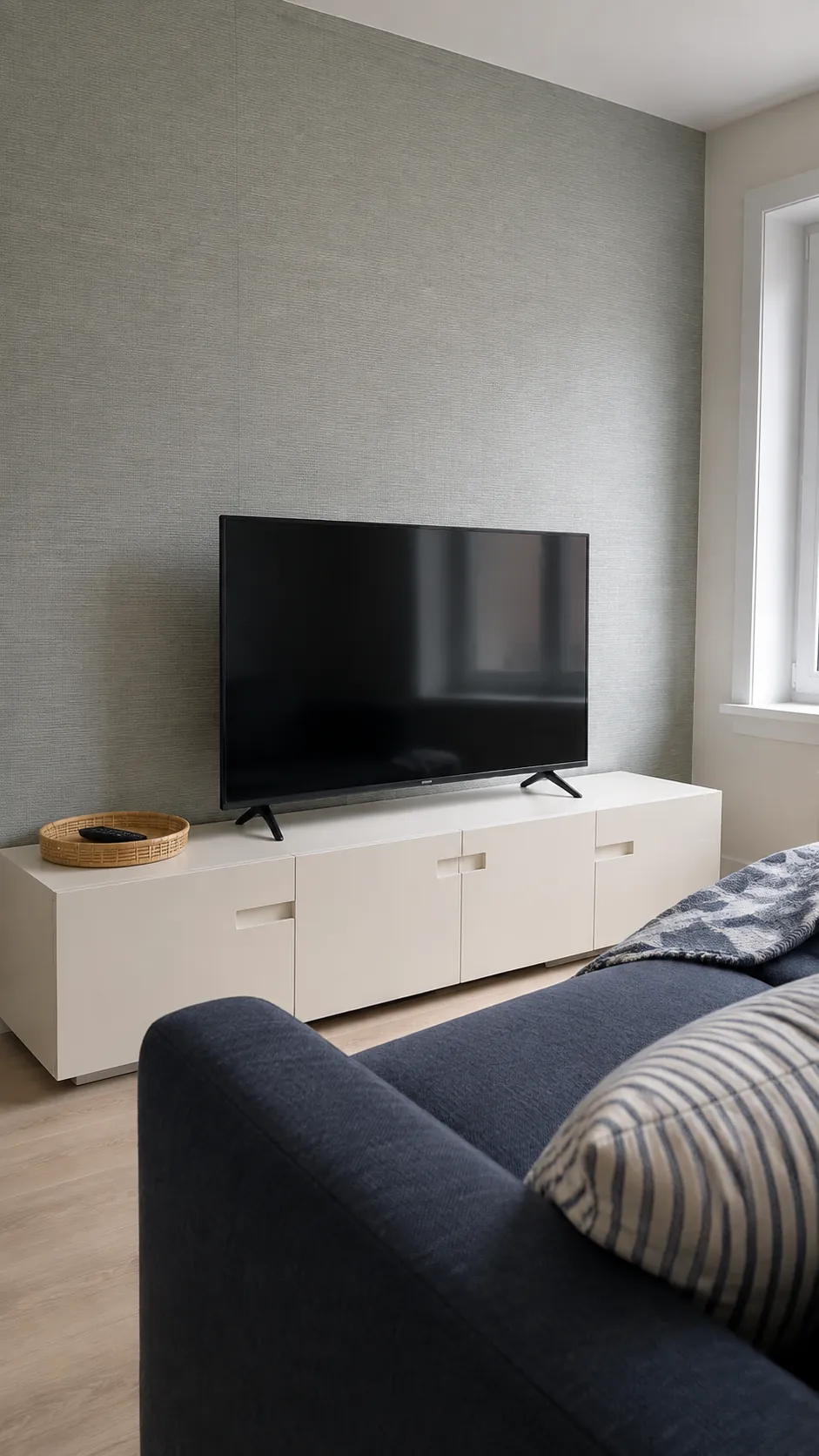
A subtle grasscloth effect covering
A grasscloth effect wallcovering introduces woven texture without requiring a strong motif. A wipeable imitation may be easier to maintain than natural fibers in a busy family space. Inspect seams and sample scale before committing, because some products show distinct panel changes. Keep the television bracket anchored to the wall structure rather than the decorative covering.
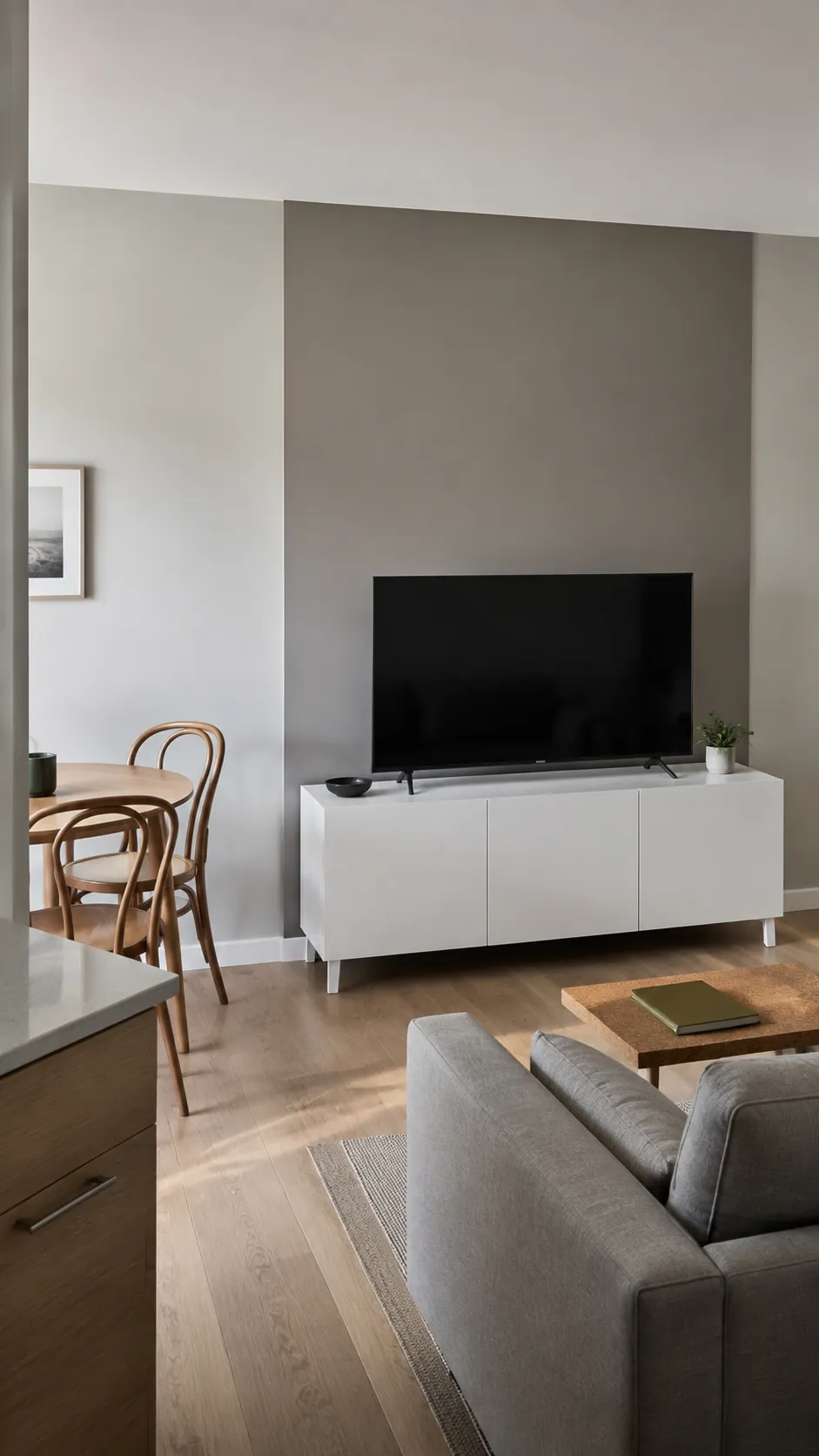
A broad painted color block
A broad painted rectangle can define a media area on a long wall that serves several purposes. Make the block relate to the console width instead of tracing the television outline closely. A slightly darker version of the surrounding color creates a useful boundary without a sharp visual shout. This is an approachable option when permanent paneling is outside the budget.
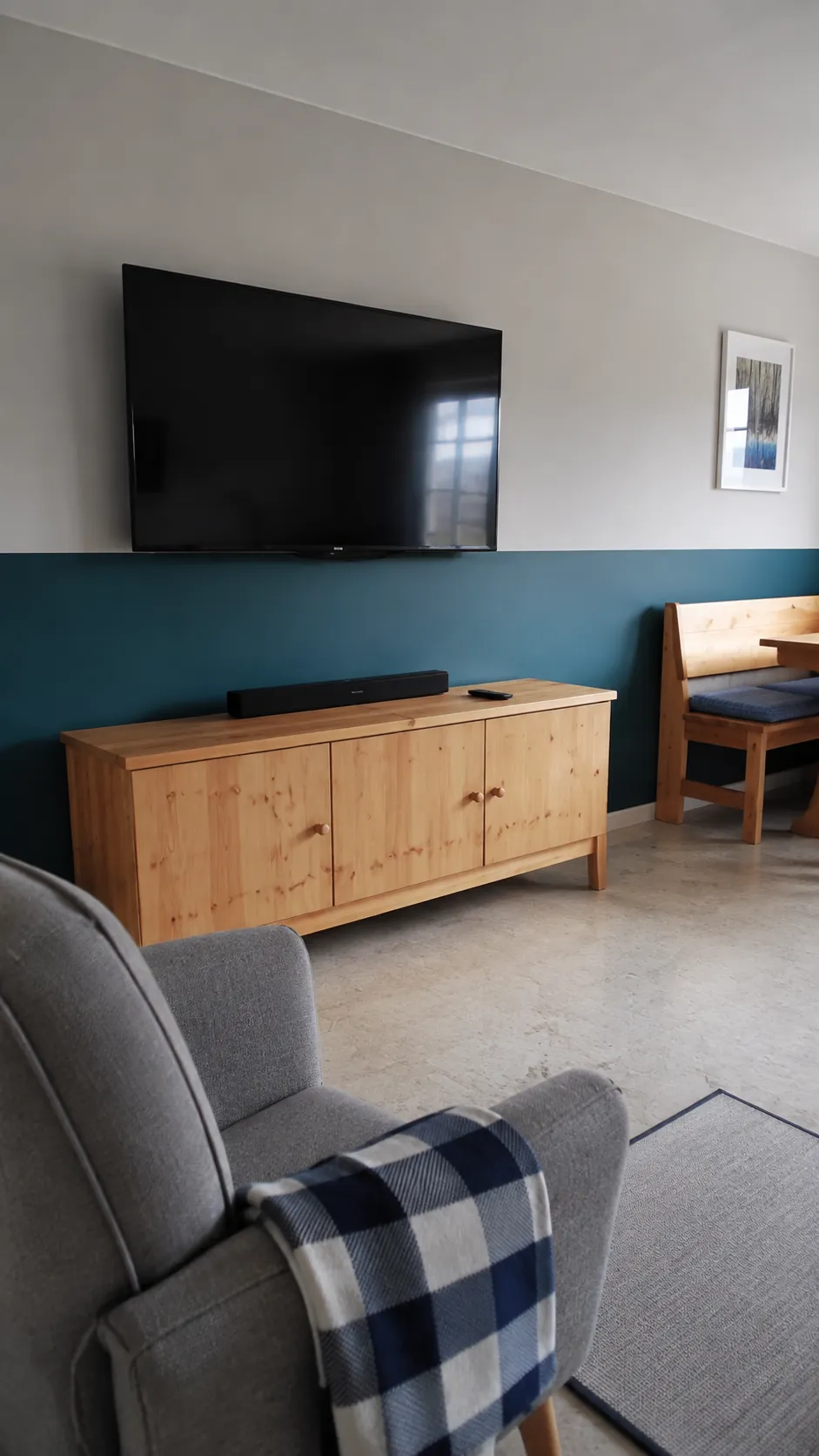
A low two tone wall
A lower painted band can connect the television to nearby furniture while leaving the upper wall light. Position the color break deliberately relative to the console and screen rather than letting it graze a screen corner. Test the line with temporary tape from the sofa before painting. This approach works especially well when a single wall continues into a dining area.
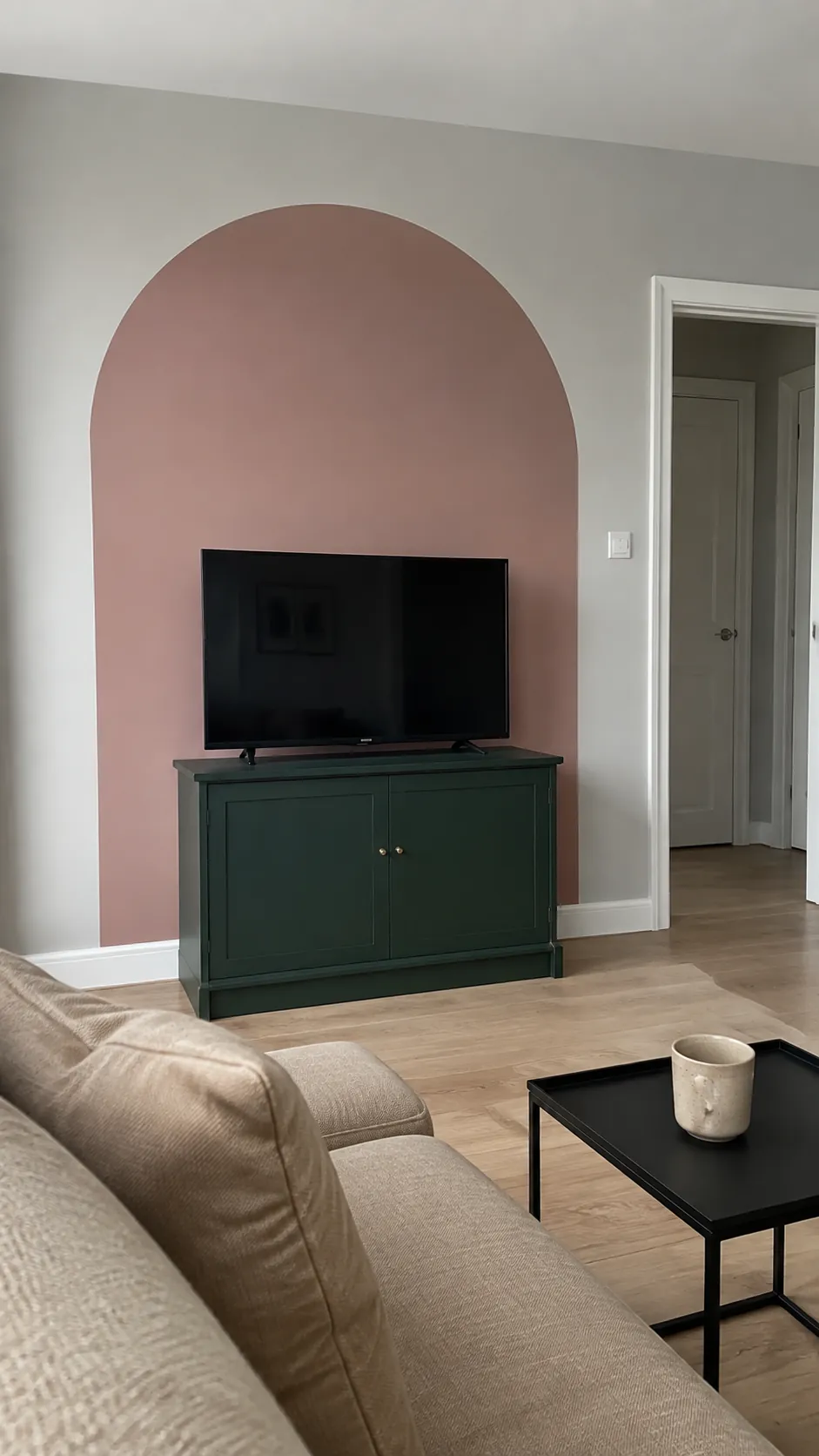
A softly painted arch
A painted arch gives a small media corner a rounded boundary with very little material. Make it broad enough that the television does not look wedged inside the curve. Keep nearby accessories angular and simple so the room is not full of competing shapes. The arch is a paint treatment, so the normal requirements for secure TV mounting still apply.
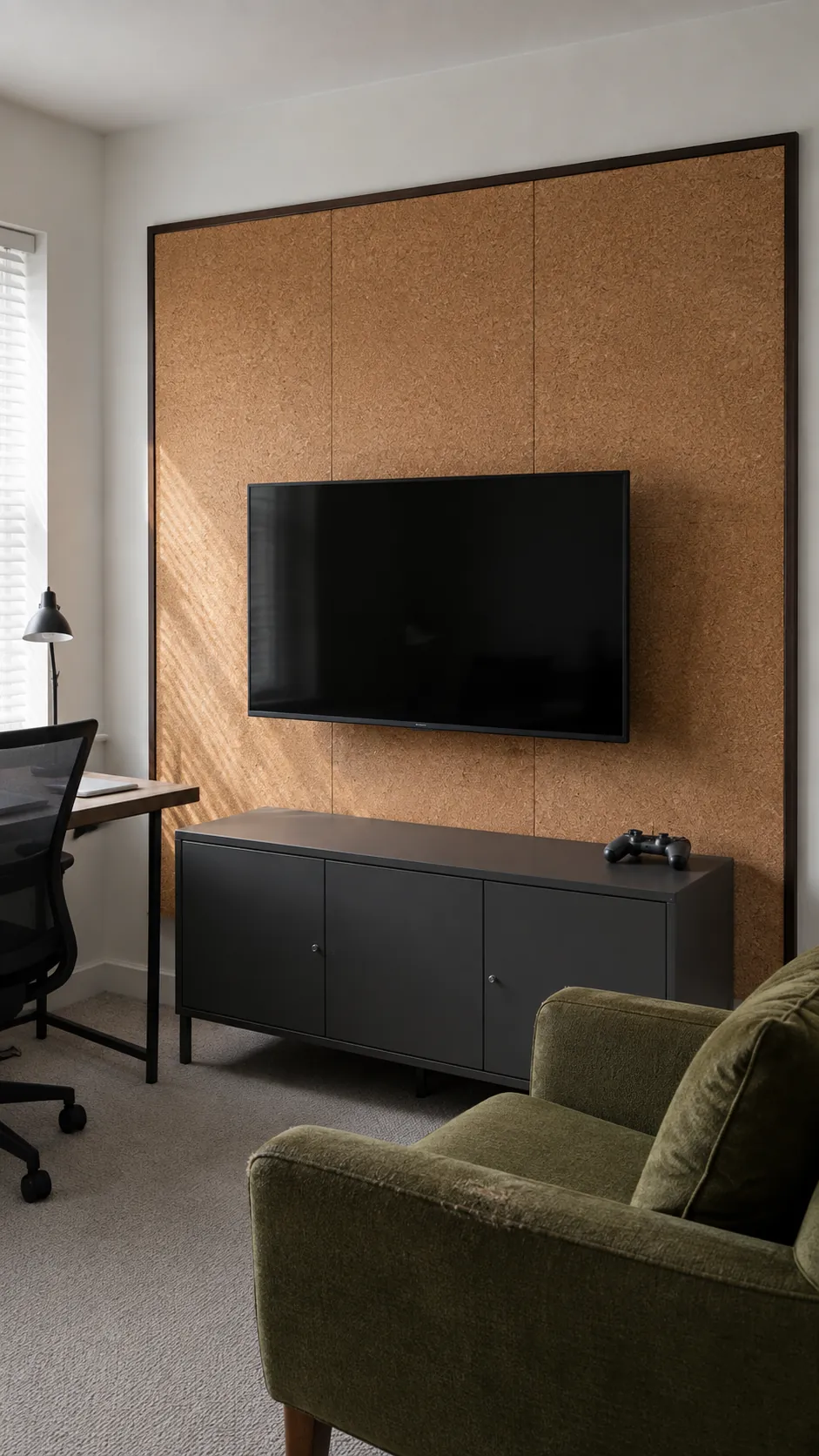
Natural cork panels
Cork panels provide warm texture and an alternative to timber strips. Select a restrained pattern if the screen will be used frequently, since heavily mottled cork can become visually busy. Ask for product data before assuming that a thin decorative layer will meaningfully improve room acoustics. Plan clean finished edges and an accessible route for cables.
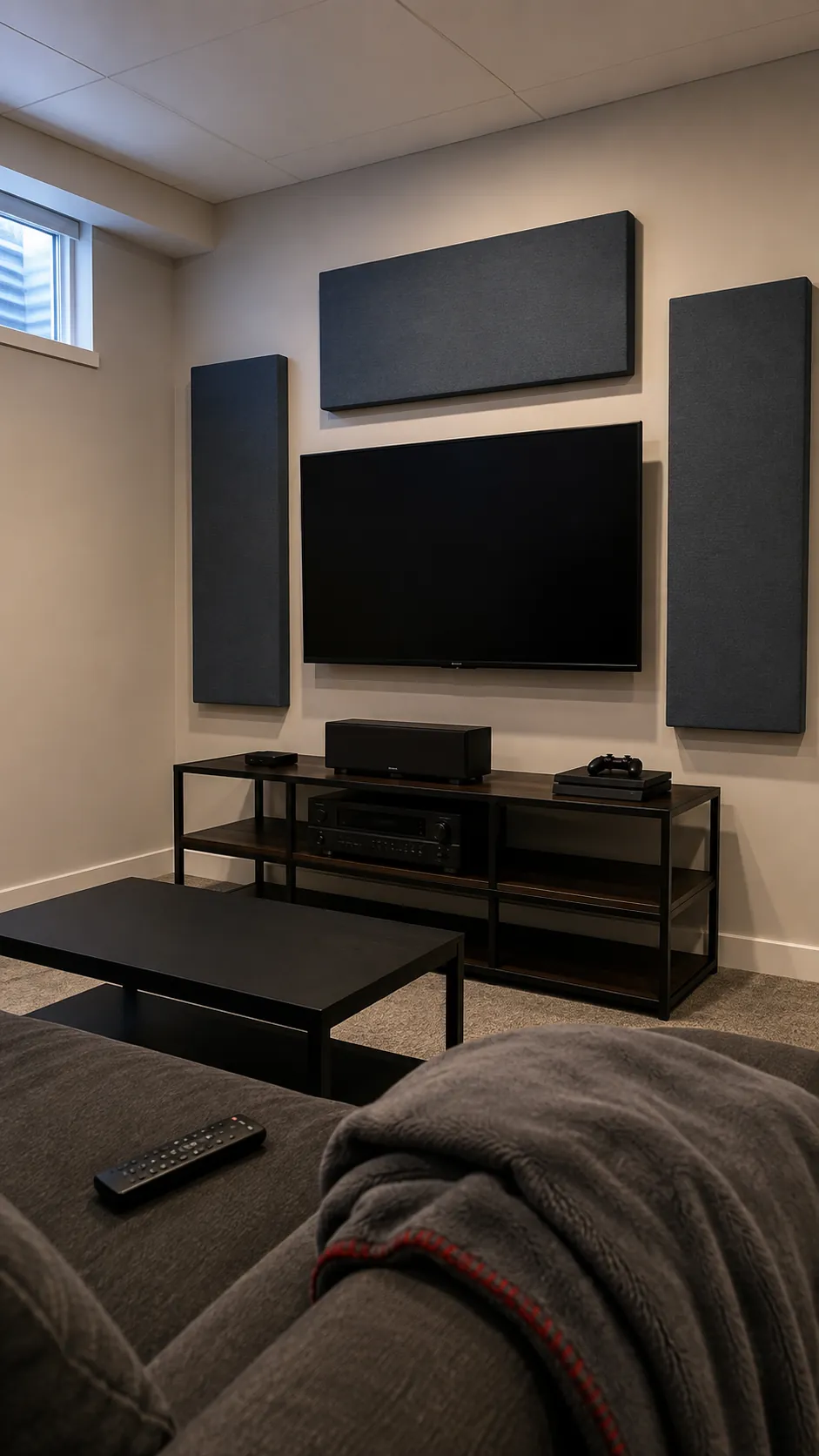
Fabric covered acoustic panels
Fabric covered panels can soften the look of a media room and, with a suitable tested system, help manage reflections of sound. Choose panels based on acoustic performance and installation details rather than appearance alone. Keep them clear of ventilation openings and any heat producing equipment. A simple arrangement in one muted color usually competes less with the screen than a patchwork of bright tiles.
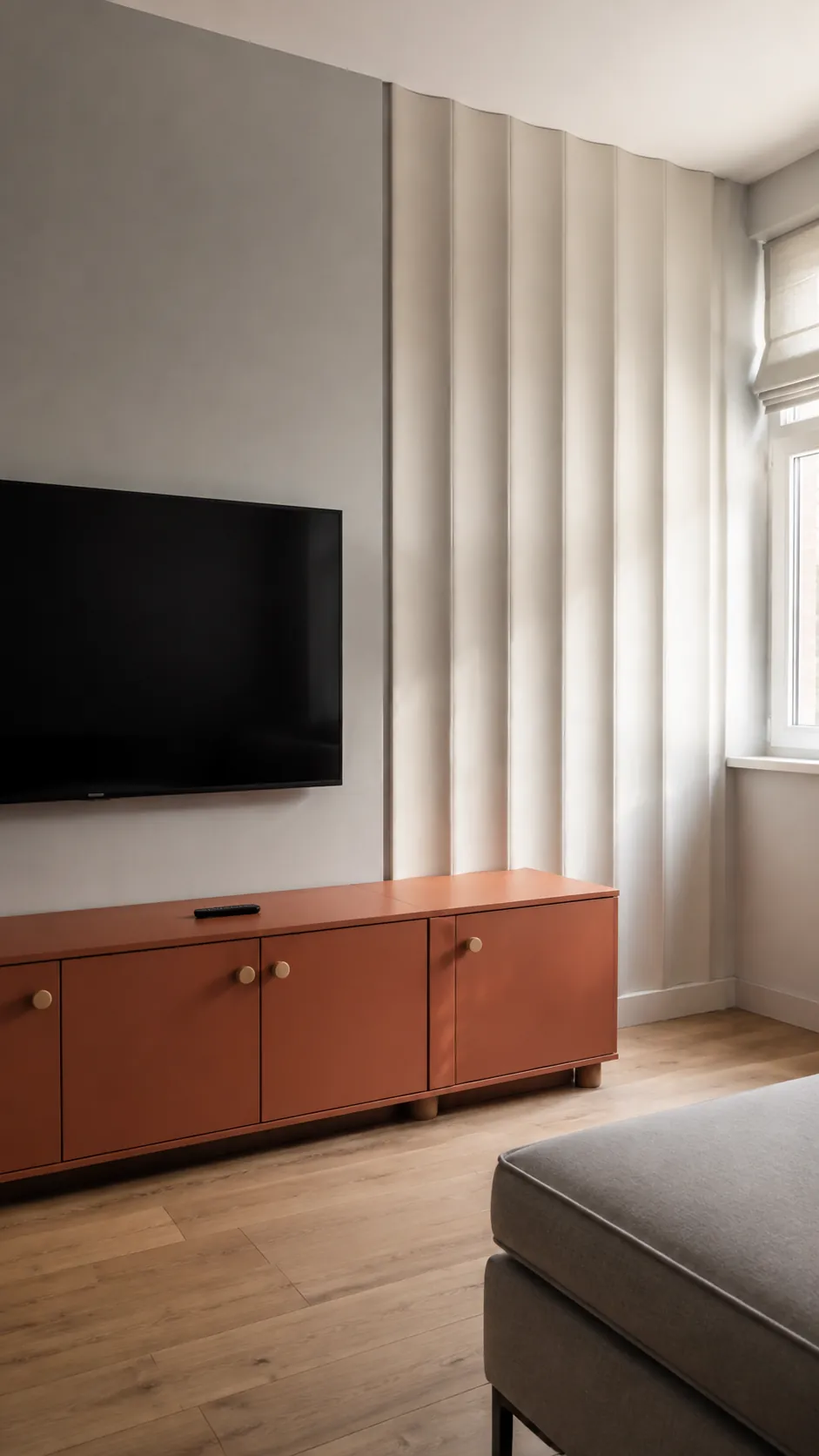
Broad sculpted gypsum ribs
Broad gypsum ribs create shadow and texture without the tight repetition of narrow slats. Limit the relief to one side or a generous border if you find detail close to the screen distracting. Plan dusting access because deep grooves can collect debris. Check that the television bracket connects to appropriate backing, with the decorative relief treated as a finish.
A restrained abstract painted mural
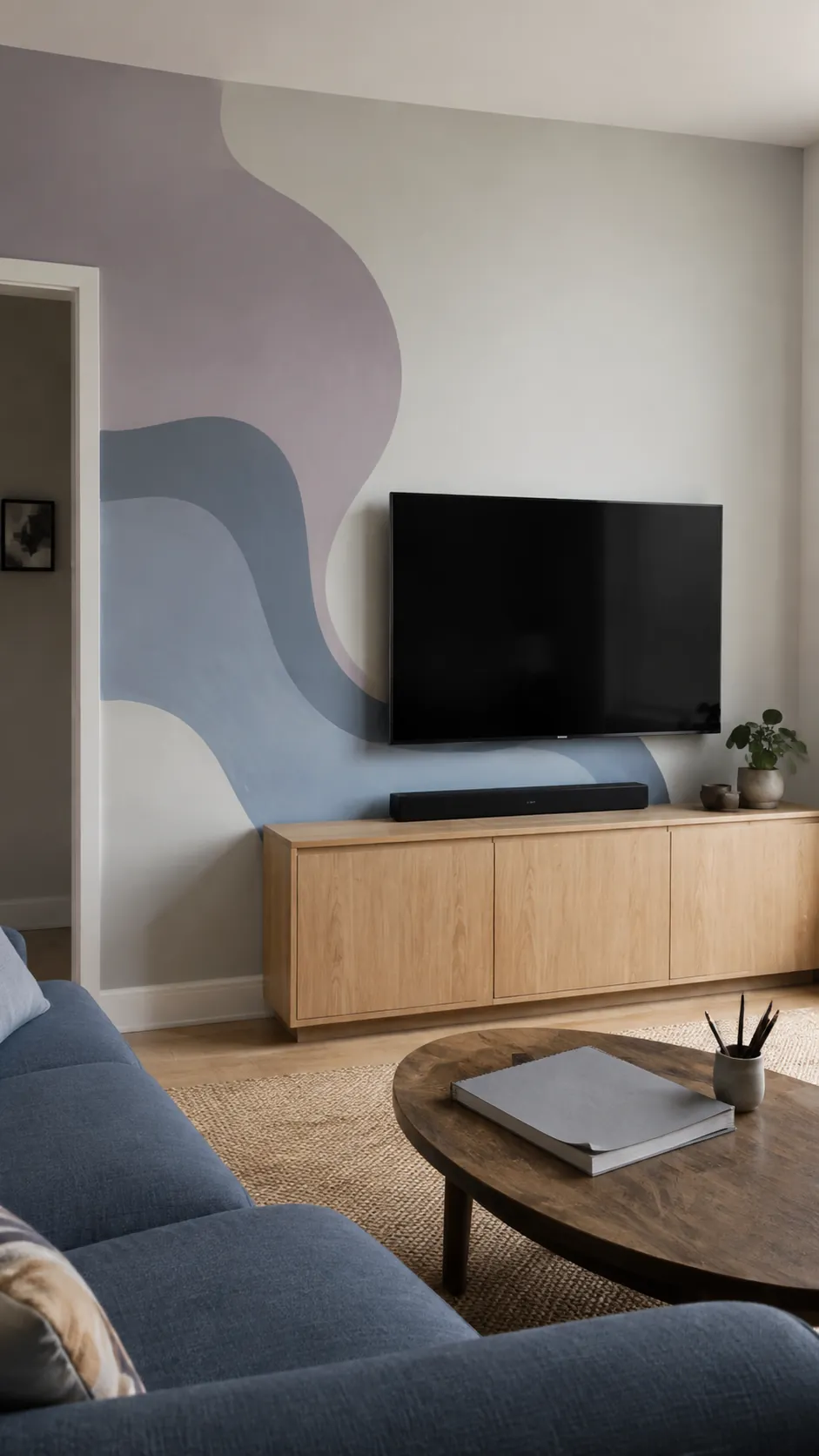
An abstract mural can give a TV wall personality when its shapes stay broad and its colors stay close in value. Place the busiest curve or color change away from the screen edges. Mock up the arrangement at full scale with paper before painting to see what the television will hide. Choose the wall you will enjoy with the screen switched off, then check that it remains comfortable from your normal viewing seat.