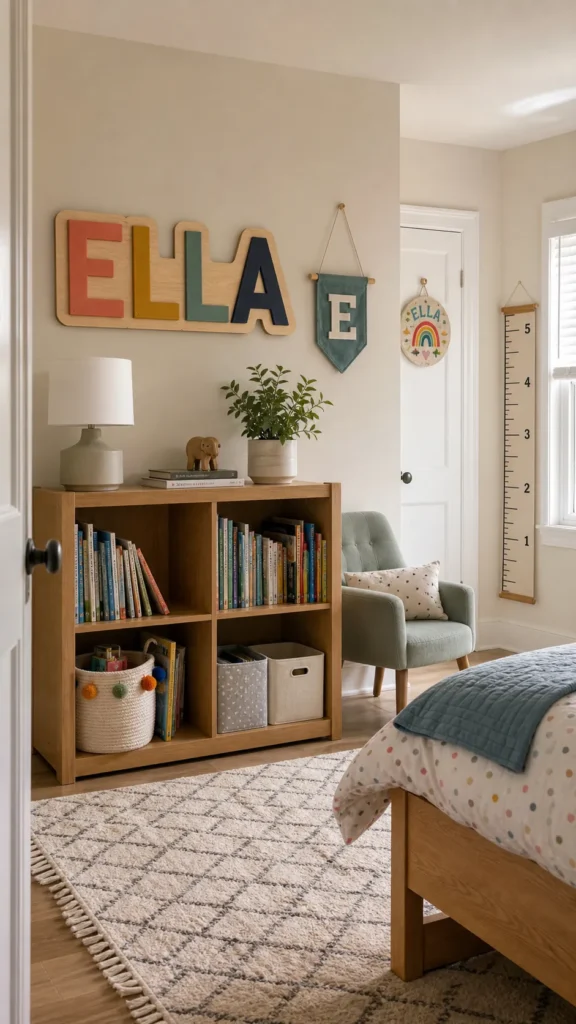
19 Name Sign Ideas for Kids Bedrooms
A kids name sign can make a bedroom feel claimed in the best sense: this is my corner, my shelf, my place to read and sleep. But the sign should fit the child, not just a nursery trend. Choose a style that works with the room’s colors, place it where it is safe, and make the personal details easy to update as interests change. A beautiful sign on a side wall or portable panel usually makes more sense than a heavy object hanging directly over a pillow.
Before ordering or making any bedroom name decor, measure the intended wall, check the sign’s finished weight, and use hardware approved for both the product and wall type. Anchor nearby furniture, keep cords short and beyond reach, avoid detachable pieces for young children, and protect privacy when room photos may be shared online. First names or initials are usually enough.
Layered Wood Cutout Name
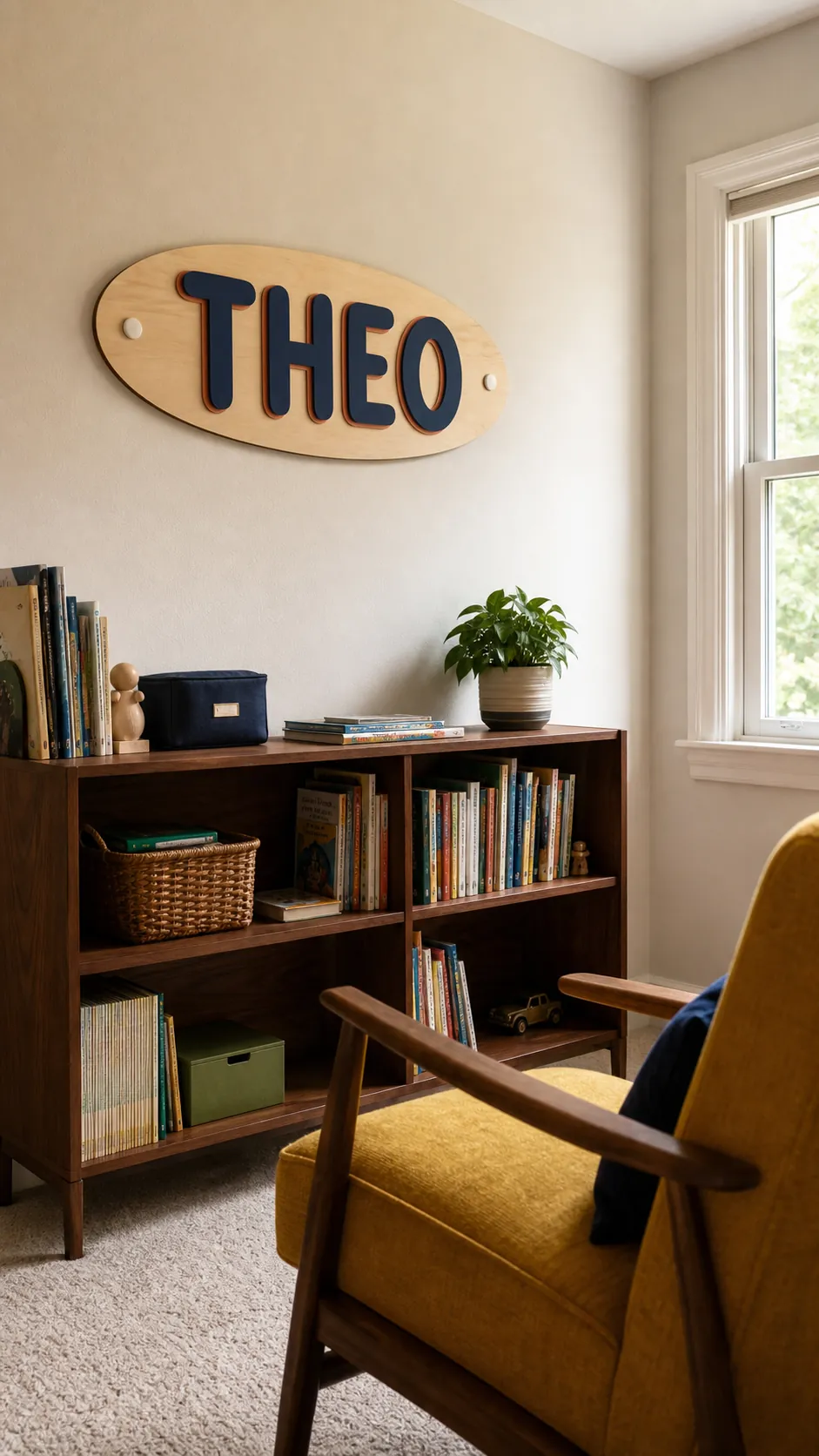
Raised letters on a contrasting plywood backboard create depth without needing a complicated motif. Use a clear rounded typeface, repeat two colors from the bedding, and leave enough border for the name to breathe. A lightweight layered wood name sign works well above a low bookcase on a side wall. Follow the maker’s mounting directions and resist placing a heavy slab over the bed simply because that is where social-media nurseries often show it.
Round Botanical Name Plaque
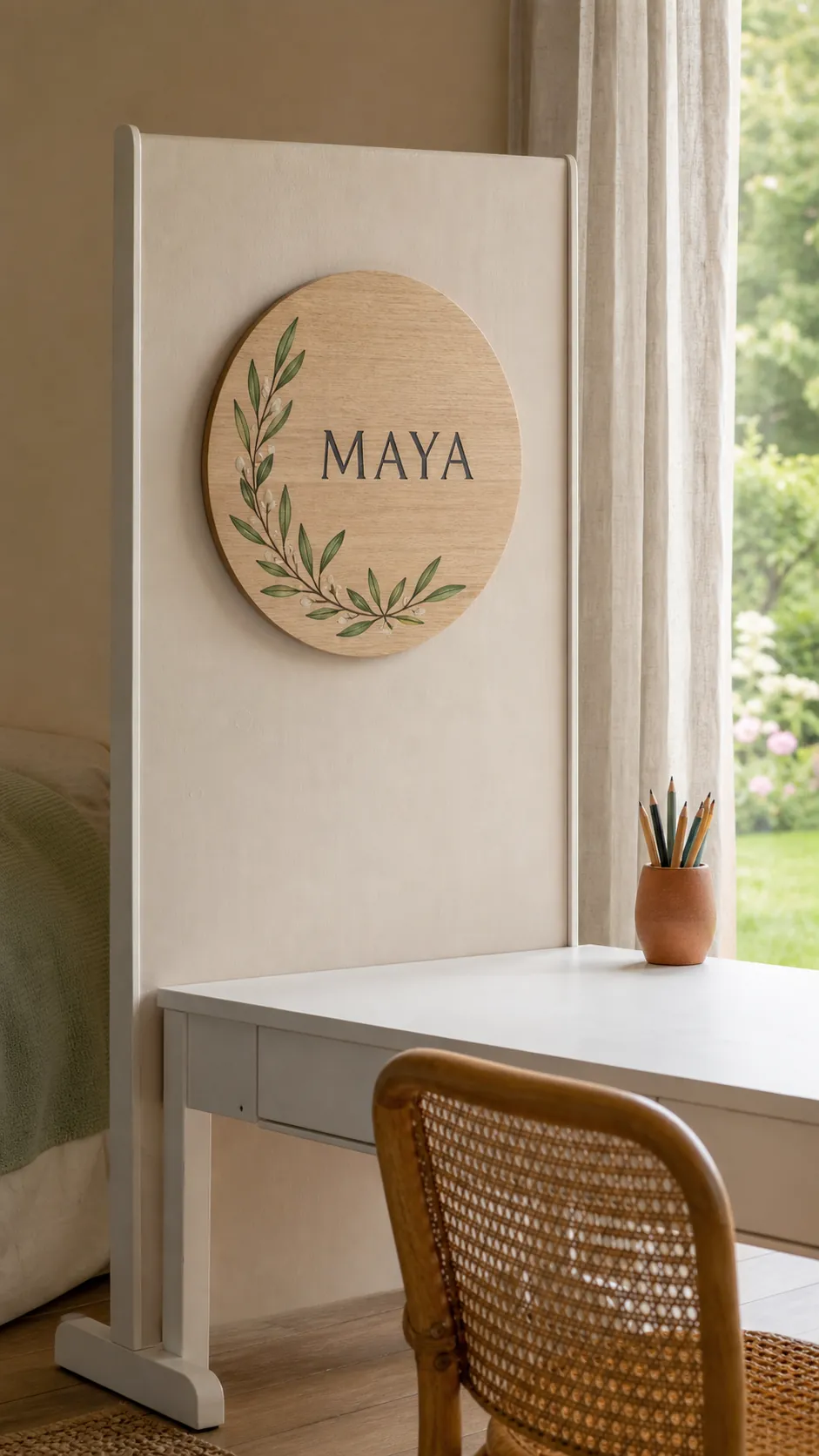
A simple circle painted with a specific sprig—olive leaves, ferns, or the child’s birth flower—adds nature without turning the room into a fixed jungle theme. Keep the foliage around the edge and the first name large at center. Matte paint photographs better than gloss, and a thin plywood round is easier to mount than a thick carved disk. For longevity, avoid overly babyish lettering and let the botanical colors connect to existing curtains or rugs.
Acrylic Shadow Name Sign
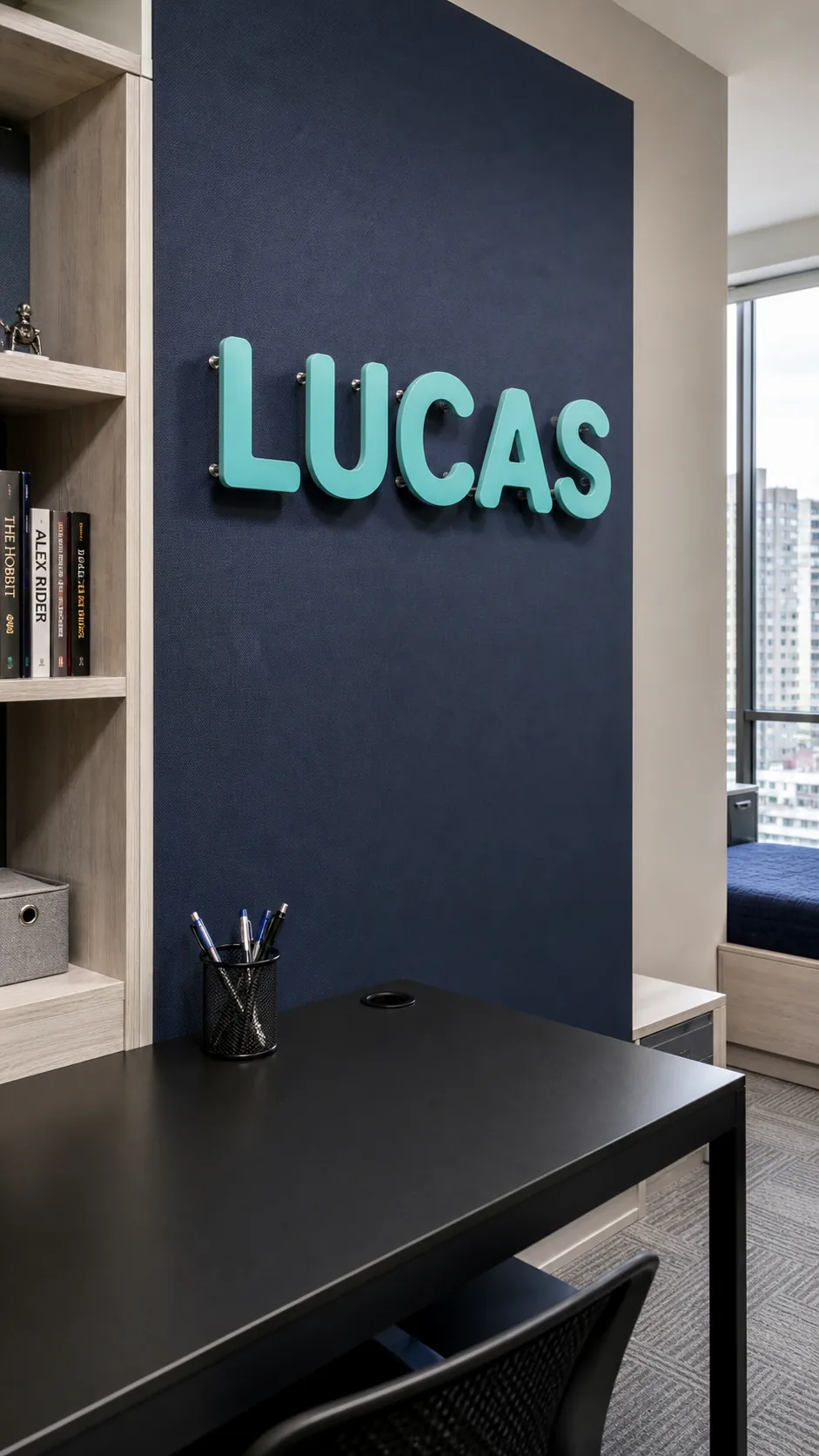
Matte acrylic letters on short standoffs cast a subtle shadow and suit a modern personalized bedroom. Choose rounded edges, an opaque finish, and a lightweight size; clear glossy acrylic can show fingerprints and glare. Install it on a portable panel or secure side wall away from impact zones. The shadow provides enough visual interest, so skip extra neon strips, dangling wires, or a second competing phrase.
Soft Felt Pennant Name
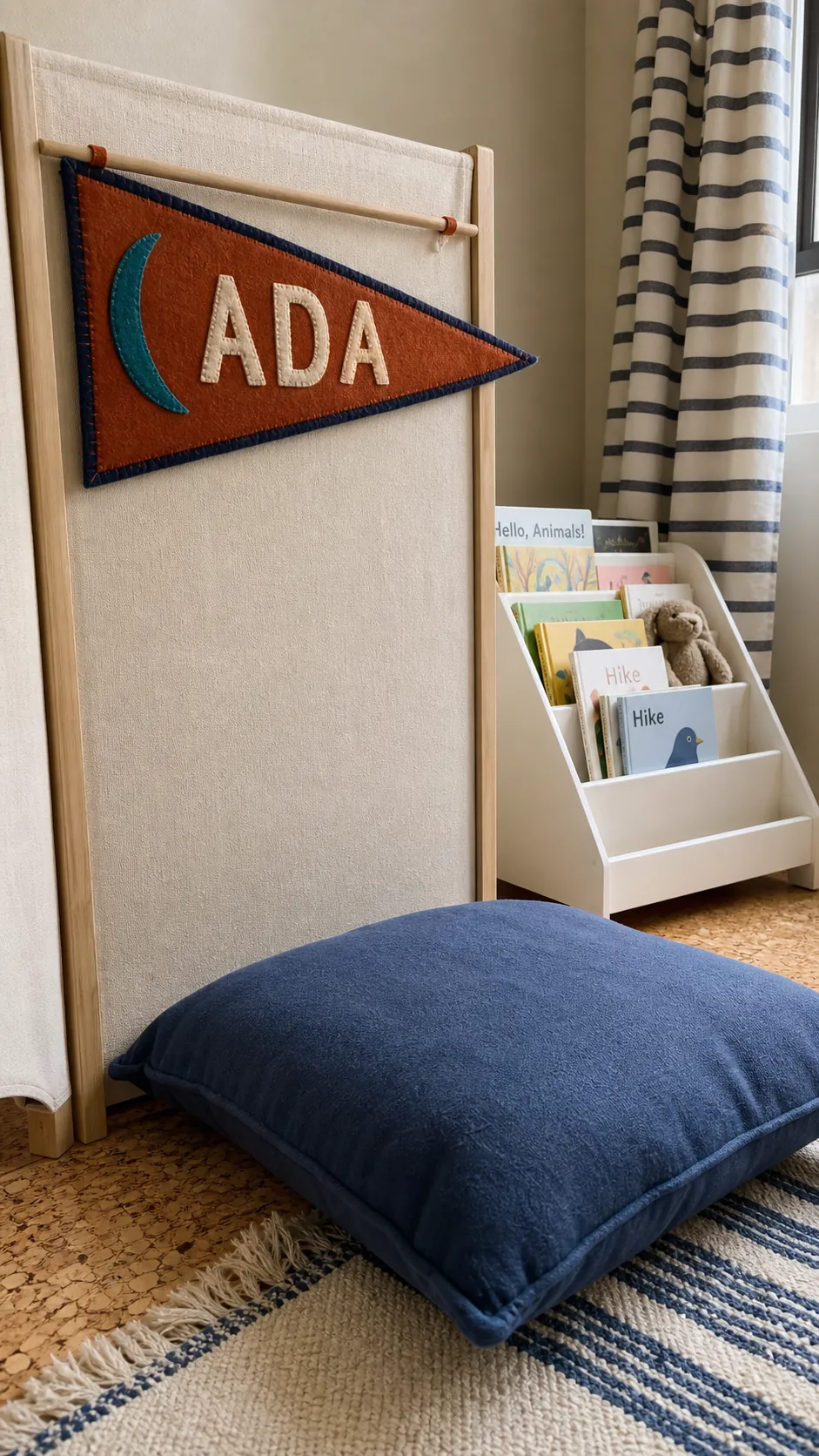
Felt is light, quiet, and forgiving for renters. Stitch flat letters to a large triangular pennant, add one secure border, and slide the top over a short smooth dowel. Avoid beads, buttons, and long hanging loops in a young child’s room. Because the base is inexpensive, the child can choose a new color later. The old pennant can become birthday décor or a reading-nook flag instead of heading straight to the bin.
Framed Cord Lettering
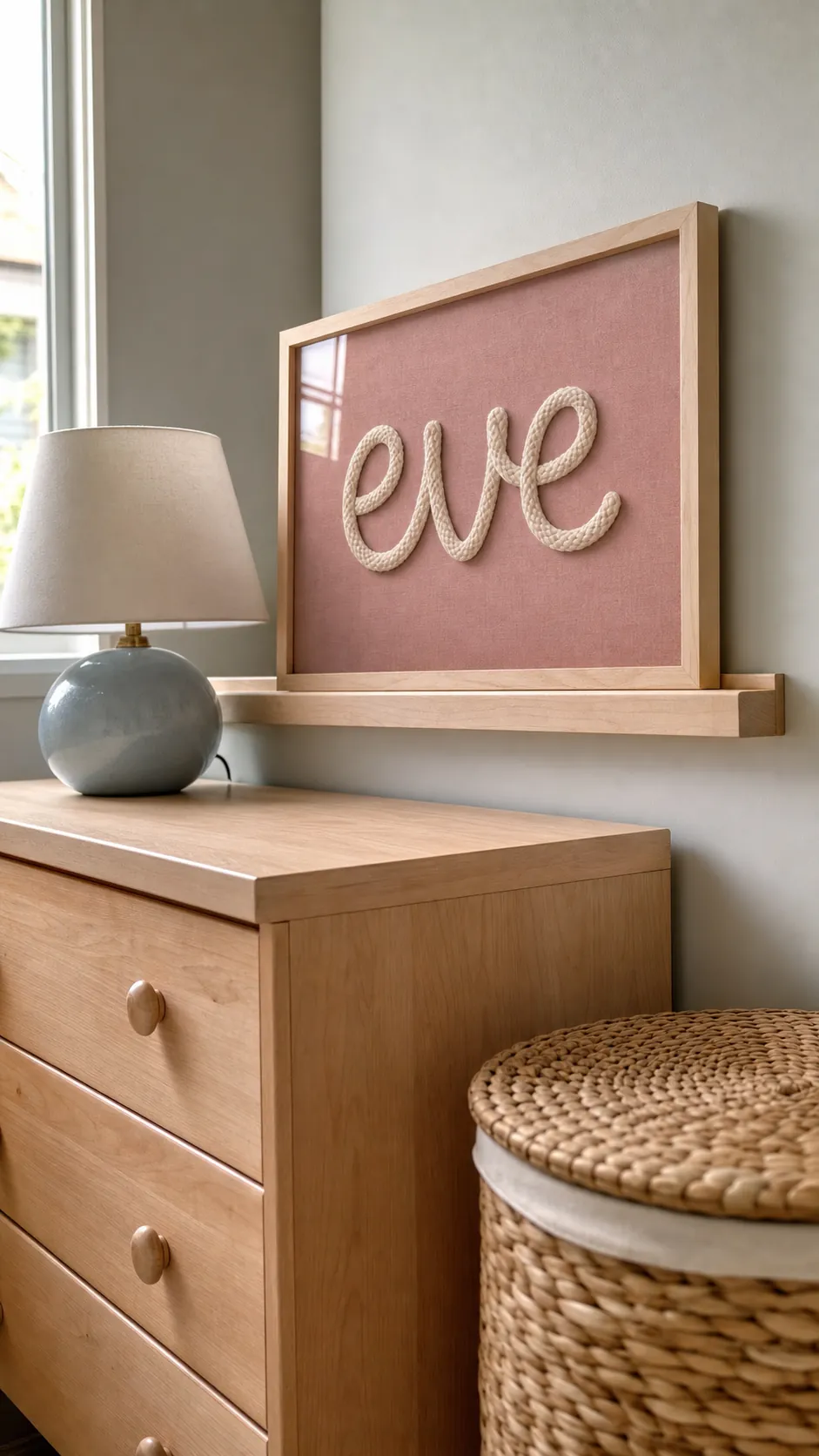
Shape thick cotton cord into a short name, glue every section flat to a fabric-covered backboard, and enclose it behind a lightweight acrylic front. The result has the softness of rope lettering without loose loops. A short name or initials read best. Use high contrast between cord and fabric, and mount the finished frame on a side wall. This is one place where securing every curve matters more than achieving perfectly smooth script.
Rainbow Arch Name Board
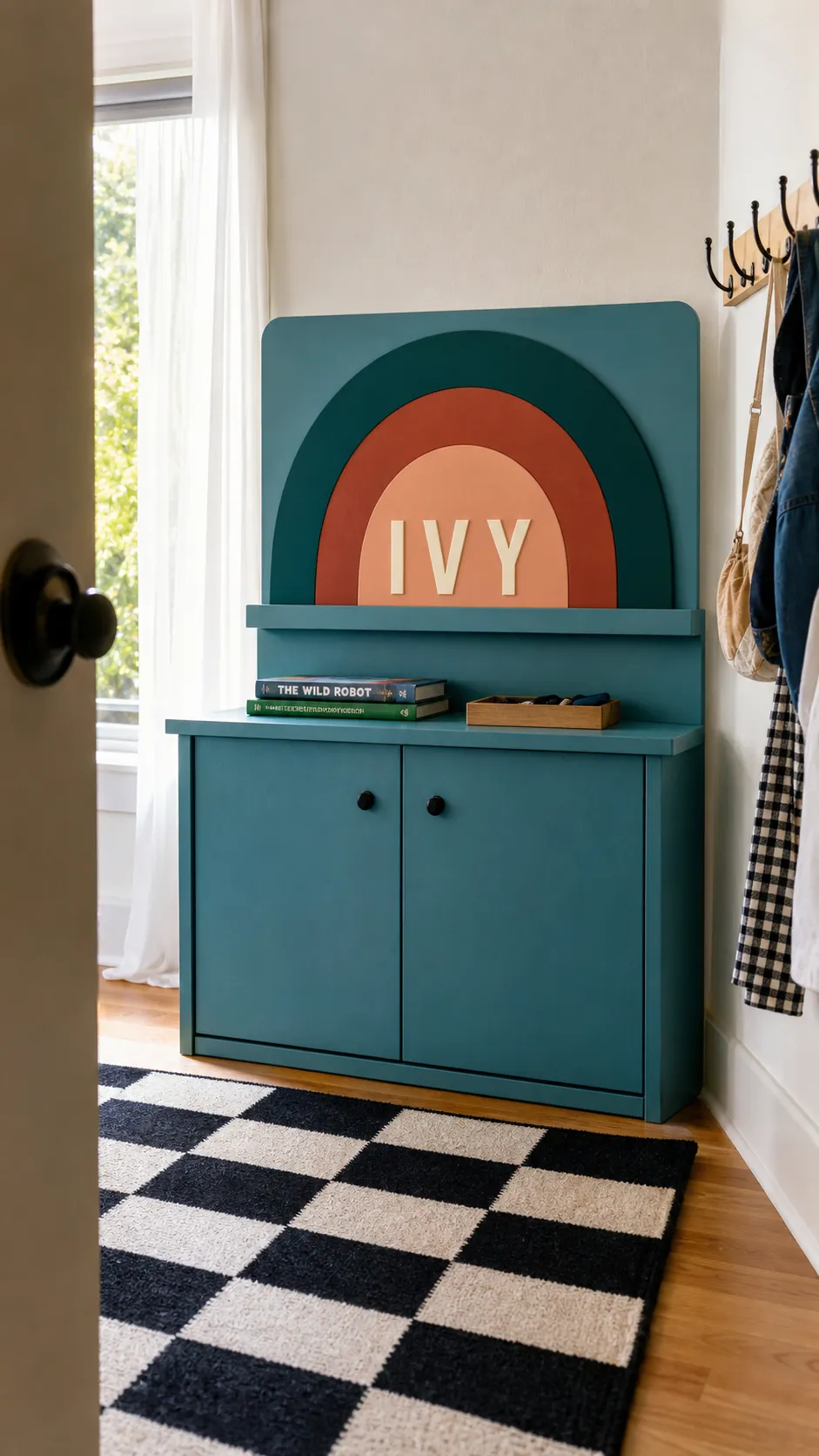
Paint three broad arches behind the name rather than adding seven tiny rainbow bands. Choose colors the child actually likes—perhaps teal, rust, and peach—so the sign feels personal rather than generic nursery décor. Center bold cream letters across the lowest arch. The compact shape works on a dresser-backed panel, door, or gallery ledge, making it easy to carry into a new room.
Woodland Animal Silhouette Sign
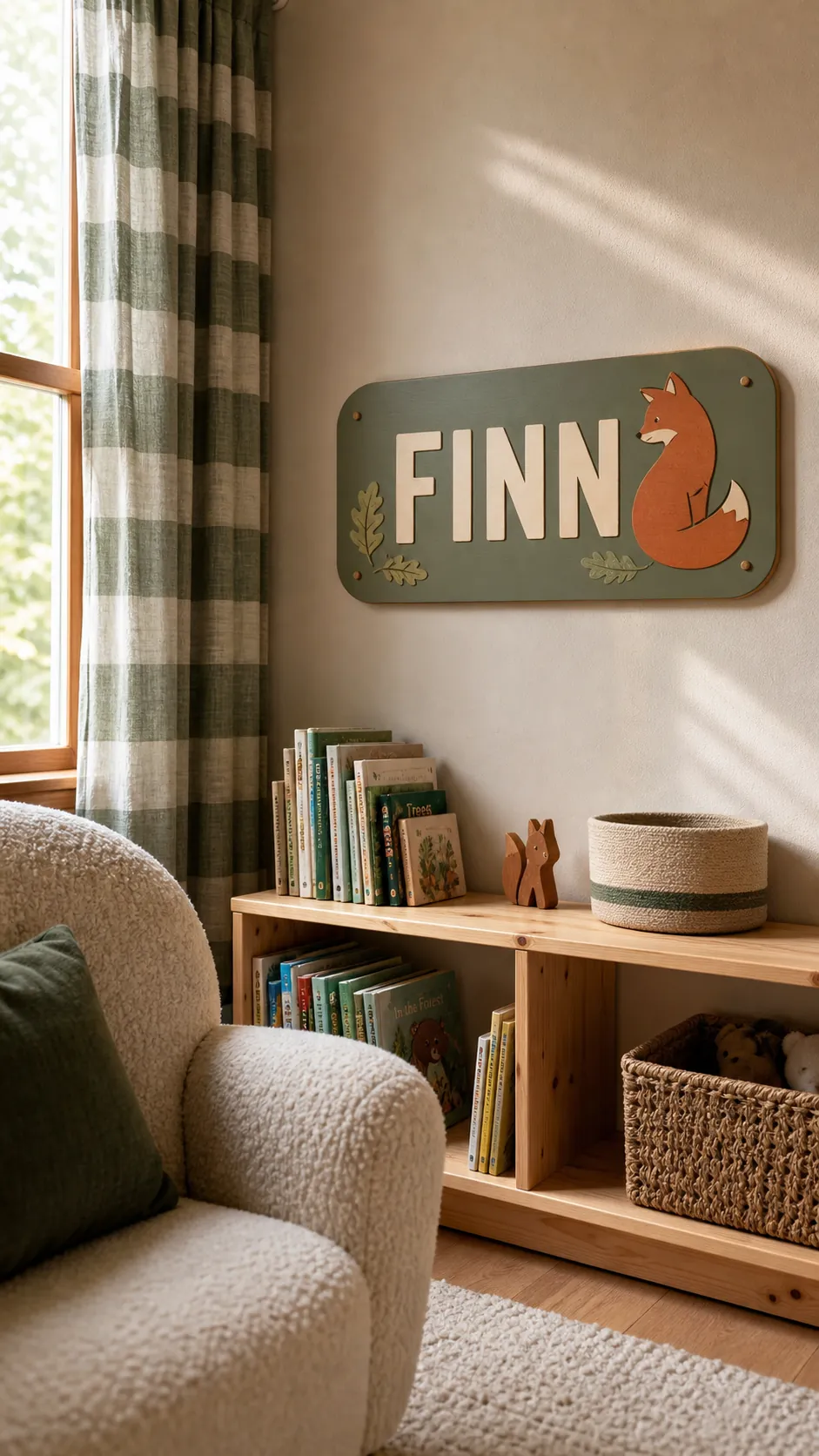
Pair the name with one recognizable animal silhouette instead of a crowded forest scene. A rust fox, navy bear, or cream rabbit can sit beside simple block letters on a sage backboard. Choosing one motif makes the sign easier to read and easier to repaint when tastes change. Keep ears, antlers, and tails within the sign’s outer edge so nothing sharp-looking protrudes or catches during a move.
Mini Scoreboard Name Sign
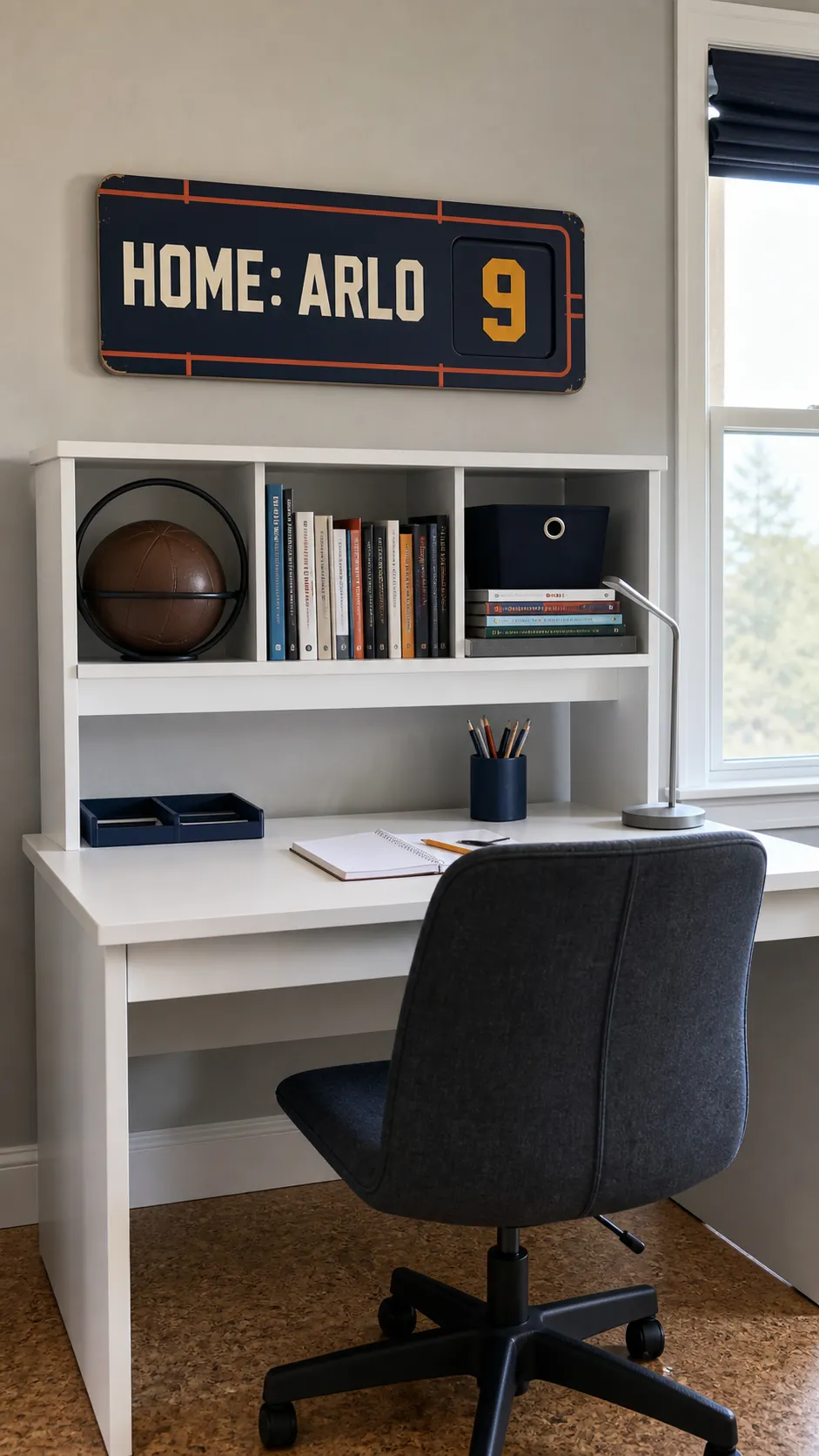
For a sports fan whose favorite game changes, use a general scoreboard layout rather than a team logo. Put the first name where a home-team label would sit, use the child’s age as a removable number, and paint simple field-line accents. Navy, cream, and one bright color work across football, basketball, or soccer interests. A changeable age tile keeps the sign useful for birthdays without replacing the entire piece.
Constellation Letter Name Sign
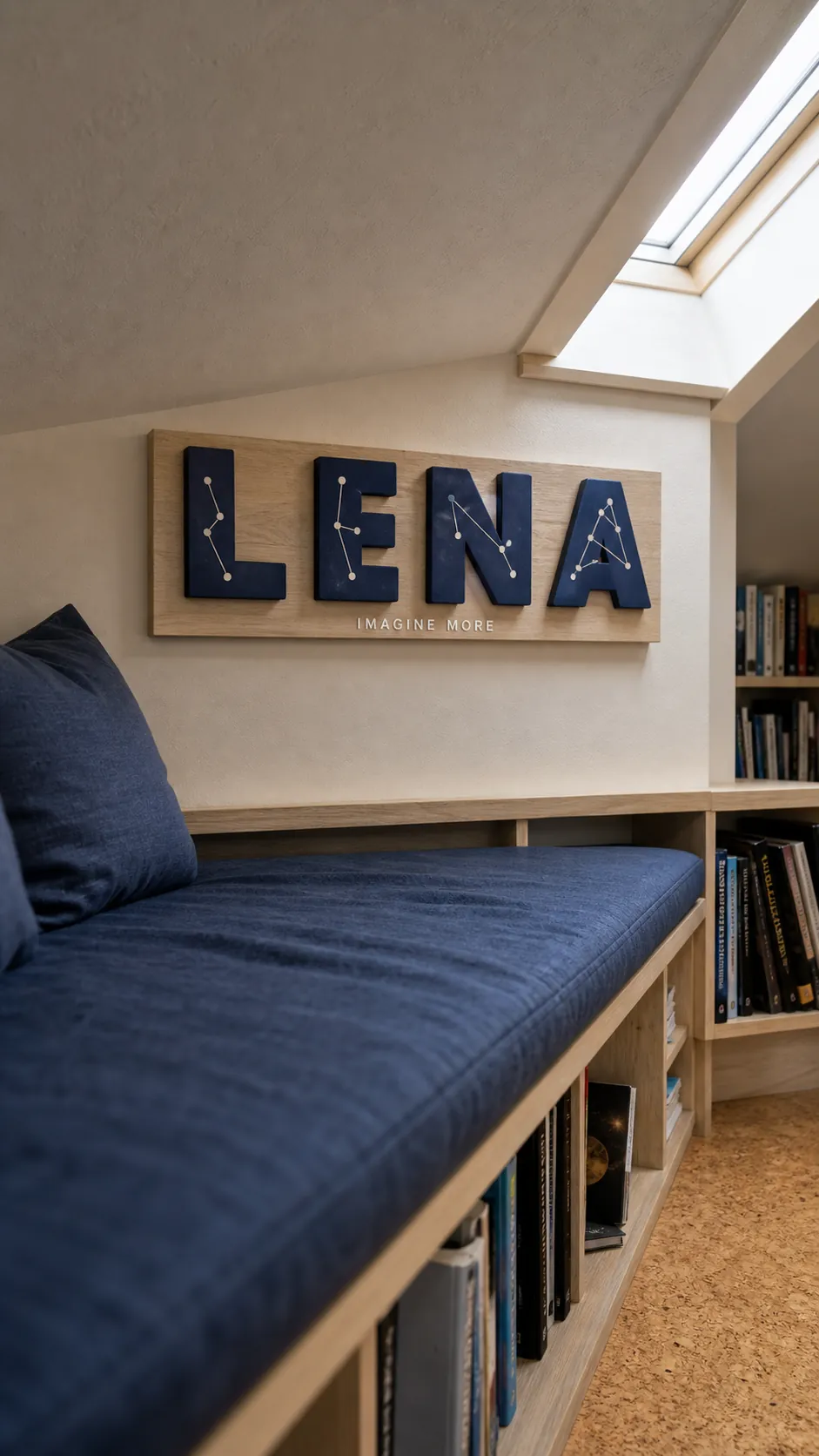
Paint each letter in matte navy and connect small cream dots across the letter faces like original constellations. Avoid claiming the pattern is a scientific birth chart unless it comes from verified data. The effect feels celestial but not childish, so it can last into the teen years. Keep the star dots painted rather than attached as small pieces, and let a slim pale-wood backboard warm the dark lettering.
Construction Plank Name Sign
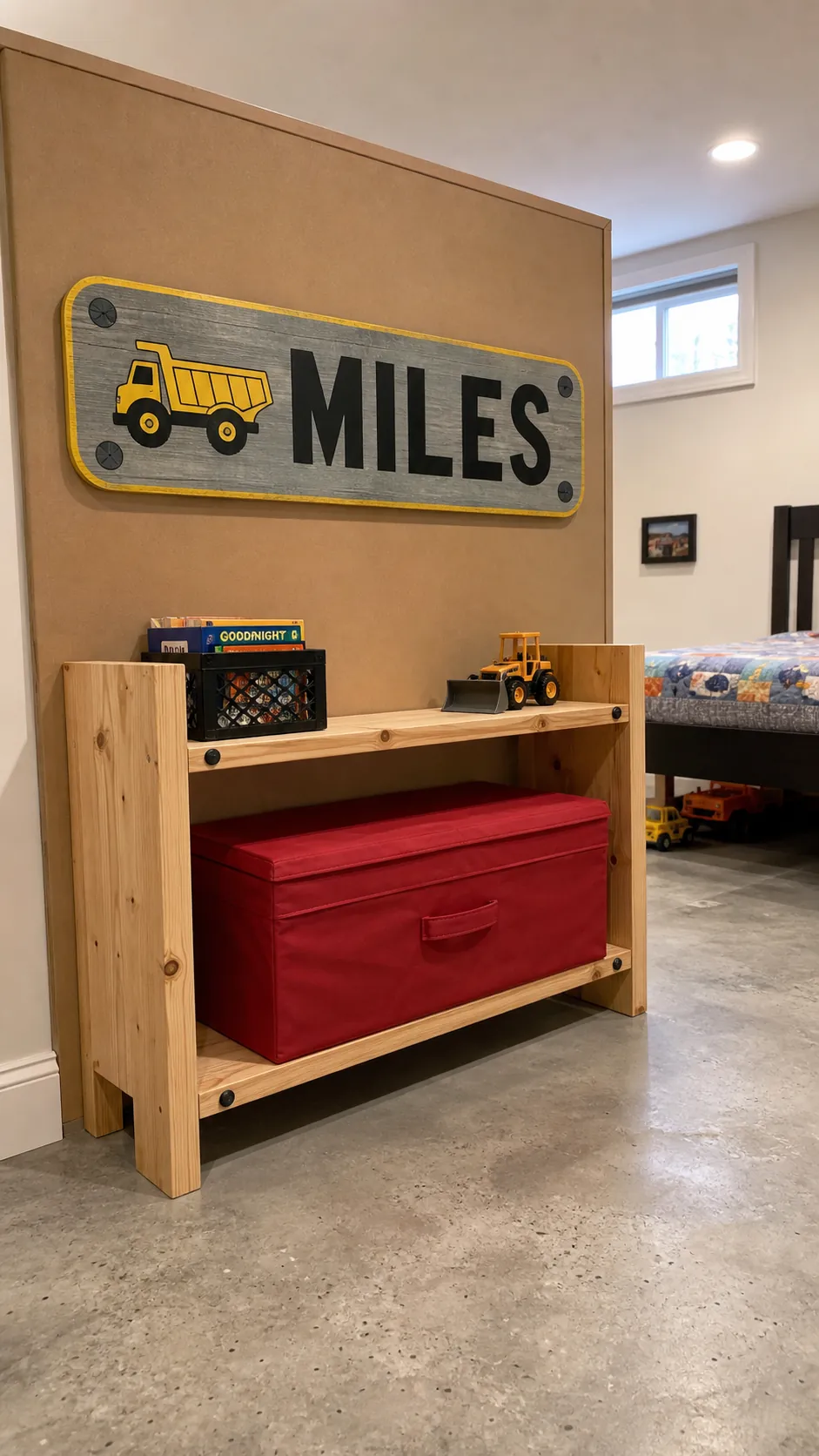
A lightweight faux plank with black block letters, one yellow dump-truck silhouette, and painted bolt circles gives a construction fan plenty of theme without real metal. Keep the “plank” smooth, rounded, and thin; distressed splinters do not belong in a child’s room. Use an original vehicle shape and no brand marks. When the phase passes, repaint the backboard and preserve the raised name letters.
Birth Flower Watercolor Name Print
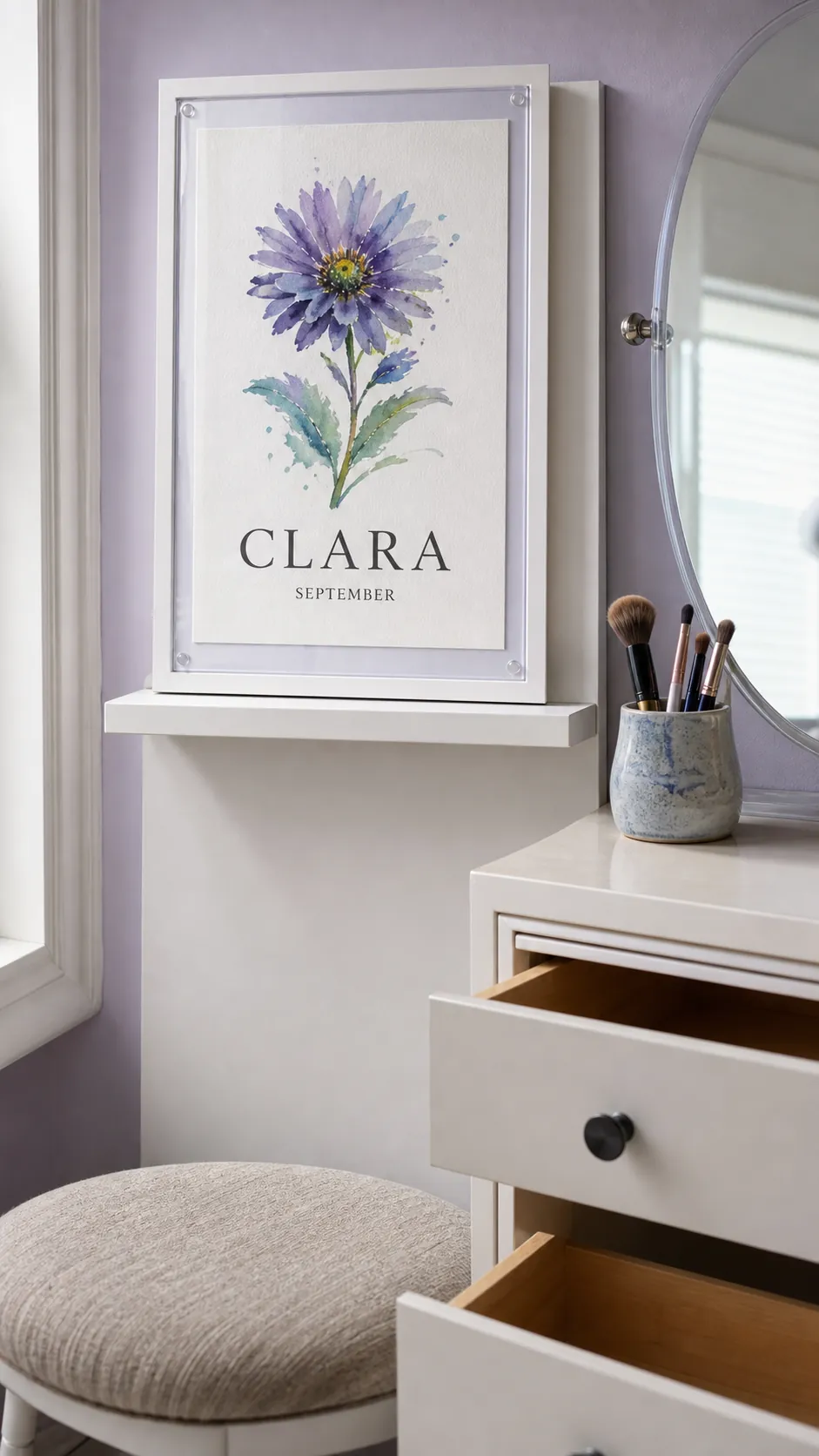
Paint or commission one specific bloom associated with the birth month, then place the first name beneath in a clear serif or sans-serif typeface. A loose watercolor daffodil, poppy, or aster has enough detail without needing a full floral border. Print on textured cotton paper and use an acrylic-front frame. This kind of child name wall art can move from nursery to study corner because it does not rely on baby imagery.
Monogram Gallery Pair
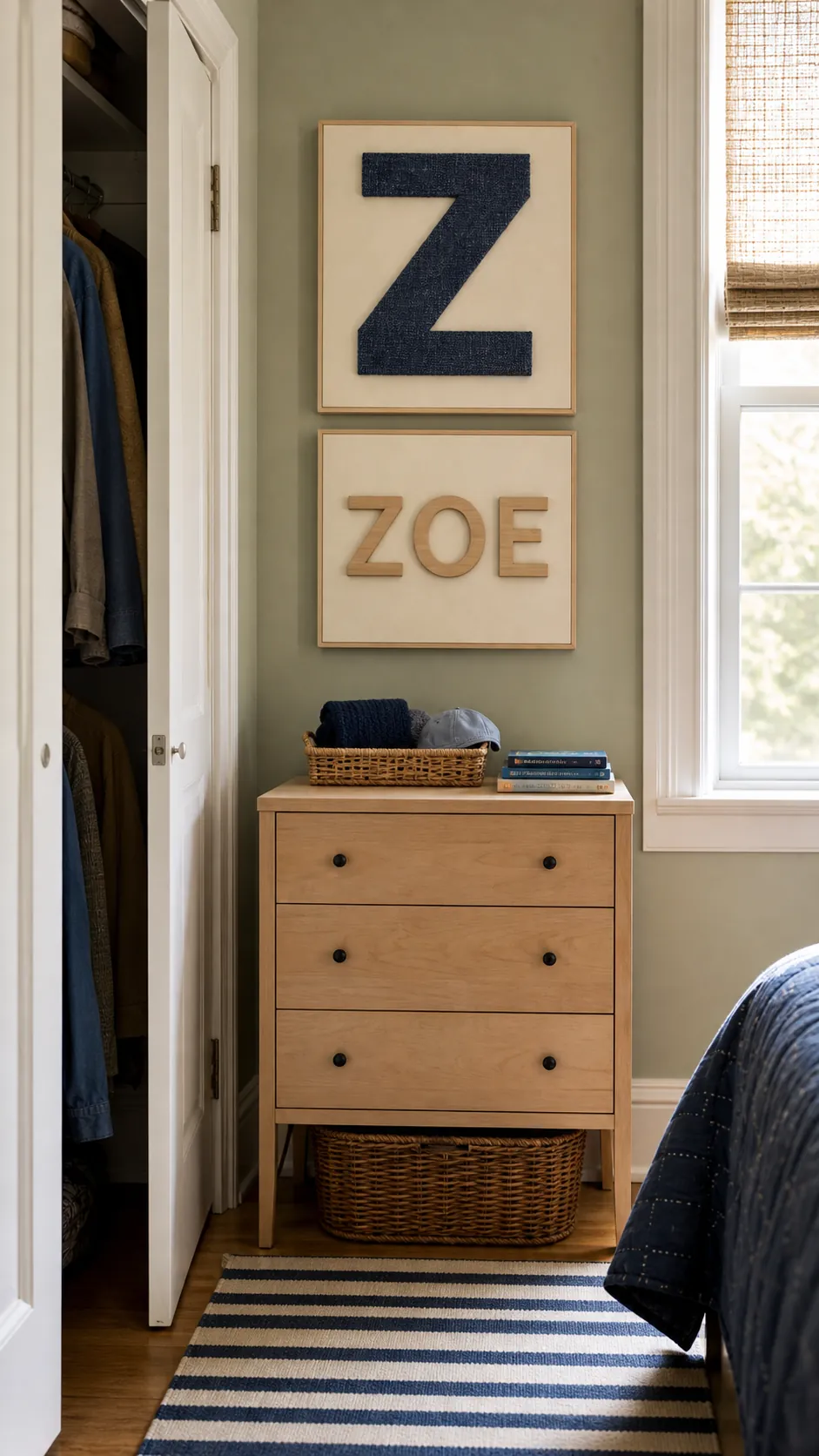
Split the idea into two lightweight pieces: a large initial on one panel and the full first name on another. Matching frames or backboards keep the pair connected, while different textures—painted wood and fabric, for example—add depth. Hang them on a side wall with a deliberate gap, or place both on a secure ledge. The pair is easier to fit around awkward architecture than one extra-wide sign.
Child-Painted Door Name Plaque
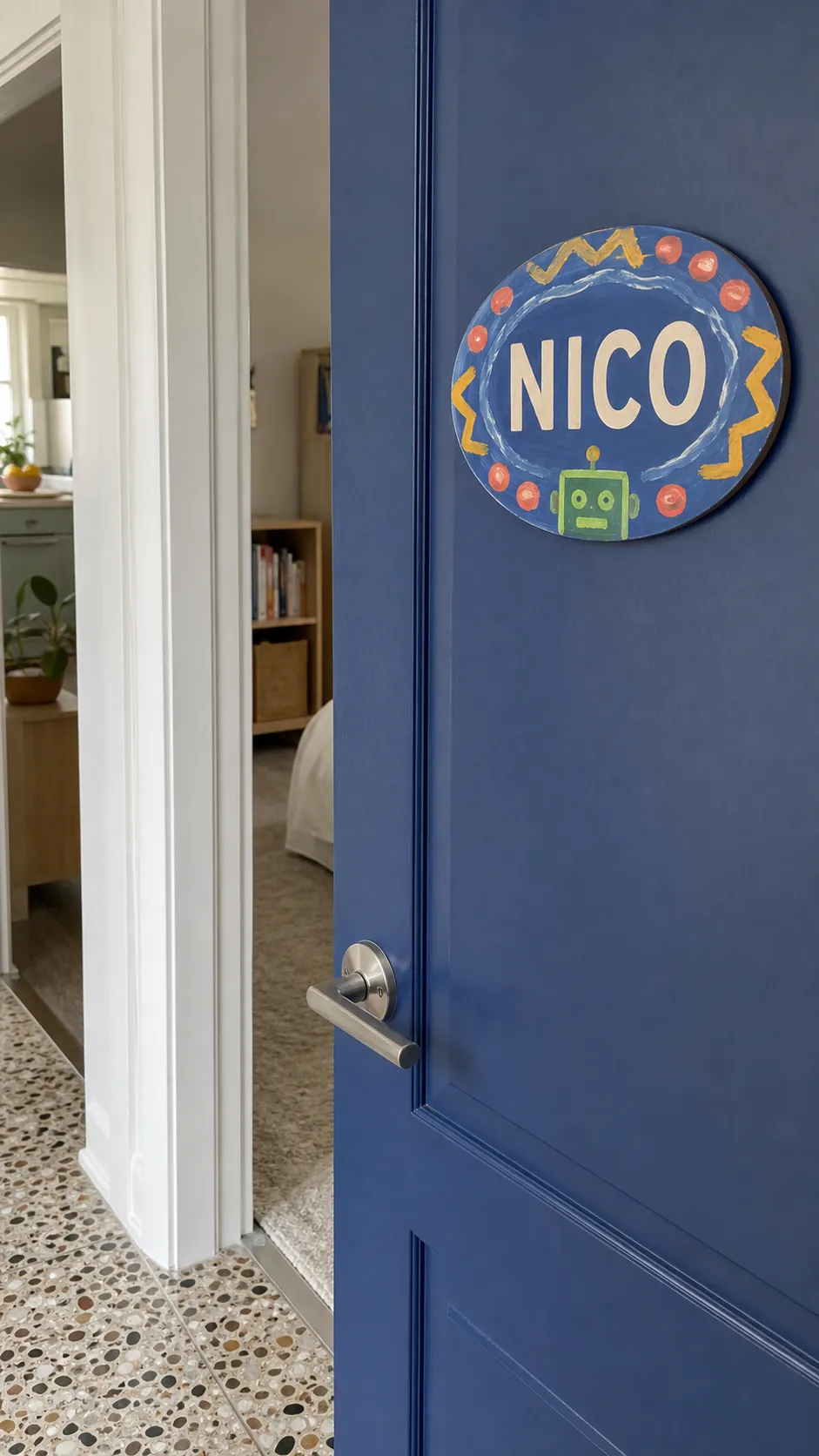
Let the child paint the border of a primed lightweight plaque while an adult finishes the readable letters. Restrict the palette to four colors so every choice still works together. Flat-mount the plaque to the door, clear of hinges, latch, and trim; skip a swinging ribbon. This project gives the child genuine authorship and makes the room feel personal before anyone steps inside.
Removable Name Decal Panel
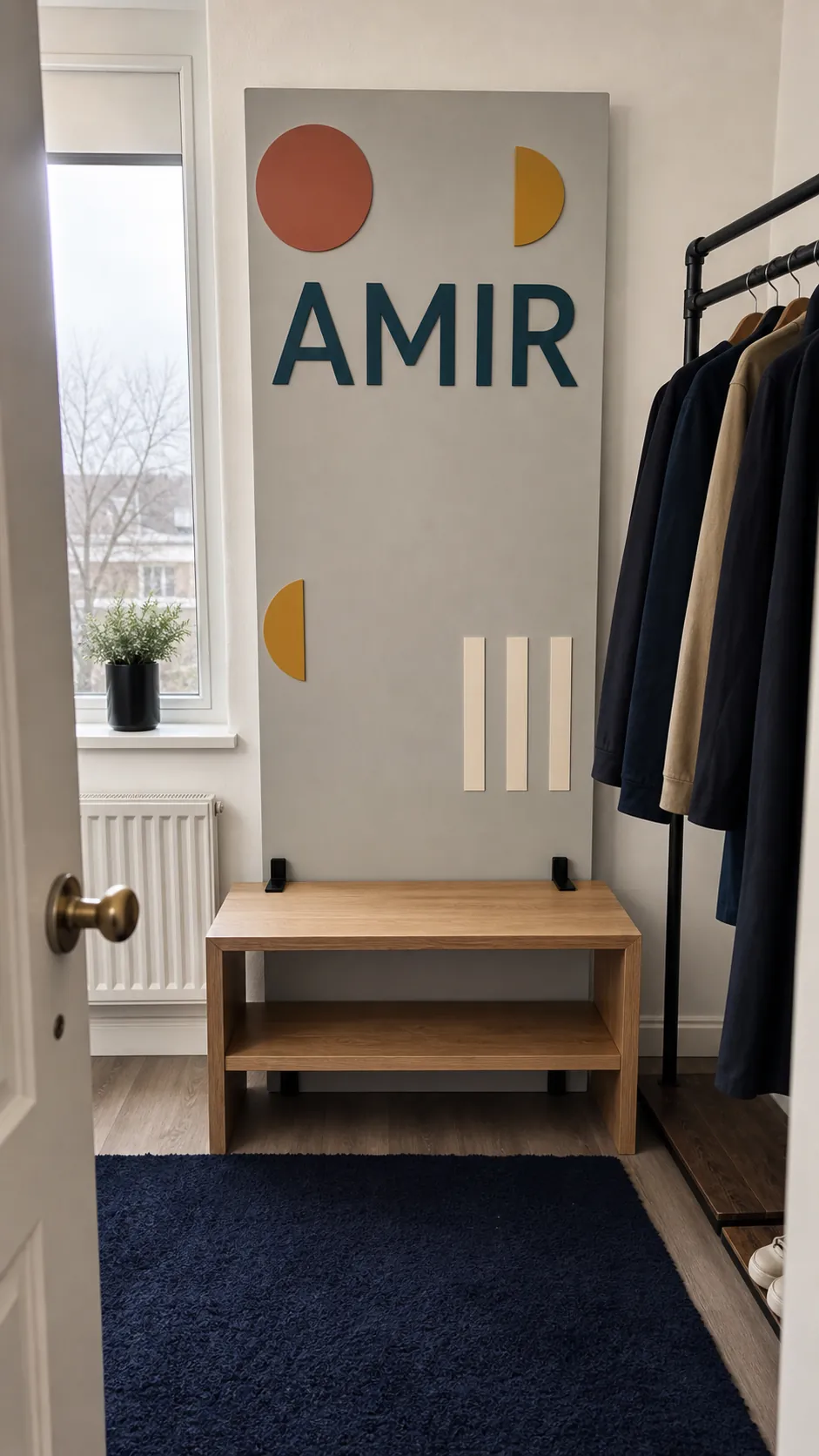
Renters can apply a matte name decal to a painted portable panel rather than directly to uncertain wall paint. Add a few geometric shapes in the child’s chosen colors, then lean or secure the panel according to its design. Test the decal on the back first, smooth from the center outward, and keep the composition simple. When moving, the entire display travels without asking the landlord to share your optimism about removable adhesive.
Peg Letter Name Board
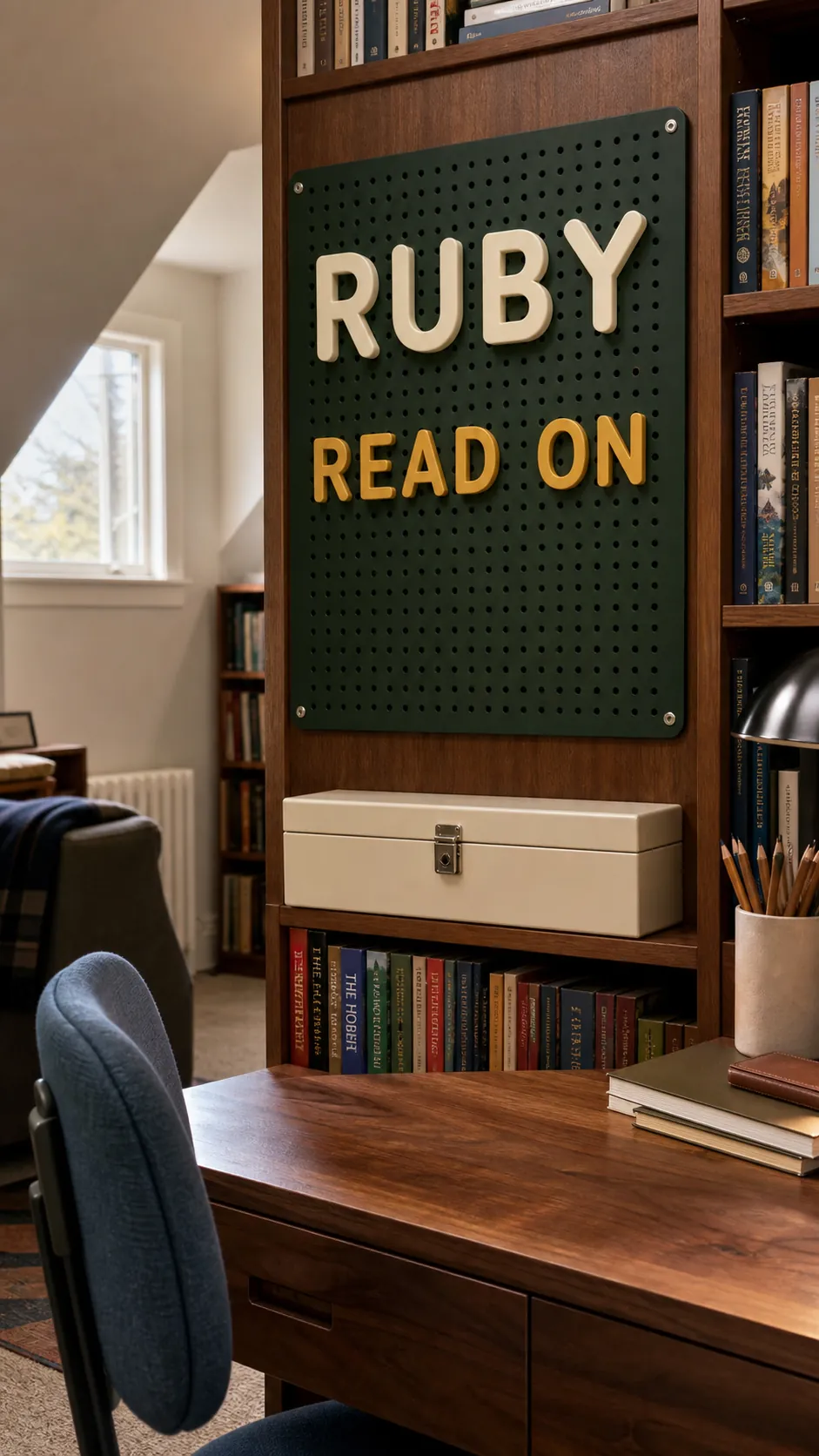
A peg-style board lets an older child rearrange the name, initials, or a short weekly word. Choose large letters that lock into place and keep unused pieces in a closed container. This is not a toddler option if components are small. For a school-age child, it adds interaction without a screen and can shift from name sign to reading-list header or art-display label as the room evolves.
Appliqué Fabric Name Banner
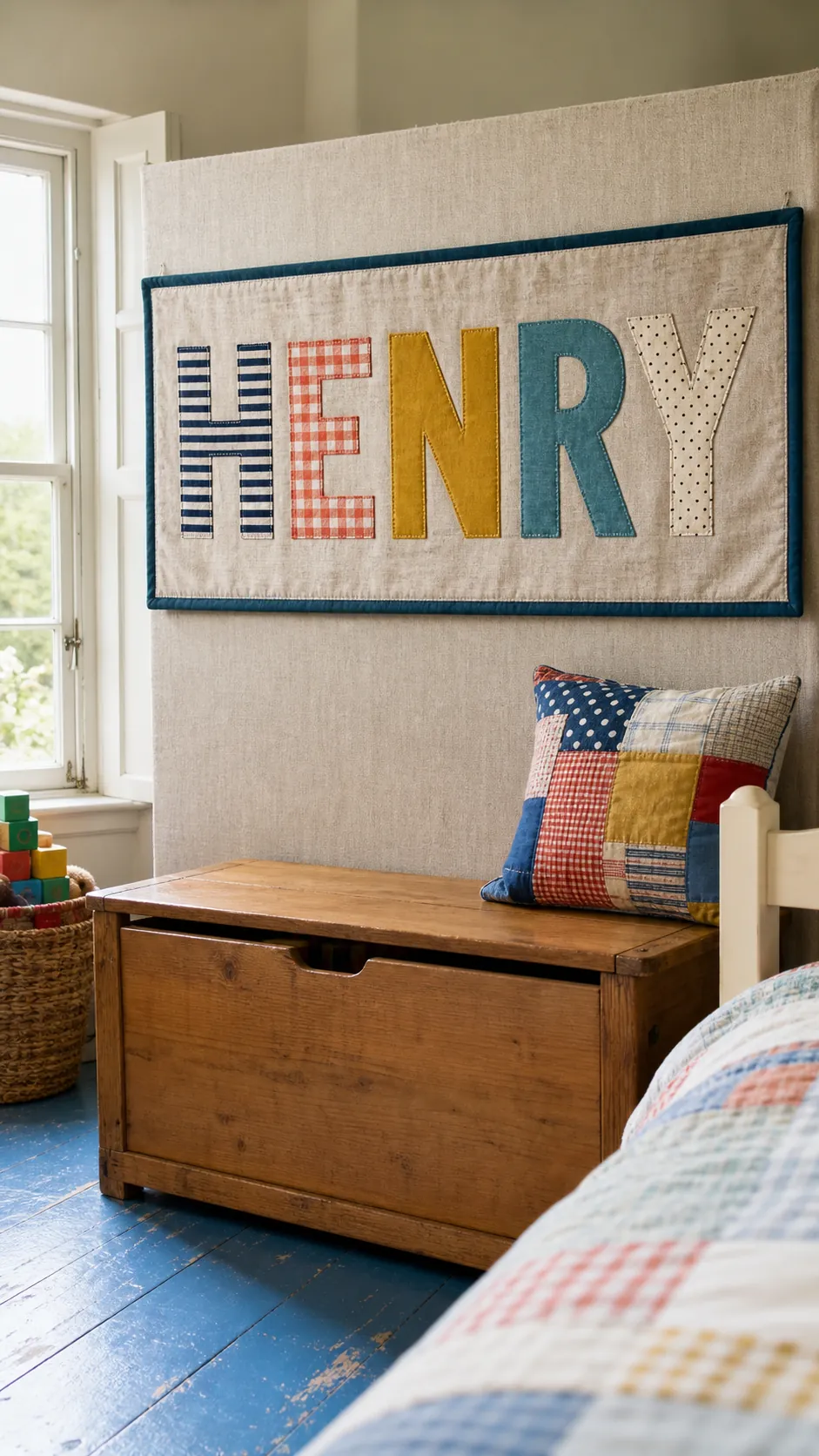
Stitch large fabric letters onto a lined rectangular banner and finish the edges with simple binding. Use scraps from curtains, bedding, or outgrown clothes so the sign belongs to the room before it even spells the name. A concealed top sleeve and short internal rod keep the display flat. Avoid tassels or long ties near beds, and inspect appliqué seams if young hands can reach them.
Magnetic Changeable Name Sign
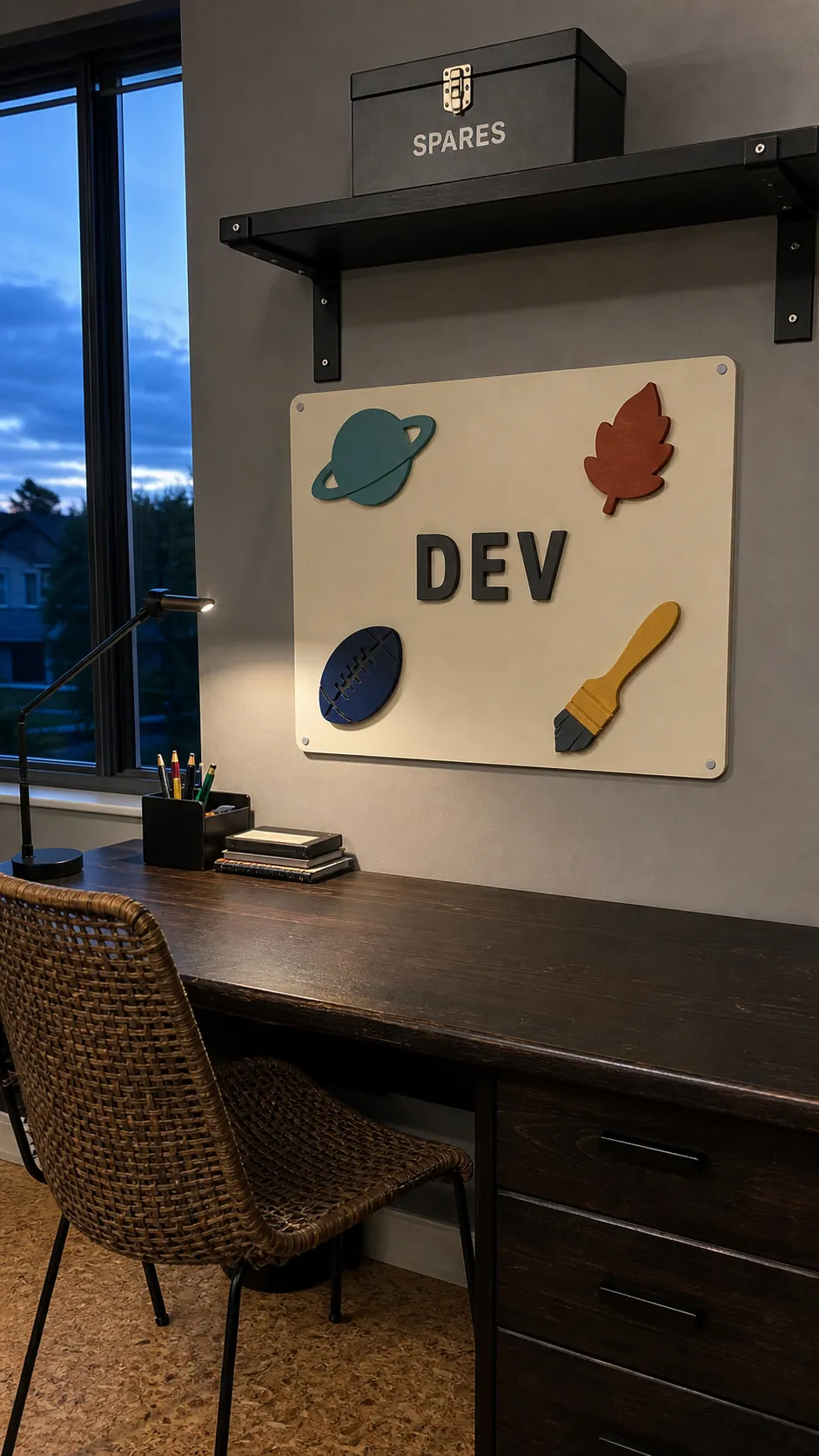
Fix the name permanently on a magnetic board, then let an older child rotate a few large theme accents around it: a planet, leaf, football, or paintbrush. Keep spare magnets in a latched box and do not use small magnets where younger siblings can access them. The fixed name gives consistency while the accents acknowledge that a child can love astronomy in spring and football by autumn.
Coordinated Sibling Name Signs
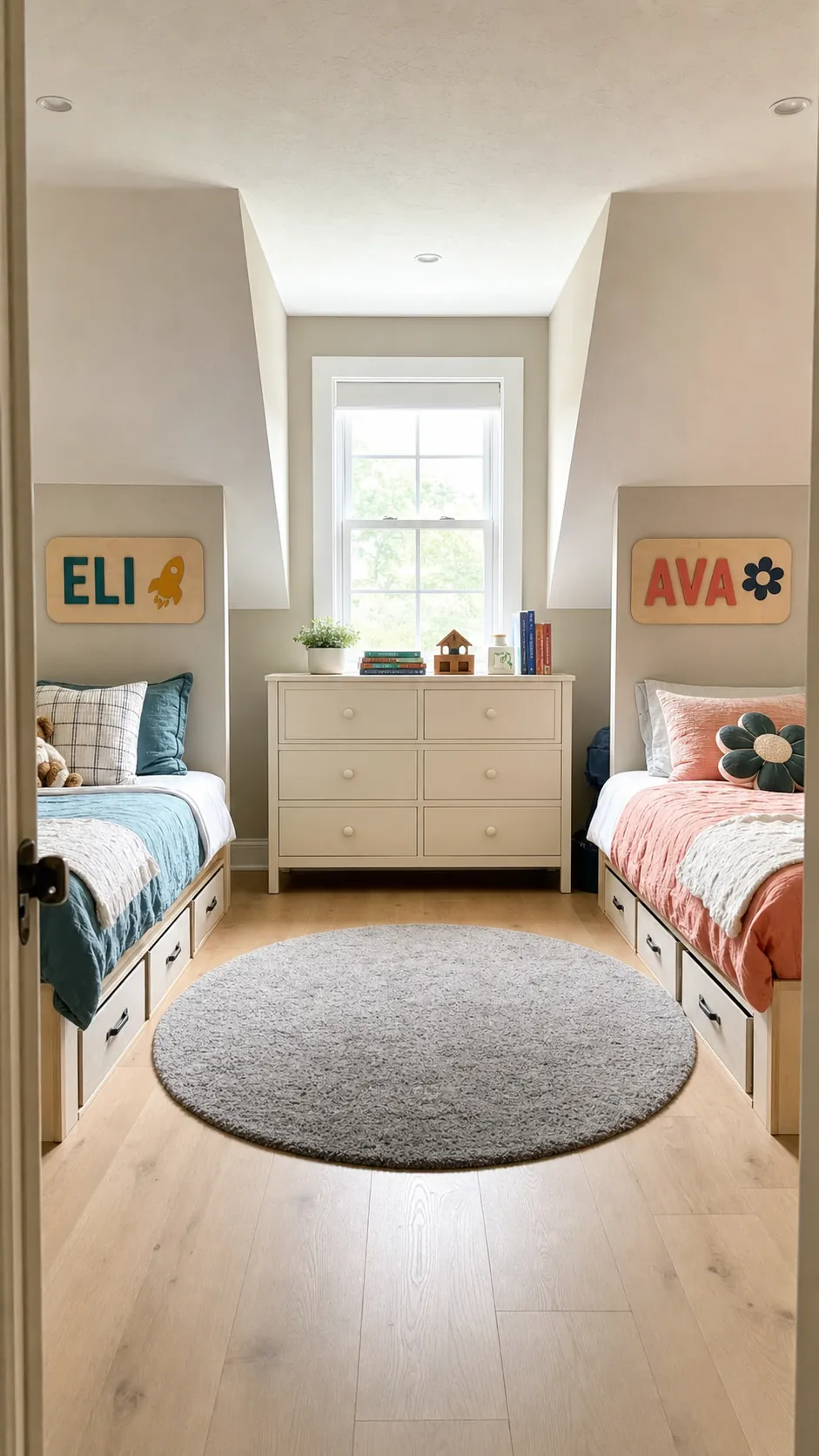
Shared rooms work best when signs are equal in size and quality but not identical in personality. Repeat the same typeface and backboard shape, then let each child choose a color and one motif. Mount both on side walls away from pillows at the same visual height. The matching structure unites the room; individual colors prevent one child’s preferences from swallowing the other’s space.
Name Sign Growth Chart
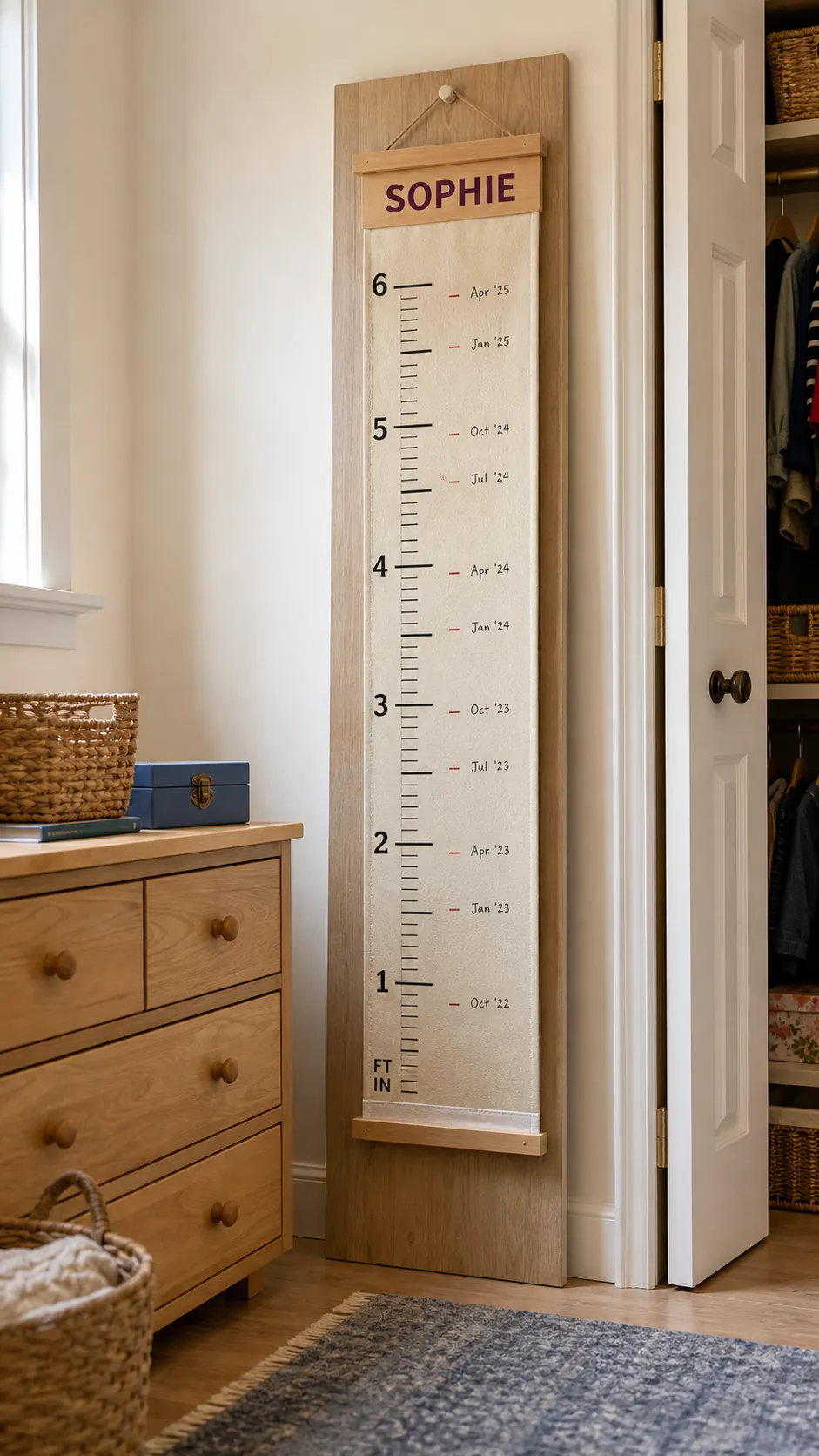
Combine a first-name header with a portable canvas or wooden growth scale, checking the measurement against a real tape after installation. Record dates rather than turning every mark into decoration. The sign becomes more personal each year and travels if the family moves. The most successful kids name sign is not merely the one that matches the room today—it is the one that remains safe, meaningful, and welcome as the child grows into a new version of themselves.