19 Nursery Storage Ideas Without Built Ins
The wipes are beside the chair, clean sleepers are still in a laundry basket, and the drawer you need will not open past the hamper. More furniture can make that problem worse. Start by giving daily supplies the easiest places to reach, then move occasional items out of the way. Freestanding storage still needs any anchoring required by its manufacturer; a rental does not remove that requirement.
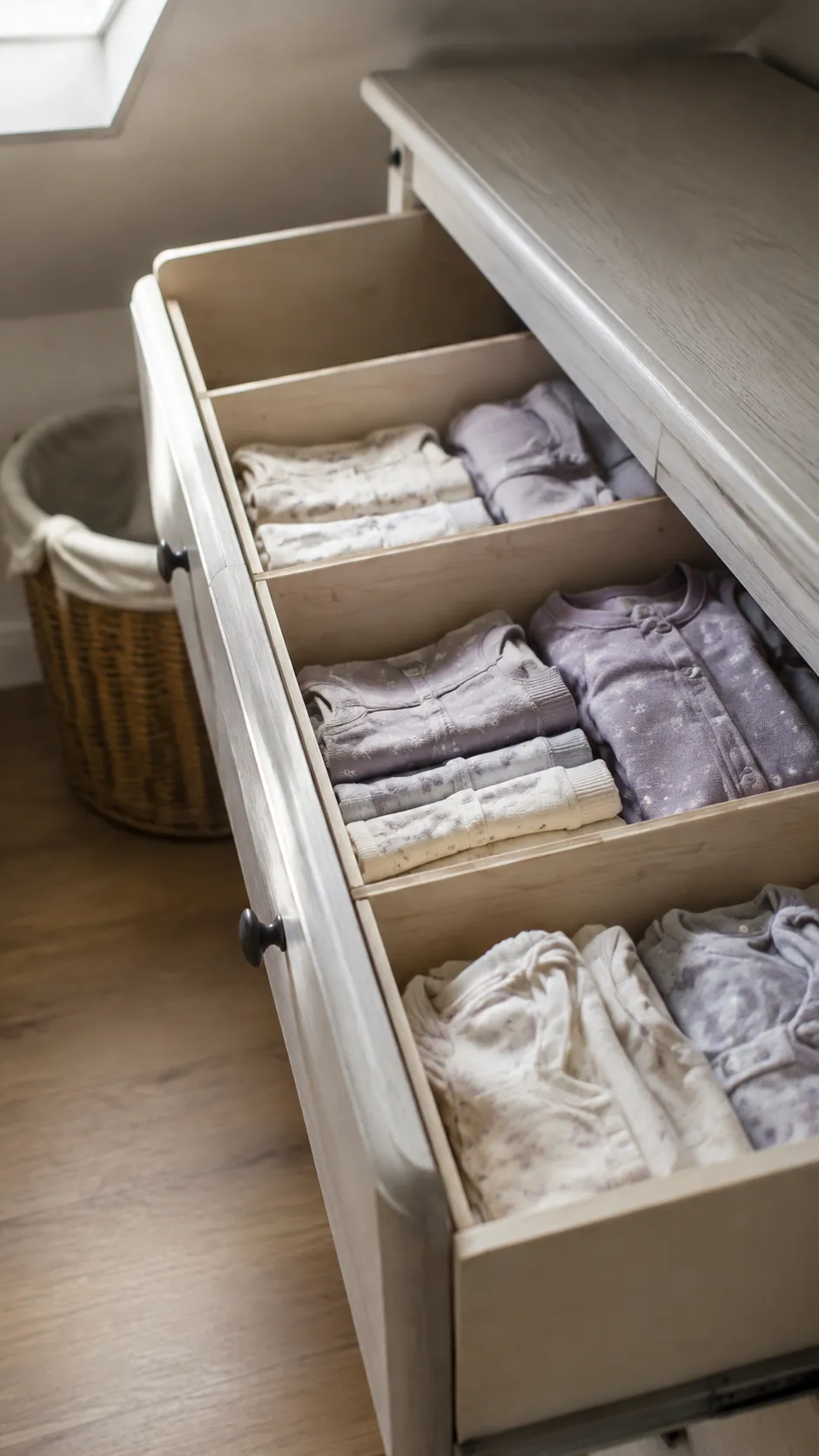
Give everyday clothes one divided drawer
A drawer becomes easier to use when you can see every small outfit without lifting a stack. Measure its usable depth before buying dividers, then fold current size clothing upright into shallow compartments. Keep sleepers nearest the front and occasional outfits farther back. Leave a little empty space so clean laundry can go straight in rather than forming another pile.
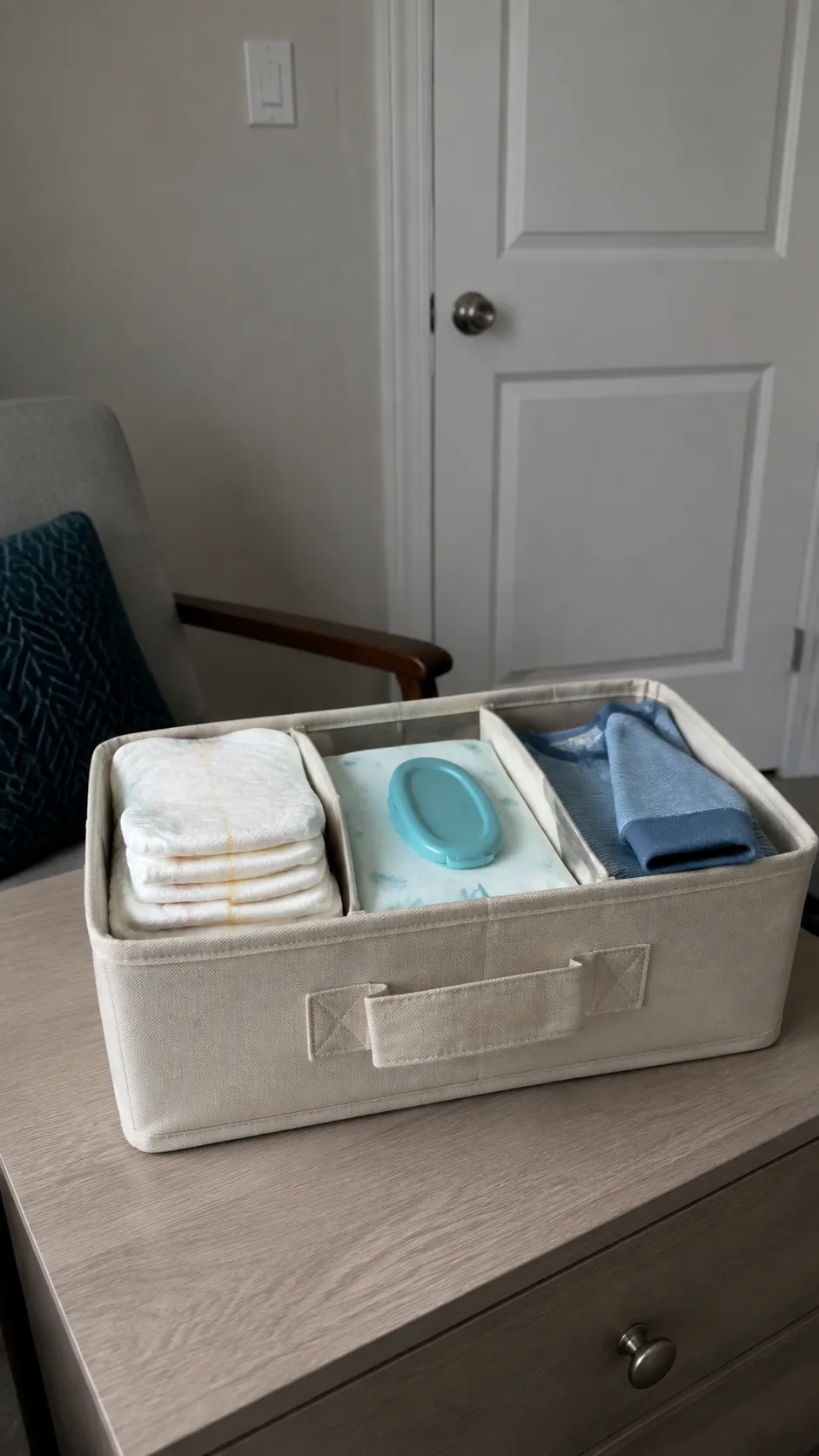
Make a portable diaper caddy
A washable caddy can carry a small supply of diapers, wipes, and spare clothing between rooms, keeping the essentials together. Choose short handles and stable compartments so it sits flat beside your changing spot. Store creams and other products out of a child’s reach when the caddy is unattended. Refill it from bulk supplies once a day instead of carrying the entire stock around.
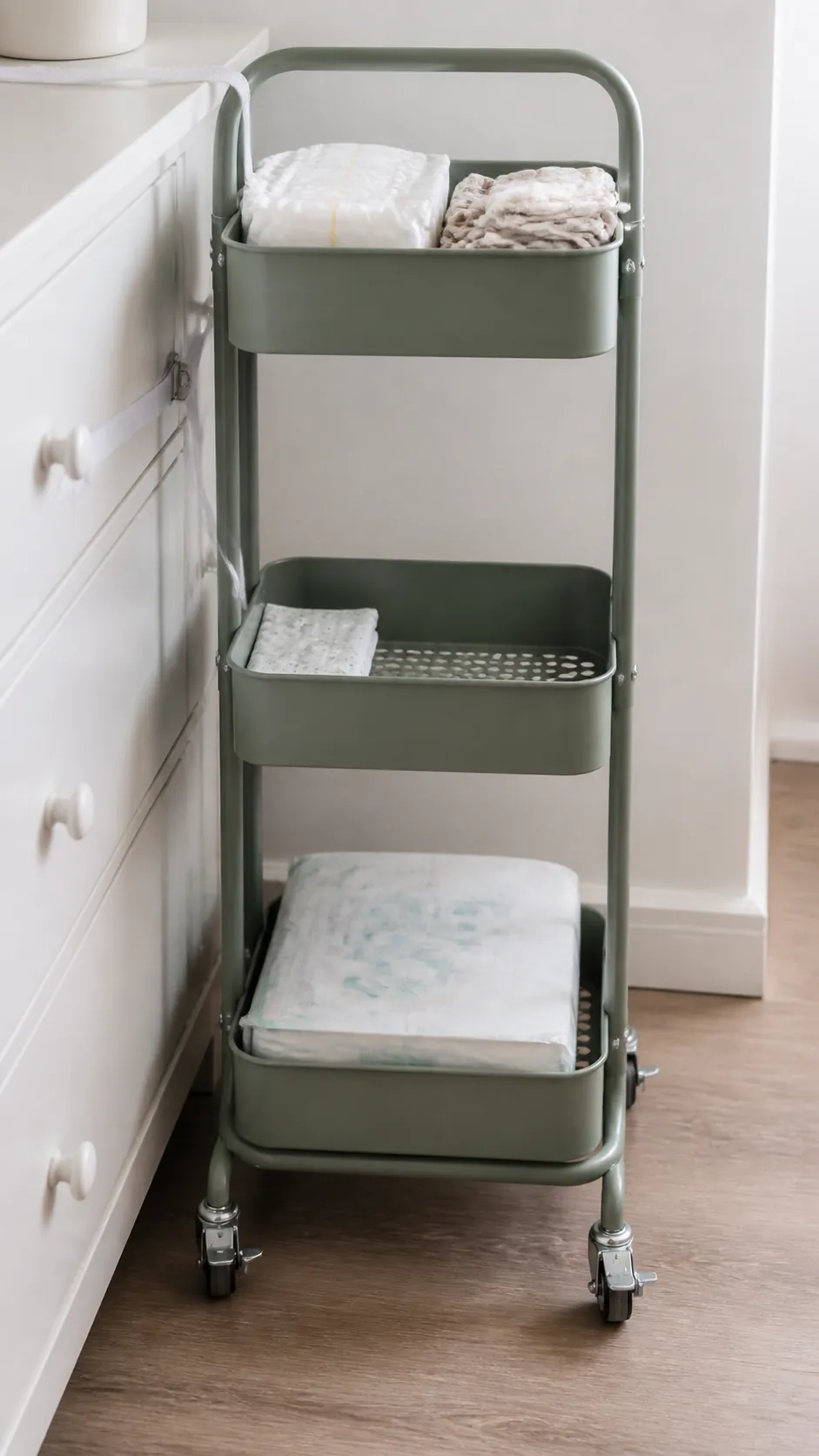
Park a narrow trolley beside the changing area
A compact trolley adds nursery storage solutions where a full cabinet would block the walkway. Put light daily supplies on top and heavier refills on the lowest shelf, staying within the product’s load limits. Choose locking casters and park it outside the baby’s reach. It must never serve as a changing surface, and it should not become a climbing aid beside the crib.
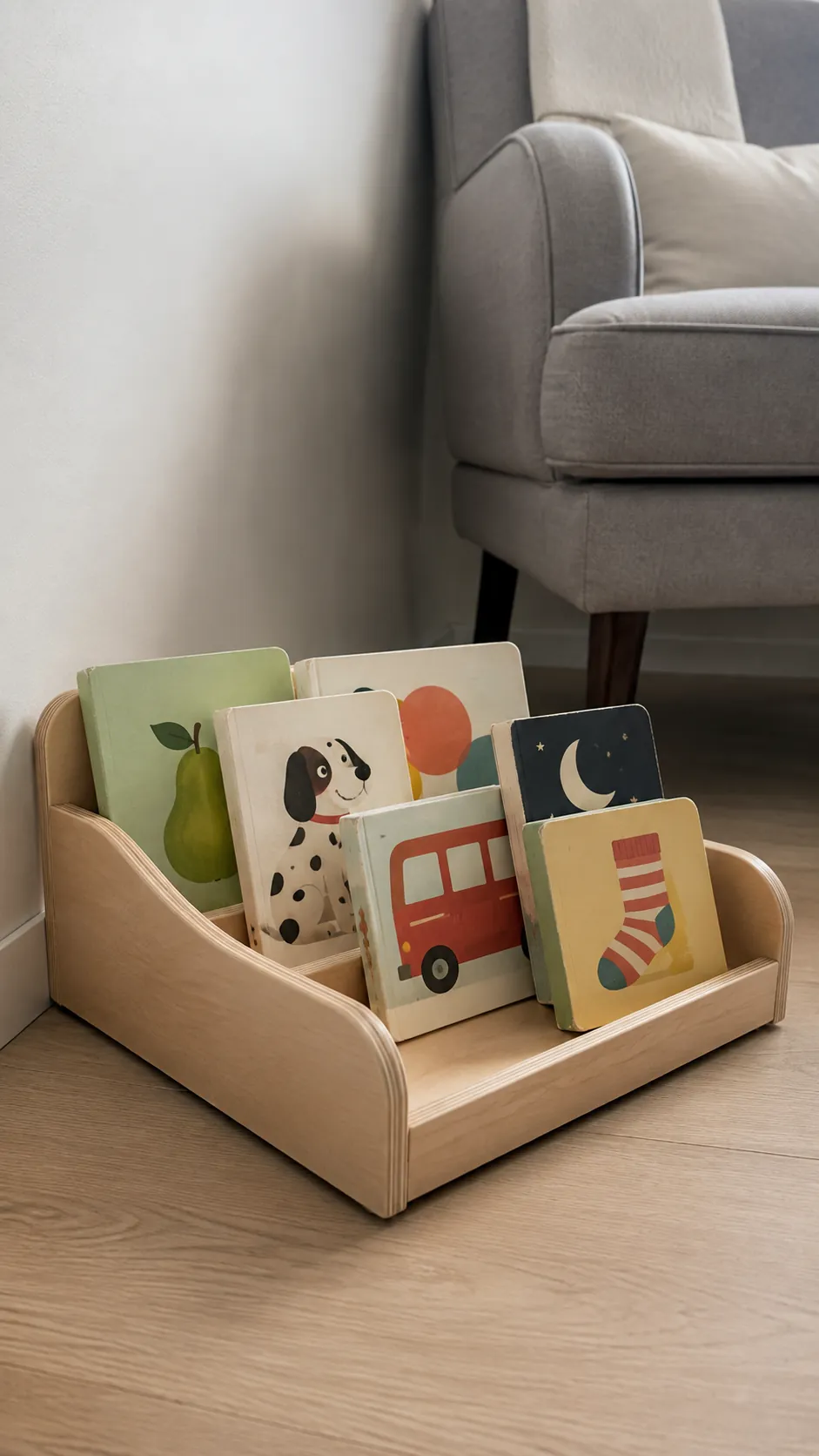
Use a low book bin for bedtime favorites
Board books are easier to browse when their covers face forward in a stable floor bin. Keep only a small bedtime selection here, with the rest stored elsewhere for rotation; rounded edges and a broad base matter more than decorative height. Position the bin beside the reading chair so books have a clear home after the last story.
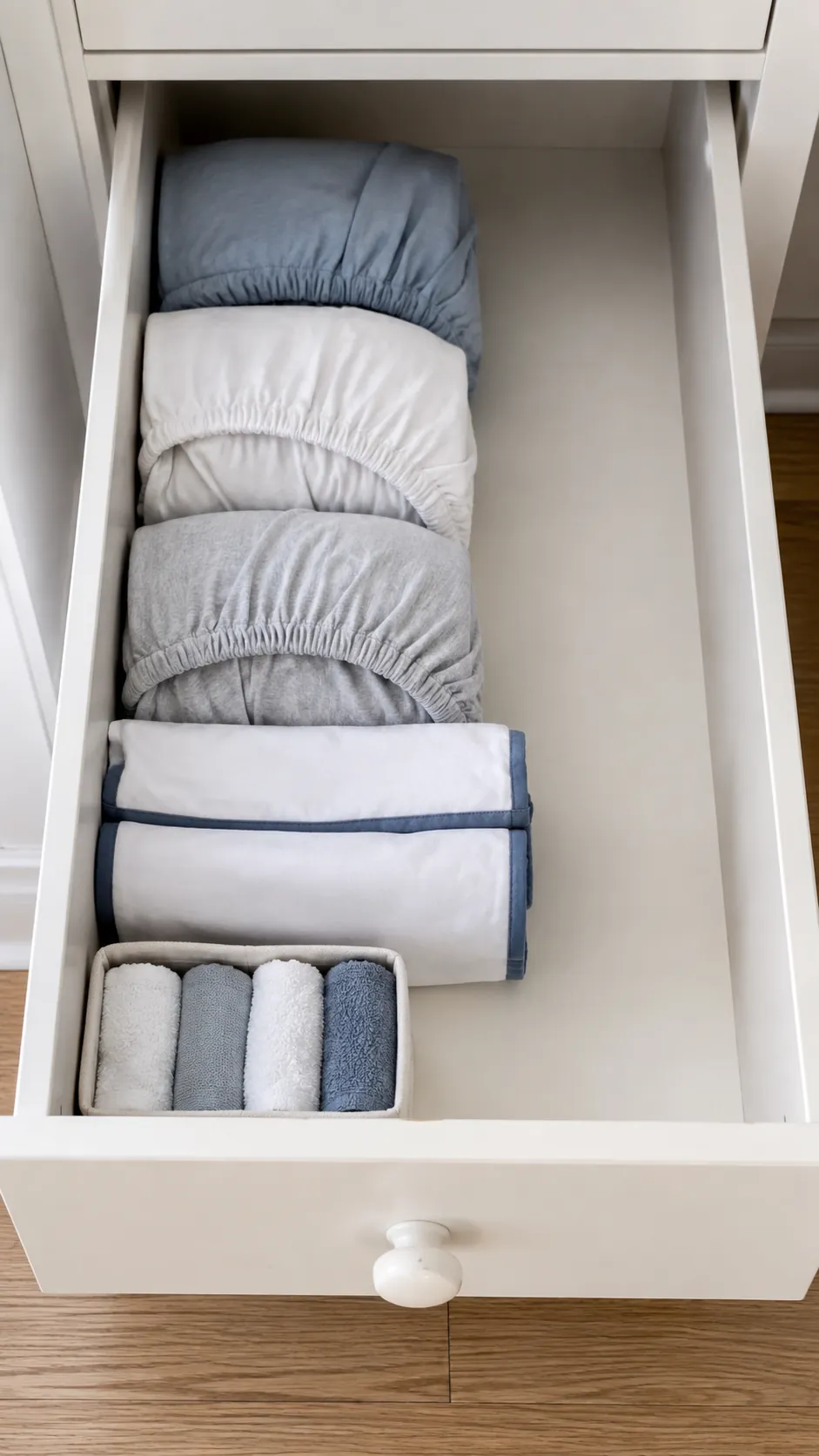
Turn a dresser drawer into a linen station
Fitted sheets and spare changing covers often disappear among clothes when they share a drawer. Give them a separate drawer and fold each type to a similar width so the contents are visible at a glance. A small open divider can hold clean washcloths without burying the larger pieces. Keep spare bedding in storage rather than adding loose textiles to the baby’s sleep space.
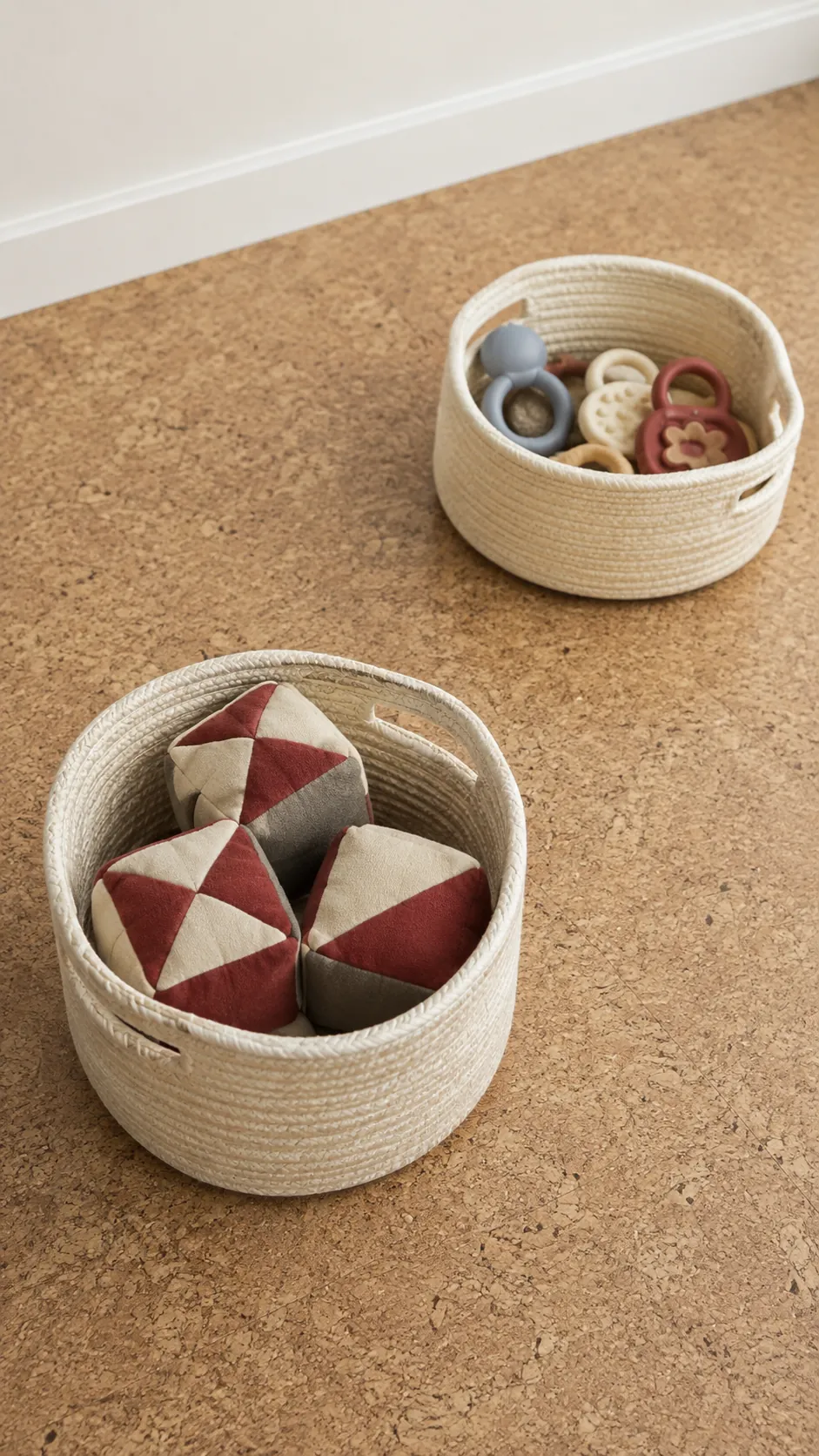
Choose soft baskets for a small toy rotation
For nursery toys, a few lightweight baskets you can lift easily work better than a deep box full of mixed objects. Sort by activity, such as soft blocks in one basket and age appropriate rattles in another. Avoid loose decorative tassels, long cords, and detachable trim. Rotate the contents when interest fades instead of increasing the number of baskets on the floor.
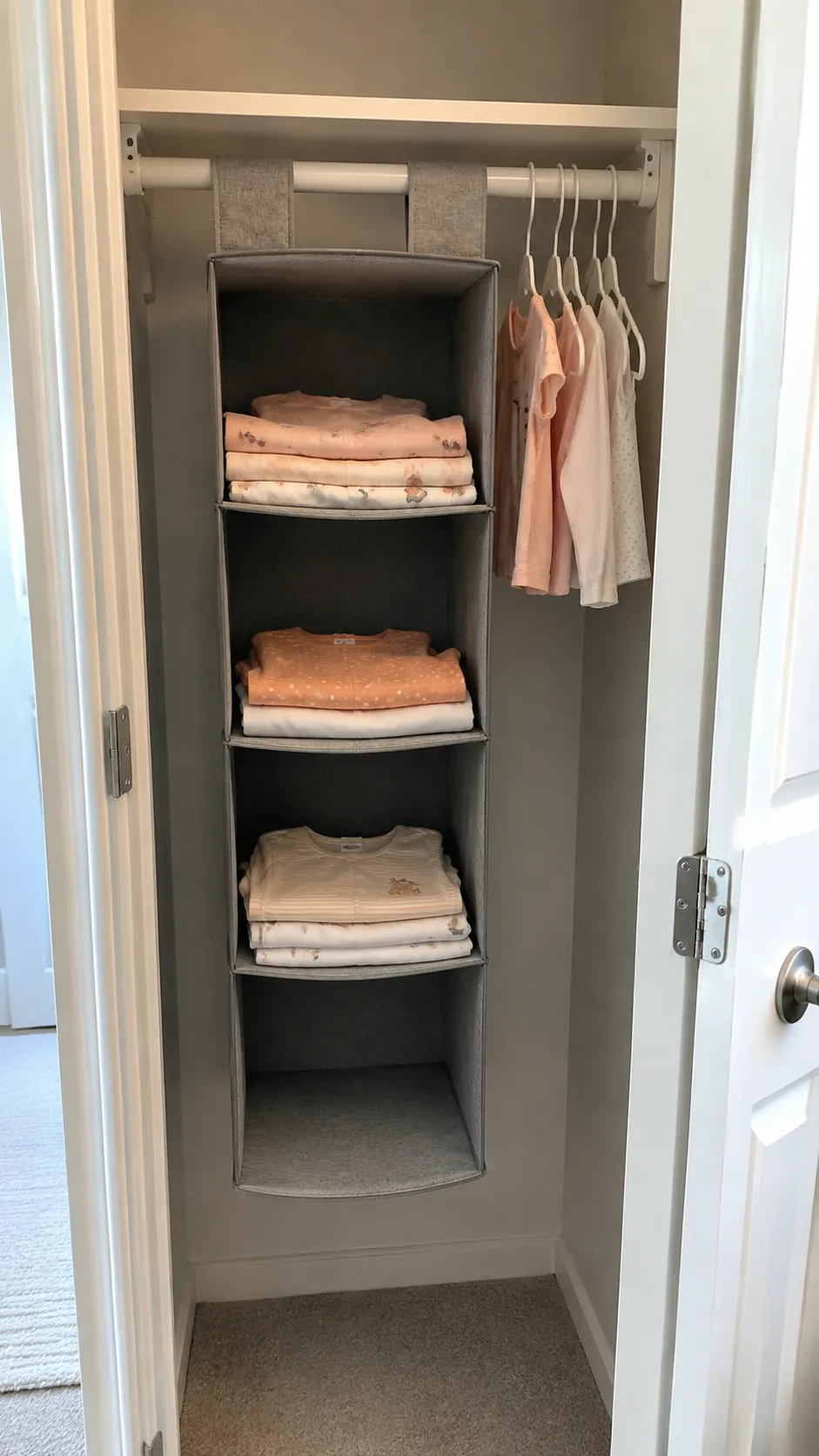
Add a hanging organizer to an existing closet rail
Fabric compartments can use the vertical space below a securely installed closet rail without requiring custom joinery. Check both the rail’s capacity and the organizer’s limit before loading folded clothes. Keep heavy supplies elsewhere so the shelves do not sag into narrow pockets. This works particularly well for tomorrow’s outfits when a dresser already holds everyday basics. Check that the organizer does not interfere with the closet doors.
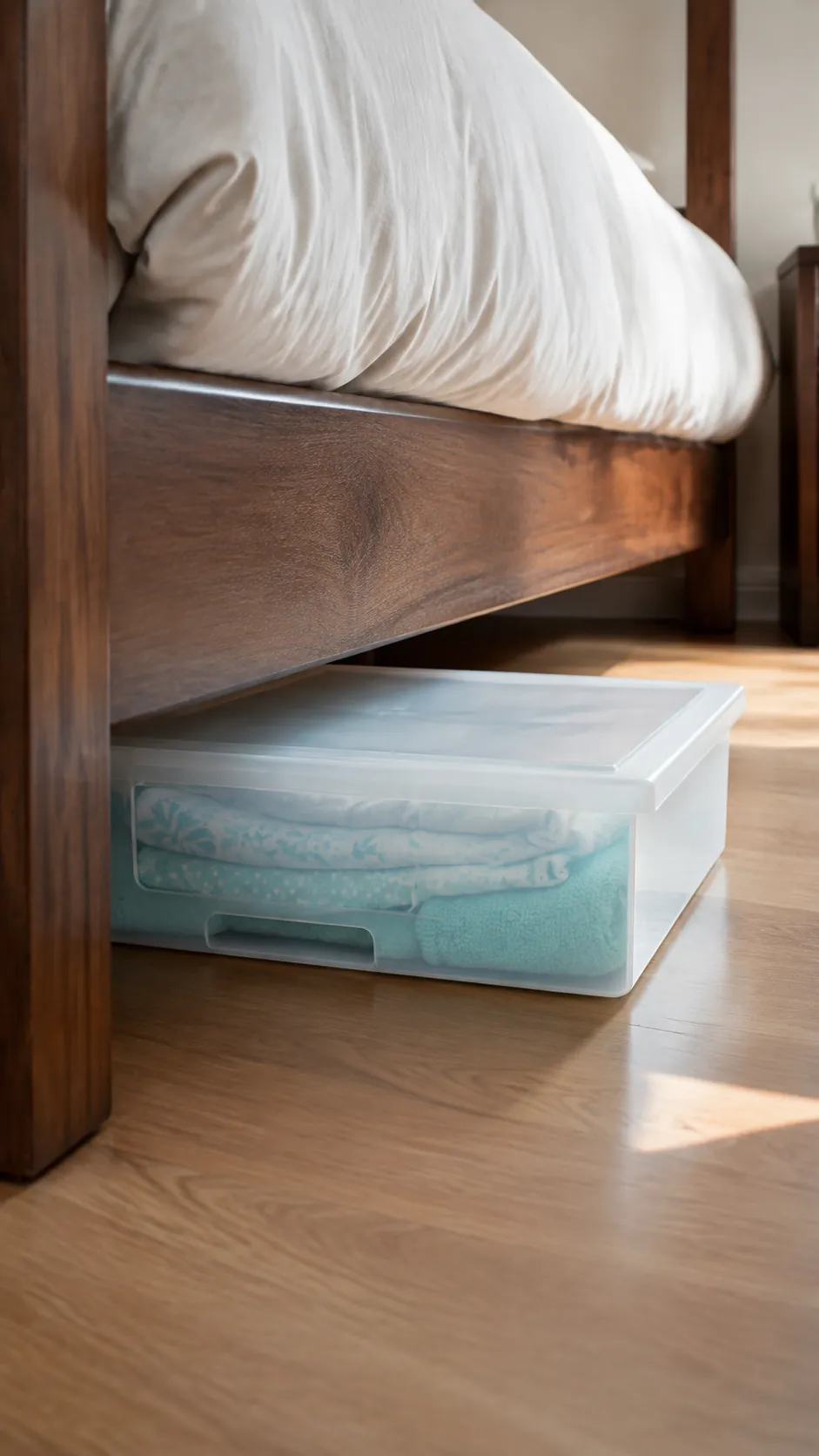
Slide shallow bins beneath adult furniture
An adult bed or suitable cabinet can hide flat storage boxes for extra nursery linens. Measure the clearance at the lowest obstruction, including support rails, before choosing a container. Use easy pull handles and lids that keep dust off contents without making retrieval awkward. Leave ventilation, furniture mechanisms, and walking routes clear, and follow crib instructions rather than assuming its underside is usable storage.
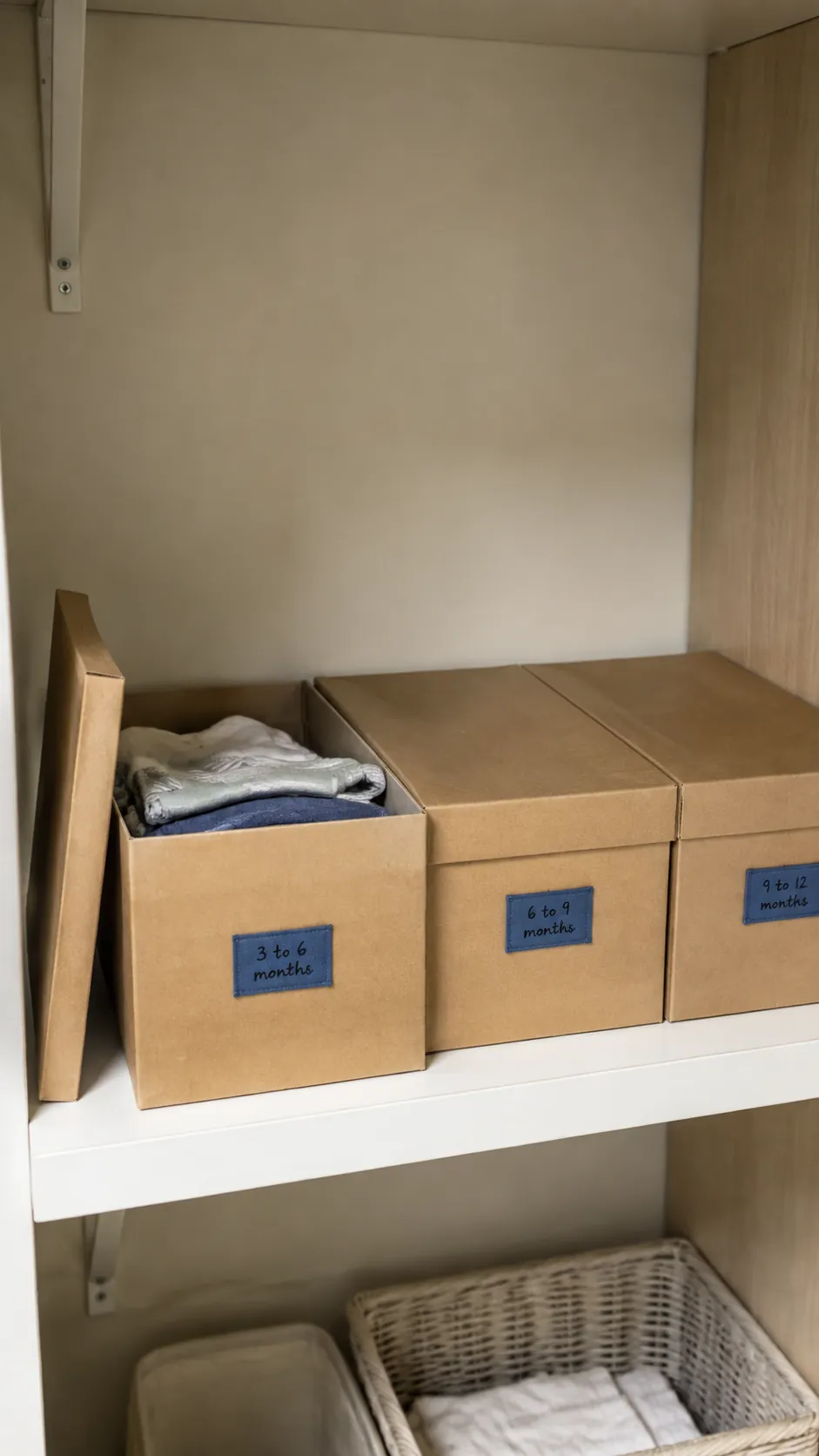
Keep future clothing sizes in separate boxes
Clothes that will fit later should not occupy the easiest drawer in the room. Group them by the next useful size range and label the outside of each lightweight box. Store them in an accessible adult storage area so you can check them before buying more.
Review actual garment fit as well as the label because sizing varies between brands. Before storing garments for a long period, make sure they are clean and completely dry. Choose a dry indoor cupboard instead of a damp garage.
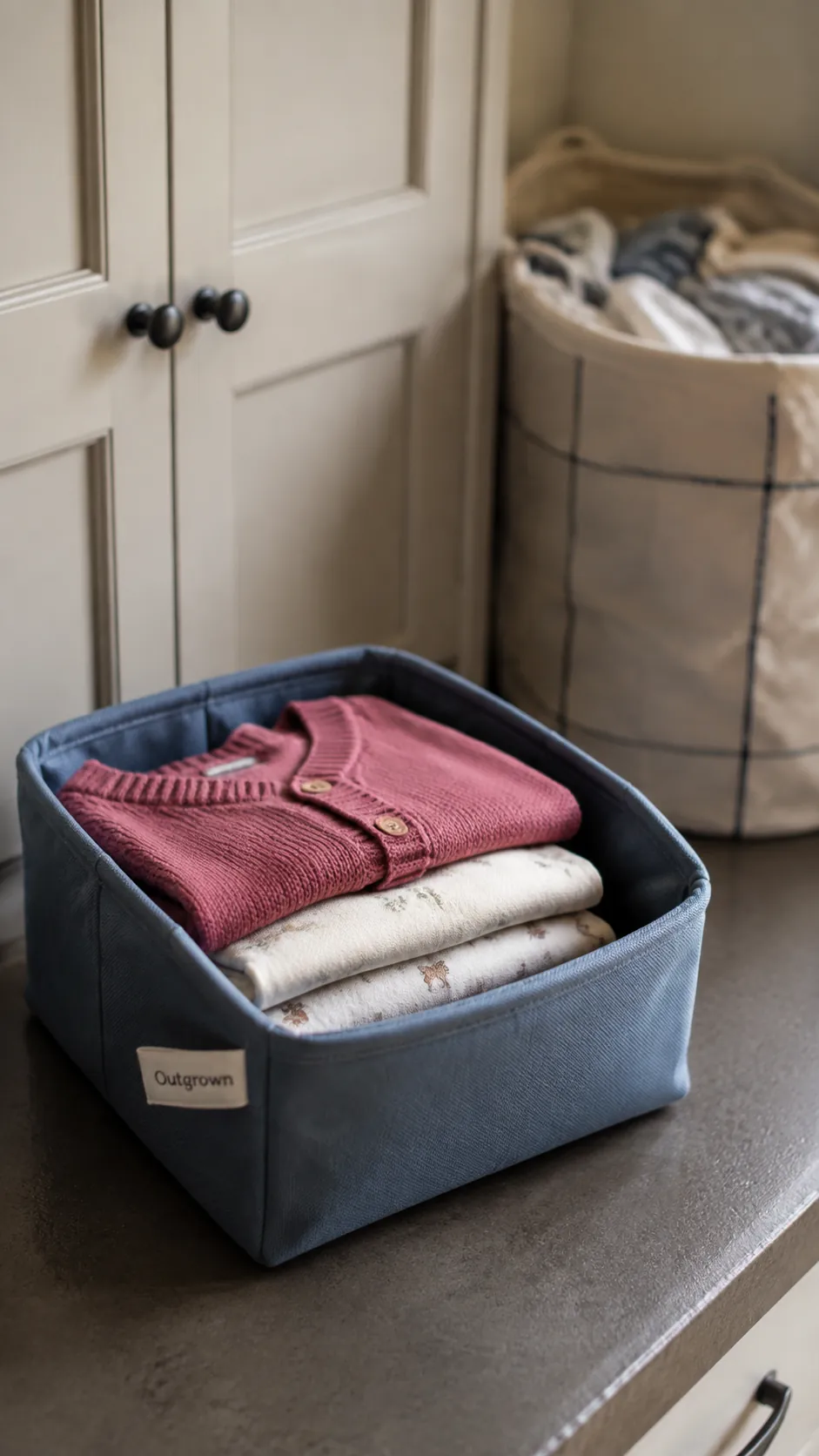
Create an outgrown clothing basket
An empty basket near the laundry sorting area gives too small clothing a destination immediately. Put clean items there once you notice the fit has changed, then empty the basket regularly for donation or storage. Keep it distinct from the dirty laundry hamper so usable clothes do not cycle back into the drawer. A small container creates a helpful limit and makes the decision manageable.
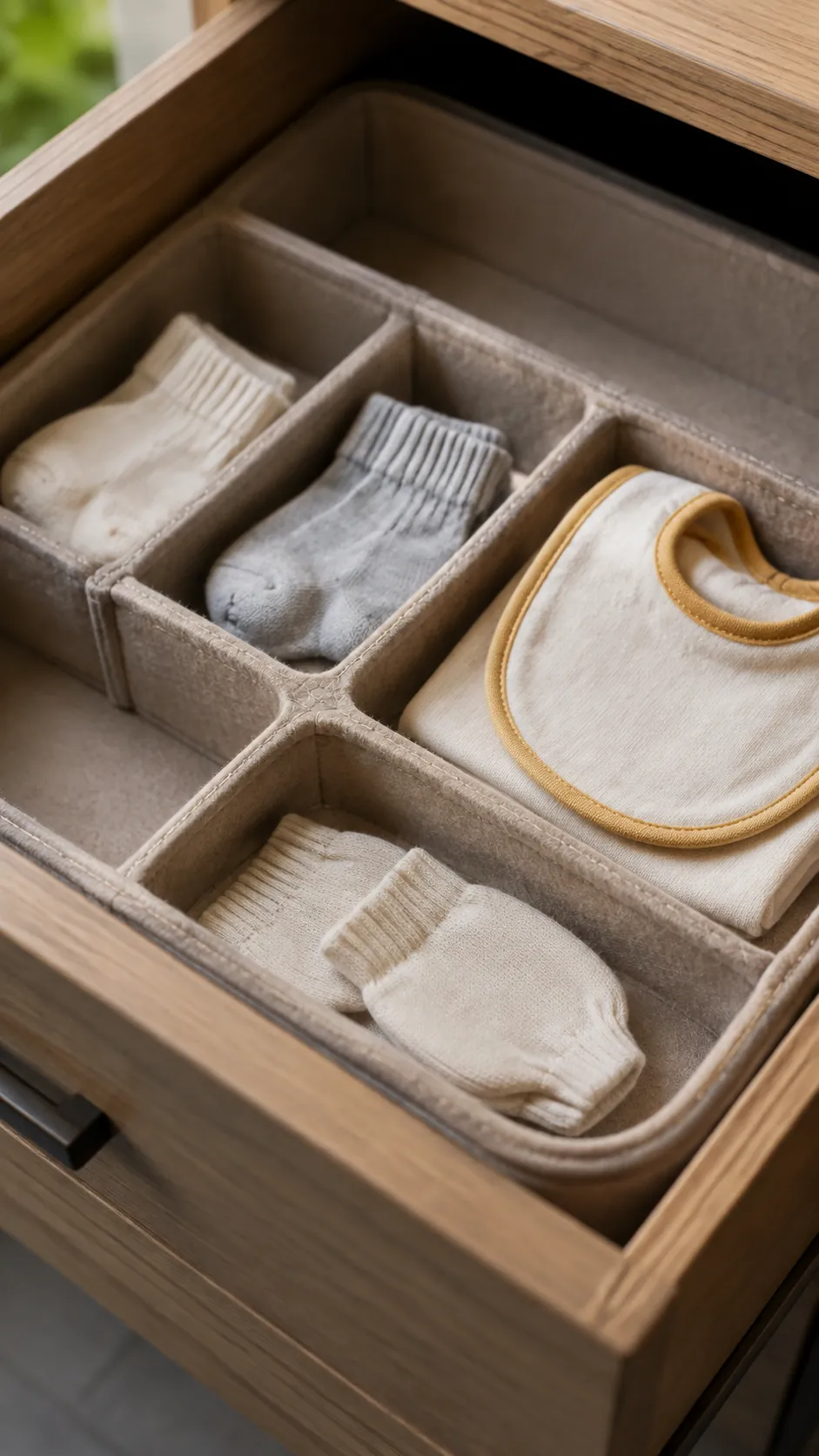
Fit a divided insert into the top drawer
Small socks, bibs, and mittens need compartments narrow enough to stop them drifting together. A removable fabric insert can organize these pieces while preserving the dresser for later childhood use. Check that the drawer closes freely with the organizer loaded. Expandable inserts also need enough clearance to avoid scraping the drawer sides. Avoid overfilling the tiny cells, which makes a neat insert harder to use than an open drawer.
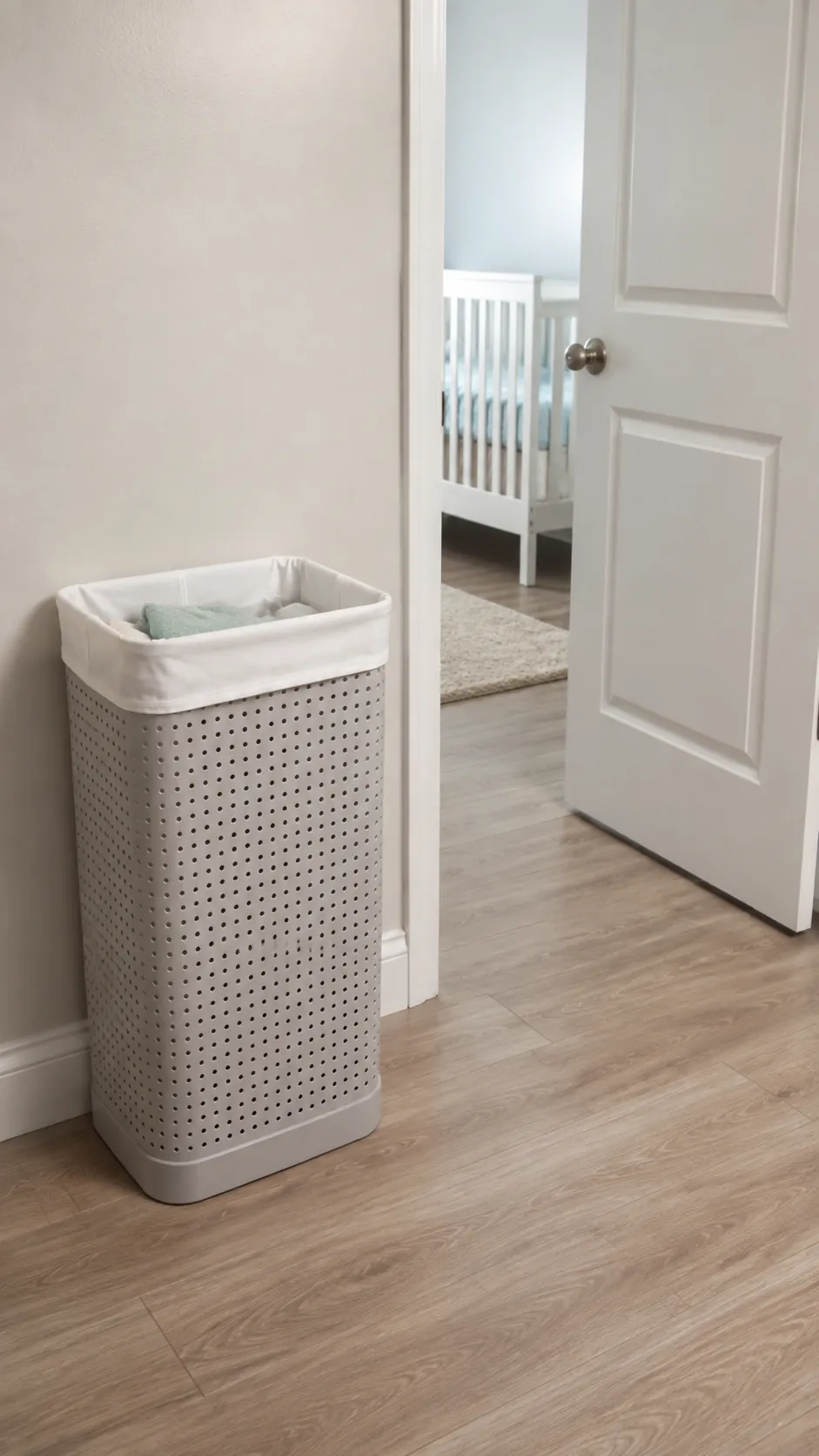
Use a compact hamper with a washable liner
A slim hamper handles daily clothing without consuming the space needed for a door to open fully. Choose a stable design with ventilation and a removable liner that can be washed. Avoid heavy lids or accessible cords that create unnecessary hazards. Put damp items into the laundry promptly rather than leaving them compressed inside the hamper.
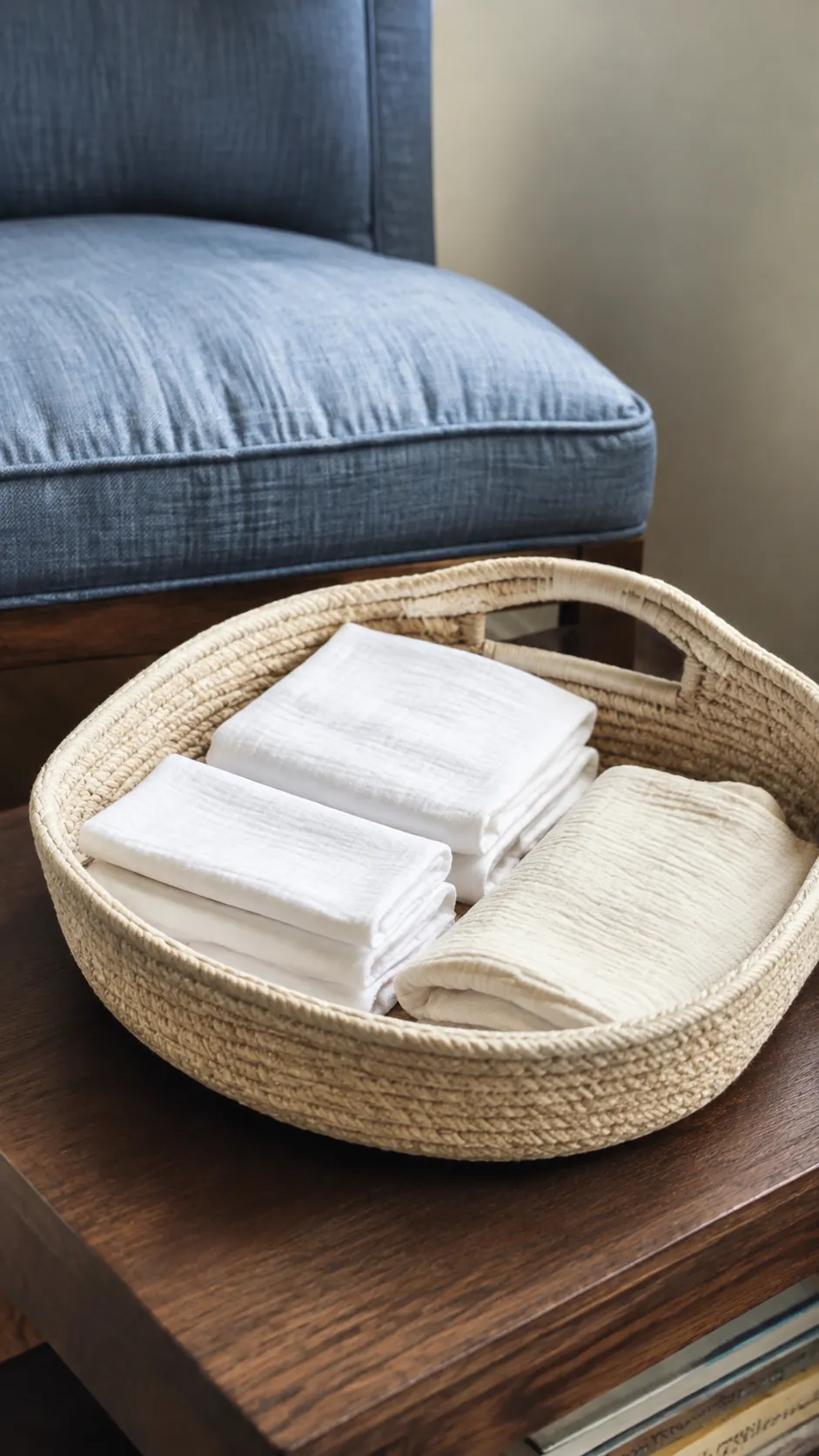
Make a feeding supplies basket for the chair
Keep clean burp cloths and a spare muslin together beside the feeding chair so you can reach them while seated. A shallow basket is easier to search with one hand than a deep lidded box. Place adult drinks on a separate stable surface well away from the baby, and keep cords out of reach. Return used cloths to the hamper so the basket always contains clean supplies.
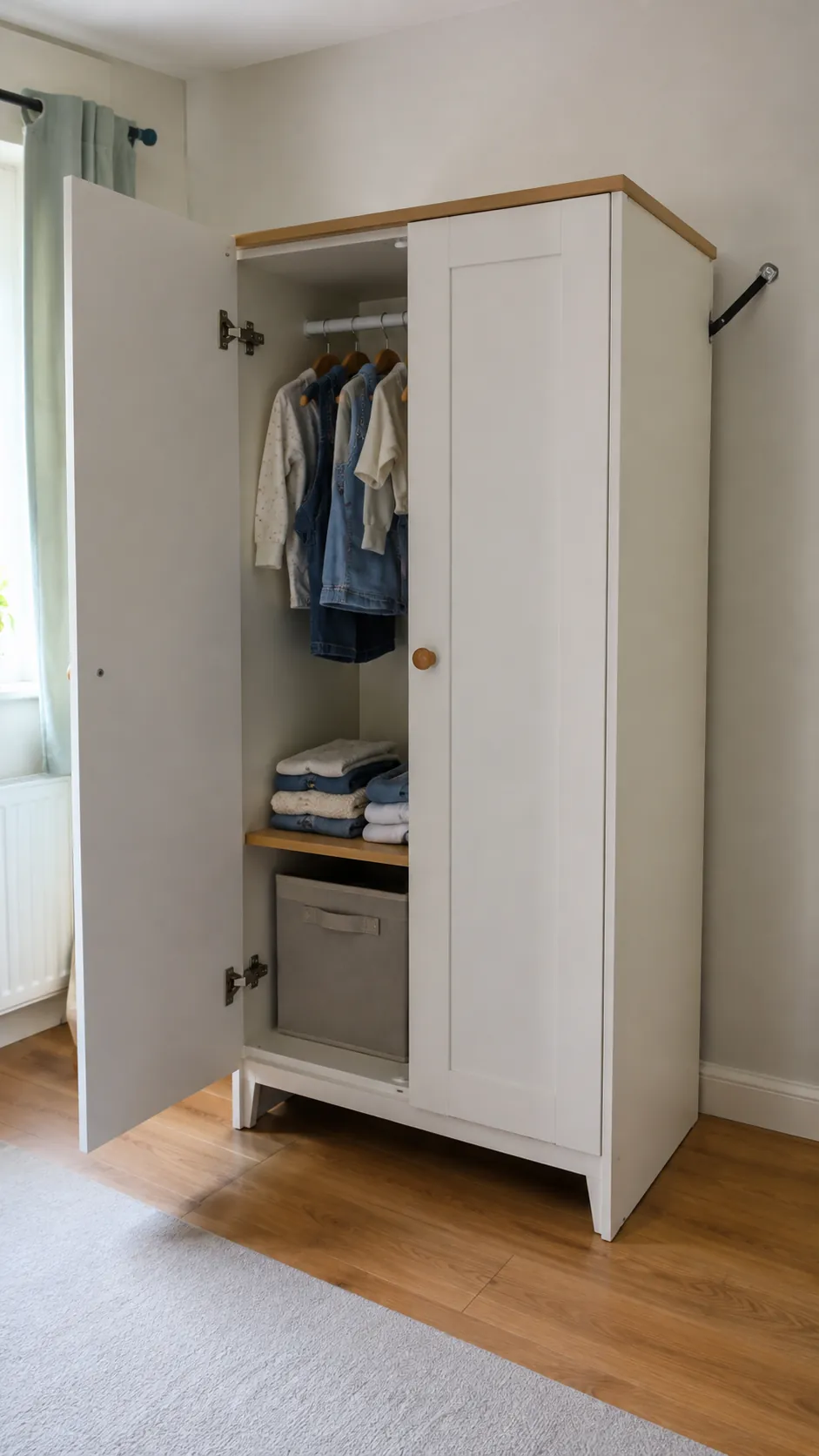
Divide a freestanding wardrobe into useful zones
A wardrobe can provide enclosed storage without built ins, but it still needs the manufacturer’s required wall anchoring. Separate hanging garments from folded items and keep the heaviest contents low. Measure door swing as carefully as the cabinet footprint before buying. For a renter friendly nursery, arrange permission for the correct anchoring rather than treating a tall cabinet as a no drilling solution.
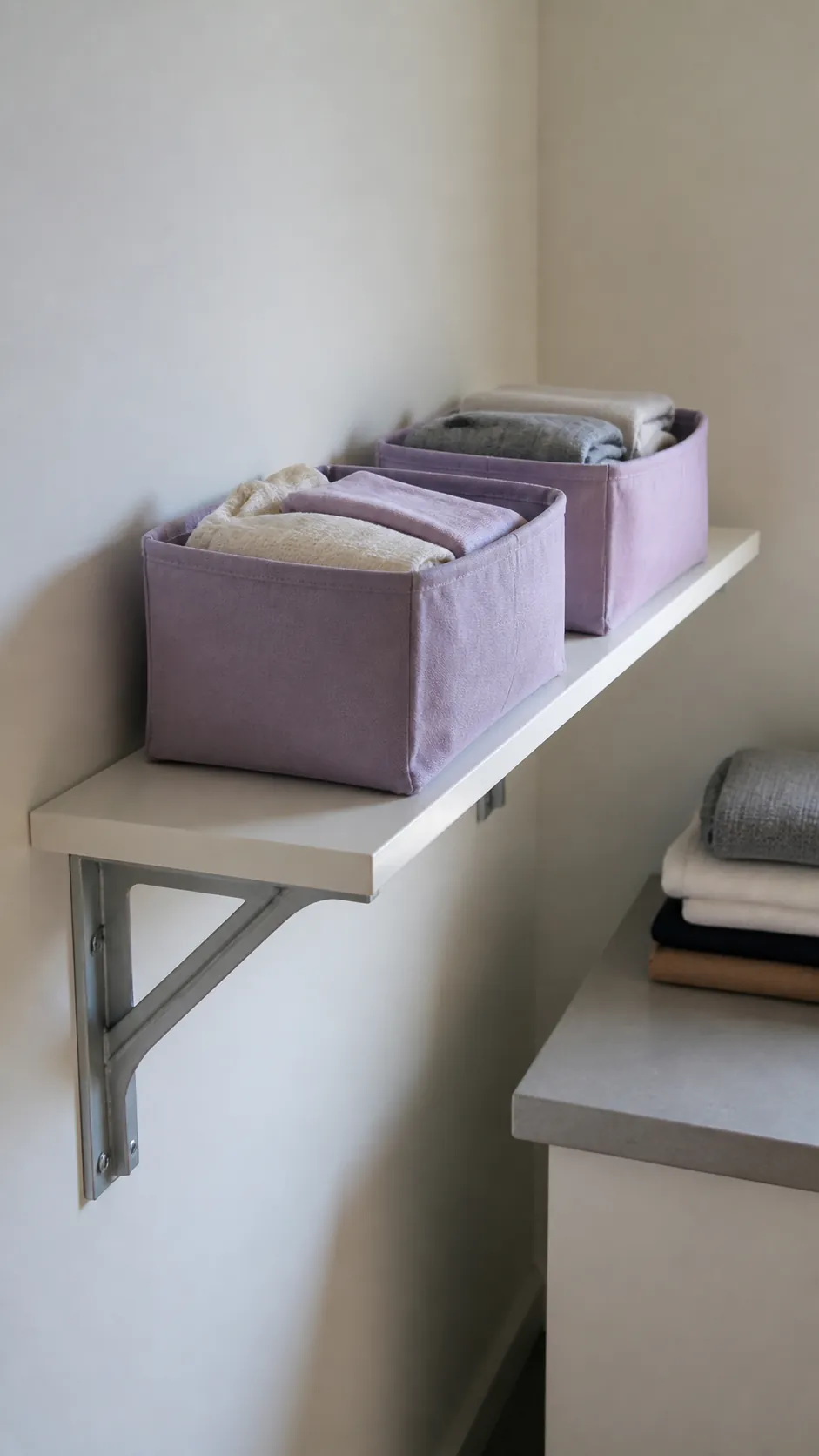
Use baby room shelves beside an adult work zone
A properly mounted shelf near the adult sorting area can hold lightweight baskets without adding floor furniture. Select hardware for the actual wall construction and respect the shelf’s rated load. Keep shelves and their contents away from the crib and changing surface, where falling objects would be especially dangerous. If mounting is not permitted, choose storage inside existing furniture instead.
Keep bulk diaper supplies outside the nursery
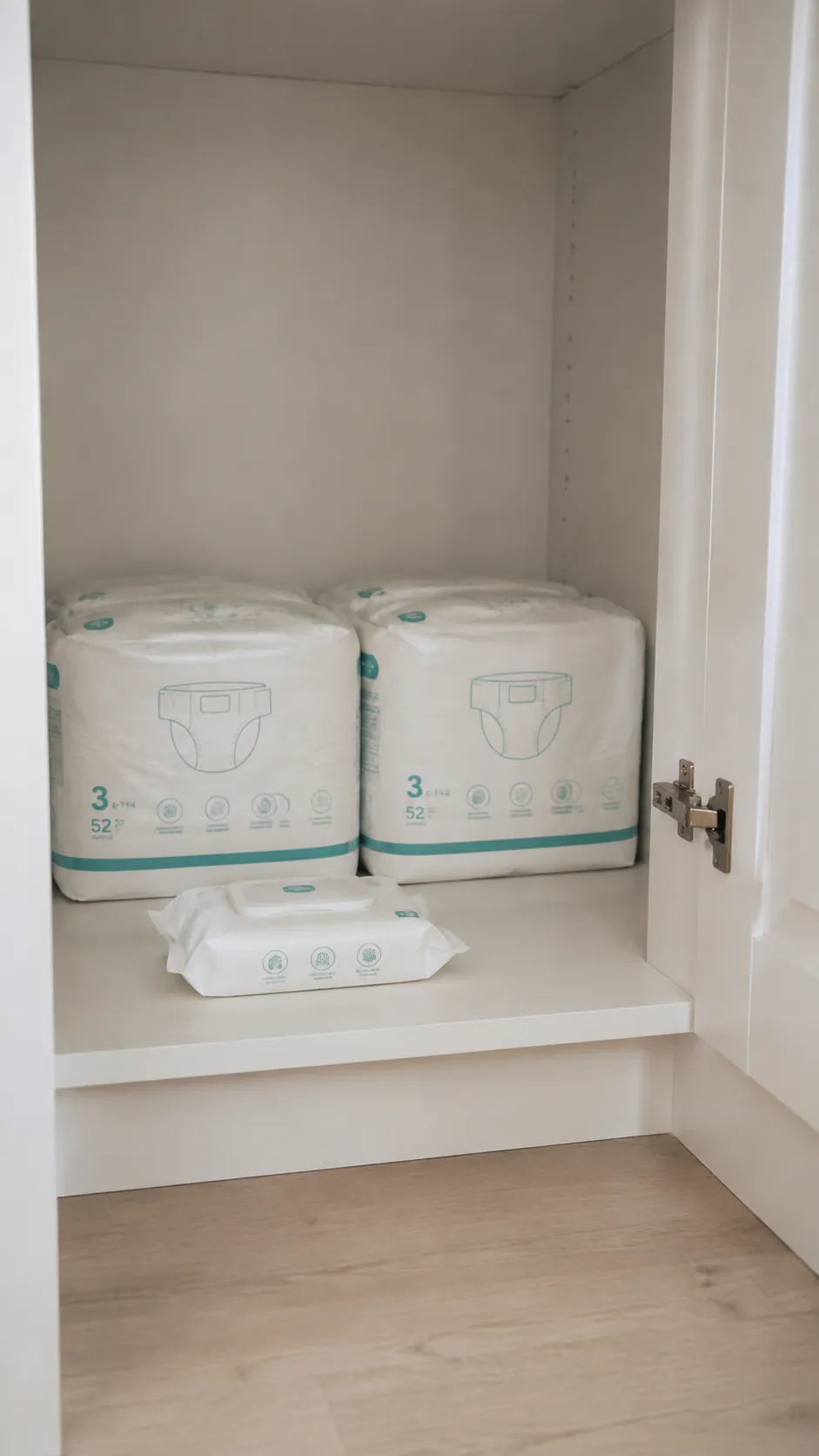
Small nursery storage improves when the room holds an active supply rather than every unopened package. Reserve an existing household cupboard for bulk diapers and wipe refills, keeping products in their original packaging where useful. Bring in only what fits the daily station without crowding it. Check current diaper fit before buying a large quantity of the next size.
Use a zipped pouch for spare outings clothes
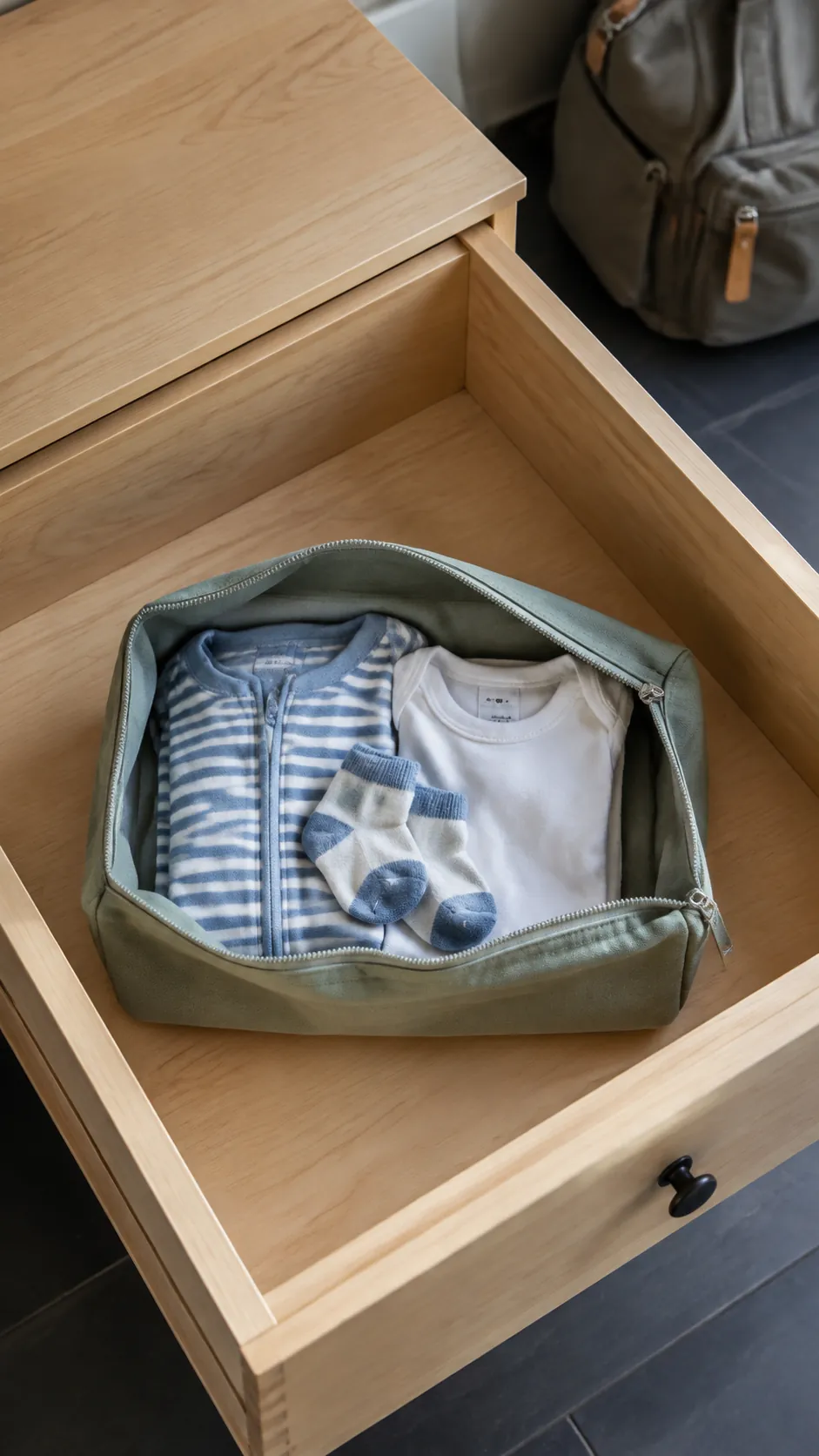
A fabric pouch keeps a complete spare outfit together so it can move directly into the diaper bag. Include pieces suited to the season and check their size whenever everyday clothing changes. Store the packed pouch in a drawer near the bag’s normal home. This separates leaving the house supplies from the clothing you reach for during ordinary changes.
Assign one shelf to washable play textiles
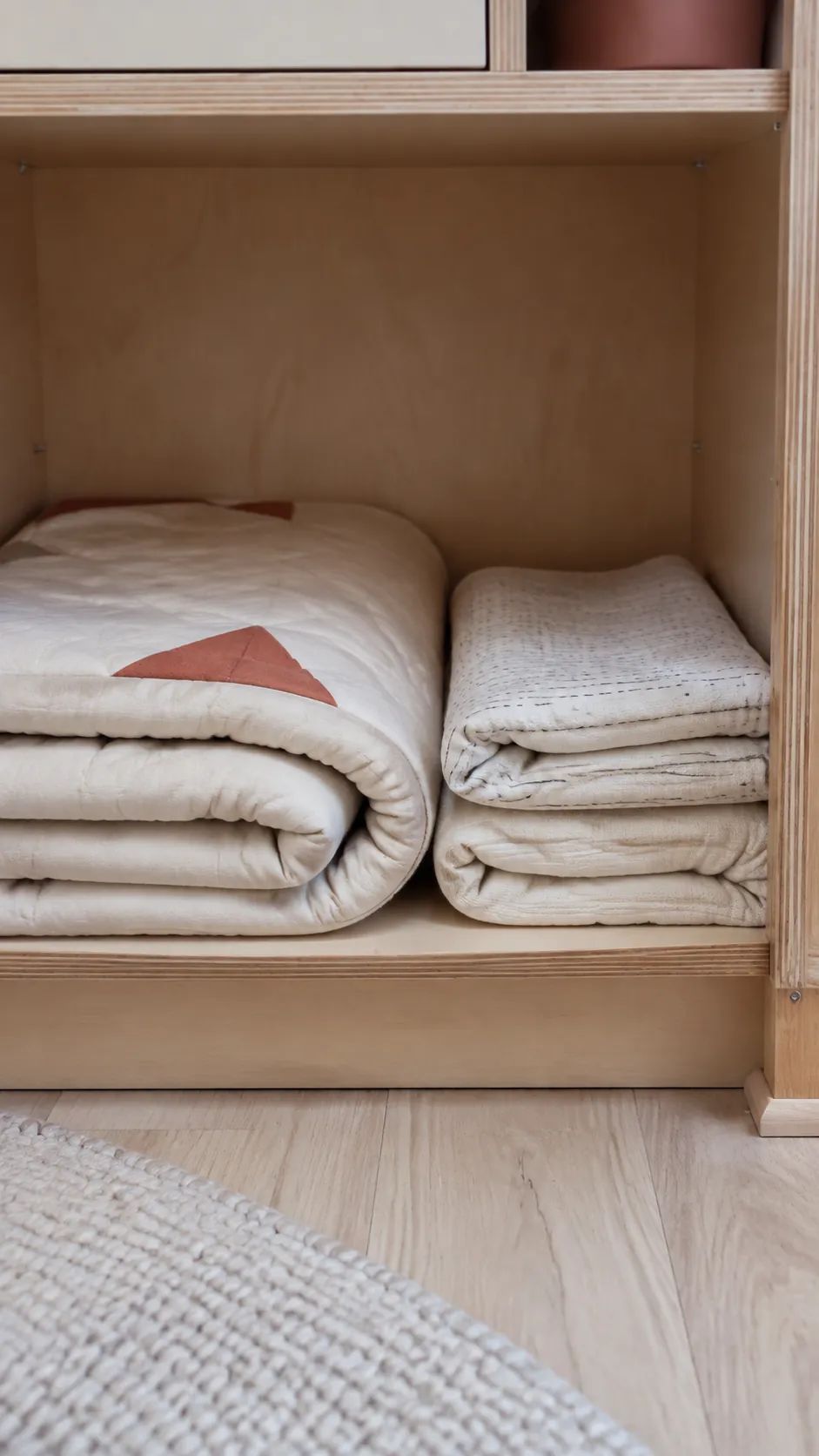
Fold play mats and clean floor blankets together on a low shelf inside securely anchored furniture. Their larger footprint deserves a dedicated space rather than being squeezed between tiny clothes. Keep damp or recently cleaned items out until fully dry. These textiles belong in supervised play areas and storage, not loose in an infant’s crib.
Leave one container empty for the weekly reset
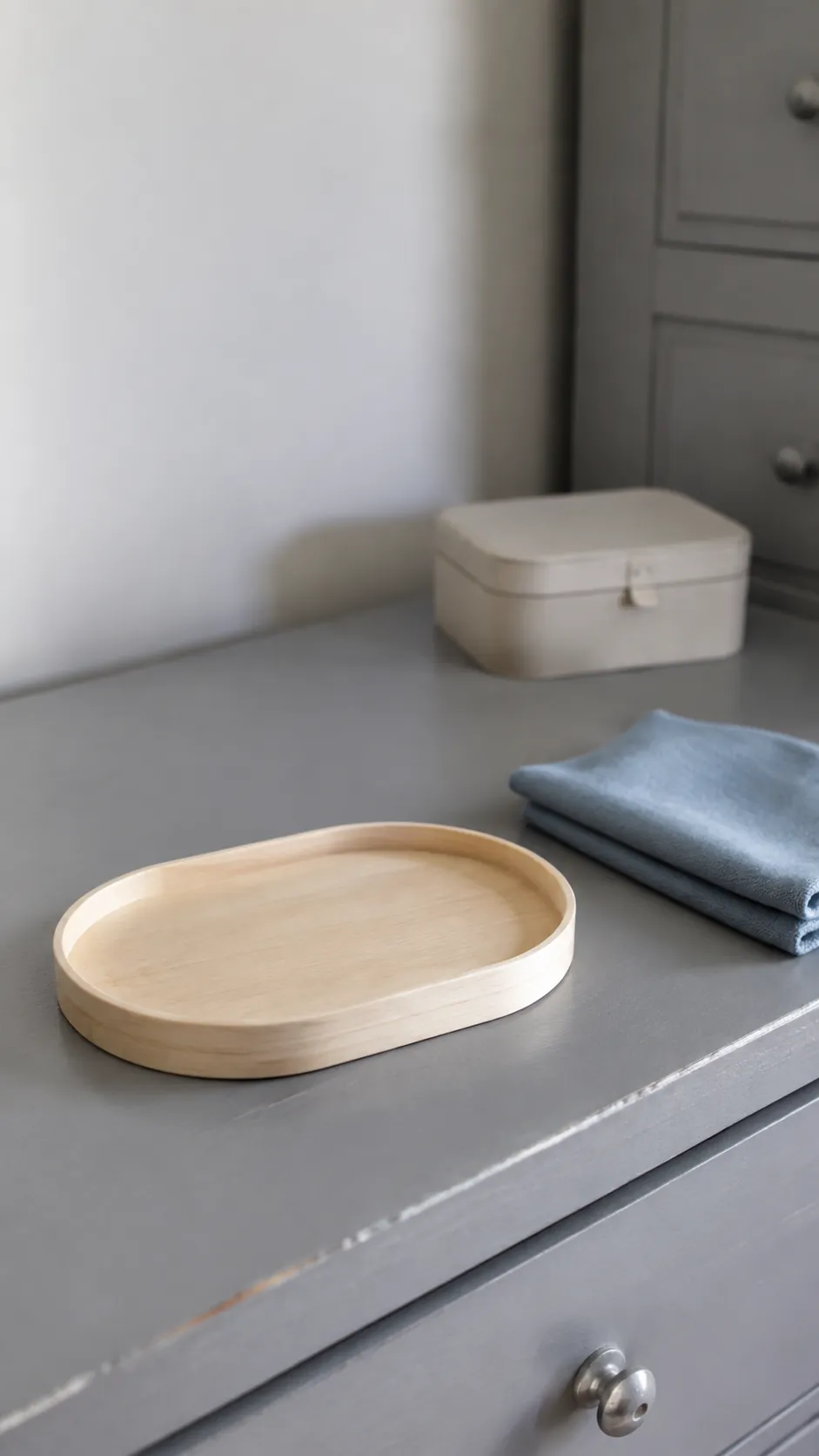
Nursery organization lasts longer when the room has somewhere to collect objects that need a decision. Use a small empty tray during a weekly reset to gather stray supplies, then return each item to its proper place. Remove products that are no longer needed and adjust compartments that repeatedly overflow. If the tray never empties, reduce what the room stores before buying another organizer.