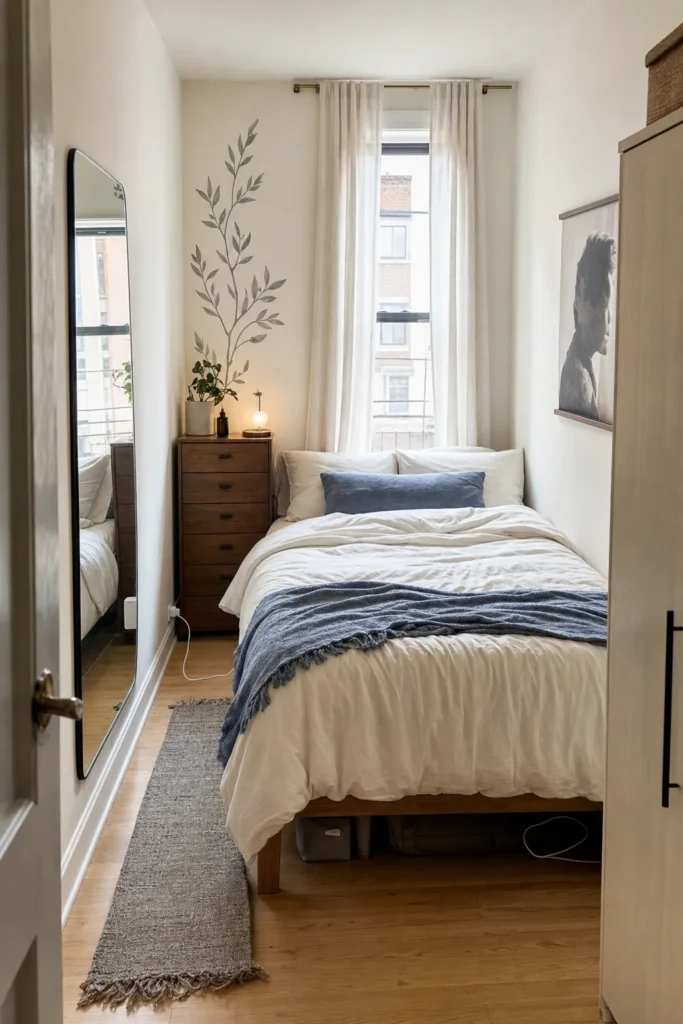
19 Wall Decor Ideas for Small Bedrooms That Feel Bigger
Small bedroom wall decor has to work harder than decor in a generous room. It should add character, correct awkward proportions, and sometimes replace furniture—without making the walls feel busy. The most useful advice from people living with tight rooms is consistent: protect floor space, use the height you already have, and choose fewer elements at a scale that looks intentional.
Before buying anything, photograph each wall straight on and mark the bed, door swing, switches, and eye level. That simple map prevents a gallery wall from colliding with a wardrobe or a decal from disappearing behind pillows. If you rent, test adhesives on your actual paint and follow the product’s surface and removal instructions.
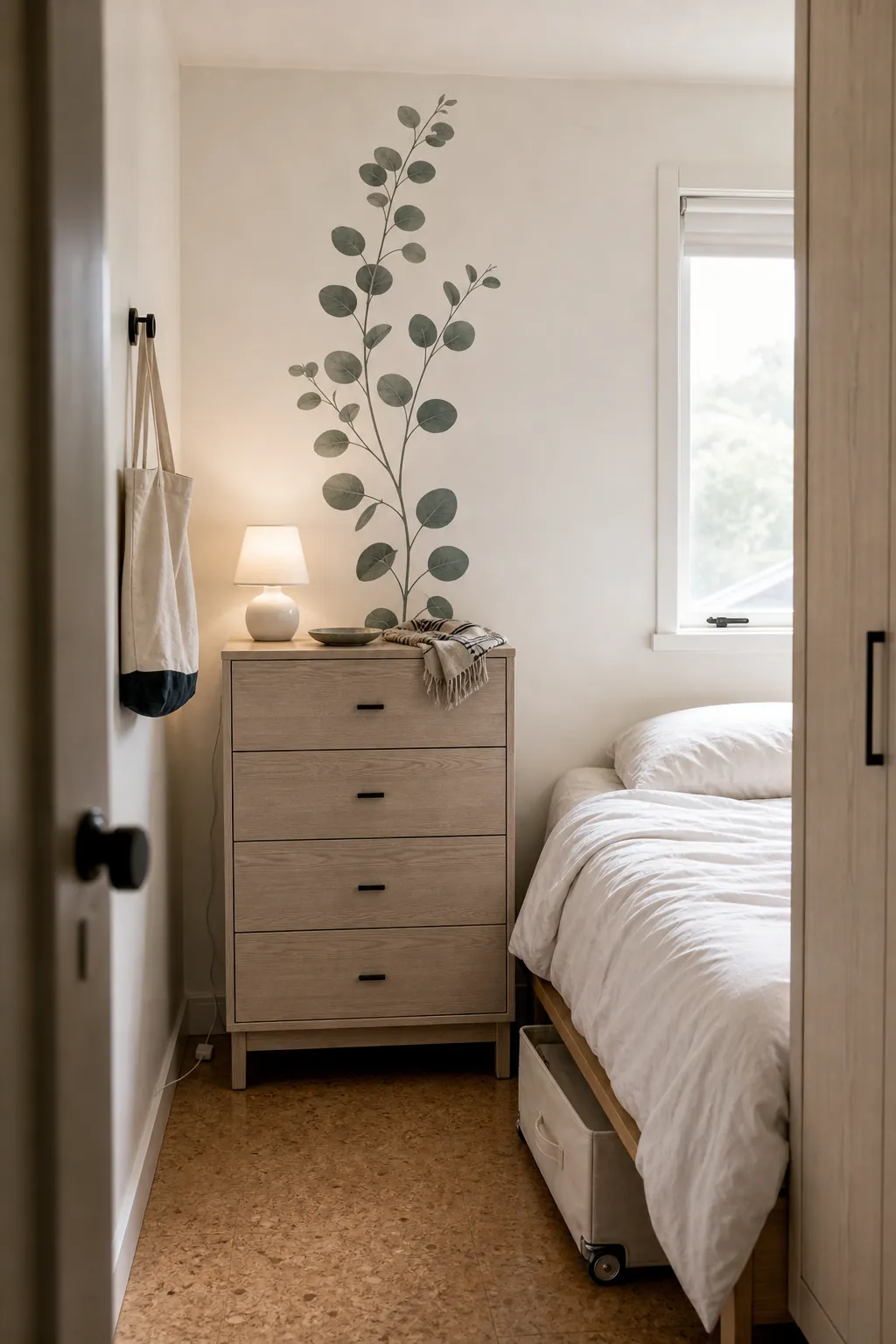
Run One Vertical Decal from Dresser to Ceiling
A slim botanical or abstract vertical wall decal draws the eye past a low dresser and makes the ceiling feel higher. Keep it narrower than the furniture and let the lower edge disappear behind the dresser. This creates one continuous composition instead of two unrelated objects.
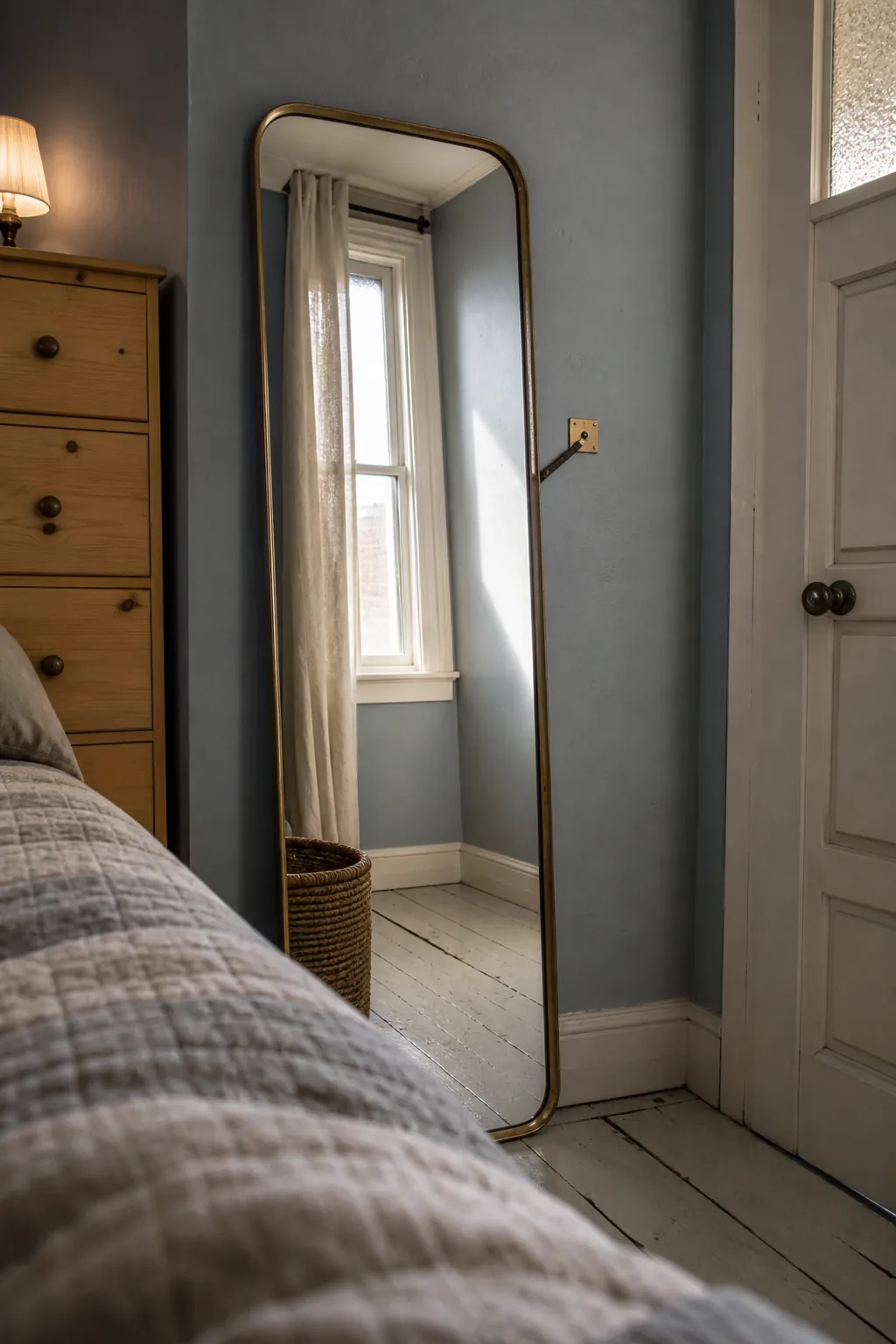
Use a Full-Length Mirror as a Light Source
A mirror does not create square footage, but it can redirect daylight into a dim corner and provide the room with a tall visual line. Lean a narrow mirror where it cannot tip, or secure it using hardware appropriate for the wall. Position it to reflect a window or uncluttered surface rather than the laundry pile.
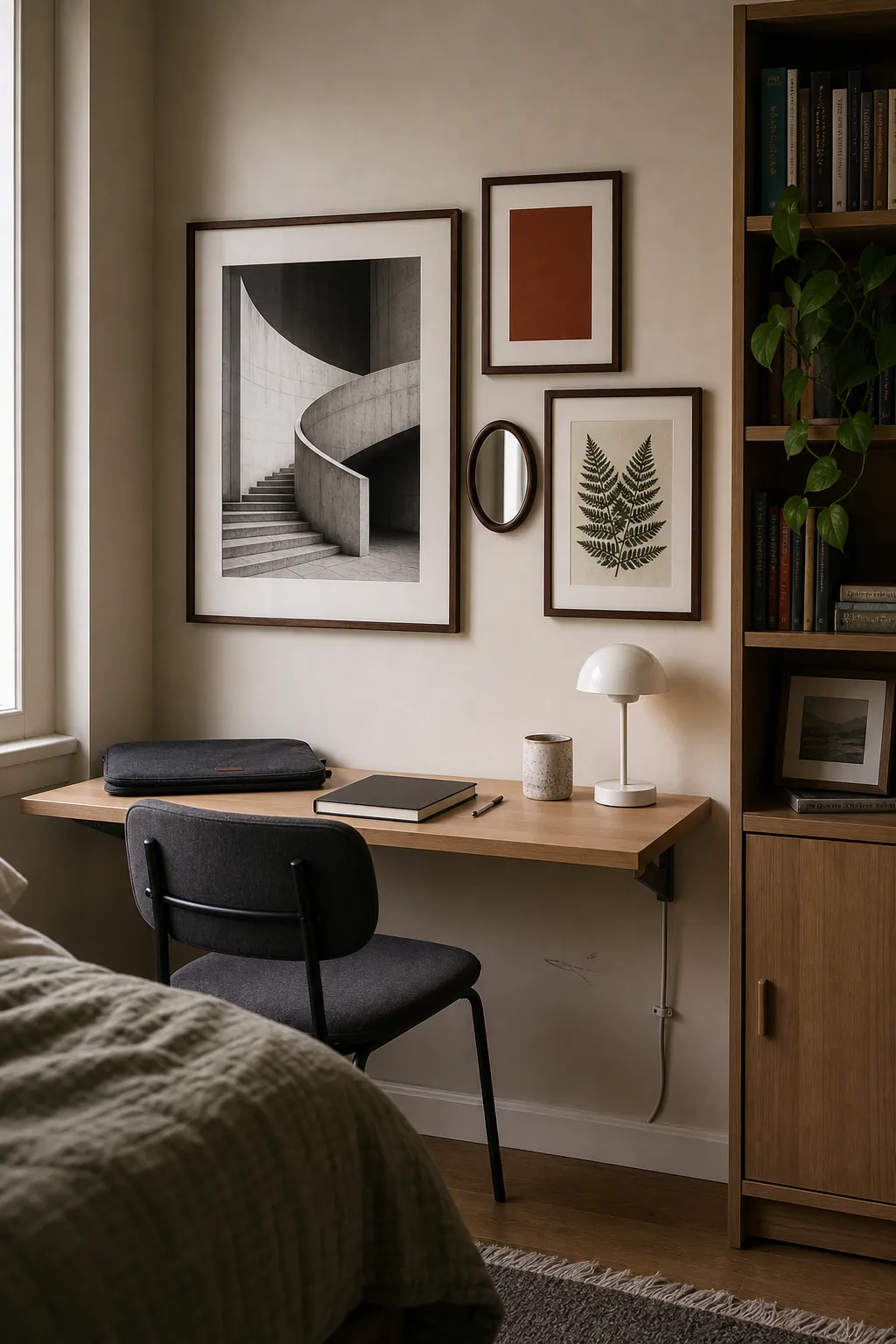
Build a Compact Gallery Around One Large Print
Tiny frames scattered across a wall create more visual edges than a small bedroom needs. Start with one portrait-format anchor, then add two or three smaller pieces close to it. Repeat a frame color or paper tone so the collection reads as one object from the doorway.
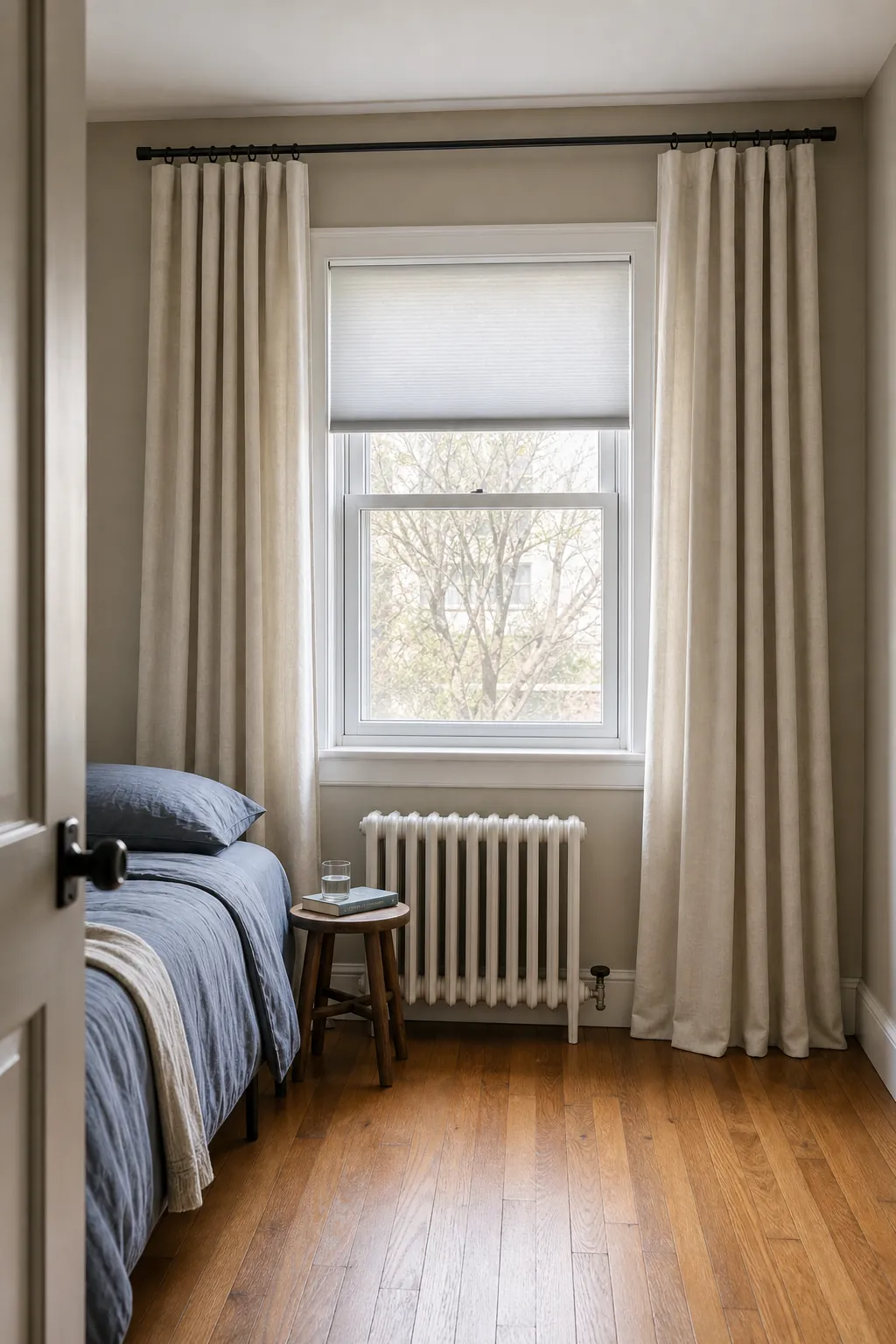
Hang Curtains High and Wide
Mounting a curtain rod close to the ceiling and extending it beyond the window makes more glass visible when the curtains are open. Full-length panels form tall, unbroken lines and can make a short window look more substantial. Choose a fabric close to the wall color when you want the effect without a strong contrast stripe.
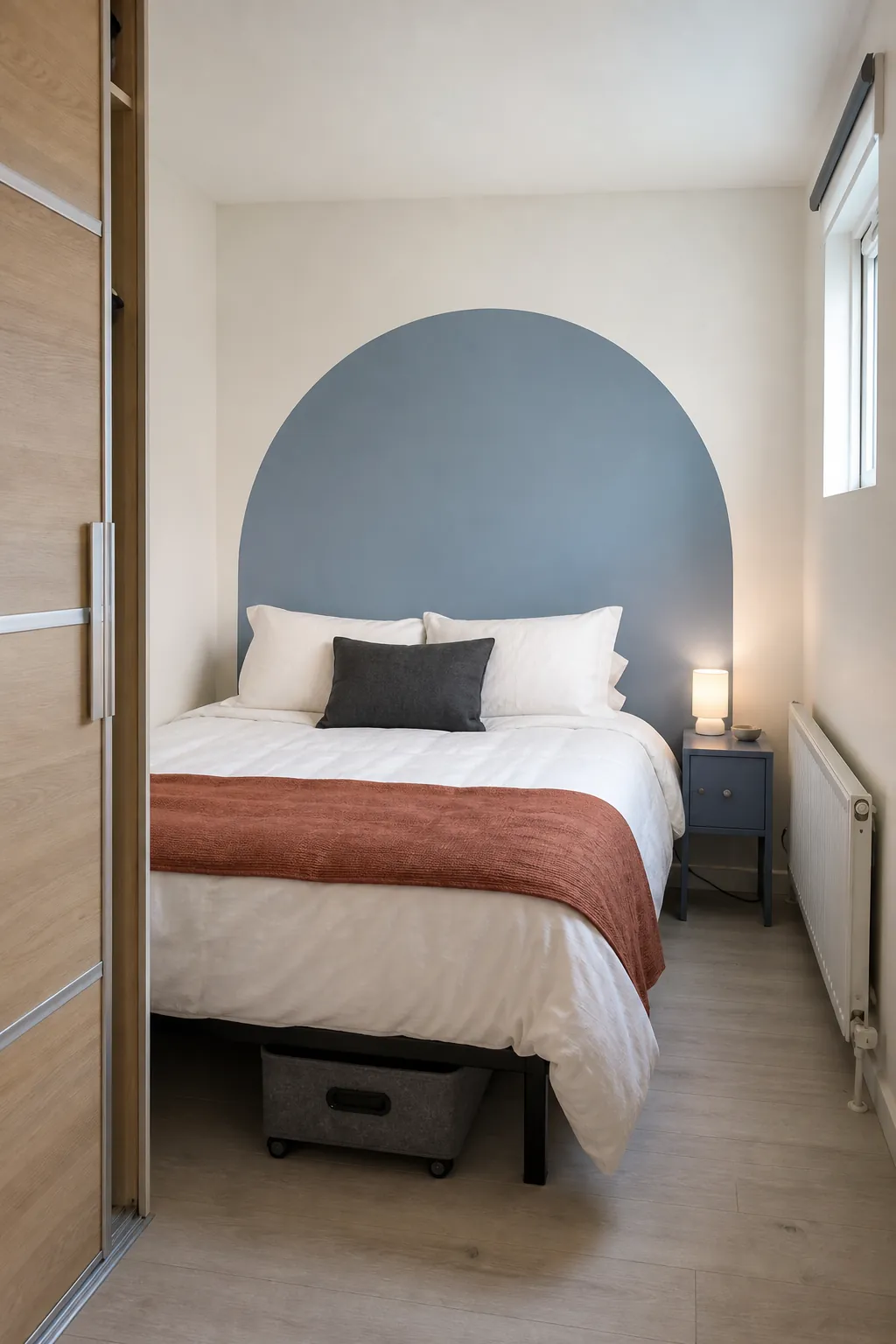
Replace a Headboard with a Wide Arch
A removable arch decal gives the bed a visual back without adding depth to the frame. Make it wider than the mattress and tall enough to remain visible behind pillows. A muted color keeps this above-bed wall decor from pressing forward in a tight room.
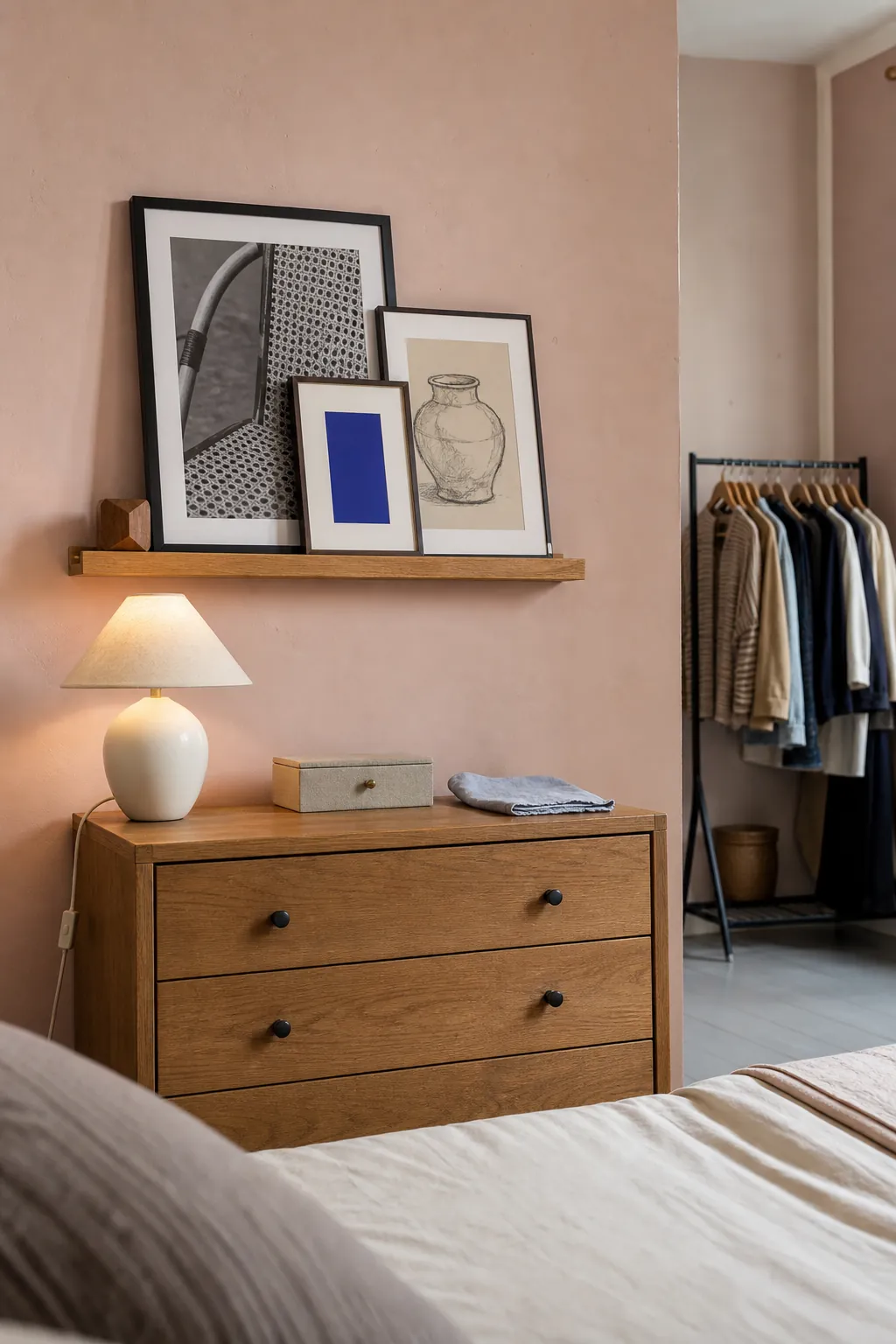
Add a Shallow Picture Ledge
A narrow ledge allows art to overlap rather than spread across the entire wall. Keep it short, install it into the correct anchors, and avoid placing heavy or breakable objects directly over a sleeper. In rentals where drilling is prohibited, use the same overlapping idea on top of a dresser instead.
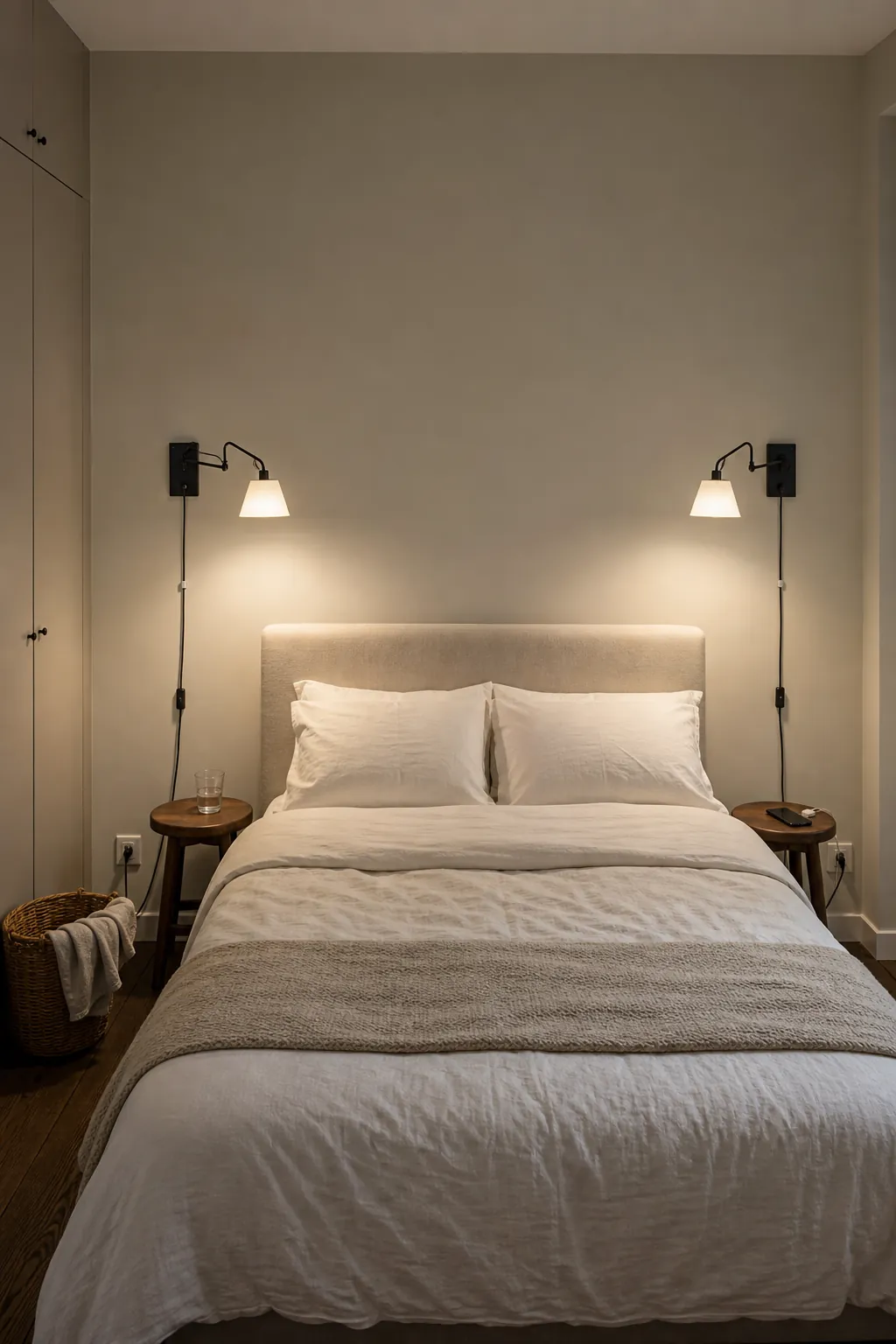
Frame the Bed with Slim Wall-Mounted Lights
Wall-mounted reading lights free the nightstands for a glass, book, or phone. Plug-in sconces are useful where rewiring is unrealistic; route the cords neatly and keep switches reachable from bed. Choose narrow shades that direct light down instead of filling the room with glare.
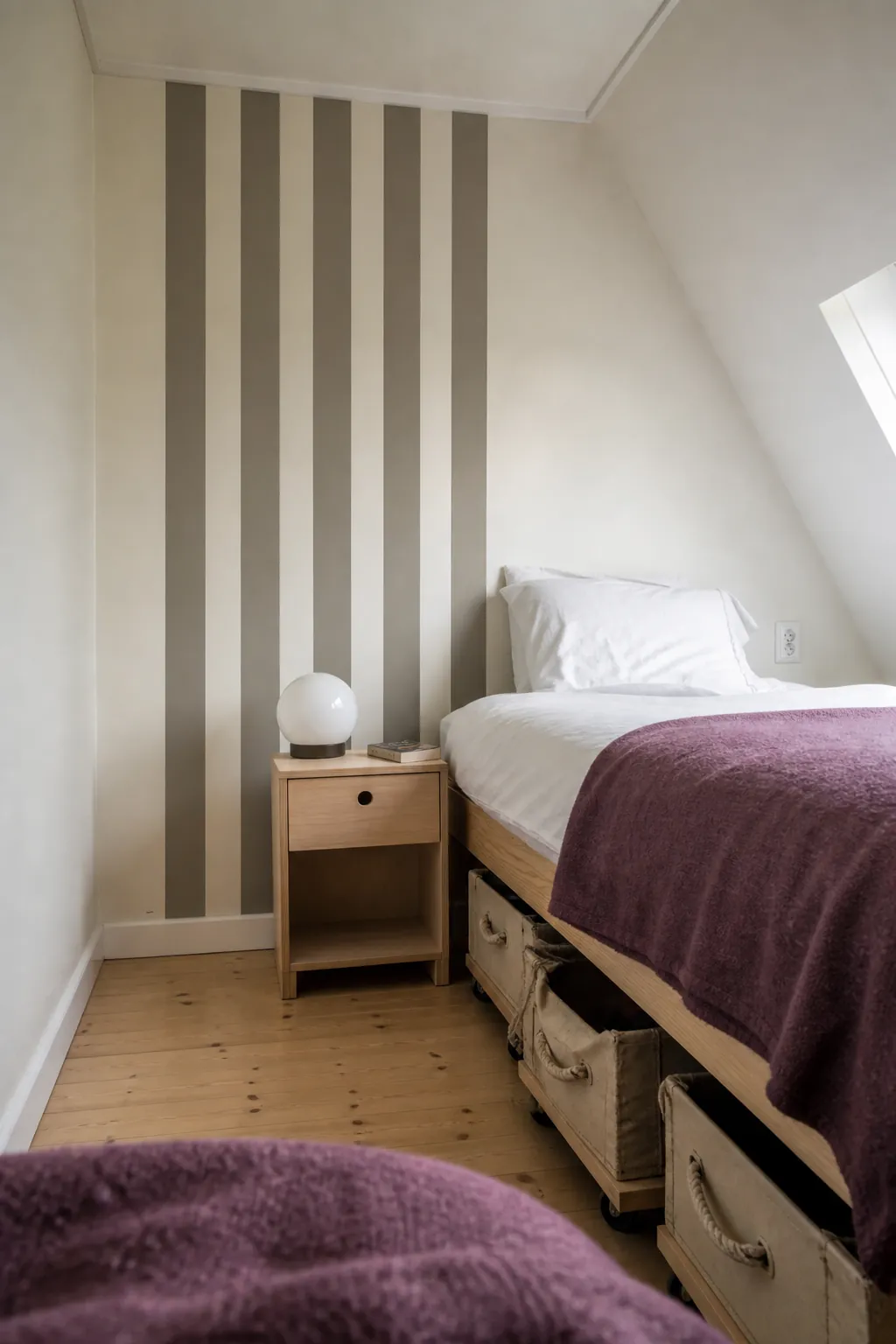
Use Fine Vertical Stripes in One Narrow Zone
Vertical wall decals work best when they have a reason to be there. Run a few widely spaced lines behind a nightstand or narrow desk rather than striping every wall. The eye follows the uninterrupted lines upward, while the limited width prevents a cage-like effect.
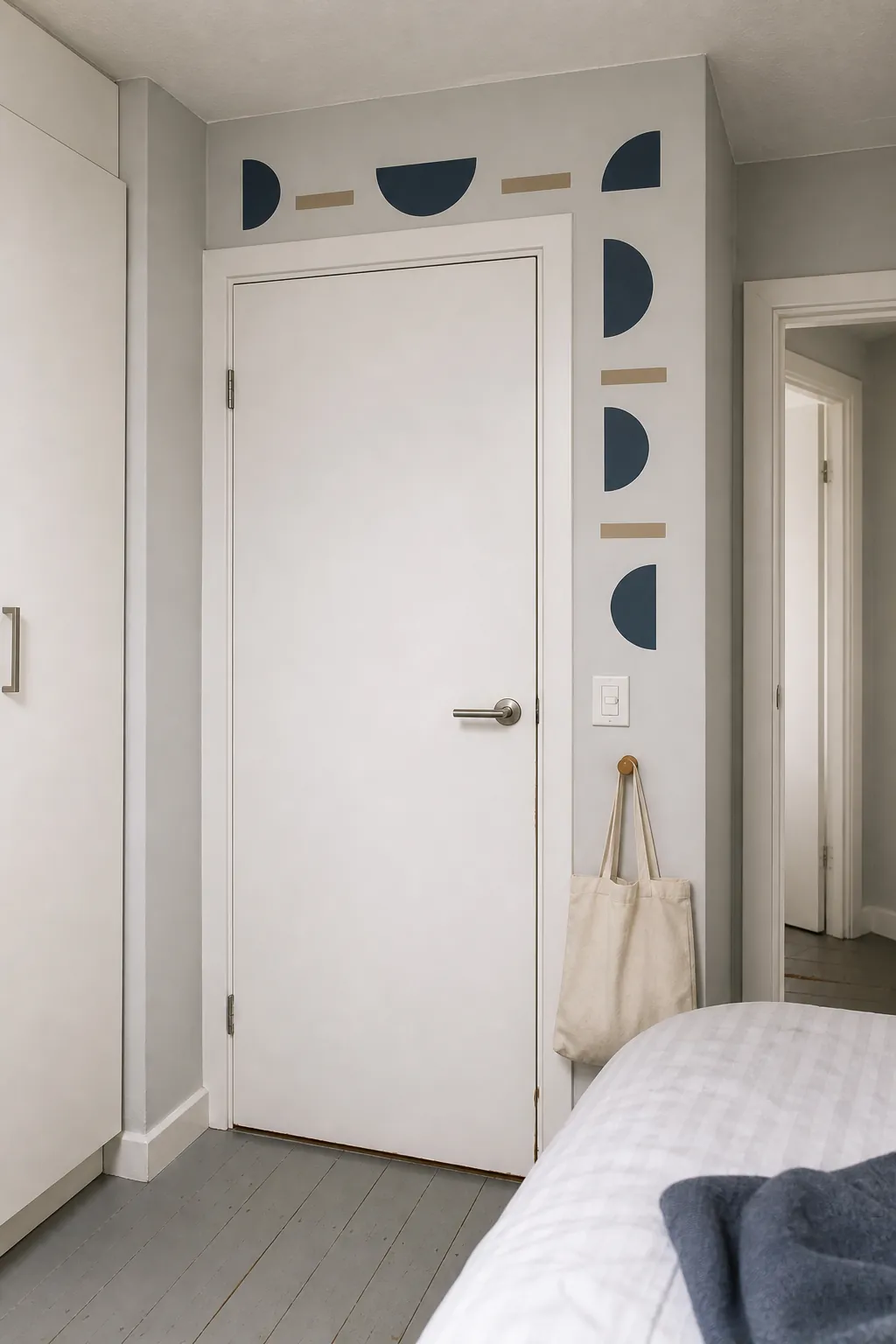
Make the Door Wall Part of the Design
The wall around a bedroom door is often wasted visually. A restrained color block or small set of geometric decals can connect the narrow strips above and beside the frame. Keep the door itself plain so the composition does not become fragmented when it opens.
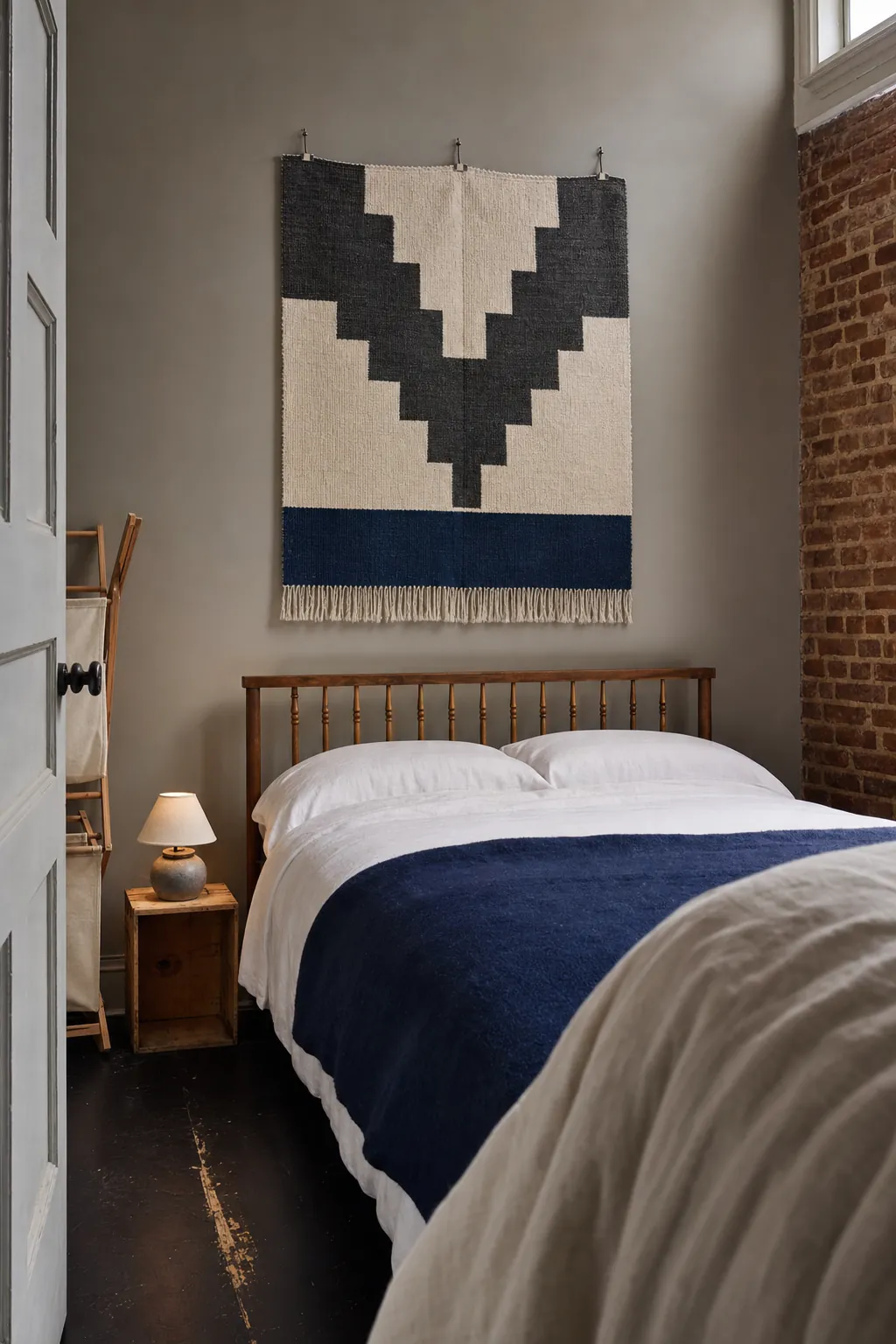
Choose One Oversized Textile Hanging
A flat woven textile adds softness and occupies almost no floor space. Look for an open weave, restrained pattern, and a width that relates to the furniture below. One generous hanging usually looks calmer than several small macramé pieces, and it can improve the acoustics of a hard little room.
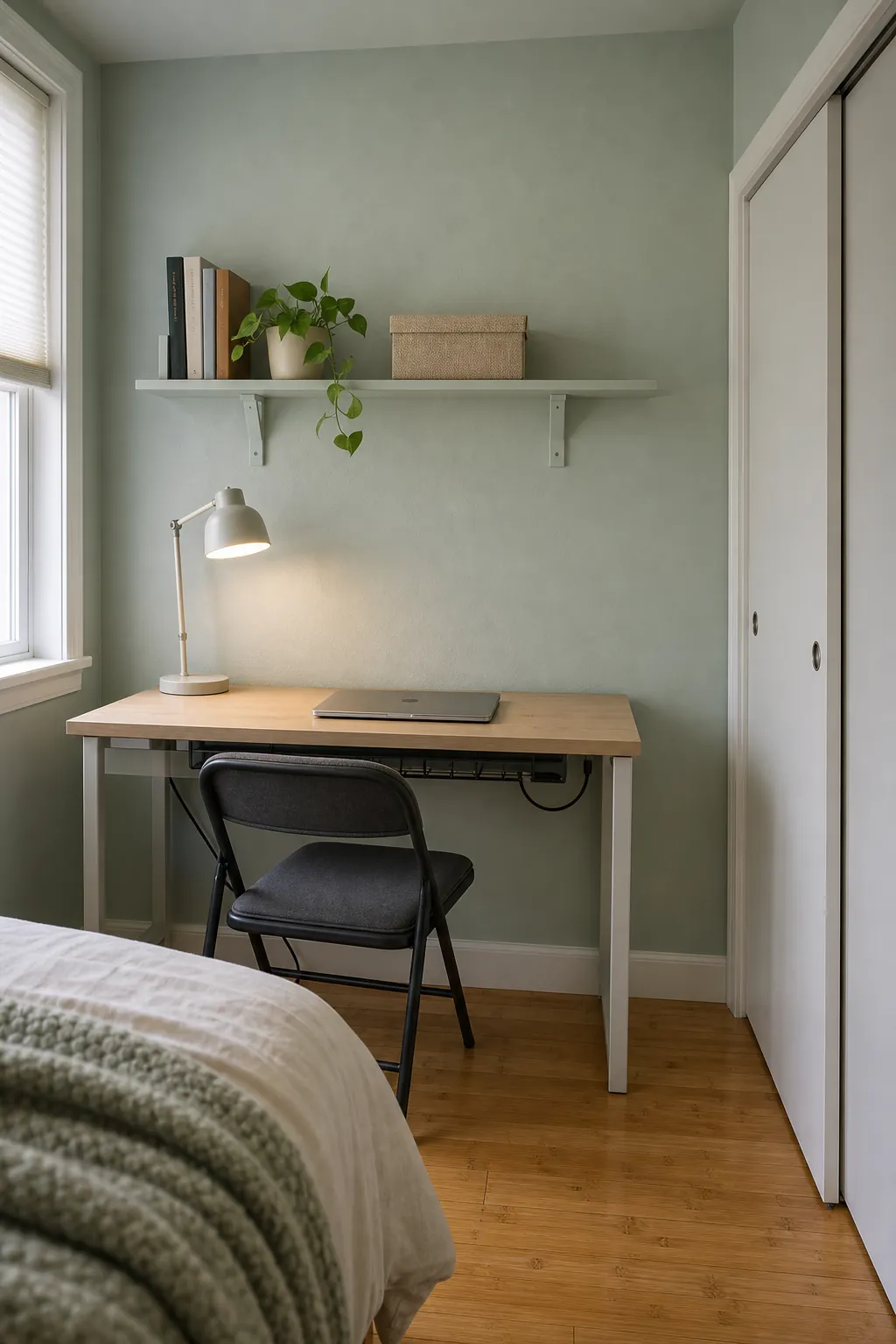
Continue the Wall Color onto a Shelf
Painting a wall-mounted shelf and its brackets to match the wall reduces the number of visible outlines. The shelf still stores books or a small plant, but it feels less like another object projecting into the room. Keep the display edited and leave part of the shelf empty.
Place a Round Mirror Above a Narrow Dresser
A circle interrupts the boxy outlines of a bed, wardrobe, and dresser. Size the mirror to roughly two-thirds of the furniture width and hang it low enough to form a group. A thin frame or frameless edge gives you reflection without another heavy border.
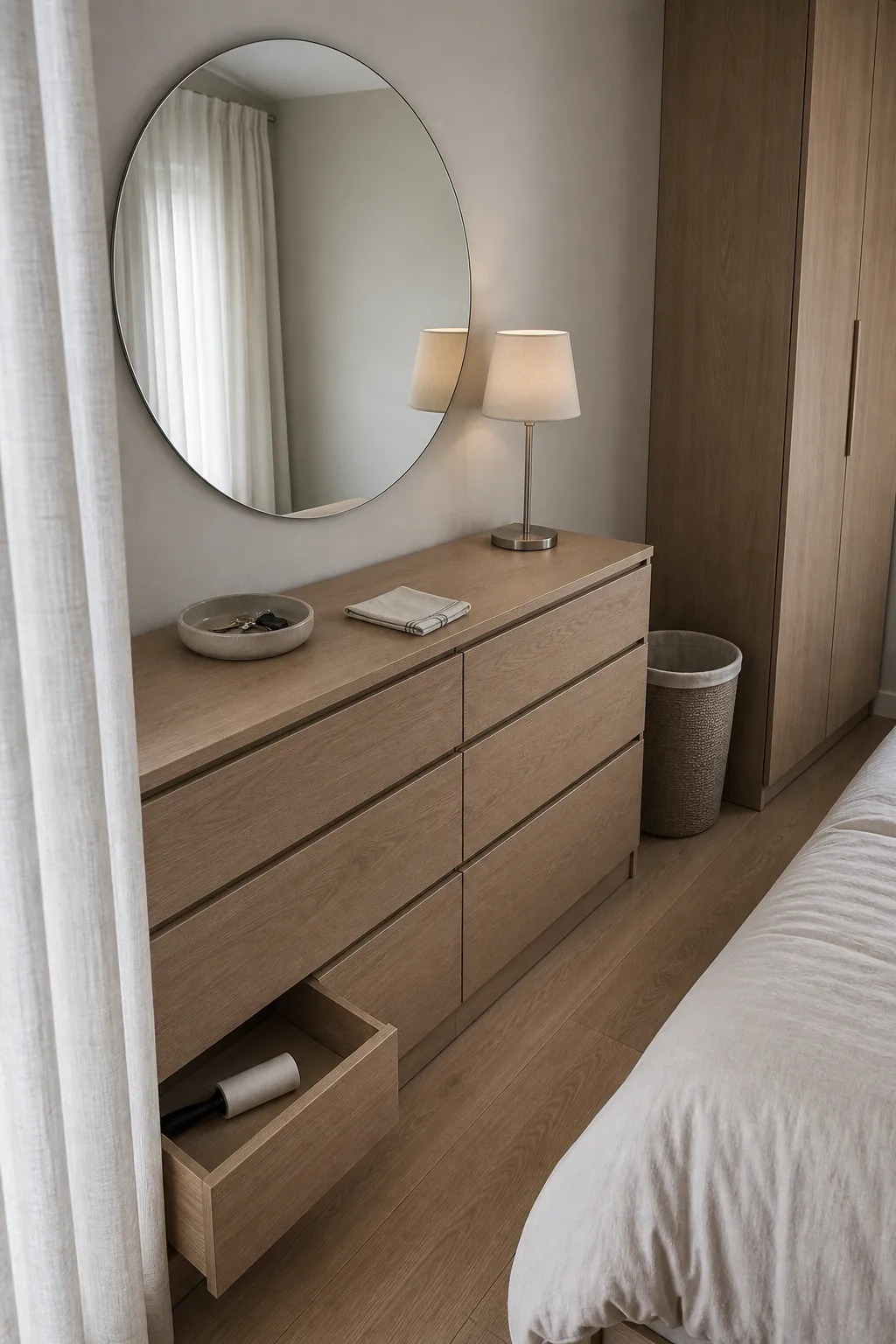
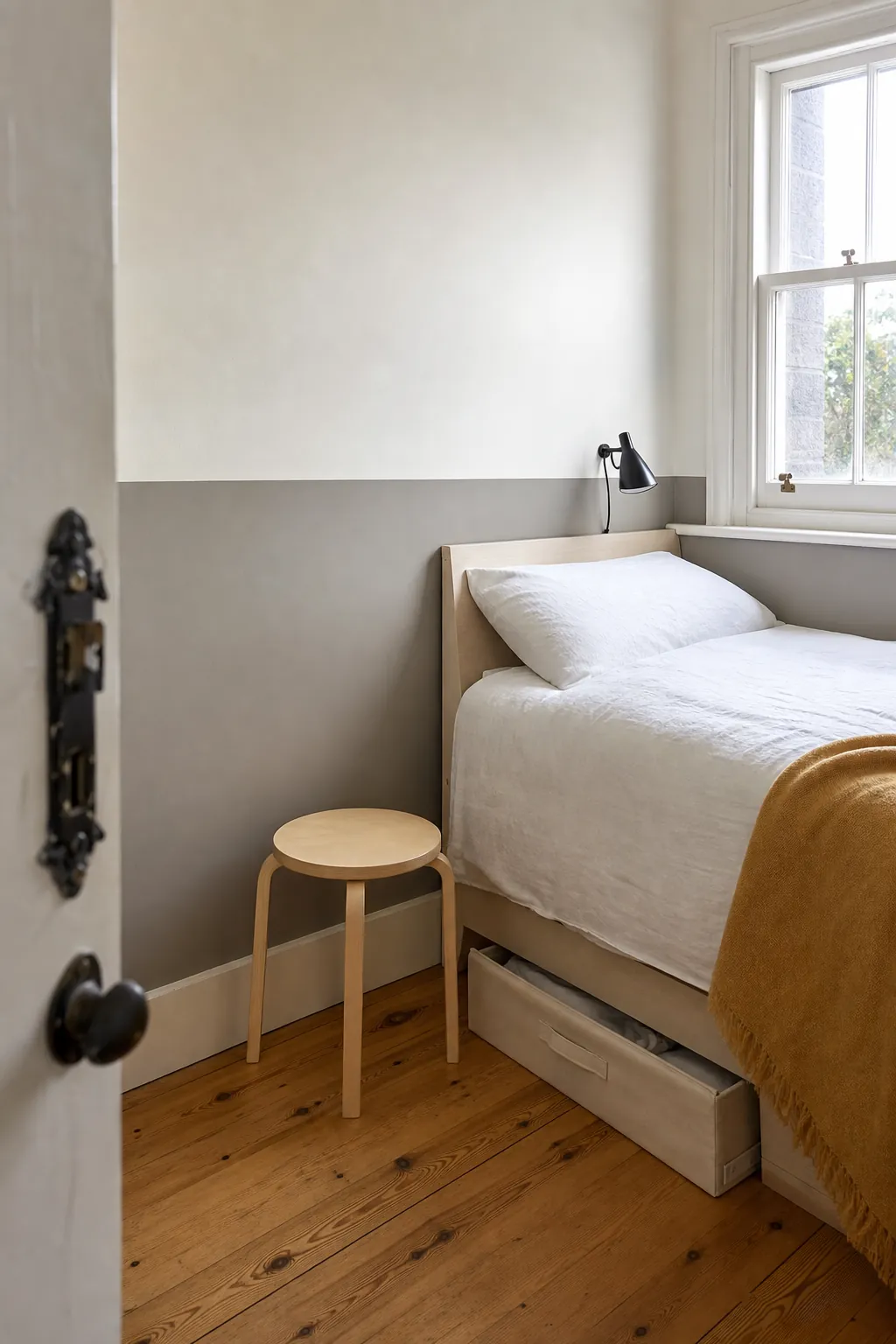
Try a Half-Wall Decal Behind the Bed
A removable half-wall color panel adds a stable horizontal base while leaving the upper wall bright. Align its top with the headboard or windowsill, and choose a low-contrast tone. This is one of the simplest wall decals for small rooms because it creates architecture without adding a busy motif.
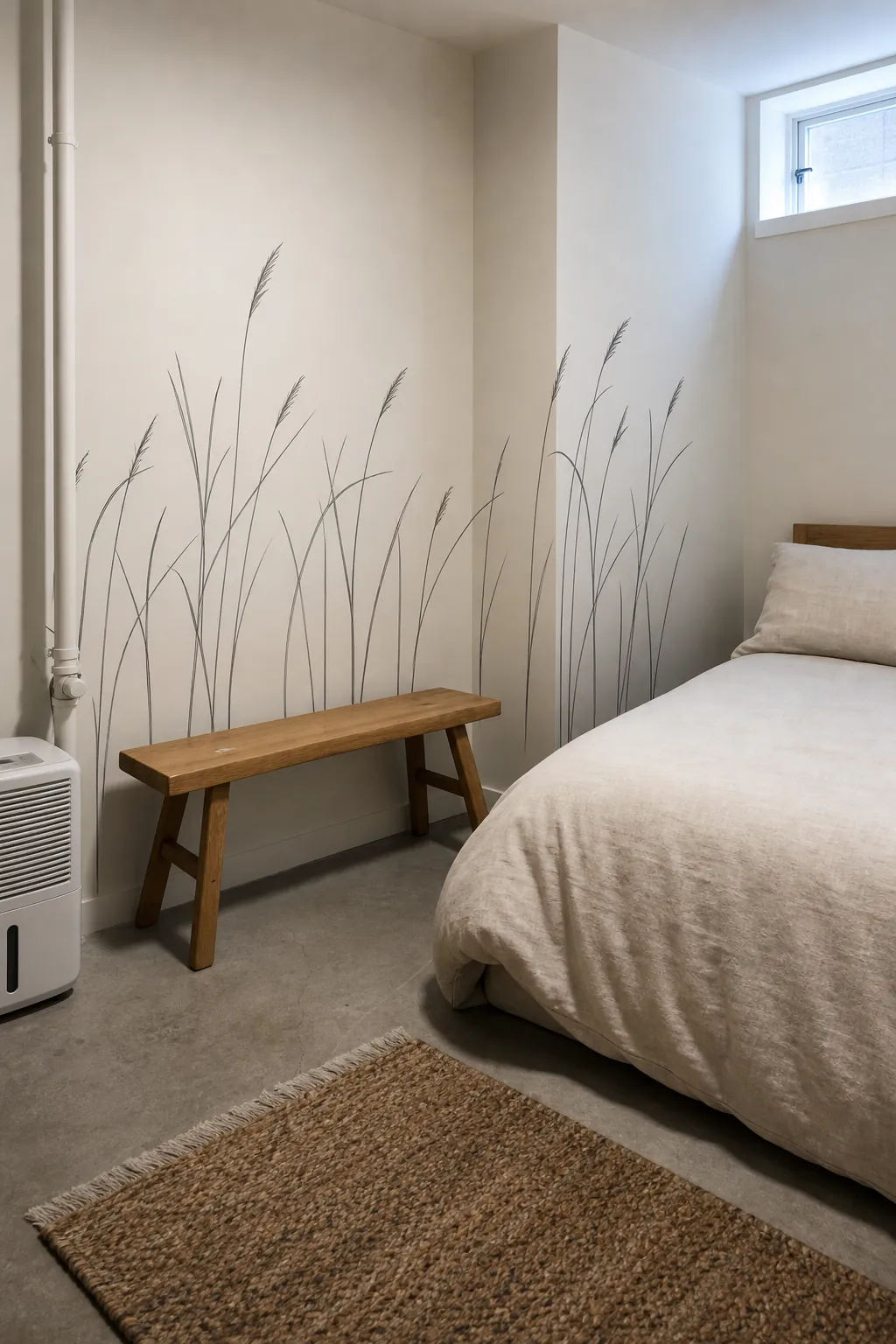
Turn a Corner into a Continuous Mural
A mural that wraps a short distance around a corner can make a cramped boundary feel less abrupt. Use an abstract line or sparse botanical subject with plenty of background. Accurate measurements matter, and textured walls may require a material other than peel-and-stick vinyl.
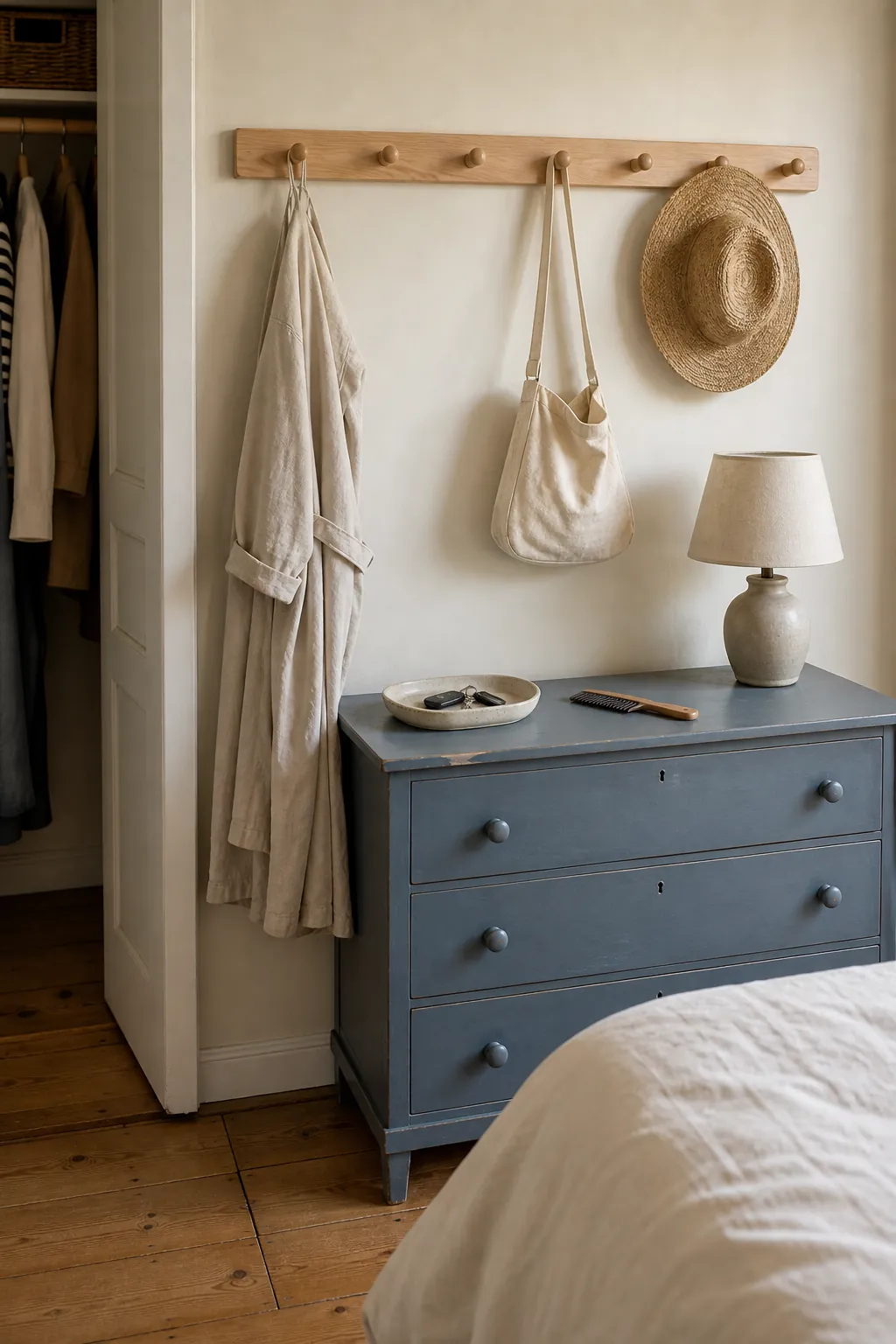
Mount a Peg Rail Above the Dresser
A peg rail earns its space by displaying and storing daily items. Keep the pegs mostly clear and hang lightweight pieces such as a robe, small bag, or hat. Aligning the rail with the dresser creates a compact utility zone instead of spreading hooks around the room.
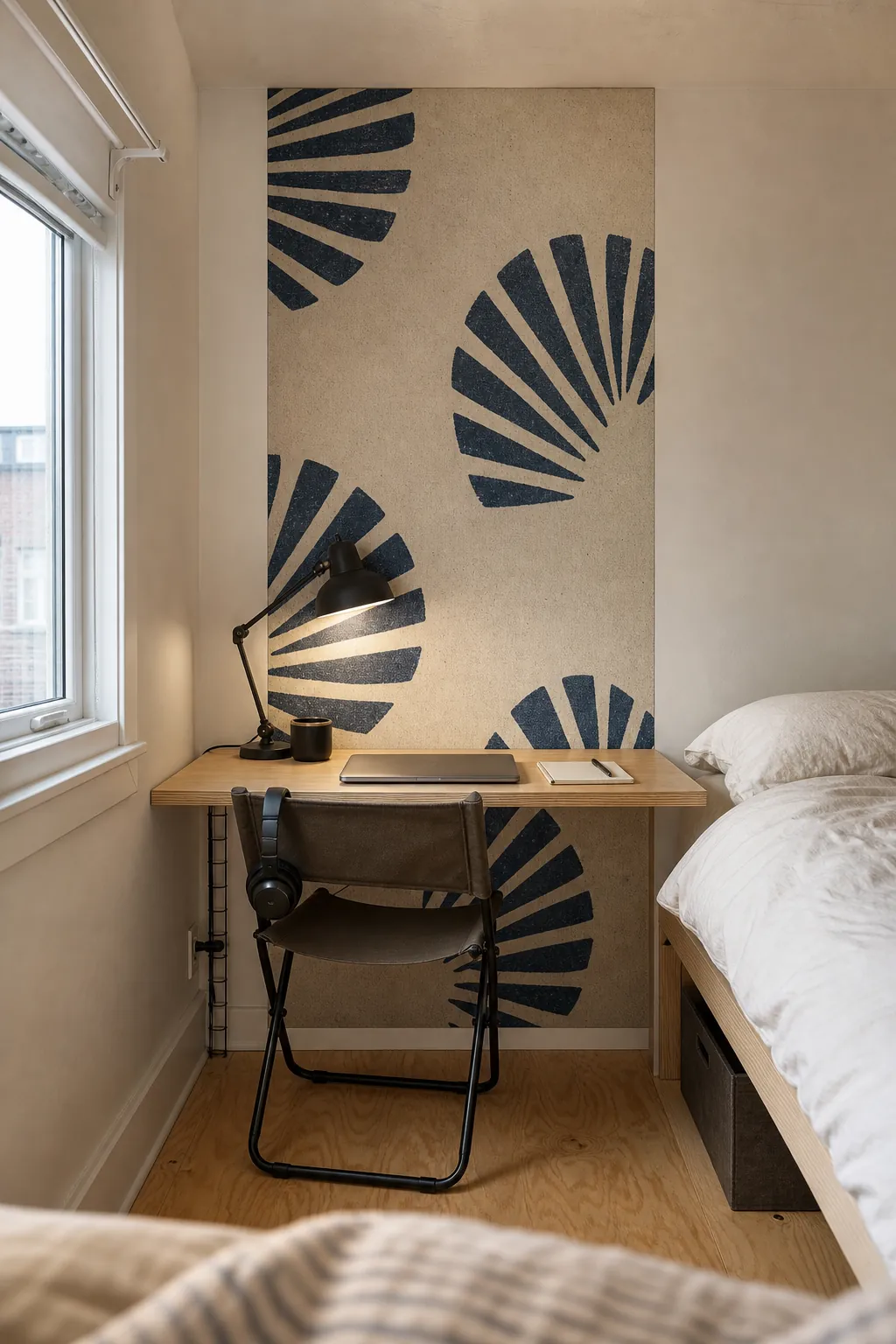
Use a Narrow Mural Panel Behind a Desk
A floor-to-ceiling mural panel can distinguish a work zone without dividing the room. Keep it close to the desk width and choose a low-detail image, such as tonal grasscloth texture or a restrained block print. The vertical field helps the desk look intentional even when it doubles as a nightstand.
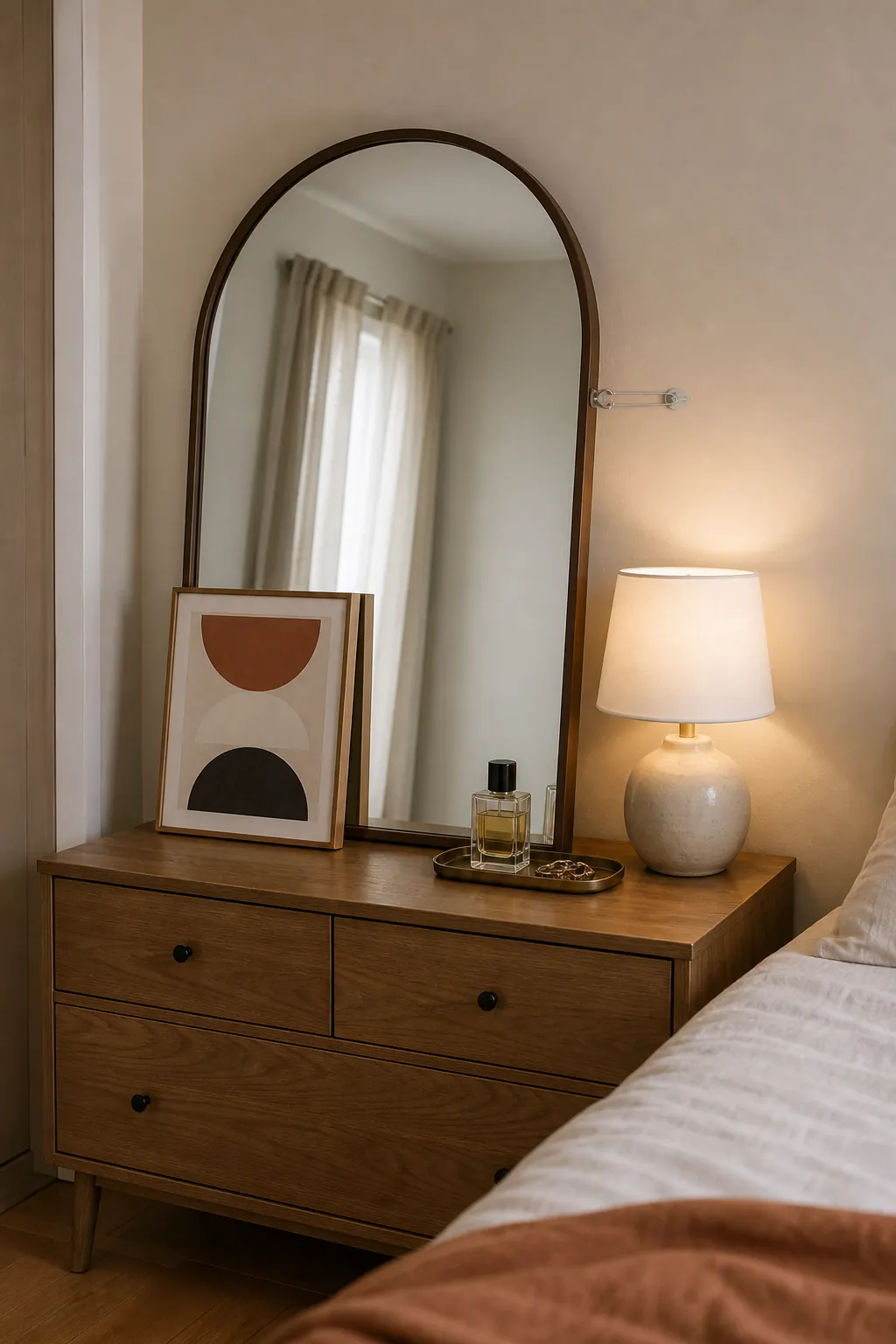
Layer One Print in Front of a Mirror
On a dresser, lean a small print partly in front of a larger mirror instead of hanging both separately. The overlap compresses two objects into one vignette and allows the arrangement to change without new holes. Keep the reflected background quiet so the surface does not double the clutter.
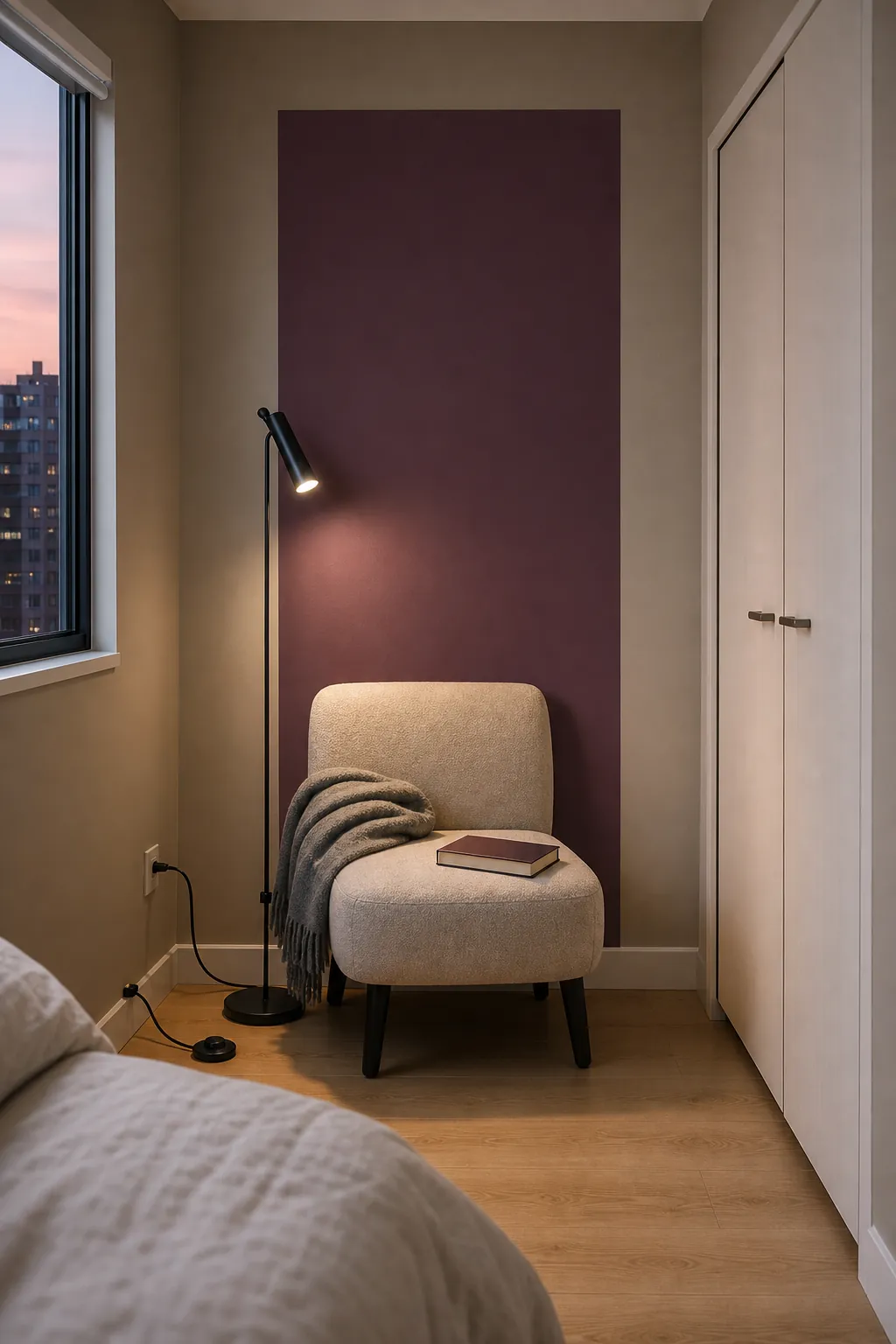
Create a Slim Color Block Behind a Reading Chair
A narrow removable color block can mark a reading corner without a rug or side table. Make it slightly wider than the chair and tall enough to frame the lamp. In a minimal wall decor scheme, this one field of color can replace several accessories.
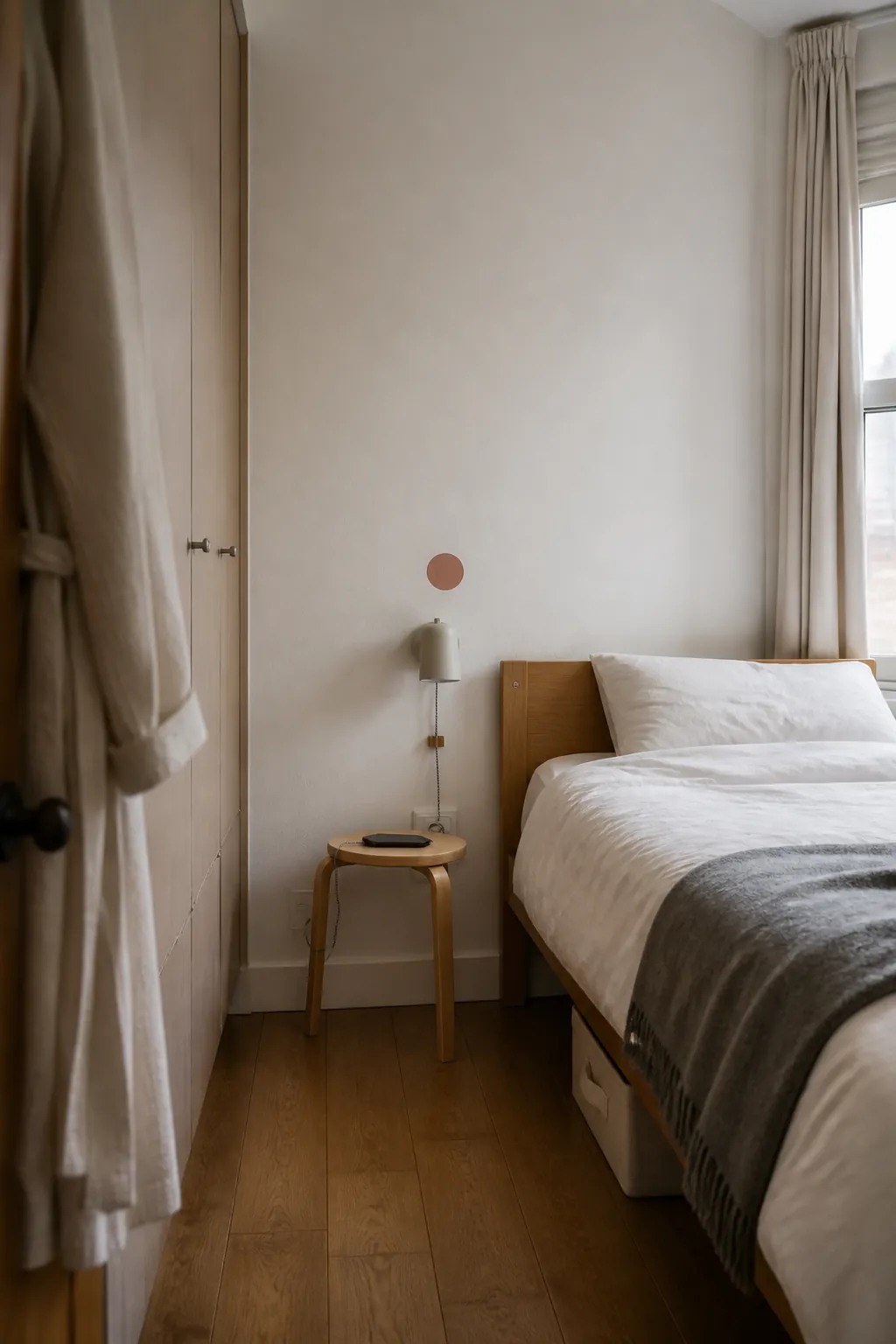
Keep the Final Wall Deliberately Quiet
The best small room wall idea may be deciding that one surface stays almost empty. When the bed wall, window, mirror, and storage wall already carry visual information, another display can make the room feel smaller. Use one tiny decal, a single sconce, or nothing at all.
Small bedrooms look bigger when each wall has a clear job. Let one wall anchor the bed, another return light, and another handle storage. Stop before every surface becomes a project. The space will feel more personal—and far easier to live in—when decor supports circulation, sleep, and daily routines.