How to Decorate a Living Room Wall Around a TV Without Clutter
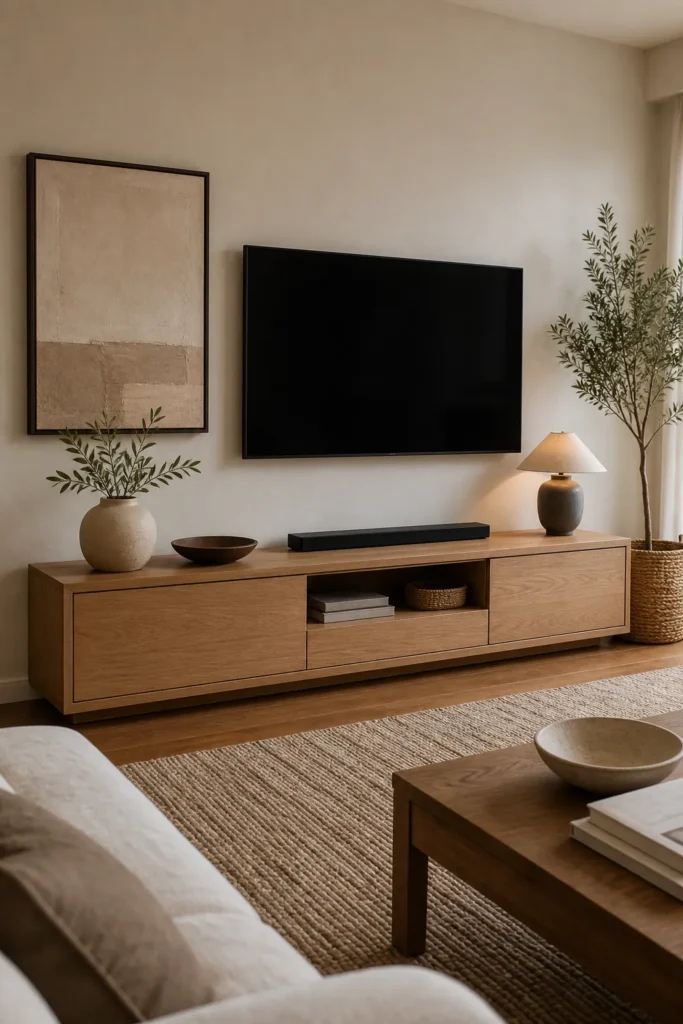
A TV wall is hard to decorate because the screen is already a big black rectangle. If you add too many frames, shelves, plants, speakers, baskets, and candles around it, the wall starts to feel busy fast. The best tv wall decor ideas do the opposite: they reduce visual noise first, then add only the pieces that make the screen feel connected to the room.
The goal is not to hide the television completely. In most living rooms, that is unrealistic. The goal is to make the TV wall look intentional when the screen is off and comfortable when the screen is on. That means clean cables, controlled symmetry, calm storage, and a few well-scaled accents instead of decoration in every empty inch.
Start by Giving the TV Wall Clear Zones
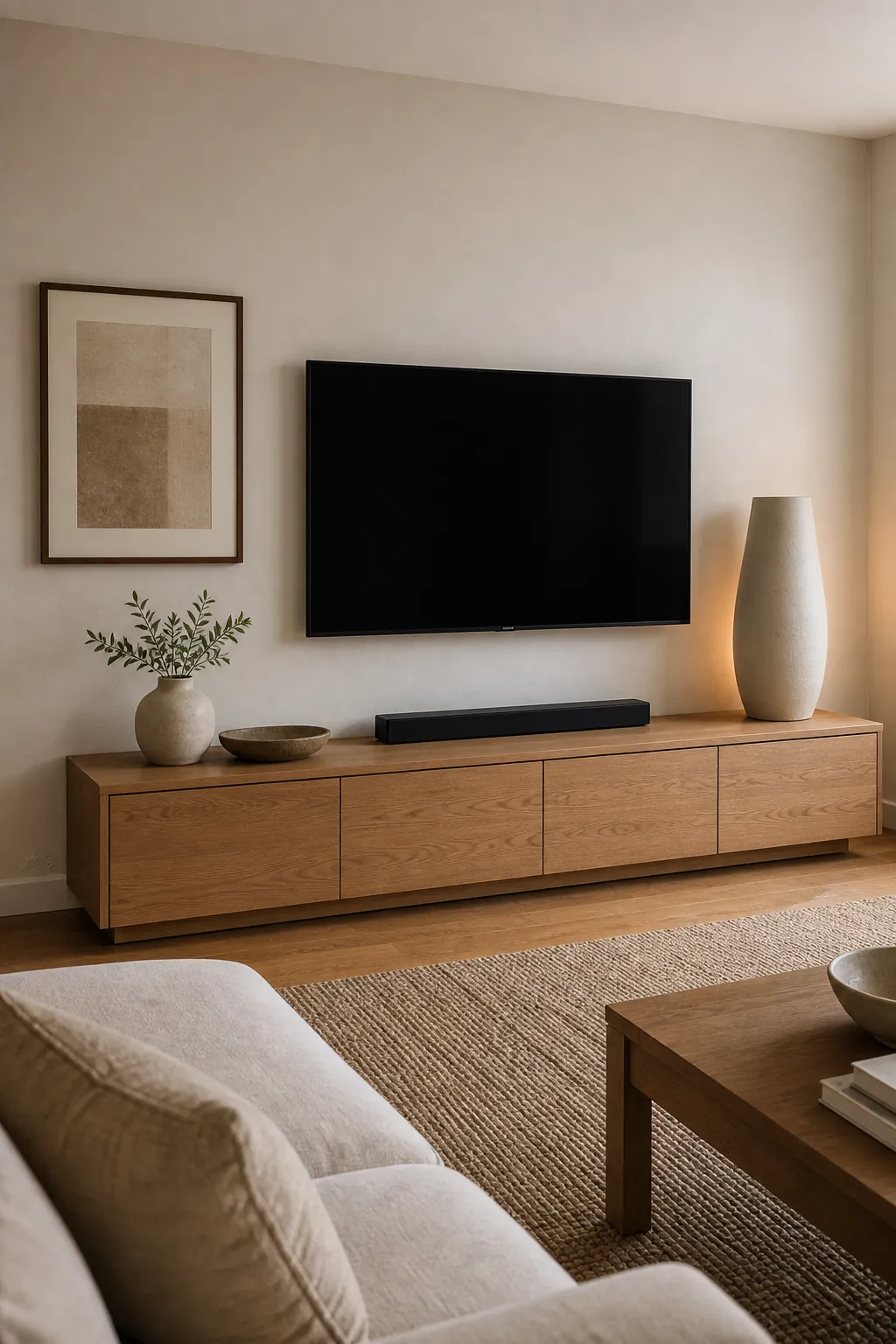
Before choosing art or shelves, divide the wall into zones. The TV is the anchor. The console or cabinet is the base. The empty side space is where decor can help or hurt. If every zone competes, the wall feels cluttered. If each zone has one job, the wall feels calm.
A useful rule is to keep the center zone simple. Let the television and console own the middle. Put texture, art, shelves, or plants to the sides where they soften the rectangle without blocking the screen. This is especially important for living room media wall decor because the wall has to work for both watching and everyday living.
If the TV is wall-mounted, keep the area directly below it clean. If it sits on a console, avoid tall objects right beside the screen. The more objects crowd the TV edge, the more the room feels like a tech corner instead of a living room.
Use Floating Shelves Beside the TV, Not Around Every Edge
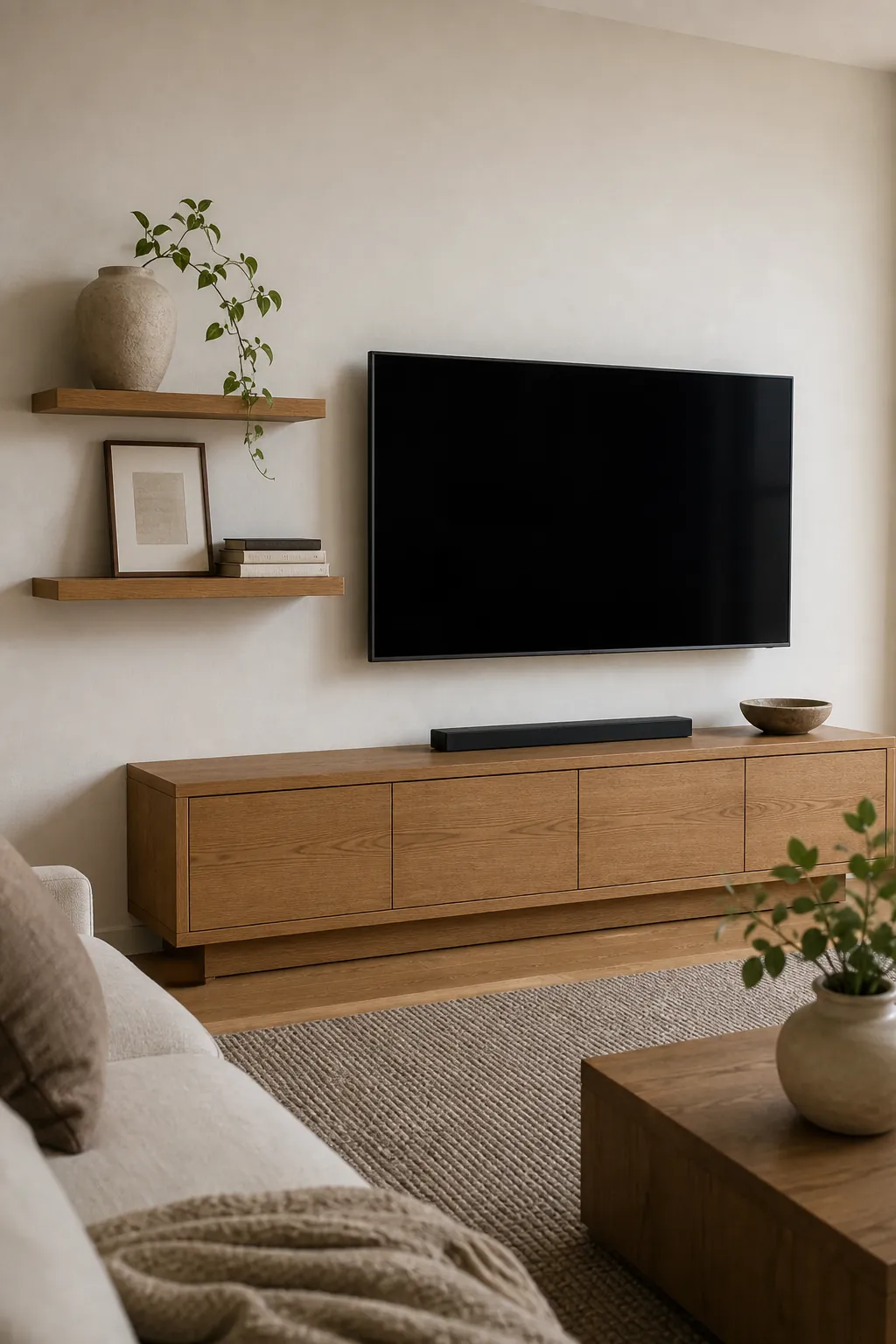
Floating shelves beside tv can look polished when they are used with restraint. The mistake is wrapping the television with shelves and filling each shelf with tiny objects. That turns the screen into the center of a busy display case.
Use one or two shelves on only one side, or a balanced pair of vertical shelves that leave breathing room around the TV. Style each shelf with fewer, larger pieces: a ceramic vase, a stack of closed books, a small framed art piece, a trailing plant, or one sculptural object. Leave some empty shelf space on purpose.
The shelf depth matters too. Shallow shelves feel lighter and are less likely to compete with the screen. Deep shelves can look bulky unless the wall is large and the console below is visually strong.
Put Wall Art Near the Television, Not Trapped Against It
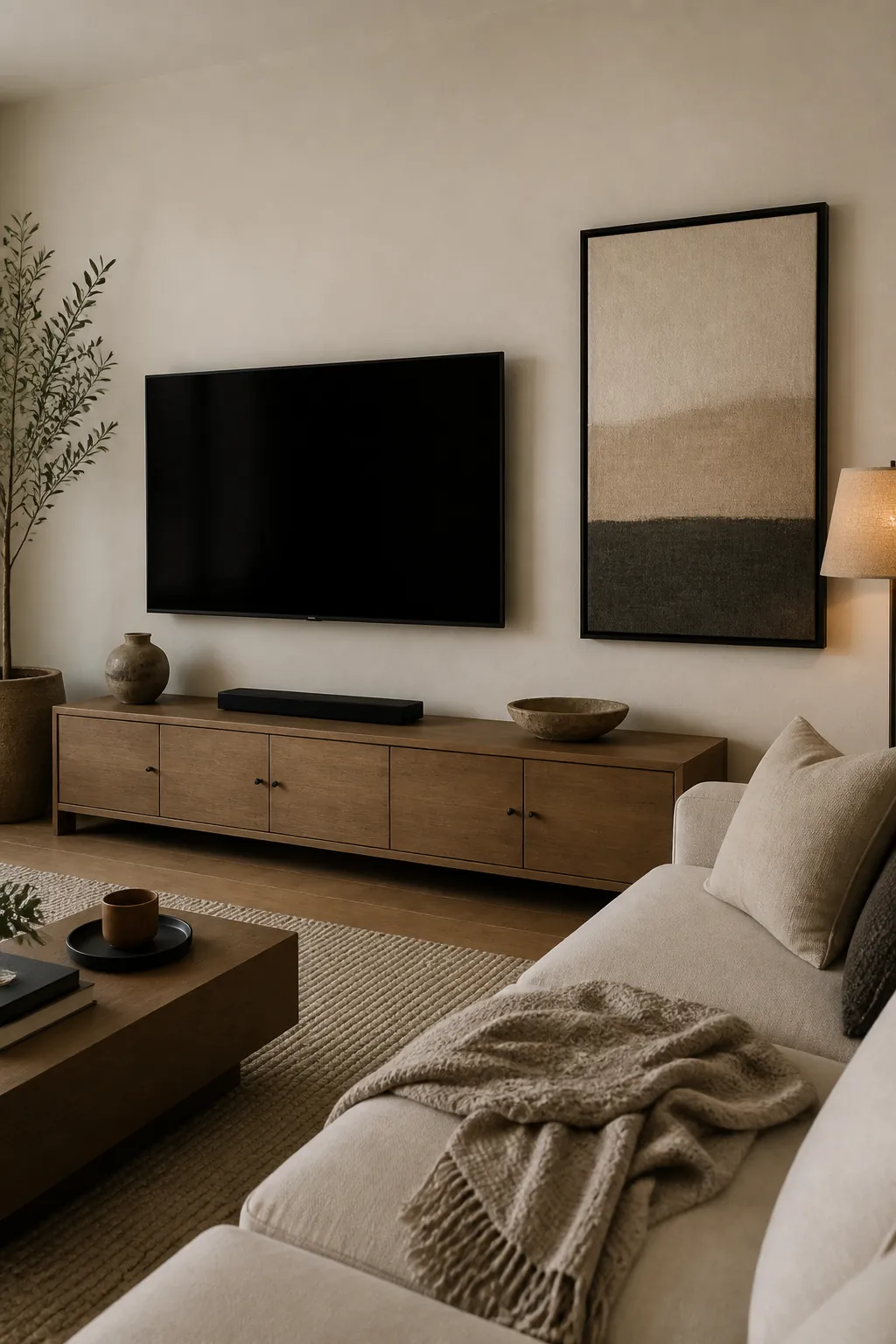
Wall art around television works best when it gives the screen a neighbor, not a border. Instead of placing small frames tight against all four sides of the TV, try one larger art piece offset to one side, a pair of prints stacked vertically beside the screen, or a single textile piece that echoes the room’s palette.
Keep the artwork calmer than the screen. High-contrast, tiny, busy art beside a television can feel restless. Large shapes, soft landscapes, abstract neutrals, framed textiles, and low-detail photography usually sit better near a black screen.
Frames should relate to something else in the room. A black frame can connect to the TV edge. A warm wood frame can connect to the console. A light mat can connect to the rug or sofa. That repeated material makes decor around tv feel deliberate instead of added at the end.
Hide the Mess Before You Add More Decor
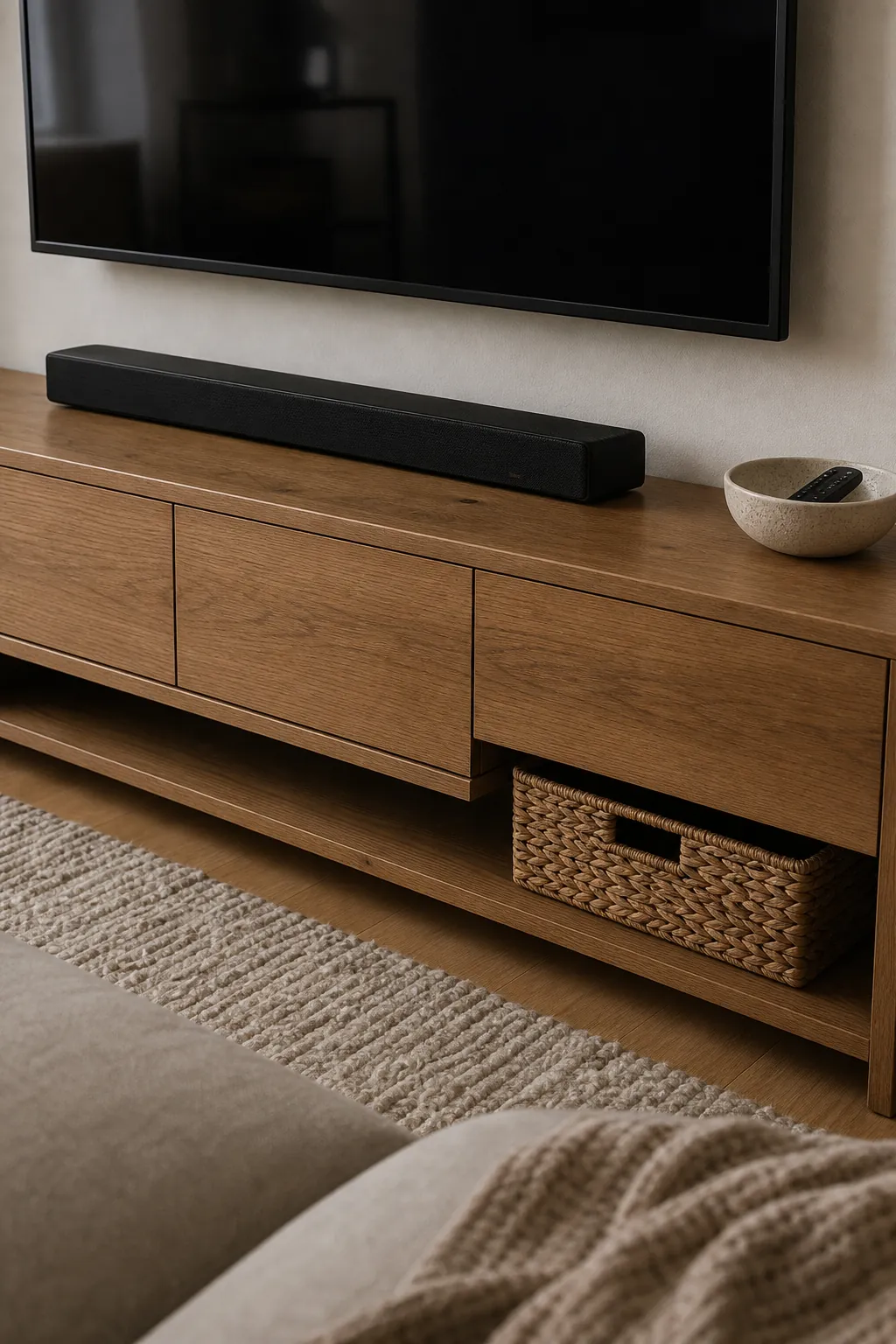
A TV wall rarely looks clean if cables, remotes, game controllers, routers, and soundbars are scattered in plain view. Before buying art, solve the practical clutter. Use a console with closed storage, cable channels, cord covers painted to match the wall, baskets inside cabinets, or a simple soundbar setup that fits the width of the screen.
This is where many minimal tv wall ideas succeed. They are not minimal because they have no decor. They are minimal because the necessary objects have a home. Once the cords and devices are visually quiet, a single art piece or shelf can do enough.
Look at the wall when the TV is off. If your eye goes straight to dangling cords, open storage, or a line of remote controls, decoration will only add another layer of noise.
Soften a Family Room TV Wall With Texture
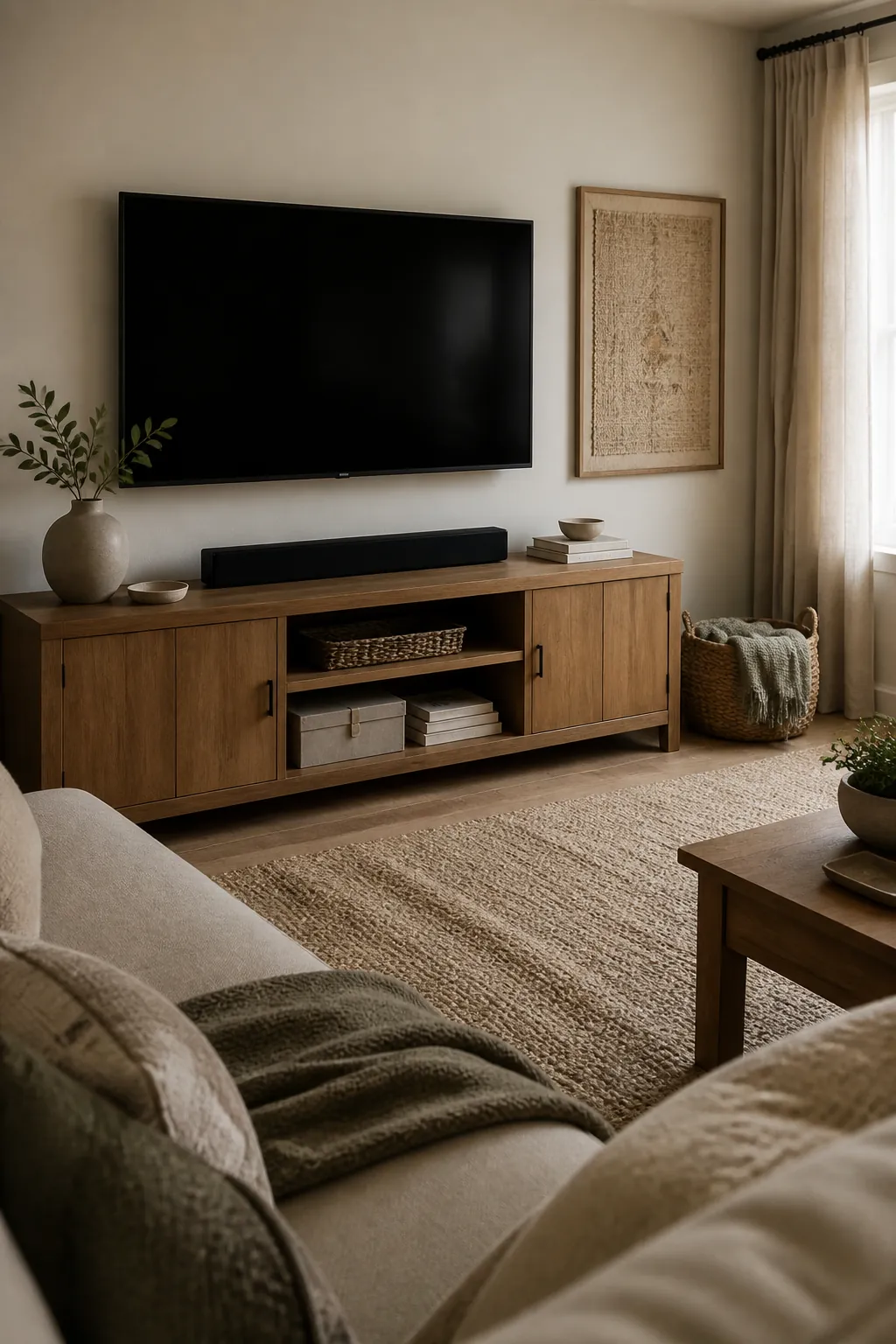
A family room tv wall has to handle real life. Toys, blankets, snacks, remotes, and daily use are part of the room. The trick is to choose textures that soften the technology without creating more surfaces to maintain.
Try a woven basket inside the console, a warm wood cabinet, a textured rug under the seating, linen curtains near the wall, or one woven art piece beside the TV. These elements make the black screen feel less harsh. They also hide small signs of daily life better than glossy white surfaces and delicate accessories.
If children use the room, keep fragile objects higher or inside closed storage. Style the wall for how the room is actually used, not just how it photographs on the day you finish it.
Stop Decorating When the Wall Feels Balanced
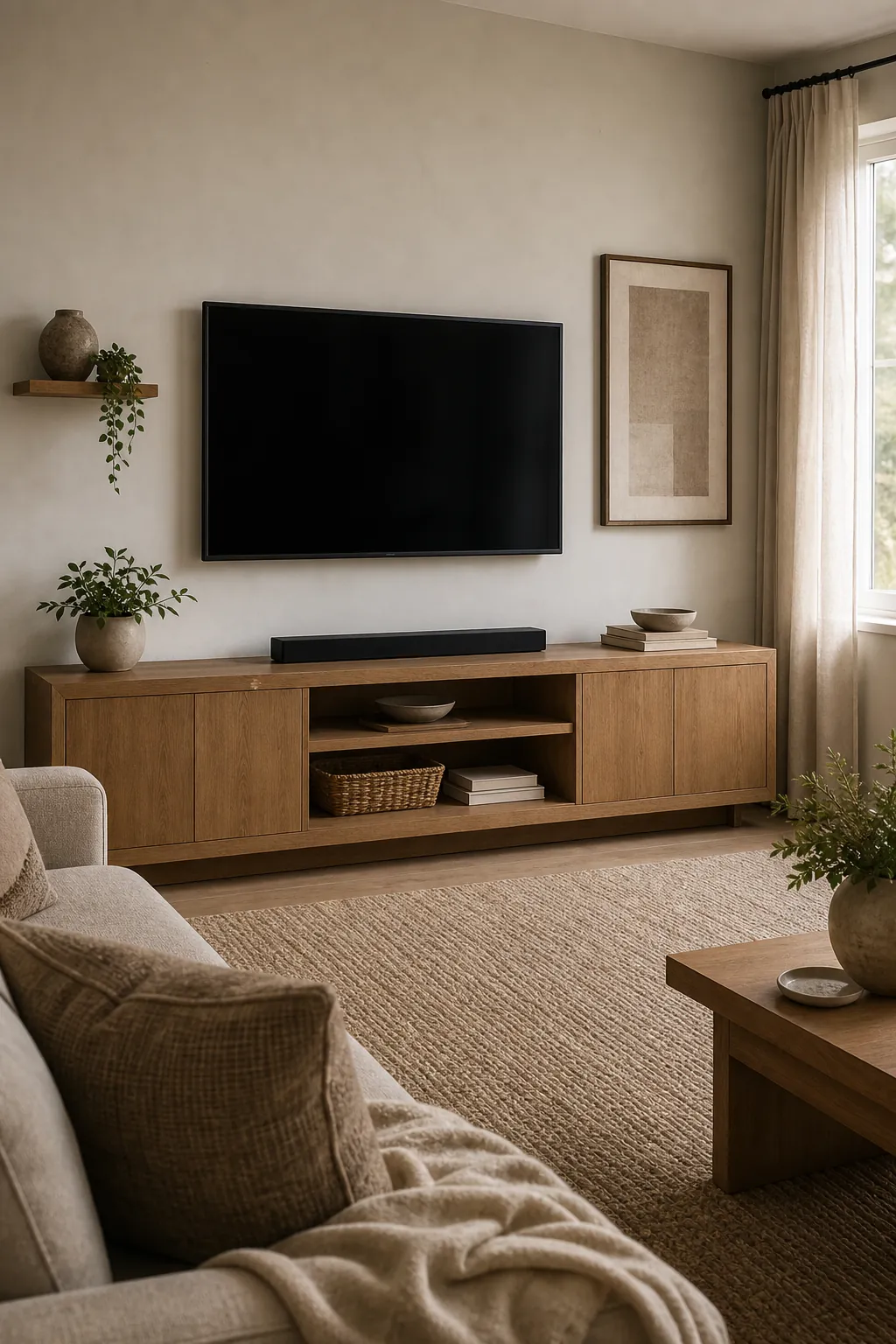
The hardest part of decorating around a TV is knowing when to stop. A blank area beside the screen is not automatically a problem. Sometimes it is the breathing room that lets the TV, console, art, and shelves feel organized.
Step back and take a photo of the full wall. If the screen feels too heavy, add one larger vertical element on the lighter side. If the wall feels busy, remove the smallest objects first. If the console looks cluttered, close the storage or reduce the number of visible accessories. Work from biggest problem to smallest detail.
A good TV wall should not ask for attention every time you enter the room. It should support the room quietly: clean cables, enough scale, a few warm materials, and decor that knows when to leave space alone.