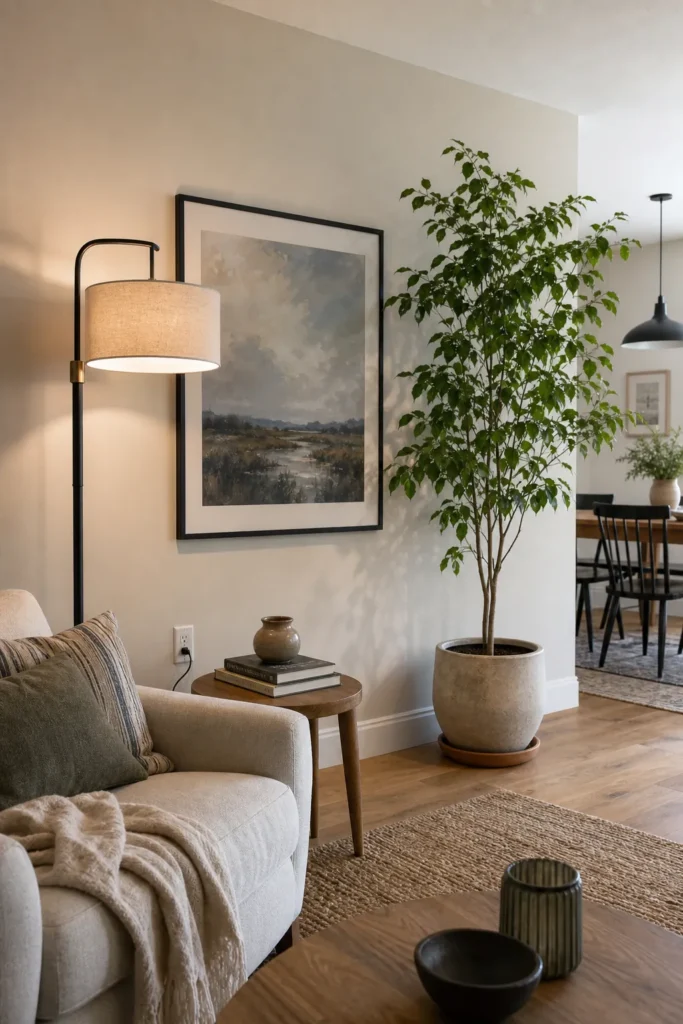
How to Layer Art, Lamps, and Plants on a Living Room Accent Wall
A living room accent wall can look technically decorated and still feel unfinished. The art may be good, the lamp may be useful, and the plant may be healthy, but if they all sit in separate visual lanes, the wall reads as a few objects instead of a composed part of the room.
The fix is layering. How to layer art, lamps, and plants on a living room accent wall comes down to order: set the art as the anchor, add lighting for height and shadow, use plants to soften the edges, then connect everything with smaller objects and furniture below. That sequence turns a flat wall into a lived-in focal point.
Begin With the Main Art, Not the Accessories
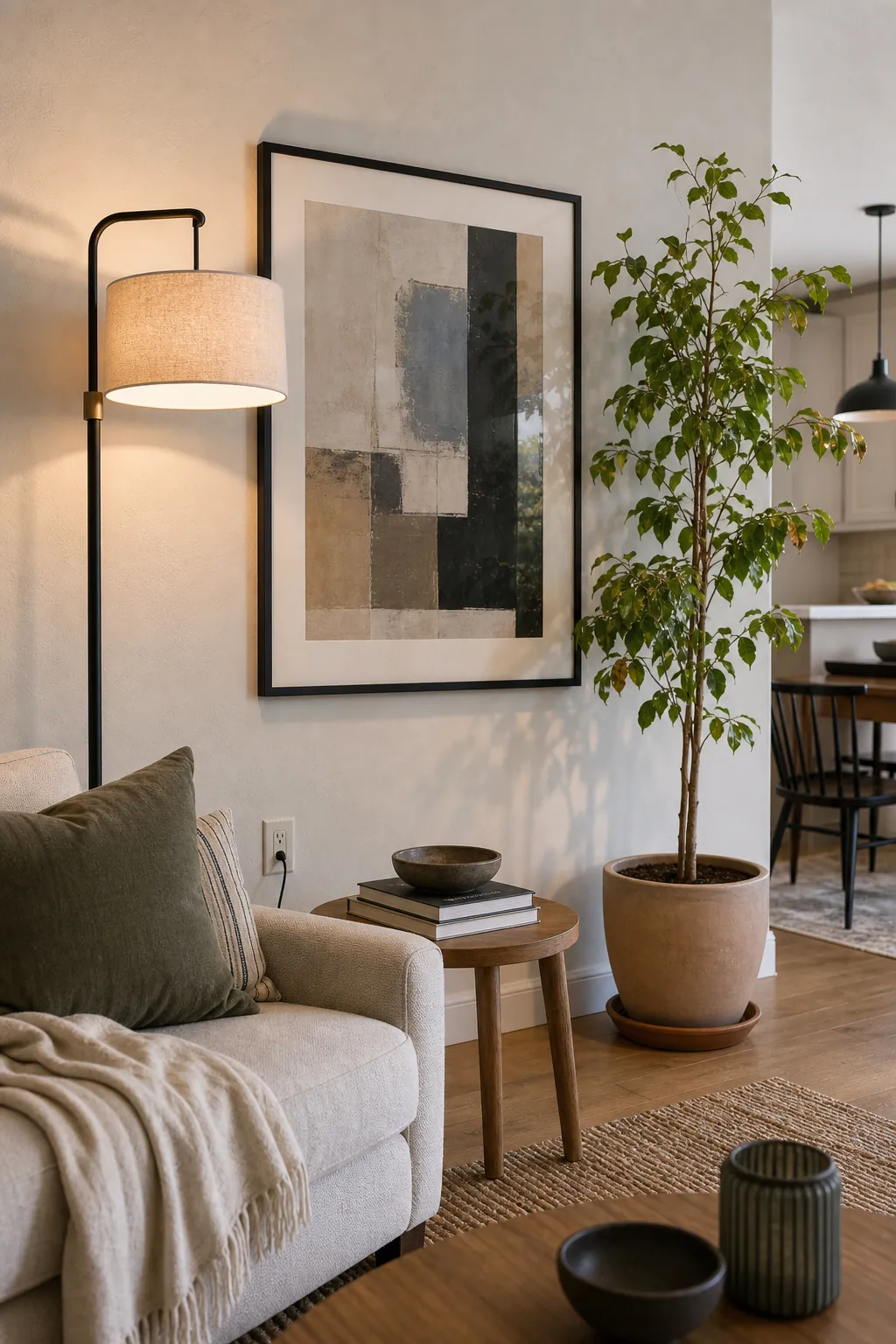
Start with the largest visual decision on the wall. That may be one oversized print, a pair of framed pieces, a textile, a mirror, or a small gallery grouping. The art sets the mood, scale, color direction, and center of gravity for everything around it.
For strong living room accent wall decor, choose the wall art based on the furniture below it, not the blank wall around it. A sofa, console, reading chair, or cabinet gives the composition a base. If the art is too small for that base, every lamp and plant you add later will feel like compensation.
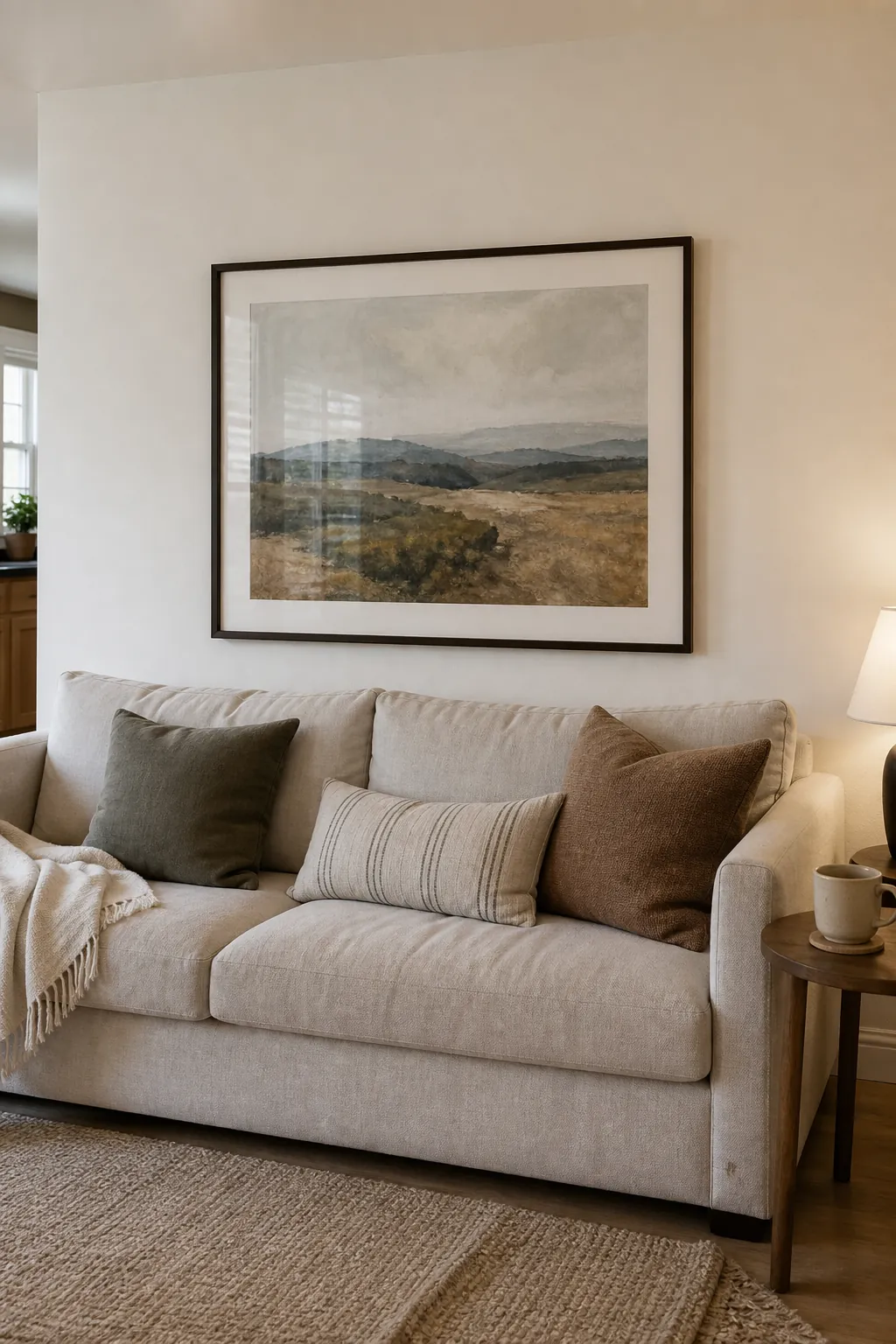
A reliable starting point is to let the artwork or art grouping span roughly half to two-thirds of the furniture width. Hang it low enough to belong to the furniture, usually with the bottom edge close enough that the wall and furniture feel connected. If the art floats high above everything else, the whole wall will feel disjointed.
Place the Lamp Where the Wall Needs Height or Shadow
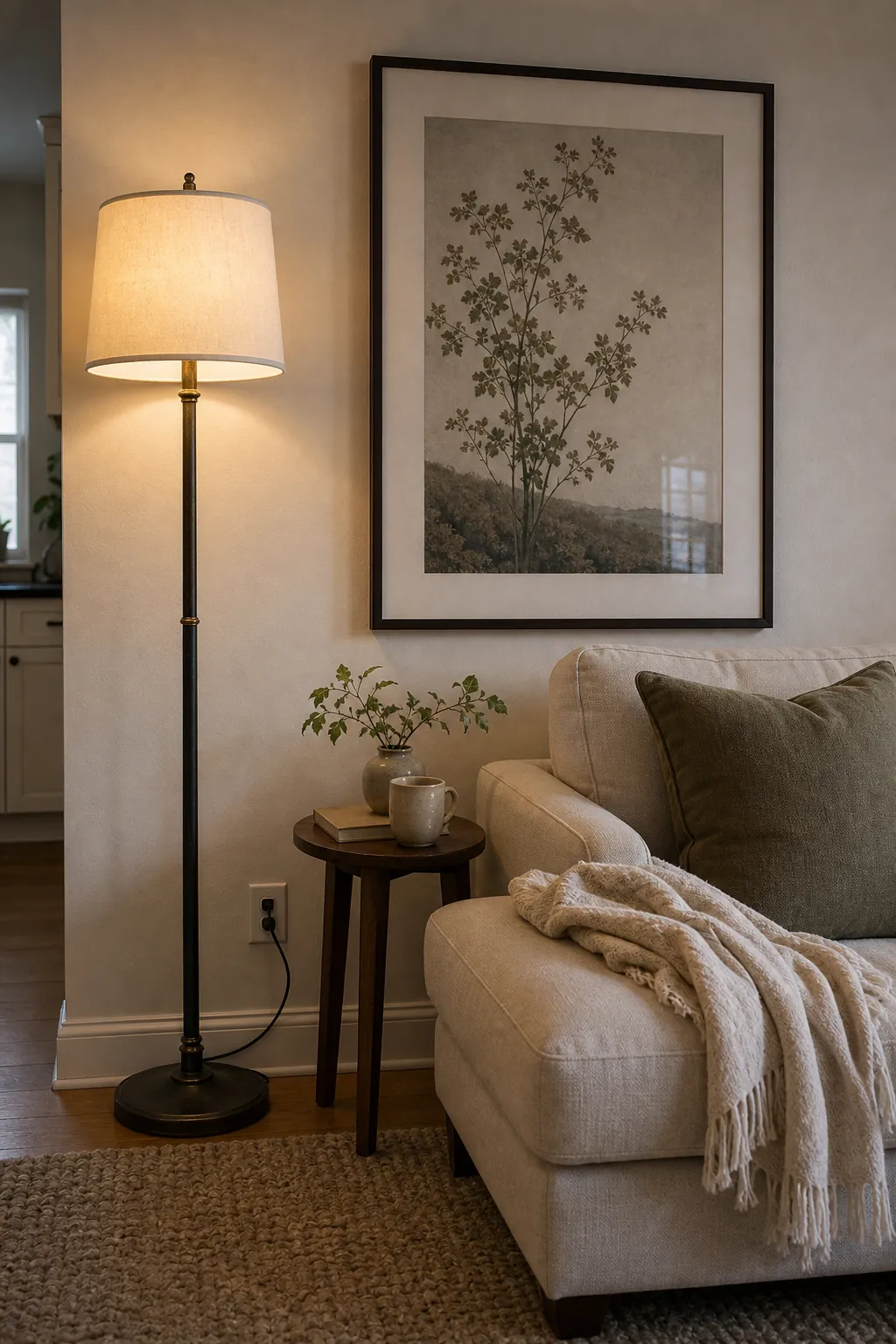
A lamp does more than fill a corner. It changes the height of the composition and gives the wall a shadow line. This is why floor lamp wall styling works so well beside a sofa, reading chair, console, or plant. The lamp creates a vertical element that keeps the art from looking lonely.
Choose the lamp after the art is placed. If the art is wide and low, a taller lamp can balance it. If the art is already tall, a shorter table lamp may be enough. The lamp shade should usually overlap the wall zone visually, but it should not cover the main art or sit so far away that it feels unrelated.
Pay attention to light quality. A bare bulb or harsh overhead light can flatten good wall decor composition. A linen shade, ceramic base, brass arm, or matte black stem adds both texture and useful light. At night, the lamp should make the accent wall feel deeper, not simply brighter.
Use Plants to Break the Hard Edges
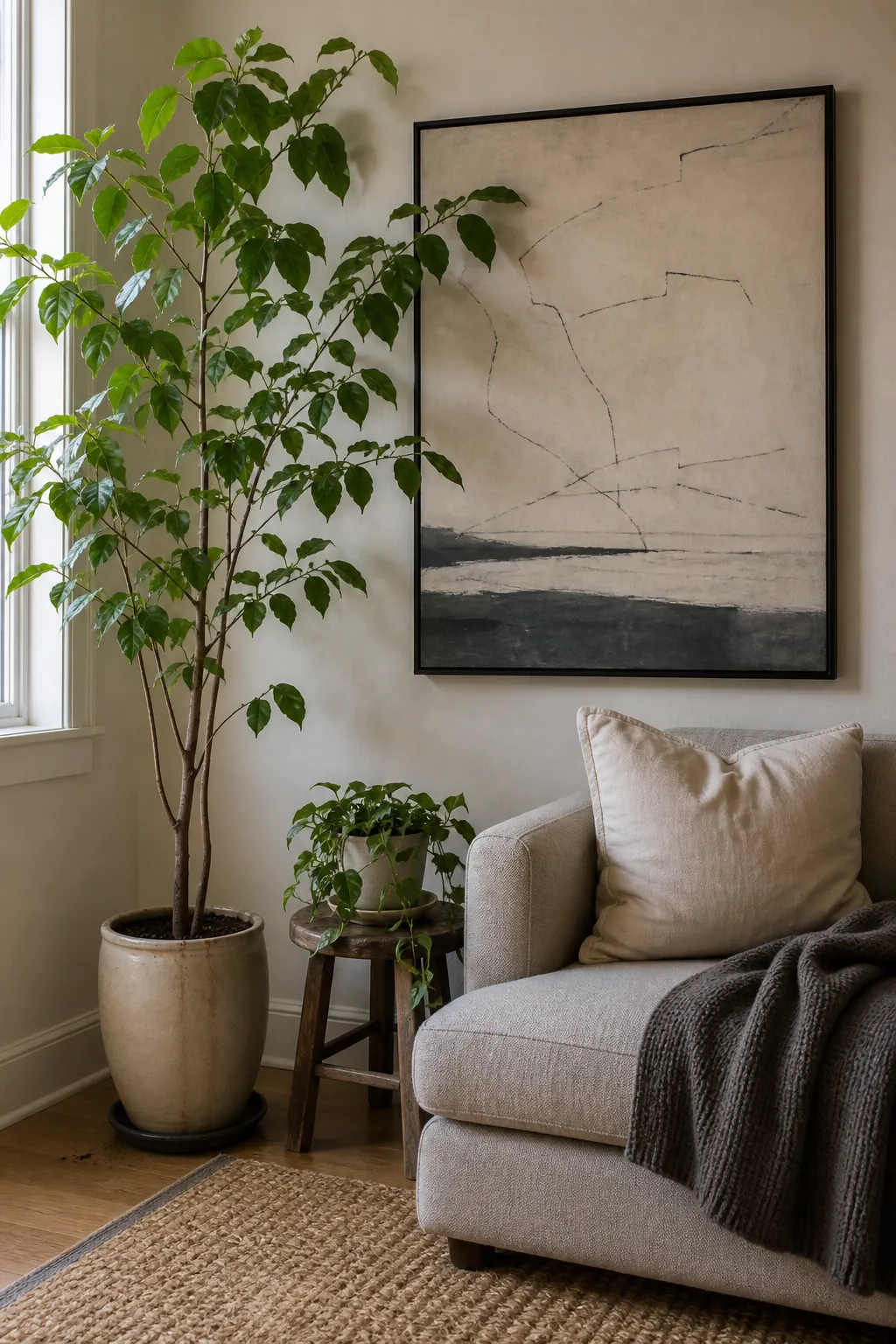
Art and lamps create structure. Plants make that structure feel relaxed. A tall plant can soften the edge of a large frame, a trailing plant can connect a shelf or console to the wall, and a smaller plant can repeat color without adding more pattern.
The mistake is treating every plant as a filler. For art and plant wall decor, each plant should have a job. Use height where the wall feels empty, width where the art feels too severe, and trailing movement where shelves or frames look too stiff. Choose plant scale based on the nearby furniture: a tiny plant beside a large sofa will disappear, while an oversized tree squeezed into a narrow walkway will feel forced.
If the accent wall has limited natural light, use a realistic faux branch, preserved stems, or a plant that fits the light conditions. A struggling plant weakens the whole composition. A healthy plant in the right pot can make even simple layered wall decor feel considered.
Connect the Wall to Furniture With One Lower Layer
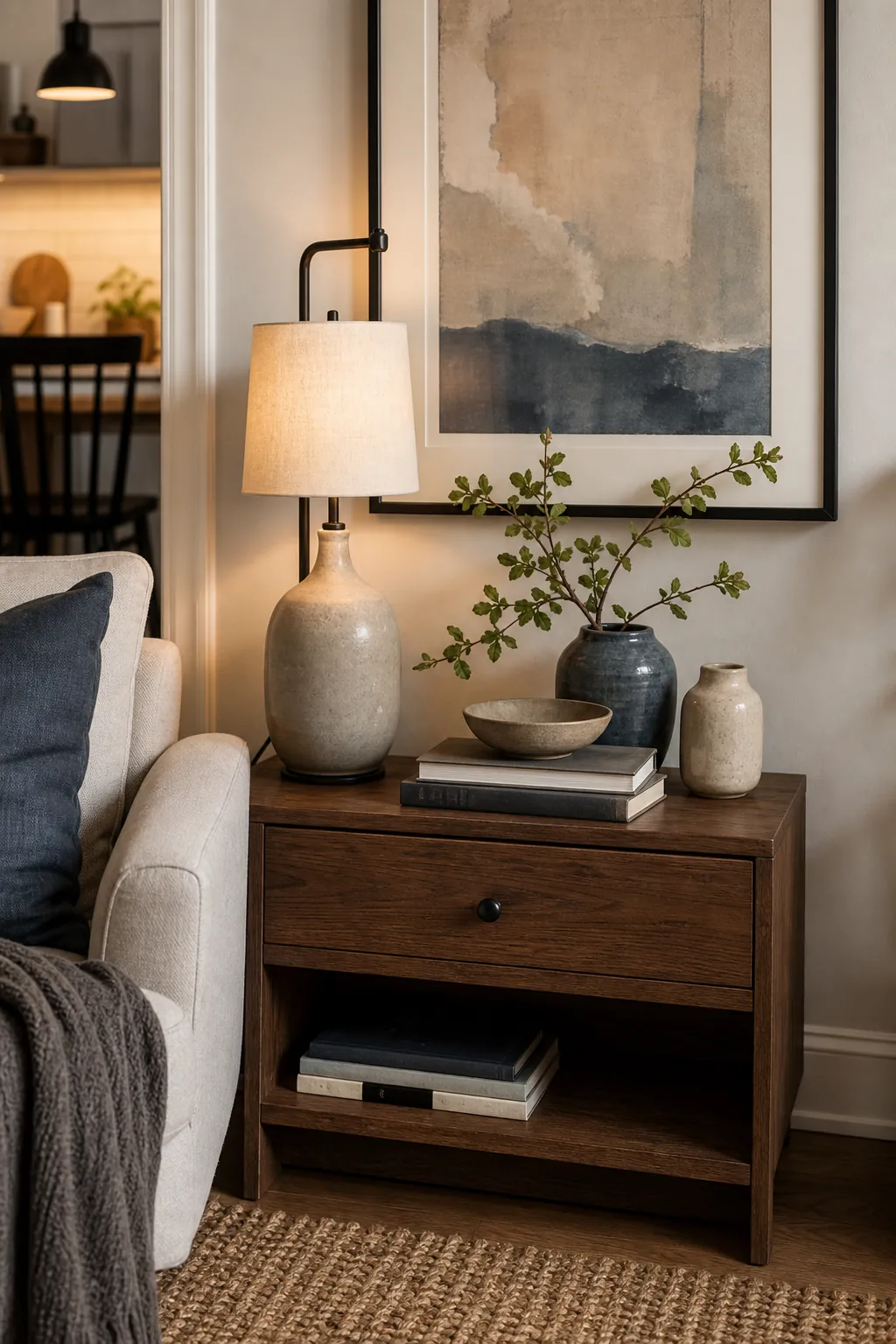
A layered accent wall needs something below eye level. That lower layer might be a console table, a side table, a cabinet, a bench, or the back of the sofa. Without it, the art, lamp, and plant can look like they are hovering near the wall instead of belonging to the room.
Use this lower layer to repeat the wall colors in small amounts. If the art includes olive, add a plant or book with green. If the lamp is black, use a black frame or small bowl. If the room has warm wood, repeat it in the table or picture frame. These repetitions make living room styling ideas feel pulled together without making everything match.
Keep the tabletop edited. One lamp, one plant or branch, one stack of books, and one object is often enough. The goal is to create a bridge between wall and furniture, not a crowded display.
Let One Element Overlap Another
Layering only works when objects visually interact. If the art is centered, the lamp stands far away, and the plant sits in a different corner, the wall still feels flat. A little overlap creates depth.
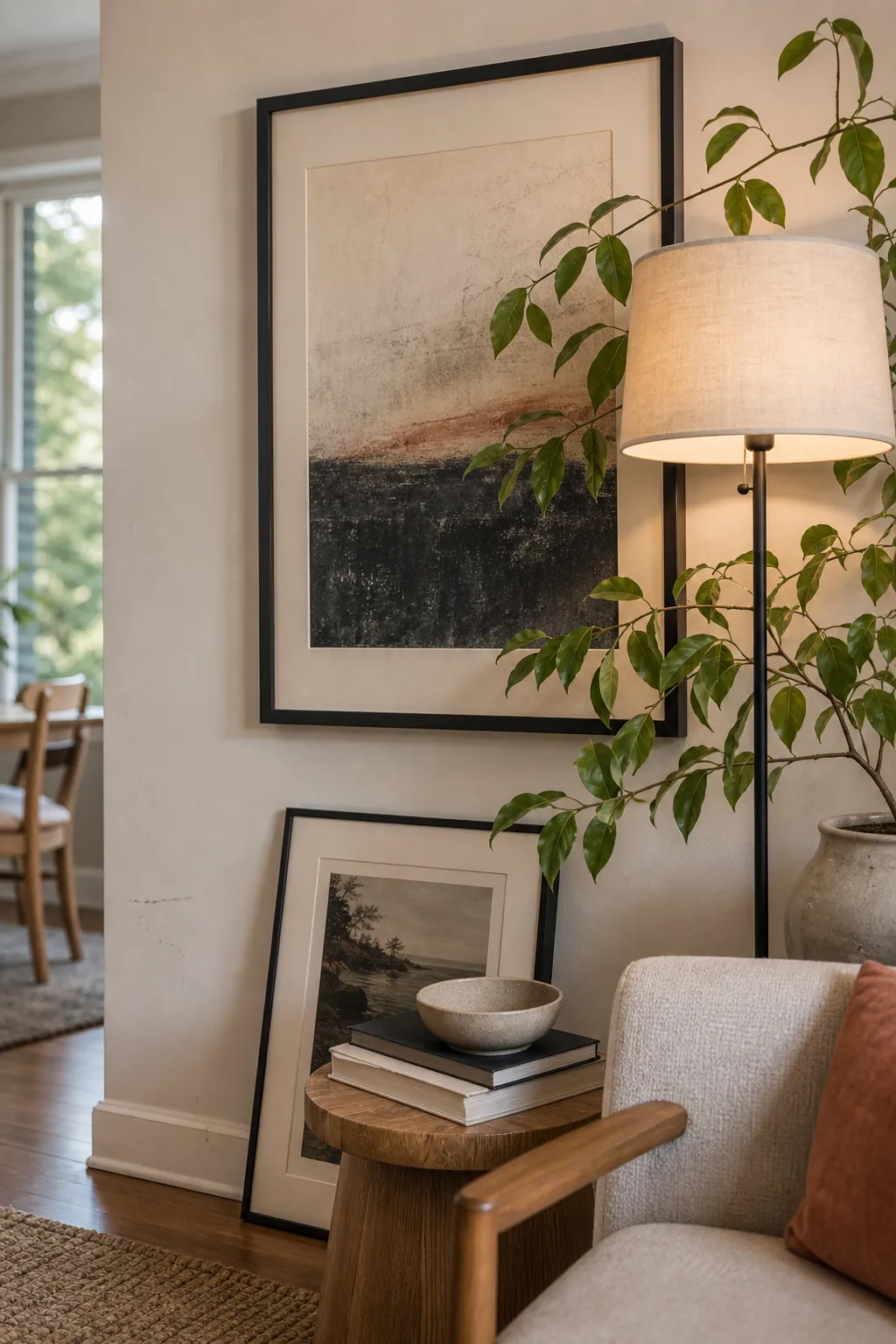
Try placing a tall plant so a few leaves cross the edge of the art, a lamp shade so it sits just inside the art zone, or a leaning frame so it partially covers a larger piece behind it. The overlap should feel natural, not crowded. You still need clear shapes and breathing room.
This is especially important when decorating around wall art. The accessories should not compete with the art, but they should acknowledge it. Think of the art as the anchor and everything else as support.
Edit the Accent Wall From the Real Sightlines
Before you call the wall finished, look at it from the places where people actually see it: the entry, the sofa, the kitchen, and the hallway. A composition that looks perfect straight on may look cluttered from the side or unbalanced from the kitchen.
From each sightline, ask one question: what is the first thing my eye sees? If the answer changes in a confusing way, edit. Remove one small object, lower the art, shift the lamp closer, or give the plant more space. Layered wall decor should create depth, not visual noise.
At night, check the wall again with the lamp on. Shadows, reflections, and warm light can improve the composition, but they can also reveal glare, a crooked frame, or an awkward plant shadow. The finished wall should work in daylight and after dark.
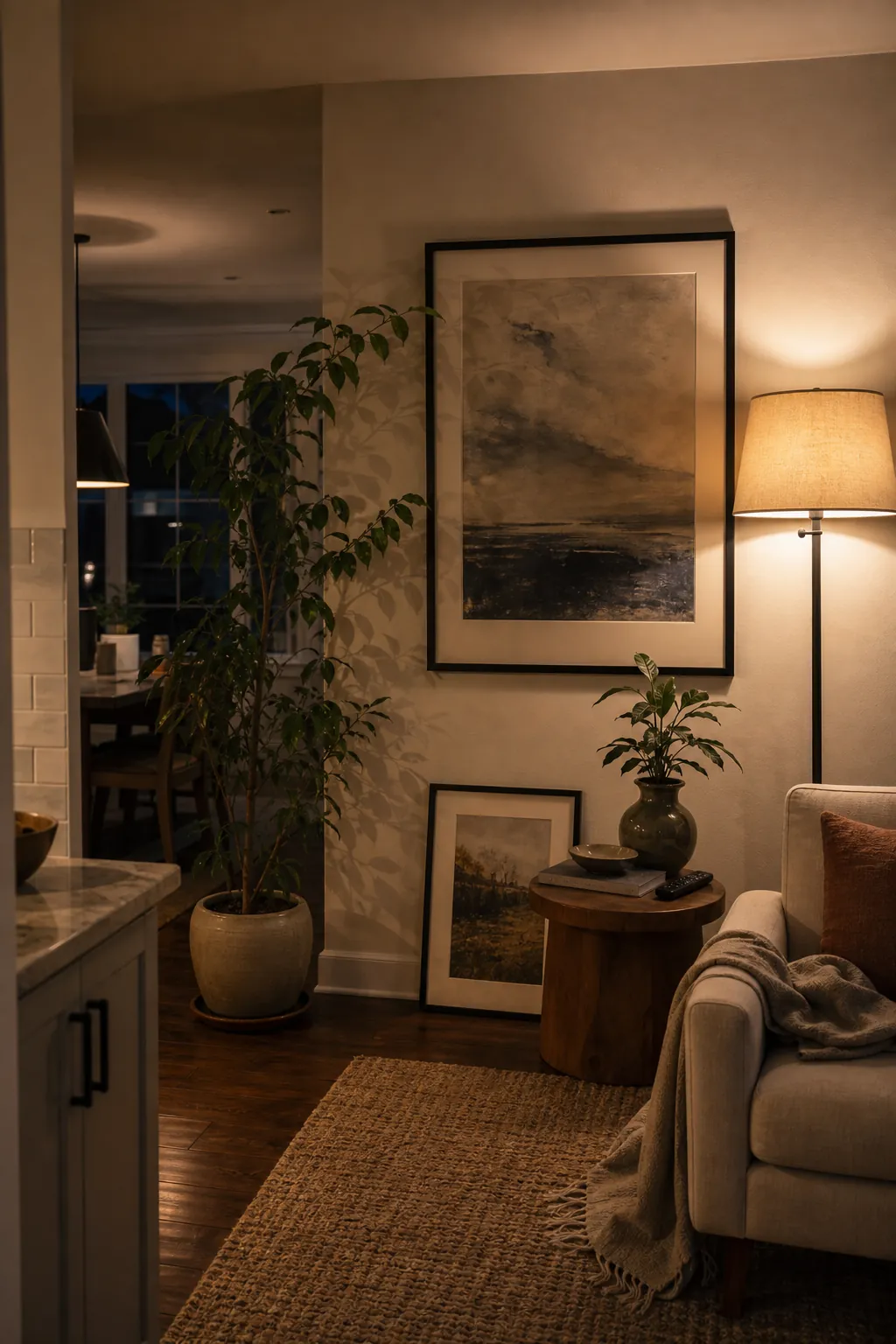
The simplest formula is the most dependable: one anchor, one light source, one plant layer, one lower surface, and one quiet gap. When those pieces relate to each other, a living room accent wall stops feeling decorated piece by piece and starts feeling composed.