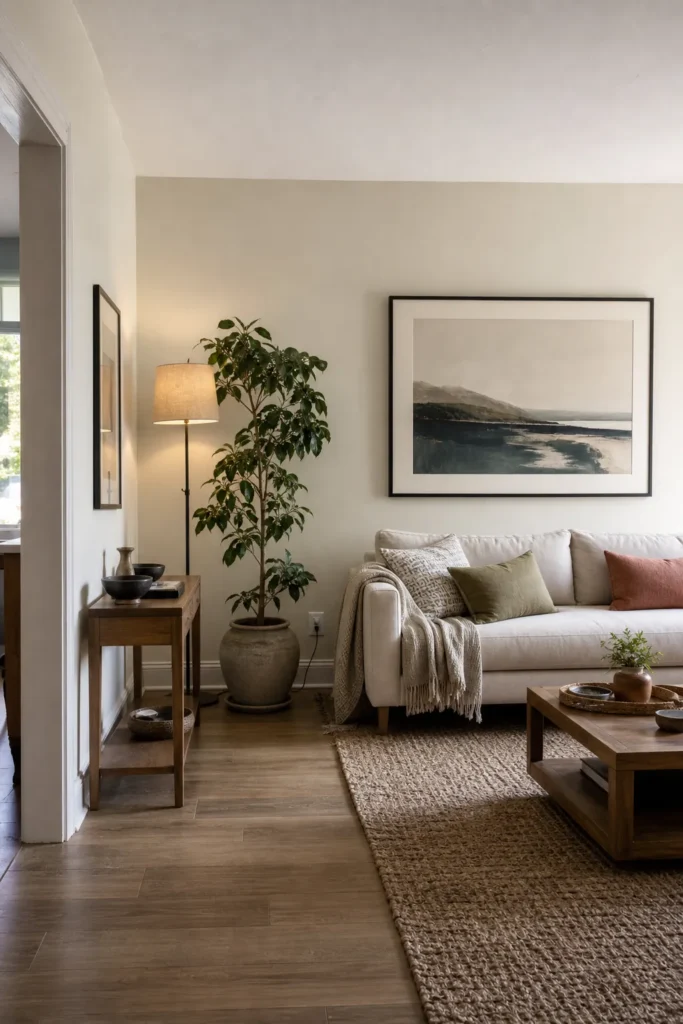
Above Couch Wall Decor Ideas for a Sofa That Is Off Center
An off-center sofa can make the wall behind it feel impossible. If you center art on the whole wall, the sofa looks wrong. If you center art only on the sofa, the empty wall beside it can look forgotten. The real solution is deciding what needs to be balanced: the sofa zone, the whole wall, or the room view from the entry.
These above couch wall decor ideas for a sofa that is off center are built around that choice. Instead of forcing perfect symmetry, use art scale, asymmetrical groupings, lamps, plants, shelves, and negative space to make the layout look intentional.
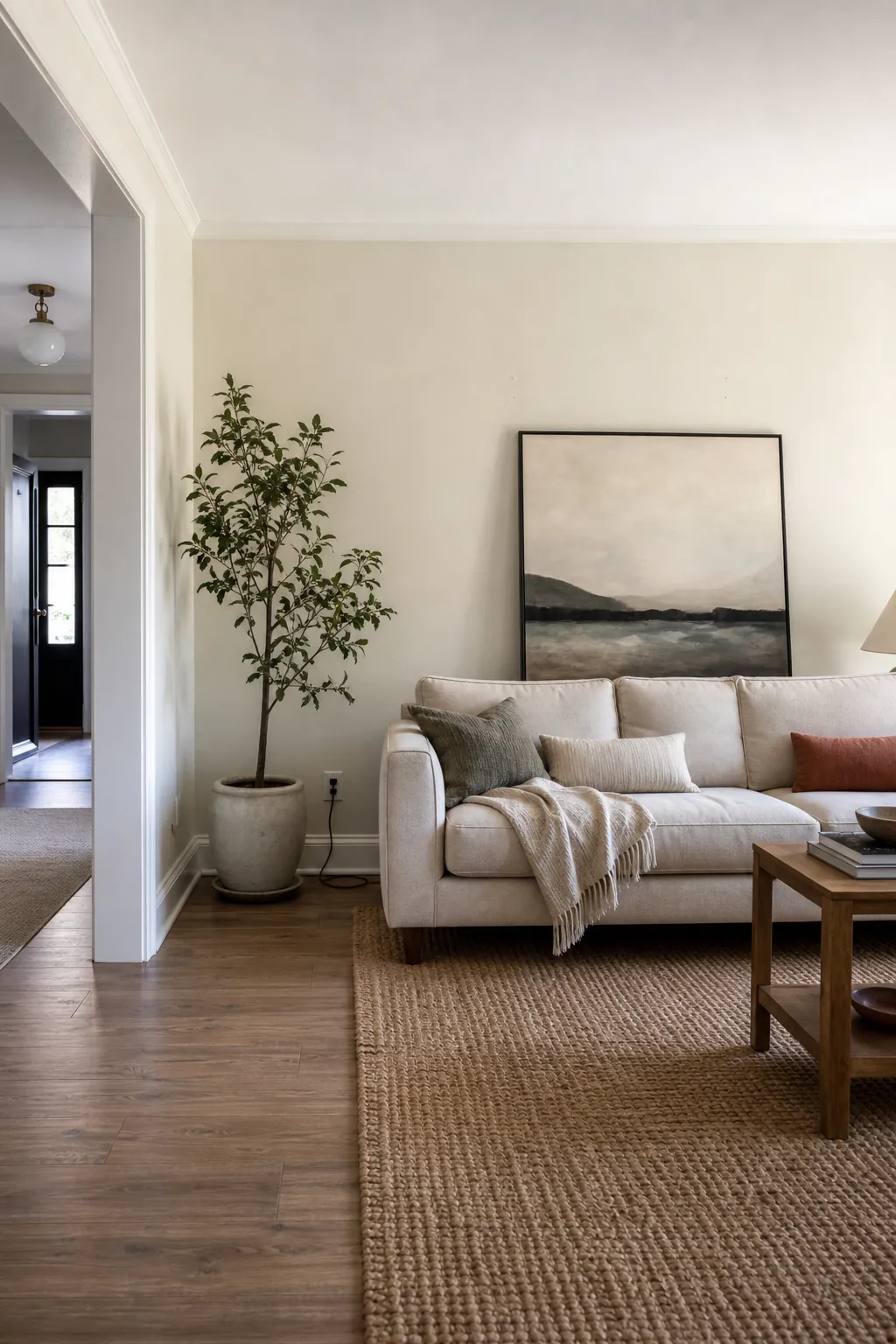
First Decide Whether the Sofa or the Wall Is the Anchor
Before you hang anything, look at the room from the main doorway. If the sofa is the obvious seating anchor, the art should usually relate to the sofa. If the wall is part of a larger focal moment, such as a fireplace, window, built-in, or TV wall, the decor may need to balance the entire wall instead.
The most common mistake with off center sofa wall decor is centering one picture on the full wall when the furniture below is clearly shifted. That makes the gap above the sofa look accidental. In most living rooms, the eye reads the furniture first, then the wall decor. If those two do not agree, the room feels unsettled.
Use painter’s tape, paper templates, or a quick photo markup before making holes. Mark the sofa width, then mark the full wall width. The distance between those two centers will tell you whether you need a simple sofa-centered solution or an asymmetrical wall plan.
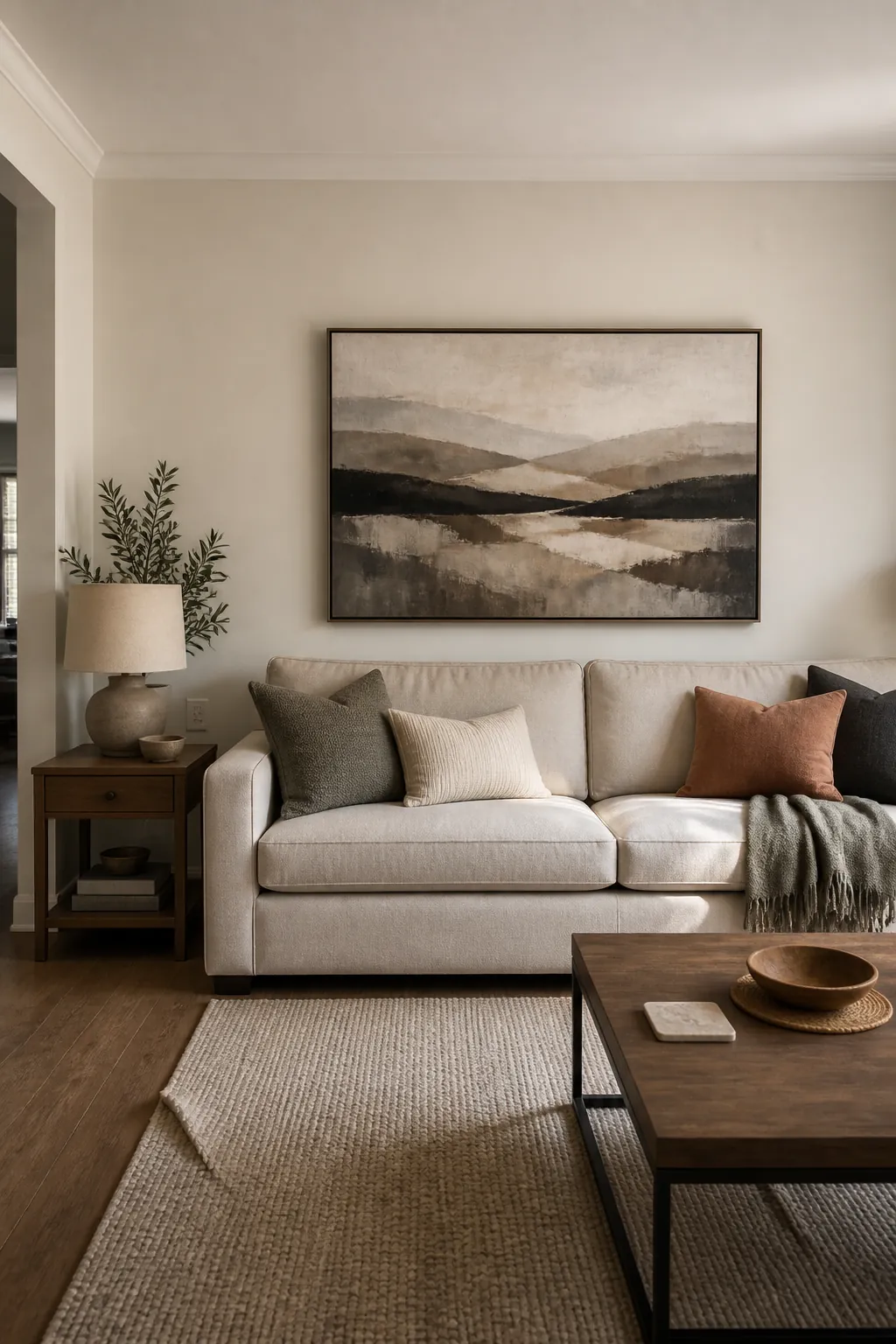
Center the Main Art Over the Sofa Zone
When the sofa is the anchor, center the main piece over the sofa, not the wall. This is the cleanest fix for many above couch wall decor problems because it makes the seating area feel complete even if the architecture is uneven.
Choose art that is wide enough to hold its own. A good starting point is artwork that spans about half to two-thirds of the sofa width. Hang it low enough to belong to the sofa, with the bottom edge close enough that the art and furniture read as one zone.
If the empty wall beside the sofa still feels heavy, do not solve it by pushing the art off center. Keep the anchor art aligned with the sofa and add a second balancing element on the empty side, such as a floor lamp, tall plant, narrow cabinet, or small chair.
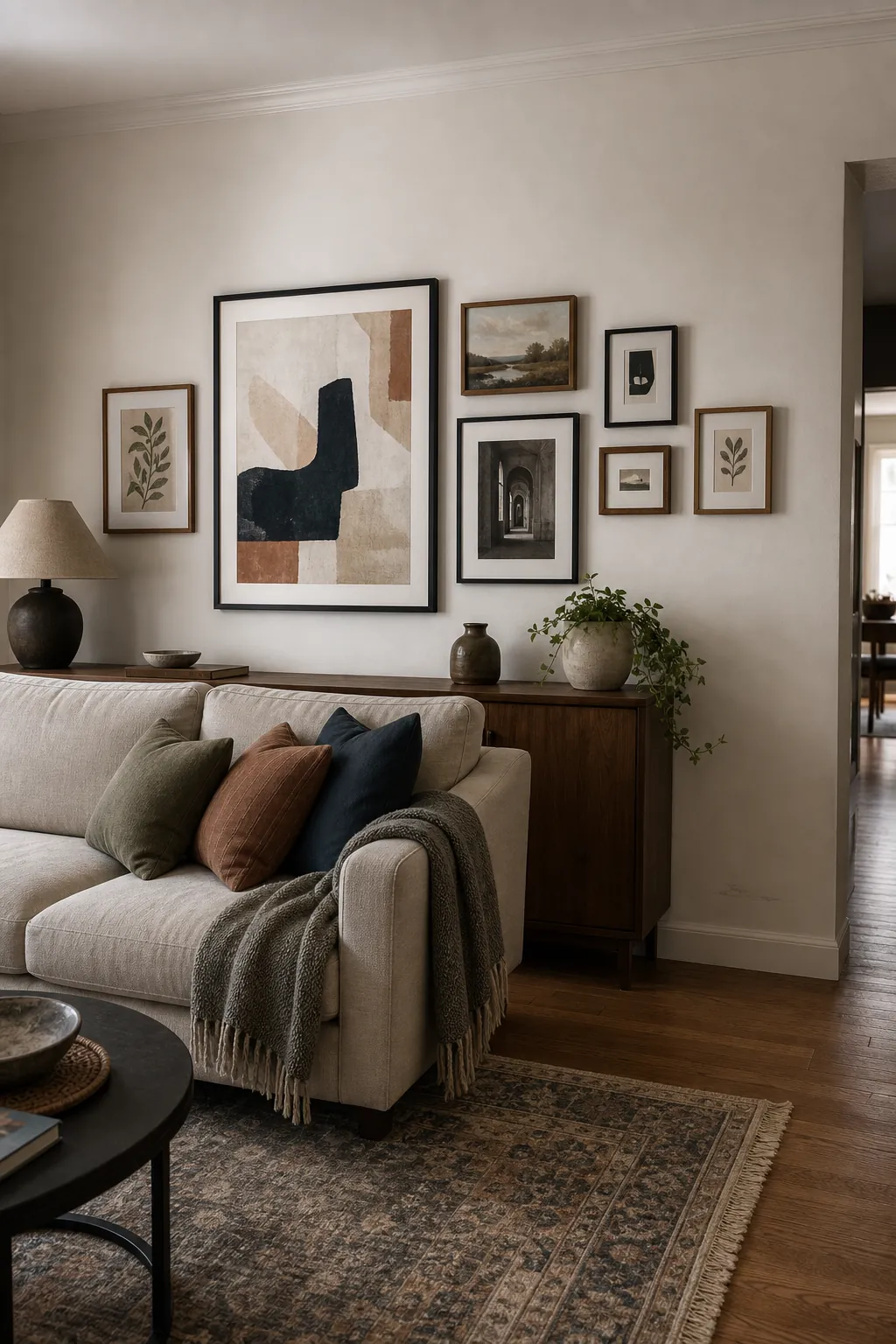
Use an Asymmetrical Gallery Wall When One Piece Looks Too Rigid
A single centered piece can look too formal when the sofa is dramatically off center. An asymmetrical wall decor grouping gives you more control because the visual weight can lean toward the empty side without losing the sofa connection.
Start with the largest frame above the sofa center, then extend smaller pieces slightly toward the open wall. Keep the grouping connected; do not scatter frames across the whole wall. The goal is a contained shape that feels intentionally offset.
- Use one anchor frame so the grouping does not look random.
- Let smaller frames step outward toward the empty side.
- Keep spacing consistent even if the outside shape is irregular.
- Repeat one frame finish if the art styles are mixed.
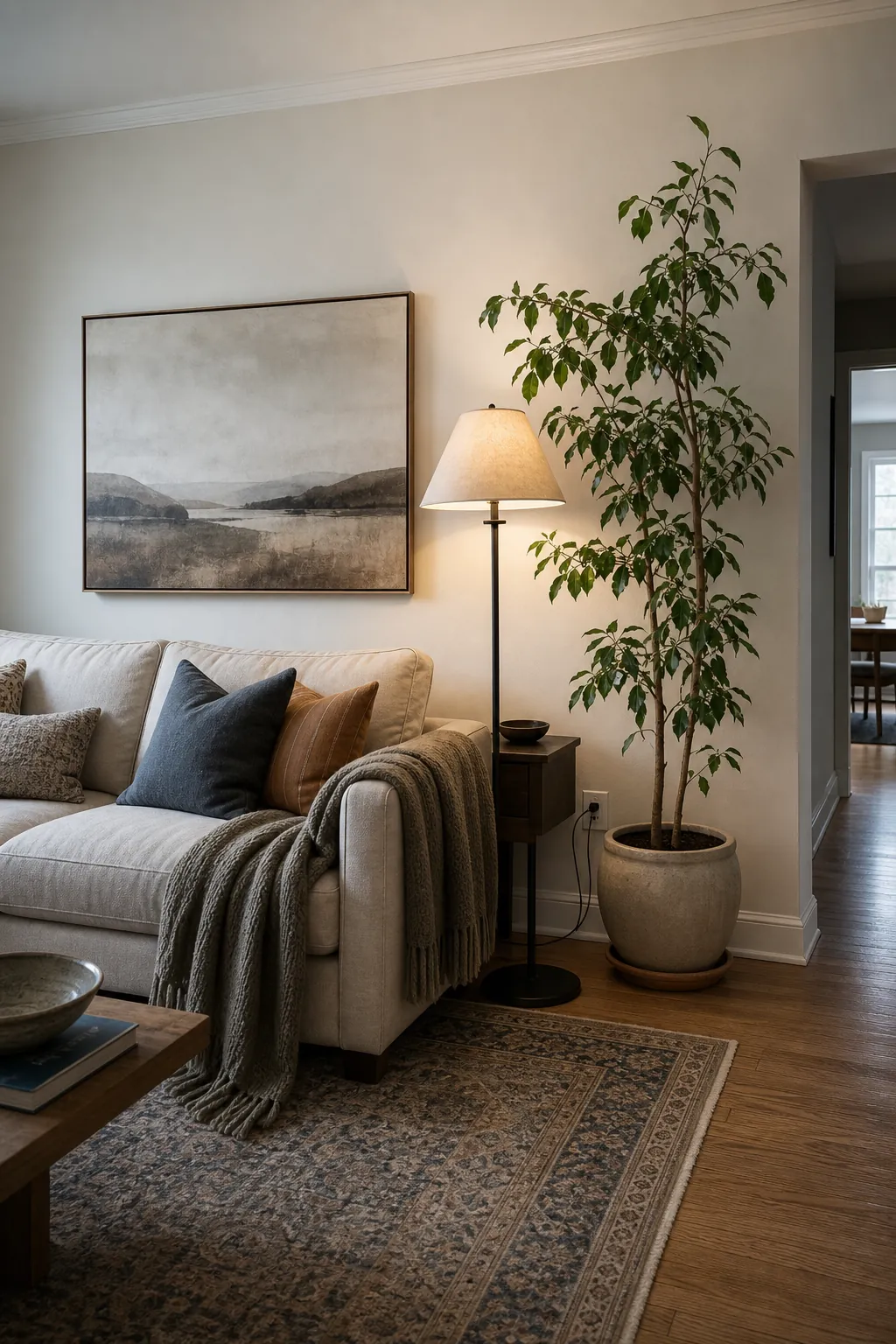
Add Height on the Empty Side Instead of Moving the Art
If the sofa is shifted because of a doorway, window, radiator, walkway, or room layout, the empty side may need vertical weight. A floor lamp, tall plant, leaning mirror, or narrow bookcase can balance the wall without making the art placement above the couch feel wrong.
This is one of the easiest living room layout fixes because it does not require rehanging every frame. Keep the art centered over the sofa, then place the tall element where the wall feels visually light. A lamp works well when the seating area needs function. A plant works well when the wall feels hard or boxy.
The key is scale. A tiny plant will not balance a large blank wall, and a huge tree can make a walkway feel cramped. Choose something tall enough to matter but shallow enough that the room still works.
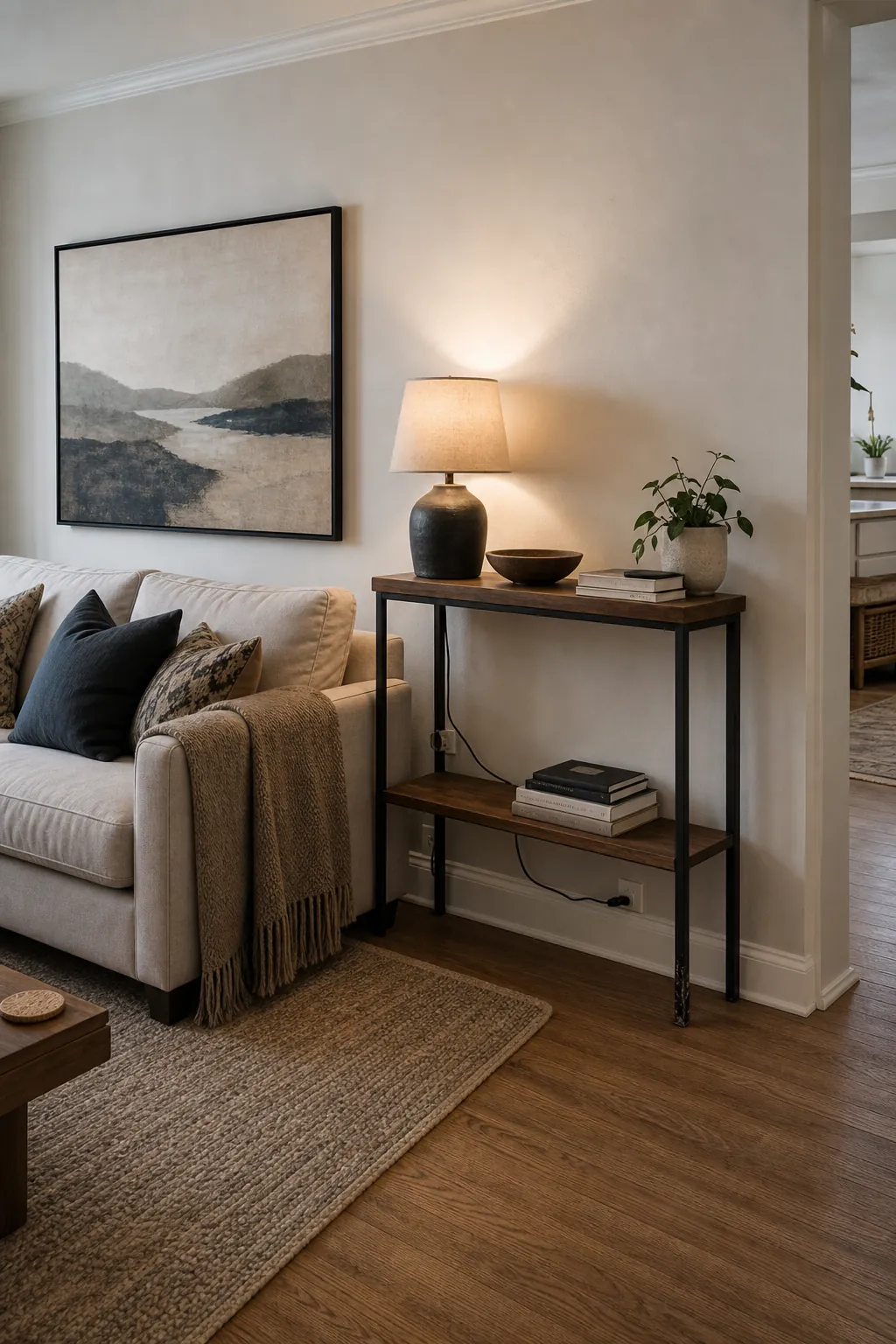
Bridge the Extra Wall Space With a Slim Console or Shelf
When the off-center gap is wide, a single plant may not be enough. A slim console, wall shelf, bench, or low cabinet can turn the extra wall into a second small zone. This works especially well when the sofa is shifted to make room for a traffic path.
Use the bridge piece to repeat materials from the sofa area. If the art has black frames, use a black lamp or small bowl on the console. If the sofa has warm wood side tables, repeat warm wood in the shelf. These repetitions make wall decor behind couch feel connected even when the sofa is not centered.
Keep the bridge shallow. Anything too deep can make the layout problem worse by blocking traffic. A narrow console with one lamp, a bowl, a stack of books, or a plant is often enough.
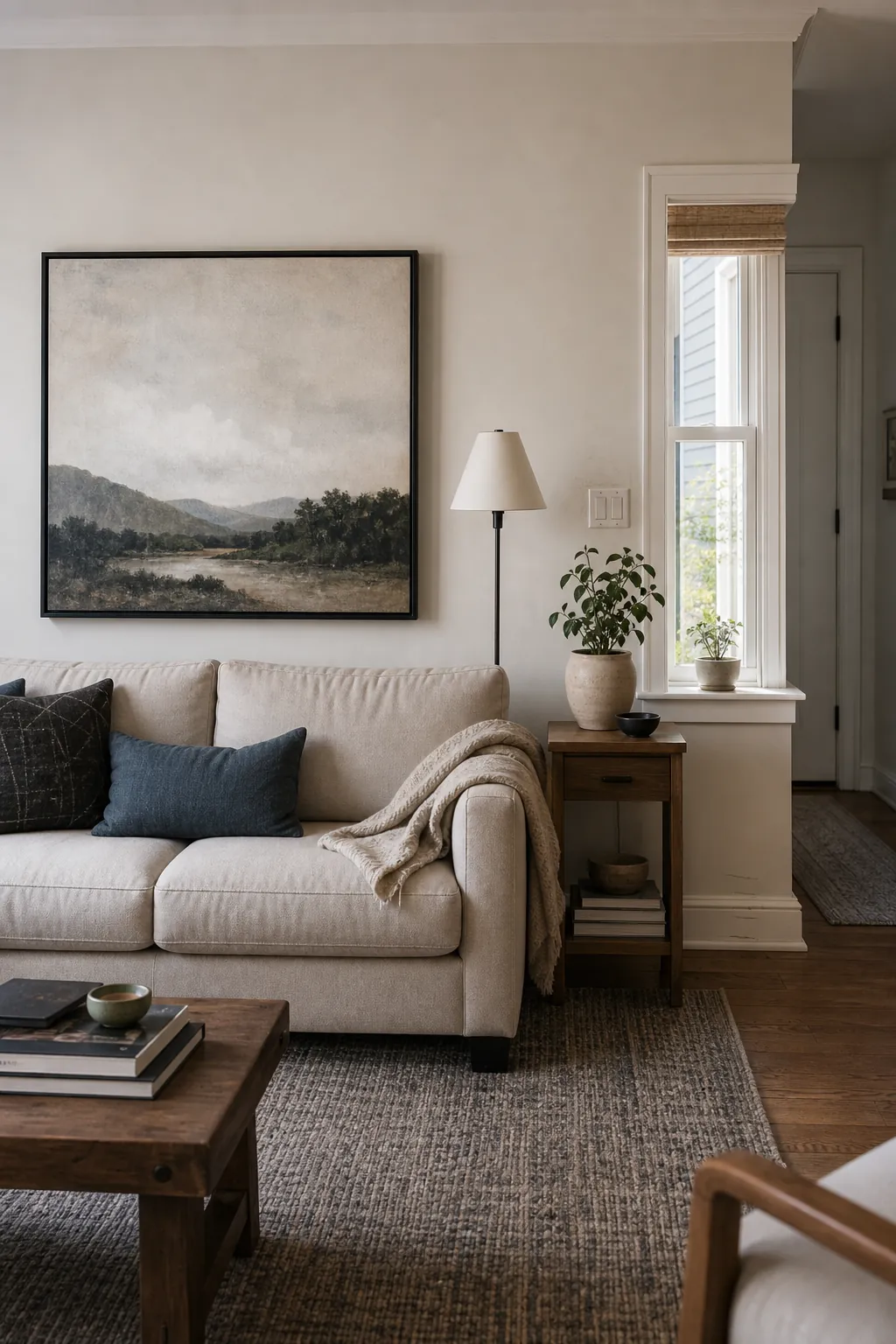
Work Around Windows, Switches, and Walkways Calmly
Sometimes the sofa is off center for a good reason. A window, doorway, thermostat, light switch, return vent, or walkway may make centered furniture impossible. Do not let those interruptions push every art decision into panic mode.
Keep art away from controls that need access. Do not hang fragile frames where shoulders brush the wall. If a window already gives one side visual weight, use simpler art over the sofa and let the window be part of the balance. The best art placement above couch often respects the room’s interruptions instead of pretending they are not there.
When in doubt, simplify. An off-center layout with one strong art piece, one balancing object, and enough blank space usually looks better than a wall packed with fixes.
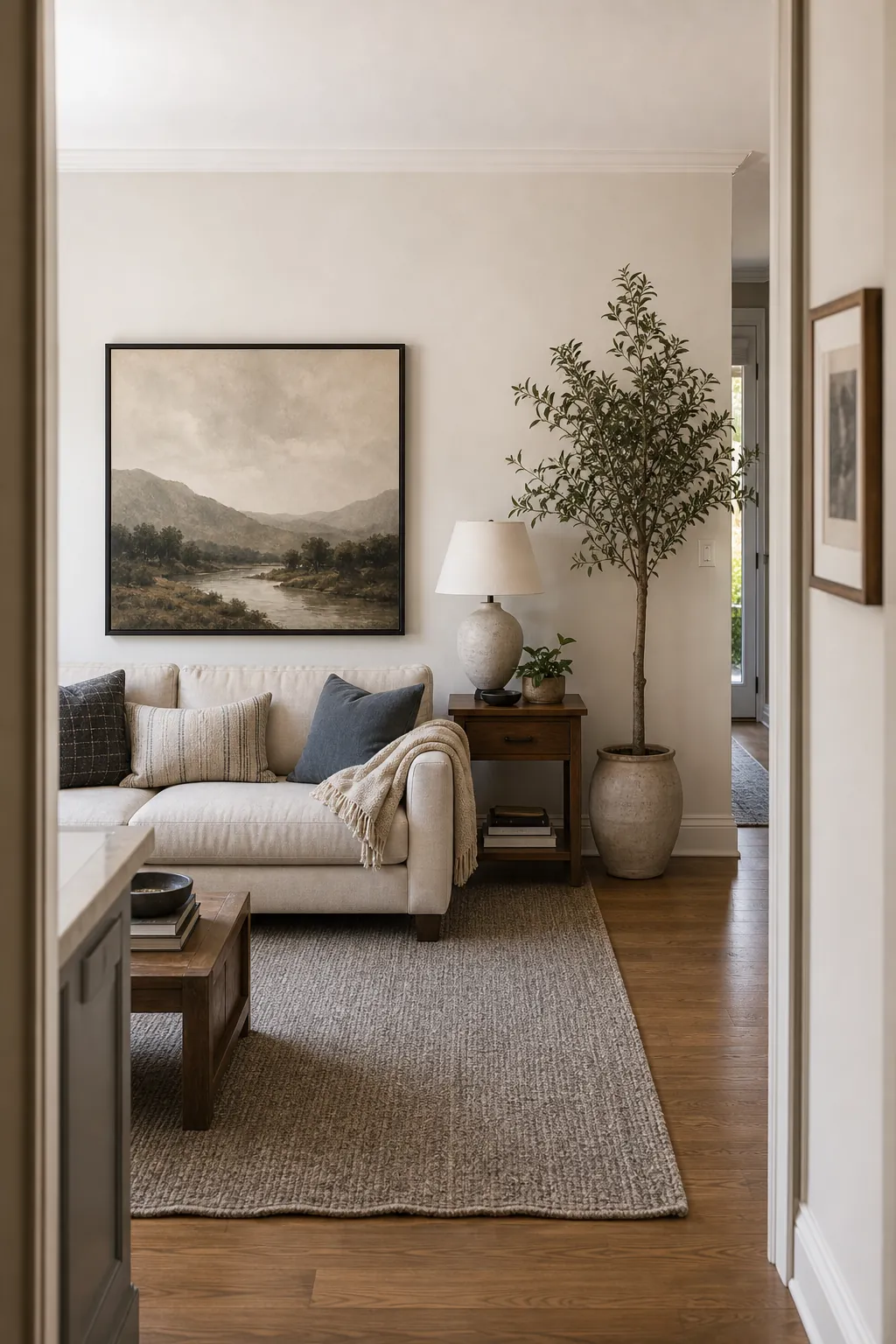
Check the Finished Wall From the Entry and the Sofa
Stand where the room is first seen. If the art looks connected to the sofa and the empty side has a reason to exist, the layout is working. Then sit on the sofa. If the decor feels comfortable at that height and does not crowd the seating area, the placement is probably right.
The final test is simple: cover the balancing object with your hand in a photo. If the wall suddenly feels lopsided, that object is doing useful work. If nothing changes, remove it or choose something with stronger scale.
For a sofa that is off center, the goal is not perfect symmetry. The goal is a wall that looks deliberate. Center what belongs to the sofa, balance what belongs to the room, and let blank space do some of the work.