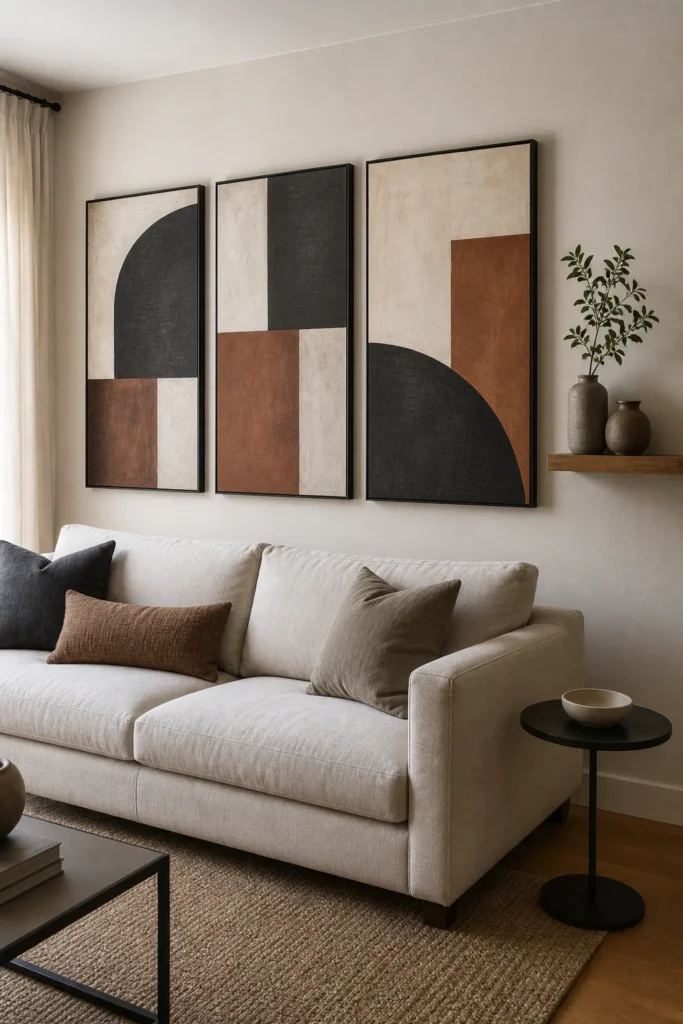
Large Wall Decor Ideas Using Three Panels, One Mirror, or Shelves
A large blank wall usually creates two opposite instincts: buy one enormous piece and hope it works, or add a little of everything until the wall stops looking empty. Both can go wrong. The wall either still feels under-scaled, or it becomes a cluttered display that fights the furniture below it.
The better approach is to choose one wall system. For most living rooms, dining areas, and open-plan spaces, the strongest large wall decor ideas are three coordinated panels, one oversized mirror, or shelves styled with restraint. Each solves a different problem.
Start With Scale, Not Style
Before choosing colors or finishes, decide how much of the wall the decor needs to occupy. A good starting point above a sofa, console, or bench is a width that feels connected to the furniture below it. If the decor is much narrower than the anchor piece, it looks timid. If it is wider than the furniture, it can feel top-heavy unless the room is intentionally dramatic.
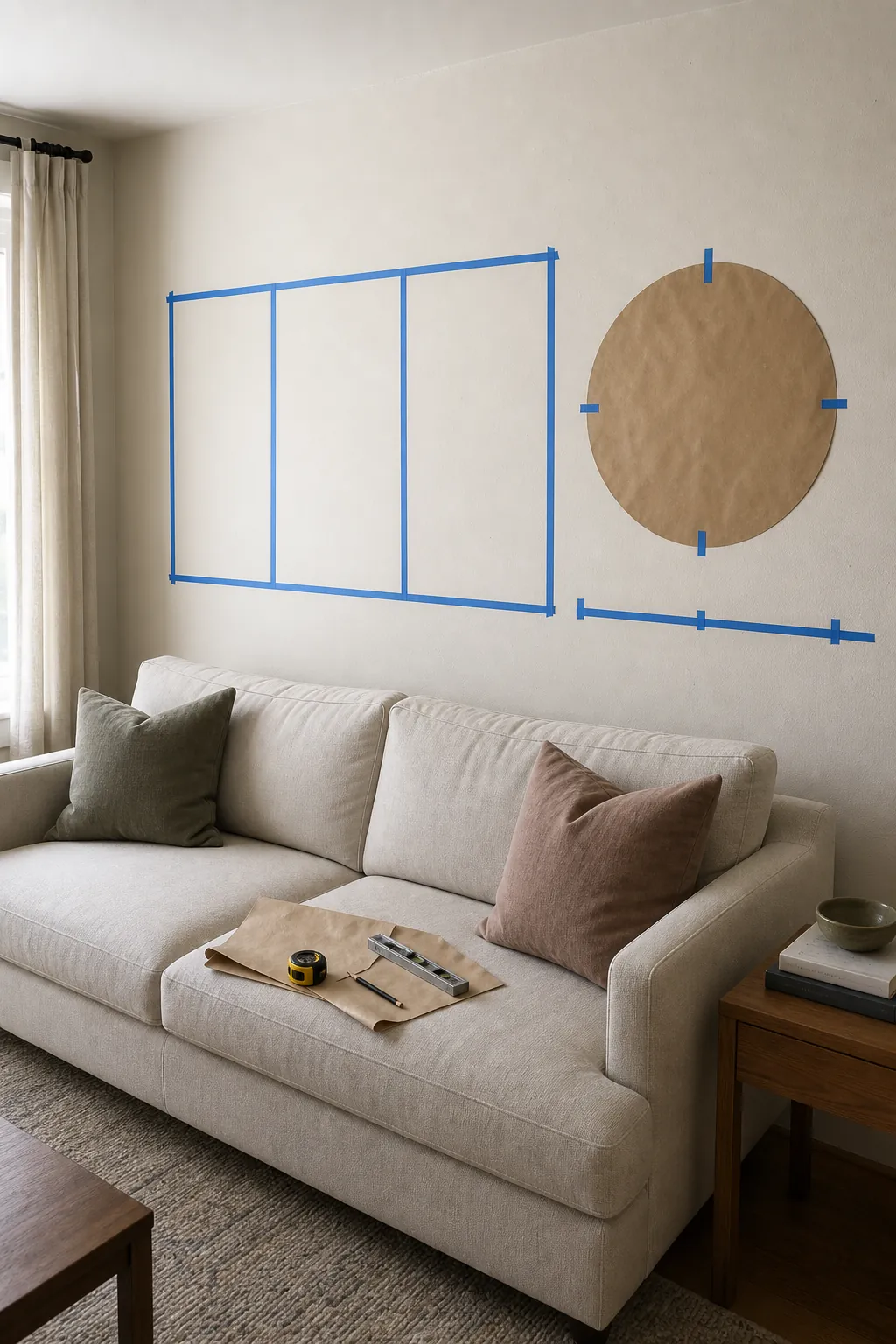
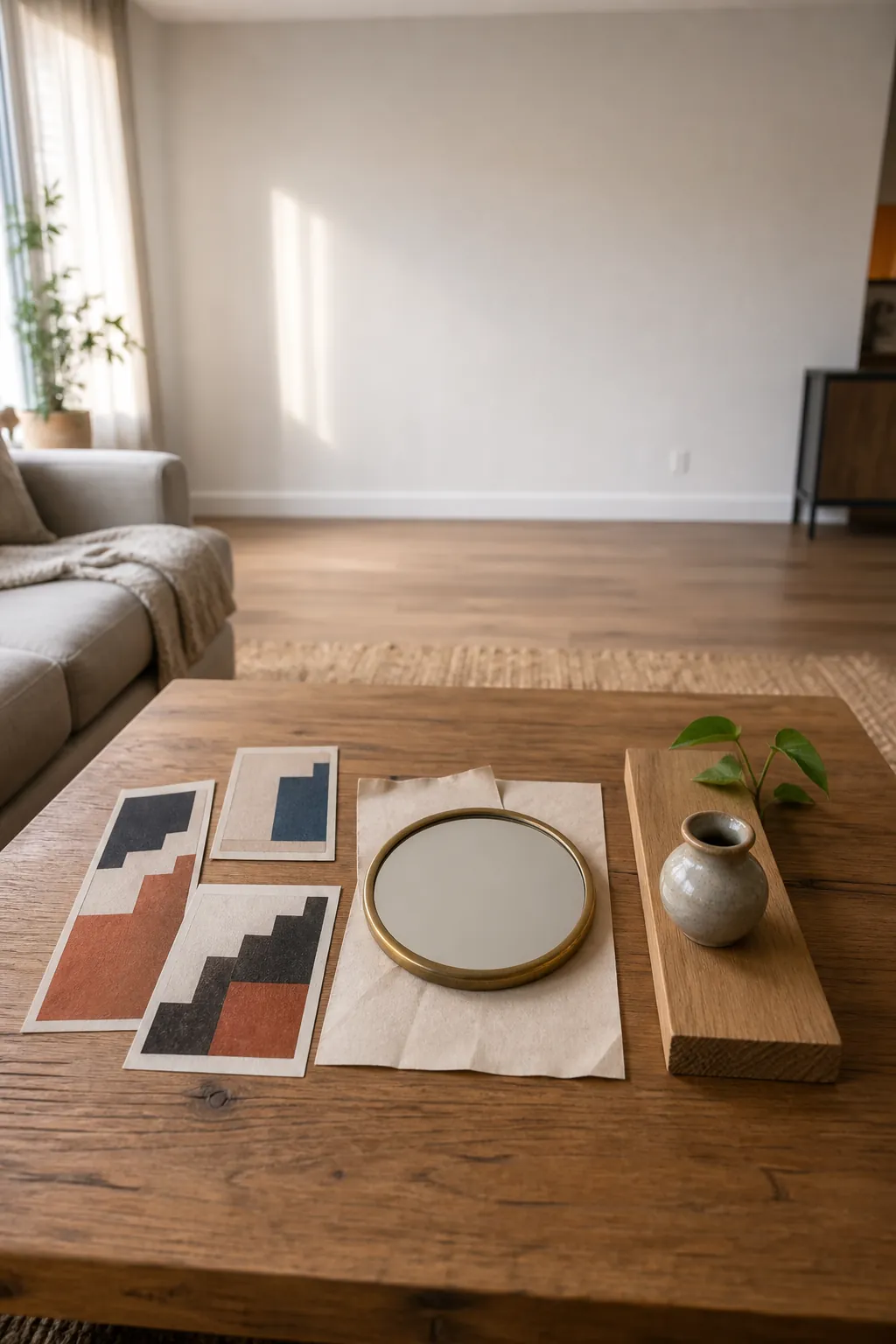
Use painter tape to test the footprint. Mark one large rectangle for three panel wall art, one circle or rectangle for large mirror wall decor, and one long band for shelves. Step back from the room entrance. The right option usually becomes obvious because it makes the wall and furniture feel like one composition.
Use Three Panels When the Wall Needs Width
Triptych wall art works well when a large wall needs a broad focal point but one huge canvas feels too expensive, too heavy, or too flat. The repeated panel rhythm stretches across the wall, while the gaps keep the arrangement lighter than one solid rectangle.
The safest version is three related pieces in the same size and frame style. They do not have to form one continuous image. In fact, related abstracts, botanical studies, or tonal photography often look more expensive because the set feels collected rather than printed as a single poster split into thirds.
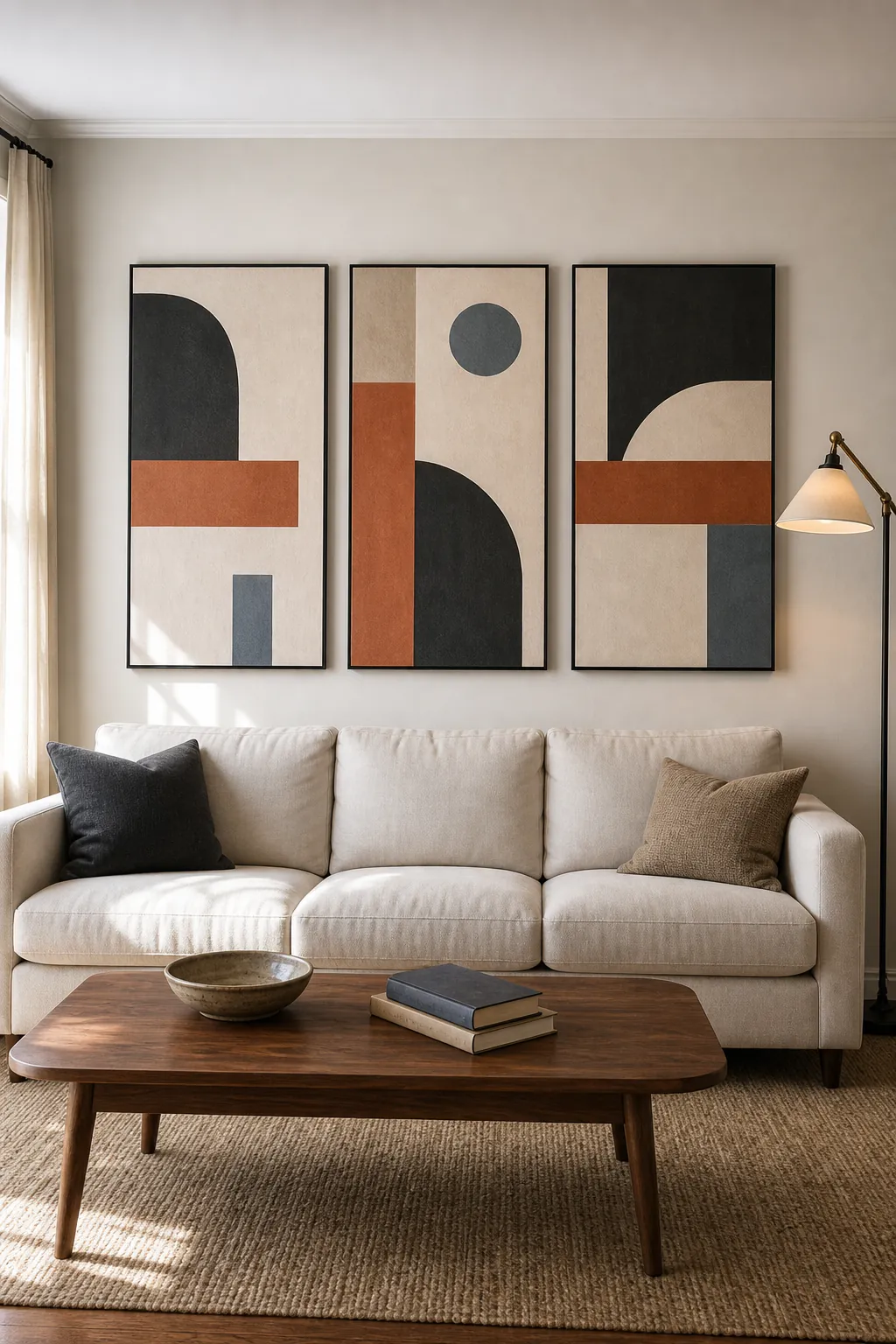
Keep spacing consistent. If the gaps are too wide, the panels become three separate small pieces. If the gaps are too tight, the set loses the airy quality that makes three panel wall art useful on a big wall. Let the furniture below set the width, then choose panel size from there.
Choose One Mirror When the Room Needs Light
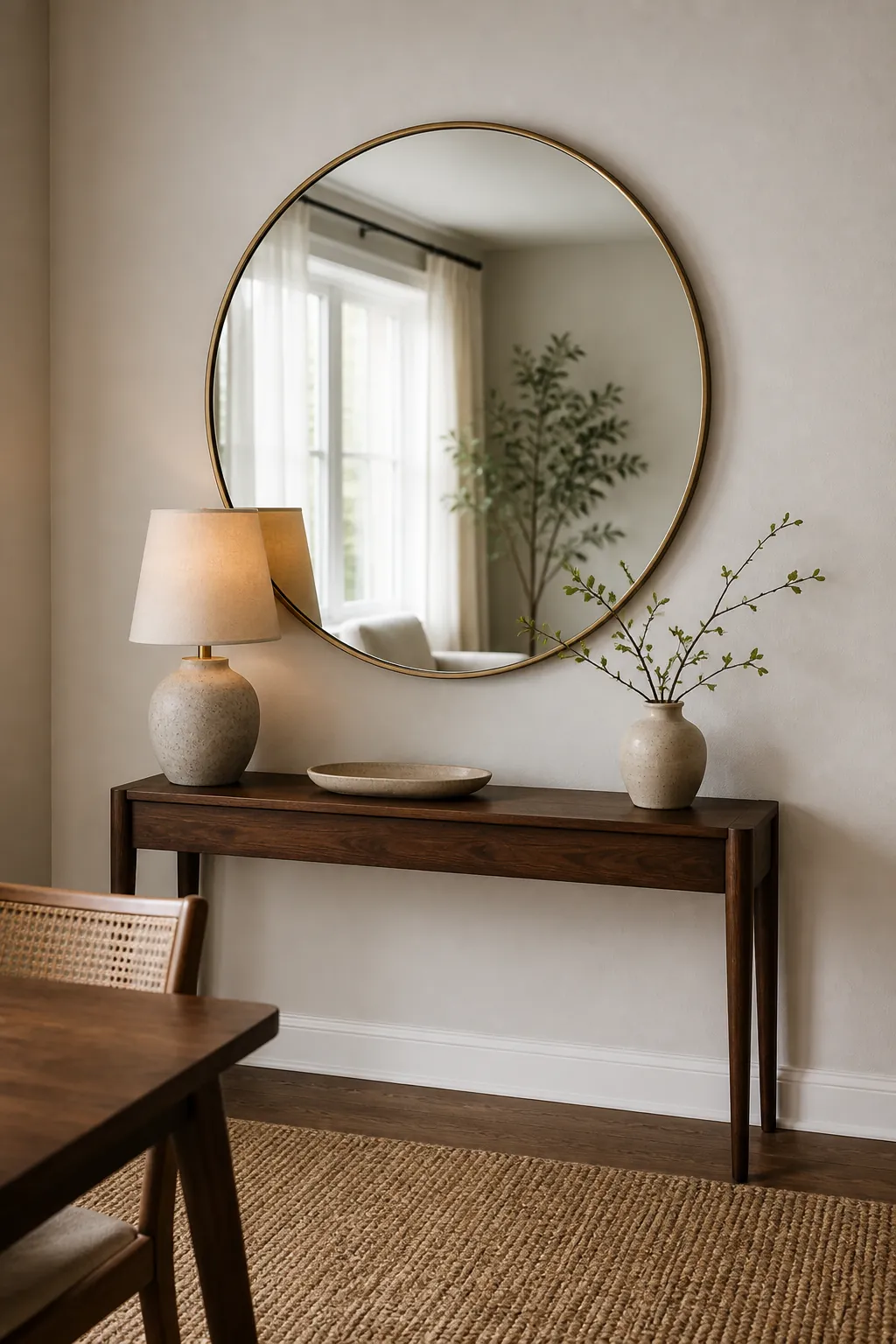
A mirror is not just a backup plan when you cannot choose art. It is the right answer when the wall feels dark, flat, or closed in. One large mirror can reflect a window, bounce light into a corner, and create depth without adding more color or pattern.
The mirror needs enough size to look intentional. A small mirror on a giant wall usually reads as leftover decor. Choose a round, arched, or rectangular mirror that has a clear relationship to the console, sofa, bench, or dining furniture below it. Then style the lower surface simply so the mirror remains the focal point.
Use Shelves When the Wall Needs Function
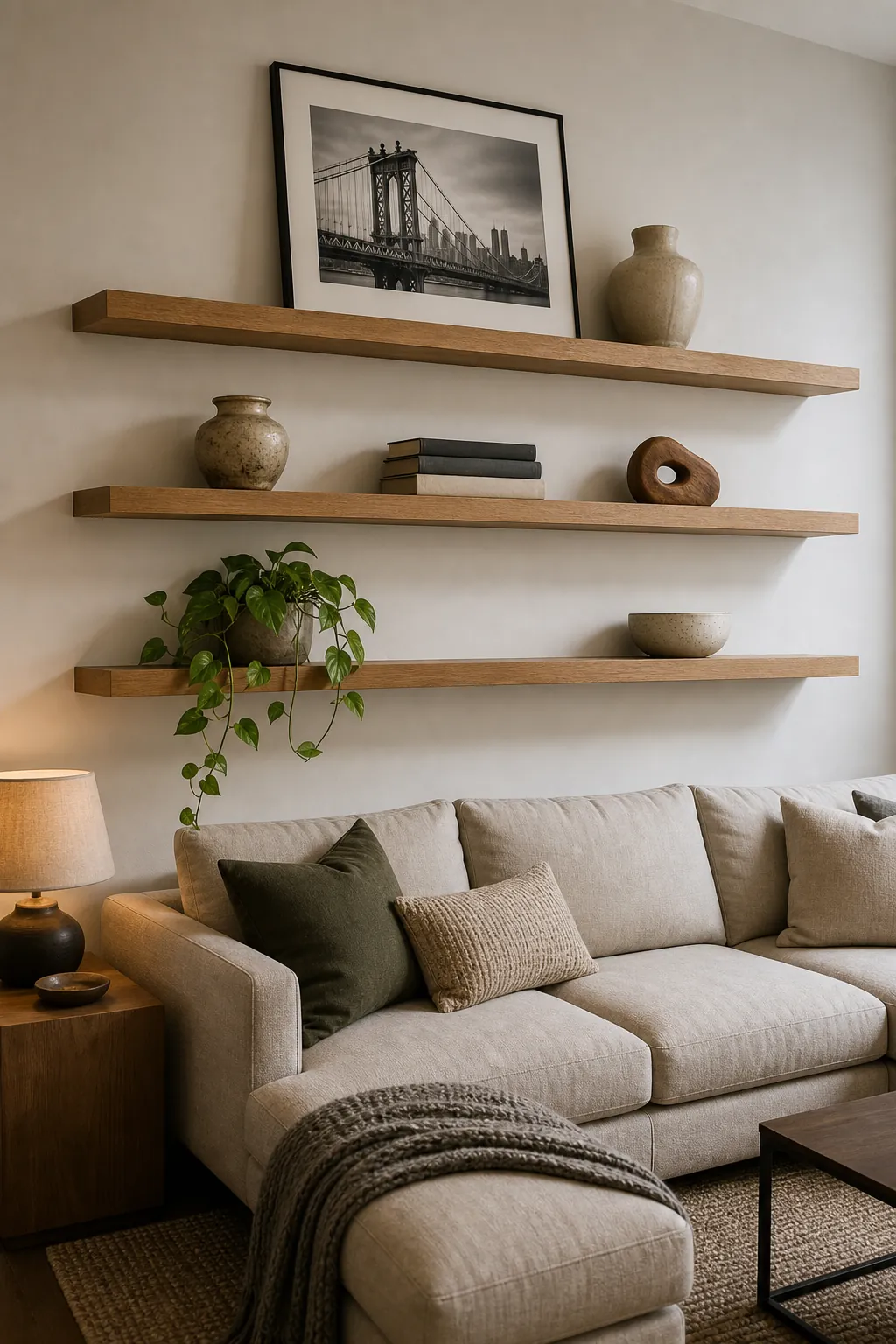
Wall shelves large wall solutions are best when the wall needs display, storage, or seasonal flexibility. They are especially useful in family rooms, dining rooms, home offices, and long walls where a single picture would feel too formal.
The risk is clutter. Treat shelves like a broad composition, not a place to use every small object you own. Mix shapes and leave empty space: one framed piece, a few books, one plant, one sculptural object, and a couple of vessels can be enough. If every inch of shelf is filled, the wall starts to look like storage.
Let Lighting and Breathing Room Finish the Wall
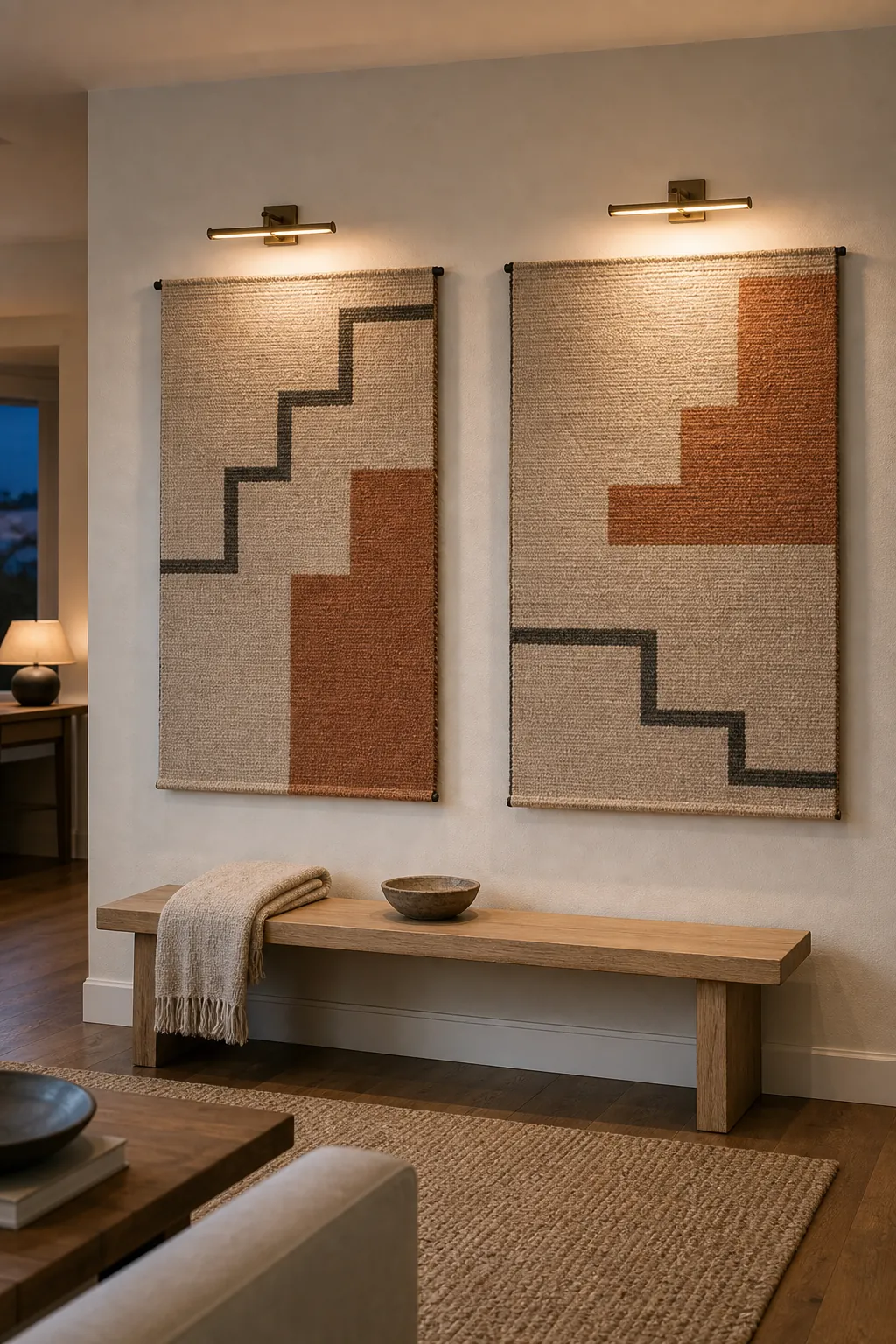
Big walls do not need to be covered from edge to edge. They need a strong focal area and enough negative space for that focal area to feel deliberate. Picture lights, sconces, a floor lamp, or simple shelf lighting can make oversized living room art feel finished without adding more objects.
If you do not want panels, a mirror, or shelves, texture can be the quiet fourth option. A pair of woven panels, one oversized textile, or a large sculptural wall hanging adds scale without the visual busyness of a gallery wall.
Quick Choice Guide
- Choose three panels when the wall needs width, rhythm, and a clear art focal point.
- Choose one mirror when the room needs light, reflection, or visual depth.
- Choose shelves when the wall needs useful display and can handle regular editing.
- Choose texture when you want scale without more frames or objects.
The best big wall design ideas are decisive. Pick one system, size it to the furniture, and leave enough wall around it for the choice to breathe.