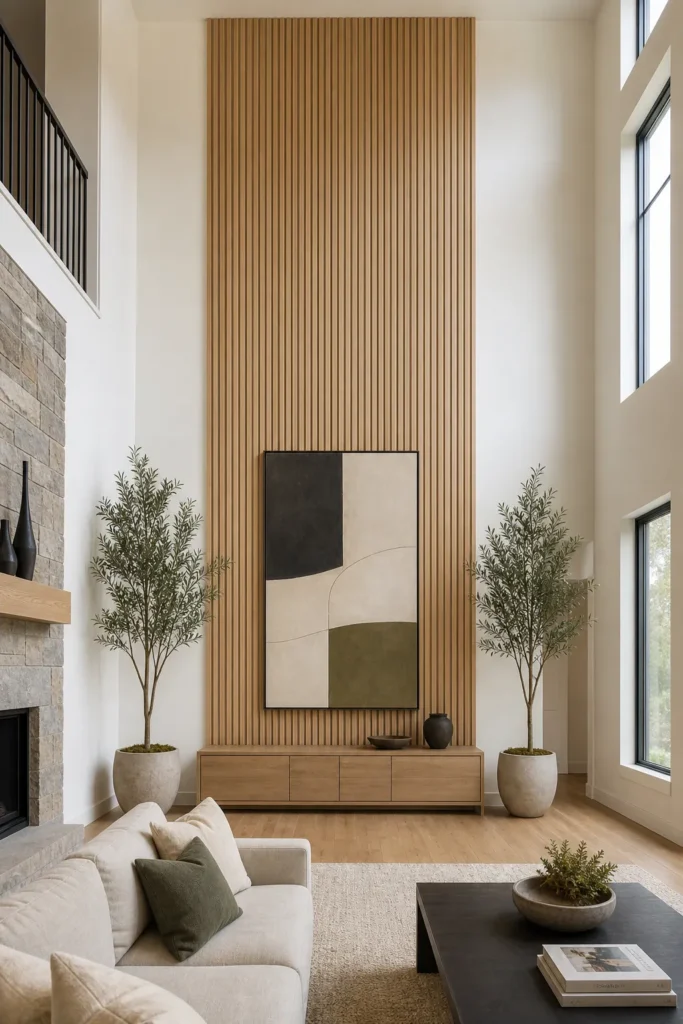
How to Decorate a 20 Foot Wall in a Great Room
A 20 foot wall can make normal decorating advice feel useless. Standard art looks small, a regular console looks undersized, and anything hung too high starts to feel disconnected from the room. The goal is not to cover all 20 feet. The goal is to make the wall feel intentional from the floor, from the sofa, and from the room entrance.
The most successful 20 foot wall decor usually has two parts: a strong lower anchor and one vertical move that respects the height. That vertical move might be large portrait art, wood slats, a controlled gallery wall, built-ins, or oversized textiles.
Divide the Wall Into Zones First
Think of the wall in three zones. The lower zone is where furniture, consoles, benches, fireplaces, and lamps live. The middle zone is where art and texture should do most of the work. The upper zone is not a storage problem; it can be quiet breathing room.
This is where many great room wall ideas go wrong. People hang small pieces high because the ceiling is high. That makes the room feel taller but not more finished. Instead, bring the main focal point down enough that it relates to seating and furniture, then use vertical lines, repeated frames, or paneling to acknowledge the height.
Use Large Portrait Art With a Serious Anchor
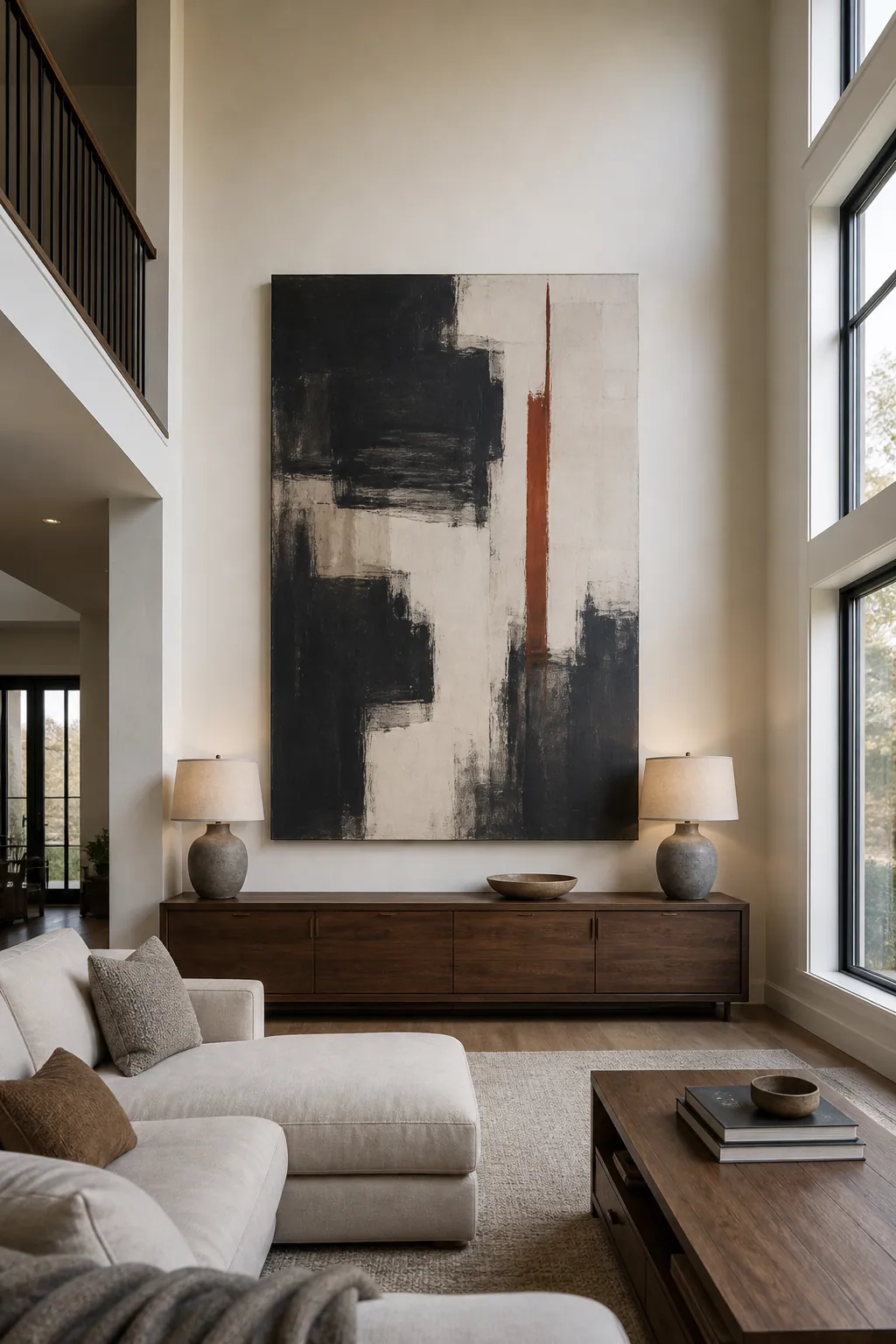
One oversized vertical piece can be enough if the lower zone supports it. A long console, wide bench, fireplace, or substantial sofa gives large portrait art something to sit above visually. Without that anchor, even expensive art can look like it is floating on a giant wall.
For a great room, choose art that has real height and quiet strength. Portrait-format abstract art, a tall textile, or a pair of stacked works can read from across the room without overwhelming the seating area. Leave wall space above the piece; the emptiness helps the art feel deliberate.
Add Architectural Height With Wood Slats or Panels
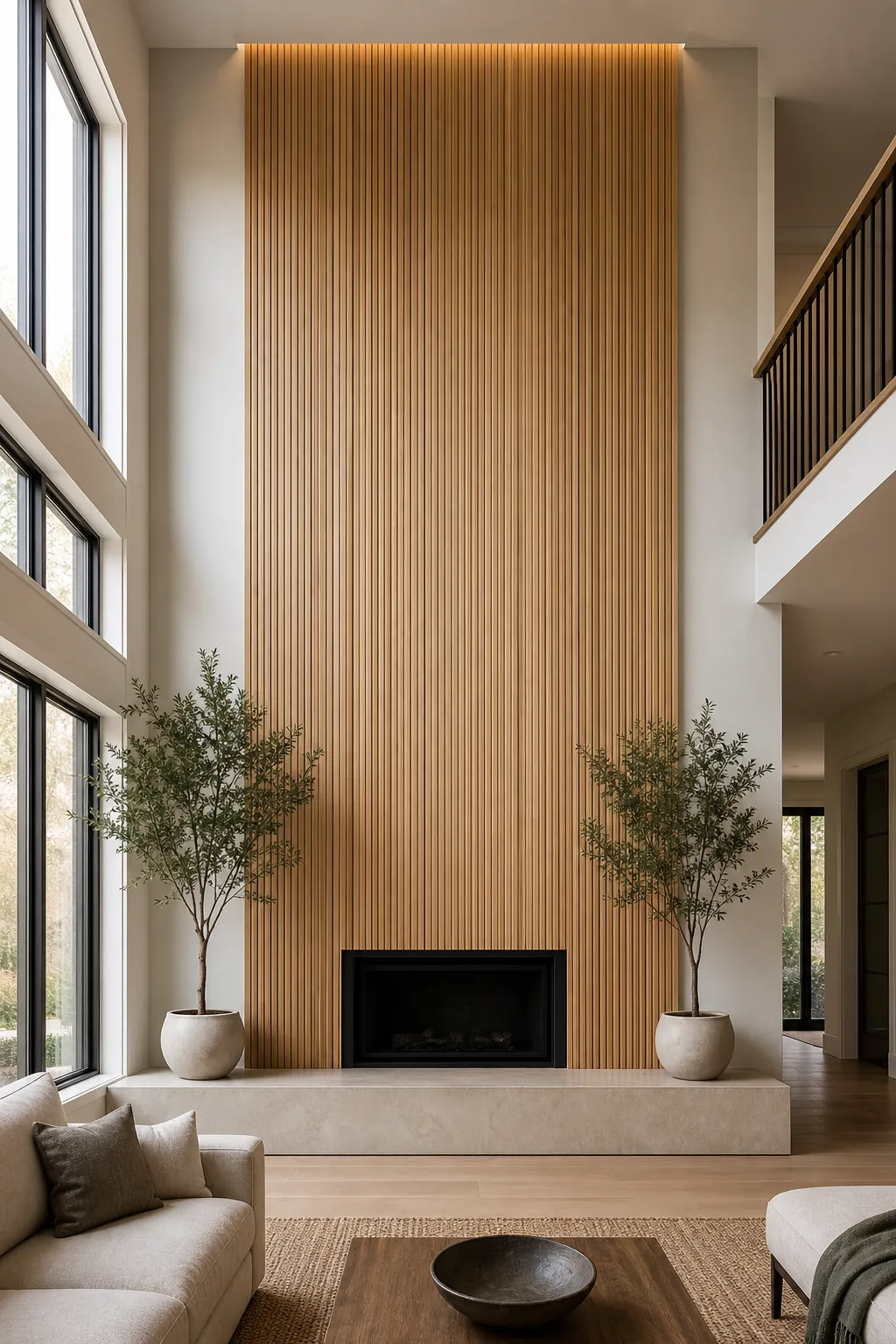
If the wall feels too plain for art alone, add architecture. Vertical wood slats, applied molding, plaster texture, or large wall panels can turn a two-story wall into a feature without relying on dozens of small objects. This is especially useful around fireplaces and TV walls where loose decor can feel distracting.
Paneling works because it creates a rhythm the full wall can carry. It also solves a common tall ceiling decor problem: the wall needs height, but the room still needs calm. Use the panel field to stretch upward, then keep furniture and accessories lower and grounded.
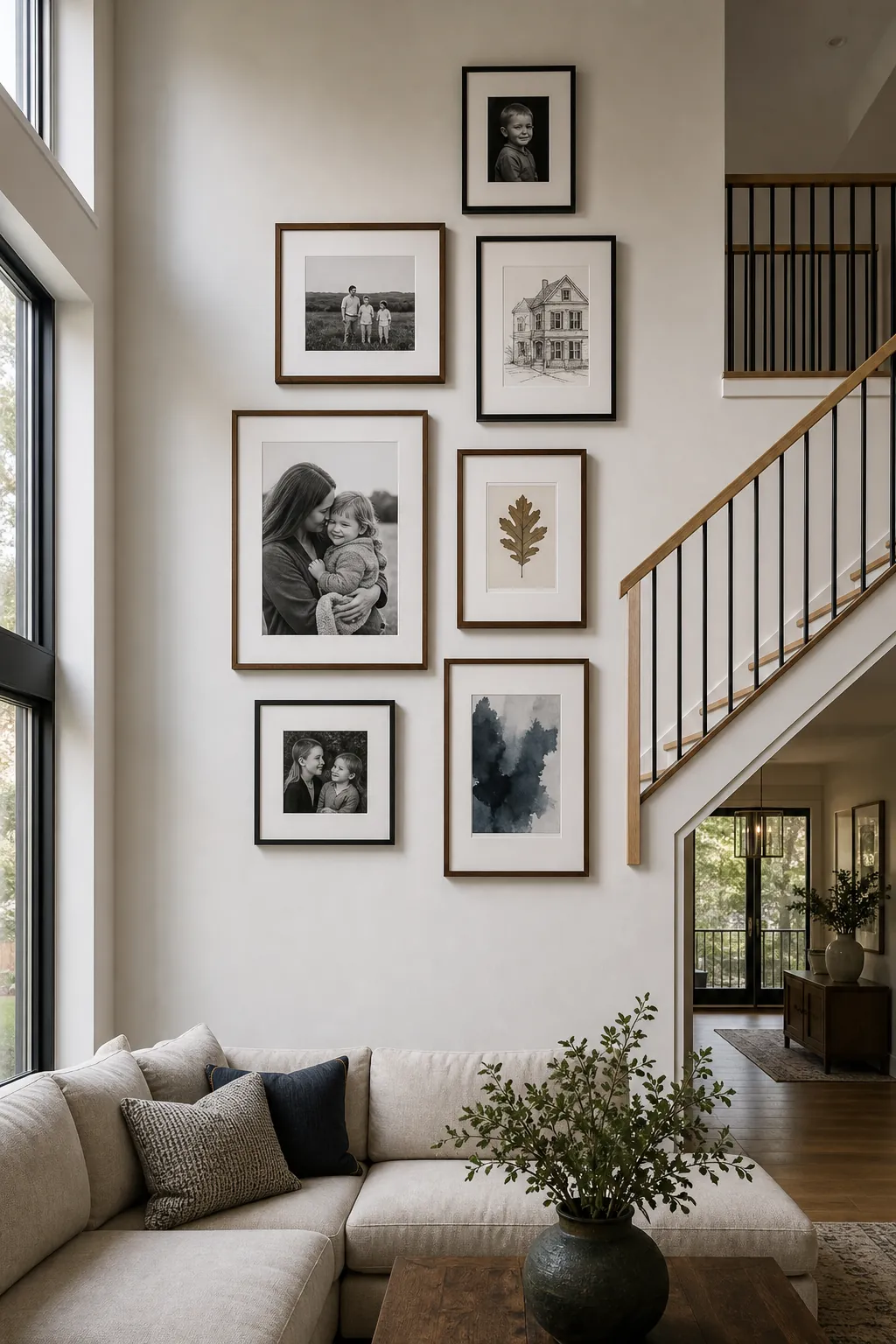
Build a Two-Story Gallery Wall With Fewer, Larger Frames
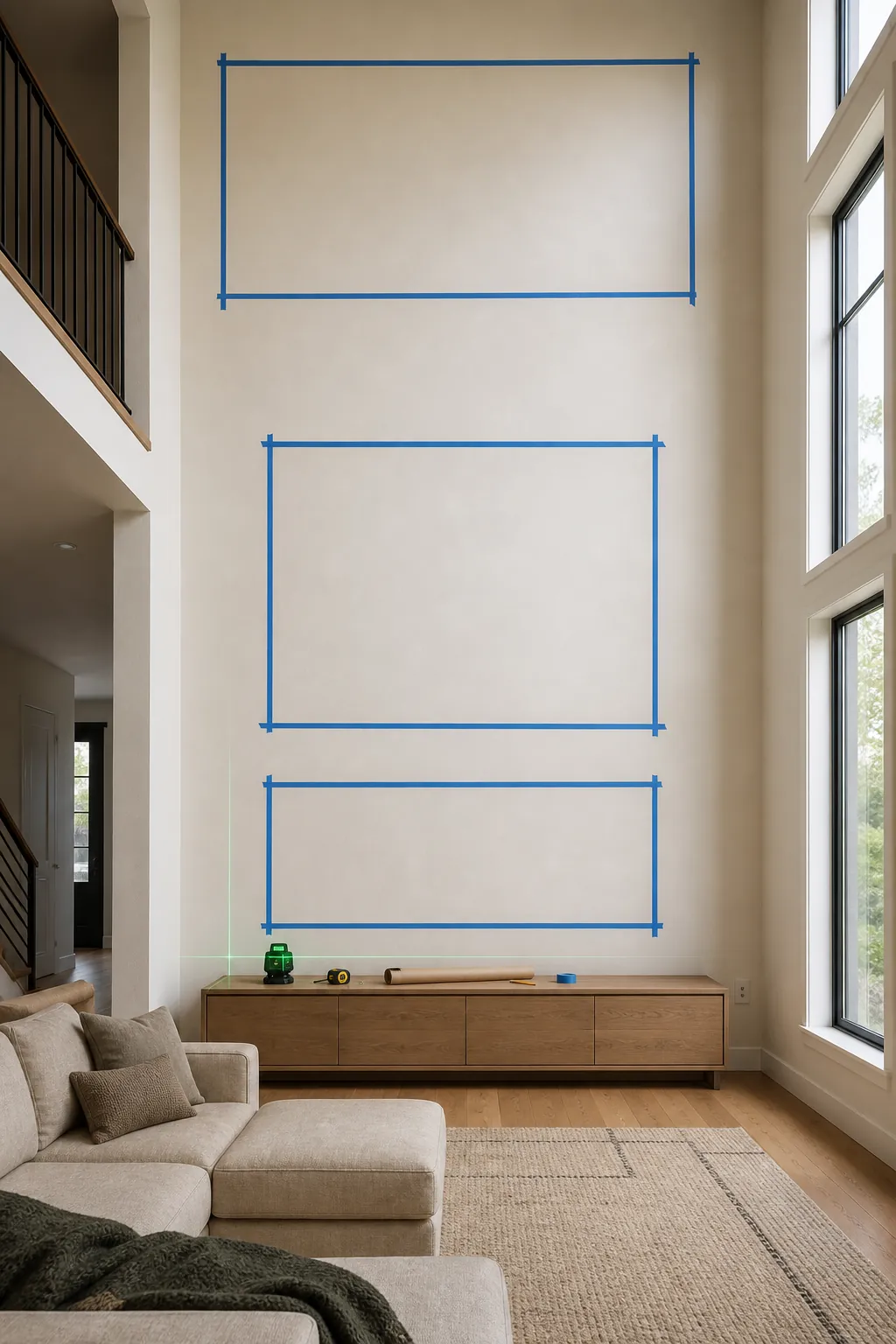
A gallery wall can work in a two-story living room, but the scale has to change. Tiny frames scattered upward make the wall look busy and still too empty. Use fewer, larger frames and let the arrangement follow a stair line, railing, fireplace edge, or furniture width.
The best two story living room wall decor feels connected to architecture. Start the first frames near the lower viewing zone, then step upward gradually. Keep open wall around the group so the gallery reads as one feature, not a patchwork attempt to fill height.
Use Built-Ins When the Wall Needs Function
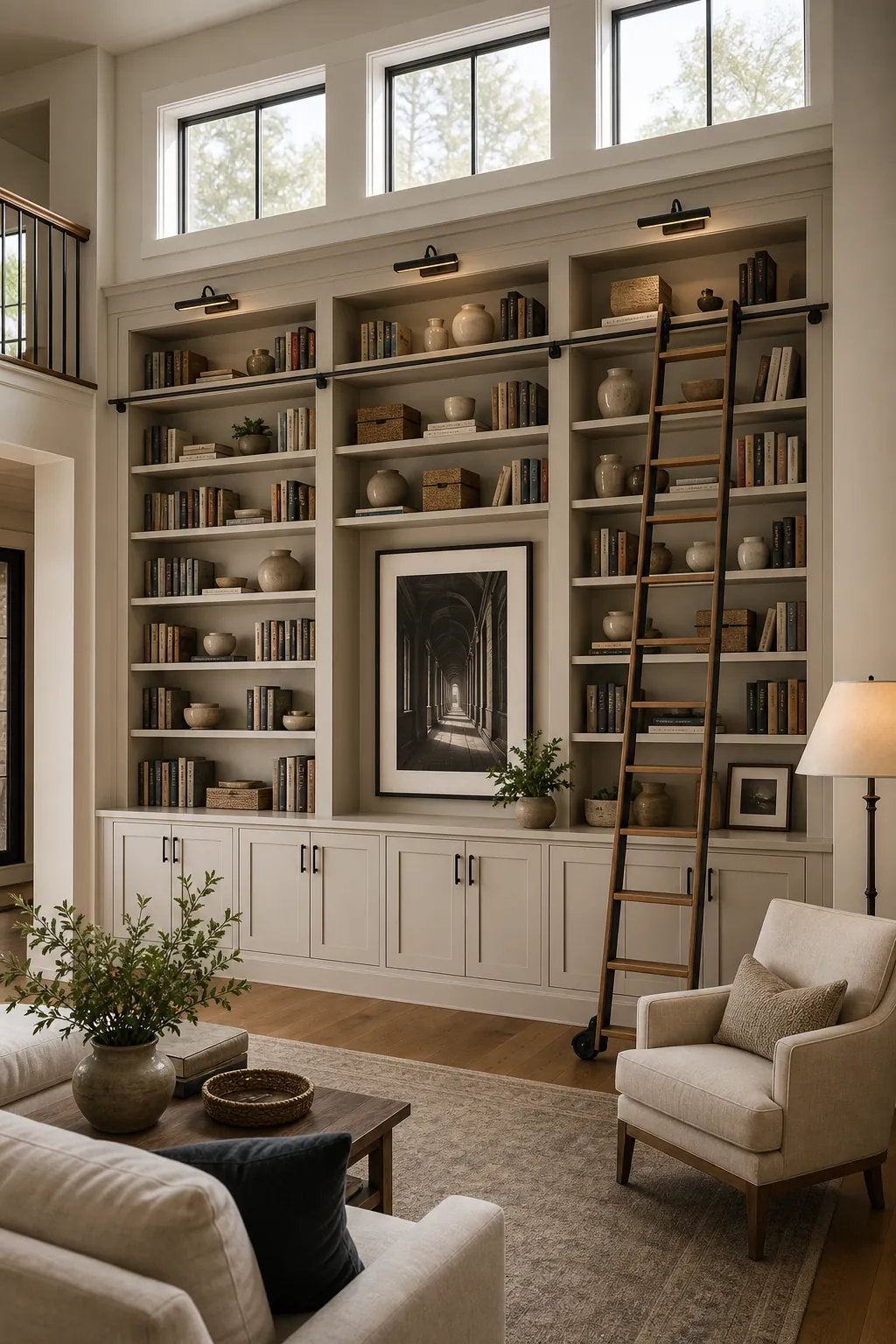
Some 20 foot walls are not asking for art. They are asking for architecture and storage. Tall built-ins, library shelves, or a media wall with closed lower cabinets can make the wall useful while giving the room the scale it needs.
This is the strongest option when a small TV stand, short console, or narrow cabinet looks lost. Go wider first, then taller. Lower cabinets ground the room, while open shelves, a ladder, or upper display areas give the eye a reason to travel upward.
Soften Echo With Oversized Textiles
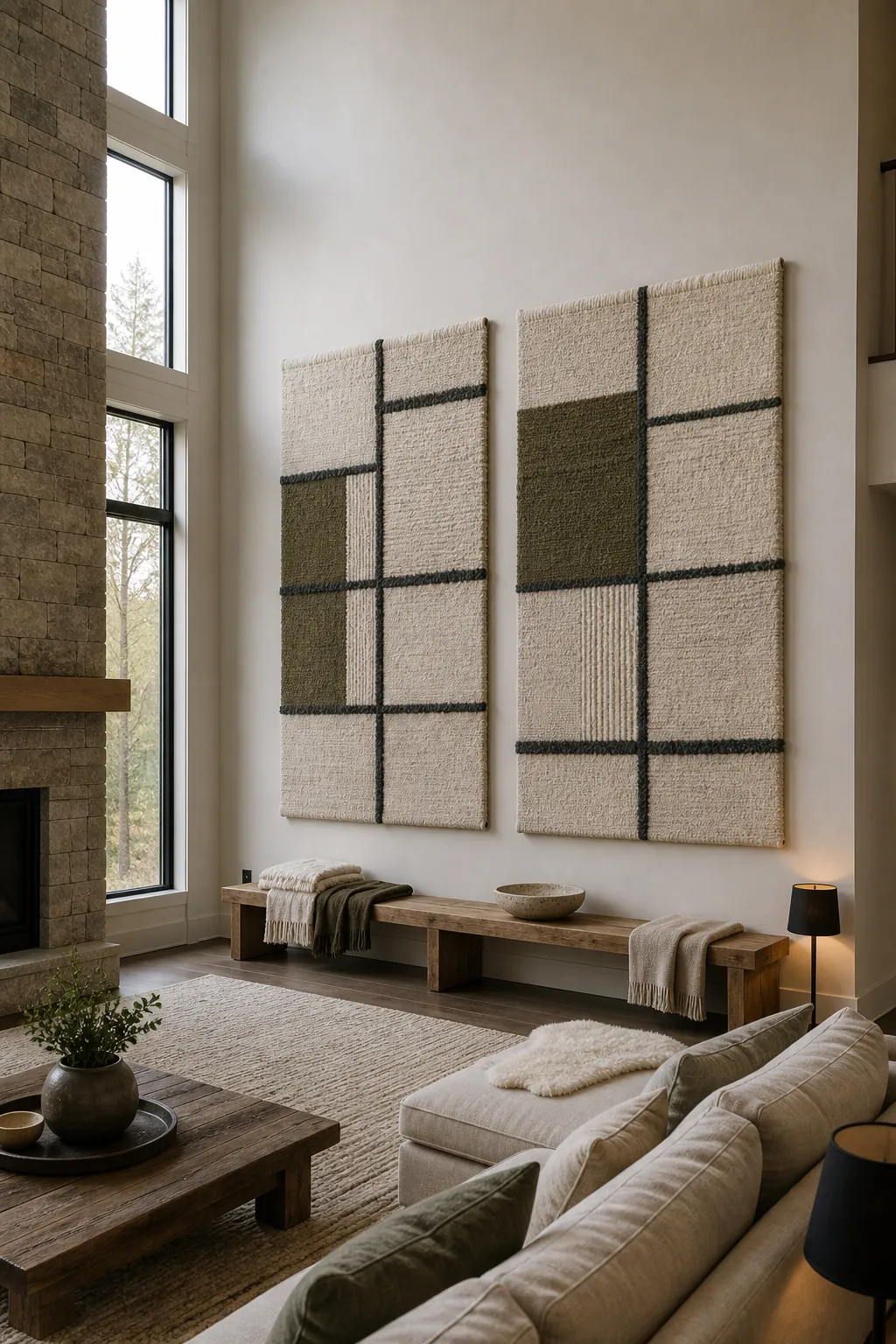
Great rooms often have another problem: sound. Tall ceilings, hard floors, and big drywall surfaces can make the space echo. Large woven panels, textile art, acoustic panels, rugs, drapery, and upholstered furniture can help the room feel warmer visually and physically.
Textiles are also useful when you want big wall art living room scale without glossy frames or heavy built-ins. Choose pieces that are intentionally oversized and hang them in the middle zone, with a bench, console, or seating below to keep the wall grounded.
Mistakes That Make a 20 Foot Wall Feel Worse
- Using furniture that is too small: a tiny console or TV stand makes the wall look even bigger.
- Hanging art near the ceiling: it pulls the eye away from the room instead of completing it.
- Adding many small pieces: clutter does not solve scale.
- Ignoring the view from other rooms: a great room wall is often seen from the kitchen, entry, or upstairs landing.
- Decorating height without grounding the floor: the lower zone needs visual weight first.
A 20 foot wall does not need 20 feet of decoration. It needs a clear lower anchor, a confident middle feature, and one vertical idea that belongs to the architecture. Once those three pieces are in place, the height feels impressive instead of unfinished.