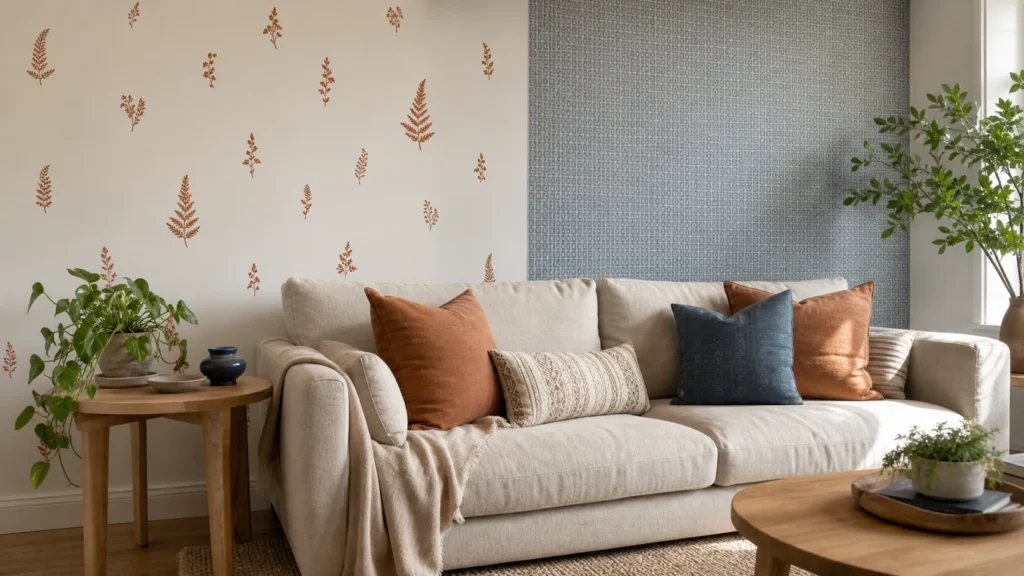
Wall Decals vs Peel-and-Stick Wallpaper: Which Is Best?
The easiest way to choose between wall decals and peel-and-stick wallpaper is to stop asking which product is universally “better.” Ask how much wall you want to change, how smooth the surface is, and how much installation risk you can tolerate. Decals win for a fast, forgiving accent. Peel-and-stick wallpaper wins when you want the wall itself to become the design.
The two products may use similar adhesive technology, yet behave differently at room scale. A small sticker can bridge a minor imperfection. A six-foot wallpaper panel can turn that imperfection into a bubble, crooked seam, or lifting edge.
The short answer: choose by coverage
| Choose wall decals when… | Choose peel-and-stick wallpaper when… |
|---|---|
| You want a focal detail or scattered motif | You want a continuous pattern or full accent wall |
| You need a beginner-friendly project | You can align tall panels and seams |
| Your budget or time is limited | You want the strongest transformation |
| You may change the design often | You expect to keep the look for years |
| You must work around awkward architecture | You have a smooth, clean, cured wall |
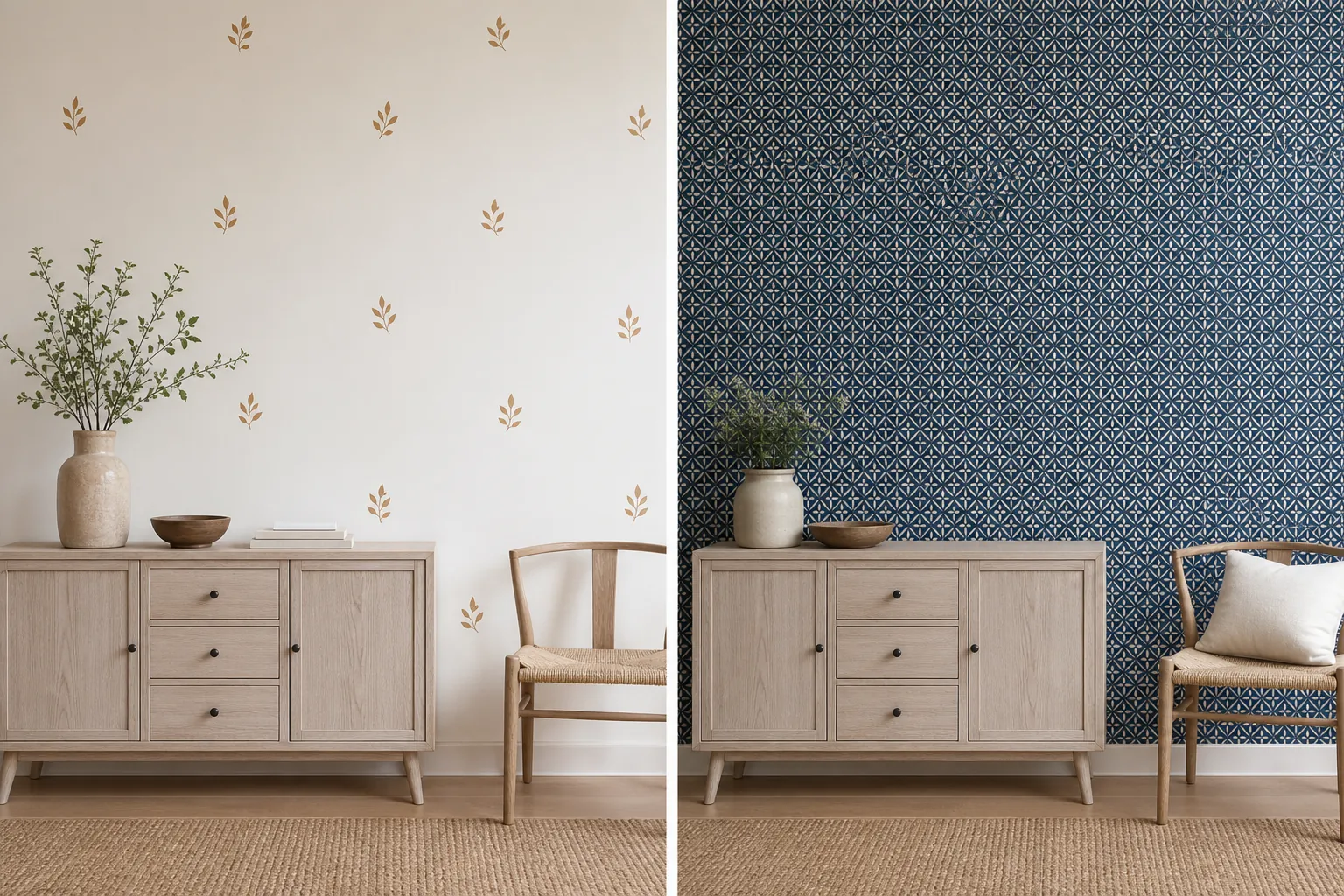
What is the practical difference?
Wall decals are individual adhesive graphics: words, silhouettes, growth charts, botanical sprigs, dots, arches, or cut shapes. The painted wall stays visible around each piece, so you control the spacing and can stop when the composition feels complete.
Peel-and-stick wallpaper is a self-adhesive wall covering supplied in rolls or panels. It creates an uninterrupted field of color, texture, or pattern. The payoff is bigger, but every strip must be plumb, patterns must match, and edges must remain attached.
A wall mural sits closer to wallpaper than to a typical decal when it arrives in panels and covers most of a wall. In a wall mural vs wall decal decision, treat the mural as the higher-planning, higher-impact option.

Wall decals are the forgiving choice
Decals work best when a room needs personality rather than total coverage. A cluster above a crib, a growth chart beside a door, an arch behind a desk, or small motifs across a playroom can make a wall intentional without creating a weekend-long project.
- Lower installation pressure: work with one manageable element at a time.
- Flexible composition: adapt spacing around outlets, shelves, and furniture.
- Lower material commitment: often economical for a small zone.
- Easier repair: replace one damaged motif instead of a whole panel.
The limitation is scale. Decals look like objects placed on the wall, not like a new surface. Poor spacing can also feel random. Before peeling the backing, tape paper templates in position or mark the outer limits with low-tack painter’s tape.
Wallpaper is the transformative choice
If you want a powder room wrapped in a block-print motif or a bedroom anchored by grasscloth-look texture, decals cannot produce the same immersive result. Peel-and-stick wallpaper changes the room’s visual proportions because pattern runs edge to edge.
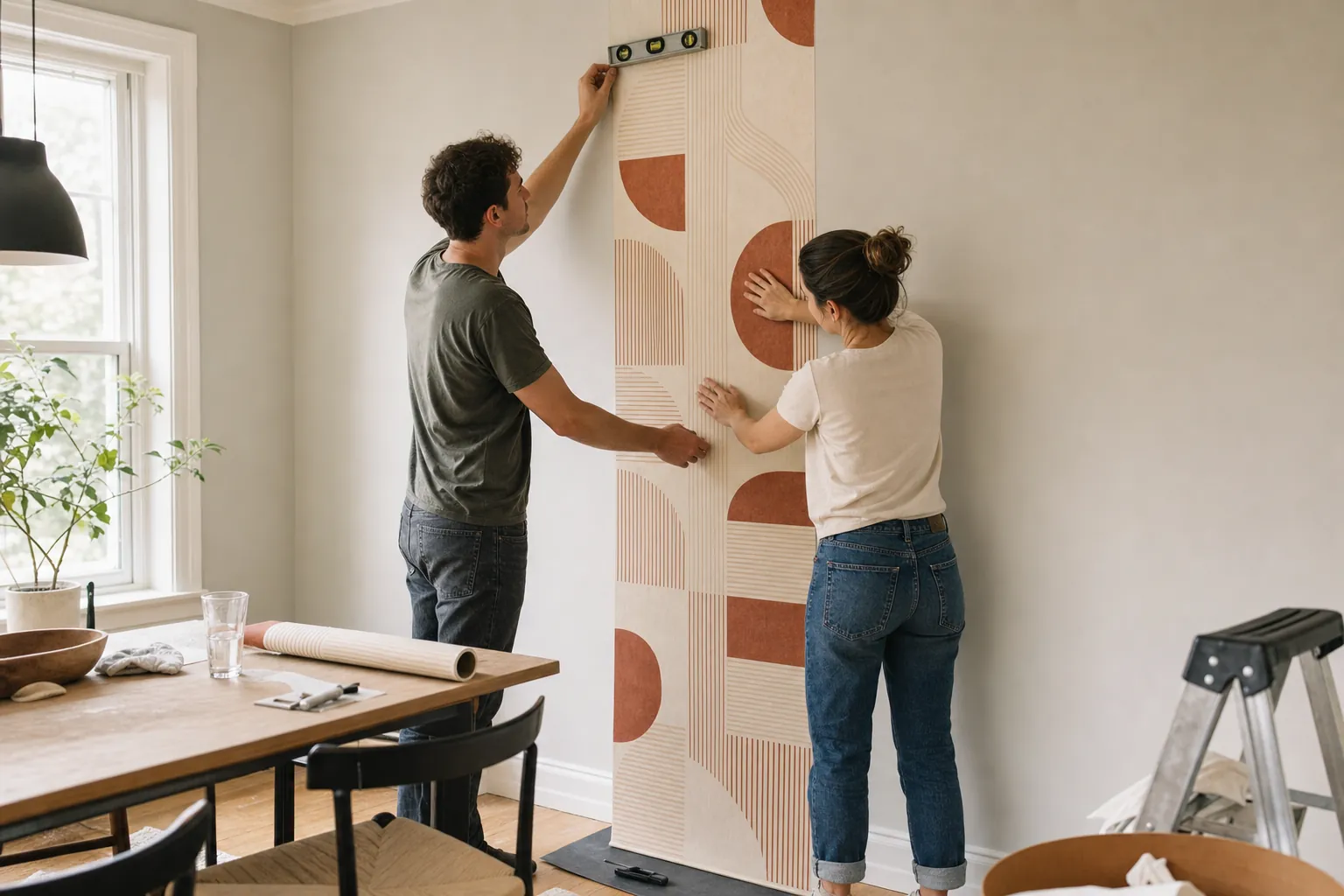
That polished result depends on preparation. Tall panels are unforgiving of dust, uncured paint, orange-peel texture, and a first strip that is slightly out of plumb. Users commonly report bubbles that return, seams that separate, or panels that lift on textured surfaces. Those are signs that adhesive and wall are not making consistent contact.
- Best continuity: ideal for full-height pattern and a true feature wall.
- Broad style range: prints can imitate linen, plaster, tile, or wood.
- More labor: measuring, leveling, matching repeats, and smoothing take patience.
- More waste risk: repeats and errors increase the quantity required.
The wall surface decides more than the label
“Removable” describes product intent, not a guarantee for every wall. Adhesive decor performs best on smooth, clean, sealed, sound paint. It is riskier on fresh paint, flat or chalky finishes, loose paint, unprimed drywall, damp walls, and pronounced texture.
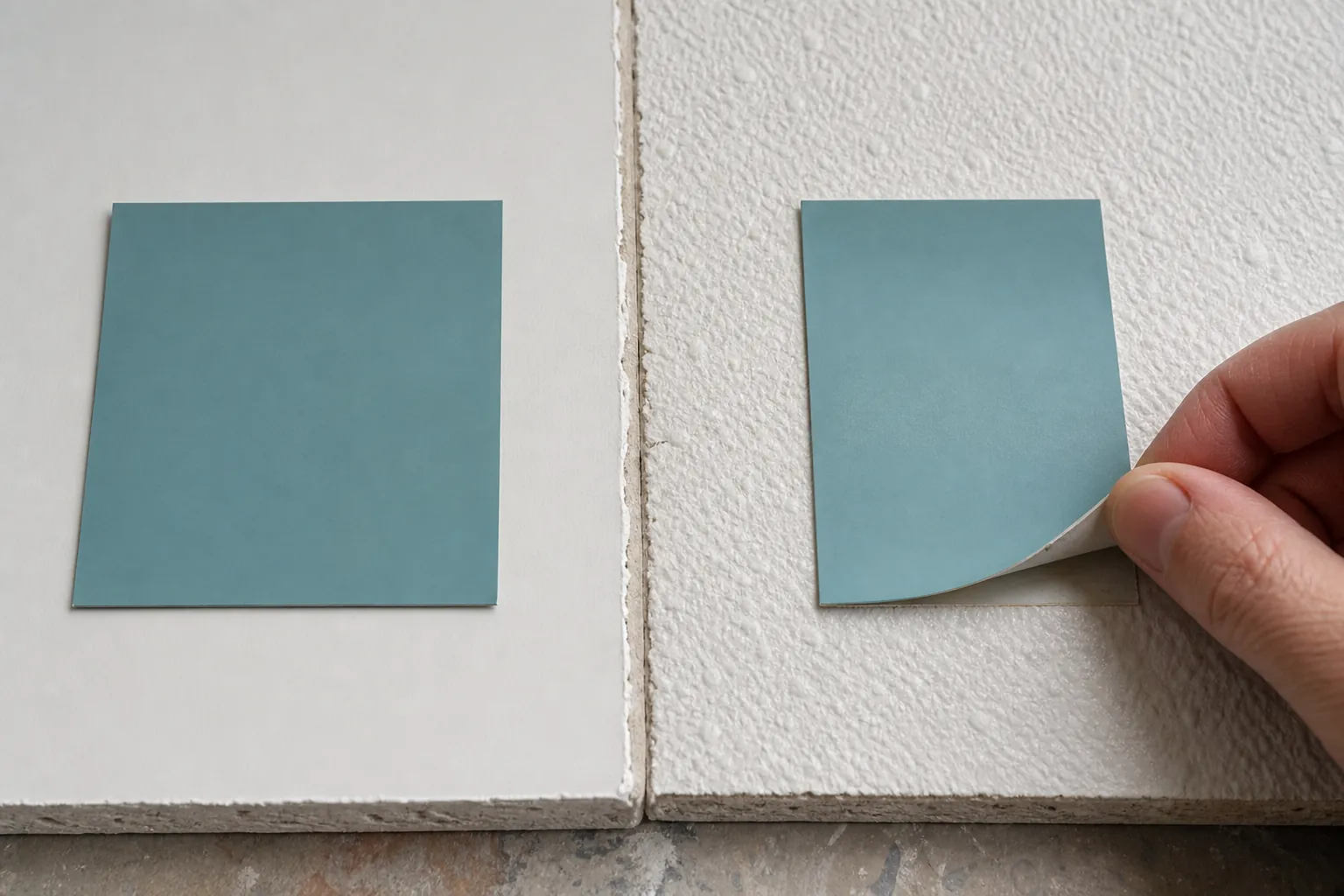
Buy a sample and place it inconspicuously using the maker’s instructions. Leave it through normal temperature and humidity changes, then remove it slowly. Check for paint transfer, residue, edge curl, and weak adhesion. This test is more useful than a generic “renter friendly wallpaper” claim because paint age, primer, finish, moisture, and texture vary.
For newly painted walls, follow both manufacturers’ cure-time guidance. Dry to the touch is not fully cured; applying adhesive too soon raises the chance of lifting paint later.
Which is safer for renters?
For the cautious renter, a small set of quality removable decals on a tested wall is the lower-risk choice. There is less adhesive area and less pulling force during removal. Peel-and-stick wallpaper can still be a useful removable wallpaper alternative, but full-wall coverage puts far more adhesive against the paint.
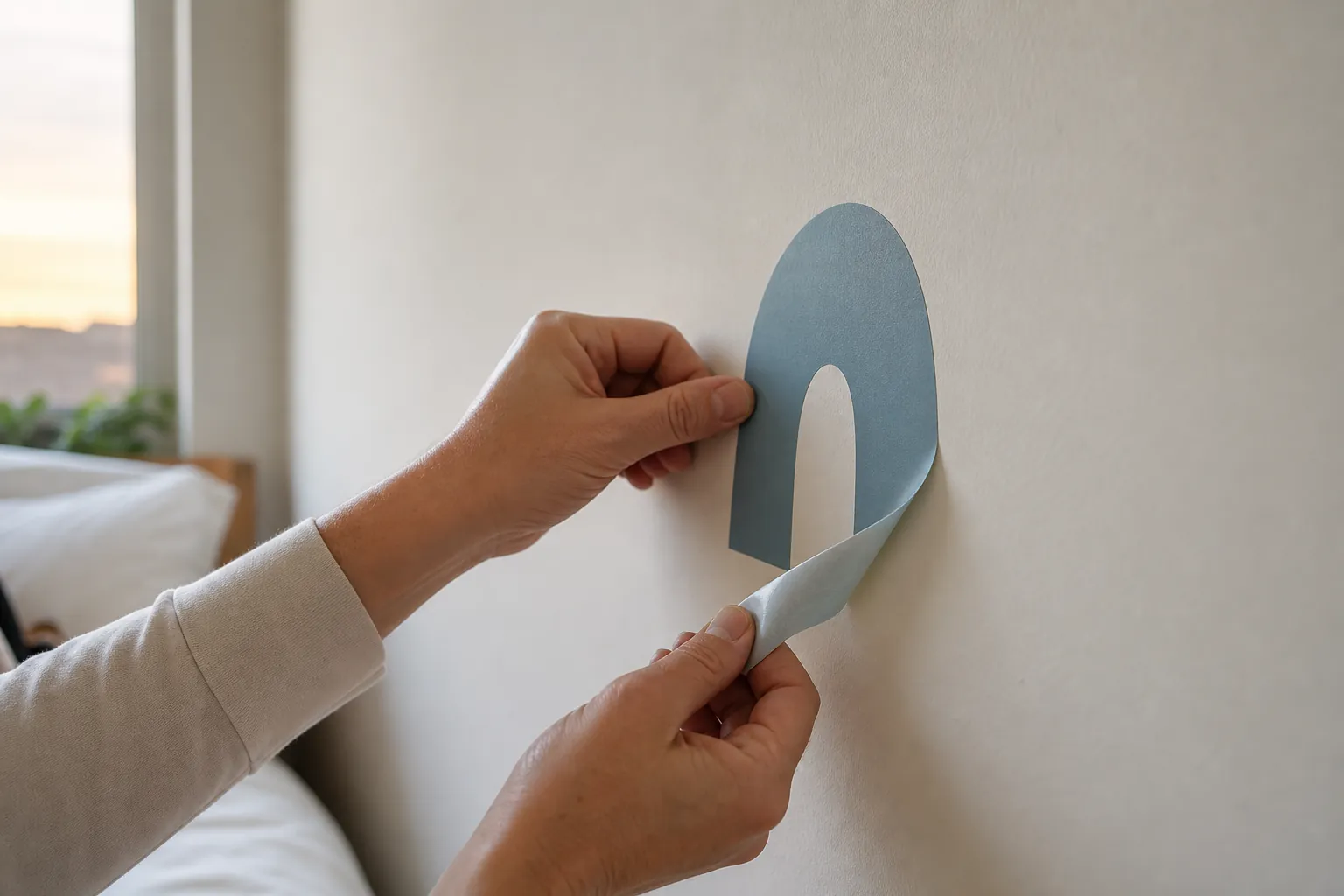
Get written permission if your lease requires it. Keep the instructions and a spare sample. At move-out, do not yank the material away. Warm a small area gently if the manufacturer permits it, peel slowly at a low angle, and pause if paint begins to lift.
Cost is more than price per roll
Compare the finished project, not the package price. Wallpaper calculations include wall dimensions, pattern repeat, trimming allowance, and a spare panel. A bargain roll becomes expensive if color varies between lots or one misaligned strip must be replaced.
Decals are easier to phase. Start with one focal grouping and add later, although ordering together is wise when exact color consistency matters. For a nursery corner or entry vignette, decals often deliver more impact per dollar. Across a large uninterrupted wall, wallpaper generally looks more deliberate.
A room-by-room decision guide
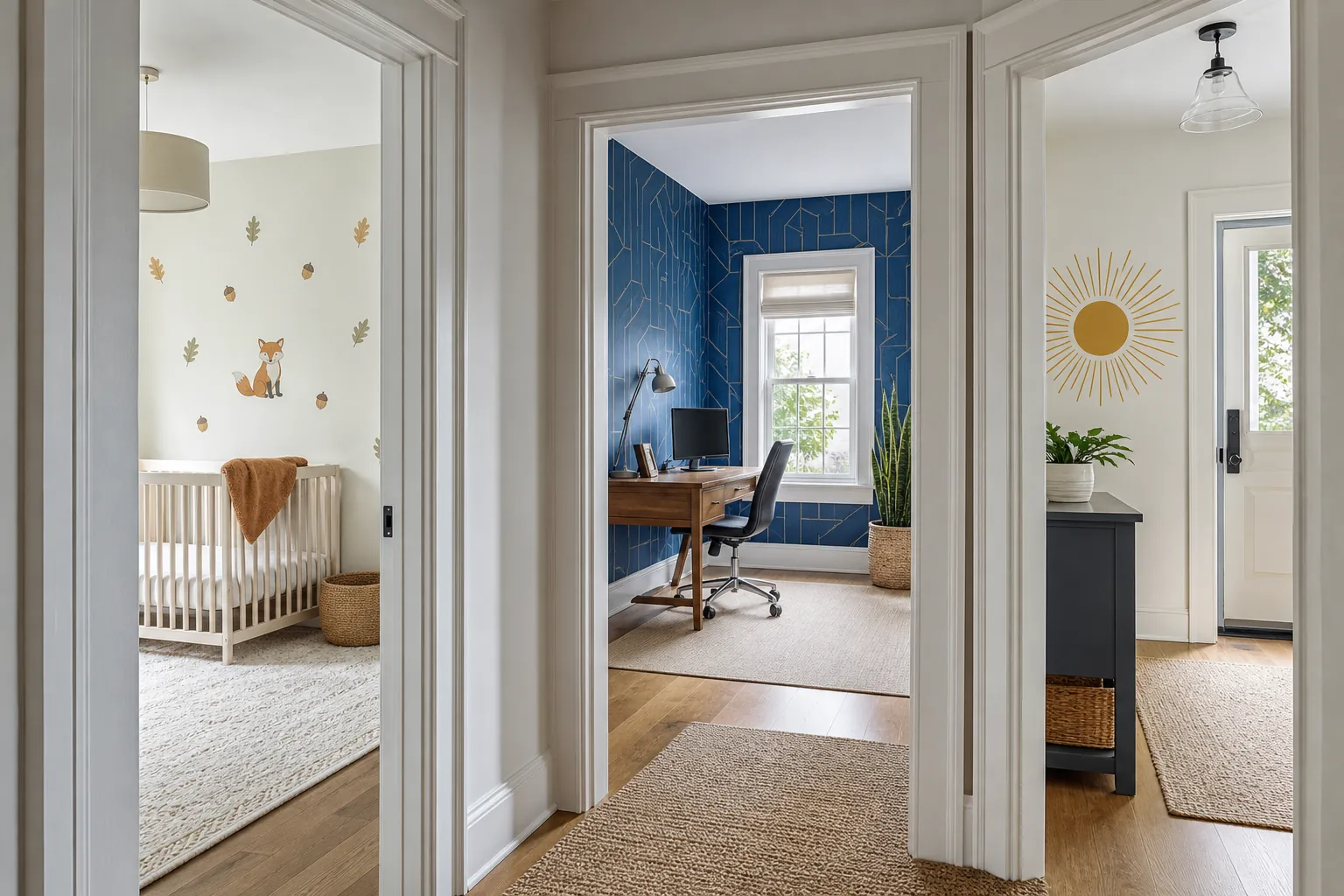
- Nursery: decals make themes easy to update as a child grows.
- Bedroom: wallpaper suits a headboard wall; decals suit asymmetrical botanicals or an arch.
- Home office: use wallpaper when the entire background matters; a decal for a defined desk zone.
- Entryway: wallpaper creates drama, while decals simplify work around hooks and switches.
- Bathroom: use only products rated for humidity and follow surface restrictions.
Make either option look intentional
Define the visual boundary. Wallpaper is strongest across one complete architectural plane. Decals need an invisible frame aligned with a bed, console, desk, or reading chair. Match pattern scale to viewing distance: tiny stickers disappear on a large wall, while an oversized repeat can overwhelm a narrow room. Tape up a full-size sample and view it from the doorway and seated position.
Finally, let the wall treatment lead. With strong wallpaper, simplify nearby textiles and art. With delicate decals, repeat one decal color in a cushion, lamp, or small object so the composition connects.
Final verdict
Choose decals for speed, adaptability, and a smaller commitment. Choose peel-and-stick wallpaper for continuous pattern and a room-changing result—provided the wall is smooth, sound, and tested. The best removable wall covering is the one your actual paint can release safely.