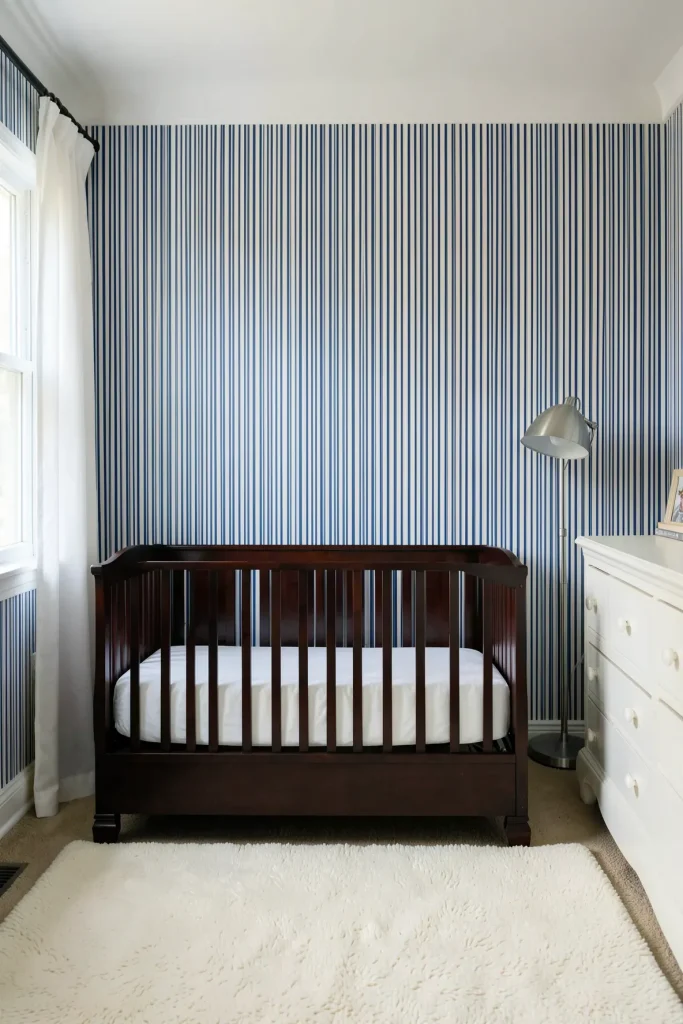
25 Striped Wallpaper Nursery Designs for a Timeless Look
Choosing a theme for a new baby’s room often feels overwhelming because trends change so fast. You want a space that looks great now but won’t feel outdated by the time your child starts preschool. Striped patterns are a reliable choice because they have stayed in style for decades and work with almost any furniture.
This list covers various ways to use stripes to create a calm and organized environment. Whether you want a bold look or something subtle, these ideas will show you how to use lines to make a small room feel taller or a large room feel more grounded. You will find practical ways to incorporate different colors and textures that grow with your child.
Classic Blue and White Ticking Stripes
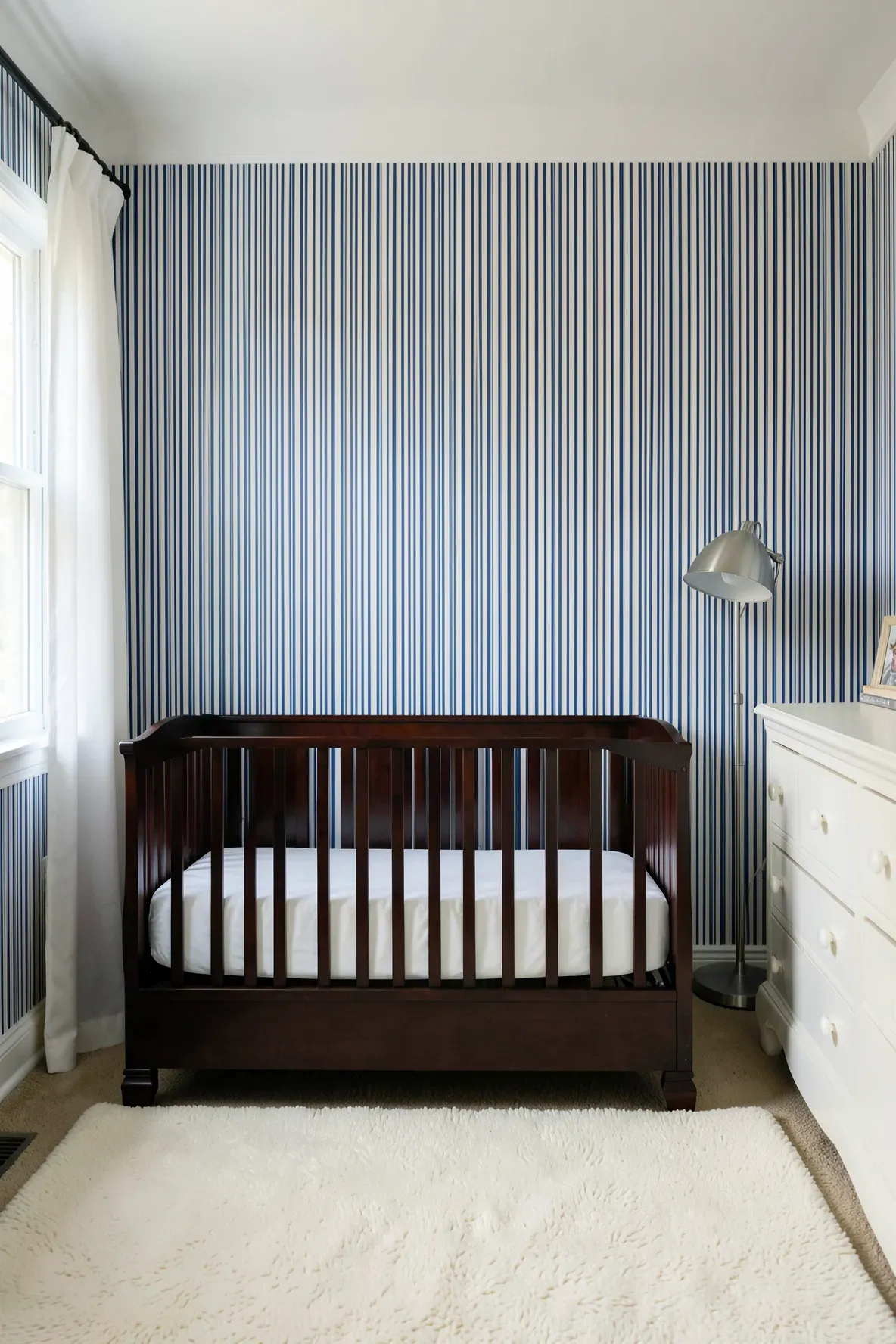
Ticking stripes are very thin and closely spaced, giving a room a traditional and clean look without being too loud. This style works well if you have white wooden furniture or a dark wood crib. It creates a crisp backdrop that feels organized and calm for a sleeping infant.
To make this look work, keep the rest of the room simple. Use solid-colored bedding and curtains so the thin lines don’t clash with other patterns. It is a great way to get a classic nursery feel that never goes out of style.
Soft Sage Green Vertical Lines
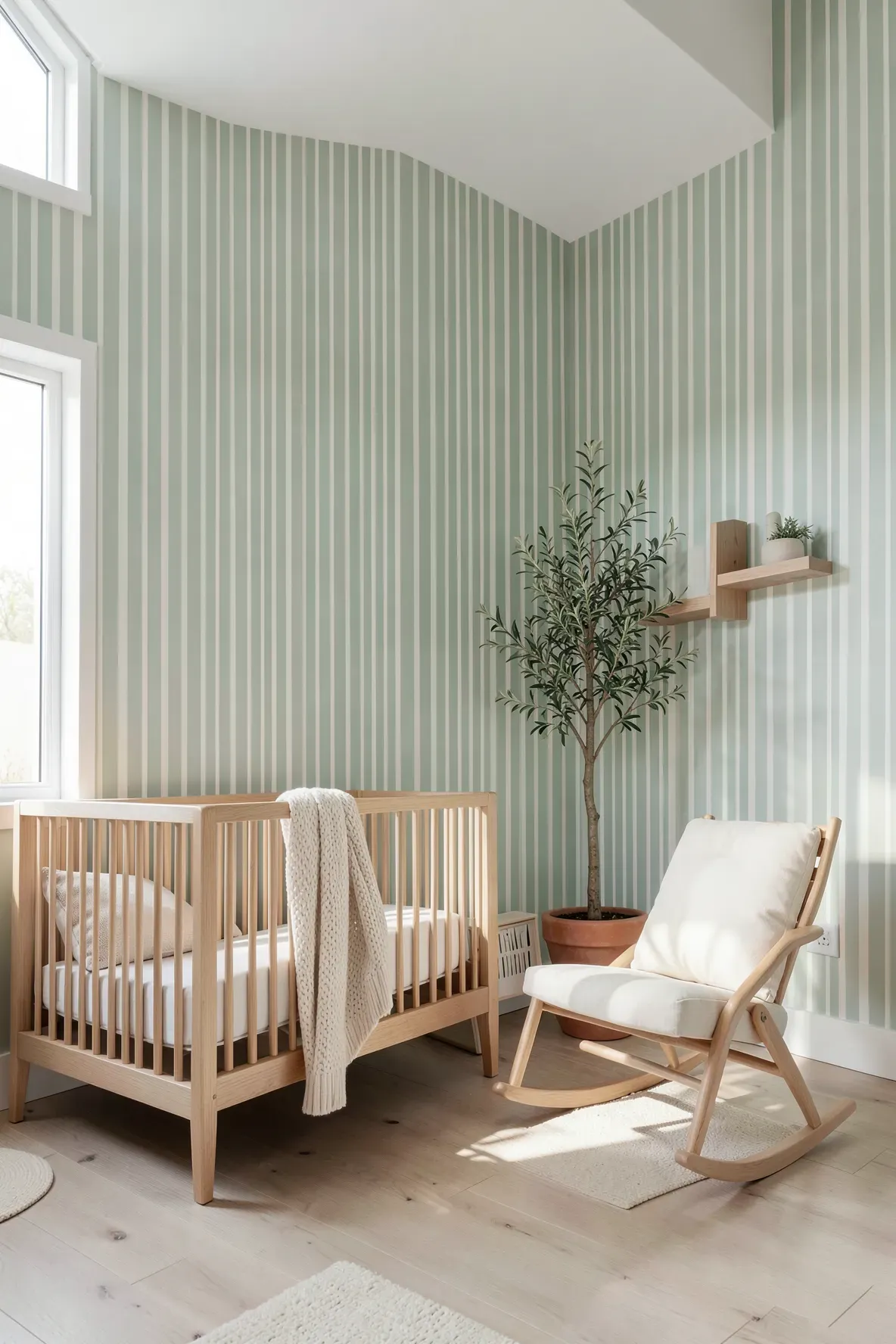
If you are looking for a Gender Neutral Nursery Wallpaper, sage green is an excellent choice. This soft, earthy tone is relaxing and works for any baby. The vertical lines help draw the eye upward, making the ceiling seem higher than it actually is.
Pair this wallpaper with light oak or birch furniture to keep the room feeling airy. Sage green also goes well with cream or off-white accents, creating a peaceful space that doesn’t rely on traditional pink or blue themes.
Muted Earth Tones on an Accent Wall
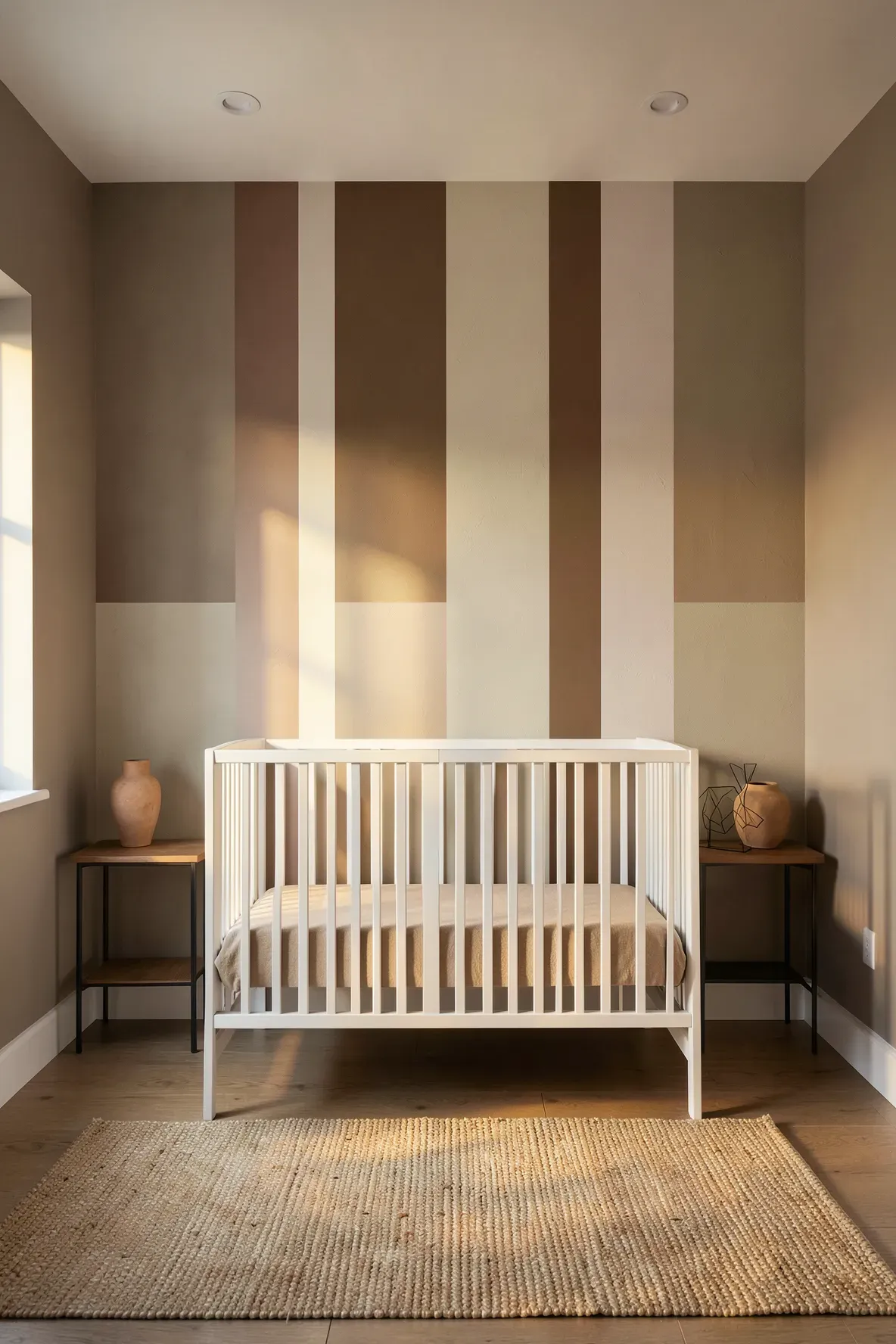
Using a Nursery Wallpaper Accent Wall is a smart way to add personality without making the room feel too busy. Muted earth tones like clay, sand, and taupe create a warm environment that feels grounded. Putting the stripes on just one wall behind the crib makes that area the main focus of the room.
This approach is also budget-friendly since you only need a few rolls of paper. It allows you to experiment with darker or more saturated colors because the other three walls will likely be a lighter, solid color to balance the space.
Hand-Drawn Charcoal Pencil Stripes
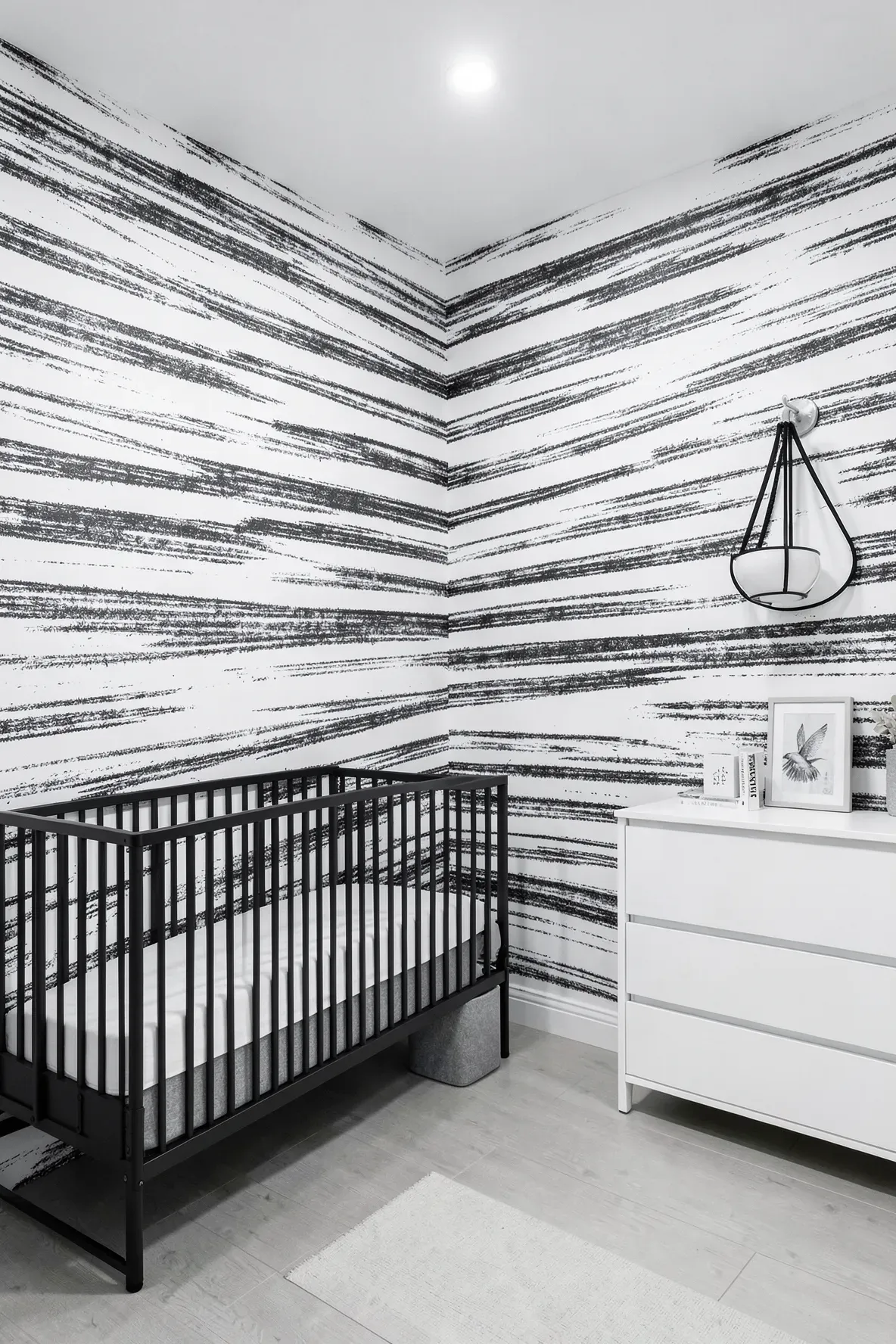
For a modern and artistic feel, look for wallpaper that features hand-drawn lines. These stripes aren’t perfectly straight, which gives the room a more relaxed and less formal vibe. The charcoal color provides a nice contrast against white walls without being as harsh as solid black.
This style looks great with minimalist furniture and monochrome decor. Because the lines look like they were sketched with a pencil, it adds a human touch to the nursery that feels unique and custom-made.
Wide Horizontal Navy Bands
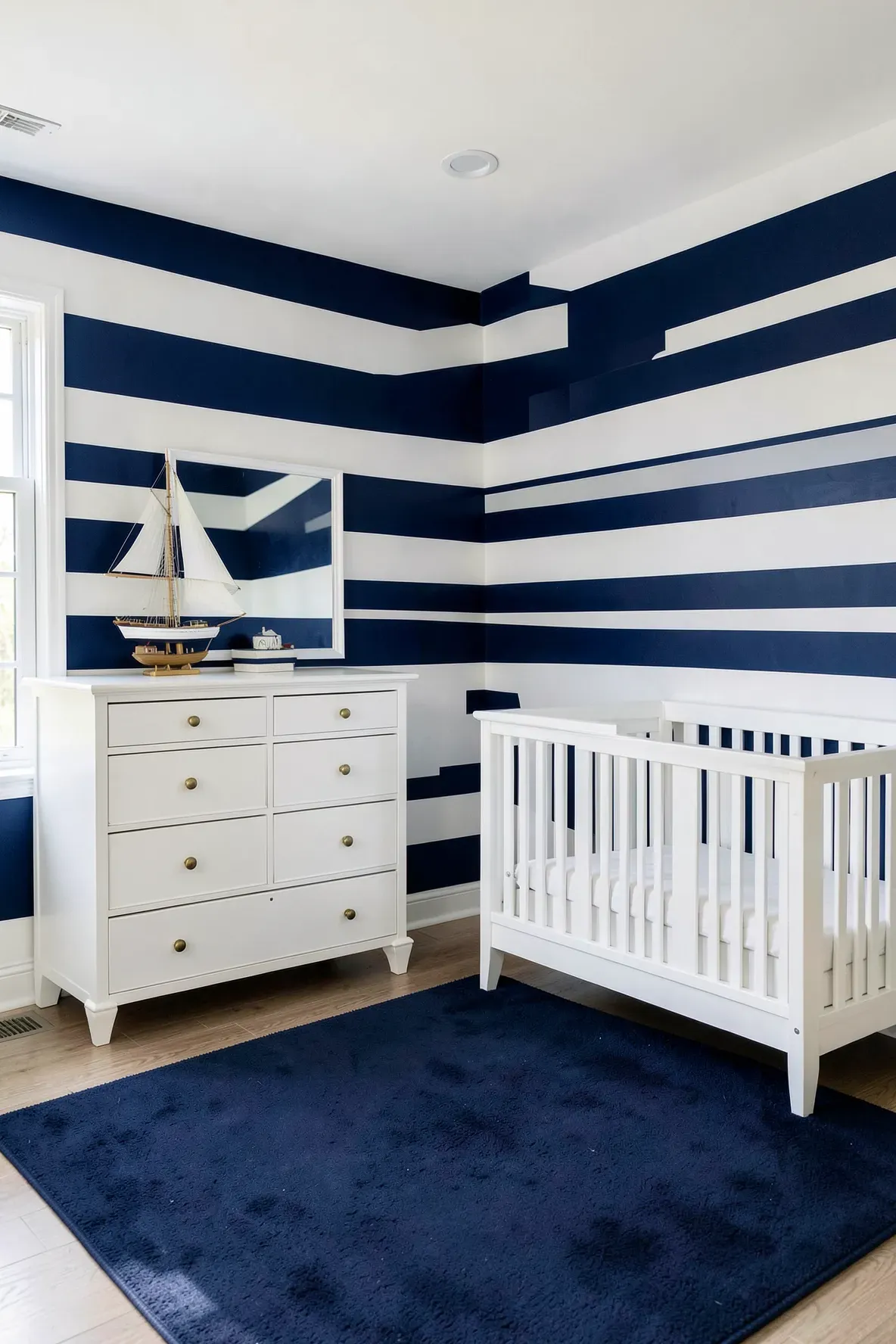
Horizontal stripes can make a narrow room feel wider. Using wide navy bands helps mimic the look of Blue Striped Walls and gives the nursery a strong, graphic presence. This is a bold choice that works best in rooms with plenty of natural light.
When using wide horizontal stripes, try to line them up with the height of the furniture. For example, having a stripe end right where the top of the dresser sits creates a very clean and intentional look. It’s a great way to bring a nautical or preppy vibe to the space.
Faded Pastel Pinstripes
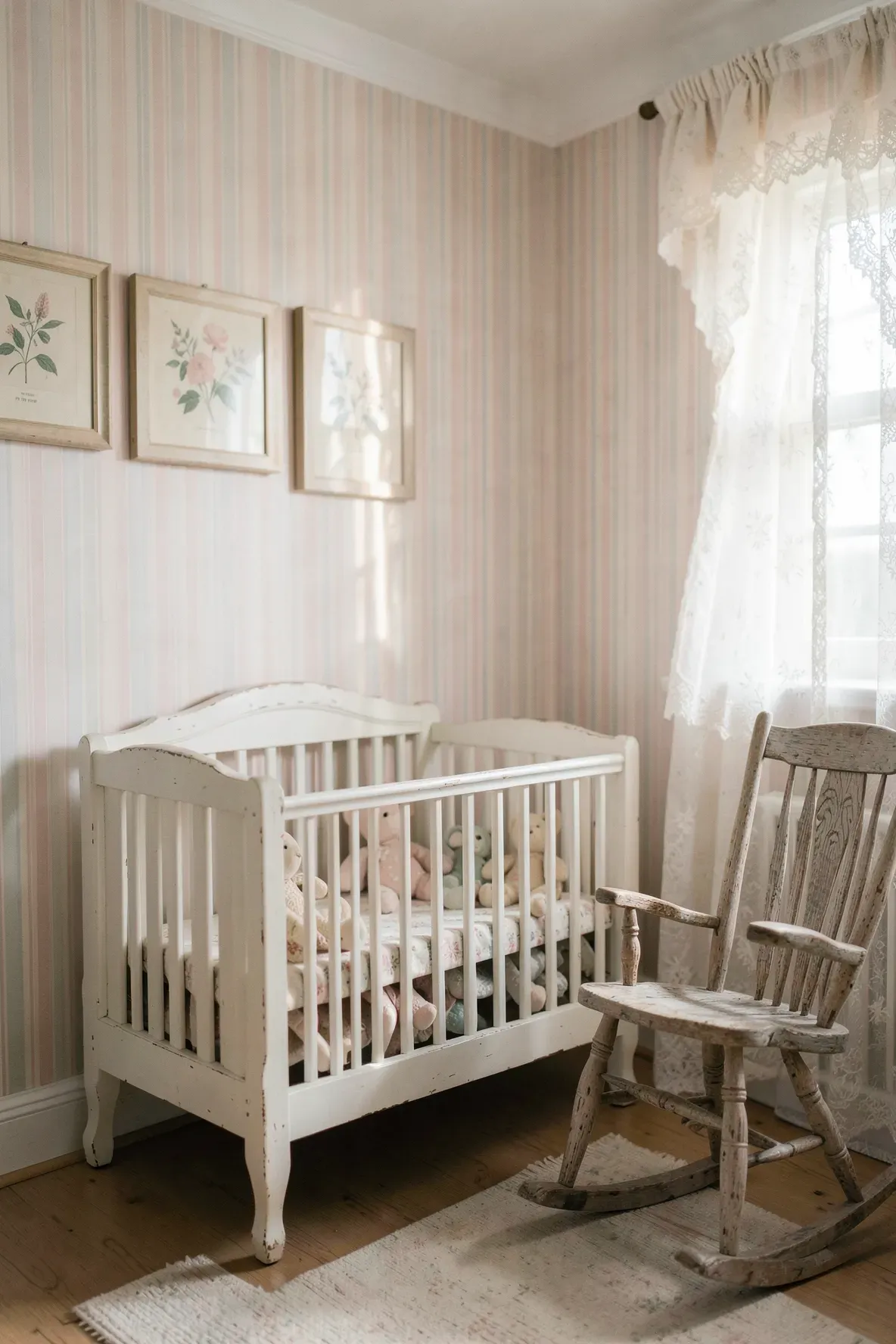
If you want a soft and nostalgic look, Vintage Nursery Wallpaper with faded pinstripes is the way to go. These stripes are very thin and use colors that look like they have been softened by the sun. It creates a gentle atmosphere that is perfect for a quiet nursery.
This style pairs beautifully with antique furniture or distressed wood pieces. It’s a subtle way to add color without the walls becoming the main attraction, allowing you to focus on decorative items like framed art or heirloom toys.
Bold Primary Color Stripes
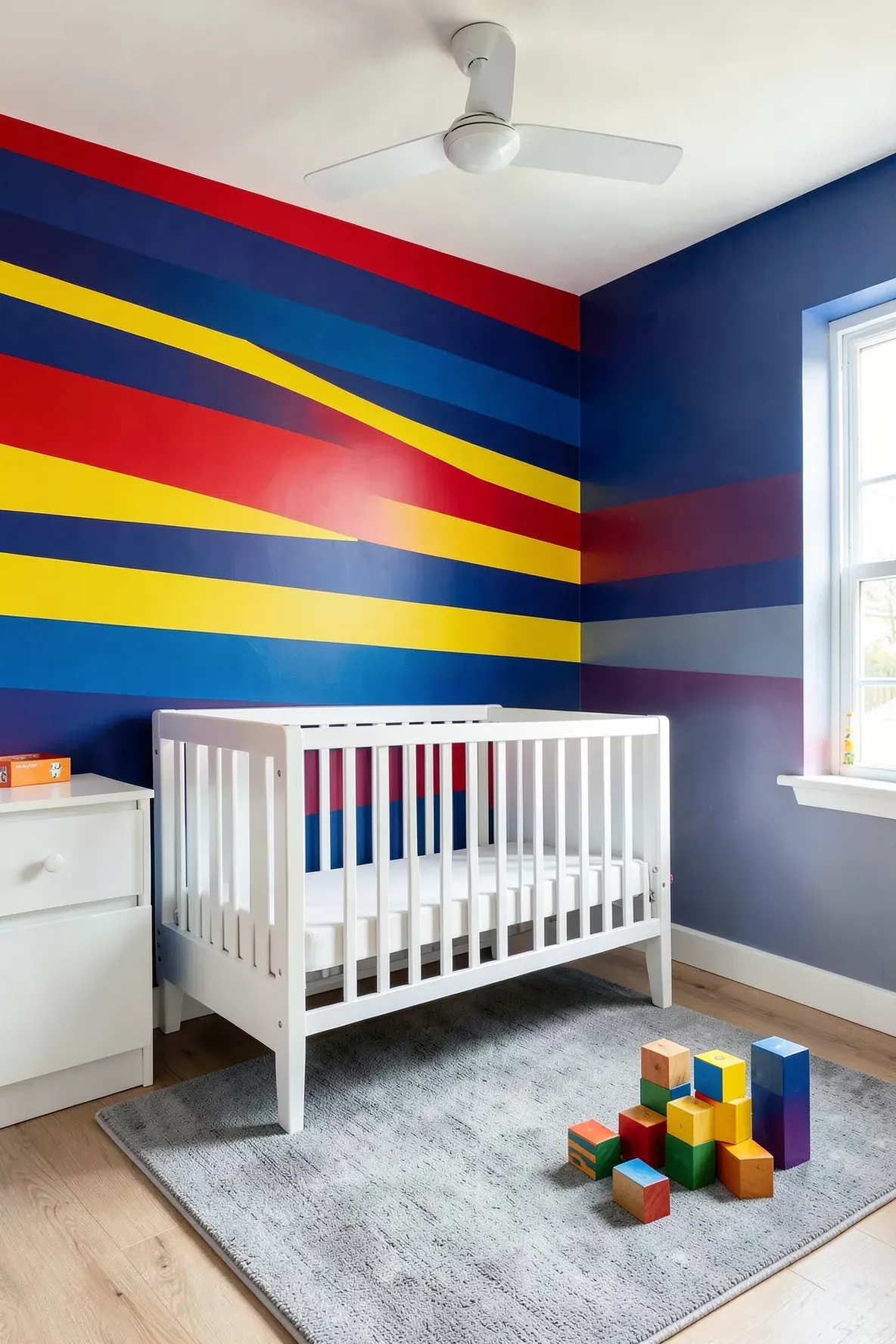
High-contrast colors are great for a Wallpaper Baby Room because they provide visual stimulation for infants. Stripes in red, blue, and yellow can make the space feel energetic and cheerful. This is a fun choice if you want the nursery to feel like a dedicated play space as well as a bedroom.
To keep the room from feeling chaotic, use one primary color as the main stripe and keep the furniture neutral. White or light gray pieces will help tone down the brightness of the walls so the room remains a comfortable place for naps.
Warm Terracotta and Cream Stripes
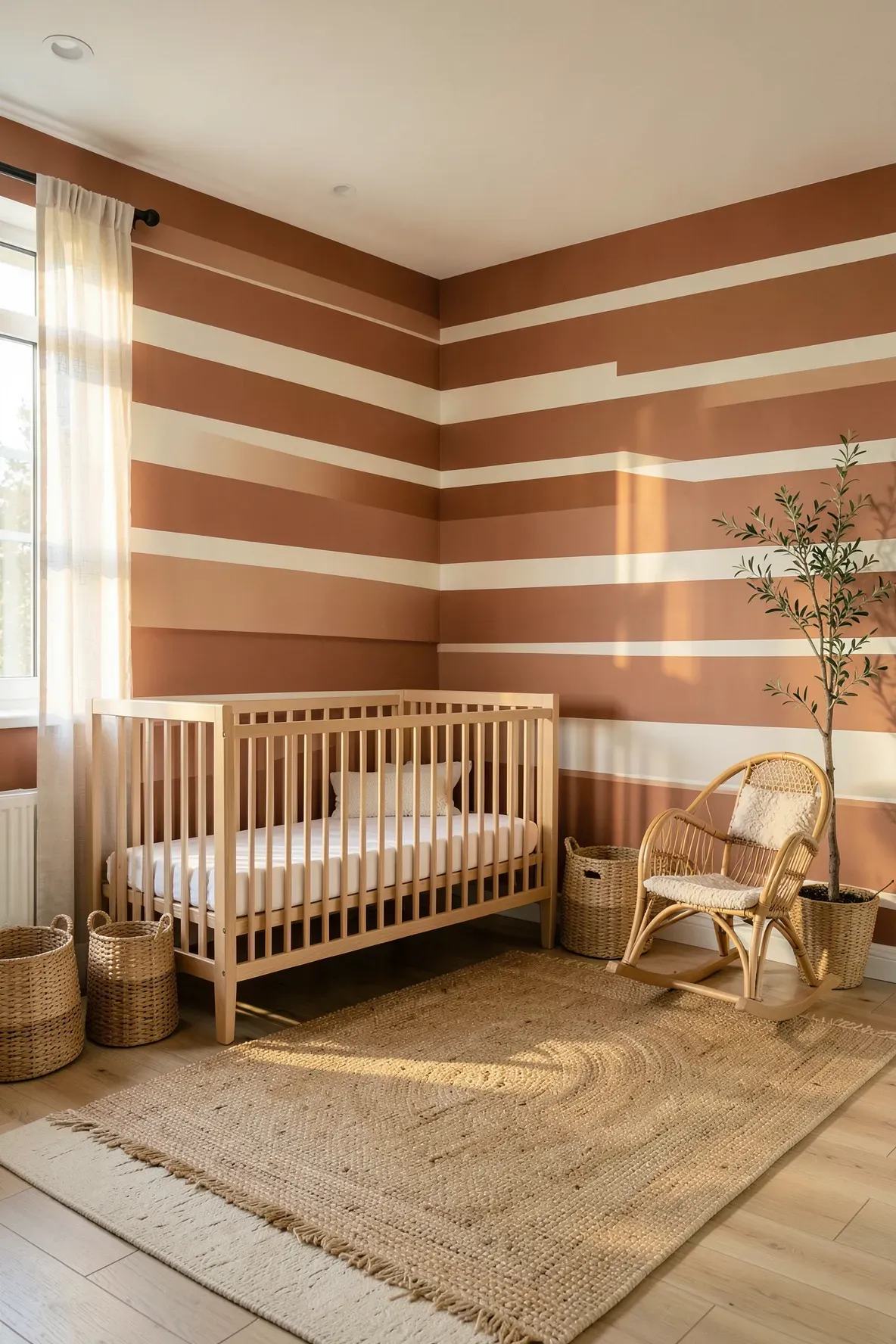
Terracotta is a popular color for creating a cozy and inviting nursery. When paired with cream stripes, it feels warm and earthy rather than dark. This combination works well in rooms that get a lot of afternoon sun, as the light enhances the orange and brown undertones.
Consider using natural materials like rattan baskets or a jute rug to complement this color palette. It creates a bohemian look that feels updated and fresh for a modern home.
Alternating Gloss and Matte Finishes
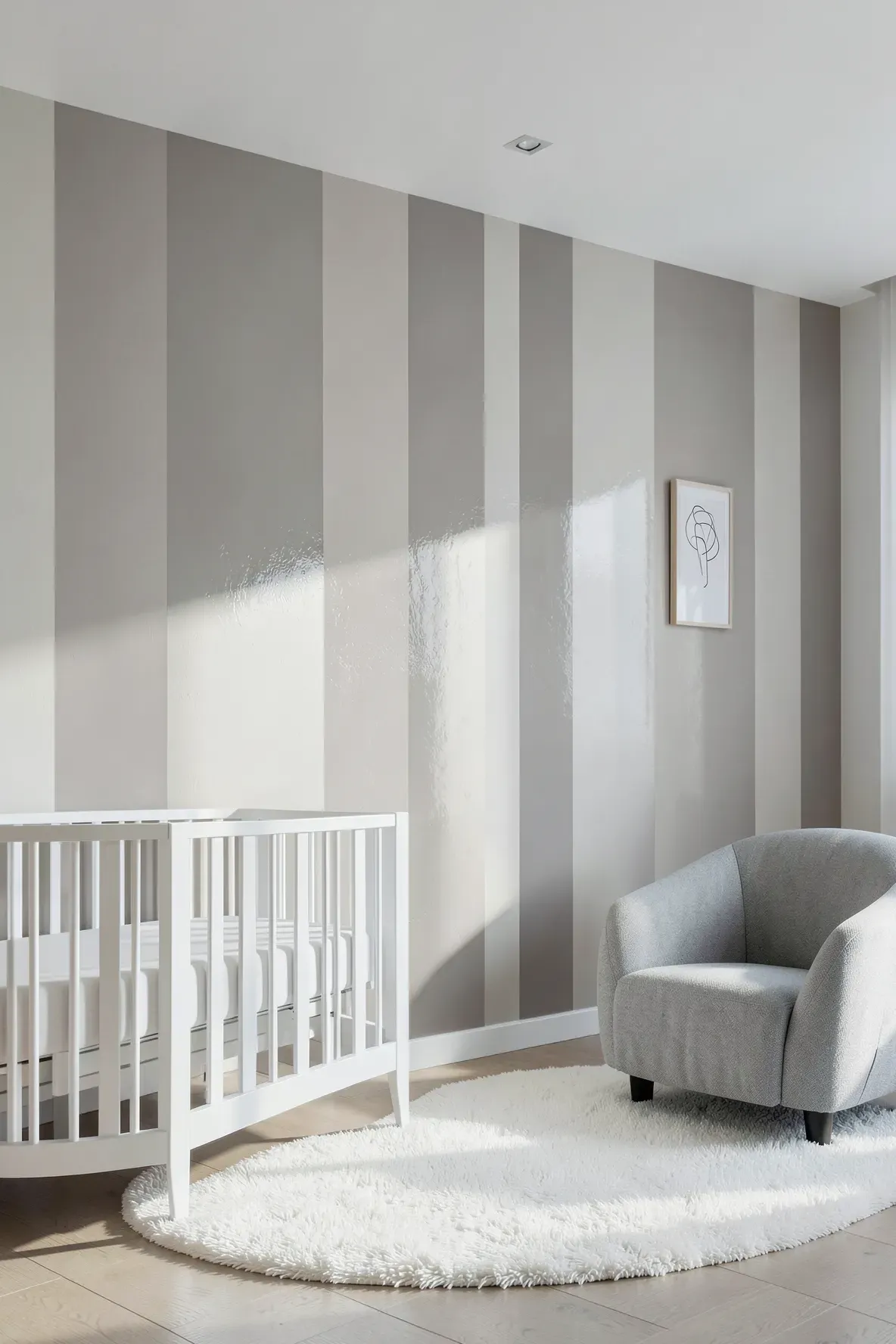
You can create Striped Painted Walls by using the same color but in two different finishes. For example, painting stripes in a matte finish and then a gloss finish creates a very subtle look. The stripes only show up when the light hits them at certain angles.
This is a sophisticated option for parents who want a very quiet design. It adds texture and interest to the walls without introducing new colors, making it easy to change the decor as the child grows up.
Vertical Gray Ombre Stripes
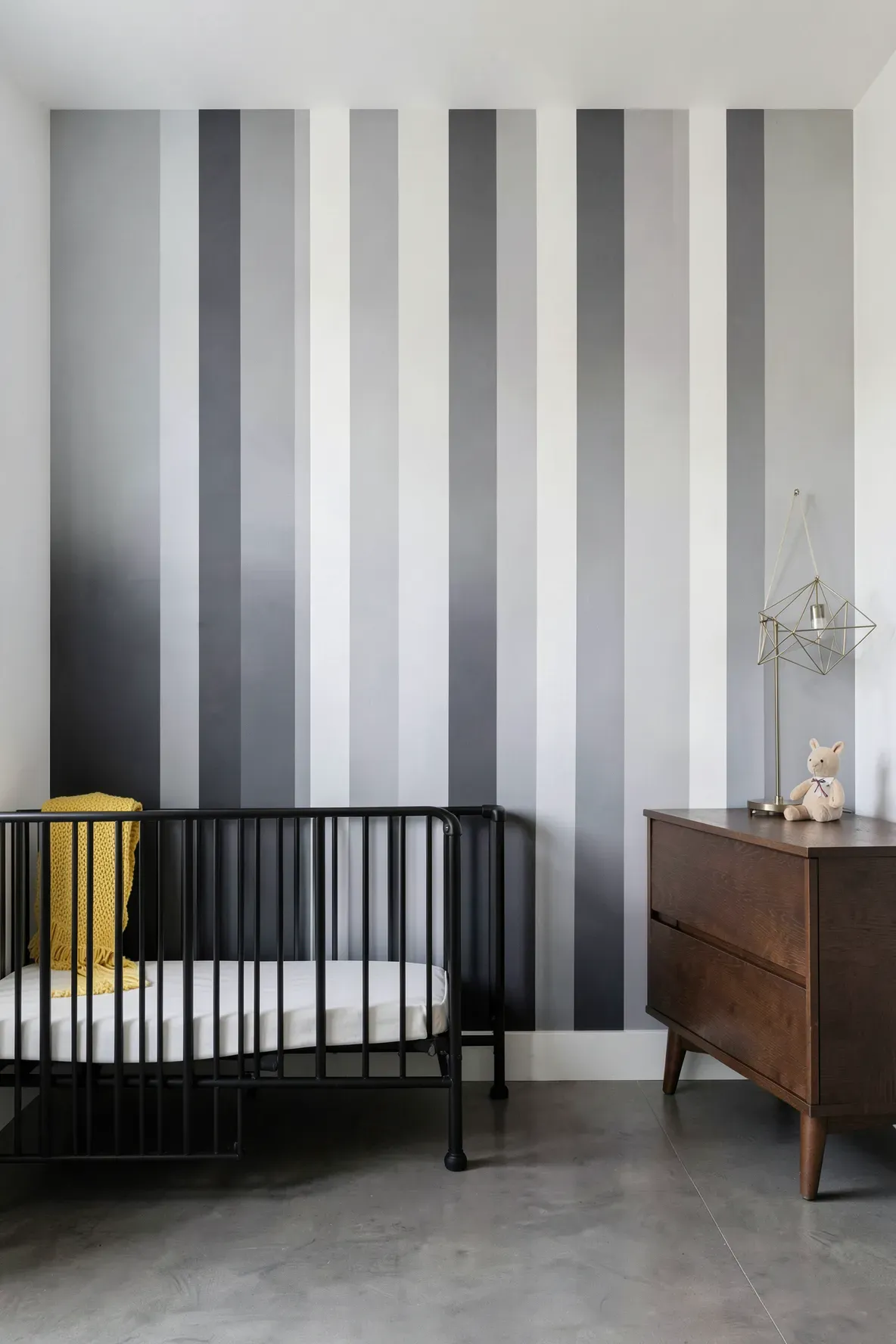
Vertical stripes that fade from dark gray at the bottom to light gray at the top create an ombre effect. This is a clever trick to make a small nursery feel much larger. The darker color at the bottom anchors the room, while the lighter color at the top blends into the ceiling.
This style works well in a modern nursery with sleek furniture. Gray is a versatile neutral that allows you to add pops of color through blankets, pillows, or wall art whenever you want a change.
Multi-Colored Candy Stripes
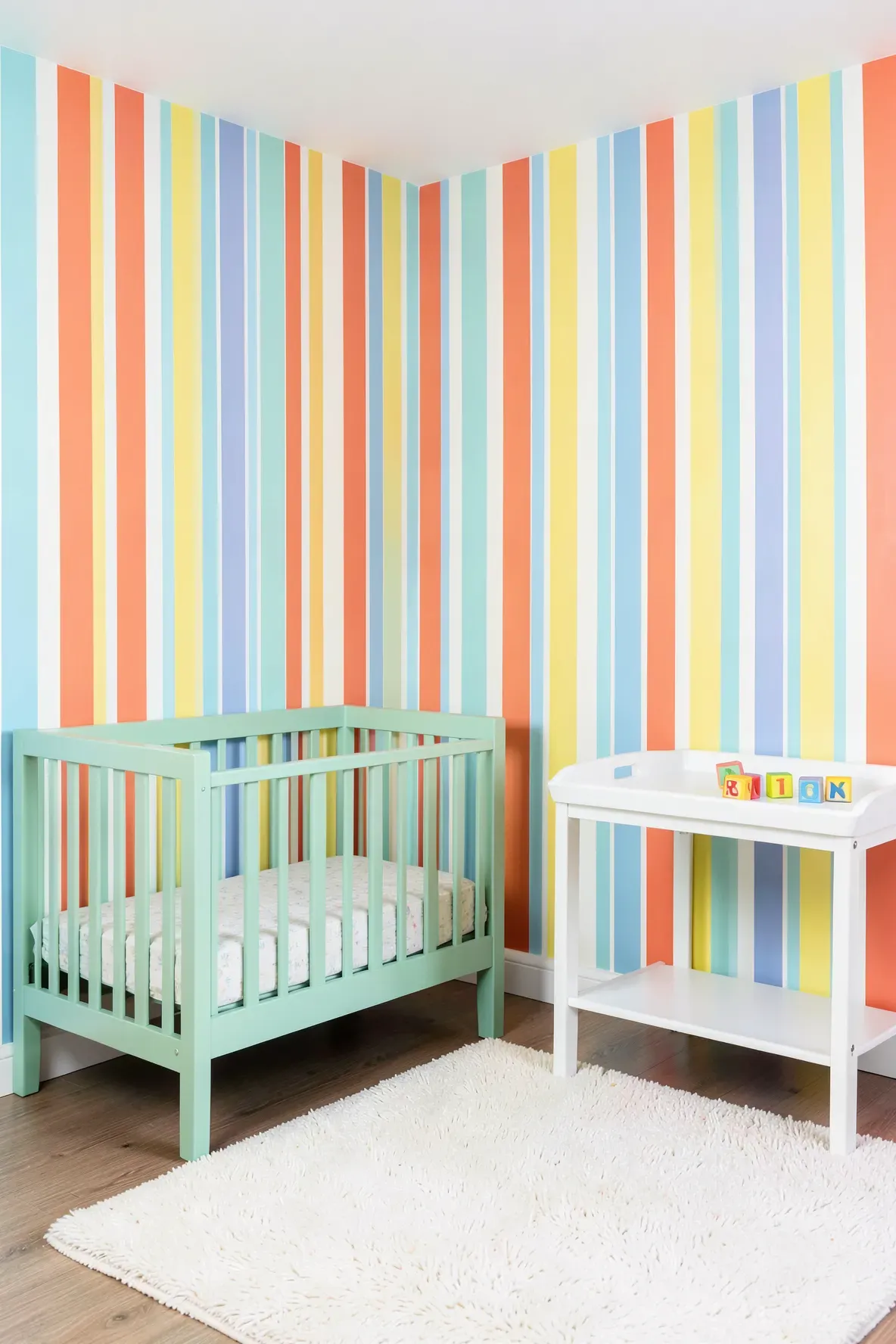
A multi-colored stripe pattern brings a lot of joy to a Wallpaper Baby Room. These often feature four or five different colors in varying widths. It’s a playful look that makes the room feel like a celebration and gives you many options for accent colors.
When using many colors on the walls, try to pick one of those colors for your main furniture pieces. This helps tie the whole room together so the stripes feel like a part of the design rather than a random addition.
Diagonal Awning Stripes
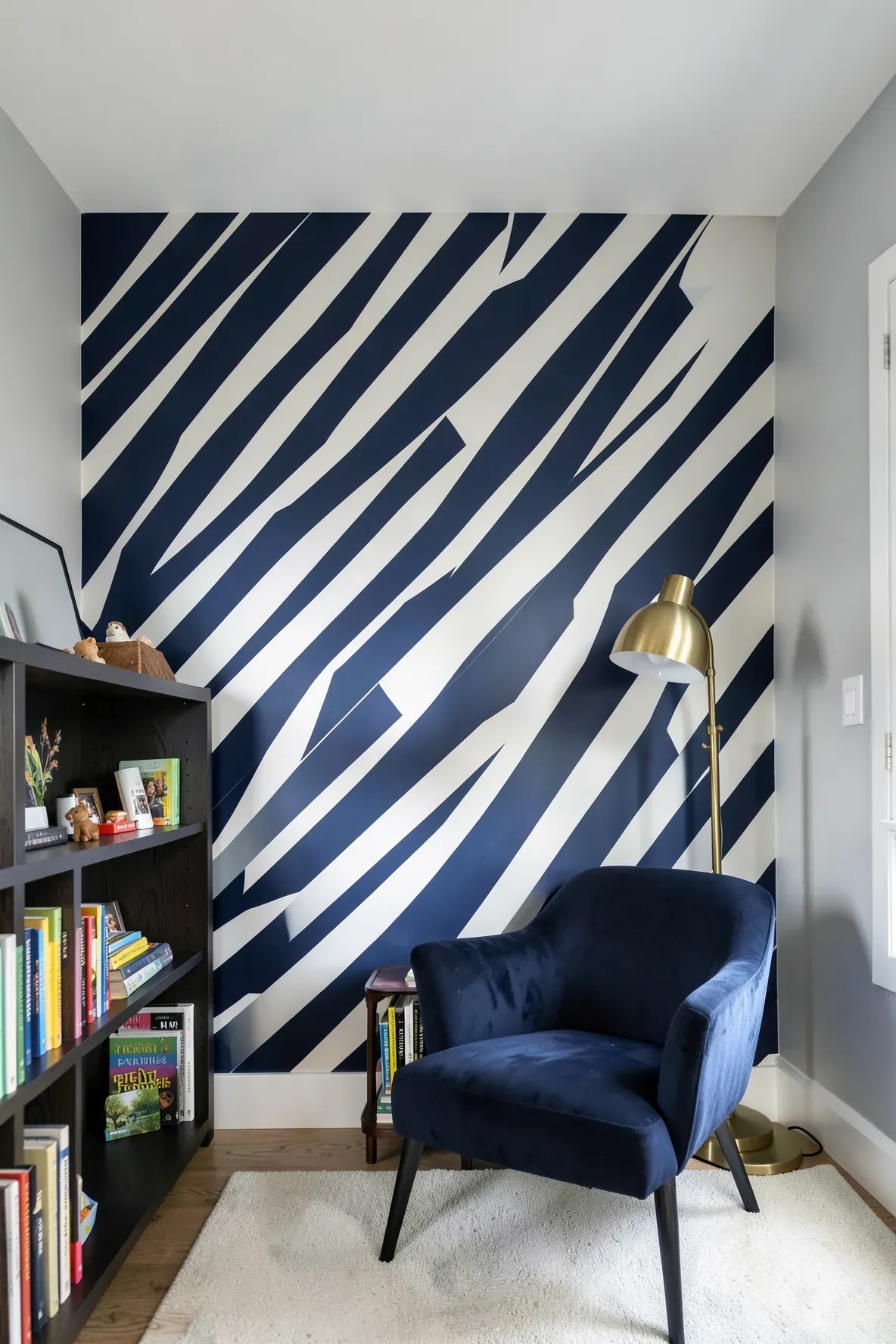
Diagonal stripes are less common than vertical or horizontal ones, making them a great choice for a focal point. They add a sense of movement to the nursery and can make the space feel more dynamic. These work especially well on a single wall behind a bookshelf or a cozy reading chair.
Since diagonal lines are very graphic, it is best to use two high-contrast colors like white and a deep shade. Keep the other walls a solid neutral color to avoid making the room feel dizzying.
Textured Grasscloth Stripes
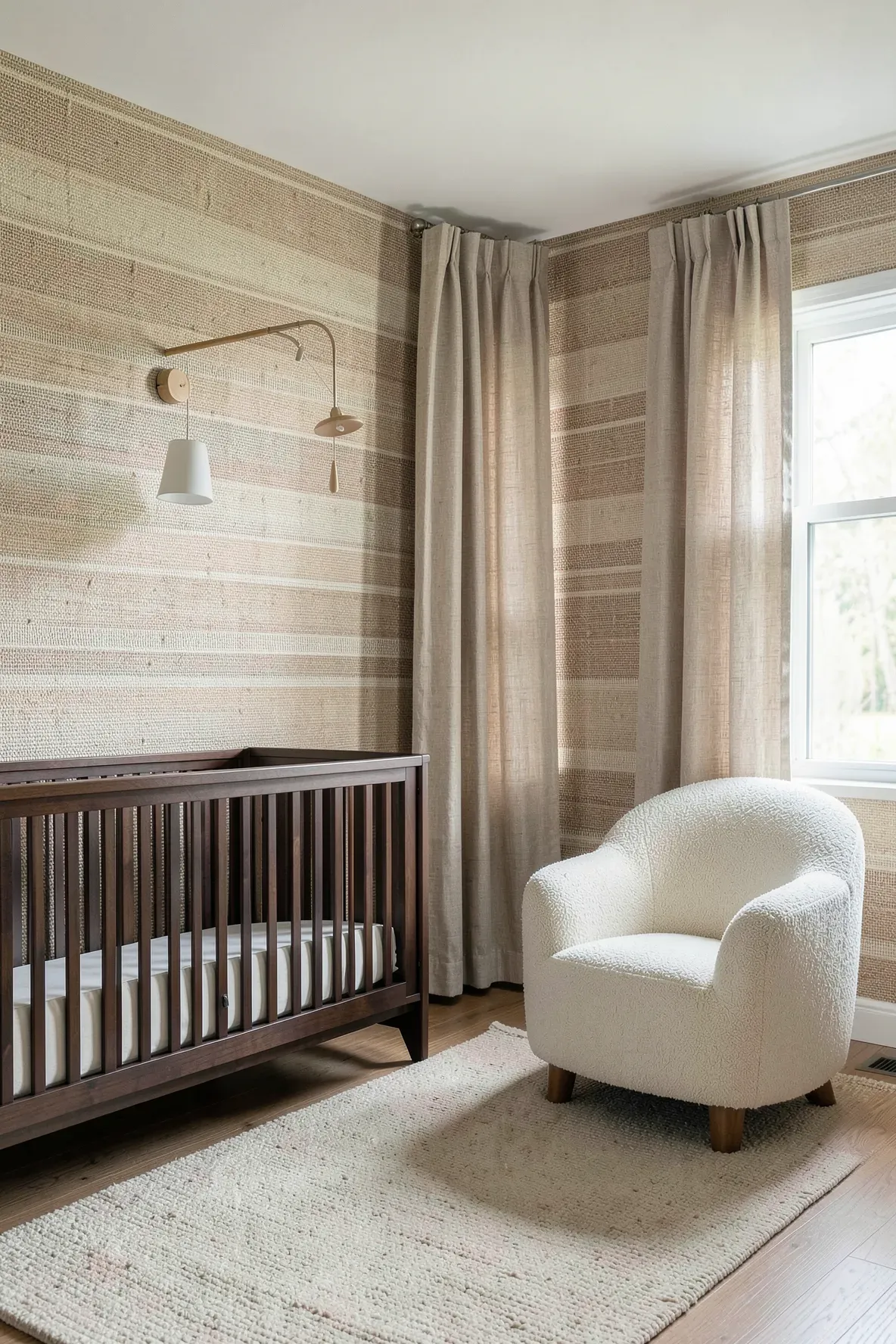
For a Striped Wallpaper Bedroom style that focuses on feel, grasscloth is a fantastic material. It adds a literal texture to the walls that you can see and touch. Stripes in grasscloth are usually subtle, created by the natural fibers of the wallpaper.
This is a more mature look that will easily transition into a toddler or teen room later on. It adds a layer of warmth and luxury to the nursery that flat paper cannot match. Just be sure to keep it away from areas where it might get splashed or stained.
Soft Lavender and White Stripes
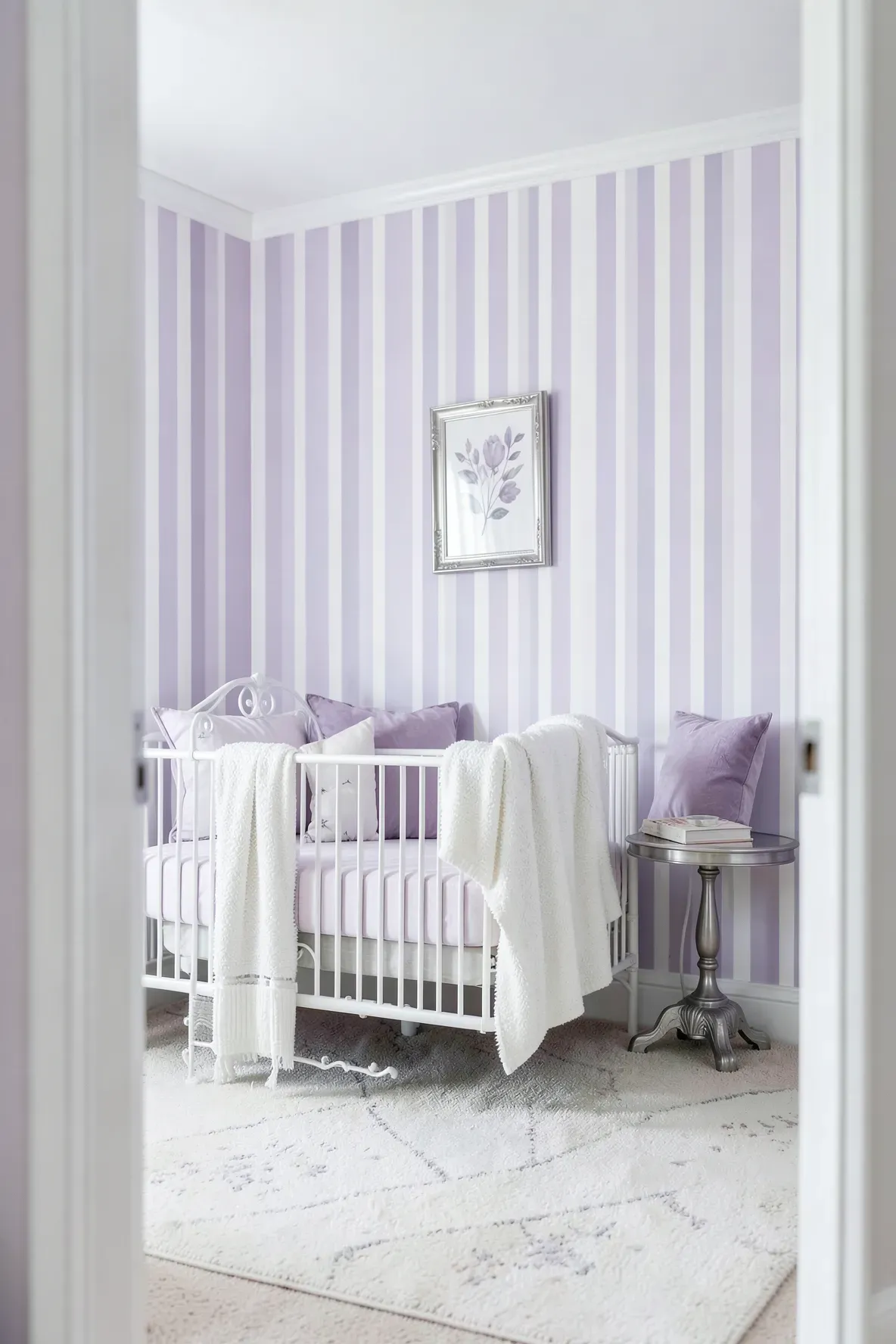
Lavender is a calming color that is often used to promote relaxation and sleep. Alternating lavender and white stripes create a peaceful environment that feels light and airy. It is a nice alternative to standard pink if you want a room that feels soft but different.
This color scheme looks great with silver or white metal accents. Use soft fabrics like velvet or fleece in the room to enhance the gentle feel that the lavender stripes provide.
Irregular Hand-Painted Lines
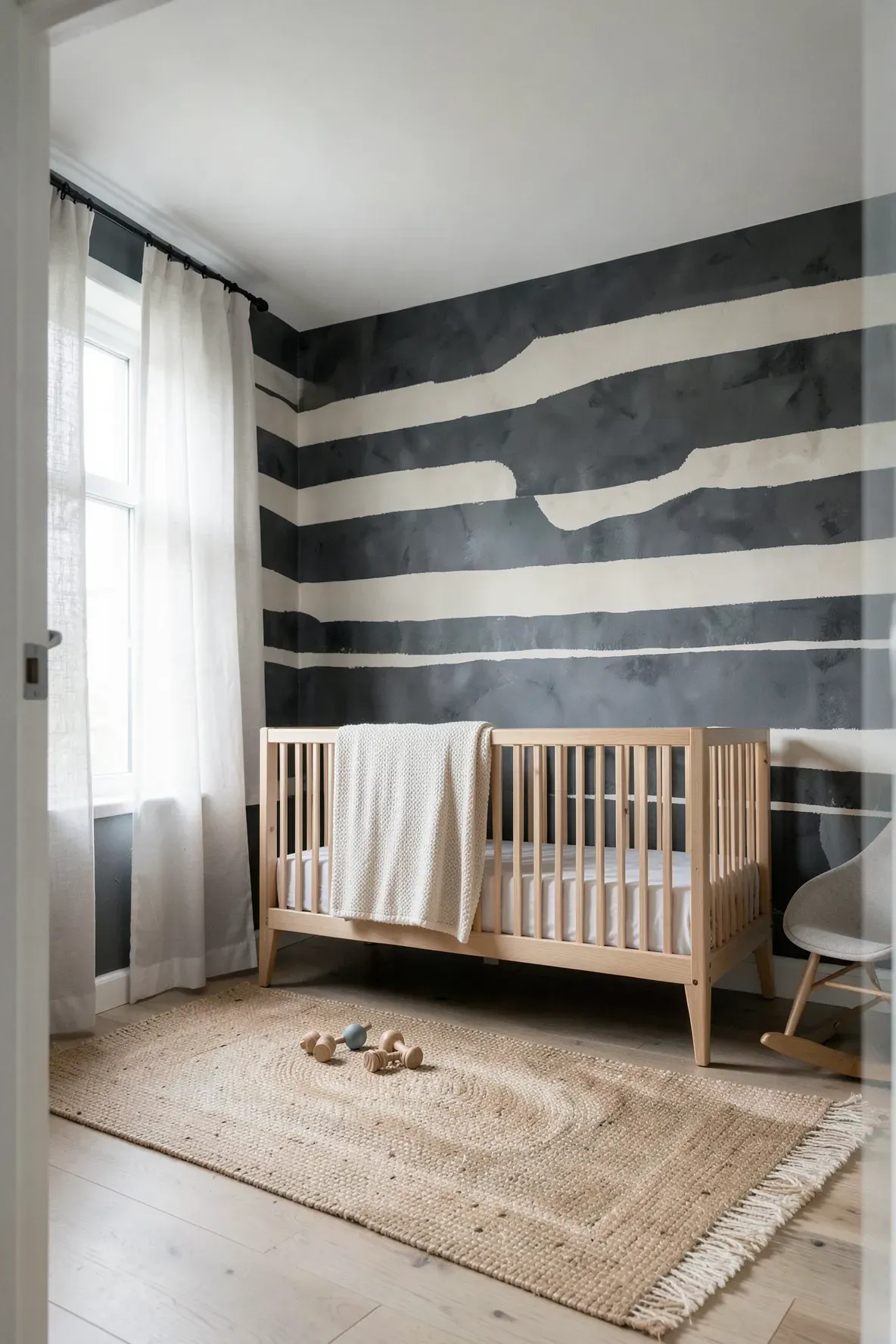
If you prefer a more organic look, choose a wallpaper with irregular, hand-painted lines. These stripes vary in thickness and aren’t perfectly straight, which mimics the look of a custom mural. It gives the nursery a relaxed, artsy vibe that feels very personal.
This style is very forgiving because you don’t have to worry about perfectly aligning every pattern match. It works well with handmade decor, such as knit blankets or wooden toys, emphasizing a cozy and crafted aesthetic.
Metallic Gold Pinstripes
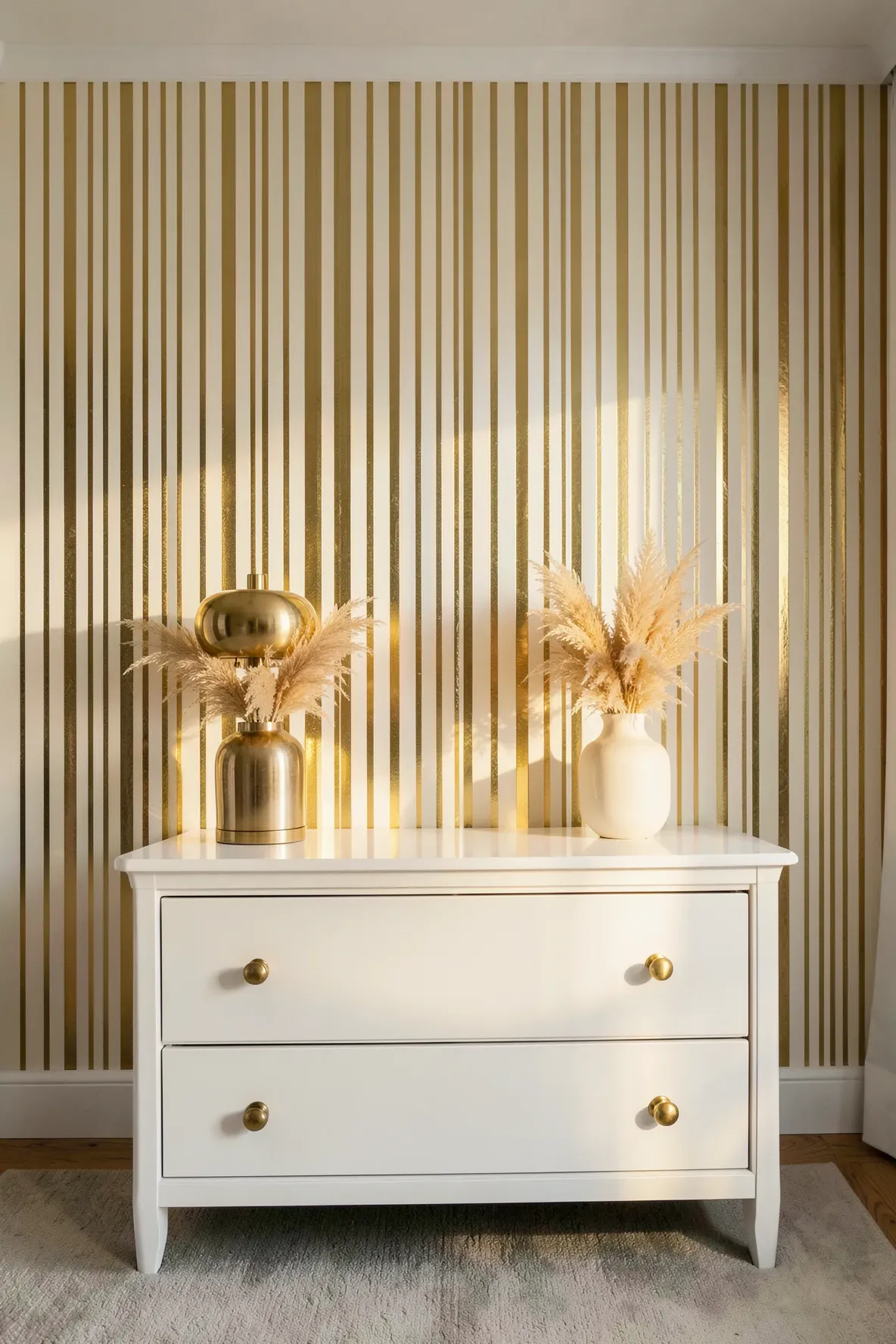
A touch of gold can make a nursery feel a bit more special. Metallic pinstripes catch the light and add a subtle shimmer to the walls without being overwhelming. It’s a great way to add a bit of ‘glam’ to a neutral room.
Gold stripes look best when paired with cream, white, or very light gray. You can match the wallpaper with brass drawer pulls or a gold-toned lamp to create a cohesive and polished look throughout the nursery.
Wide Beige and Ivory Stripes
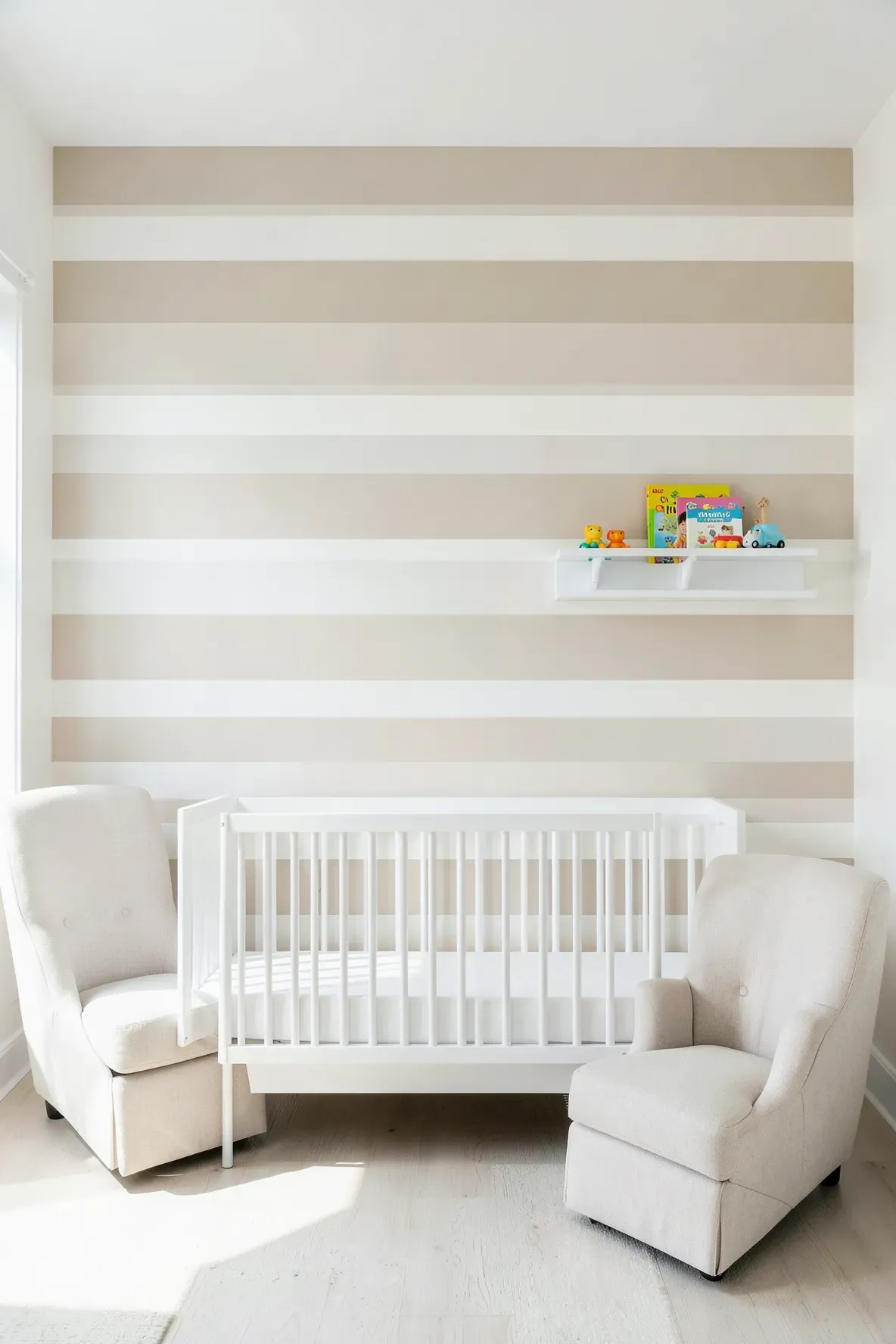
For those who love a clean and minimalist aesthetic, wide beige and ivory stripes are a perfect choice. This combination is very sophisticated and creates a neutral backdrop that works with any style of furniture. It makes the nursery feel bright and open.
This is a very safe choice if you are decorating before you know the baby’s gender or if you just prefer a quiet palette. You can easily add color through toys and books, which will stand out beautifully against the neutral walls.
Mixed Width Nautical Stripes
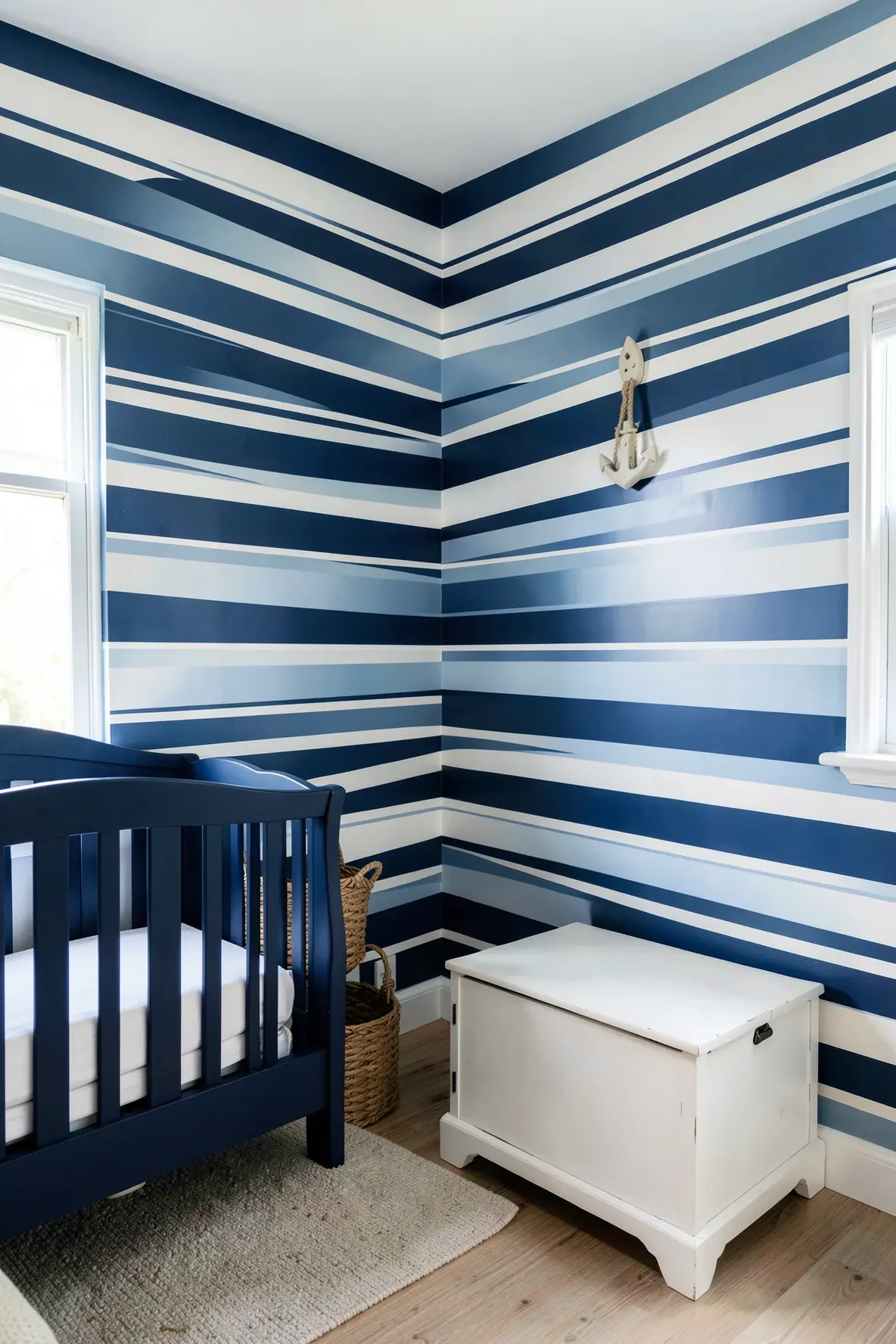
Nautical themes are a staple for nurseries, and using stripes of different widths adds a modern twist. Mixing thick and thin lines in shades of blue and white creates a classic coastal look. It feels traditional but has enough visual variety to stay interesting.
To complete the theme, you can add small details like rope-handled baskets or anchor-shaped wall hooks. This style is timeless and works well for children as they grow from babies into toddlers.
Sun-Bleached Yellow Stripes
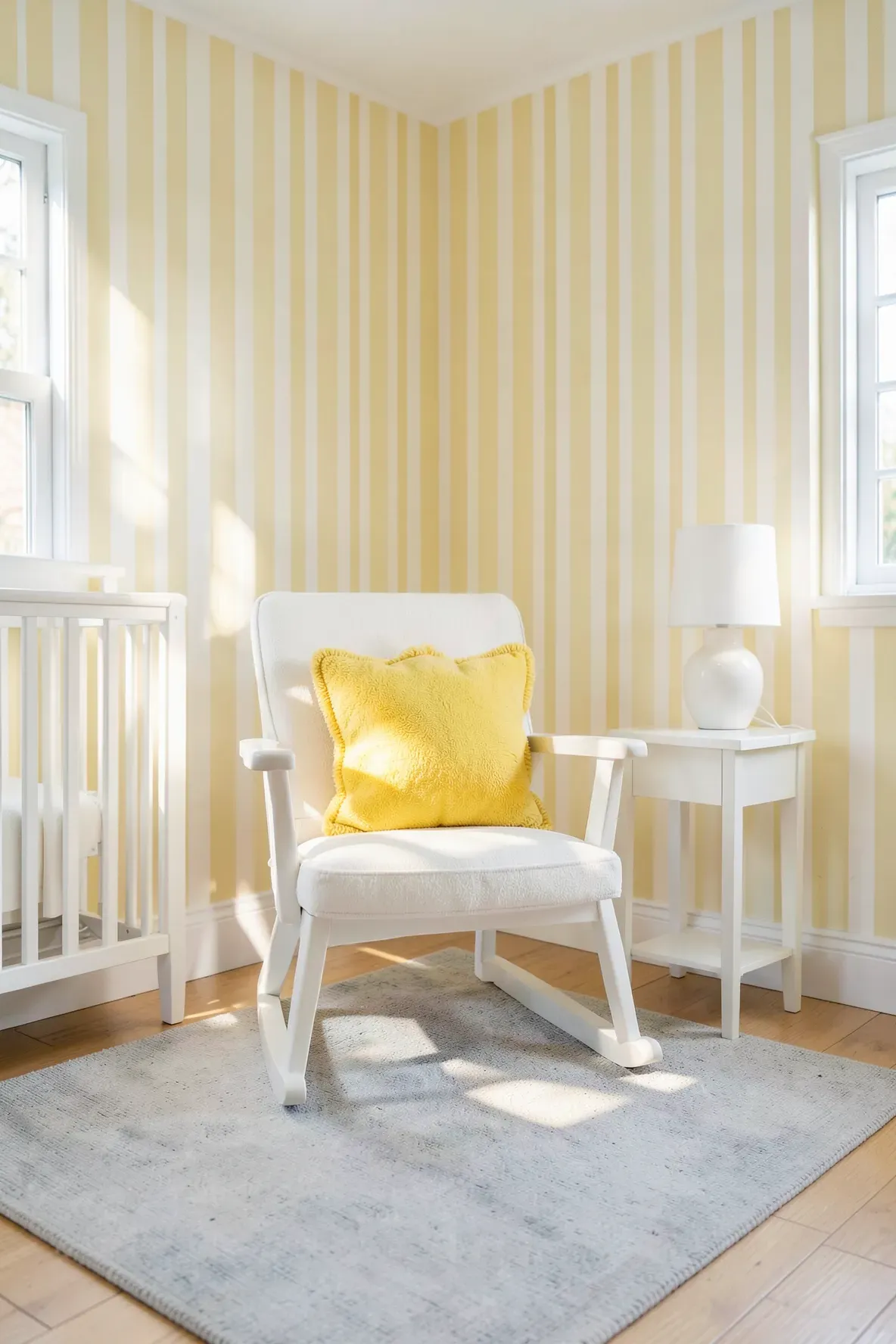
Yellow is a cheerful color that can brighten up a room that doesn’t get much natural light. Using a ‘sun-bleached’ or pale yellow stripe prevents the color from being too intense for a sleeping area. It creates a happy, sunny vibe that is perfect for a morning-facing nursery.
White furniture looks especially crisp against yellow stripes. It’s a gender-neutral option that feels warm and welcoming for both the baby and the parents who will be spending a lot of time in the room.
Deep Forest Green and Wood Tones
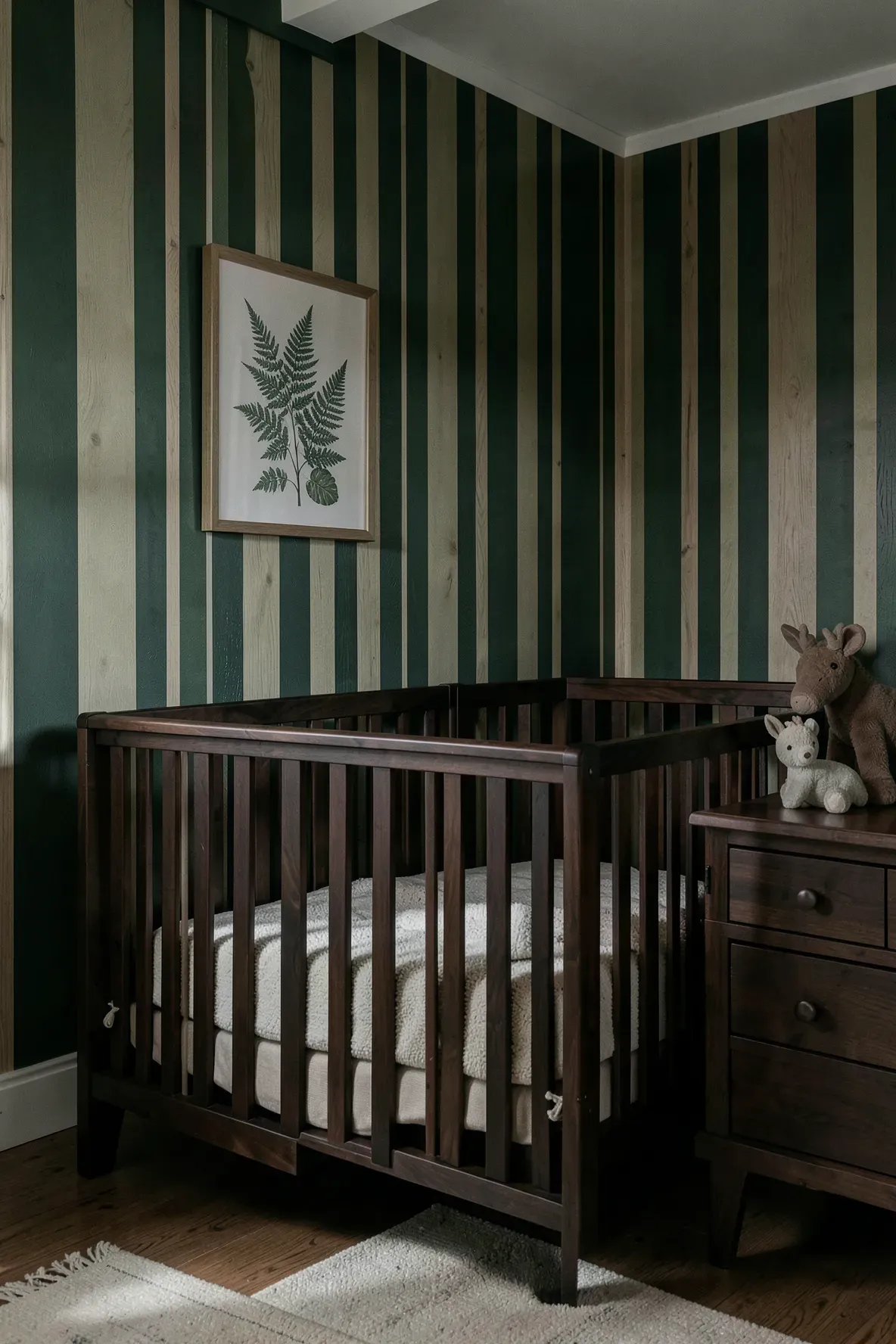
For a nature-inspired nursery, try deep forest green stripes. This dark color feels very cozy and secure, like being in a forest. When paired with wood-toned stripes or wooden furniture, it brings the outdoors inside.
This look is great for creating a ‘cabin’ or ‘woodland’ theme. Use forest animal prints or botanical drawings as wall art to finish the space. Darker green walls can also help the room feel darker during daytime naps, which might help the baby sleep better.
Minimalist Black and White Thin Lines
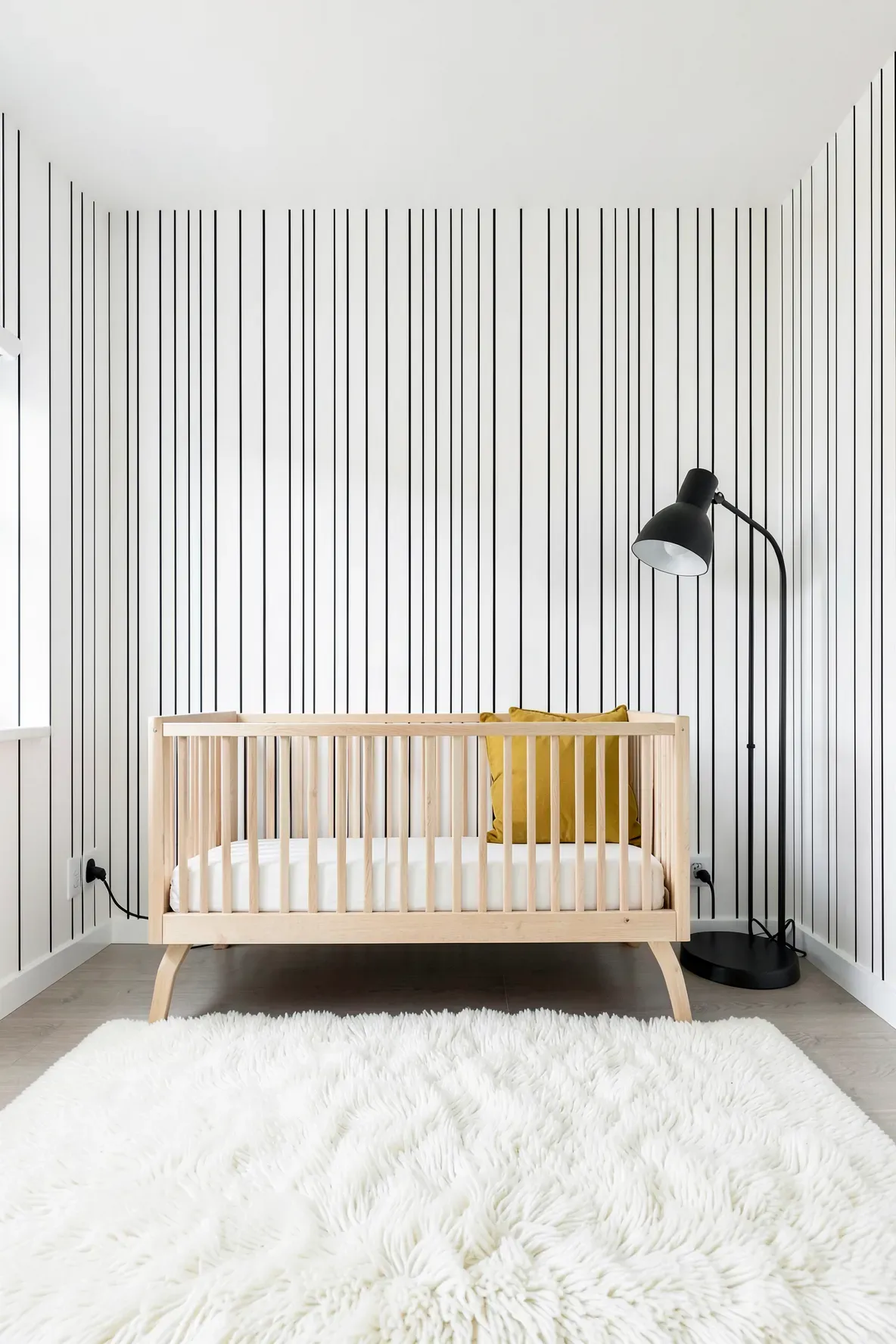
Thin black lines on a white background offer a very clean look for Striped Walls Bedroom decor. This high-contrast style is visually interesting for babies but looks very modern and chic to adults. It is one of the easiest patterns to style because everything matches with black and white.
To prevent the room from feeling too cold, add plenty of soft textures. A plush rug, some colorful pillows, or warm wood furniture will balance the sharp lines of the wallpaper and keep the nursery feeling cozy.
Waterproof Vinyl Stripes for Changing Areas
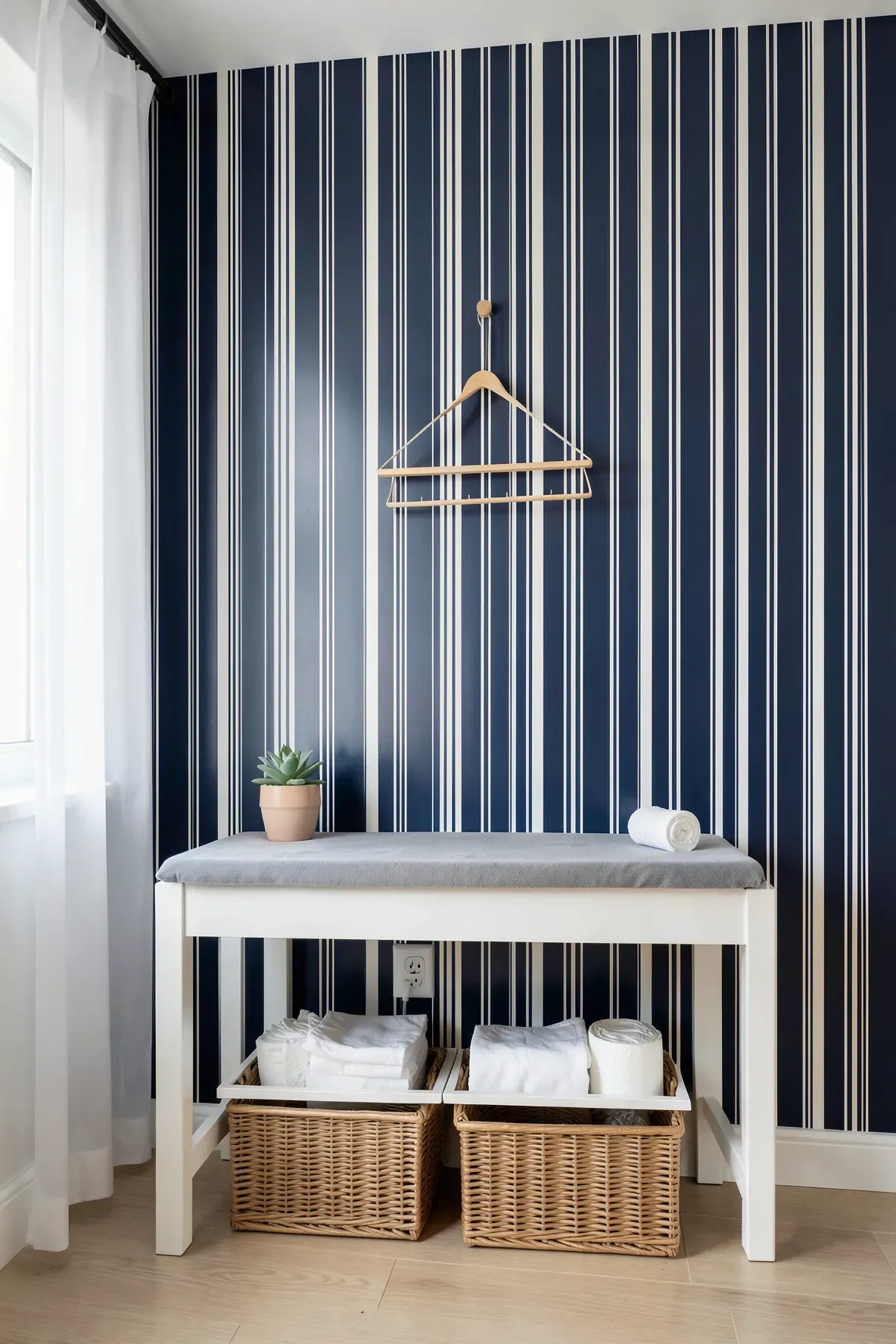
Using a Striped Wallpaper Bathroom material in the nursery is a practical tip for the changing station area. Vinyl wallpapers are waterproof and easy to wipe down, which is helpful in case of messes. You can find these in many striped patterns that match the rest of your decor.
This allows you to have a beautiful patterned wall behind the changing table without worrying about stains or water damage. It’s a functional choice that doesn’t sacrifice the style of the room.
Vintage Floral and Stripe Combination
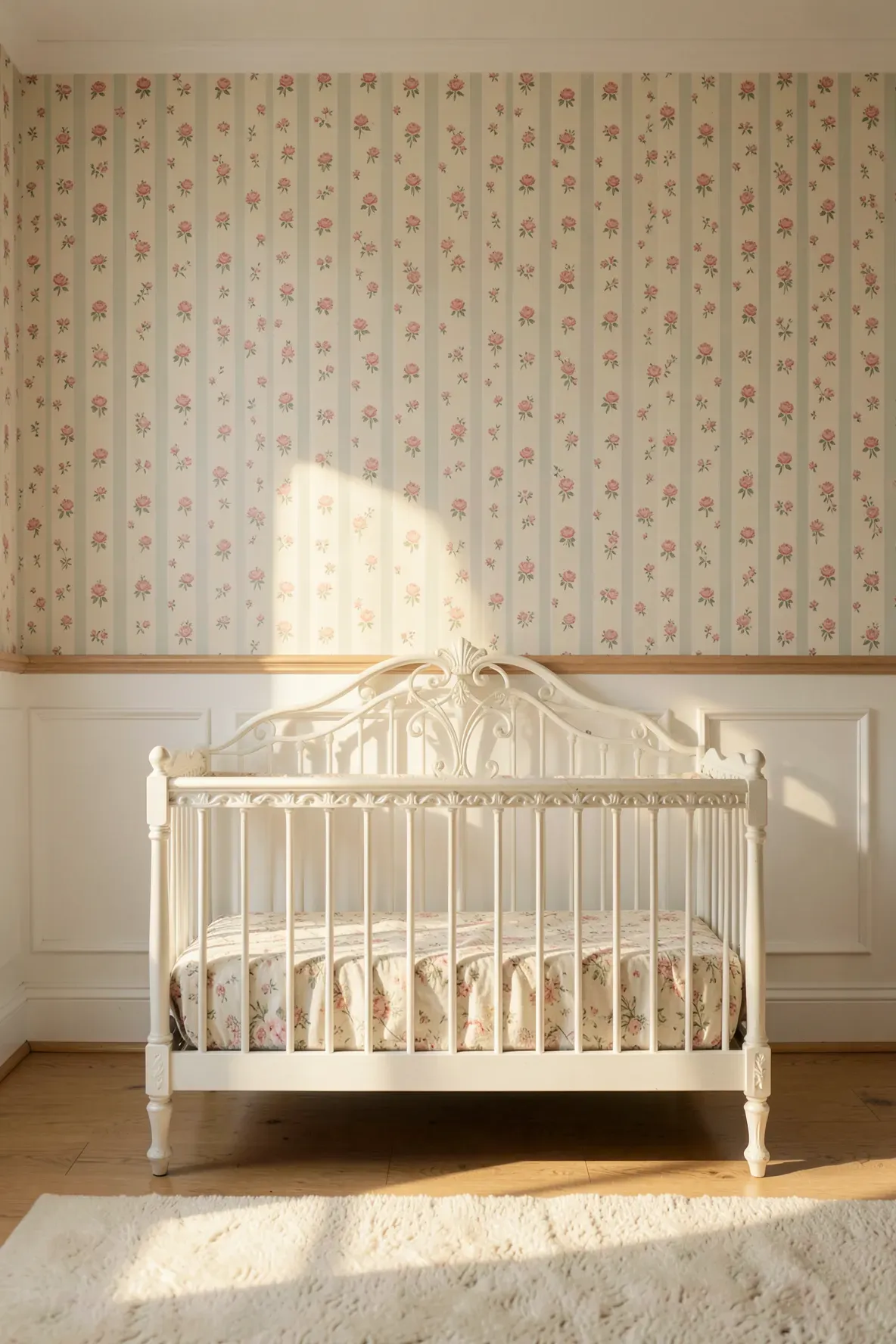
Some wallpapers combine thin stripes with small floral patterns. This creates a very traditional, vintage look that feels sweet and nostalgic. It’s a great way to add both pattern and color to a nursery without it feeling too modern.
This style works best in rooms with classic, ornate furniture. It’s a very detailed look, so you might want to use it on just the top half of the wall with a chair rail or wainscoting on the bottom to break up the pattern.
Dusty Rose and Charcoal Stripes
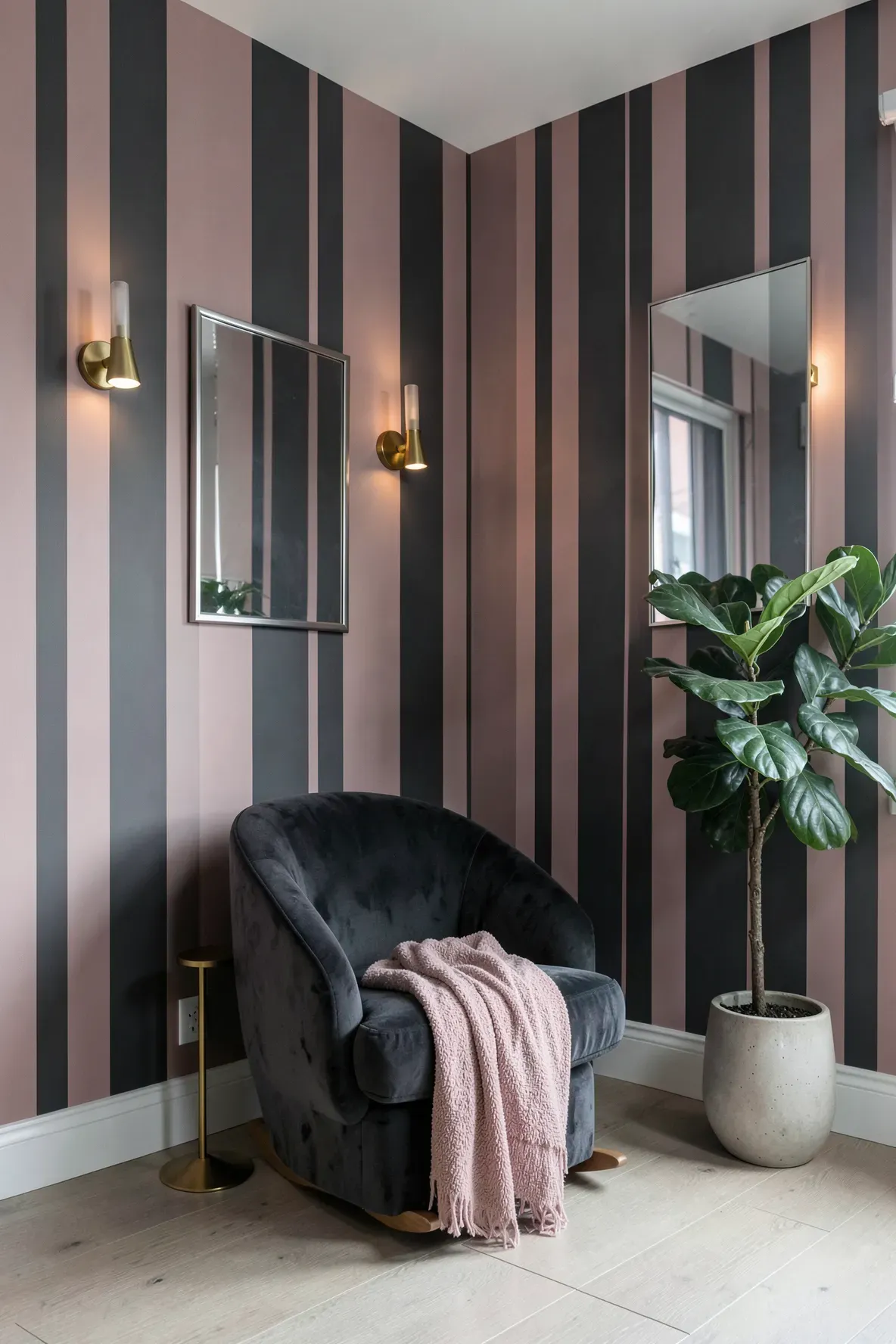
Dusty rose and charcoal offer a modern take on a pink nursery. The dark gray stripes ground the pink and keep it from feeling too sugary or bright. This color palette is very trendy and looks great with both gold and silver accents.
This combination works well for parents who want a feminine touch that still feels sophisticated. The charcoal adds a bit of depth to the room, making the pink elements pop without dominating the entire design.
Soft Sky Blue and Mint Green Bands
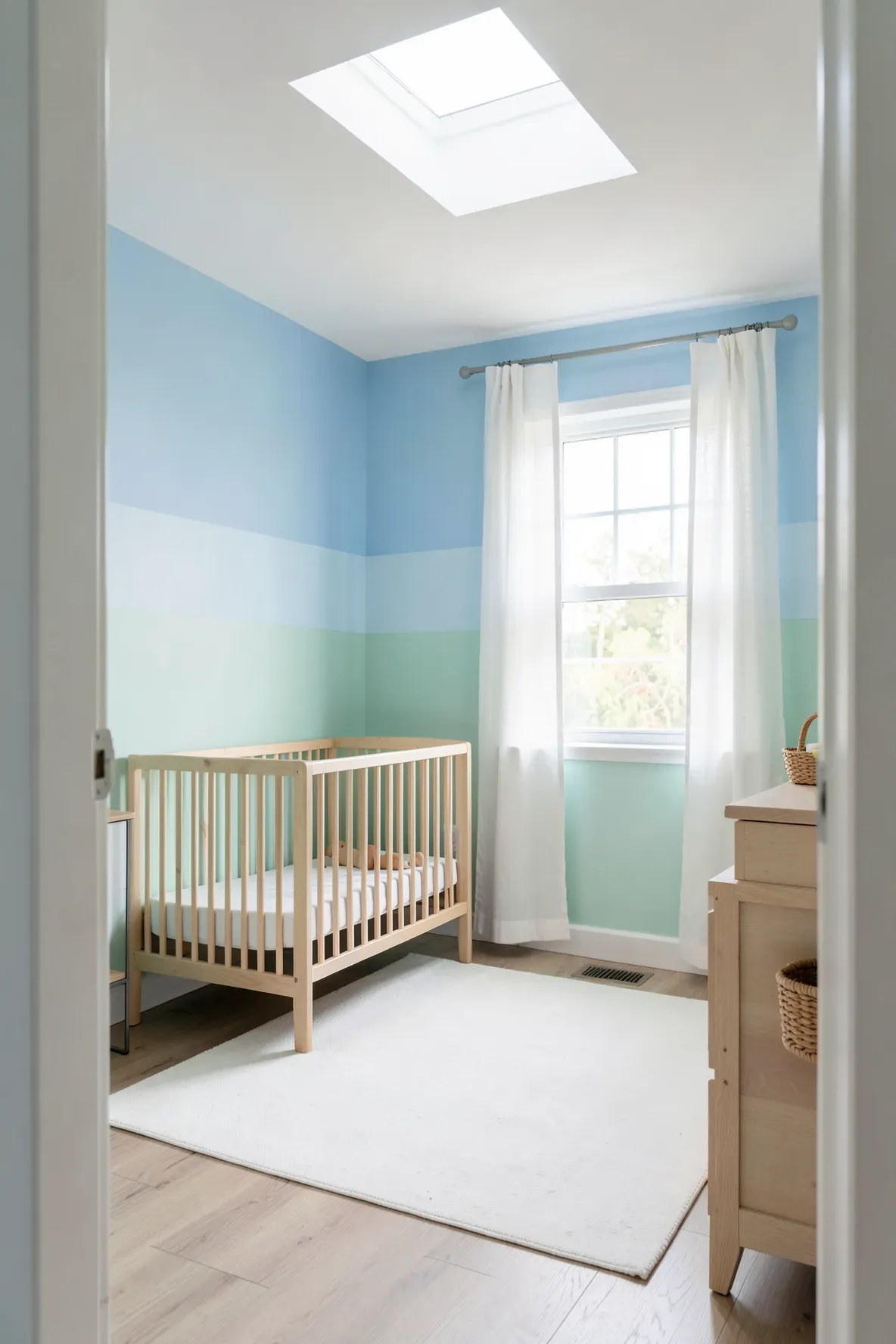
Combining two different colors in a stripe pattern can be very refreshing. Sky blue and mint green are both cool tones that promote a sense of calm. Alternating these colors in wide bands creates a soft, colorful look that is perfect for a peaceful baby room.
This color duo is great for a gender-neutral space. It feels like the colors of nature—sky and grass—and pairs well with light-colored woods and white fabrics. It’s a bright and airy choice that makes any nursery feel like a breath of fresh air.
Stripes are a versatile tool for any nursery design. They can make a room feel taller, wider, or more energetic depending on how you use them. By choosing the right color and scale, you can create a space that is both stylish for you and comfortable for your baby. Whether you go with a bold accent wall or a subtle pinstripe, these designs offer a timeless look that will last for years.