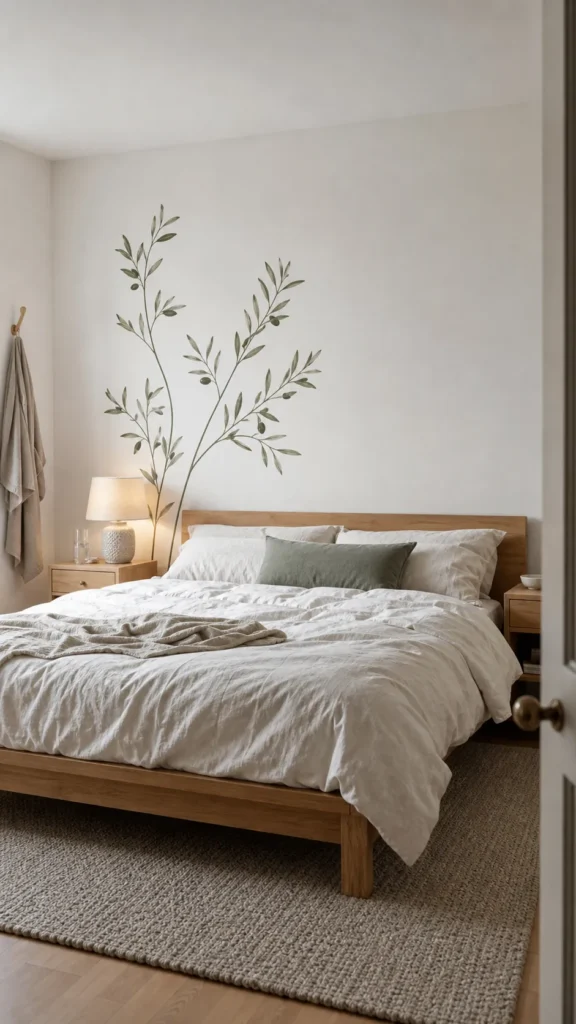
15 Bedroom Wall Decal Ideas for a Calm, Finished Space
A bedroom can have the right bed, soft bedding, and warm lamps yet still feel unfinished because the wall behind it has no visual anchor. Bedroom wall decals solve that gap without requiring a heavy headboard or a permanent painted feature. The trick is restraint: the calmest rooms use one clear shape, a limited palette, and enough empty wall for the eye to rest.
Before ordering, test a sample on the actual wall for several days. Smooth, fully cured paint gives removable decals the best chance of lying flat; pronounced texture can show through, weaken adhesion, or create bubbles. Clean dust and residue first, follow the maker’s surface guidance, and use low heat only if the manufacturer recommends it for removal. With that practical groundwork in place, these bedroom wall decals can make the room feel composed rather than crowded.
A Soft Painted-Arch Decal Behind the Bed
A broad arch gives a bed the presence of a headboard while keeping the floor clear. Choose a muted clay, mushroom, dusty blue, or sage shape that is slightly wider than the mattress. The extra width matters: an undersized arch can look like a sticker floating behind the pillows, while a generous one reads as deliberate bedroom accent wall decor.
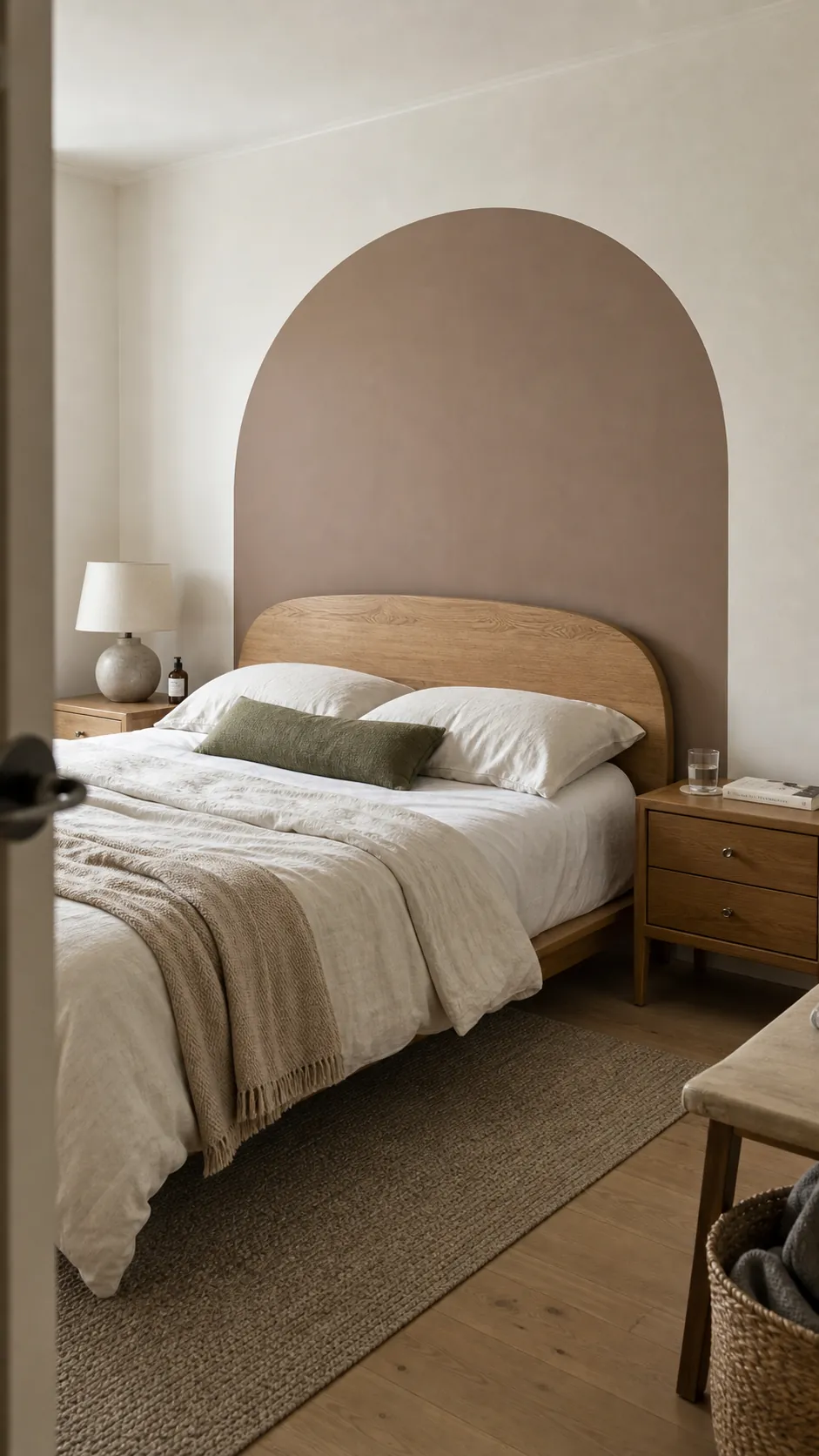
Keep the bedding quieter than the arch: washed linen, one small lumbar pillow, and a simple throw are enough. That hierarchy lets the curve soften the room without becoming a theatrical focal wall.
Slim Botanical Stems Rising from One Corner
Fine botanical stems bring movement to a plain wall without covering it. Place them low in one corner so they seem to grow from behind a nightstand, then let a few leaves travel upward. Asymmetry works especially well in a calm bedroom because it balances the bed without boxing it in.
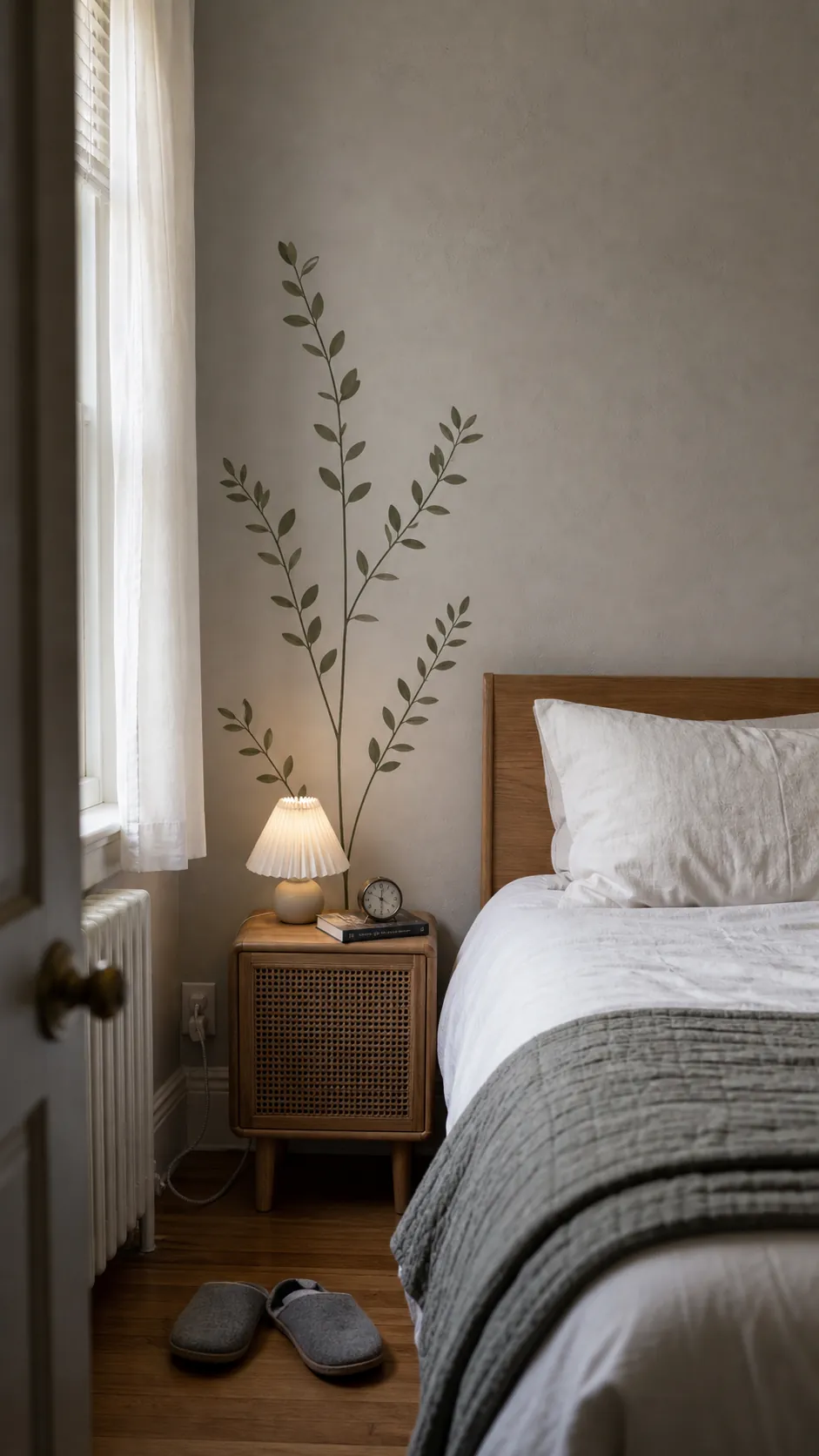
Look for an olive, eucalyptus, or meadow-grass silhouette with visible spacing between leaves. Dense tropical foliage creates a different, more energetic mood; sparse stems preserve the sense of air around the furniture.
A Tonal Sun Disc Above the Headboard
A single sun disc is one of the simplest above-bed wall decals to position. Center it on the mattress rather than the entire wall, and leave a comfortable gap above the headboard so the shape does not appear trapped. A warm sand disc on cream paint or a pale taupe disc on greige creates contrast without glare.
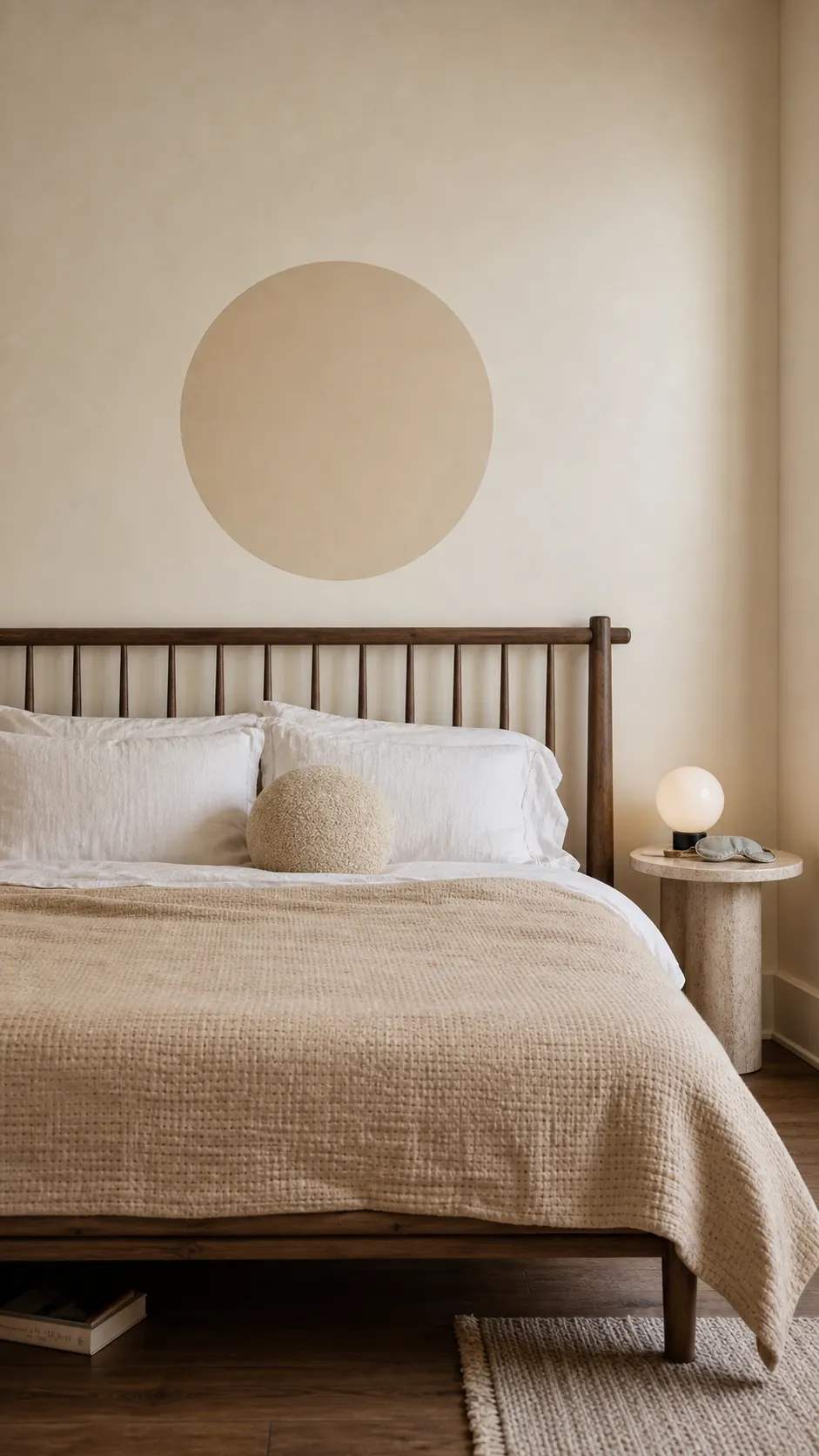
Avoid adding rays, stars, and a quote around it. The circle succeeds because it gives the eye one stable destination and repeats the roundness of a lamp, cushion, or bedside table elsewhere in the room.
Scattered Meadow Flowers with Generous Spacing
Small flower wall stickers for a bedroom can look sophisticated when they are spaced like a loose field rather than a tight repeat. Start with the largest blooms near the bed and taper to smaller sprigs toward the wall edge. Use only two or three related colors so the arrangement remains coherent.
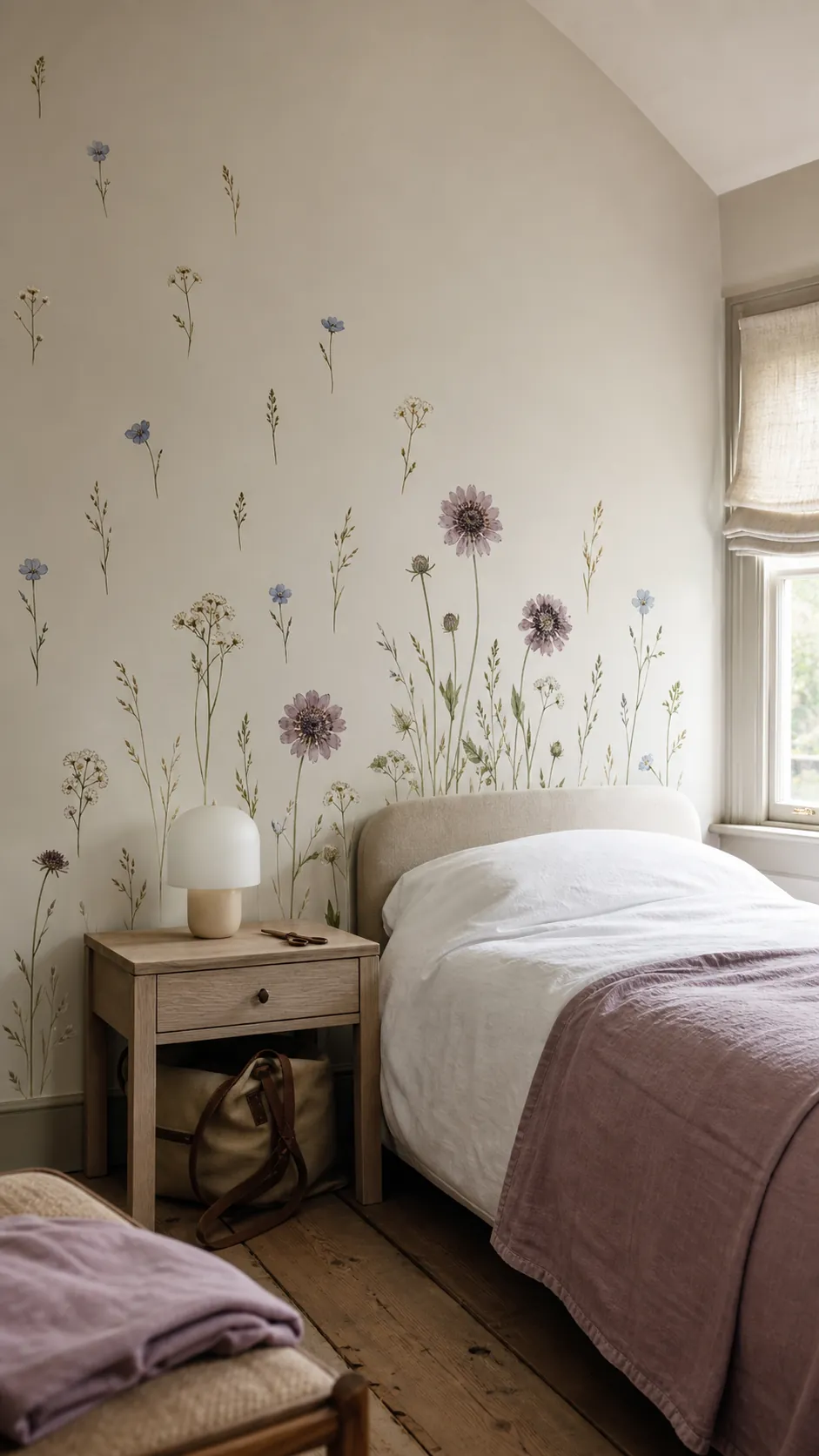
Lay the pieces on the floor first and photograph the arrangement. That quick rehearsal prevents the common problem of clustering everything at eye level and running out of smaller elements before the composition feels finished.
A Quiet Line-Drawing Mural
A continuous charcoal line drawing can span a large wall while remaining visually light. Faces, folded leaves, or an abstract contour are effective choices, provided the line weight stays slim and the background wall remains visible. This is a useful alternative to removable bedroom wallpaper when a full repeat would feel too busy.
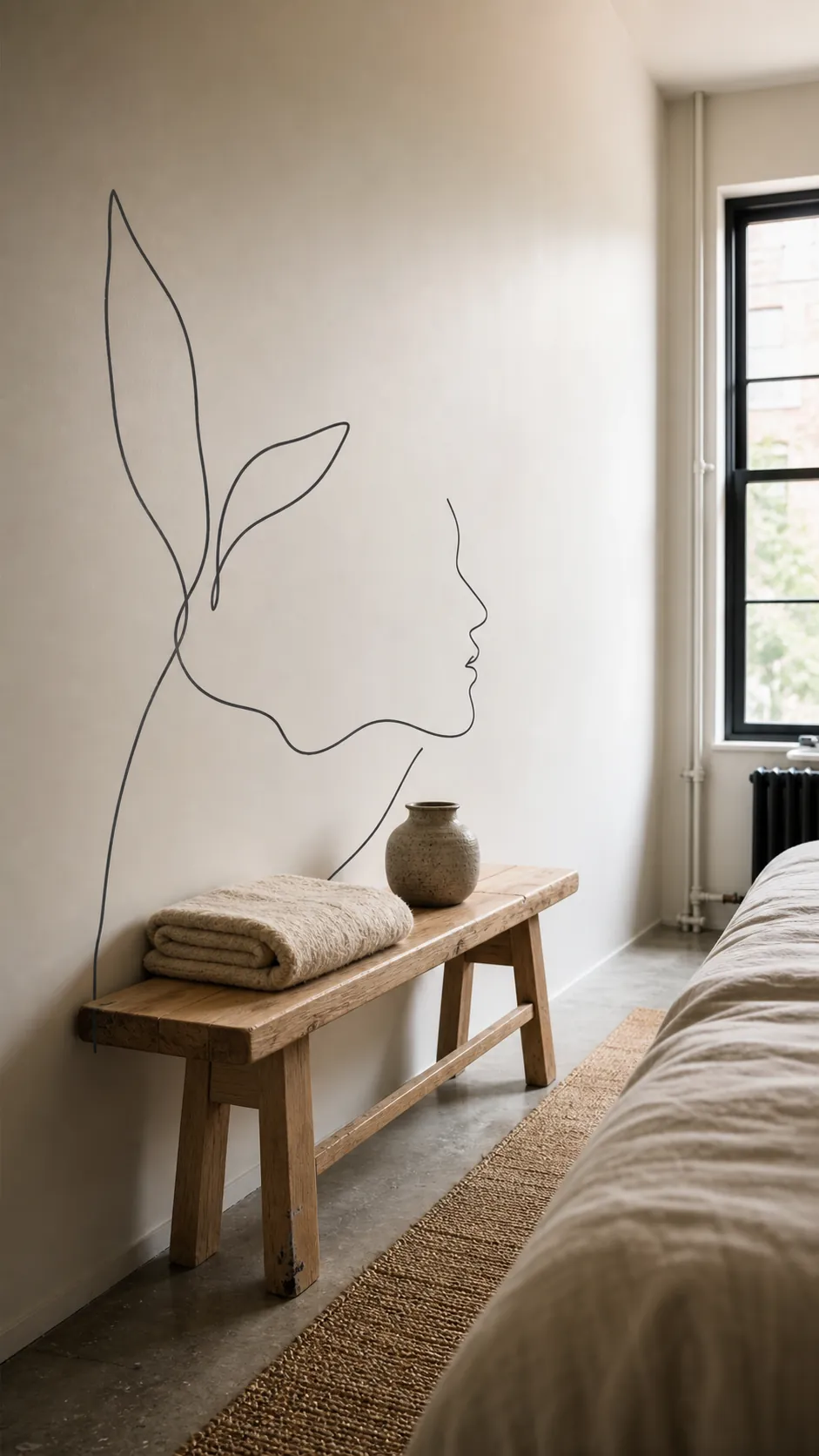
Keep nearby objects sculptural but plain—a paper shade, a low oak bench, or one ceramic vessel. The decal should supply the drawing while the furnishings supply texture.
Minimal Crescent-Moon Decals Near a Reading Nook
A small group of crescent moons can define a reading chair or bedside corner without turning the entire room into a theme. Choose matte shapes in off-white, pewter, or muted brass and arrange them on a gentle diagonal. Three to five elements usually feel more intentional than dozens of tiny stars.
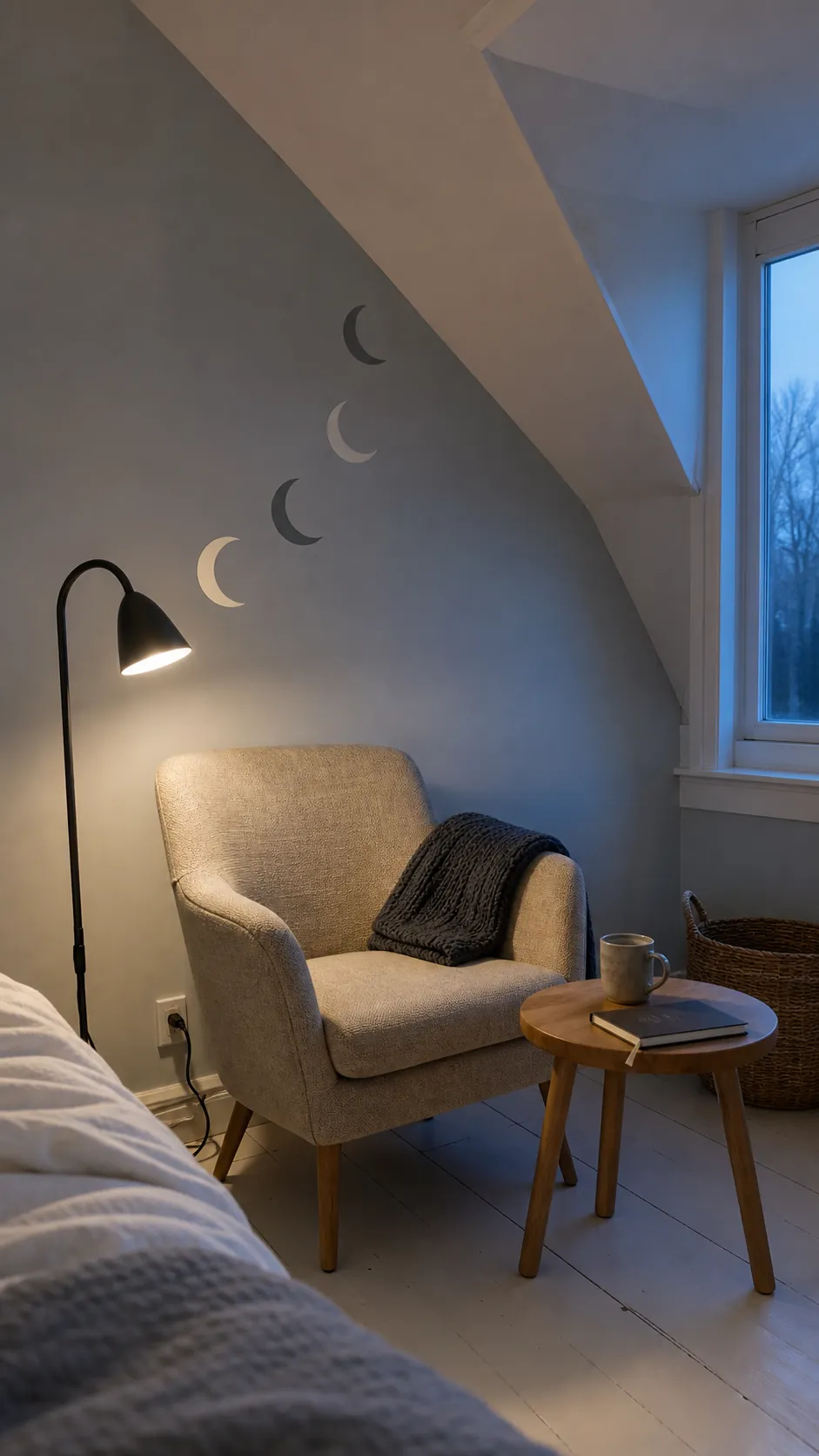
Position the lowest moon above shoulder height when seated so the arrangement does not compete with the chair. A shaded floor lamp below it creates a practical pool of light and gives the celestial motif a grounded purpose.
A Low Wainscot-Style Color Block
A removable color-block decal across the lower third of a wall can imitate painted wainscoting with no trim. A straight horizontal edge makes a narrow bedroom feel wider, while a soft scalloped edge adds a little character. Keep the color close to the wall tone for a restful, architectural effect.
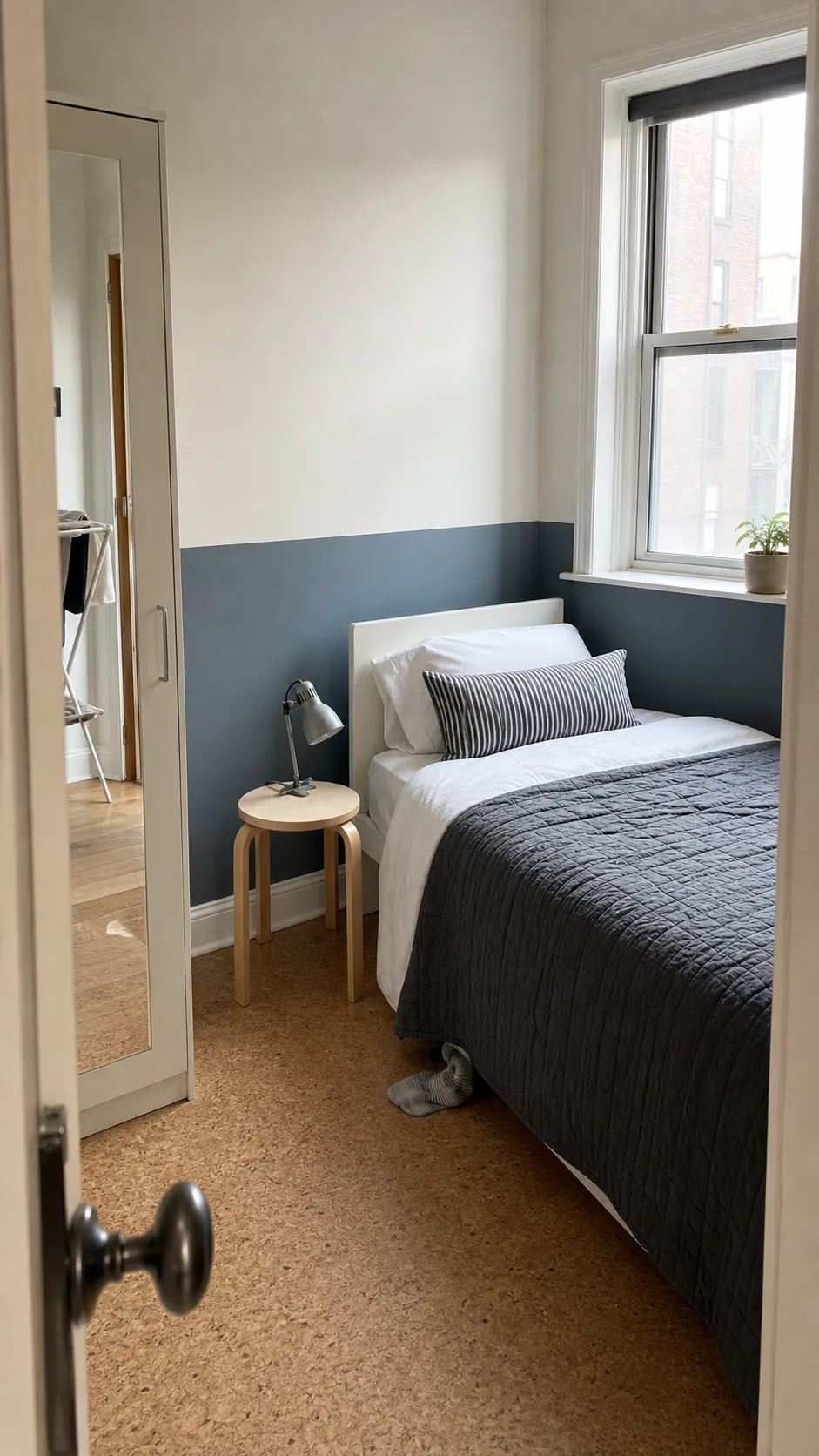
Align the top edge with a meaningful feature, such as the headboard top or windowsill. Random height makes the block look temporary; alignment helps it read as part of the room’s architecture.
Watercolor Branches Framing the Bed
Two airy watercolor branches can frame a bed without a hard rectangle. Let one begin behind each nightstand, with the tips leaning inward but never touching above the pillows. This creates enclosure while leaving the central wall open and calm.
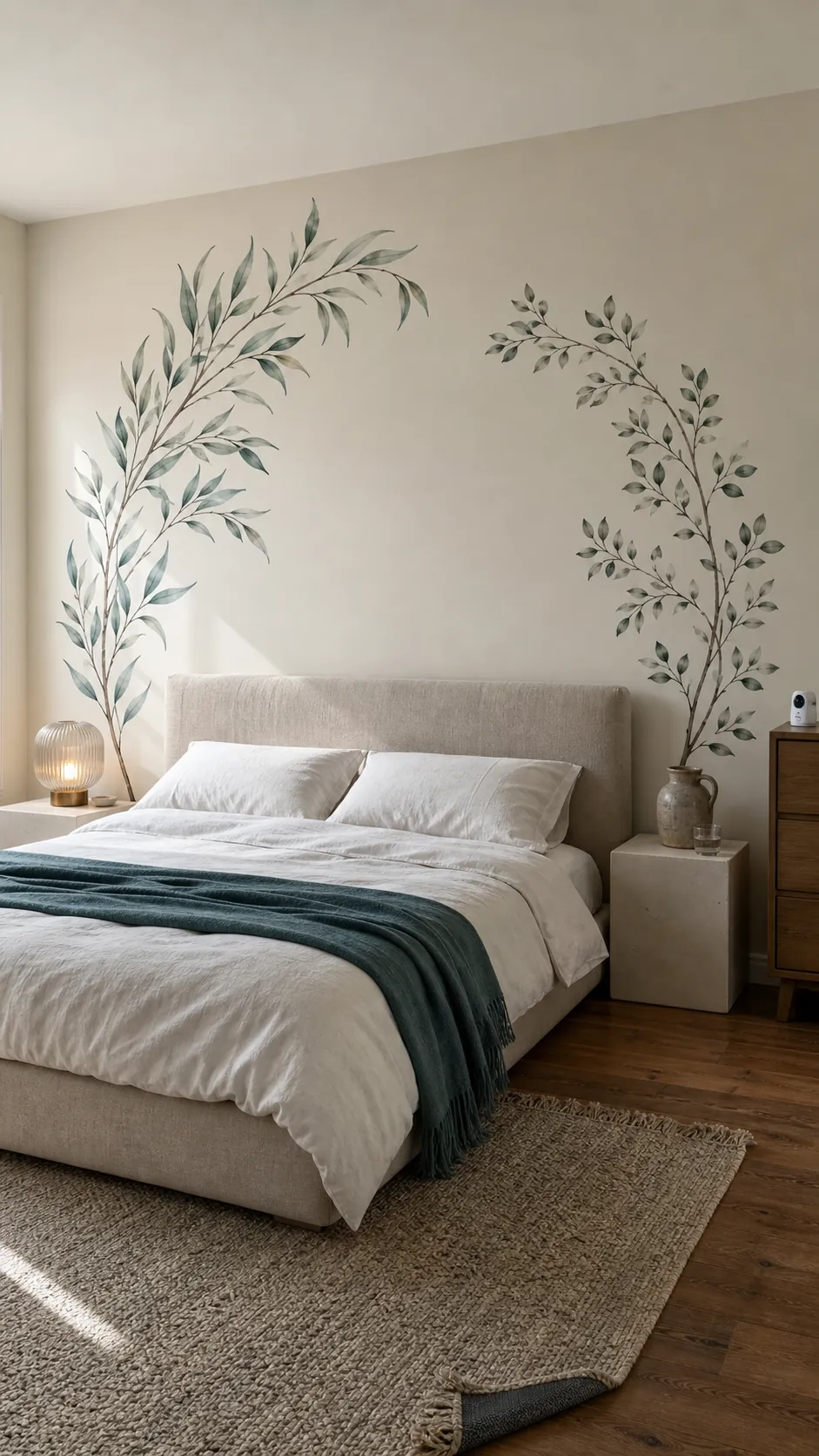
Choose translucent blue-green or gray-green leaves rather than high-contrast black outlines. Then repeat one of those soft hues in a throw or bedside vase, not across every textile.
An Oversized Monochrome Leaf Silhouette
One oversized leaf can be quieter than a pattern of fifty small ones. Place a simple ginkgo, fern, or monstera silhouette partly behind a dresser so it appears integrated with the furniture. A monochrome decal one or two shades darker than the paint gives depth without creating a sharp graphic break.
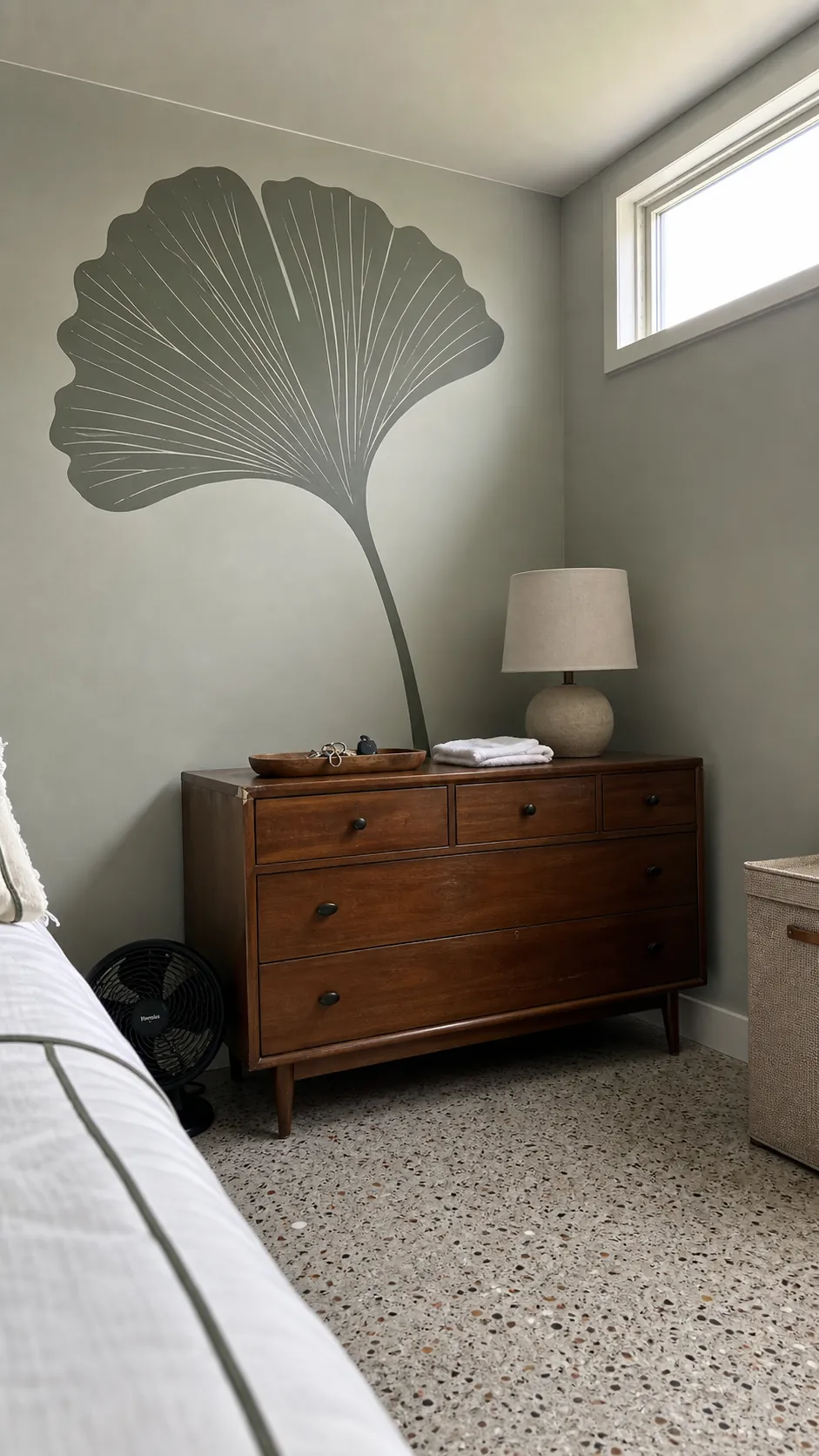
This approach is particularly effective in a room with low ceilings because the tall leaf draws the eye upward. Keep its outer edges clear of switches, frames, and door trim.
A Restrained Terrazzo Scatter
Terrazzo decals can add small color notes without committing to removable bedroom wallpaper. Limit the scatter to one zone—behind a desk, beside a wardrobe, or across the lower half of the headboard wall. Pick irregular chips in oatmeal, rust, charcoal, and dusty rose, then leave more blank space than printed space.
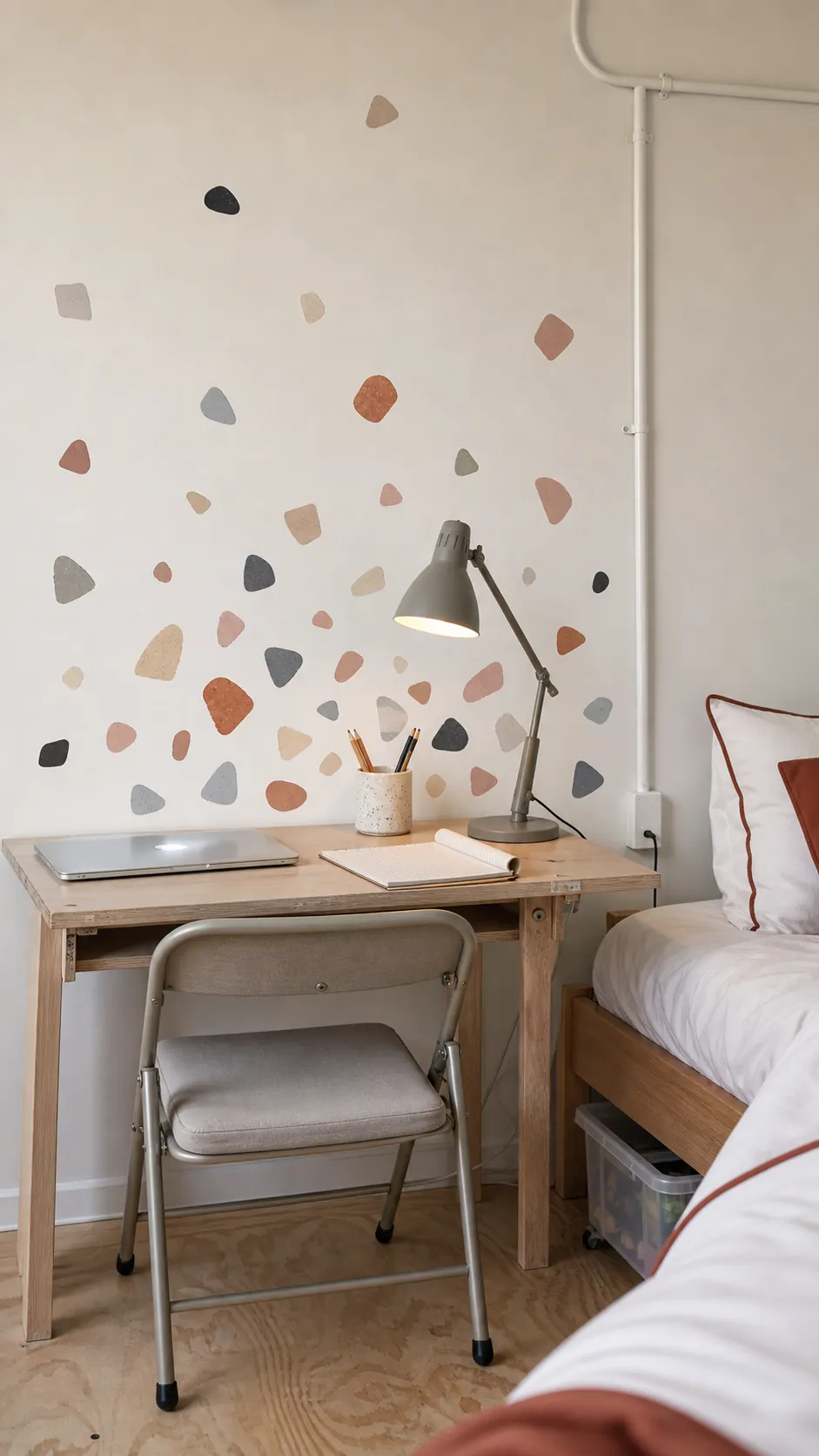
Vary each piece’s rotation and distance, but avoid a perfectly random spread. A loose concentration near the furniture that thins toward the edges looks considered and easier on the eye.
Fine Horizontal Stripes on a Single Wall
Thin horizontal decal stripes make a bedroom feel broader and can correct a wall that looks awkwardly tall. Use widely spaced lines in a softened color such as stone blue or warm gray. Four or five stripes are enough; a dense pinstripe repeat introduces visual vibration that works against sleep.
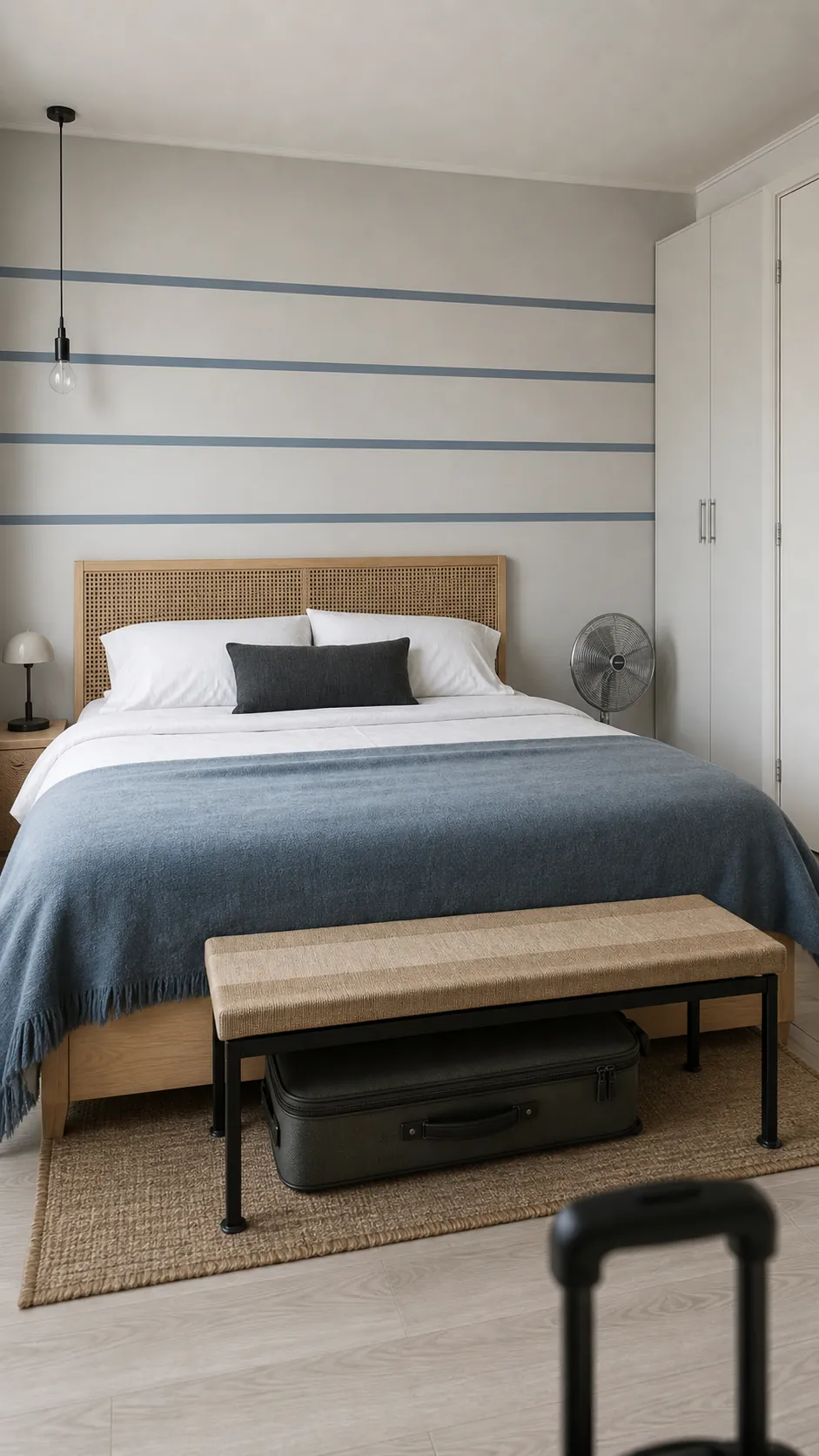
Use a level and mark the endpoints with low-tack tape before applying. Even a deliberately relaxed room benefits from straight reference lines; the calm effect depends on the stripes feeling stable.
A Minimal Mountain Contour at Pillow Height
A single mountain contour brings a landscape reference into the room without using a literal scenic mural. Run the line behind the bed at roughly pillow height and let the peaks vary subtly. A muted graphite or fog-blue line works with both modern and cozy bedroom wall decor.
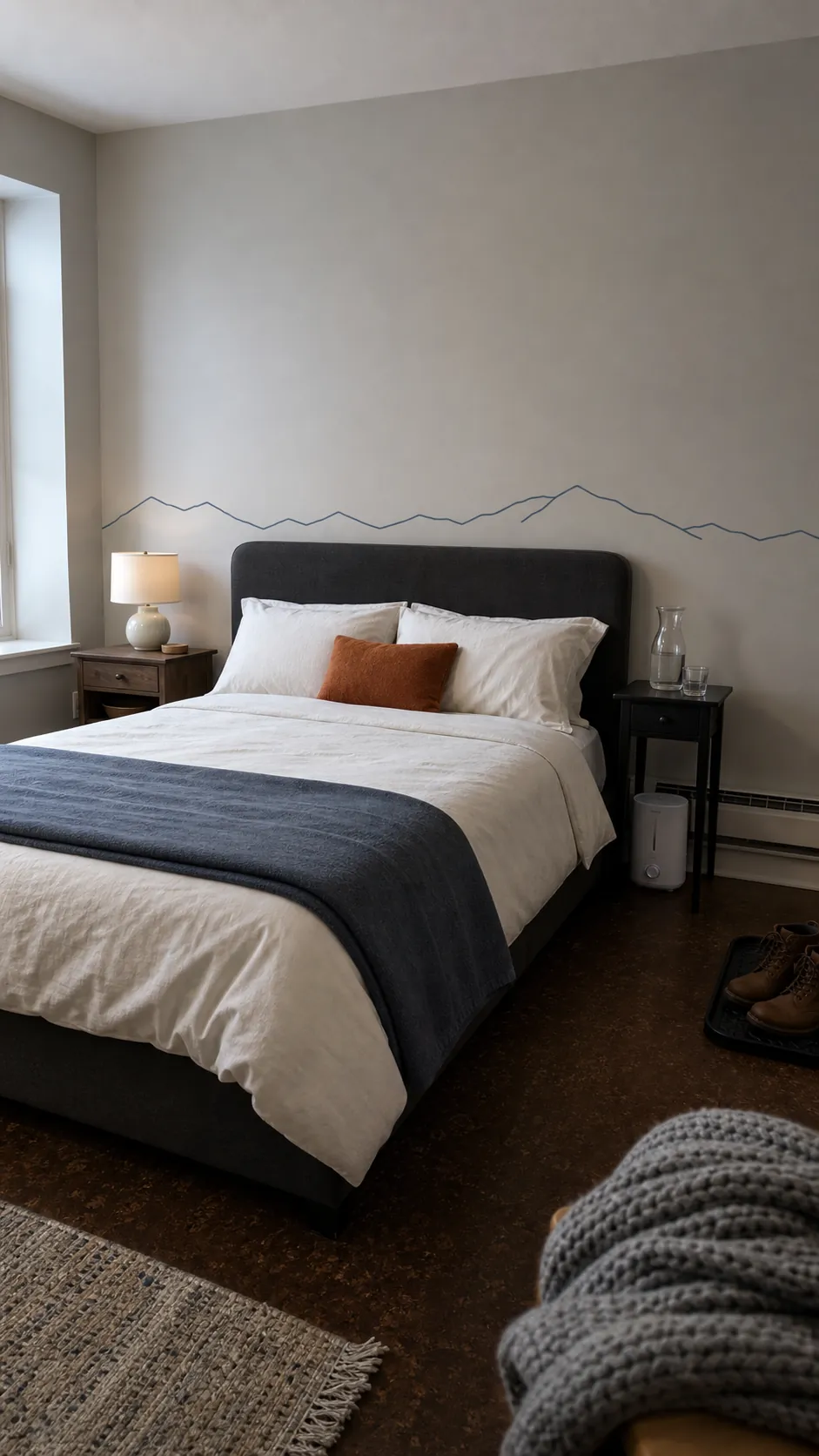
Resist filling the peaks with trees, stars, and wording. The line’s long horizontal movement is what visually connects the nightstands and bed into one settled composition.
Dappled Shadow Decals Beside a Window
Soft-edged decals that resemble leaf shadows can extend the feeling of daylight even when the view is limited. Place them on the wall next to a window, not directly behind the bed, so the source feels believable. Taupe-gray shapes on warm white paint create the subtlest result.
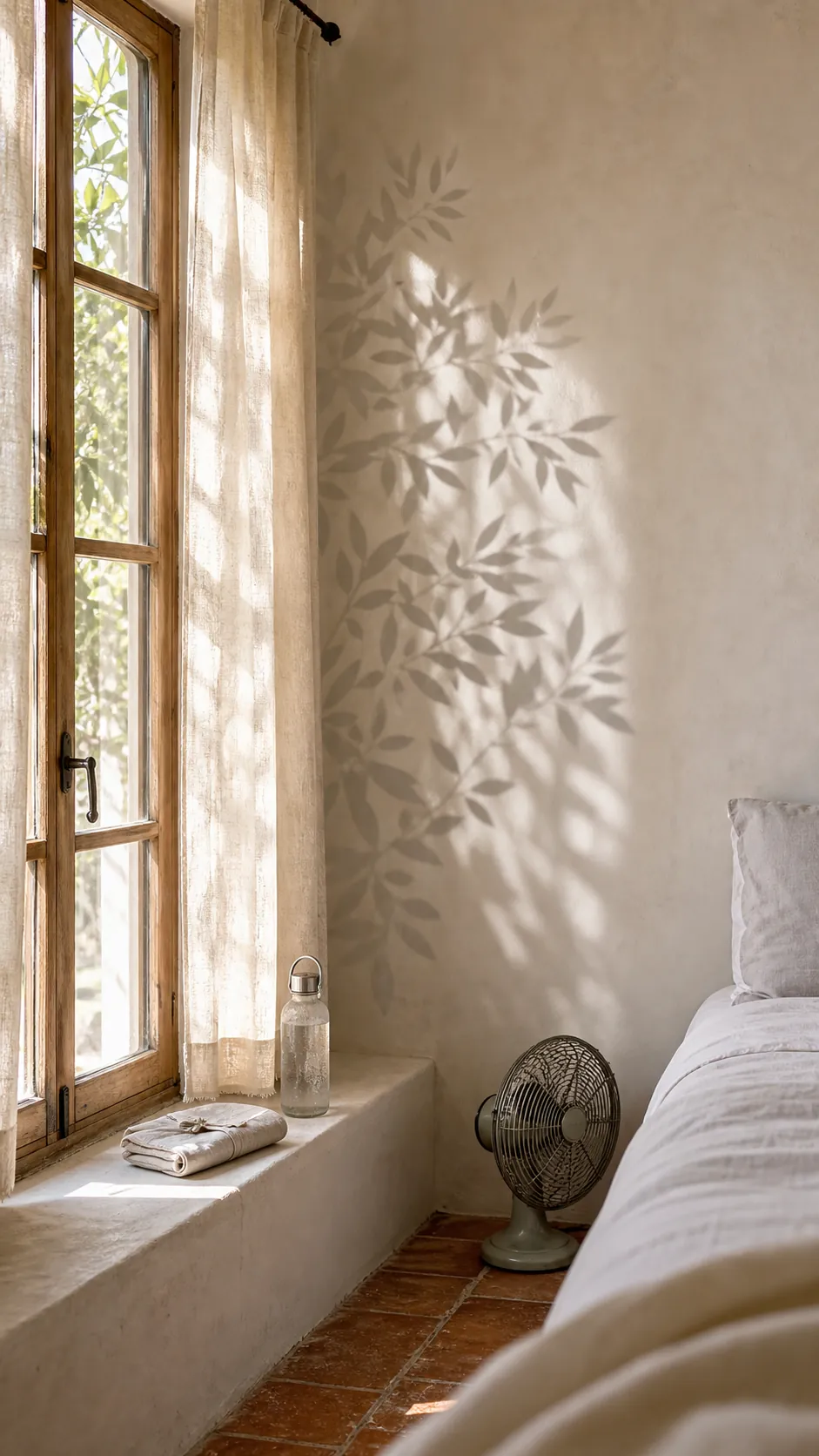
Because the motif already imitates changing light, keep the real window treatment simple. Unlined linen or a plain roller shade preserves the effect better than a strongly patterned curtain.
A Narrow Tone-on-Tone Bedside Panel
A tall rectangular decal behind one nightstand creates a defined bedside zone and makes an ordinary lamp feel more intentional. Choose a tone only slightly deeper than the paint and make the panel narrower than the table. The result resembles a precise paint block without dominating the sleep area.
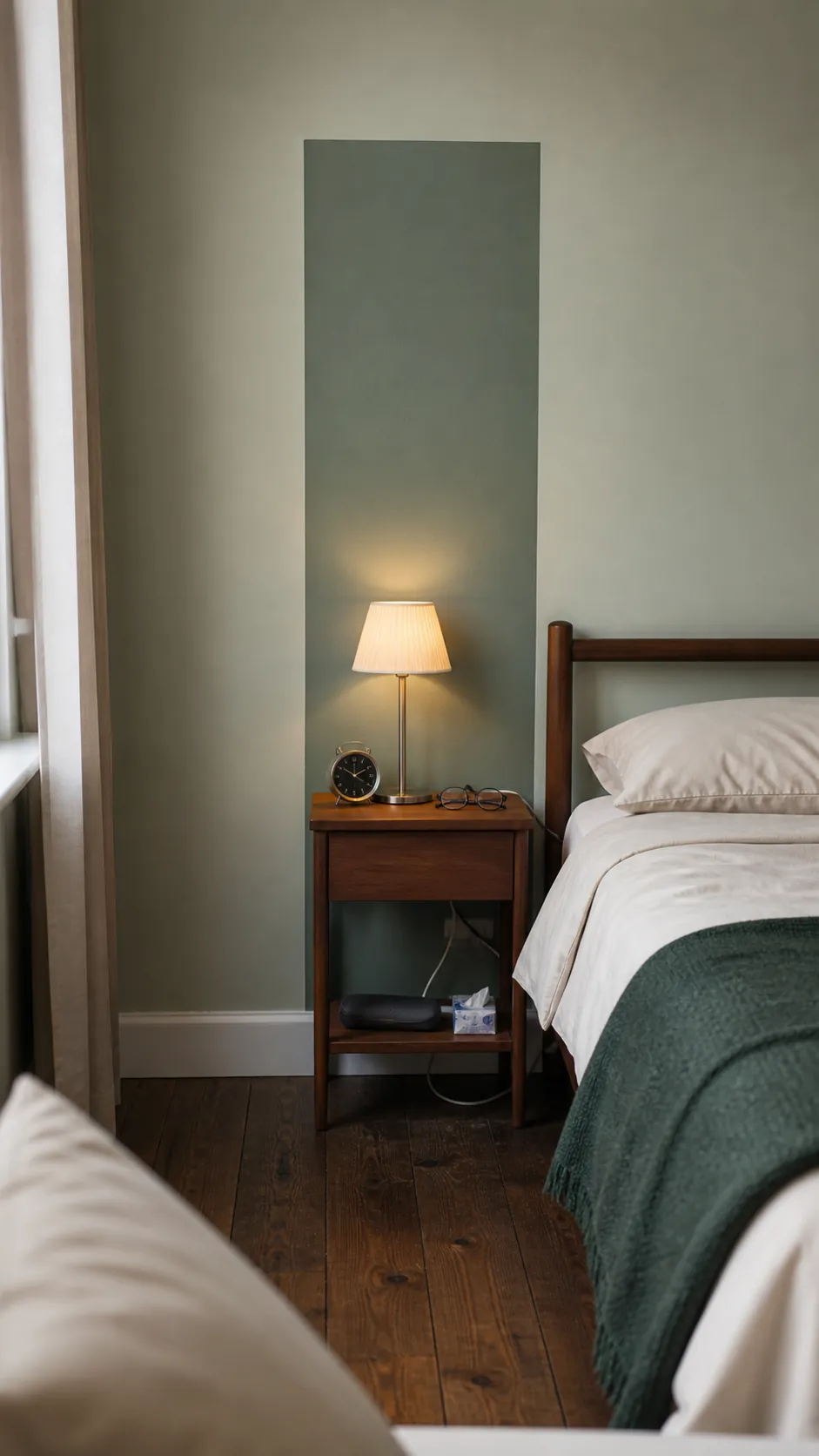
In a symmetrical room, use matching panels. In a smaller bedroom, one panel paired with a floor lamp or plant on the opposite side can create balance without consuming more wall.
An Abstract Horizon That Leaves Breathing Room
For the most finished look, use a low abstract horizon made from two or three gently overlapping shapes. Place it behind the bed or a low dresser, keeping the upper half of the wall almost empty. Curves in mineral blue, chalk, and muted umber suggest distance without depicting a literal scene.
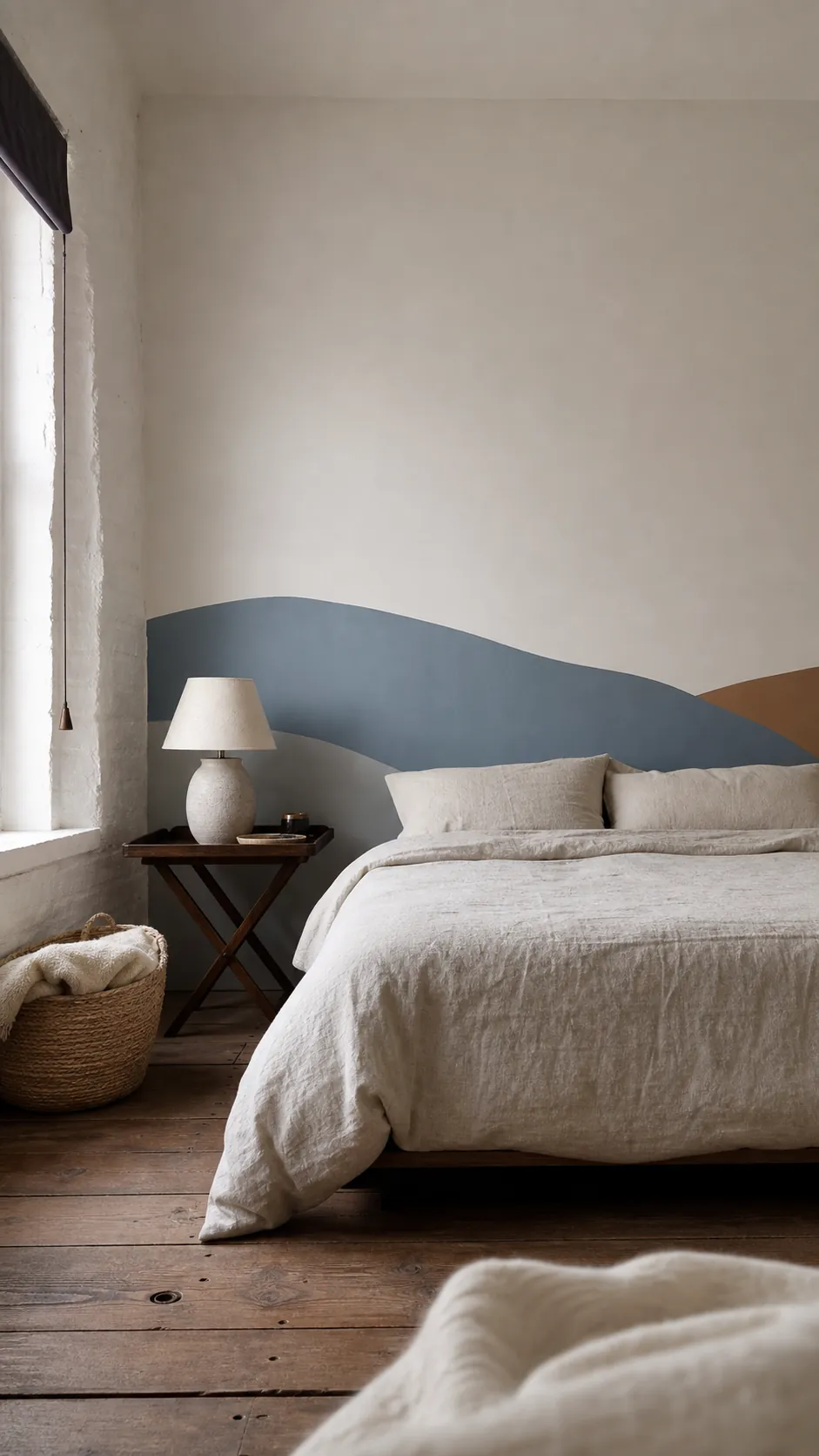
The room will feel calm when the decal supports the furniture instead of asking for attention on its own. Measure from the mattress, test the material on your paint, and stop adding pieces once the bed and wall read as one composition. That restraint is what turns a removable accent into a room that feels genuinely complete.