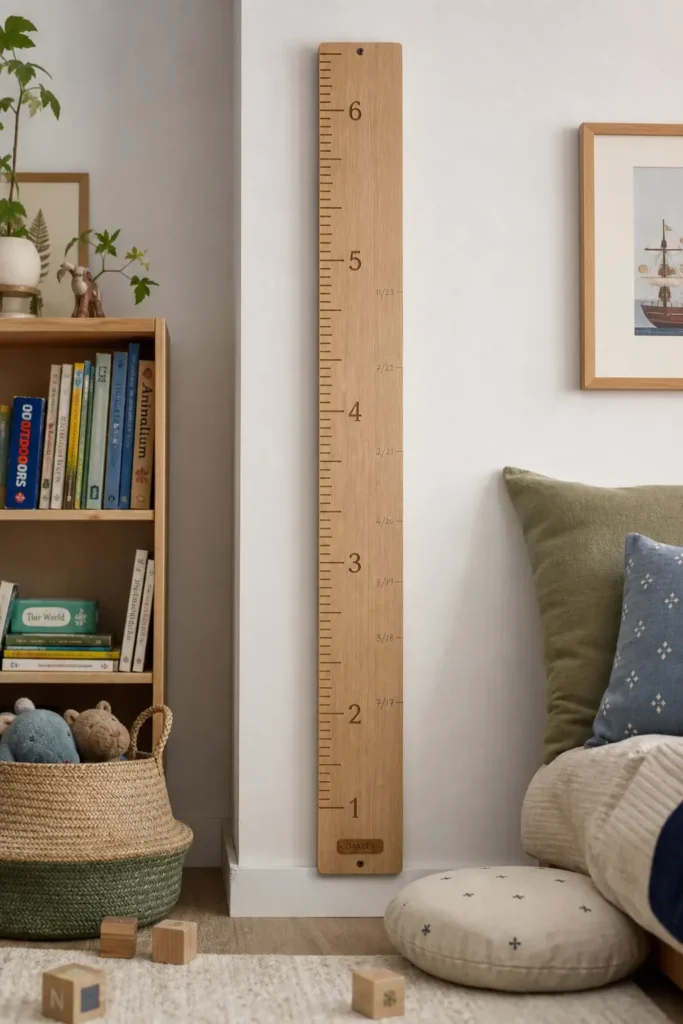
17 Growth Chart Ideas for Kids Rooms That Become Keepsakes
A kids height chart can be more than a measuring tool. The best designs become part of the room, make children eager to stand tall, and preserve dates and tiny milestones you would otherwise forget. Parents repeatedly raise one practical concern: marks painted onto a wall or doorframe cannot come along when the room is repainted or the family moves. These 17 growth chart ideas for kids rooms favor designs that are readable, personal, and portable.
Personalized Wooden Ruler
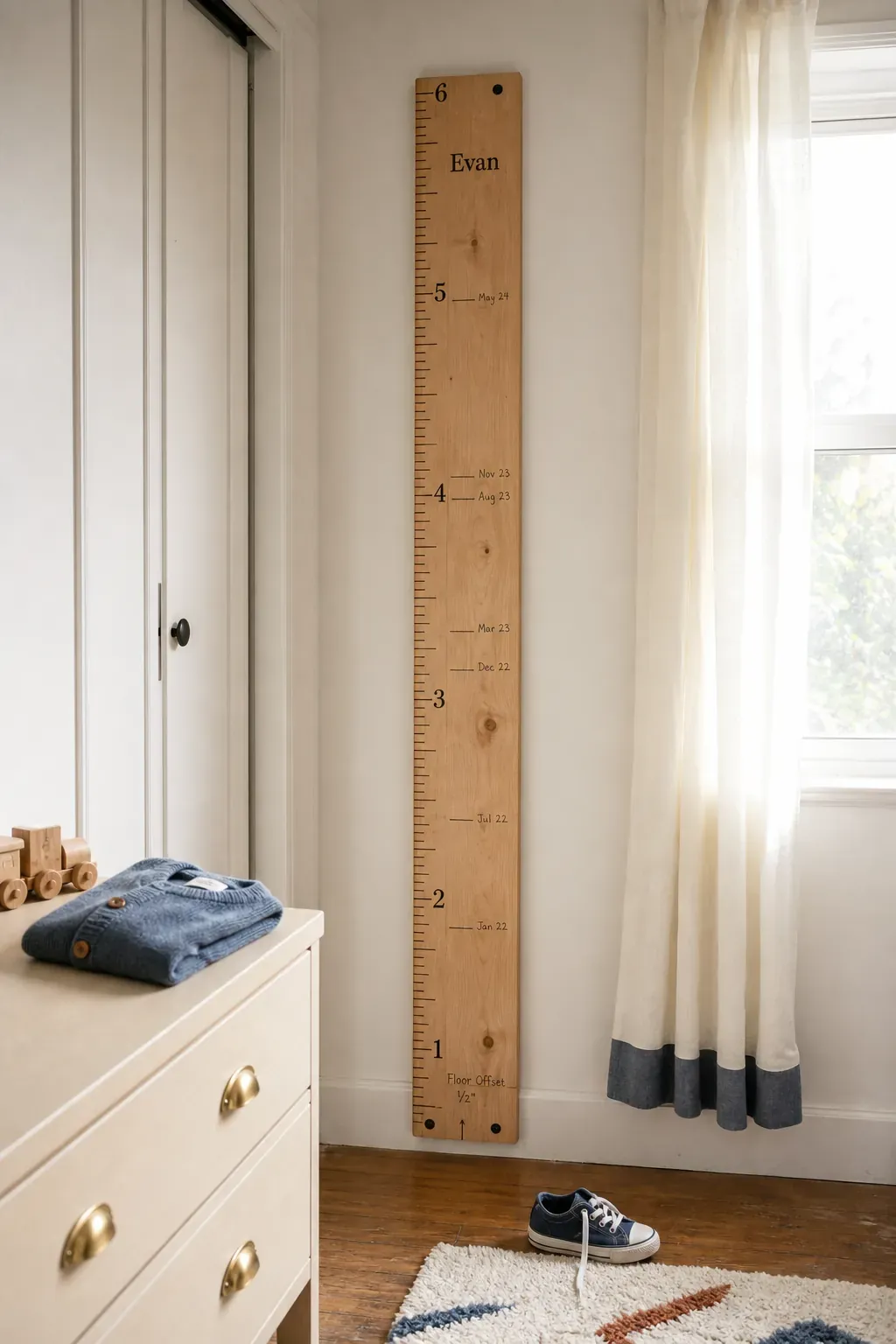
A solid wood ruler is the classic keepsake choice because pencil marks, names, and dates become part of the object rather than the wall. Choose a straight board with clearly spaced increments and have the child’s name painted or engraved near the top. Mount it at the exact offset specified by the scale; never assume the printed zero begins at floor level.
Canvas Woodland Animals
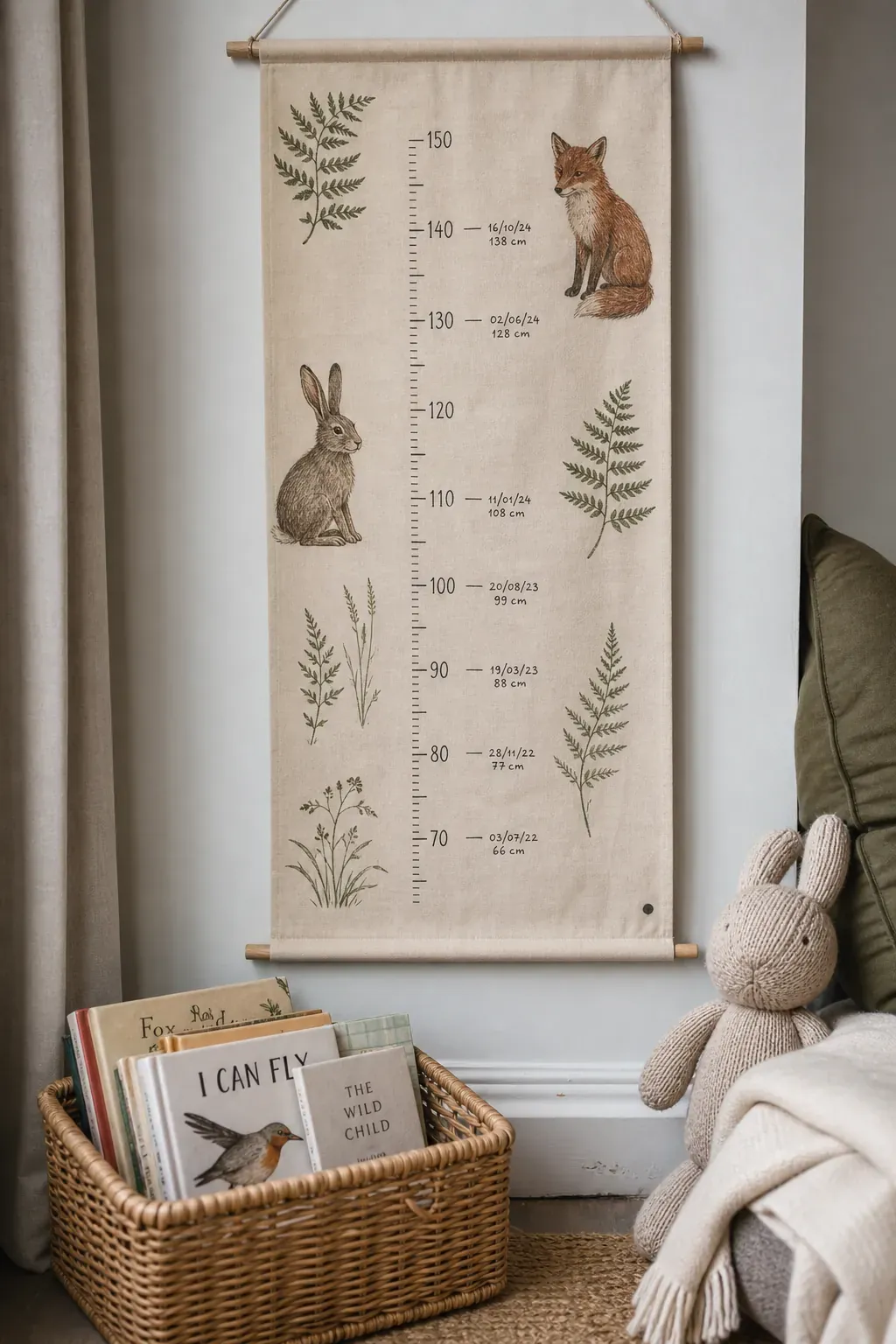
A roll-up canvas chart softens a nursery and stores easily if you move. Foxes, bears, and rabbits provide natural visual checkpoints without making the scale hard to read. Use an archival fabric marker for dates, and test it on the back first so ink does not feather through the weave.
Removable Rainbow Wall Decal
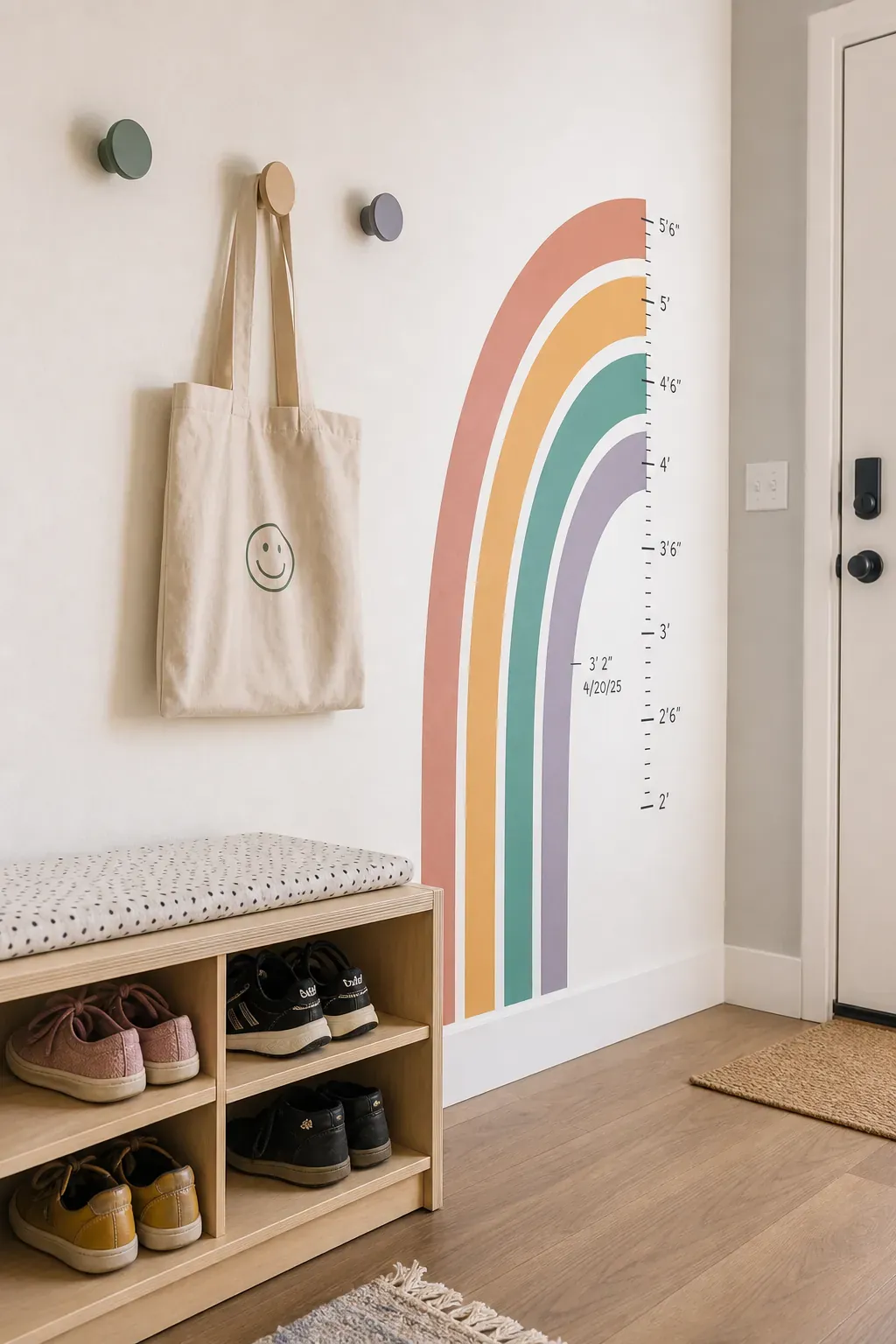
A peel-and-stick rainbow turns a narrow strip of wall into cheerful children wall decor. It suits renters when the vinyl is designed for clean removal, but keep the backing paper in a labeled tube if you hope to relocate it. Apply it only to cured, clean paint and check the starting height with a metal tape.
Minimal Scandinavian Numbers
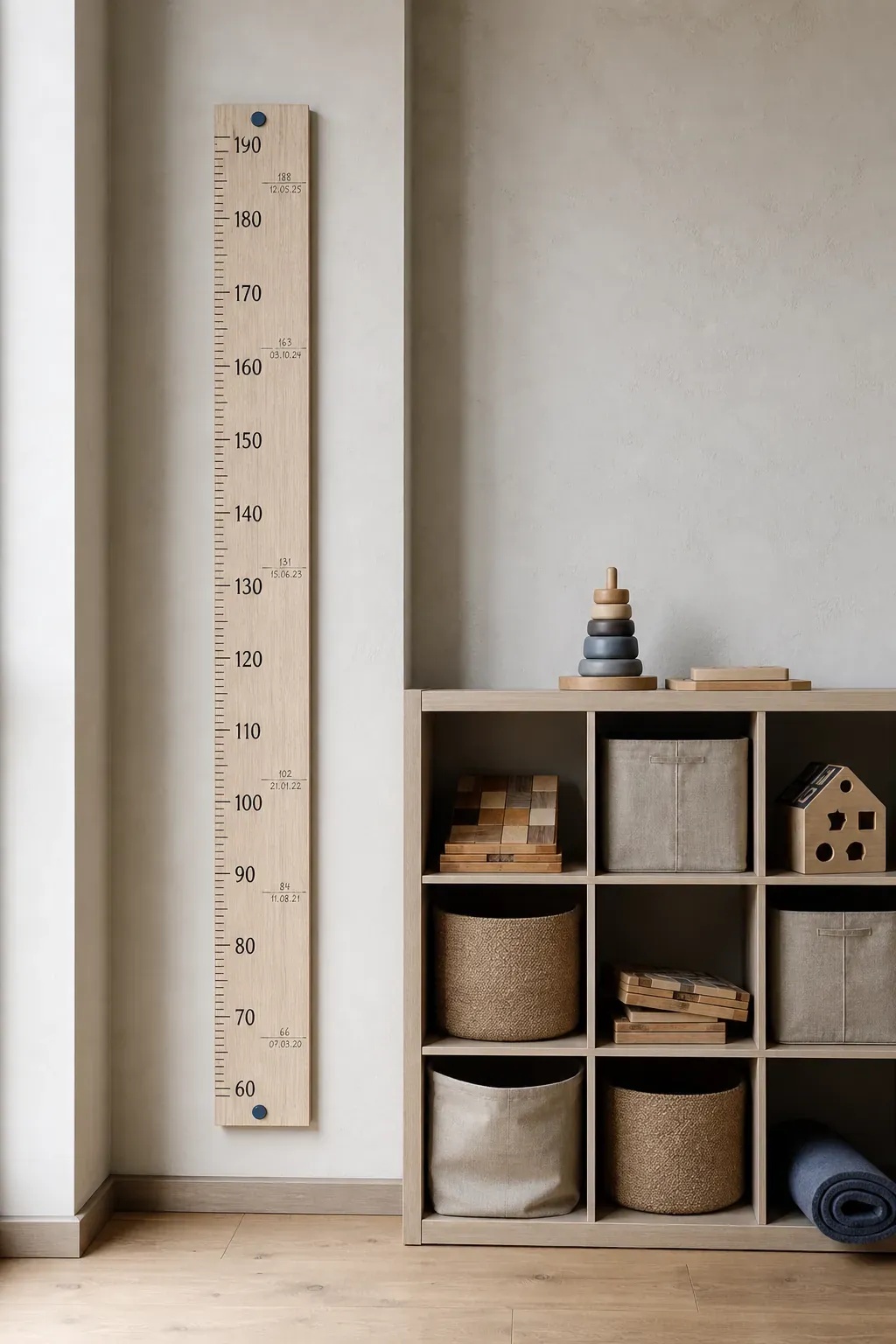
For a room that already has strong color or patterned bedding, a restrained chart with black numerals and small timber ticks prevents visual clutter. The generous spacing also makes handwritten measurements legible. Add one muted accent that repeats a rug or storage-bin color so the chart feels connected to the room.
Space Rocket Countdown
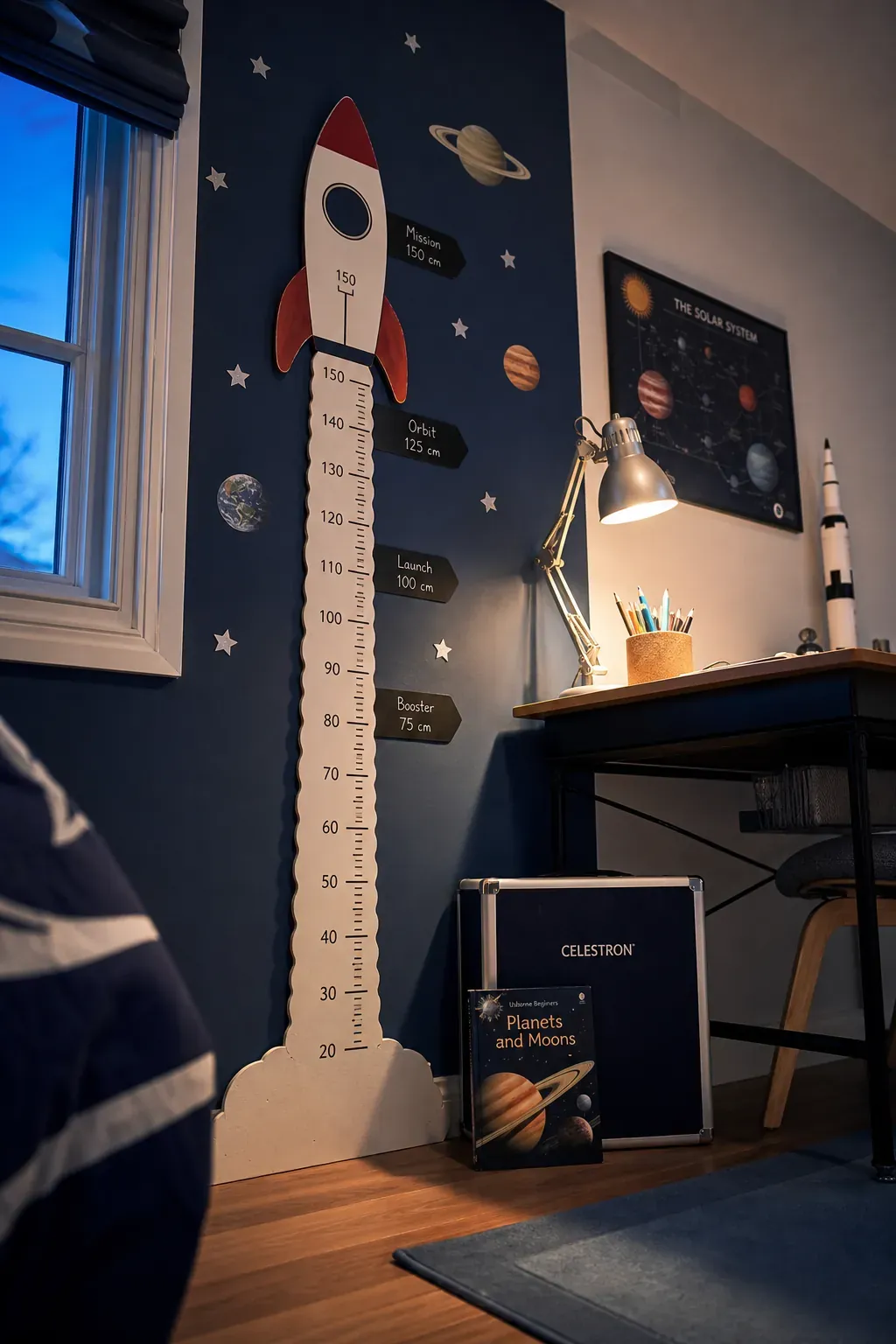
A rocket climbing through numbered planets makes measuring feel like a mission. Keep the scale on one straight edge rather than winding it around decorative orbits. Metallic stars can add excitement, but leave a clear matte area beside each interval for a fine-point marker.
Wildflower Garden Measure
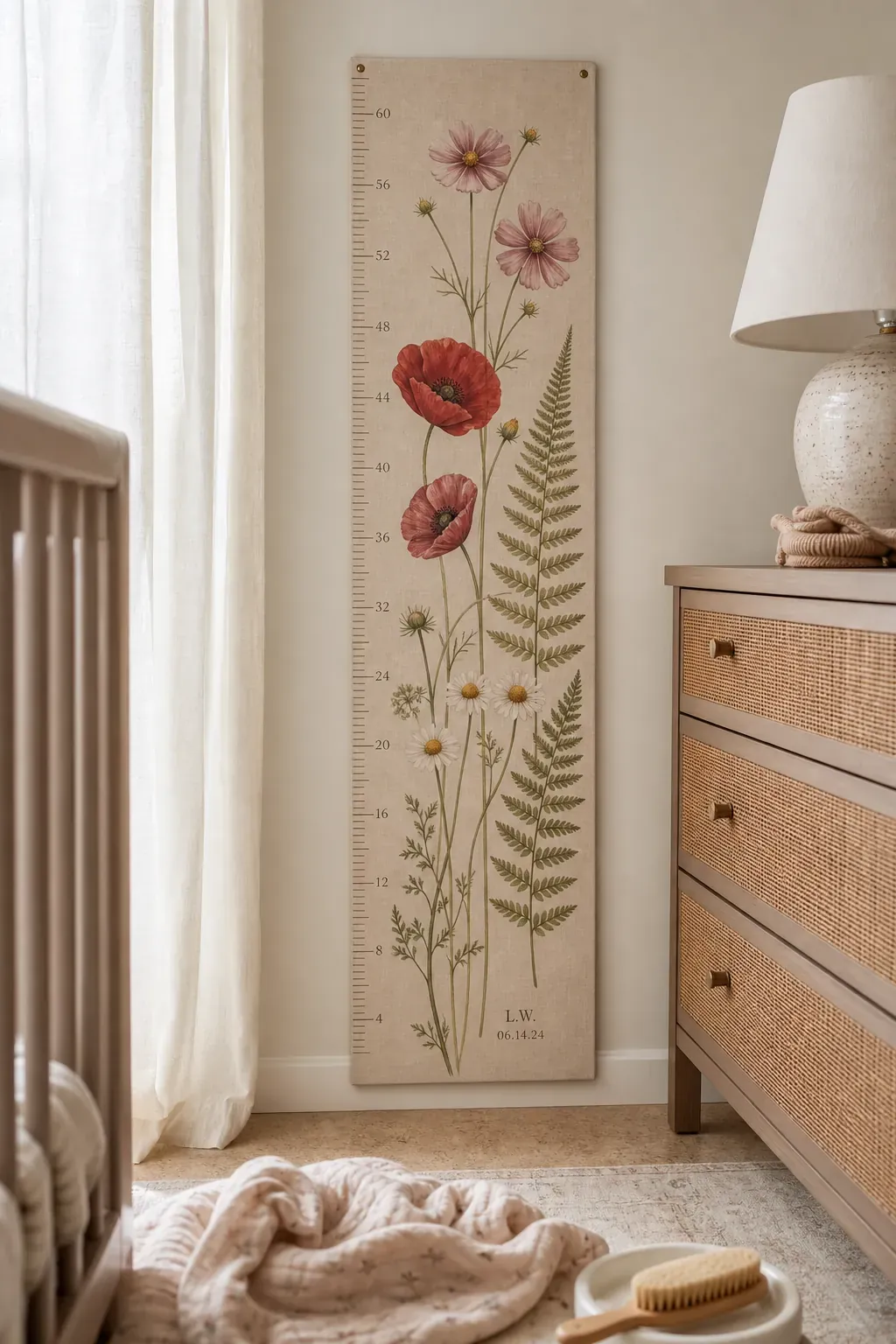
A vertical field of painted stems gives each new measurement a natural place among leaves and blooms. Choose botanical colors that can mature from baby room to school-age bedroom. A child’s initials and birth date at the base turn the chart into a personalized growth chart without crowding the measuring line.
Construction Crane Scale
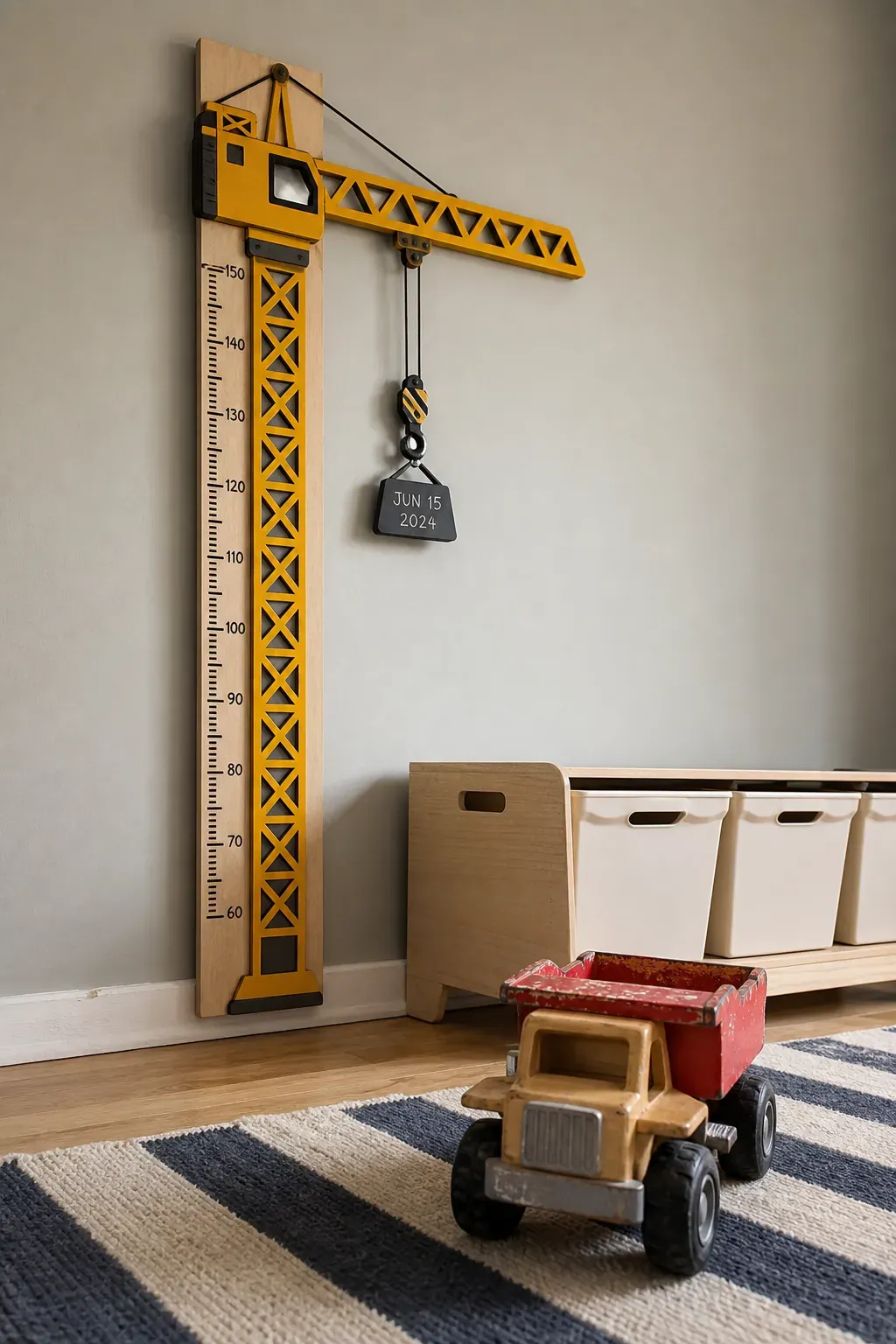
A tall crane already has the right vertical silhouette for a chart. Put measurements along the mast and reserve the boom for the child’s name or a short phrase. Strong yellow and charcoal details work best against a pale wall, where tick marks remain easy to distinguish.
Ocean Depth Explorer
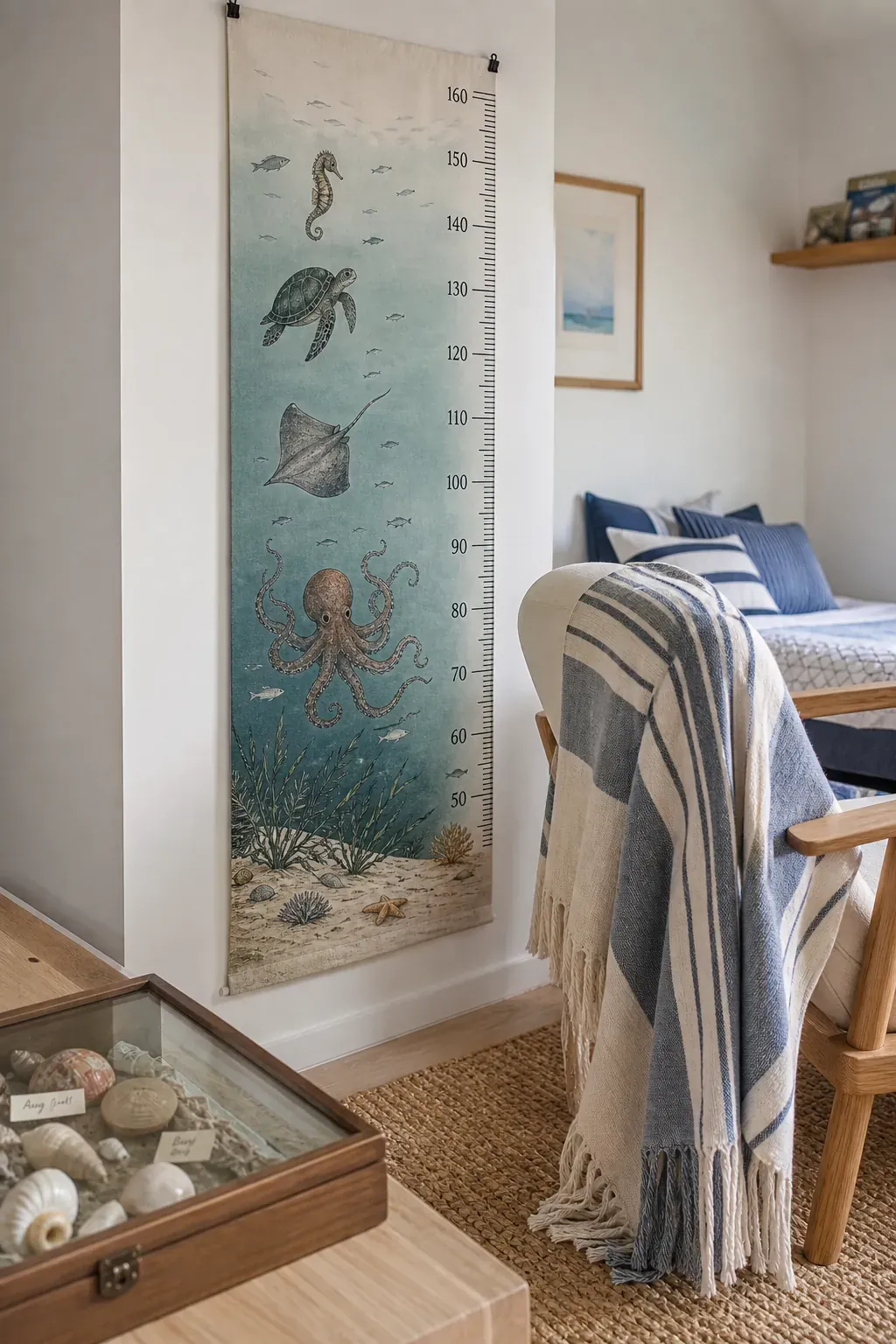
Stack sea creatures from sandy seabed to bright surface for a chart that rewards close looking. Use calm blue-green tones rather than a busy cartoon scene, and align the numeric scale along the clean outer edge. Small written notes can record favorite sea animals as well as heights.
Magnetic Metal Marker Board
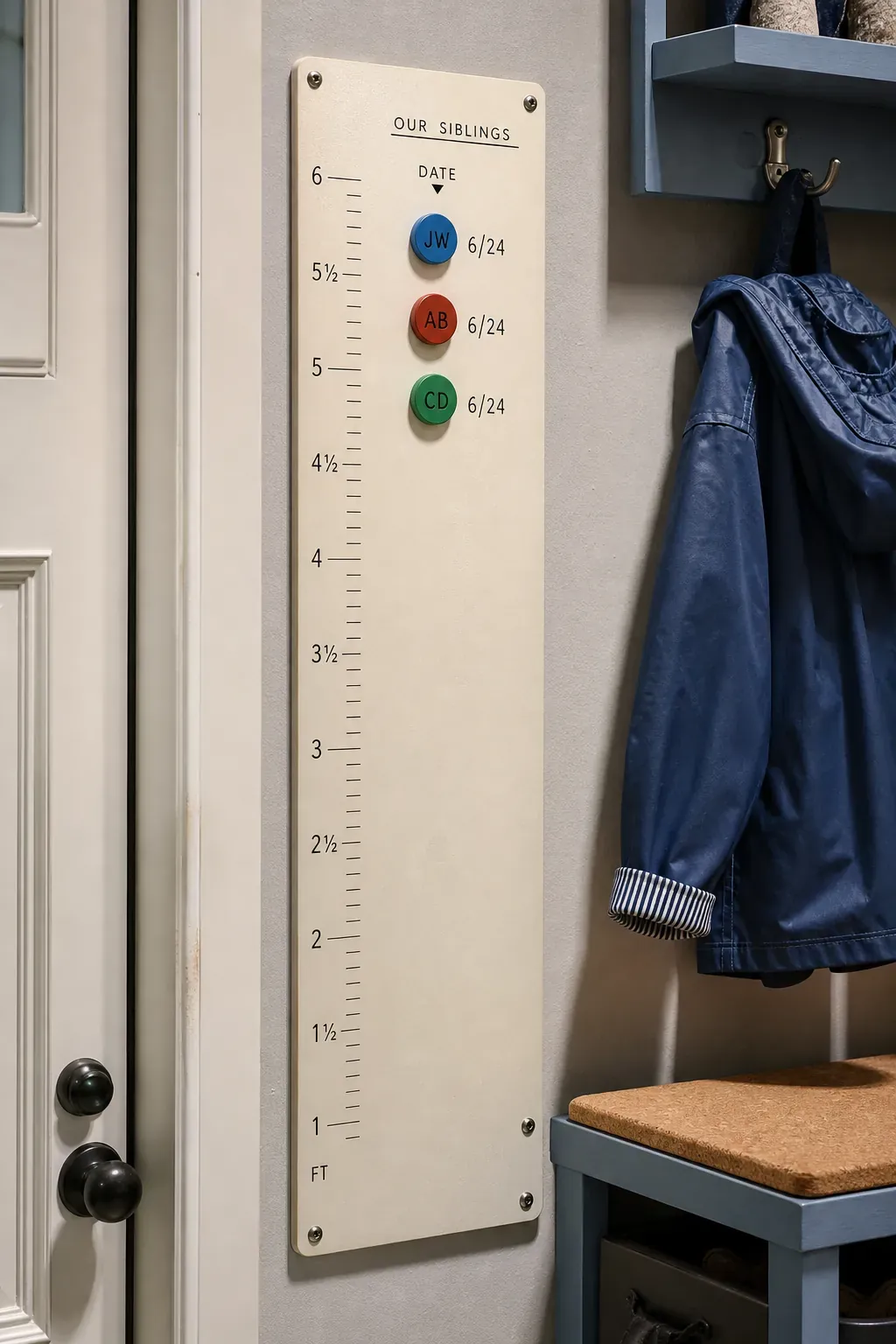
A powder-coated steel strip lets families move labeled magnets instead of drawing permanent lines. It is particularly useful when siblings share a chart: assign each child a magnet color and add a date tag. Secure the board into suitable wall anchors and keep small loose magnets away from babies and toddlers.
Chalkboard House Silhouette
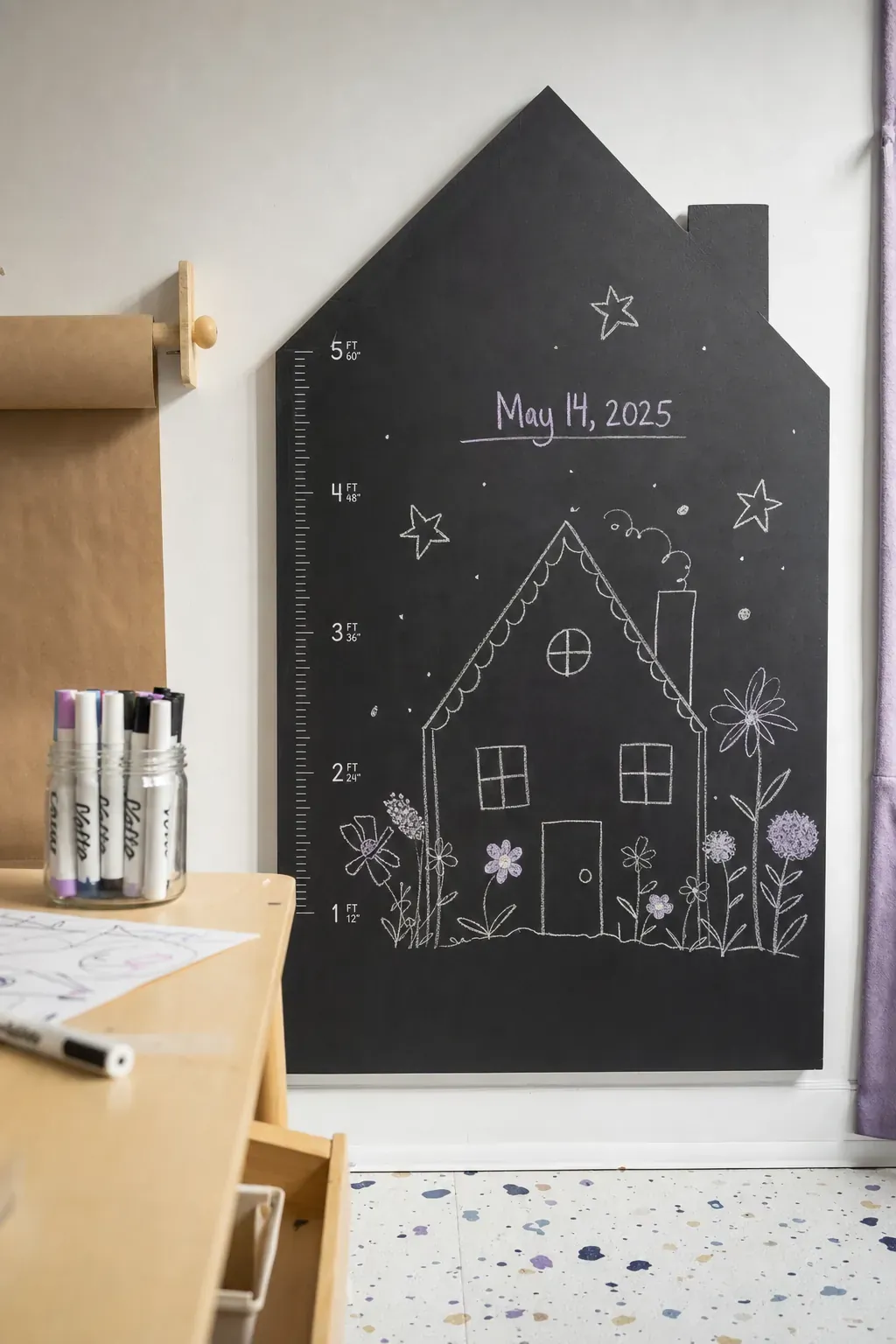
A house-shaped chalkboard invites quick doodles around a permanent ruler scale. Use liquid chalk markers for crisp dates and photograph the board before wiping seasonal drawings. Keep the actual measurement ticks painted or engraved so cleaning never erases the reference.
Fabric Pennant Height Banner
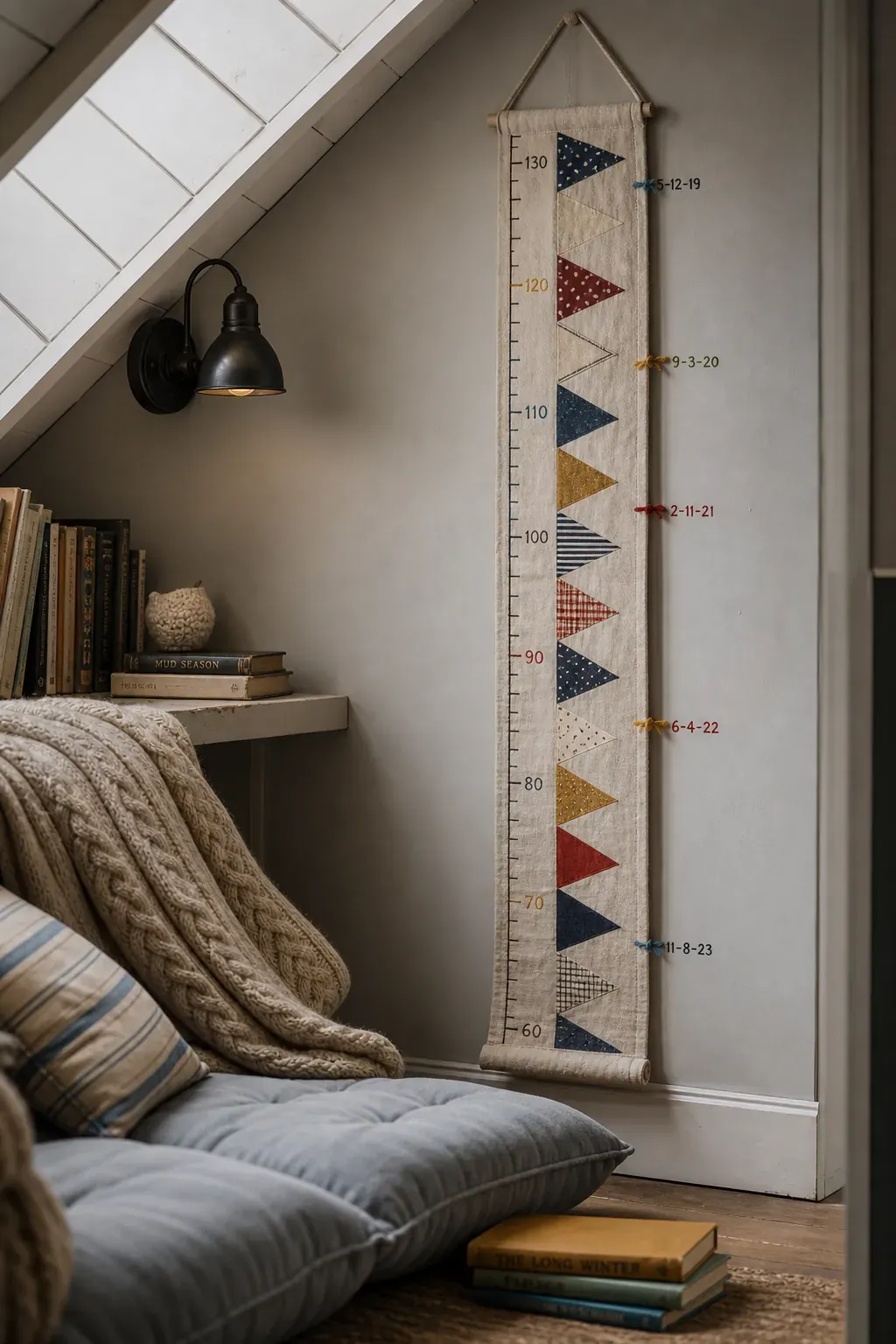
Quilted pennants stitched down a long backing create a tactile chart that coordinates with curtains or a reading tent. Embroider milestone dates for a durable family record. Add a slim stabilizing strip behind the fabric so the scale cannot stretch and distort over time.
Dinosaur Fossil Timeline
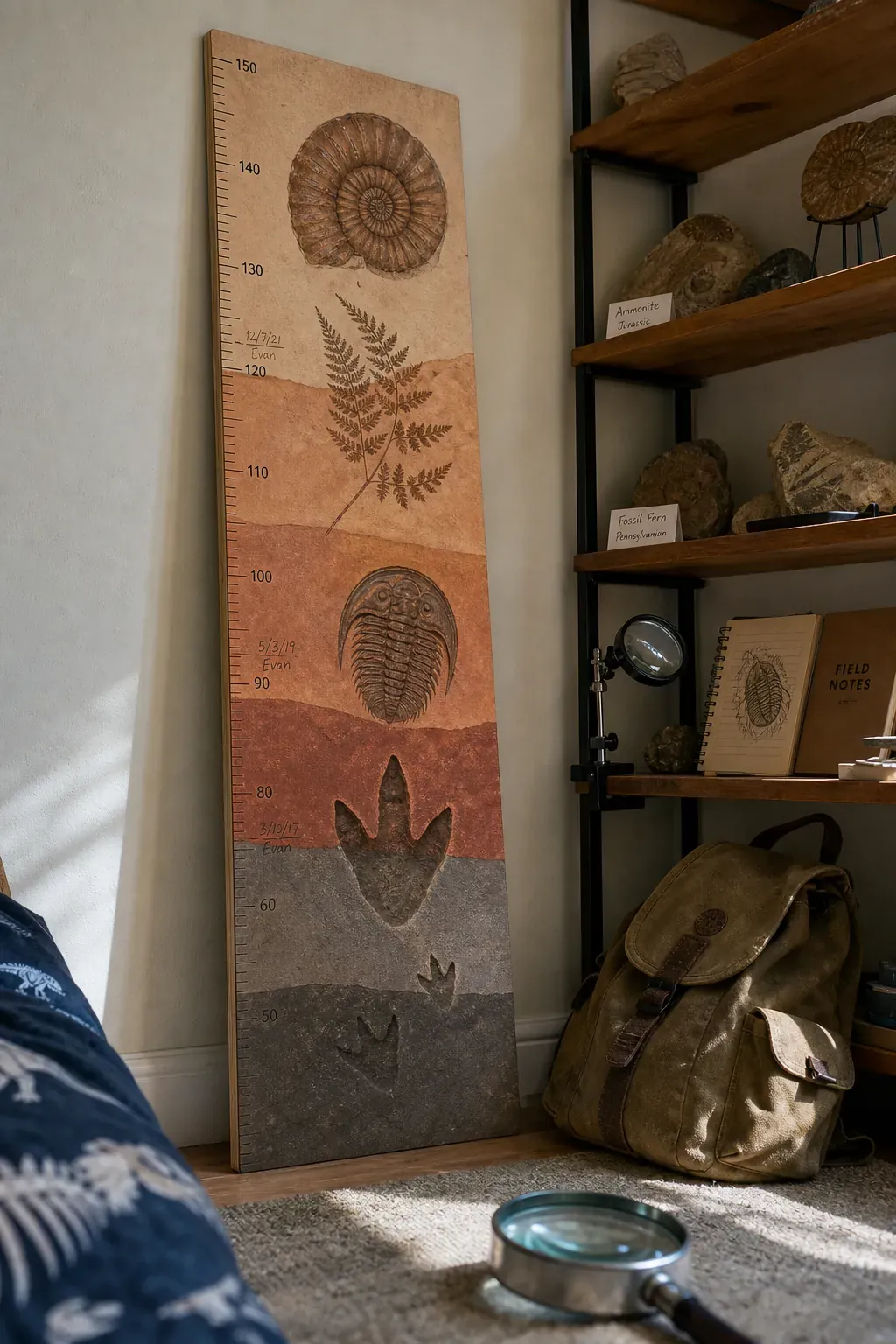
Fossil layers create a clever structure for height bands, with footprints or bones marking major intervals. Choose accurate-looking silhouettes and an earthy palette that feels adventurous rather than babyish. A removable wooden panel makes the design easy to carry into a future room.
Sports Jersey Number Line
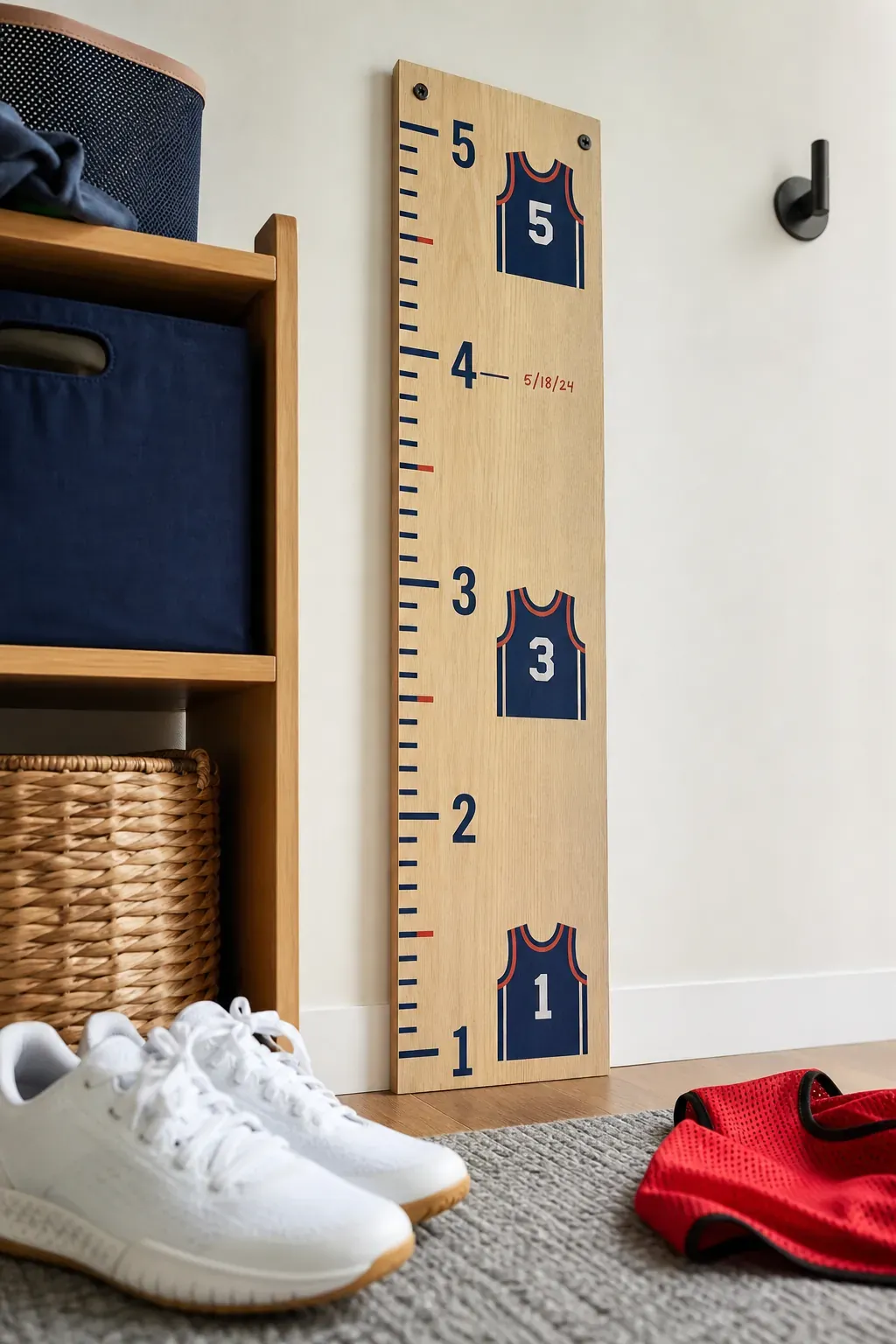
A clean number line paired with small jersey motifs works for a sports-loving child without overwhelming the bedroom. Match one accent color to the room rather than copying a professional team. Leave enough blank space for dates, because real handwriting is what transforms themed decor into a kids room keepsake.
Book-Spine Reading Tower
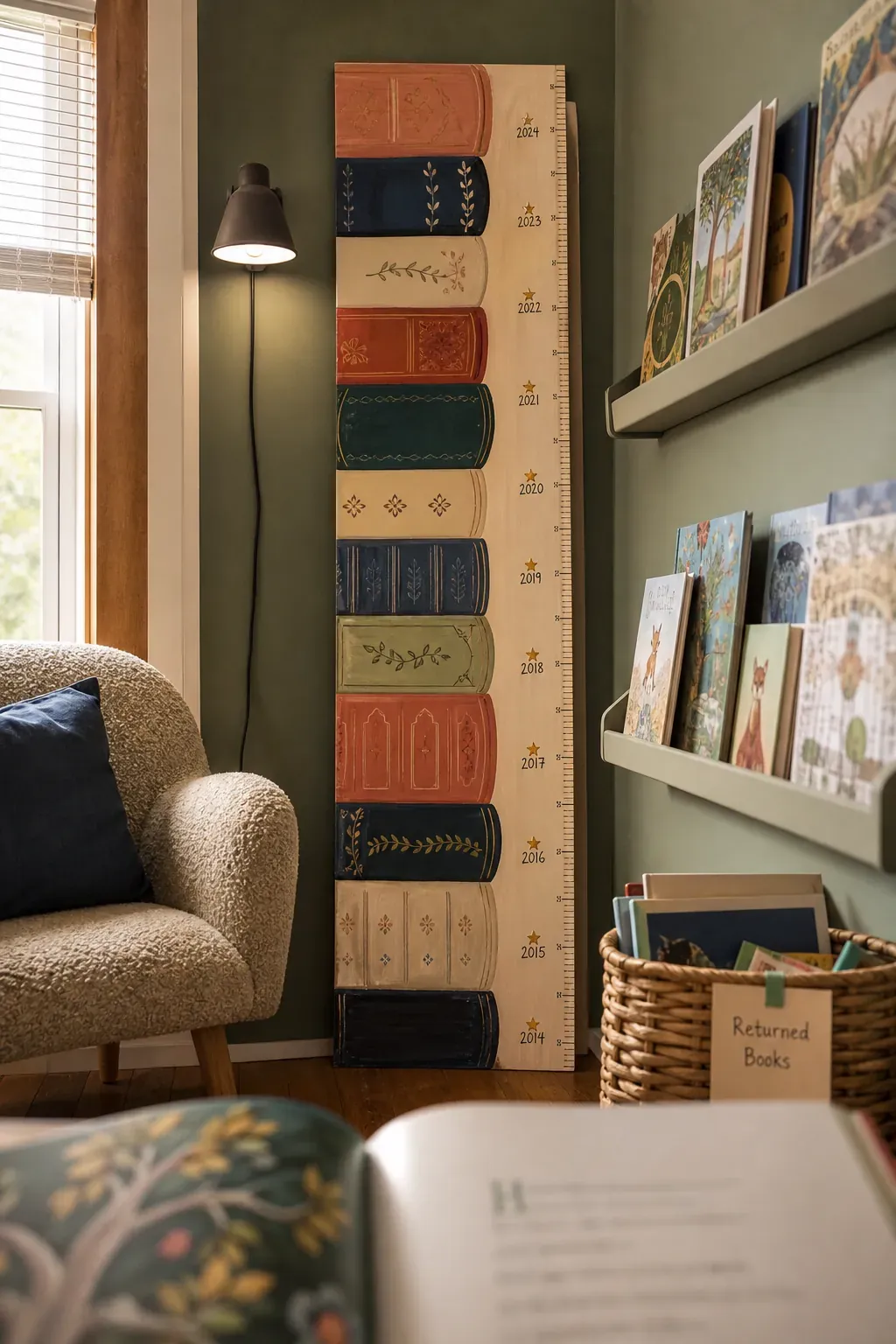
Illustrated book spines stacked vertically make a natural partner for a reading nook. Put the numeric scale on the opposite edge from the titles and add a tiny star whenever the child reaches a new shelf. The idea connects physical growth with reading memories without turning either into a competition.
Peg-Rail Milestone Display
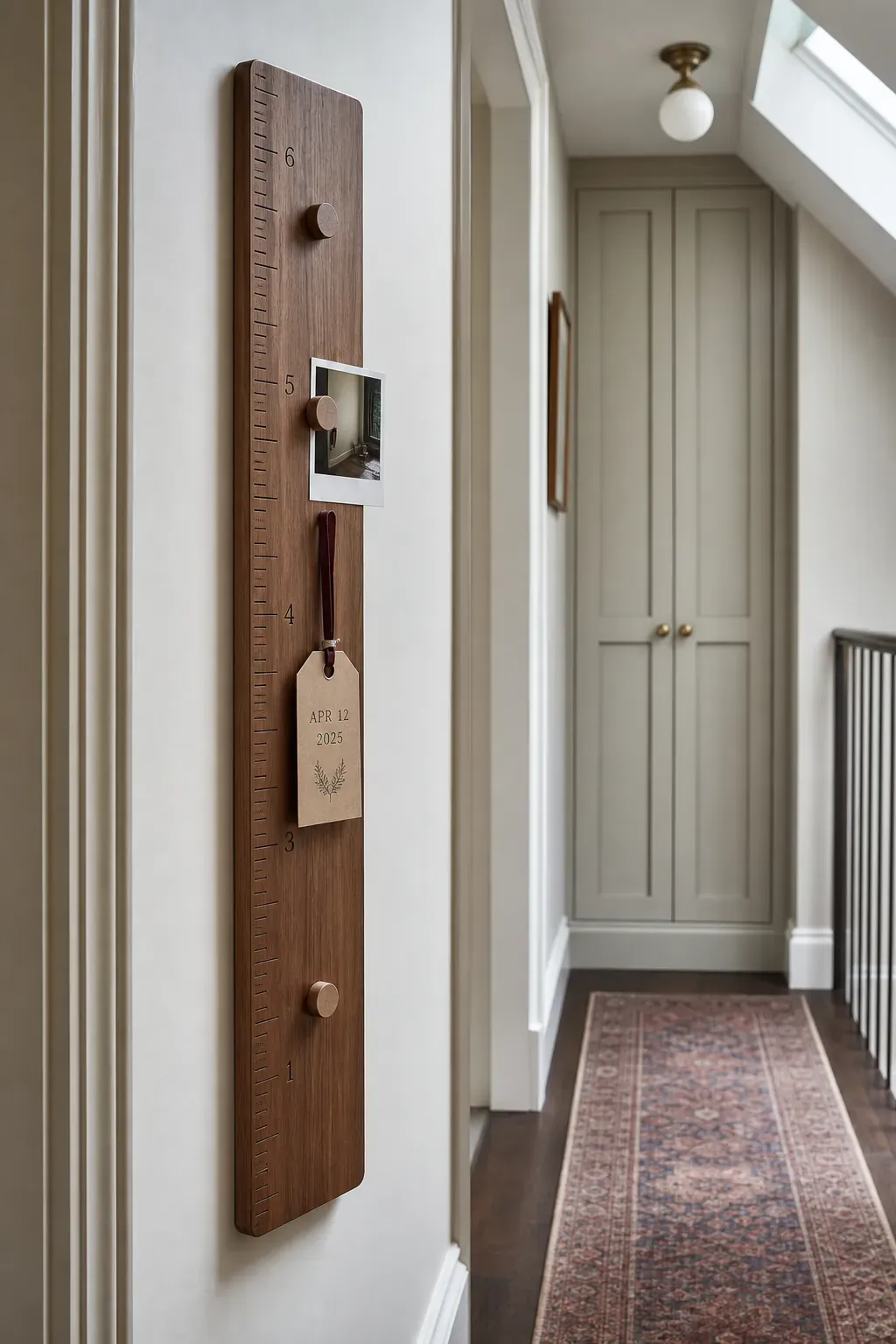
A vertical measuring board with shallow pegs can hold dated tags, a yearly photo, or a ribbon from a memorable event. Keep hanging pieces flat and light so they do not obscure the scale. Place the display away from the bed and active play paths, and fasten every component securely.
Doorframe Memory Transfer Board
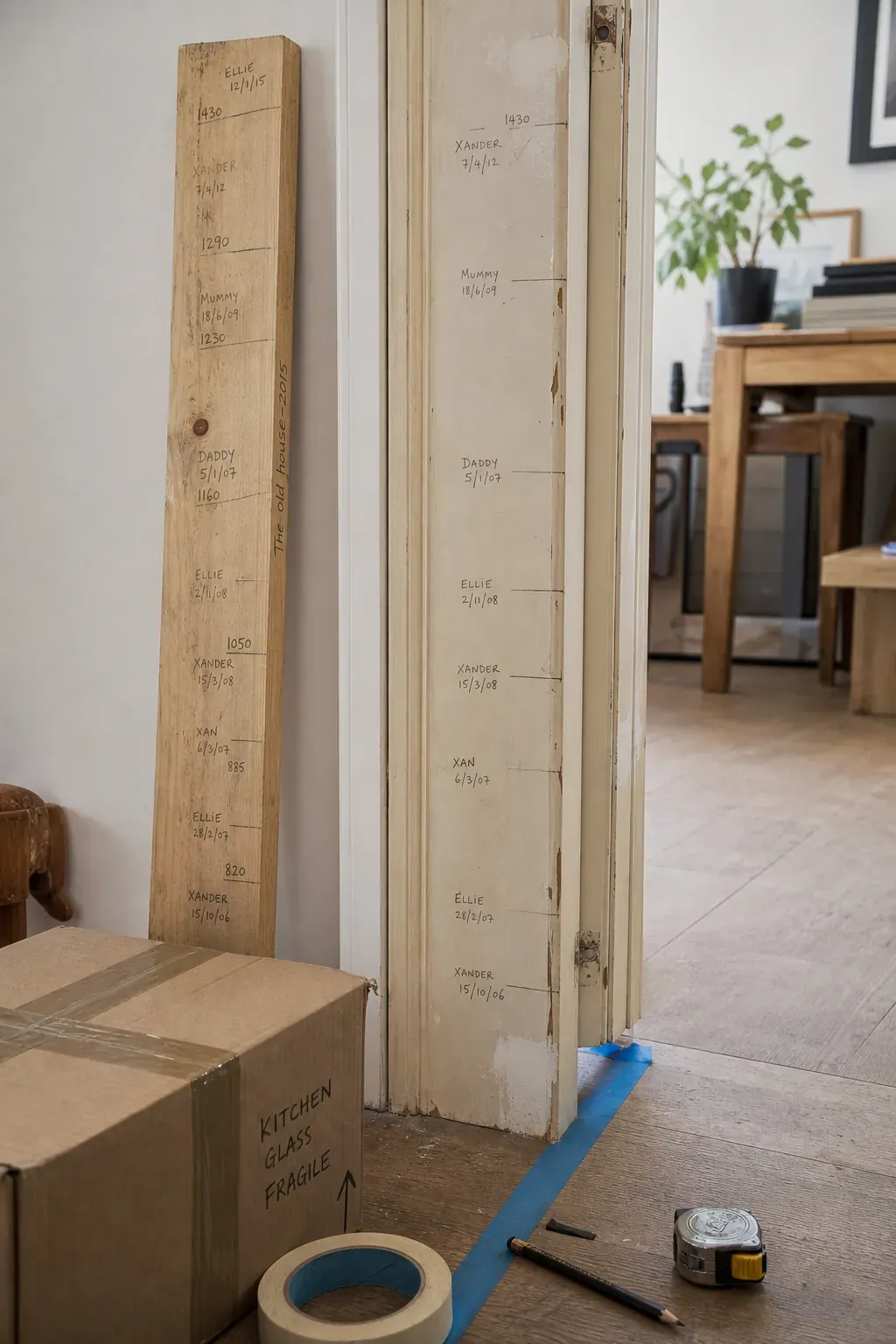
If your family already has marks on a doorframe, transfer their exact heights and dates onto a slim board before repainting or moving. Label which side of each line belongs to each child and include the original home’s years on the back. The imperfect historical marks are the feature, not something to tidy away.
Shared Sibling Color-Lane Chart
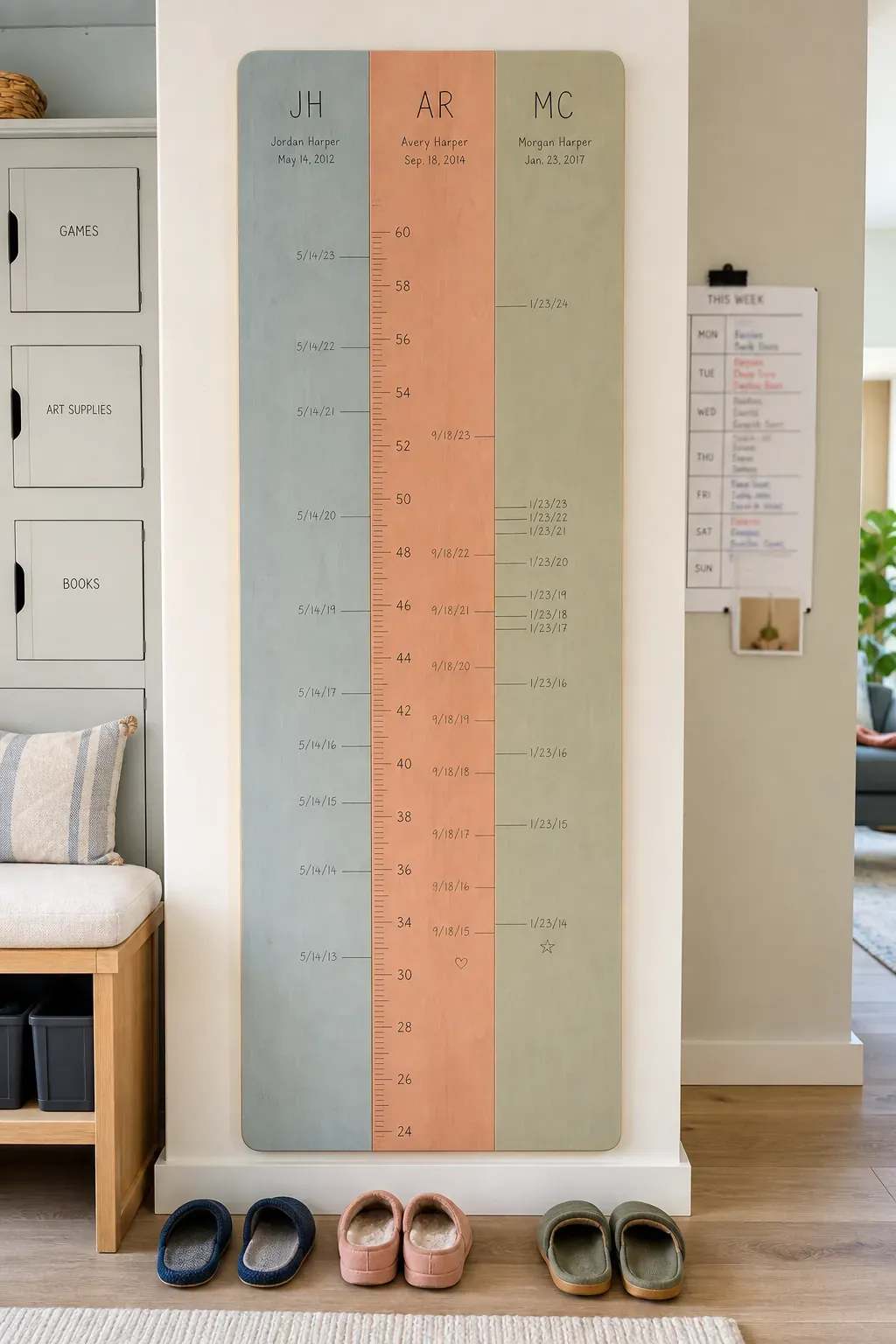
A wide chart divided into subtle color lanes gives every child an equal place in the family record. Pick colors with enough contrast to remain readable, then write the child’s initial and full date beside every measurement. Measuring on birthdays or at six-month intervals keeps the ritual meaningful and avoids noisy clusters of nearly identical lines.
Whatever design you choose, verify its starting offset after installation and measure a standing child on a firm, level floor. A home chart is a memory tool, not a substitute for the growth measurements tracked by a pediatric professional. The lasting value comes from the names, dates, jokes, and ordinary family moments gathered along the scale.