How to Decorate a Blank Dining Room Wall With Balance
The most expensive mistake is treating the wall as an isolated rectangle while ignoring the table, chair movement, doorway, and light fixture already defining the room. A dining wall works when its visual weight supports those elements and its depth does not interfere with serving or circulation. Measure the room in use before deciding whether the wall needs storage, reflection, color, light, or one strong focal piece.
Begin With the Space Chairs Actually Need
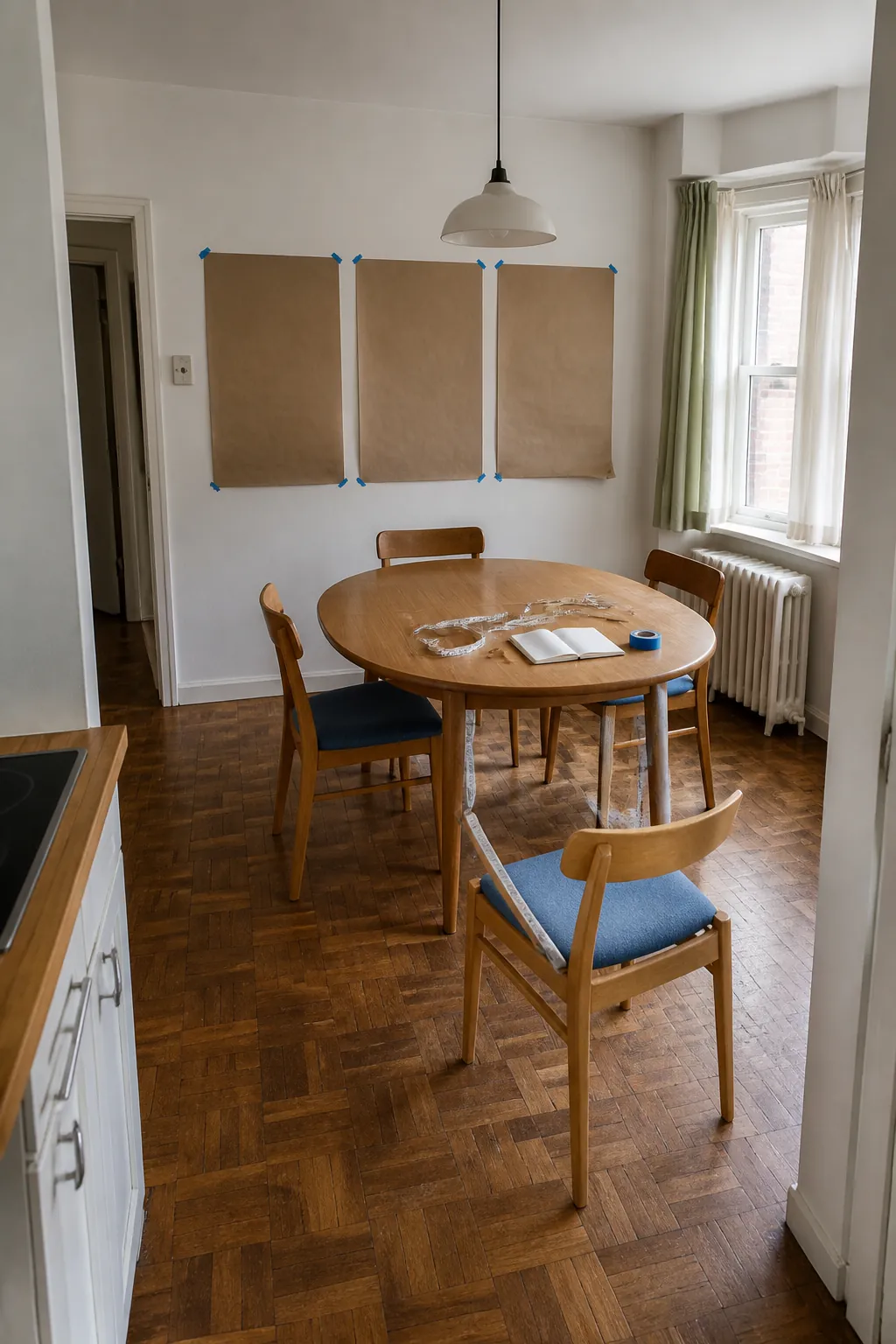
Pull every chair out as someone would during dinner and measure the remaining path behind it. That clearance determines whether the wall can support a sideboard, shallow ledge, or only a flat treatment. Mark likely widths with removable tape, then view them from the doorway and every regular seat.
Give a Sideboard a Clear Job
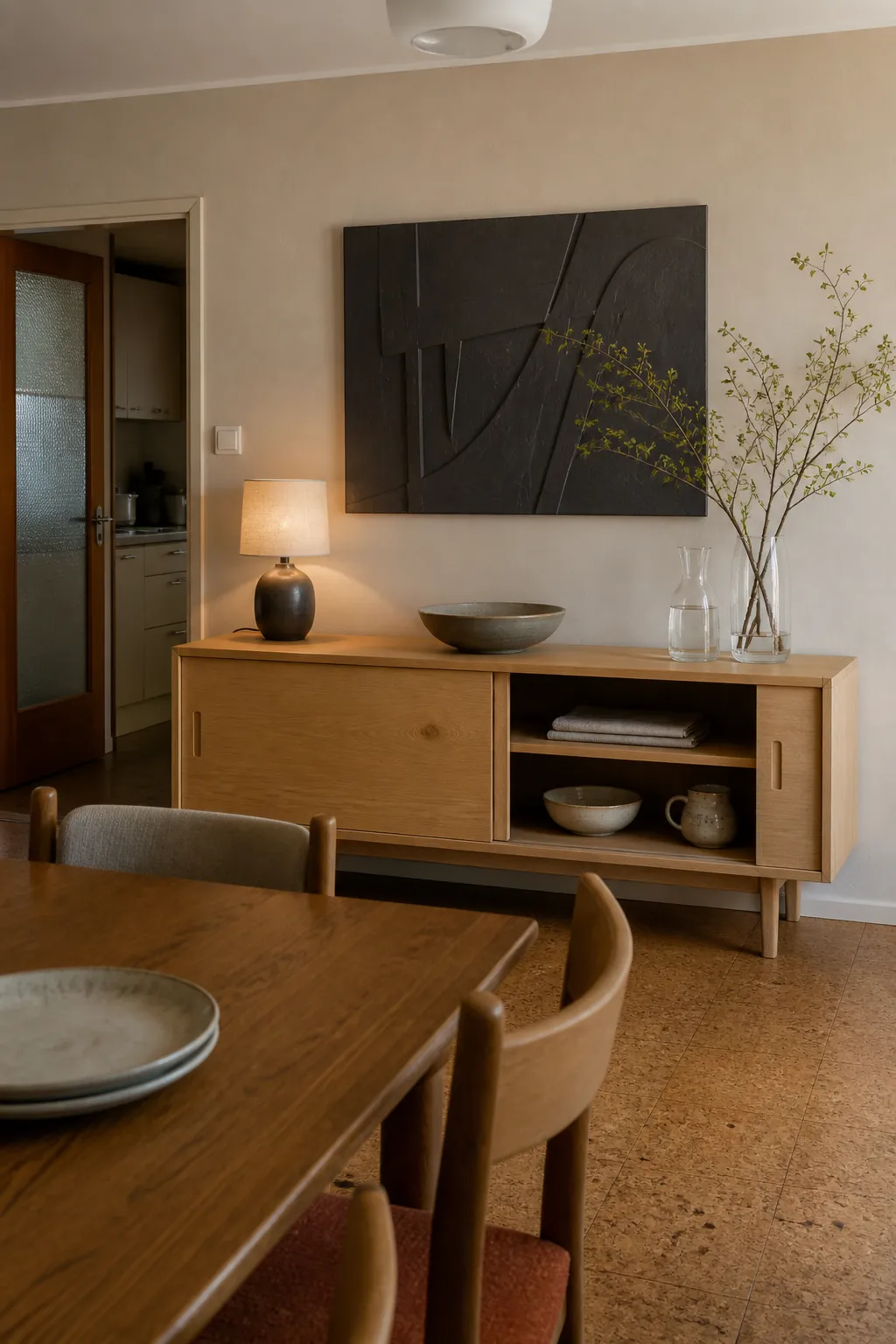
A sideboard earns its depth when it stores linens, serving pieces, or drinks that would otherwise crowd the table. Keep the top edited so it remains useful during a meal, and avoid stacking decor to the edge. The furniture should be narrower than the wall zone and visually related to the table without needing to match it.
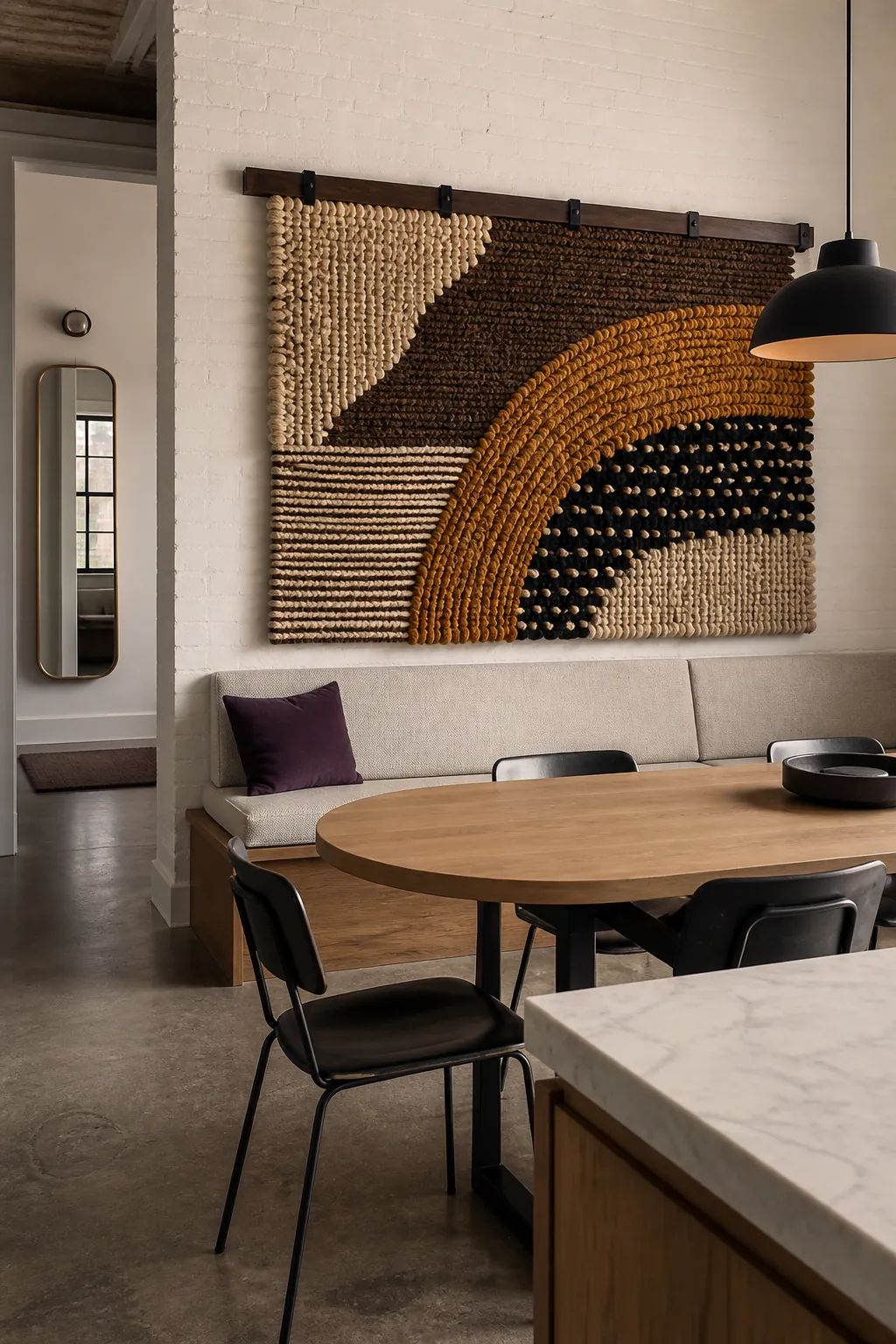
Choose One Element With Enough Scale
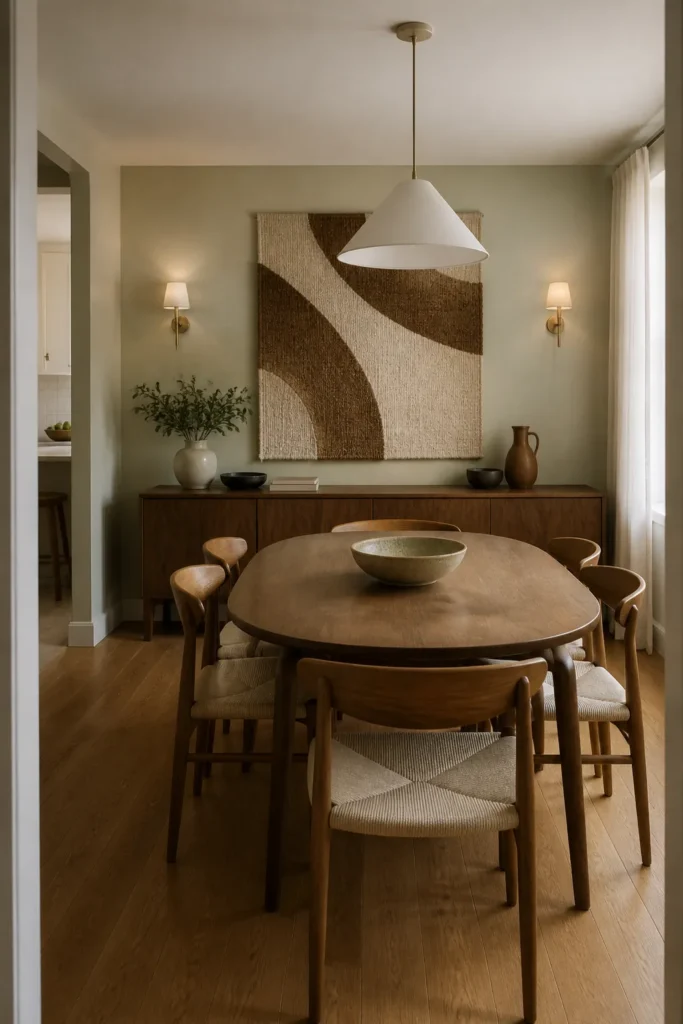
A large mirror, textile, or sculptural object usually feels calmer than several small pieces fighting for attention. Aim for a width that relates to the furniture or table below, while leaving visible wall around the edges. If the entry already has a prominent mirror, choose another material so the rooms do not echo each other too literally.
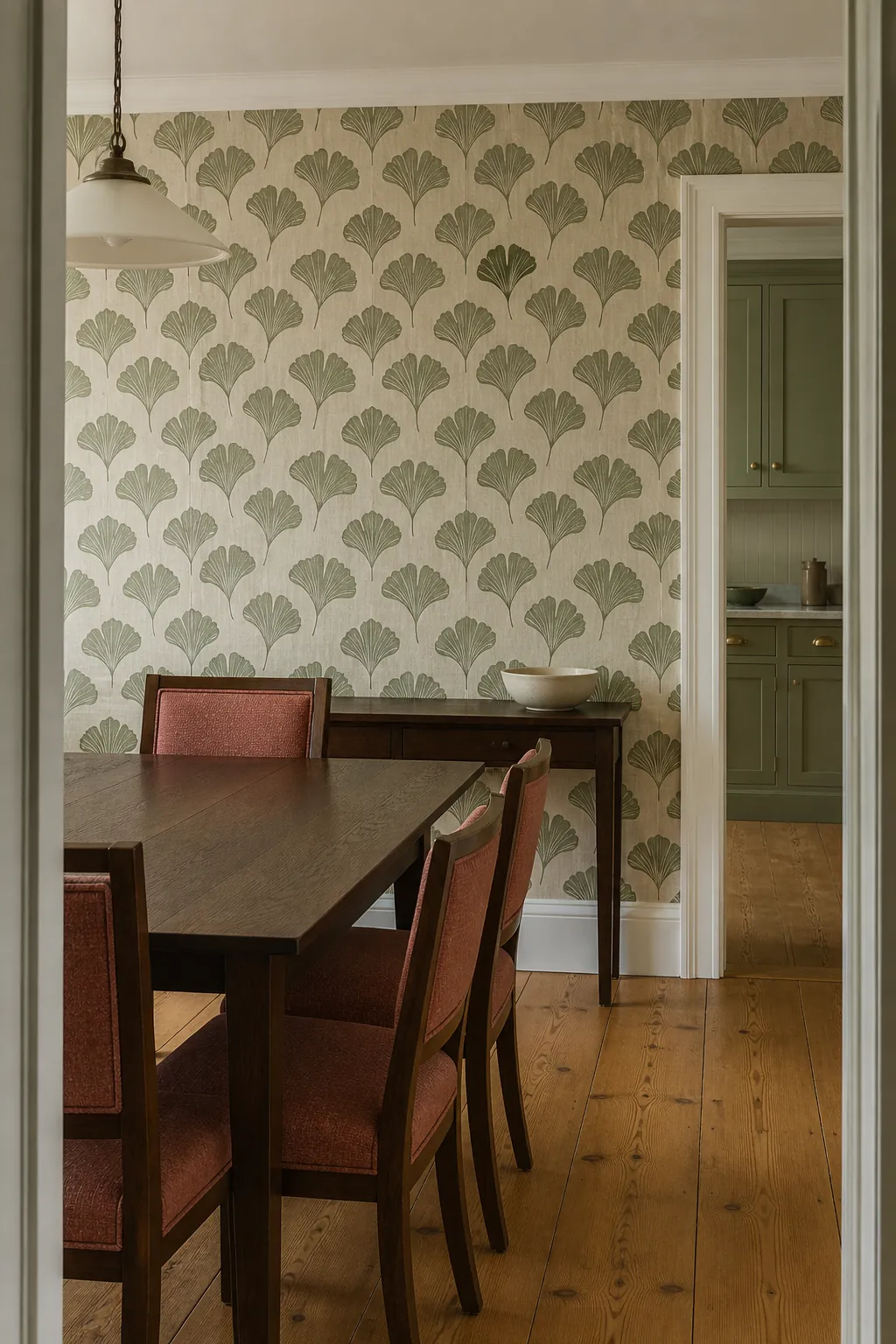
Use Surface Color to Connect the Room
Paint or wallpaper can make a wall feel complete before anything is hung. Pull a secondary color from the rug, chair fabric, or nearby room, then test it under both daytime and evening light. A block print or grasscloth adds texture, while a deep paint color gives pale furniture stronger contrast.
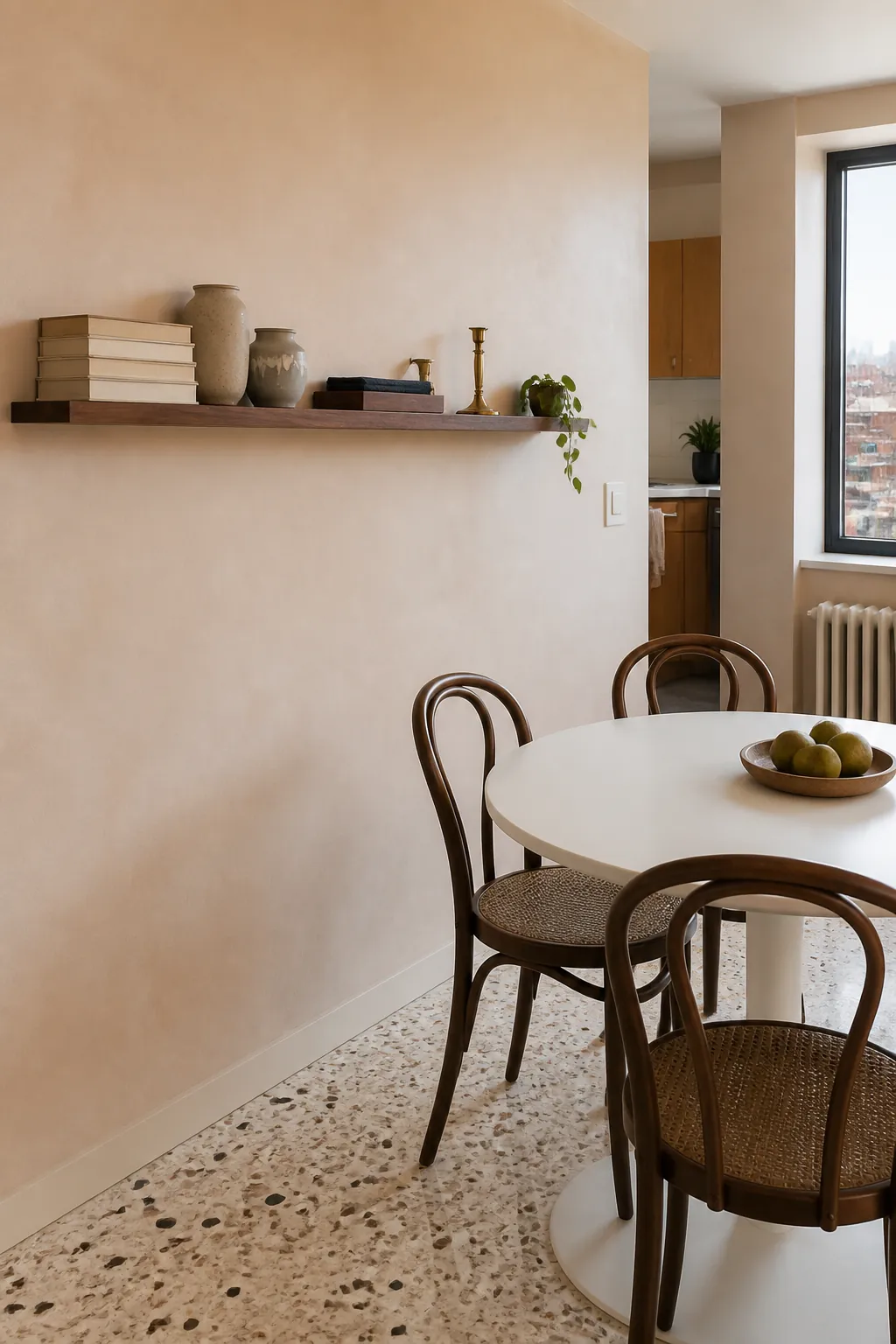
Keep Flexible Displays Deliberately Shallow
A slim ledge or shelf makes sense when you enjoy changing ceramics, books, or seasonal pieces. Place it above contact height and limit its depth if chairs pass nearby. Leave open surface between objects so the display reads as a composition rather than overflow storage.
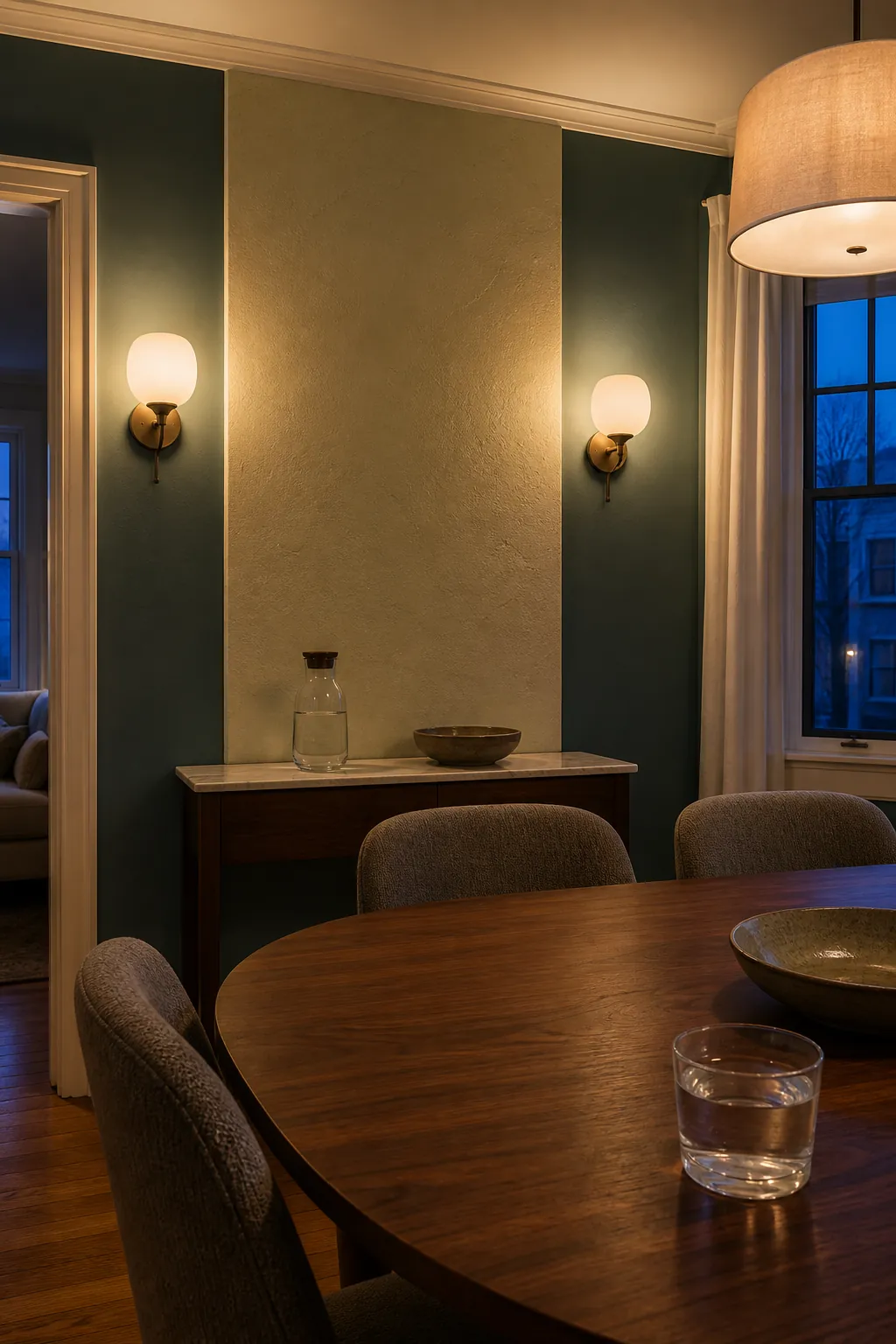
Layer Light Across the Wall
The ceiling fixture lights the table, but it may leave the perimeter flat after sunset. A pair of sconces or a shaded buffet lamp adds lower, warmer light and gives the wall depth. Check glare from every chair and keep cords, shades, and candles away from serving routes.
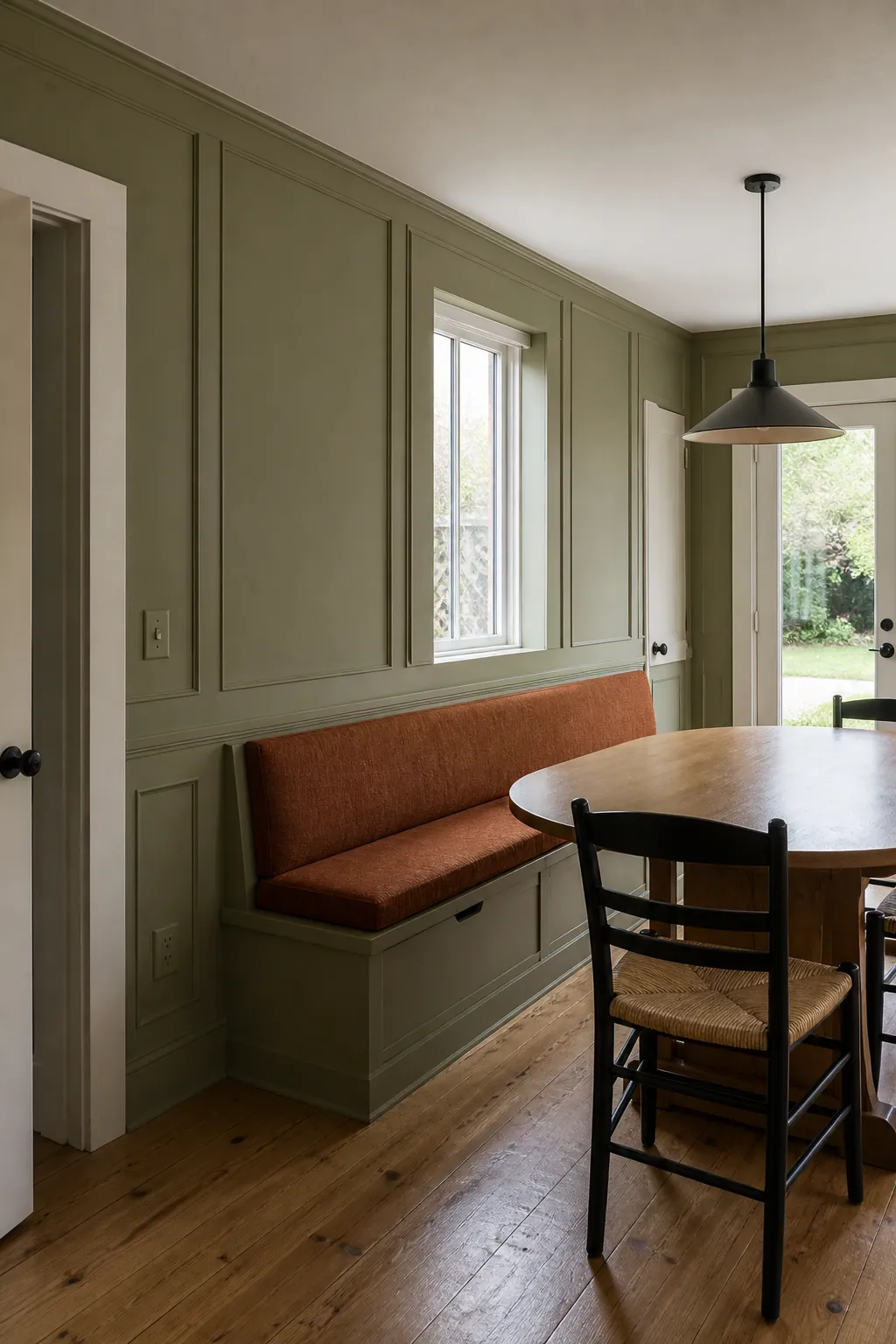
Unify Awkward Architecture With Molding
Applied molding can organize a long wall, off center window, or built in bench without adding more objects. Align panels with furniture and door casing, then paint the trim and wall together for subtle relief. Mock the full arrangement with tape first, because small spacing errors become obvious across a dining room.