How to Decorate a Long Blank Wall Without Making It Feel Busy
A long empty surface can make an otherwise finished room feel strangely temporary. The usual reaction is to buy several small objects and spread them across the available width, but that often makes the wall look even longer and less settled. A better result begins with the room layout, then uses one clear visual rhythm that supports how people sit, walk, and look through the space.
Read the wall as part of the whole room
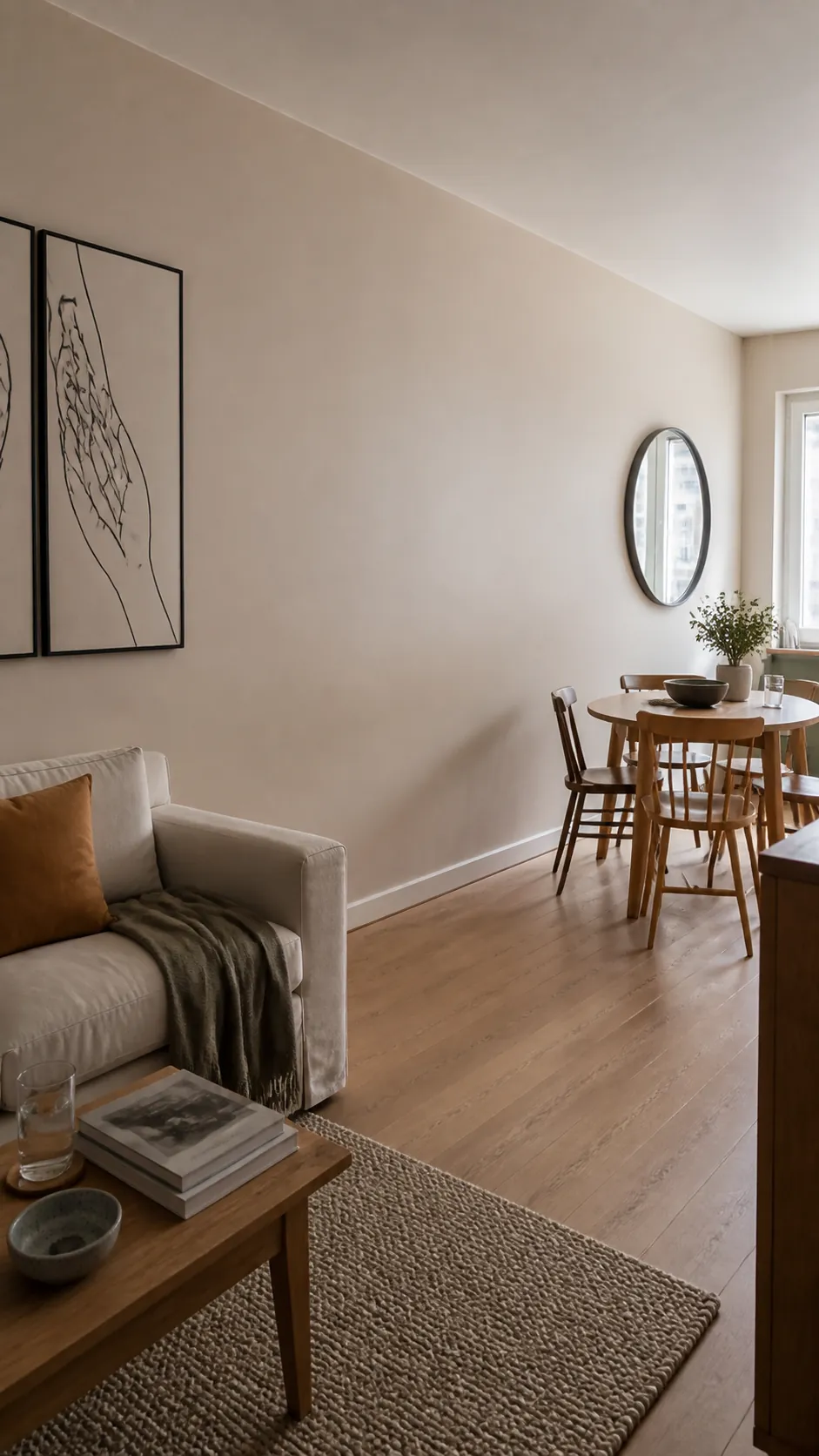
Stand at the main entrance and notice which furniture already claims the wall. A sofa, dining table, console, or walkway creates a natural decorating zone, so the display does not need to cover every inch. Measure that zone rather than the full wall, and leave quiet space where circulation or a room transition needs breathing room. This simple shift prevents long wall decor ideas from becoming a row of unrelated fillers.
Choose one visual rhythm before buying decor
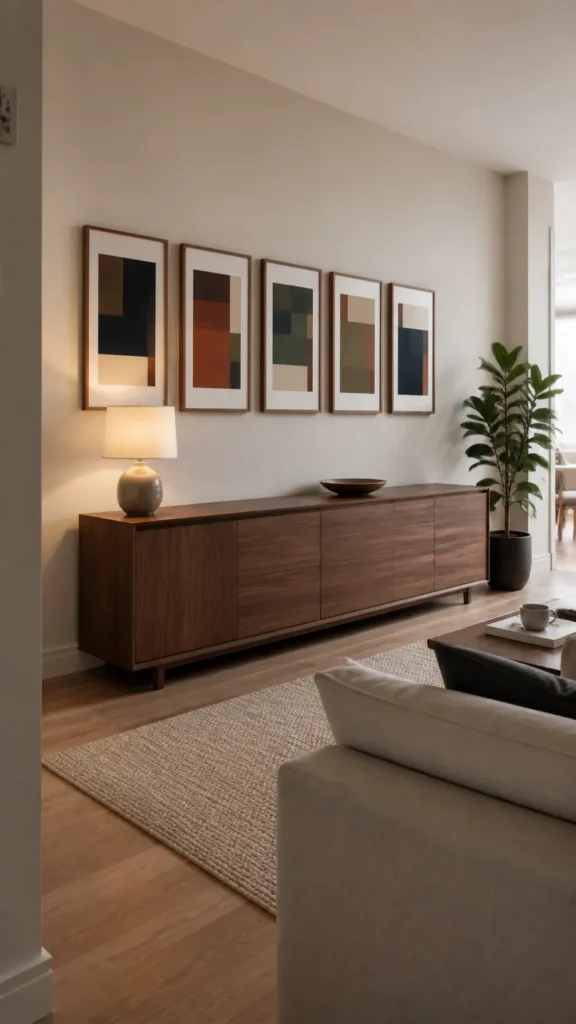
Decide whether the composition should read as one strong focal point, a balanced series, or a relaxed collection. One focal point feels calm, a series gives structure, and a collection brings personality, but mixing all three usually creates noise. Repeat one element such as frame color, shape, or spacing so the eye can travel comfortably. This decision makes horizontal wall decor ideas feel intentional instead of merely stretched.
Anchor the display to furniture below
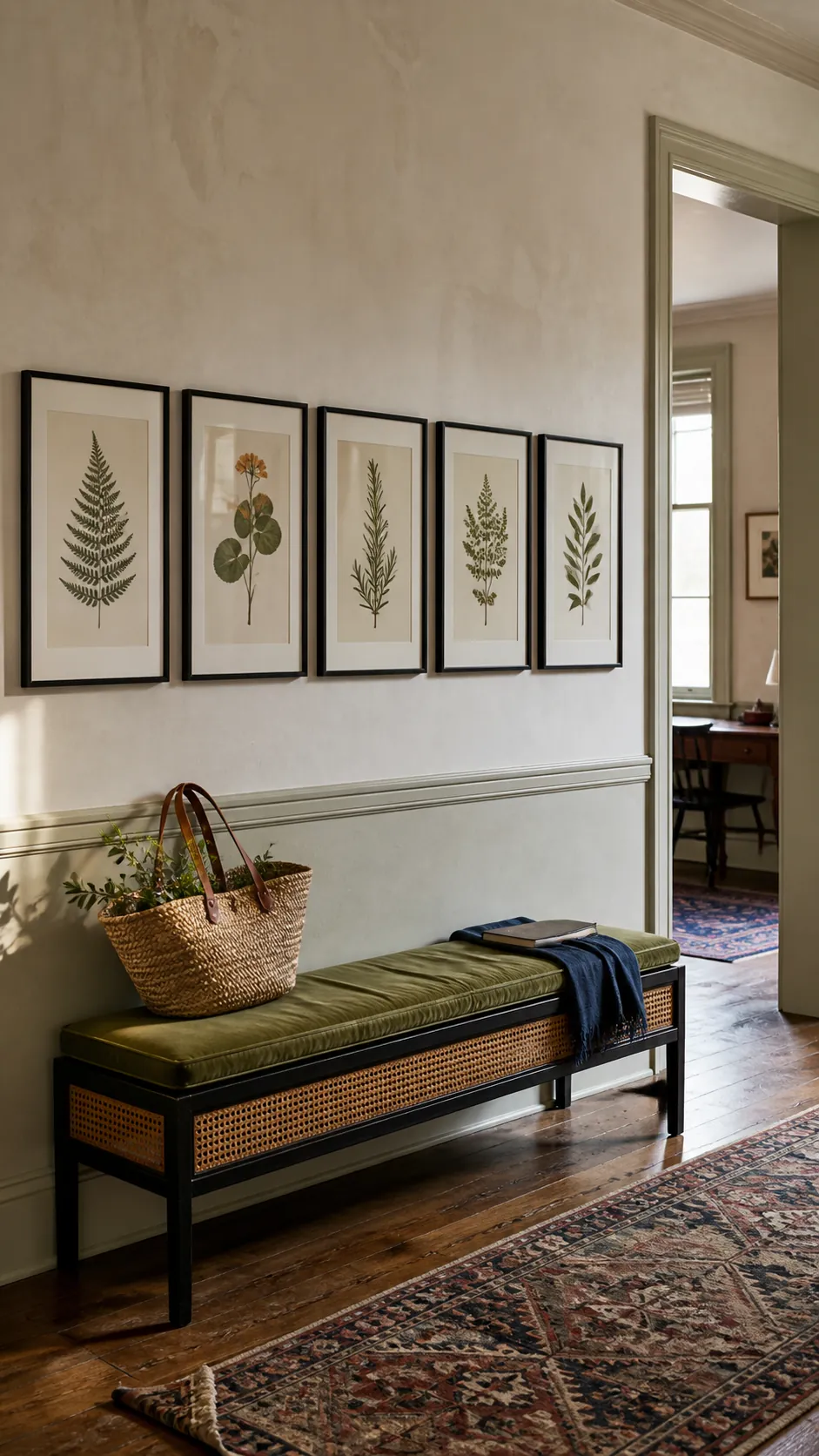
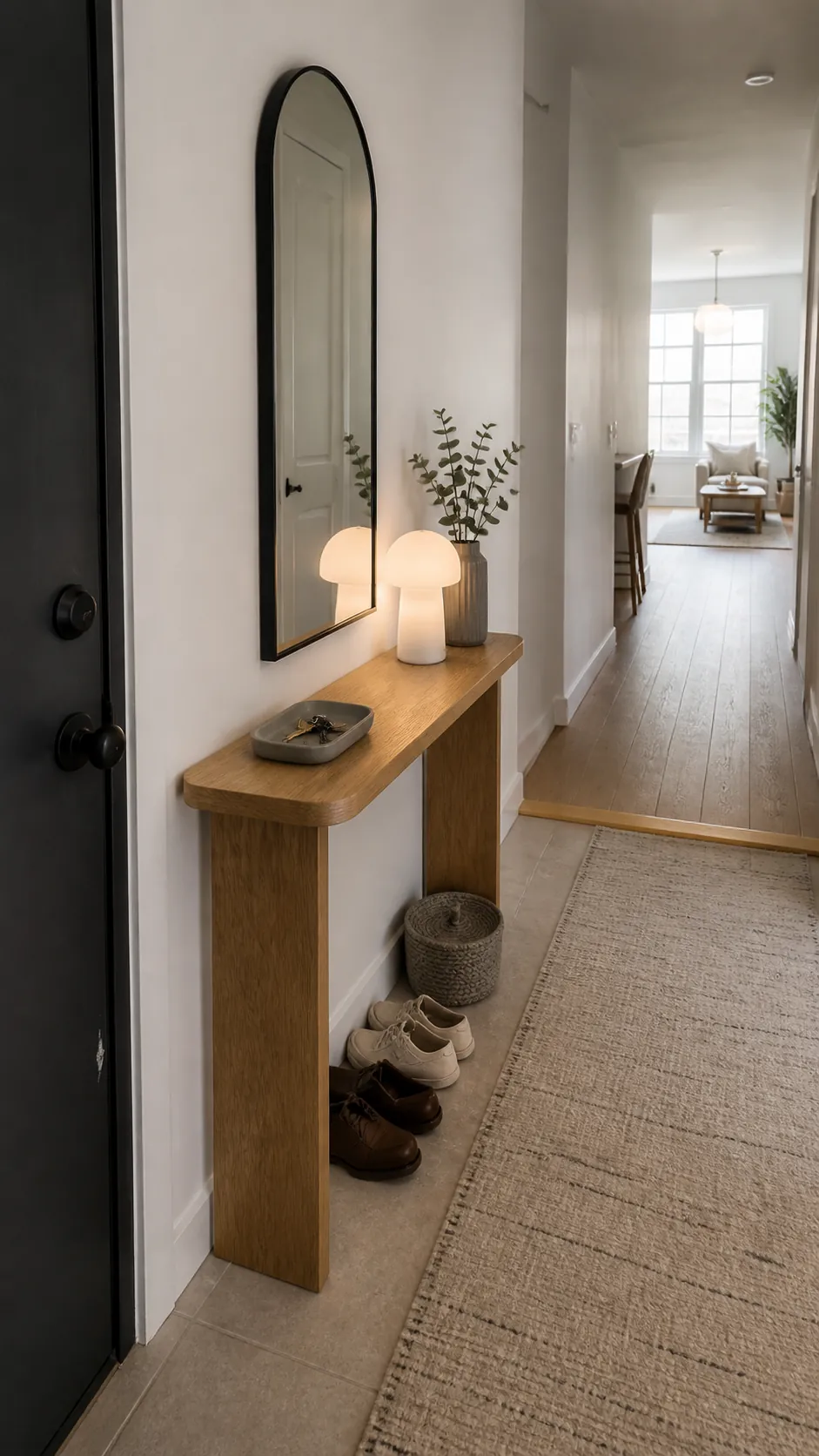
Wall decor looks most convincing when it belongs to something beneath it. Keep the display narrower than the sofa, sideboard, or console, and position it close enough to form one composition. If a hallway or open plan route must stay clear, use shallow furniture or no furniture at all. The aim is connection without making the room harder to use.
Use one oversized piece for a calmer room
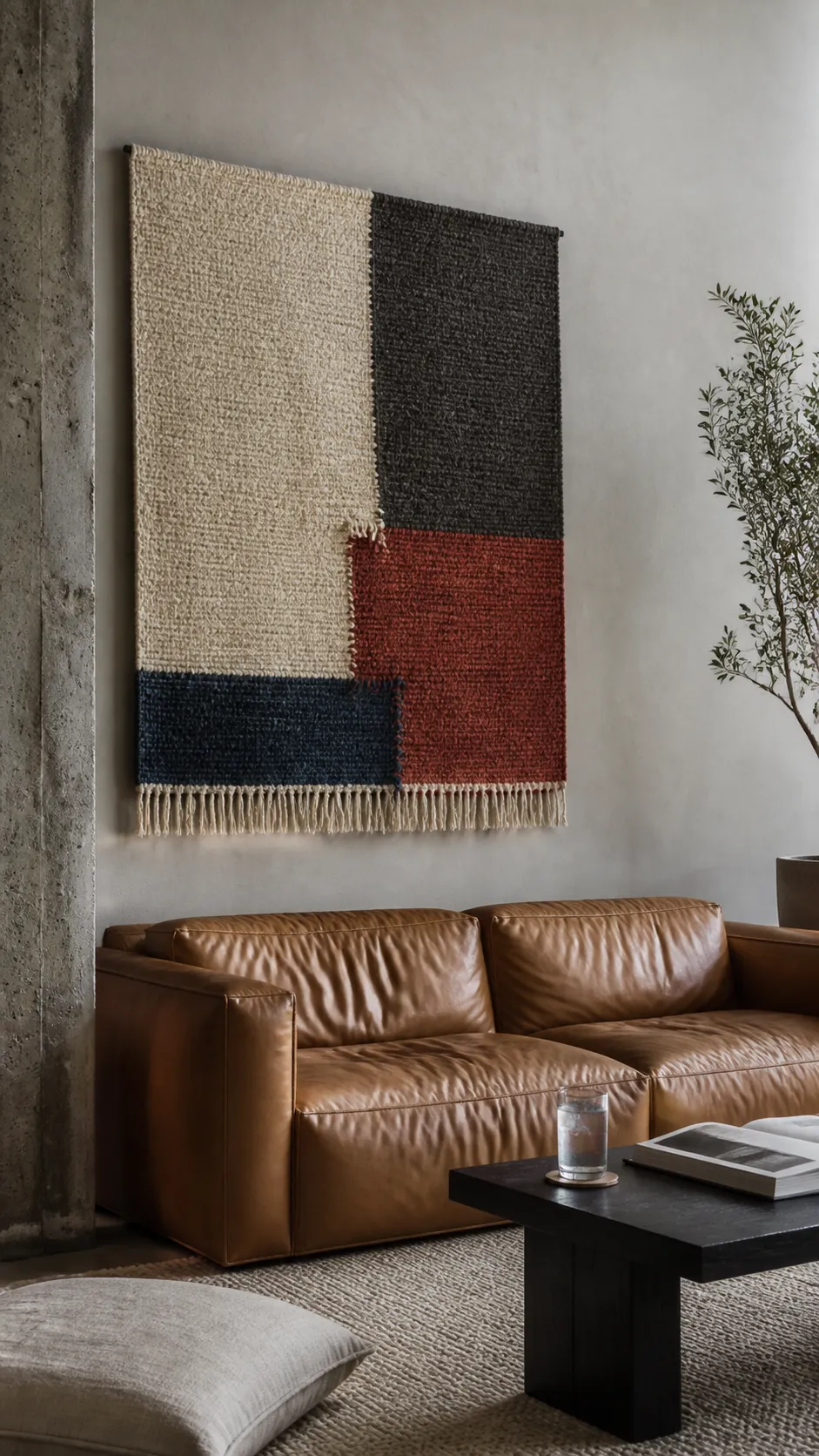
A single generous piece can be the easiest answer when the room already contains pattern, shelving, or several furniture zones. Choose a width that relates to the main furnishing rather than a timid piece that floats in empty space. A woven textile panel, sculptural relief, or bold print can add material depth as well as color. Give it enough open wall around the edges so its scale feels deliberate.
Build a gallery with a clear boundary
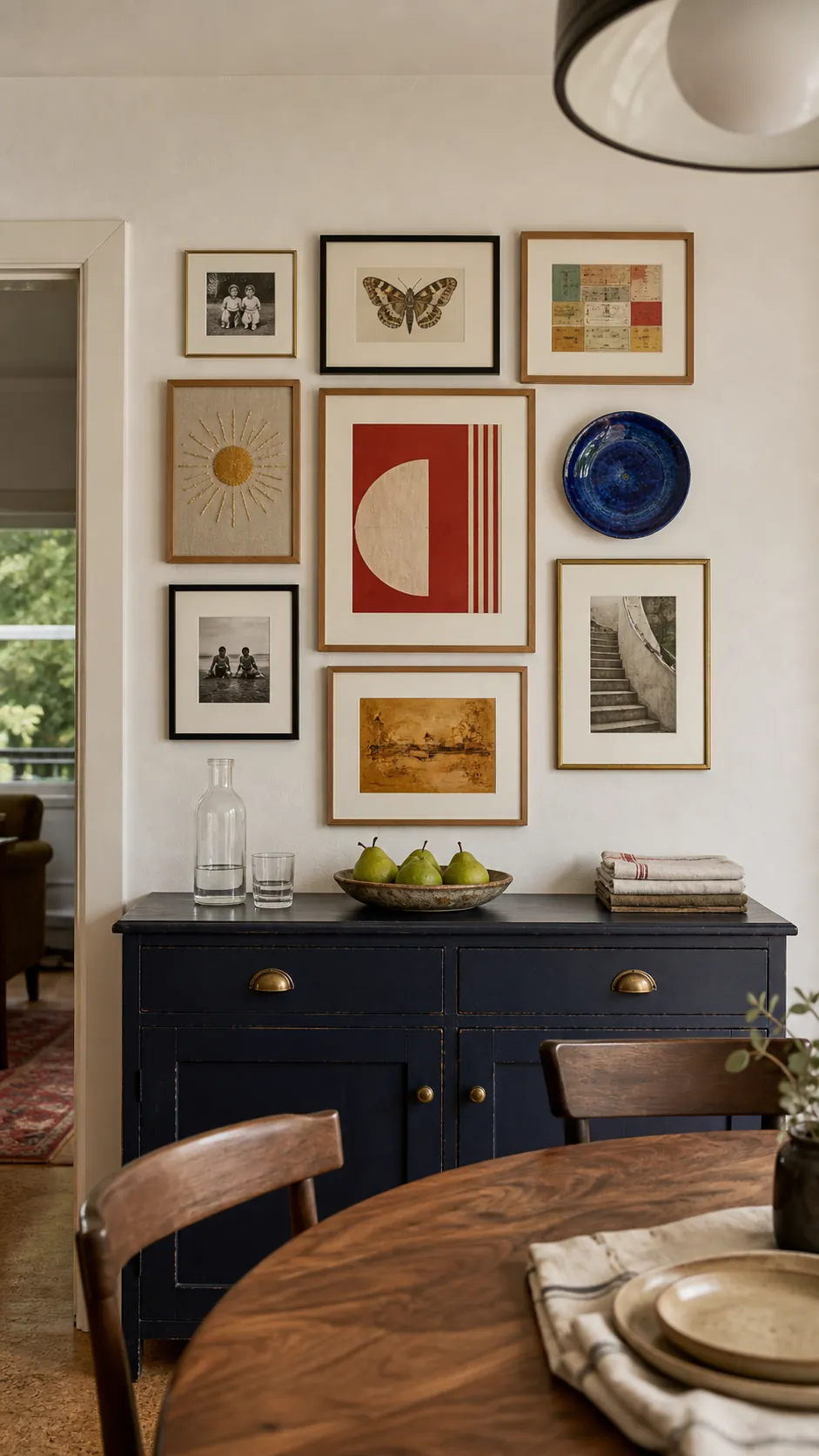
A gallery wall works best when the outer edge forms a readable shape. Lay the arrangement on the floor first, keep gaps consistent, and mix only a limited family of sizes. Place the strongest piece near eye level, then let smaller photographs and prints support it. For affordable blank wall decor ideas, collect frames gradually but paint or mat them consistently so varied finds still feel connected.
Add useful depth with a picture ledge
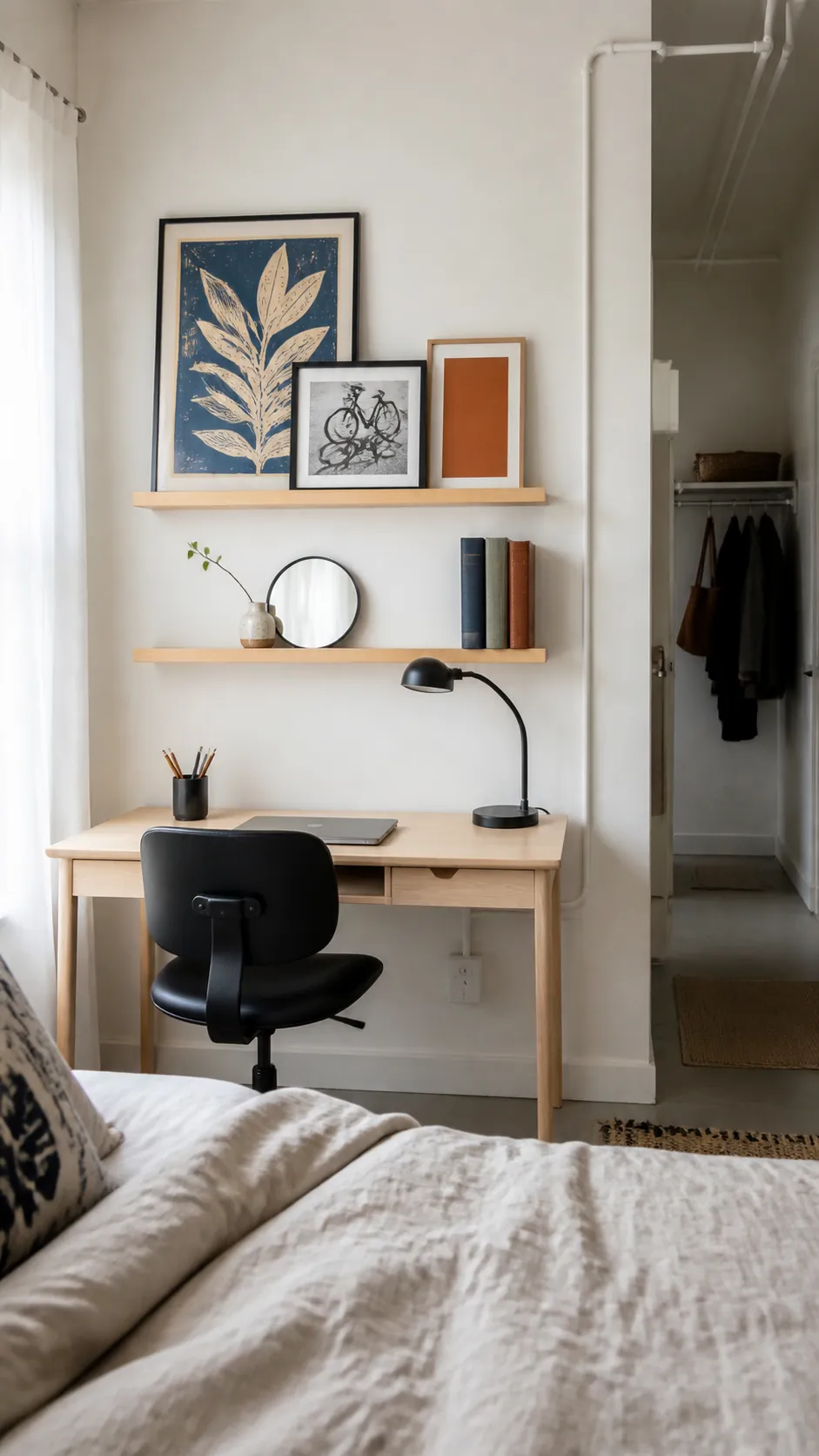
A shallow ledge gives a long wall dimension without committing to a permanent arrangement. Overlap framed prints, a small mirror, and one trailing plant while keeping the display below shoulder depth in a passage. This approach is especially useful for renters because the composition can change without creating many new holes. Keep everyday objects edited so the ledge reads as a display rather than storage overflow.
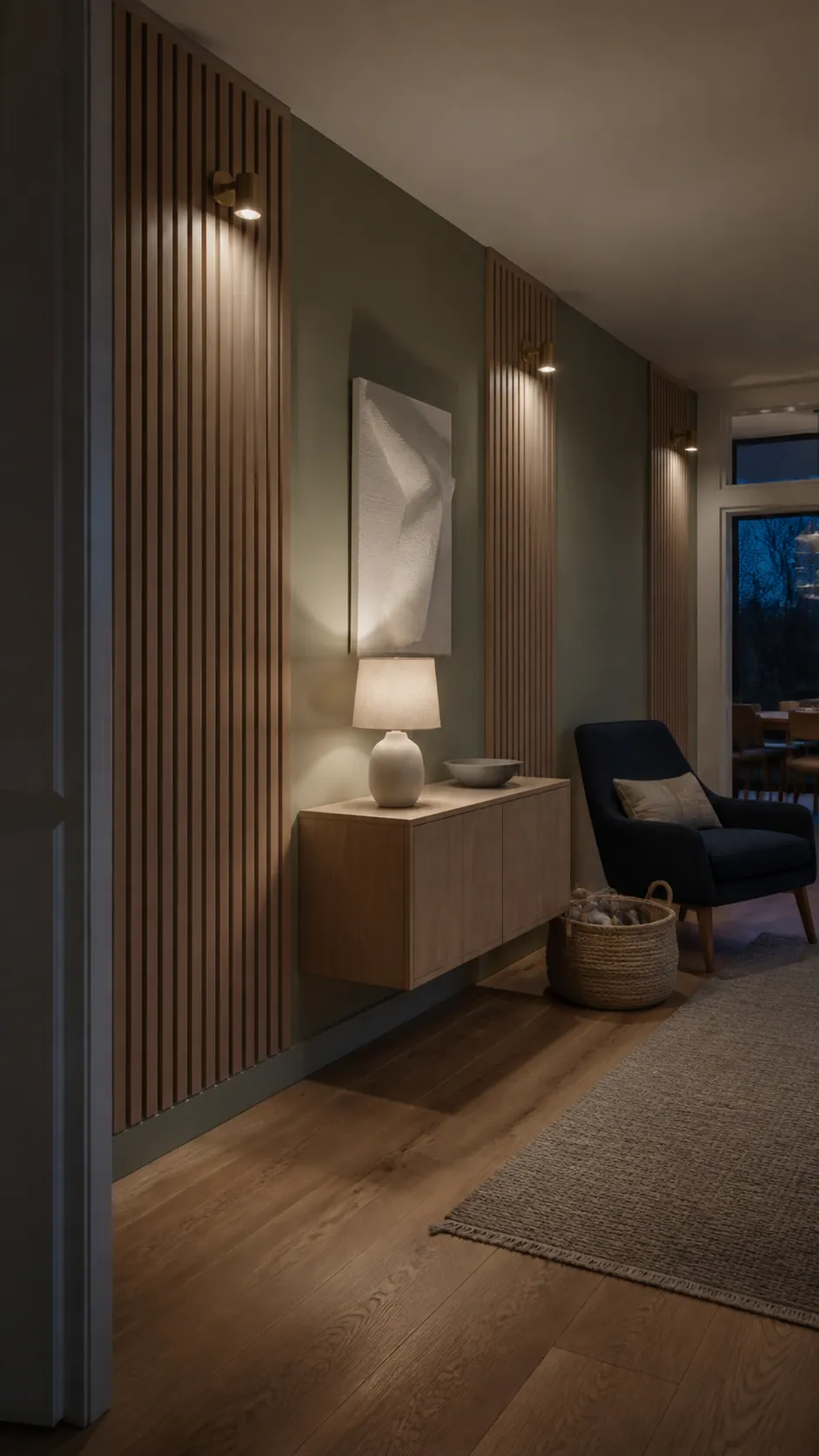
Finish with texture and evening light
Paint, slim wood battens, or a restrained limewash finish can unify a wall that crosses several room zones. Wash the surface with warm lamps or discreet picture lights so the composition still has depth after daylight fades. Test the planned outline with removable paper before drilling, then view it from the doorway and from the main seat. If the arrangement supports both views and leaves the walking route comfortable, the empty wall has become part of the architecture rather than a problem to fill.