How to Style a Blank Home Office Wall That Feels Finished
A wall can look unfinished even after you hang something on it. The real problem is usually not a lack of decor, but a lack of purpose: the wall does not yet support the way you work, the view you see on calls, or the amount of visual calm the room needs.
Start by deciding what the surface should do before choosing what it should display. A useful plan can add focus, storage, warmth, or personality without turning a small office into another crowded room.
Choose One Job for the Wall
Stand at the doorway and then sit at the desk to see which part of the wall actually matters. A wall behind the monitor should reduce distraction, while a wall behind your chair can carry more character because it becomes the background for video calls. A side wall may be better used for reference material or shallow storage that stays within reach.
Give the wall one primary role and one secondary role at most. For example, let it provide calm first and a little personal expression second. This simple limit prevents a feature wall, shelves, photographs, a calendar, and office supplies from competing in the same visual field.
Set the Visual Anchor at Desk Scale
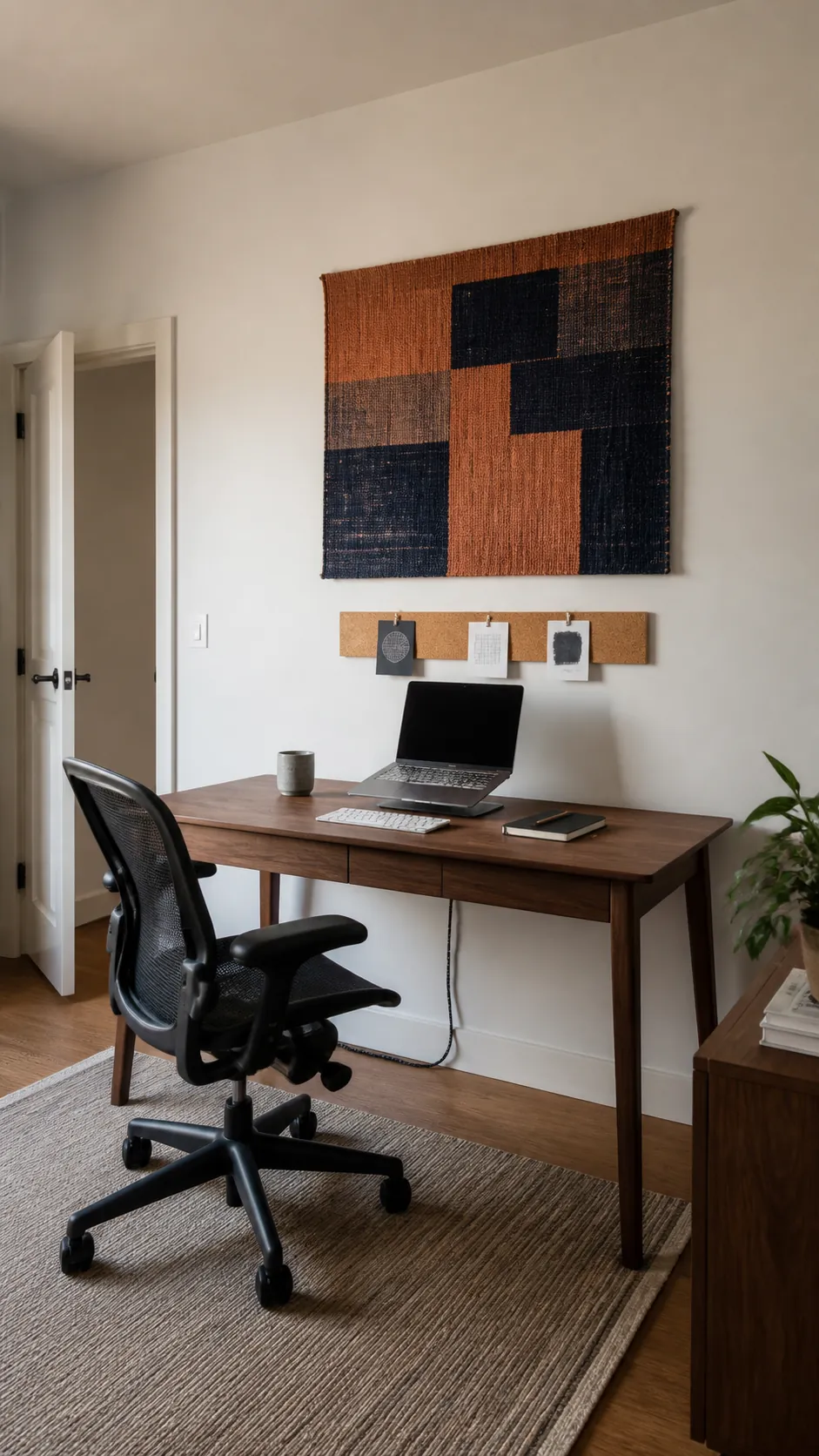
A common mistake is choosing decor in isolation and discovering that it looks tiny once it is above a desk. Treat the desk, chair, and wall feature as one composition. A single piece or grouped arrangement should usually occupy enough width to feel connected to the furniture below it, with breathing room at both sides.
Use removable paper templates before making holes. Tape outlines at eye level, sit down, and check the view on your computer camera as well as from the doorway. This test reveals awkward heights and uneven gaps while every change is still free.
Add Storage That Still Feels Light
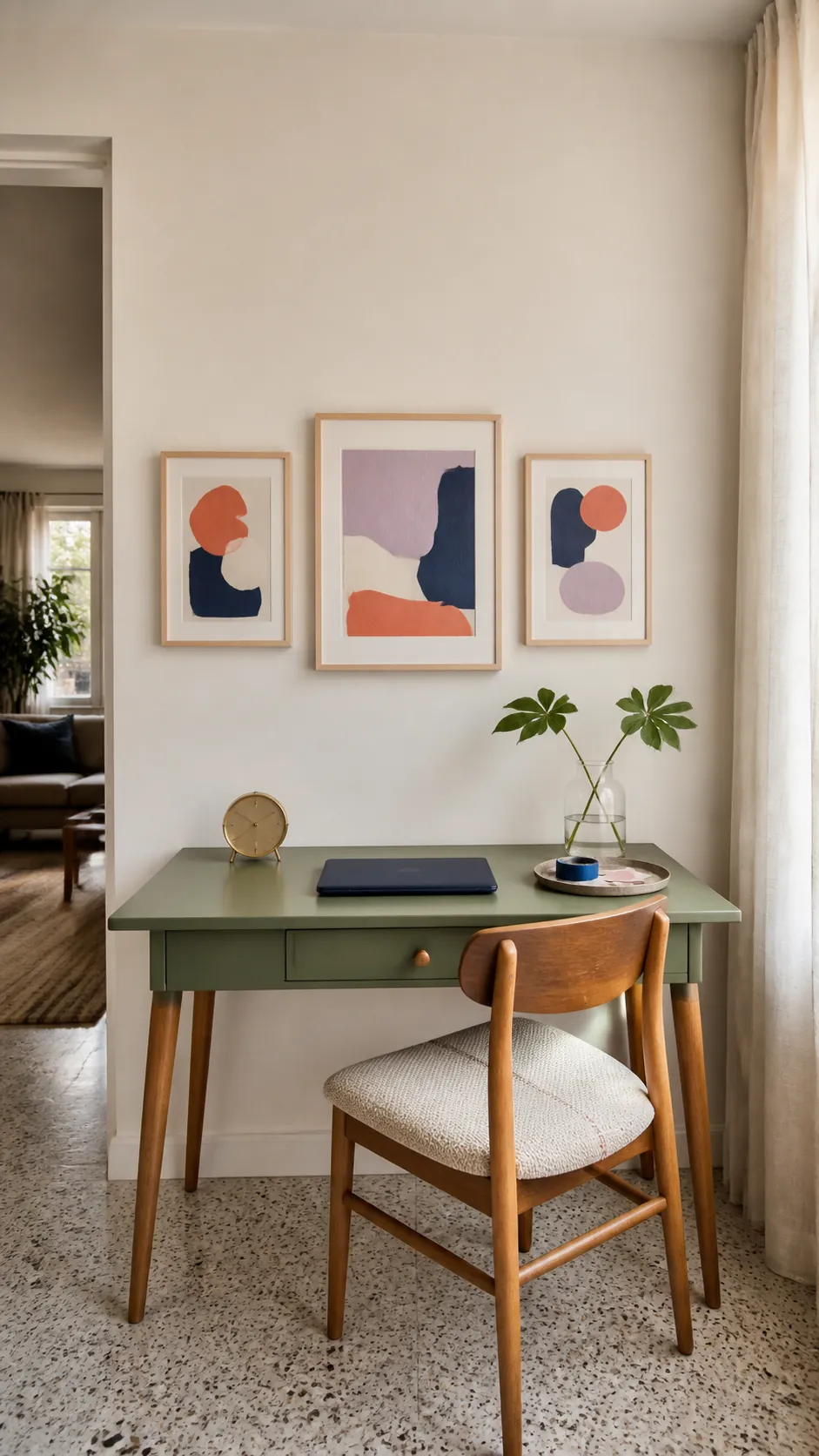
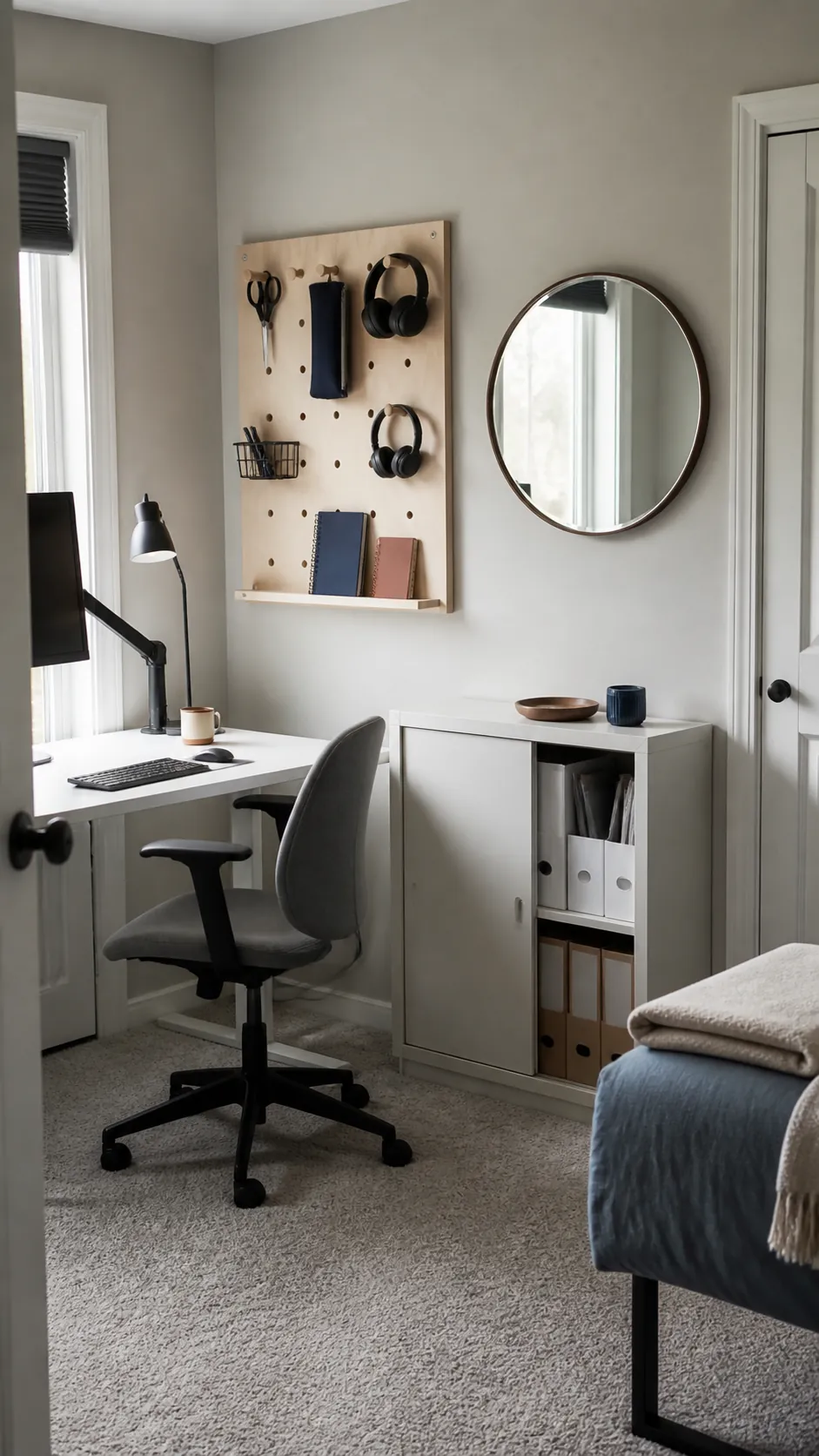
Storage helps only when it removes more visual noise than it creates. One narrow picture ledge, a compact peg rail, or a shallow cabinet can hold active materials without making the entire wall feel like a supply closet. Keep frequently used objects within the seated reach zone and move archives elsewhere.
Leave open space around useful objects so the eye can understand the arrangement quickly. Containers should repeat one or two materials instead of introducing a new color for every category. A few ordinary working items make the office believable, but every surface does not need to be filled.
Use Color to Define the Work Zone
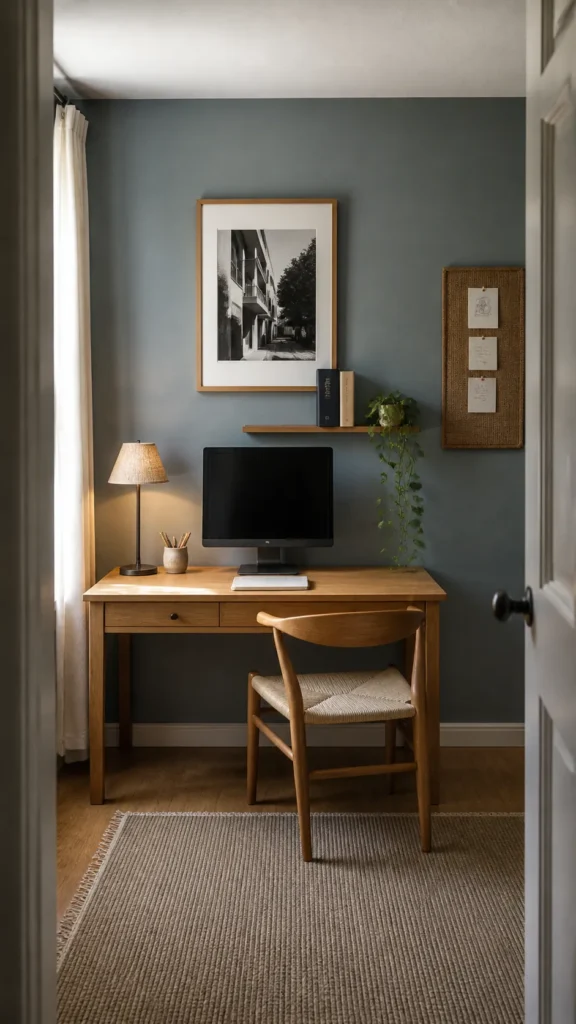
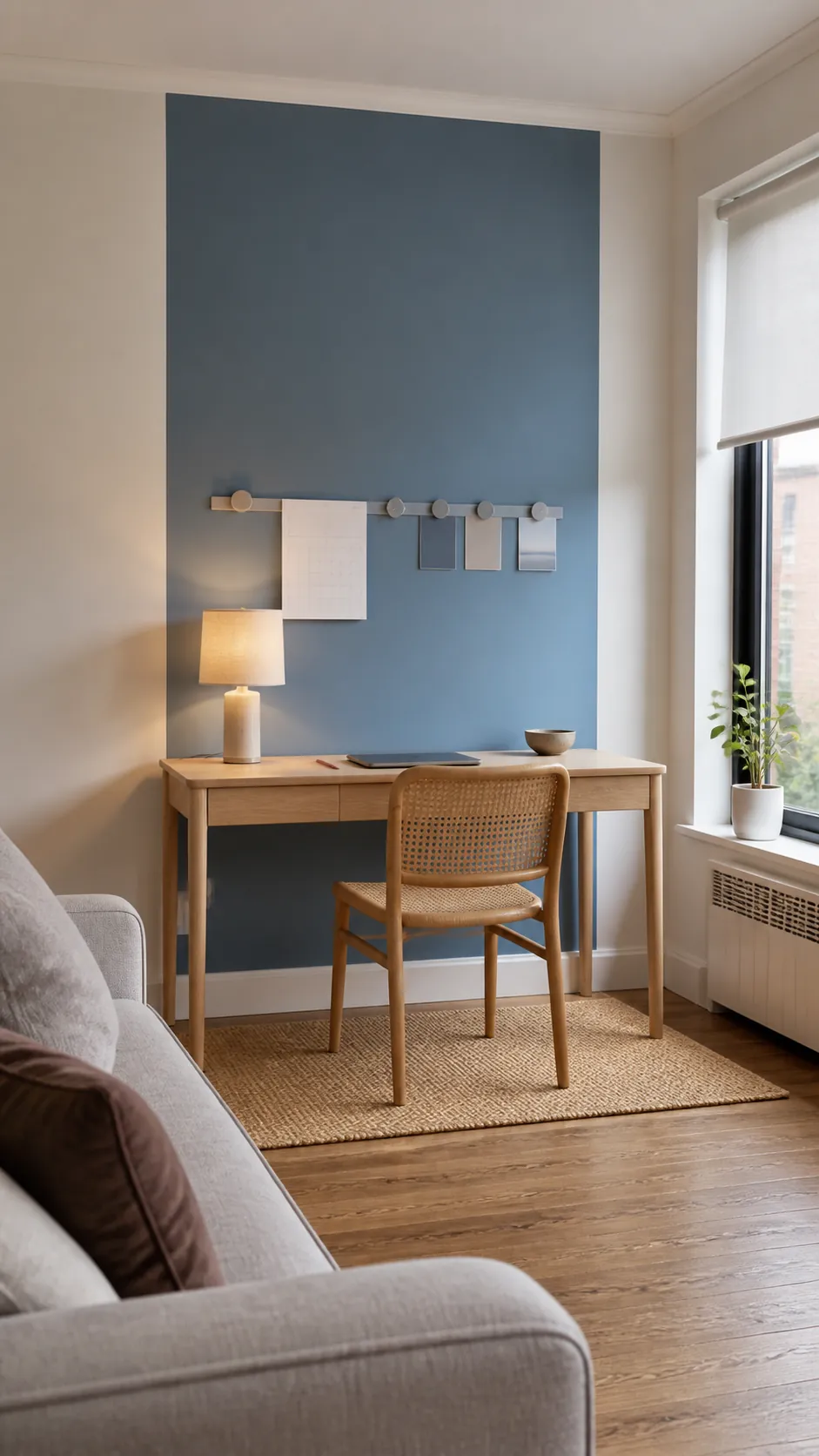
Paint or removable wallpaper can make a plain wall feel intentional before anything is hung. A restrained color field behind the desk creates a boundary for the work zone, which is especially useful when the office shares a bedroom, guest room, or living area. Choose a tone that relates to the floor, desk, and window light rather than copying a color seen only online.
Test a generous sample in morning and evening light. Muted blue, soft green, clay, mushroom, and deep neutral tones can all work, but their undertones change with the room. Renters can create a similar effect with a removable panel sized to the desk instead of covering the entire wall.
Show Personality Without Buying Filler
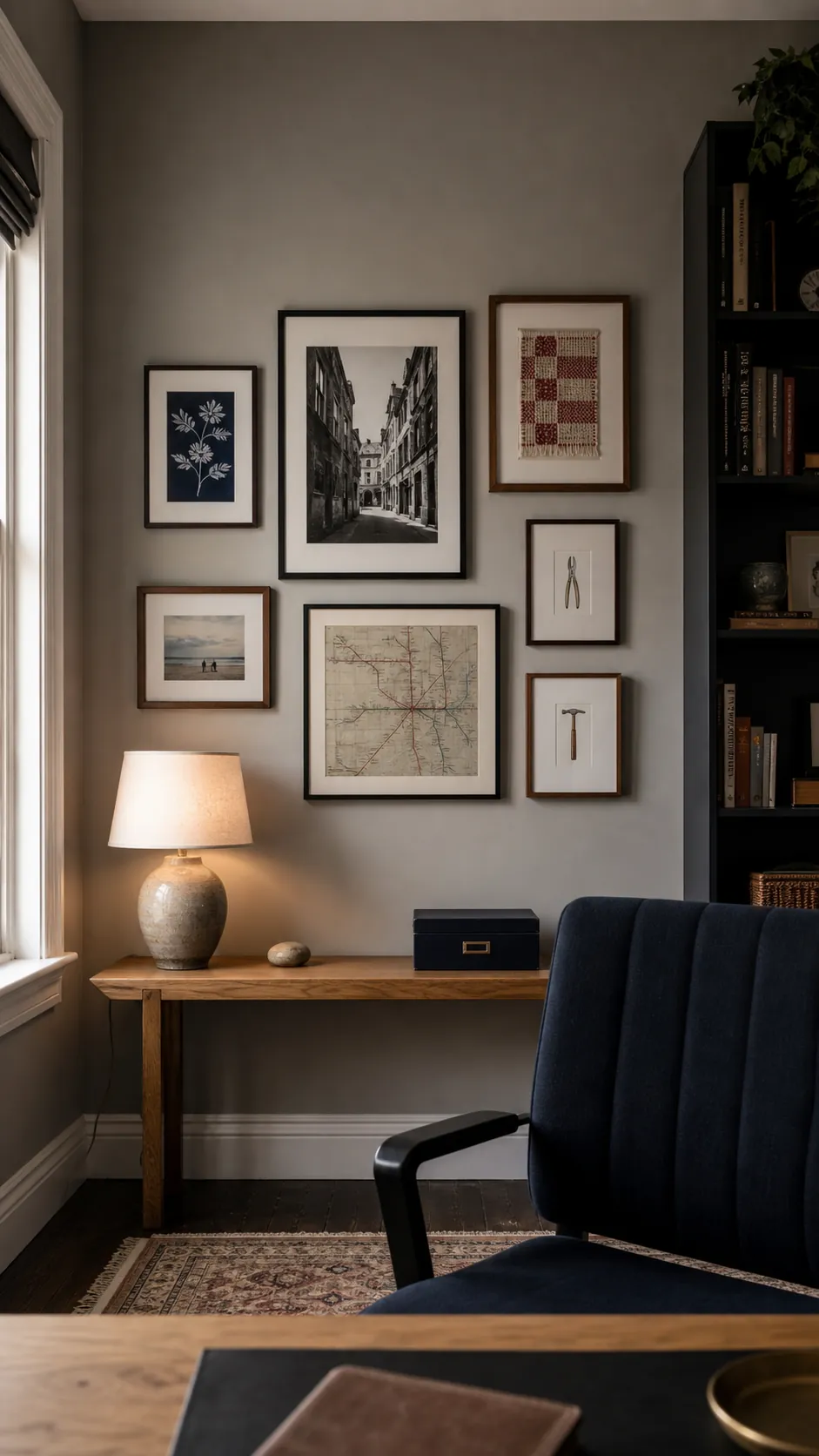
Generic art often solves the blankness but not the feeling that the room belongs to you. Start with material that already carries meaning, such as a favorite print, a family photograph, a map tied to a place, a textile sample, or a piece connected to your work. Then add only what supports that first choice.
Budget does not have to force a random result. Secondhand frames can be unified with consistent mats, and public domain prints can be produced at a local shop in sizes that suit the desk. The strongest office wall usually looks collected with judgment rather than purchased in one afternoon.
Finish With Lighting and Breathing Room
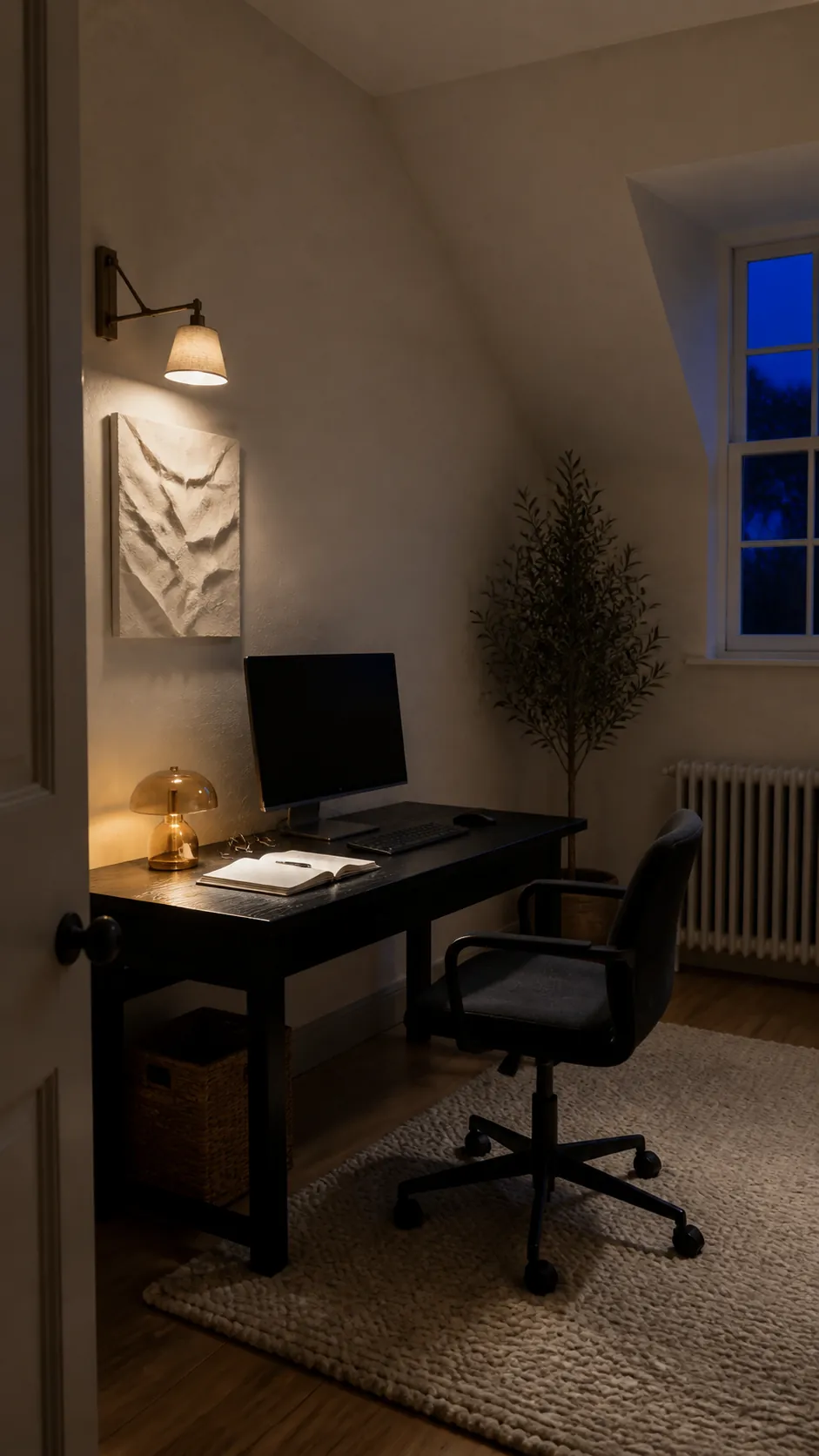
Wall decor disappears after sunset if the only light comes from a bright ceiling fixture. A shaded desk lamp, a slim wall light, or a floor lamp near the edge of the composition can reveal texture and make the room feel welcoming. Position the source so it does not reflect in framed glass or create glare on the monitor.
Stop before the last empty patch is filled. Negative space separates the focal element from storage, keeps the camera background readable, and gives future finds somewhere to go. When the wall supports your routine and still feels calm at the end of a workday, it is finished.