What to Put on a Blank Bedroom Wall for a Calmer Room
A bedroom wall does not need more objects simply because it is empty. It needs a clear relationship to the bed, dresser, doorway, or reading corner, plus enough softness to make the room feel restful. Start with the wall that affects the room most, then leave lesser surfaces quiet.
Anchor the Wall Behind the Bed
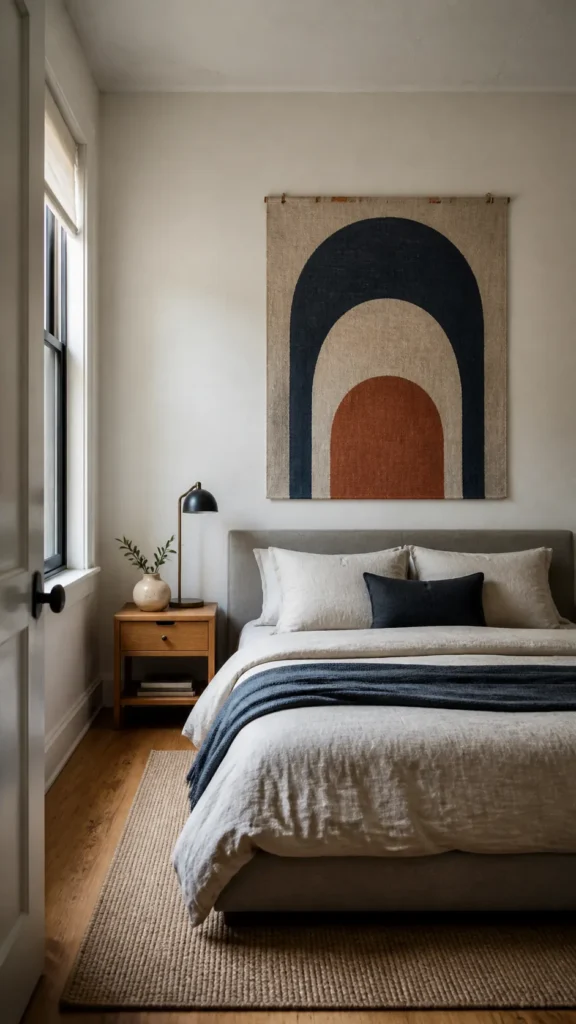
The bed usually offers the strongest furniture line, so decor above it should feel connected to that width. One generous textile, a pair of broad prints, or a shallow relief can create a focal point without filling the whole wall. Keep heavy or glass pieces securely mounted and high enough that pillows cannot knock them.
Measure from the mattress and headboard rather than from the floor. Paper templates make it easy to test scale while sitting in bed and standing at the doorway. If the bed has a tall detailed headboard, the calmer choice may be paint or lighting instead of another strong object.
Balance a Dresser With a Mirror
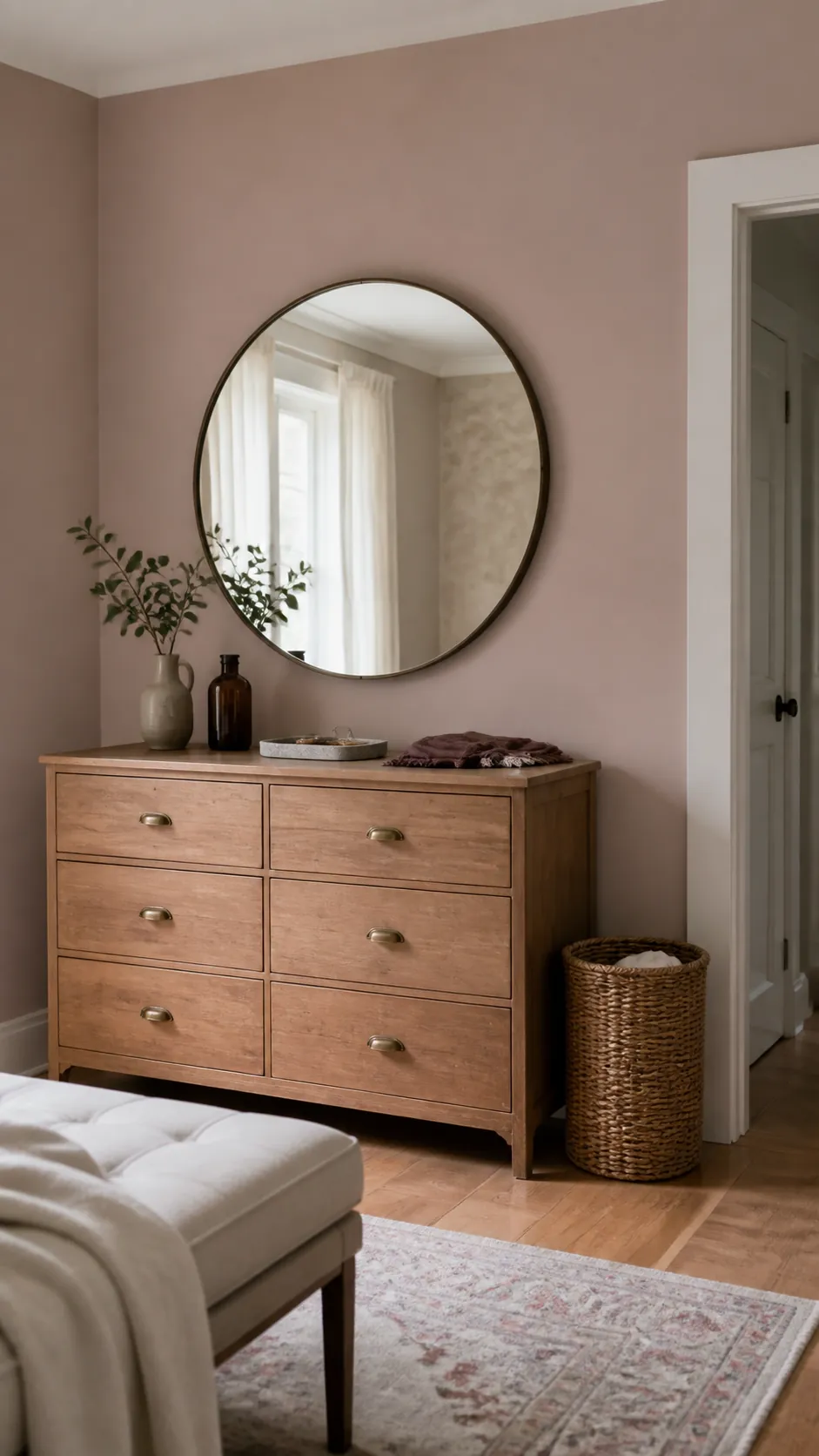
A blank wall above a dresser benefits from something that shares its visual width. A single mirror can reflect window light, make the dressing zone useful, and avoid the cost of several framed pieces. Choose a shape that contrasts gently with the dresser, such as a round mirror over straight drawers.
Check the reflection before mounting it. The best view is daylight, a quiet part of the room, or a considered feature rather than an open closet. Leave enough space for the dresser top to hold a lamp and daily objects without touching the mirror visually.
Bring in Softness With Fabric
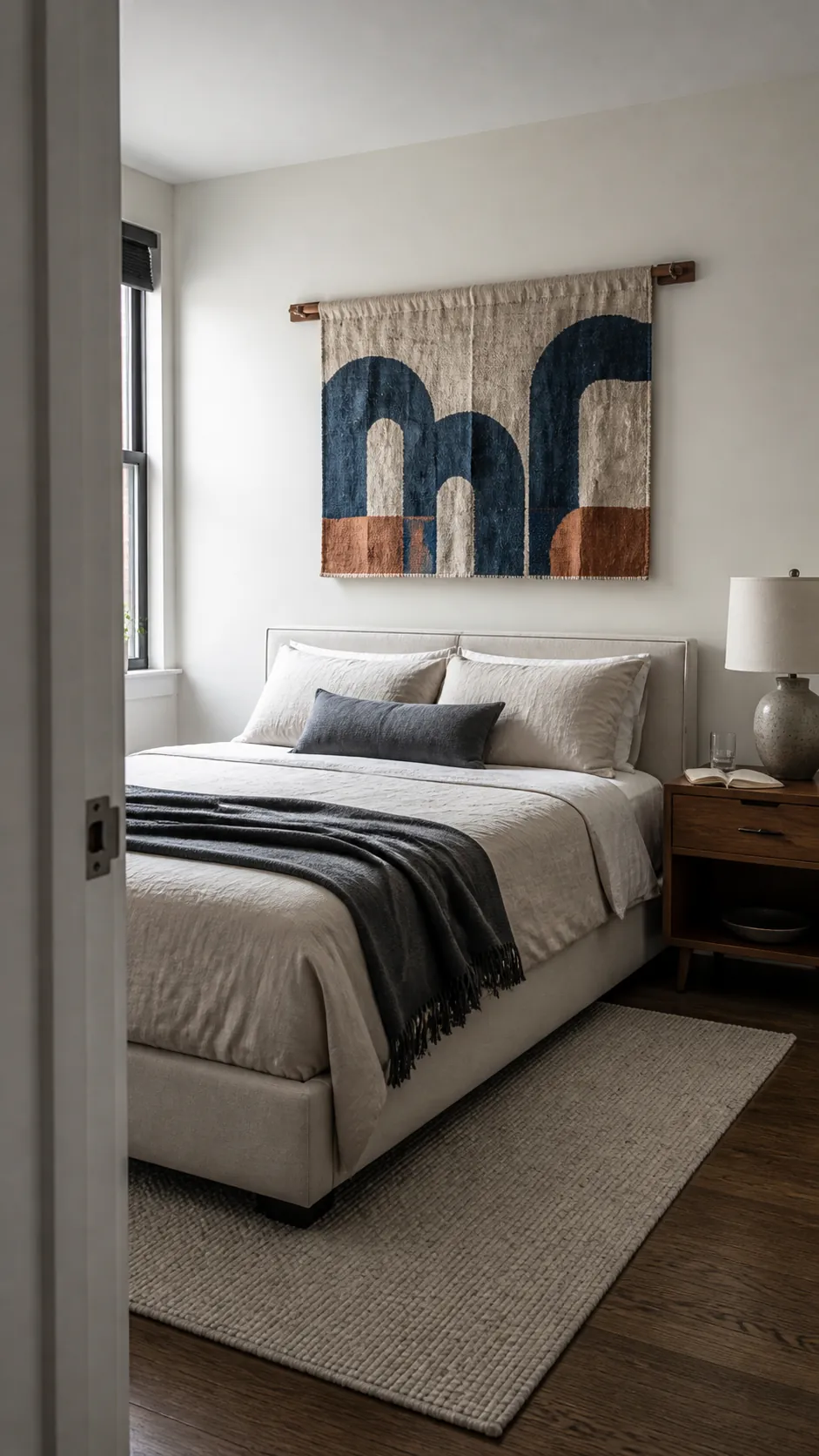
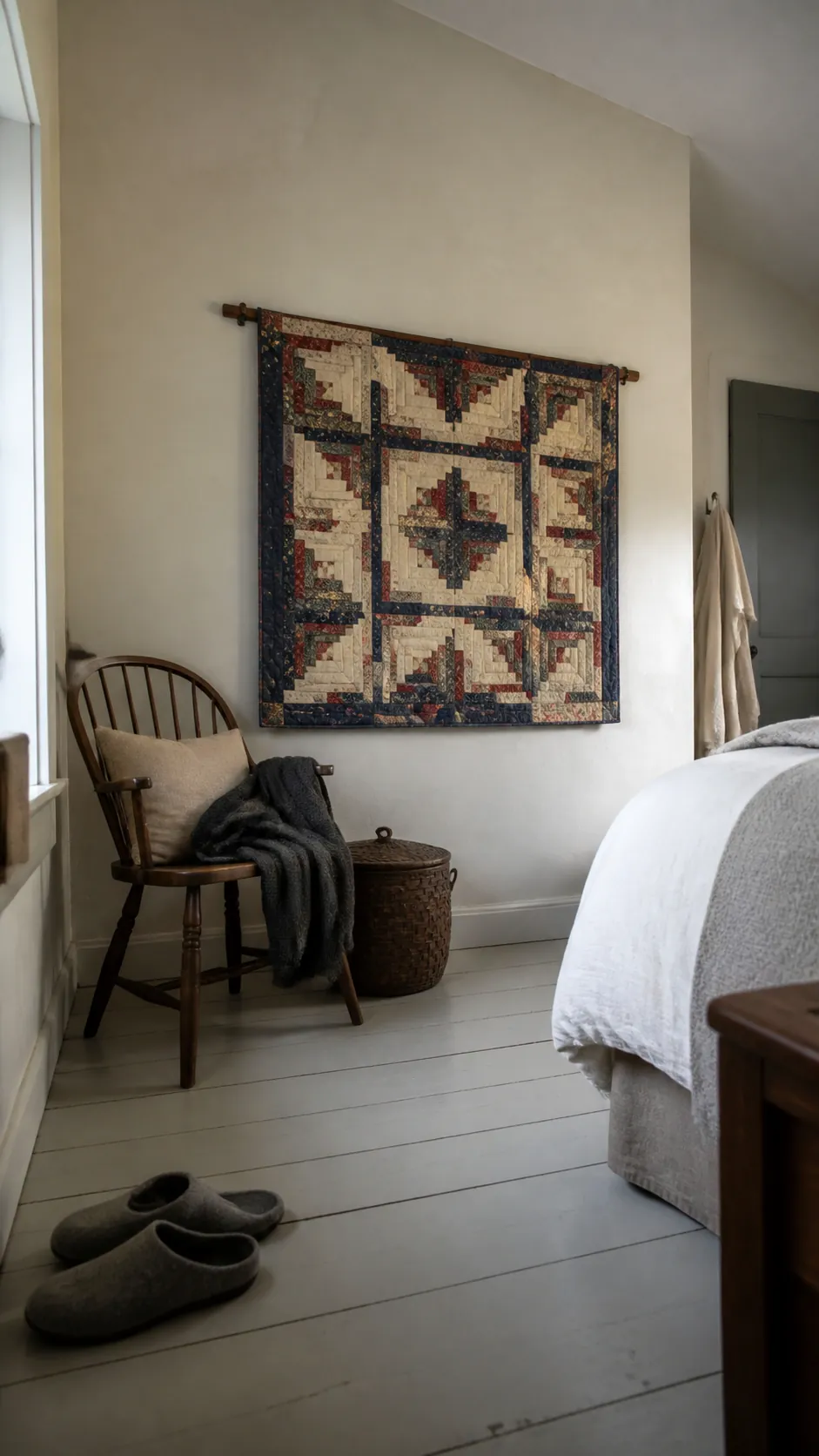
A quilt, woven panel, or length of meaningful fabric adds color without the hard edges of glass. It can also soften sound and make an all white bedroom feel warmer. Use a sleeve, rod, or textile hanger that supports the full width so the material falls cleanly.
Fabric works especially well on a long side wall where framed art might feel too formal. Repeat one textile color in a cushion or throw, but avoid matching every element. Natural irregularities give the room character while the open wall around the piece keeps it calm.
Use One Changeable Picture Ledge
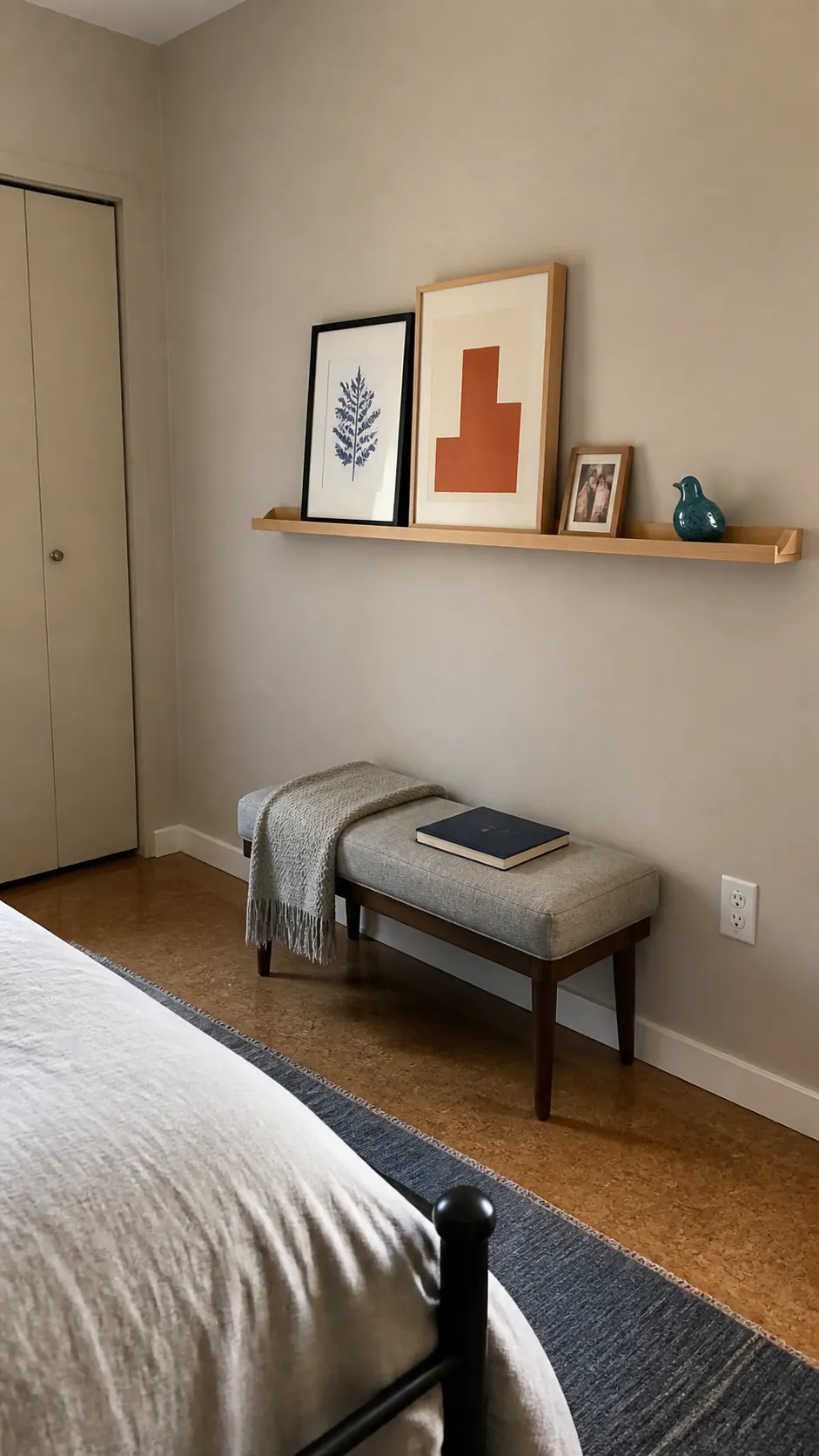
A shallow ledge can hold layered prints, small books, and one vessel while keeping the arrangement easy to change. Limit the display to a few varied heights so it does not become a storage shelf. Secure leaning pieces and place the ledge away from the path around the bed.
Renters can choose a short ledge fixed with approved hardware or use a freestanding console when holes are forbidden. Secondhand frames unified with matching mats keep the cost down. A personal photograph or printed botanical study will usually feel better in a bedroom than generic filler art.
Define the Room With Removable Color
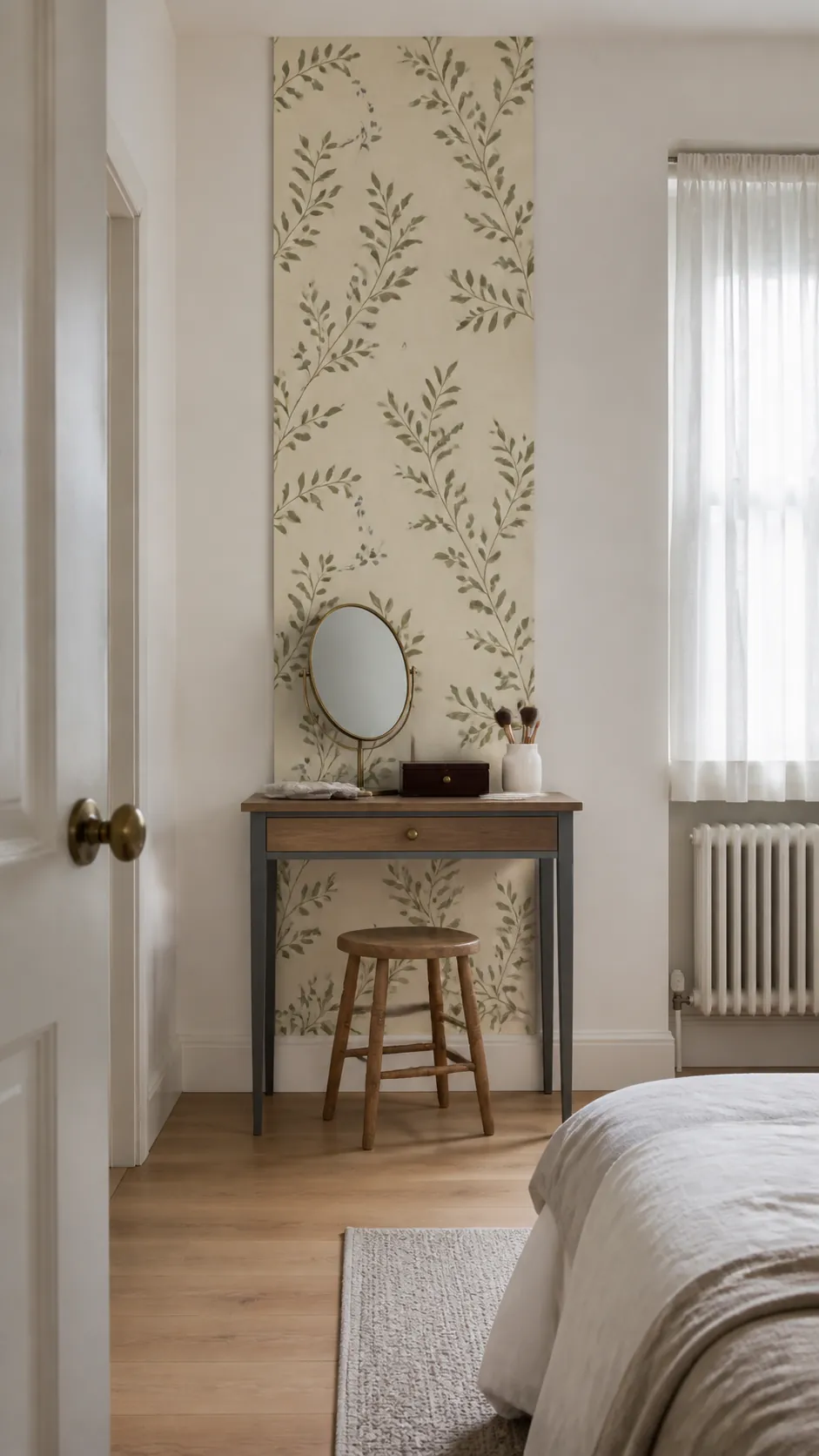
When paint is not allowed, a removable wallpaper panel can give the bed or vanity a clear background. Choose a broad quiet pattern that can be read from across the room rather than a tiny busy repeat. Test adhesion in a hidden spot and follow removal instructions for the exact wall finish.
A framed size panel is often calmer and easier to install than covering every wall. It also lets the surrounding paint act as a border, which makes the choice feel deliberate. Pull two colors from the pattern into bedding and leave the remaining surfaces simple.
Finish With Gentle Wall Light
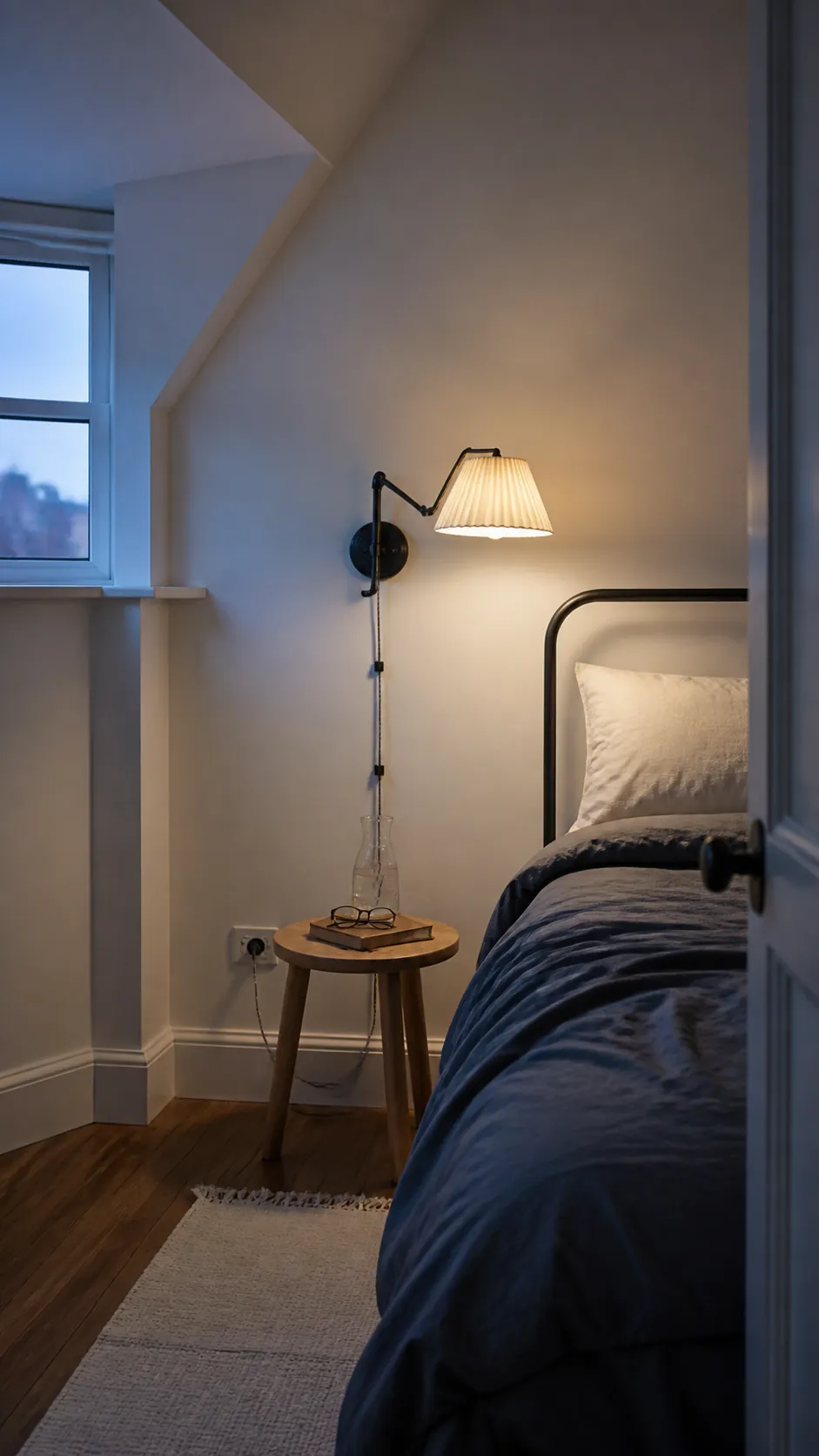
Light changes a plain wall without asking it to hold another object. A plug in sconce, shaded bedside lamp, or small uplight can reveal paint texture and make the room feel settled at night. Choose a warm but balanced bulb and shield it from direct view when lying down.
Let the light fade into an open area instead of using it to spotlight every decoration. This breathing room gives the eye somewhere to rest and keeps the bedroom from feeling like a gallery. If the room feels cozy, functional, and calm with the main lamp on, the blank portion is doing useful work.