What to Put on a Small Blank Wall: Smart Ideas That Fit
A small blank wall often looks unfinished because it sits between stronger features: a doorway, a window, a cabinet, or the end of a sofa. Filling every inch rarely fixes that feeling. The better move is to identify the wall fragment’s visual center, choose one role for it, and preserve enough open space for the choice to look intentional.
Measure the wall, then photograph the whole room rather than the empty patch alone. The wider view reveals whether the room needs more color, reflection, storage, softness, or simply a quiet pause. It also prevents a tiny wall solution from competing with larger art and furniture nearby.
Choose One Strong Rounded Shape
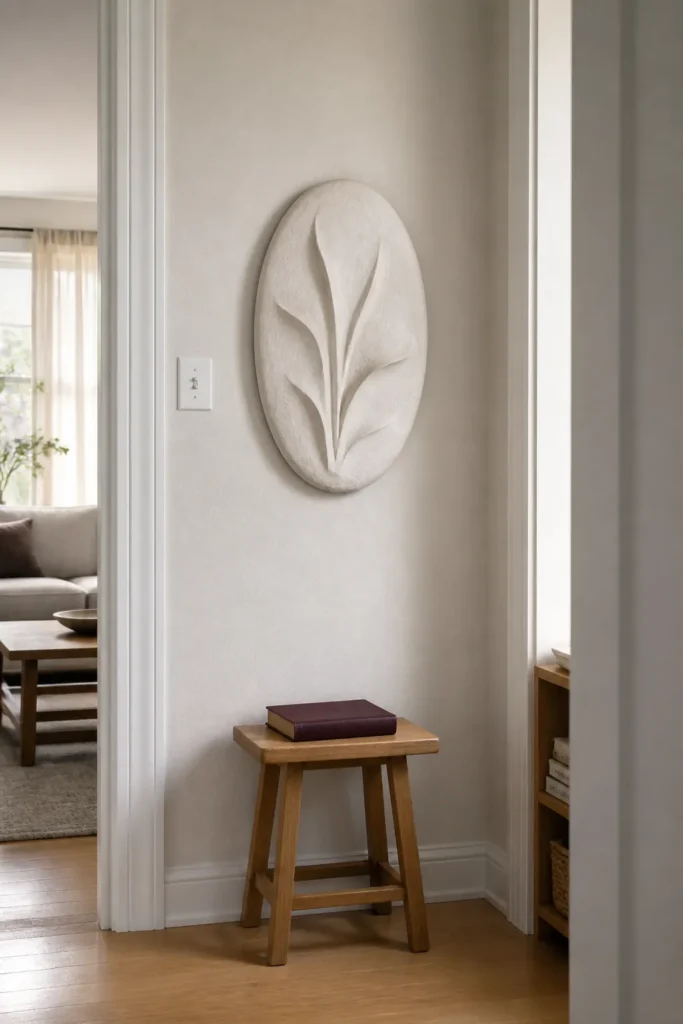
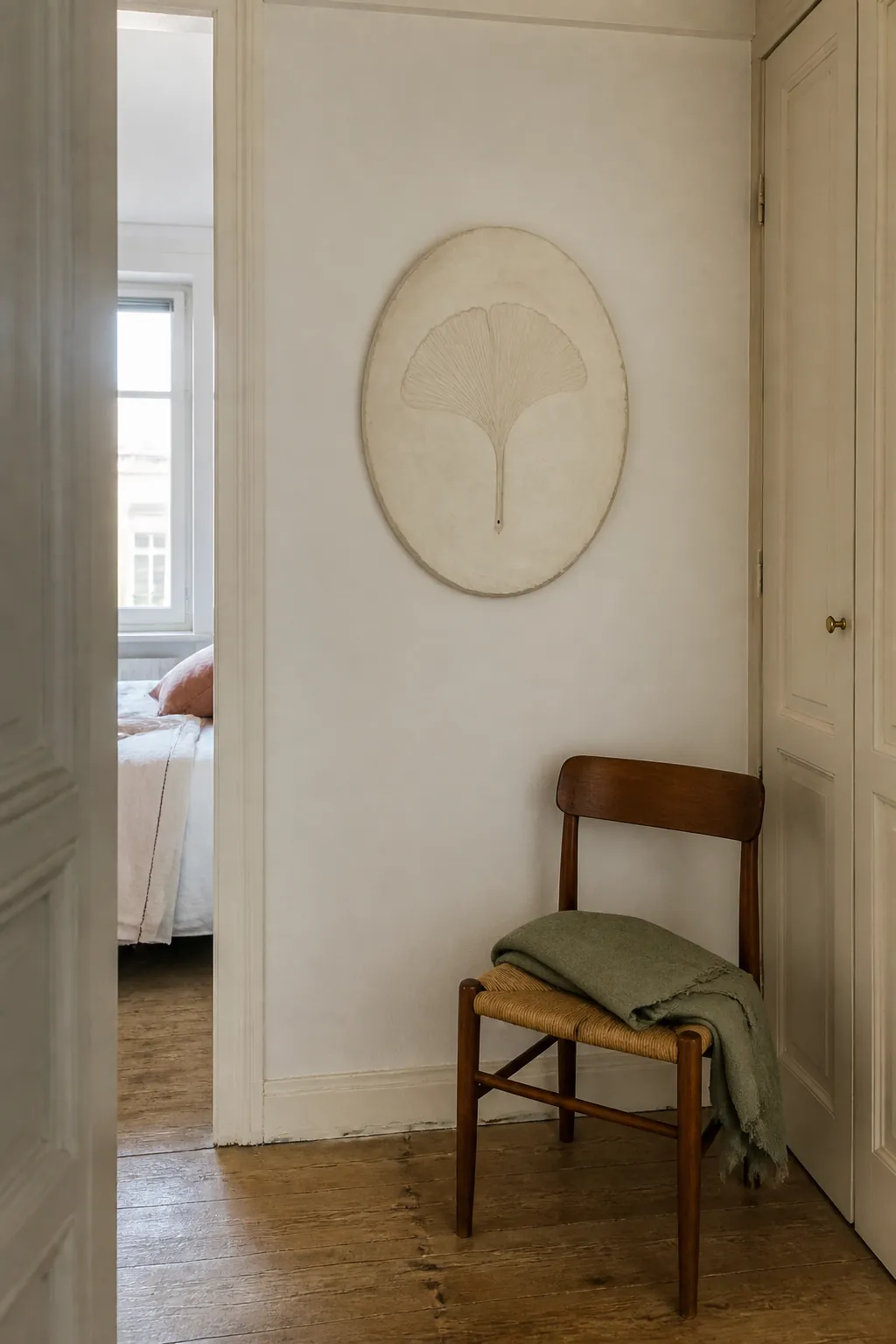
A round mirror, oval relief, or fan shaped woven piece can soften a narrow rectangle of wall. Curves work especially well beside straight door trim or cabinetry because they create contrast without requiring a group of objects. Leave a generous margin around the shape so the outline remains clear.
Use painter’s tape to test the full silhouette before hanging anything. A piece that occupies roughly half to two thirds of the usable width usually feels confident without becoming cramped. If the wall is beside a door, check the handle, hinge, and shoulder path as carefully as the visual scale.
Build a Simple Vertical Rhythm
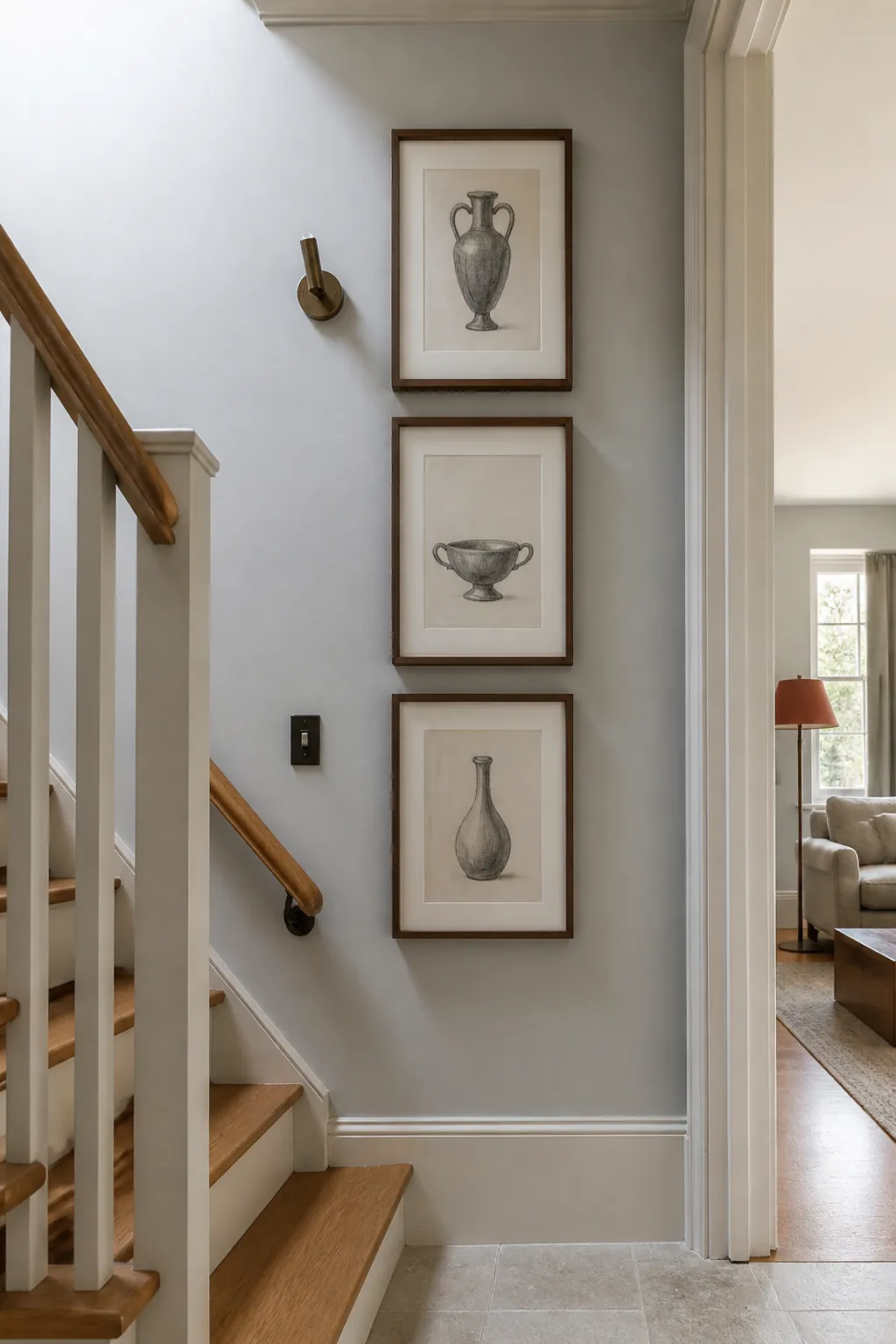
A short wall beside stairs or between openings often needs height more than width. Three related prints stacked vertically can guide the eye upward while staying inside the narrow zone. Keep frame sizes identical and spacing consistent so the arrangement reads as one unit.
The subjects can vary while sharing a clear connection, such as three charcoal line drawings of different vessels. Start the group near standing eye level and let it extend upward rather than dropping too close to switches or furniture. A paper template makes the final placement much easier to judge.
Add a Ledge With a Clear Limit
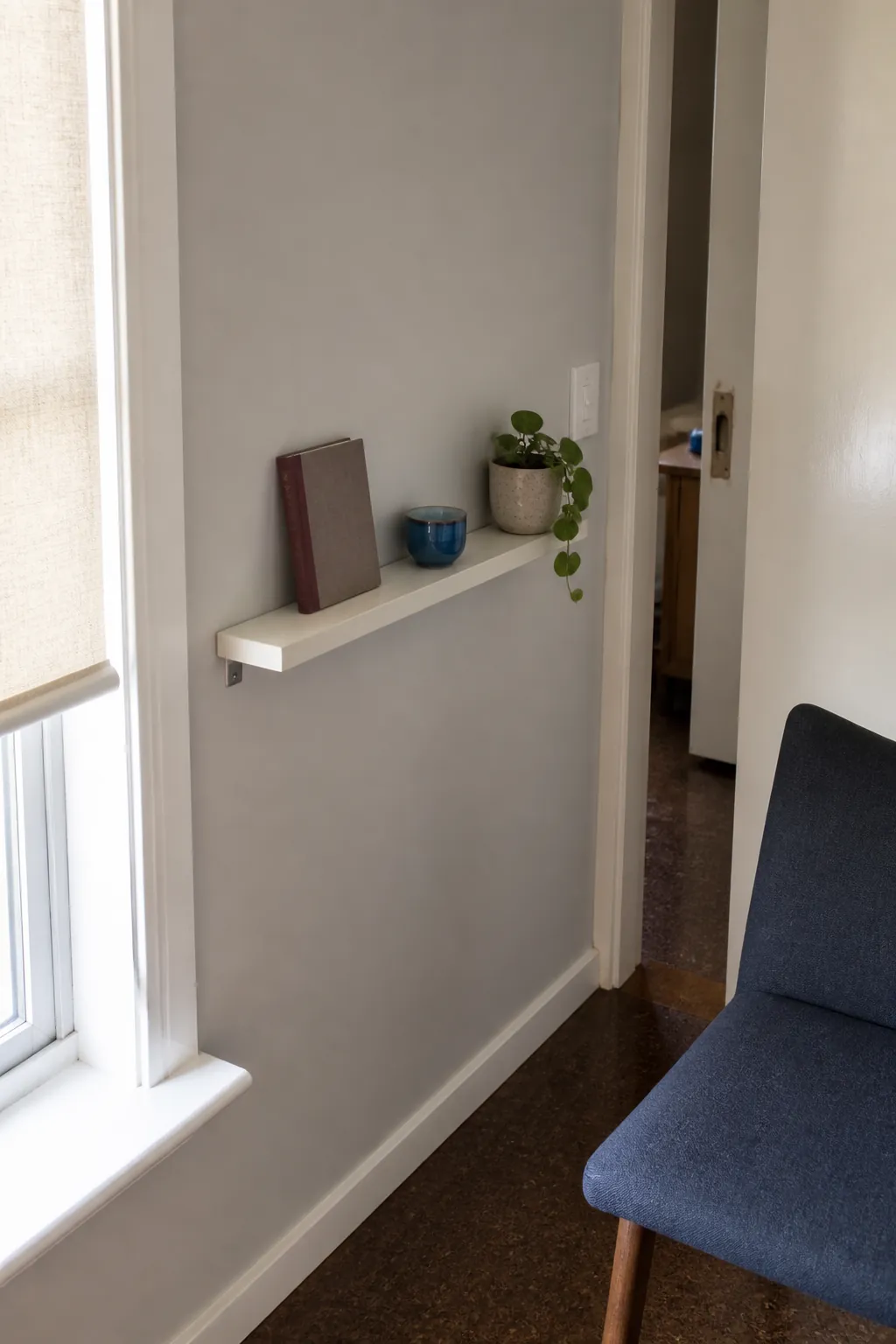
A shallow picture ledge can give a small wall a useful surface without turning it into a deep shelf. Use it for two or three light objects that relate in height, such as a small book, a ceramic piece, and a trailing plant only when the location receives suitable light. The empty portion of the ledge is part of the composition.
Projection matters more than storage capacity in a tight passage. Choose a ledge shallow enough that sleeves and shoulders do not catch it, and mount it with hardware appropriate for the wall. In a rental, a lightweight rail and removable display objects reduce both damage and visual weight.
Use a Mirror to Borrow Light
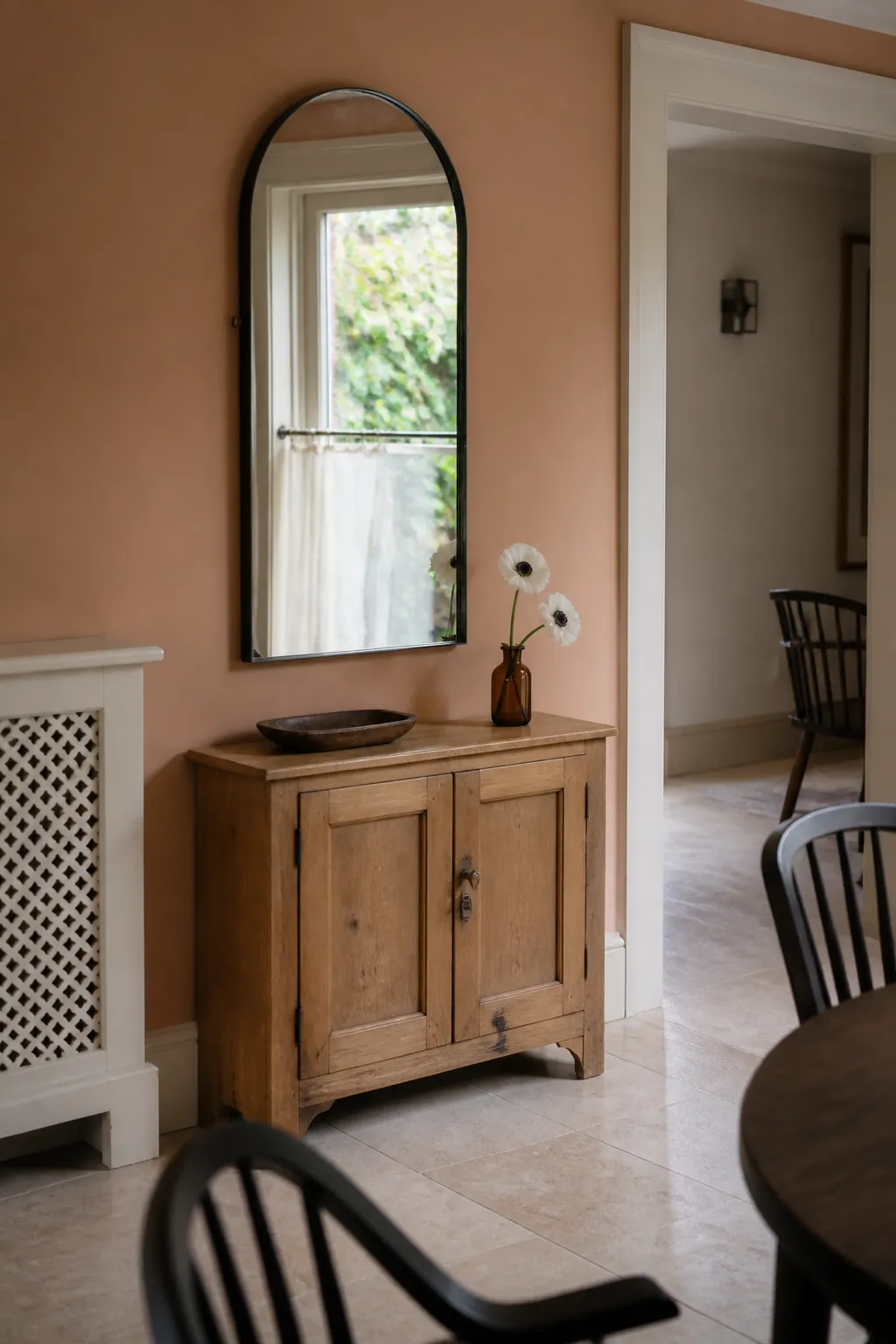
A compact mirror is most effective when it reflects a window, lamp, or pleasant view into the room. Check the reflection from the usual seated and standing positions before fixing the height. The goal is to redirect light and depth, not to create a distracting view of a blank ceiling or busy doorway.
One unusual frame can carry more personality than several small mirrors. A softly arched shape works above a short cabinet, while a narrow vertical mirror suits a wall strip near a closet. Keep the surrounding objects minimal so the reflected scene remains the focal detail.
Bring In Softness With a Textile
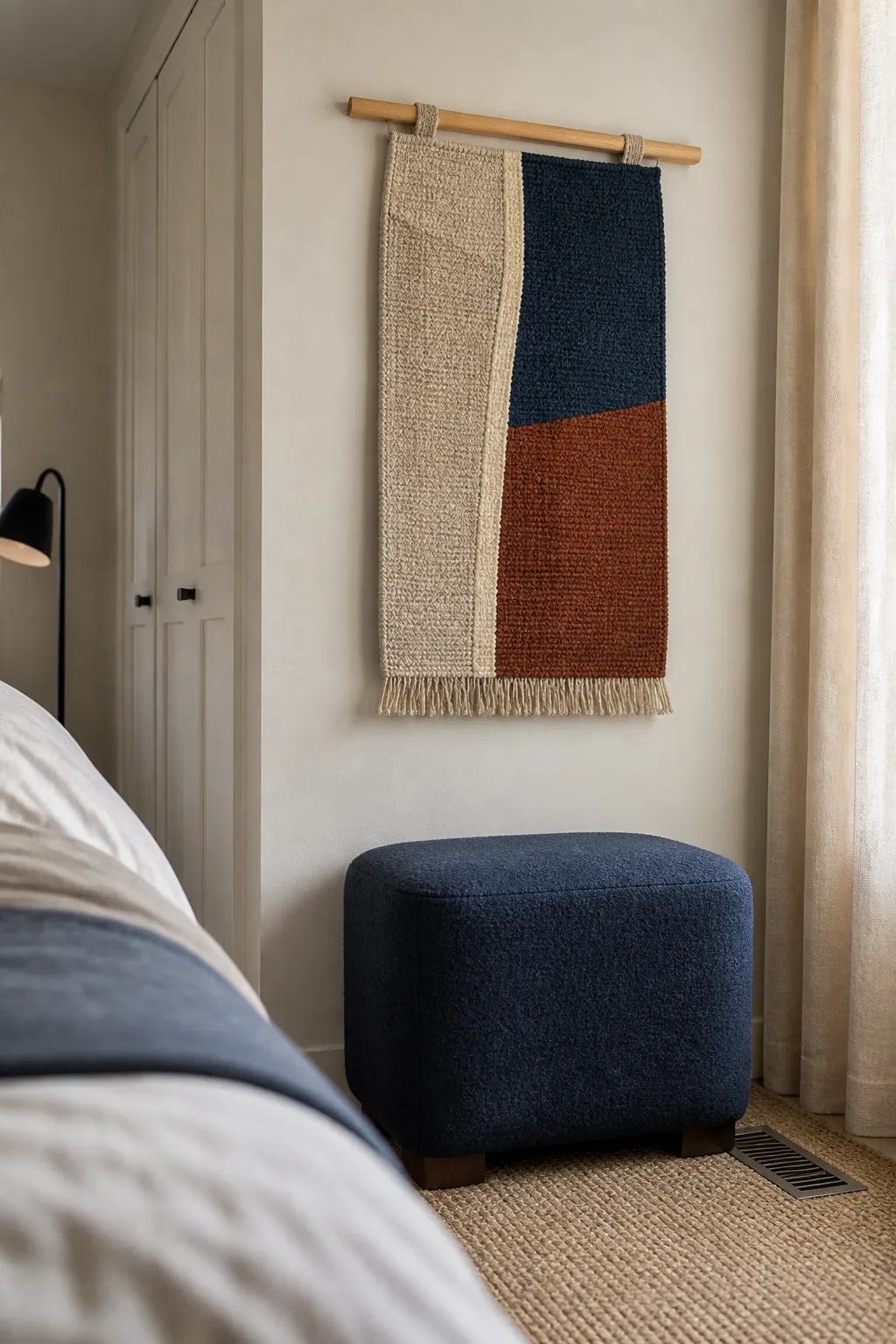
A woven panel or small textile hanging can warm a wall where another hard frame would feel repetitive. Choose a piece with a distinct weave and a finished edge, then hang it flat enough to look deliberate. Textiles also absorb a little echo, which can help in narrow rooms with many hard surfaces.
Keep the fiber away from cooking splatter, damp corners, and direct heat. A simple wood rod gives the hanging structure and makes it easy to remove for cleaning. Natural variation is appealing, but long fringe should not brush furniture, switches, or passing hands.
Let Paint Define the Wall Fragment
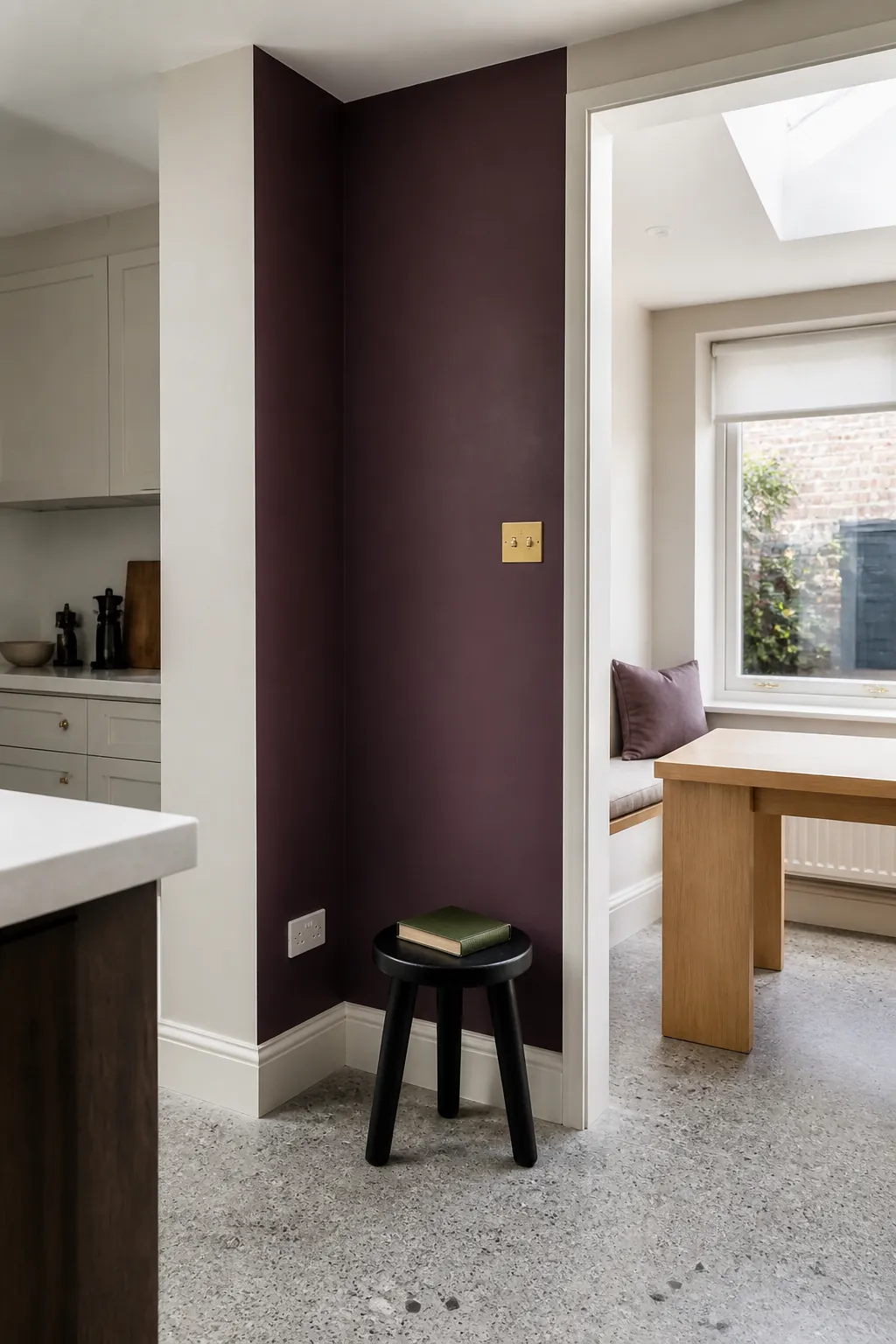
Sometimes the smallest empty wall needs color rather than another object. A painted block that follows the wall’s actual edges can turn an awkward fragment into a purposeful accent. Repeat one nearby color in a slightly deeper value so the change connects to the room instead of looking accidental.
Prepare the edges carefully around trim, outlets, and corners, because precision is what makes a simple treatment convincing. Place one modest object in front only if it adds a useful role, such as a narrow stool for a book. When the color has enough presence on its own, leaving the rest open is a complete decorating decision.