21 Above Sofa Wall Art Ideas That Look Perfectly Proportioned
The empty space behind a sofa can make an otherwise finished living room feel oddly unresolved. The real challenge is not finding something attractive, but choosing a piece or arrangement with enough visual weight, placing it close enough to connect with the furniture, and making its colors belong in the room. A useful starting point is to aim for artwork that spans roughly two thirds of the sofa width, then adjust for lamps, windows, and nearby shelves.
One Oversized Abstract Canvas
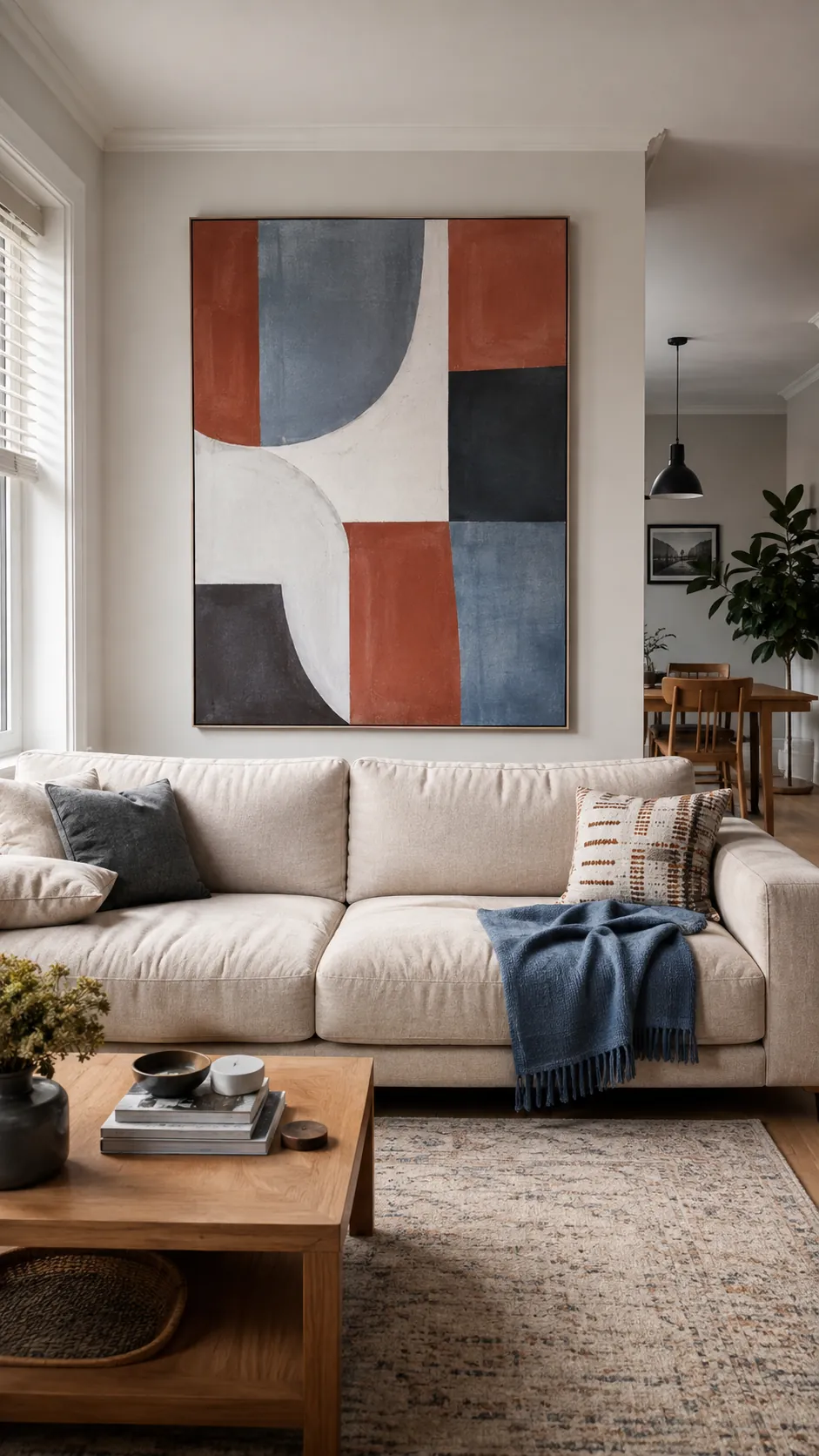
A single large abstract canvas gives a long sofa one confident focal point without making the wall busy. Choose a composition that repeats two or three colors already present in the rug, cushions, or curtains, while introducing one sharper accent. Keep the lower edge about six to ten inches above the sofa back so the canvas reads as part of the seating zone. If the room contains many patterns, favor broad shapes and generous quiet areas instead of intricate marks.
Balanced Black And White Triptych
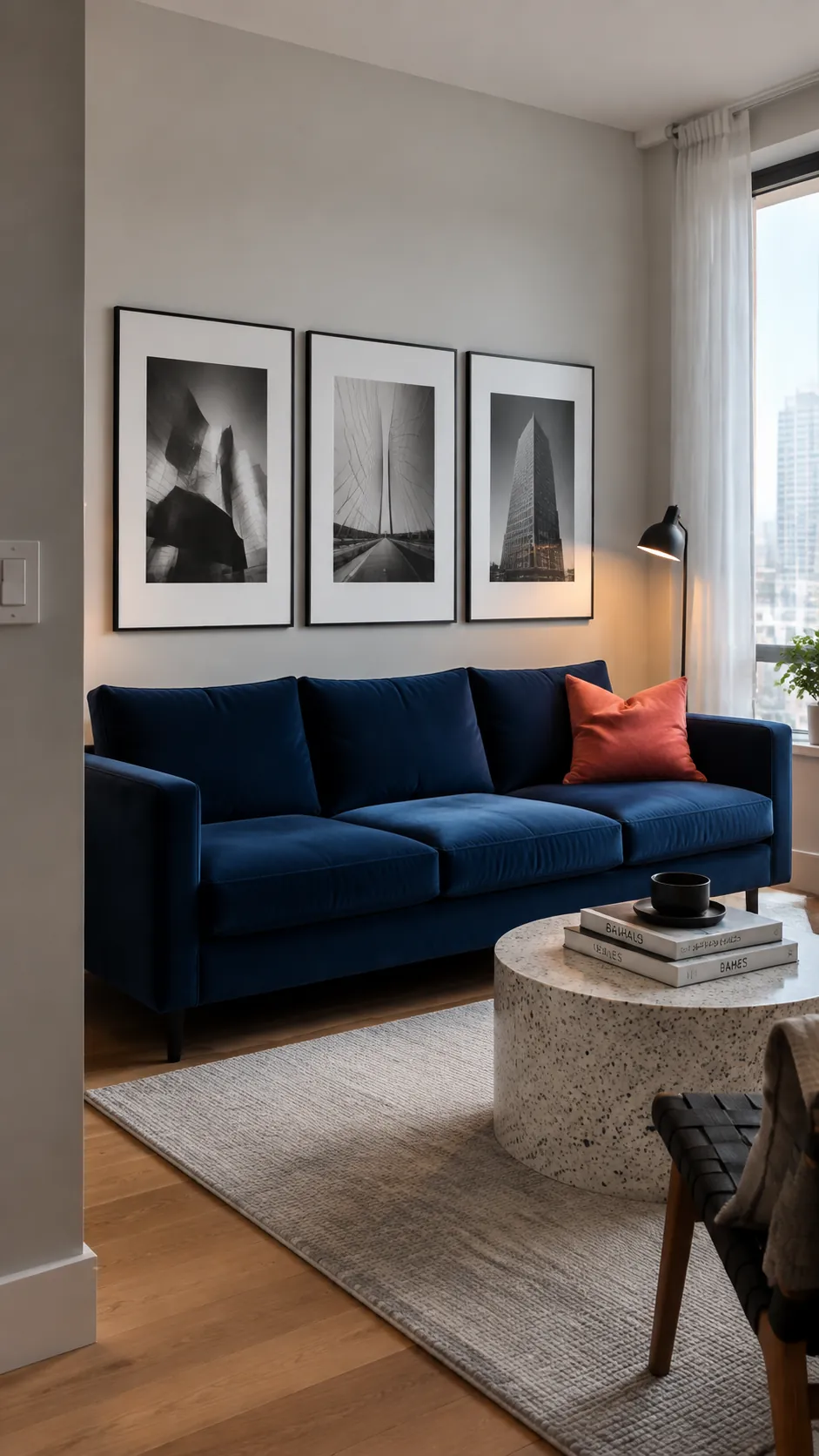
Three coordinated black and white prints can calm a colorful living room while still filling a wide wall. Match the frame size and mat width, then keep the gaps narrow enough for the group to read as one composition. Center the complete triptych over the sofa rather than centering each print on separate wall sections. This arrangement works especially well when the sofa has a low back and clean contemporary lines.
Collected Salon Gallery
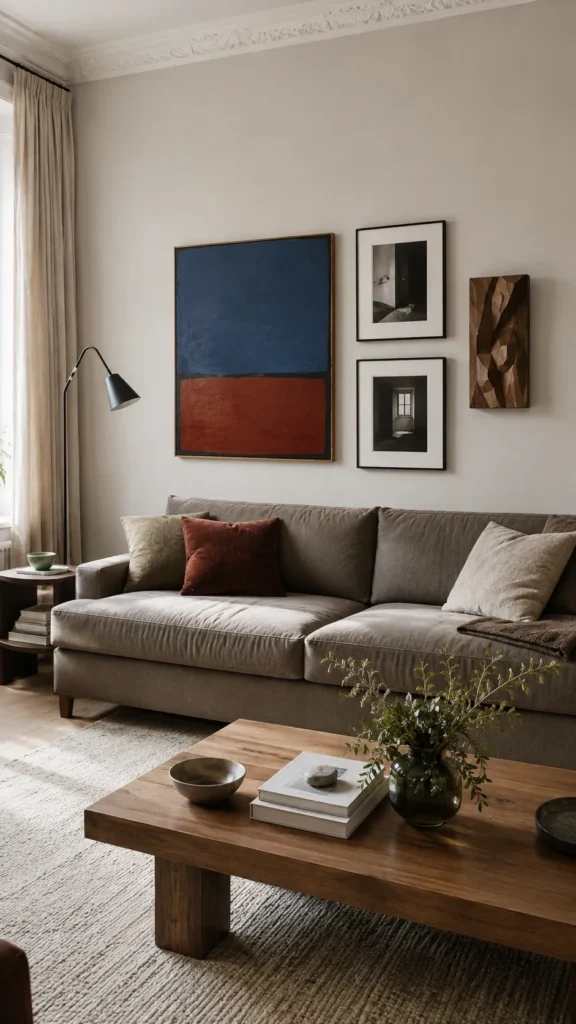
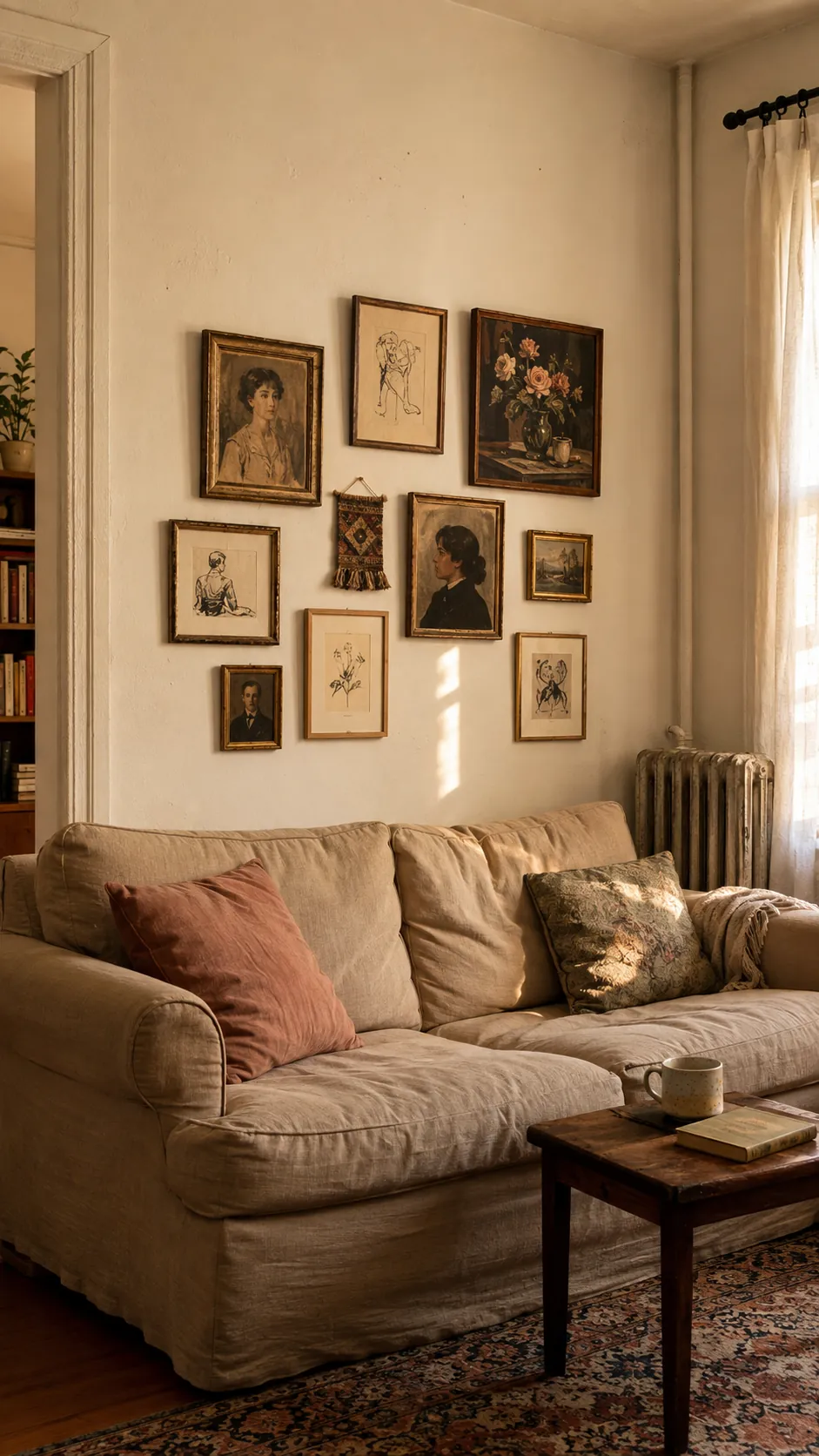
A salon arrangement turns personal photographs, drawings, and small paintings into one layered statement. Build the layout on the floor first, using a strong central piece and allowing smaller frames to radiate around it. Repeat one frame finish or color in several places so the collection feels intentional rather than random. Keep the outer boundary narrower than the sofa and maintain consistent visual spacing even when the frames differ.
Long Panoramic Photograph
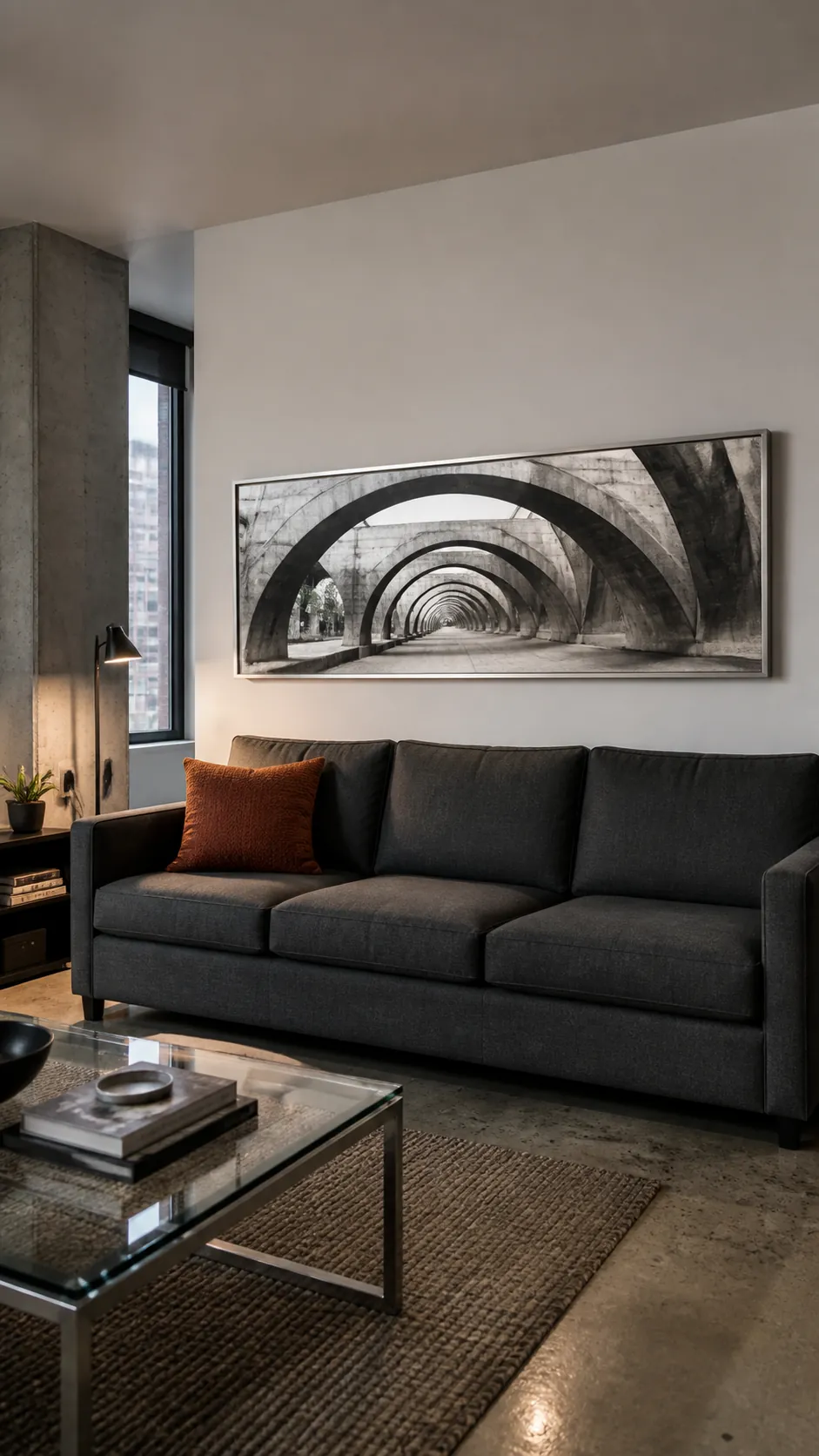
A panoramic photograph naturally echoes the horizontal line of a sofa and makes a narrow wall feel more expansive. Pick an image with a clear horizon or architectural rhythm, then use a slim frame that does not compete with the view. A wide white mat can add breathing room when the photograph contains deep color or fine detail. Check reflections from windows before fixing the final hanging height, especially if the glazing is glossy.
Pair Of Vertical Botanical Studies
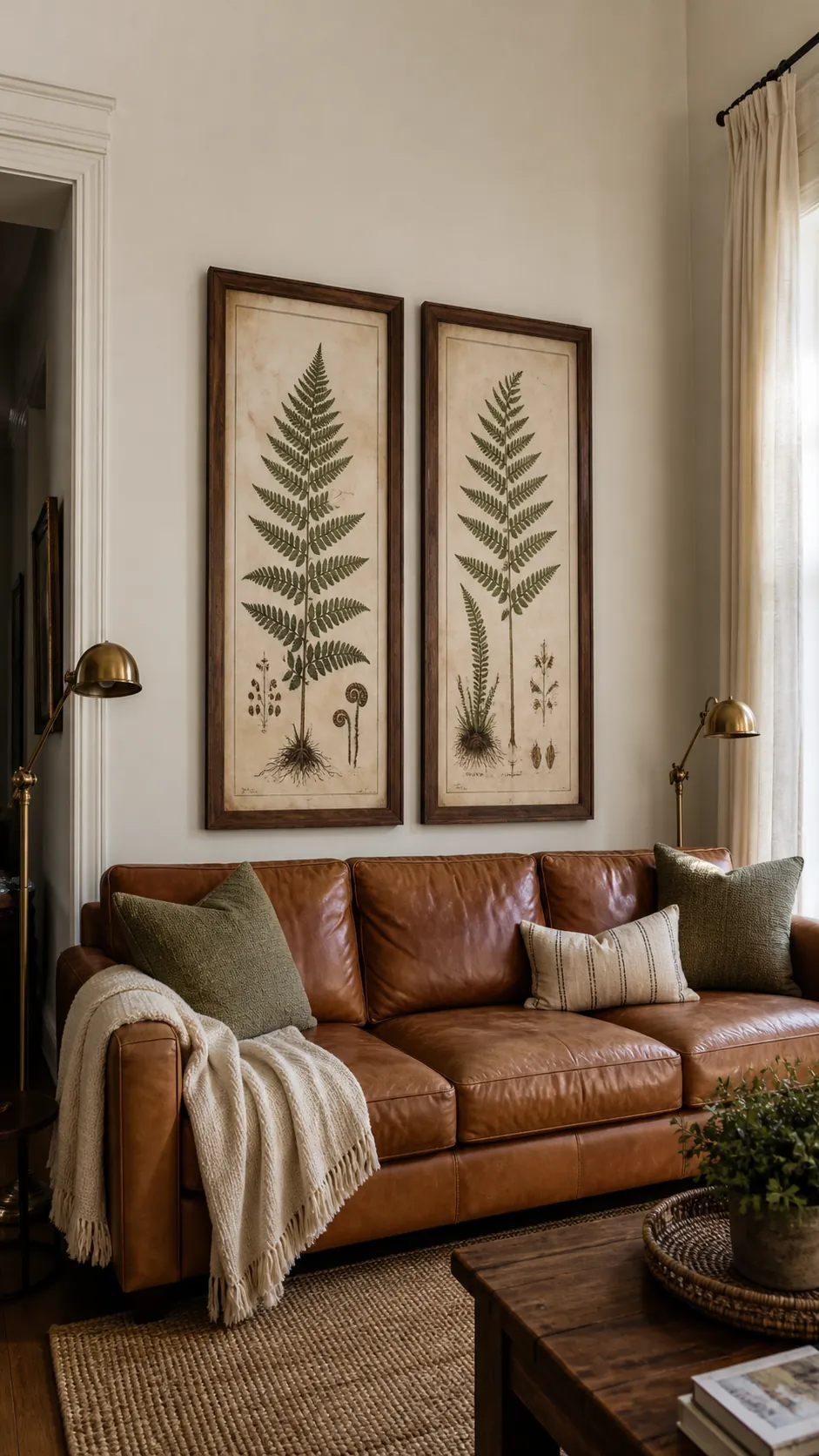
Two tall botanical studies bring height to a room where the sofa sits beneath a high ceiling. Choose related specimens with different silhouettes, then hang them at equal height with a measured gap between the frames. The vertical format is especially helpful when floor lamps or side tables occupy the outer edges of the wall. Muted green and parchment tones soften leather, wood, and other warm materials without demanding a completely neutral scheme.
Textured Woven Textile Panel
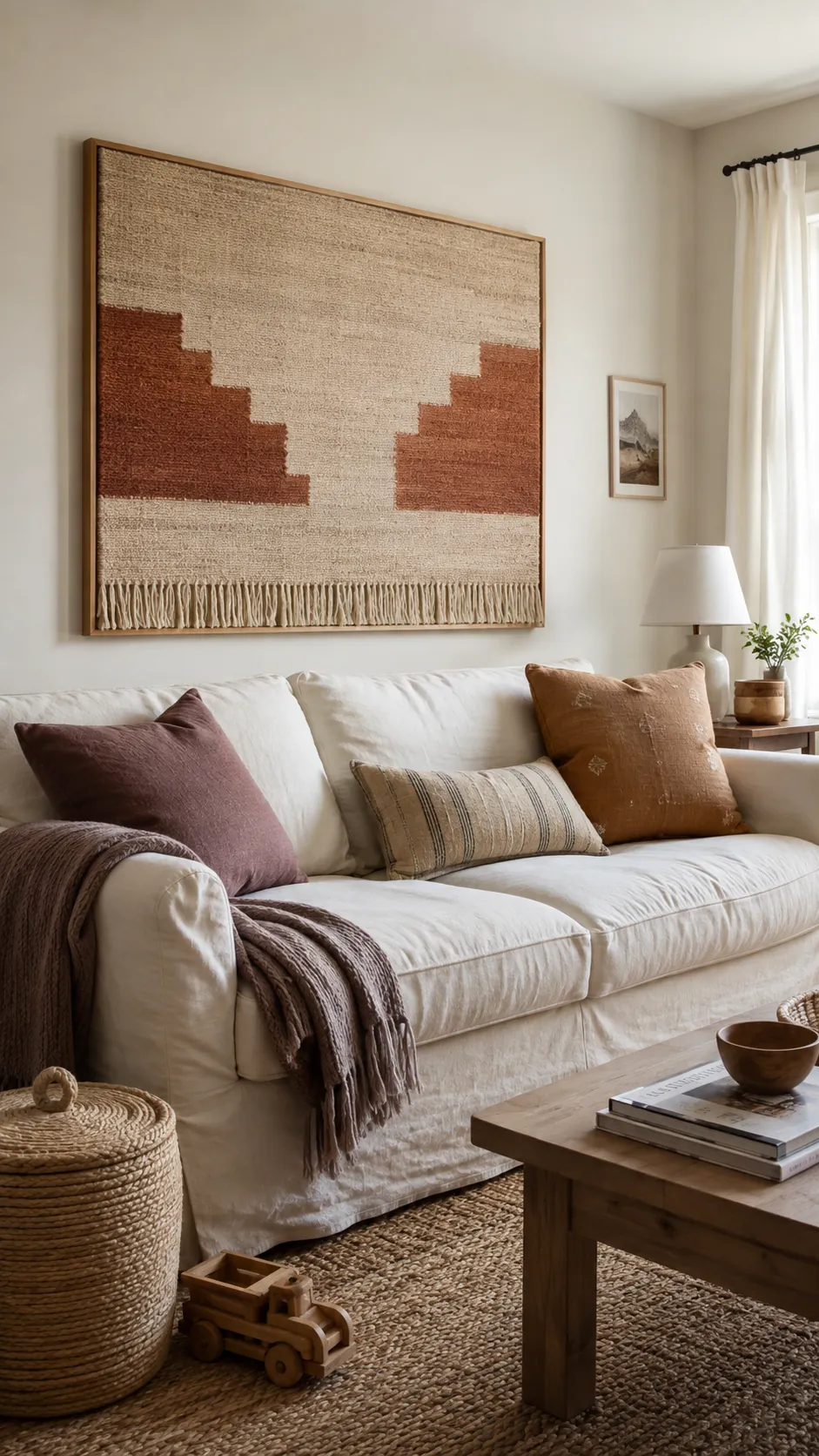
A woven textile panel adds softness and dimension without the hard edges of another framed print. Look for visible fiber variation, restrained fringe, and a scale that can hold its own above the sofa. Because fabric collects dust, hang it where it can be reached with a gentle upholstery attachment and avoid placing it near a working fireplace. A concealed rod or slim wooden rail keeps the top edge crisp and prevents sagging.
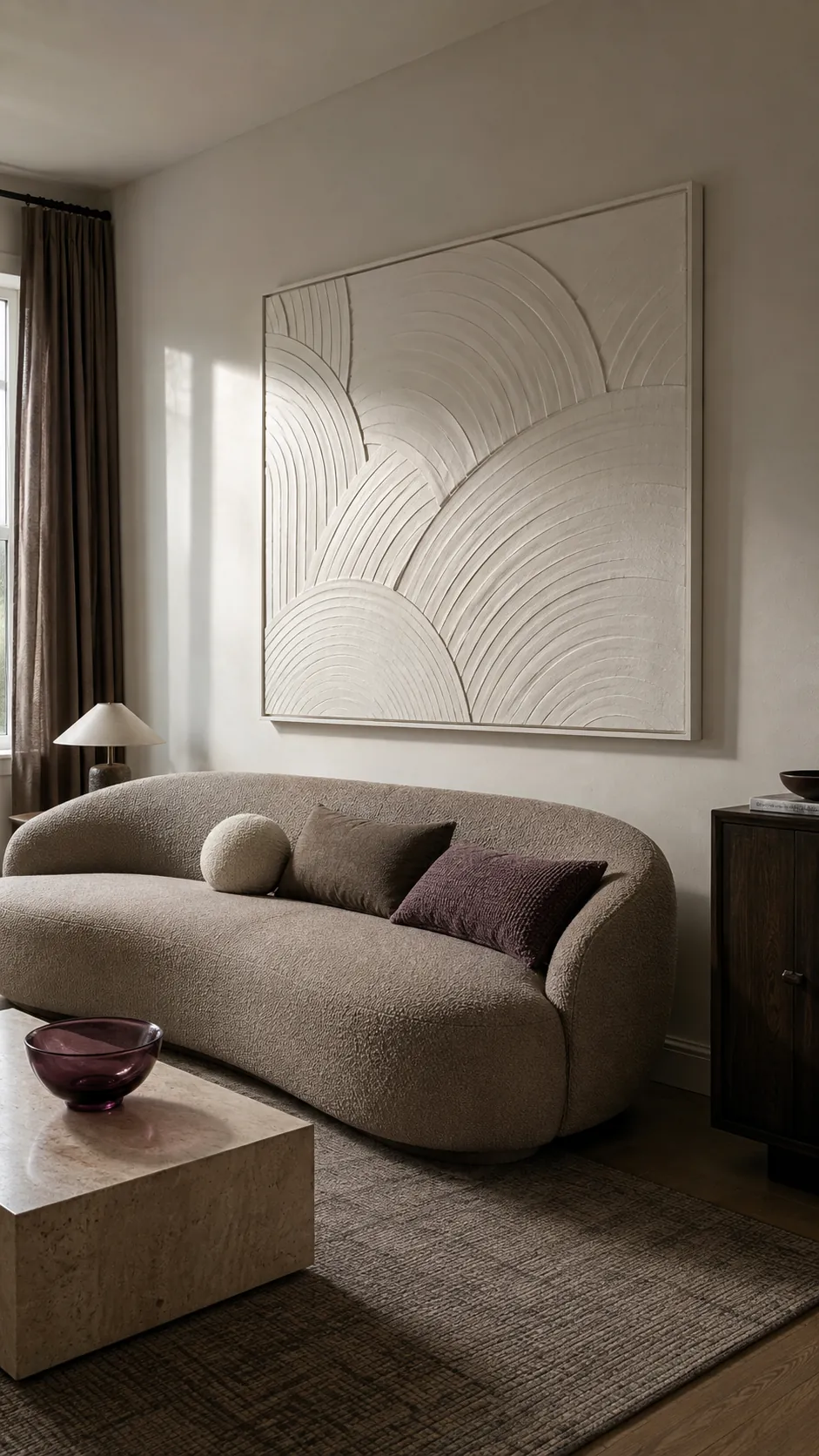
Sculptural Plaster Relief
A shallow plaster relief creates changing shadows throughout the day and suits a room that relies on texture more than color. Secure it to studs or use hardware rated for the full weight, since a heavy piece above seating needs careful installation. Side light from a window or wall lamp will reveal the raised forms better than flat overhead light. Let the relief remain the only major object on that wall so its subtle surface can register.
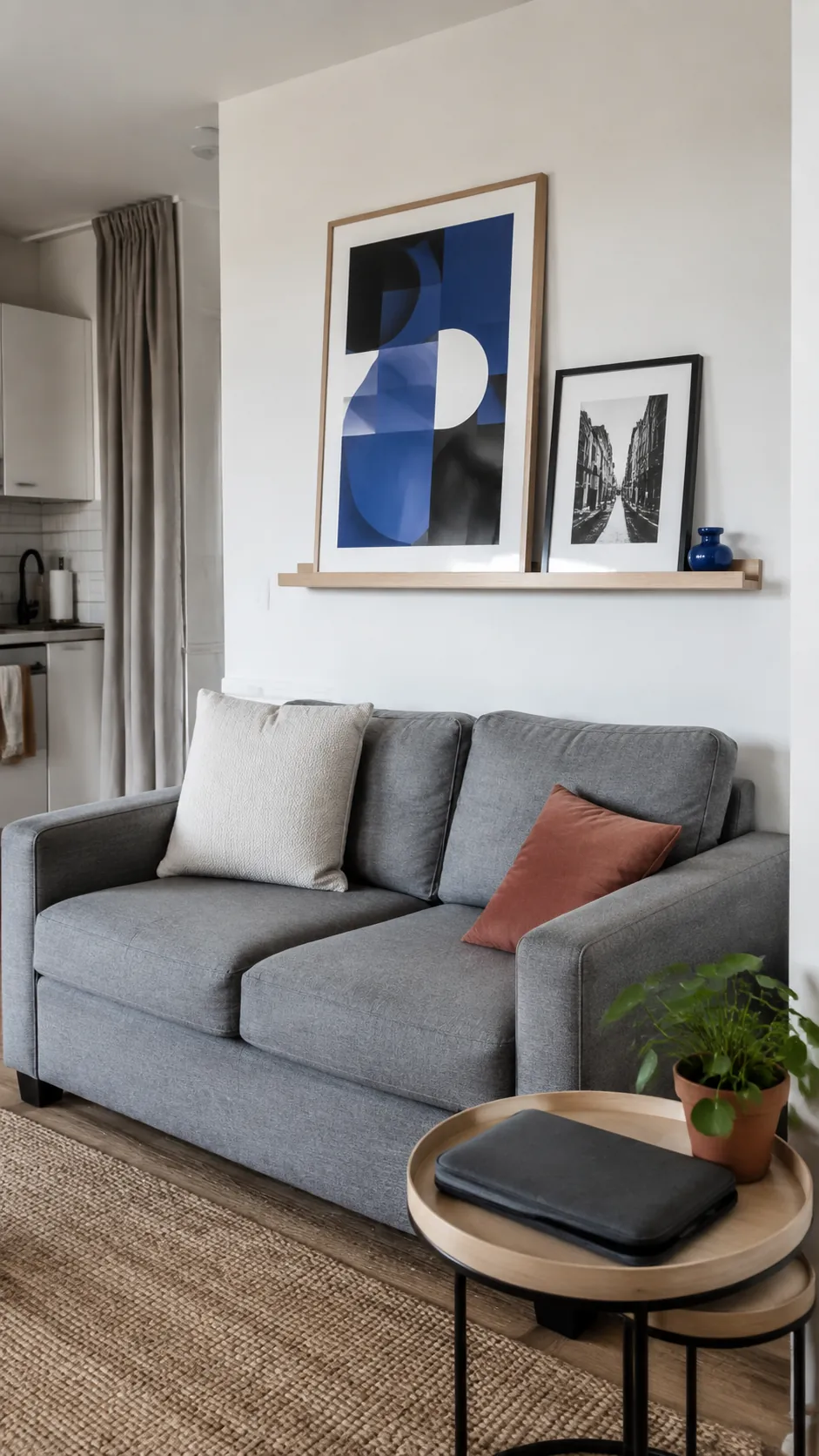
Picture Ledge With Layered Frames
A picture ledge allows artwork to change without adding new holes each time. Combine one large anchor frame with two or three smaller pieces, overlapping their edges slightly while keeping faces and important details visible. The ledge should be securely fixed and deep enough to stop frames from slipping forward. This solution is useful for renters only when the wall fixing method is permitted and the total load remains modest.
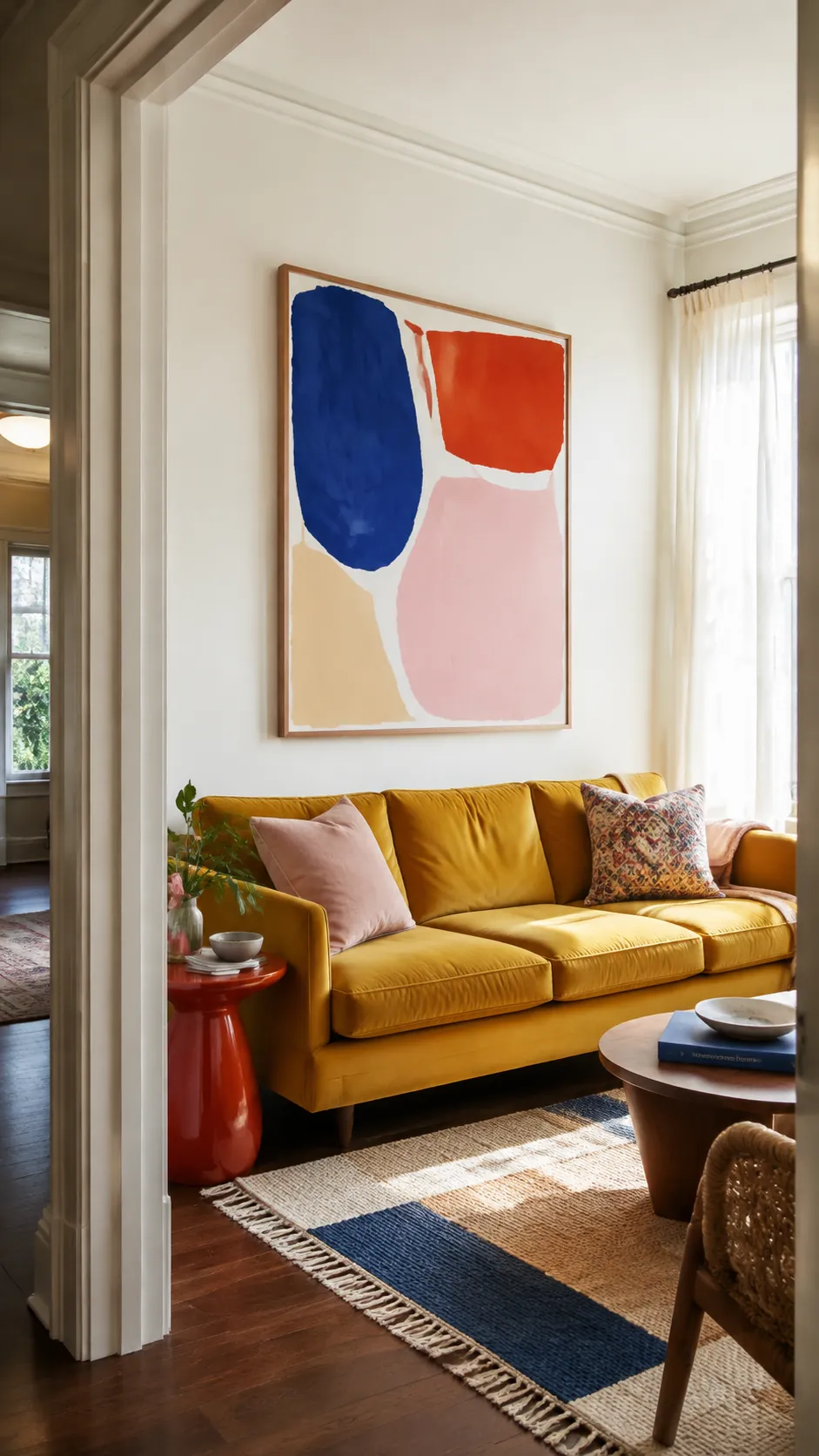
Large Color Block Print
A bold color block print can pull disconnected upholstery and accessory colors into one clear palette. Use the largest area of color to support the room rather than match it exactly, then let smaller shapes echo nearby accents. A narrow natural wood or painted frame keeps the graphic energy contained. Before ordering, tape the proposed dimensions on the wall and view them from the main doorway as well as from the sofa.
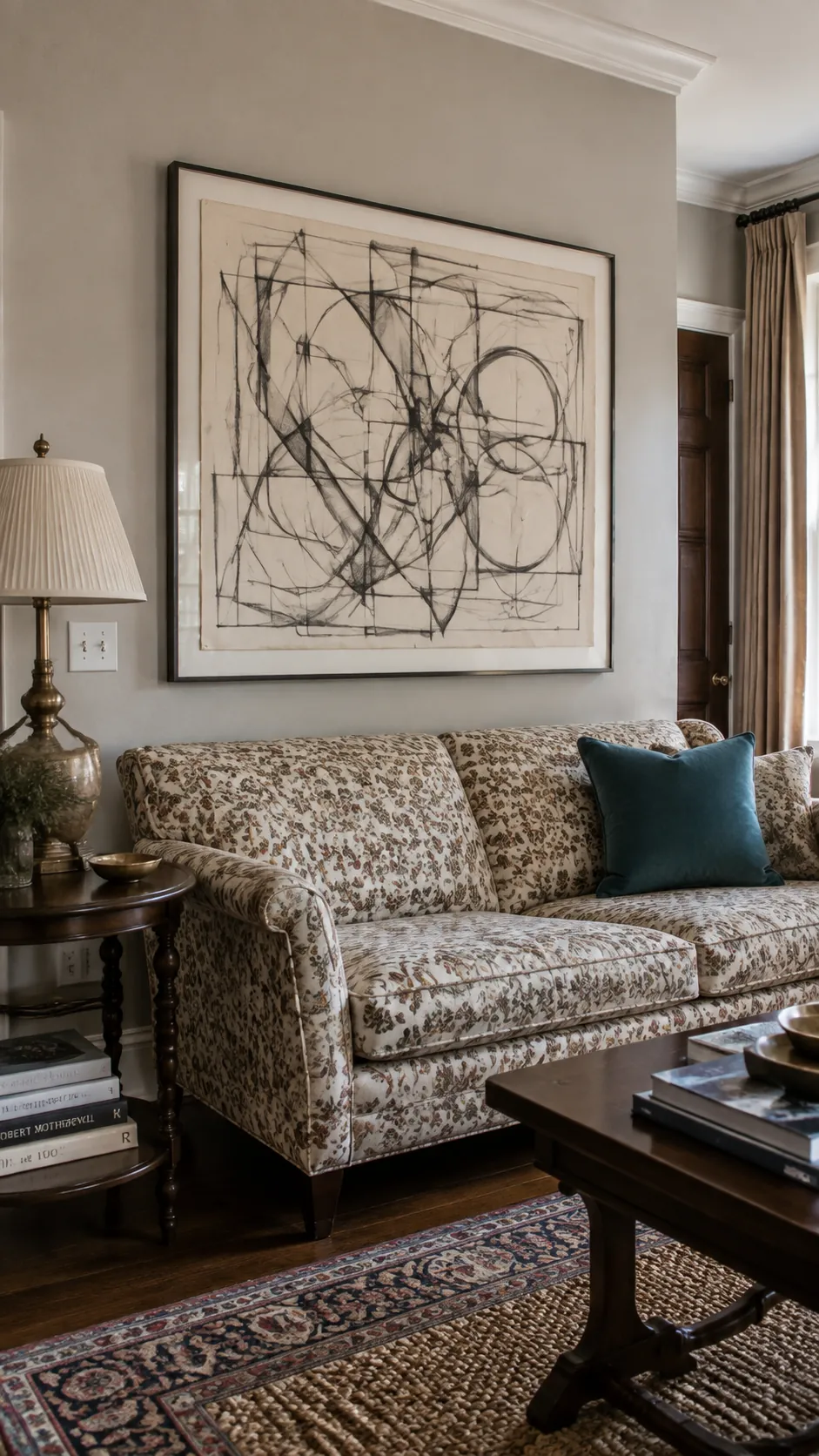
Quiet Charcoal Line Drawing
A charcoal line drawing offers movement and personality while keeping the palette restrained. Its simplicity is effective behind a patterned sofa, where additional color might create visual competition. Choose a generous mat and a frame with enough contrast to define the work from a distance. Keep direct sun away from original charcoal, and consider ultraviolet filtering glazing for valuable or sentimental pieces.
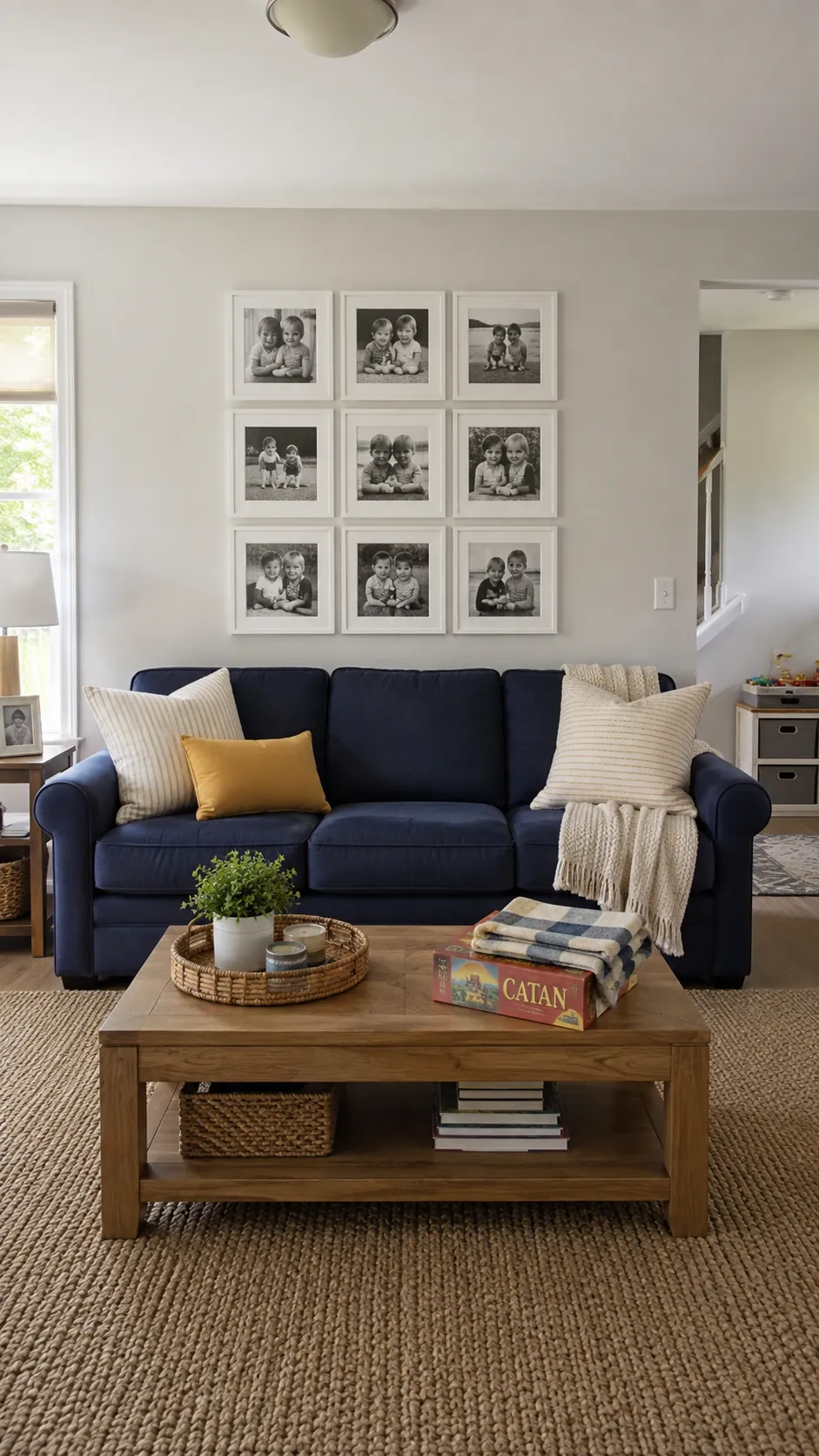
Grid Of Family Photographs
A precise photo grid gives family images the structure needed for a prominent living room wall. Convert the photographs to a consistent color treatment and use identical frames so different moments still feel connected. A paper template helps keep every edge and gap aligned before nails enter the wall. Select candid images with varied distances and expressions, since a grid of similar portraits can feel repetitive.
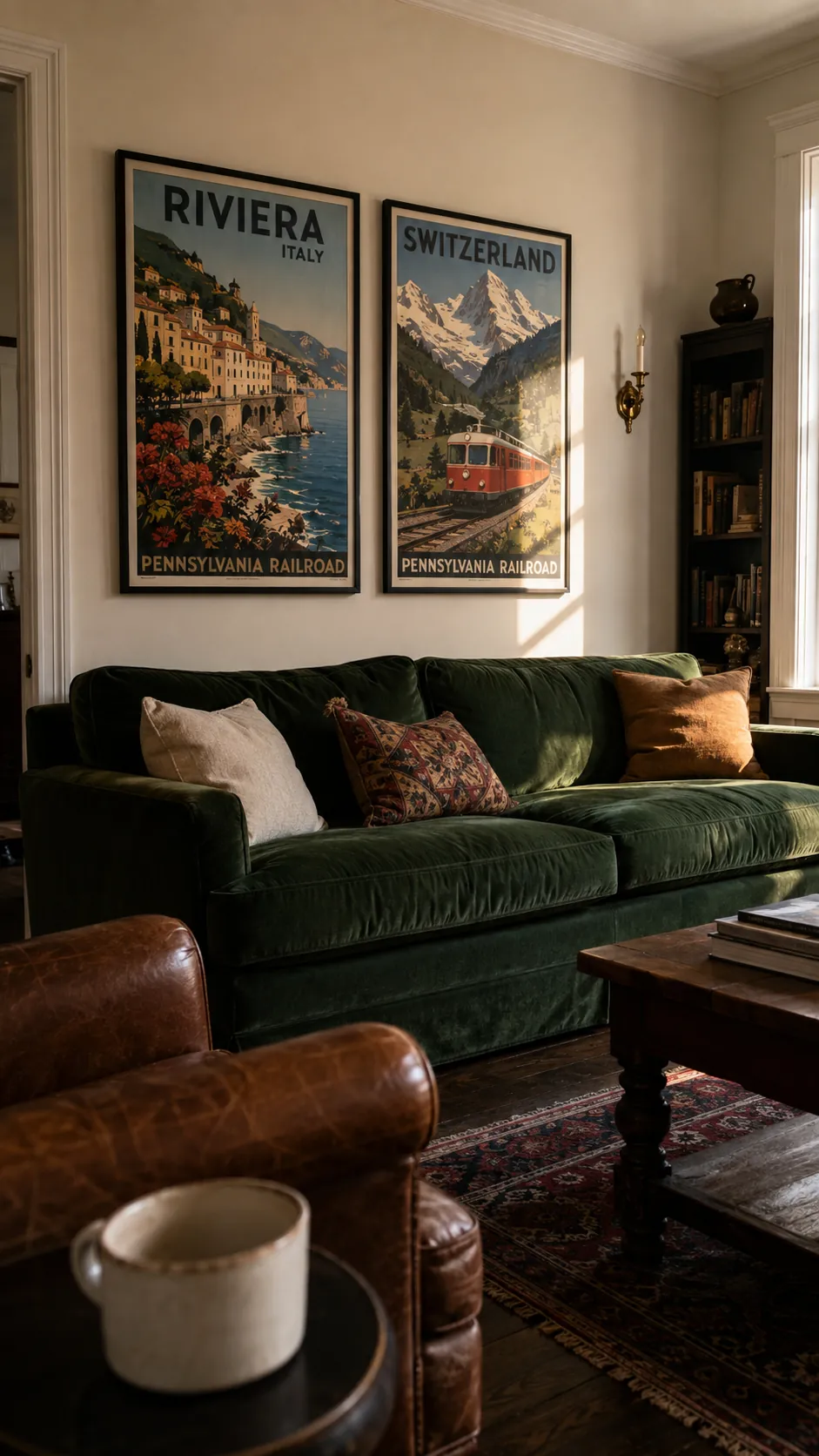
Vintage Travel Poster Pair
Two vintage travel posters introduce narrative color and work well in a relaxed, collected interior. Choose destinations or transport themes that mean something to the household rather than selecting them only for palette. Similar frame finishes make posters from different eras look like a deliberate pair. Leave enough space between them for each image to read, but keep the overall width visually tied to the sofa.
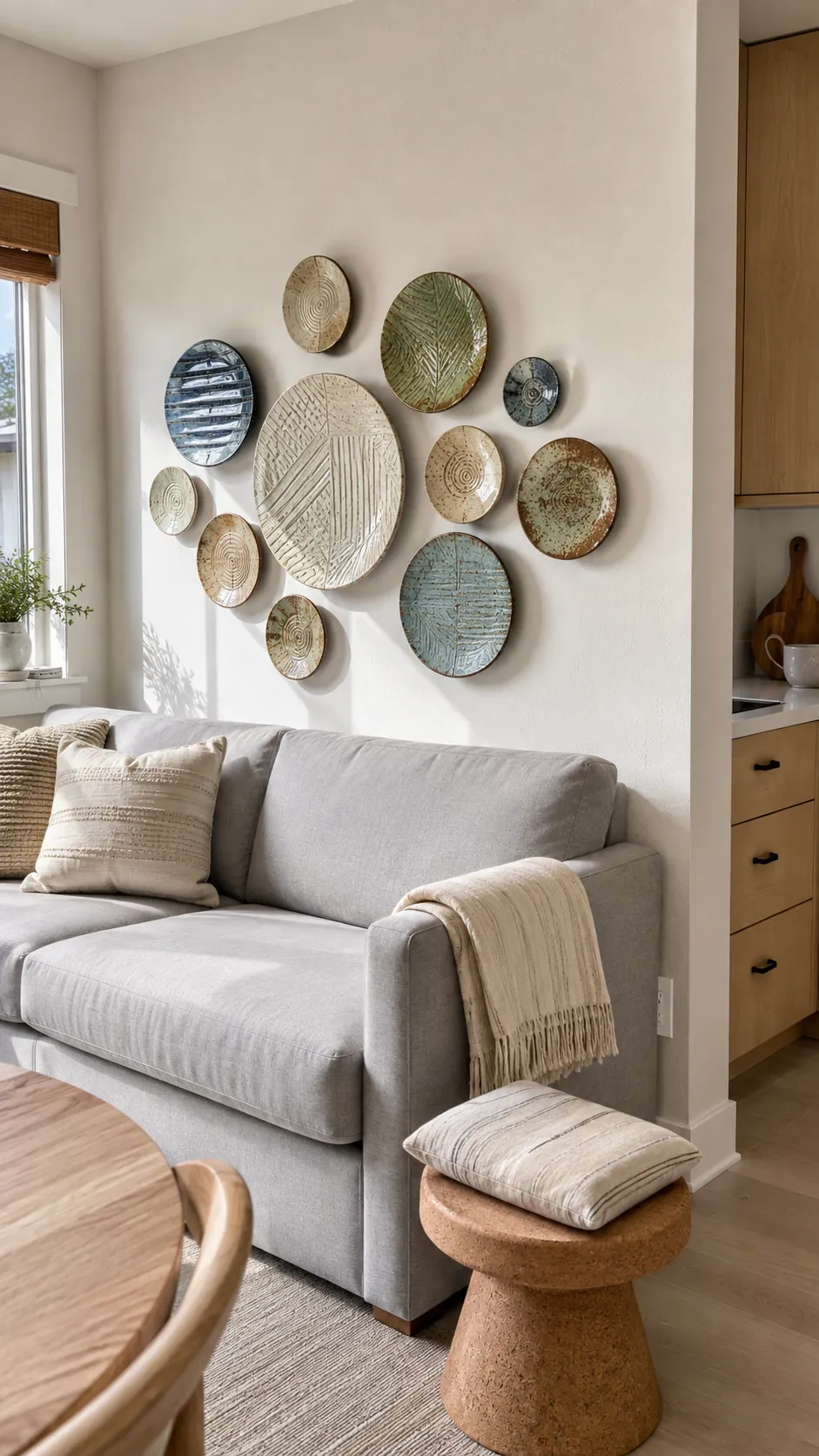
Dimensional Ceramic Wall Discs
Ceramic wall discs create an organic cluster that can follow an awkward wall shape better than one rectangular frame. Start with the largest disc near the visual center, then spread smaller forms outward with uneven but balanced spacing. Use secure plate hangers or maker supplied mounts, and confirm that every fitting suits the disc weight. Matte glazes reduce distracting reflections, while a few glossy surfaces can catch light and animate the group.
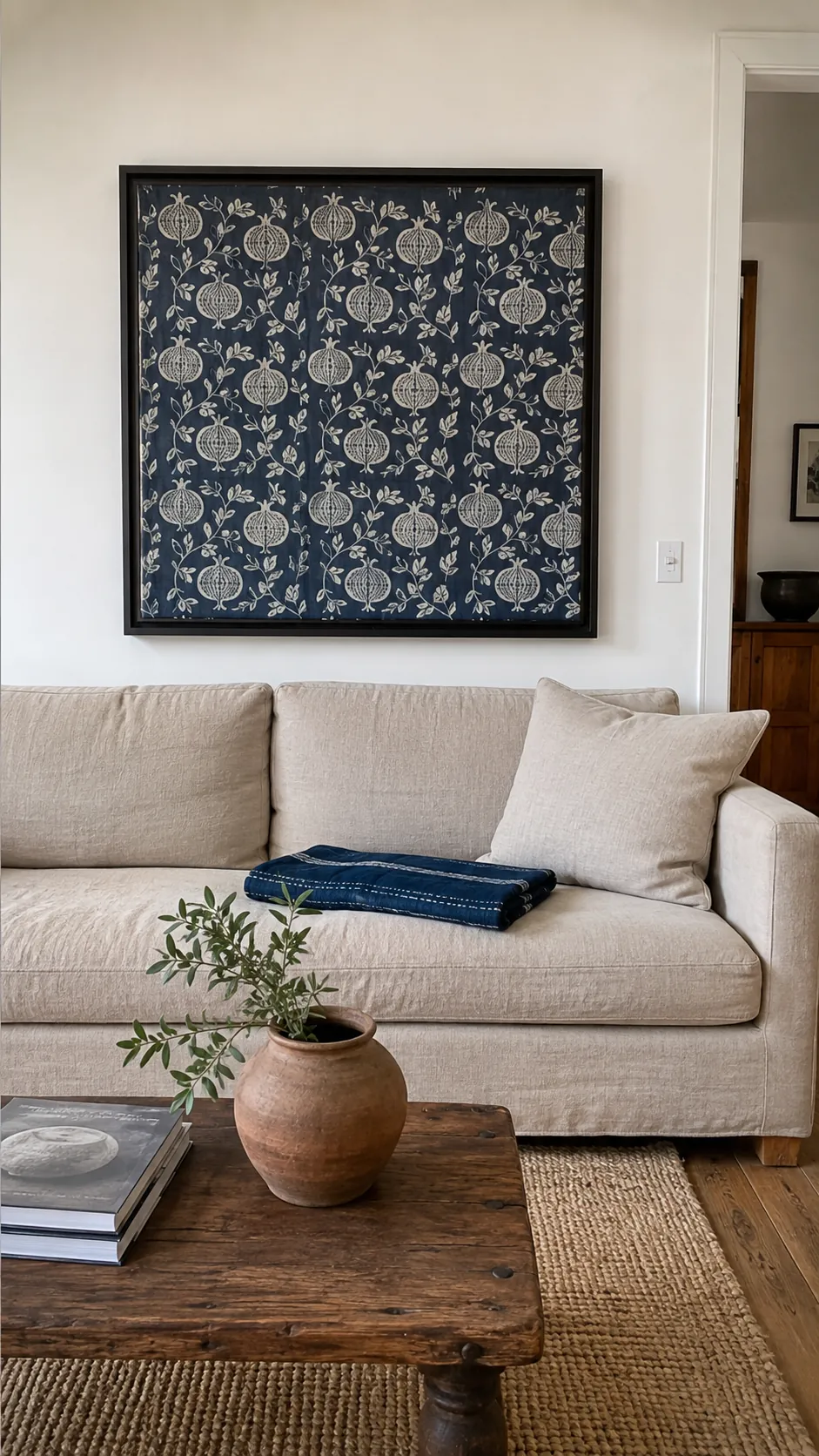
Framed Fabric Remnant
A framed fabric remnant turns a beautiful textile into art while protecting it from handling and dust. Select a motif large enough to remain legible across the room, then position the pattern carefully before mounting. A deep frame can accommodate thicker cloth without crushing the weave against the glazing. This approach brings subtle pattern behind a plain sofa and can repeat a color from curtains without using the same fabric twice.
Minimal Ink Wash Diptych
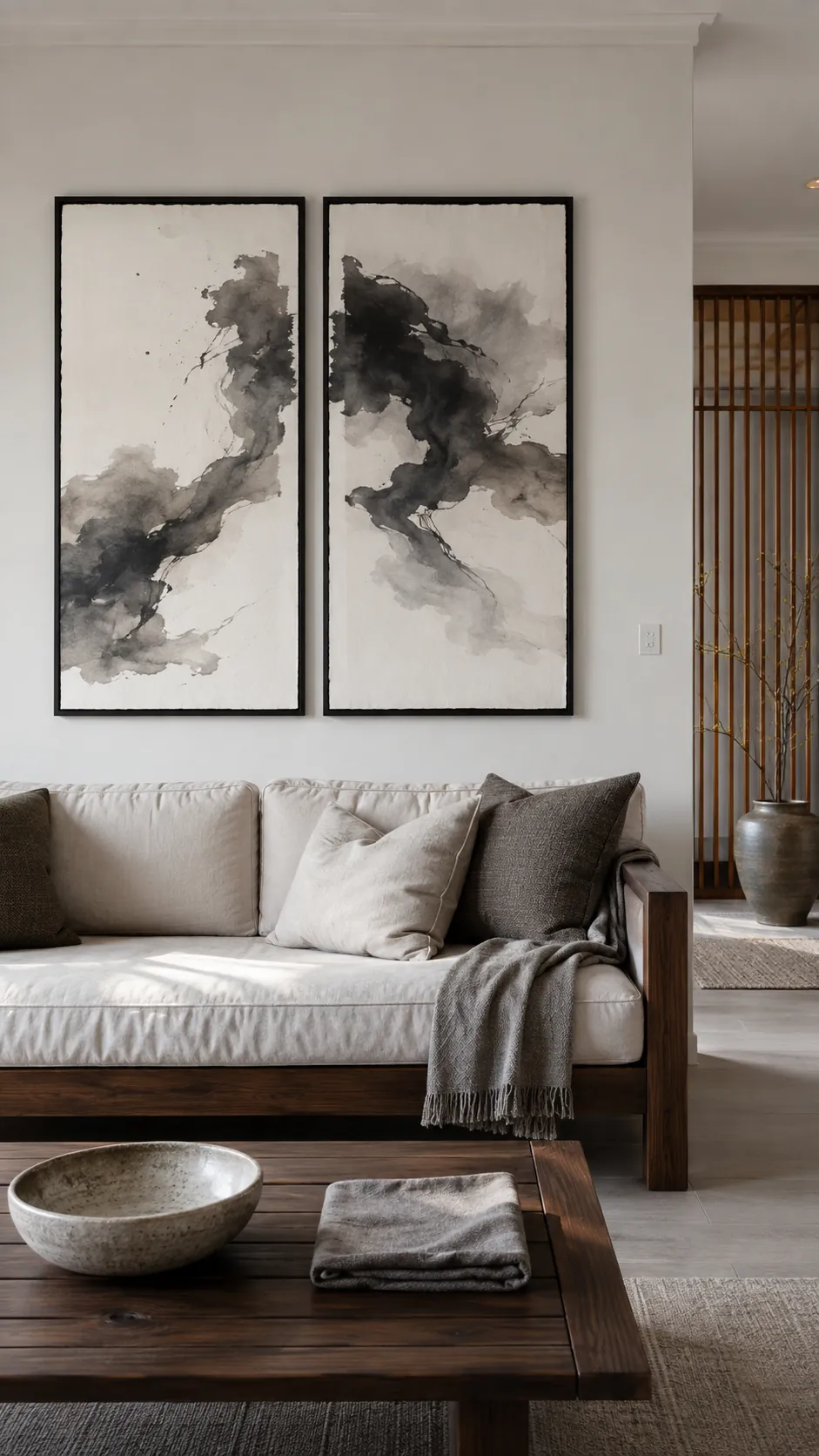
An ink wash diptych provides a soft focal point for a room with strong furniture shapes or dark wood. The two panels should relate through gesture and tone without forming an obvious mirrored pair. Pale mats and thin dark frames preserve the airy quality while giving the work a defined boundary. Hang both panels from a measured level line, because even a slight mismatch is noticeable in such a spare composition.
Architectural Blueprint Display
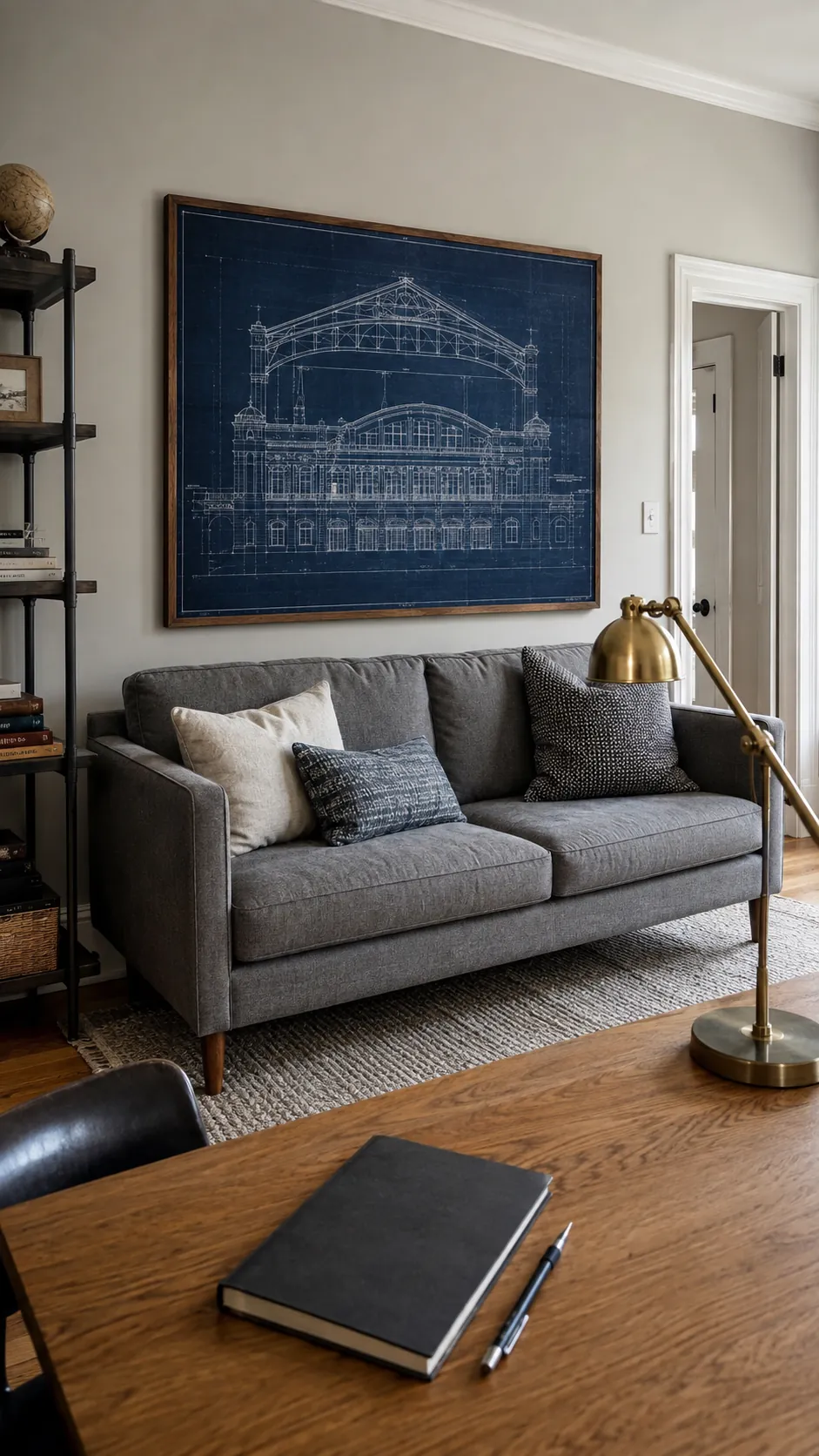
An architectural blueprint brings crisp detail to an industrial or transitional living room. A single large elevation drawing has more impact above a sofa than several tiny technical sheets that disappear from normal viewing distance. Use archival mounting if the plan is original, or choose a high quality reproduction for a brighter room. Brass, black, or aged oak frames can connect the drawing to nearby lighting and furniture hardware.
Round Framed Paper Collage
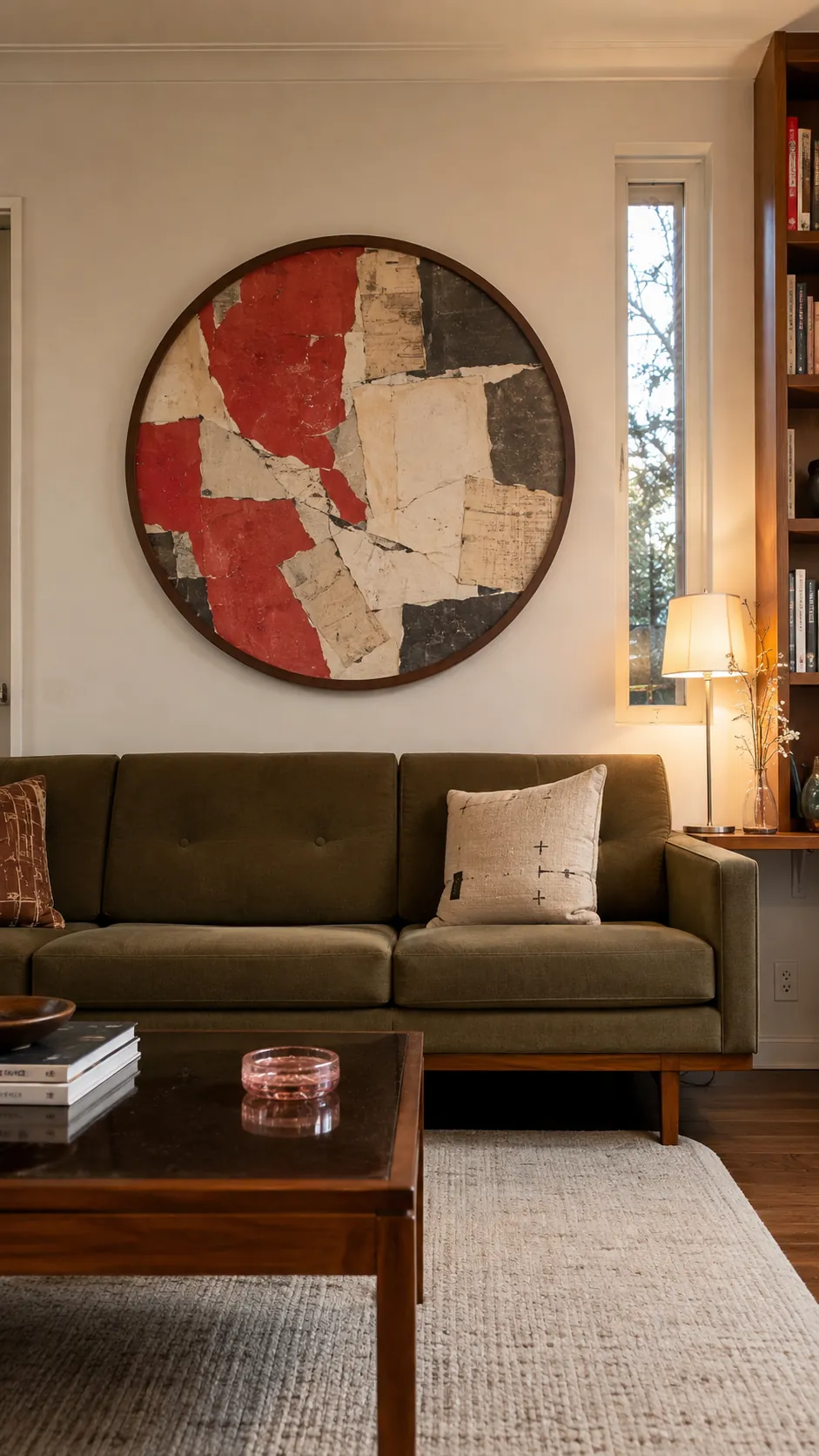
A round frame breaks up the straight lines created by the sofa, coffee table, and room architecture. Fill it with a layered paper collage that uses torn edges, subtle type, and a small amount of saturated color. The circle should be large enough to command the center, since a small round piece can look stranded on a broad wall. Repeat the curved shape once elsewhere through a lamp or side table rather than scattering circles throughout the room.
Oversized Typographic Print
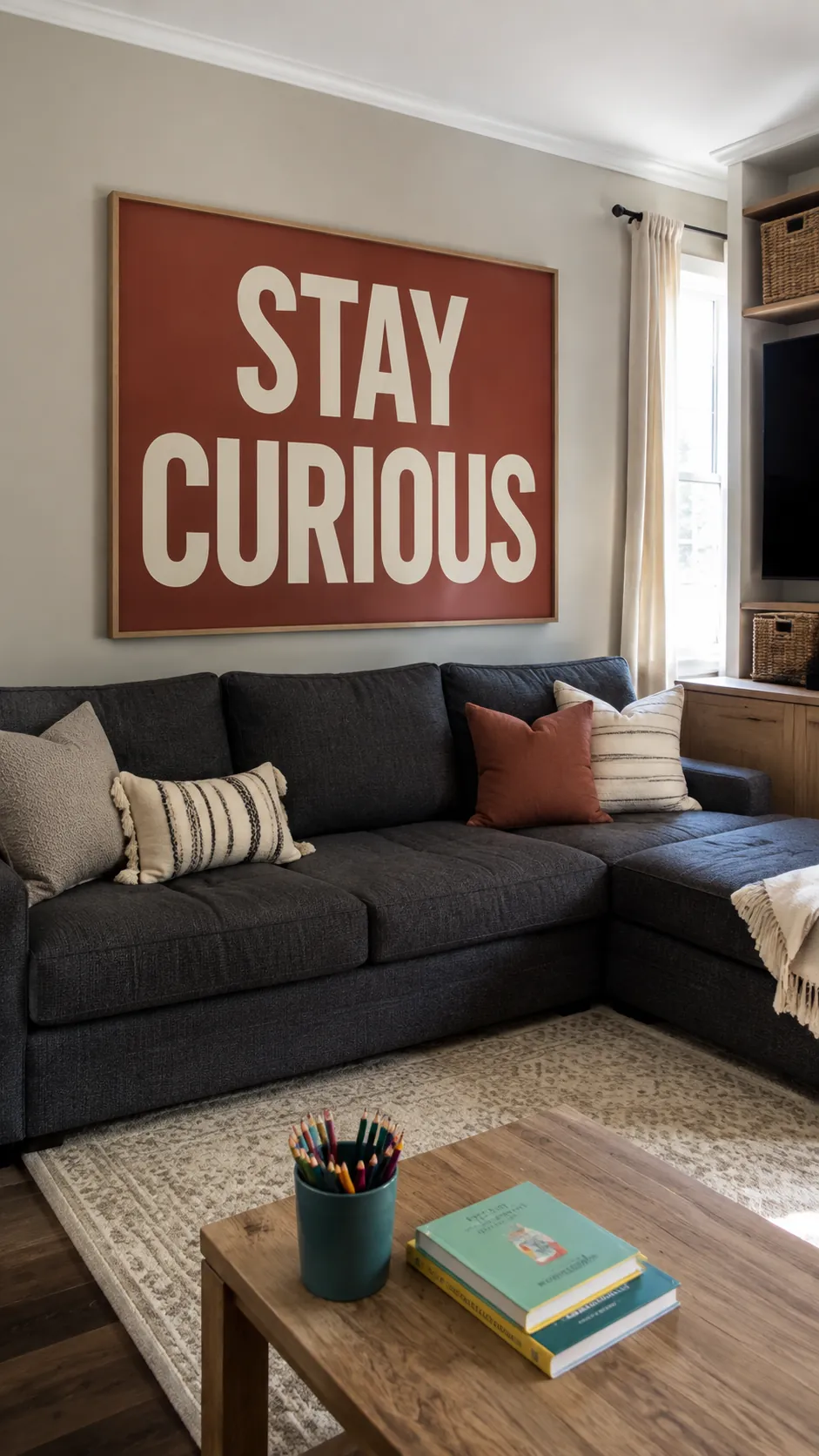
A typographic print gives the wall graphic presence when the message is short and genuinely meaningful. Avoid generic phrases and choose a few words with a personal connection, set in lettering that can be read from across the room. High contrast works best, but the frame can soften the result with oak, white paint, or a warm metal finish. Let this be the only text based decoration in the immediate area so the room does not feel like a sign display.
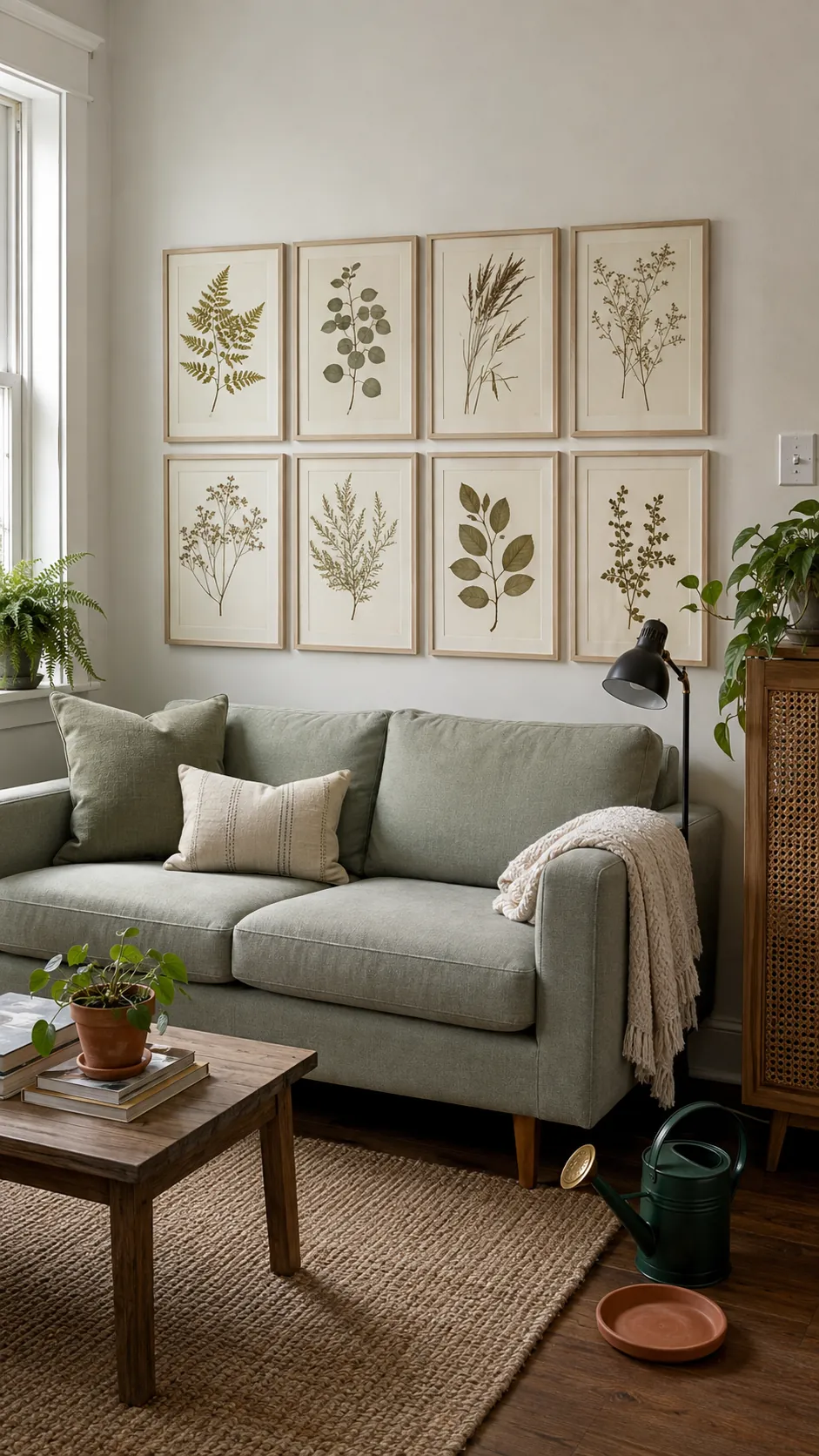
Pressed Plant Specimen Grid
A pressed plant grid brings delicate natural detail into a bright living room without relying on a conventional landscape. Use specimens with distinct silhouettes and keep the paper tone consistent across the collection. Narrow gaps make the small frames behave like one larger artwork, which is essential above a broad sofa. Protect real botanicals from strong sunlight and moisture, or use convincing archival reproductions in demanding conditions.
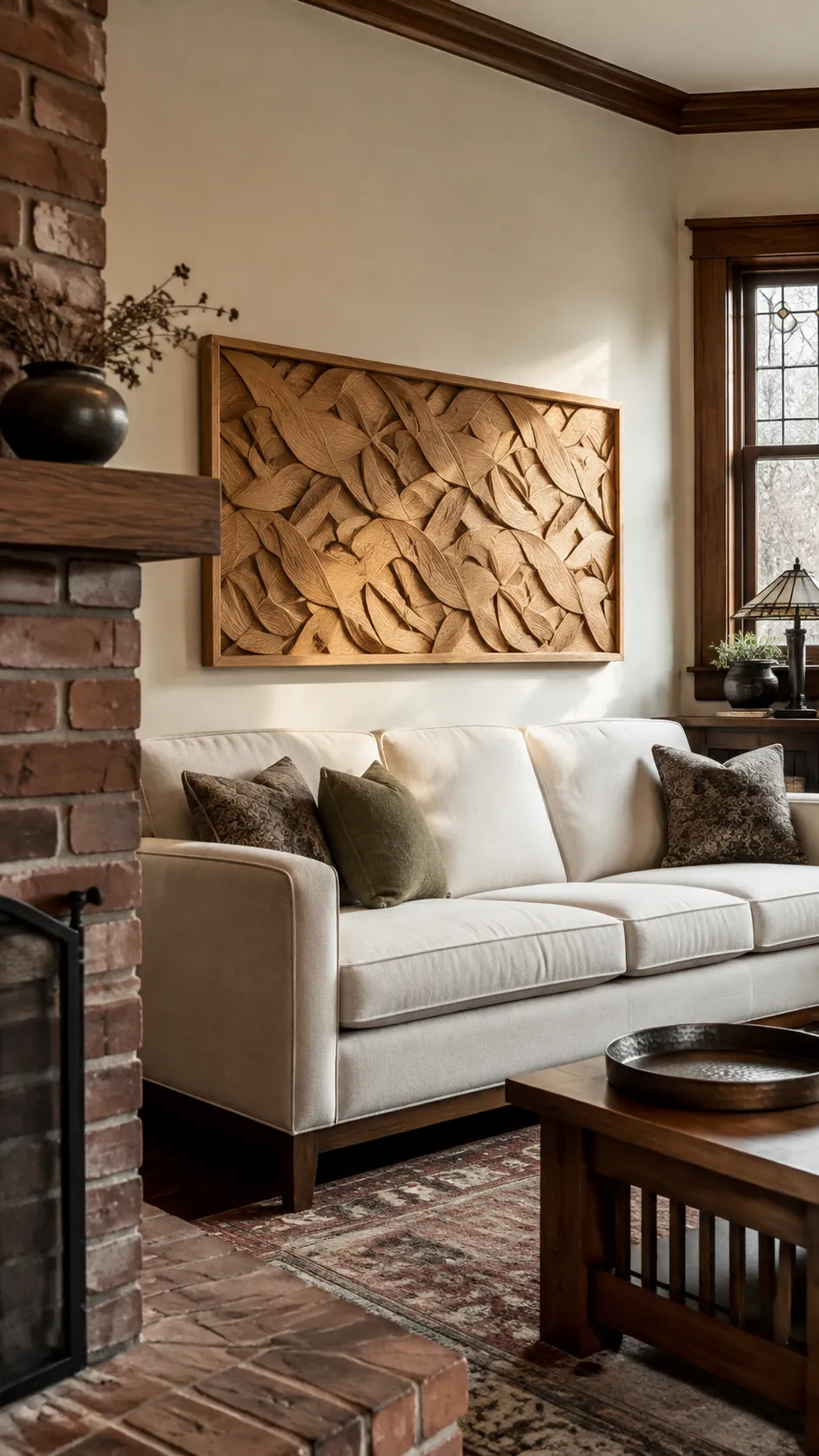
Carved Wood Wall Panel
A carved wood panel adds warmth and shadow while remaining quieter than a colorful painting. Choose a carving depth that is substantial enough to show in evening light but shallow enough for secure mounting. Contrast matters, so a pale oak panel will stand out on a deep wall while dark walnut gains definition against warm white paint. Keep other wood tones related in temperature rather than forcing every piece of furniture to match exactly.
Asymmetrical Mixed Media Group
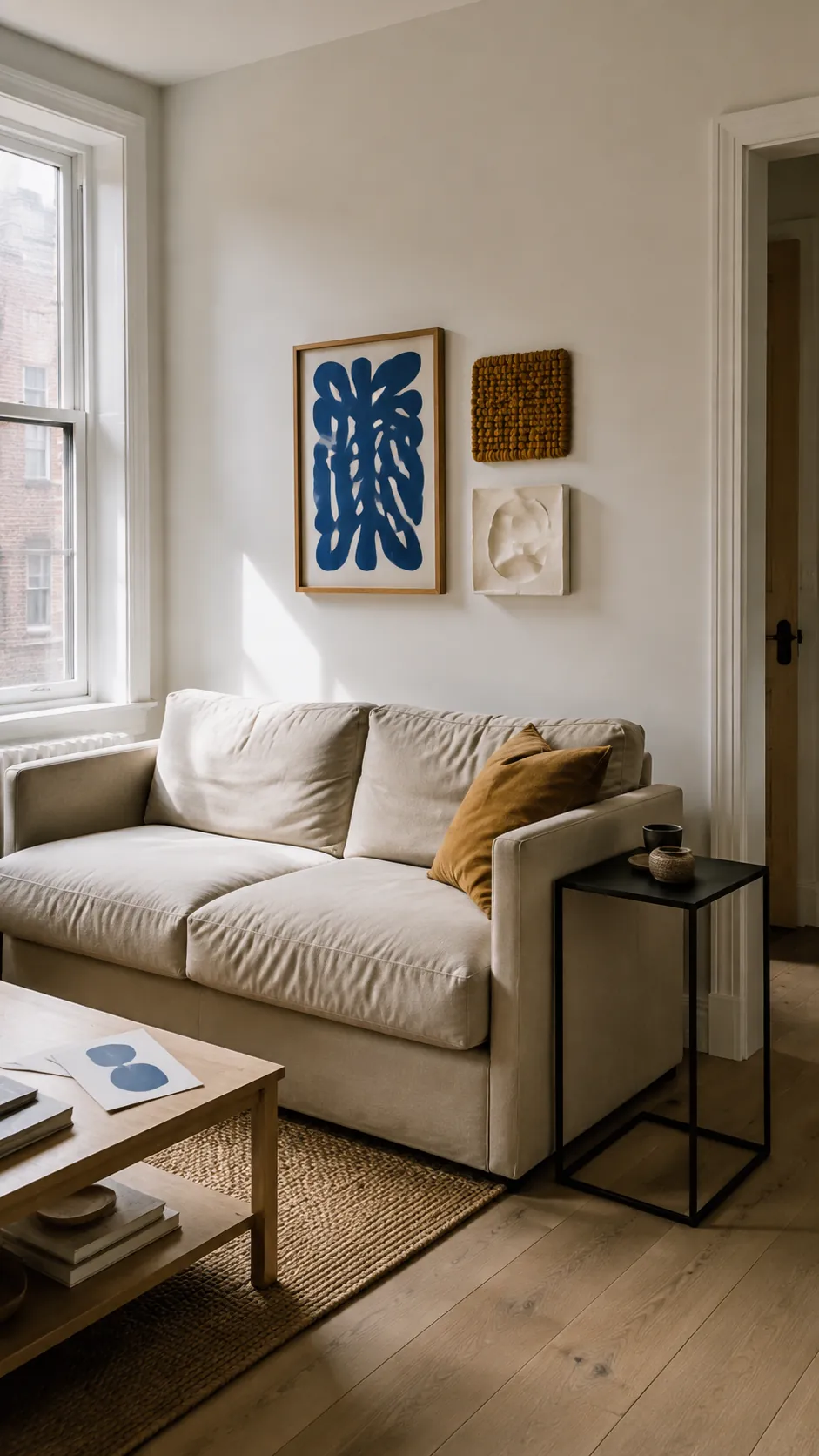
An asymmetrical group can balance a sofa that sits beside a window, doorway, or tall bookcase. Combine one framed print, one shallow object, and one smaller textile piece, then place the greatest visual weight toward the open side of the wall. Hold the group together with a limited palette and closely related spacing rather than strict symmetry. Trace every piece on paper and tape the templates in place before drilling, because the negative spaces are as important as the objects.