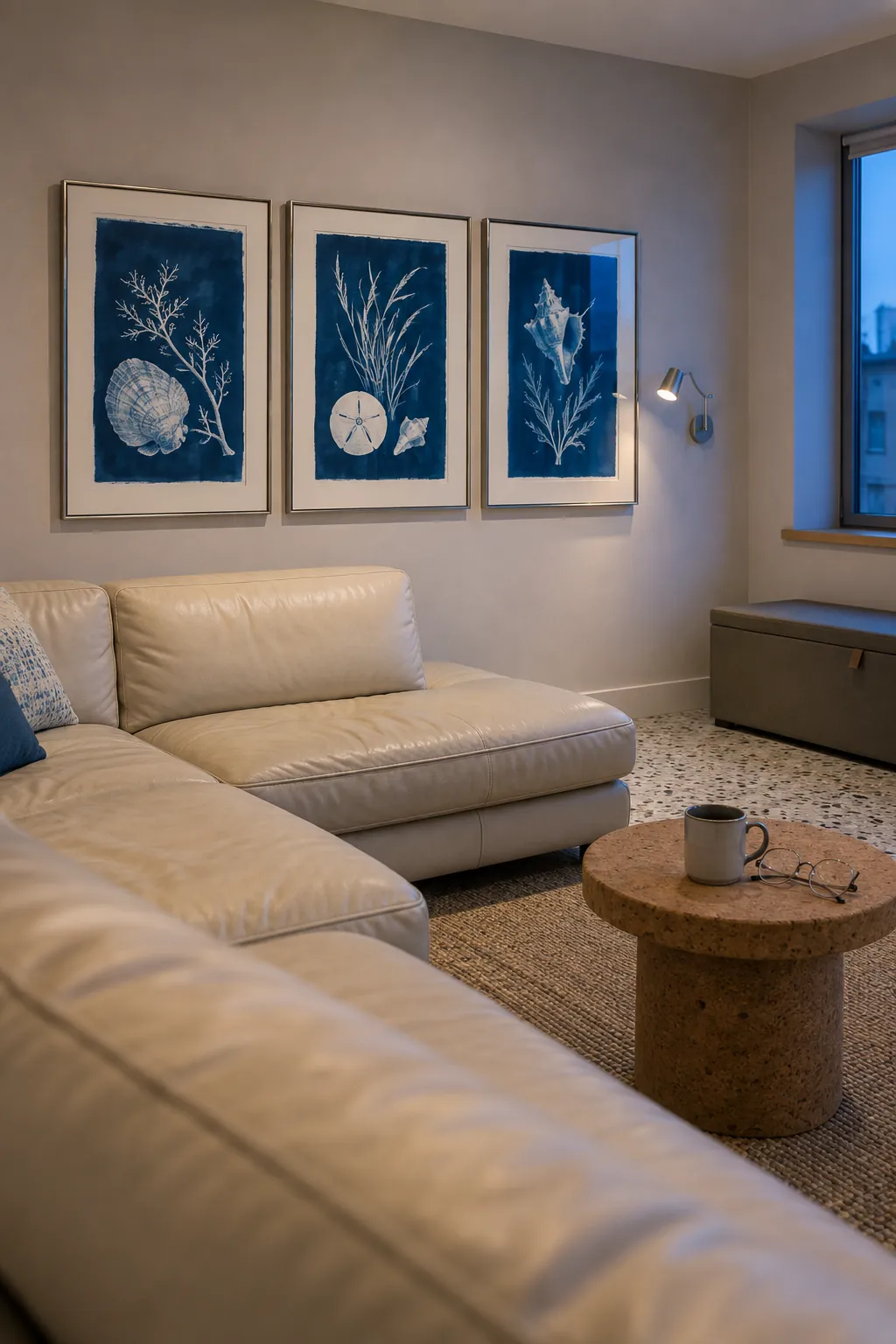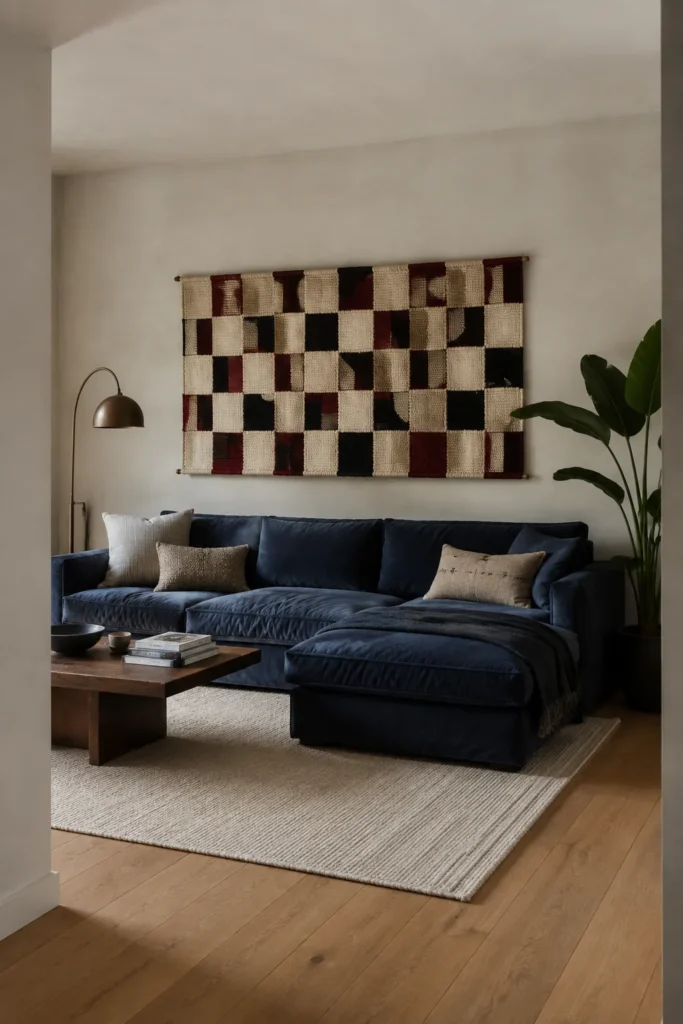
How to Decorate the Wall Behind a Sectional
A broad blank wall can make a sectional look unfinished, but filling it too quickly often creates a second problem: decor that is too small, too high, or centered on the wrong thing. The wall and the sofa are not competing reference points. The seating establishes the living zone, while the wall supplies the backdrop. Start with the view people actually experience, then choose a composition large enough to belong there.
Decide What the Wall Needs to Balance
Look at the room from its main entrance and from the chair used most often. A sectional with a chaise may pull visual weight toward one side even when it sits on a symmetrical wall. Centering decor on the bare wall can therefore leave it disconnected from the seating. In most rooms, the first anchor should align with the usable sofa span that faces the viewer.
Windows, lamps, and open doorways also count as visual weight. A tall lamp can finish one end without another frame, while a window may make a perfectly centered arrangement feel crowded. Photograph the room straight on and draw a loose box around the sectional, end tables, and floor lighting. That complete box is a better guide for wall decor behind a sectional couch than the wall dimensions alone.
Test the Real Size Before You Buy
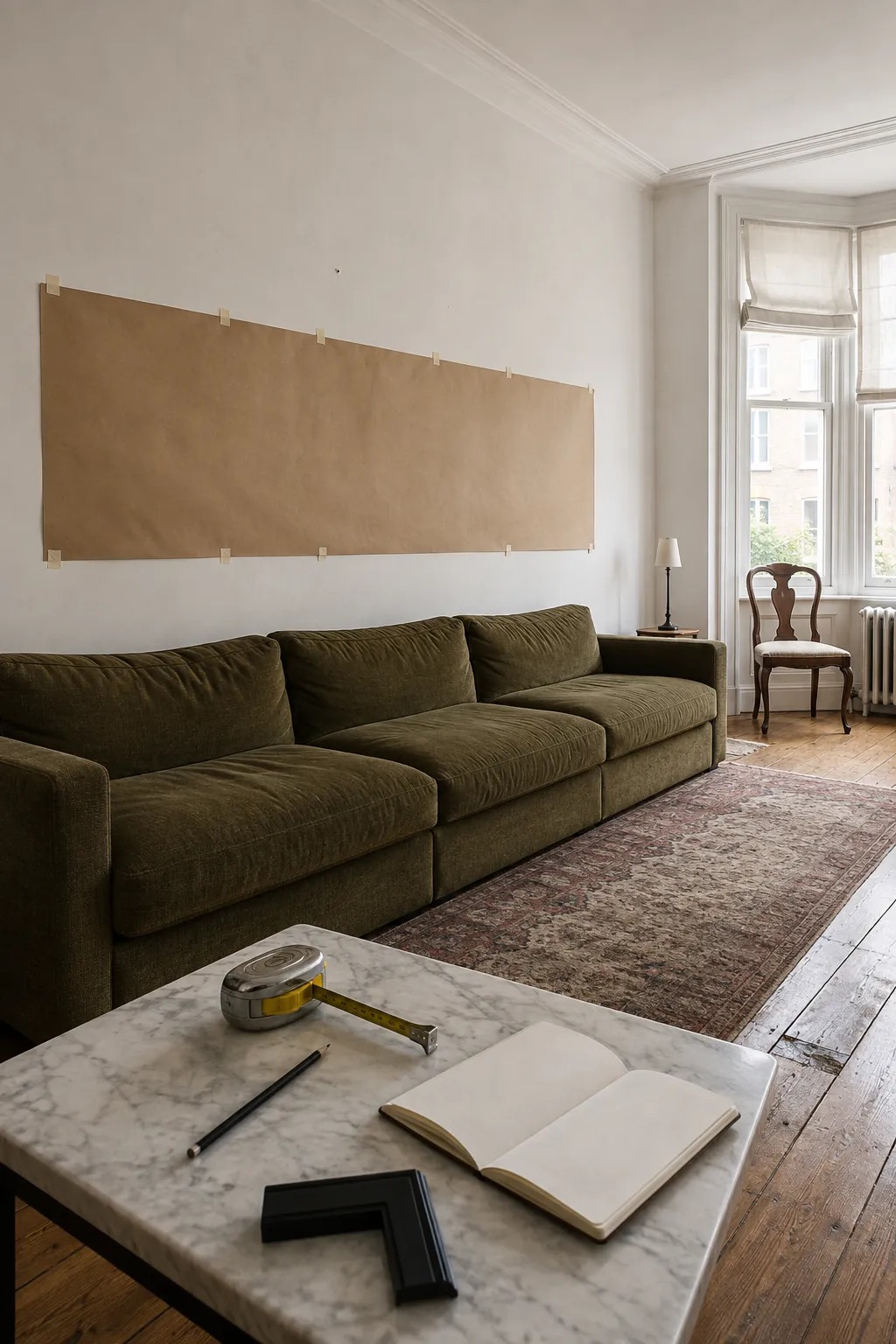
A common starting point is to make the complete arrangement about half to two thirds as wide as the furniture below it. That range is useful because it prevents one small piece from floating over a substantial sofa. It is not a law. A slim panoramic work can extend farther, while a tall piece may need less width because its height supplies presence.
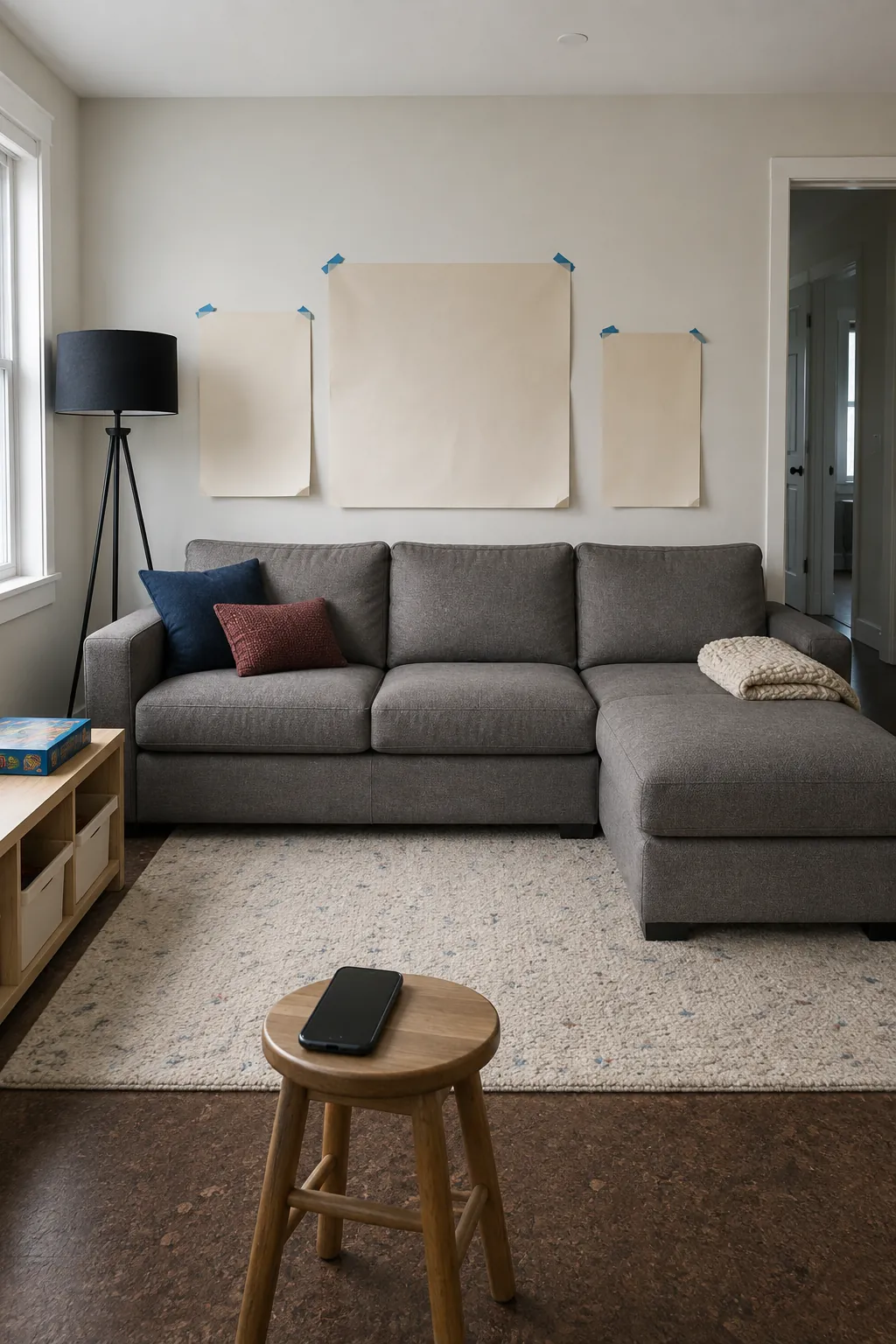
Cut kraft paper to the exact dimensions of the art and tape it in place. View it in daylight and at night, since a dark frame can feel heavier after sunset. If the template disappears from across the room, increase the scale or build a group. This cheap test is more reliable than judging measurements on a product page.
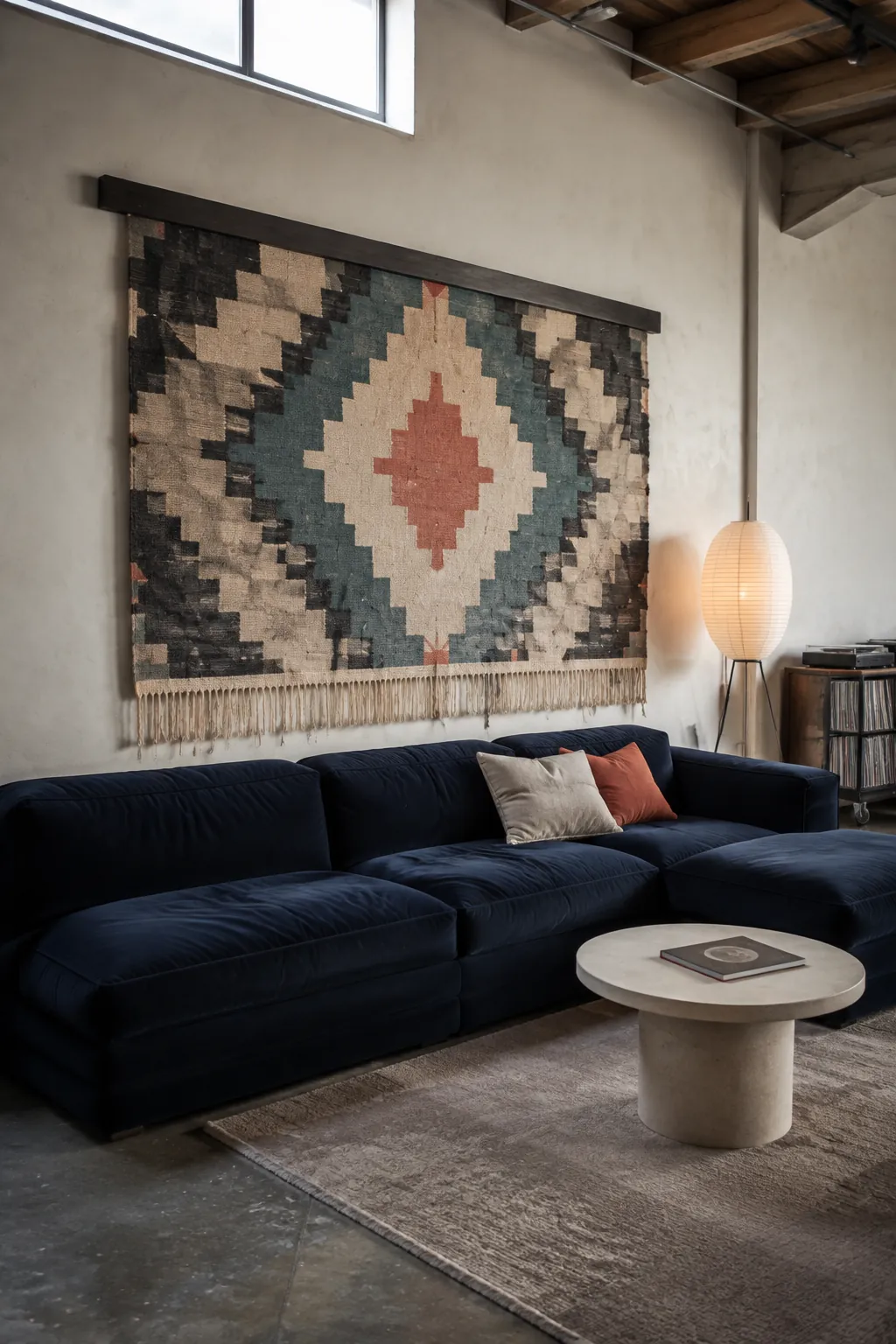
Let One Oversized Work Carry the Room
One large work is often the calmest answer for big wall decor in a living room. It creates a clear focal point, requires fewer mounting decisions, and gives a deep sectional enough visual counterweight. Choose an image that can still be understood from the opposite side of the room. Tiny detail that only works up close will not support a large seating zone.
Repeat one or two colors already present in the rug or cushions, then introduce one new note. In a colorful room, black and white photography or a restrained textile can add scale without competing with every accent. In a quiet room, oversized art behind a sectional can supply the color story. The frame should reinforce nearby wood or metal rather than introduce another unrelated finish.
Make a Gallery Read as One Shape
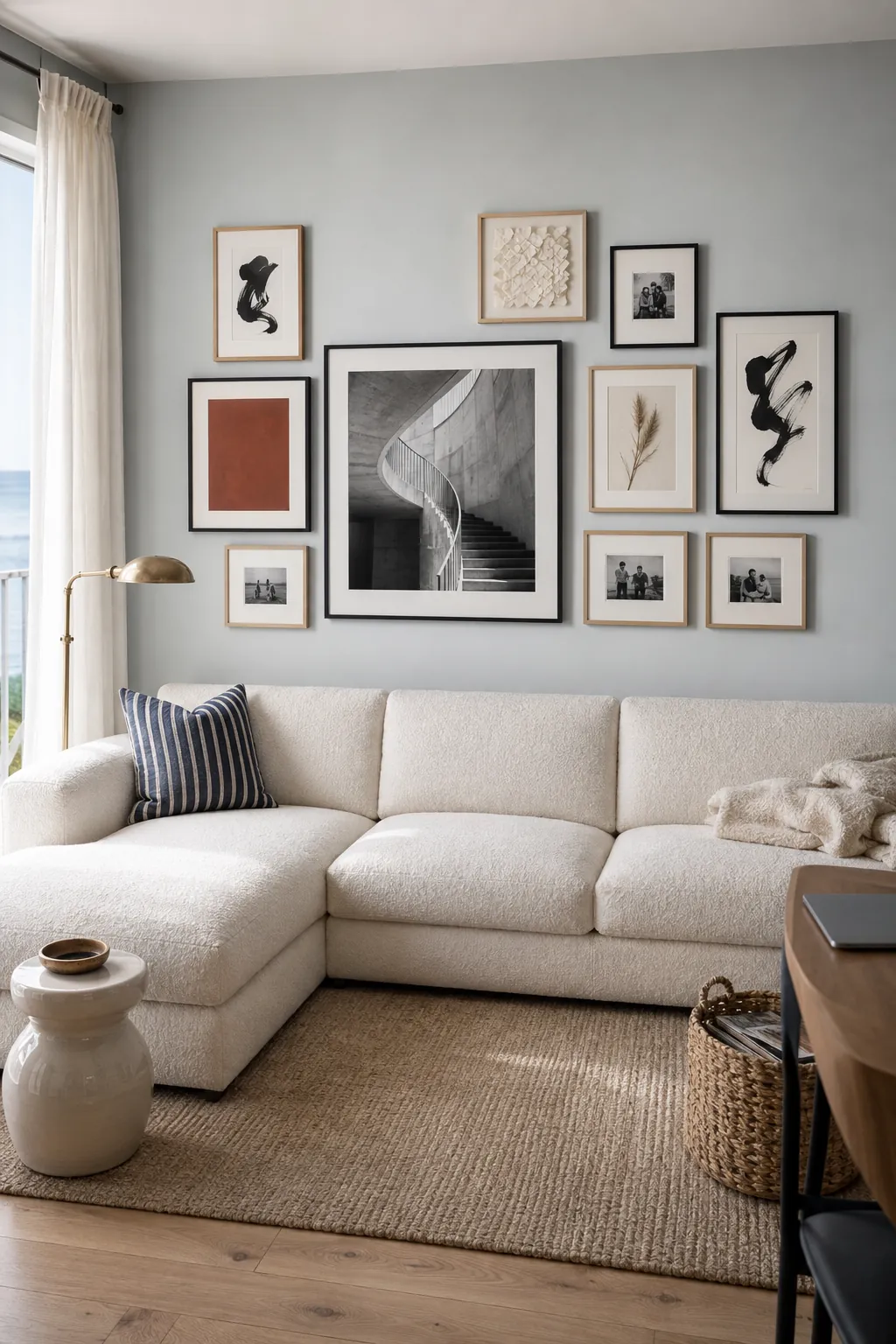
A gallery wall succeeds when the group has a readable outer boundary. Start with the largest piece slightly away from the exact center, then build outward with consistent gaps. The complete group should relate to the sectional as one object. Scattered little frames placed wherever there is empty wall will usually make the sofa look even heavier.
Choose a linking device such as matching mats, a limited frame palette, or a clear subject family. Family photographs can mix with drawings when their tones relate. Lay everything on the floor, photograph the arrangement, and recreate it with paper templates. This step also reveals whether a favorite small piece needs a larger mat to hold its place.
Use Ledges and Panels With Restraint
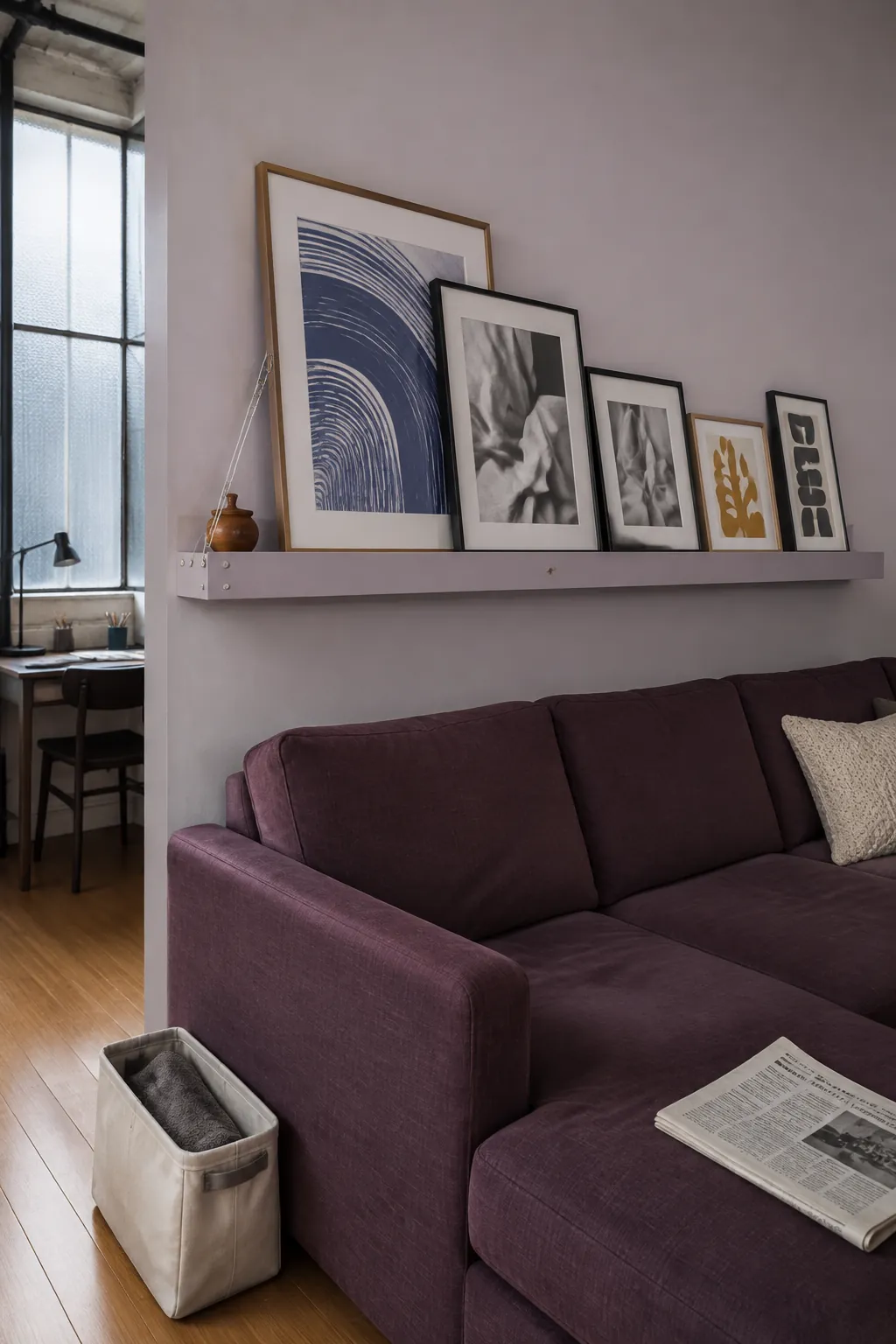
A picture ledge allows art to change without repeated holes, but it must be deep enough to hold frames safely and high enough to clear seated heads. One long ledge often looks calmer than several short staggered shelves. Keep the display shallow and avoid objects that could fall. This option works especially well for renters and for people who rotate family photographs.
Architectural wall panels offer a quieter form of decoration. Simple molding can divide a very large surface and give one modest artwork more presence. Paint the trim the same color as the wall for subtle depth, or use a slightly deeper tone for definition. Panels should follow the seating zone, not create narrow boxes that fight the sectional modules.
Set the Height for Comfort and Connection
Begin with the lower edge of the art about six to ten inches above the sofa back. Deep cushions, tall occupants, and projecting frames may require more space. Sit in every seat before making the final holes. No one should feel that the decor is hovering over their head or likely to be bumped.
Step back and check the entire room after installation. If the wall still looks empty, resist raising the artwork or adding pieces near the ceiling. A table lamp, plant, or larger rug may be the missing layer. The best above sofa wall decor stays visually attached to the sectional and leaves enough blank surface to make its shape clear.