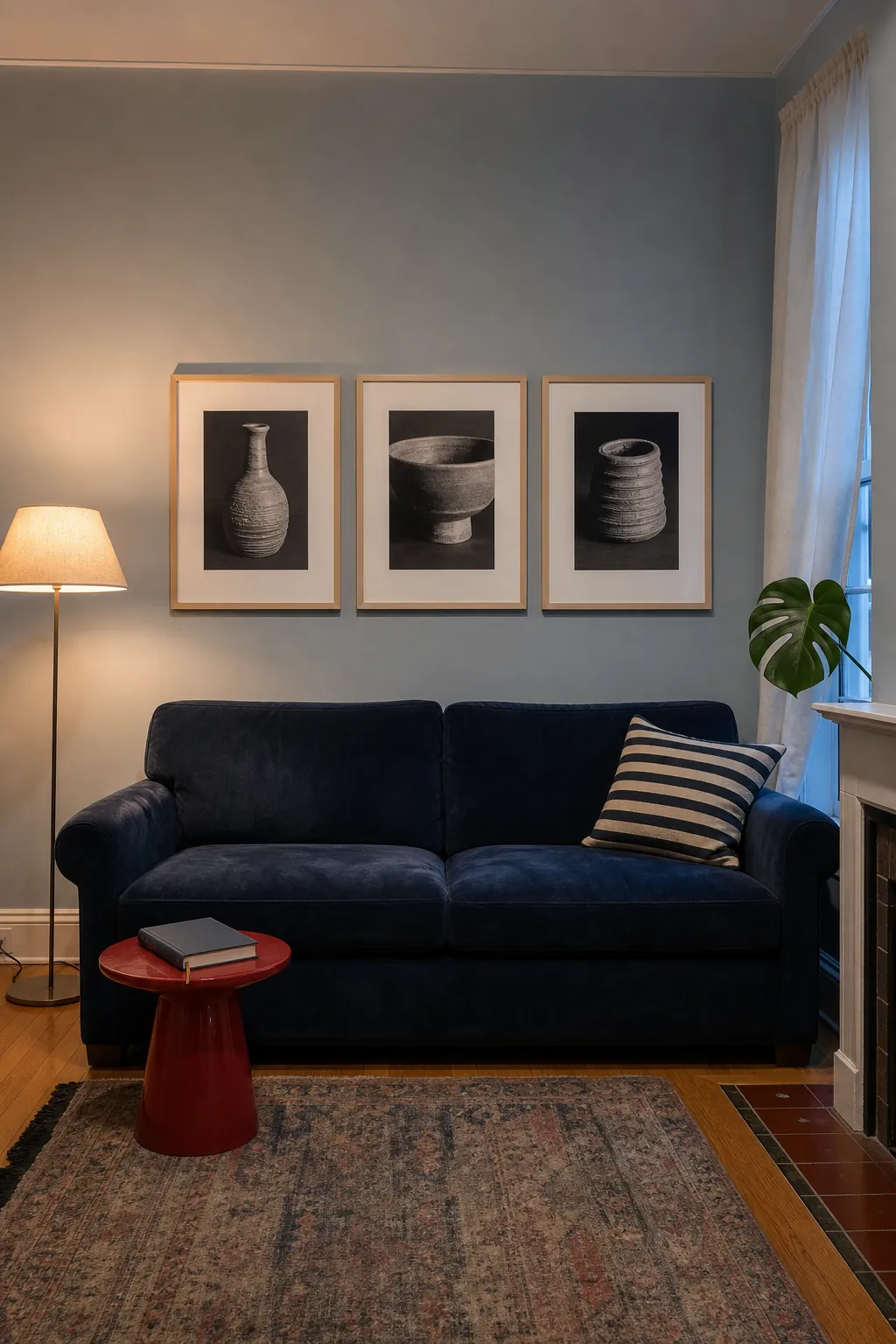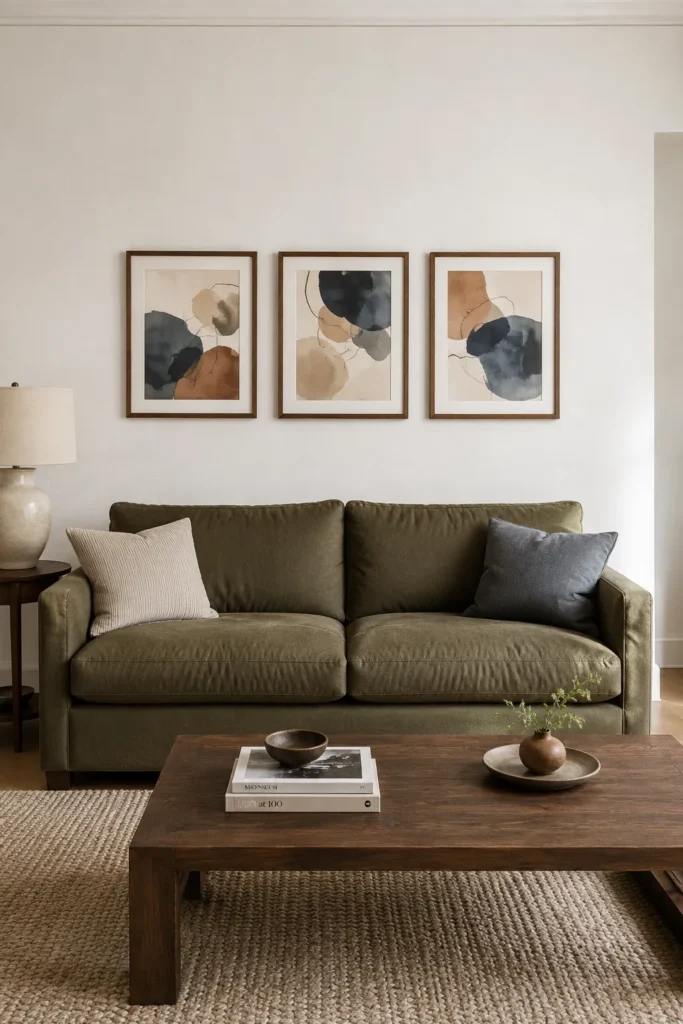
How to Space Three Frames Above a Couch
Three frames look simple until a tape measure comes out. The outside width, the gaps, the sofa center, and the hanging hardware all affect one another. The reliable approach is to treat the frames as a single composition first, then calculate the position of each piece. That keeps the group connected to the couch instead of scattering it across the wall.
Calculate the Complete Width First
Measure the visible width of the couch, excluding an end table or floor lamp. A useful starting range for the complete frame group is about half to two thirds of that width. For three equal frames, add all three frame widths and both gaps. This total is the number that must relate to the sofa.
For example, three frames that are eighteen inches wide with two inch gaps create a group fifty eight inches wide. Compare that total with the couch before deciding whether the pieces are large enough. If the group feels weak, larger mats may solve the problem without replacing the art. If it nearly matches the full sofa width, narrower frames or smaller gaps can restore breathing room.
Choose Gaps That Match the Artwork
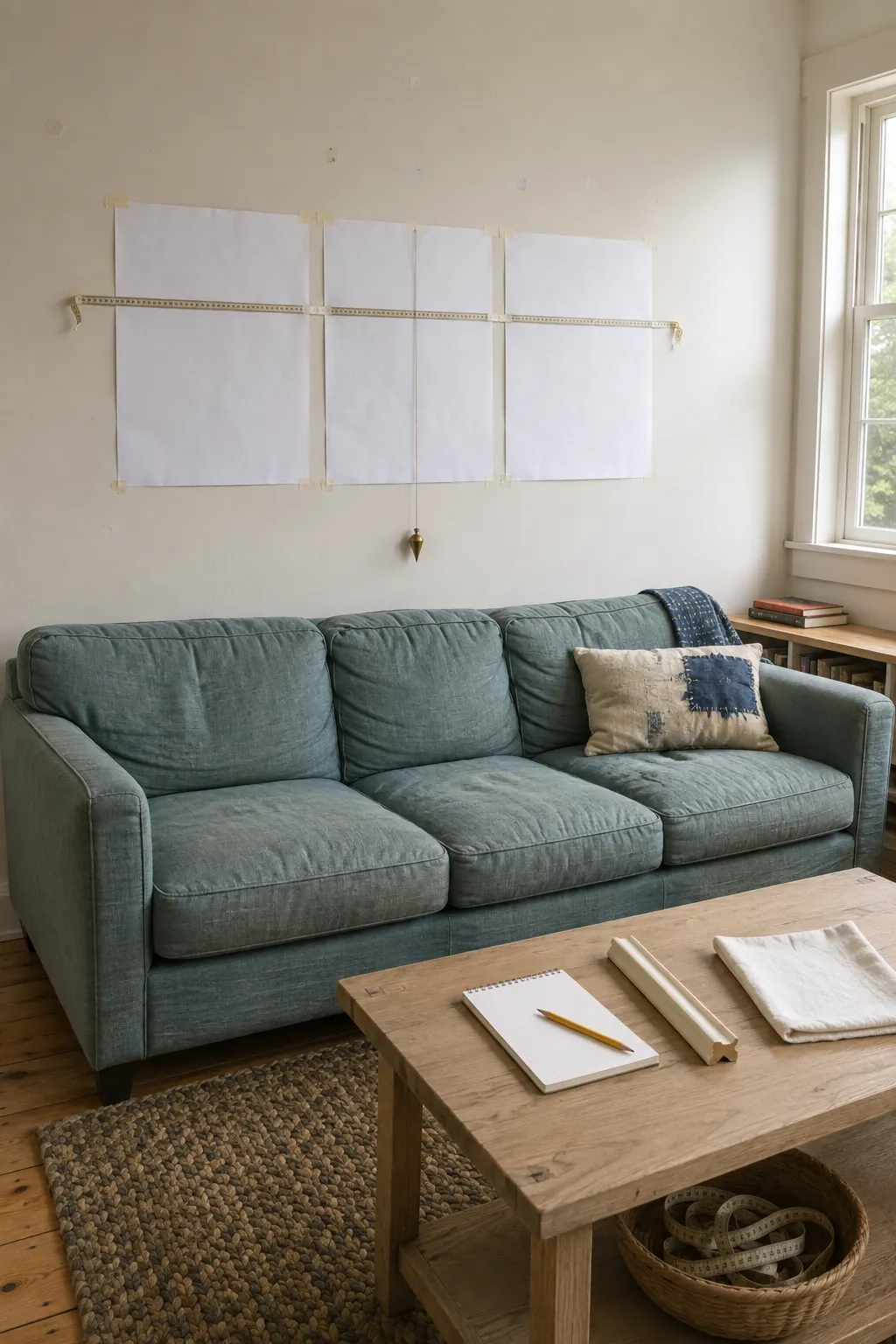
Two to four inches between frames works for many arrangements. Use the tighter end when a triptych forms one continuous image, since wide interruptions will break the scene. Separate photographs or prints can accept a little more air. Thick frames and generous mats also make a narrow gap feel wider, so judge the visible result rather than the number alone.
Keep both gaps equal unless the artwork clearly calls for another rhythm. Uneven spacing looks accidental when the frames share a size and baseline. Cut three paper templates and try several positions before making holes. A phone photo from across the room will reveal whether the pieces read together.
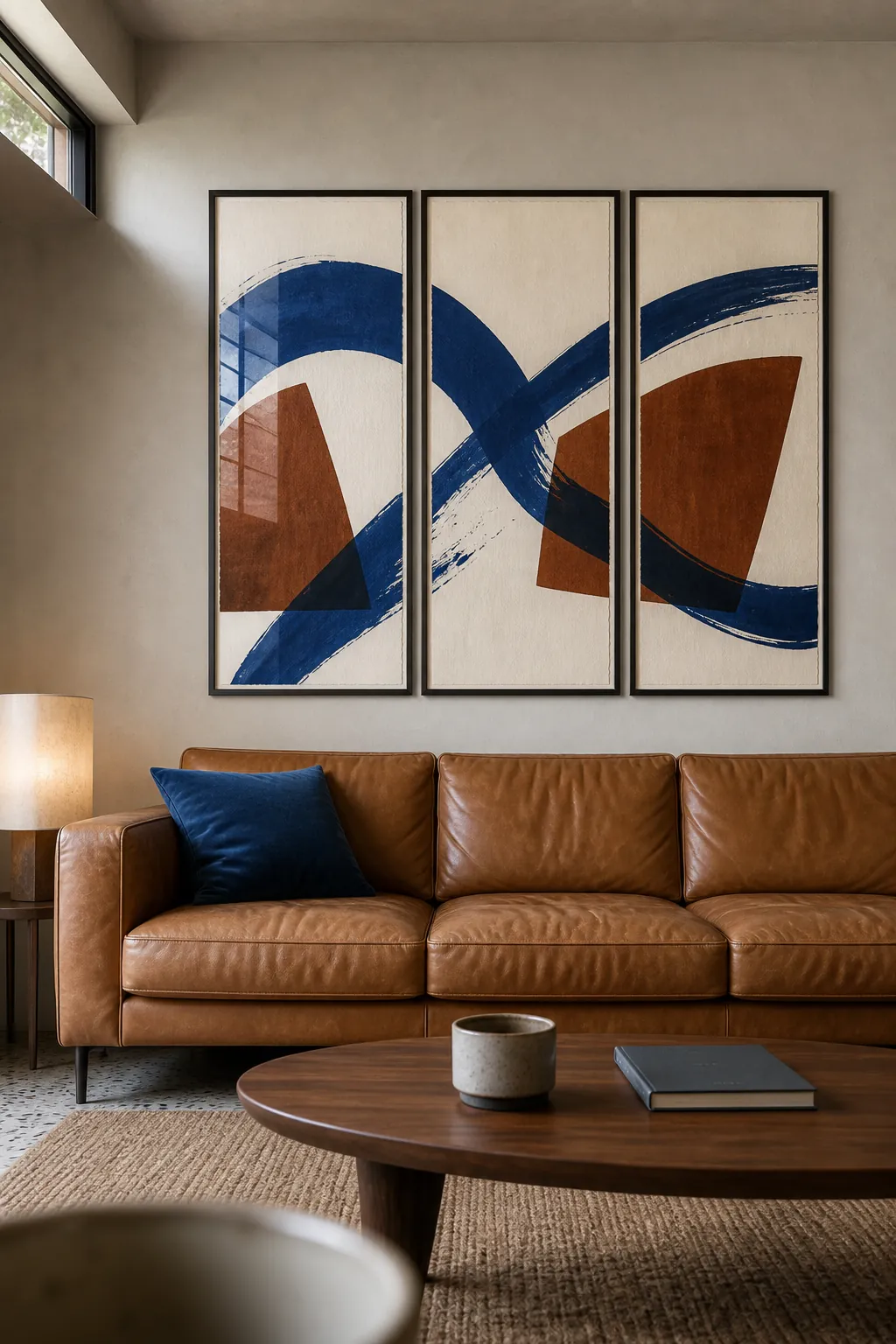
Center the Middle Frame on the Couch
Find the couch center and mark it lightly with removable tape. Align the center of the middle frame with that mark, then measure outward for the other two pieces. This method prevents small errors from accumulating across the wall. It also keeps three frames above a sofa connected to the furniture when the couch itself is not centered in the room.
Nearby windows can make the grouping look offset even when the measurement is correct. View the paper templates from the main entrance and make a modest visual adjustment if needed. Move the entire group together rather than changing one gap. Equal internal spacing is what makes the three pieces read as one unit.
Set the Bottom Edge Before Eye Level
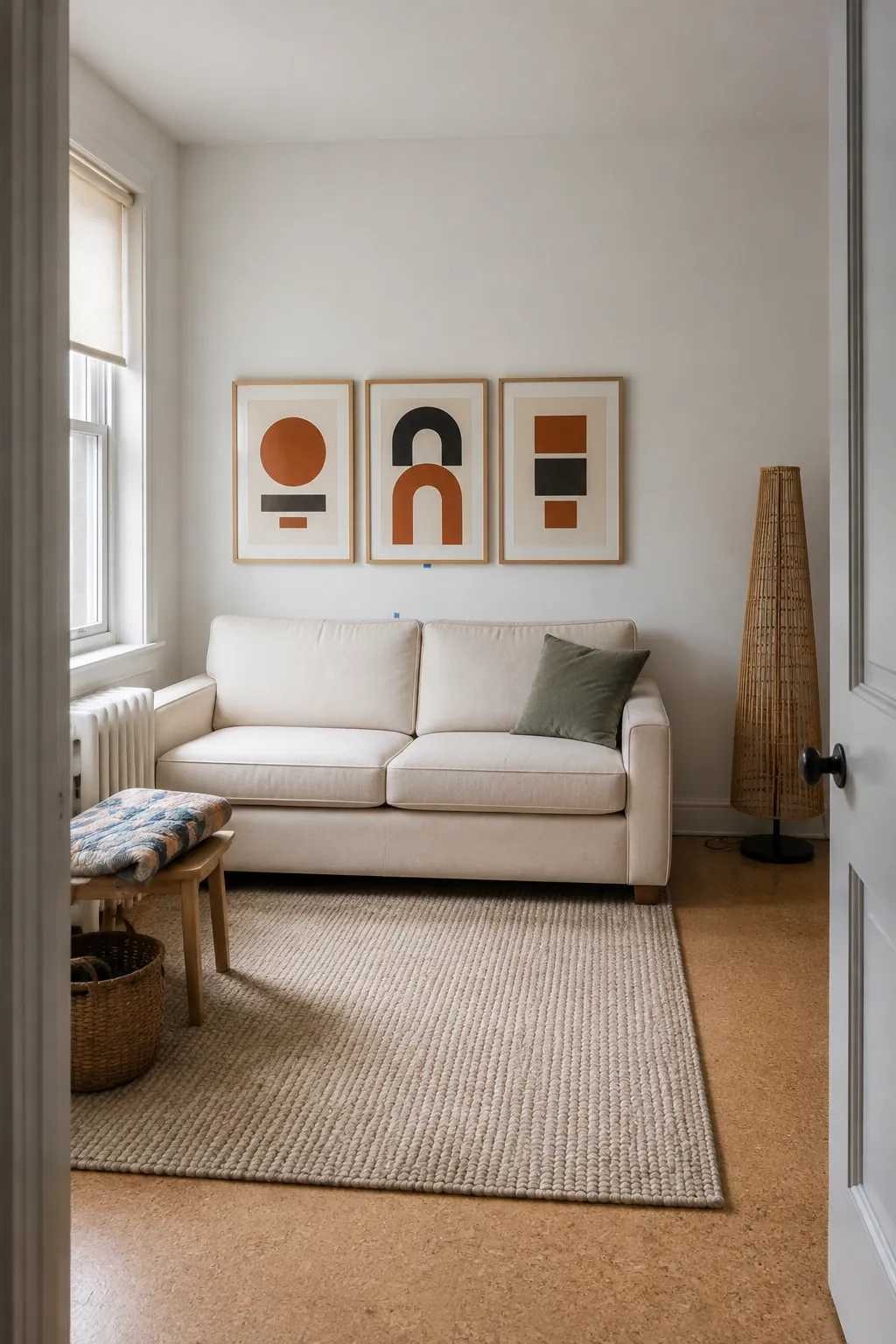
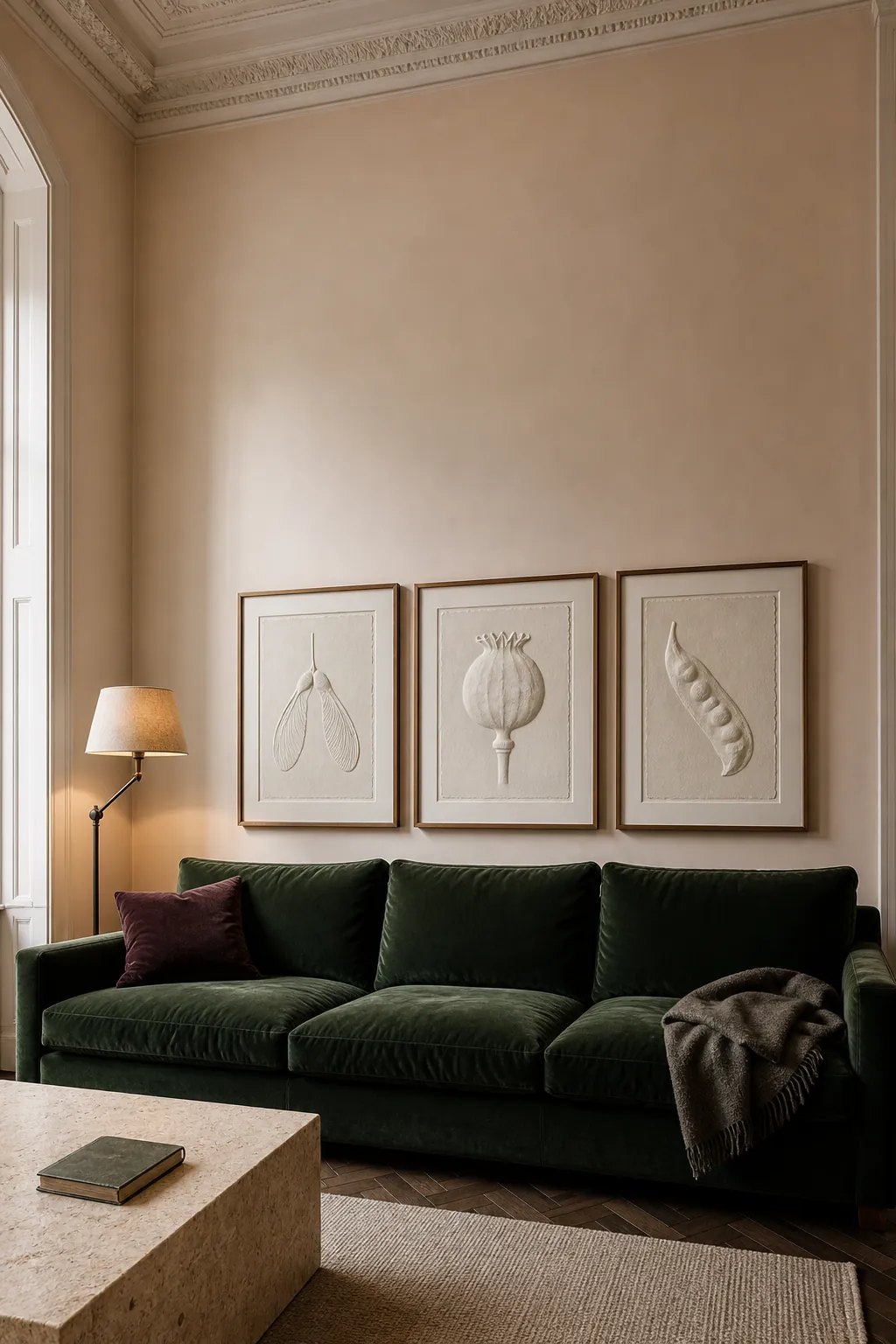
Artwork above furniture should relate to the furniture before it follows a general eye level rule. Begin with the frame bottoms about six to ten inches above the couch back. Deep cushions and tall occupants may need additional clearance. Sit against every section of the sofa to confirm that the arrangement feels comfortable.
Tall ceilings often tempt people to raise the frames, but that creates a floating effect. Leave the unused wall above the artwork rather than splitting the difference between sofa and ceiling. The seating and frames should read as one zone. A floor lamp or curtains can carry height elsewhere in the room.
Transfer the Hardware Positions Accurately
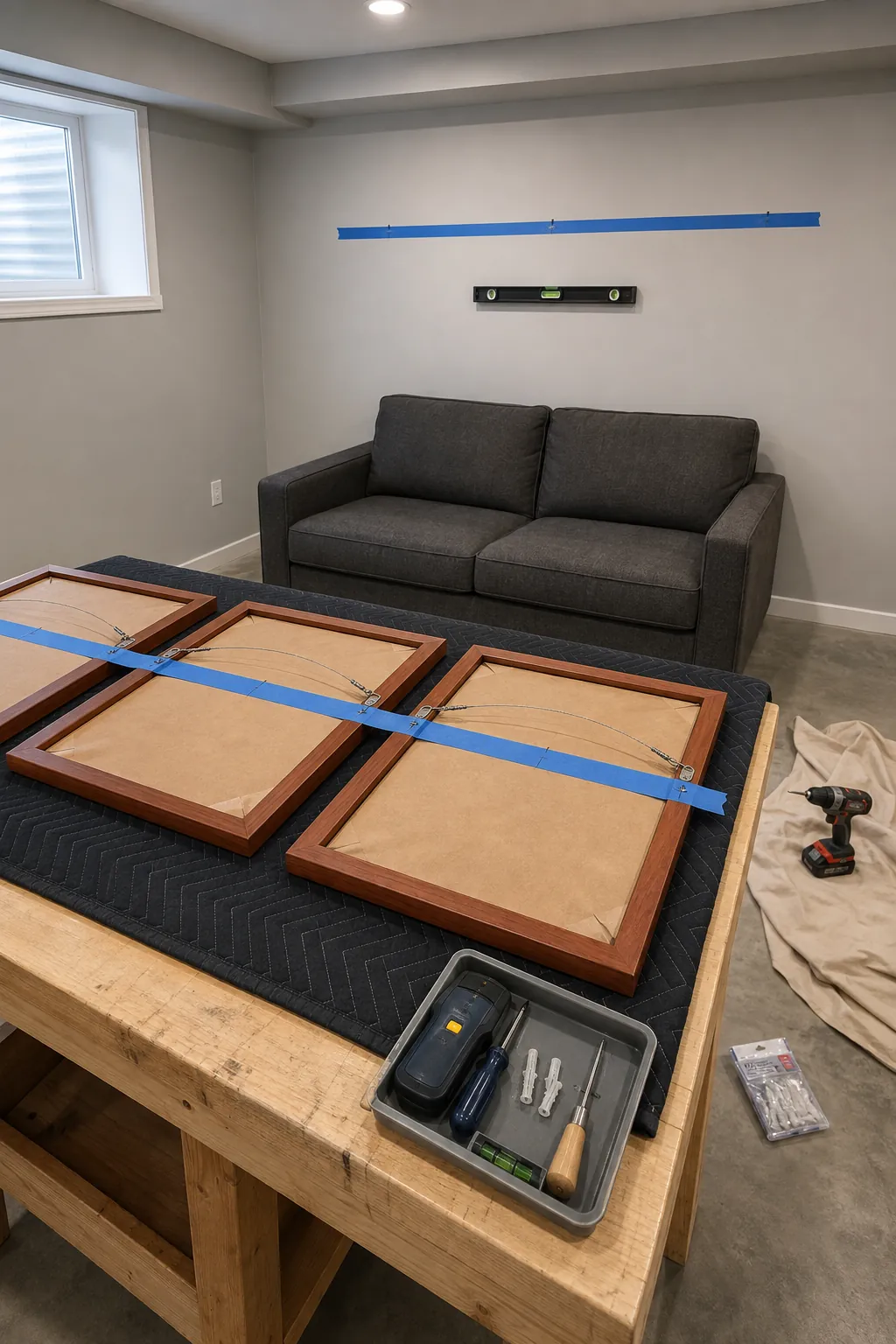
Frames that share dimensions may still have hardware in different positions. Place them face down on a protected floor with the chosen gaps. Run one long strip of painter tape across all hanging points, then mark each exact location. Transfer that strip to the wall using a level and the couch center mark.
Use anchors rated for the frame weight and wall type. Two secure points per frame help prevent pieces from rotating out of alignment. After hanging, measure the visible gaps rather than trusting the hooks. Small corrections at the hardware can create a cleaner three picture wall layout than pushing the frames repeatedly by hand.
Finish With a Straight Line and a Real Room Check
Level the frame tops when all three pieces share a size. If their dimensions differ, align their visual centers or bottom edges instead of forcing unrelated tops into one line. Check that mats and artwork also sit evenly inside the frames. A perfect outside line cannot hide a slipped print.
Walk through the room, sit down, and view the final group at night. Confirm that glare does not erase the middle piece and that no frame feels close to a seated head. If something seems off, move the entire composition before changing the gaps. Three large frames over a sofa work best when the spacing remains consistent and the group stays anchored to the furniture below.