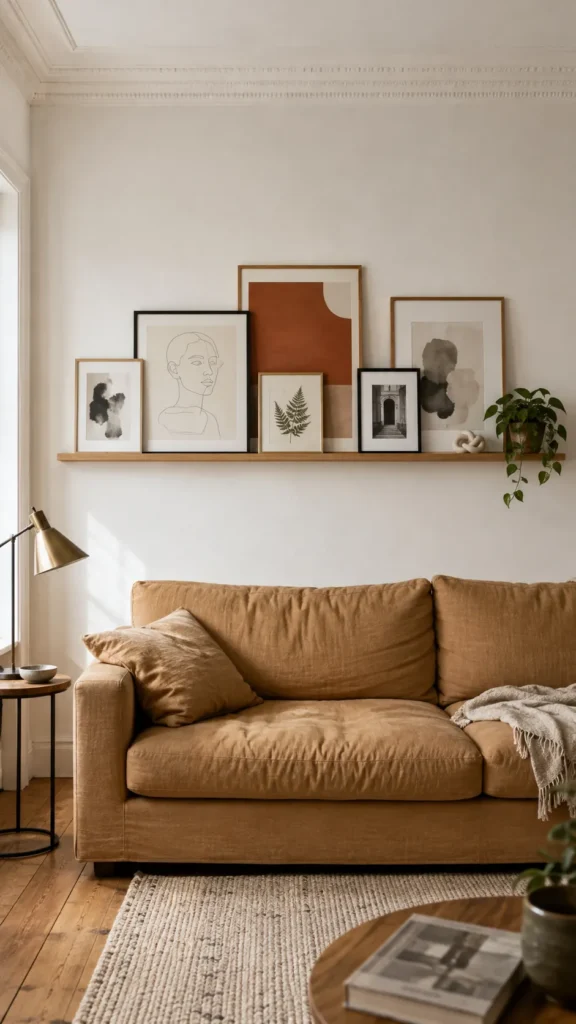
How to Style a Picture Ledge Above a Sofa
A picture ledge can solve the awkward blank wall behind a sofa, but its flexibility also makes every decision visible. Set it too low and tall people worry about hitting their heads. Set it too high and the frames float away from the furniture, leaving the sofa and display looking unrelated. The most convincing arrangement starts with real seating clearance, then uses scale, overlap, and repetition to make the ledge feel like part of the room.
Choose a ledge that belongs to the sofa
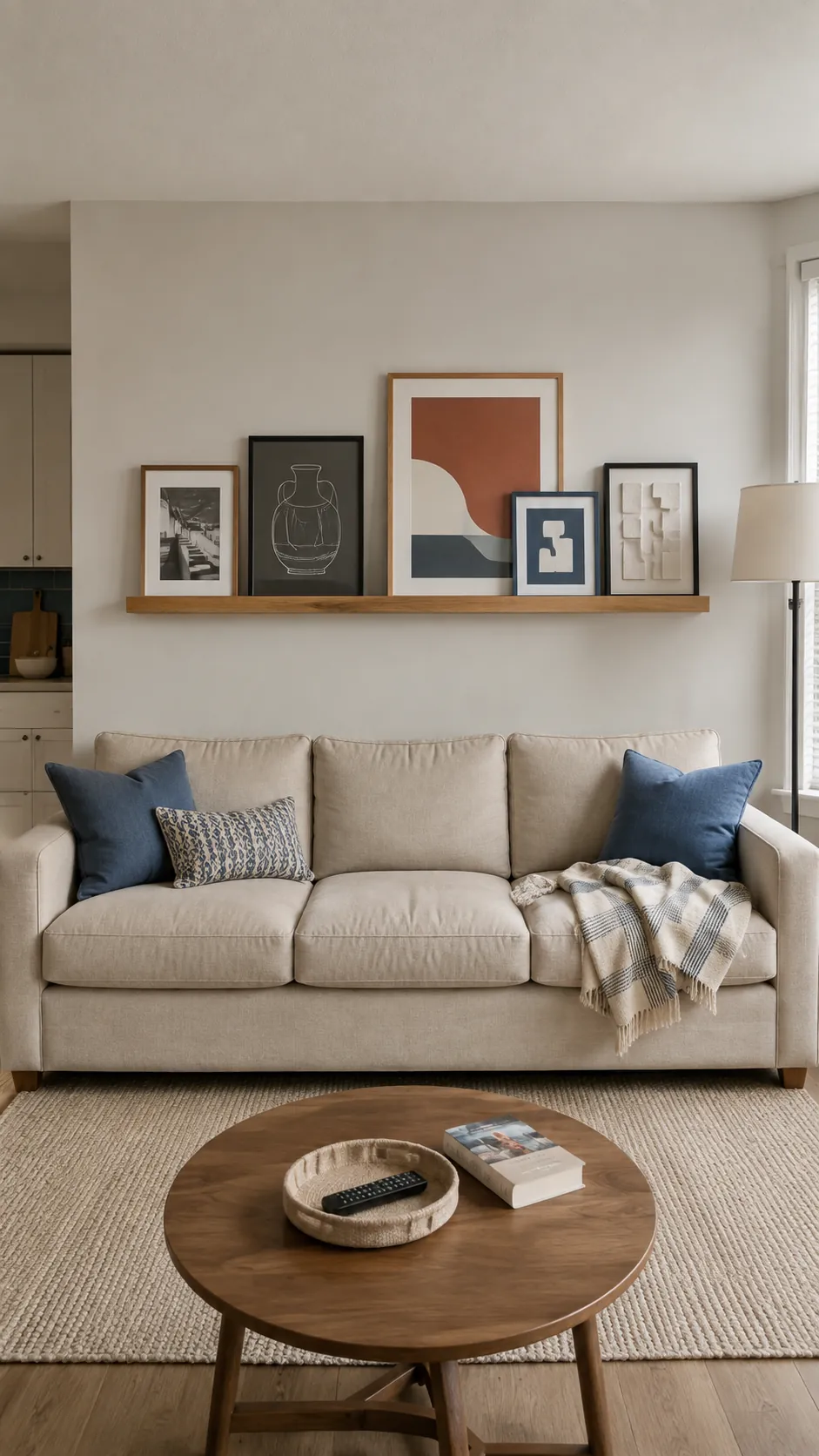
Start with the sofa width because it is the visual anchor, not the wall width. A long picture shelf behind a sofa usually looks settled when it spans roughly two thirds to four fifths of the sofa, although a sectional can support a wider installation. A very short ledge tends to look like a small object stranded over a large seat, while a ledge wider than the sofa can pull attention toward empty wall space.
Before buying, mark the proposed ends with removable tape and view them from the doorway as well as from the seat opposite. Include nearby lamps, windows, and side tables in that judgment because they affect how wide the composition feels. If the sofa is off center on the wall, center the ledge on the sofa unless another architectural feature clearly controls the room.
Set height by testing people, not formulas
Advice that places a photo ledge above a couch a fixed distance from the back cushion ignores seat depth, back height, and the people who actually use the room. Sit normally, lean back, and ask the tallest regular user to do the same before drilling. The bottom of the ledge needs enough clearance that heads, hair, and casual stretching never meet a hard edge.
Once that practical limit is clear, check the visual gap from across the room. The display should read as connected to the sofa rather than as a separate stripe near the ceiling. Tape a full length paper line on the wall for a day, then test the tallest frame above it so you judge the complete composition rather than the bare shelf alone.
Build the arrangement around one dominant frame
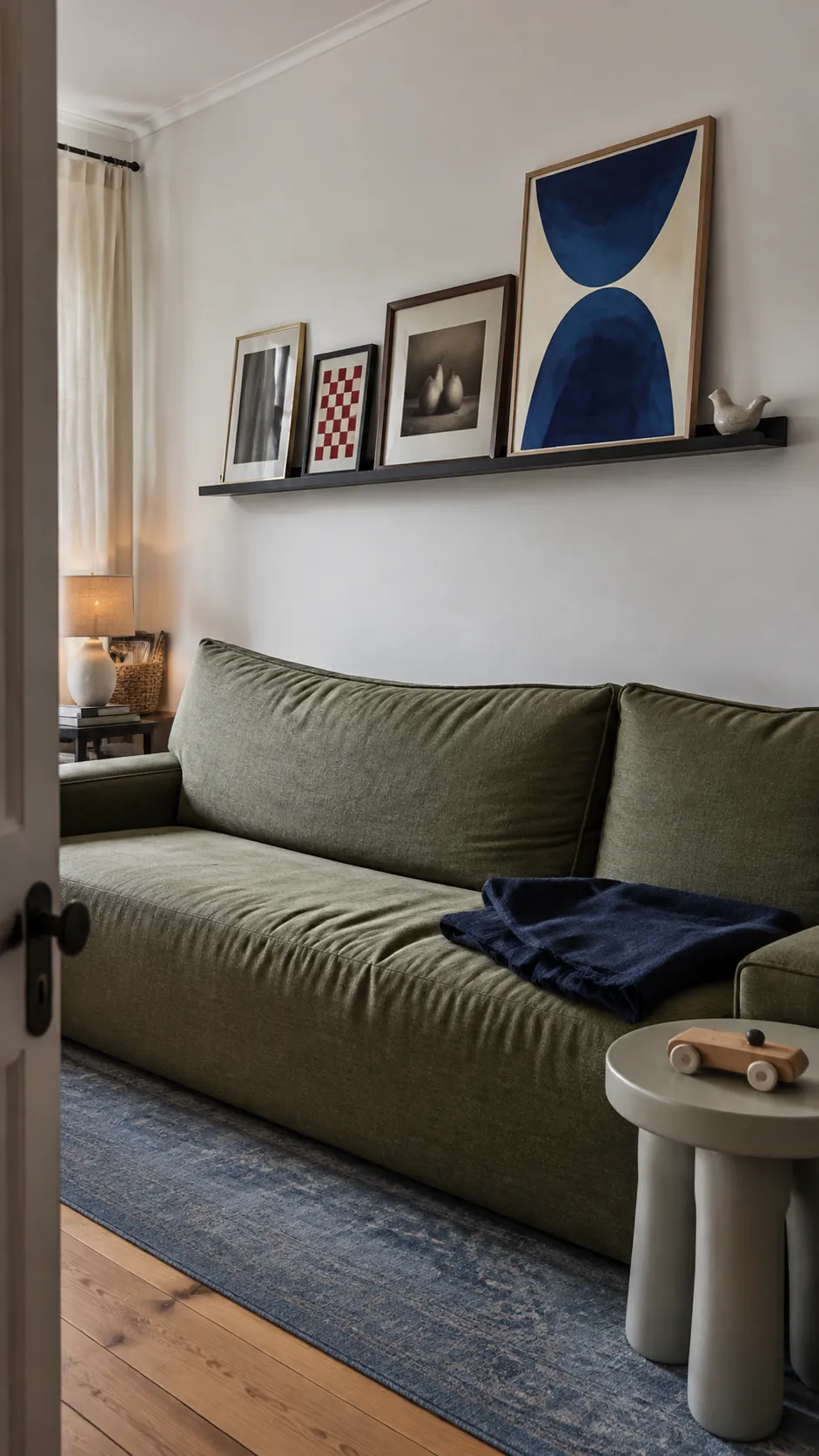
Layered frames above a sofa look intentional when one piece establishes the scale and the others support it. Choose a dominant frame with enough height to claim the wall, then place it slightly away from the exact center for a relaxed composition. Add medium and small pieces in descending visual weight rather than arranging every frame from tallest to shortest.
The main piece does not need to be the brightest image, but it should have the clearest silhouette or strongest contrast. A generous mat can make an affordable print feel more substantial without adding clutter. If all the frames are small, combine two or three closely enough that they behave like one larger mass.
Overlap with enough breathing room
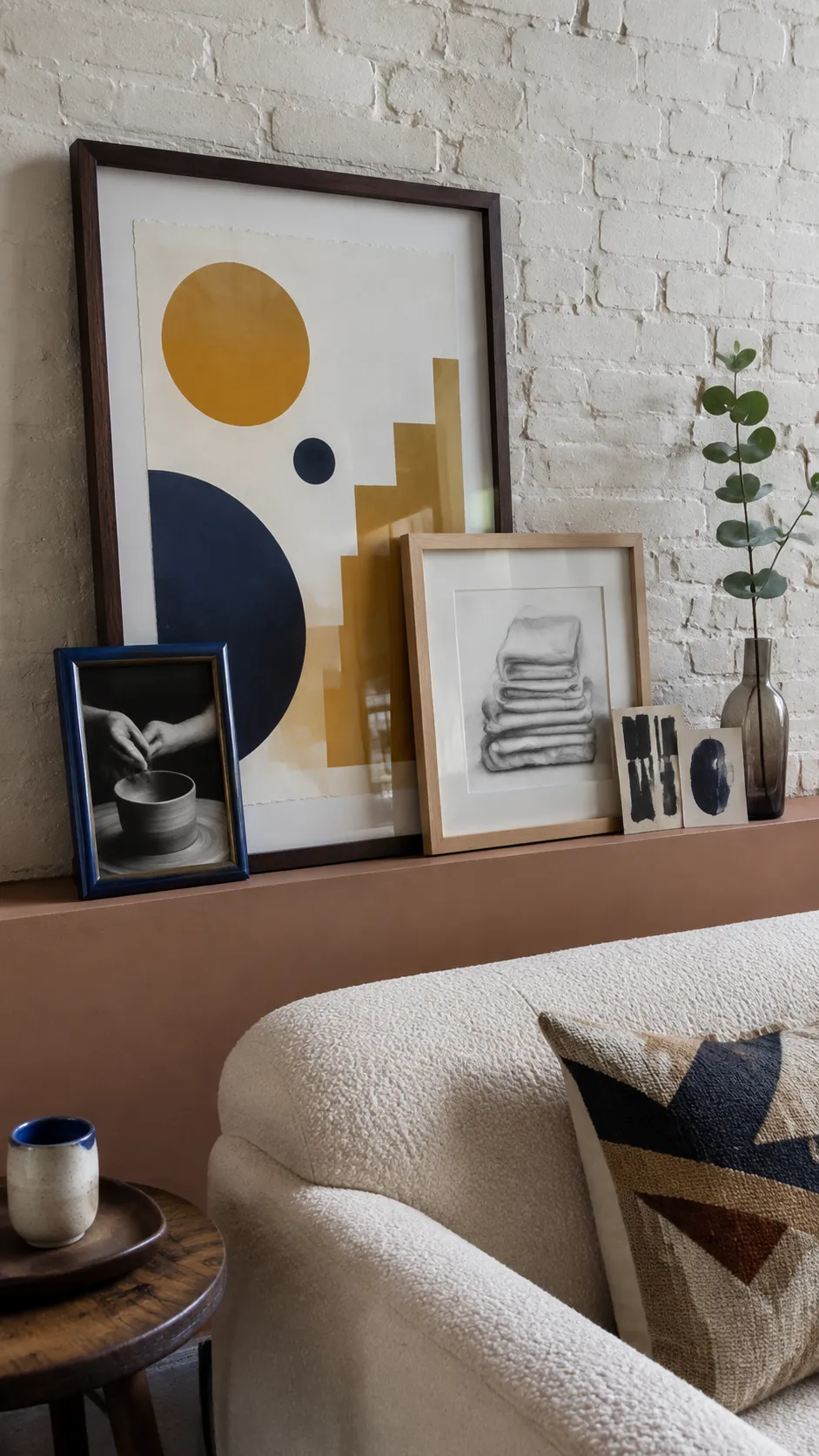
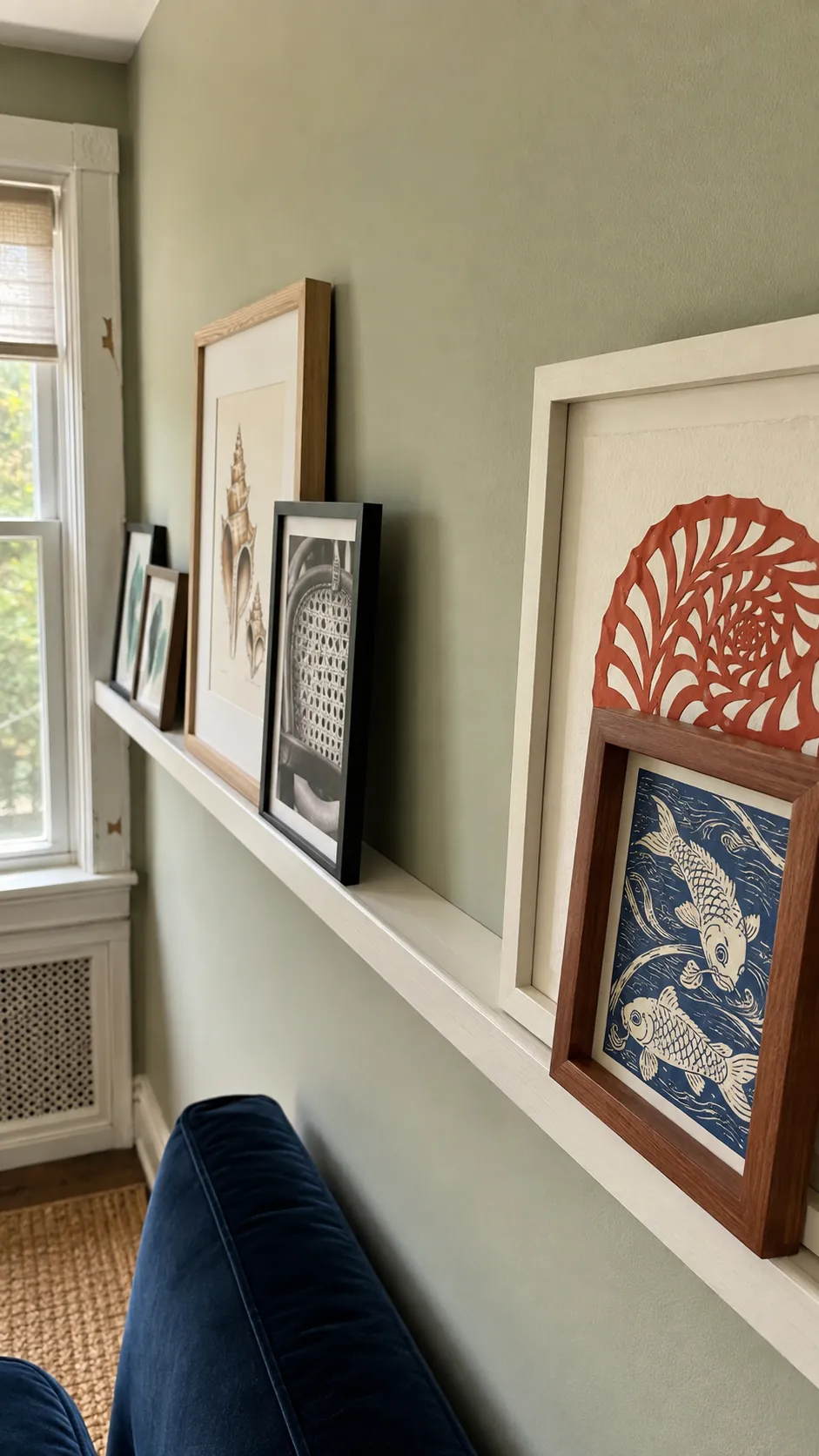
Overlap is what distinguishes an art ledge over a couch from a row of objects waiting in line. Let a smaller frame cover a modest corner of a larger one while keeping faces, focal details, and important lettering visible. Change the amount of overlap across the shelf so the rhythm feels collected rather than mechanically repeated.
Crowding becomes obvious when every edge touches or several dark frames merge into one heavy band. Leave at least one open patch of wall within the composition and allow some shelf surface to remain visible. That quiet space gives the eye somewhere to rest and makes each image easier to read from normal viewing distance.
Unify mixed frames through repetition
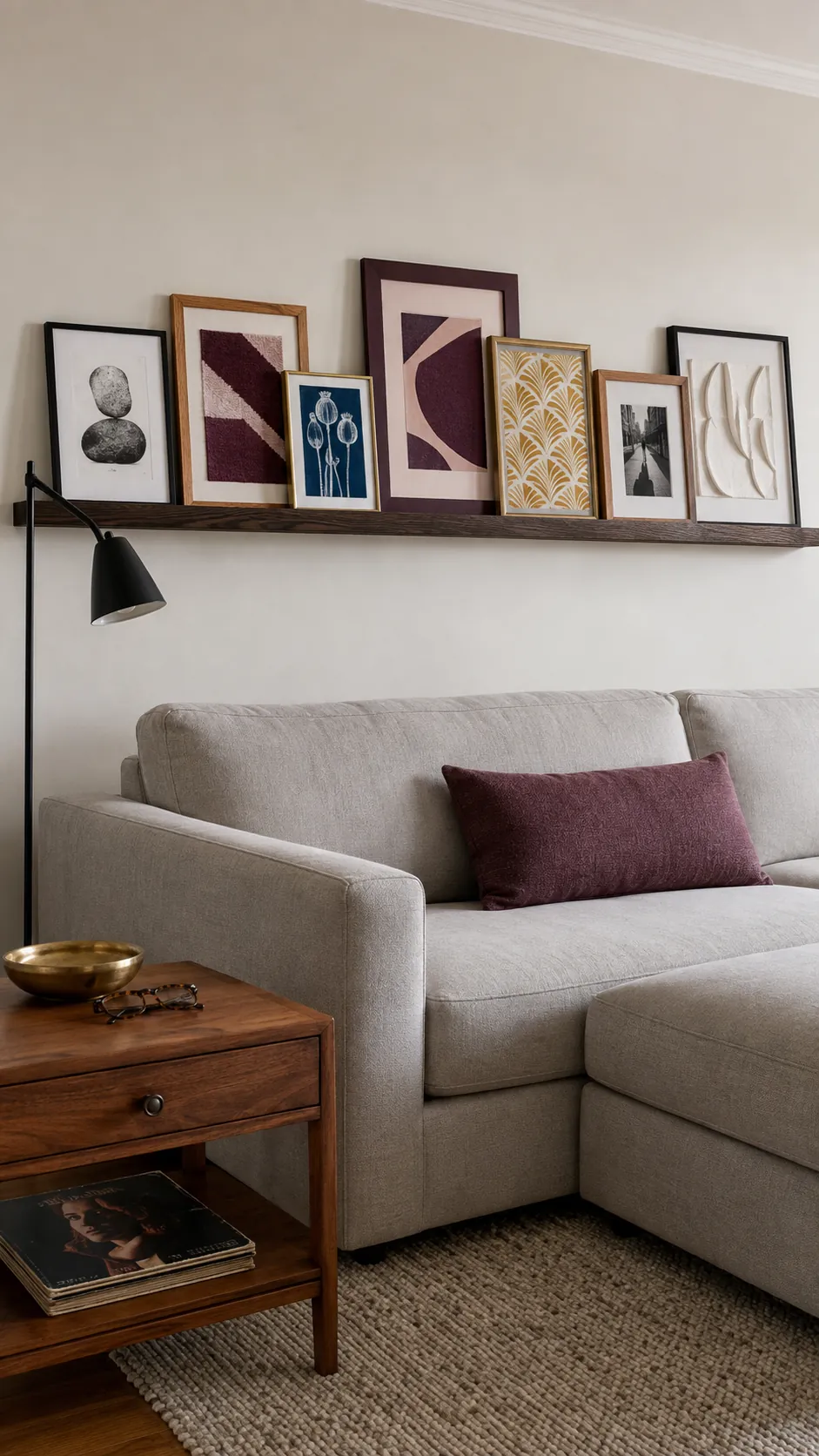
A mix of black, wood, brass, and painted frames can feel personal, but each finish needs a partner somewhere else on the ledge or in the room. Repeat the darkest frame at least once, echo warm wood in a side table, or connect brass to a lamp base. Repetition turns a random exception into a deliberate choice.
Keep the art itself varied within a controlled palette. A charcoal line drawing, a muted botanical study, and a warm color field print can coexist when two or three colors travel through the group. Matching every frame and every print is safe, yet it often removes the depth that makes shelf styling worth choosing over a fixed gallery wall.
Add objects that support rather than compete
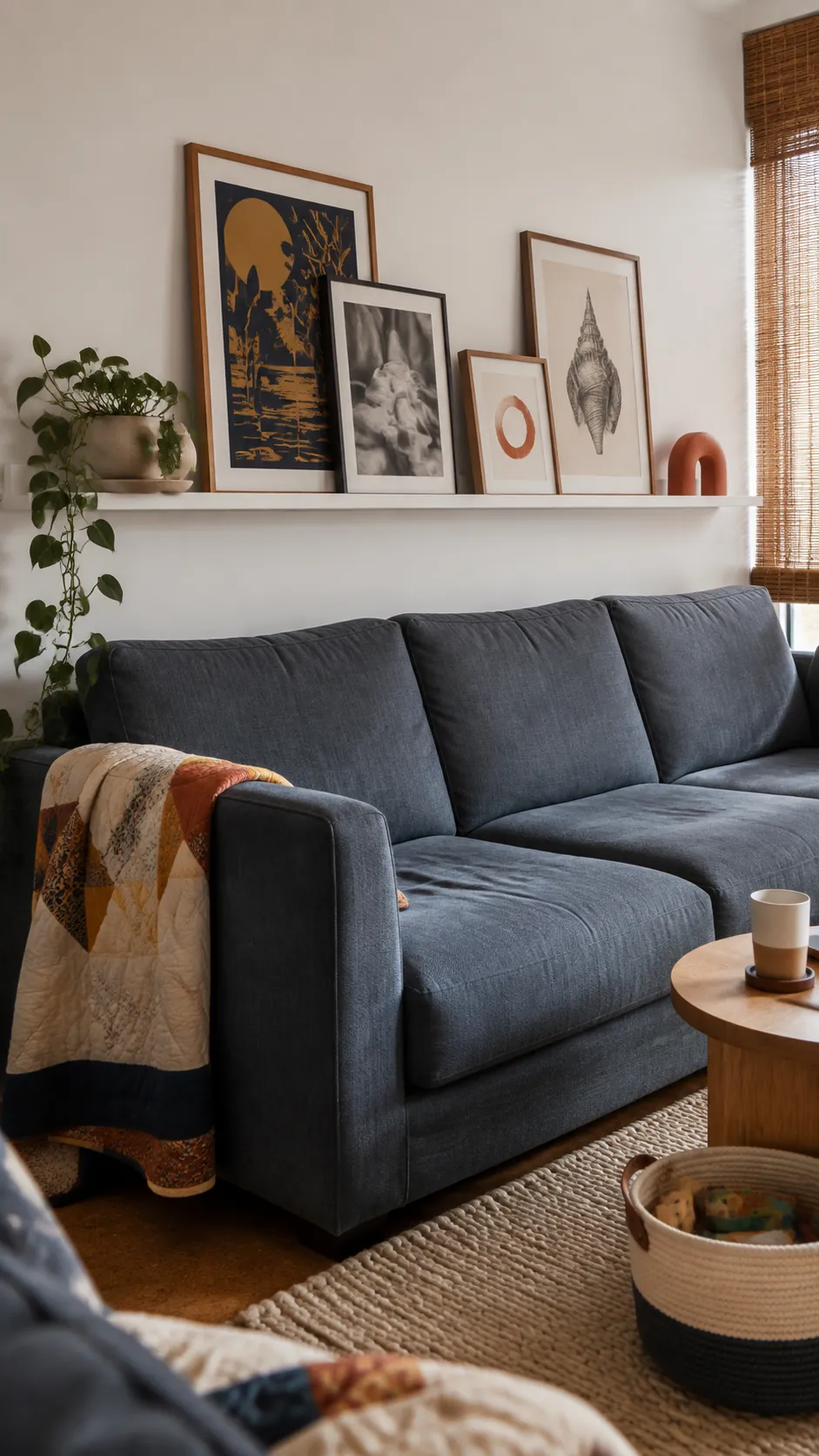
Small objects can soften the rectangle heavy look of framed art, but they should not turn the ledge into general storage. Use one sculptural object, a trailing plant, or a slim ceramic vessel where the arrangement needs a change in shape. Keep anything fragile away from the zone directly behind regular head movement, especially in a family room.
Depth matters because most picture ledges are narrow. Test the object base fully on the shelf and avoid heavy pieces that could tip when the sofa shifts or the wall vibrates. The best accessory earns its place by connecting the above sofa wall decor to a color, texture, or material already present below.
Make seasonal changes without rebuilding everything
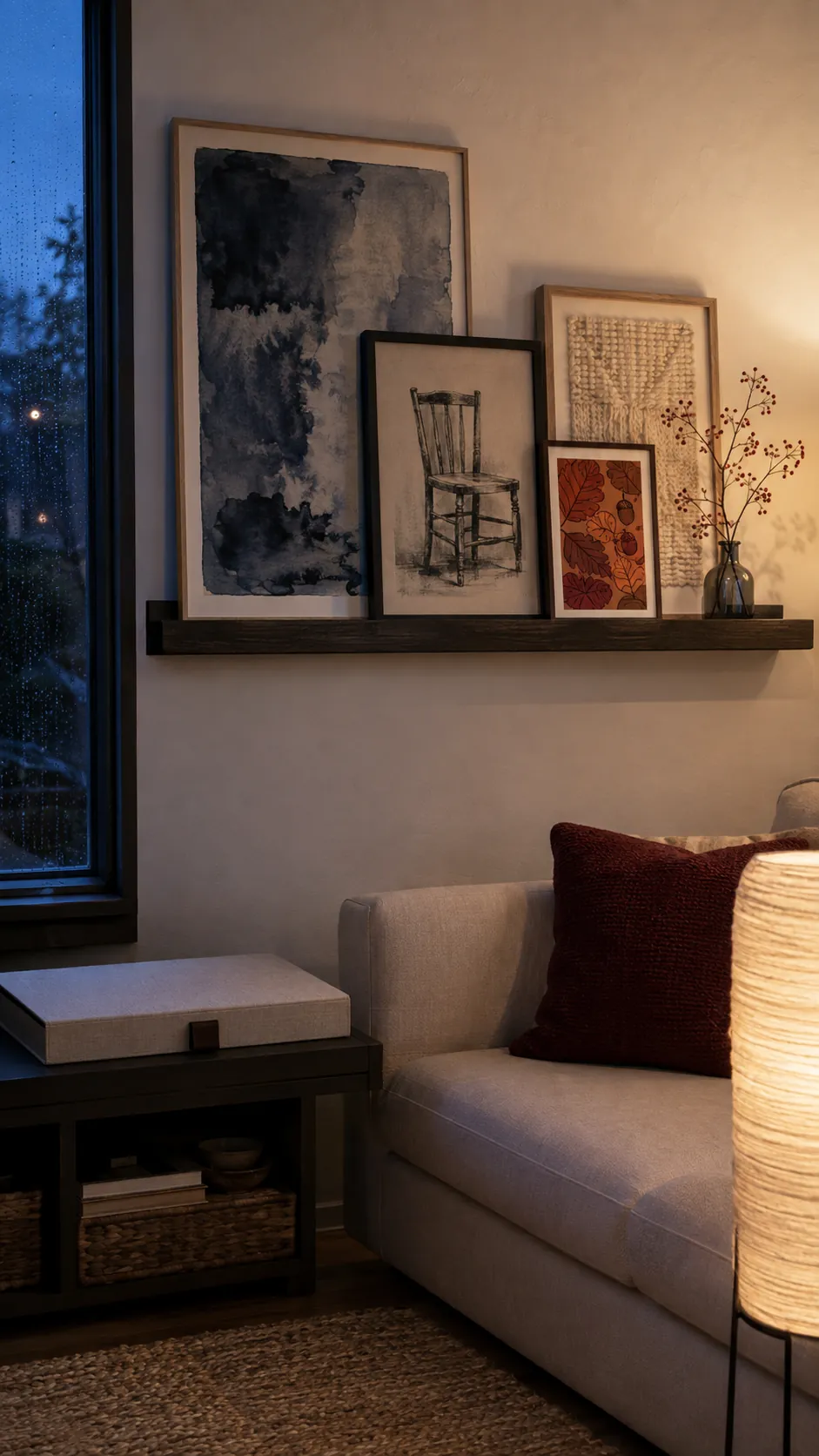
The advantage of a picture ledge is easy revision, but constant total restyling creates more work than pleasure. Keep the dominant frame and two supporting pieces as the permanent structure, then rotate one smaller print or object with the seasons. This preserves the visual balance while letting the living room wall decor ideas evolve.
Store alternate prints in the same frame sizes so a refresh takes minutes. Family photographs can rotate without changing the underlying palette when mats remain consistent. Take a quick photograph of a successful arrangement before moving anything, since it is much easier to compare variations when the original is not relying on memory.
Finish with a seated eye test
Stand back at the main entrance and confirm that the arrangement feels anchored to the sofa, then sit in every regular seat and check clearance again. Look for one clear focal point, repeated finishes, readable gaps, and a silhouette that rises and falls instead of forming a rigid rectangle. Remove the weakest object before adding anything new because excess is the most common reason a picture ledge feels unsettled. When the display works from the doorway and feels safe from the cushions, the wall decor behind the couch is doing both of its jobs.