13 Wallpaper Behind Bed Ideas
A pattern that looks lovely on a sample can disappear behind a tall headboard or overwhelm the room once it covers the wall. Start with the furniture you are keeping, then judge how much pattern will actually remain visible. The best choice should work from the doorway and under the lamp you use at night.
Small florals for an awkward ceiling
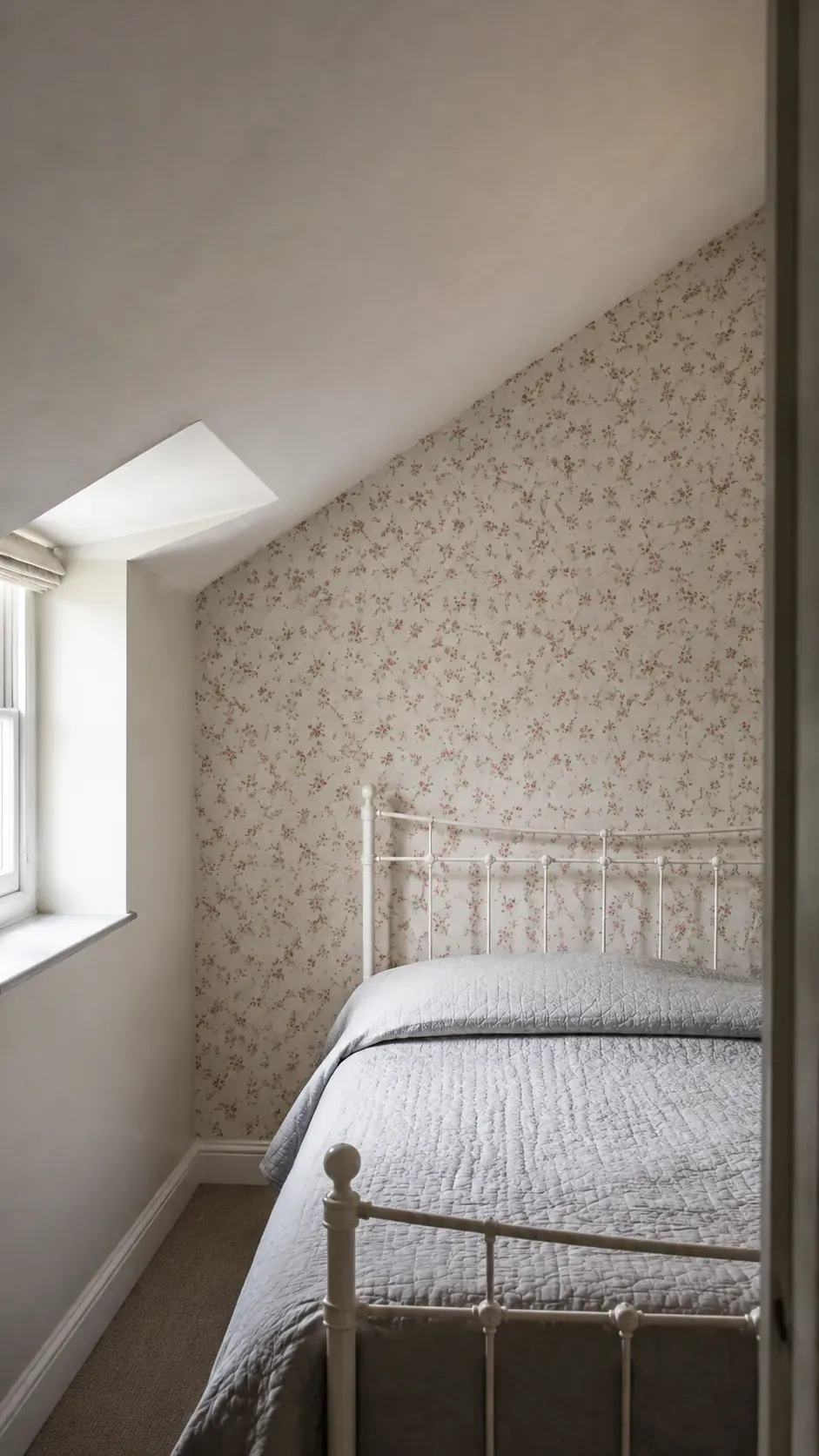
Tiny scattered flowers can bring detail to a bedroom without making a sloping ceiling feel like a giant graphic. Keep the paper on the vertical headboard wall if you want a clear stopping point, and paint the slope in a color taken from the background. A simple iron bed lets the floral repeat remain visible through the rails. Tape up several samples together because a charming sprig can read as visual noise when repeated across a whole wall.
Vertical stripes behind a low headboard
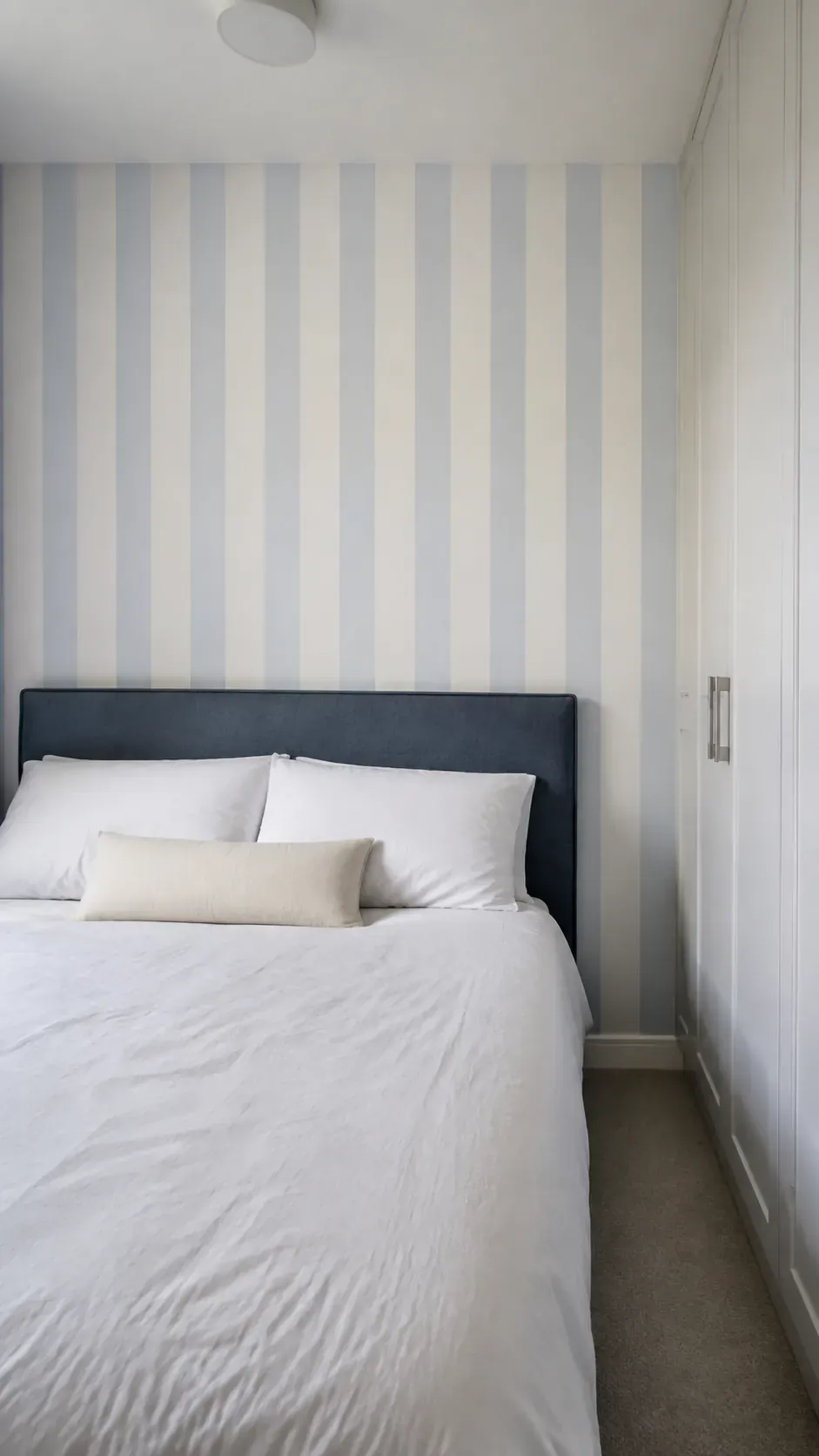
Soft vertical stripes give a low headboard a taller visual setting. Choose a modest difference between the stripe and ground color so the wall does not resemble a row of hard bars. In a narrow room, carry the pattern to the corners instead of stopping at the mattress edges. Check that the first visible stripe beside each headboard end looks balanced before deciding where the installation should start.
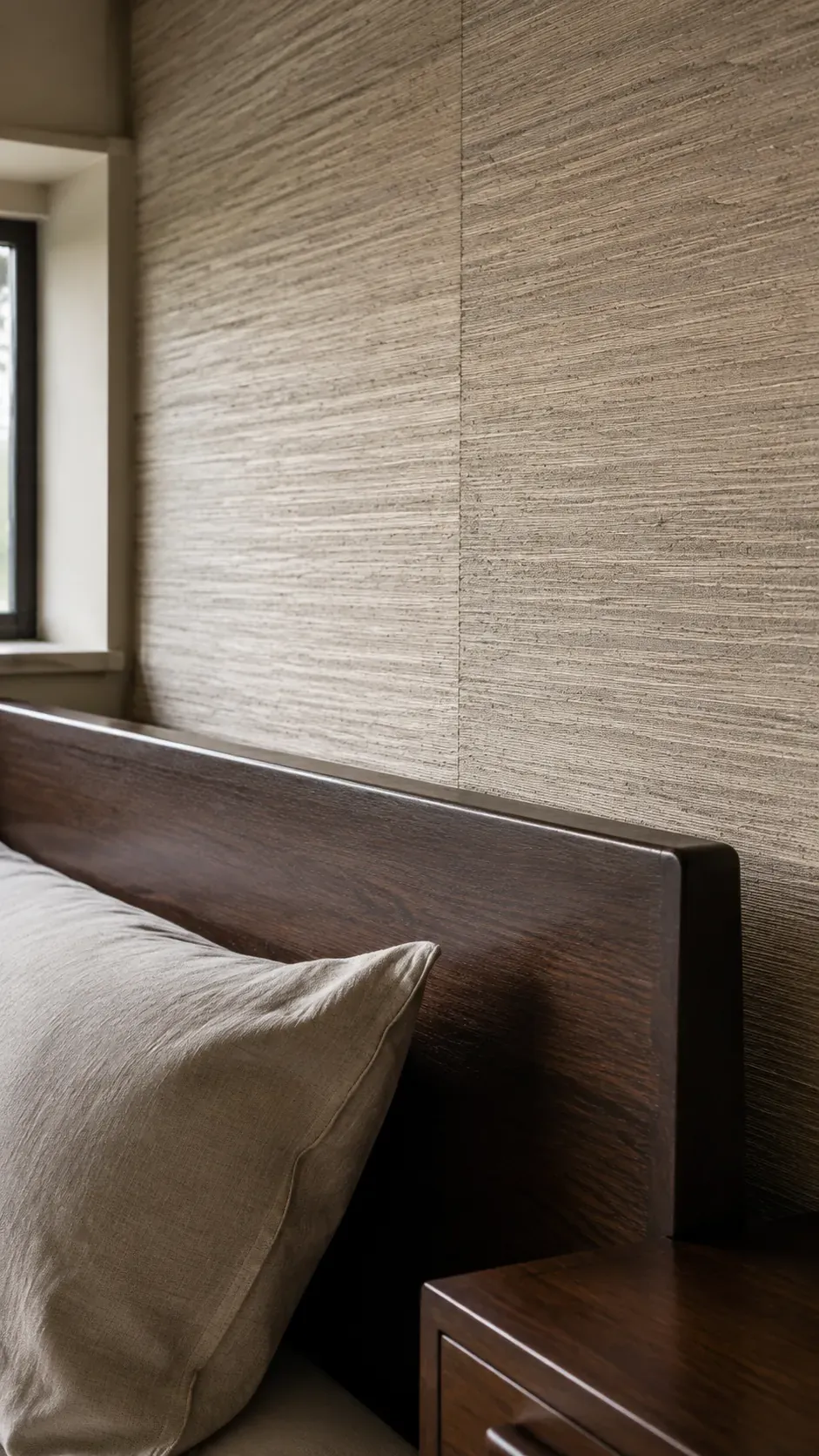
Grasscloth texture with dark timber
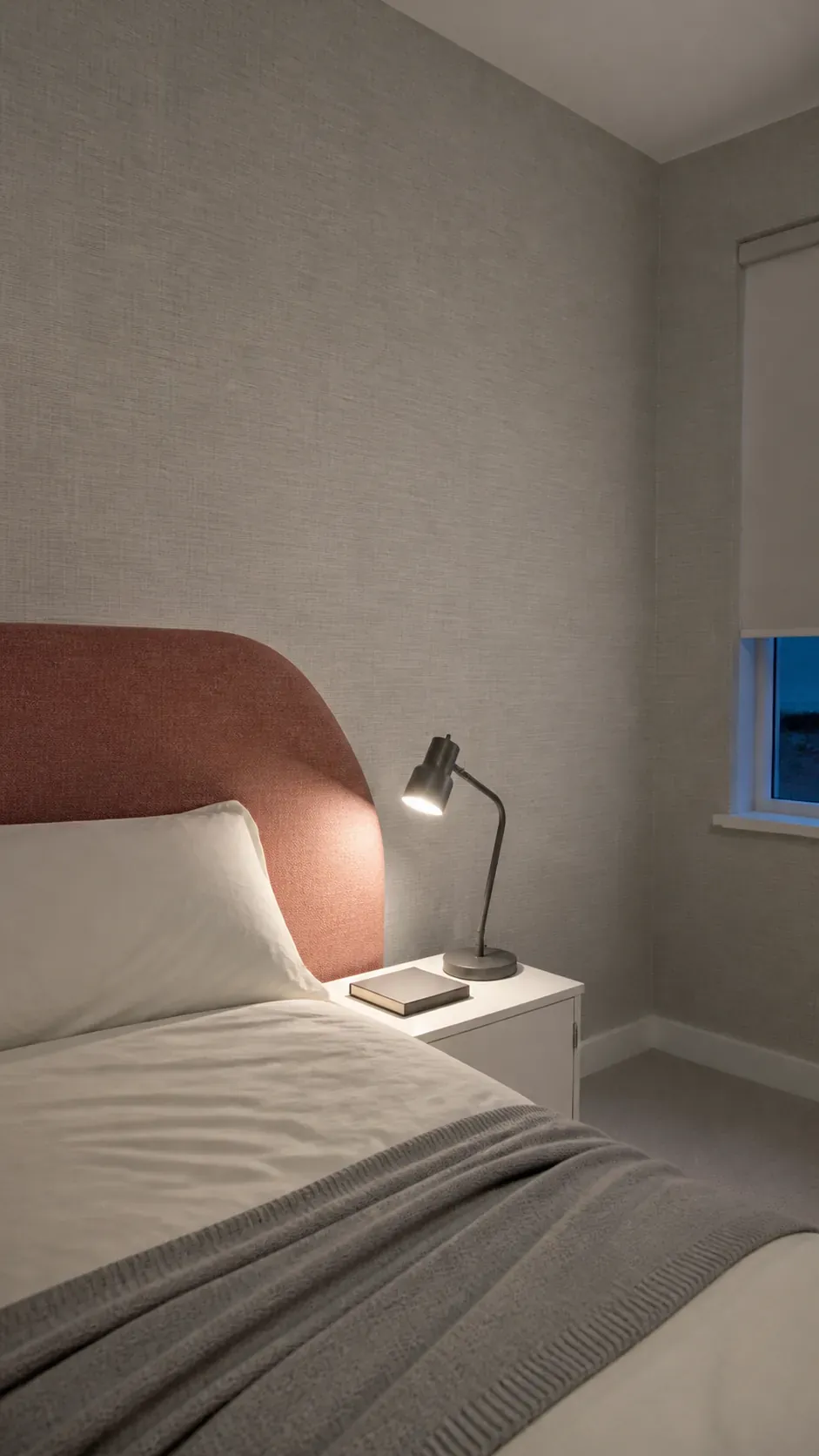
A textured wallpaper headboard wall can add warmth without introducing a recognizable picture or motif. Natural grasscloth has panel variation and visible seams, so choose it because you enjoy that irregularity rather than expecting a seamless painted effect. A woven look printed paper is an alternative when you want a more consistent surface or different cleaning requirements. Check the actual product care instructions and avoid assuming that either finish will hide damaged plaster.
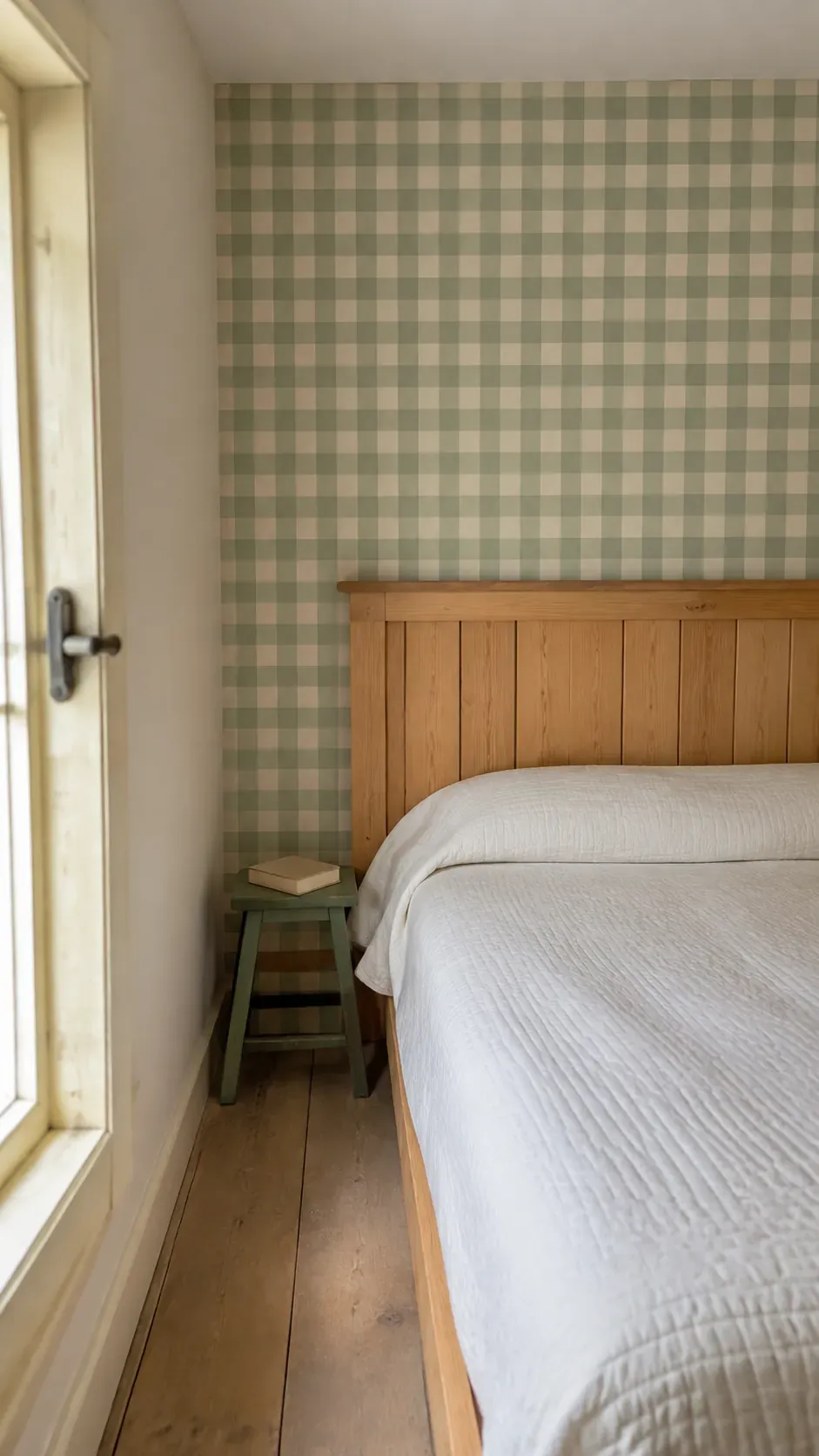
Muted gingham for a relaxed cottage room
A quiet gingham repeat works well with plain pine furniture and simple cotton bedding. Let the squares be large enough to see from the doorway but soft enough that they do not compete with every pillow seam. Pairing checks with more checks can become busy quickly, so use a solid quilt as the largest fabric area. The grid also makes crooked walls more noticeable, which is a reason to plan the first vertical carefully rather than follow an uneven corner.
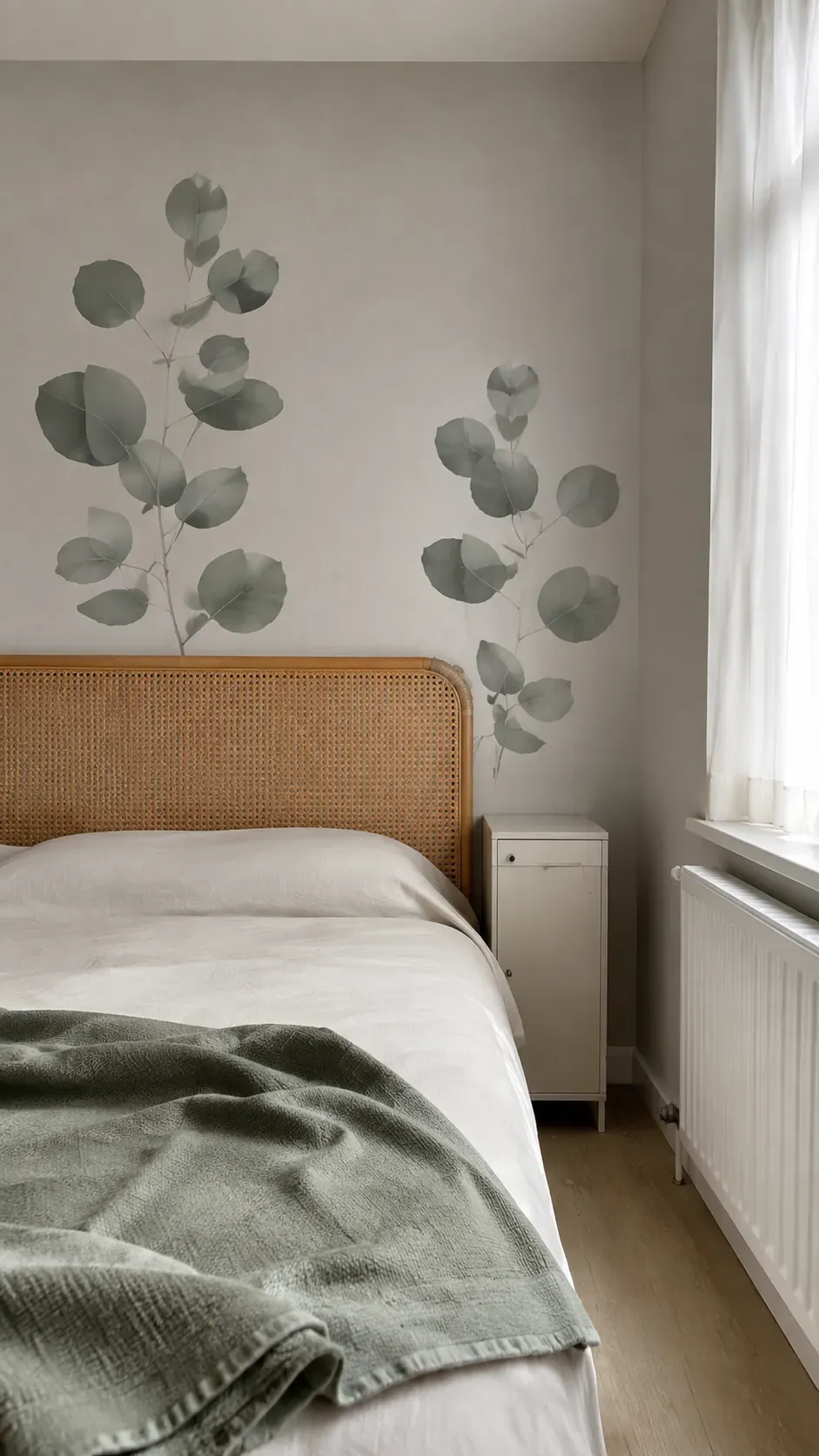
Large leaves around a cane headboard
Generous leaf shapes can suit a compact bedroom when the palette stays limited. Before ordering, compare the pattern repeat with the amount of wall that will remain visible above the cane headboard. You want recognizable leaves in that opening, not only cut stems disappearing behind the furniture. Keep the adjacent wall plain and repeat one leaf color in a cushion to connect the bed to the pattern.
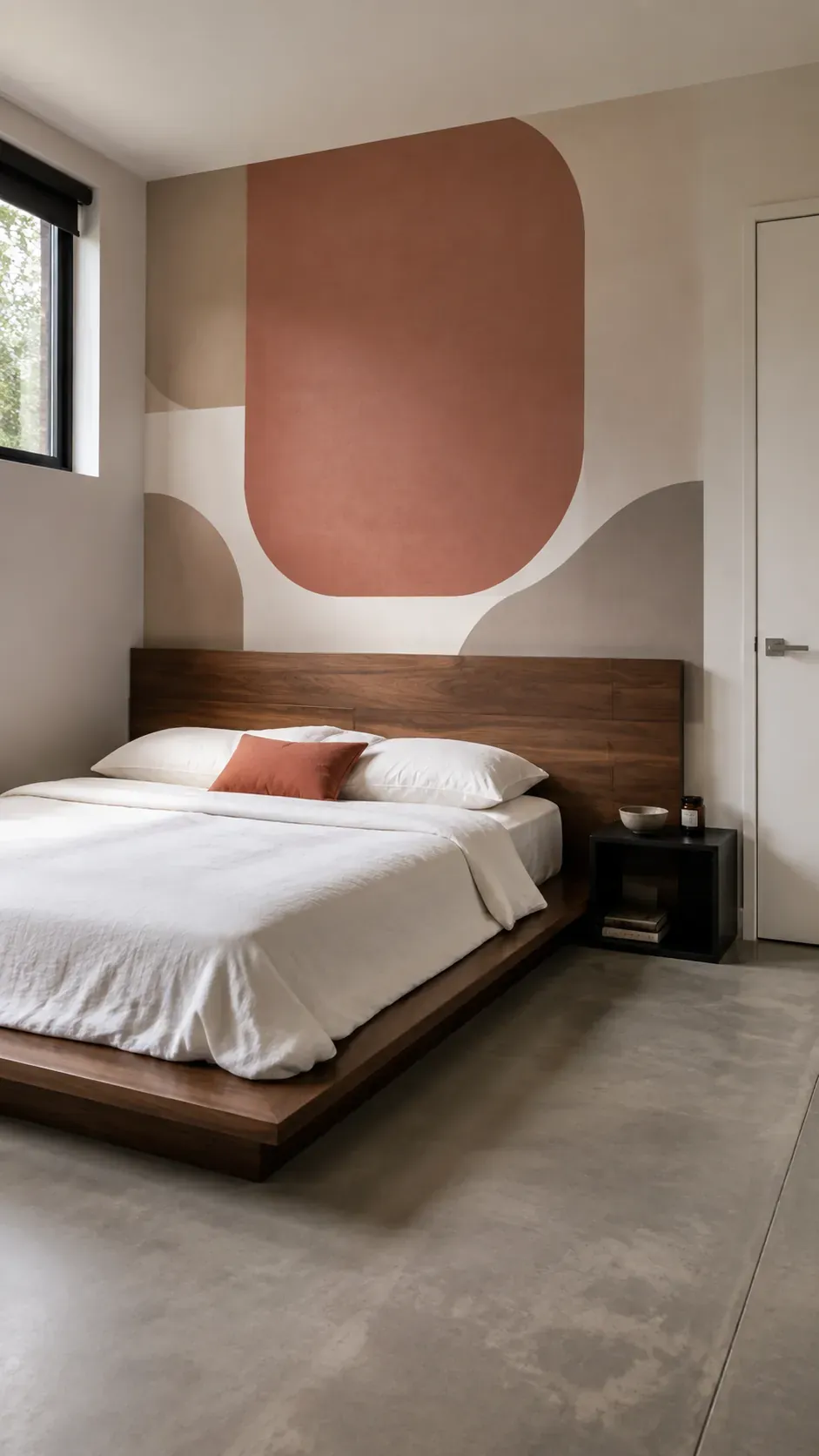
Clay geometry with a simple platform bed
Rounded geometric shapes give a feature wall behind a bed structure without needing extra frames. A low walnut platform keeps the broad curves visible and lets the wallpaper carry the composition. Choose dusty clay and chalk tones if you want contrast that still works with everyday white bedding. Avoid adding another strong geometric rug until you have seen how the full wall reads in the room.
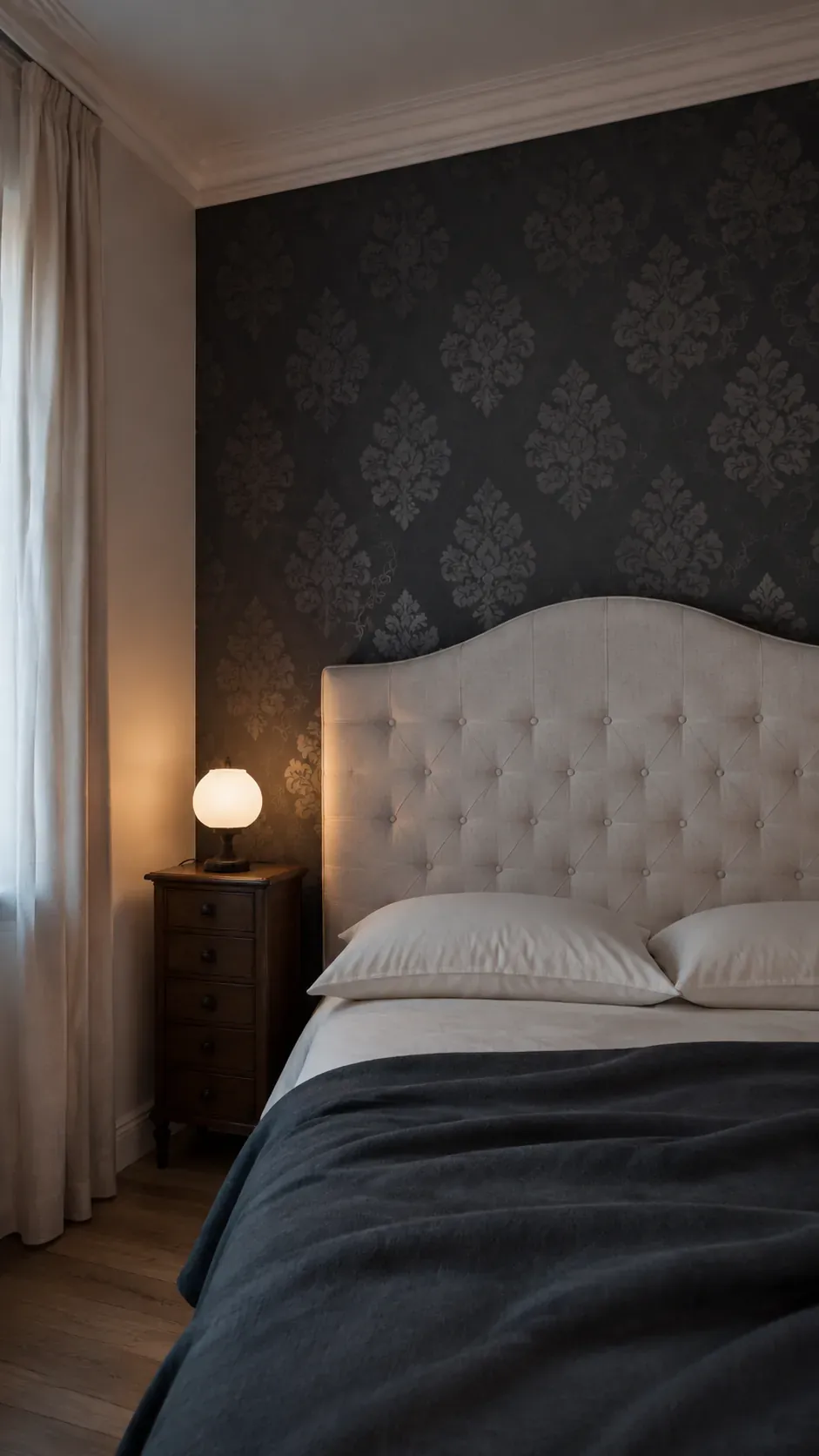
Dark damask beside pale upholstery
A dark damask can make a pale upholstered headboard stand out clearly, especially when the existing wall and bed have similar tones. Look for a subdued motif rather than a shiny high contrast finish if you want the room to feel restful. View the sample under bedside lighting because reflective inks may look very different after sunset. A plain curtain gives the ornate repeat a quieter neighboring surface.
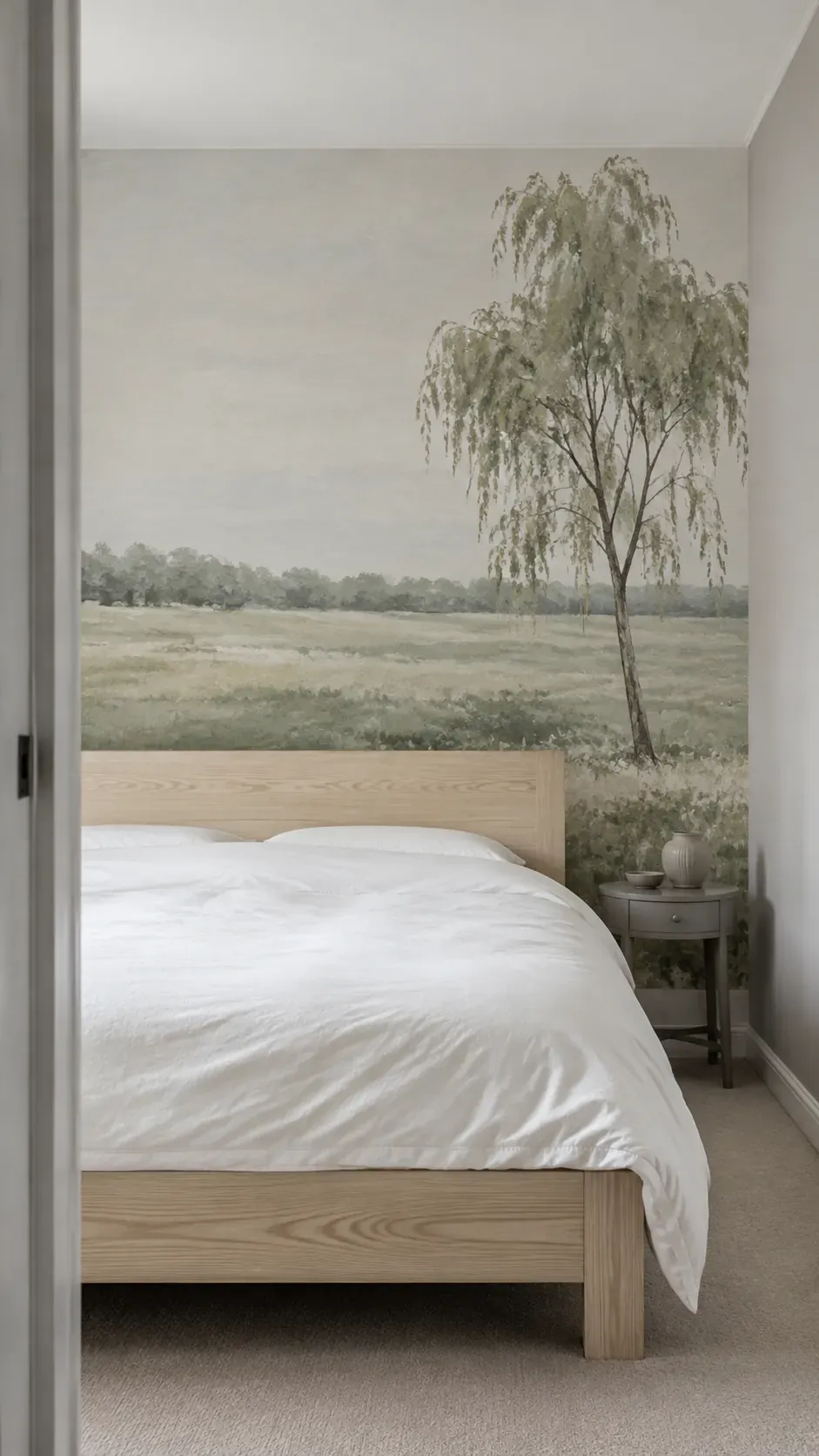
A landscape mural above a low bed
A landscape mural needs its composition checked against the actual furniture outline. Mark the height of the headboard on the product preview and confirm that the main horizon or focal tree will remain visible. A low bed can preserve more of the scene, while a tall headboard may hide the part that made you choose the design. Verify the ordered mural dimensions, panel sequence, and crop before purchase; a small screen preview is not an installation plan.
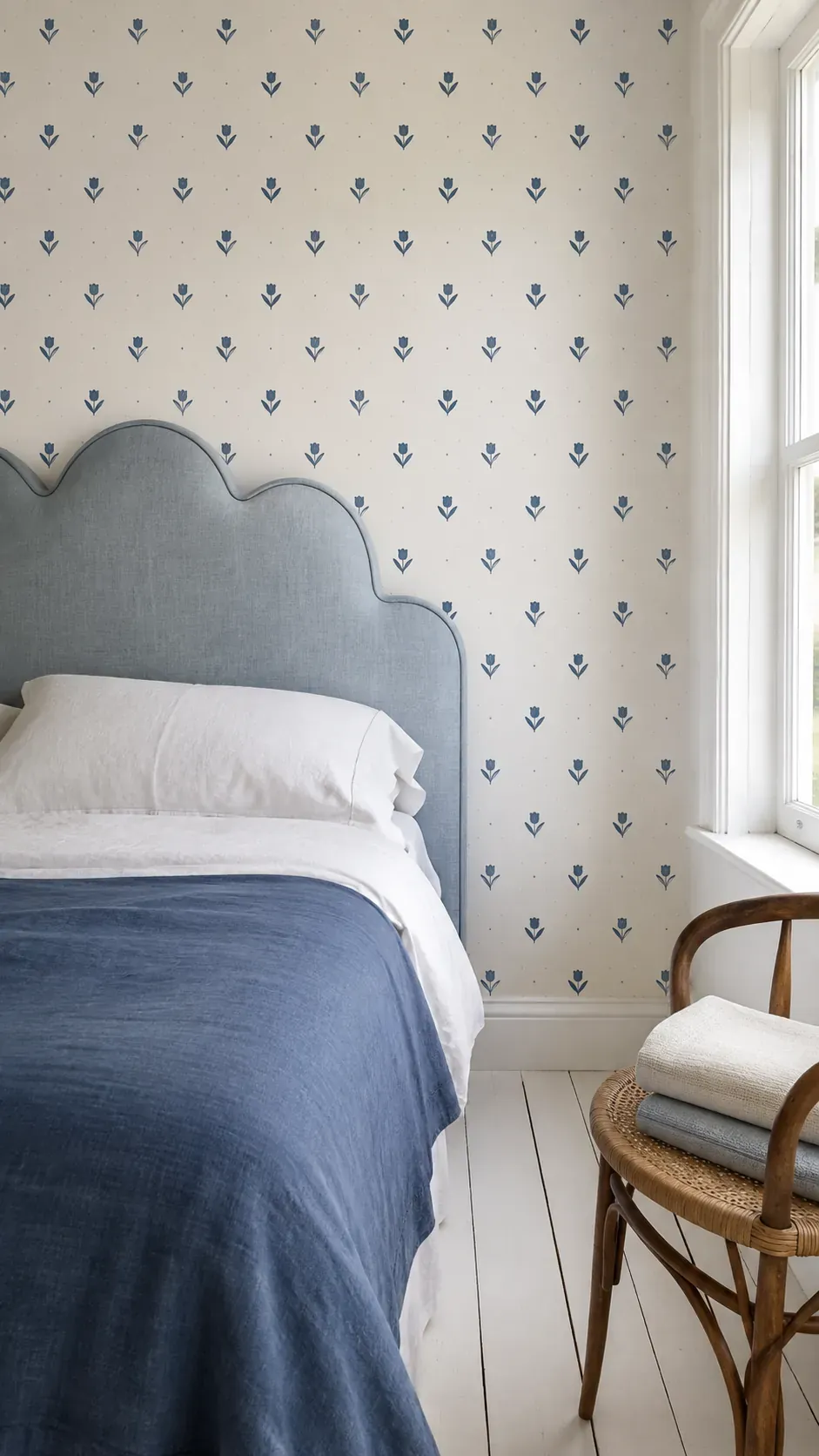
Indigo block prints with a curved headboard
An indigo block print can bridge a soft headboard outline and crisp white bedding. Choose a repeated stamped motif with some open ground so the curves of the furniture still read cleanly. Pull the blue into one useful textile, such as the bedcover, rather than scattering matching ornaments around the room. This is a good option when you want above bed wall decor to feel patterned and personal without hanging a separate picture.
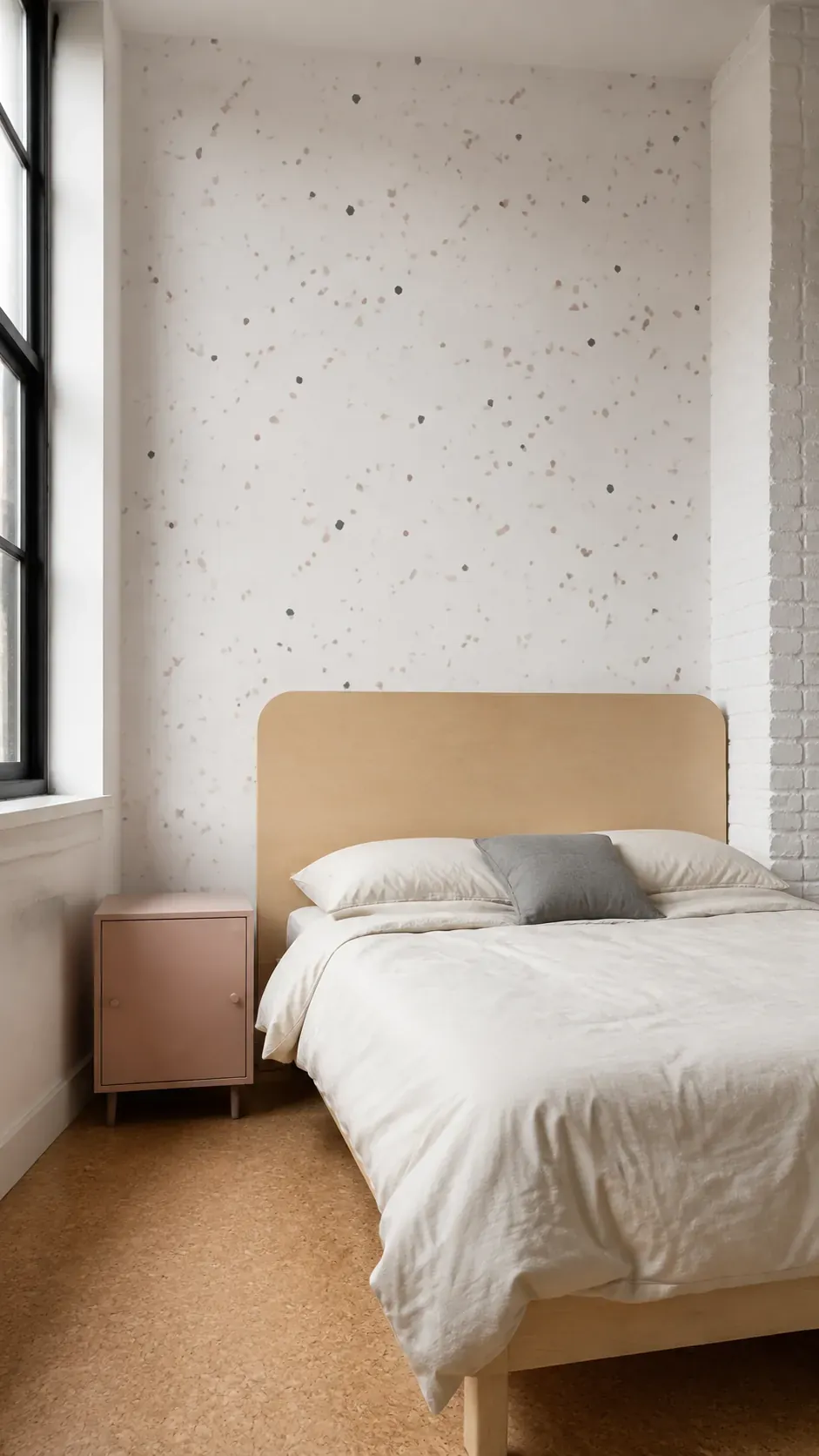
A terrazzo print for a modest modern room
A terrazzo effect paper adds scattered movement without a large central motif that must sit precisely over the bed. Keep the chips relatively sparse and select a background that works with the nearby paint. A pale maple headboard and solid bedding help the printed surface feel light. Remember that this is a visual stone effect, so choose the paper for its pattern rather than expecting the durability or texture of real terrazzo.
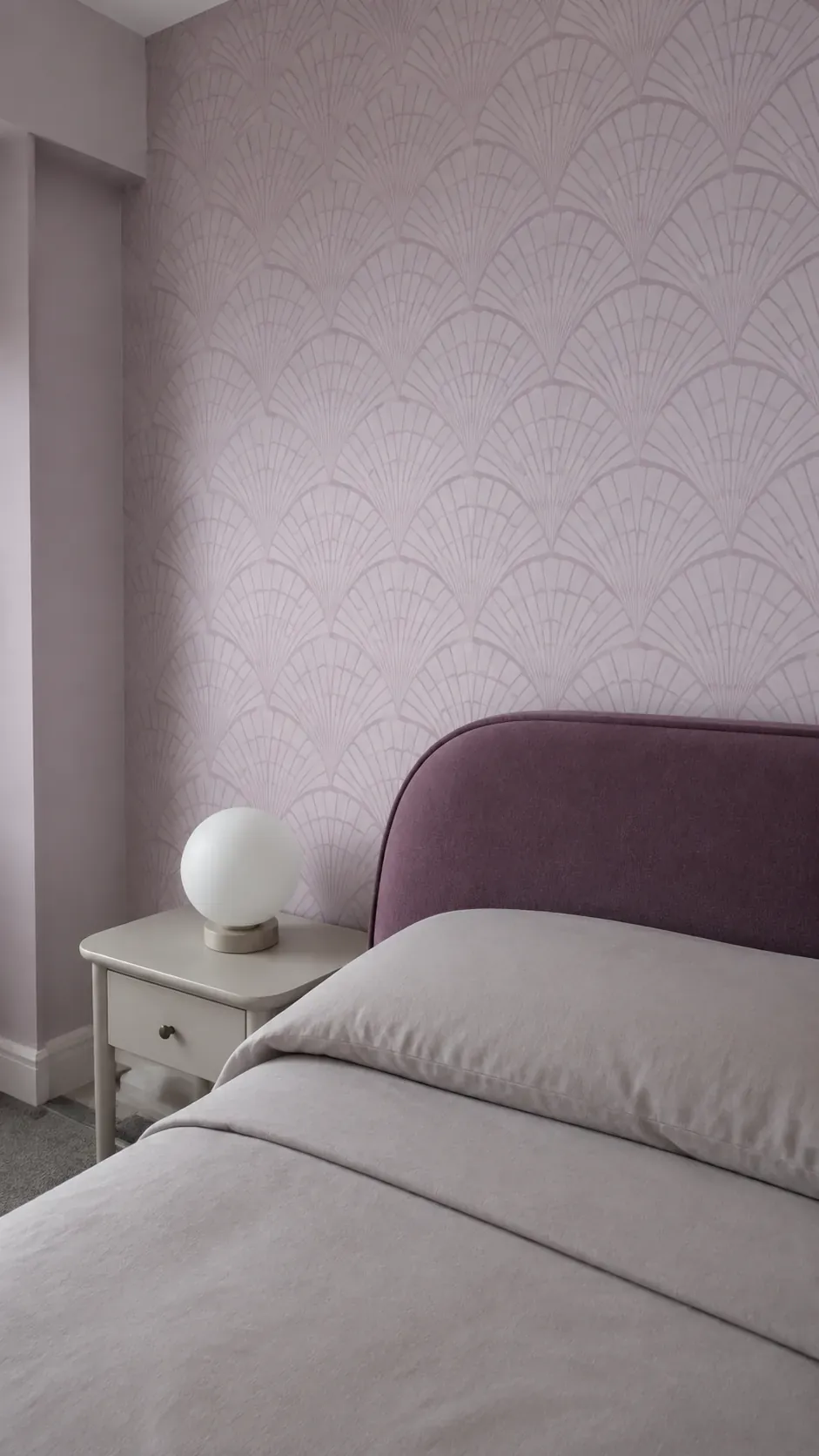
Tonal fans that change with the light
An Art Deco fan repeat can be surprisingly quiet when the motif and background are close in tone. Use a matte finish if you want the pattern to soften across the room instead of flashing under a reading lamp. A compact upholstered bed with rounded corners reinforces the gentle rhythm without copying every curve. Order a sample large enough to show a complete fan so you can judge the scale beside your headboard.
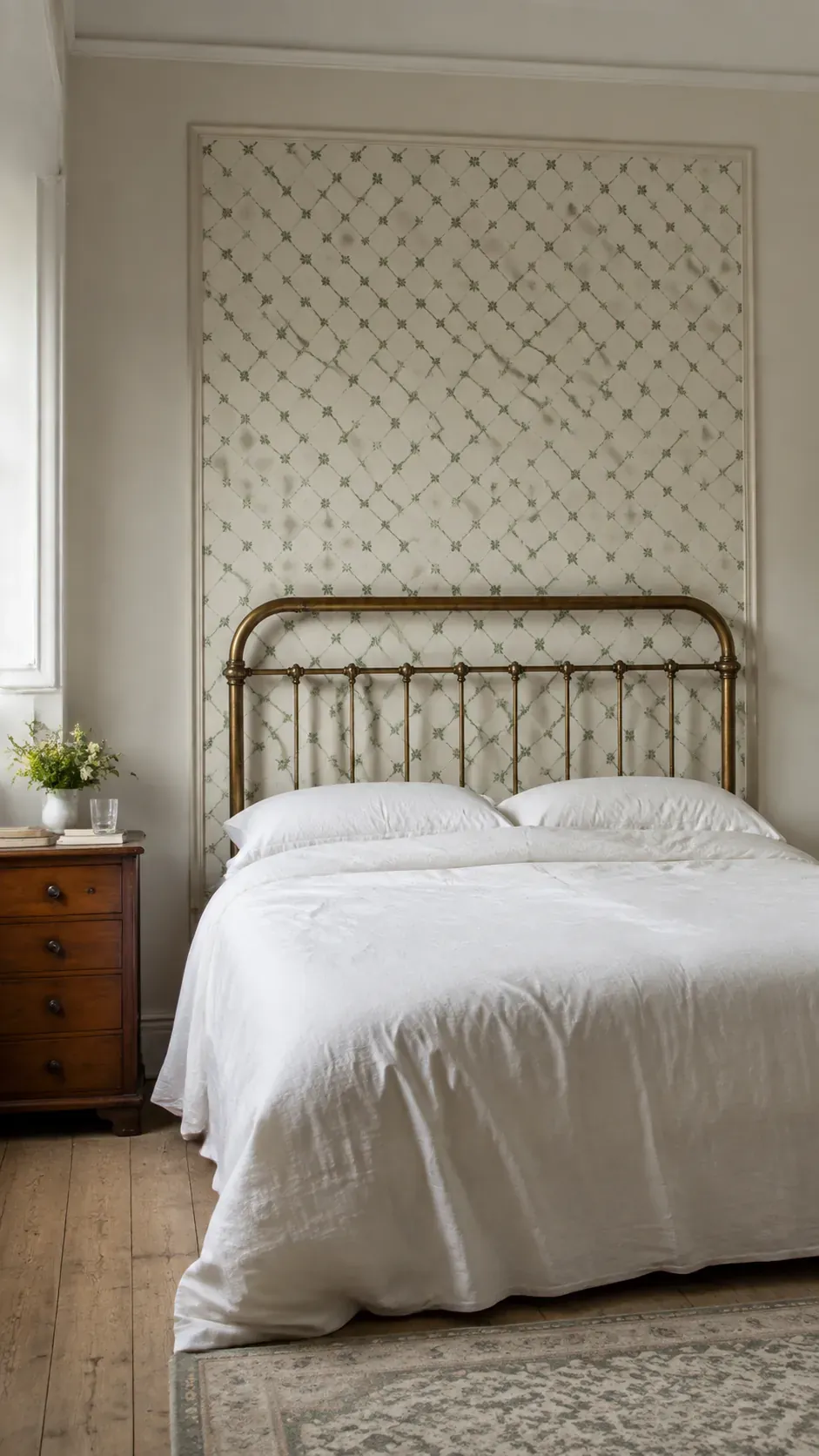
A trellis panel framed by painted trim
A framed rectangle of trellis wallpaper can define the bed area when covering the full wall feels excessive. Size the panel against the whole headboard and leave a deliberate painted border rather than a thin accidental sliver. The trim creates a physical edge, so plan its thickness, attachment, and finish as part of the project. Renters should get permission for both the covering and trim instead of assuming a smaller application is automatically removable without damage.
A linen look when the headboard already has character
A quiet linen effect wallpaper behind a headboard adds depth when furniture or bedding already supplies the stronger shape. Look at the undertone against the actual upholstery: a gray beige paper may make a pink beige bed look more pink. Prepare the wall and test the chosen product as directed, especially if considering peel and stick paper over existing paint. Choose the sample you still enjoy under your usual bedside lamp, because that is the room you will live with after the decorating photos are taken.