What Size Wall Decor Goes Above a King Bed
A picture can be large on its own and still look undersized above a broad headboard. The dimension that matters is the whole arrangement, including frames and the gaps between them. Measure that span against the bed before deciding whether you need one piece, a pair, or three.
Start with the actual headboard width
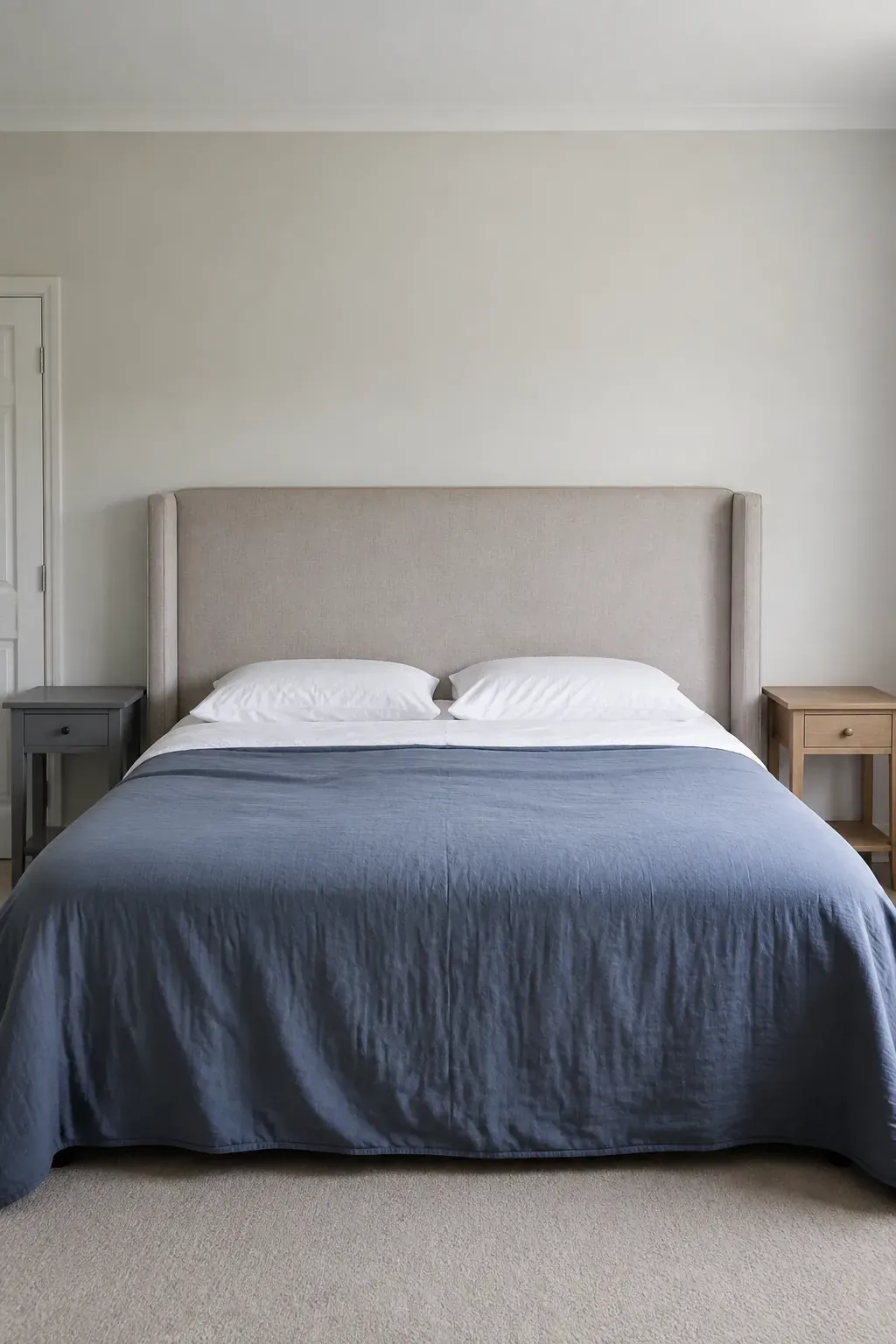
A useful starting point is a total wall decor width of roughly two thirds to three quarters of the headboard width. Treat that range as a styling trial, not a fixed rule or a mounting specification. Measure the headboard from its outside left edge to its outside right edge, including wings or projecting trim. If there is no headboard, use the visible bed frame width as your first reference.
A standard US king mattress is usually 76 inches wide, but its headboard may be wider, and king sizes differ between countries. Using 76 inches as an example gives a trial decor width of about 51 to 57 inches. An 84 inch headboard gives a trial range of 56 to 63 inches. Those numbers explain why one small print often feels lost above a broad bed even when it looked generous in a shop.
Choose a single piece by its outside dimensions
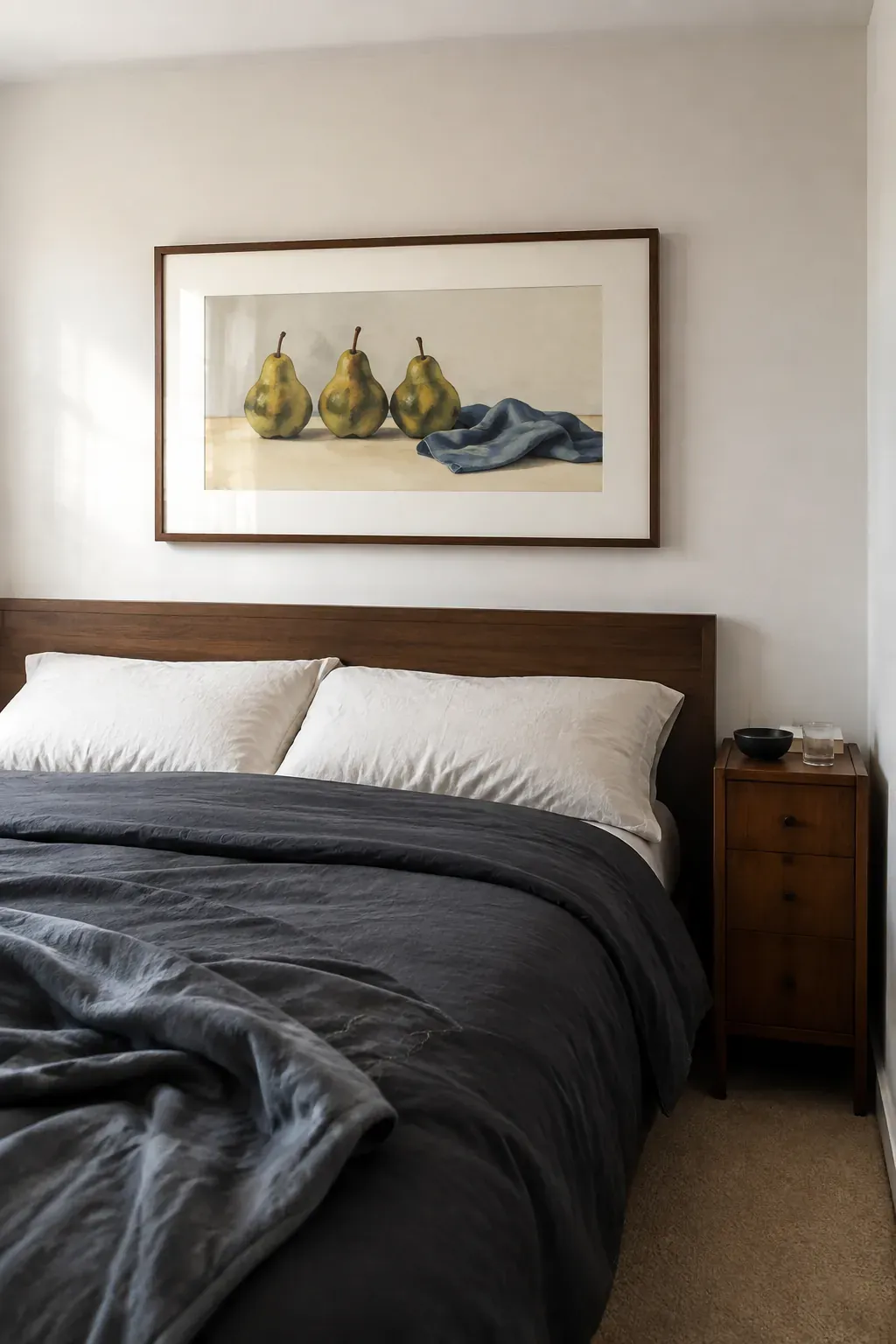
For one large art piece above a king bed, compare the full frame width with your trial range. A print advertised as 24 by 36 inches may be listed by paper size, and a mat plus frame can add several inches to the final footprint. Confirm which dimension is width when ordering a horizontal piece. Do not assume the larger number always describes how the finished picture will hang.
A horizontal outer frame around 54 inches wide is a reasonable paper test over a 76 inch reference width. Its height might be modest or generous depending on the wall opening, so test a shallow rectangle before committing to a tall one. A wide mat can give a small image more presence, but a mostly white print will still feel lighter than a dark painting of the same outside size.
Include the gap when planning two frames
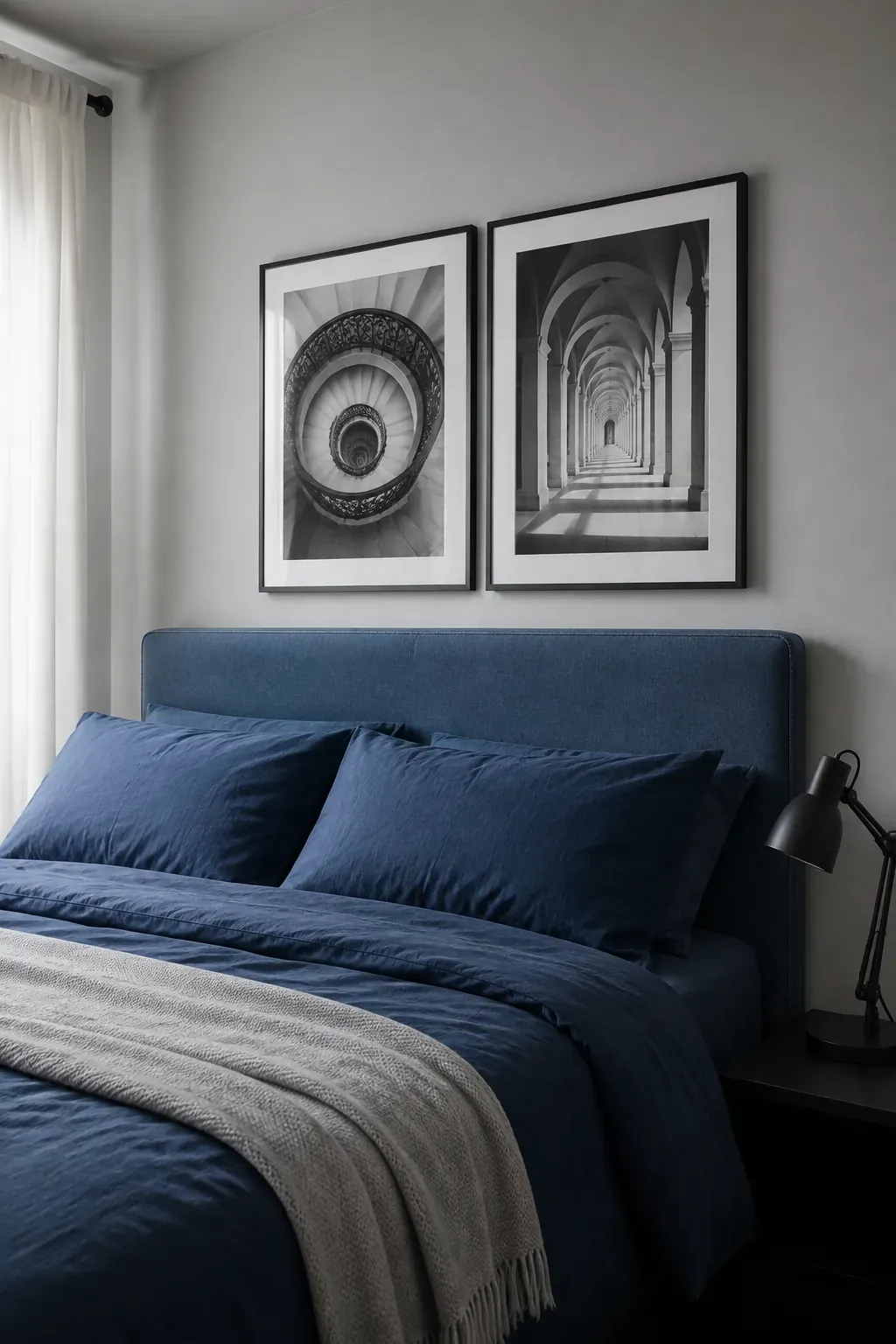
Treat a pair as one complete arrangement. Add both outside frame widths and the space between them to calculate the span. Two frames that are each 24 inches wide with a 3 inch gap make a 51 inch grouping. That can work as a starting test over a standard US king width without pushing the individual frames toward the bed edges.
Keep the gap deliberate and consistent, then center the midpoint of the entire pair over the bed. Widening the gap too far makes two pictures feel disconnected, even when their combined span matches a formula. A shared frame finish or related subject can connect the pieces while allowing the images themselves to be different.
Size three pieces as a group
Three portrait frames above a king headboard can offer useful width without one oversized purchase. For example, three frames with an outside width of 16 inches each and two 3 inch gaps span 54 inches. The calculation changes if 16 inches describes only the print inside the frame. Write down the outer dimensions before buying so the final arrangement does not unexpectedly grow.
Align the tops for a clean rhythm when the frames share the same height. If their heights differ, test the complete outline on the wall rather than trying to center each picture separately at eye level. Keep neighboring lamps and curtain edges outside the grouping so the display still reads as one unit above the bed.
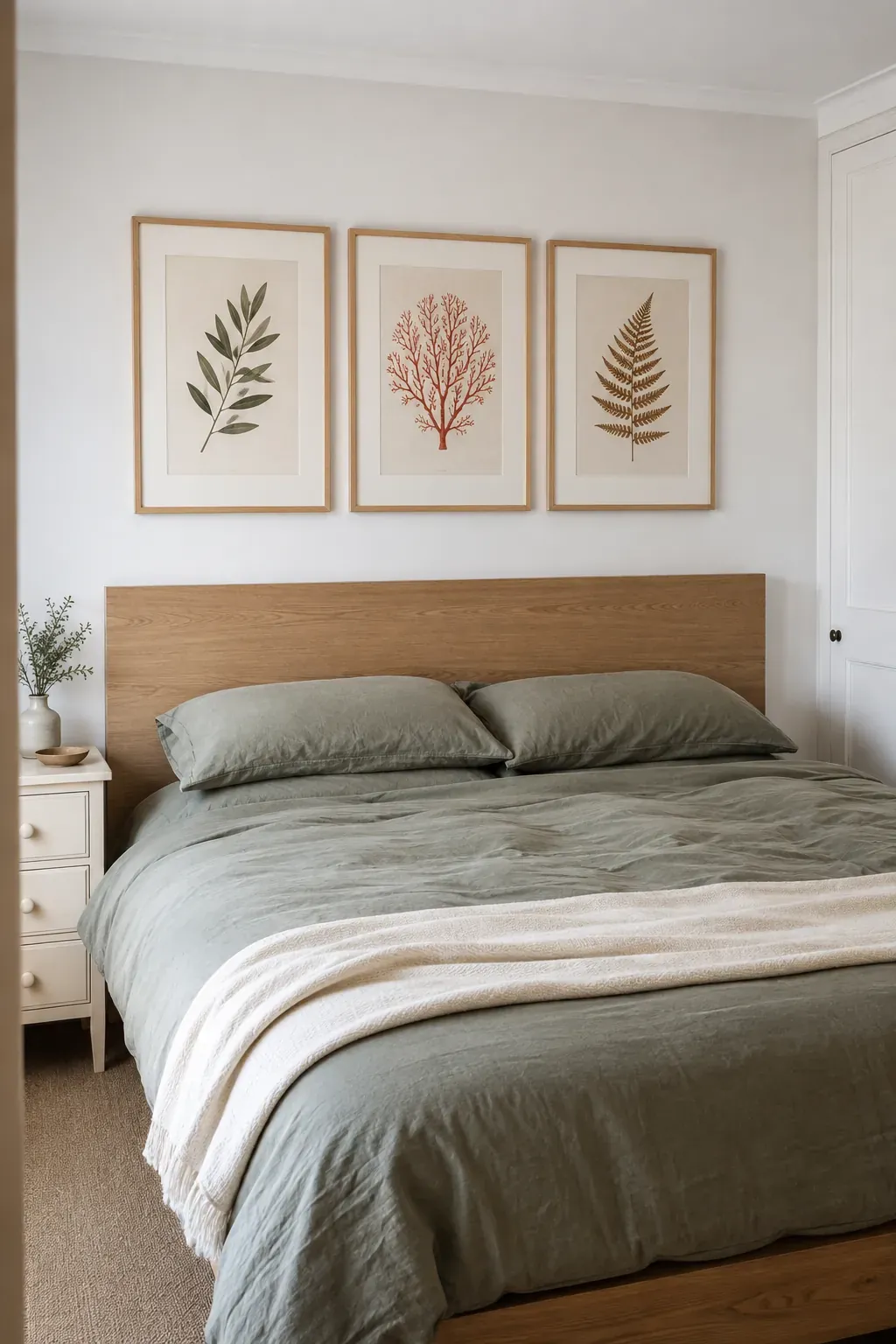
Fit the height to the space above the bed
A common visual starting point is to test the bottom of the decor roughly 6 to 10 inches above the headboard, then adjust for the actual room and your movement. This is not a safety clearance: sit up against your usual pillows and check that no edge intrudes into your head or arm path. A low headboard may need a larger gap, while a tall one can leave room for only a shallow horizontal piece. Do not force a standard eye level hanging rule into a space already occupied by furniture.
Leave breathing room below ceiling trim and keep a useful distance from sconces. If a large frame feels wedged between the headboard and ceiling, reduce its height or use a suitable lightweight textile instead. Mount every item using hardware appropriate for its weight and the wall construction, following the maker instructions. Where falling objects are a concern, such as earthquake prone homes, avoid heavy or glass decor above the sleeping area and seek suitable installation advice.
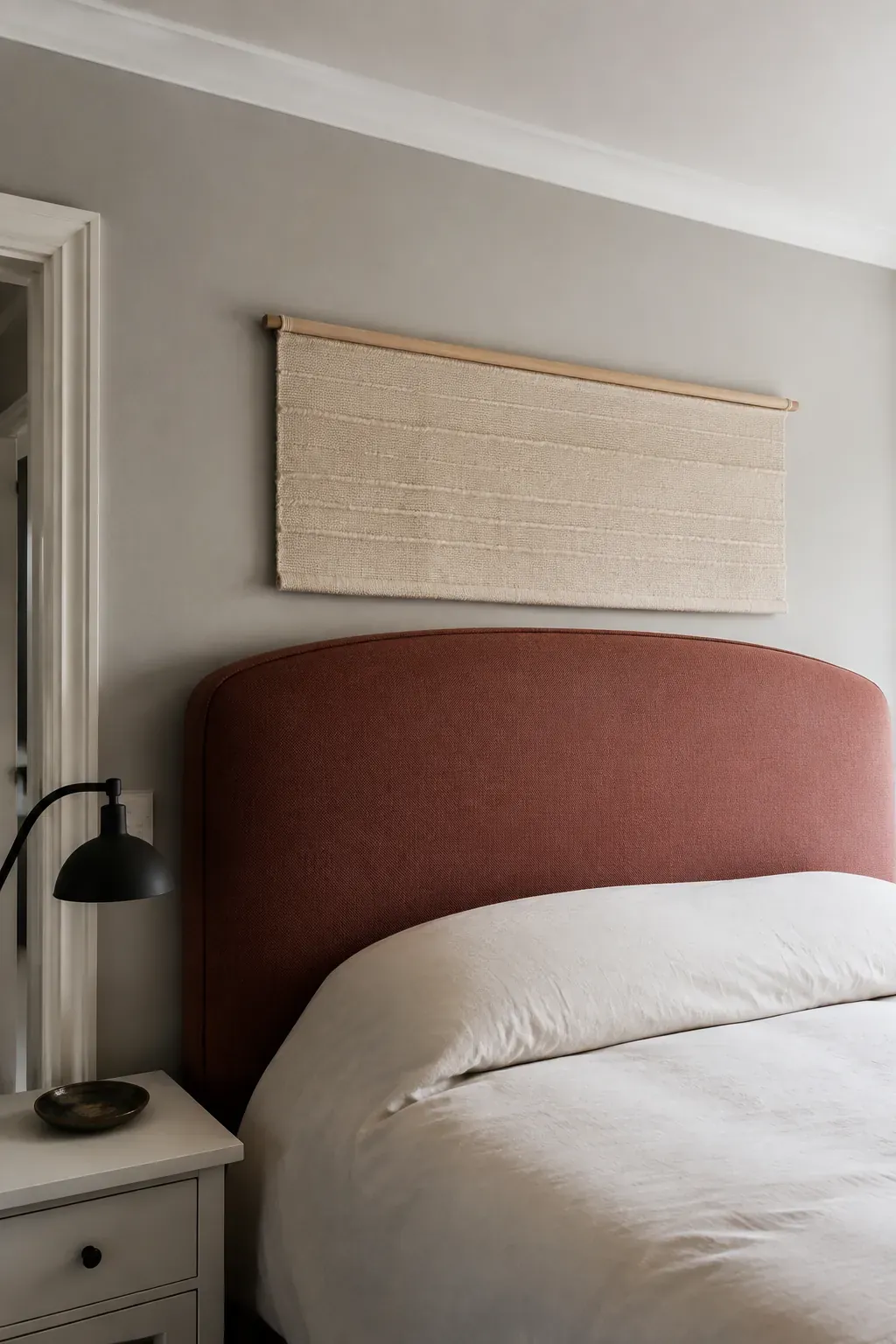
Make a paper test before you order
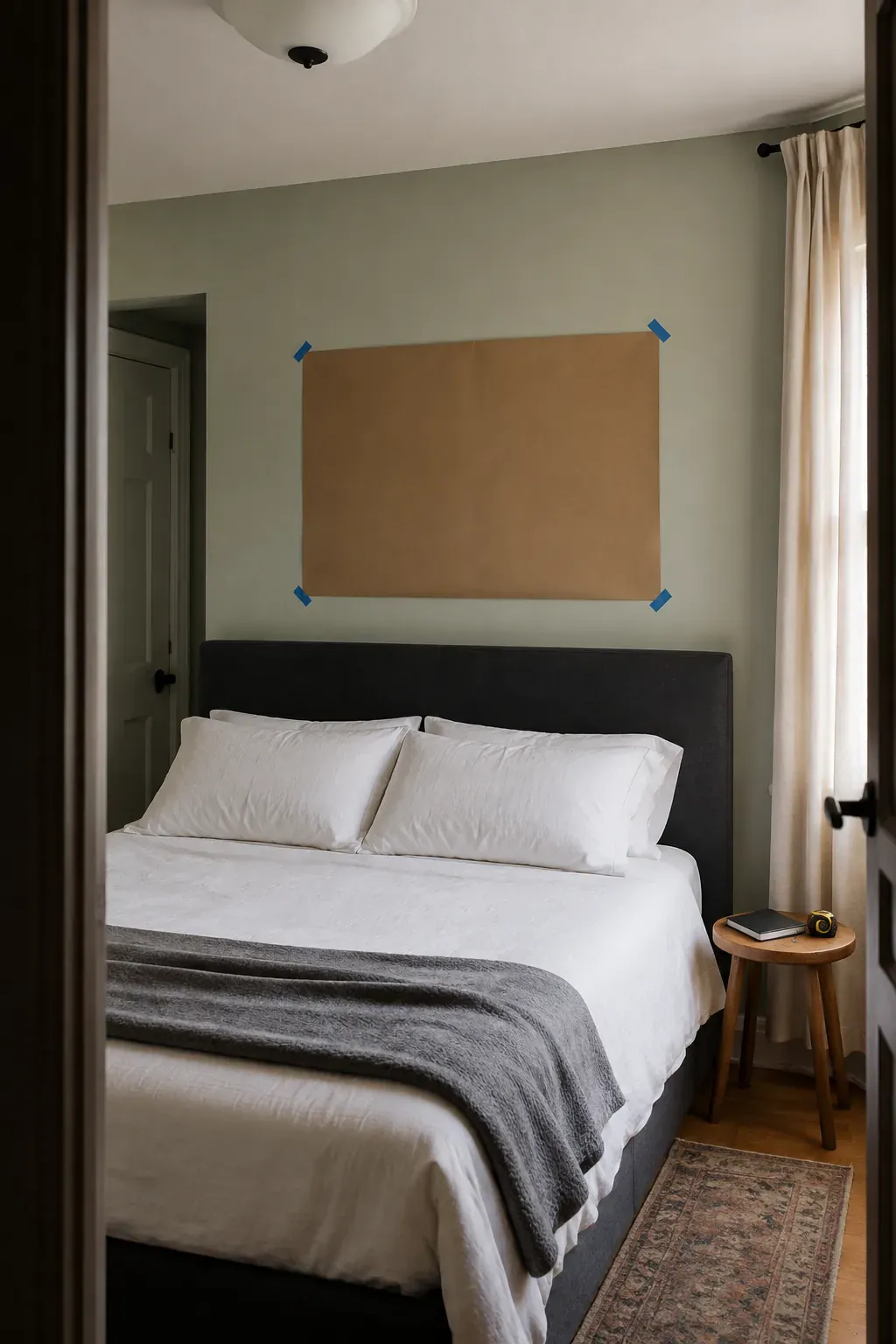
Cut paper to the full outside size of the frame or grouping you are considering, and attach it temporarily using a method compatible with your wall finish. For multiple pieces, include the real gaps rather than placing the paper edges together. Check the layout from the bedroom doorway, from both sides of the bed, and with your usual evening lighting. A phone photo can help reveal whether the arrangement is centered on the bed or accidentally on the whole wall.
When the bed sits off center because of a door, window, or alcove, keep the decor connected to the headboard first. Reduce the width if the paper collides visually with curtains or lighting, even if a percentage suggests going larger. Take the paper down and record the final outside dimensions and spacing once the arrangement feels right. Buy the size that works in that room, not the one that merely satisfies the fraction.