What Size Wall Decor Goes Above a Queen Bed? A Practical Guide
A picture can look generous in a shop and surprisingly small once it sits above a bed. Measure the headboard first, then compare the full outside width of the decor with that measurement. For many queen beds, an arrangement around 40 to 48 inches wide is a sensible place to start testing, with the final choice shaped by the headboard and available wall space.
Start with the actual headboard width
A useful starting point is wall decor about two thirds to three quarters as wide as the headboard. For a 60 inch reference width, that means roughly 40 to 45 inches across, including the frame. A queen mattress in the United States is typically 60 inches wide, but a headboard can extend beyond it, so measure the furniture you actually see. A 66 inch headboard gives a starting range of about 44 to 50 inches. Treat those numbers as a visual guide rather than a requirement, especially with very wide upholstered panels.
Choose one piece by its outside frame size
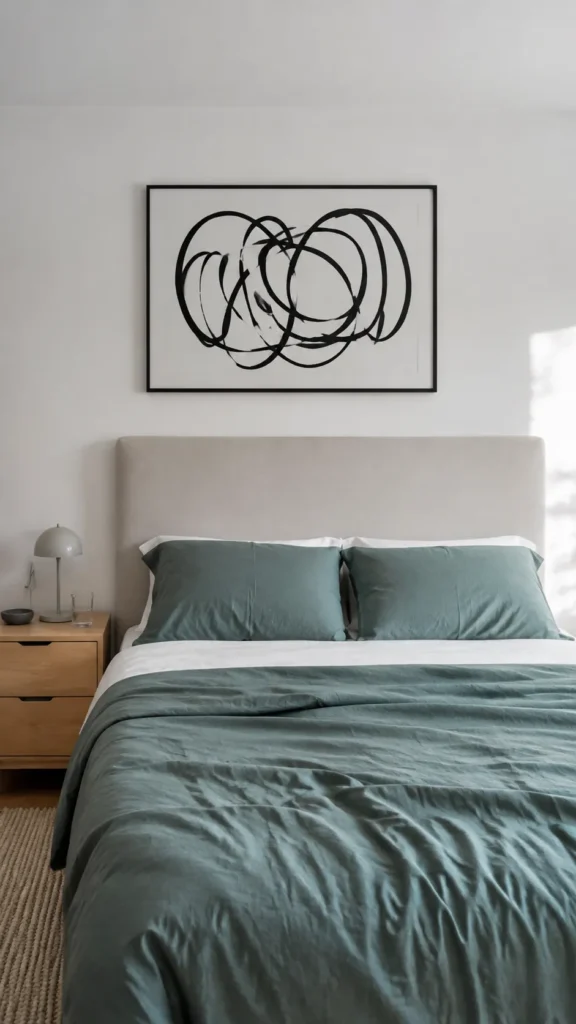
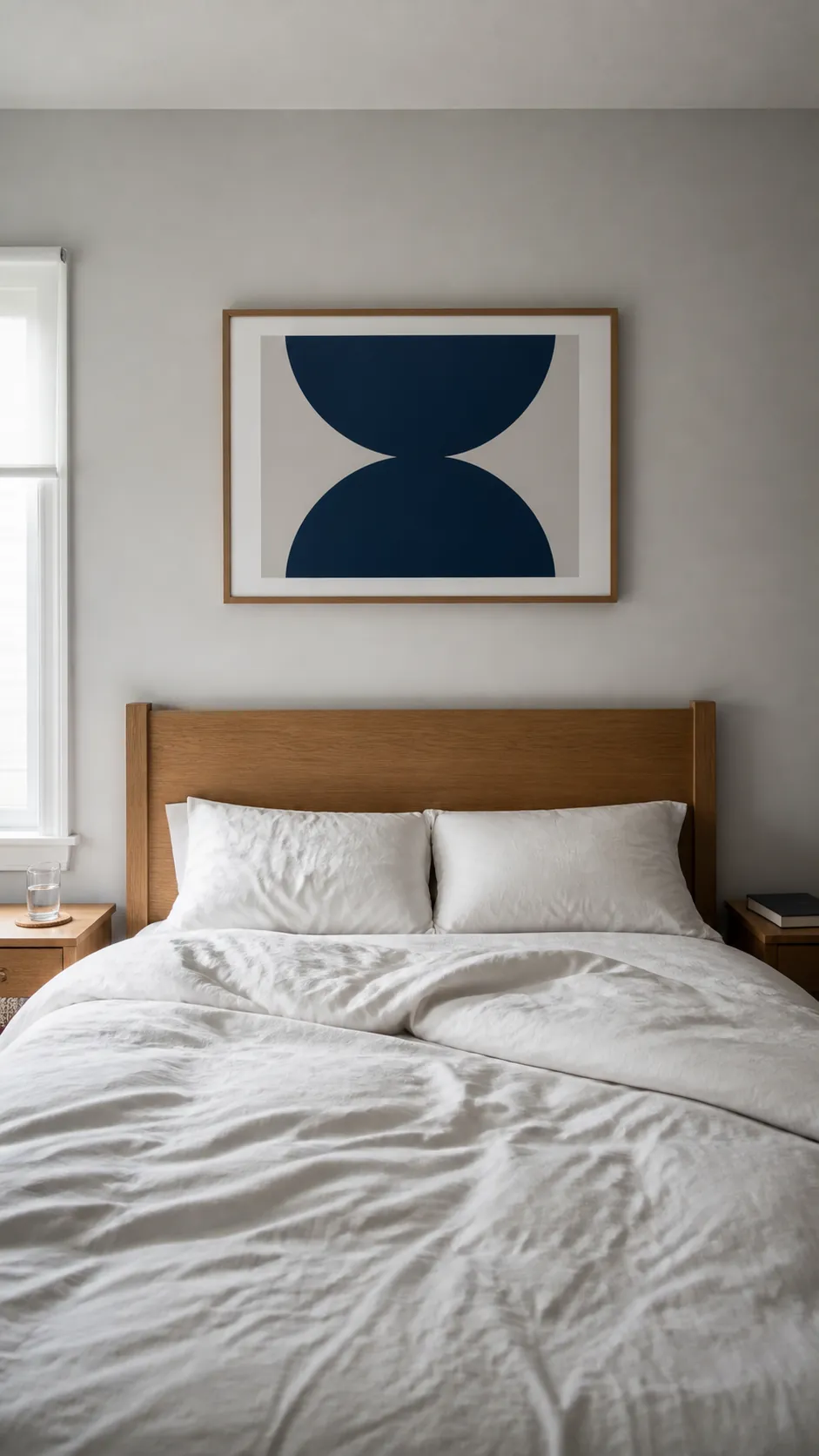
For a single picture, start your search around 40 to 48 inches wide, then compare that width with your headboard. A print advertised as 24 by 36 inches may become noticeably larger once a mat and frame are added. Read the outer dimensions before buying, and check which measurement is the width in the displayed orientation. A horizontal composition usually fills the space above a queen bed more easily than one narrow portrait.
Count the gaps when grouping frames
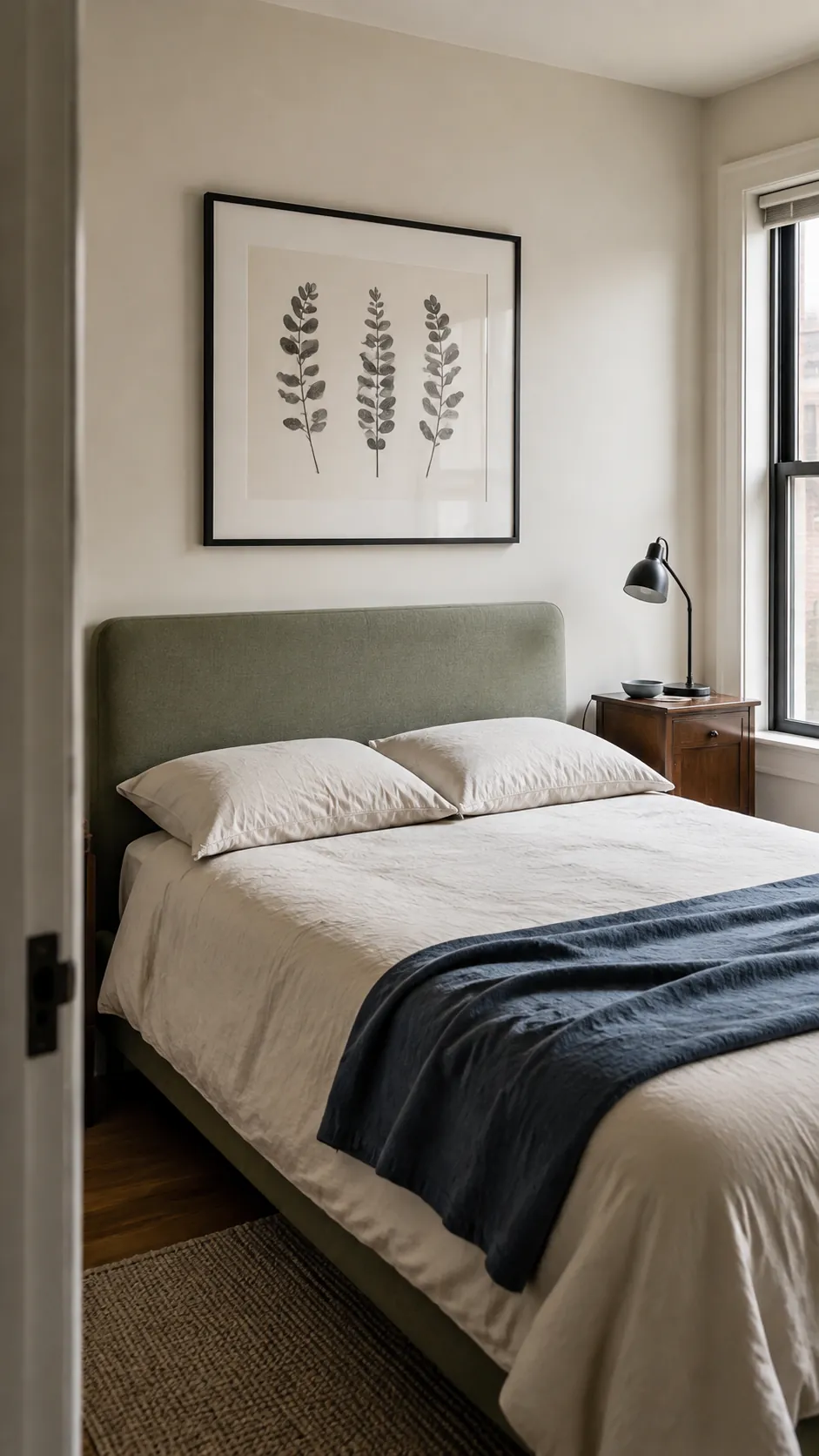
For multiple frames above a queen bed, the total arrangement width matters more than the size of any one picture. Two frames with outside widths of 20 inches and a 3 inch gap occupy 43 inches together. Three frames that are each 14 inches wide with two 2 inch gaps span 46 inches. Keep the gaps consistent so the collection reads as one composition.
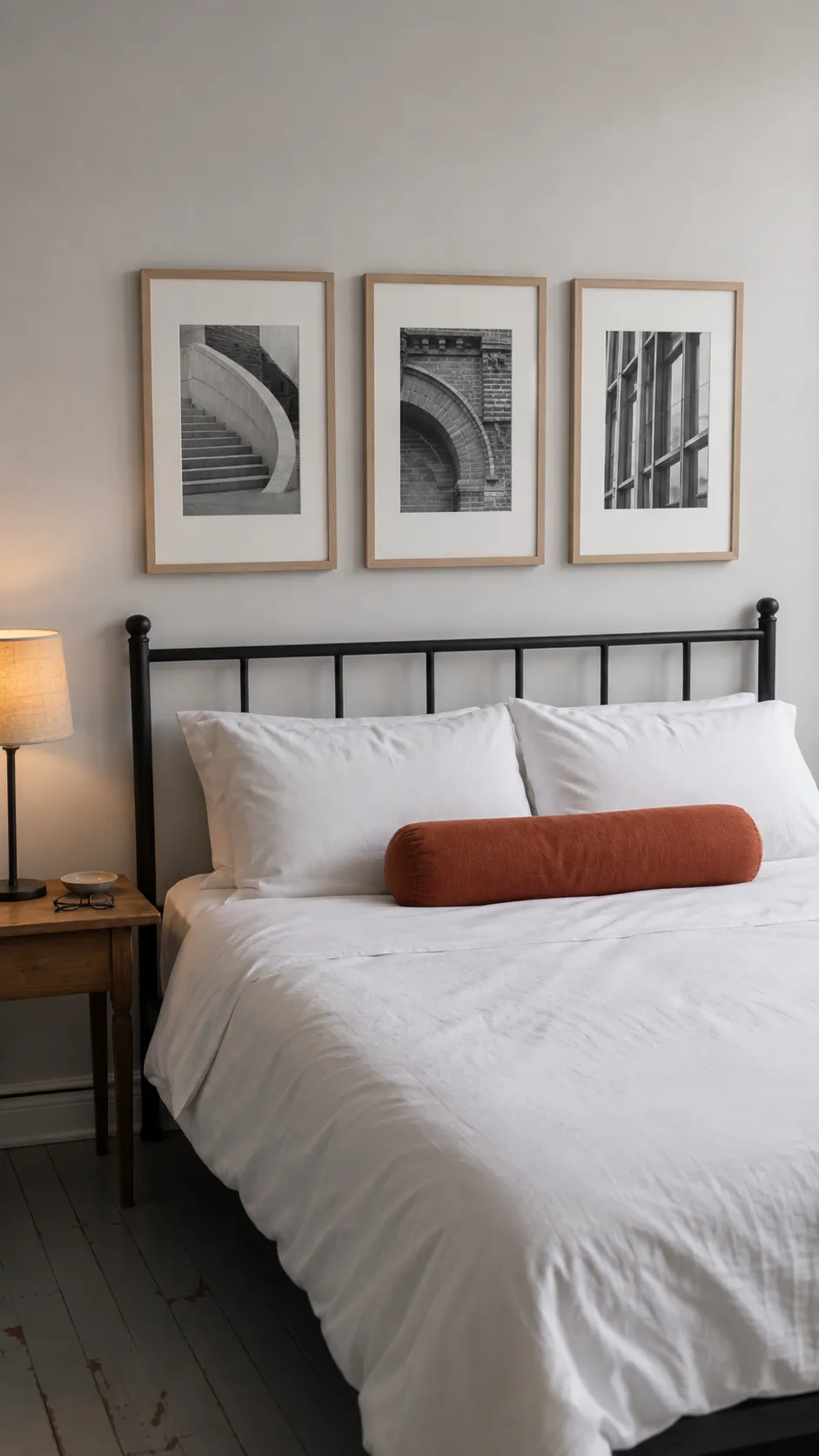
Set the bottom edge from the headboard
Try positioning the bottom of the decor about 6 to 10 inches above the headboard as an initial visual test. That gap often connects the art to the bed more naturally than applying a fixed floor height to every bedroom. Sit up against your usual pillows before committing, because comfortable clearance matters more than a styling number. With a tall headboard, a shallow horizontal piece may fit better than a square picture that crowds the ceiling. If the available strip of wall feels squeezed, leave it undecorated or shift the artwork to another wall.
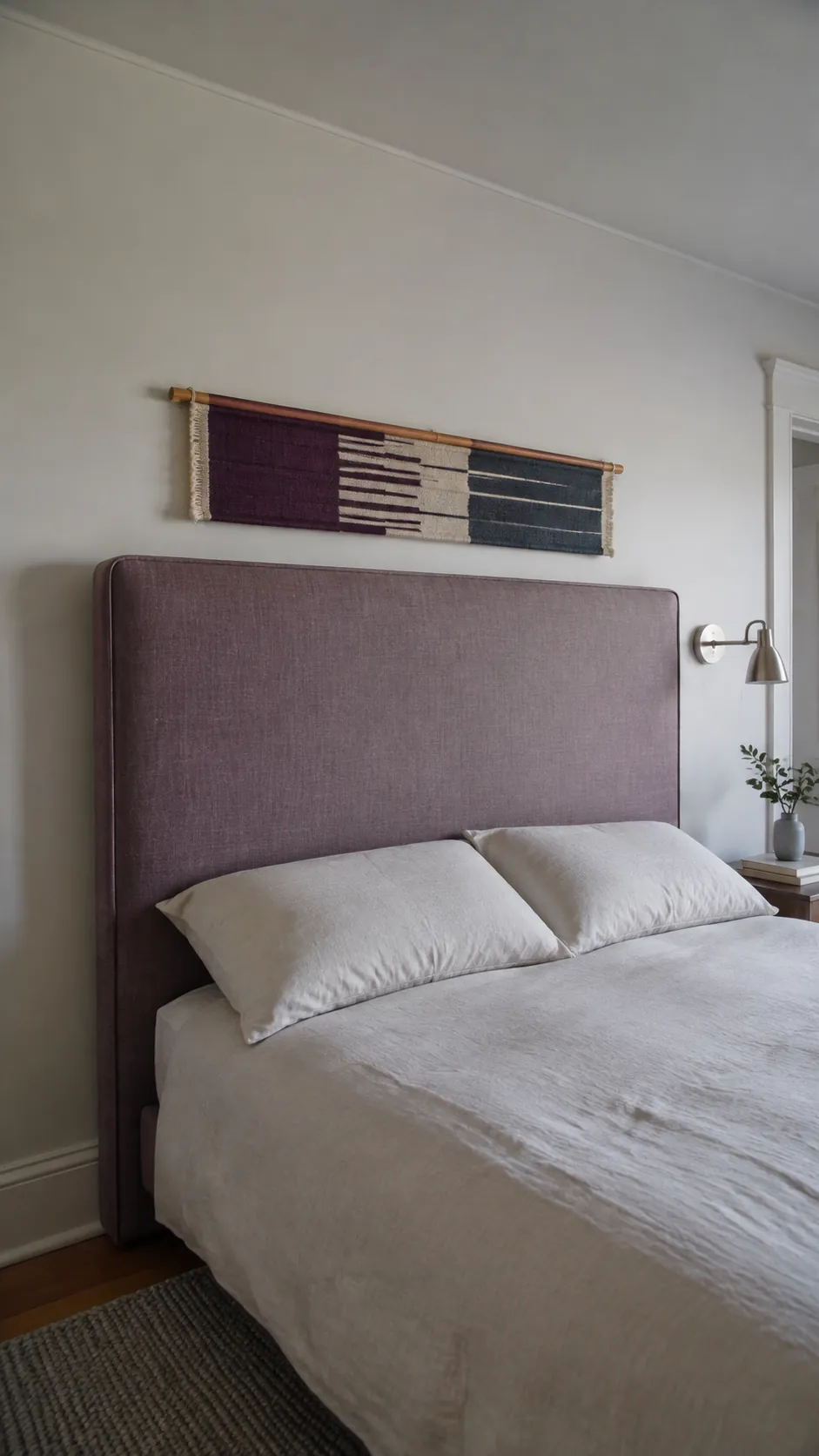
Adjust visual weight to the room
A pale drawing with a generous white mat can feel quieter than a dark canvas of the same outside size. If a correctly sized picture still disappears, try stronger contrast or a narrower mat before increasing its width. In a small bedroom, let bedside lamps and windows keep their own breathing space instead of filling the entire wall. Center the arrangement over the bed unless another intentional layout explains the offset. The aim is a convincing relationship between furniture and decor, not equal empty wall on both sides of the room.
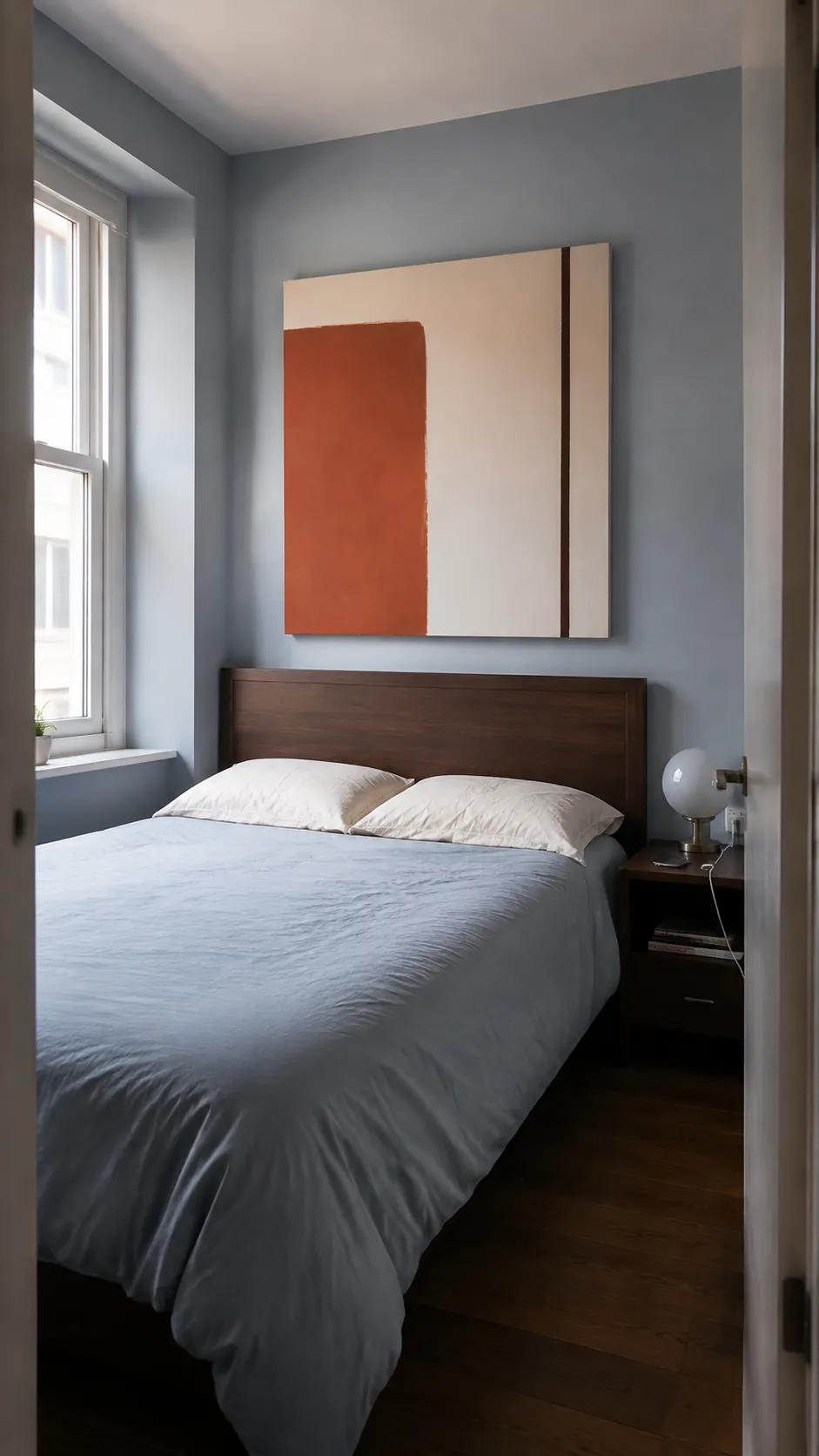
Test a paper outline before buying
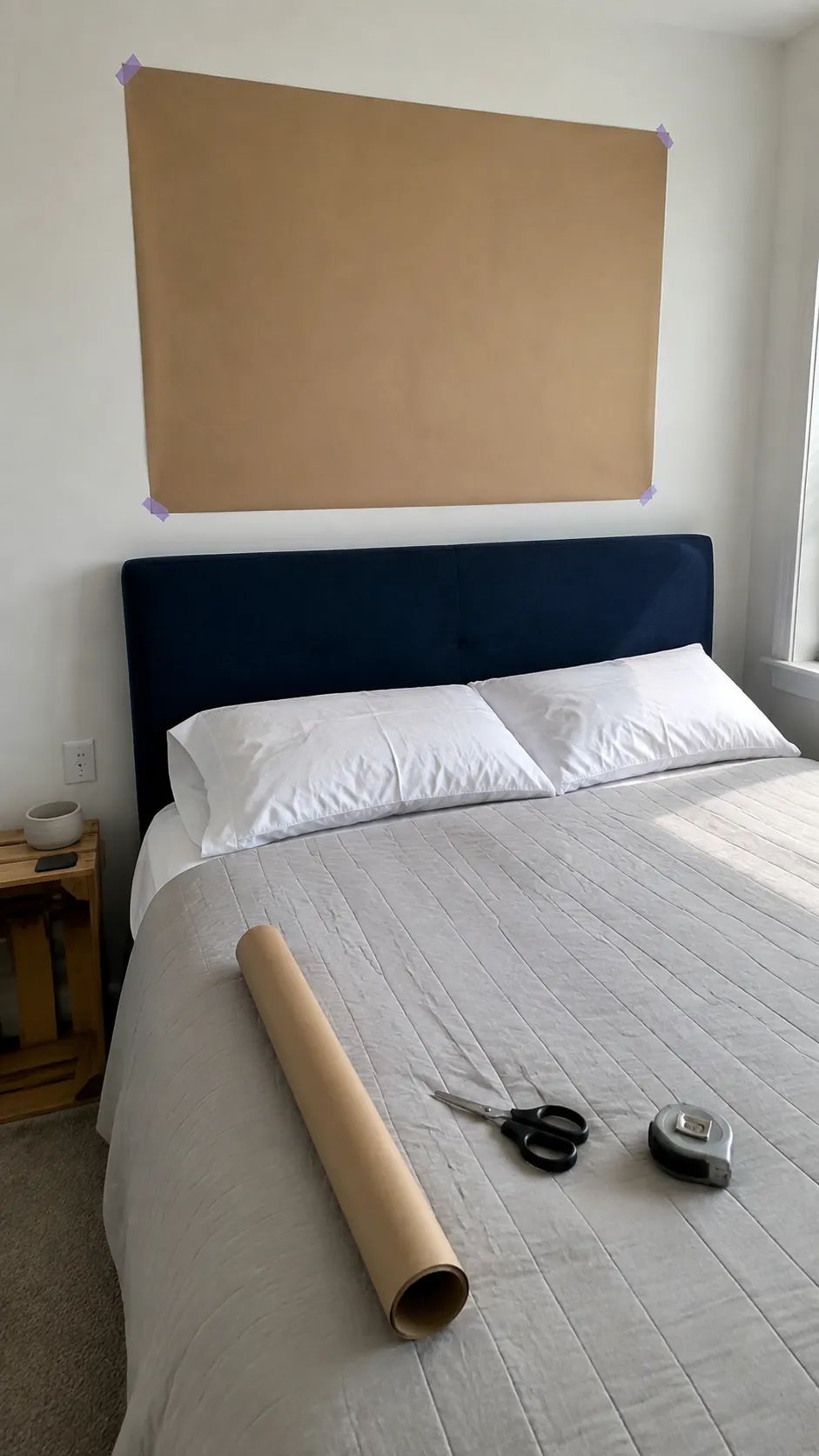
Cut paper to the exact outside dimensions of your proposed decor and place it above the bed with a wall suitable temporary method. Include the spaces between pieces if you are planning a group. Look from the doorway and from your usual position in the room, then compare two sizes before ordering. Choose mounting hardware for the actual wall material and total object weight, following the hardware and frame manufacturers’ instructions. For anything heavy or glazed above a sleeping area, consider a lighter alternative and get qualified installation advice when the fixing is uncertain.