15 Built In TV Wall Ideas for Storage That Works
A beautifully fitted wall can become frustrating if a receiver overheats or the next television will not fit. Start with your actual equipment, the view from the sofa and the items you need to store. Then let the cabinet layout solve those everyday needs before choosing door colors or decorative shelves.
A long bank of low drawers
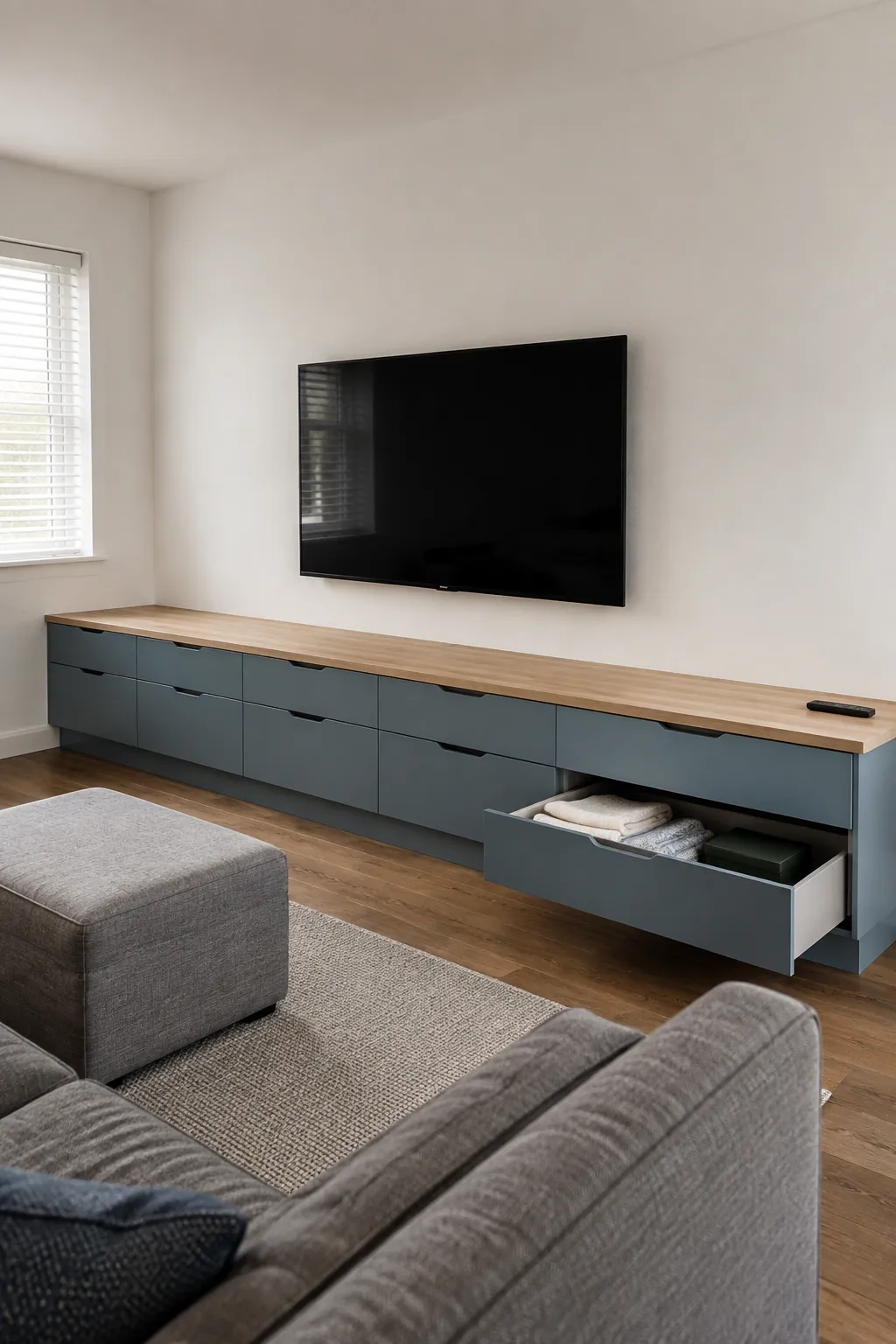
Keep the upper wall open and put the storage below the television when the room needs breathing space. Wide drawers are useful for games, blankets and small accessories that become untidy on shelves. Measure their internal dimensions against what you own, not just the cabinet’s outside width. A continuous top and fitted end panels give a low unit a built in finish without surrounding the screen.
A library wall with a quiet center
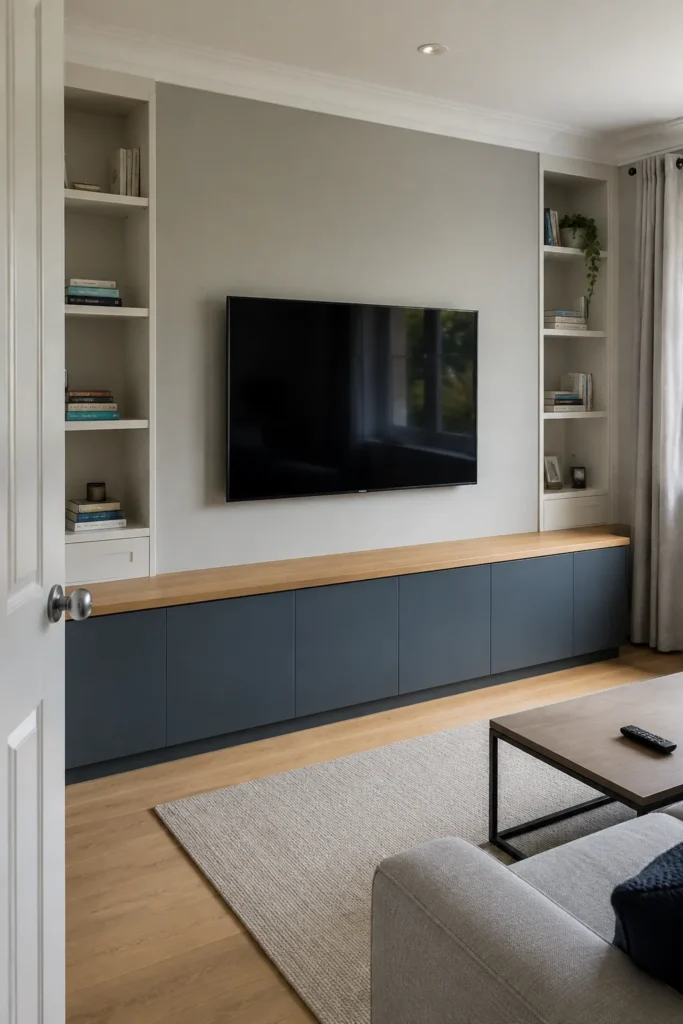
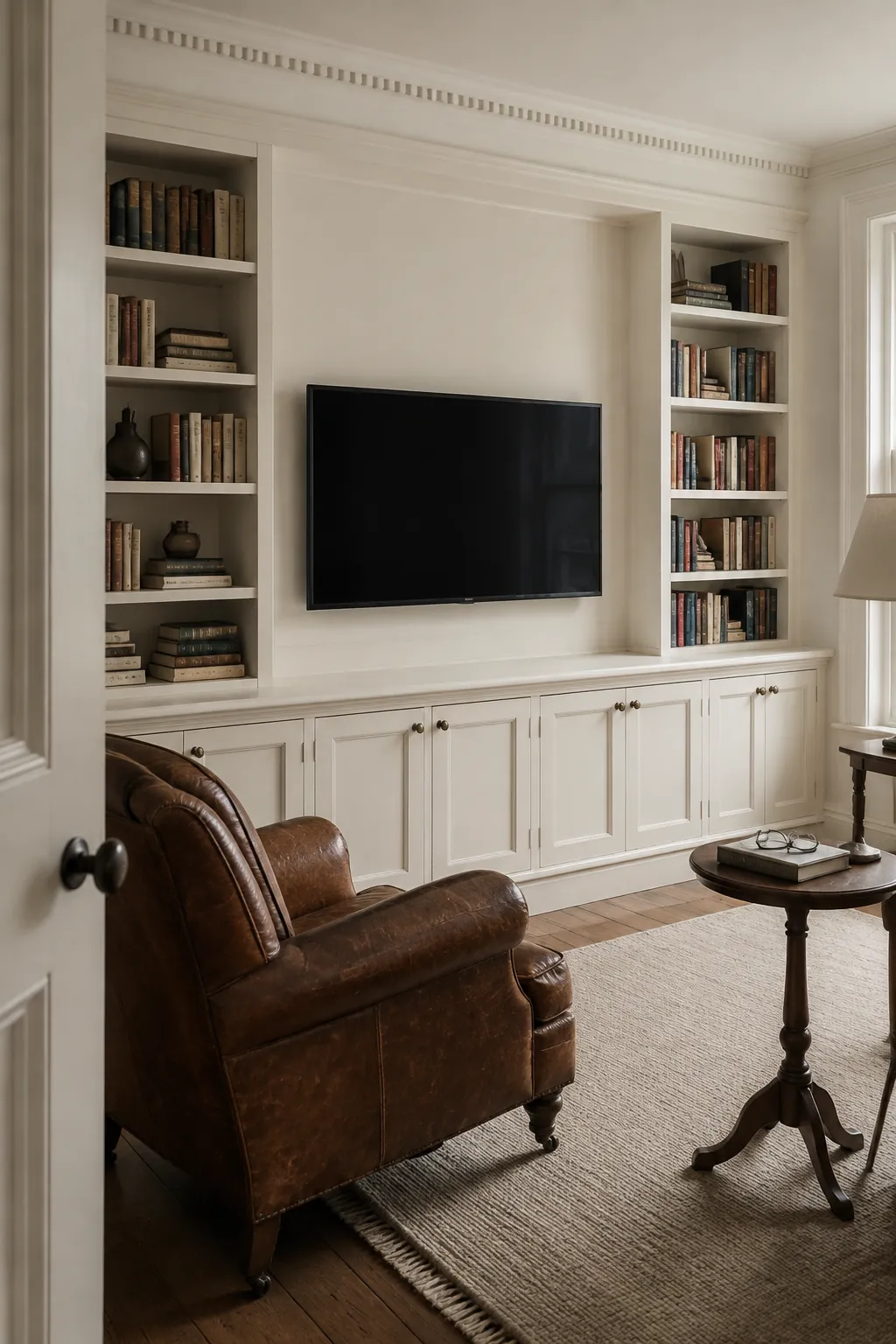
Bookshelves can frame a television without making it the only purpose of the wall. Leave a broad plain center panel so book spines do not crowd the screen edges. Choose shelf spans and thicknesses for the expected book load to avoid sagging. Closed lower cupboards are useful for less attractive items that do not need to be displayed.
An asymmetric storage tower
One tall cabinet can balance a television when a doorway or window prevents a symmetrical layout. Put the tower where its depth will not narrow the main walking route. A long low base helps the separate elements read as one composition. This works best when the asymmetry responds to the room rather than adding random shelf shapes.
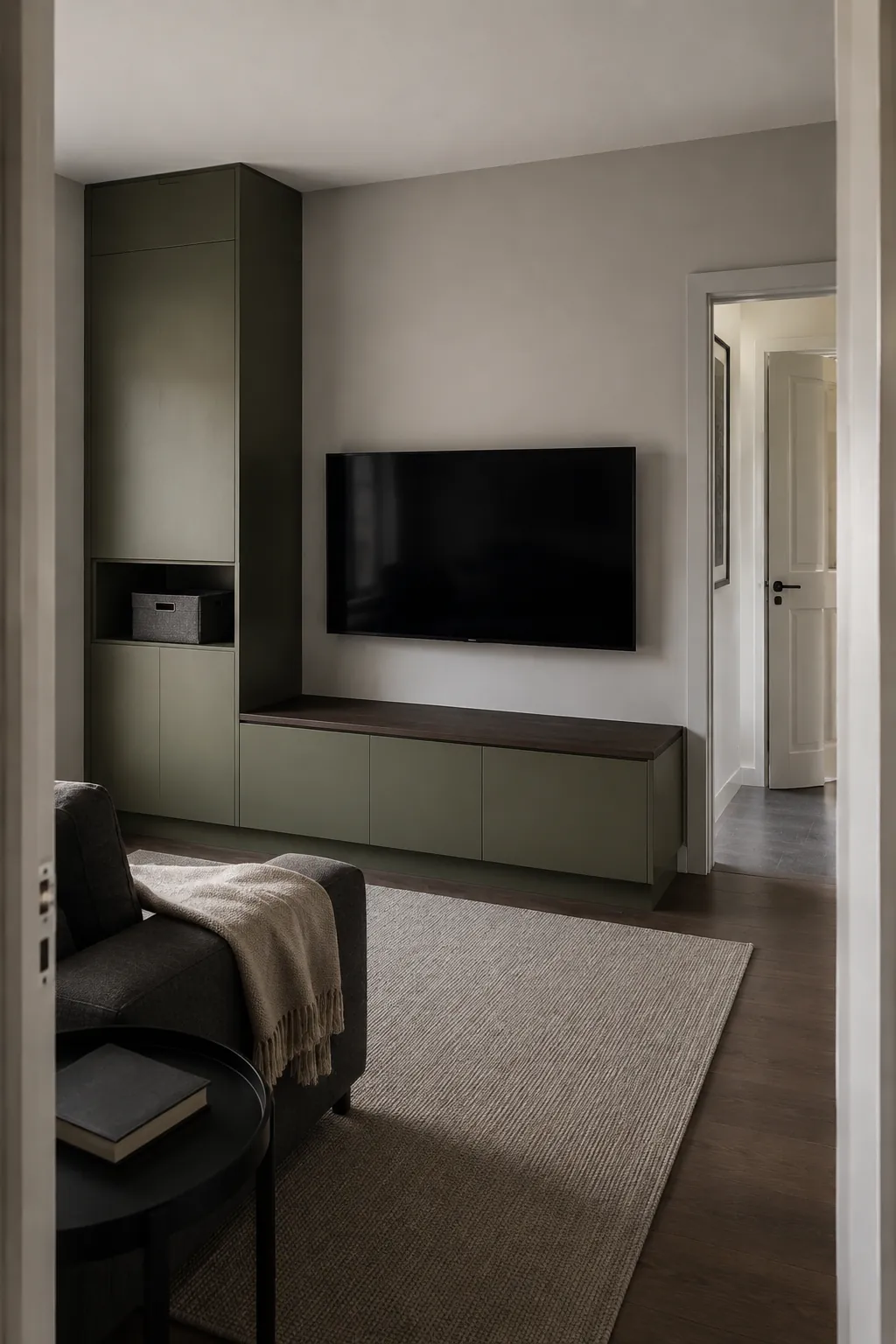
A media unit that meets a window seat
Extend the lower cabinetry into a window seat to connect viewing and reading areas. Design the seat for comfortable height and depth instead of assuming the media cabinet dimensions will suit a person. Keep window operation and any nearby radiator or ventilation path unobstructed. Separate seat storage from warm electronics so blankets do not block equipment airflow.
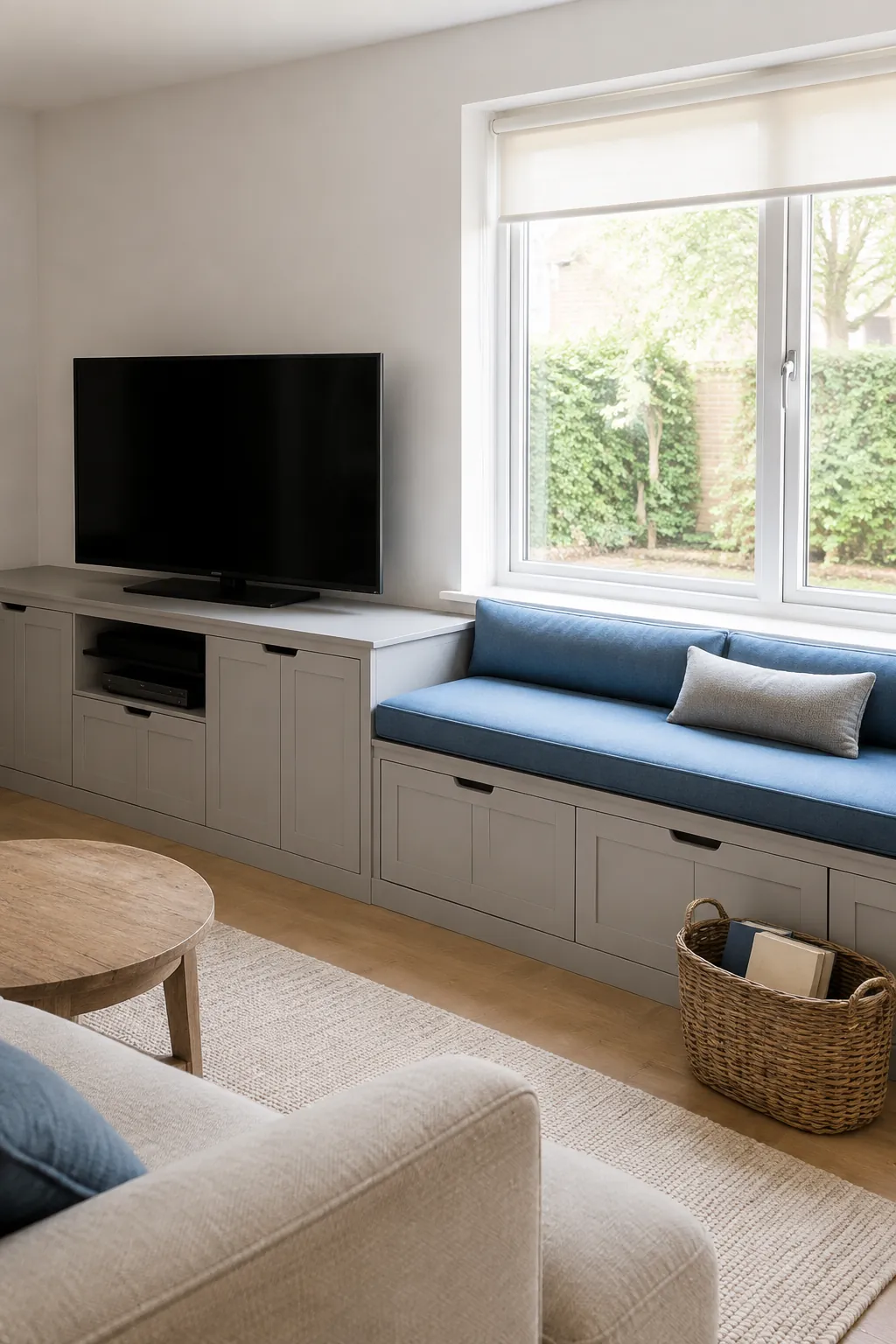
A discreet desk at one end
A desk extension can help a living room serve as a work area without adding another freestanding table. Give the desk proper legroom and place drawers outside the chair’s working space. Plan power and cable access before the cabinet backs are fixed. Keep the desk clear of the television viewing path so work and relaxation can coexist.
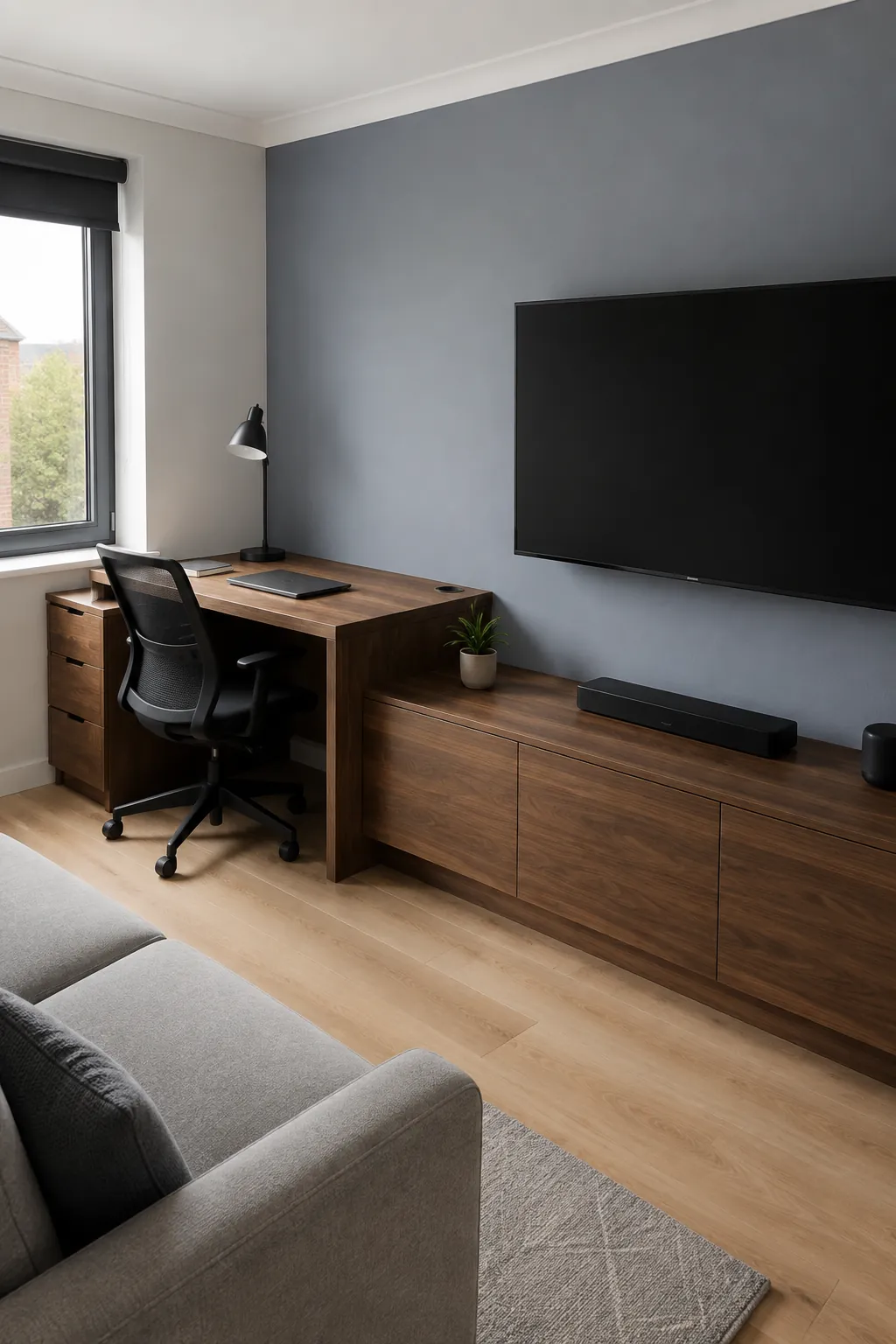
Sliding panels that conceal the screen
Sliding doors can hide a television when it is not in use, provided there is enough wall width for the panels to park. Confirm that the open doors clear the full screen and any speakers. Use a track system rated for the panel weight and include accessible maintenance points. Follow the equipment guidance on ventilation and operation rather than assuming it can run safely behind closed doors.
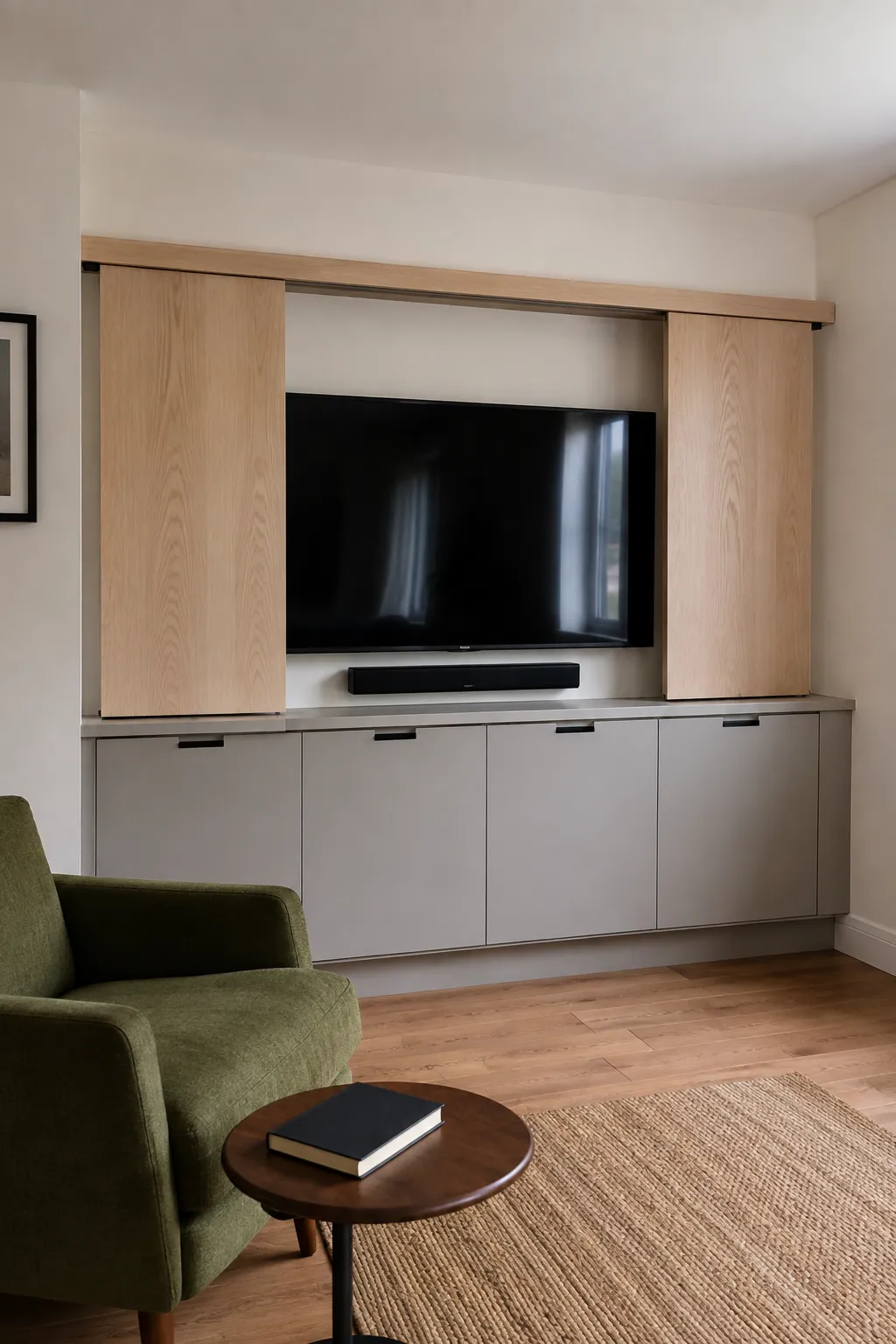
A ventilated equipment cupboard
A dedicated equipment cupboard keeps receivers and consoles organized without treating them like ordinary stored objects. Plan an actual airflow route and manufacturer required clearances, not just a small cable hole in the back. Removable access panels make it easier to inspect connections or replace a device. If active cooling is needed, choose a suitable system with an installer rather than guessing from the appearance of a grille.
A generous screen opening
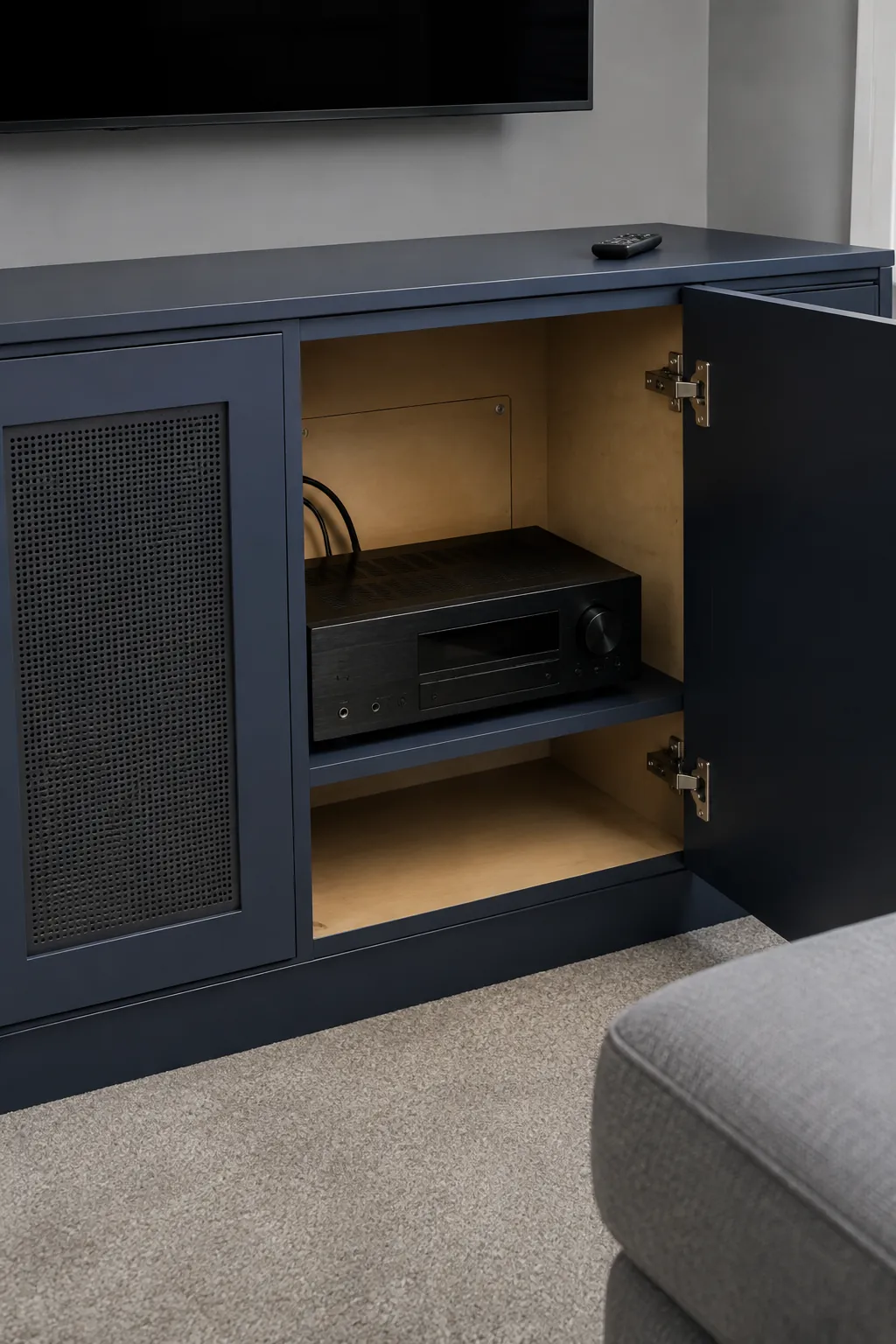
Leave extra room around the television so the cabinet does not become obsolete with the next screen purchase. Check the outer dimensions and ventilation requirements of the intended set rather than relying only on its diagonal size. A removable trim panel can offer some flexibility, but it will not compensate for structural shelves placed too close. Keep the bracket and connections reachable after the finished unit is installed.
Shallow storage for a narrow room
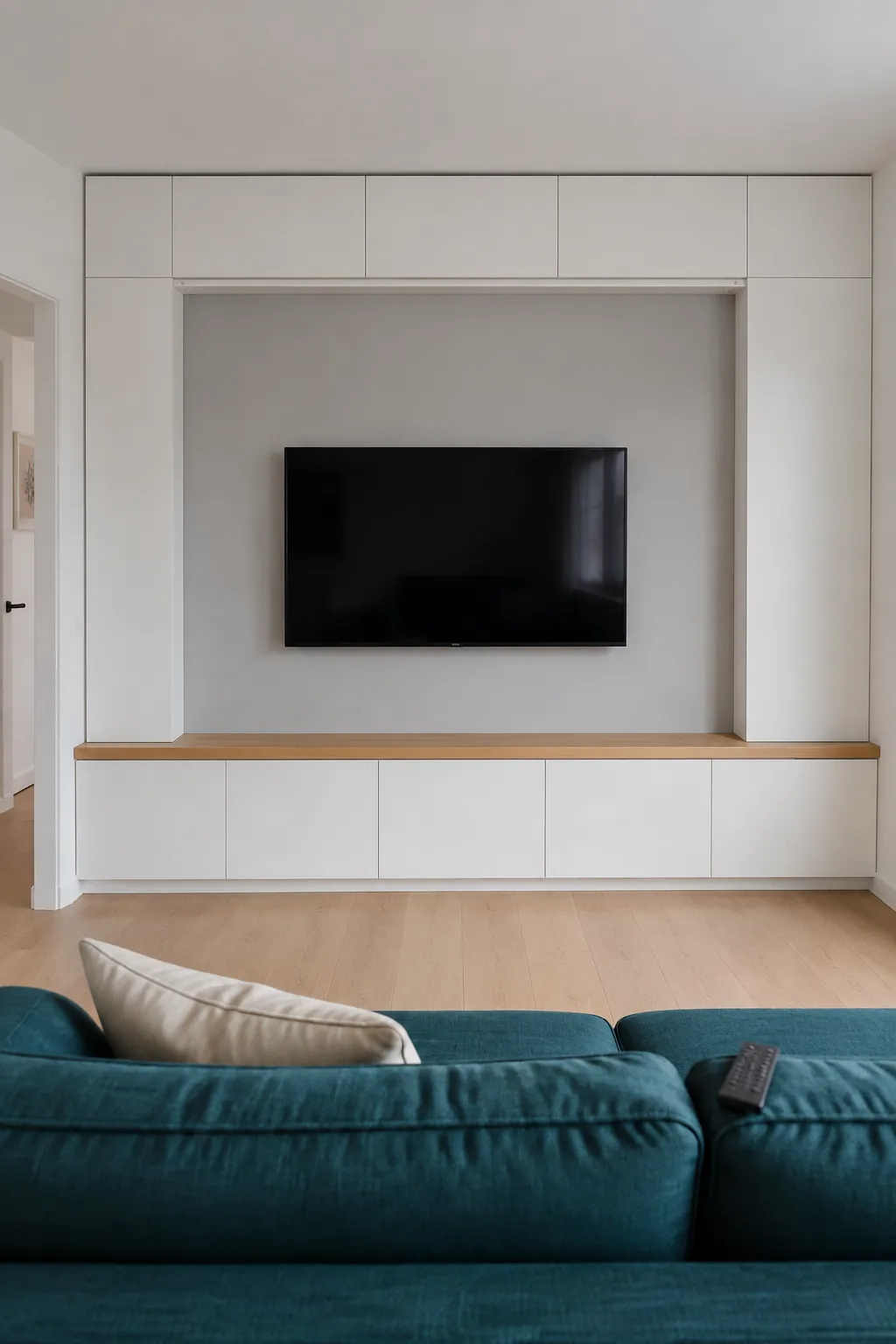
Shallow cabinetry can preserve valuable floor space when the sofa already sits close to the television. Use it for slim items such as discs, remotes or paperwork instead of forcing deep electronics into it. Allow for plugs and cable bends when assessing the usable depth. Keep the top visually simple so the reduced footprint feels intentional.
A fitted alcove installation
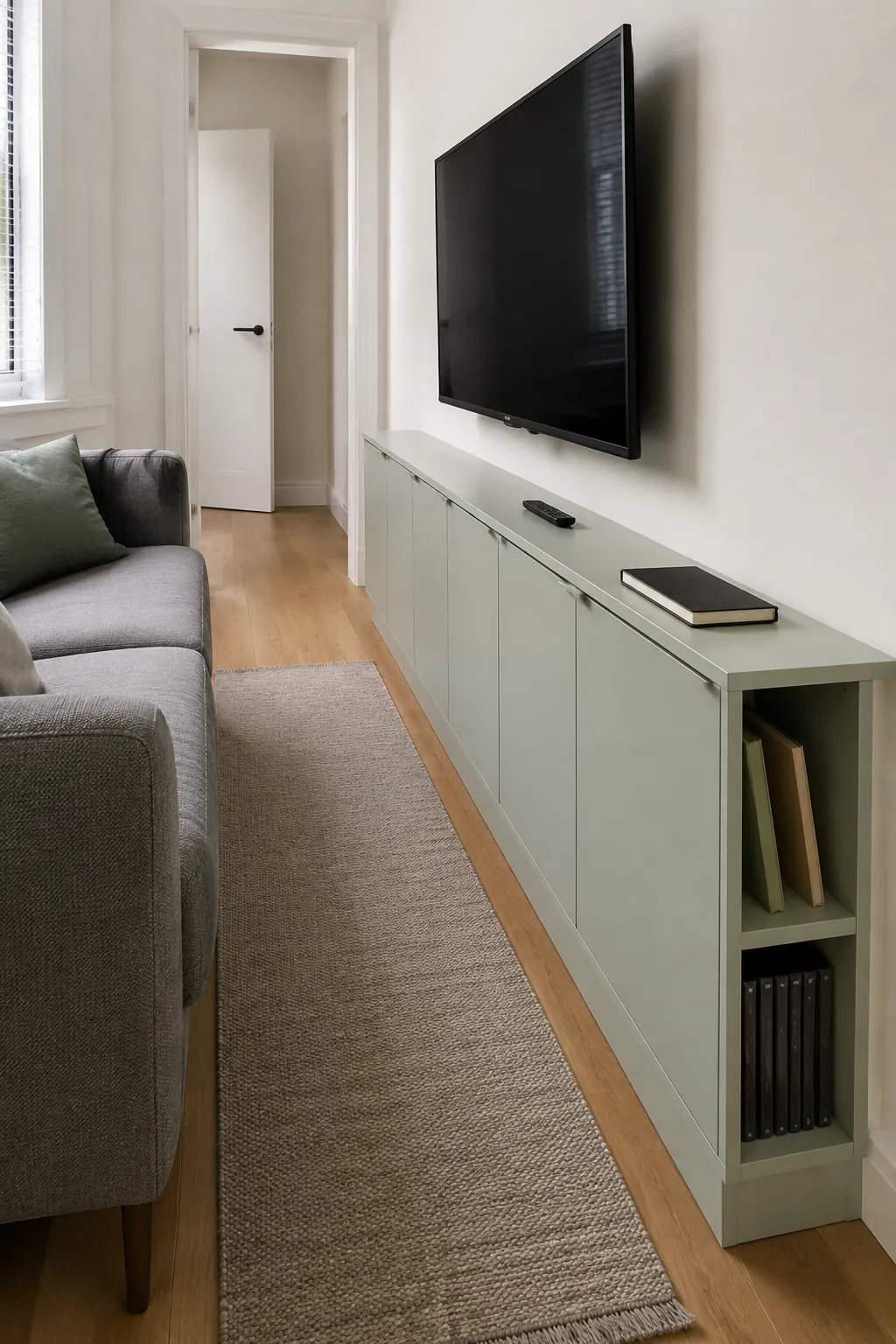
An existing alcove can provide a natural boundary for a compact media unit. Measure its width at several heights and check wall irregularities before ordering cabinet parts. Filler strips and scribed edges usually give a cleaner result than forcing an exact box into an uneven opening. Keep enough room for the screen and equipment to breathe inside the recess.
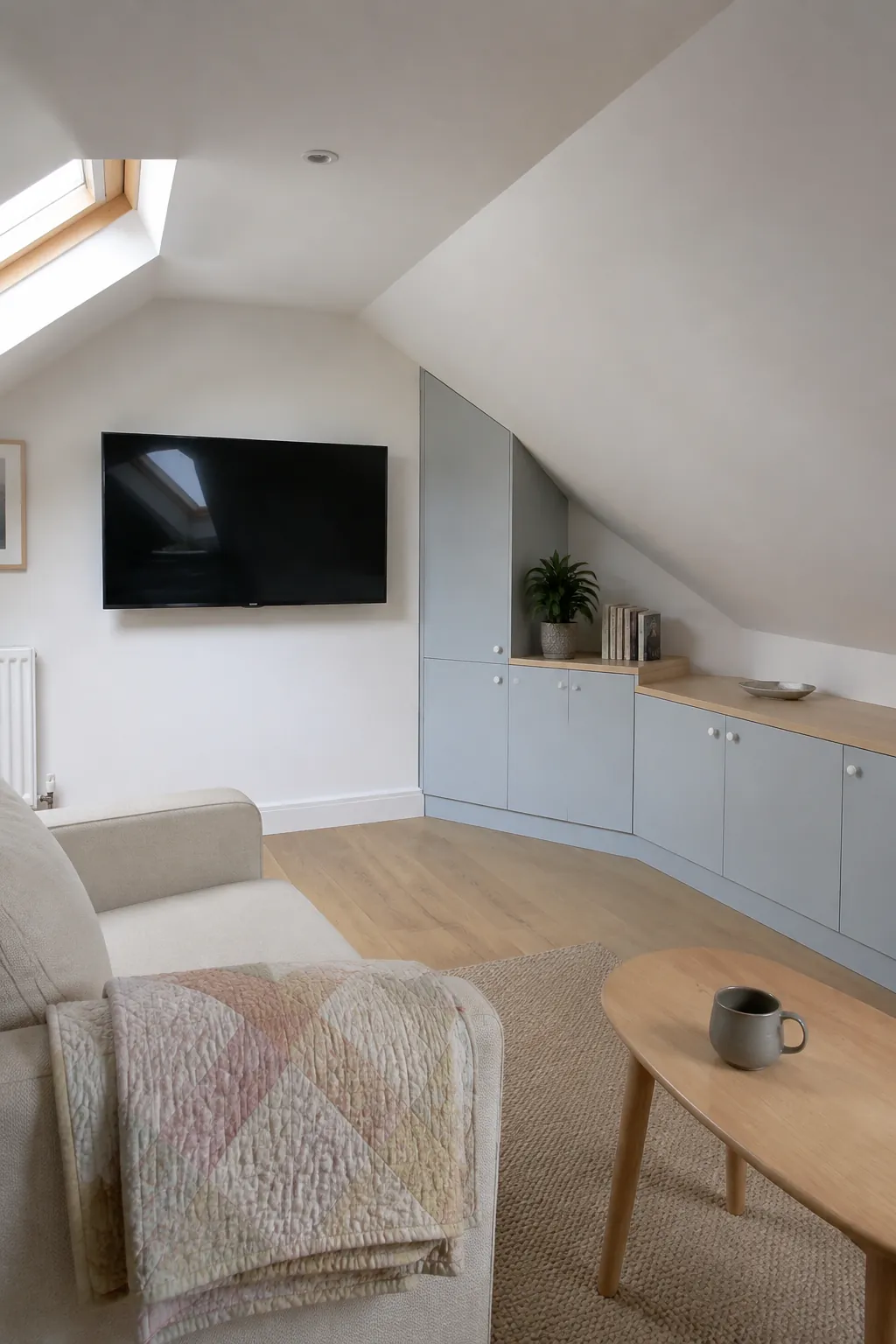
Cabinetry shaped to a sloping ceiling
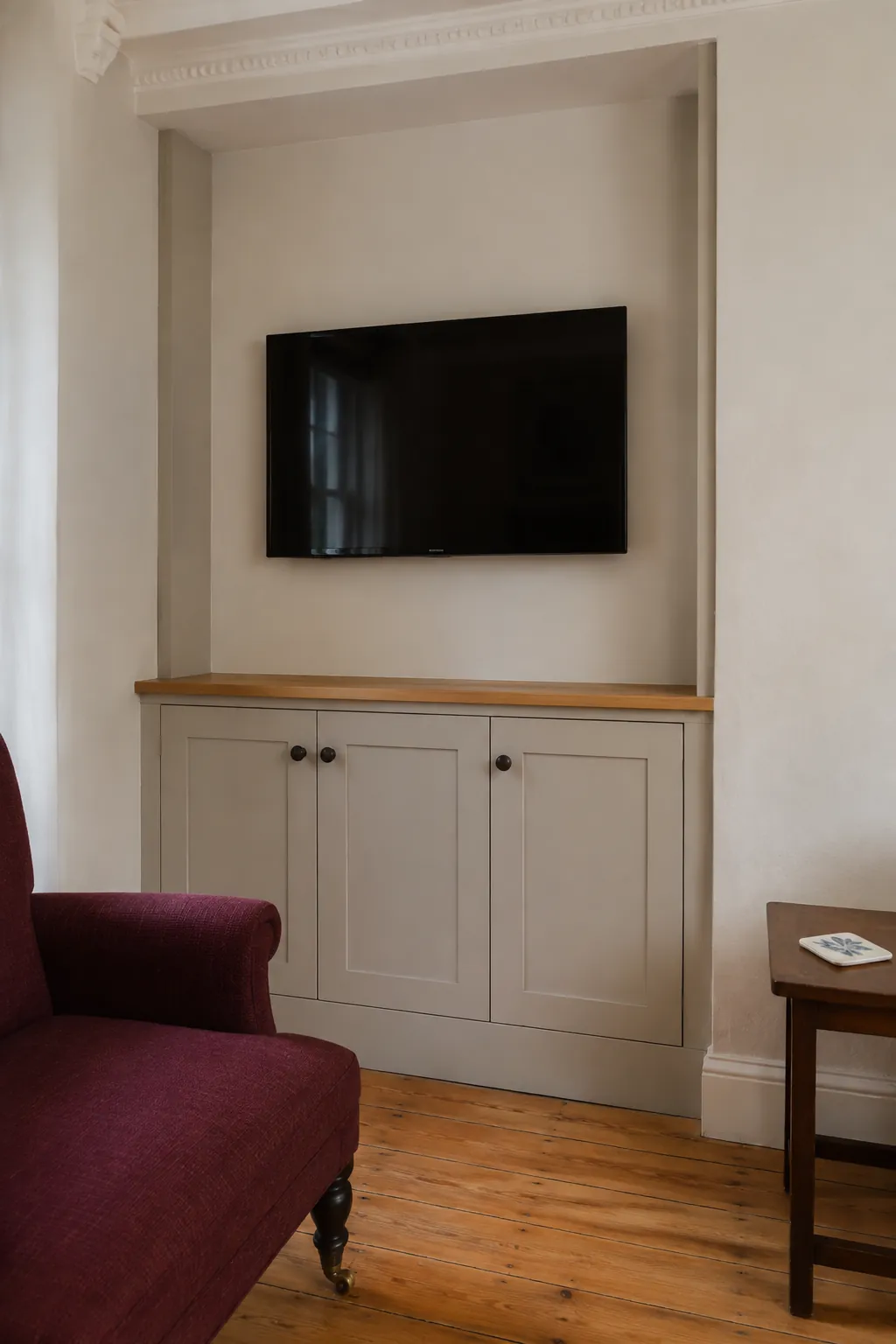
A sloping ceiling can become a useful storage boundary if the television stays in the area with comfortable viewing height. Use the lowest part for closed cupboards instead of awkward open shelves that are hard to reach. Have the installer measure the slope precisely so doors and hinges work within the available space. Avoid raising the screen simply to make the joinery look symmetrical.
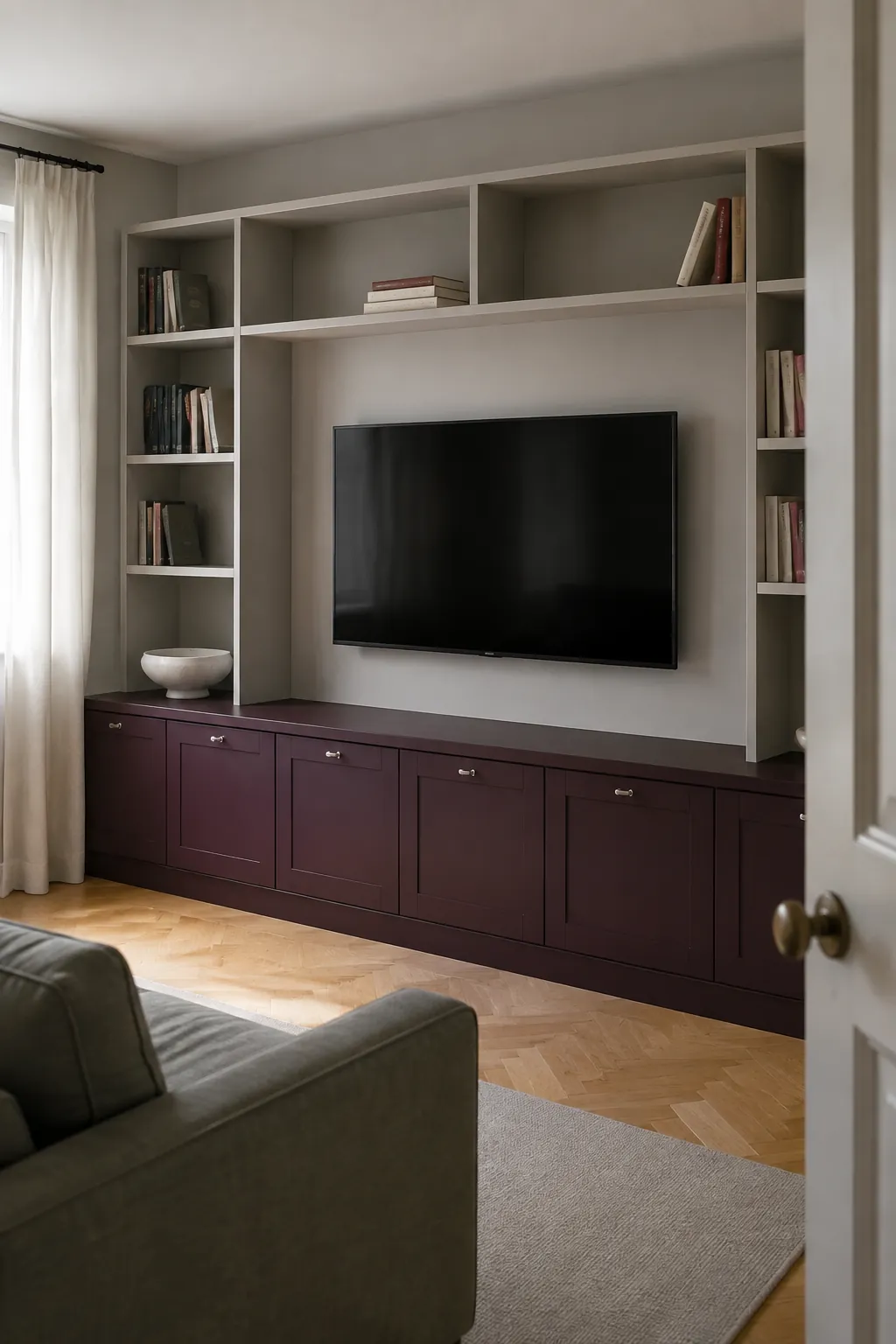
Pale upper shelves and a darker base
A darker base can anchor a media wall while pale upper shelves keep the room from feeling enclosed. Use one consistent hardware finish so the two colors still read as a single fitted system. Sample both finishes beside the flooring and in evening light before approving them. Keep the immediate screen background quiet even if the lower cabinets carry a stronger color.
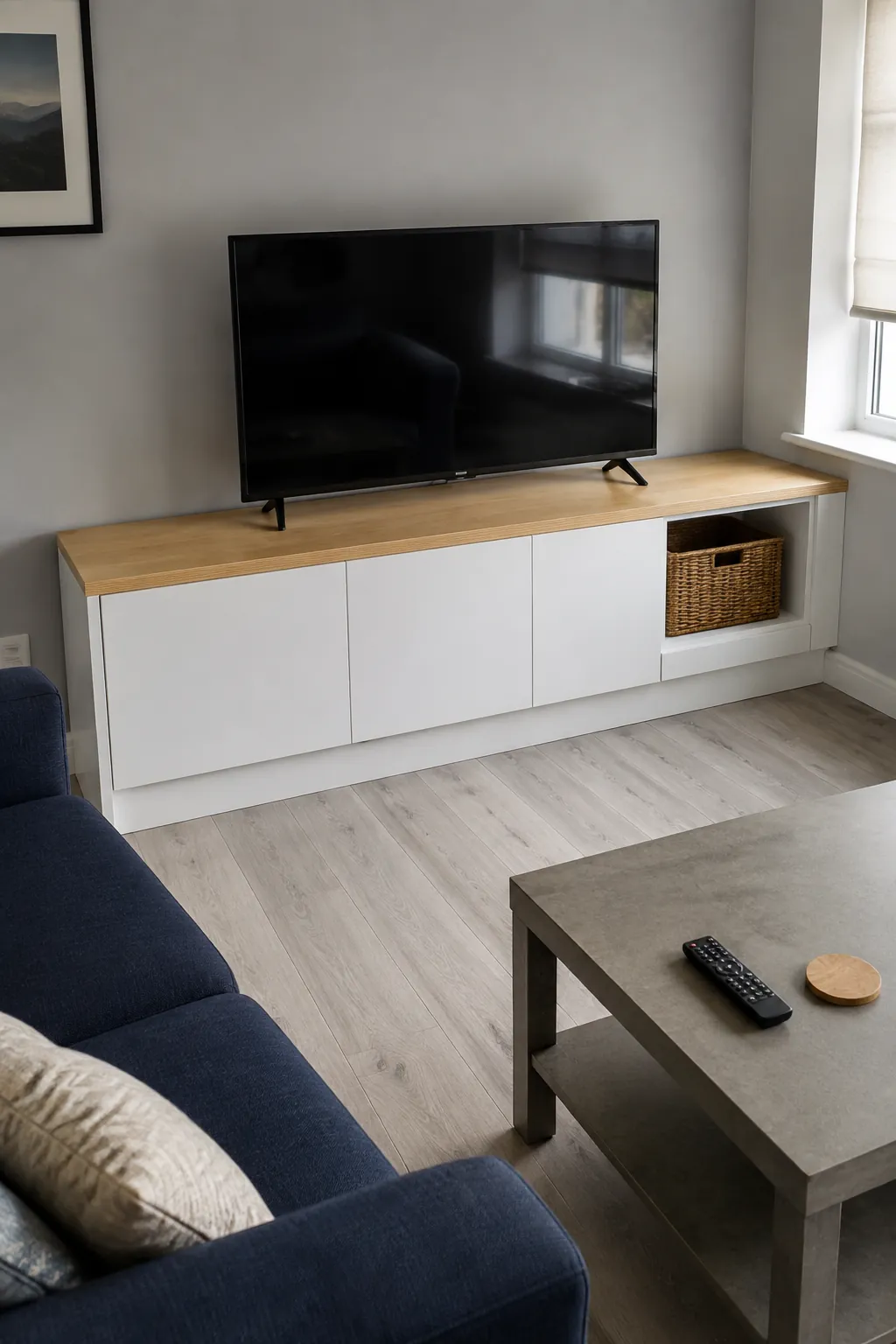
Standard cabinets with fitted finishing pieces
Standard cabinet boxes can form the core of a built in media wall when the dimensions suit the room. A continuous top, matching plinth and carefully fitted end panels help separate units feel intentional. Budget for these finishing parts, secure fixing and installation labor as well as the boxes themselves. Check the cabinet system’s load limits before adding heavy tops or equipment.
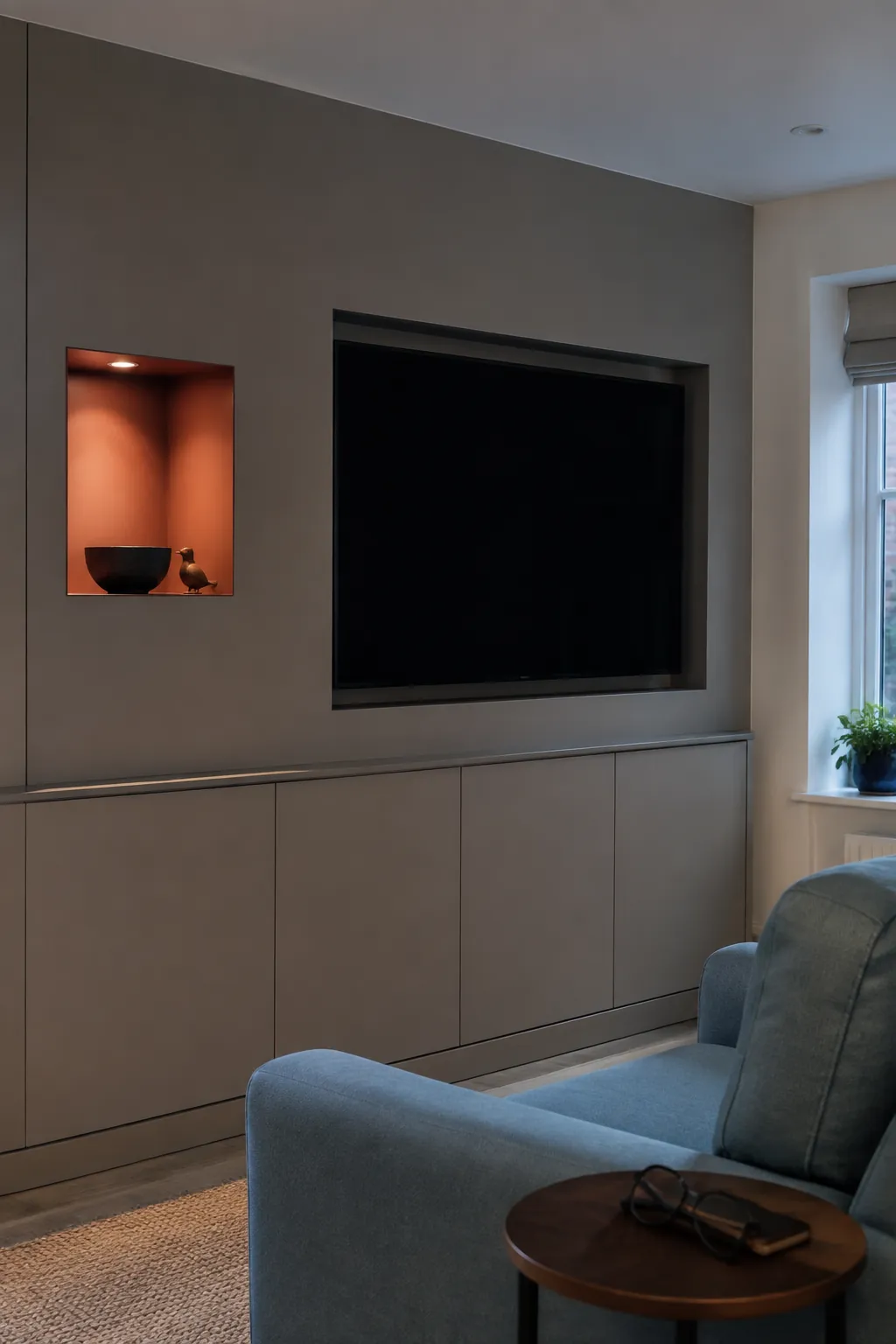
A small display niche away from the screen
A single display niche gives personal objects a home without surrounding the television with many small shelves. Place it away from the screen edge so its shape and contents are not constantly in your viewing field. Choose a few objects that fit the niche depth securely, and keep tall items away from lighting hardware. If you add lighting, make it dimmable and check for reflections from your normal seat.
A fitted corner media unit
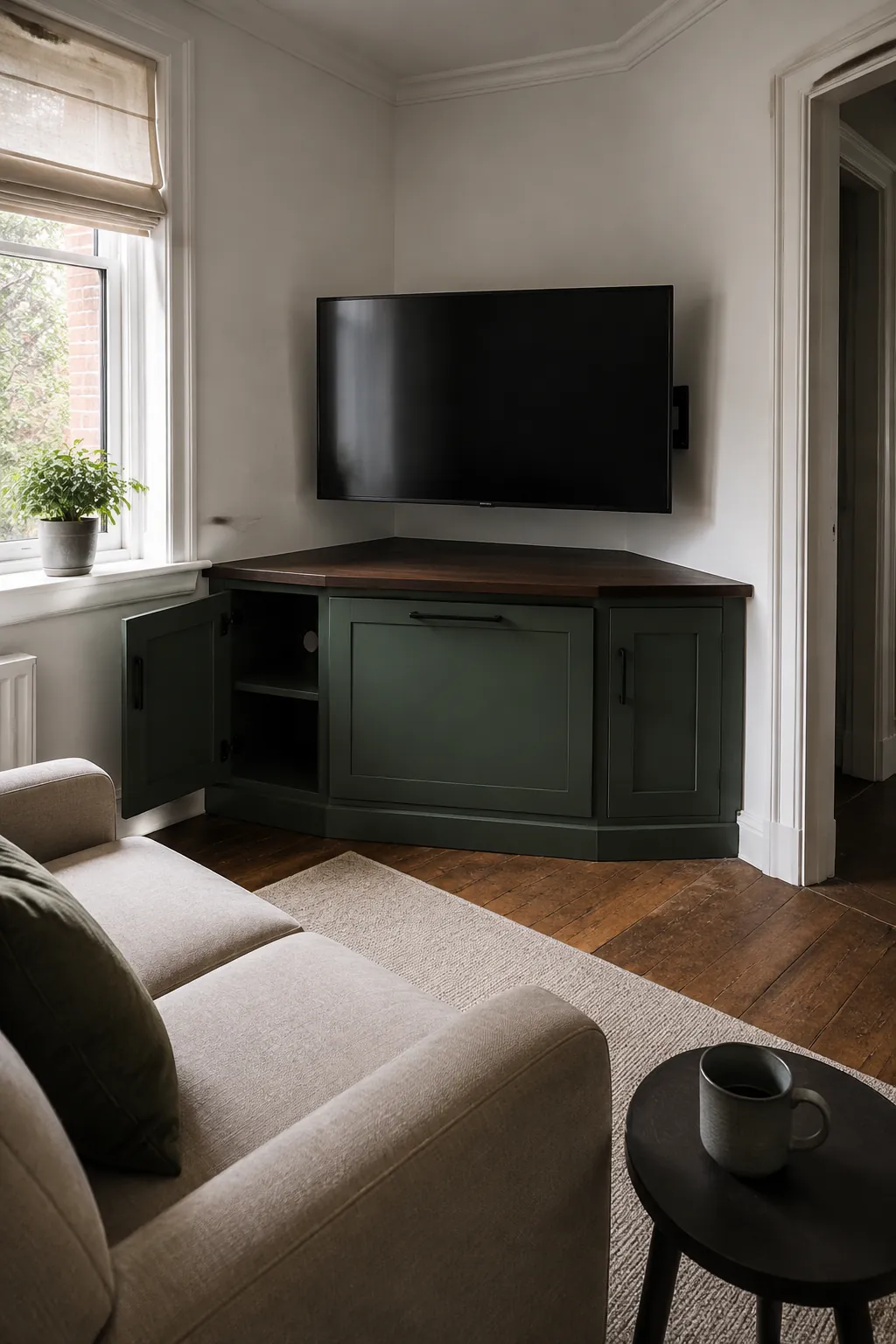
A corner installation can free the longest wall for seating when doors and windows leave few alternatives. Test the screen angle from every regular seat before committing to the cabinet layout. Make the corner interior accessible, since deep blind spaces are easy to waste and difficult to wire. Choose a bracket and structural fixing suited to the screen’s weight and movement, then build storage around that working arrangement.