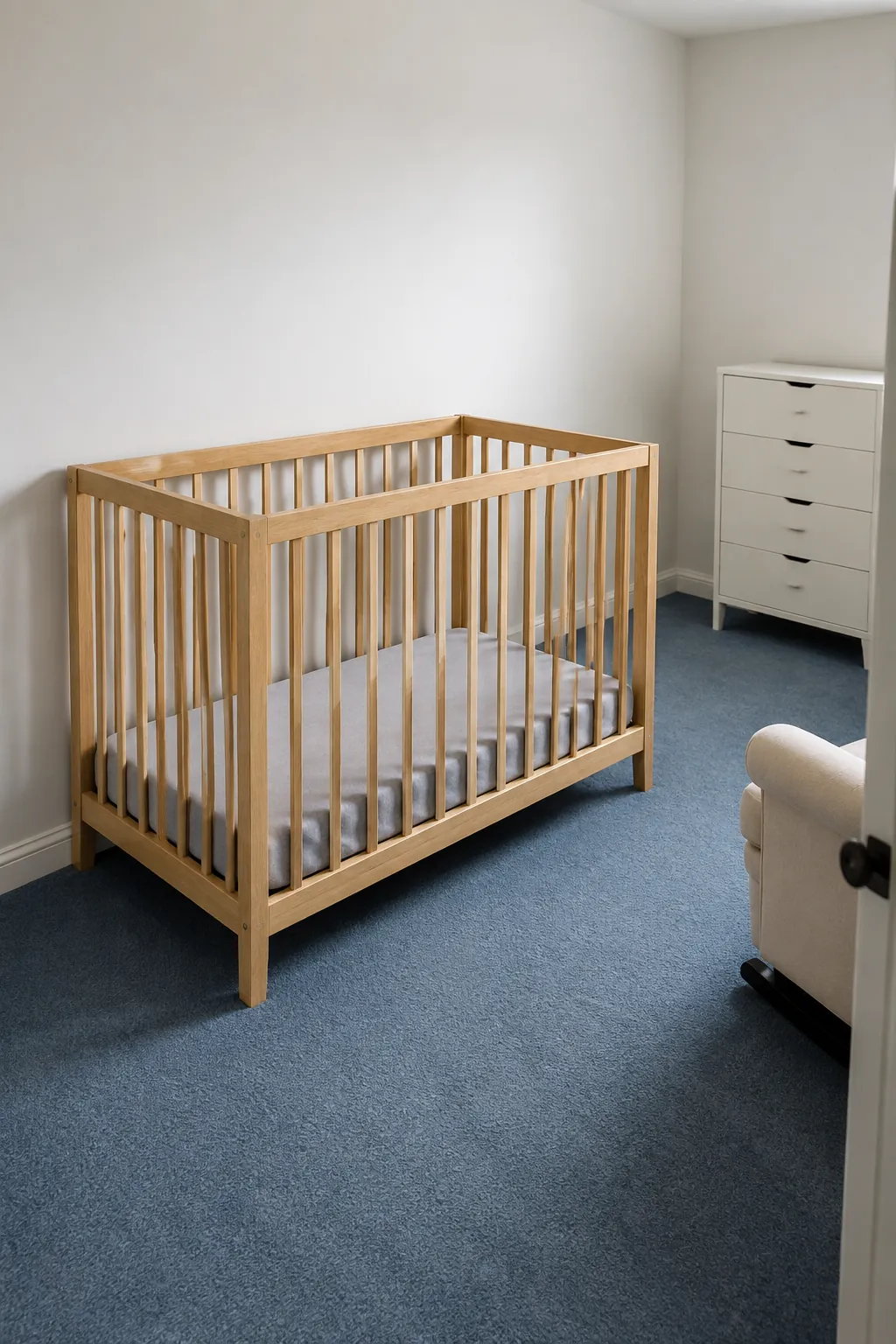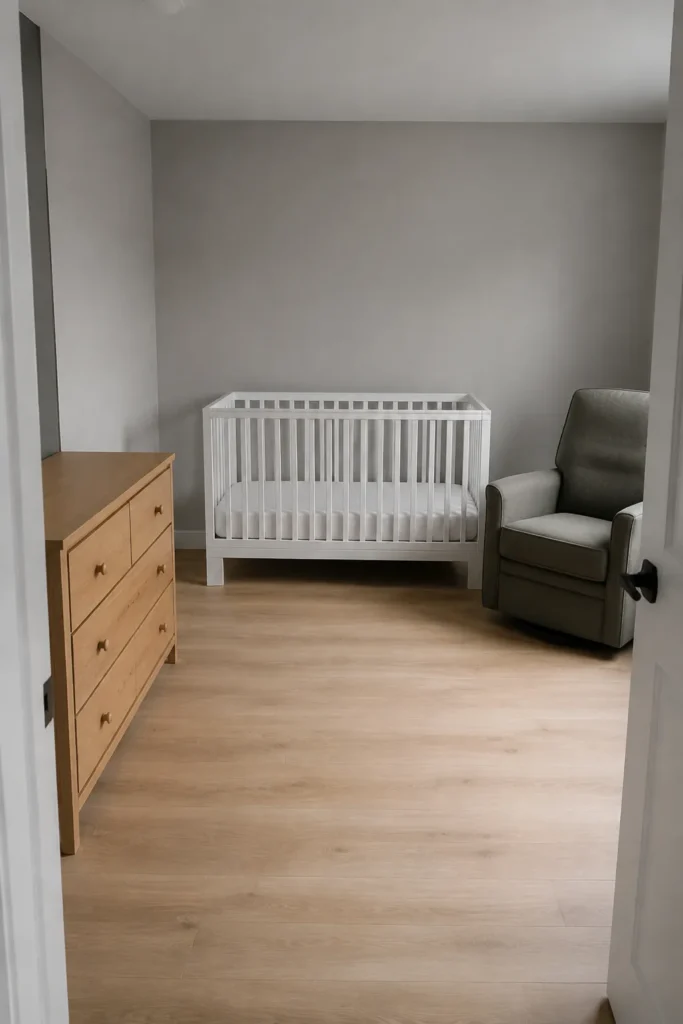
11 Nursery Furniture Placement Mistakes to Avoid
The drawer opens, but there is nowhere to stand. The chair reclines, but it blocks the door. A nursery can look finished while still making ordinary care harder than it needs to be.
Start with the crib’s safe location and the instructions for each product, then check the movements that happen around them. The images show arrangement concepts rather than measured plans or safety certification. Follow current infant safe sleep guidance, including a separate firm, flat sleep surface and recommended room sharing, when deciding how the space will be used.
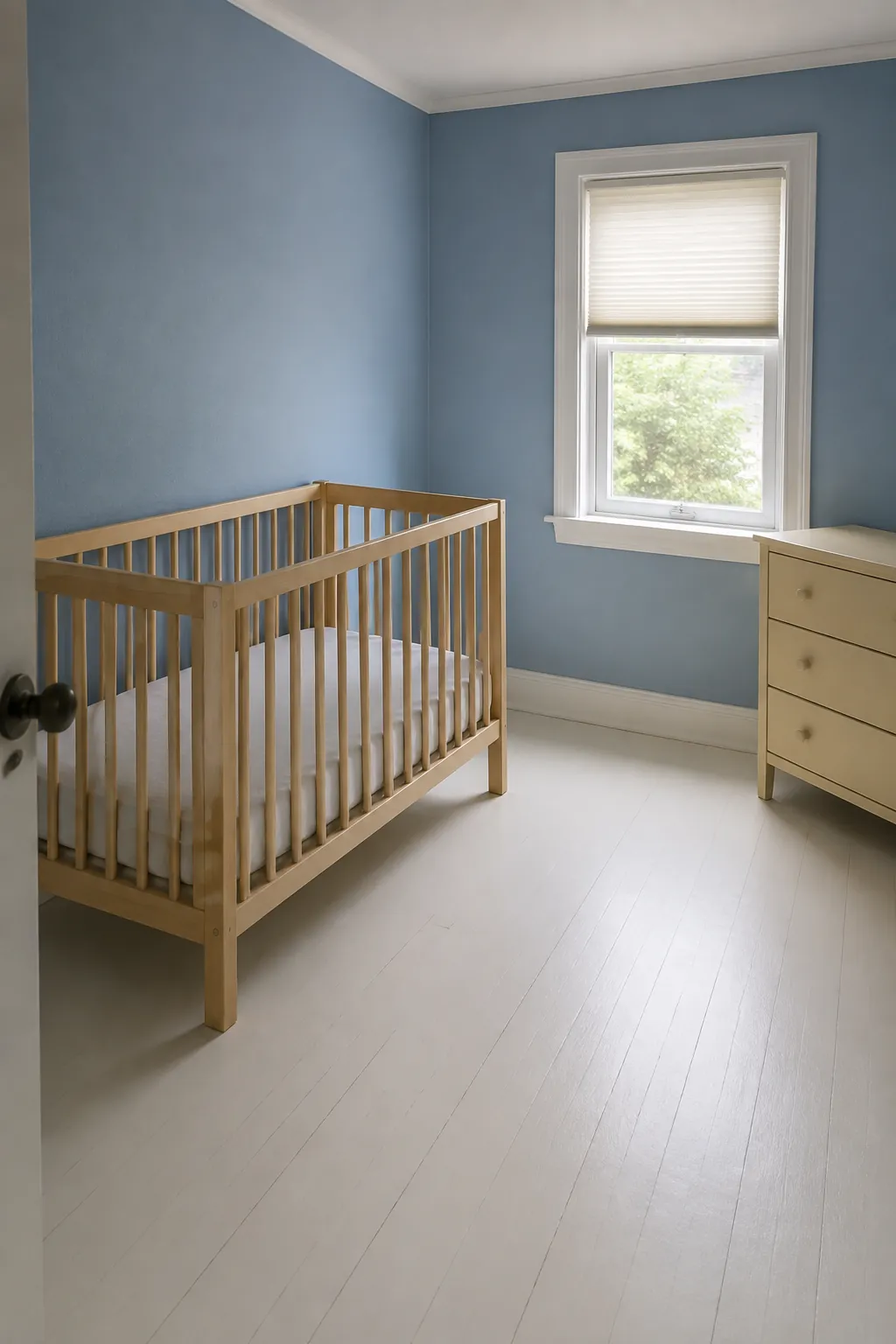
Choosing the window wall for the crib
A window can make a tempting backdrop, but it brings glass, changing sunlight, and window coverings into the sleep area. Choose a solid wall away from windows and anything your child could reach through or over the rails. Cordless coverings reduce one hazard, but they do not turn the window itself into the preferred crib location. Keep the mattress firm, flat, and correctly fitted, with only a fitted sheet inside. Let crib placement ideas begin with the safest available location before considering the view from the door.
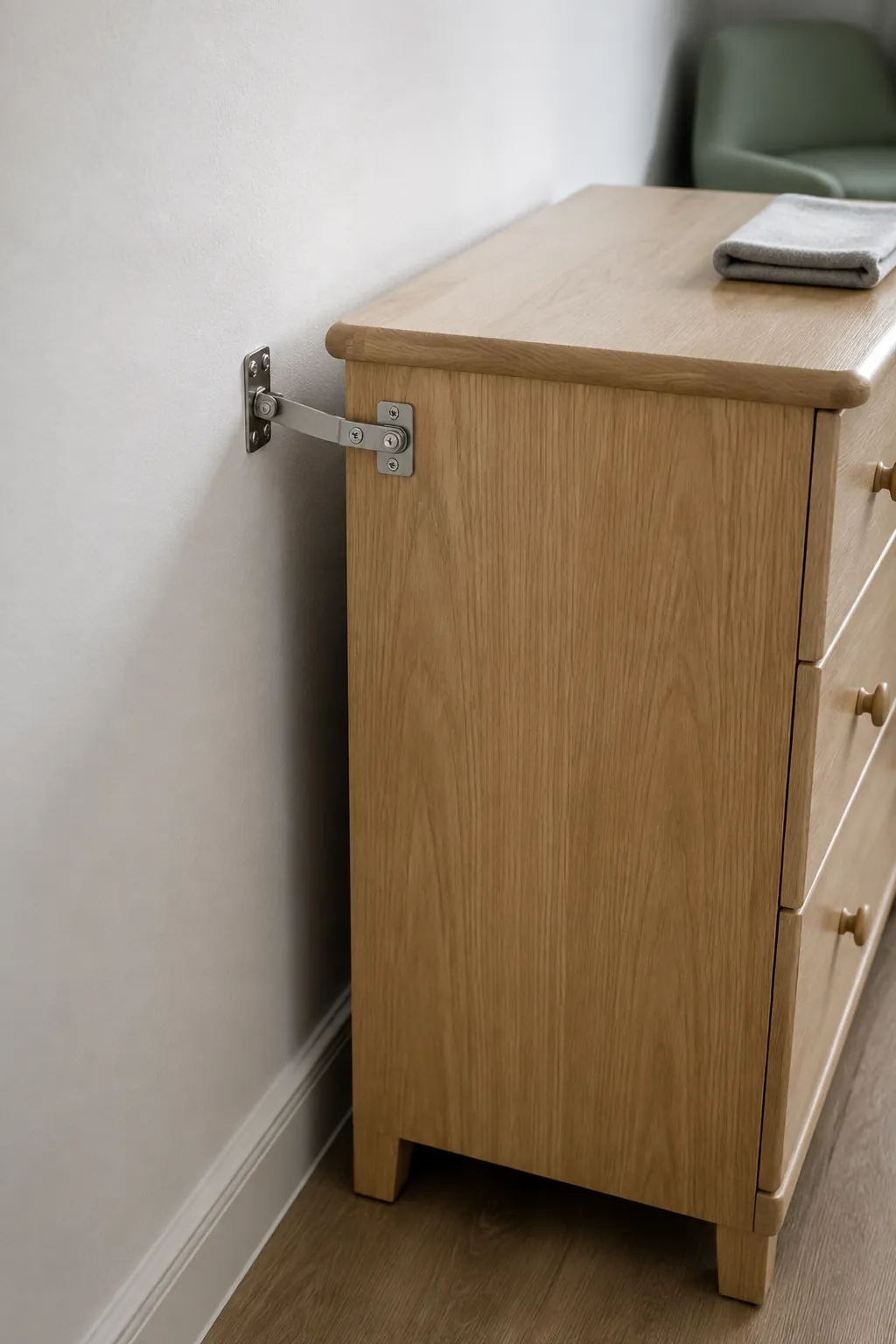
Leaving the dresser unanchored because it looks sturdy
A heavy dresser can still tip when a child climbs or pulls on open drawers. Choose its location where the manufacturer’s anchoring system can attach to suitable wall structure. A baseboard gap or awkward outlet may affect the installation, so check those details before filling the drawers. Follow the furniture and anchor instructions rather than improvising a tether or relying on the dresser’s weight. If you rent, discuss a suitable installation with your landlord instead of treating anchoring as optional.
Measuring the chair only when it is closed
The footprint shown on a product page may not describe the space needed to glide, swivel, or recline. Test the chair through its full range and account for the footrest, backrest, and moving base. A wall behind the chair and a dresser corner in front can both become contact points. Keep children away from moving mechanisms and follow the chair’s operating instructions. Glider placement nursery plans should preserve a separate walking route even when the chair is in use.
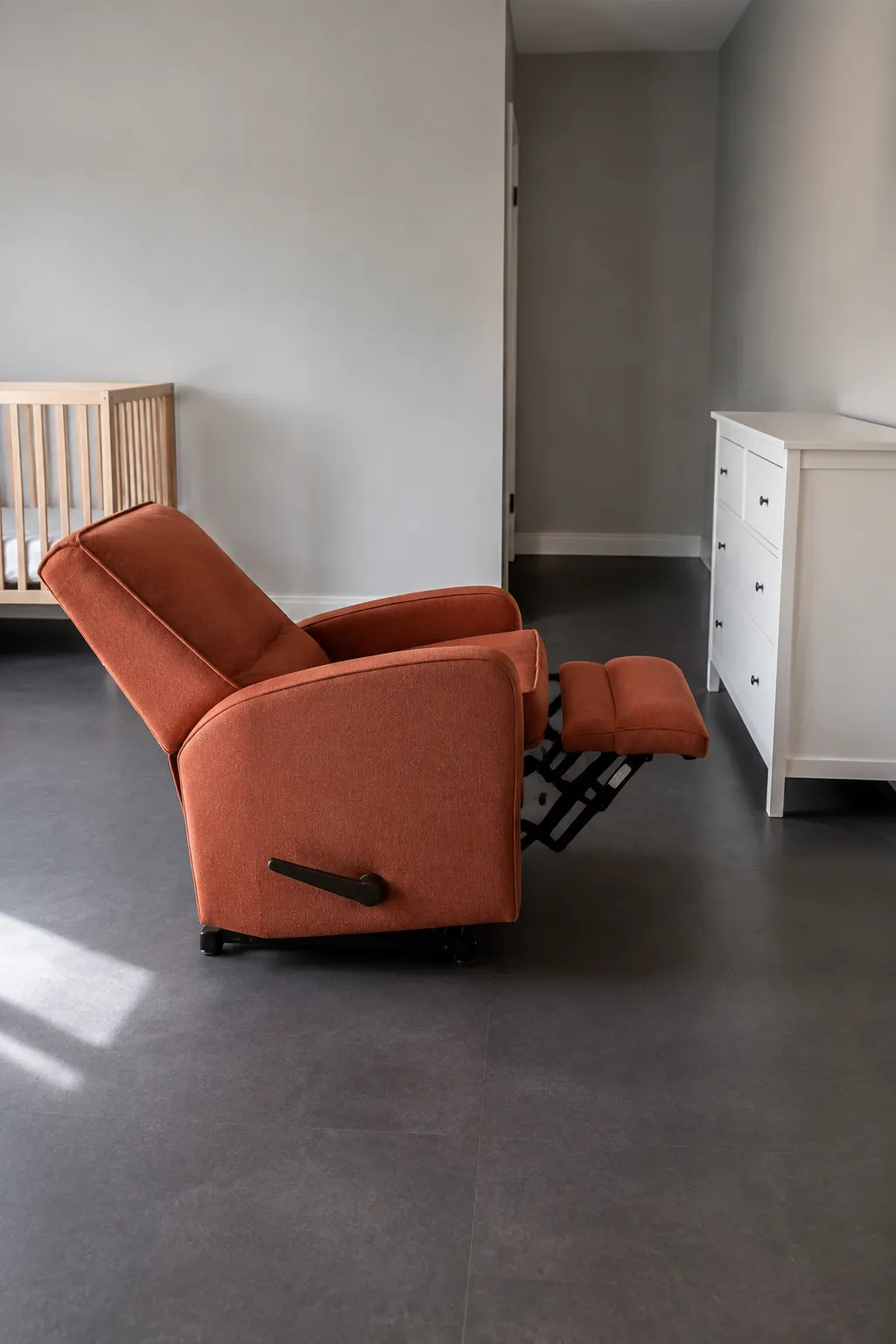
Letting drawers and doors compete for the same floor
A closed dresser can look perfectly placed until the closet is opened. Map the room door swing, closet opening, and drawer extension together rather than checking each in isolation. The changing position also needs room for an adult to stand without being trapped by an open drawer. Move the dresser to a shorter clear wall if that improves access, even when the longer wall looks more balanced. Daily function matters more than lining up furniture edges in a photograph.
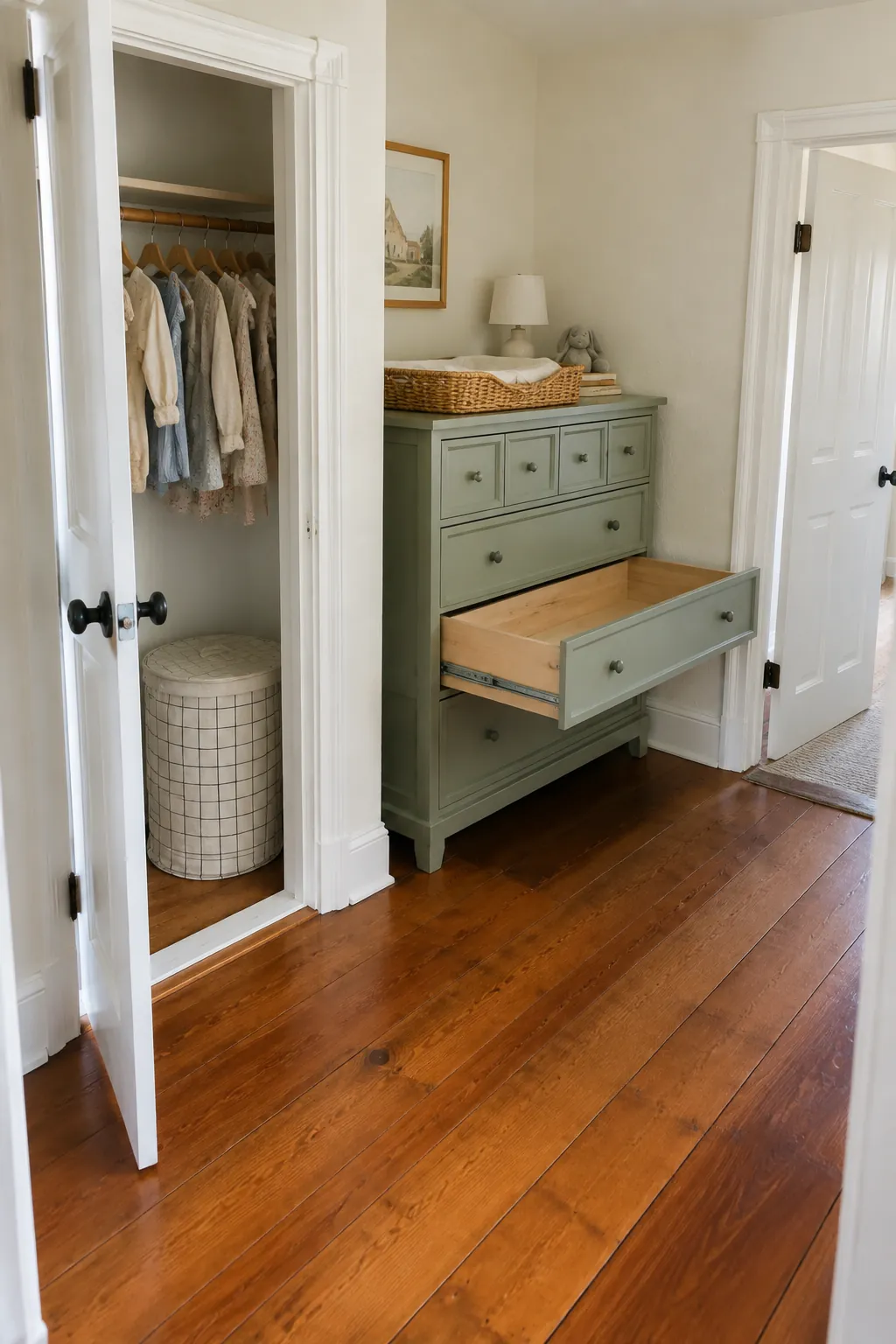
Hanging storage or heavy decor above the sleep space
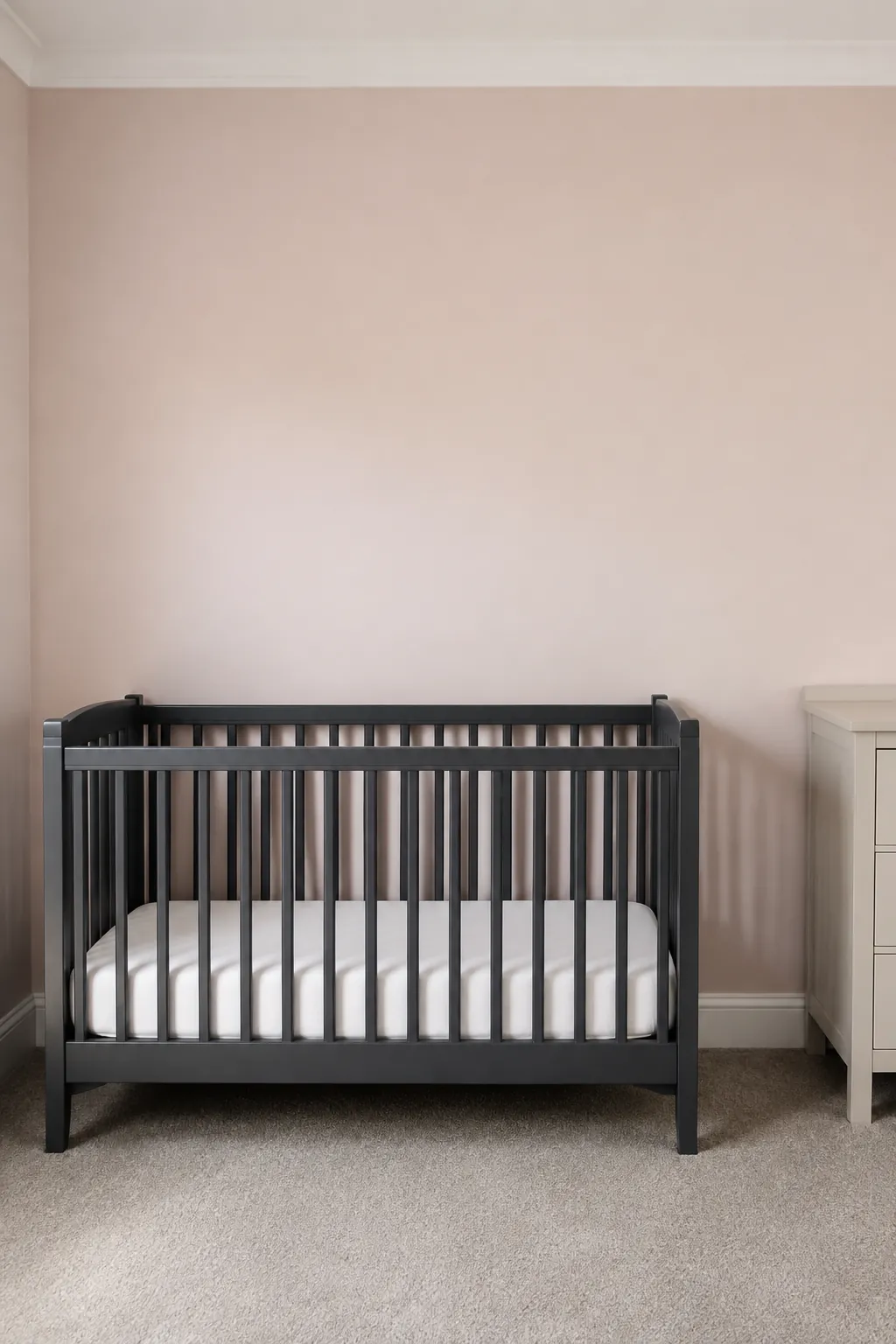
The blank wall over a crib does not need a shelf, framed display, or hanging planter. Objects overhead can fall, and items once beyond reach may become accessible as your baby grows. Put decorative displays and storage on a different wall, with secure installation and consideration for future climbing. Avoid canopies, dangling cords, and loose fabric around the crib. A plain sleep wall is a useful part of a nursery safety layout, not an unfinished decorating job.
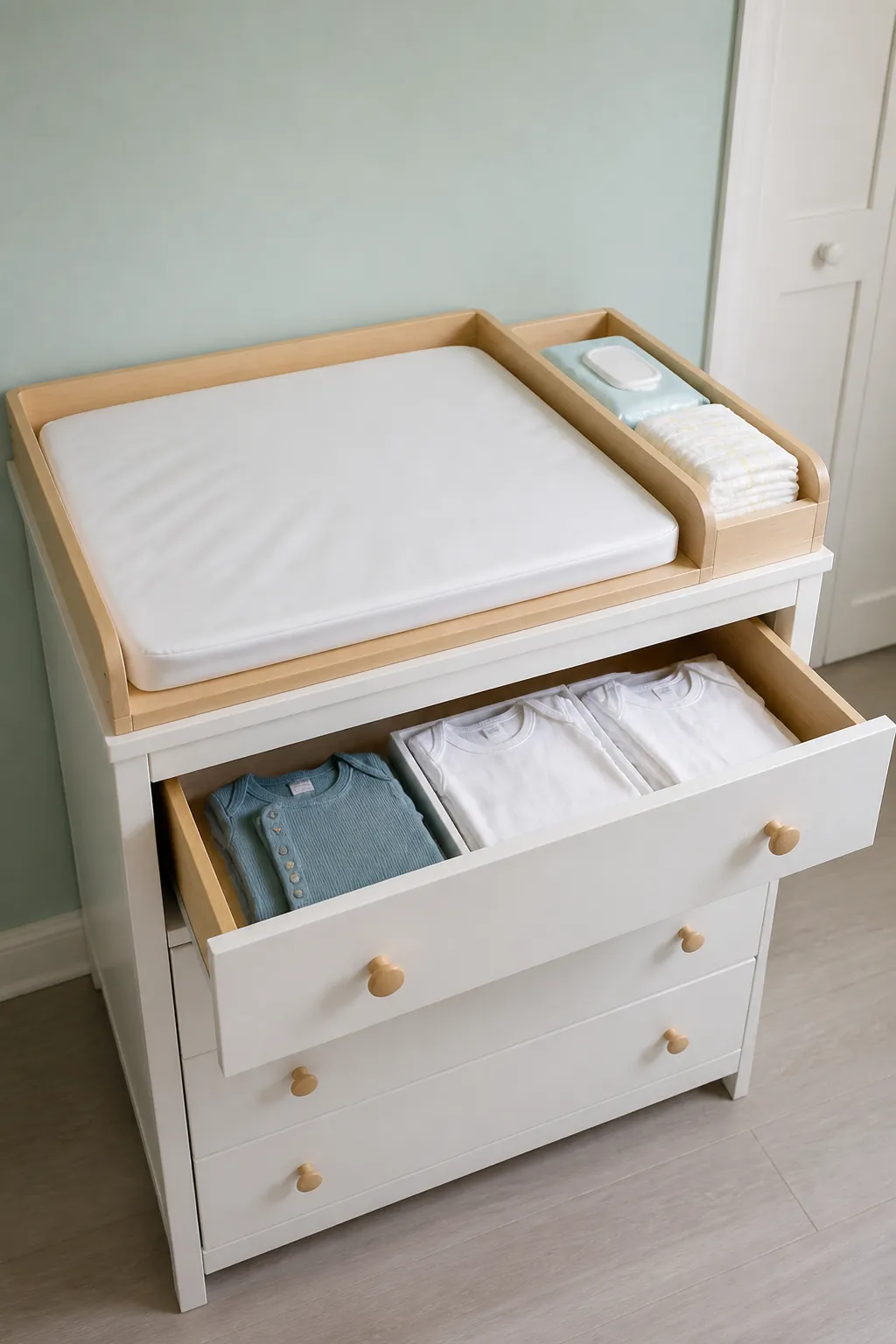
Putting changing supplies beyond a safe reach
An attractive dresser arrangement fails if the wipes live across the room. Keep everyday changing supplies accessible from your standing position while remaining out of the baby’s reach. Use a compatible changing surface and secure it as its instructions require. Keep a hand on your baby and never leave them unattended on the surface, even for a quick step to a shelf. Store refills elsewhere so the immediate station holds only what you regularly use.
Filling the heater clearance zone
A radiator, baseboard heater, or portable heater cannot be treated like an empty wall. Follow the specific appliance’s clearance instructions and keep furniture, bedding, and window fabric outside that area. Avoid placing the crib in direct heat or where temperature control becomes difficult. A room vent also needs an unobstructed opening, even when it is inconveniently located beneath the best looking furniture position. If the room cannot safely hold the planned pieces, reduce the furniture rather than narrowing the clearance.
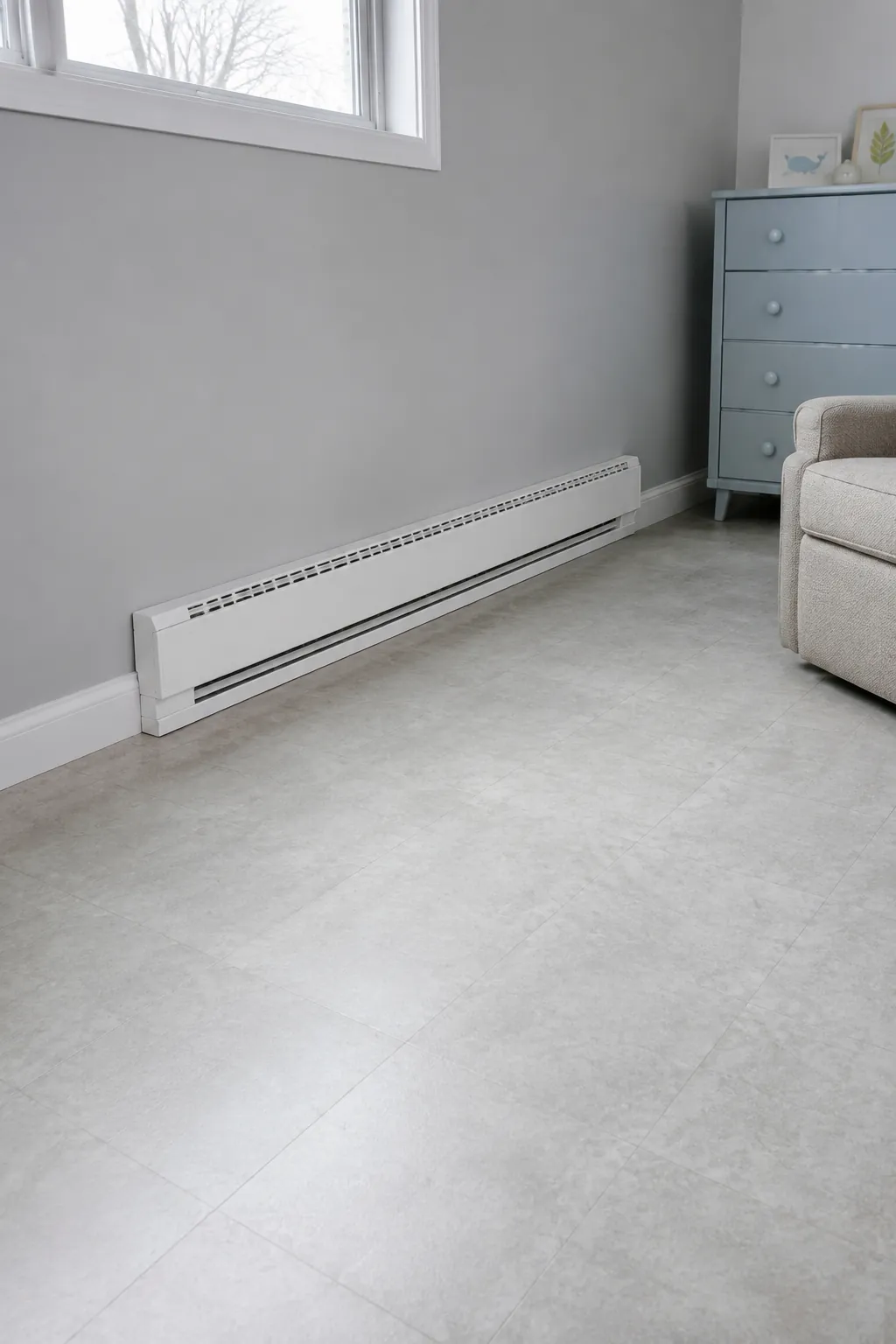
Running monitor and lamp cords toward the crib
An outlet beside the crib can tempt you to place a monitor on the rail or run a cable behind it. Keep monitors and their cords at least three feet from the crib, and farther if the manufacturer requires it or your child could still reach them. Route other cords away from the sleep area and secure them out of reach without loops or accessible slack. Do not rely on a baby being too small to grab something yet. Recheck the nursery furniture layout as standing and climbing change what becomes reachable.
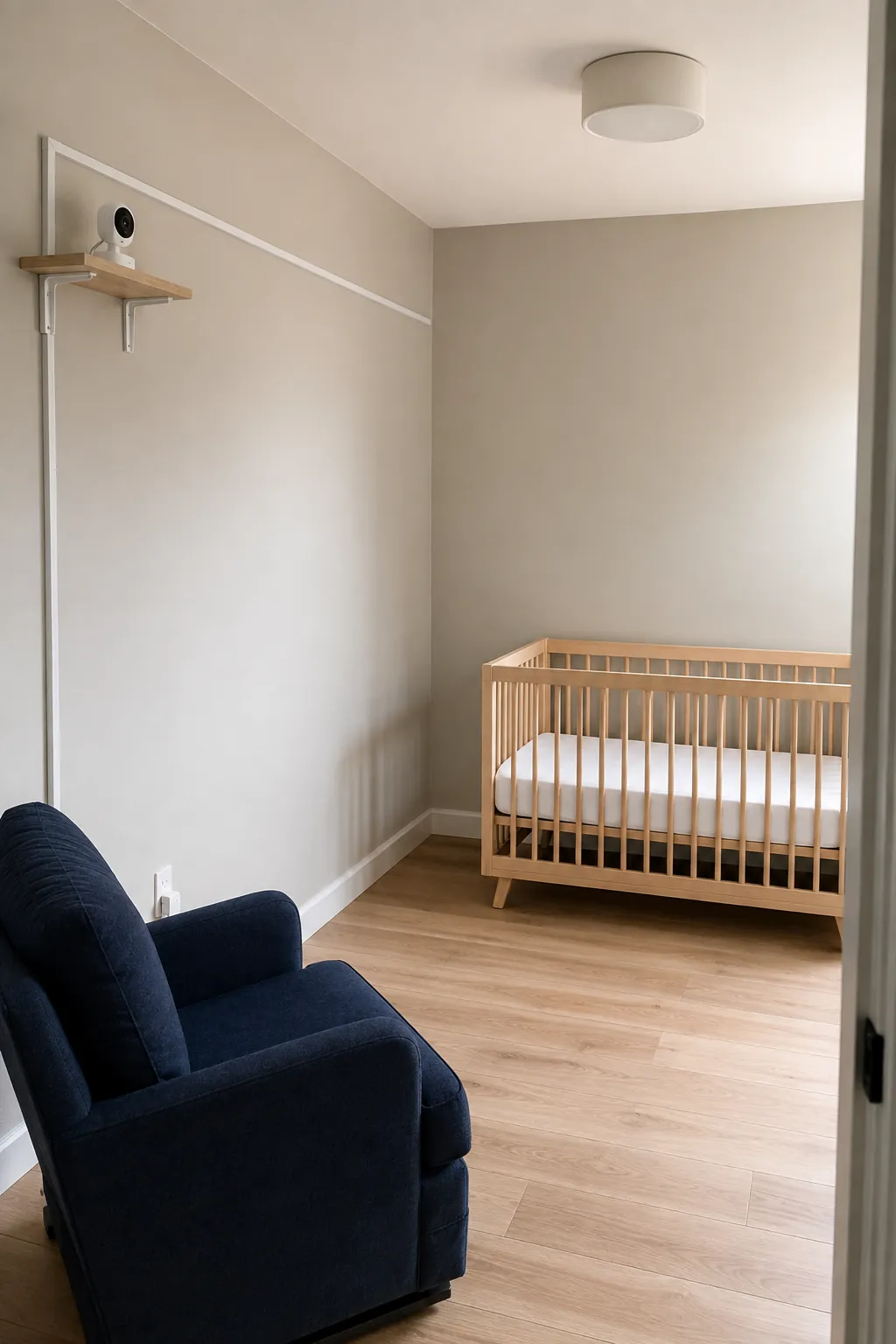
Using the walking route for extra storage
A hamper, footstool, and basket can each seem too small to matter until they occupy the same path. Walk from the door to the crib with your hands occupied, then repeat the route under your usual nighttime lighting. Move loose objects to a dedicated storage zone and keep chair motion out of the passage. Rugs should lie securely flat without curling corners or slippery movement. The center of a small room often earns its keep by staying empty.
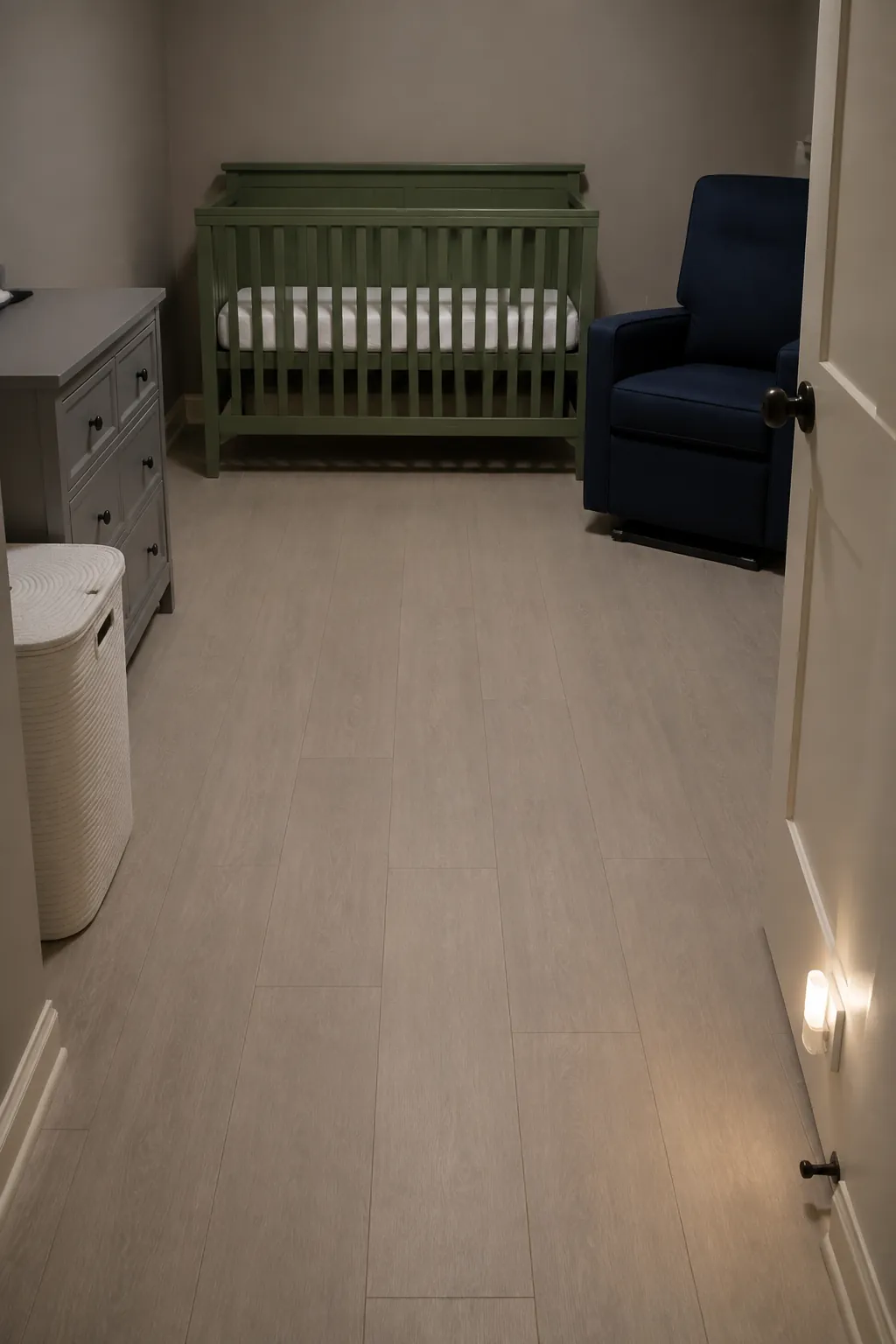
Buying the full furniture set before checking the room
A matching set may include pieces whose combined operating space exceeds what the room can provide. Draw the room with its fixed features, then compare actual product dimensions and opening requirements before ordering. A compact dresser or a compliant smaller crib may suit the plan, provided its limits and intended use meet your needs. Do not substitute an improvised sleep product to rescue a decorating scheme. Keeping one useful chair can be more valuable than adding a second storage cabinet that blocks it.
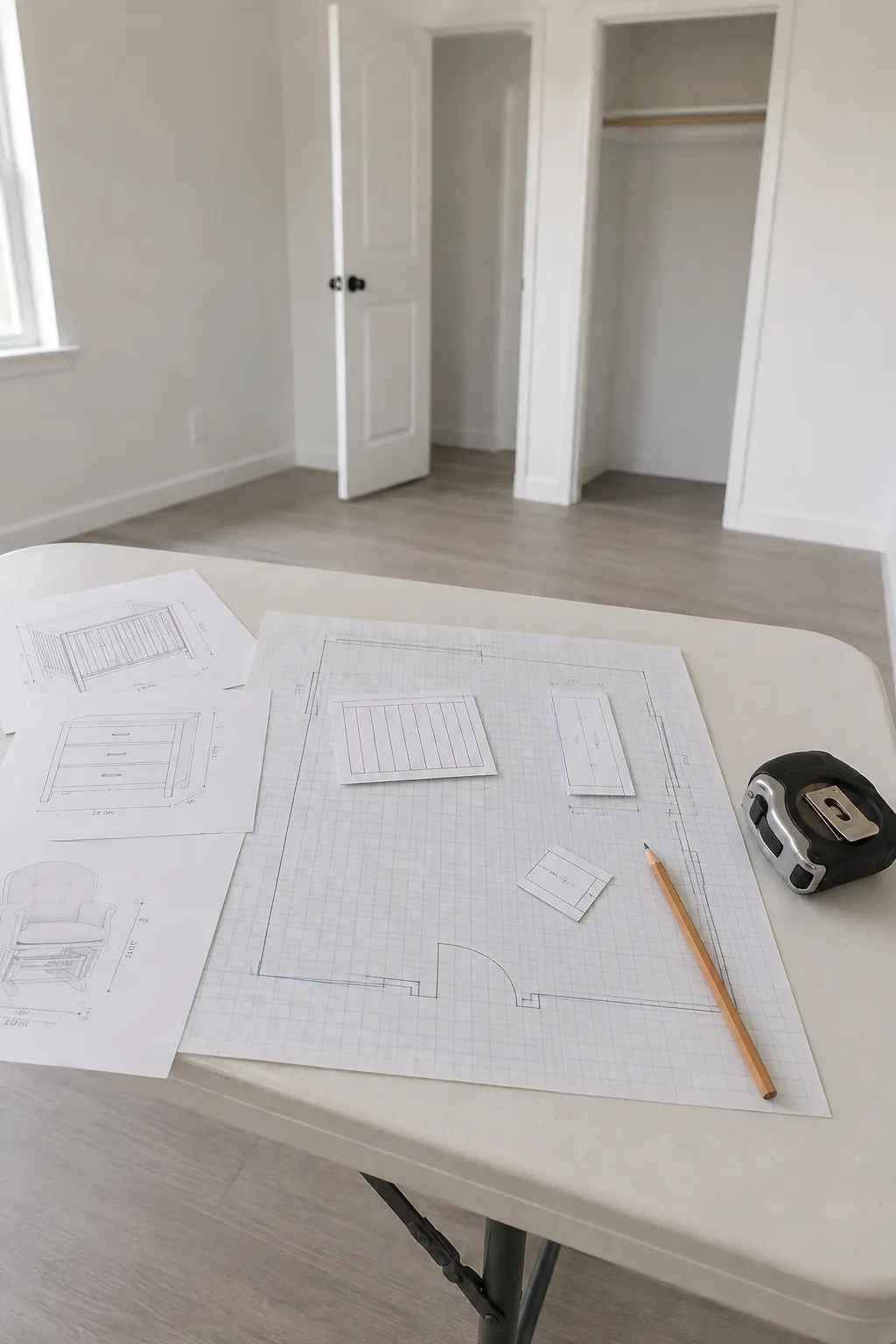
Planning only for the newborn stage
A layout that works before a baby can roll or stand may need changes later. Follow the crib instructions for mattress height adjustments and stop using each product when its stated limits are reached. Revisit reachable cords, nearby furniture that could assist climbing, and objects on dresser tops as your child becomes more mobile. Leave room to change the arrangement instead of fixing every piece around a short lived decorative feature. Your next review belongs on the calendar when the room is first set up, not after the first unexpected climb.