21 Nursery Closet Organization Ideas for Small Spaces
The drawer is full, yet the outfit you need is buried among sizes your baby has not reached and pieces they have already outgrown. More containers will not fix that by themselves. The useful starting point is deciding what belongs in today’s reach and what needs a separate place.
Measure the closet opening, shelf depth, and door travel before buying organizers. Secure furniture, rails, and shelves according to their instructions, keep heavy items low, and reassess what children can reach as they grow. Choose the ideas that solve your actual storage problem rather than trying to install every option in one closet.
Give the current size the easiest shelf
The clothes your baby wears now deserve the easiest place to reach. Put them on the central shelf or in the most accessible drawer, rather than mixing them with every gifted size. Keep only a practical rotation here and use the space around it for less frequent needs. This makes baby clothes storage respond to daily dressing instead of the size of your collection.
Use rail dividers to separate the next sizes
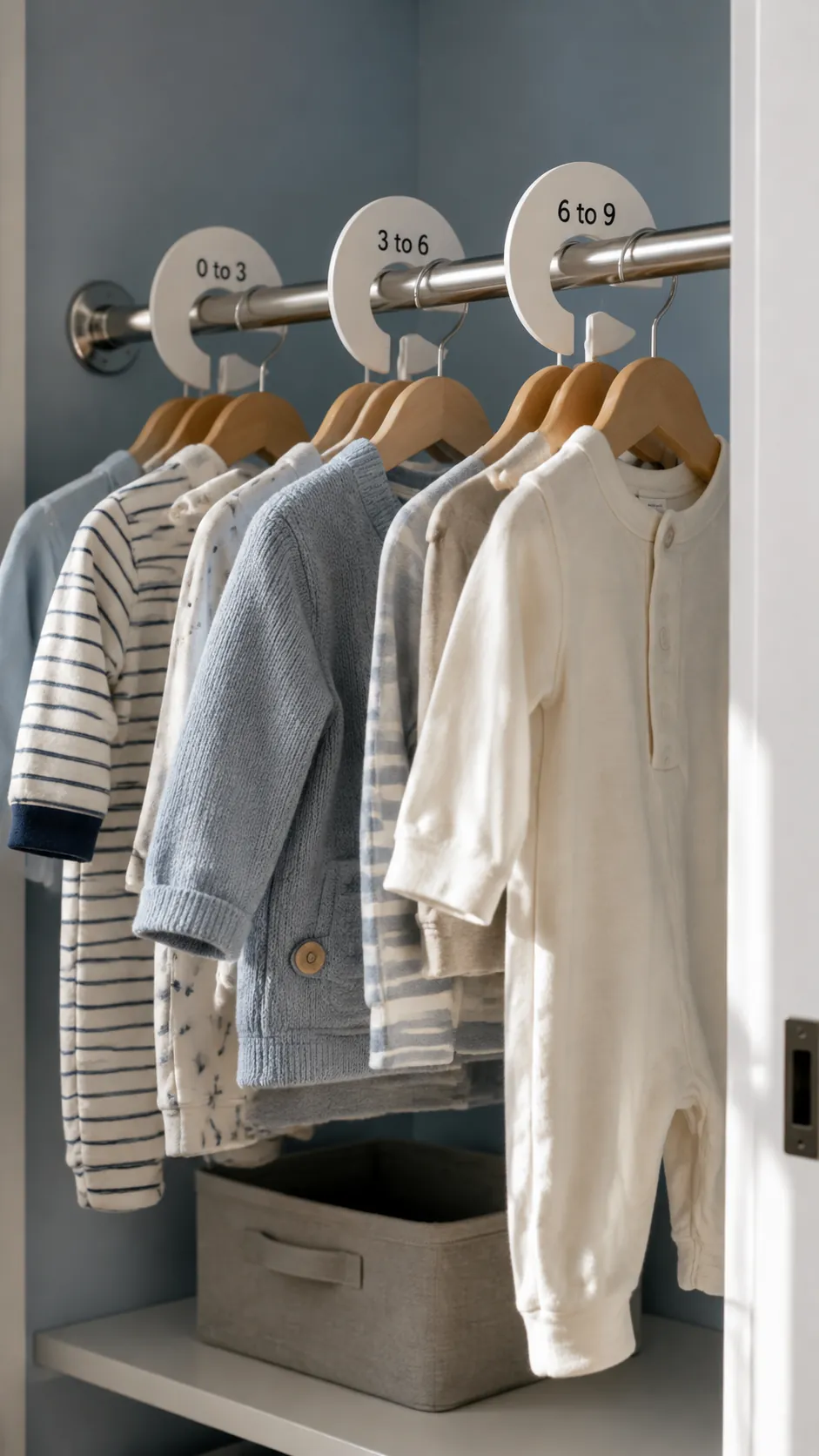
Simple size dividers can stop a short rail from becoming a search through tiny hangers. Arrange the groups in the order you expect to use them and leave a little room between categories. Check the actual garment length as well as the tag, because brands can fit differently. Closet dividers nursery systems work best as a guide that you adjust, not a rule that overrides what fits your baby.
Add a second rail where short clothes leave a gap
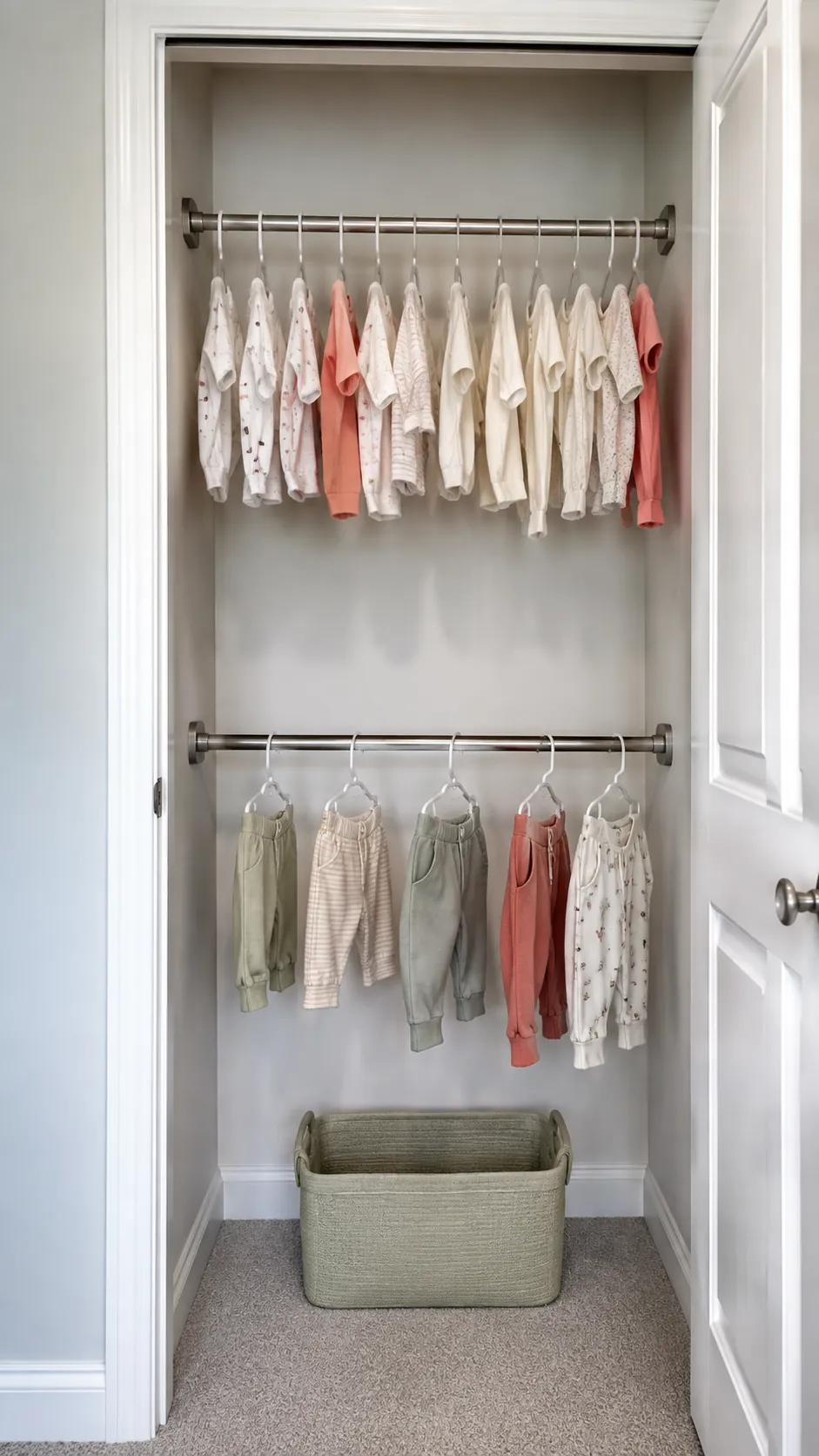
Short baby garments can leave a large unused area beneath a standard adult rail. A properly installed second rail can turn that space into another hanging zone. Check the supporting system’s load rating and installation instructions before adding it. Leave enough vertical room that clothes on the upper rail do not drag over the lower hangers. Plan for removing or moving the lower rail as clothing gets longer.
Fold everyday bodysuits upright in a drawer
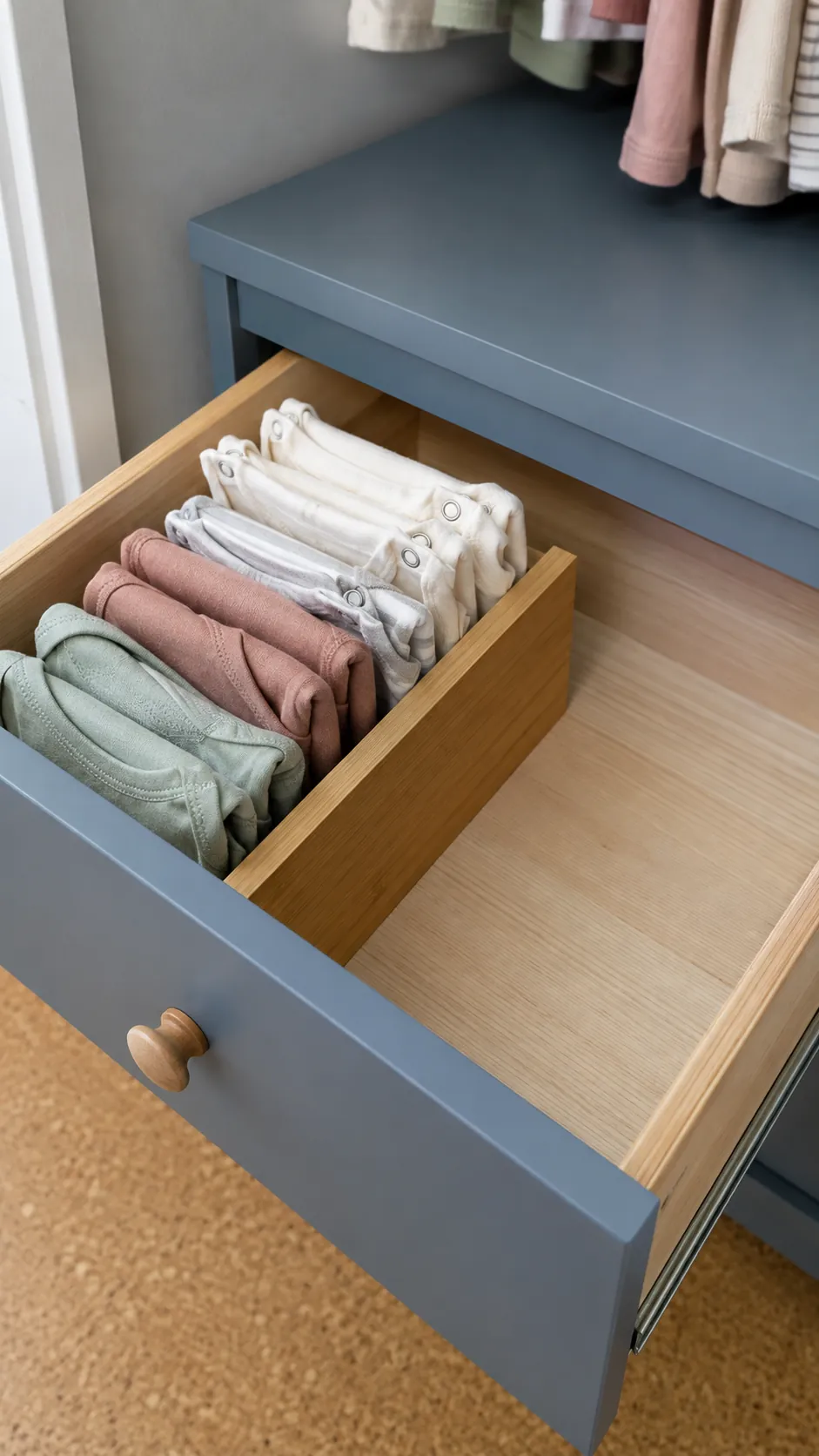
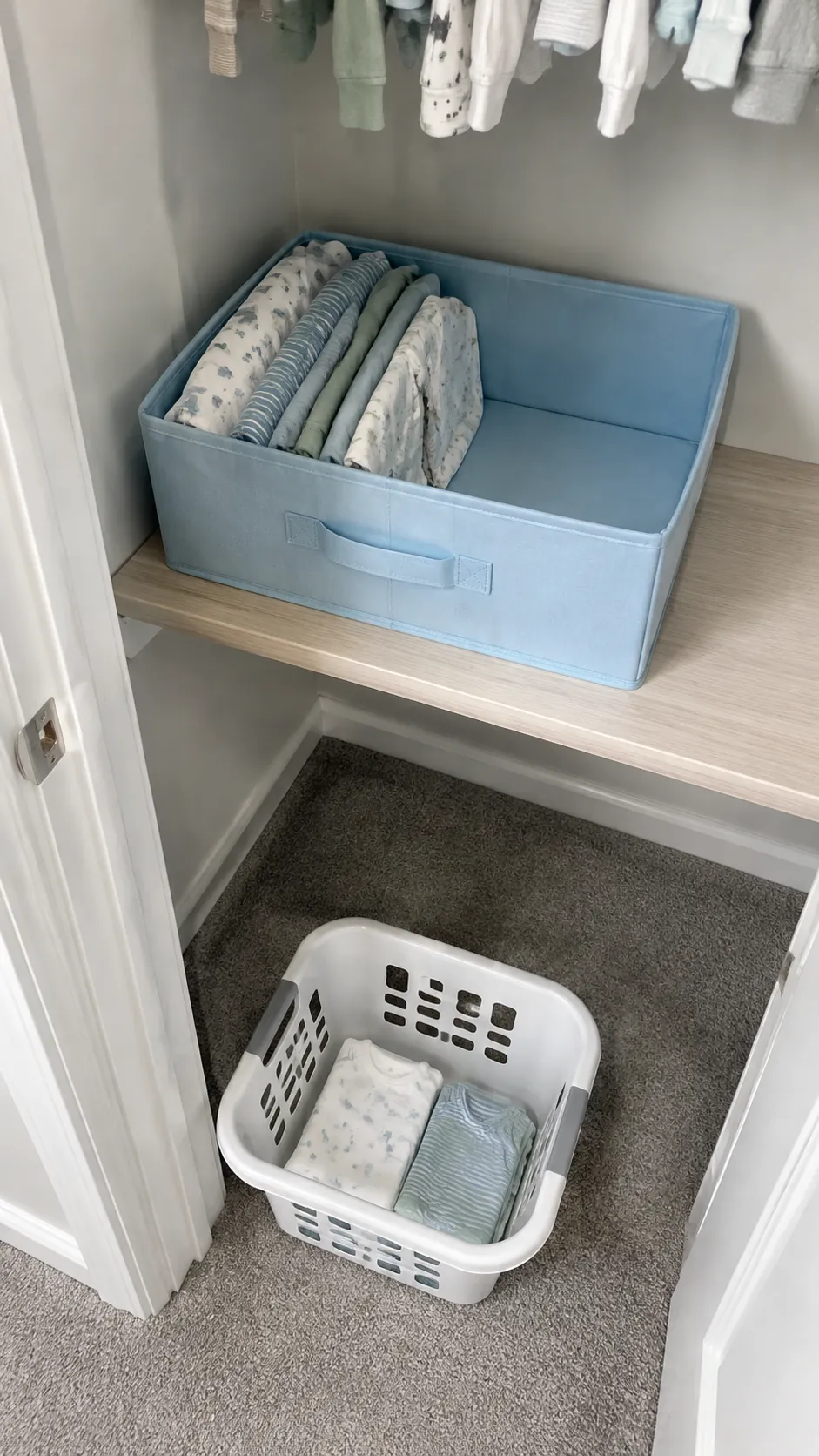
Hanging every bodysuit can use more rail space and more time than the garment needs. Fold everyday pieces so their edges stand in a drawer and each one can be seen from above. Use a divider to keep a partial row from falling over when clothing is in the wash. The fold only needs to be stable and easy to repeat, not perfectly identical for a photograph.
Keep a small next size basket ready
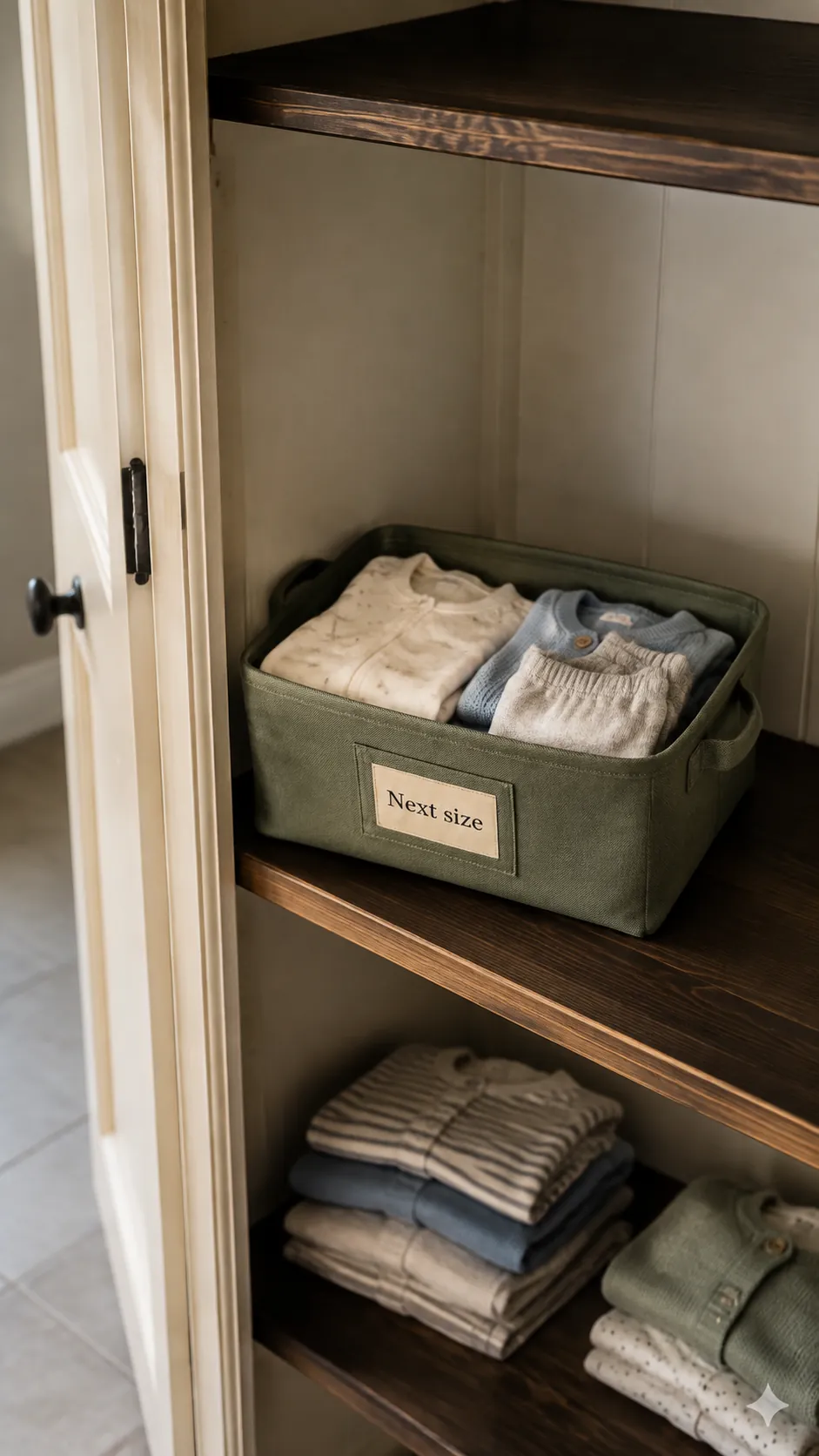
A single basket of the next likely size makes transitions easier than reopening several stored boxes. Put a few suitable basics there after checking their actual fit and the coming weather. Keep the basket separate from current clothes so unused pieces do not disappear into the daily rotation. When that size becomes current, refill the basket with the next group rather than adding another basket.
Create an outgrown clothes exit bin
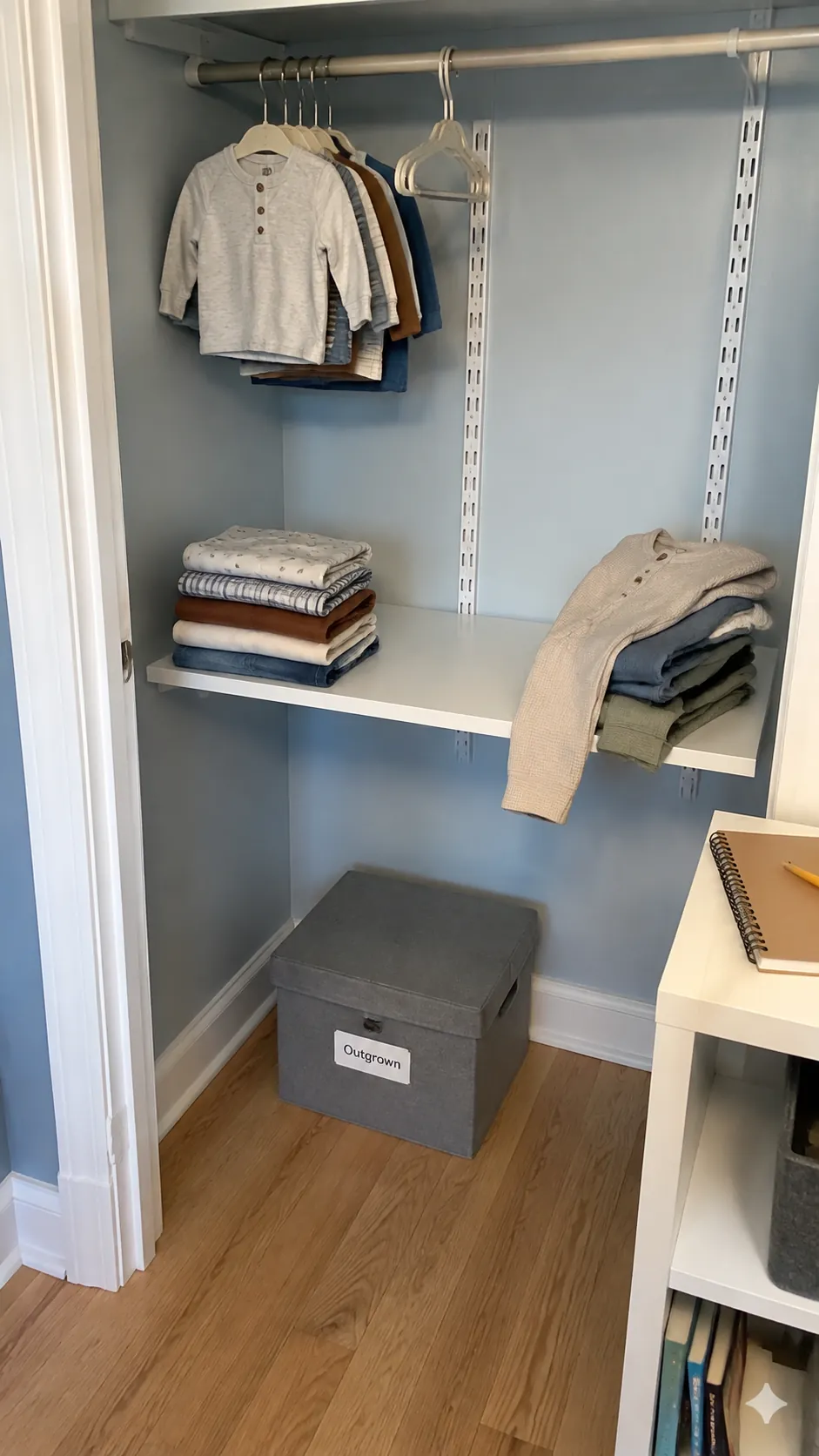
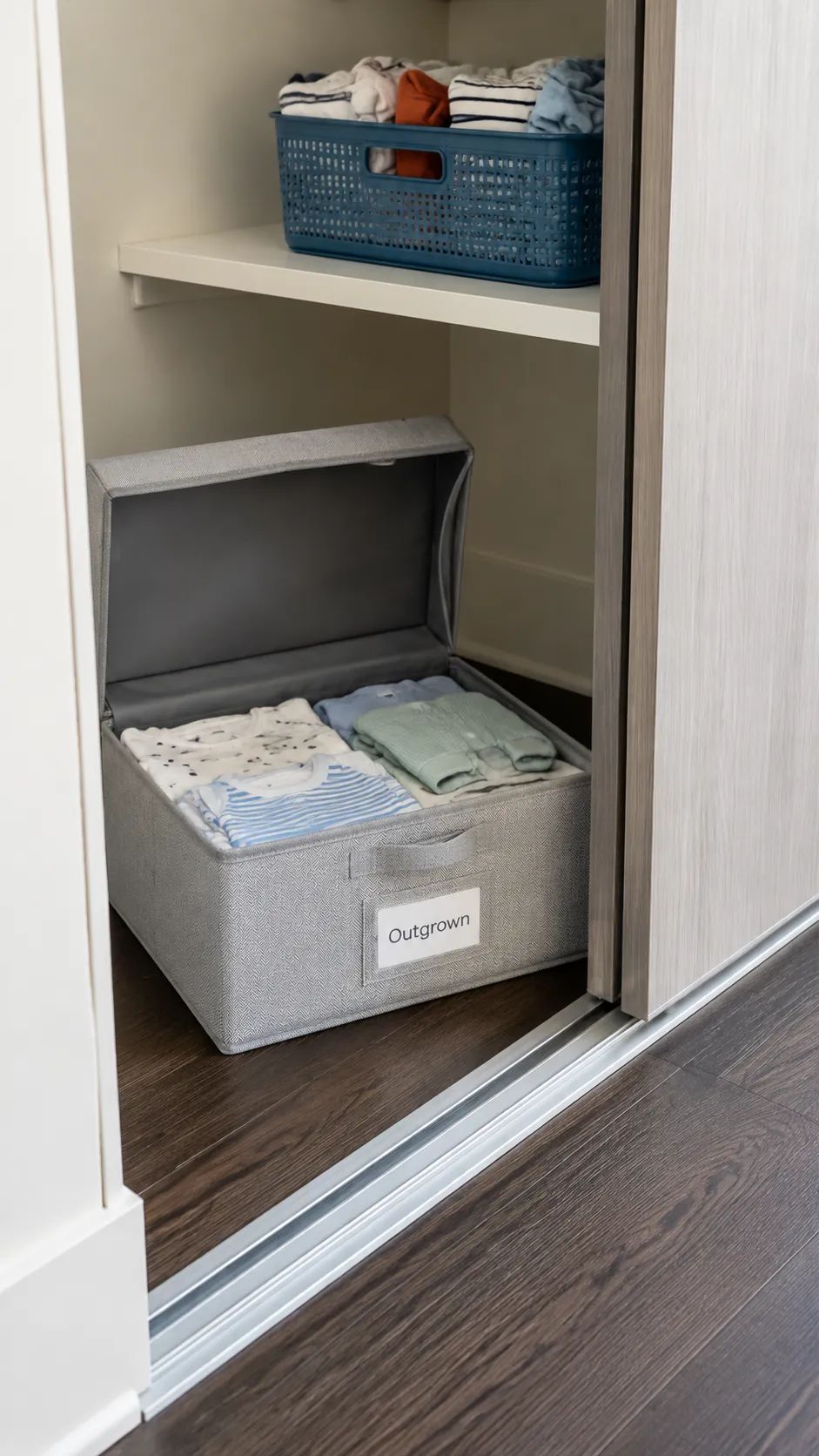
Give clothes that no longer fit a clear destination immediately after laundering. A small labeled bin inside the closet keeps them from cycling back into the dresser. Decide whether the contents are for keeping, passing on, or donation when the bin fills. Avoid letting this temporary station become permanent storage for several seasons. A regular exit is part of small nursery organization, not a task to save for a major cleanout.
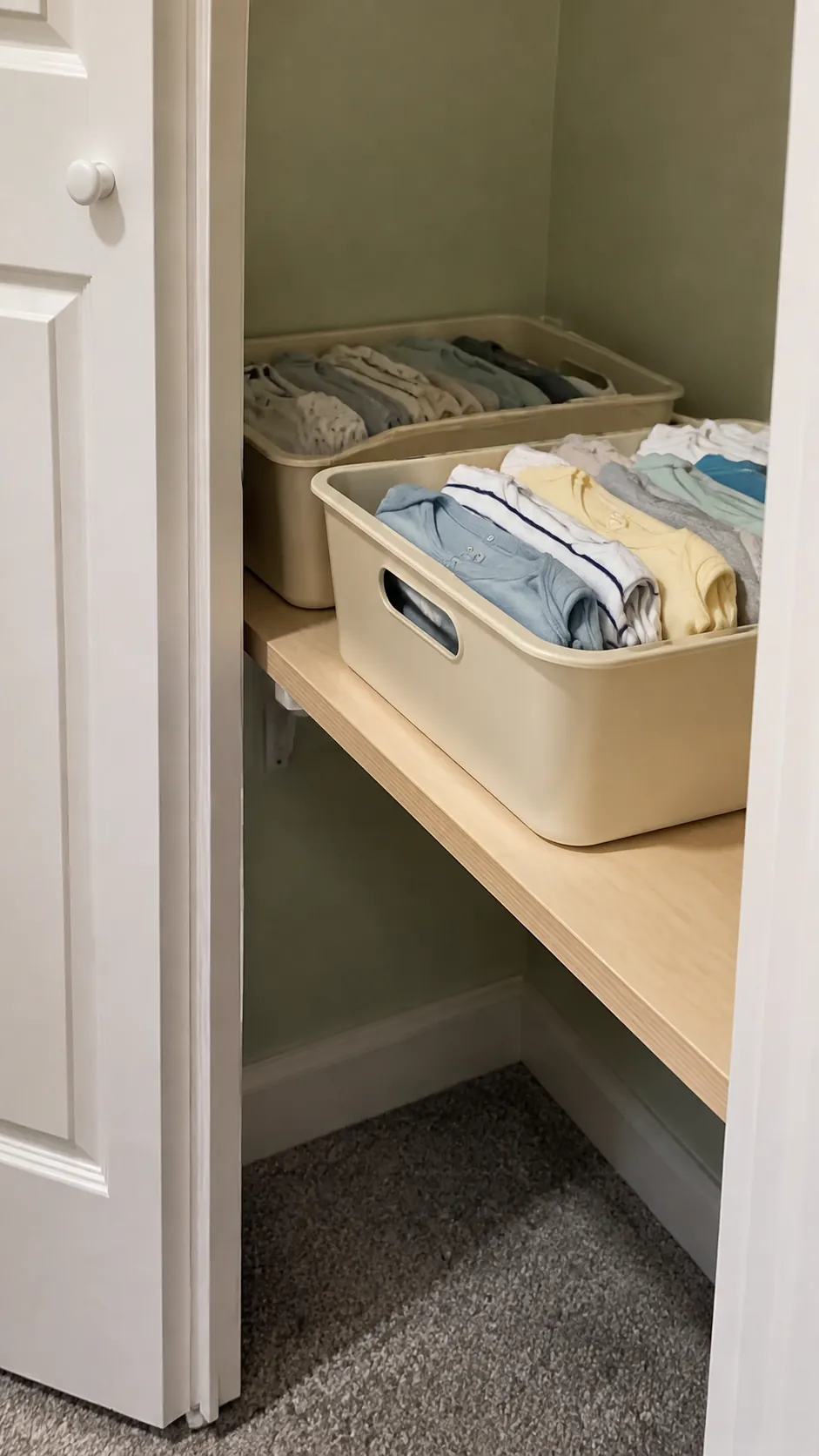
Match shallow bins to shallow shelves
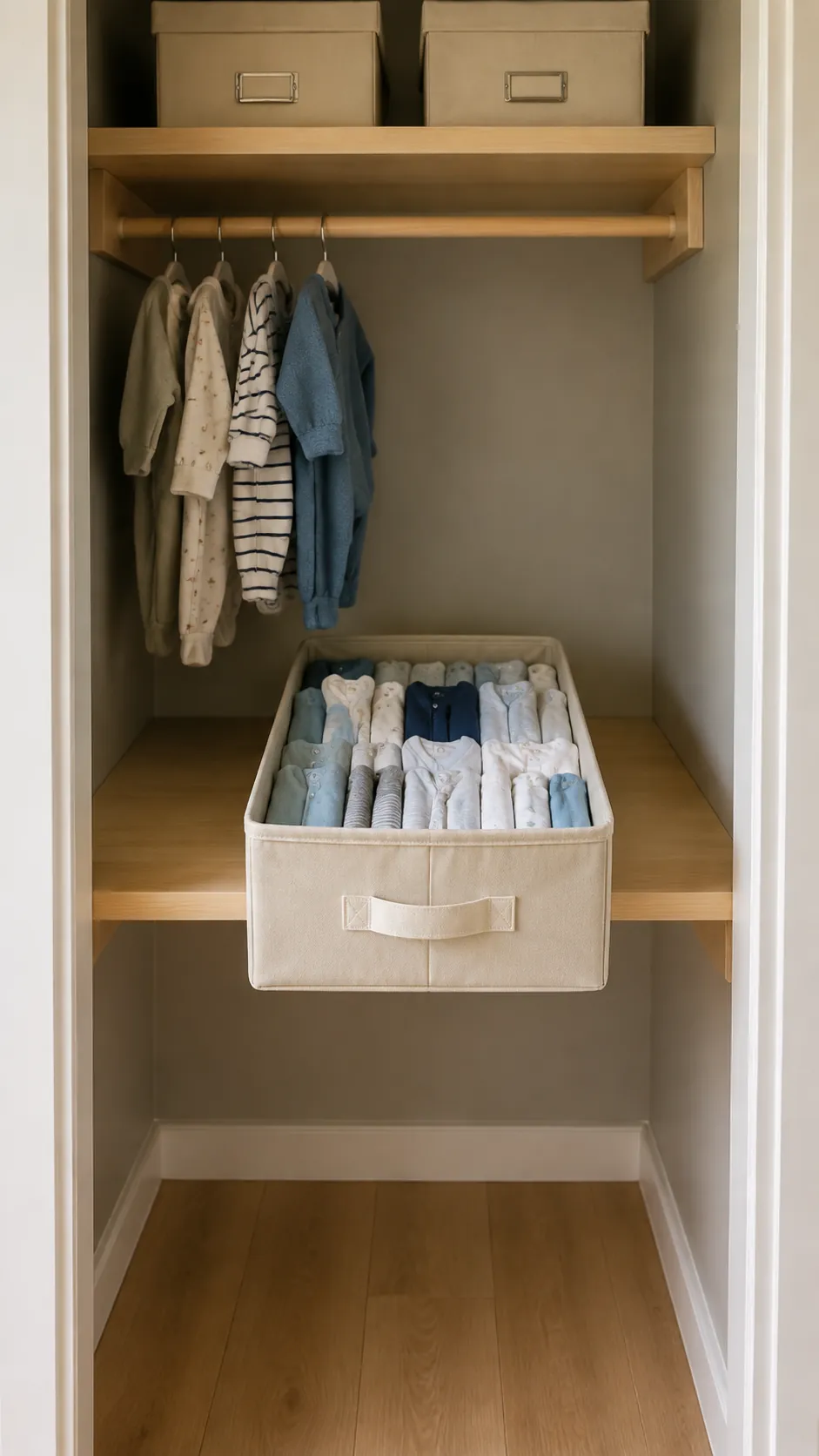
A deep box can waste a shallow shelf by hanging over the edge or hiding its contents at the back. Measure usable shelf depth, including the space a door needs to close, before choosing bins. A shallow open container lets you see folded clothing without pulling out a heavy stack. Leave finger room above the bin so removing it does not scrape the shelf or spill the contents.
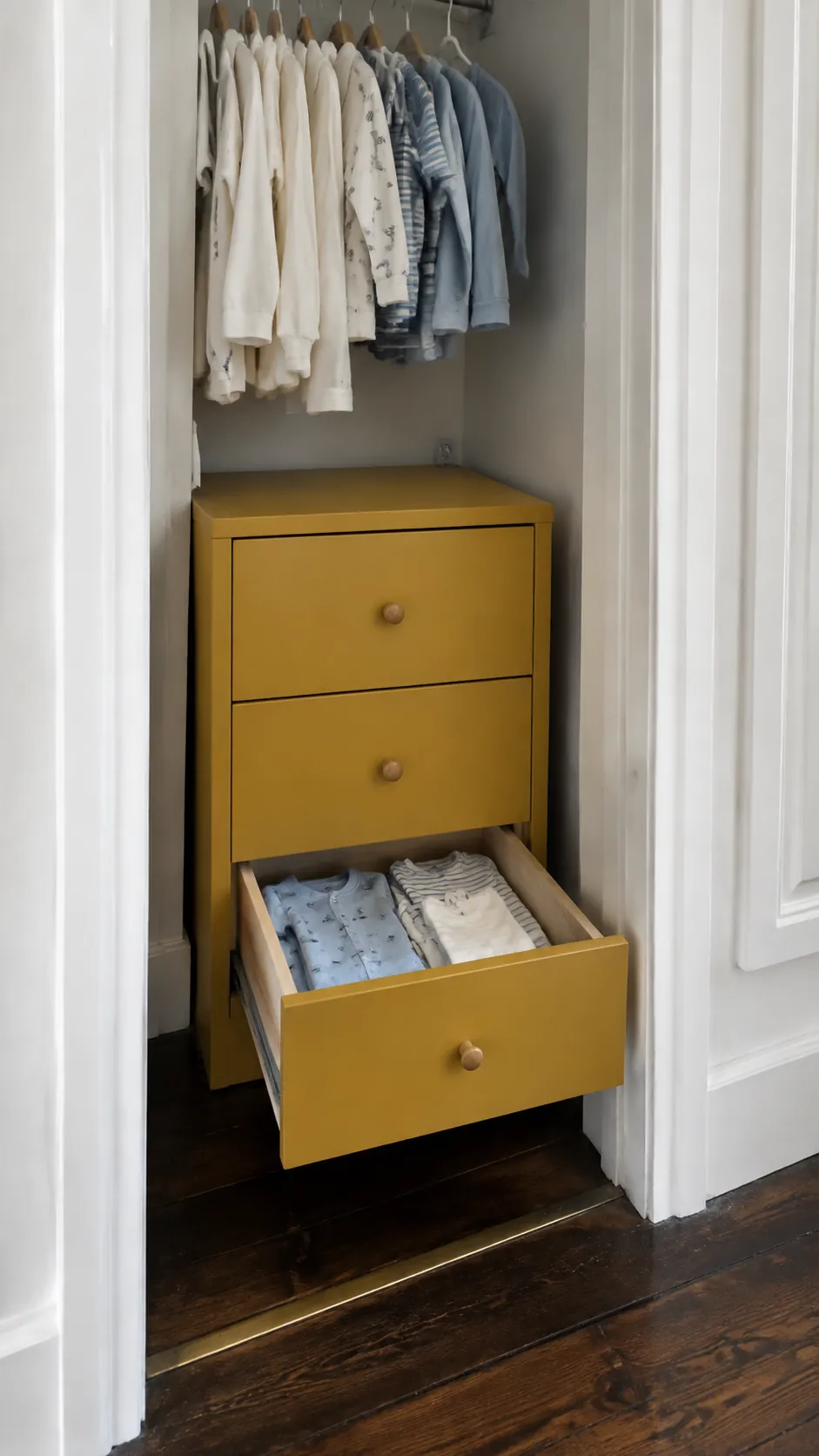
Fit a low drawer unit beneath the hanging rail
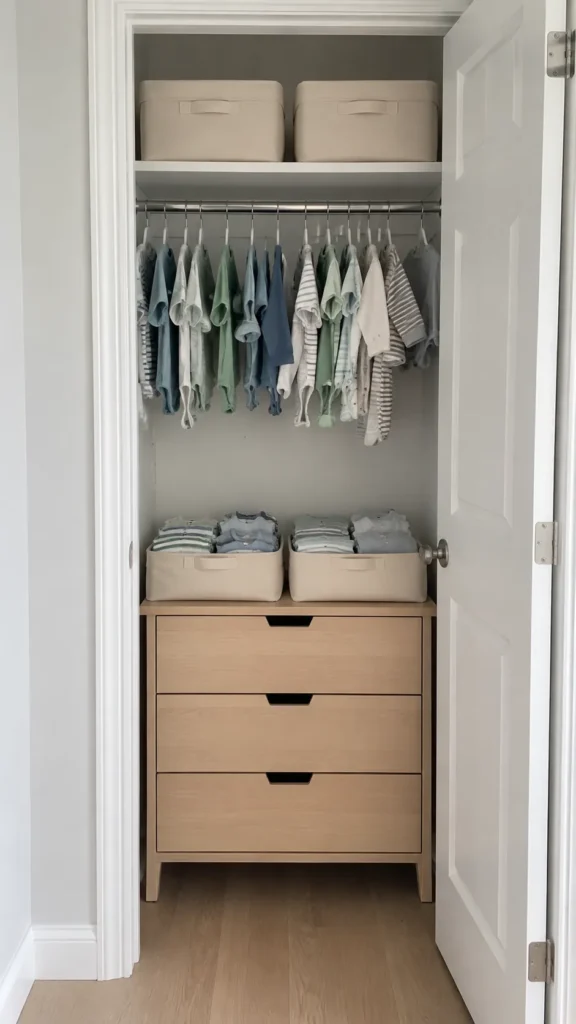
The space below short hanging clothes can hold a compact drawer unit for socks, pajamas, or spare linens. Check that its drawers open completely within the closet opening. Anchor the unit according to its instructions and keep the hanging garments clear of the top. Choose the unit around the opening width and door travel, not only the interior wall width.
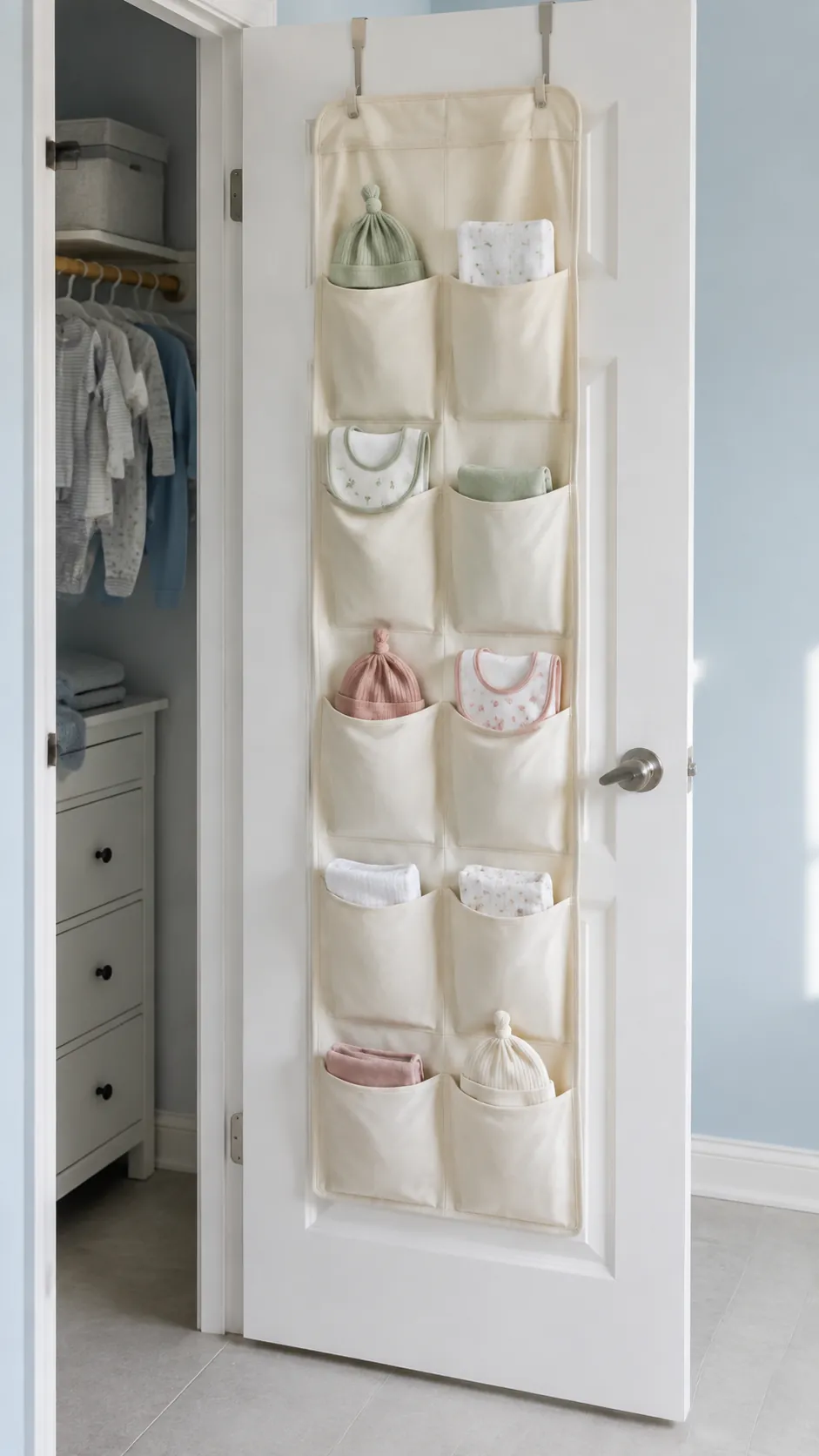
Use the inside of a door for light accessories
A slim door organizer can hold soft hats, bibs, and small cloths without taking shelf space. Confirm that the organizer fits the door and allows it to shut normally. Keep the load light and the attachment secure, and avoid loose cords or small detachable parts within a child’s reach. This idea works best when it adds visibility rather than turning the door into a bulging wall of storage.
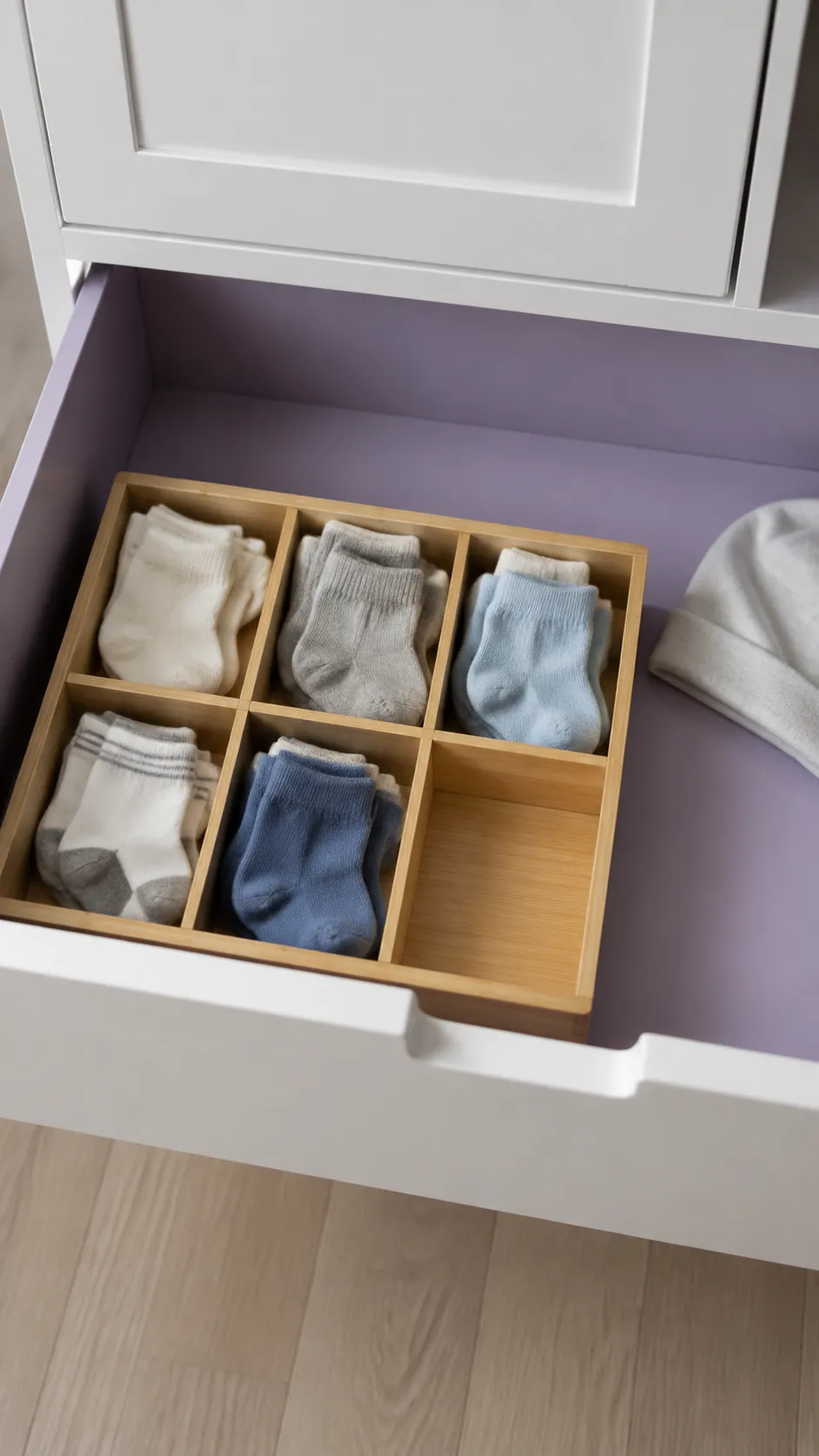
Give socks a divided compartment
Tiny socks become difficult to find when they share a large bin with everything else. Use a small divided tray or a few soft compartments to keep pairs together. Resist assigning a separate box to every possible accessory, since the containers can consume more room than their contents. One compact section is usually easier to maintain than an elaborate sorting system.
Store spare linens as complete sets
Keep each spare fitted sheet with the other clean linens you actually use for that sleep space. Fold the pieces together in a dedicated shelf bin so a change does not require searching several locations. Follow the sleep product’s requirements and keep loose blankets and pillows out of an infant’s sleep surface. A labeled linen bin is storage, not a reason to add extra bedding to the crib.
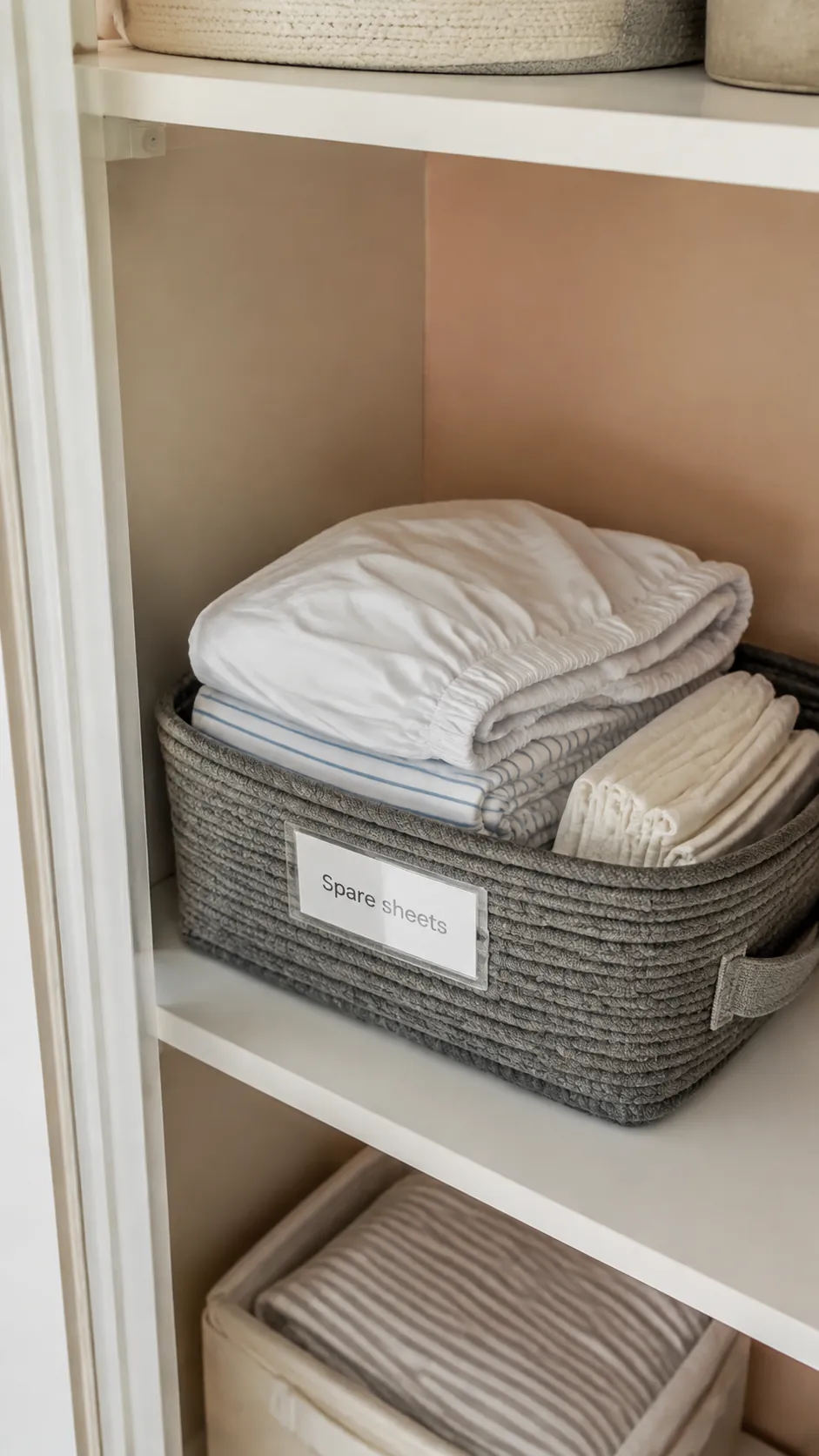
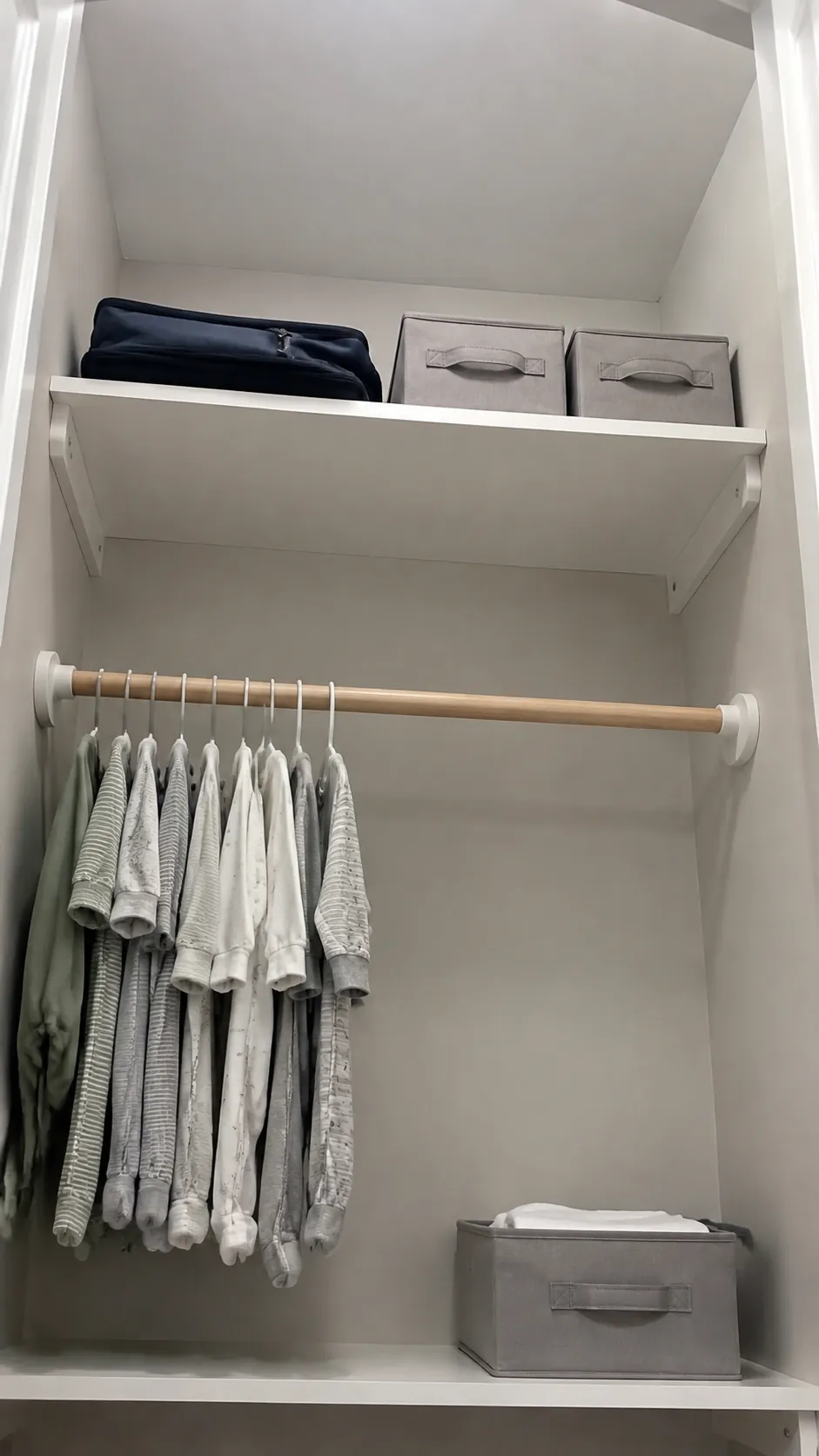
Reserve upper shelves for light occasional items
Upper shelves are useful for things you rarely need, provided the contents stay light and the shelving is properly installed. Soft empty travel bags or lightweight seasonal clothing containers can live above the daily zone. Keep heavy supplies lower and never climb on nursery furniture to reach a shelf. Use suitable access equipment when needed and keep it stored away from children afterward.
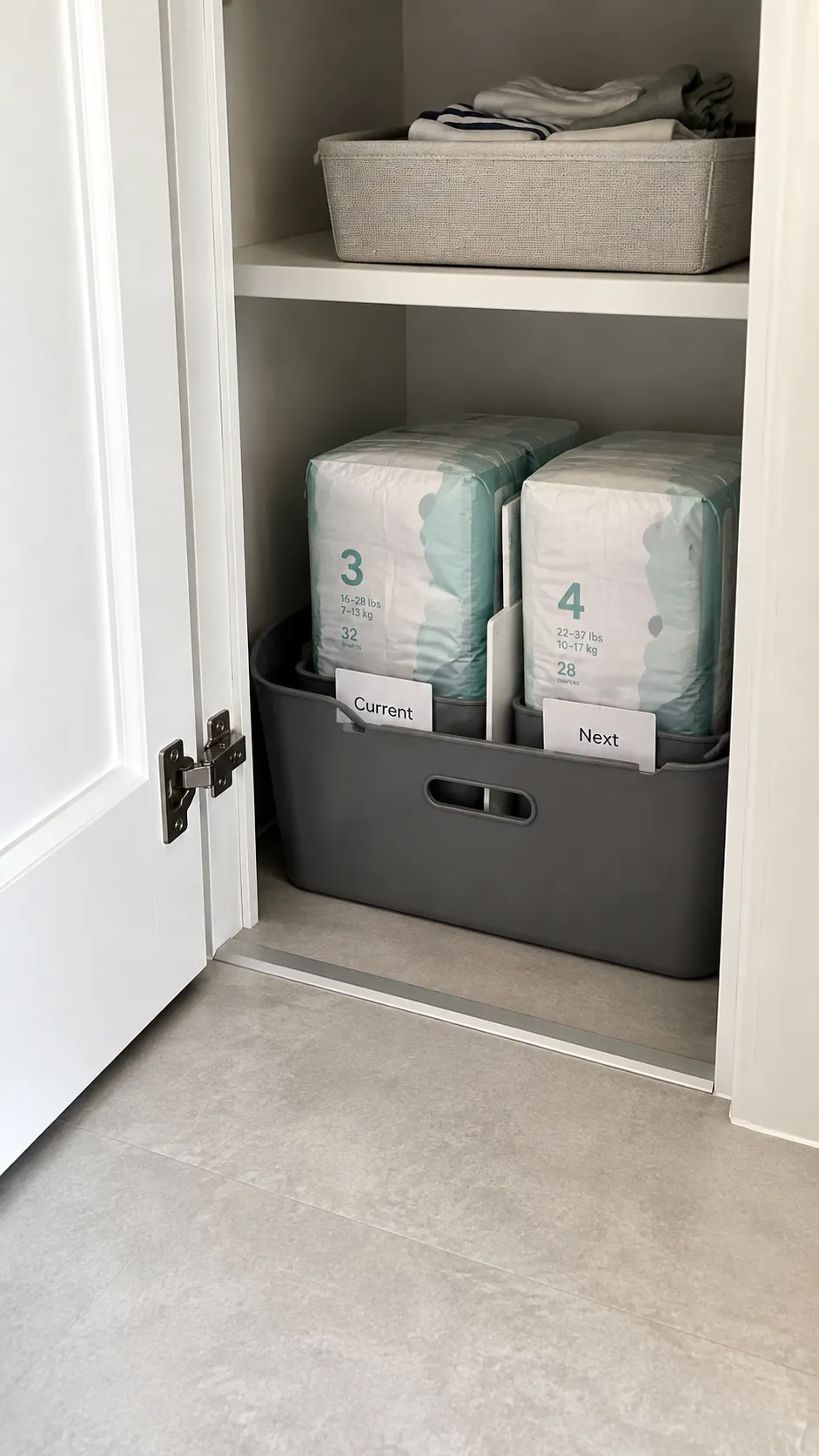
Move bulky diaper refills to a low zone
A few active changing supplies need to be close at hand, but the entire refill stock does not. Put unopened diaper packs on a low closet shelf or in a stable floor bin that leaves the door clear. Separate sizes so a larger pack does not get opened by mistake. Buy only the quantity your available storage and changing needs can reasonably support.
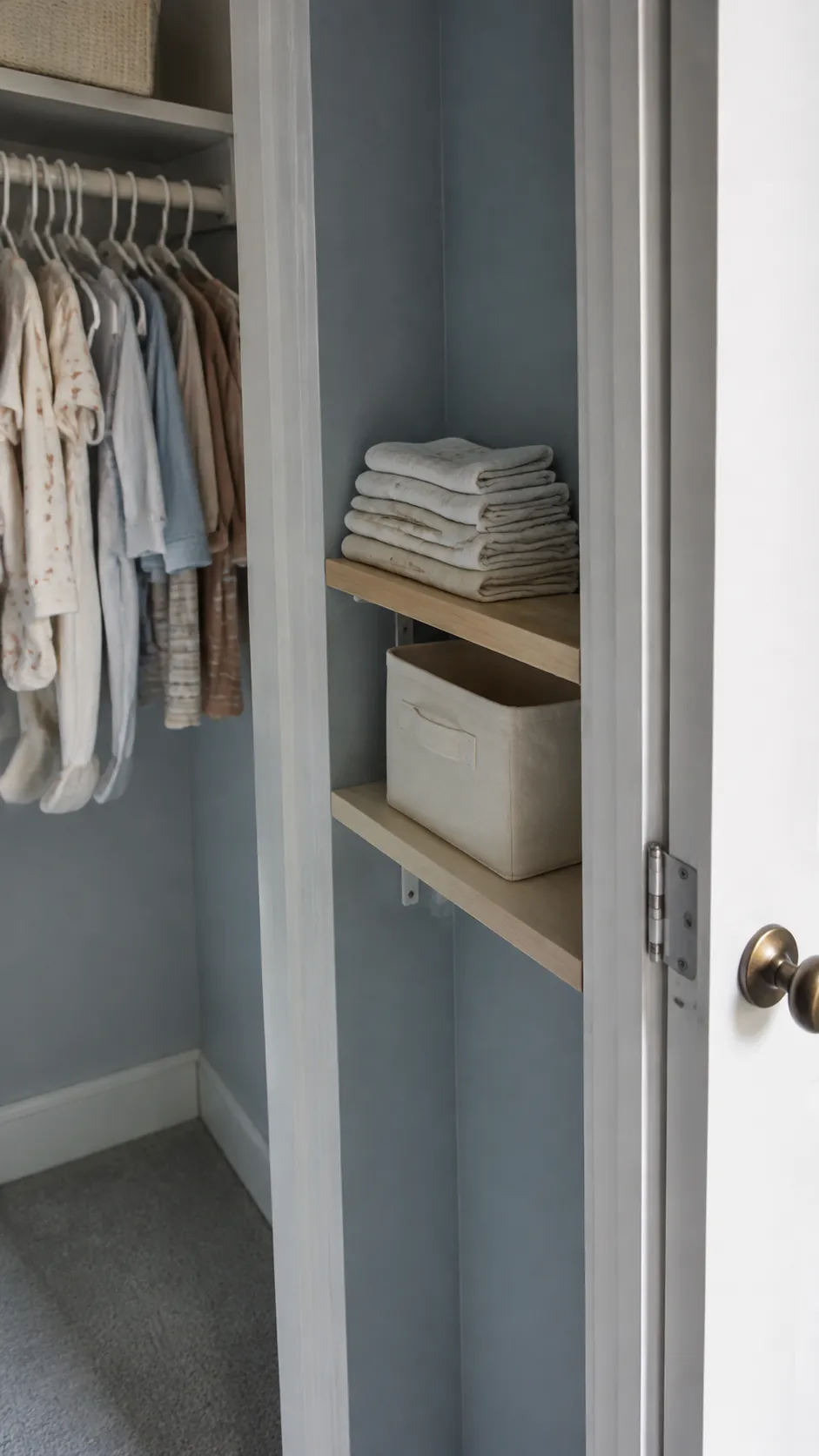
Use the narrow side return for a small shelf
Some closets have a side recess that the main rail does not use. A narrow properly supported shelf there can hold a small stack of folded cloths or a compact bin. Check that hangers and door hardware will not strike it before installing anything. Keep the shelf shallow enough that the main closet remains easy to see and reach.
Add a light that reveals the back corners
A dark closet can feel disorganized even when every item has a place. A suitable securely installed light can make shelf labels and clothing colors easier to identify. Follow the light’s installation and clearance instructions, and keep wiring or batteries inaccessible to children. Avoid loose lamps, dangling cables, or heat producing fixtures close to stored fabric.
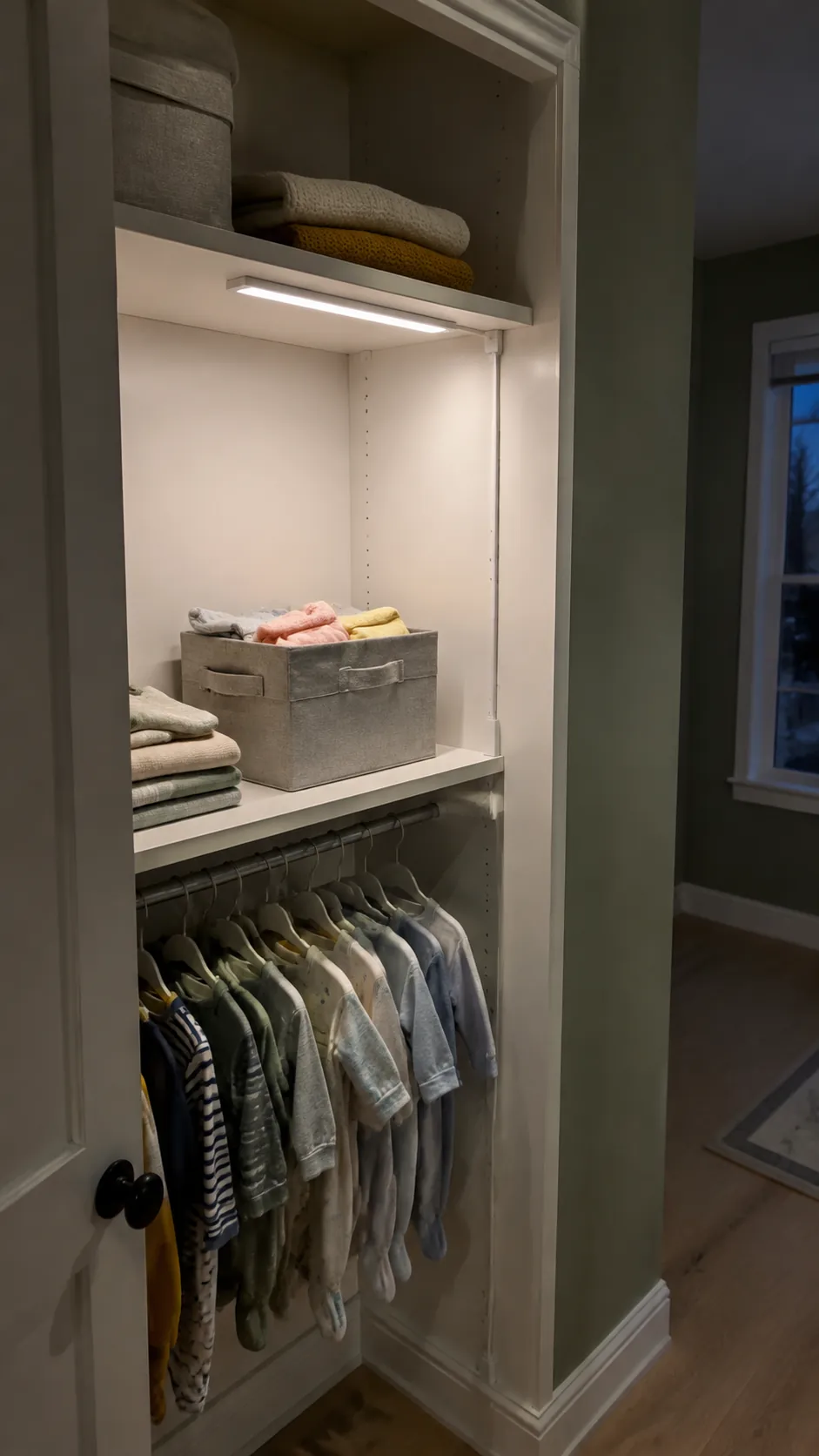
Label for everyone who uses the closet
A label should help another caregiver put something back without asking you. Choose plain categories such as current size, next size, spare sheets, and outgrown. Put labels on the face you can see when the container is stored, rather than only on its lid. Update them when the contents change so the system stays truthful.
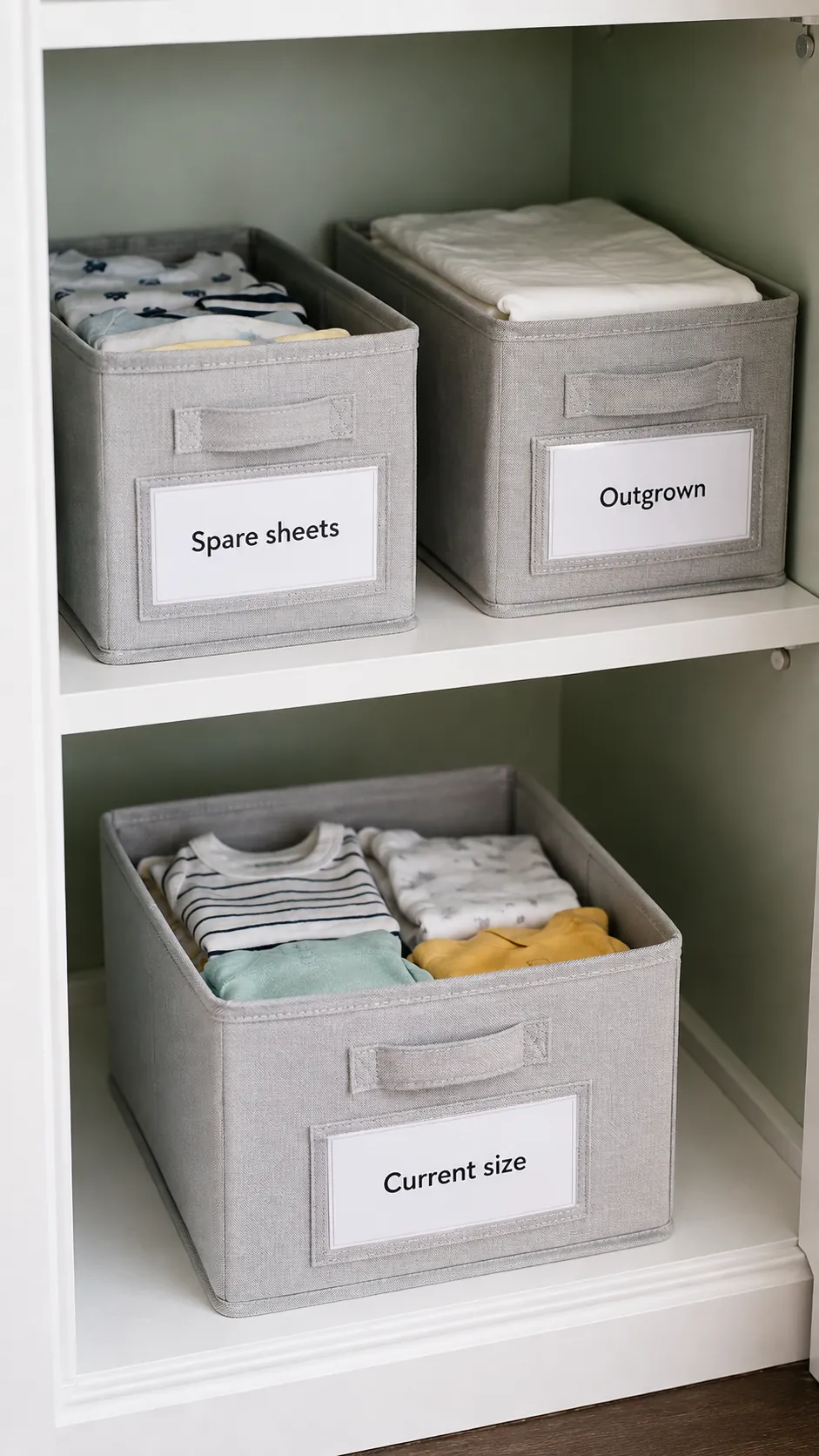
Keep a shared closet divided by person
A nursery closet may still need to hold adult clothing or household items. Give each user a defined rail section or shelf column instead of alternating baby and adult belongings. Store potentially hazardous household products elsewhere in appropriate secure storage. A clear boundary makes the available baby room storage easier to judge before buying another organizer.
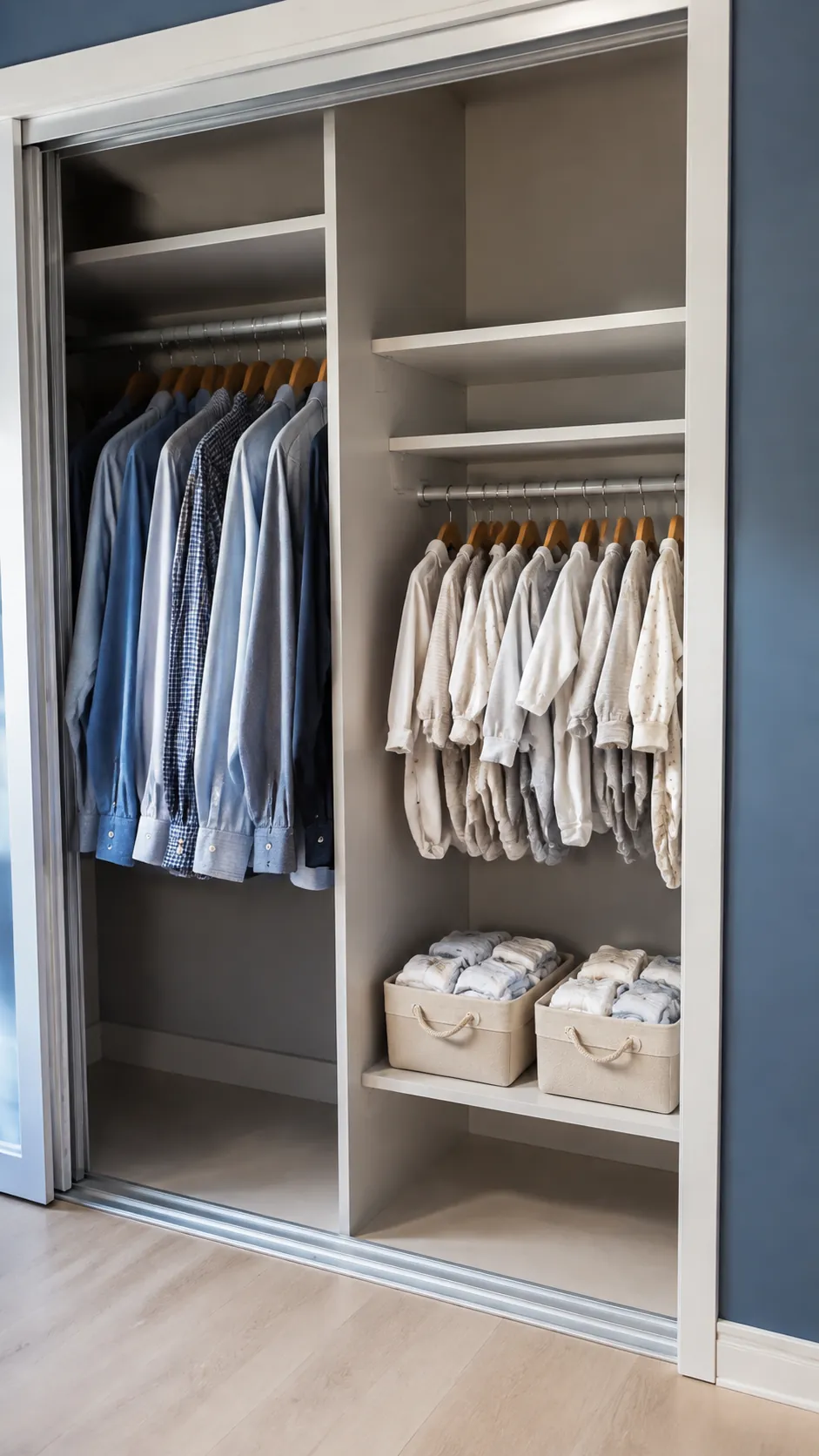
Set aside a few ready outfits
A small group of ready outfits can simplify mornings without requiring a separate outfit for every day of the month. Pair the pieces you regularly use and place them together in a short hanging section or shallow basket. Adjust the combinations for weather and actual fit rather than following a rigid schedule. Keep special occasion clothes outside this working group so they do not crowd the basics.
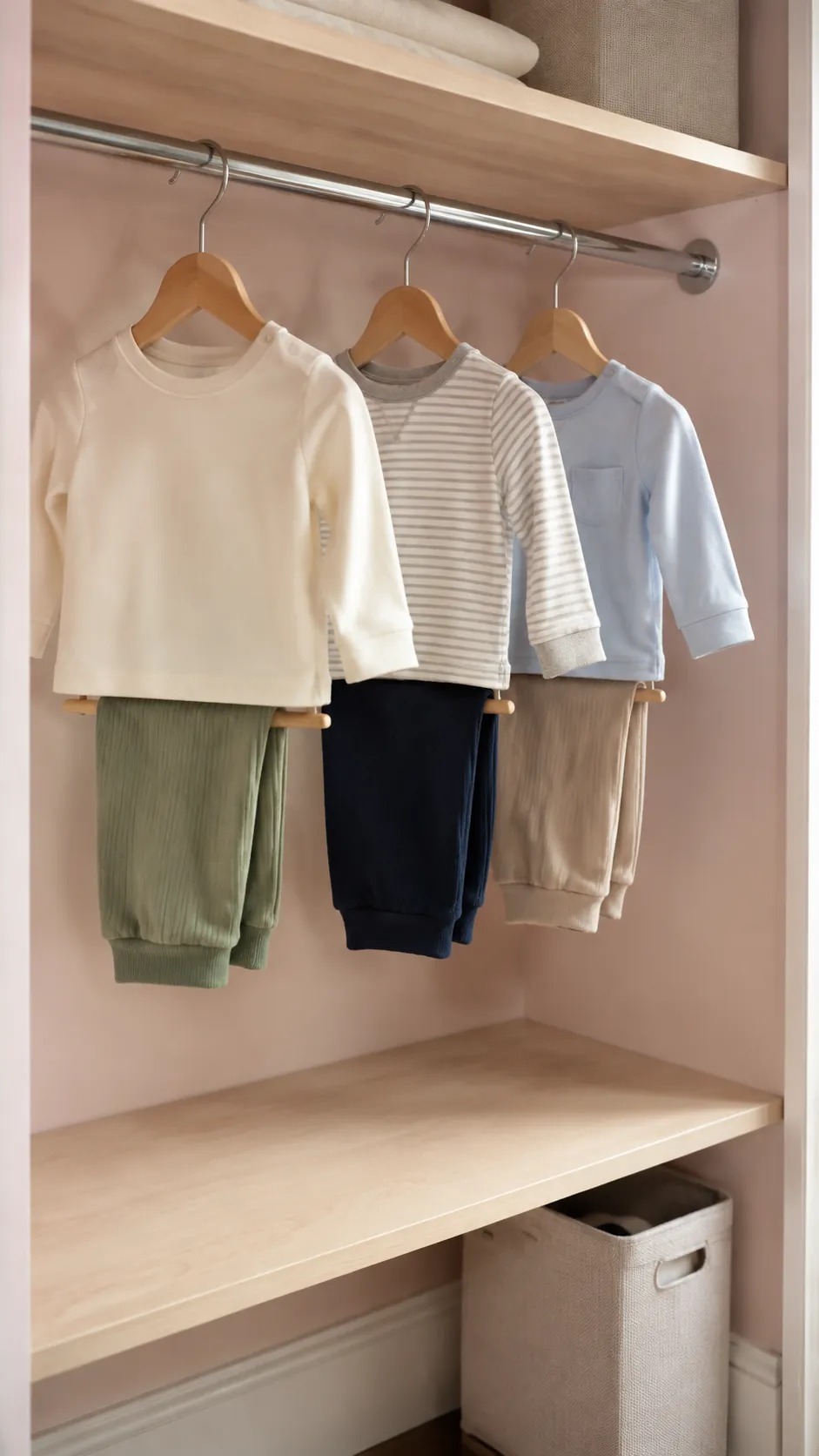
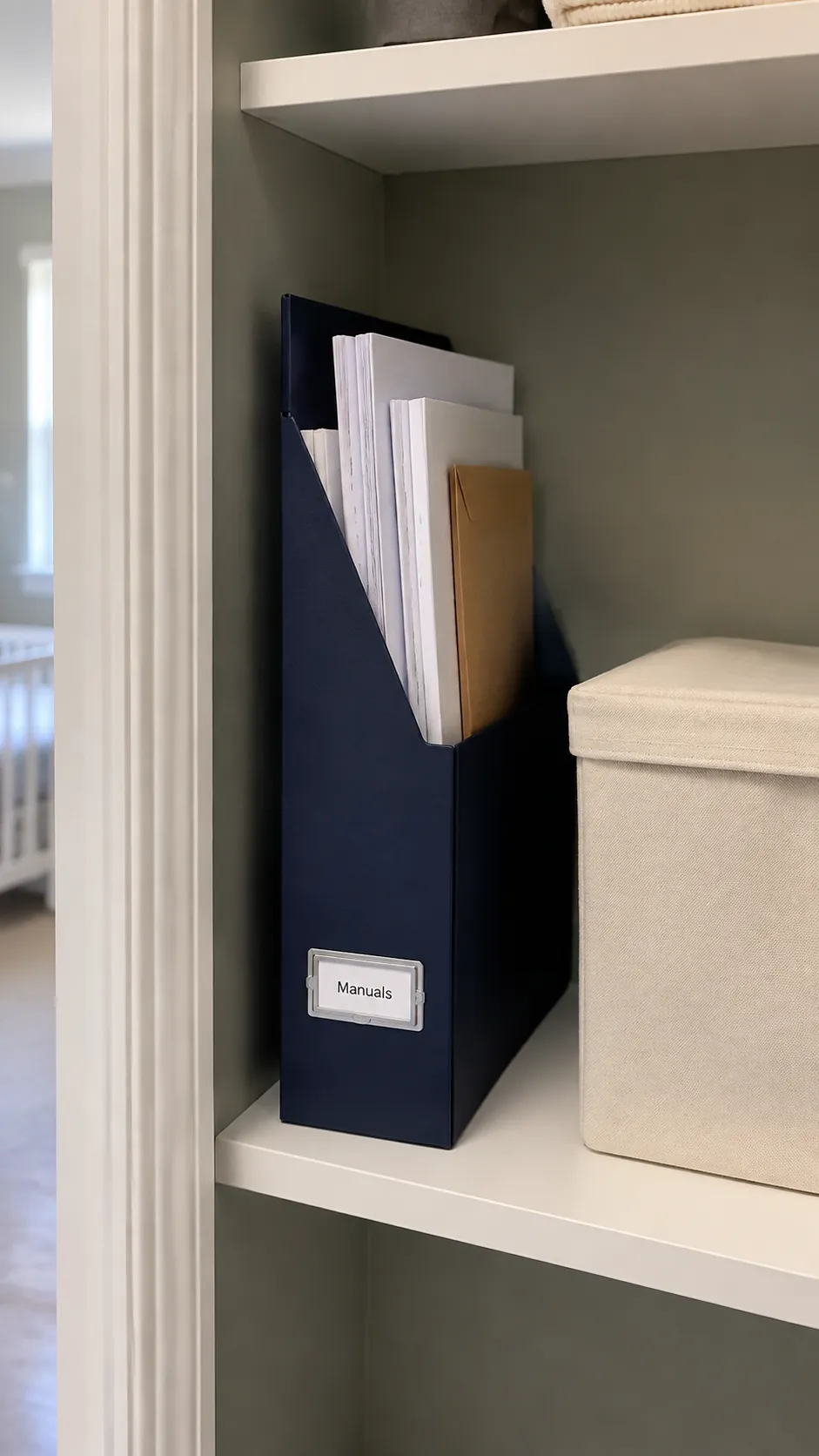
Keep manuals in one slim document file
Crib, dresser, and other baby equipment instructions are easier to find when they share one location. A slim labeled document file can sit upright on a closet shelf away from clothing piles. Keep receipts or product details with the relevant manual if they will help with a future adjustment or recall check. The file should be easy for an adult to retrieve without adding loose paper to every drawer.
Leave room for clean laundry to return
An organizer filled to its limit looks efficient until the washing is finished. Leave enough room in each active category for the clothes currently in the hamper or laundry. If putting things away requires compressing every stack, reduce what lives in the daily zone. A little unused capacity is what keeps nursery organization ideas working between tidy photographs.
Review the closet when the clothing rotation changes
Use a size change or a seasonal change as the cue for a short closet review. Pull pieces that no longer fit, bring the next useful group forward, and check whether rails or shelves still suit the garment lengths. Look again at attachments, reachable items, and any new climbing opportunities as your child becomes mobile. Finish by putting one everyday outfit away, because the system is only useful if that ordinary task stays easy.