17 Dusty Blue Nursery Color Scheme Ideas
The blue you liked on a screen may turn almost gray on one wall and noticeably cooler on another. Start with the room’s fixed surfaces, especially the floor and trim, before choosing companion colors. A little contrast in material or depth often does more than adding another pastel.
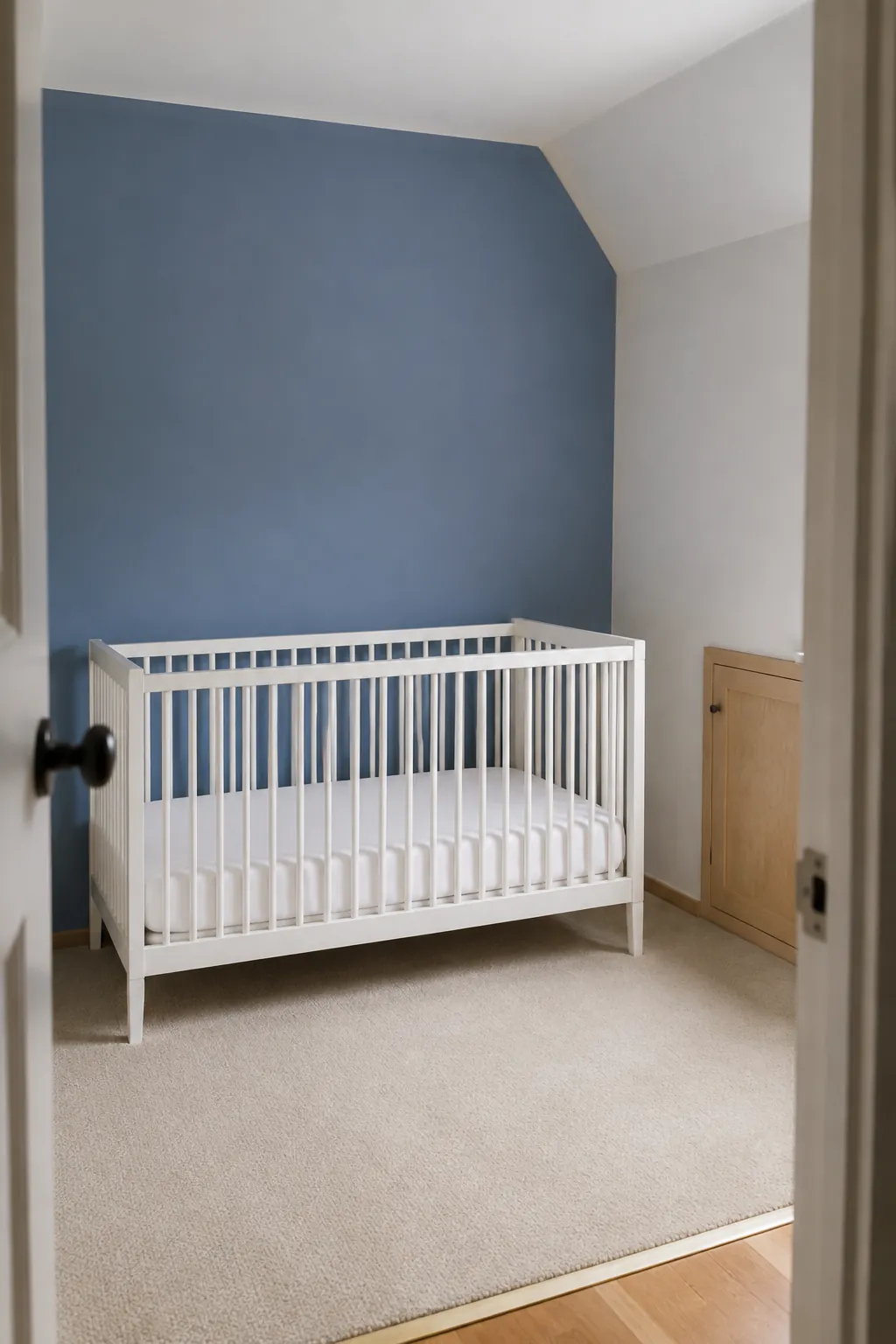
Warm White With a Blue Accent Wall
A warm white gives dusty blue room to show its character without covering every wall. Put the blue on one uninterrupted surface and carry the white around the corners. Compare both samples beside the existing trim because a creamy white can make the blue look stronger. Keep the crib finish simple so the wall remains the main decision.
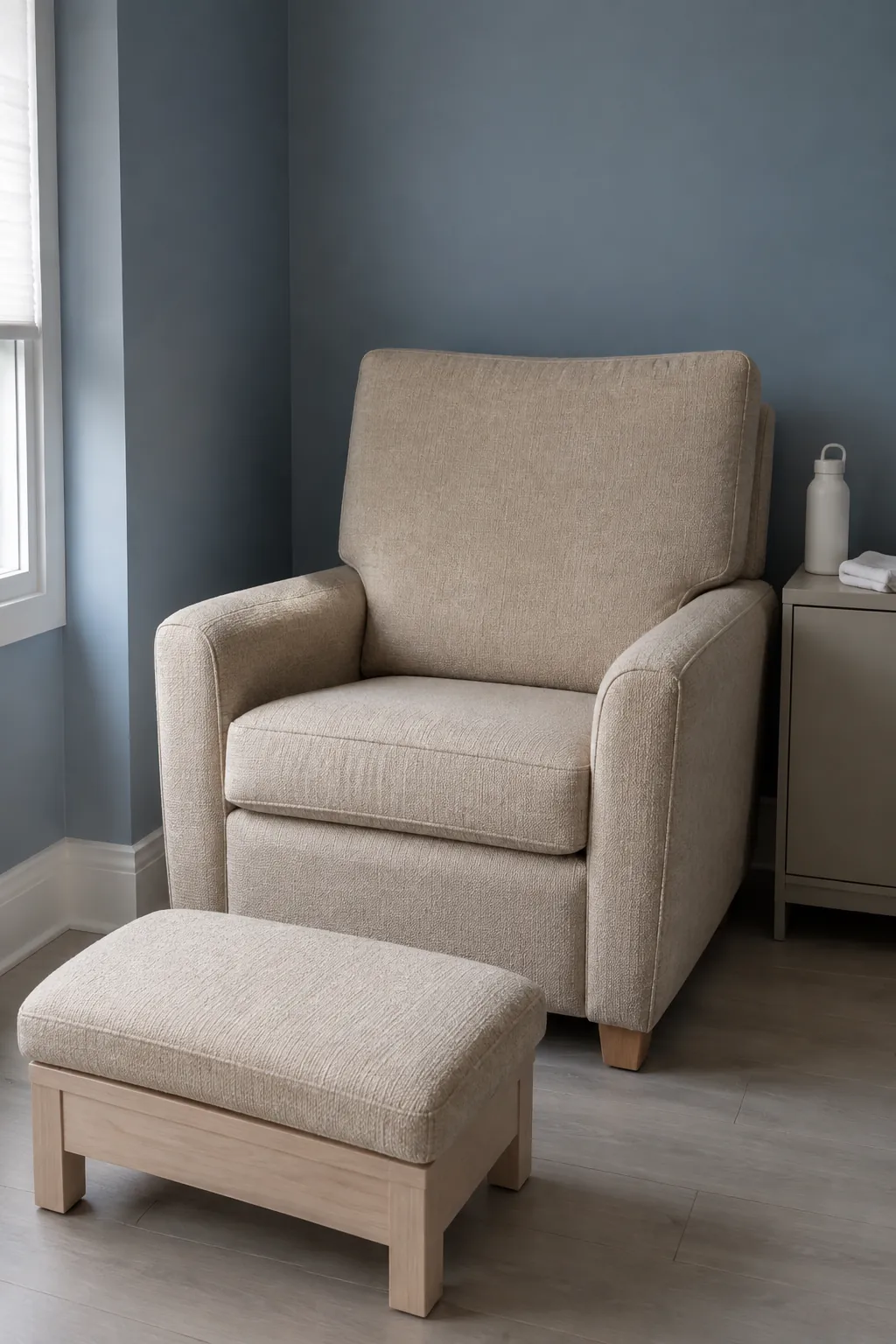
Oatmeal Upholstery Against Blue
An oatmeal feeding chair adds a substantial warm surface to a dusty blue nursery. Choose a fabric with visible weave rather than relying on a yellow undertone for warmth. Place it where daylight reaches the seat so the texture remains visible. A plain footrest in the same neutral family can connect the corner without requiring a matching furniture set.
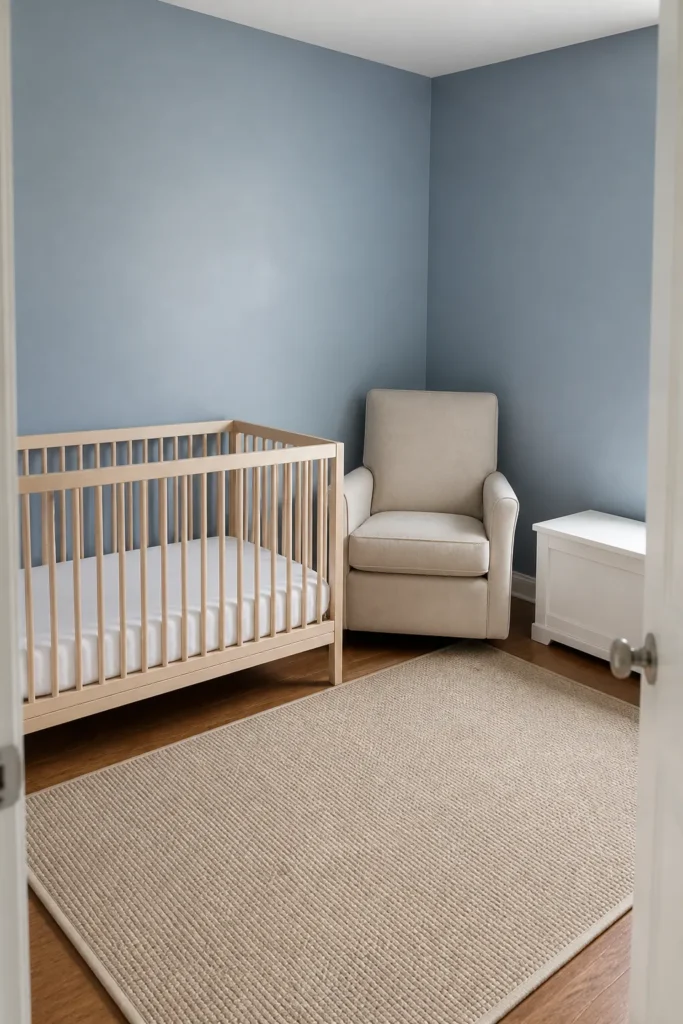
Blue and Beige With Pale Oak
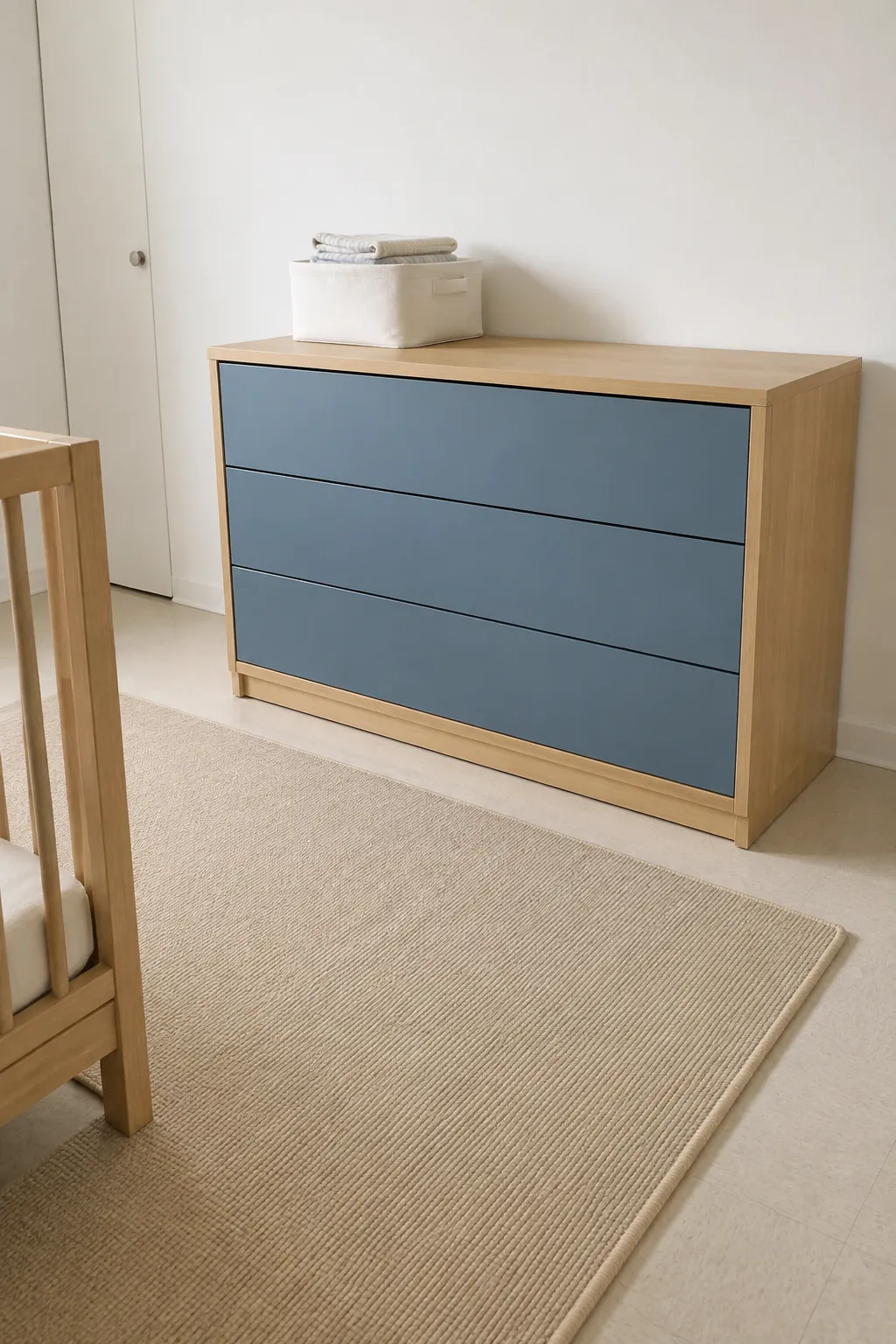
A blue and beige nursery feels more coherent when the wood finish sits between the two colors. Pale oak can connect a beige rug to blue painted storage without introducing a strong orange note. Let beige occupy the floor and blue occupy one furniture piece if painting the walls is impractical. Test the oak sample with the rug in shade, where beige sometimes looks grayer.
Dusty Blue With Soft Sage
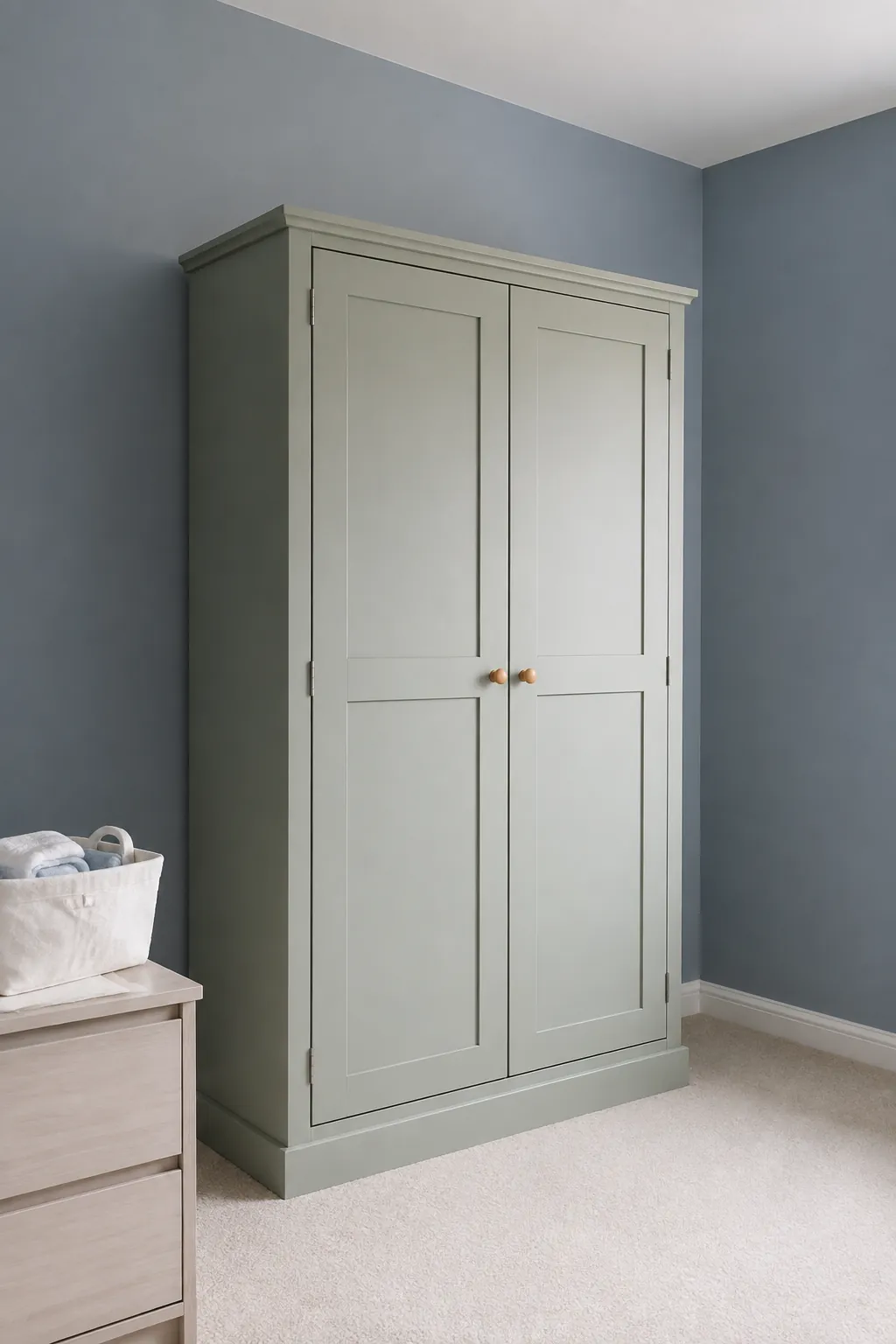
Soft sage offers a gentle second color when an all blue room feels too uniform. Use it on a closed wardrobe and keep the blue on the surrounding wall. The green should be clearly different from the blue but similar in softness. Avoid adding mint and olive at the same time, since too many nearby greens make the palette harder to control.
A Navy Detail in a Pale Blue Room
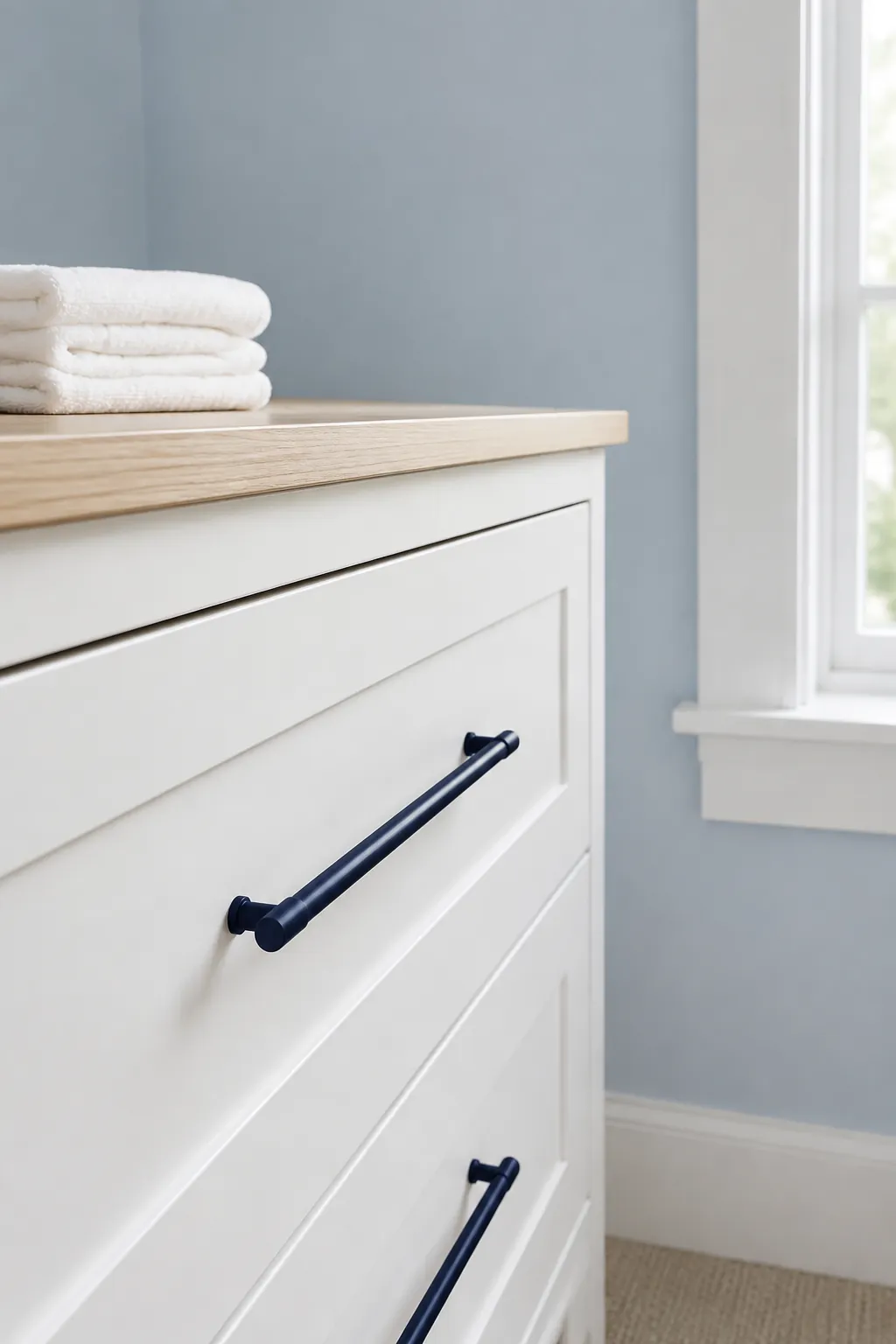
A little navy gives pale dusty blue a useful reference point. Try narrow navy handles on a white dresser instead of adding a second dark wall. The difference in depth helps the lighter blue read as intentional color rather than an uncertain gray. This is an easy direction for boy nursery colors that does not require sports or nautical decoration.
Blush Textiles With Gray Blue
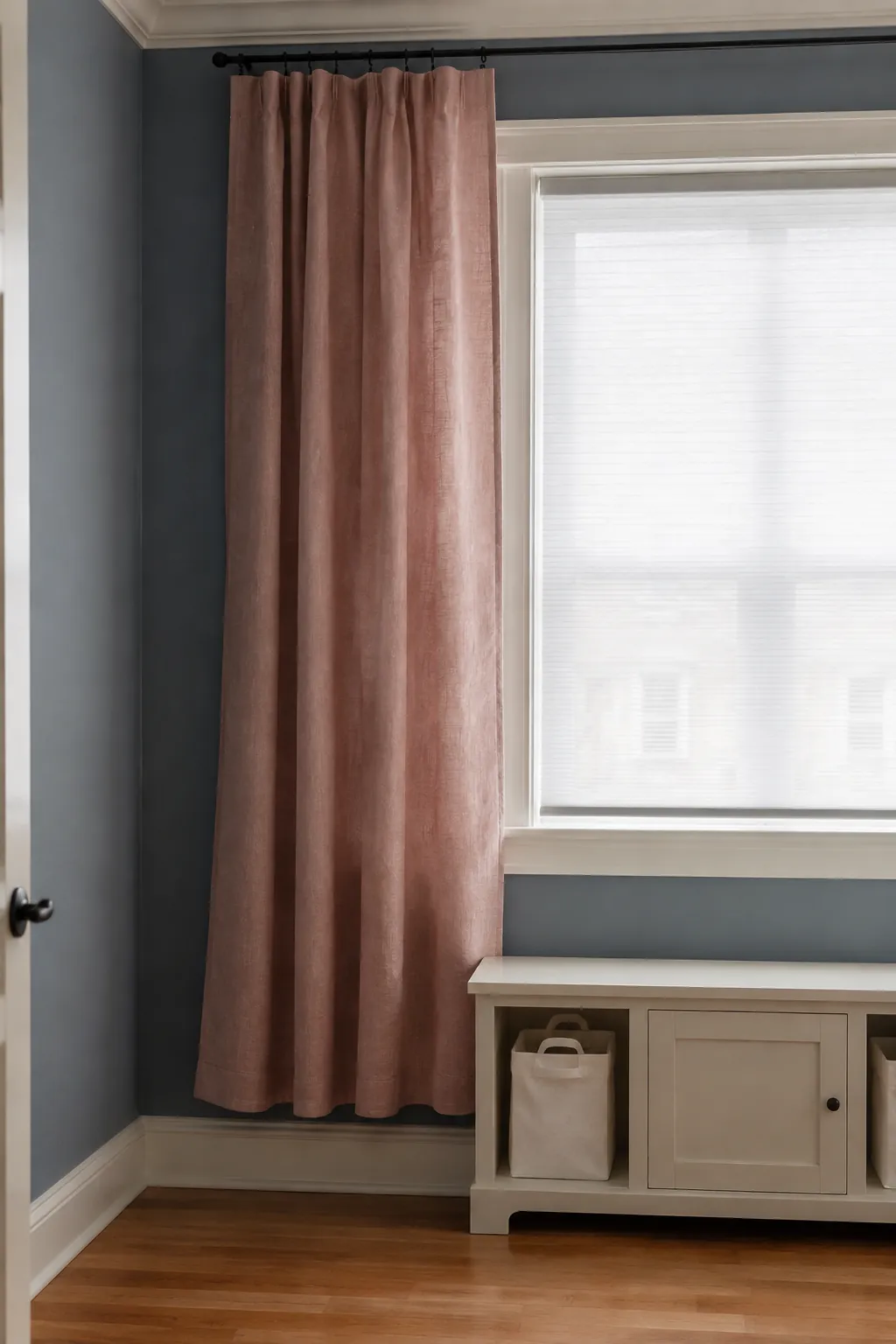
Blush can soften gray blue without making either shade sugary. Put the pink in a single curtain and keep the larger furniture quiet. A dusty rather than peachy blush will usually create a gentler contrast. Hold the curtain fabric vertically during testing because transmitted window light changes how it looks.
Dusty Blue and Walnut
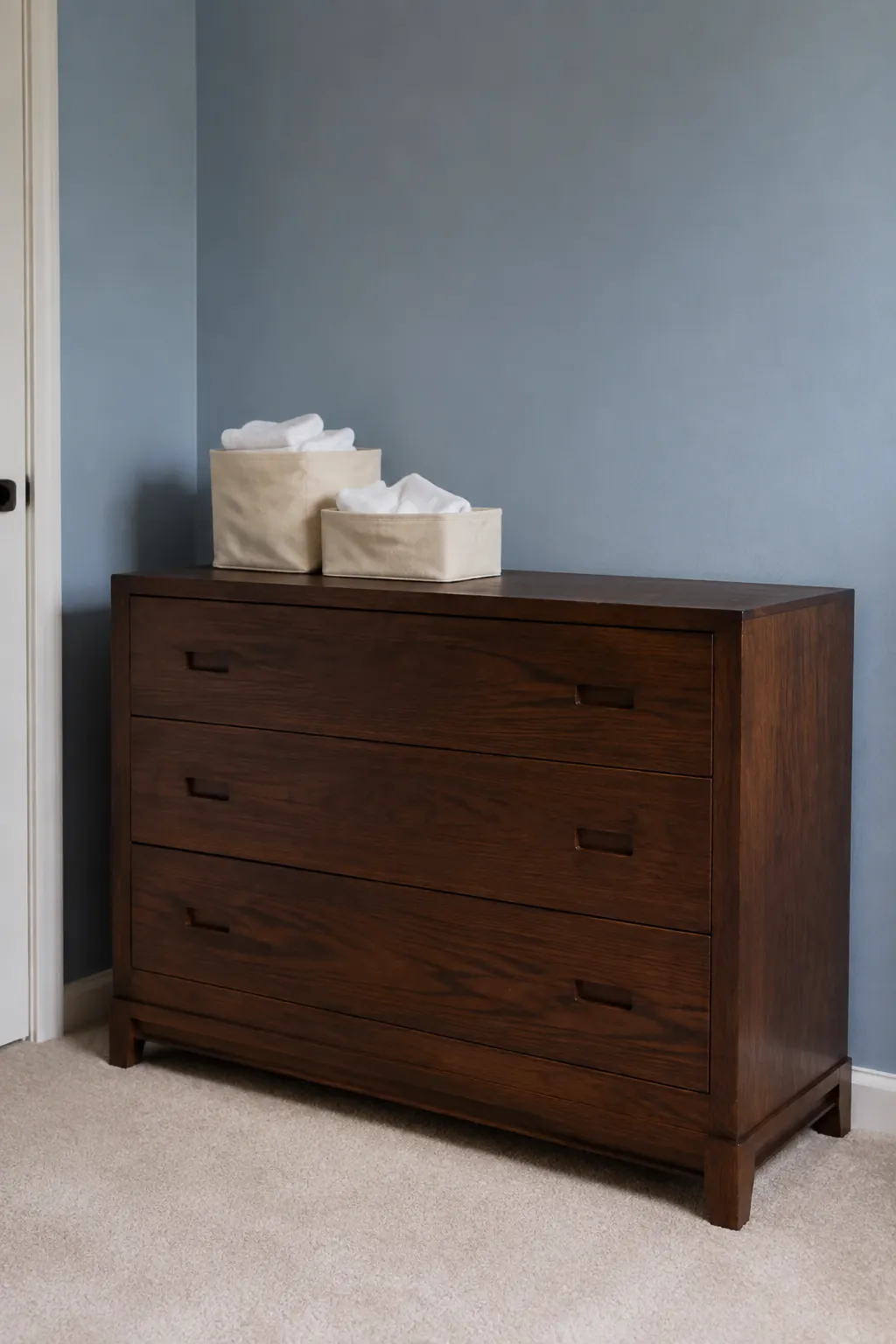
Walnut gives blue baby room ideas a darker anchor with a natural surface. An existing walnut chest can be enough, especially when the walls are light. Choose cream cloth storage on top to separate the wood from the blue background. Leave the rest of the wood finishes restrained instead of trying to match every grain.
Clay Accents on a Blue Storage Wall
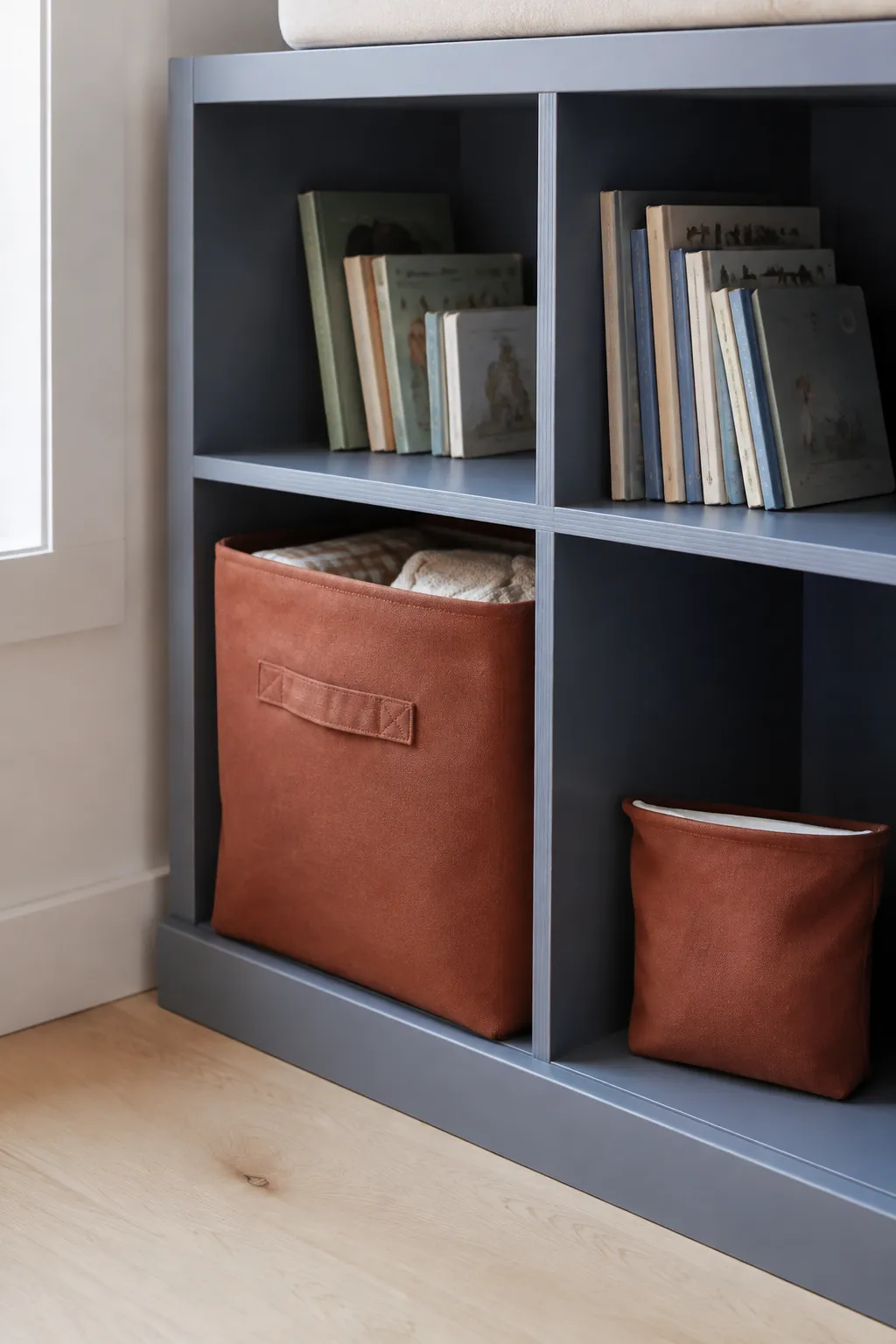
A clay colored fabric bin can add warmth to blue shelves without repainting another surface. Keep the bin large enough to register as a deliberate accent. Books will add their own varied colors, so nearby textiles can remain plain. This works best when clay is repeated in one small practical object rather than many decorative pieces.
Blue and Ivory Narrow Stripes
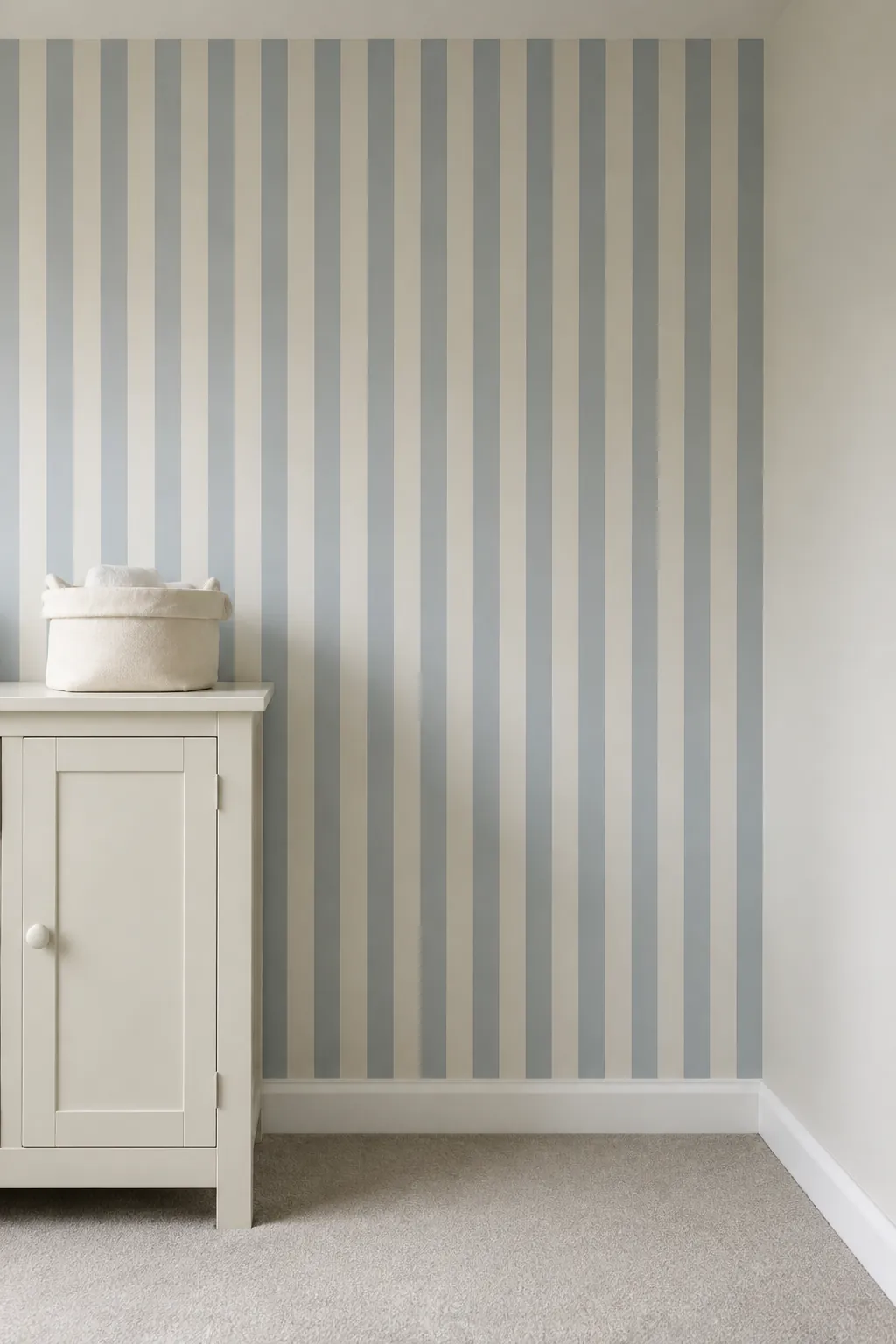
Narrow blue and ivory stripes bring pattern into a nursery while keeping the palette limited. Use them on one wall near storage, with solid curtains elsewhere. From the doorway, check whether the stripe contrast feels quiet or visually busy. A less saturated blue is often more comfortable across a repeated pattern than the same hue used on a single object.
Blue With Muted Butter Yellow
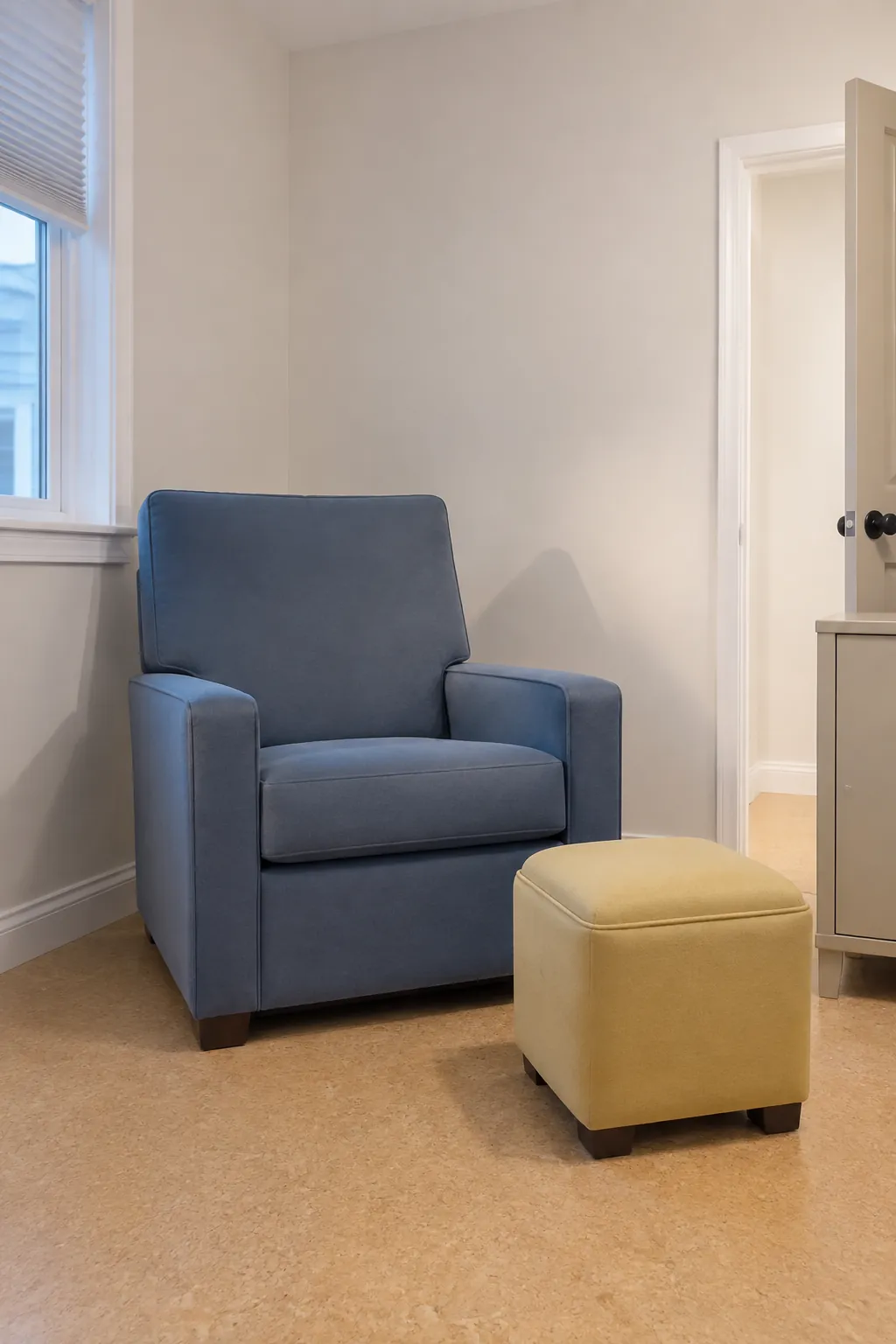
A restrained butter yellow accent can lift a blue corner without turning it bright. Try a small ottoman beside a blue chair, surrounded by off white walls. The yellow should occupy less area than the blue so the room keeps its soft character. Evaluate the combination under evening bulbs before buying upholstery.
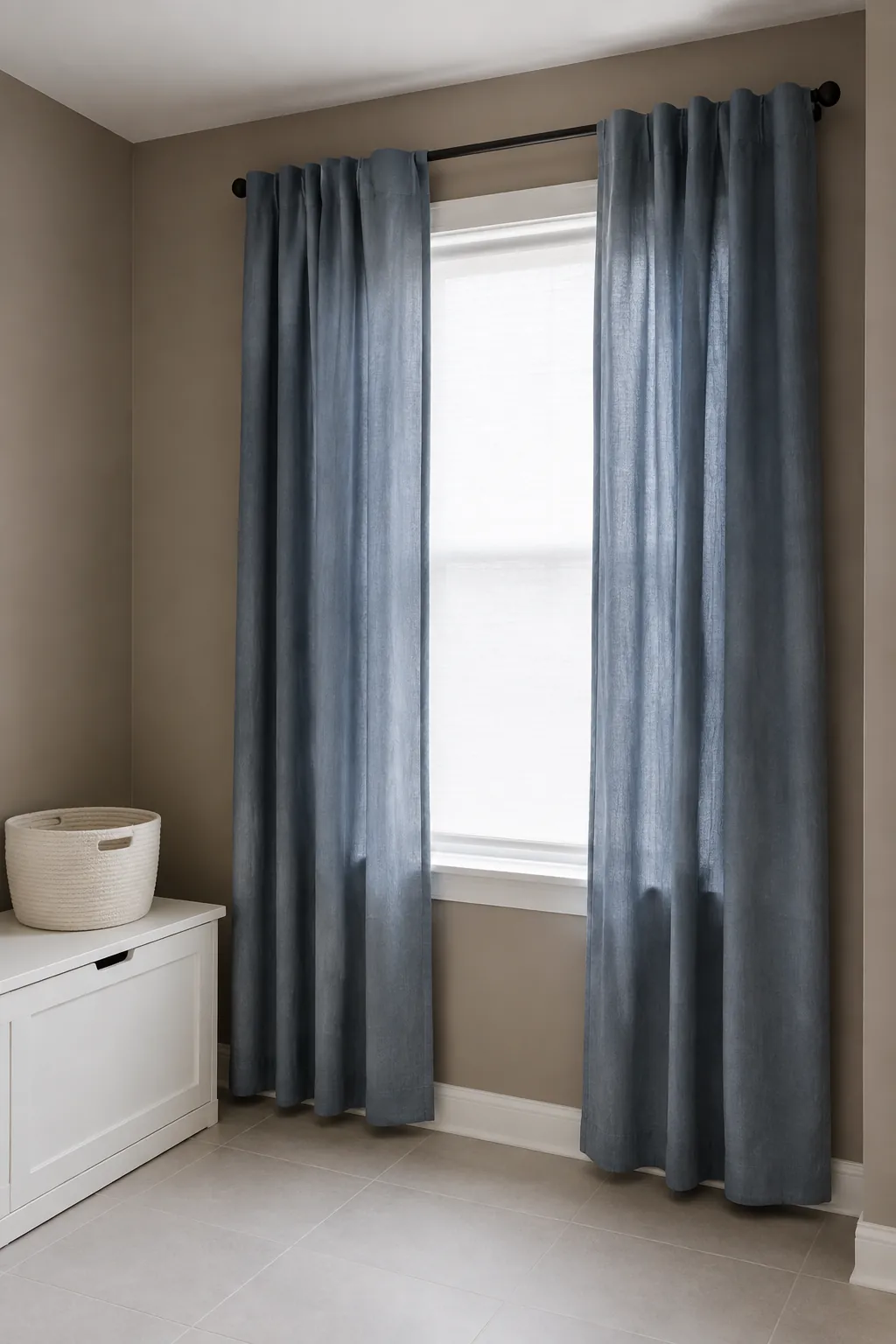
Mushroom Walls and Blue Linen
Blue linen can establish a soft nursery palette in a room with mushroom walls. Its folds create lighter and darker versions of the same color, adding depth without another paint choice. Keep the curtain clear of the crib and use a cordless window covering where needed. Choose a washable fabric suitable for the room’s daily use rather than a delicate decorative textile.
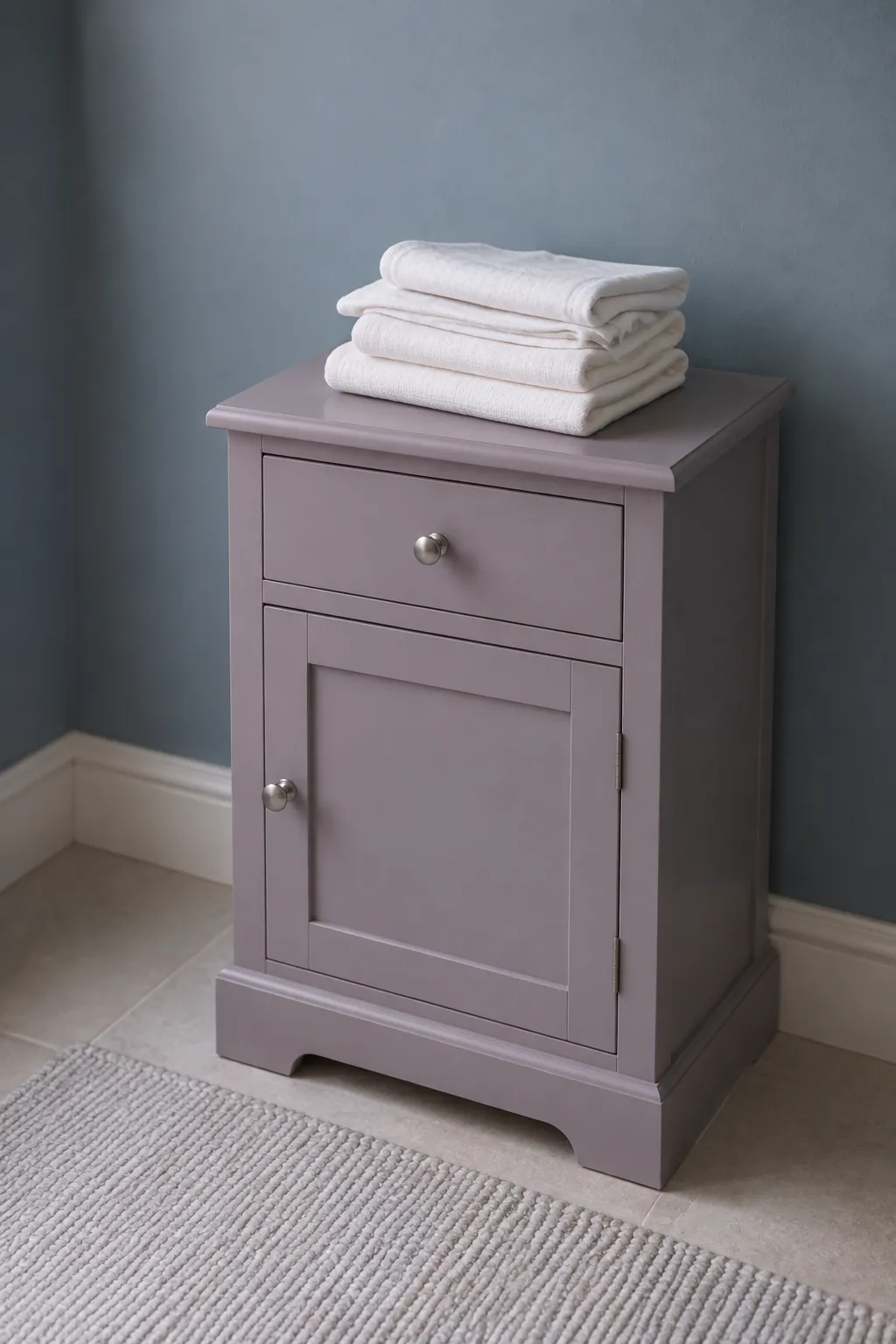
Dusty Blue With Quiet Lavender
Lavender becomes easier to use when it is grayed enough to sit beside dusty blue. A small lavender cabinet against a blue wall introduces the pairing without dominating the room. White care cloths provide a clear break between the colors. If the lavender looks brighter than the blue from across the room, choose a more muted version.
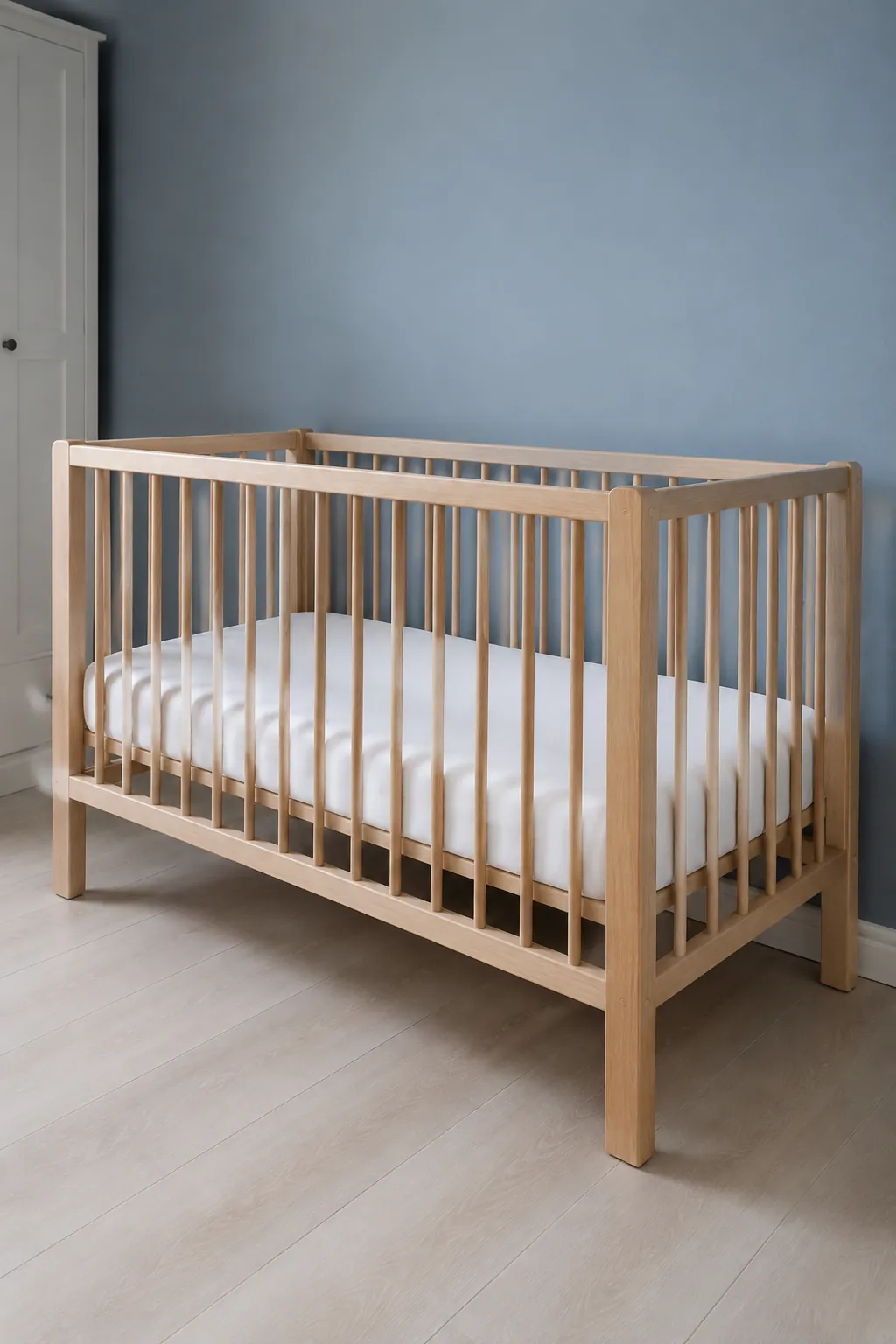
Blue and Light Ash Wood
Light ash gives a cool blue room a clean natural material without much added yellow. Let a plain ash crib stand against the blue wall with white cotton inside it. Avoid piling decorative bedding into the crib to make the scheme feel complete. For an infant, the sleep surface should remain clear apart from its fitted sheet.
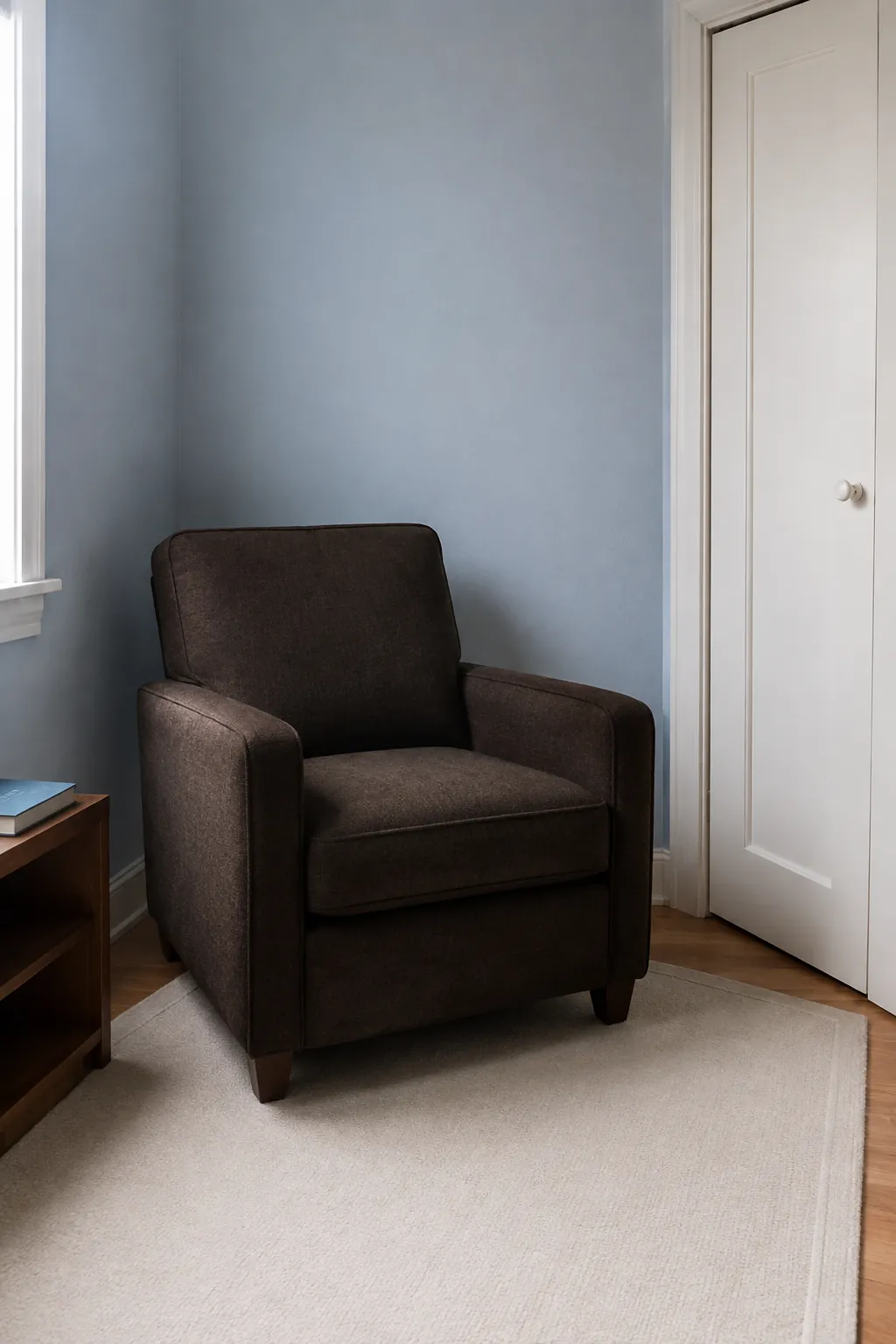
Cocoa Seating With Powdery Blue
Cocoa upholstery brings depth when pale blue walls and light floors feel washed out. Use one compact chair as the darker shape, keeping the nearby rug pale. A smooth wall and textured seat create contrast even when the lighting is flat. Measure the chair’s usable clearance before choosing a large piece for a small nursery.
Blue Lower Walls and Chalk Above
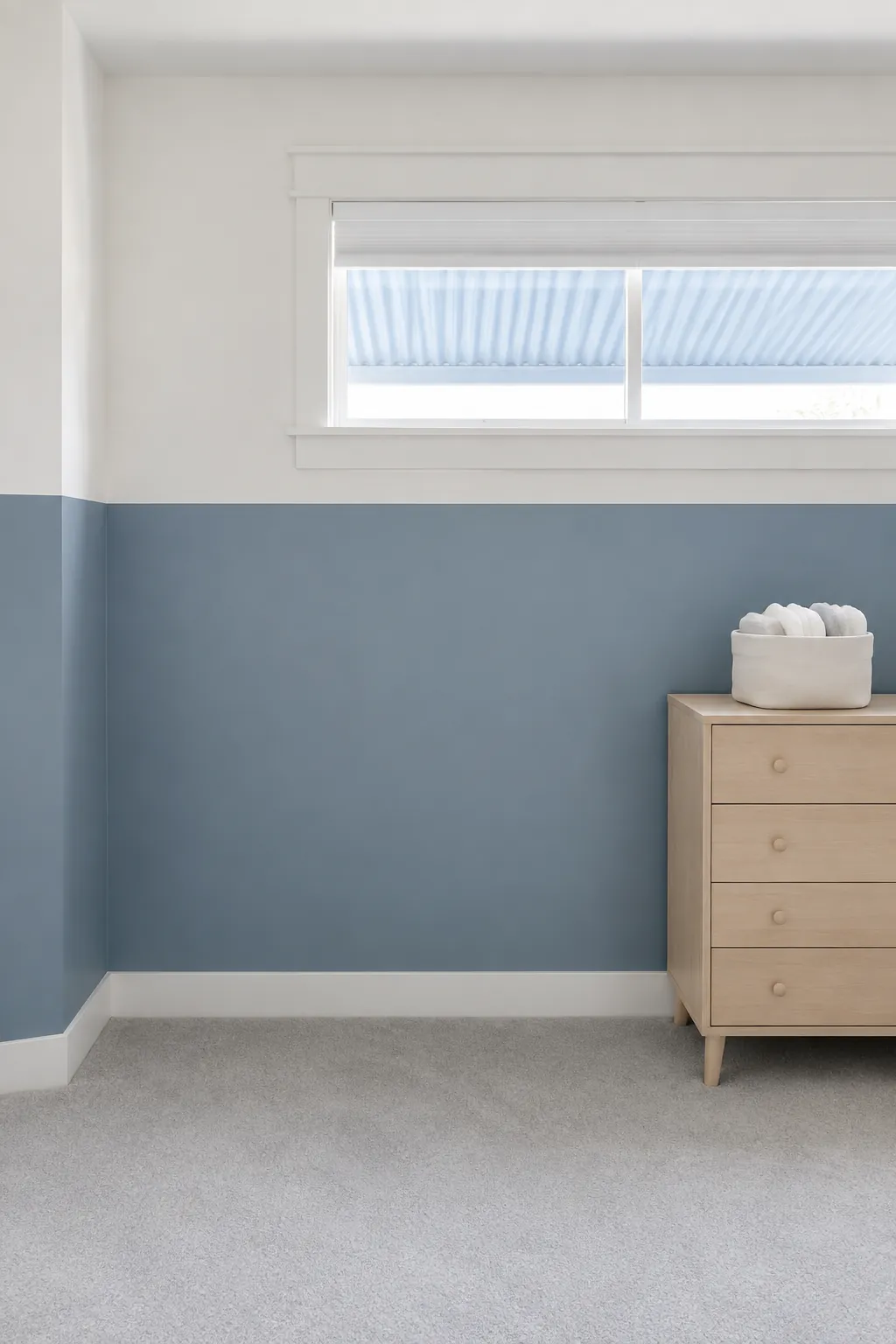
Painting only the lower wall blue keeps a broad light area at eye level. Choose a boundary that works with existing window trim rather than an arbitrary stripe through the room. A chalk upper wall makes the blue easy to change later. Keep the paint edge crisp because this scheme depends on a simple architectural line.
Dusty Blue With Brushed Brass
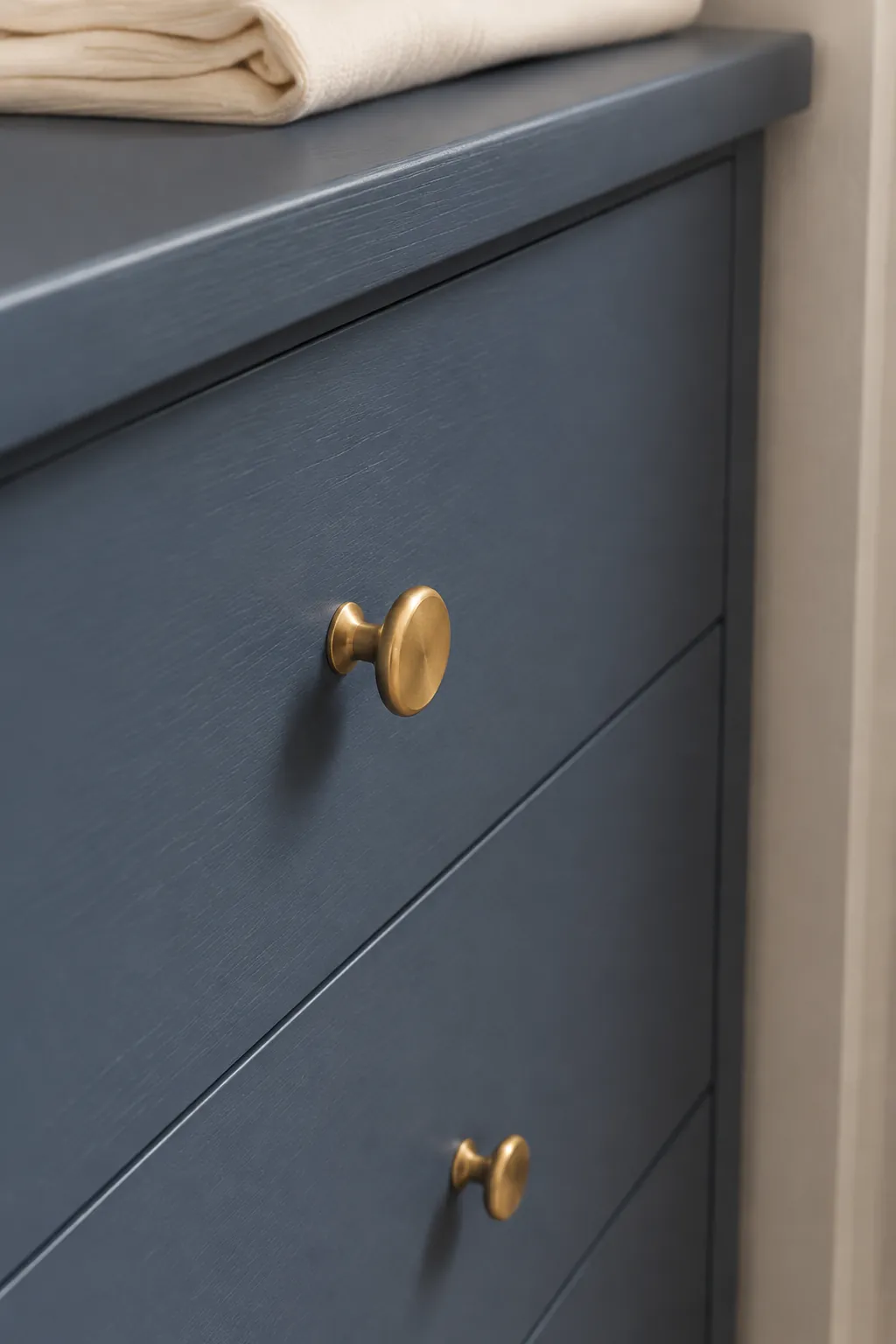
Brushed brass adds a small warm reflection to dusty blue storage. Choose a few functional knobs instead of multiple decorative metal objects. A satin surface will look quieter than polished gold under a lamp. Keep other visible hardware consistent enough that the dresser feels intentional without matching every fixture in the house.
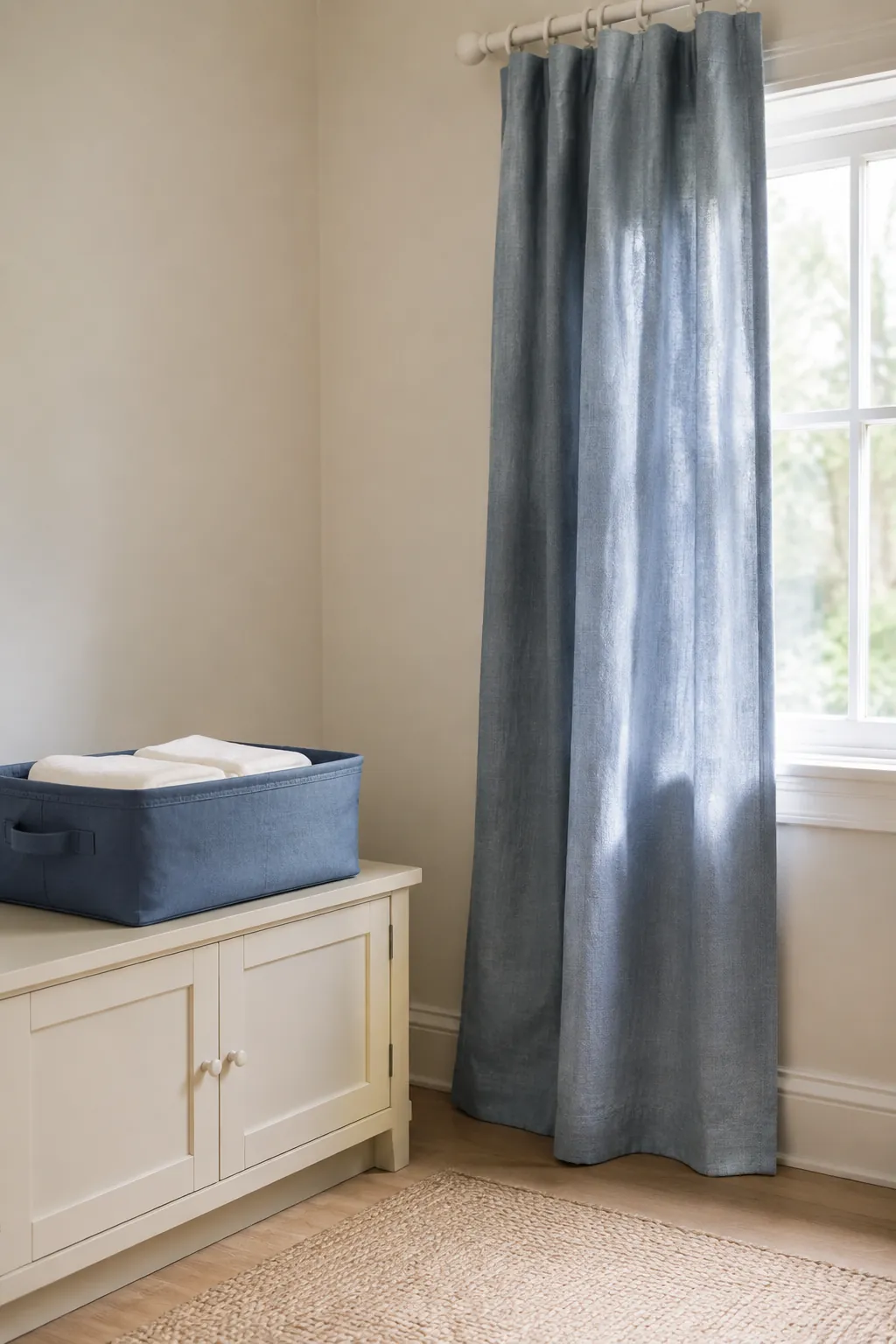
Layered Blues With a Cream Base
Layering two blues works when they differ clearly in depth or texture. Try a dusty blue curtain near a slightly deeper blue storage basket, with cream walls separating the pieces. You do not need an exact fabric match for the room to feel connected. Start with the curtain sample and judge the basket beside it in daylight. If the combination still feels cold, increase the cream area before adding another accent color.