21 Gender Neutral Nursery Ideas That Feel Warm Not Plain
A room can be beige from floor to ceiling and still feel unfinished. Warmth comes from contrast, useful texture and signs of the family who will use the space, not from removing every color. Start with the pieces that support daily care, then give a few of them something distinctive to say.
Give the Room One Real Color
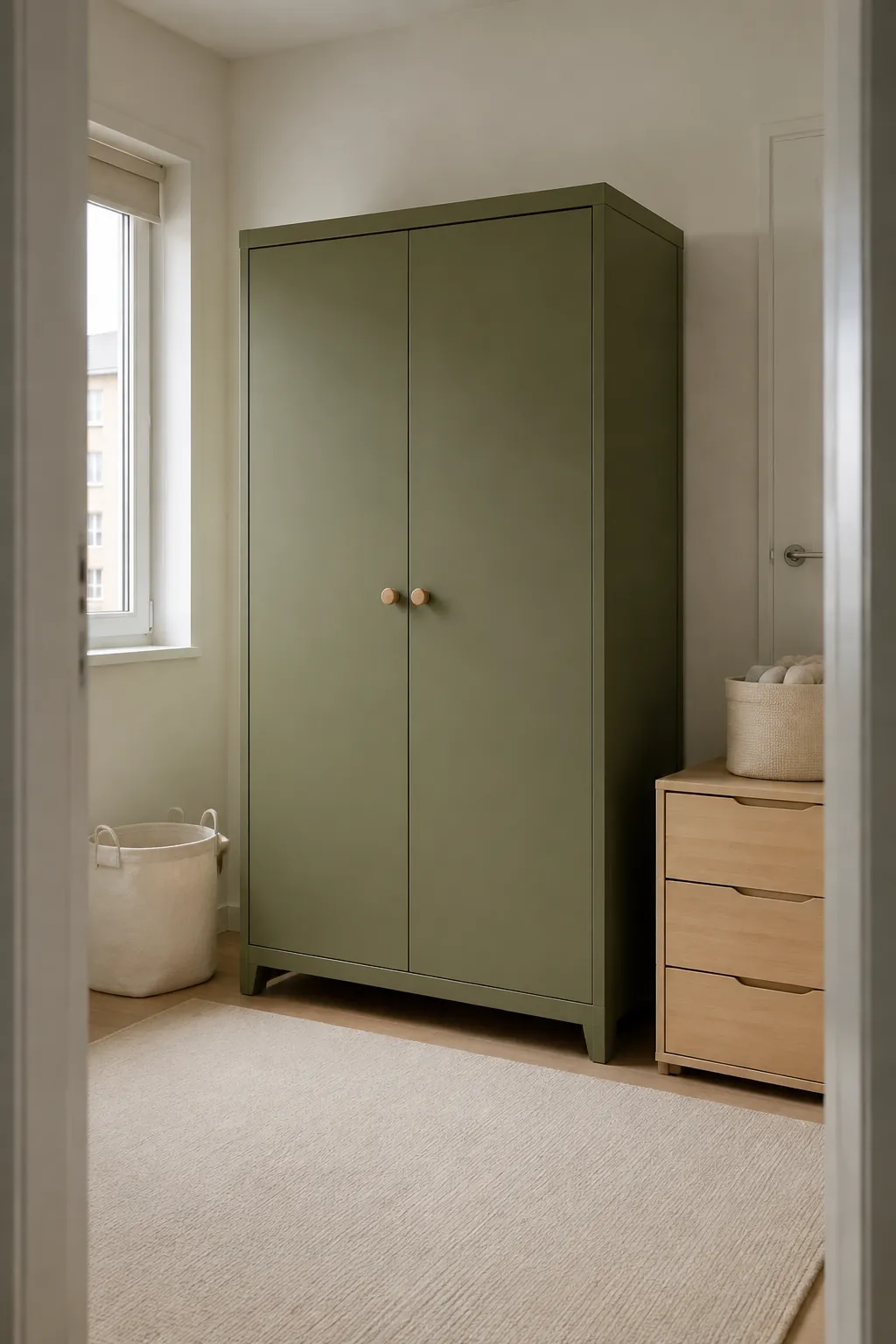
A gender neutral nursery can include green, blue, pink or any other color you enjoy. Choose one shade you would happily use elsewhere in your home and give it a clear place, such as a wardrobe. Keep the surrounding surfaces quieter so the color feels considered rather than accidental.
Let Wood Grain Do Some Decorating
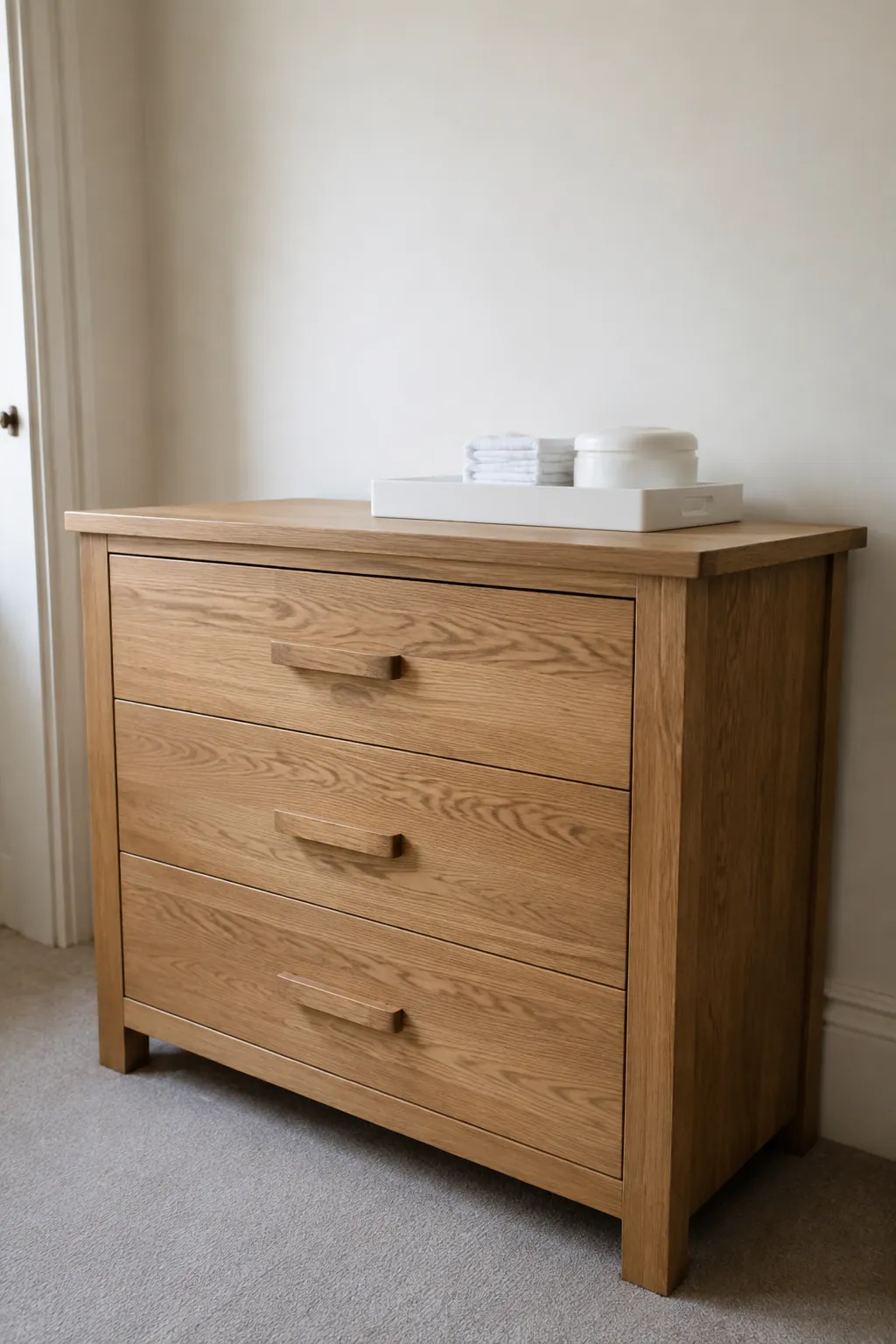
A natural wood dresser adds variation that a flat painted surface cannot provide. Look at the grain and finish beside your floor before buying, especially if both will occupy large areas. They can be different woods as long as the contrast looks deliberate. A plain wall behind the dresser lets that material detail register.
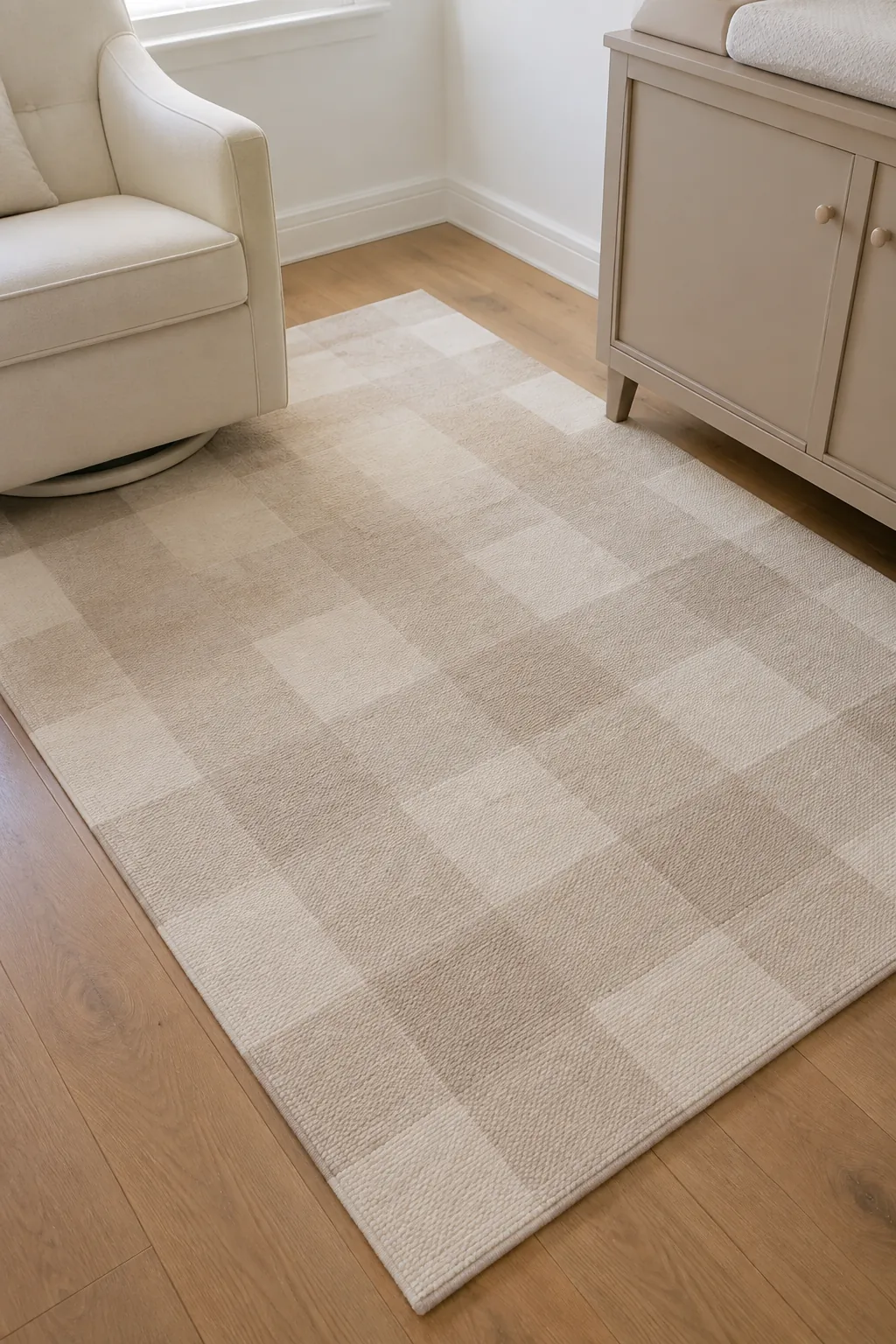
Choose a Rug With a Gentle Pattern
A quiet patterned rug gives beige baby room ideas a focal point without adding more objects. Try a low contrast check or simple irregular line pattern in washable material. Check the rug size against the furniture footprint so it anchors a usable area. Keep its edges flat and away from the main walking route.
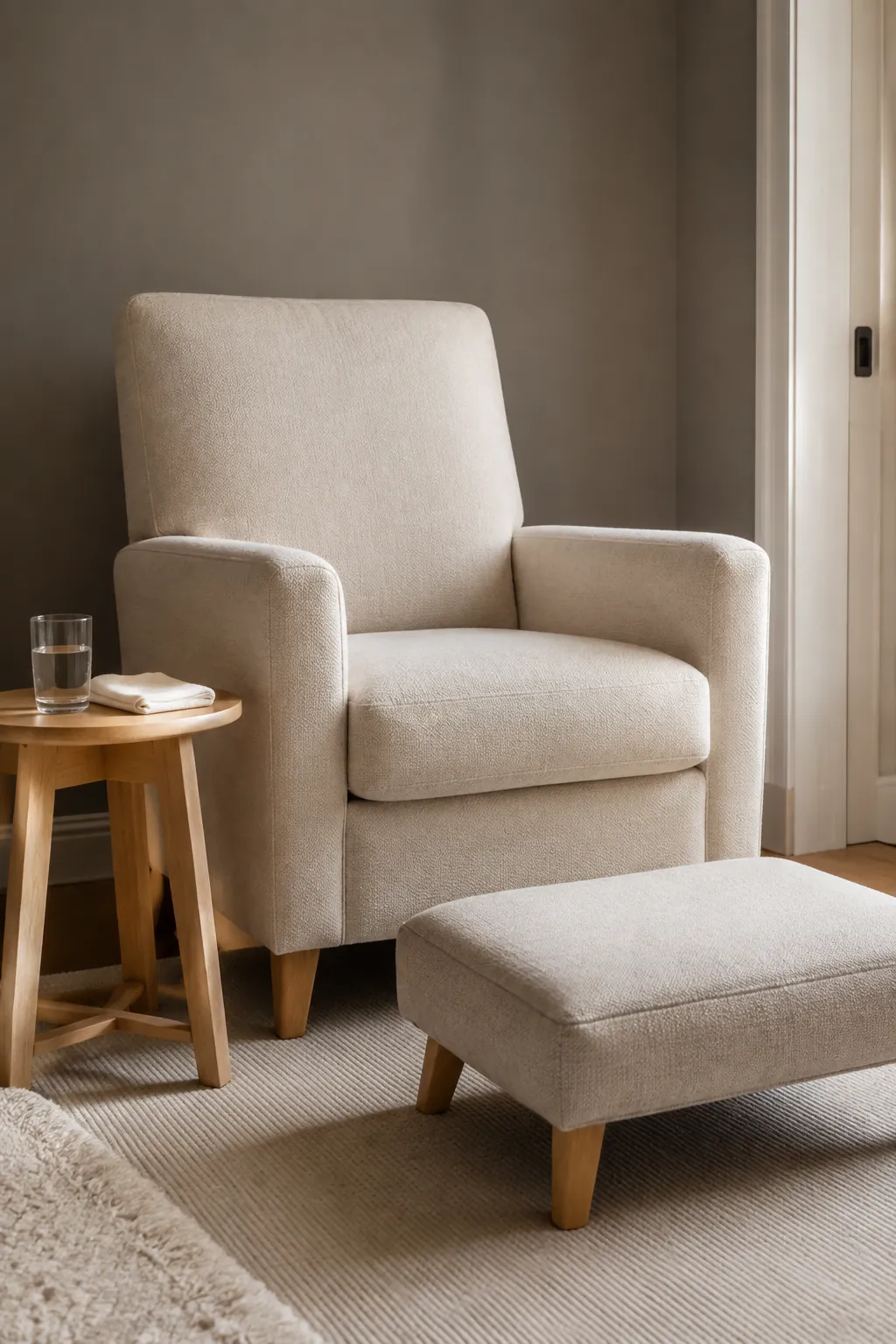
Make the Feeding Chair Feel Inviting
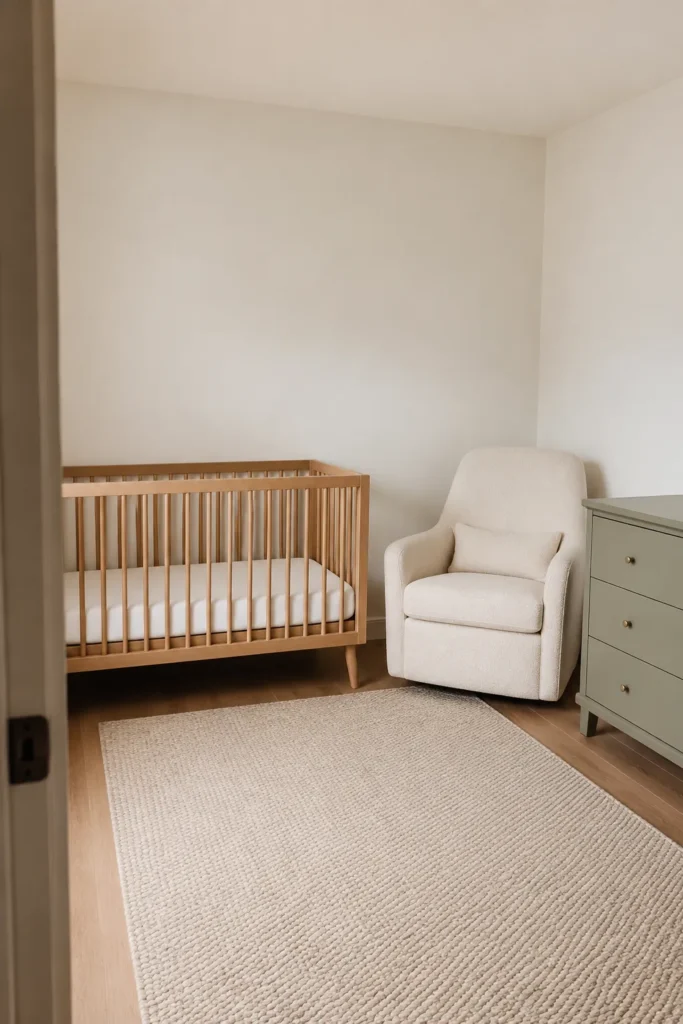
The adult chair is a good place for texture because comfort matters there every day. A softly woven upholstery can add depth to a warm neutral nursery without changing the paint. Test the seat height and arm position before choosing it for appearance. Leave space for a footrest and a reachable surface for water.
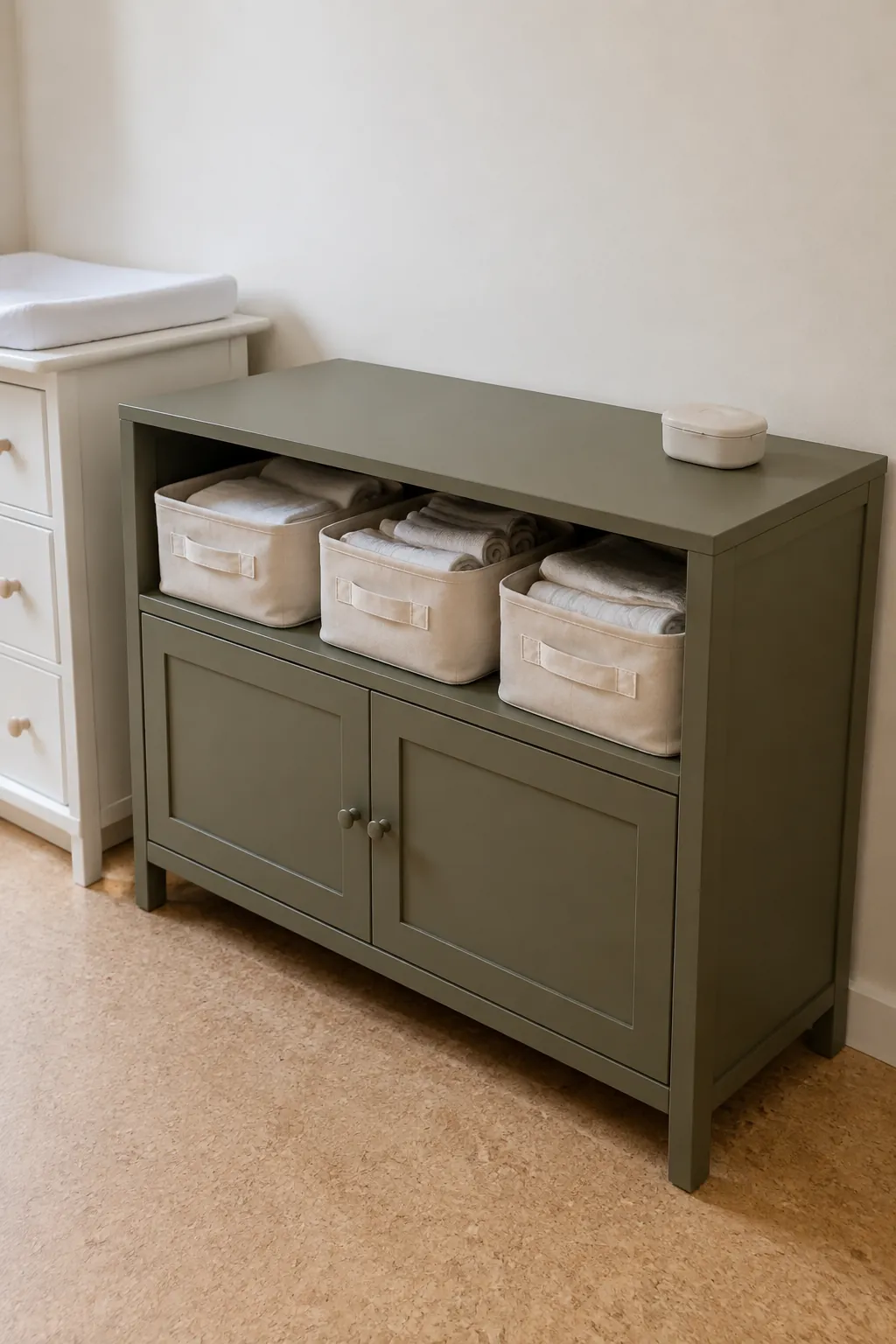
Add a Muted Green Storage Piece
A sage or olive cabinet introduces color through something the room already needs. Use the green on one substantial storage unit instead of scattering several unrelated green accessories. Nearby cream cloth bins can soften the contrast without hiding the cabinet’s shape.
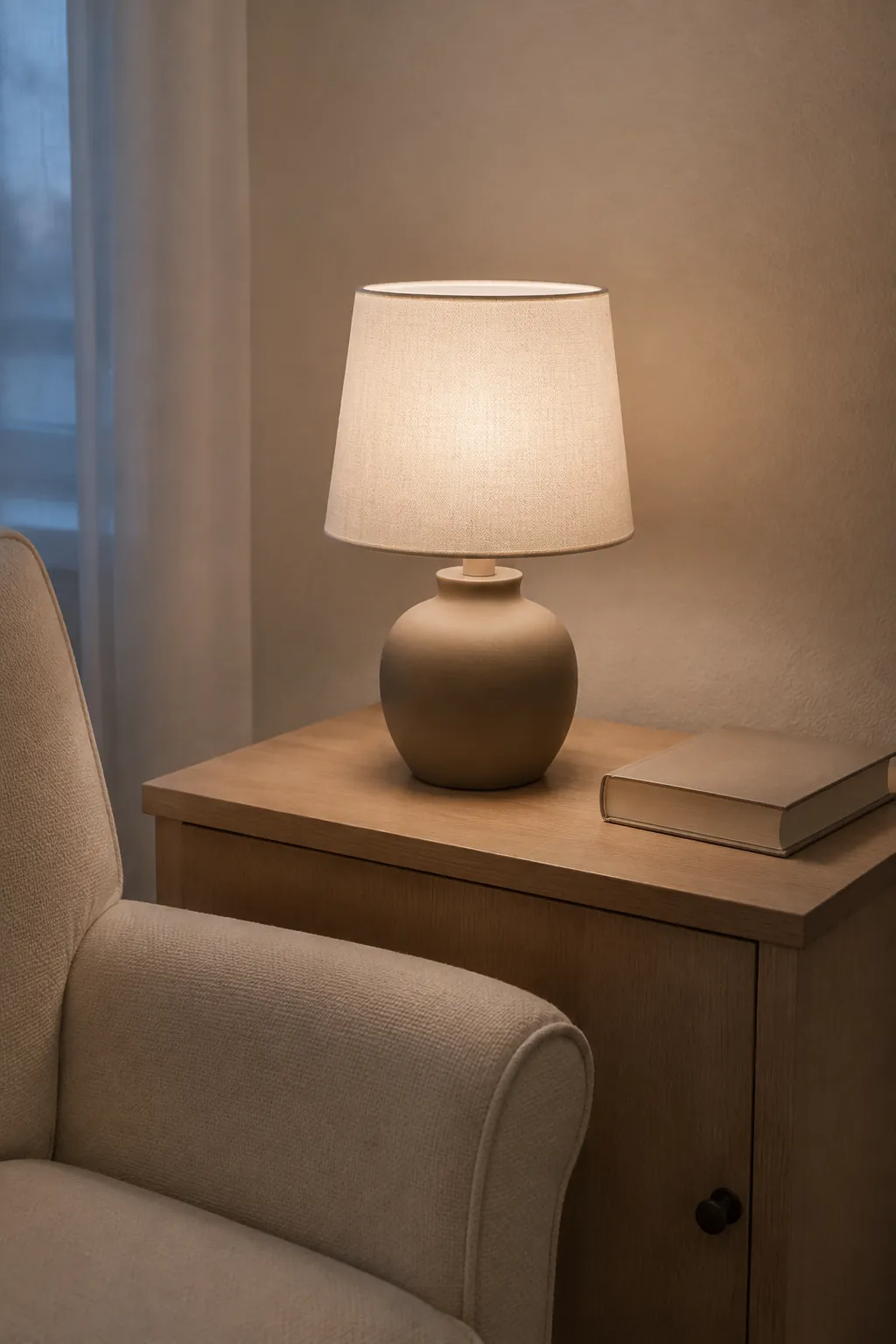
Use a Lamp to Soften the Care Corner
A shaded lamp can make evening care feel less stark than a single overhead light. Put it on a stable surface outside the baby’s reach, with its cable secured and routed away from the crib. Choose a shade that diffuses the bulb rather than exposing a bright point of light. Test the lamp from the feeding chair to check for glare.
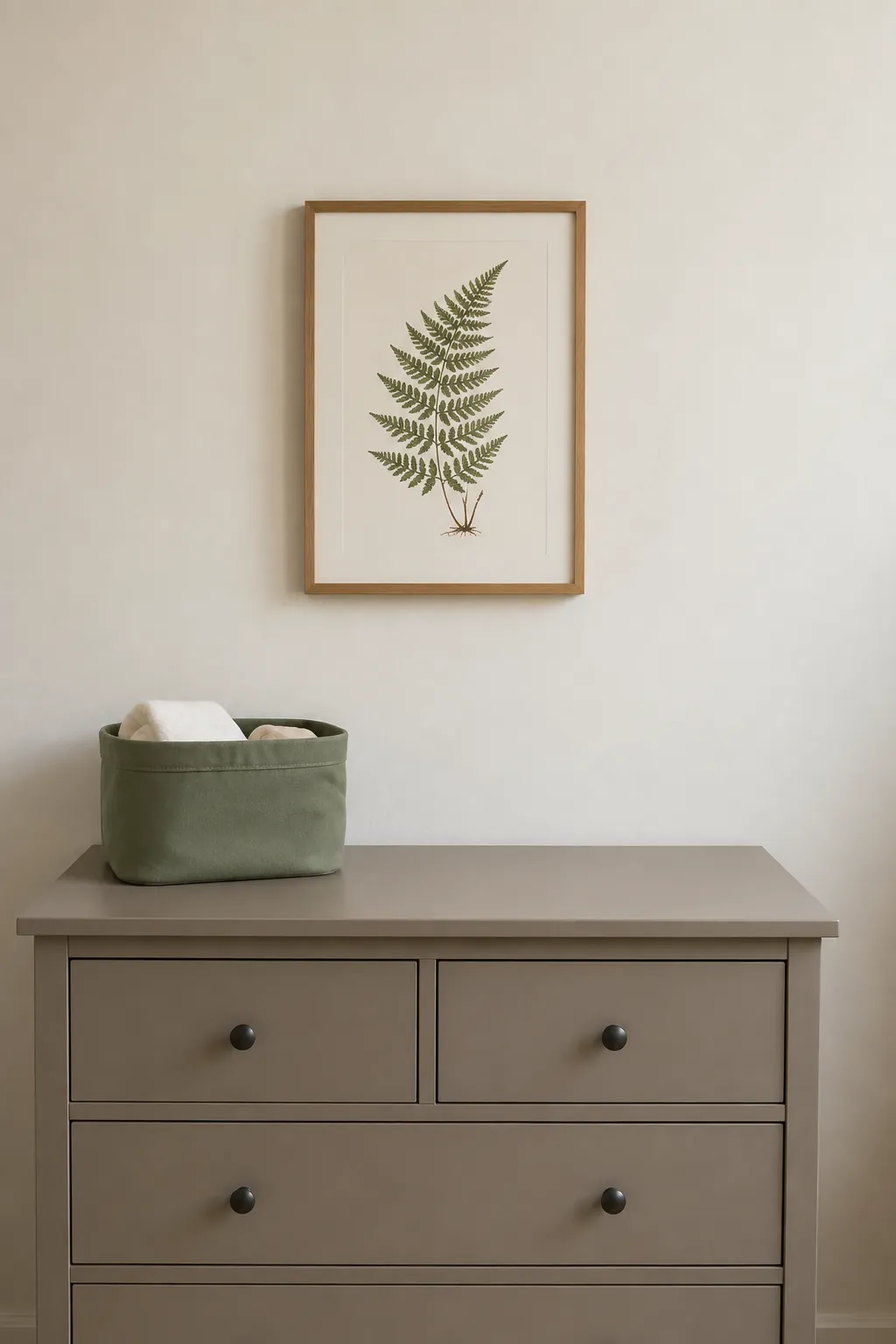
Hang One Botanical Print Away From the Crib
A single botanical study gives a neutral nursery theme a specific subject without filling every wall. Place it over a closed dresser away from the sleep space and secure it appropriately. Let the print’s muted green or brown appear once elsewhere in a practical textile. A generous plain border helps a small picture feel intentional.
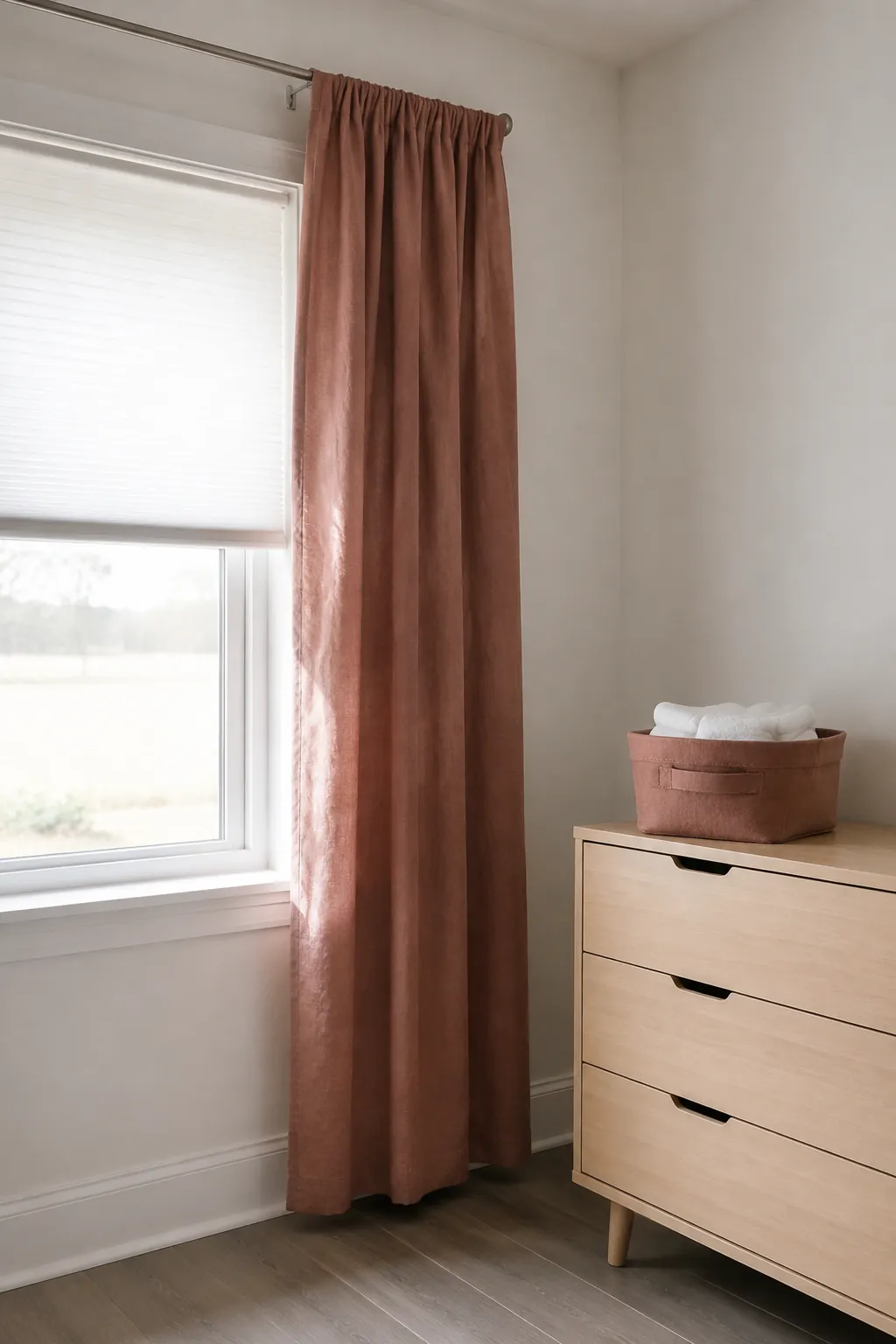
Bring in a Clay Colored Textile
Clay can warm a pale room through one curtain or a fabric storage basket. Choose a brown pink version if orange accents feel too strong beside your floor. Compare the textile in shadow as well as daylight, since folds make its color look deeper. You can change this accent later without repainting the room.
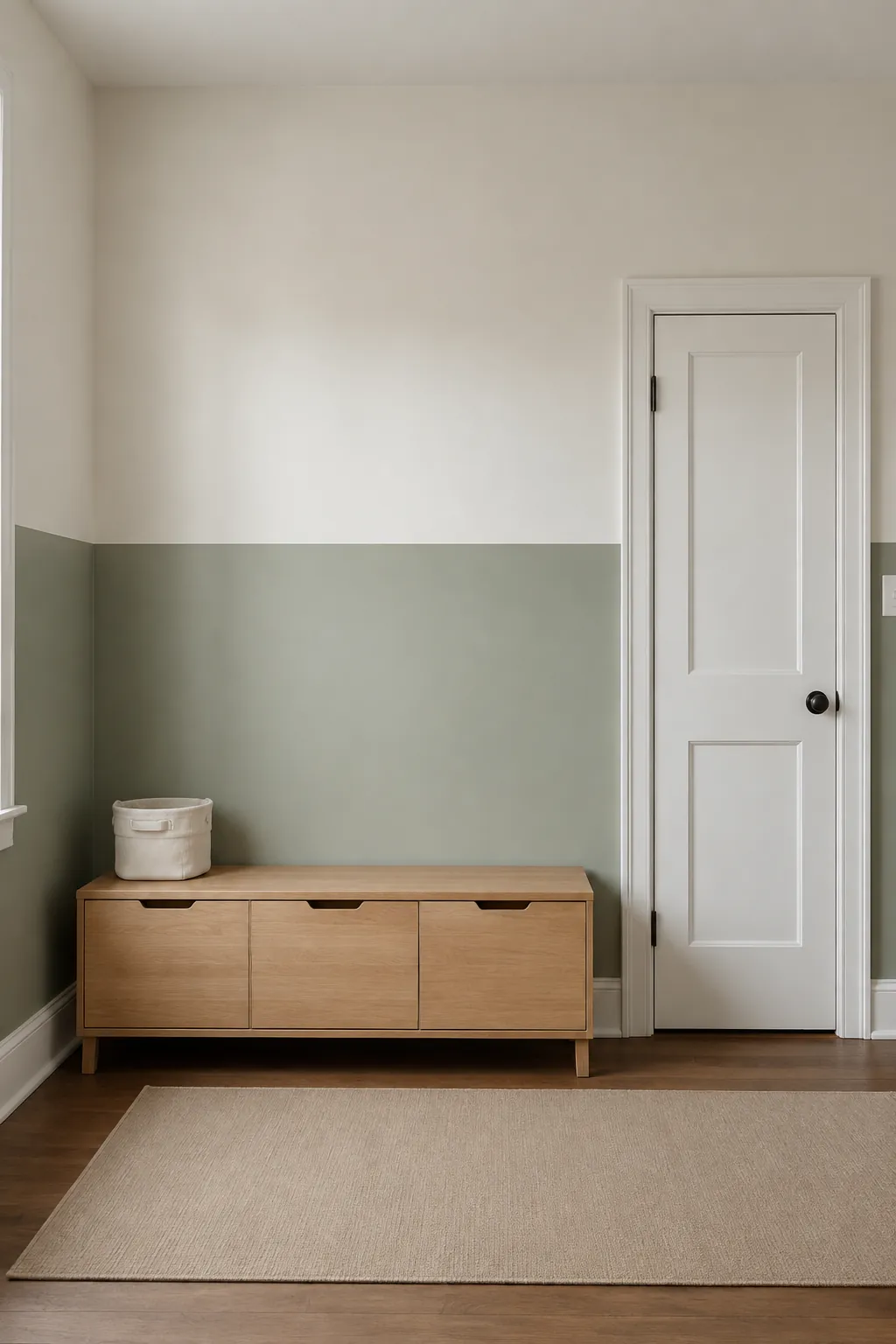
Try a Subtle Painted Lower Wall
A painted lower wall gives a simple room an architectural detail. Use a warm taupe or soft moss shade beneath a lighter upper wall, with a boundary that works around the existing trim. The line needs careful preparation because it becomes the feature. Keep nearby patterns restrained so the paint treatment stays readable.
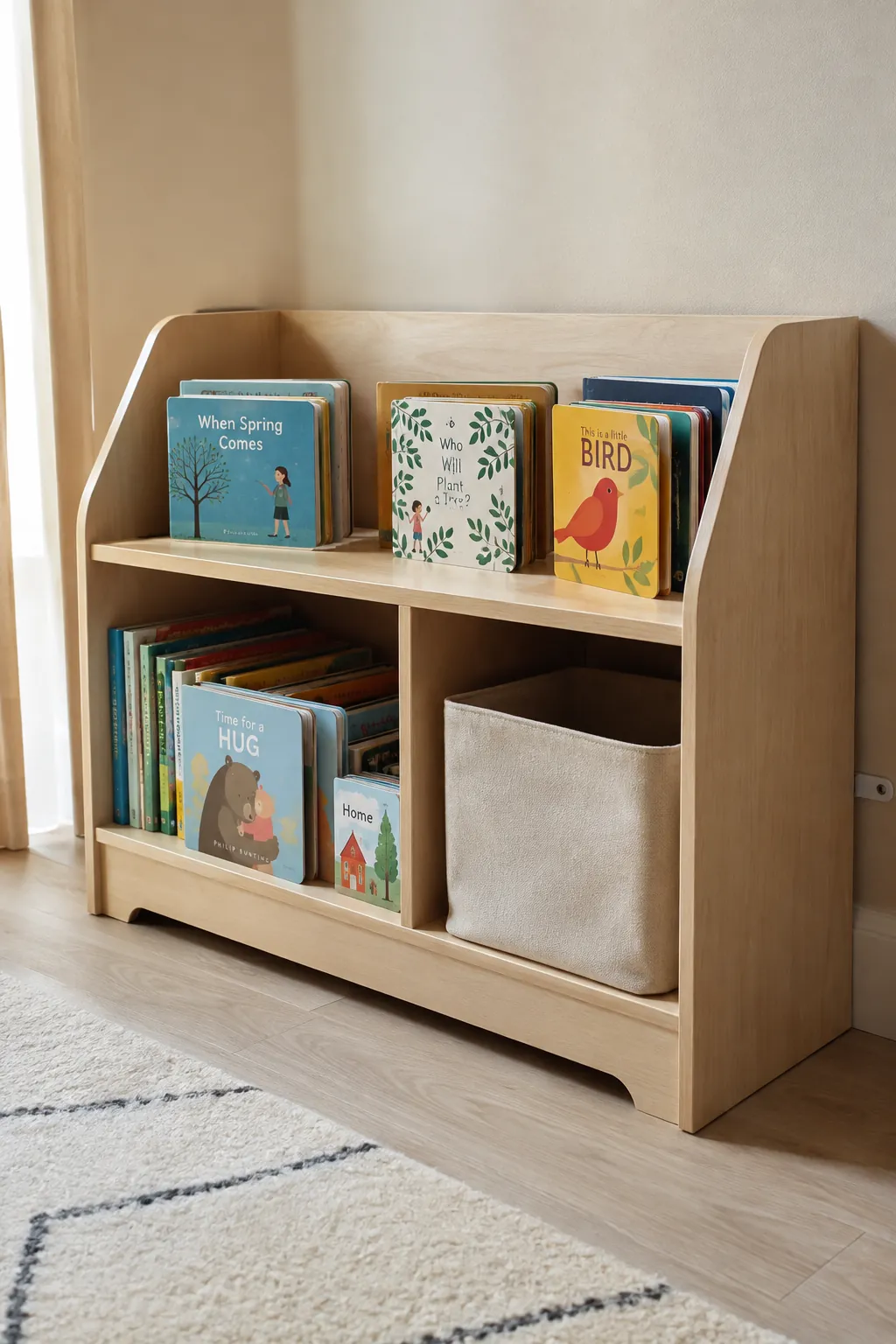
Let Books Supply Some Color
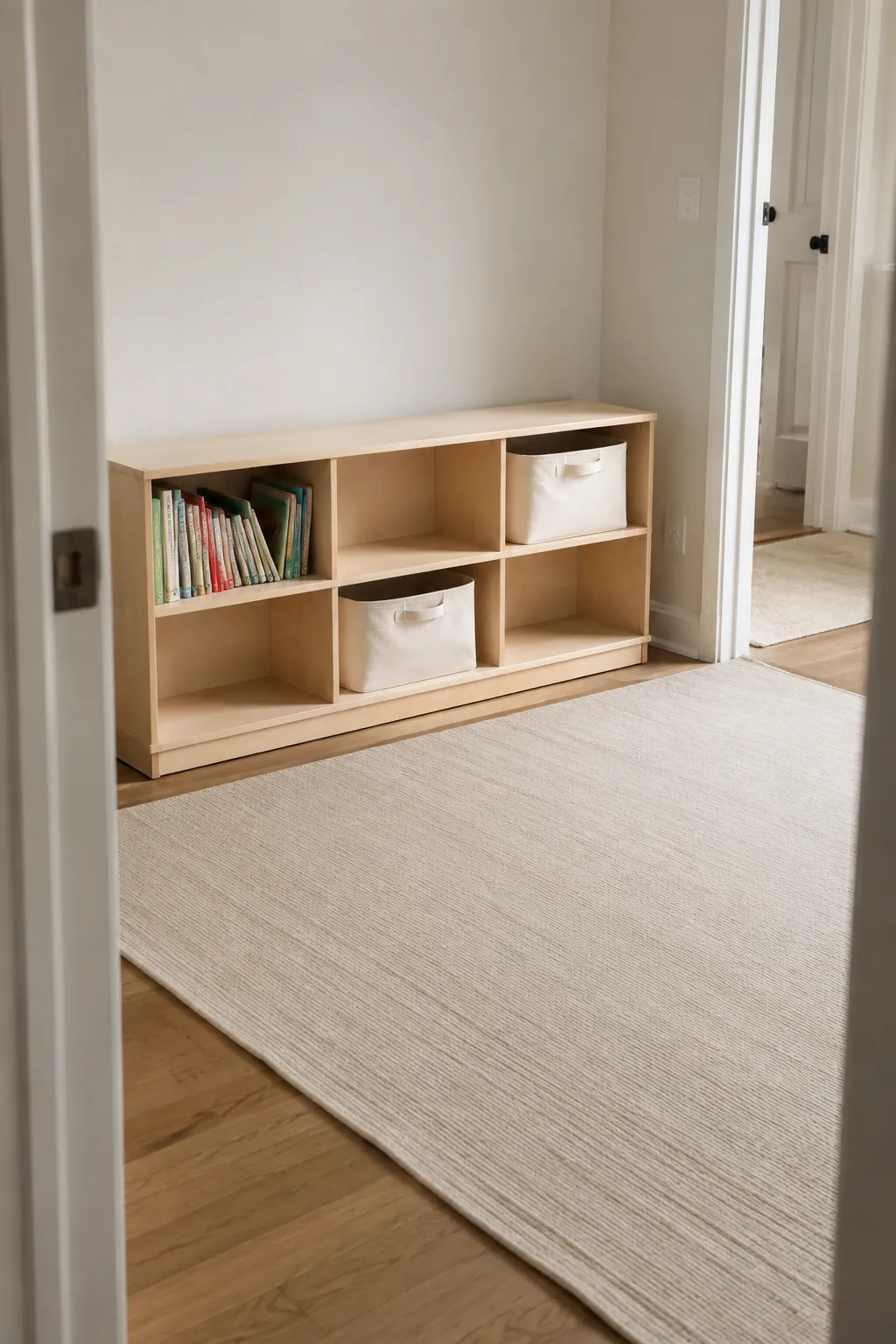
Books can provide the color that a neutral room is missing. Keep a small accessible selection on a sturdy shelf and store the rest nearby rather than filling every surface. The covers do not need to match the room, and rotating them changes the corner naturally.
Mix Smooth and Woven Storage
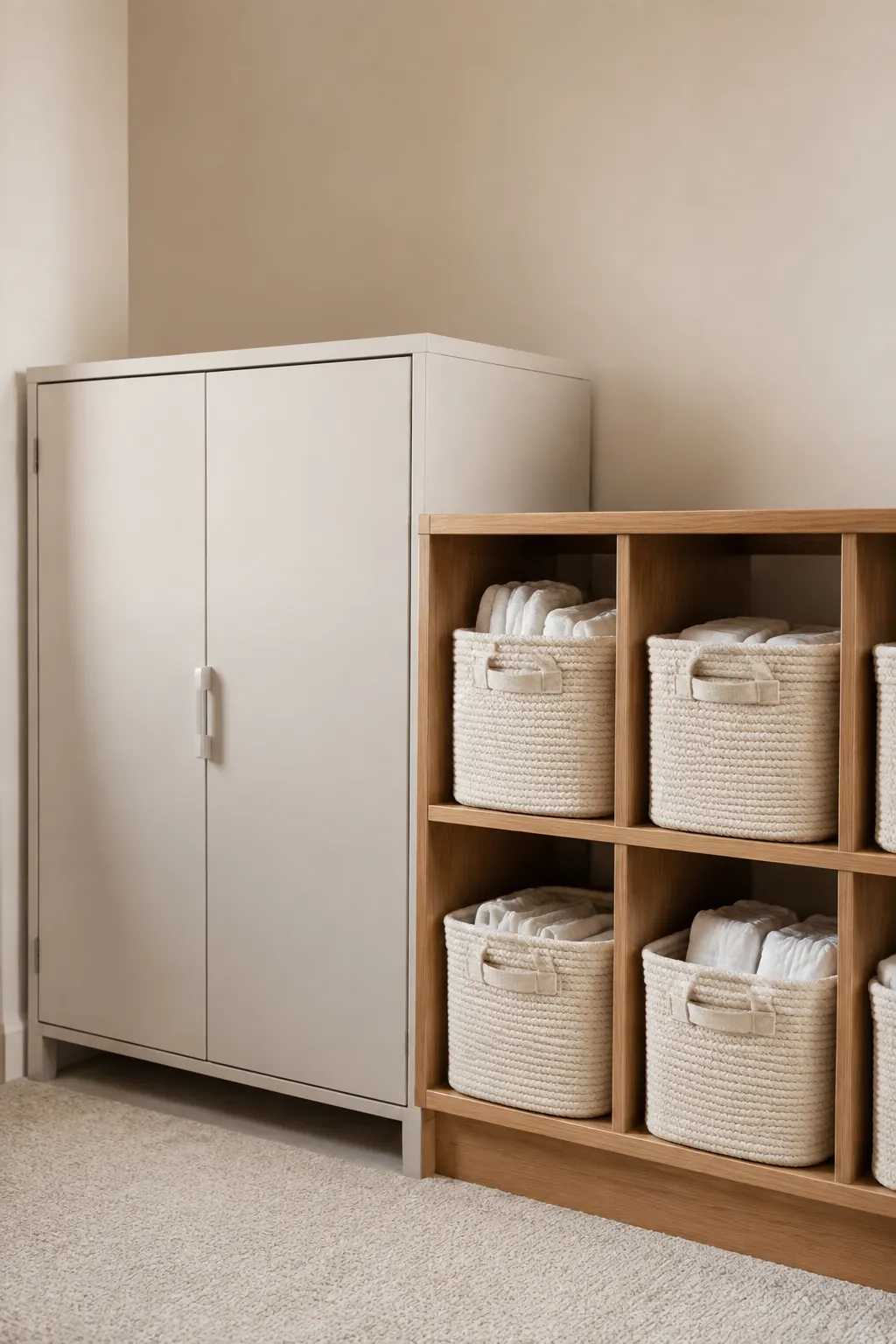
A smooth painted cupboard and woven cloth baskets create contrast without more paint colors. Use baskets for the items you reach for often and closed storage for visual clutter. Check that the basket sizes actually fit the shelves before buying a coordinated set. Handles and labels should help daily use rather than exist only for decoration.
Give Curtains a Proper Place
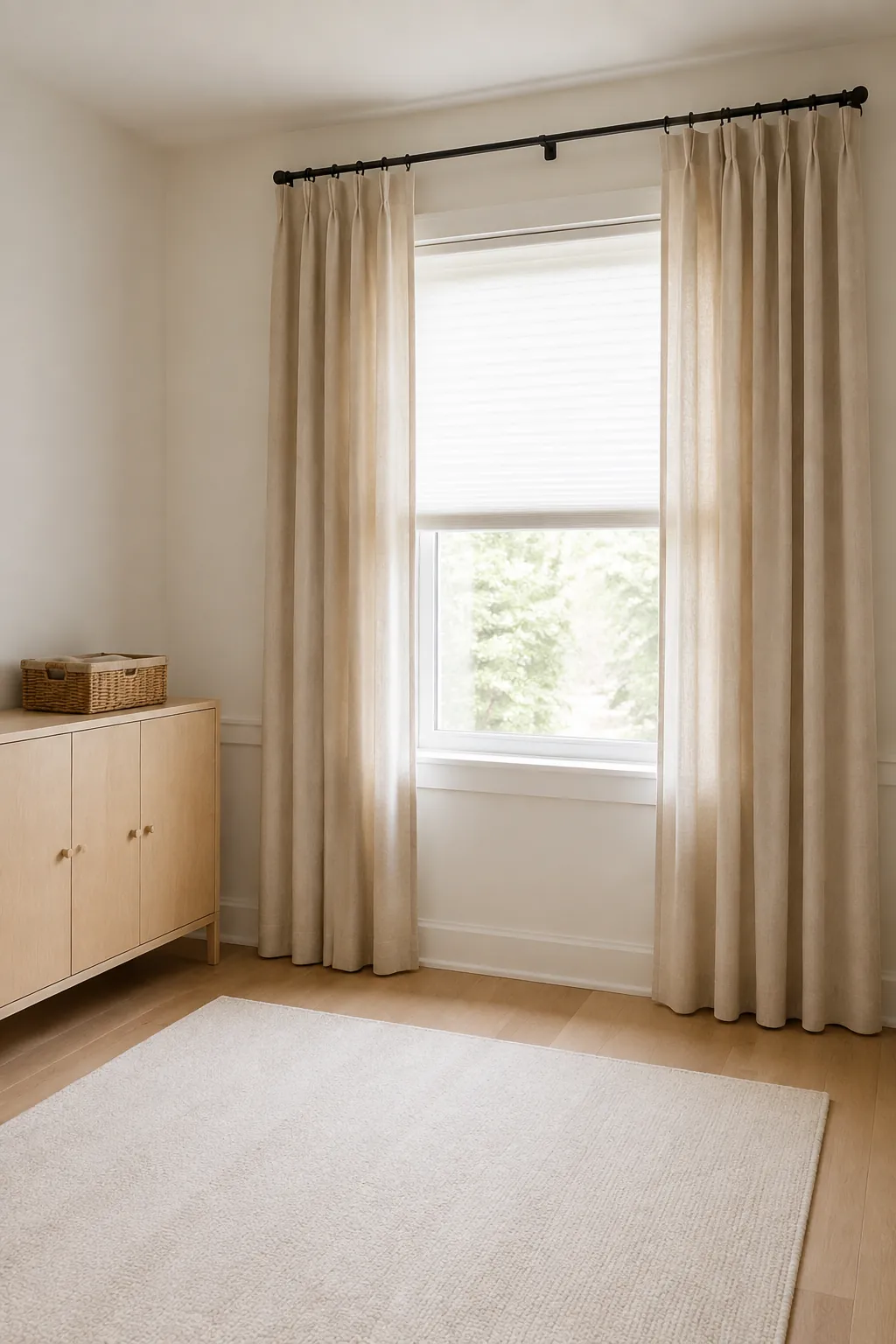
Curtains add a large soft surface that can make a plain room feel finished. Hang them so they clear the floor and stay out of reach of the crib, with cordless window coverings where needed. A muted fabric color is easier to judge when you see a full hanging sample. Keep furniture from trapping the curtain behind it.
Use a Round Shape in a Square Room
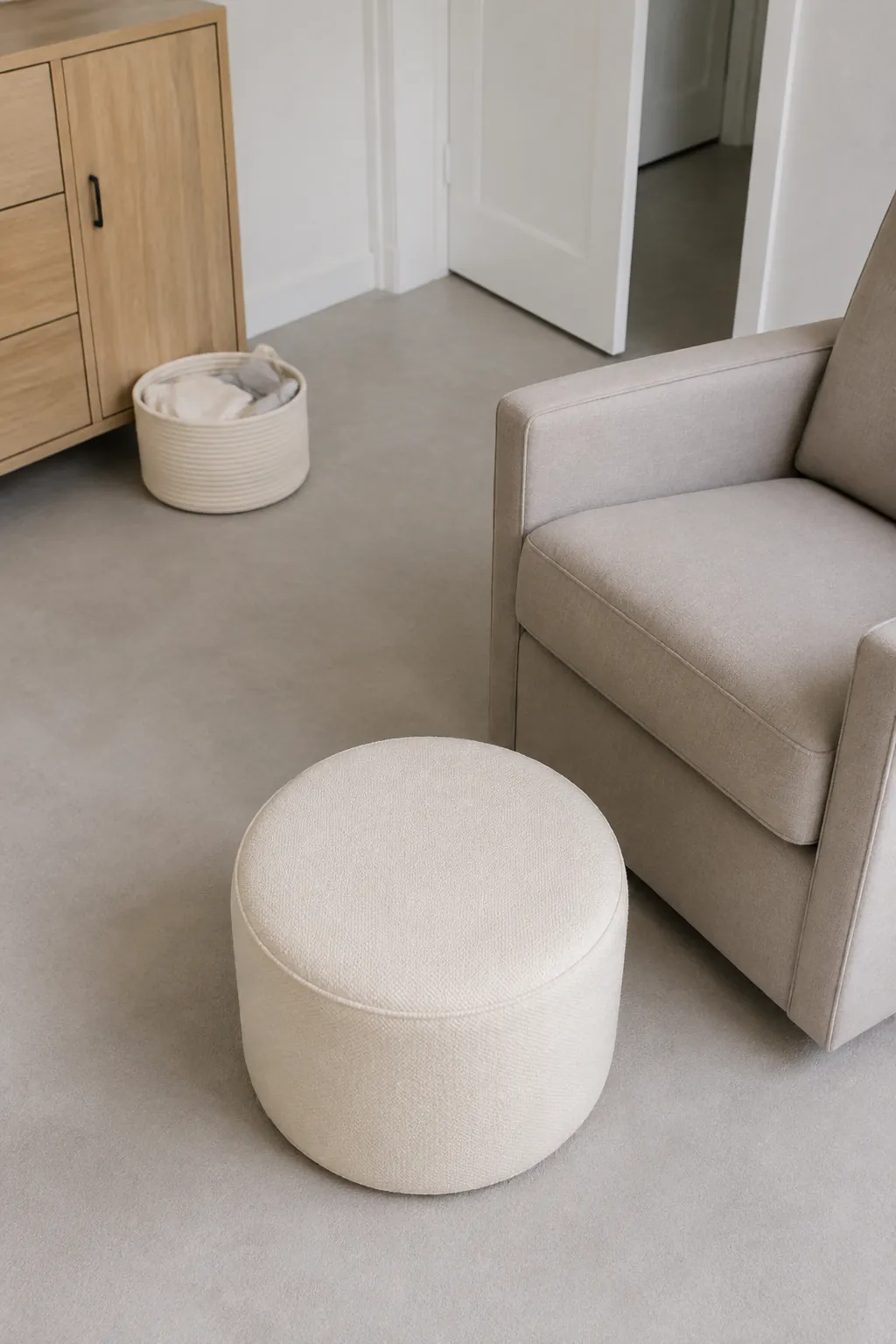
A round footstool can soften a room full of rectangular drawers and doors. Choose a size that leaves room to walk rather than a large piece that crowds the chair. Repeating the curve once in a small basket can be enough to connect the shapes.
Keep One Wall Deliberately Quiet
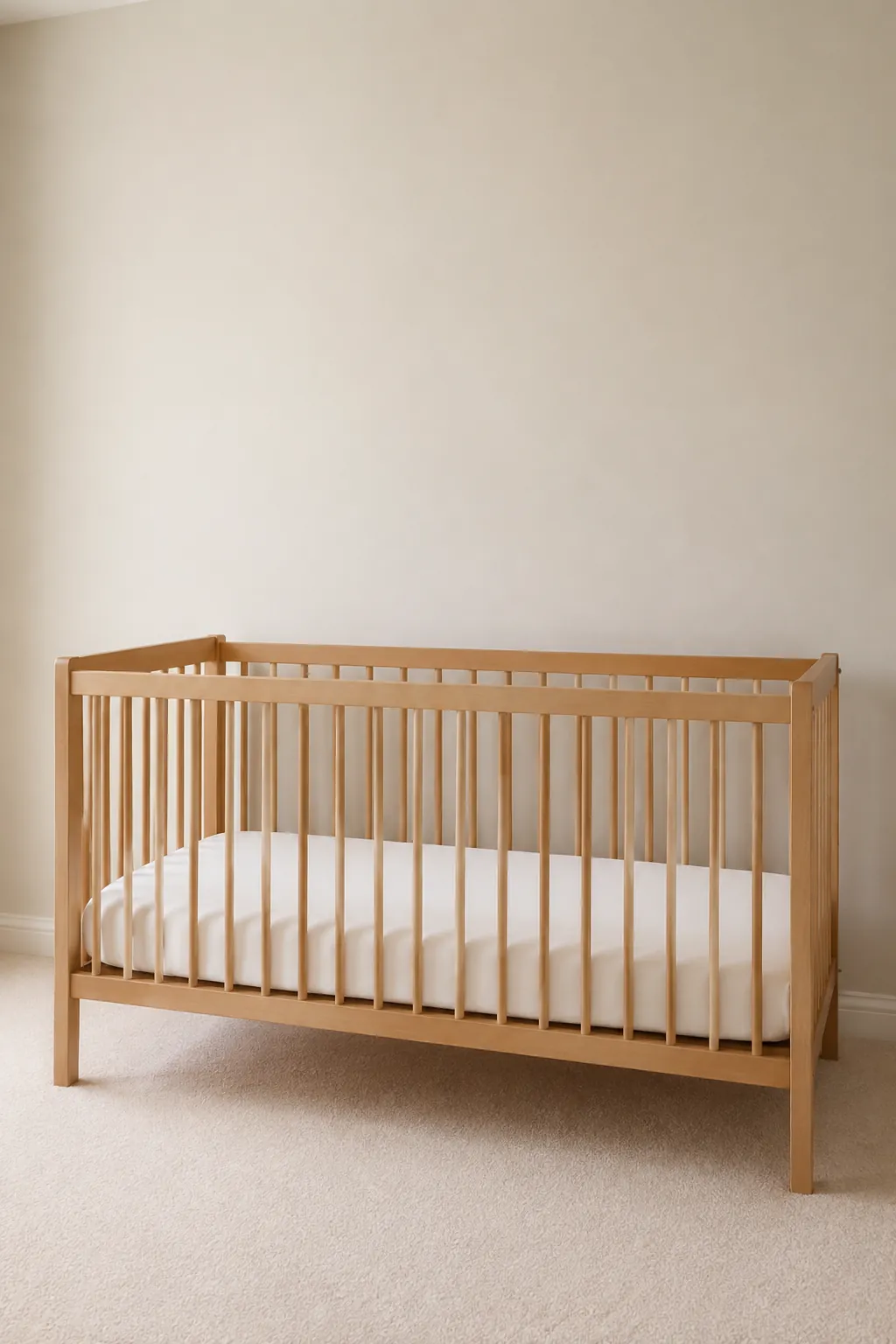
A quiet wall gives textured furniture and colorful books room to stand out. It is especially useful behind a crib, where decorative clutter can make the sleep area feel busy. A plain fitted sheet and clear sleep surface are sufficient for an infant crib. The room can have personality elsewhere without dressing the bed as a display.
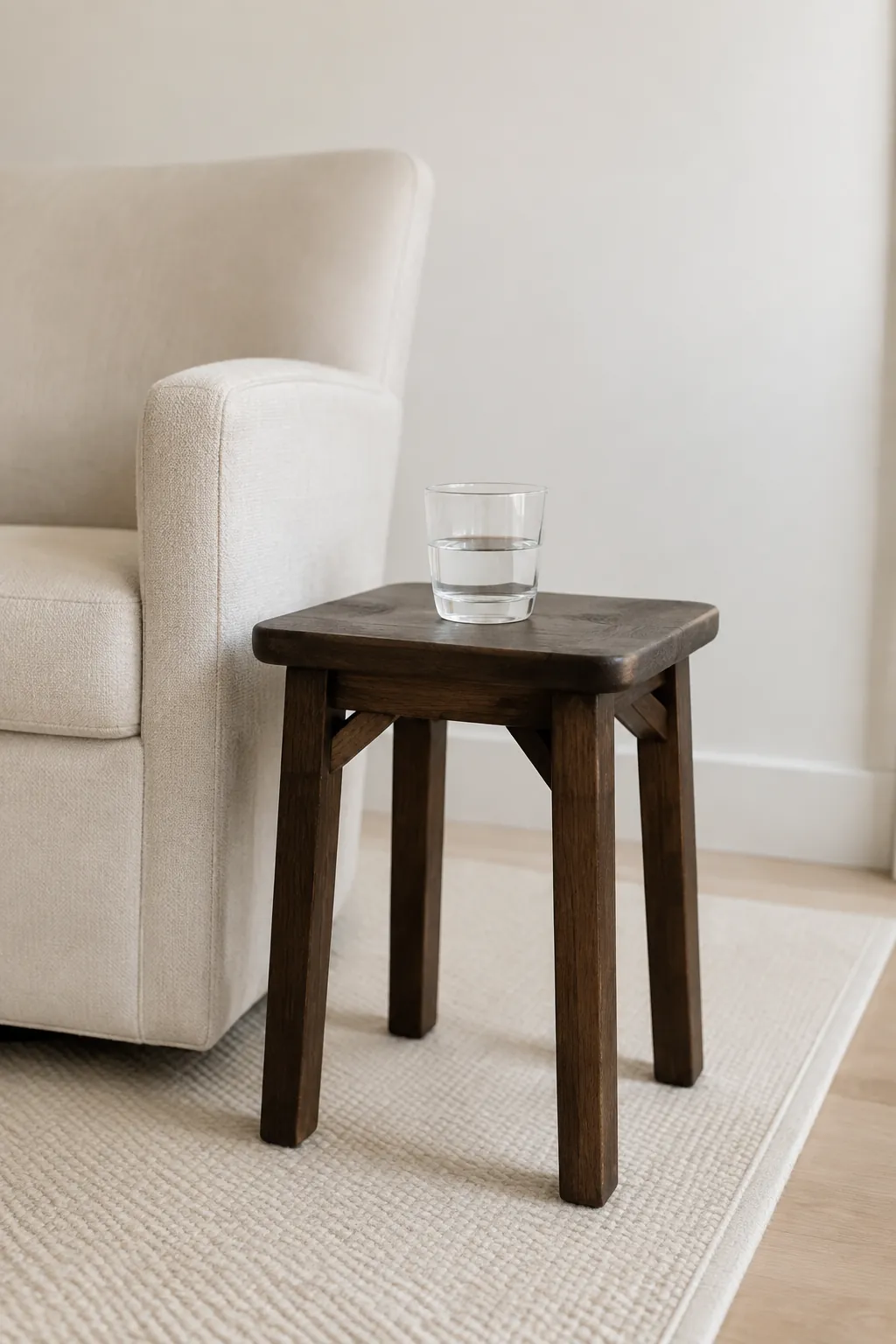
Add a Small Touch of Dark Brown
A little dark brown can stop a pale room from looking washed out. Try it in a compact stool or drawer handles before committing to a large dark wall. The darker shape should connect to a useful object so it feels part of the room. Keep enough light material around it for clear contrast.
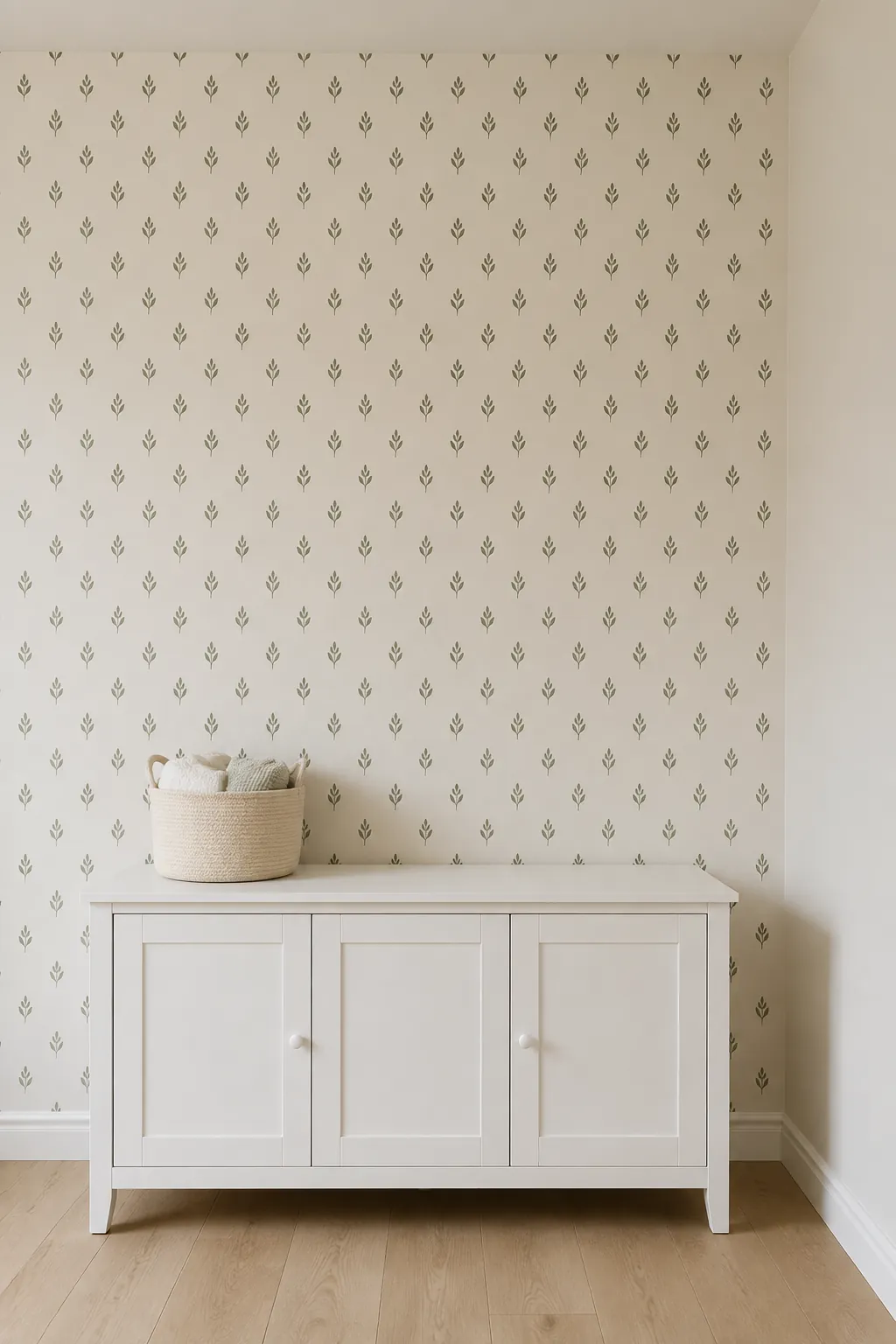
Choose a Simple Block Print Wallpaper
A small repeated block print can give cozy nursery decor a handmade feeling. Limit it to one wall away from the crib and choose a motif you can describe clearly, such as tiny olive leaves. Check the pattern at room distance because a sample can hide how busy a full wall will feel. If renting, confirm the product is suitable for the existing paint and removal conditions.
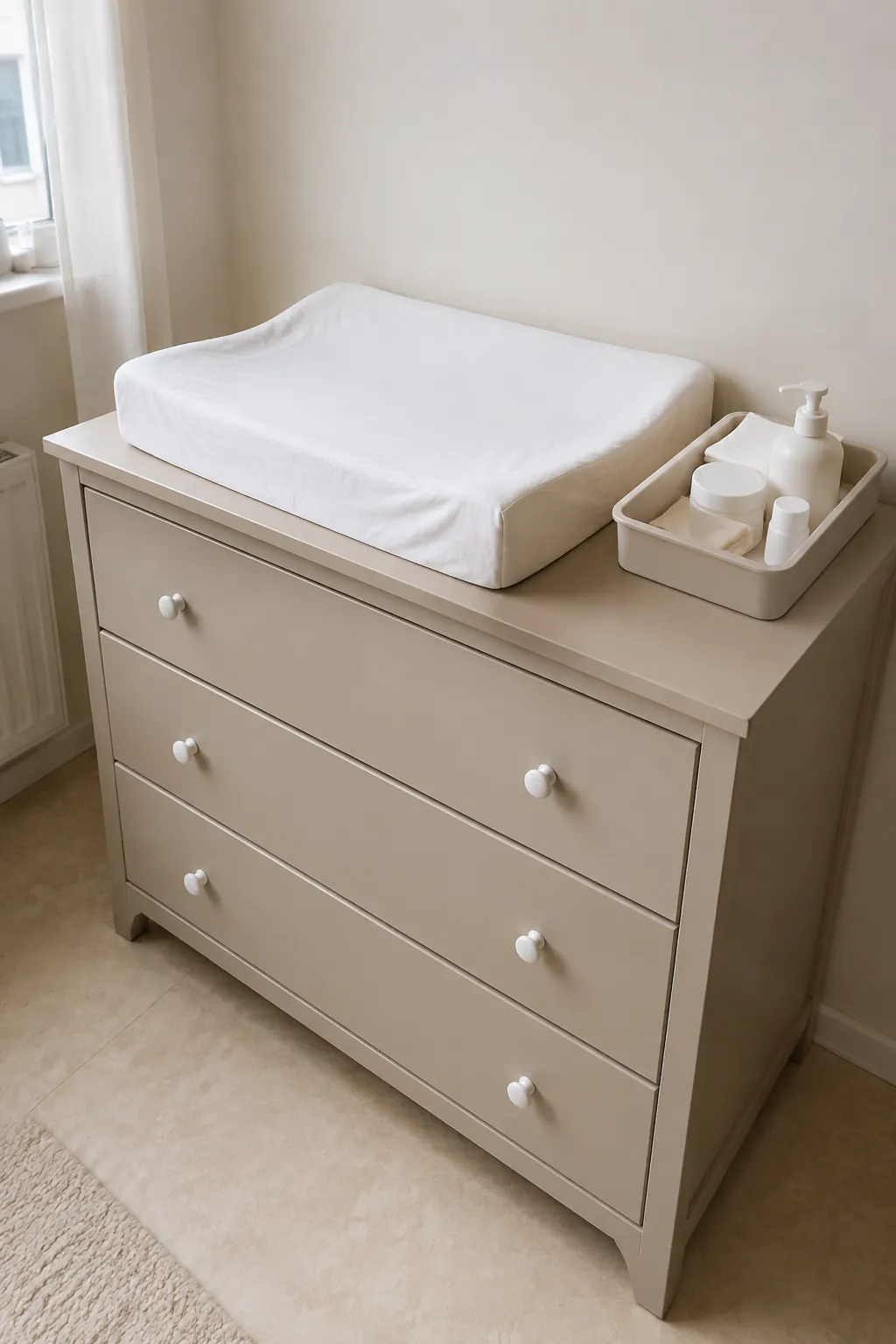
Make the Changing Station Look Useful
A tidy changing station can look warm without hiding the supplies that make it work. Group care items in one washable tray and use drawers for the larger stock. Keep the changing surface clear and the pad securely positioned according to its instructions. Soft cabinet color and a cotton cover provide enough visual interest.
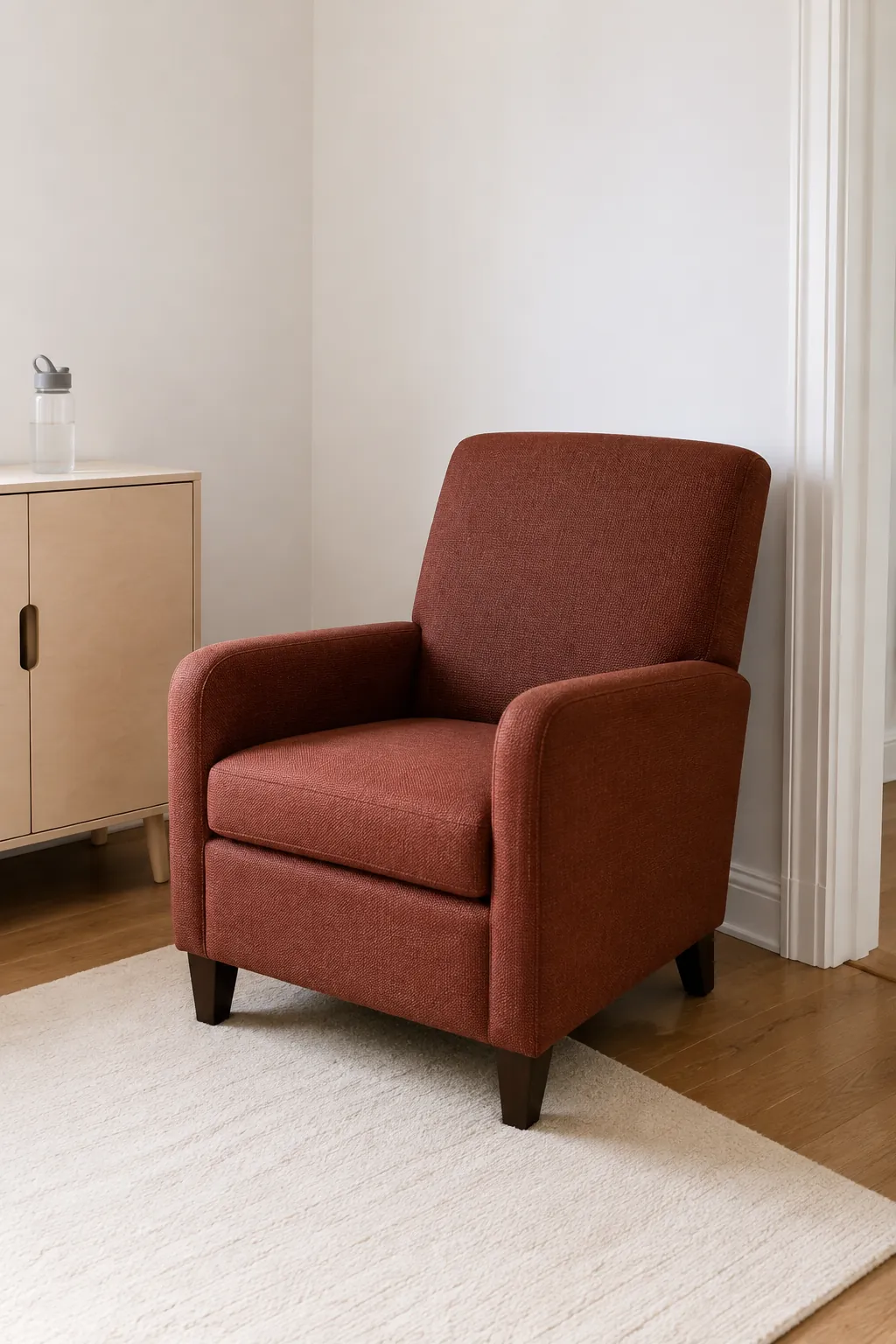
Use a Colorful Chair in a Neutral Shell
A muted blue or russet chair can carry the room’s personality when the walls must stay white. Choose the upholstery against the actual flooring rather than a screen image. Keep a nearby rug simple so the chair remains the main color statement.
Display a Small Personal Object Securely
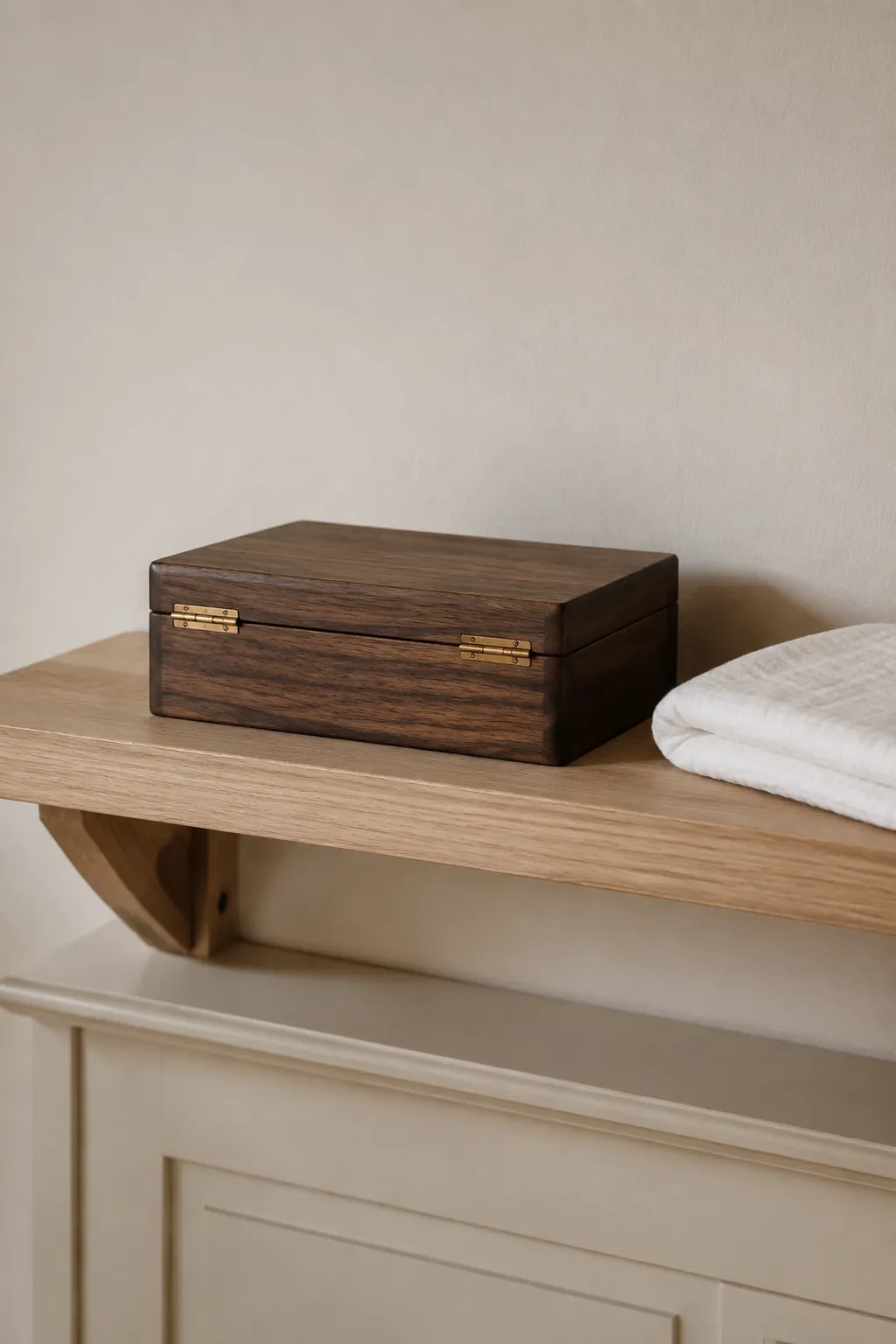
A small meaningful object can make a nursery feel like part of your family home. A wooden keepsake box on a stable shelf is more specific than a collection of generic nursery slogans. Place it away from the crib and out of reach, with secure furniture and no precarious stacks. Leave space around it so it does not disappear into clutter.
Separate the Room’s Shared Functions
If the nursery also serves as an office or guest room, give each function a clear storage area. A closed cabinet can hide work equipment while the baby supplies remain easy to reach. Keep cords and adult items away from the sleep zone. Repeating one wood finish helps the room feel connected without making every area identical.
Leave Space for What Comes Next
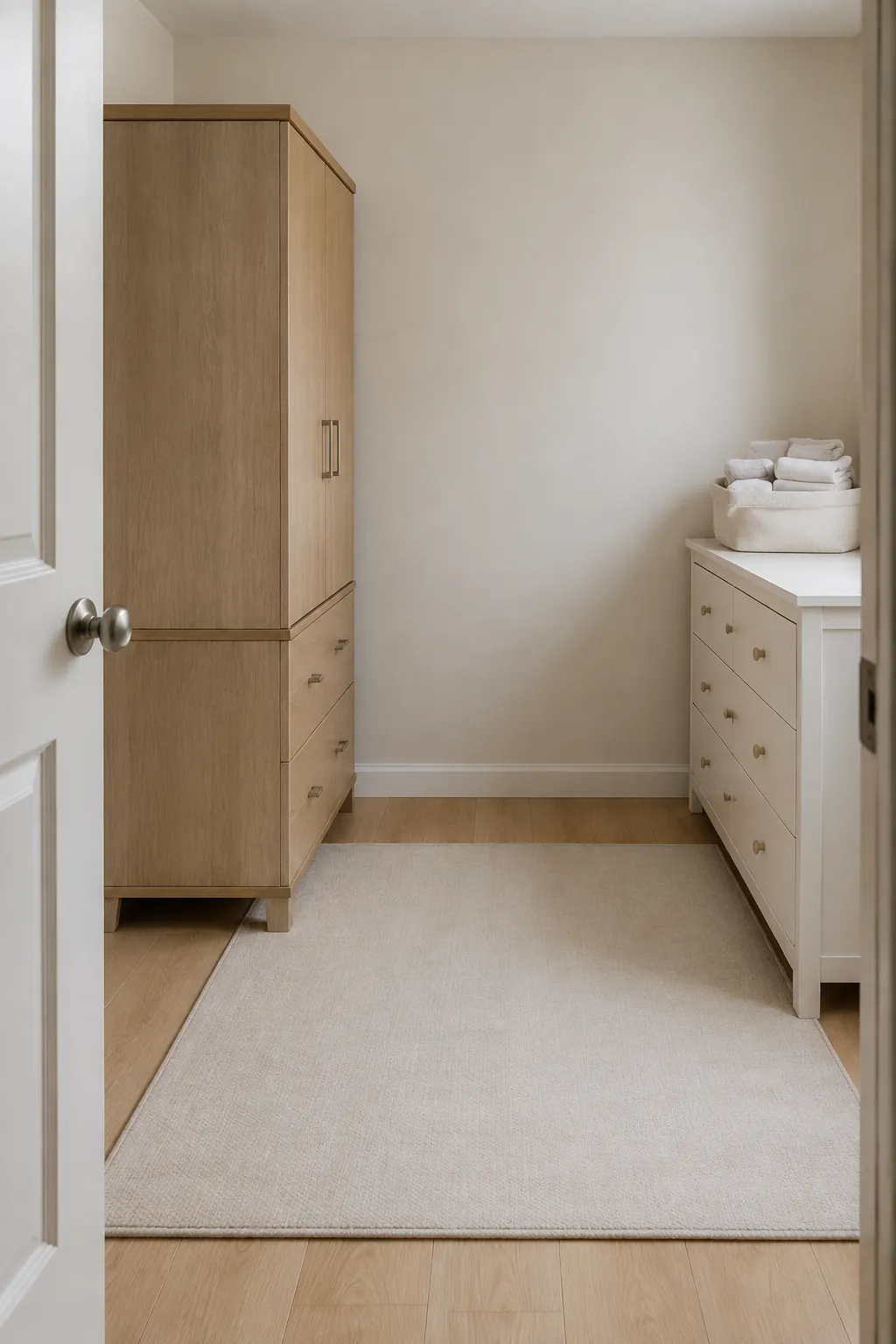
Baby room inspiration does not have to become a shopping list for every empty corner. A flexible low shelf and some open floor space leave room for changing routines and future interests. Choose the permanent pieces for function, then let smaller textiles and books bring evolving color. The room feels warmer when it supports the people using it, not when every surface is filled.