How to Hide TV Cords on a Wall Without Losing Access
A television can look perfectly placed until a black cable drops down the middle of the wall. The quickest useful fix is usually a surface cord cover, but the right choice depends on where power comes from, what the wall is made of, and whether you can alter it. Plan those details before buying a kit or cutting an opening.
For a removable setup, keep the cords on the room side of the wall and conceal the route with a suitable cover or furniture. For a nearly invisible installation, arrange a compliant power connection behind the screen and a separate suitable route for signal cables. An ordinary TV power cord or extension lead should never disappear into the wall cavity.
Trace the whole cable route before choosing a cover
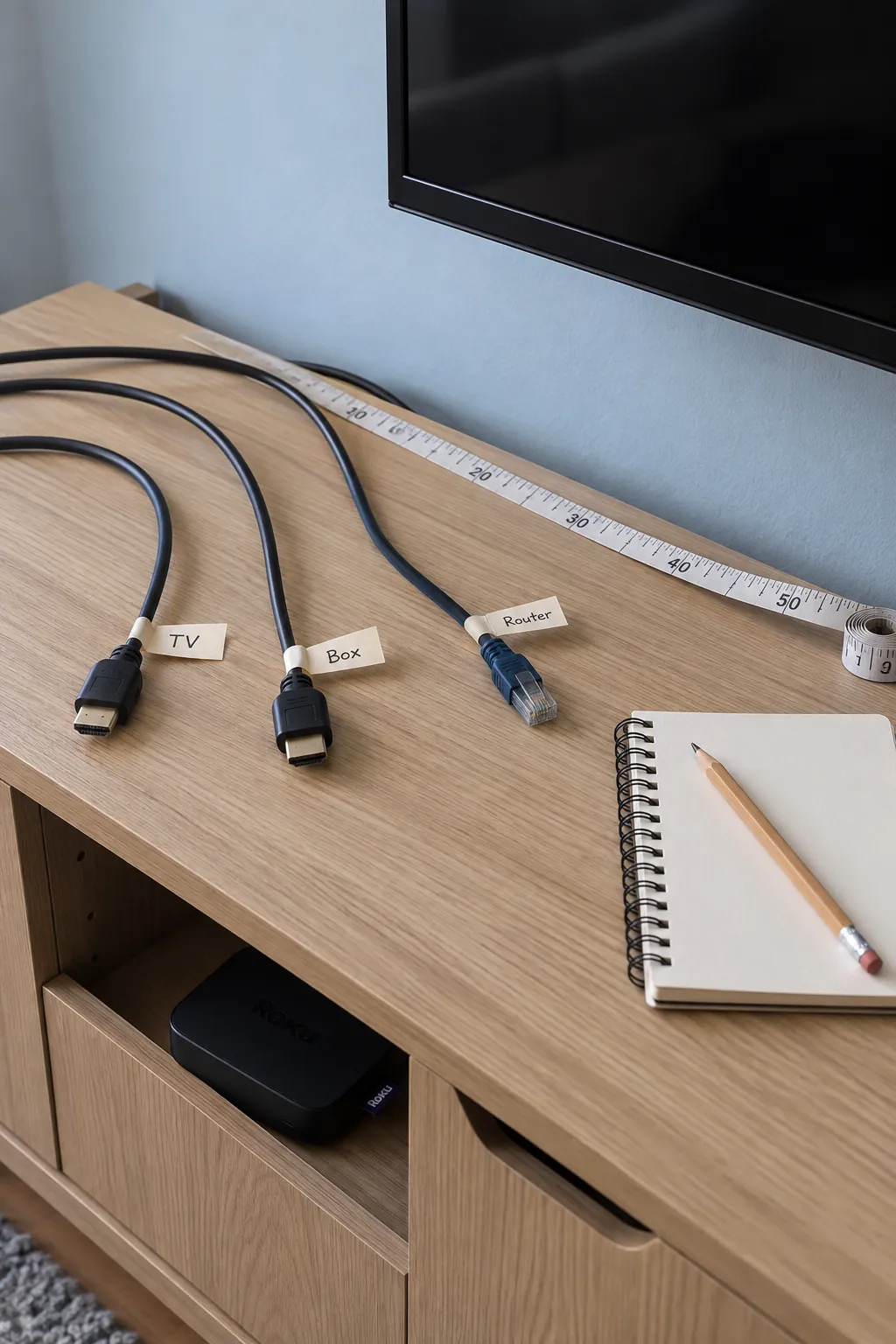
Start at the television and follow each connection to its destination. Power may run to a low outlet, HDMI to a console, and Ethernet toward a router on another wall. Count the actual cables and measure the thickest connectors, because a cover that fits the wires may not accommodate their plugs or the bends at its ends.
Hold a paper strip along the proposed route and look from the sofa and doorway. A short vertical run into a console usually attracts less attention than a diagonal shortcut. If the TV sits on an extending mount, measure with the arm fully open and leave enough slack for its complete movement without pulling a connector.
Check the equipment instructions for ventilation space and cable bend limits. Photograph the connections before unplugging anything, then label both ends of similar leads. That small step saves guesswork when a streaming box needs replacing later.
Use a paintable surface cover for a straightforward finish
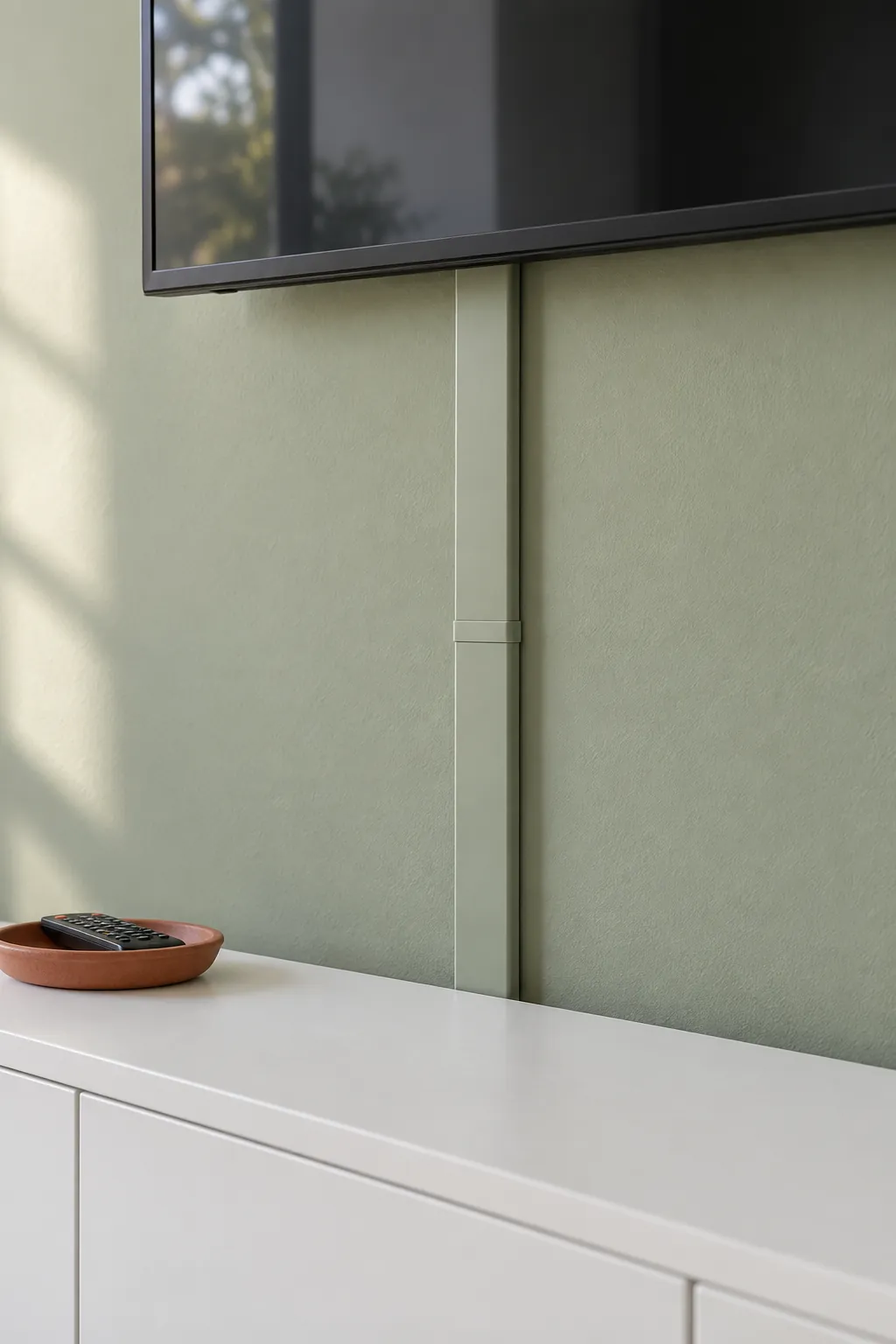
A surface raceway turns several loose lines into one deliberate strip. Choose a product whose instructions permit your cable types, with enough capacity for the bundle and proper fittings for corners. Do not pack power and signal wiring together unless the system is designed and approved for that arrangement.
Clean and dry the mounting surface as the manufacturer specifies, mark a level route, and cut only the empty cover with the recommended tool. Fit the base, lay the cords without pinching them, and close the lid. Keep plugs and adapters accessible instead of stuffing them inside a narrow channel.
Paint only a cover labeled paintable, following its preparation and drying guidance. Matching the wall color and sheen helps a vertical strip recede; matching the skirting works better for a horizontal floor level run. Paint the removable lid separately where practical so its opening seam remains usable.
Keep rental solutions reversible and expectations realistic
Adhesive does not automatically mean damage free. Even a removable strip can lift weak paint, and a textured wall may not hold it securely. Check your lease, get permission where needed, and test the approved attachment in an inconspicuous area before committing to a long run.
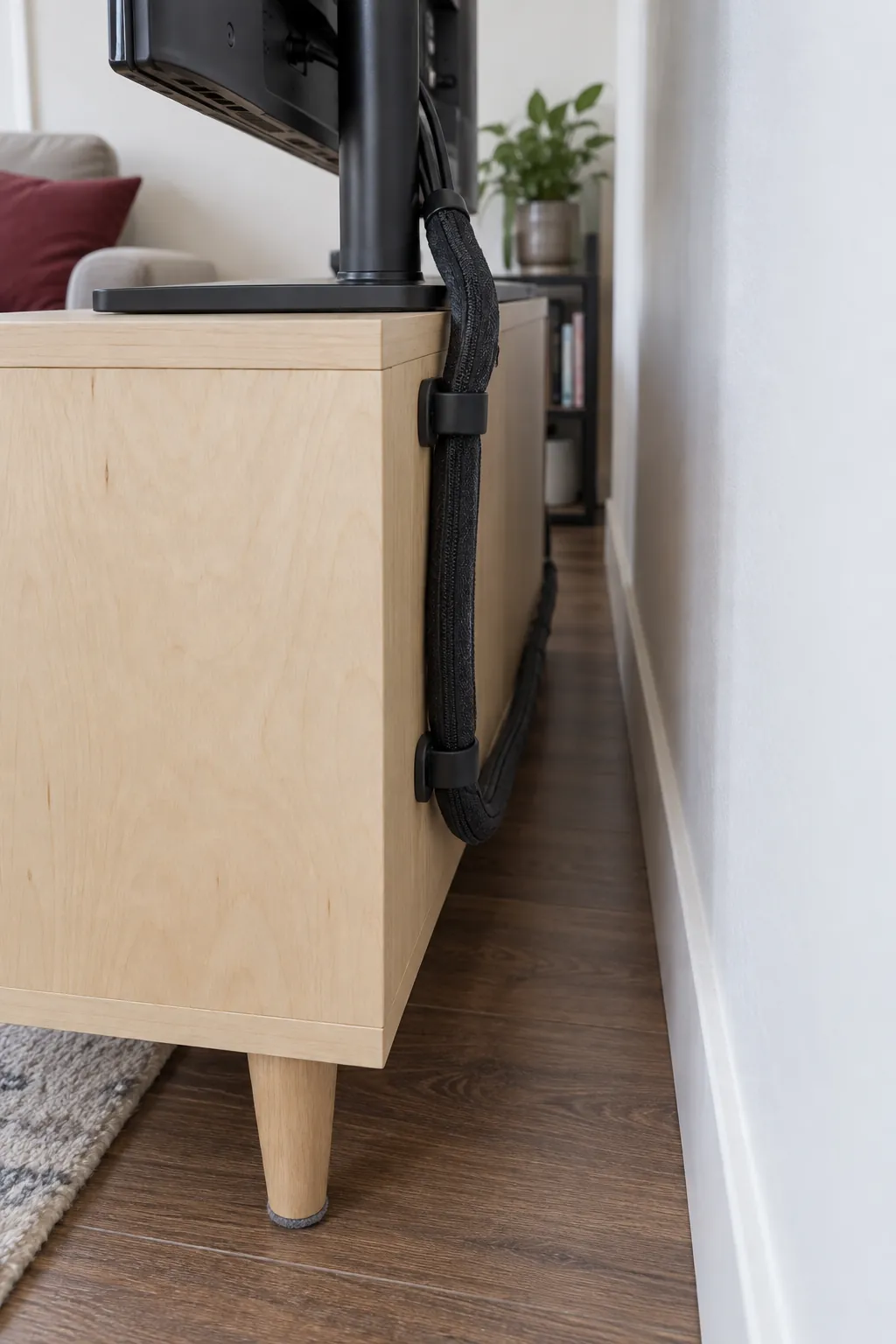
If sticking anything to the wall is off limits, route a cable sleeve behind a stable console or a suitable freestanding TV support. Secure slack to the furniture with compatible clips, keeping it away from feet and moving parts. A taller console can shorten the exposed drop, but it must still leave comfortable viewing height and clear access to the screen.
Separate hidden power from hidden signal cables
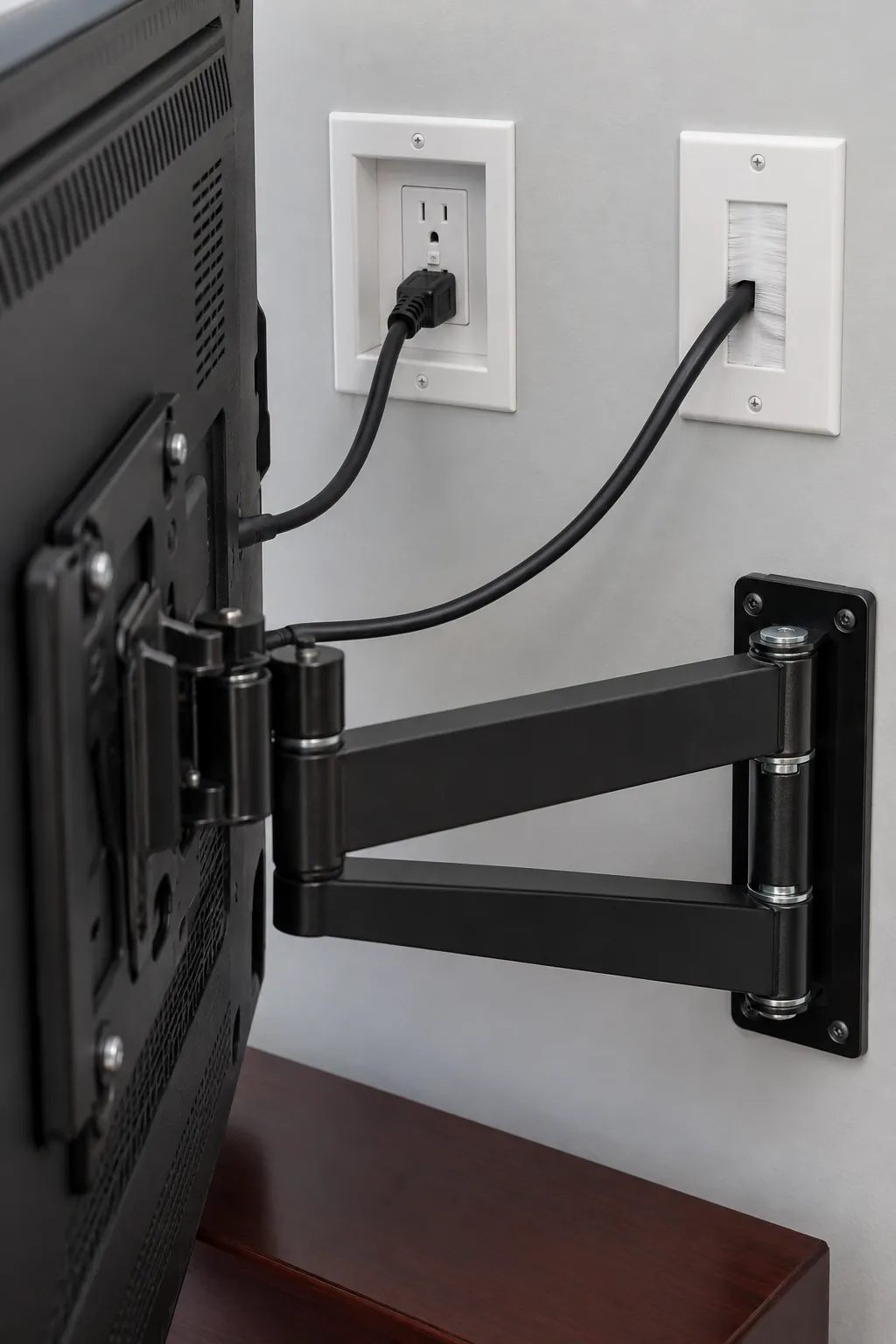
The cleanest TV wall setup often has an outlet behind the screen, but a brush plate alone does not make a power cord suitable for concealed installation. Keep ordinary flexible power leads and extension cords out of the cavity. Use an electrician for a new receptacle, or a listed power relocation system only where local rules allow it and its installation instructions can be followed.
HDMI, Ethernet, and other low voltage cables need the correct rating for the space they pass through. Select cables and fittings for your local requirements, and preserve any required separation from mains wiring. A cable labeled for use inside walls is not permission to ignore fire barriers or other construction details.
Before any opening is made, establish the location of studs, electrical wiring, pipes, and obstructions. Do not assume the space between two plates is empty or continuous. Masonry, insulation, fire blocking, and shared apartment walls can turn an apparently simple drop into work for a professional.
Place connections where the mount will not crush them and where plugs remain reachable. If the wall construction or electrical requirements are uncertain, a surface route gives a tidy result without concealing an unresolved problem.
Give the console its own cable management
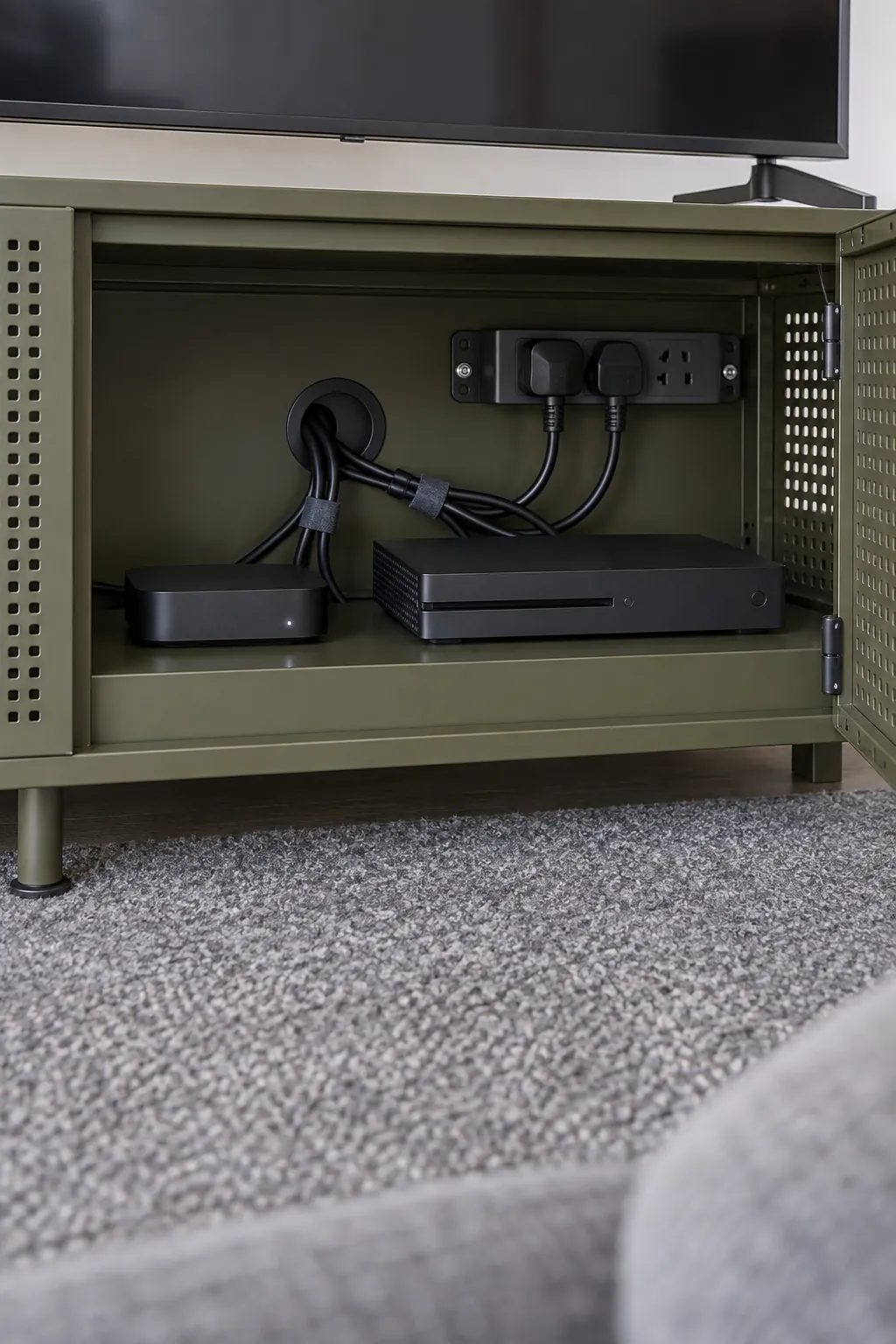
Hiding the vertical drop will not help much if a tangle spills out below the cabinet. Run leads through existing furniture openings with smooth protective edges and use loose reusable ties to group related cables. Leave a small accessible service loop instead of a tight knot or an oversized coil pressed against electronics.
Mount a power strip only as its manufacturer permits, keep it accessible, and follow its load rating. Never connect power strips in series. Adapters and equipment need airflow, so a sealed decorative box is a poor place to hide a warm collection of chargers.
Keep the router where its placement and ventilation requirements are met rather than burying it behind metal or dense clutter. A ventilated compartment can hide a small media box, but check remote reception before closing the door. Cable management for a TV wall should make maintenance easier as well as improve the view.
Check the finished wall from the places you use it
Reconnect the devices and test every input before putting the furniture back. Extend, swivel, and return the mount slowly while watching the cords. Nothing should pull taut, scrape an edge, block a vent, or catch in the arm.
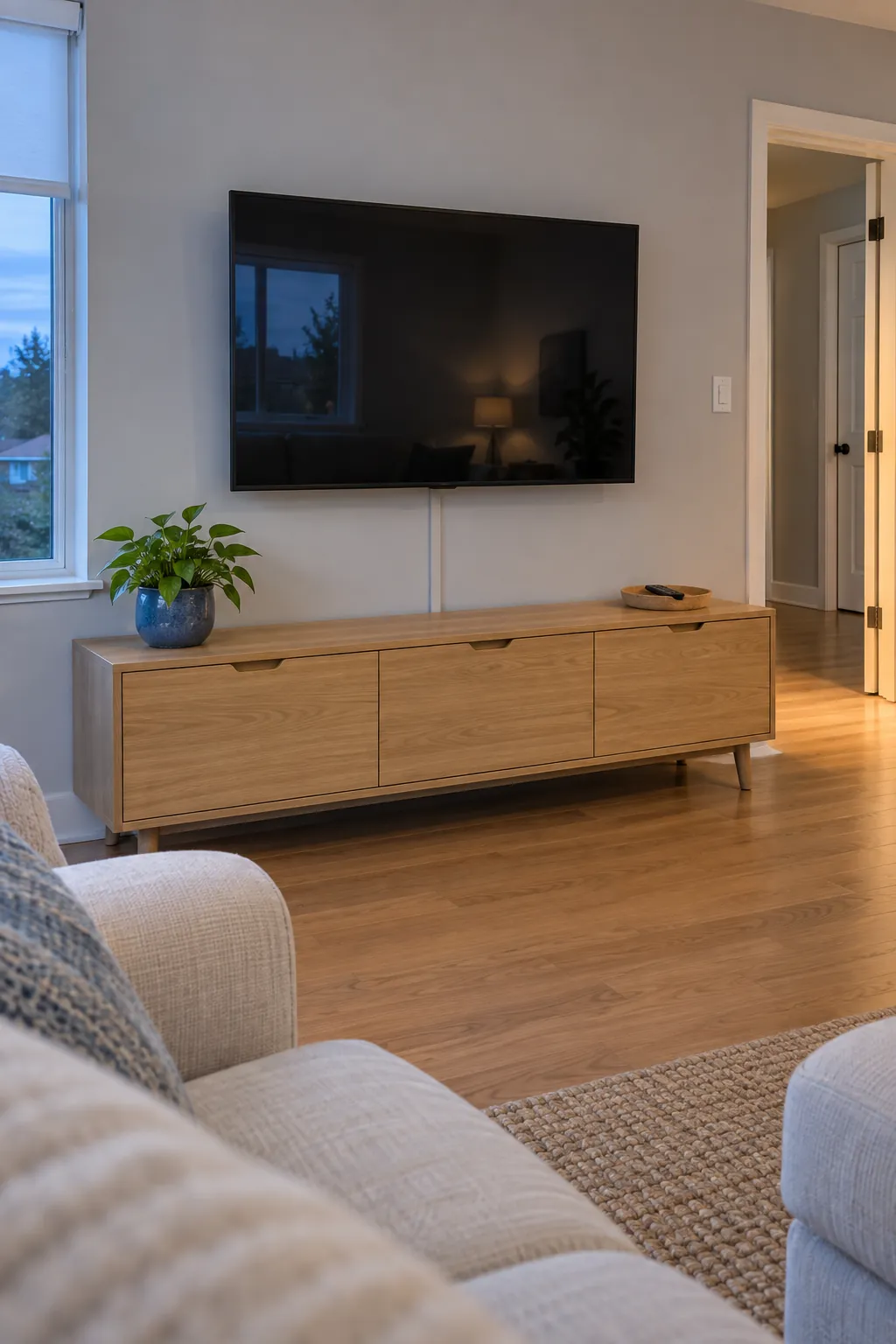
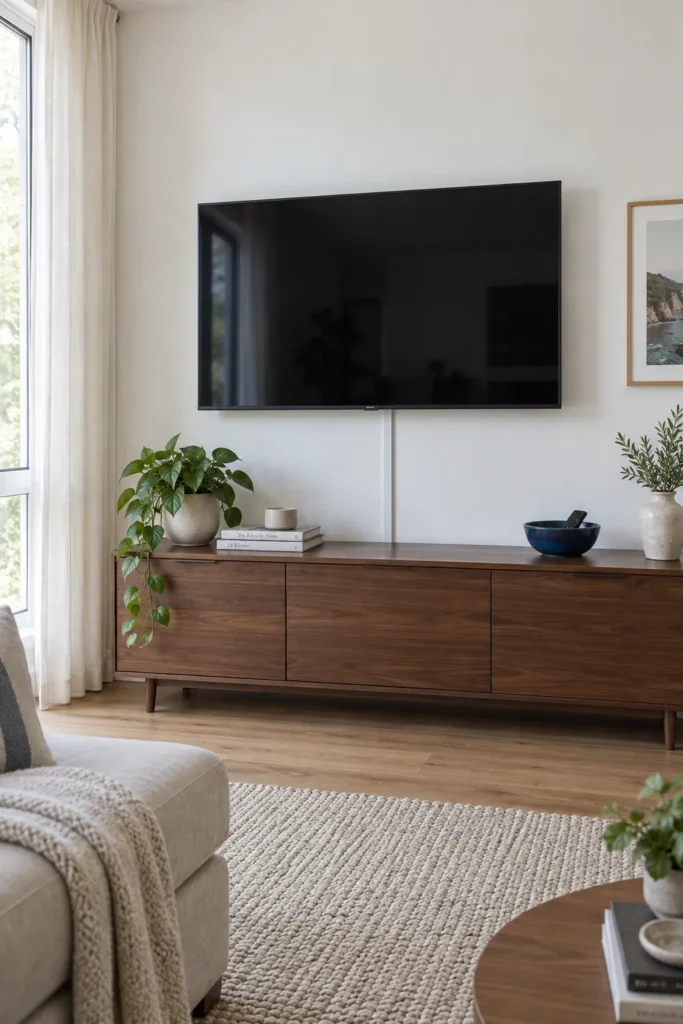
Then sit on the sofa and walk past the room entrance. A visible seam may be less distracting than the extra shelf or oversized decoration added to conceal it. Keep TV wall decor ideas secondary to the cable route: one modest ceramic object or a low plant beside the console is enough, provided neither blocks access or equipment airflow.
Keep a photo of the completed connections and the cover instructions with your equipment notes. The best finish is one you can open when a cable fails, then close again without rebuilding the wall.