How to Decorate the Wall Above an Entryway Bench
The empty space behind a seat is also the space your head moves through when you put on shoes. That makes this decorating decision more practical than it first appears. Choose the wall arrangement around the way the bench is used, and you can make the entrance feel finished without making the seat uncomfortable.
Decide whether the bench is a seat or a coat station
A bench used for tying shoes needs a clear place for your head, shoulders and hands. A bench used mostly to catch bags may need storage above it instead. Decide which job matters most before choosing entryway bench wall decor, because a low picture and a row of loaded coat hooks ask for very different space.
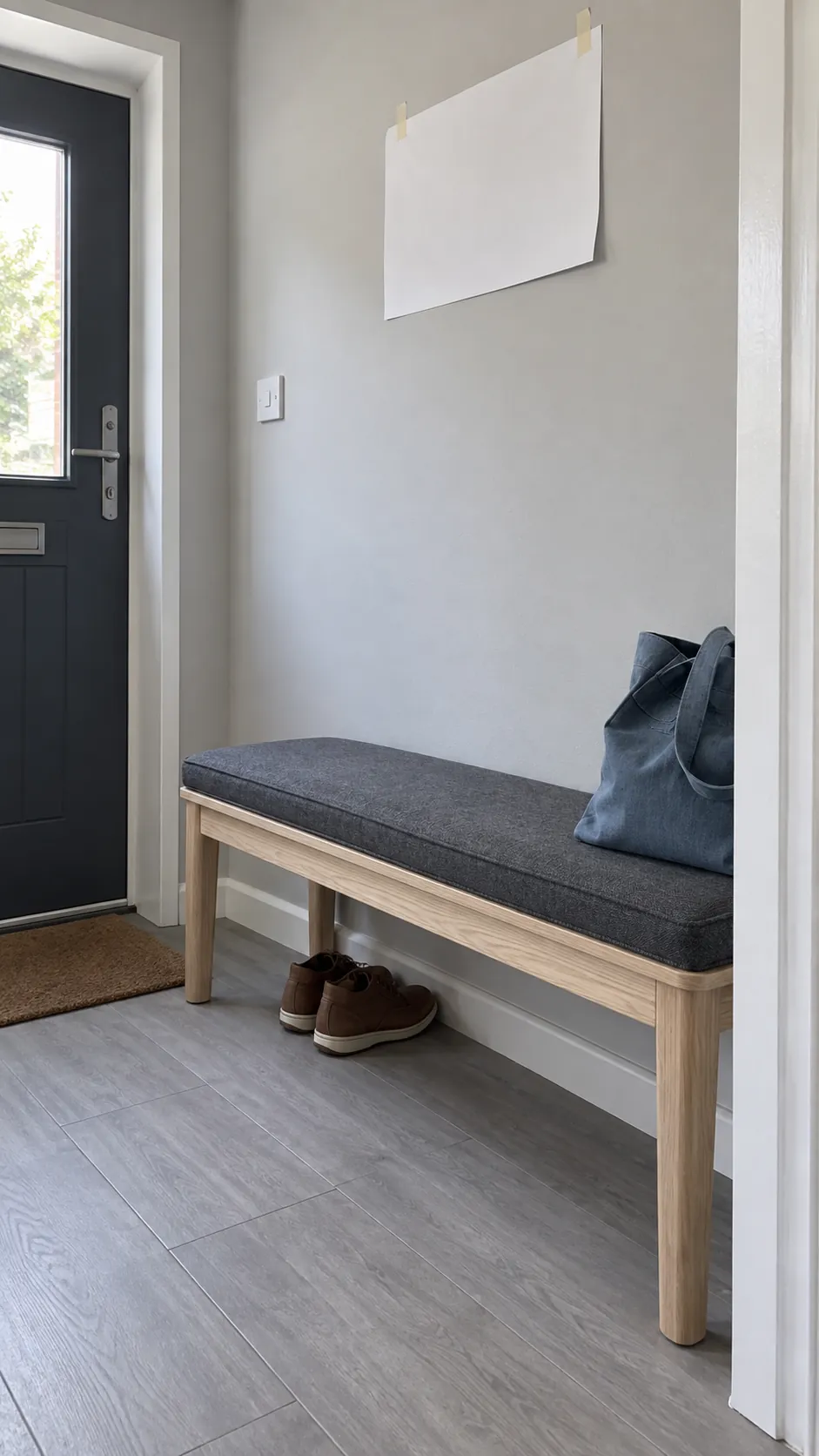
Sit down, lean forward to reach your shoes and stand up again. Have someone hold a paper outline of the proposed decoration while you repeat those movements. Include the tallest regular user and any cushion you plan to keep. The top of the bench alone is not a reliable reference for the space a seated person occupies.
Look at the doorway too. Center the arrangement on the bench after the bench has a sensible position outside the door swing. Centering everything on an entire wall can leave the seat awkwardly close to the entrance.
Size art to the bench, then adjust its height
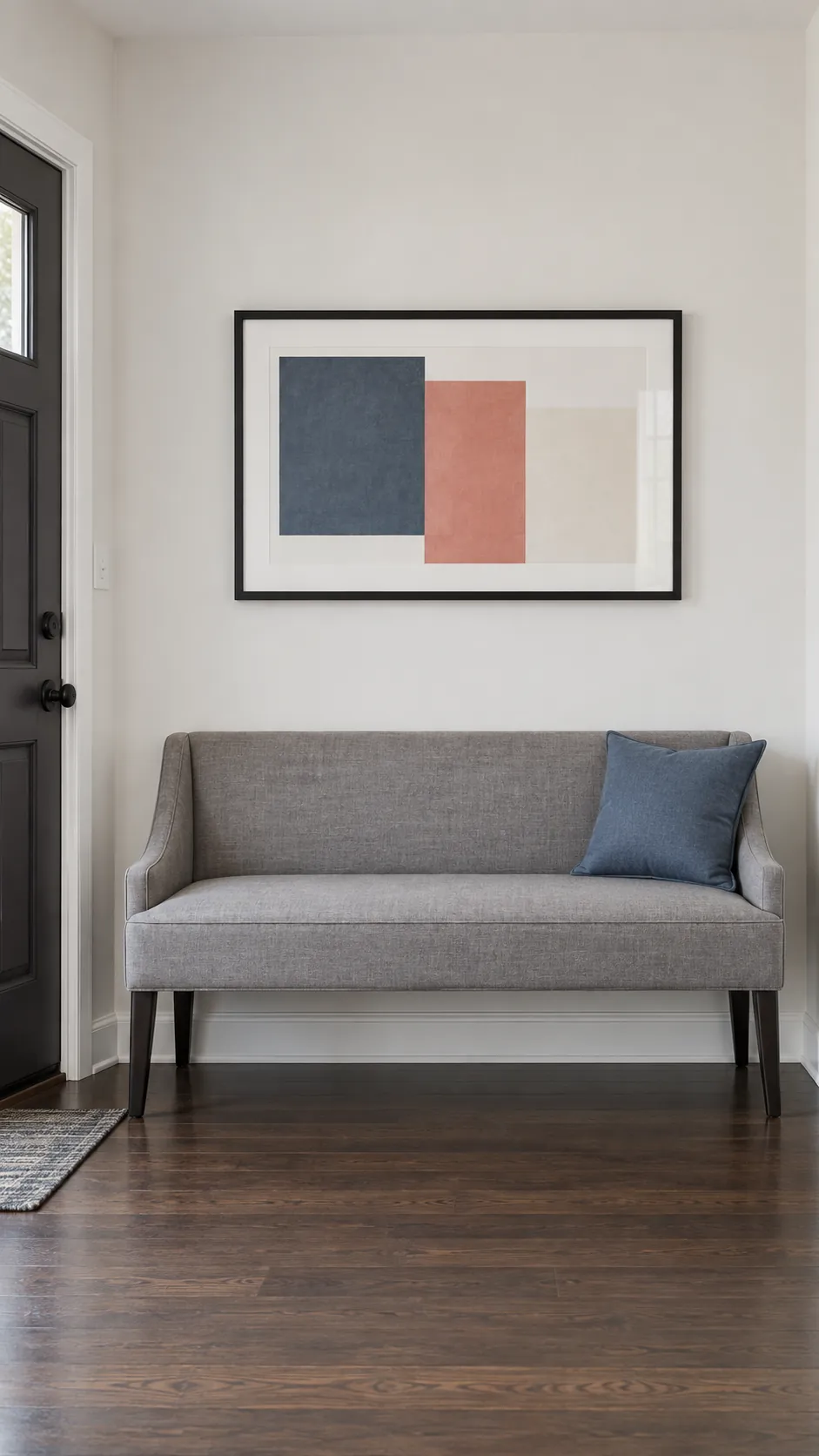
One substantial picture often gives a bench a clearer visual anchor than a scatter of tiny frames. As an initial mockup, try an overall artwork width around two thirds to three quarters of the bench width. For a 48 inch bench, that suggests a trial width of roughly 32 to 36 inches. The frame, not just the printed image, counts toward that measurement.
Art above an entry bench should relate visually to the furniture while clearing the people who sit there. Start with the paper outline near a comfortable viewing height, then raise or reposition it if a seated head could touch the frame. Avoid applying the usual small gap above furniture automatically to a low bench with no back.
A bench with a tall back creates a different boundary. The picture can sit above that back with a deliberate gap, while a backless bench may need more blank wall. Choose the final position from both the front door view and the seated movement test, not from a single photograph.
Let hanging coats set the hook layout
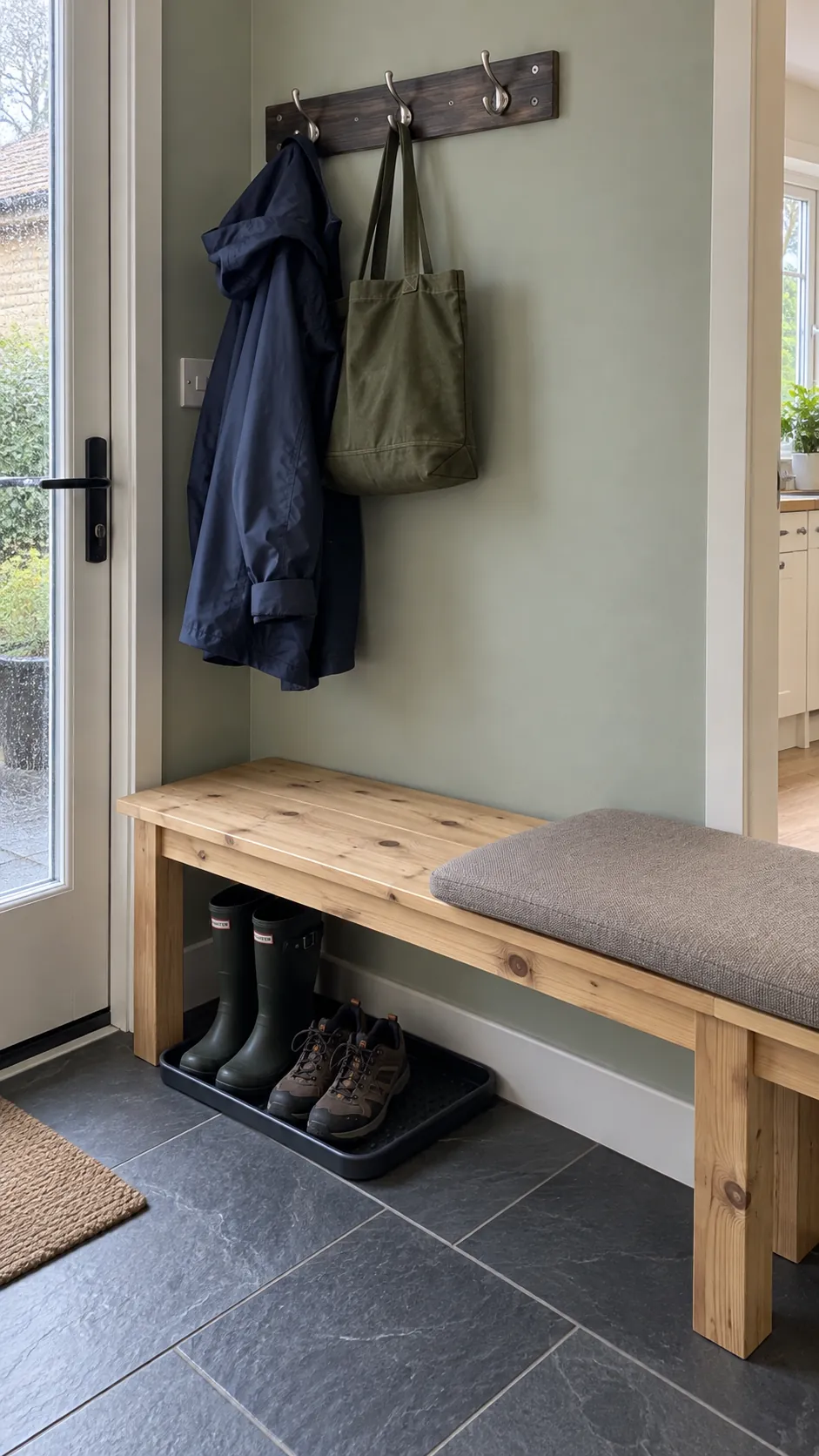
Coat hooks above a bench become a wall of fabric once they are used. Hold up the longest coat at the intended hook position and check where its hem lands. If it pools on the cushion or hangs against a sitter, move the hooks toward one end, use a separate nearby wall or choose a different storage location.
Space hooks using actual jackets and bags rather than empty hardware. Two bulky winter coats may need more room than several lightweight summer items. Leave enough space above each hook to lift a hanging loop on and off, especially when a shelf or cabinet sits overhead.
Fasten the rail or individual hooks according to the rated load and wall construction. Stud fixing or suitable anchors may be necessary; decorative screws in plaster alone are not a substitute. For children, a separate reachable hook beside the bench is usually more practical than making them climb onto the seat.
Use a mirror only if the standing view works
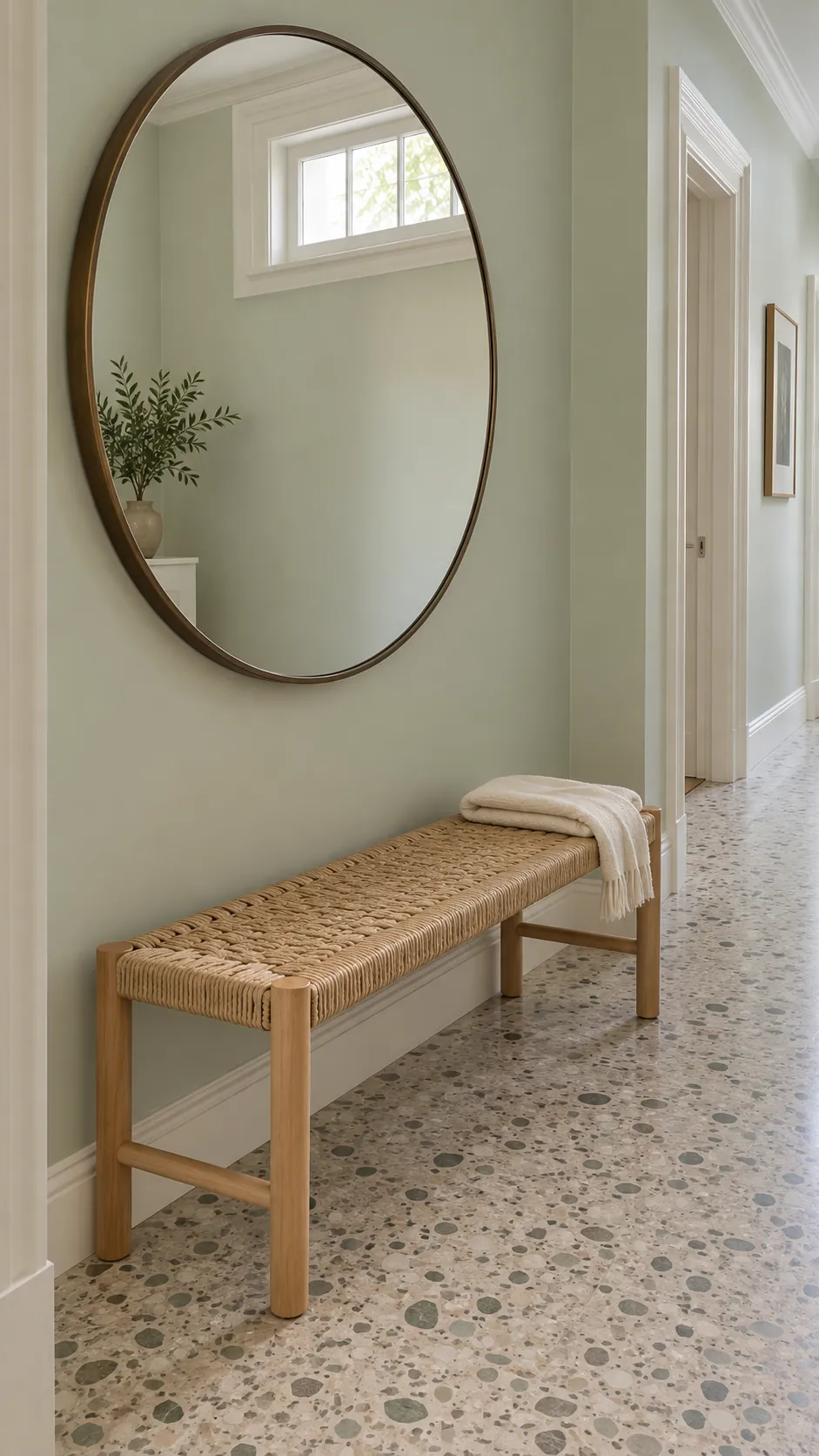
A round mirror can soften the horizontal line of a bench, but its useful viewing position is usually from the floor in front. Check the reflection at the heights of the people who use it. If you need to step so far back that you block the hall, put the mirror elsewhere and use a picture over the seat.
The mirror should reflect something you are happy to see twice, such as light from a window or a quiet wall. A nearby pile of shoes will become more prominent, not less. Secure the mirror with its specified fixings and keep it clear of seated head movement; never rely on leaning a heavy mirror behind a working bench.
Treat a shelf as an overhead object
An entryway shelf over a bench introduces both projection and things that can fall. Before installing it, test a cardboard outline at the proposed height and depth while someone sits and stands normally. If comfortable clearance forces the shelf so high that it is hard to reach, it is probably a poor place for everyday keys or bags.
Keep overhead display light and restrained. A small securely mounted picture or a lightweight object positioned well back from the edge is easier to manage than a heavy vase above a seat. Follow the shelf instructions for loads and fixing, and consider whether children, pets or door movement could disturb the display.
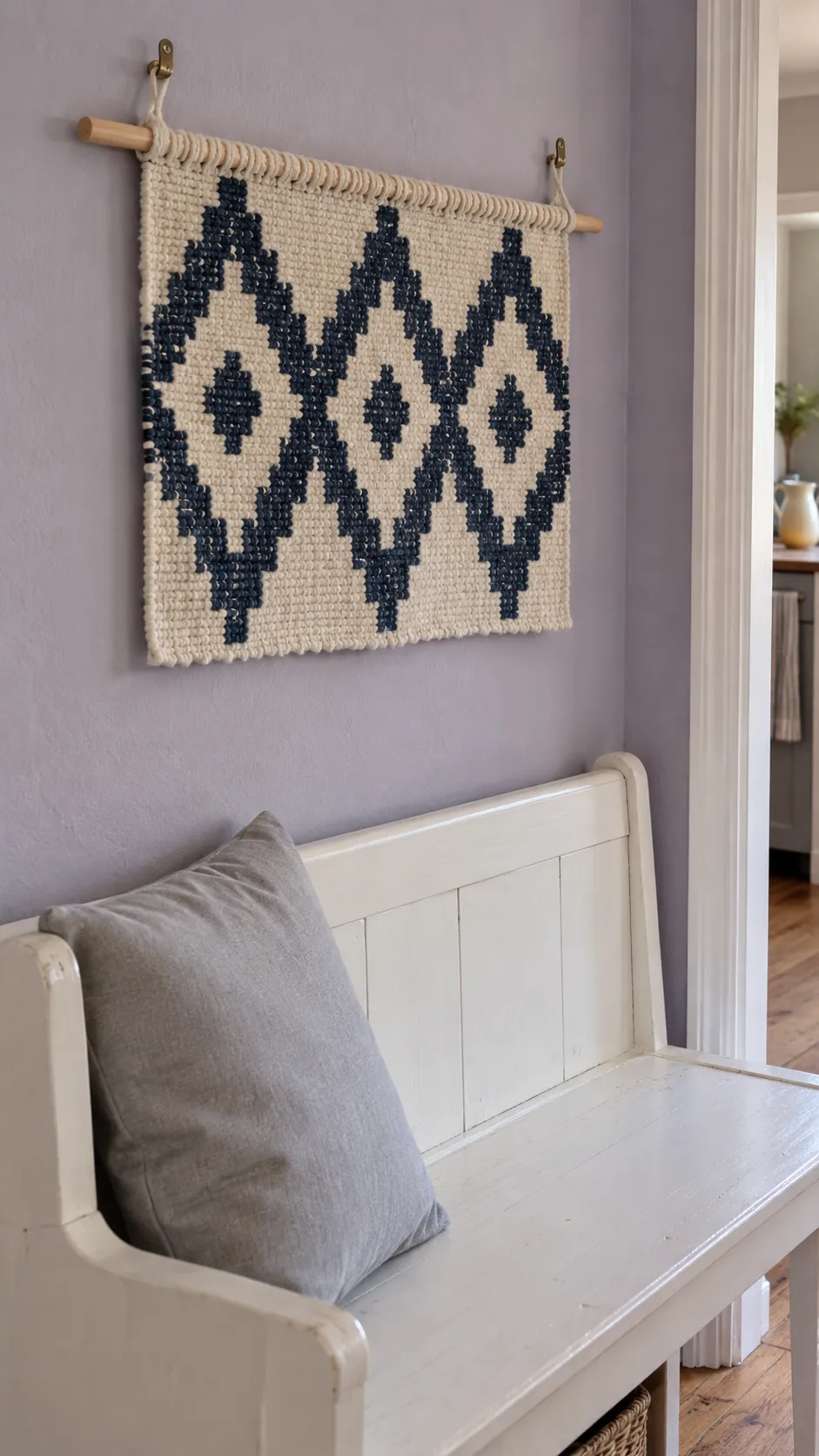
A shelf does not need a row of hooks below it, a mirror above it and pictures around it. Choose the function you actually need. In a tight entry, a single textile hanging can supply texture with far less projection, provided its placement stays clear of hands and heads.
Connect the wall and bench with one repeated detail
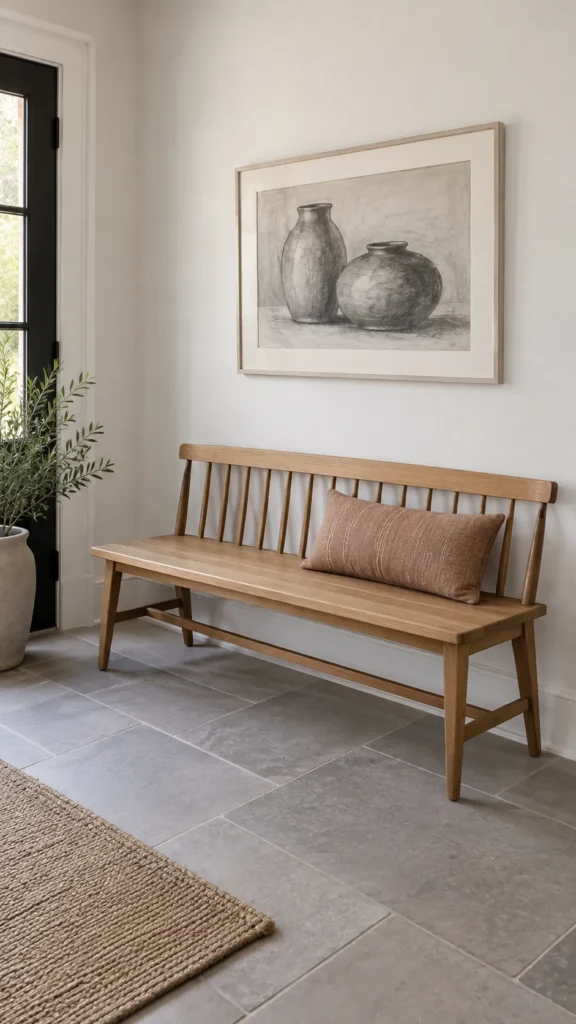
Repeat one color or material to make the arrangement feel intentional. A blue accent in a geometric print can relate to a simple cushion, while a timber frame can echo the bench legs. The connection can be quiet; every item does not need to match.
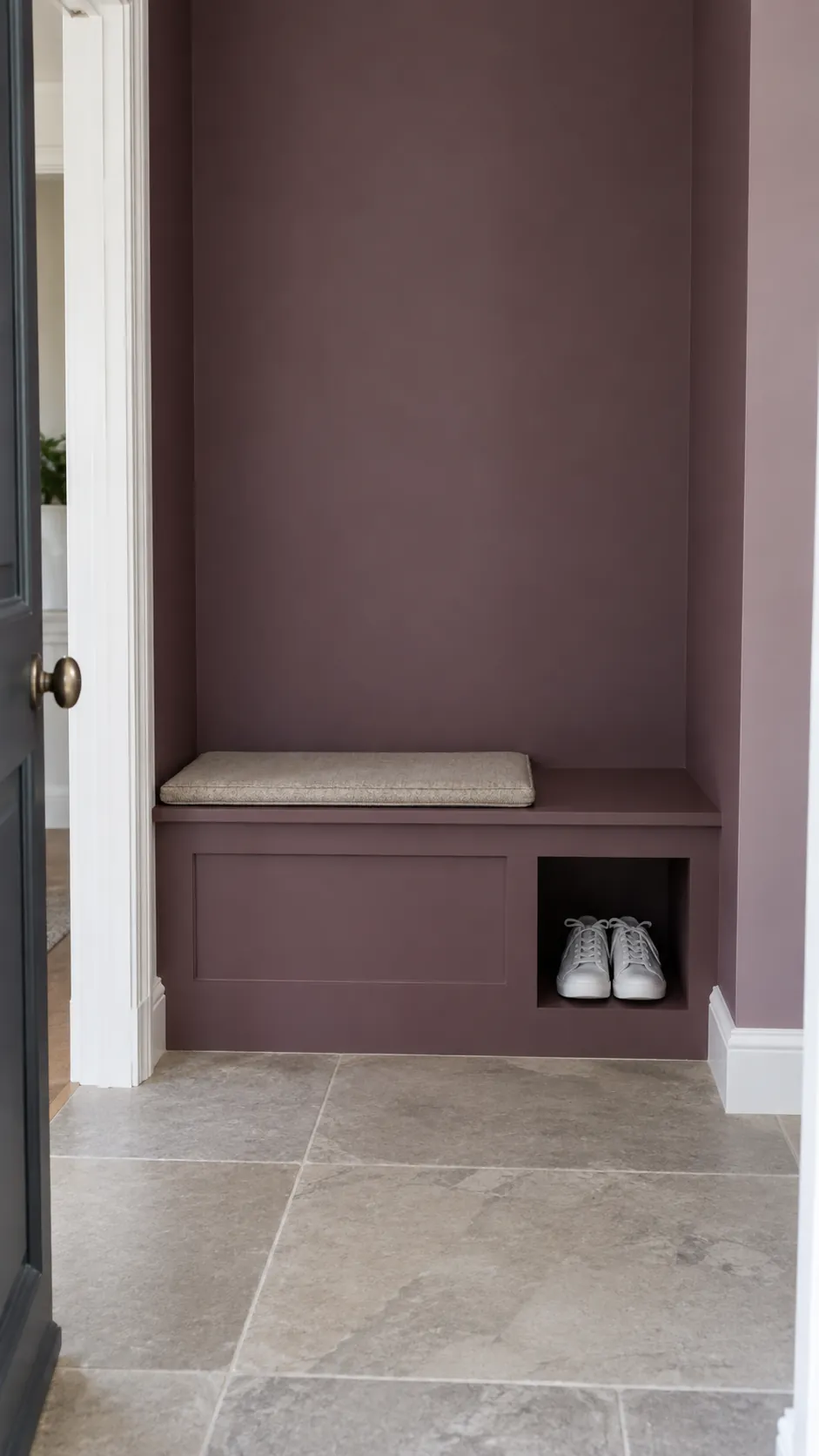
For a bench surrounded by doors or switches, color on the wall may be enough to define the zone. A carefully chosen paint shade can connect a built in seat and its backdrop without adding another object overhead. In a rental, confirm permitted changes and test any removable product as directed, since removal can still damage paint.
Leave a useful stretch of seat uncovered and put away the decorative cushion if it gets moved every morning. The best finished arrangement survives someone sitting down with wet shoes and a full bag. If the bench still works at that moment, the wall decor has earned its place.