13 Hallway Accent Wall Ideas for Color, Pattern and Texture
The wall you notice first is not always the longest one. Stand at the entrance and find the surface that holds your view, then check its light, door openings and everyday wear. A deliberate accent on that surface can give the passage direction without asking every wall to compete.
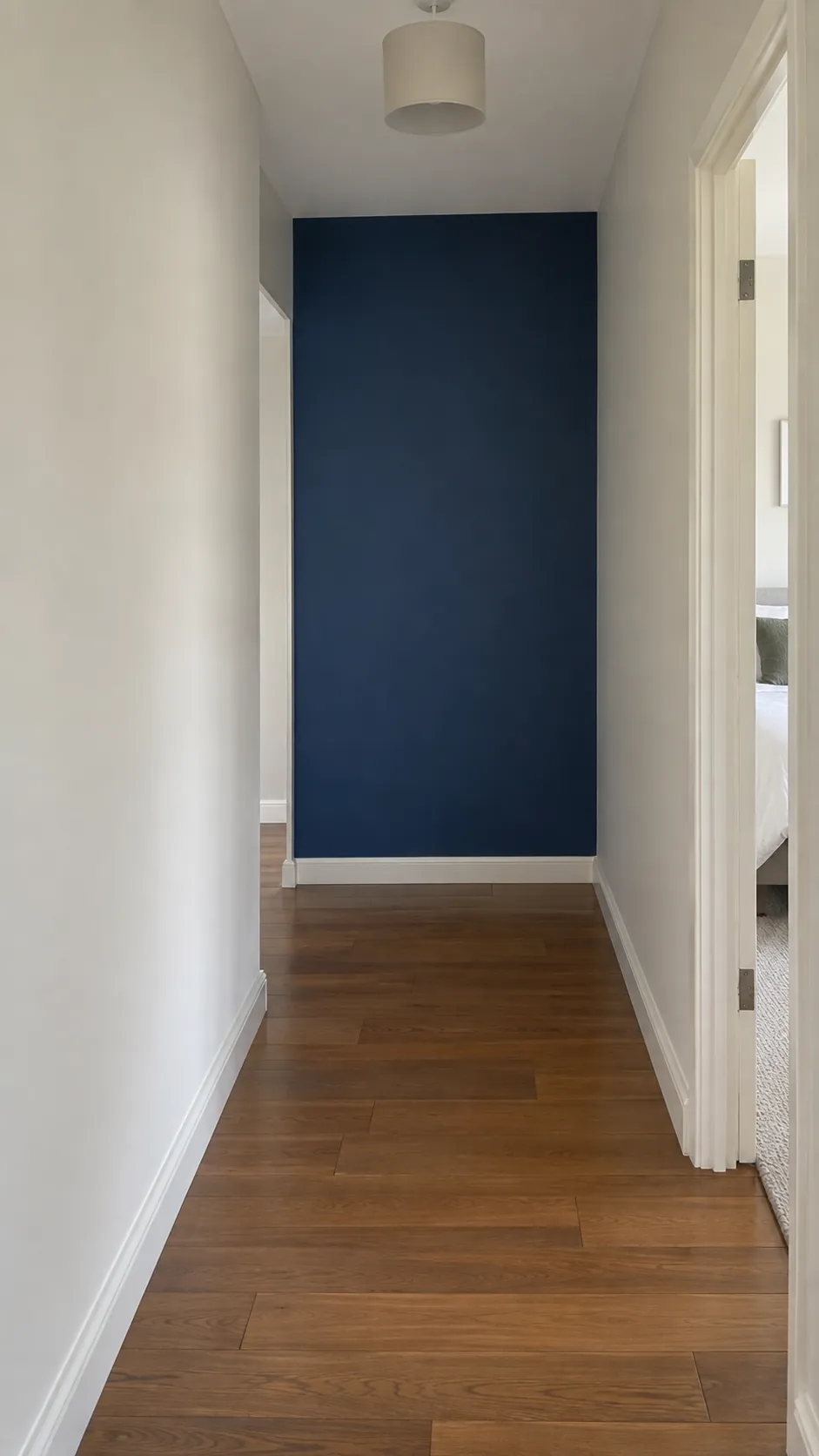
A deep blue end wall
A dark color at the end of the hall gives your eye a definite stopping point. Keep the side walls lighter if you want the contrast concentrated in that one rectangle. Sample the blue where it will actually go, because borrowed daylight and your evening bulbs can change how gray or vivid it appears. A narrow hallway accent wall works best when its edges line up with real corners instead of stopping halfway across an uninterrupted surface.
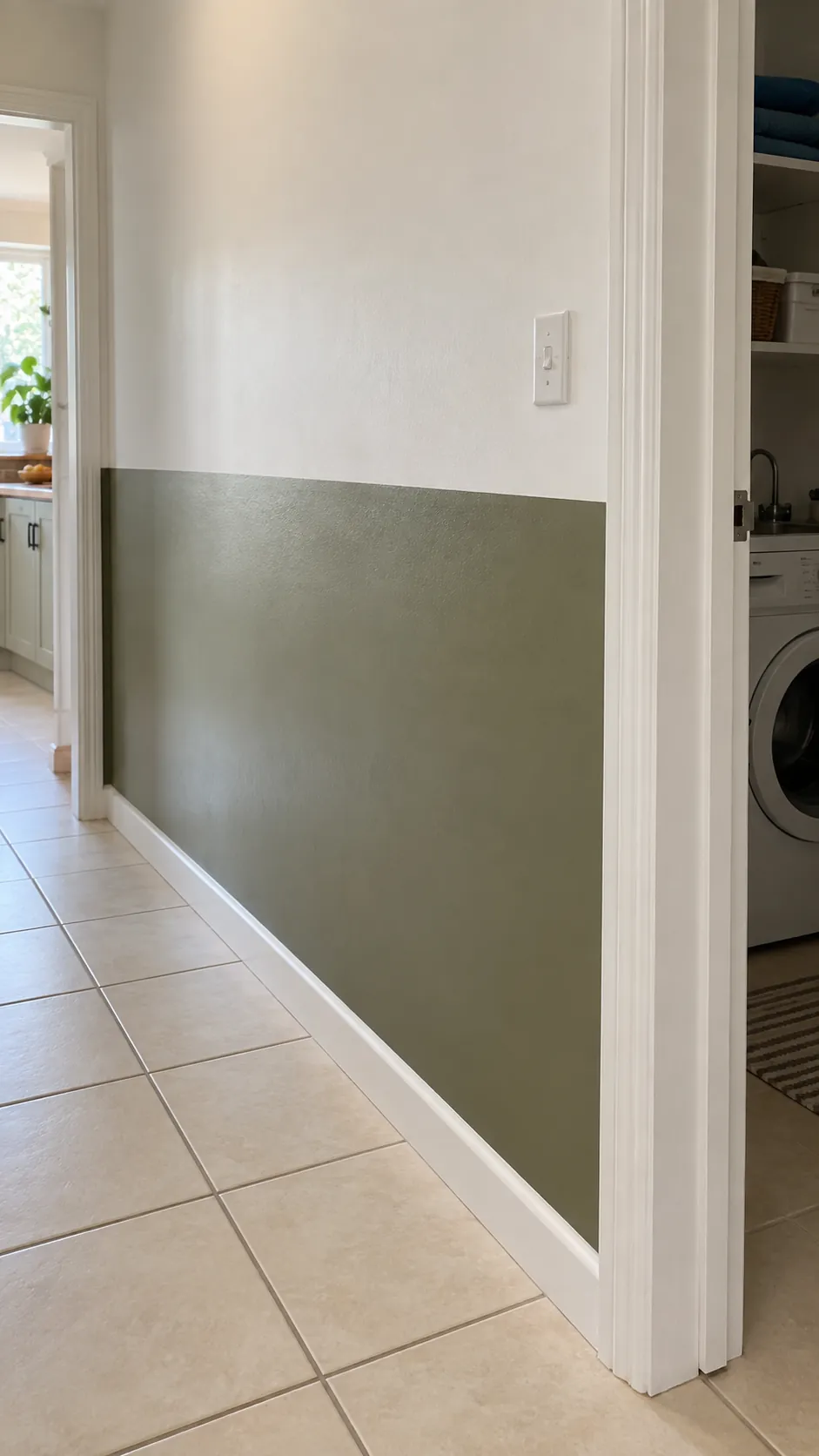
A washable color block below shoulder height
A lower band of color can make scuffs less conspicuous while leaving the upper wall light. Choose a washable finish suitable for your surface and follow the paint maker's curing instructions before cleaning it. The dividing line should relate to a nearby rail or door detail rather than an arbitrary measurement.
Run the line through the intended wall section consistently, checking it with a level. Tape alone cannot correct an uneven layout. If your wall is noticeably wavy, test the edge technique before painting the full length.
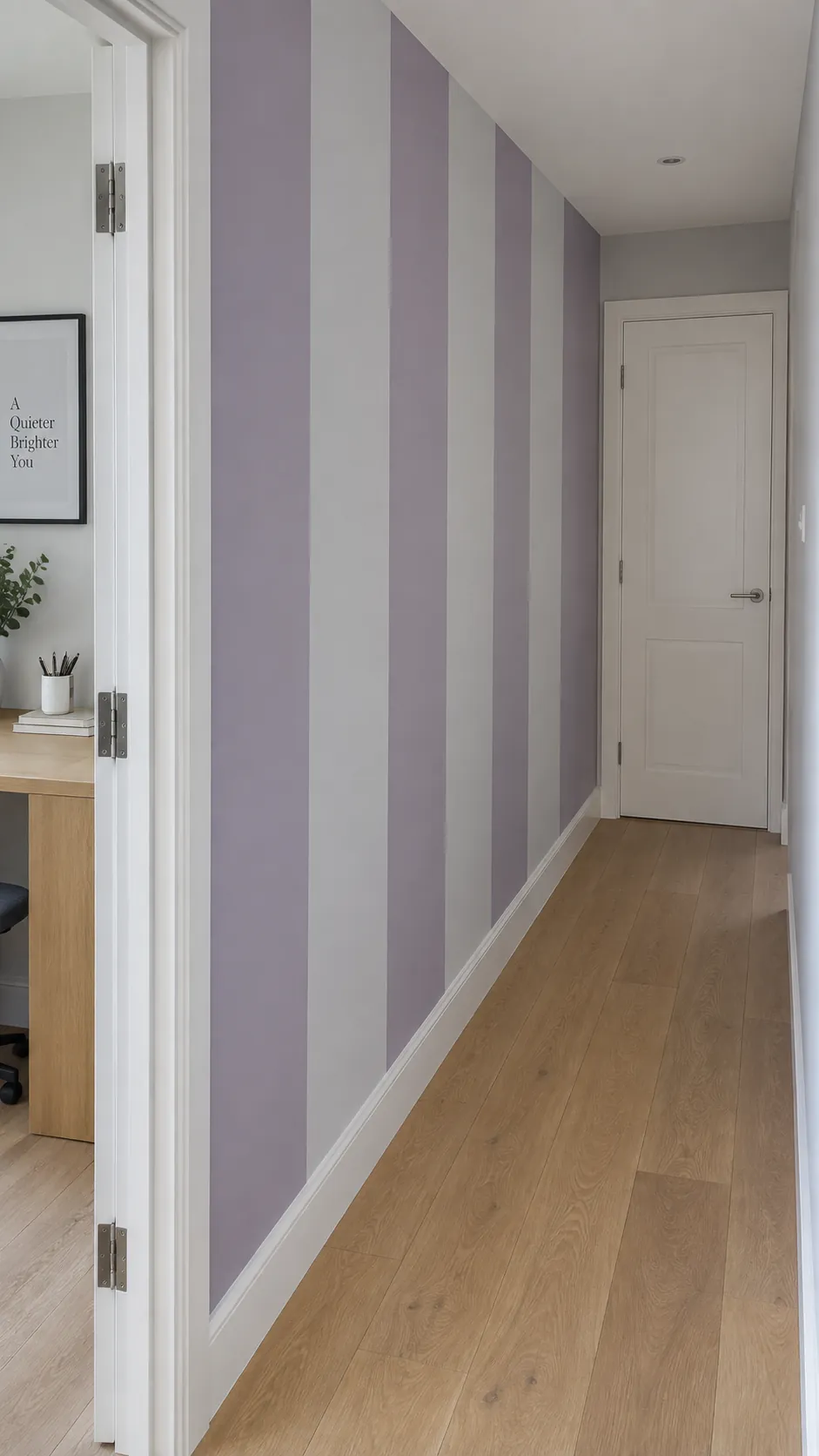
Wide vertical stripes on one wall
Broad stripes create a graphic rhythm with fewer edges than a fine pinstripe pattern. Use two colors close in value for a quieter effect, or stronger contrast when the corridor already has simple trim and flooring. Plan the stripe widths across the whole wall so the final strip beside the doorway does not become an awkward sliver. Painted hallway wall ideas benefit from that layout work long before the first coat dries. Keep adjacent walls plain so the stripe pattern has a clear boundary.
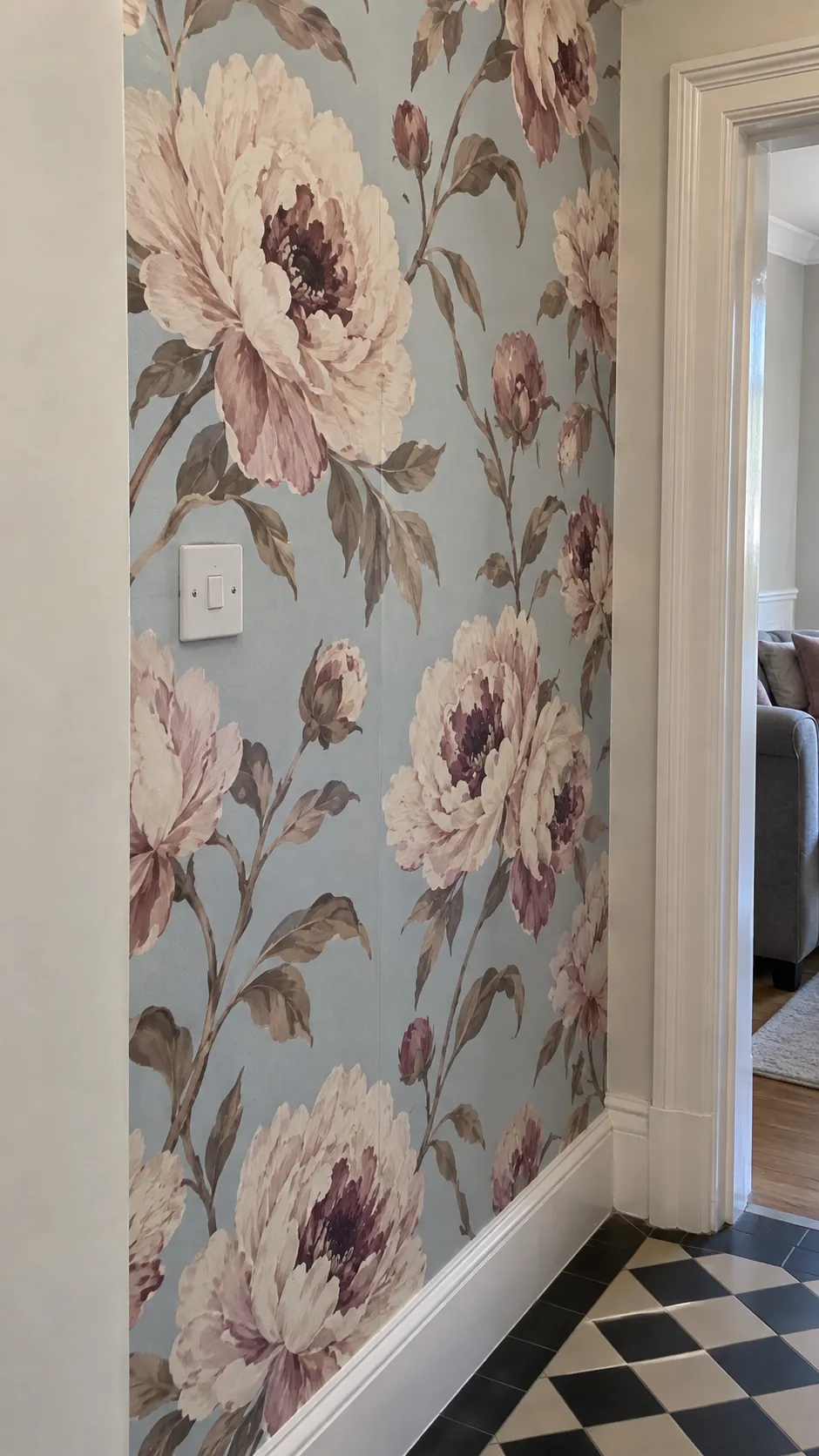
A large floral wallpaper feature
A floral print can turn a short wall into the most expressive part of the hallway. Choose a motif large enough to recognize from the entrance, then consider where the major flowers will land around switches and door casings. Order for the actual repeat and waste allowance rather than wall area alone.
A hallway wallpaper feature wall is also a surface preparation project. Check the paper's requirements for primer, paste and wall condition, and use a sample to judge both color and finish. Removable products still need suitable paint and permission where a lease requires it.
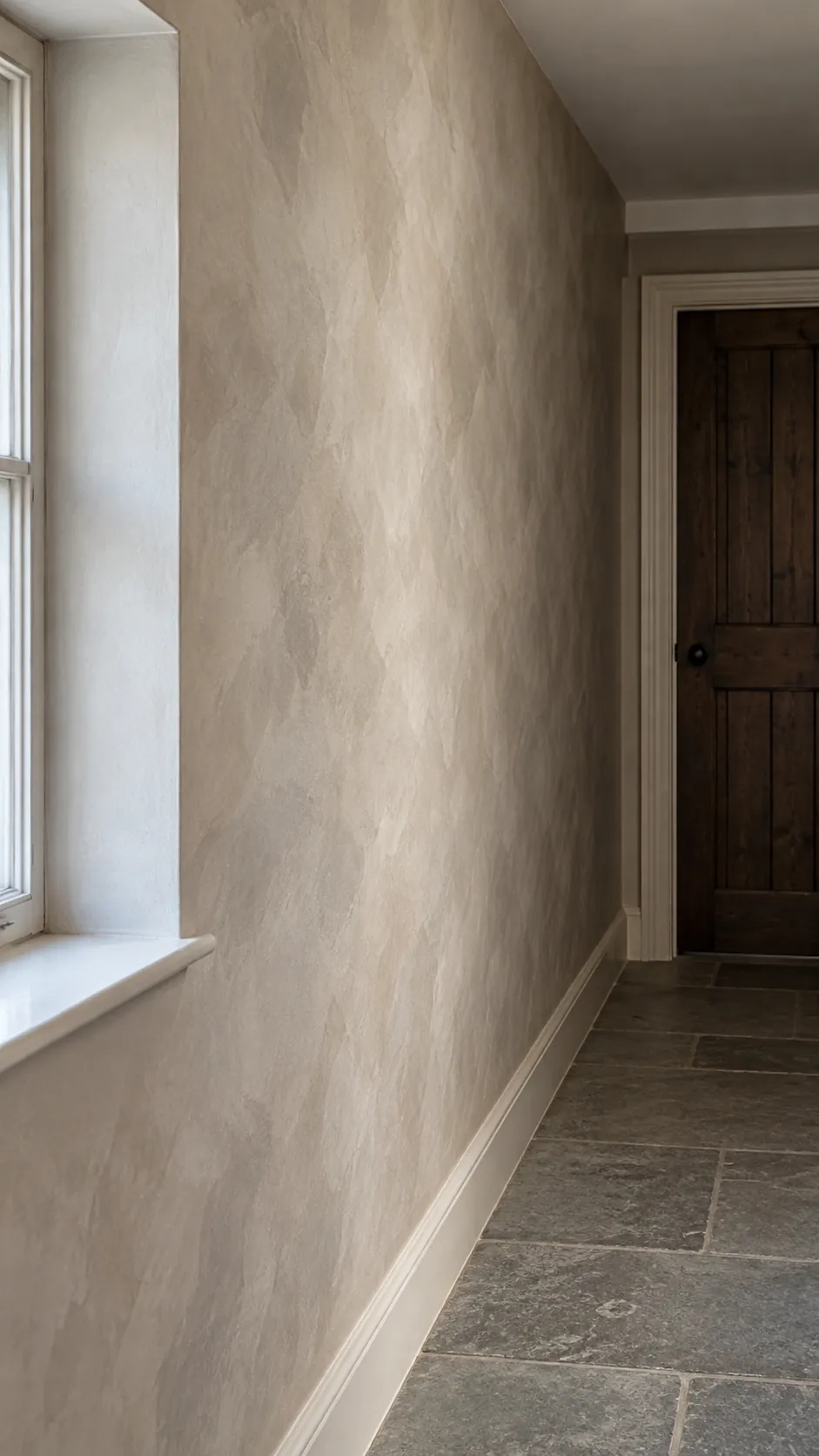
A restrained limewash finish
Limewash brings soft tonal variation to a wall without adding a repeating pattern. Use a compatible system for the substrate, since ordinary painted drywall may need the manufacturer's specified primer. Test your application on a sample board or discreet area to find a movement you like. Strong side light can make every overlap more visible, so inspect the result under the hallway's real lighting. If frequent wiping is essential, compare the care requirements with a more washable decorative paint finish before choosing.
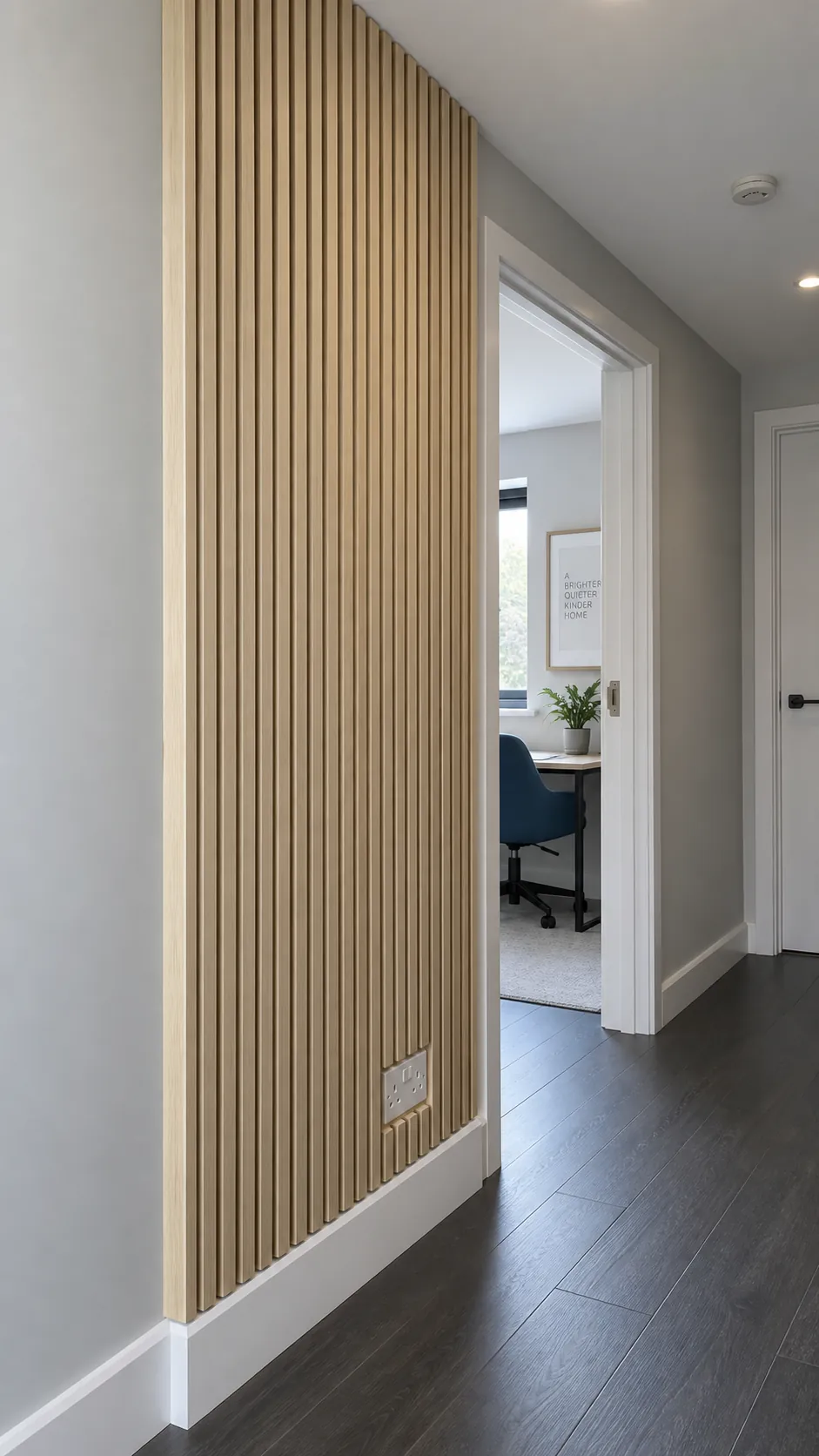
Slim vertical timber battens
Timber battens introduce depth and a measured rhythm, especially on a short wall with few interruptions. Work out the total projection before buying materials, including any backing layer. A slim profile is easier to accommodate where shoulders and bags pass close to the wall.
Plan the edges around sockets, skirting and casing so the installation has a finished boundary. Choose suitable fixings and check for concealed services before drilling. Keep electrical fittings accessible and avoid trapping ventilation openings behind the treatment.
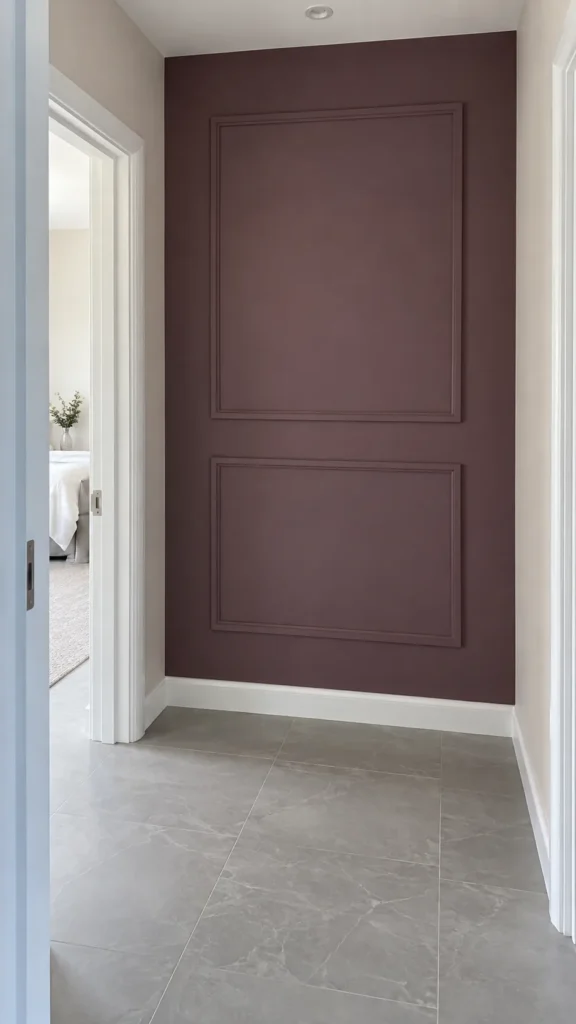
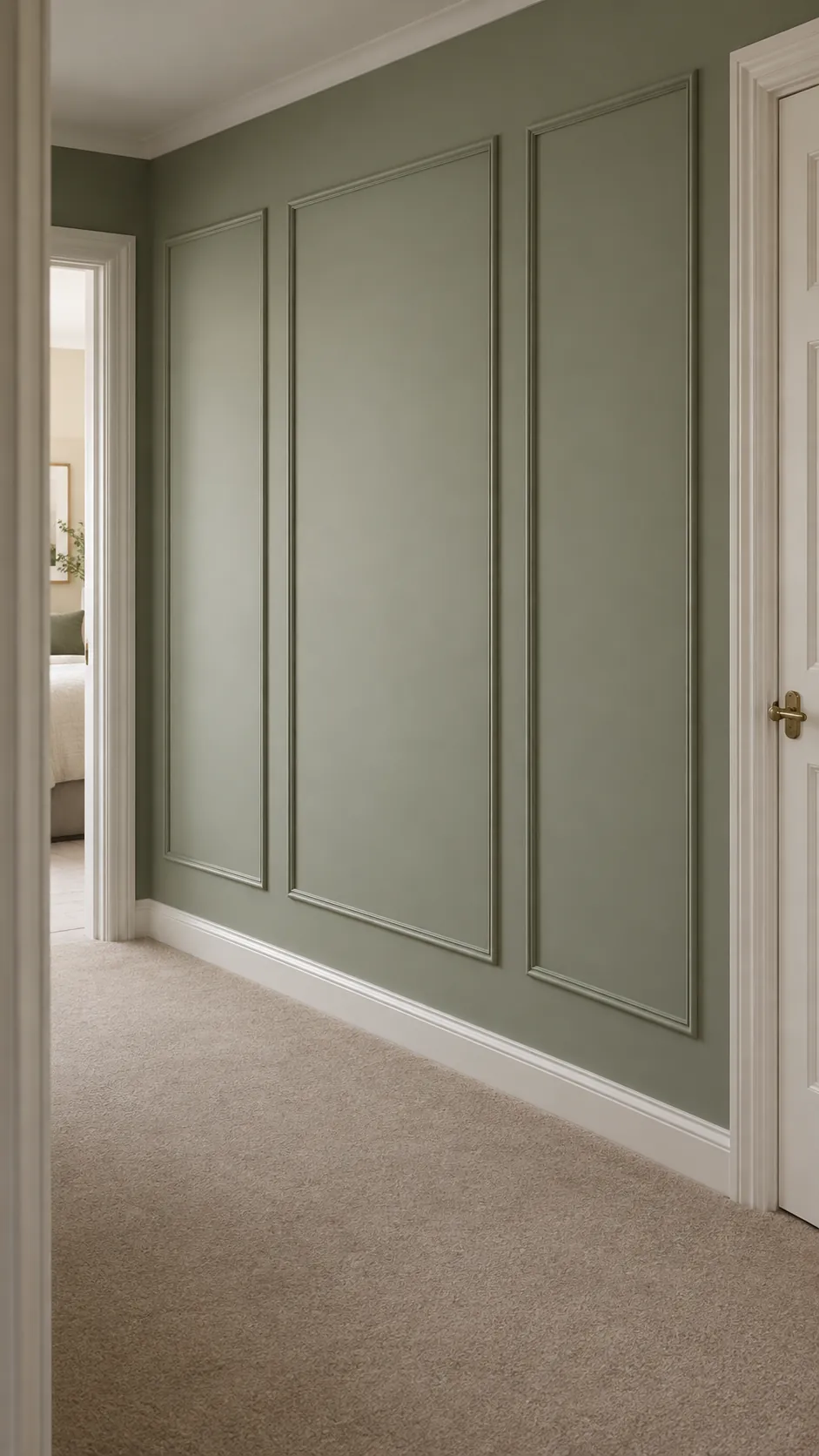
Picture frame molding in one color
Painted molding can add structure without bringing another color into the corridor. A few well proportioned rectangles usually read more clearly than many small boxes squeezed between doors. Draw the layout to scale and maintain intentional margins around existing trim. The molding should fit the wall you have, even when that means different panel widths on separate wall sections.
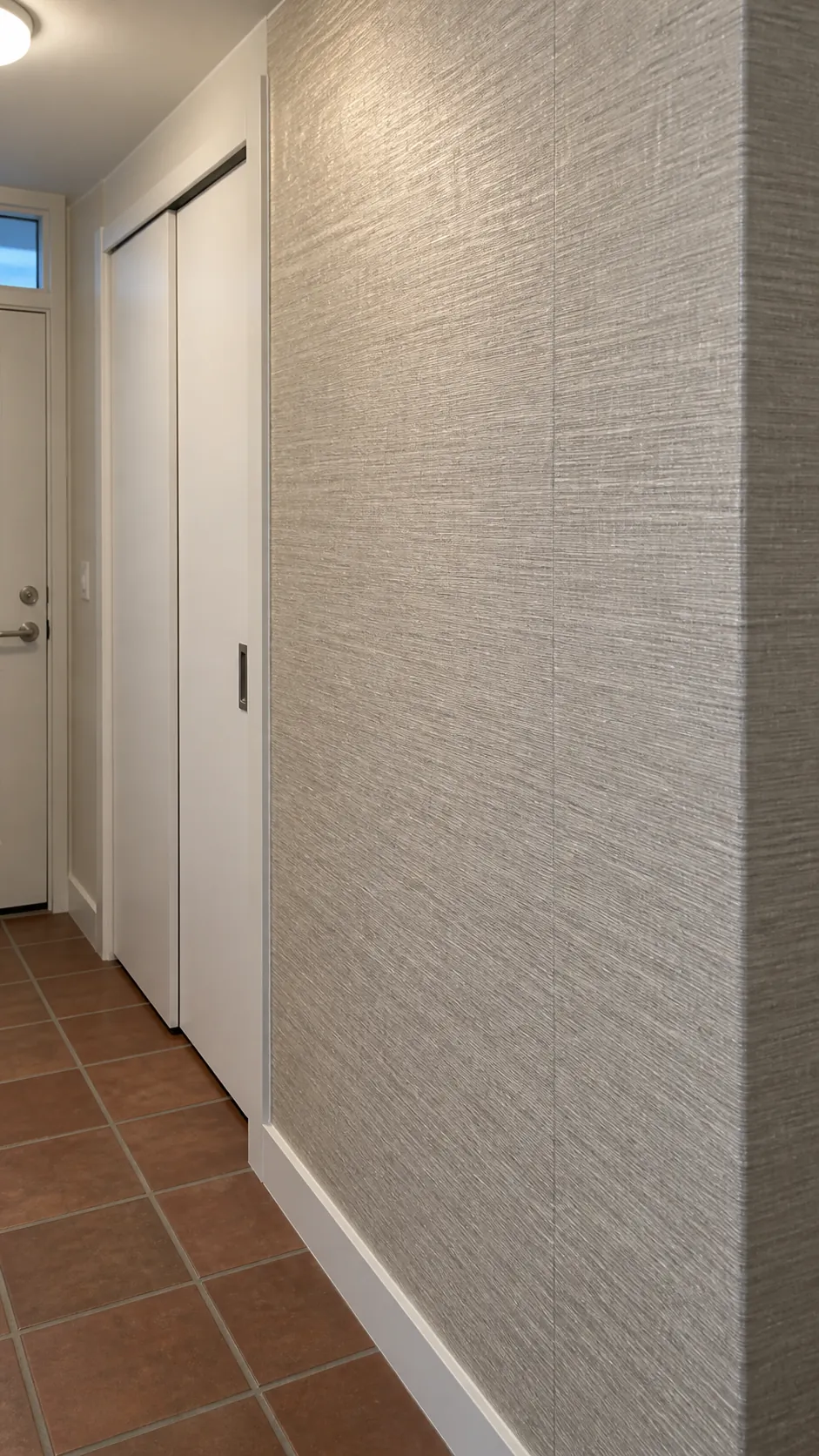
A subtle textured paper
A woven look wall covering adds interest through surface variation rather than a bold motif. A washable imitation can be more practical than natural grasscloth where coats and bags regularly touch the wall. Ask about seam visibility, cleaning limits and pattern direction before ordering. Inspect a sample at an angle under the existing lights, because a finish that looks quiet head on may catch a strong sheen as you walk past. This is a useful corridor accent wall when the nearby rooms already contain plenty of pattern.
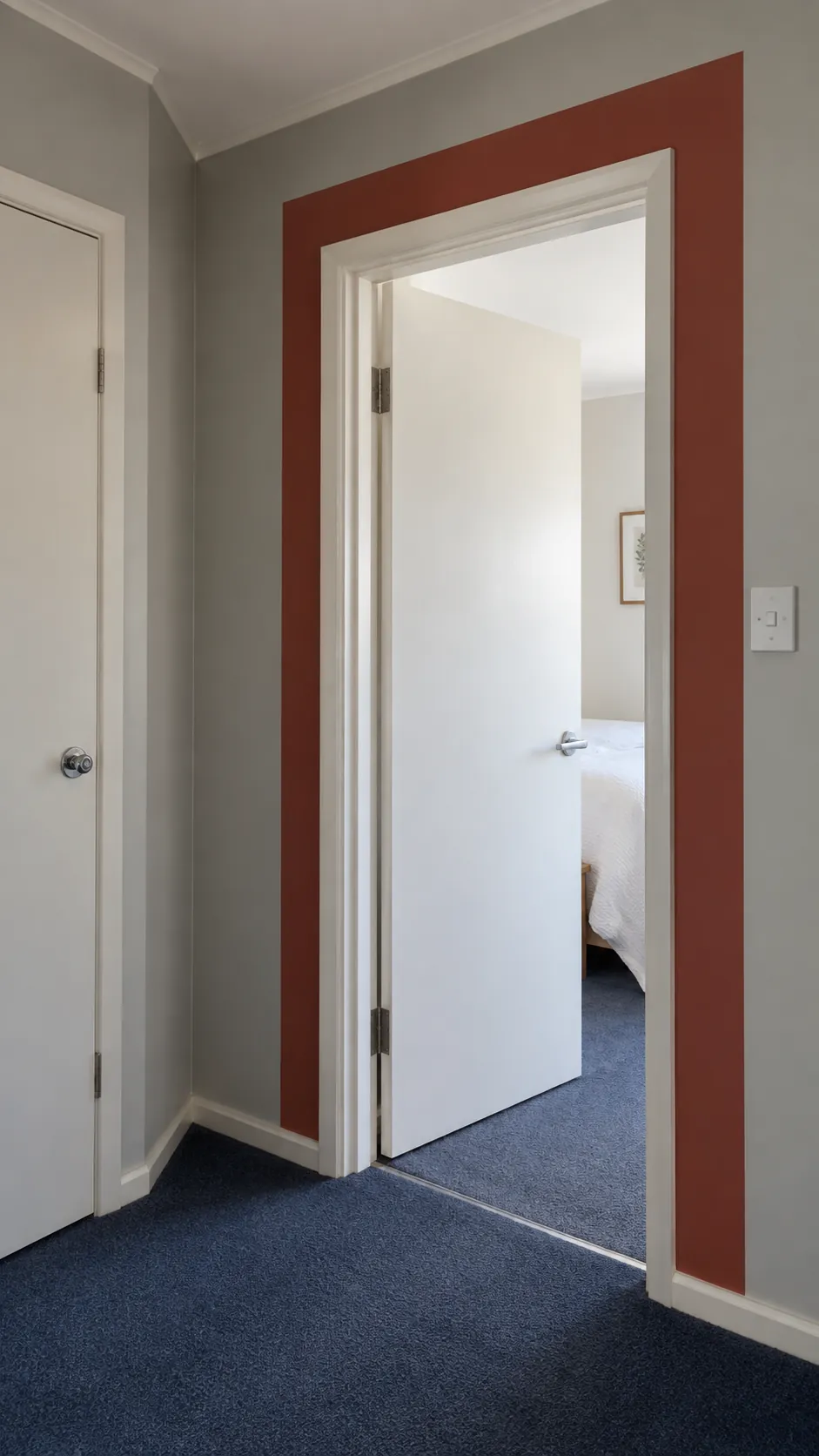
A painted doorway surround
Use a broad painted surround to make one doorway the focal point of the passage. Carry the accent around the opening with consistent proportions, while keeping switches and adjacent corners in the layout. The shape can be a simple rectangular border rather than an elaborate mural.
Decide whether the door leaf belongs in the same color before painting, and test the appearance with the door open. A strong surround can lose its intended outline when the leaf changes position. Treat it as one architectural composition rather than a collection of separately painted parts.
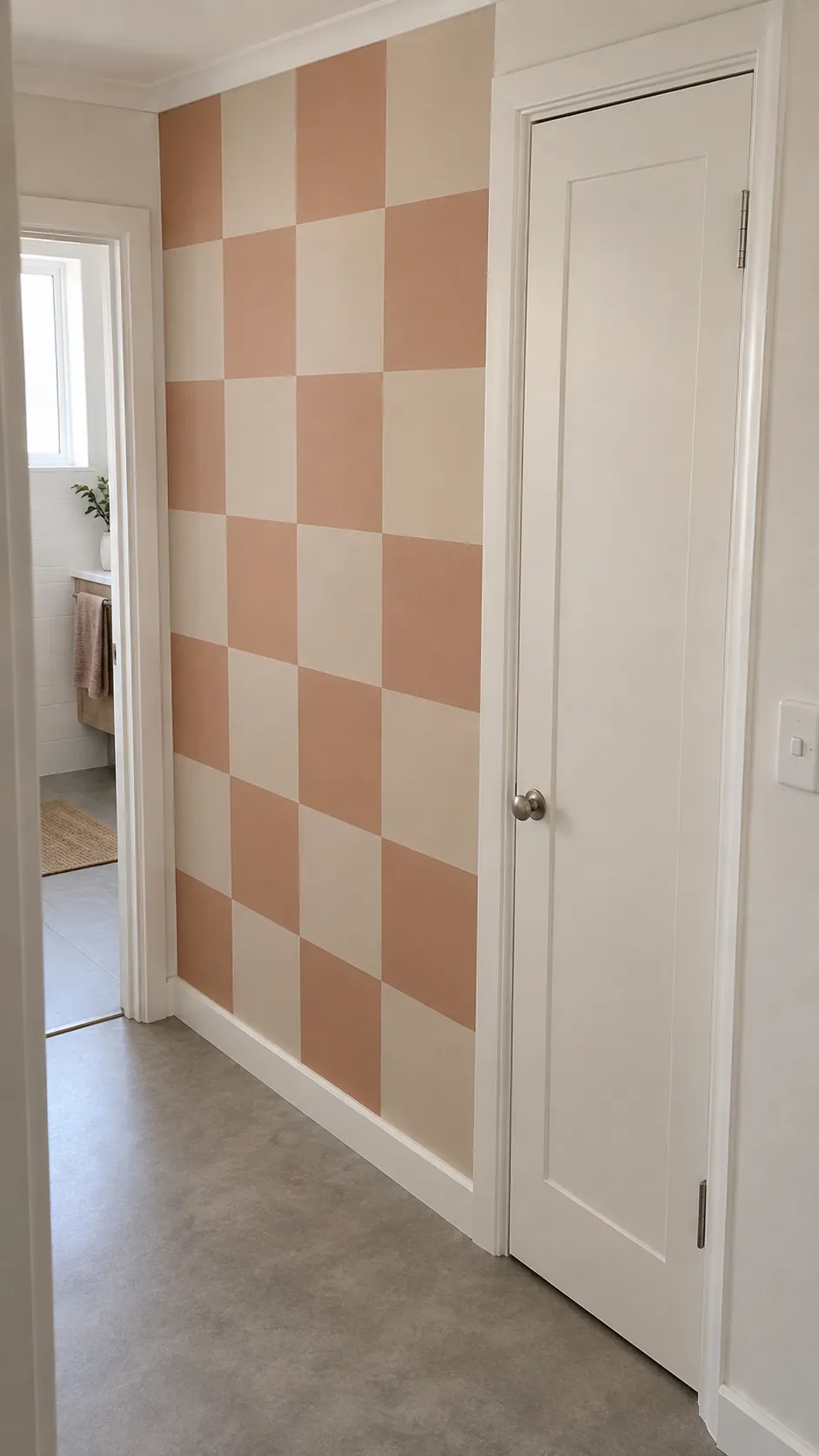
A muted checkerboard panel
A checkerboard can feel composed when it is limited to one wall and the two tones are gentle. Lay out the grid from a deliberate centerline, then check how the squares meet the skirting and ceiling. Larger squares reduce the number of painted edges and make the pattern easier to read at a distance. Uneven walls may make a perfectly regular grid difficult, so test the layout before committing to high contrast colors.
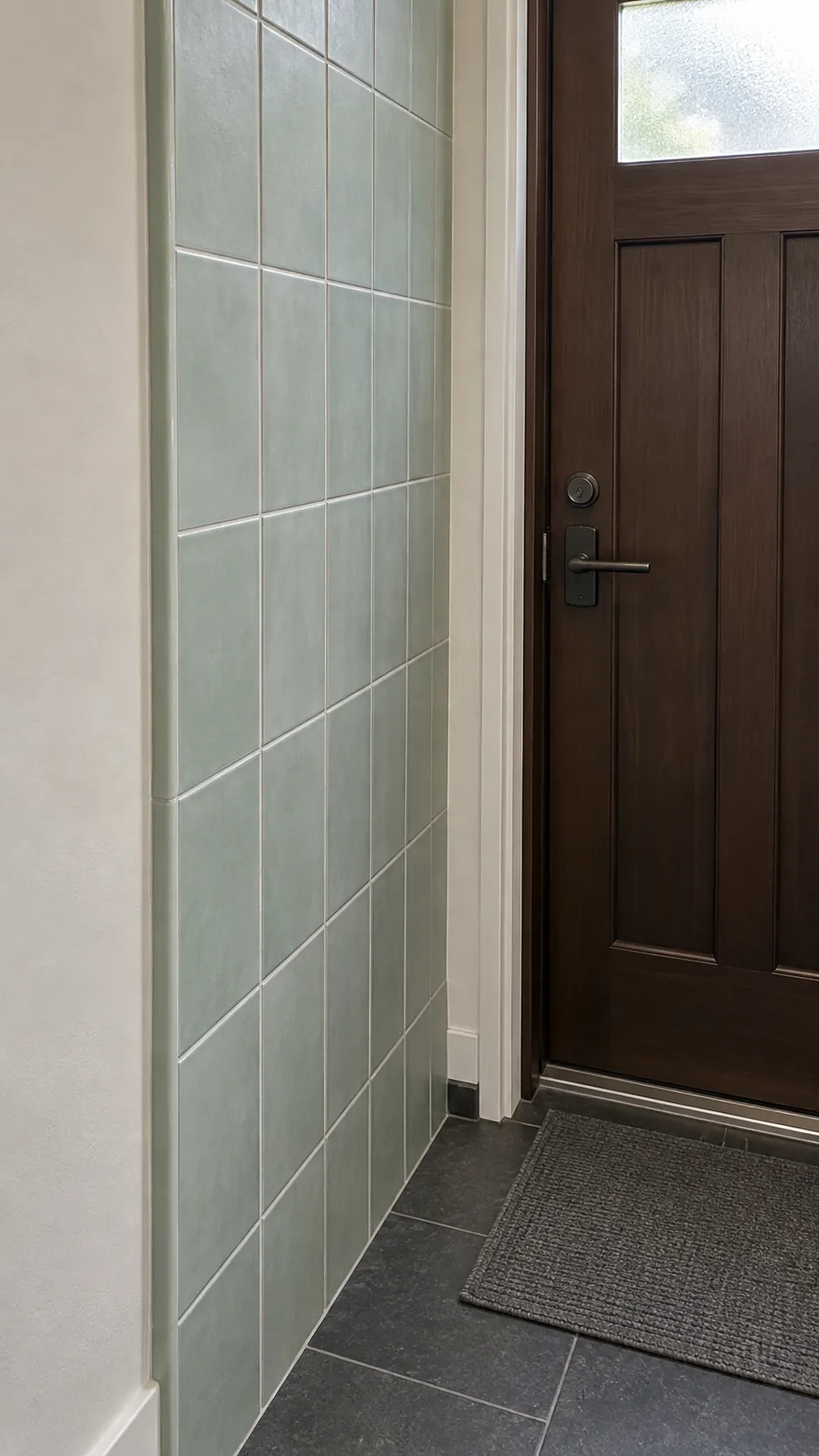
A ceramic tile accent near the entrance
Tile provides a durable surface where a hallway meets a busy entrance, but the wall assembly needs to support the chosen product. Keep the tiled area intentional, such as a short wall beside the door, and plan the exposed edges before installation. Matte rectangular tiles with restrained grout can add texture without looking like a bathroom splashback.
Check substrate preparation, adhesive suitability and the finished build out with the installer or product guidance. Trim, sockets and door clearance may need adjustment once thickness is added. A small area with properly resolved edges is more convincing than a large field with unfinished borders.
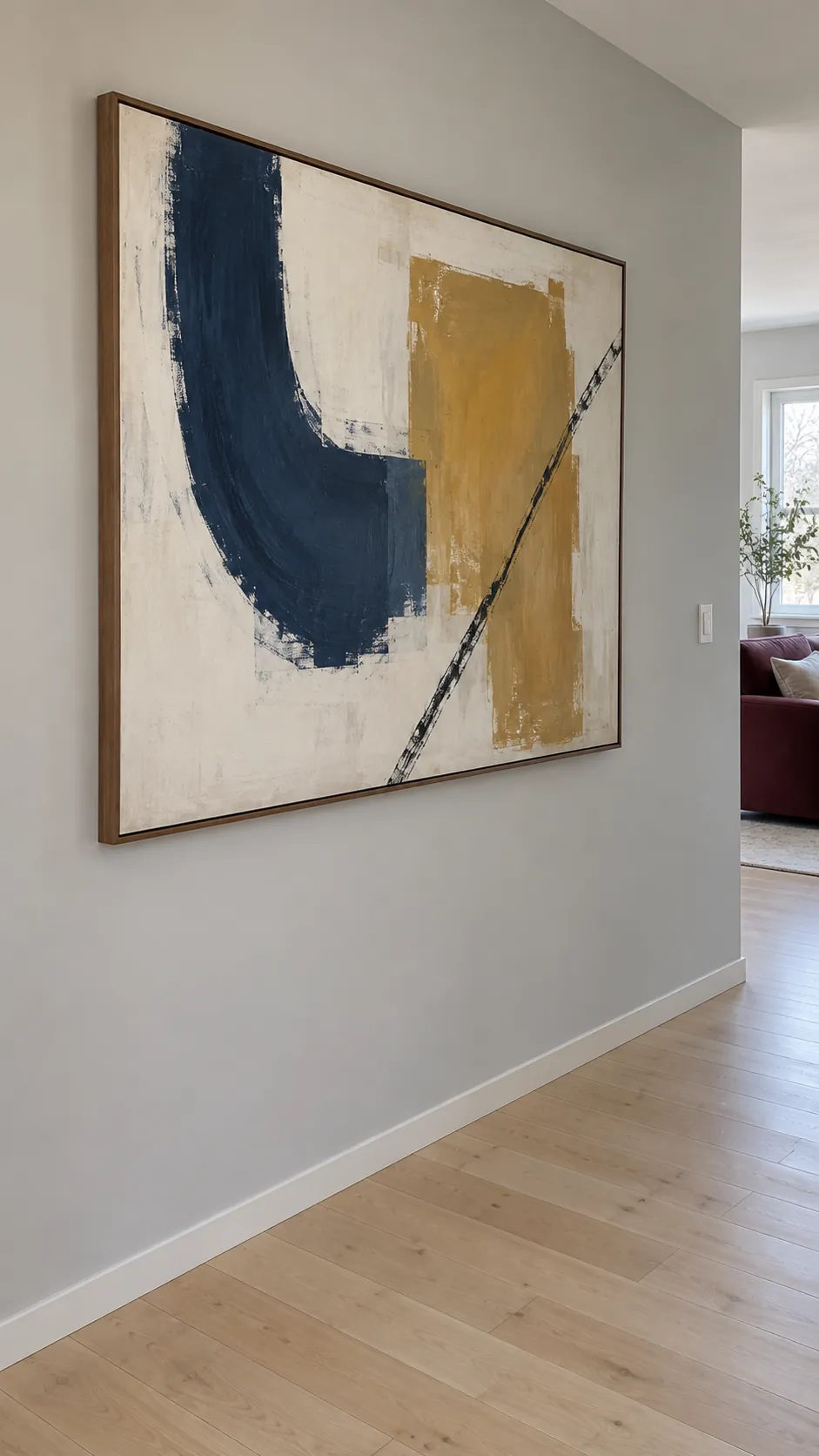
One oversized abstract canvas against a quiet wall
An accent does not always require changing the wall finish. One broad canvas with a specific abstract composition can anchor a plain wall while leaving the surrounding architecture untouched. Choose a piece whose colors connect with a nearby room, then give its outer edges generous space. Use fixings rated for the complete canvas and frame, and check the view from both ends of the corridor. This approach suits a hallway where a permanent finish would be more commitment than you want.
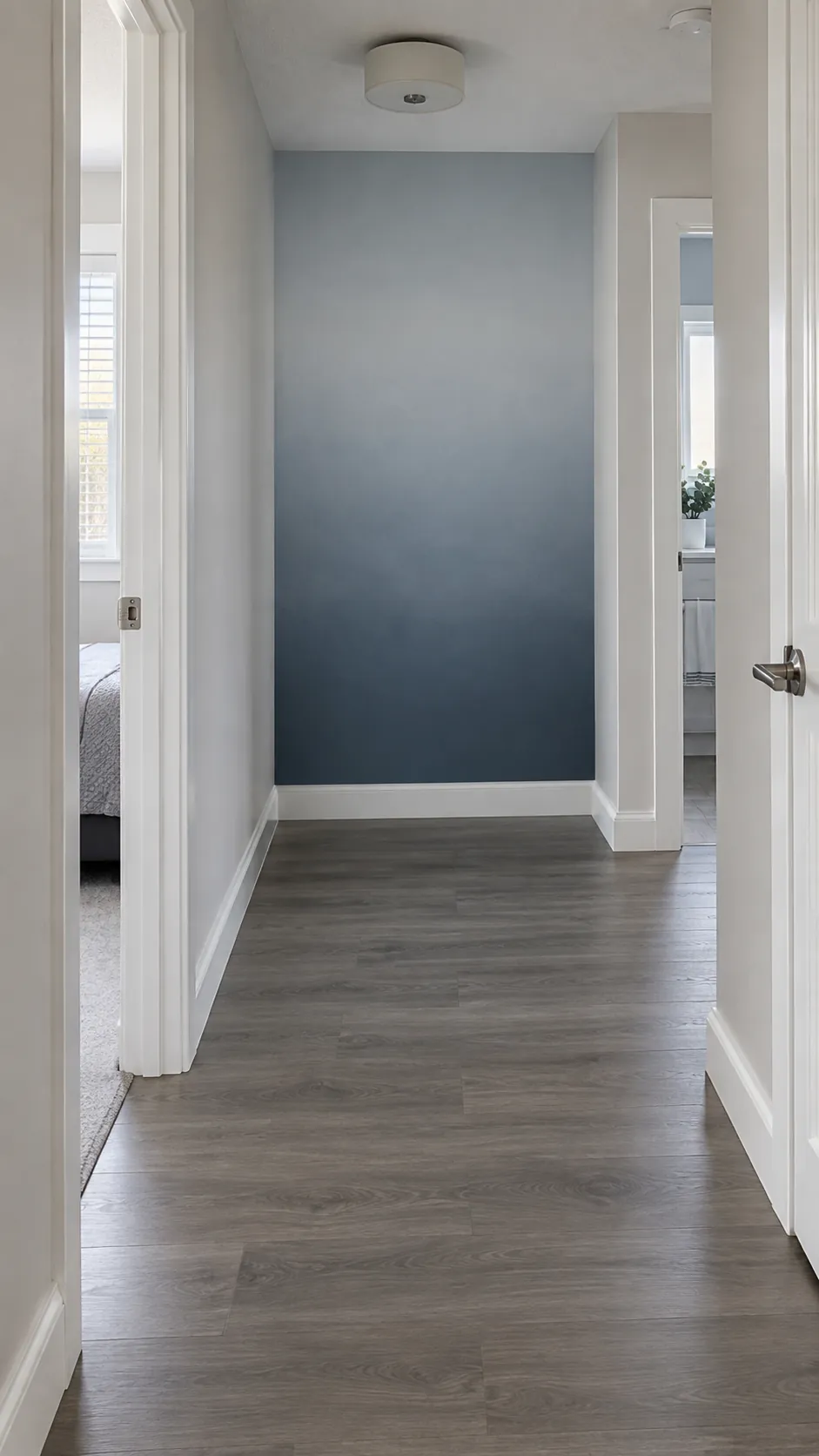
A softly painted ombre end wall
A gradual shift from pale gray blue to a deeper slate can give an end wall atmosphere without a distinct motif. Practice the blending method with the actual paint system, since drying time and finish affect how easily the transition stays smooth. Keep the strongest tone in a limited area and let the rest of the corridor remain visually settled. Look at the sample in daylight and with every hallway light switched on before choosing the final range. For long hallway decor, the most useful test is whether the finished wall gives the route a pleasing destination from the entrance.