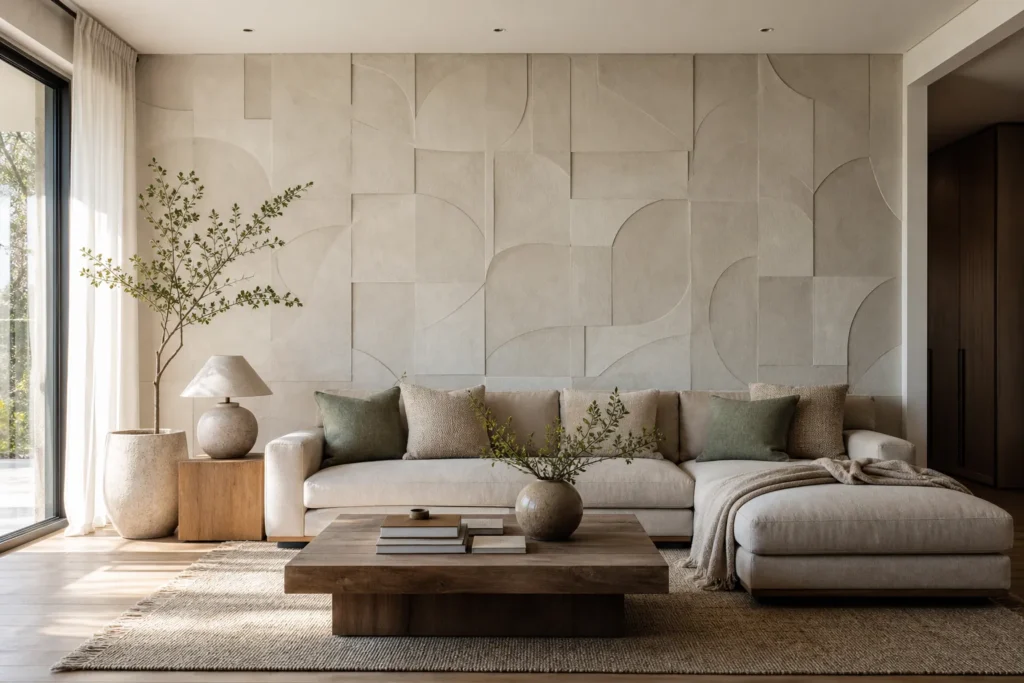
3D Wall Papering Ideas for Living Room Depth
3D wall papering ideas for living room walls work best when they create depth you can live with every day. The mistake is treating every raised-look print, mural, panel effect, and dramatic wallpaper background as if it belongs on the biggest wall in the room. A living room has to handle conversation, TV, reading light, sofa traffic, and clutter that appears by the end of the week.
The better approach is simple: choose one wall, one visual job, and one level of depth. The wall can frame a modern TV unit, make a plain sofa wall feel designed, or give a small living room a sense of architecture. It should not fight the furniture or make the room feel like a showroom set.
Start with the wall people already look at
Most living rooms already have a natural focal point: the TV wall, fireplace wall, or the wall behind the main sofa. That is usually the safest place for a 3D wall design living room feature because the eye expects something important there.
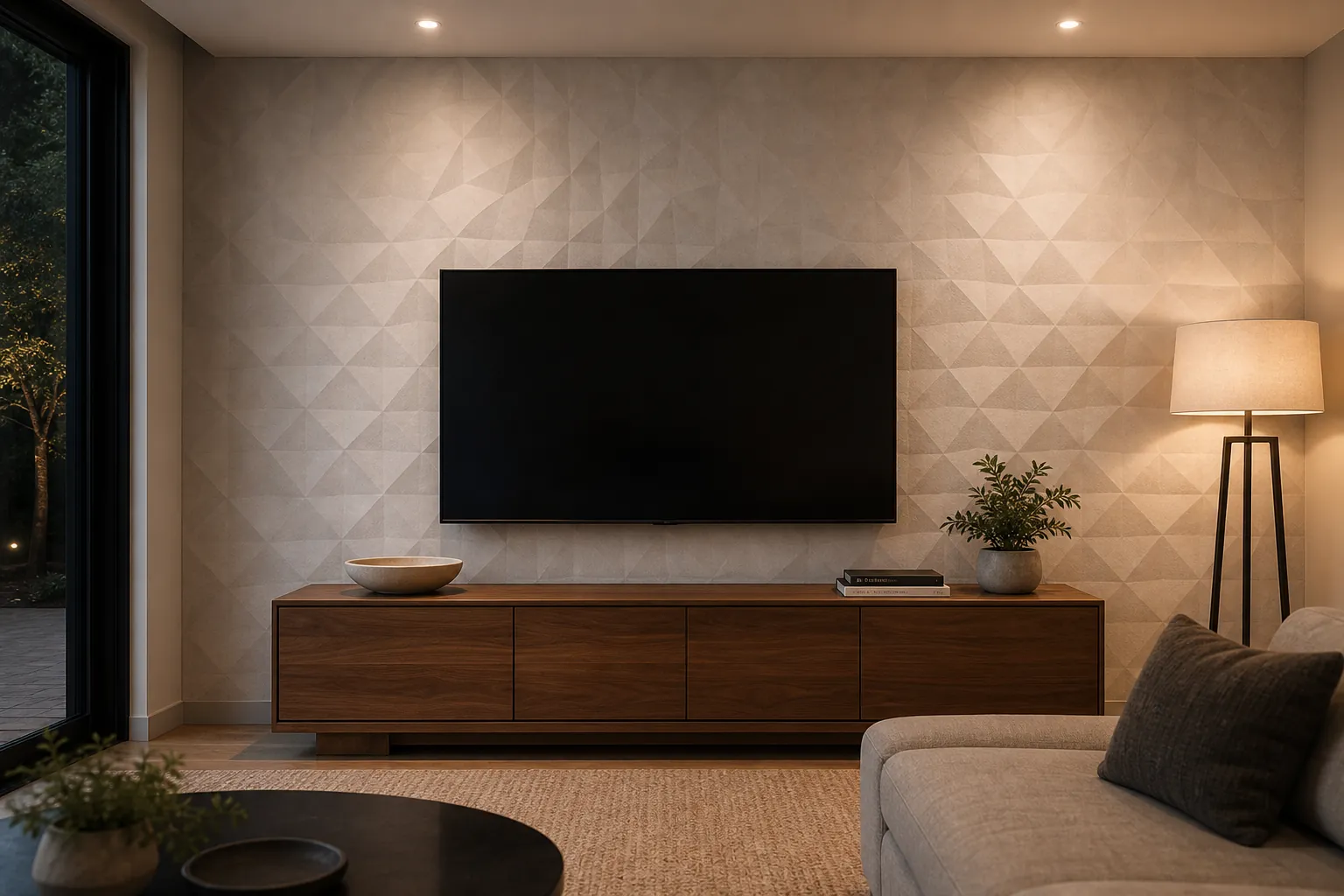
If the wall sits behind a television, keep the design calmer than you think. Deep optical patterns, shiny metallic prints, and high-contrast 3D murals wallpaper can look exciting in a product photo but distracting during a movie. A matte geometric texture, soft plaster effect, or low-contrast stone pattern gives the TV wall design shape without visual noise.
Use the TV as the anchor. Let the wallpaper extend wider than the console or built-in unit, then echo one color from the paper in the rug, pillows, or wood tone. This makes the wall look intentional instead of pasted on after the furniture was chosen.
Use subtle texture when the room is already busy
A room with patterned rugs, open shelving, colorful art, or a strong sofa design living rooms layout usually needs quieter wallpaper. The best latest wallpapers for living room updates are not always the loudest ones. Sometimes the expensive-looking choice is a linen texture, soft concrete finish, carved plaster look, or barely raised geometric repeat.
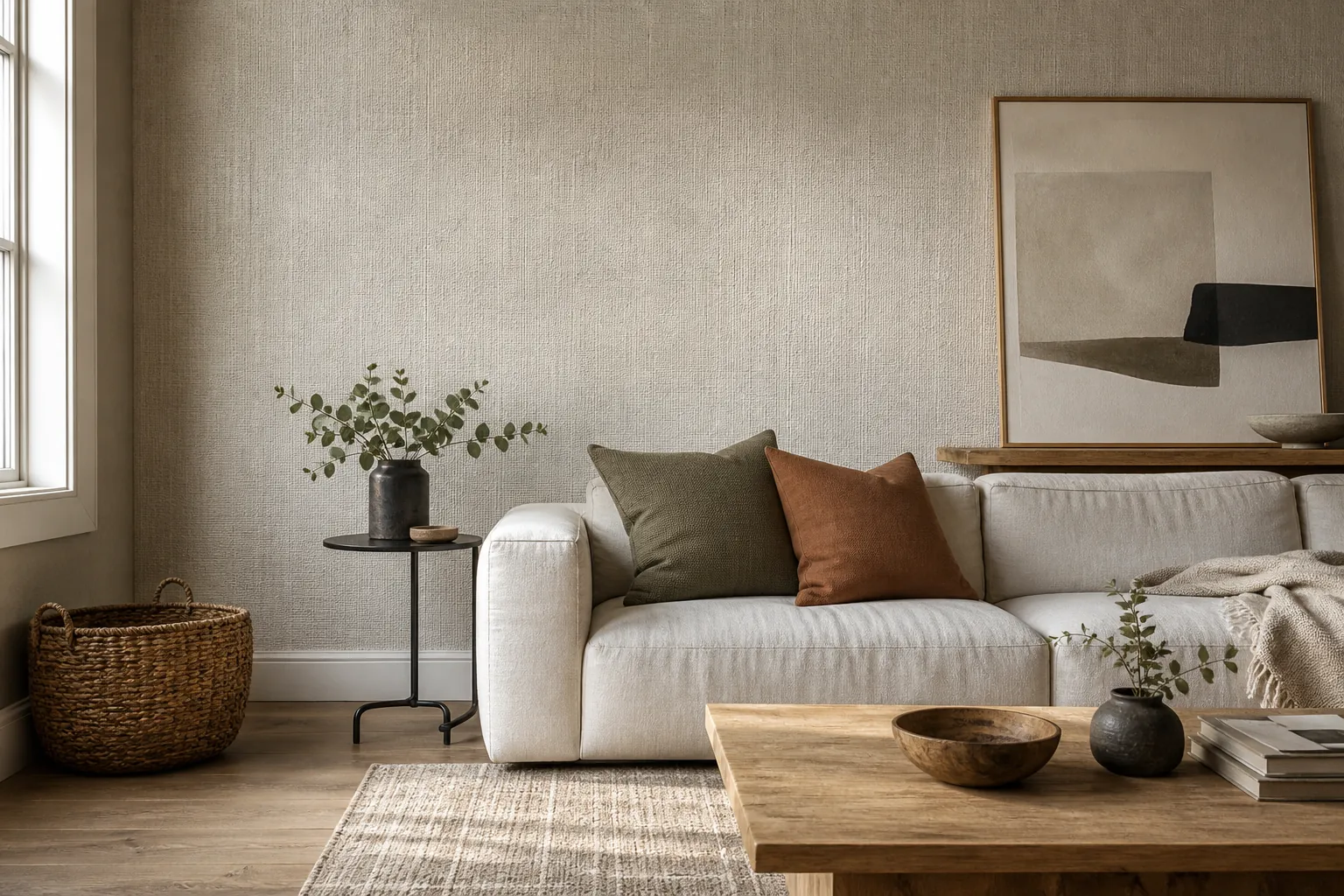
This is also where many people get confused by labels like 5D wallpaper for living room walls. Treat those terms as marketing language, not a design rule. What matters is the actual effect from six to ten feet away: does the wall add shadow, grain, and rhythm, or does it look like a printed trick?
- Choose matte or low-sheen finishes for walls near windows and lamps.
- Keep the pattern repeat large enough that it does not shimmer behind the sofa.
- Use warm whites, taupe, clay, sage, charcoal, or stone colors when the furniture already has contrast.
Make a mural feel architectural, not theatrical
3D murals wallpaper can be beautiful when the perspective feels like part of the room. Arches, stone recesses, plaster niches, misty landscapes, and oversized botanical layers can make a flat wall feel deeper. The problem starts when the mural becomes too literal or too glossy.
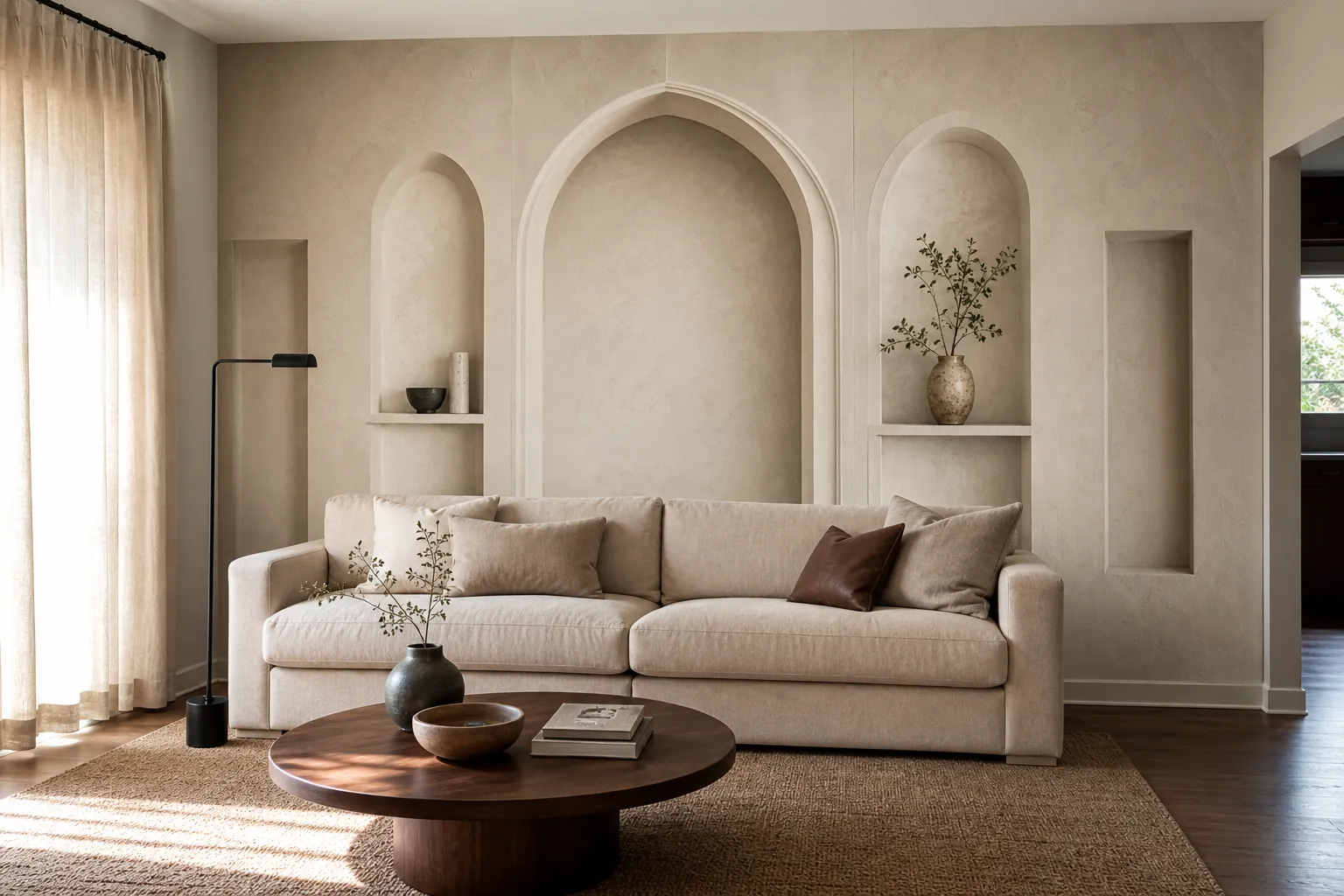
For a living room, the mural should support the furniture scale. A sofa wall can handle a soft landscape or architectural arch because the large furniture grounds it. A small wall beside a doorway usually needs a quieter wallpaper background living room pattern so the eye does not stop at every edge.
The test is whether the room still feels calm when the lights are off and the TV is on. If the mural only works in a perfectly staged daytime photo, it may be too demanding for a real living room.
Try stone, marble, or plaster effects when you want quiet luxury
Stone-look and marble-look 3D wallpaper can give a living room weight without the cost or permanence of slab stone. This works especially well around a low media console, fireplace, floating shelves, or a simple seating area that needs a stronger backdrop.
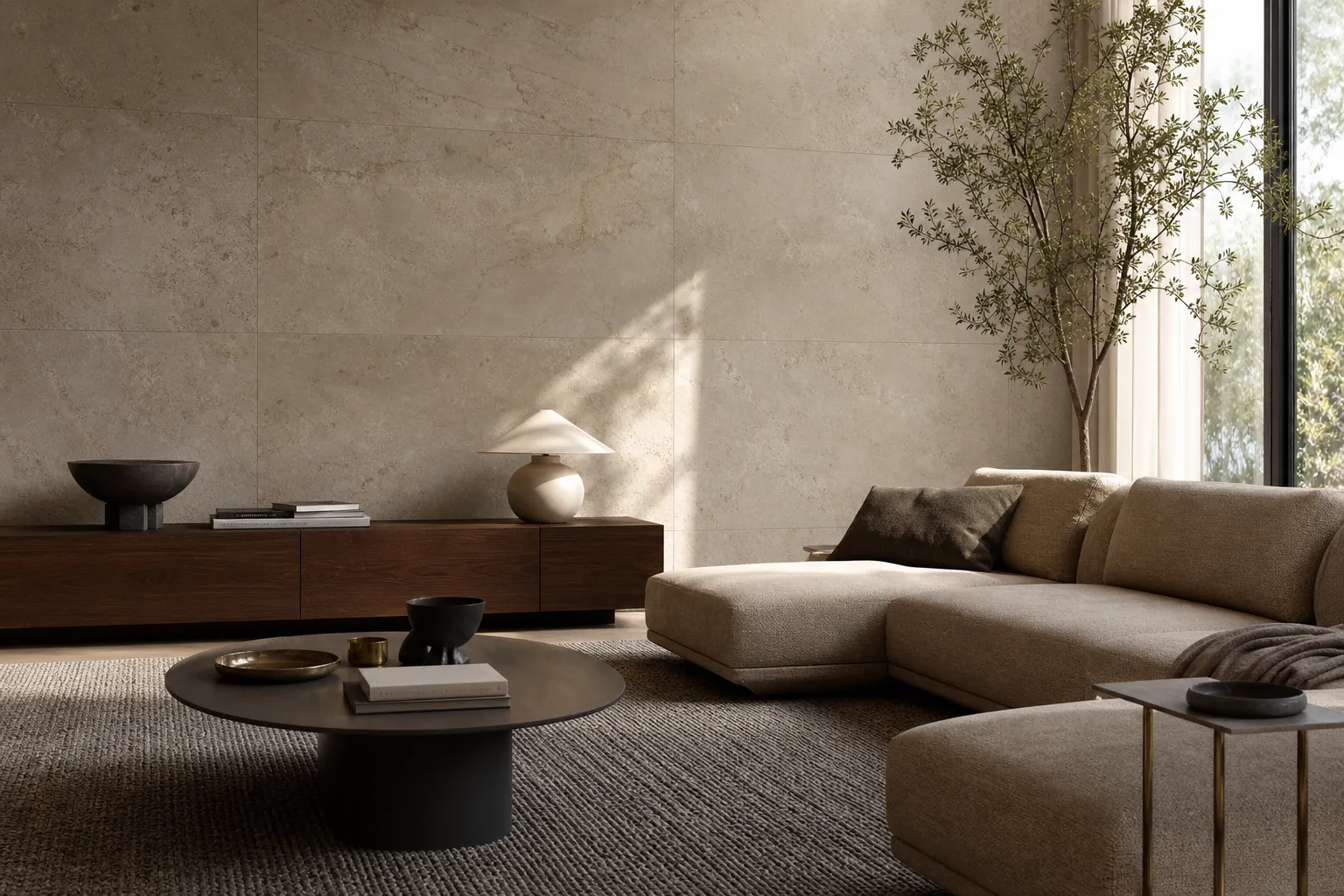
Keep the veining soft if the wall is large. Heavy black veining across a full TV wall can feel restless, while a honed limestone, travertine, plaster, or warm marble effect gives enough movement without stealing the room. Pair these papers with simple curtains, sculptural lamps, and one or two wood tones so the wall does not feel cold.
Use botanical depth for a softer living room mood
Not every 3 D wallpaper interior design idea has to look futuristic. Layered botanical murals, shadowy leaves, oversized branches, and misted garden scenes create depth in a softer way. They work well in rooms where the furniture is neutral and the homeowner wants living room inspiration that feels warm instead of glossy.
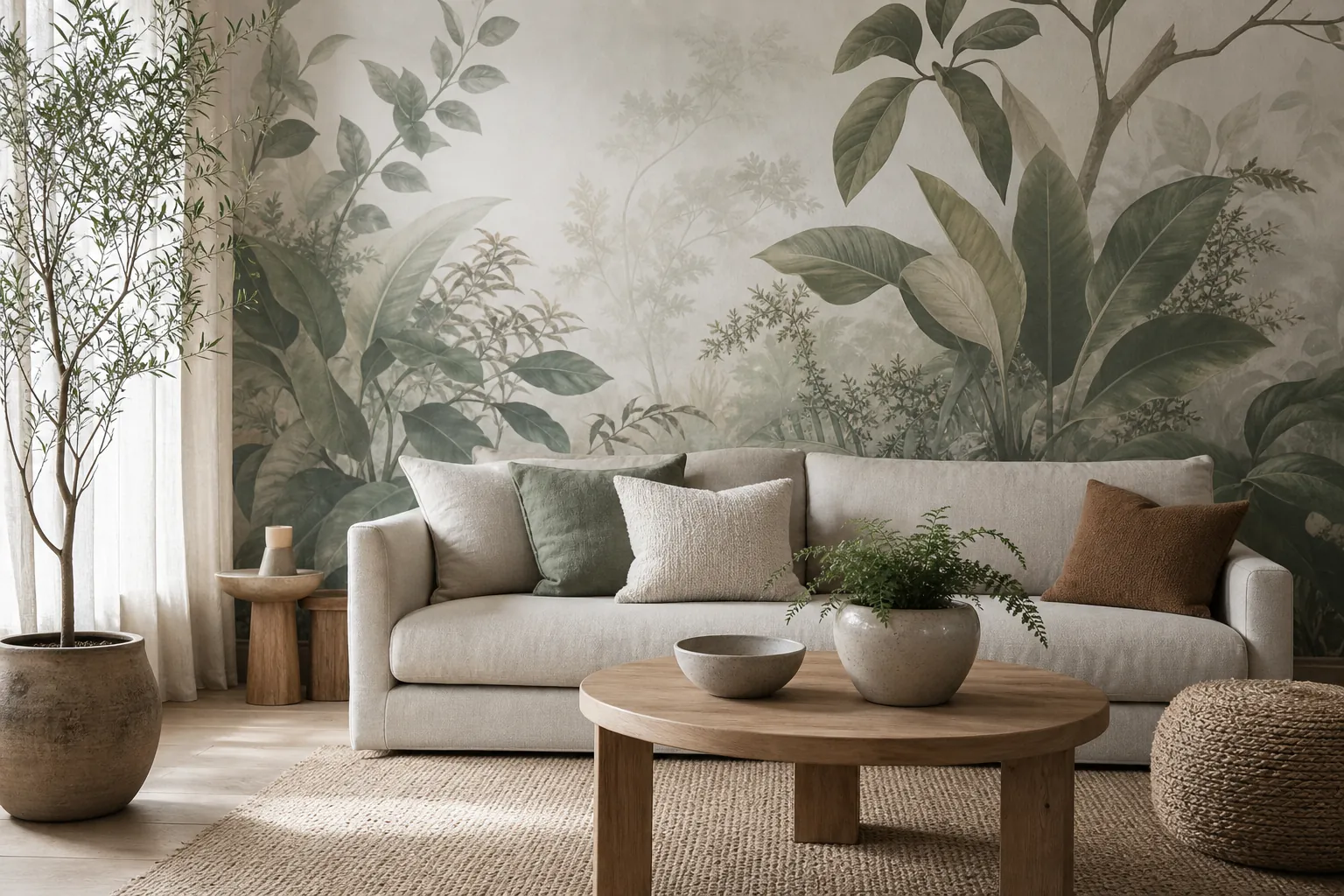
The trick is restraint. Pick a botanical mural with a limited palette and enough open space around the leaves or branches. Then repeat one green, cream, or brown tone in cushions, a throw, or a planter. When the furniture borrows from the wall, the room feels designed instead of decorated in pieces.
Use slat and panel effects when real millwork is not practical
Wood slats, ribbed panels, fluted surfaces, and block panel prints are useful when you want architectural order but do not want to install permanent boards. A high-quality panel-effect wallpaper can visually lift a low wall, widen a narrow room, or make a plain rental living room feel more finished.
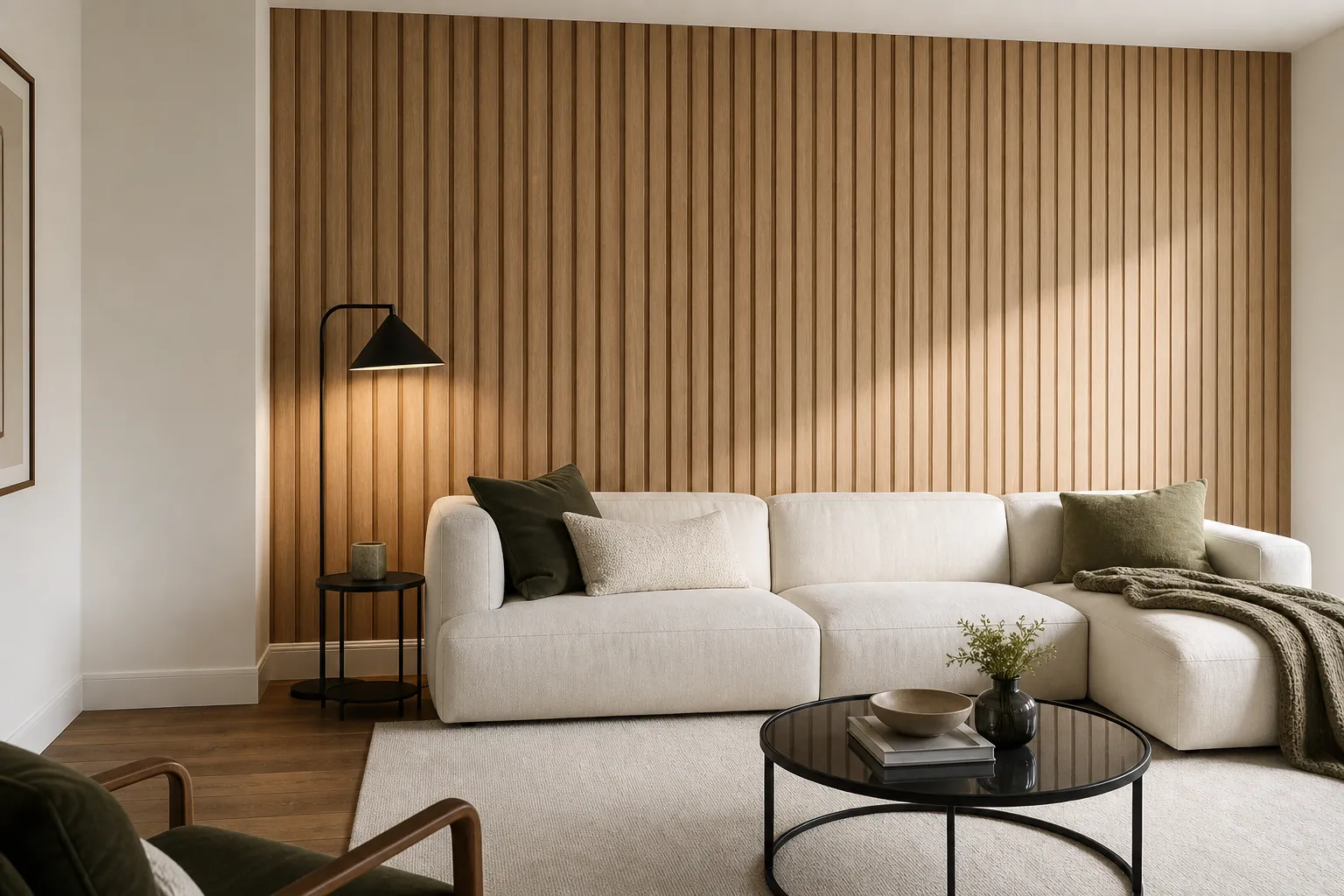
Look carefully at the printed shadow. If the shadow direction conflicts with your real window light, the wall may feel fake. For the most believable effect, choose a design with gentle shadows and a repeat that lines up cleanly from panel to panel. This matters more than the product name.
Scale the pattern to the room, not the online listing
Online photos can make a pattern look smaller, smoother, or more dimensional than it will in your own living room. Before ordering full rolls, check the repeat size, panel width, finish, and sample under your actual light. A tiny texture may disappear in a large open-plan room. An oversized optical pattern may overpower a small apartment living room.
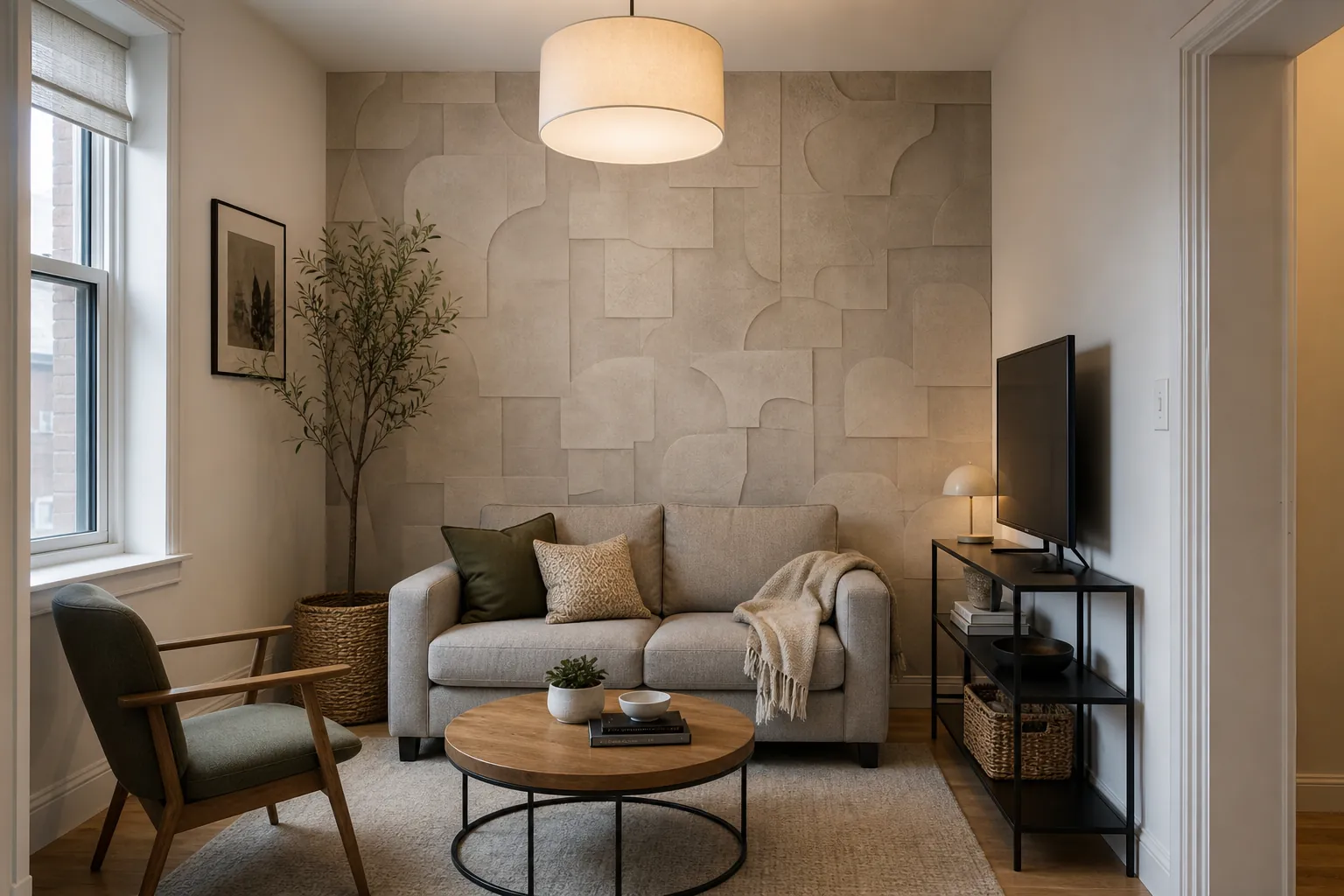
A simple rule helps: the stronger the 3D effect, the fewer competing features the wall should have. If the wallpaper has deep shadow, keep shelves minimal. If the room has a gallery wall, choose a flatter texture. If the sofa is bold, use a quieter wall.
Prep matters more than the pattern
Many failed wallpaper projects are not design failures. They are surface failures. Peel-and-stick products generally need clean, dry, smooth walls. On orange peel, knockdown, dusty paint, or uneven patches, the adhesive may not make full contact. That can lead to bubbles, lifting corners, visible texture, or seams that never sit flat.
Before you commit, clean the wall, fix loose paint, test a sample, and check it after a few days. If the wall is textured and you own the home, skim coating or lining paper can create a better surface. If you rent, avoid aggressive adhesives that could damage paint on removal.
- For smooth painted walls: clean, dry, measure, and install slowly.
- For light texture: test a sample first and avoid precise geometric patterns.
- For heavy texture: consider prep work, traditional wallpaper, or a framed mural panel instead.
The best 3D living room wall is the one that still feels good next month
3D wallpaper should not be chosen only for the first reaction. Choose it for the way the room will feel after the furniture is back, the lamps are on, and someone is actually sitting on the sofa. The strongest ideas create a focal point, add texture, and make the room feel more complete without demanding attention every second.
Start with the wall that already matters. Keep the finish believable. Match the scale to the room. Then let the rest of the living room breathe around it.