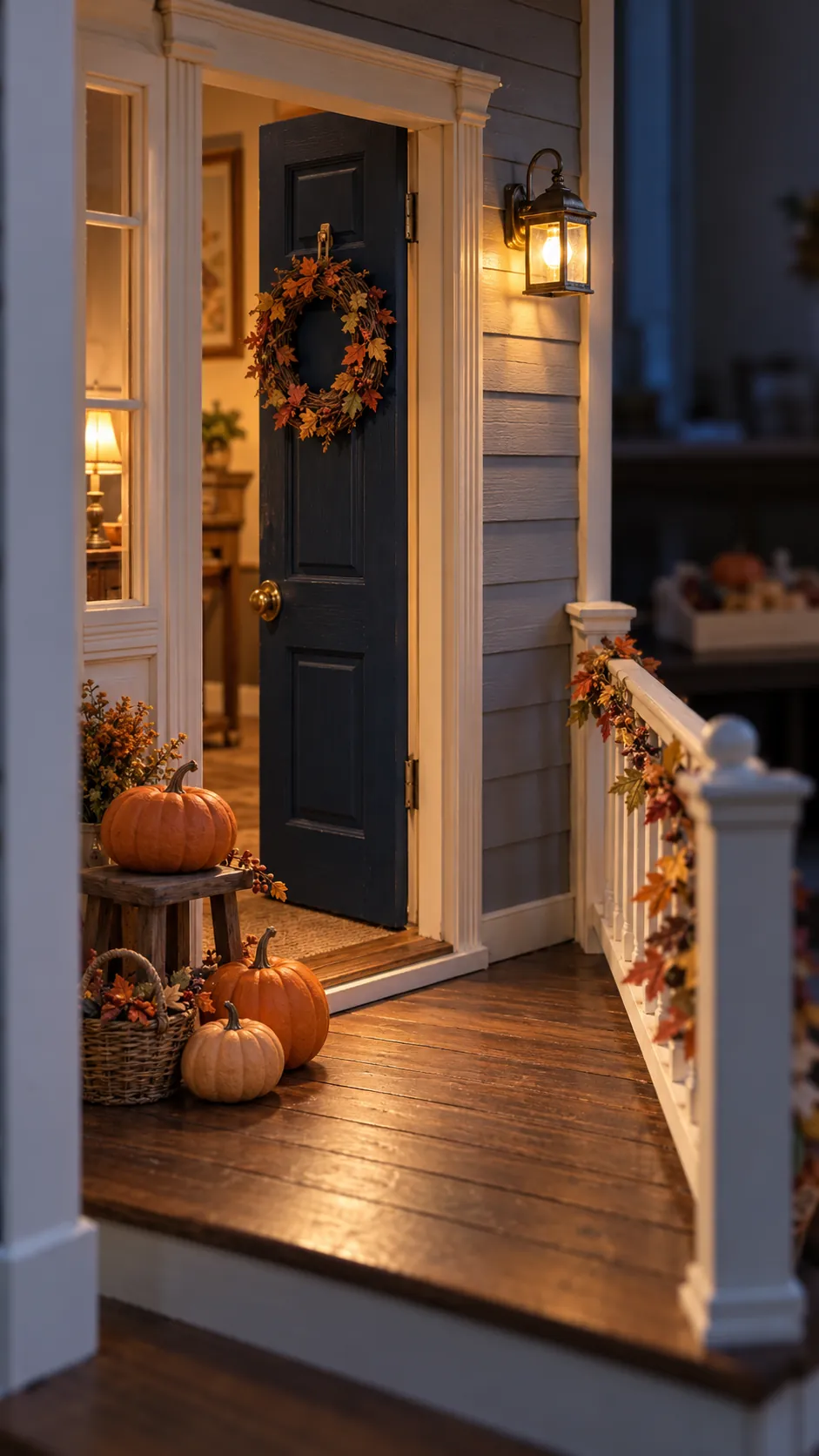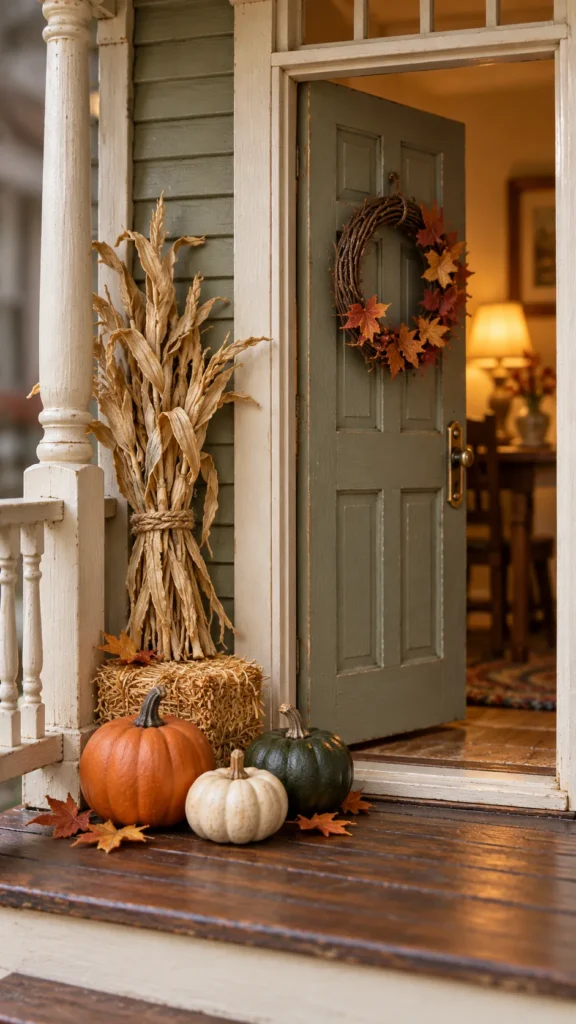
A tiny porch can look crowded long before it looks seasonal. The useful starting point is not buying more miniatures. It is choosing a clear scale, one visual anchor, and enough open floor space for every object to read as intentional.
Miniature makers often worry about pumpkins that feel too large, materials that look artificial, and arrangements that hide the doorway. This guide solves those problems with a simple process that works for a compact dollhouse entry. You can adapt it to pieces you already own or make the details from clay, paper, twine, and dried plant material.
Choose Scale Before You Style
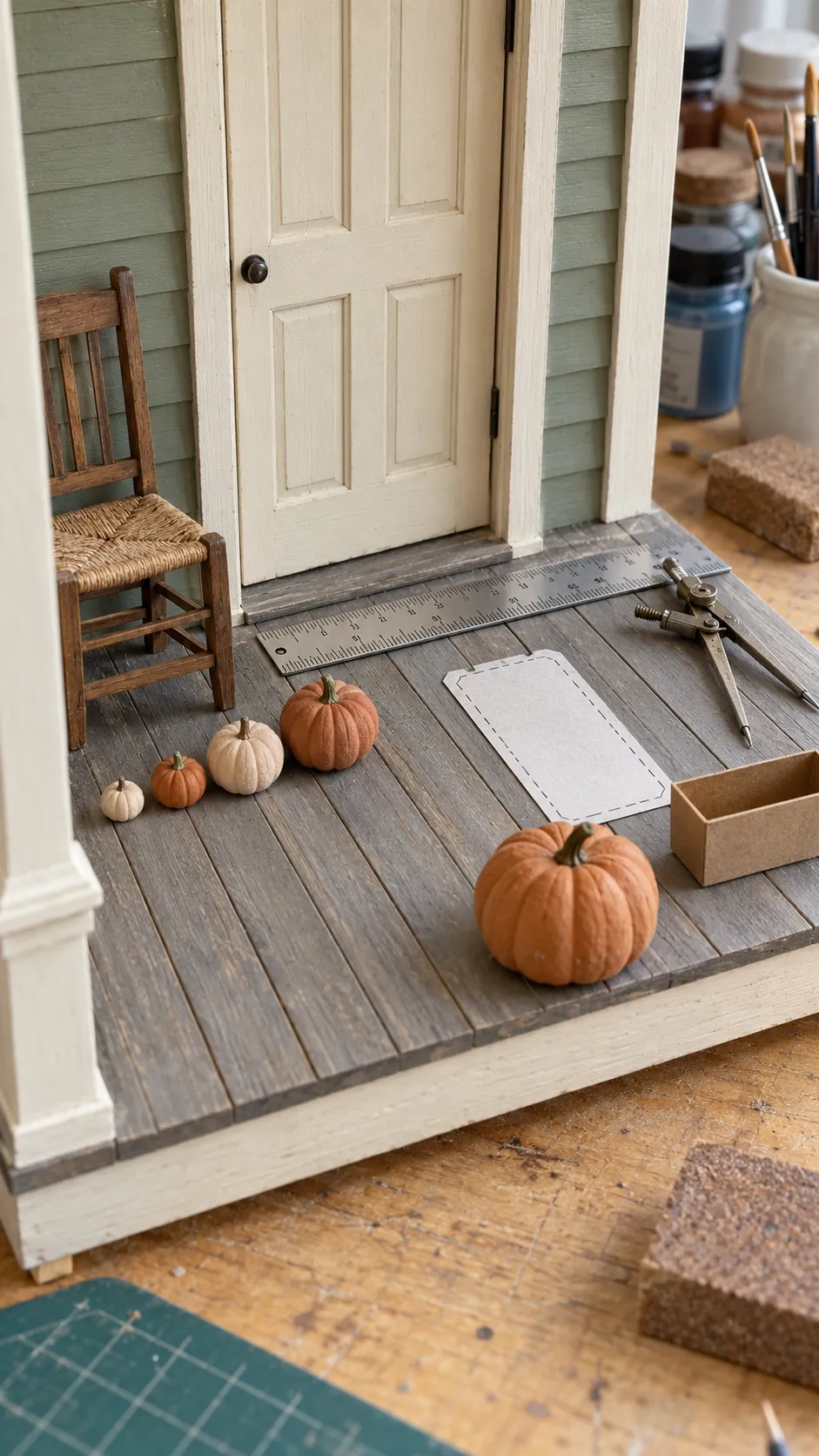
Start by confirming the scale of the porch and its door. In a 1:12 house, one inch represents one foot, so a pumpkin about one quarter to one half inch wide reads as a small real pumpkin. Place a doll or a familiar chair beside your test pieces before you commit to glue.
Make a paper footprint for every large object, including a bench, hay bale, basket, and planter. Move those flat shapes around until the door can still open and the path feels believable. This quick test prevents a charming collection from becoming a wall of objects.
Build a Warm and Limited Palette
Choose three main colors and let natural brown act as a quiet base. Burnt orange, muted cream, and deep olive feel autumnal without turning the porch into a bright novelty display. Repeat each color in at least two small places so the scene feels connected.
Test painted clay and paper under the light used in the dollhouse. Strong orange can become harsh beneath cool bulbs, while cream may disappear against pale siding. A thin brown wash in the pumpkin grooves and a matte finish usually look more convincing than glossy craft paint.
Give the Door One Strong Anchor
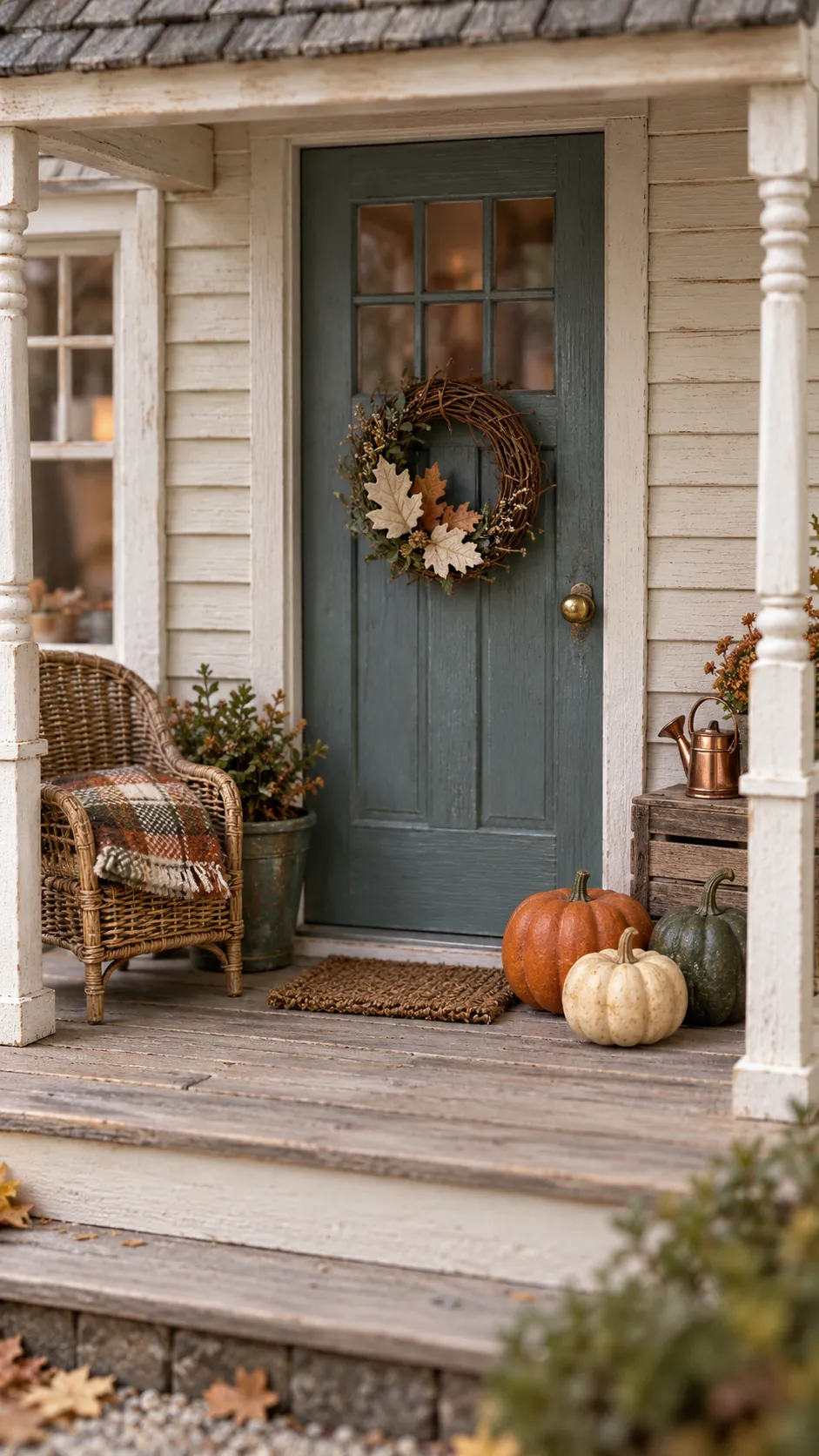
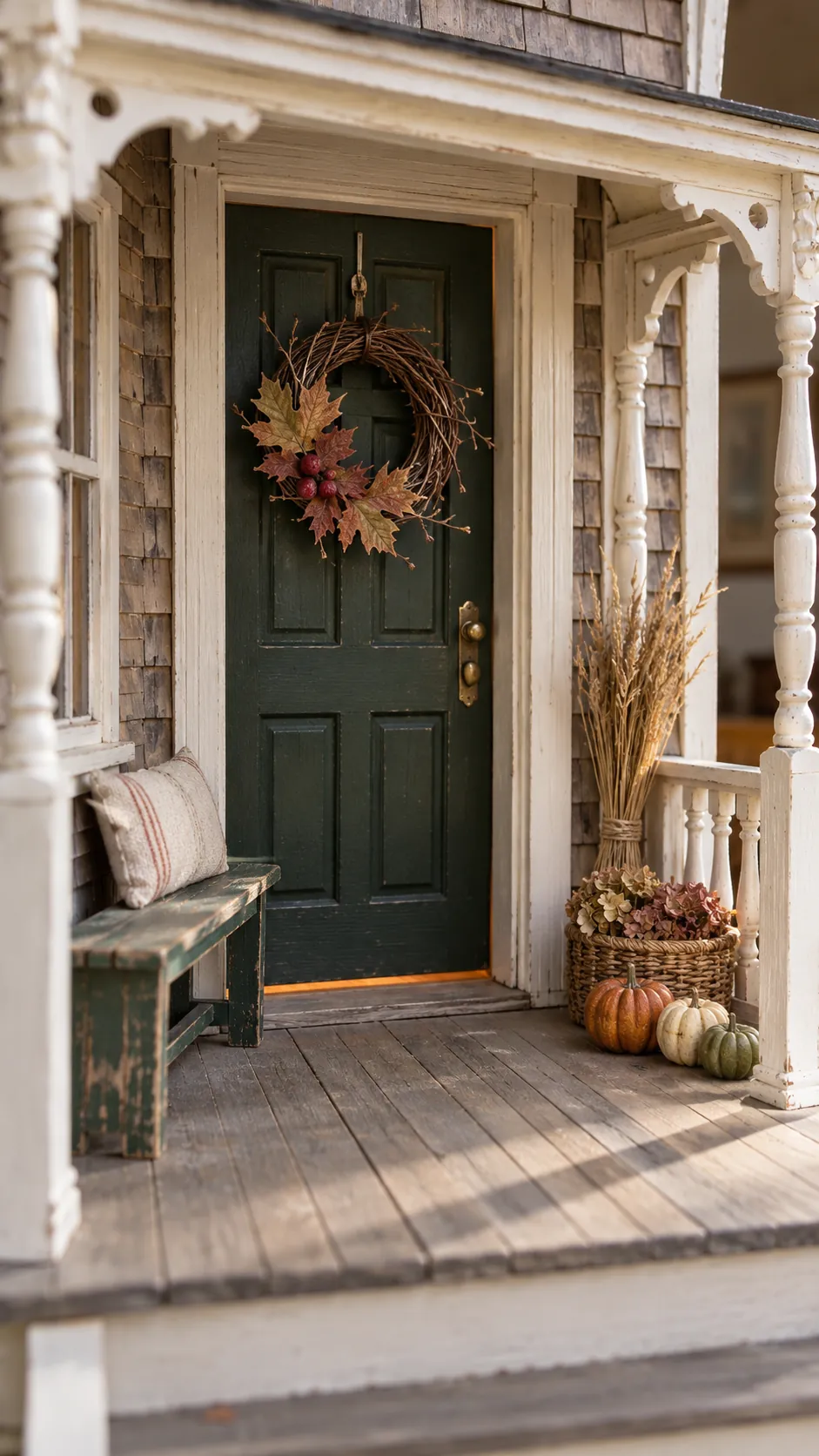
The doorway needs one element that the eye finds first. A small wreath, a narrow bench, or a single tall basket can provide that anchor. Keep the strongest shape close to the door, then step the remaining pieces down in height as they move toward the porch edge.
Leave visible siding and floorboards around the anchor. Empty space makes the tiny details easier to understand and keeps the entry functional. If the porch has two columns, resist making both sides identical because a slightly uneven arrangement feels more like a real home.
Cluster Mini Pumpkins Naturally
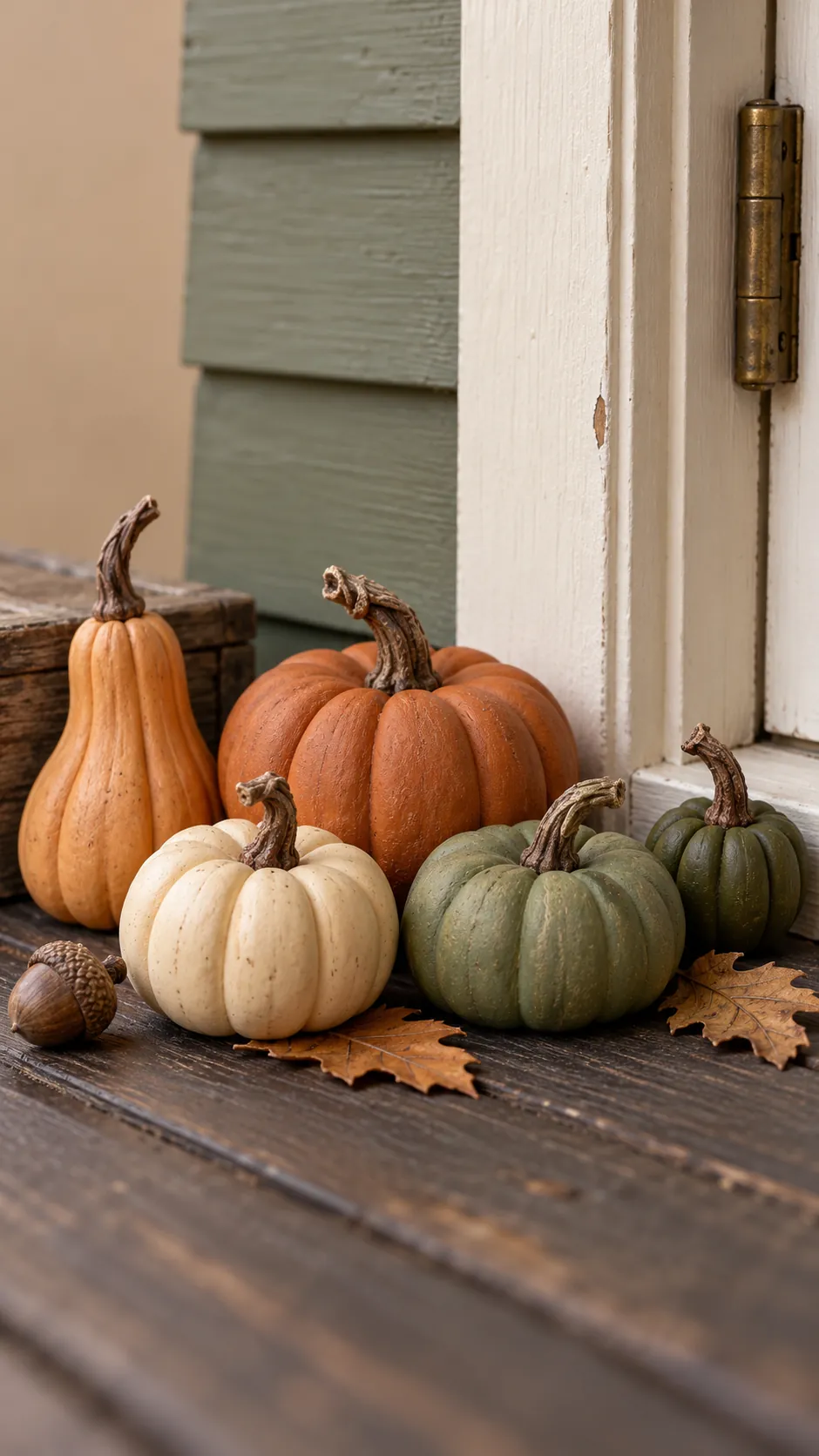
Use odd groups of three or five pumpkins with different widths and stem angles. Put the largest pumpkin low and slightly behind the smaller ones so the cluster has depth. A tiny cream pumpkin can separate two orange pieces that would otherwise merge into one shape.
Real pumpkins are rarely perfect spheres. Flatten the base, vary the groove depth, and bend a short stem instead of centering every stem upright. If you use polymer clay, compare each piece with the door handle while shaping it because scale drift is easy when the work is held close to your eyes.
Layer Hay Corn Stalks and Leaves
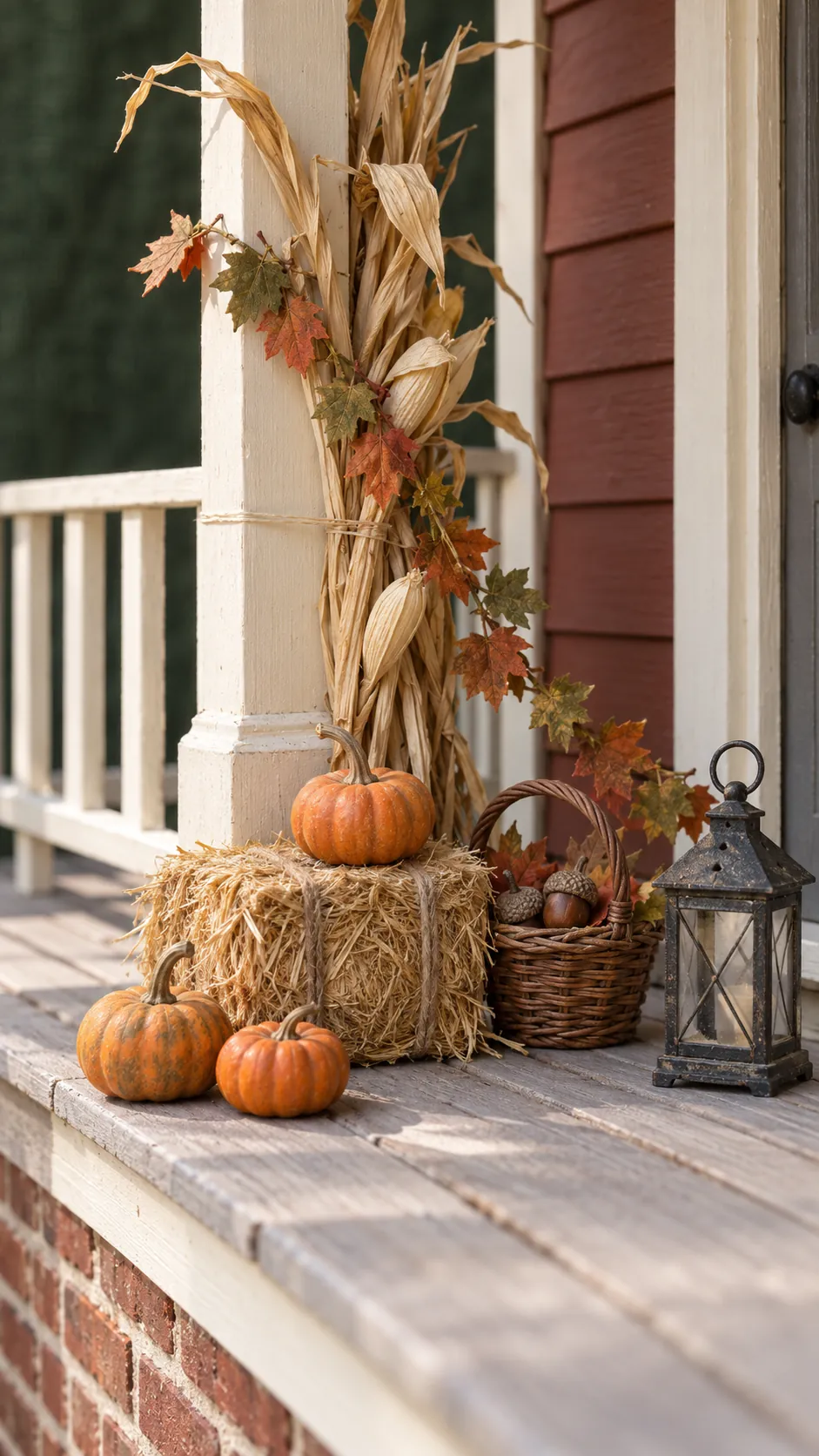
Texture gives the porch depth, but each material needs a different job. A compact hay bale can lift one pumpkin cluster, slender corn stalks can add height, and a sparse leaf garland can guide the eye toward the door. Keep loose fibers and oversized leaves away from the main walking path.
Choose materials with a fine texture. Raffia can imitate dry stalks when split into narrow strands, while finely cut paper makes cleaner leaves than many full size artificial stems. Seal fragile dried pieces with a light matte medium before placing them near frequently handled doors.
Secure the Scene Without Permanent Damage
Seasonal decor should come away cleanly when winter arrives. Use a tiny amount of museum wax beneath pumpkins and baskets, or place removable adhesive behind a wreath where it cannot be seen. Test any product on a hidden painted area first because old finishes can lift.
Finish by viewing the porch from the normal display distance, not only through a close camera lens. One warm lamp inside the doorway and a soft exterior light can reveal the scene without flattening every shadow. Remove one object if the threshold, door trim, or floor pattern becomes hard to see.