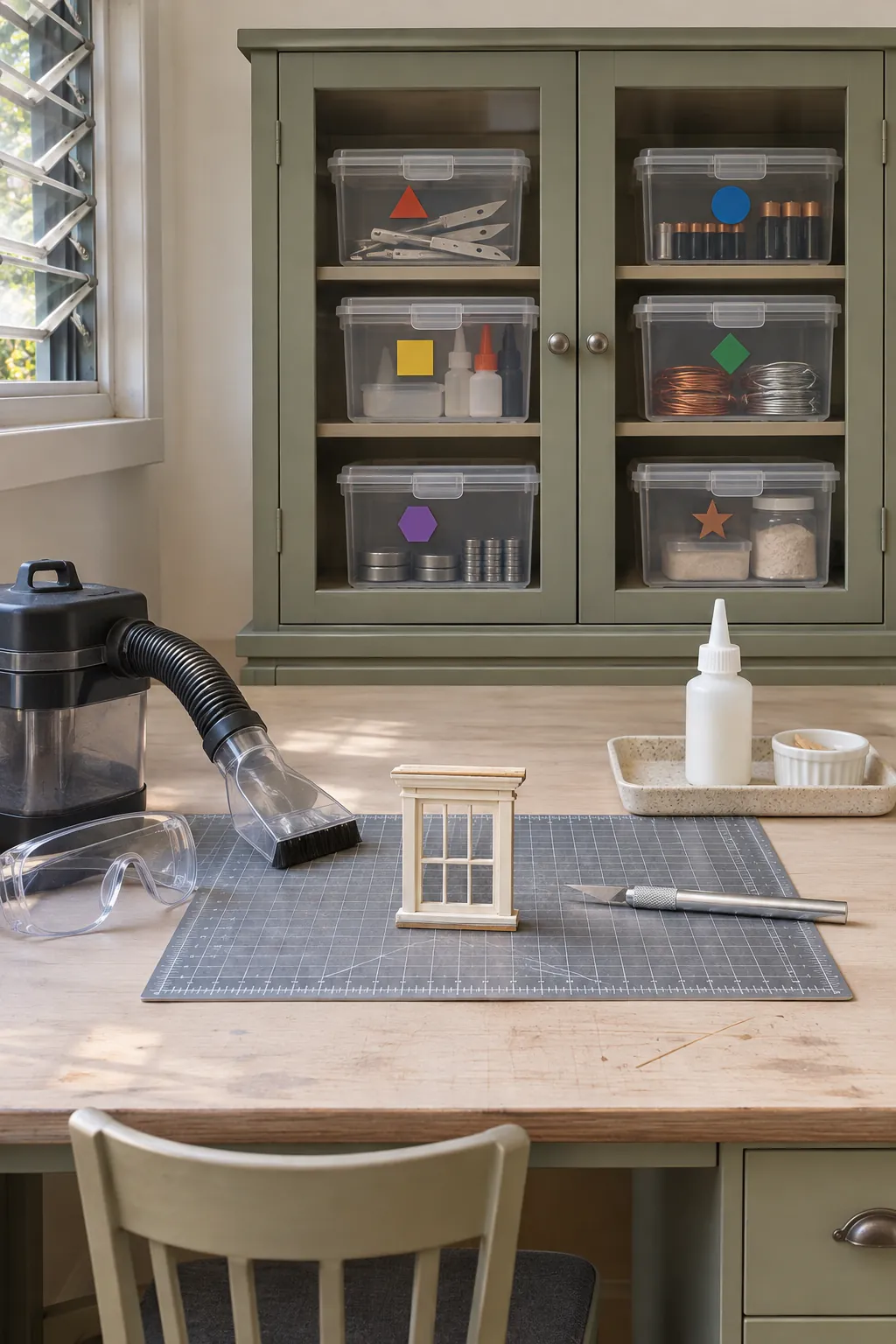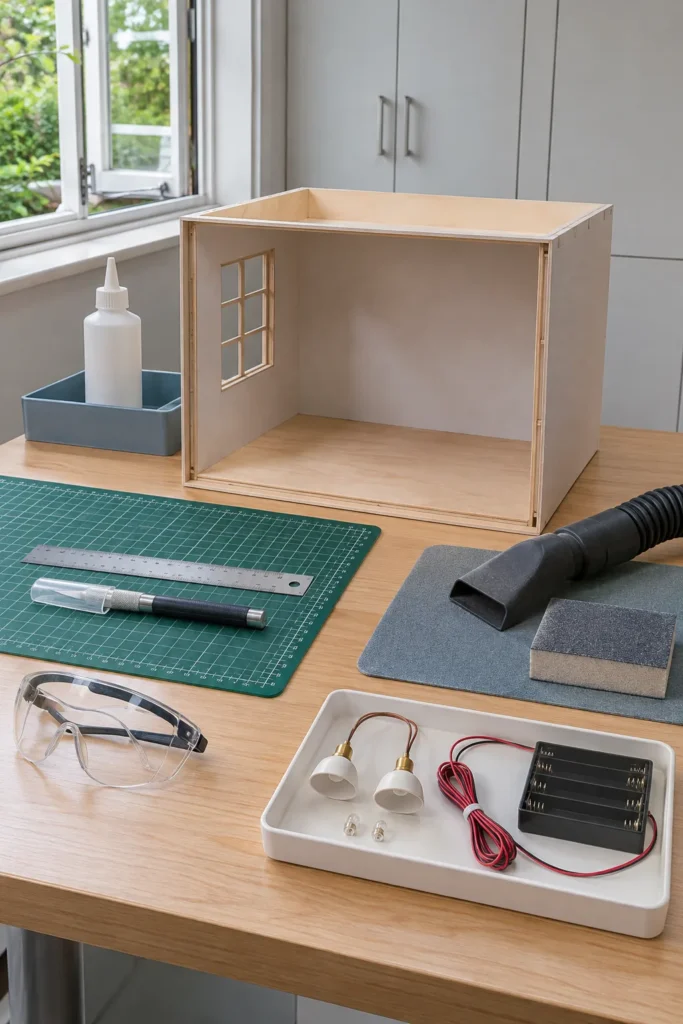
Miniature work feels gentle because every part is small. The hazards are still real: a sharp blade needs less travel to reach a finger, a tiny sanding job can put fine dust near your face, and an adhesive can release vapor even when you use only a drop.
Build a safe routine before the detailed work absorbs your attention. Read the instructions and safety information for every product, use it only for its intended material, and stop when the workspace no longer gives you clear light, stable support, or fresh air.
Set Up a Controlled Work Zone
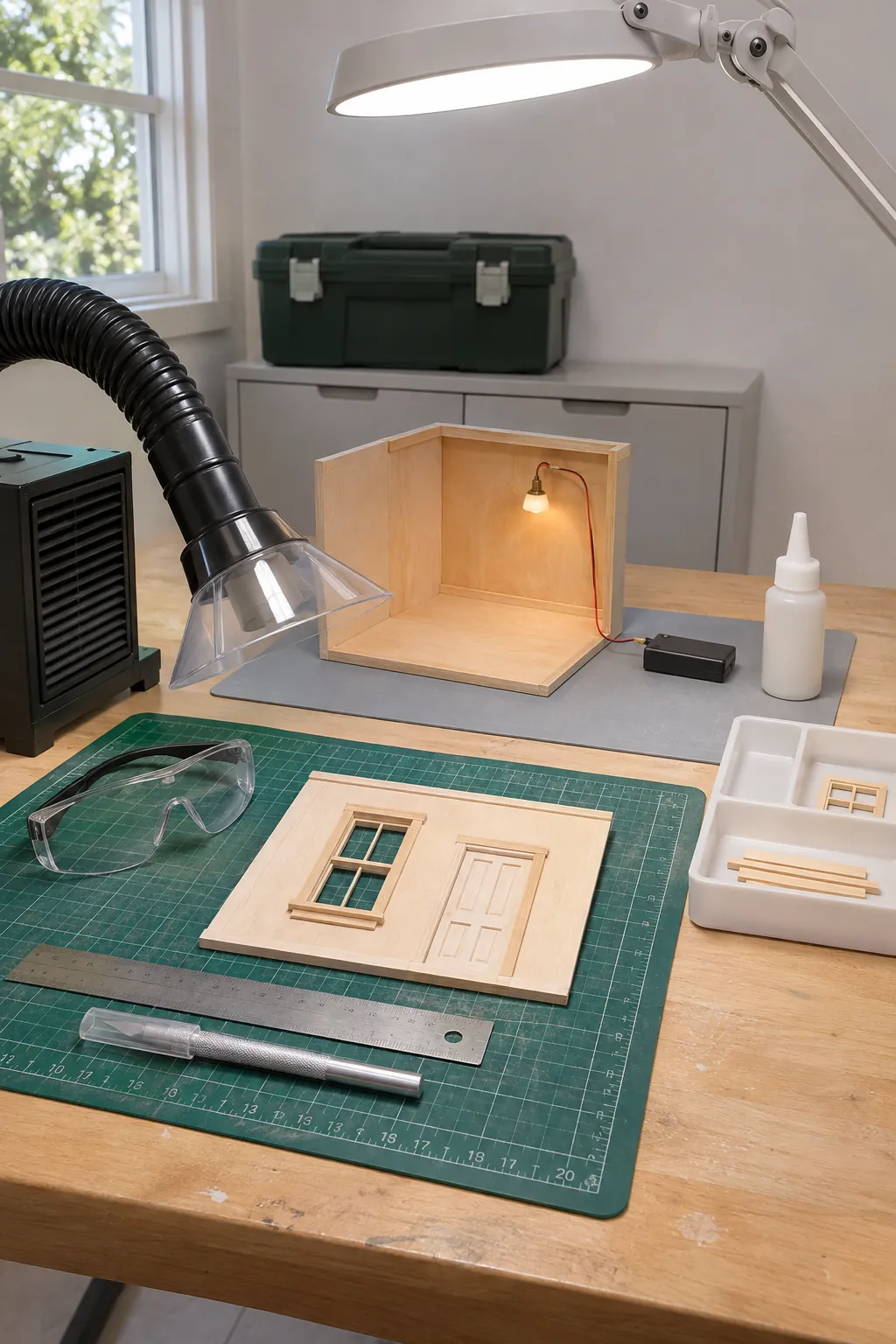
Use a stable table with a protected cutting surface, bright neutral light, and enough room to separate clean parts from tools and chemicals. Keep food and drink away from the bench, tie back loose hair, and remove hanging sleeves or jewelry that can catch on a tool. Choose eye protection, gloves, or respiratory protection according to the product instructions and the task, because one item does not protect against every hazard.
Children and pets should not enter the active work zone. Store sharp tools, batteries, adhesives, solvents, and small choking hazards in closed containers when you pause. A clear table also reduces accidental spills and makes a dropped blade easier to locate safely.
Use Adhesives With Fresh Air and Restraint
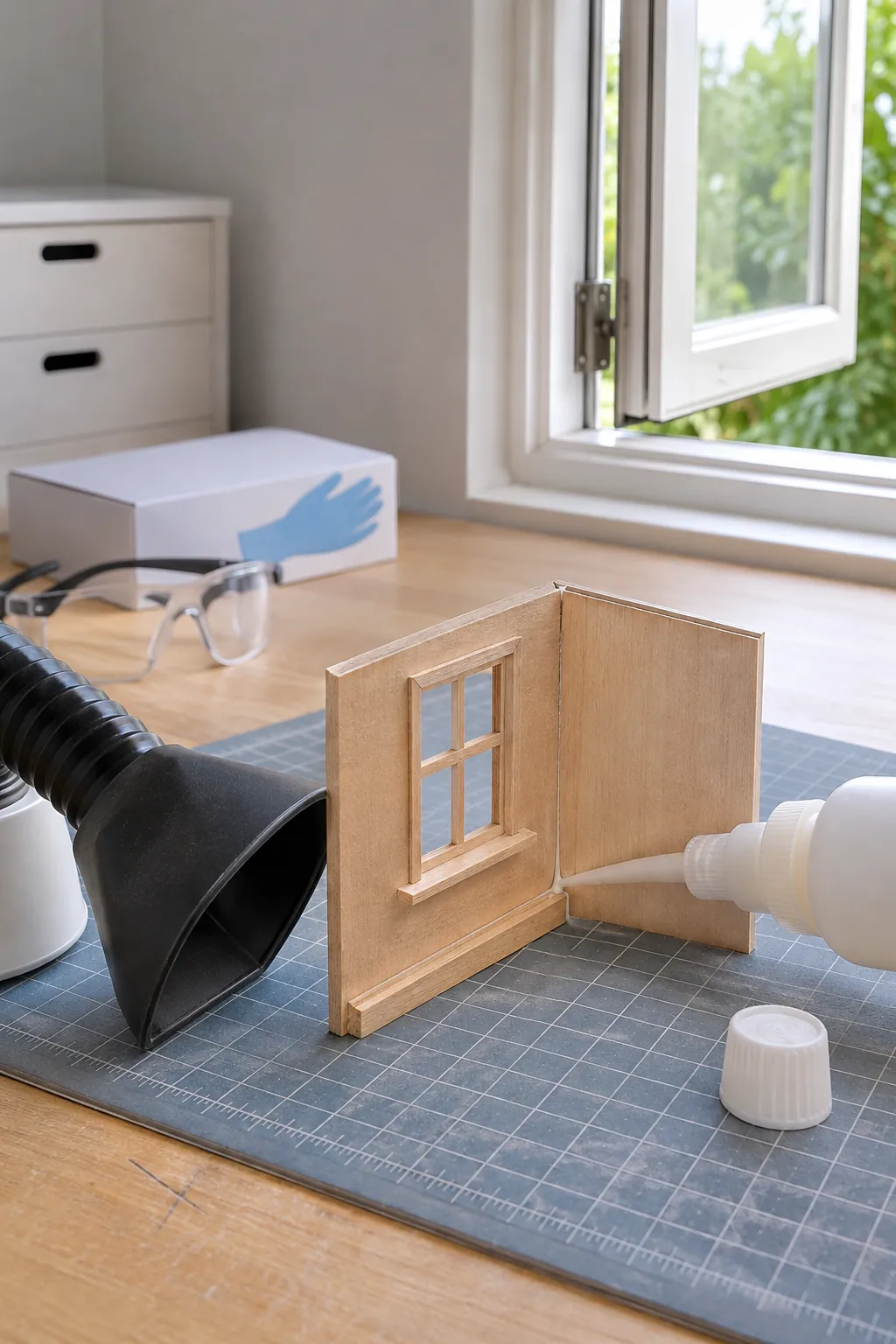
Select an adhesive that the maker approves for both materials, then follow its ventilation, skin contact, storage, and curing guidance. Use the smallest amount that creates a sound joint. Close the container promptly and keep your face away from the work rather than leaning over vapor.
A fan does not make every product safe, and air movement should carry vapor away from you rather than across your breathing zone. Never mix products unless their instructions explicitly allow it. If you feel unwell or notice strong irritation, stop, move to fresh air, and follow the product guidance for exposure.
Cut With a Sharp Blade and a Safe Path
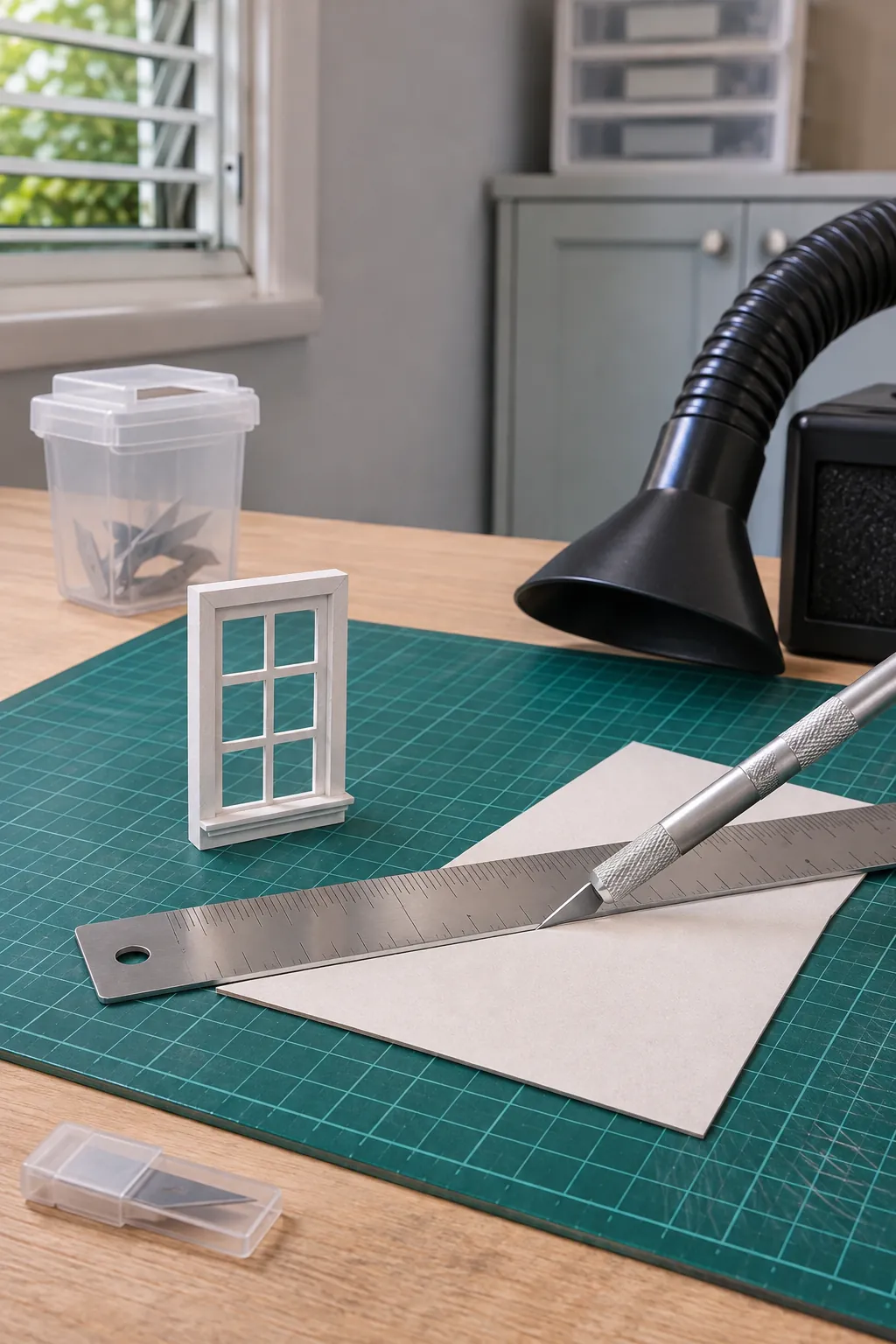
Use the blade type intended for the material and replace it when it starts to drag. Make several light passes on a proper cutting mat, guide straight cuts with a metal rule, and keep the supporting hand outside the path. Turn the work instead of pulling the blade toward your body.
Cap or retract the blade before reaching for another part. Dispose of used blades in a rigid puncture resistant container according to local rules, never loose in household waste. For very small pieces, use a suitable clamp or holder so your fingers are not the cutting fixture.
Control Dust Before It Reaches the Air
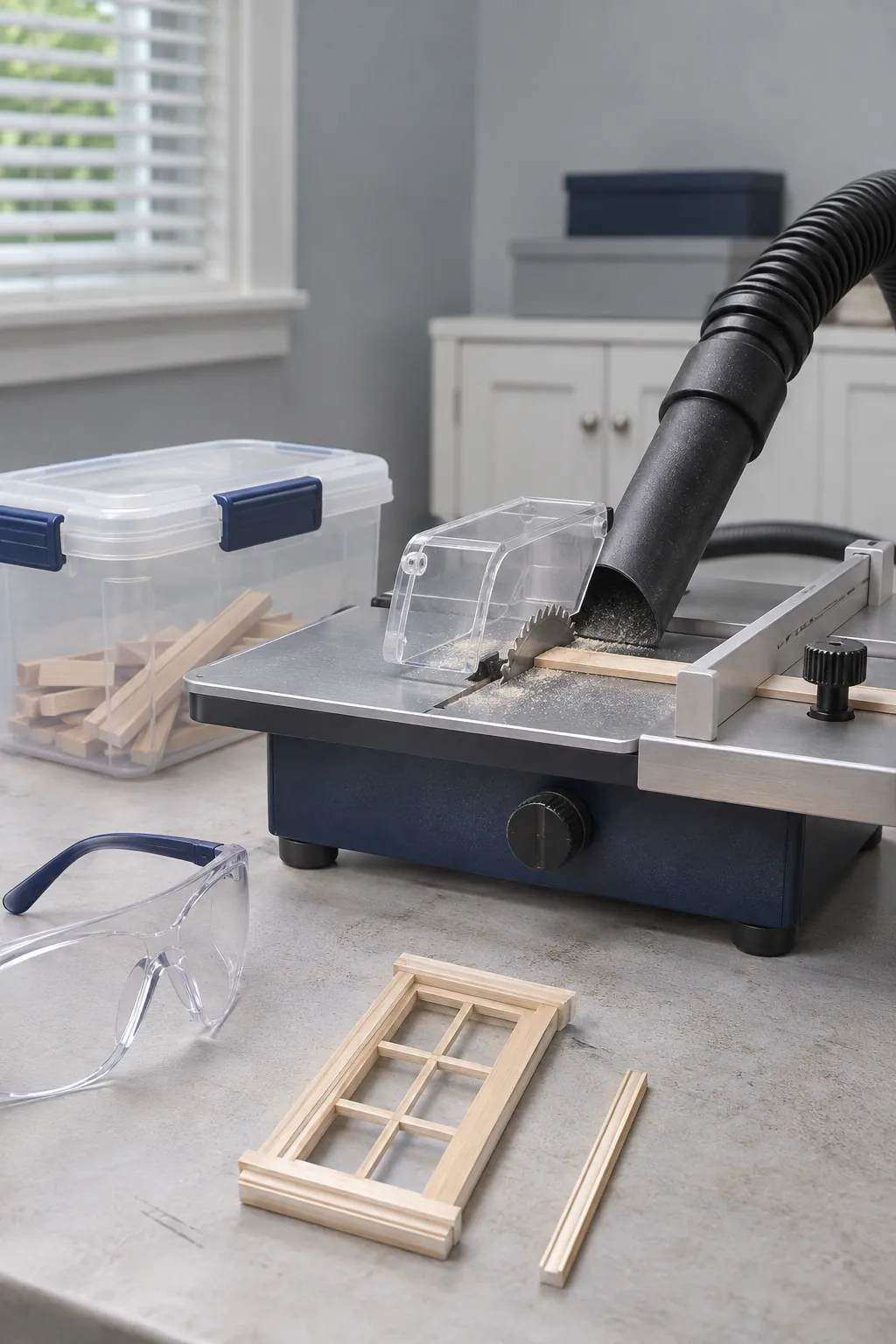
Wood, fiberboard, plaster, and some finishing products can create fine dust when cut or sanded. Check the material safety guidance, work with effective ventilation, and use dust collection suitable for the task. A small job is not automatically harmless when your face is close to it.
Keep sanding pressure light and capture debris near the source. Clean with a suitable vacuum or damp method recommended for the material rather than blowing dust across the room. Wash your hands after the task and change a dusty work layer before moving into living areas.
Keep Miniature Lighting Low Voltage and Compatible
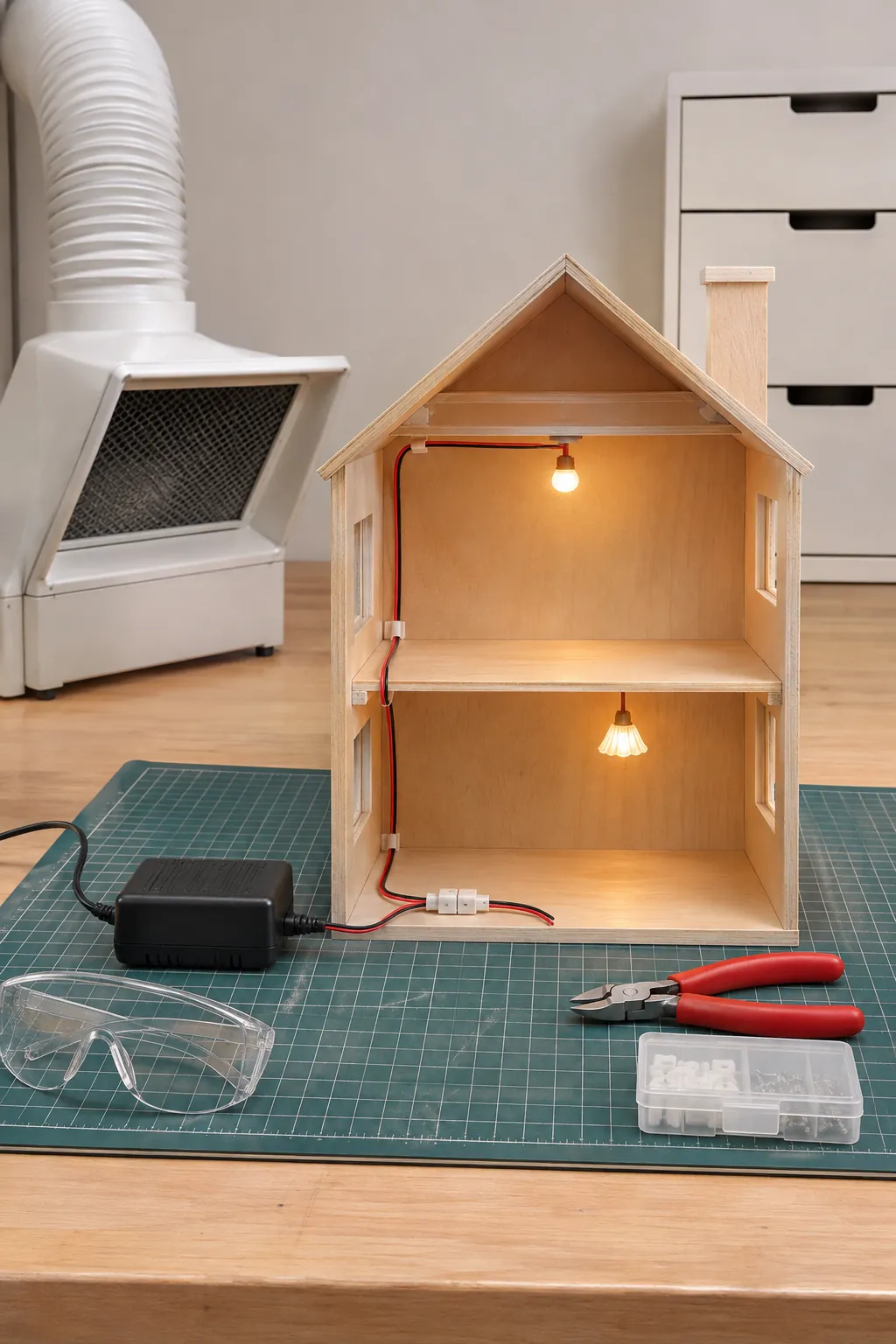
Use a complete miniature lighting system whose power supply, wire, connectors, lamps, and controls are designed to work together. Follow the maker’s load limits and wiring diagram, test the system before covering channels, and keep every connection accessible for inspection. Disconnect power before changing any component.
Do not substitute improvised mains voltage parts or damaged chargers. Route wire away from sharp edges, adhesive that can attack insulation, and places where a removable panel can pinch it. Stop using the system if a connector becomes hot, loose, discolored, or damaged.
Finish With Safe Storage and Cleanup
Return every chemical to its original labeled container and close it as directed. Store blades, batteries, wire, small magnets, adhesives, and dust producing materials in separate closed locations away from heat, moisture, children, and pets. Do not transfer a product into a food or drink container.
Inspect the floor and chair before leaving the room so no sharp part or small battery remains loose. Record which glue, finish, and electrical system you used, then keep the relevant instructions with the project. A clean final check protects the household and makes the next work session easier to begin safely.