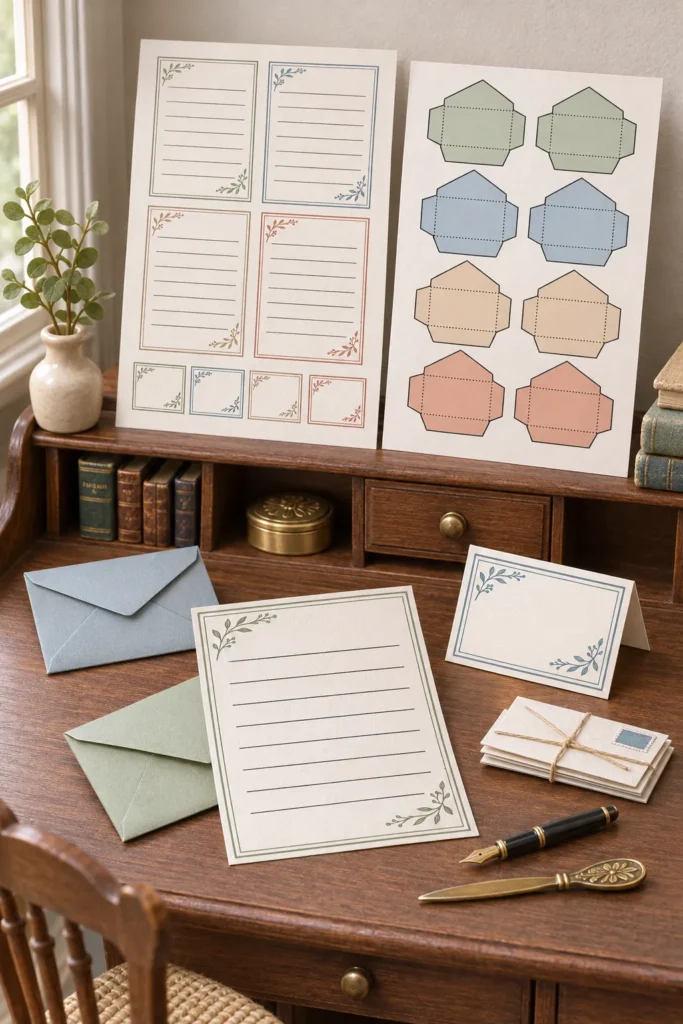
Small paper props can make a dollhouse desk, hall table, or bedroom feel occupied. The challenge is finding pieces that print at the correct scale and still leave enough room for a believable message. These two free sheets give you blank stationery, note cards, and foldable envelopes for 1:12 scale scenes.
Print at Actual Size or 100 percent, and turn off any Fit setting. Make one test on ordinary paper before using a finer matte sheet. The resources contain no fixed names or messages, so you can adapt them to any character or period.
Miniature letters and writing paper
The first sheet contains four lined letter pages and four small note cards. Each piece has a restrained border and a large clear writing area. Use a very fine pen to add a short greeting, an address, or a few marks that suggest handwriting.
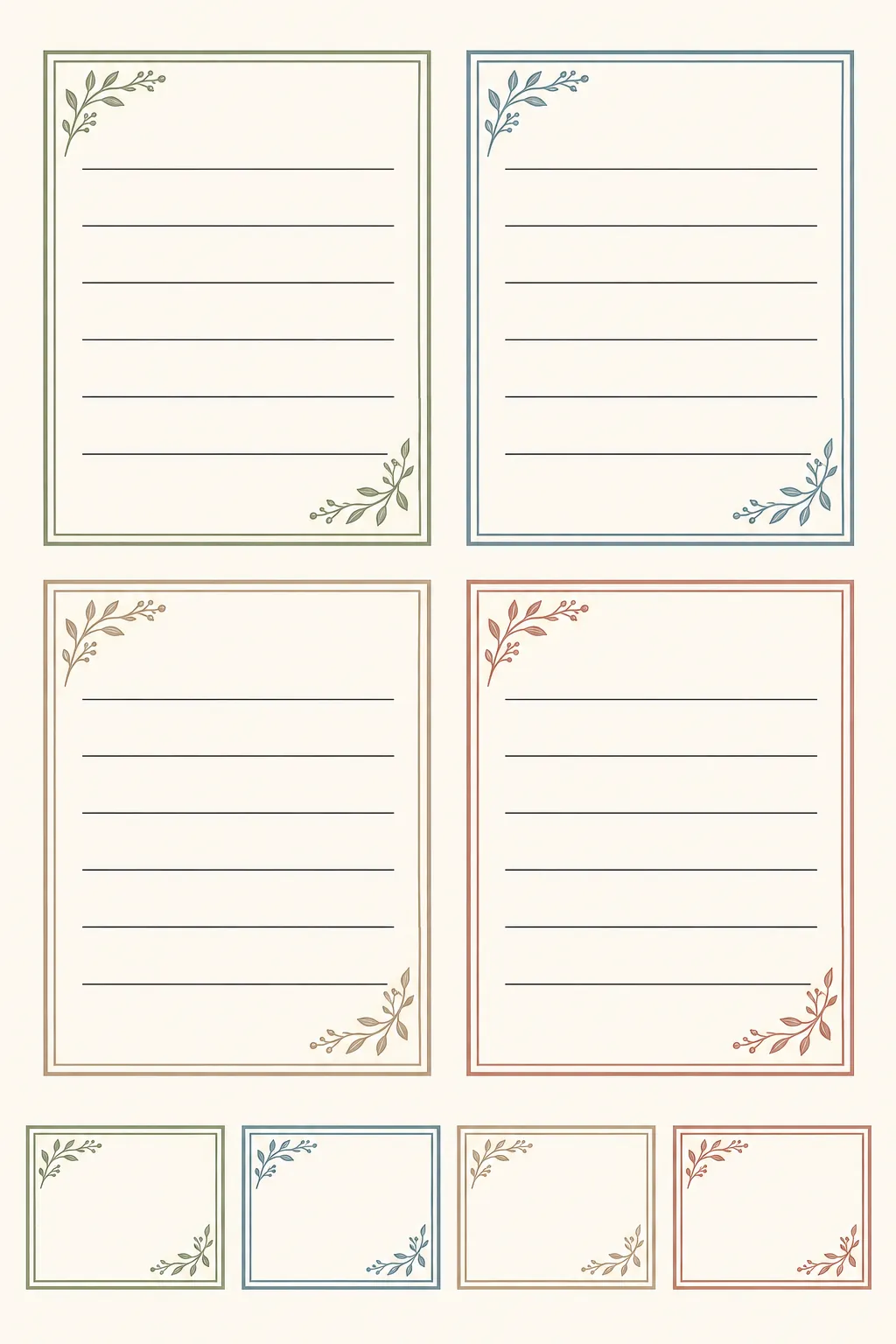
Download high-resolution printable
Cut around the outer border with a sharp knife and ruler. A complete letter can lie open on a desk, while a folded page can peek from an envelope. For a thicker note card, glue the cut piece to light paper before trimming the final edge.
Foldable miniature envelopes
The second sheet provides eight envelope templates in four quiet colors. Solid outer lines show the cut edge. Fine dotted lines show where the side, bottom, and top flaps fold, so the finished shape closes like a real envelope.
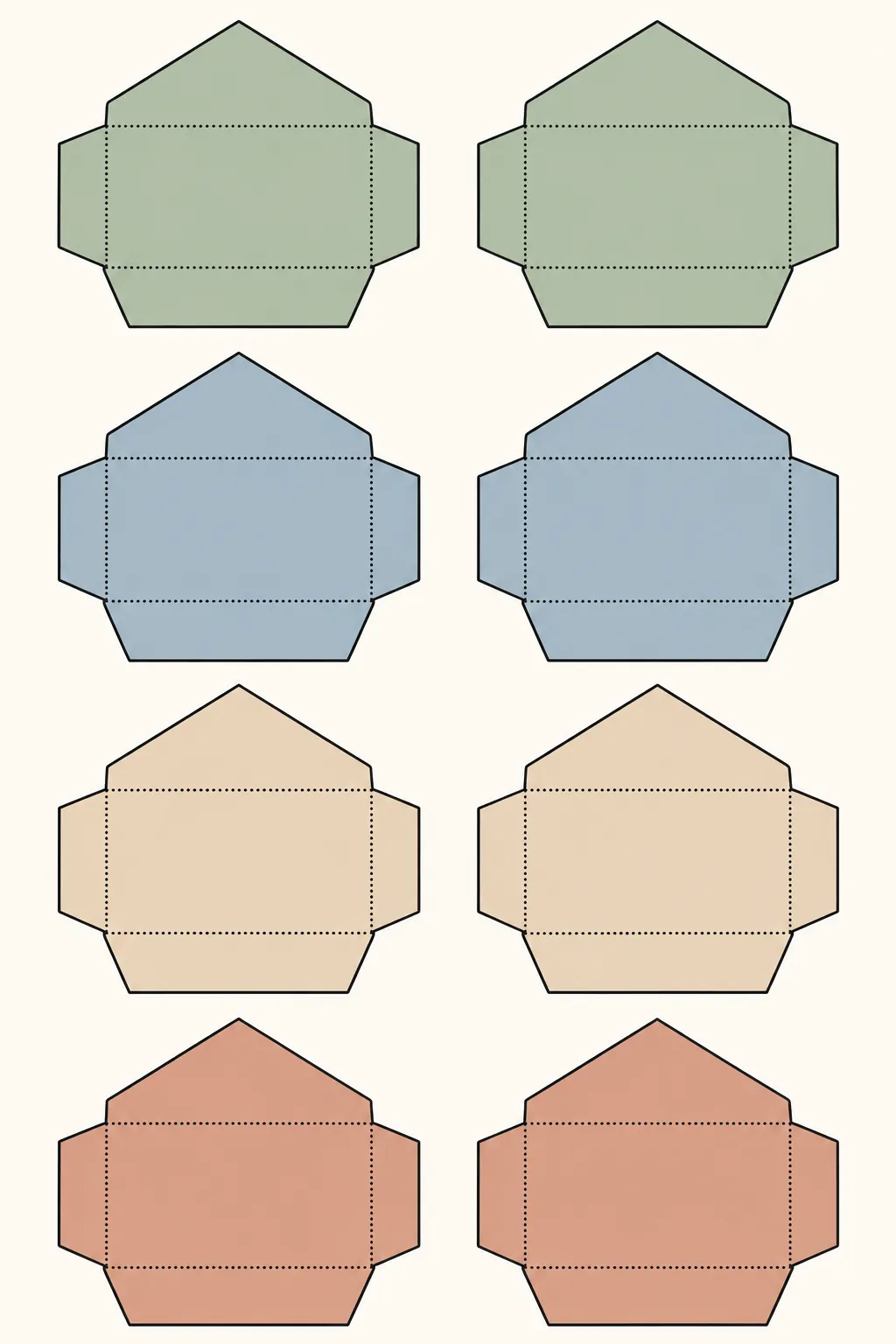
Download high-resolution printable
Score each dotted line lightly before cutting. Fold the side flaps inward, bring the bottom flap up, and secure the overlaps with the smallest amount of tacky glue. Leave the top flap open if you want a letter to remain visible, or close it after the glue has dried.
Print, cut, and place the paper props
Click a preview to open the full size image, or use its download button to open it in a new tab. Save the image from there. Matte presentation paper keeps the printed rules crisp and avoids the shine of photo paper.
Let the ink dry before you score or cut. Use a metal ruler for straight stationery edges and fine scissors for the curved envelope flaps. A toothpick can place a tiny amount of glue without soaking the paper.
Choose one or two pieces that support the story of the room. An open letter beside a pen suggests recent activity, while a sealed envelope near a front door can imply arriving mail. A small stack looks more convincing when the pages are slightly offset instead of aligned like a solid block.