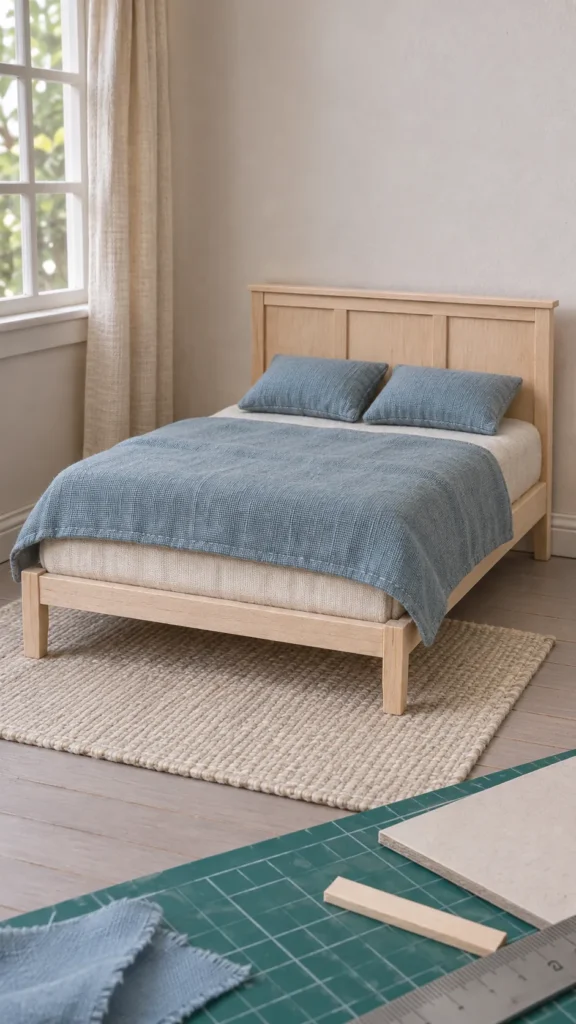
A miniature bed can fill the room faster than expected. The mattress, frame, headboard, and bedding all add size, so choosing dimensions from only one part often creates a bulky result. Measure the dollhouse bedroom first and build outward from the finished mattress size.
This tutorial combines laminated cardboard with small basswood strips. Card gives the platform a flat stable core, while wood protects the exposed edges and supports the legs. A simple foam mattress and lightweight fabric complete the bed without requiring sewing.
Choose a finished mattress size
Start with the finished mattress, because every other bed part surrounds or supports it. A 1:12 double mattress can be roughly 4.5 inches wide and 6.25 inches long, while a single can be near 3.25 inches wide and the same length. Compare those starting dimensions with the actual room and reduce them slightly if doors or other furniture lose useful clearance.
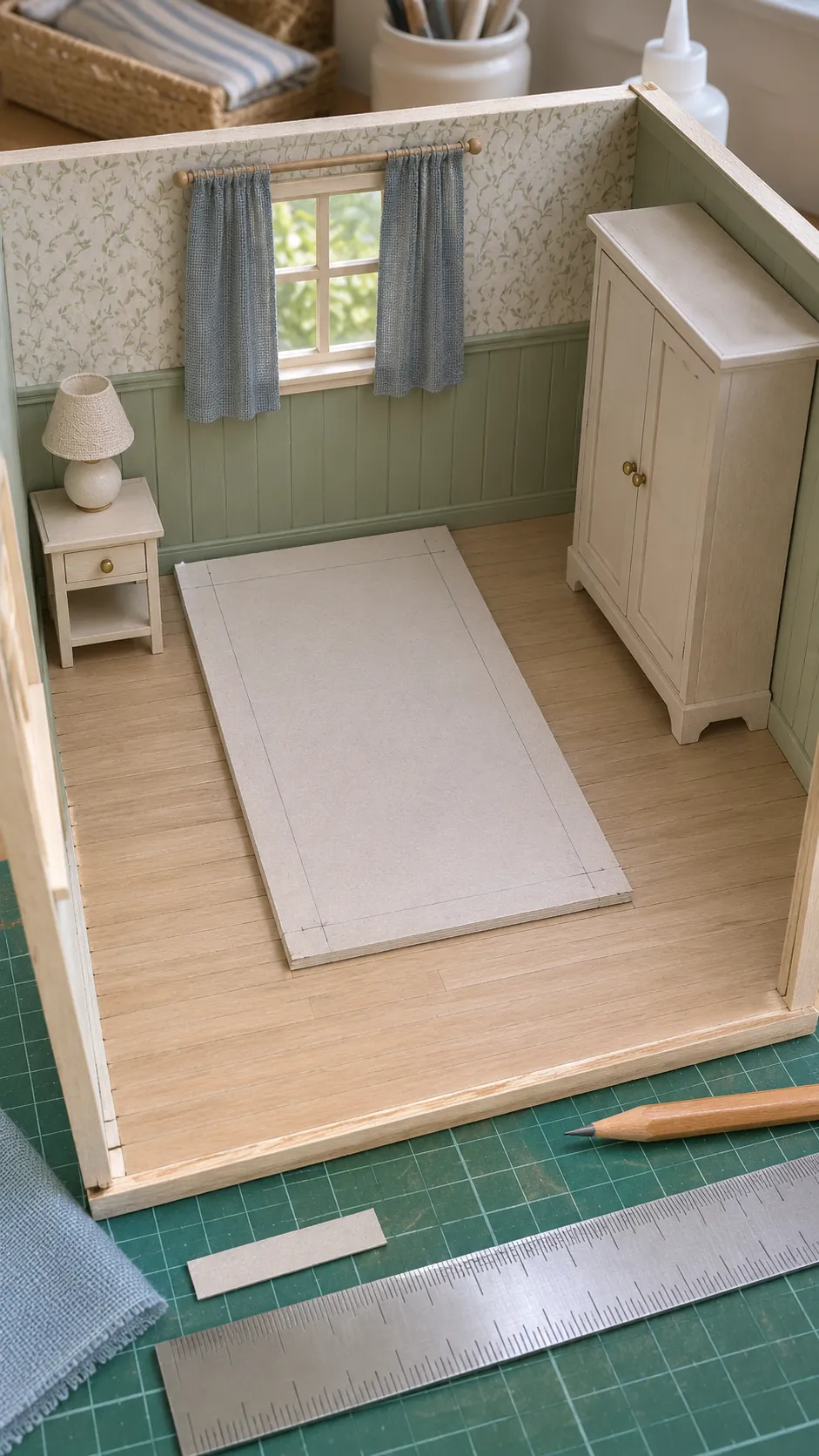
Cut a card rectangle at the proposed mattress size and place it on the dollhouse floor. Add temporary blocks for the headboard and nightstands so you can judge the full arrangement. This plain footprint catches scale problems before you spend time on a wood dollhouse bed frame.
Laminate a flat cardboard platform
Cut two chipboard rectangles slightly larger than the mattress. Spread a thin even glue layer, align the pieces, and press them between wax paper under a flat weight. Laminating the card with its grain directions opposed reduces the chance that moisture will curve the platform.
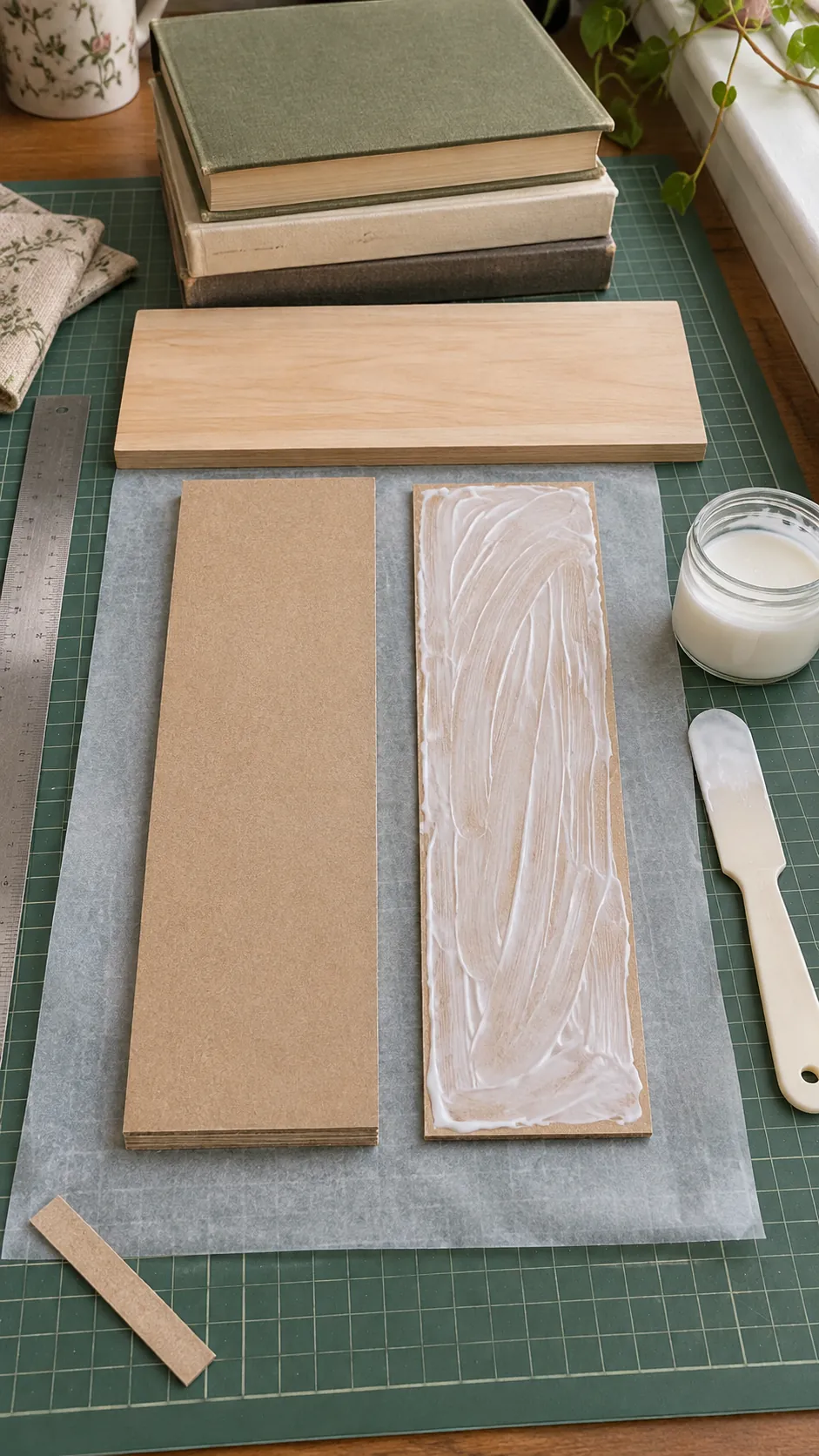
Trim the dry platform to final size with several light knife passes. Check both diagonals to confirm that the corners are square. Seal or paint the card edges only after the wood rails have been tested, because finishing layers can change the fit.
Add wood rails and stable legs
Cut two long rails and two short rails from matching basswood. Glue them around the platform edge, using square guides to keep each corner upright. Measure the opening again before the glue sets so the mattress will not be pinched by a narrow frame.
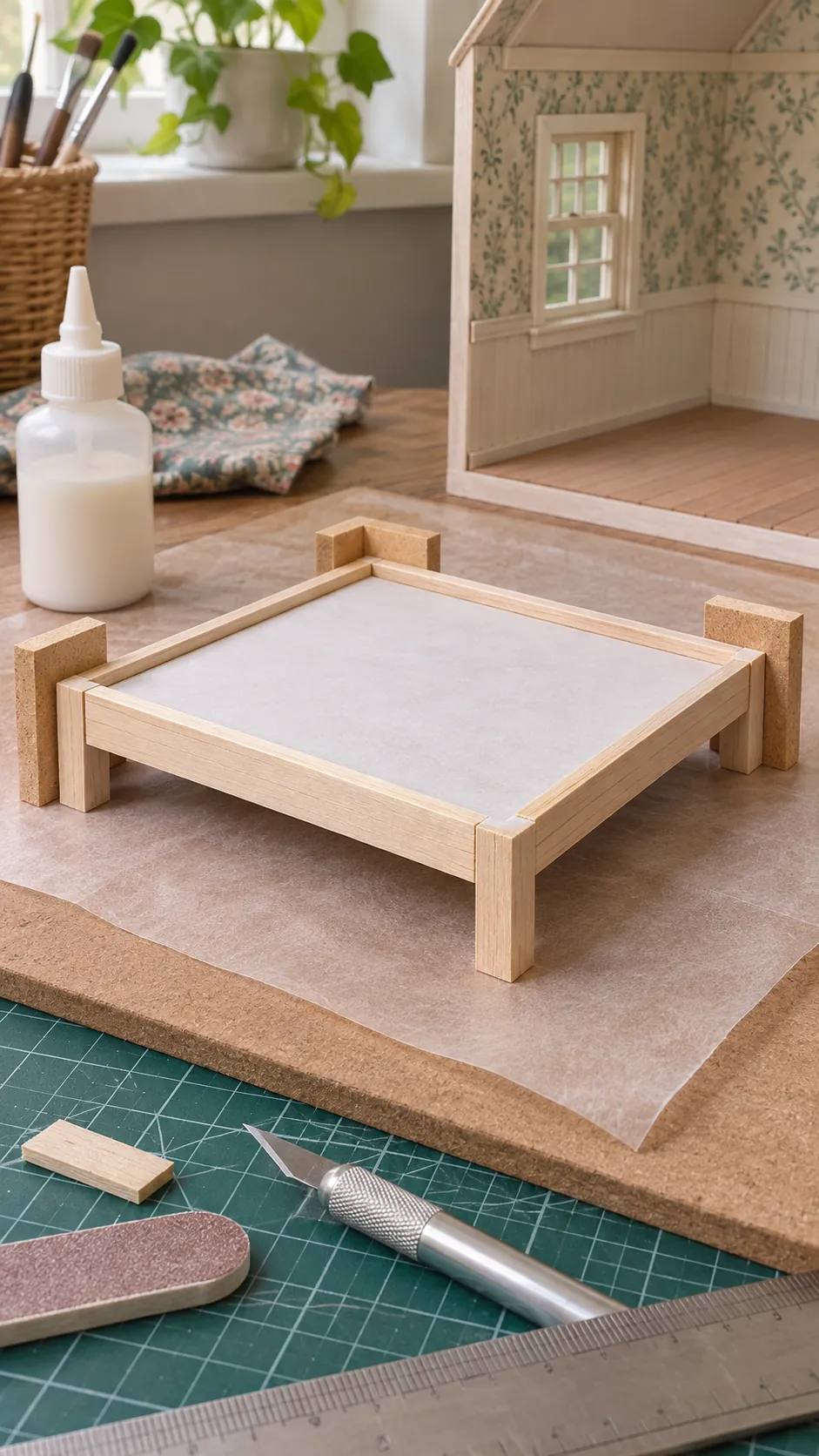
Cut all four legs from one strip and sand them together until their lengths match. Attach each leg inside a corner where both rails can support it. Let the frame dry on a flat board, then test for rocking before adding decorative pieces.
Build a simple proportional headboard
Keep the headboard close to the frame width and choose its height after placing the mattress template. A simple design uses two wood posts, a card center panel, and a narrow top rail. This combination is light, square, and easier to align than many thin decorative spindles.
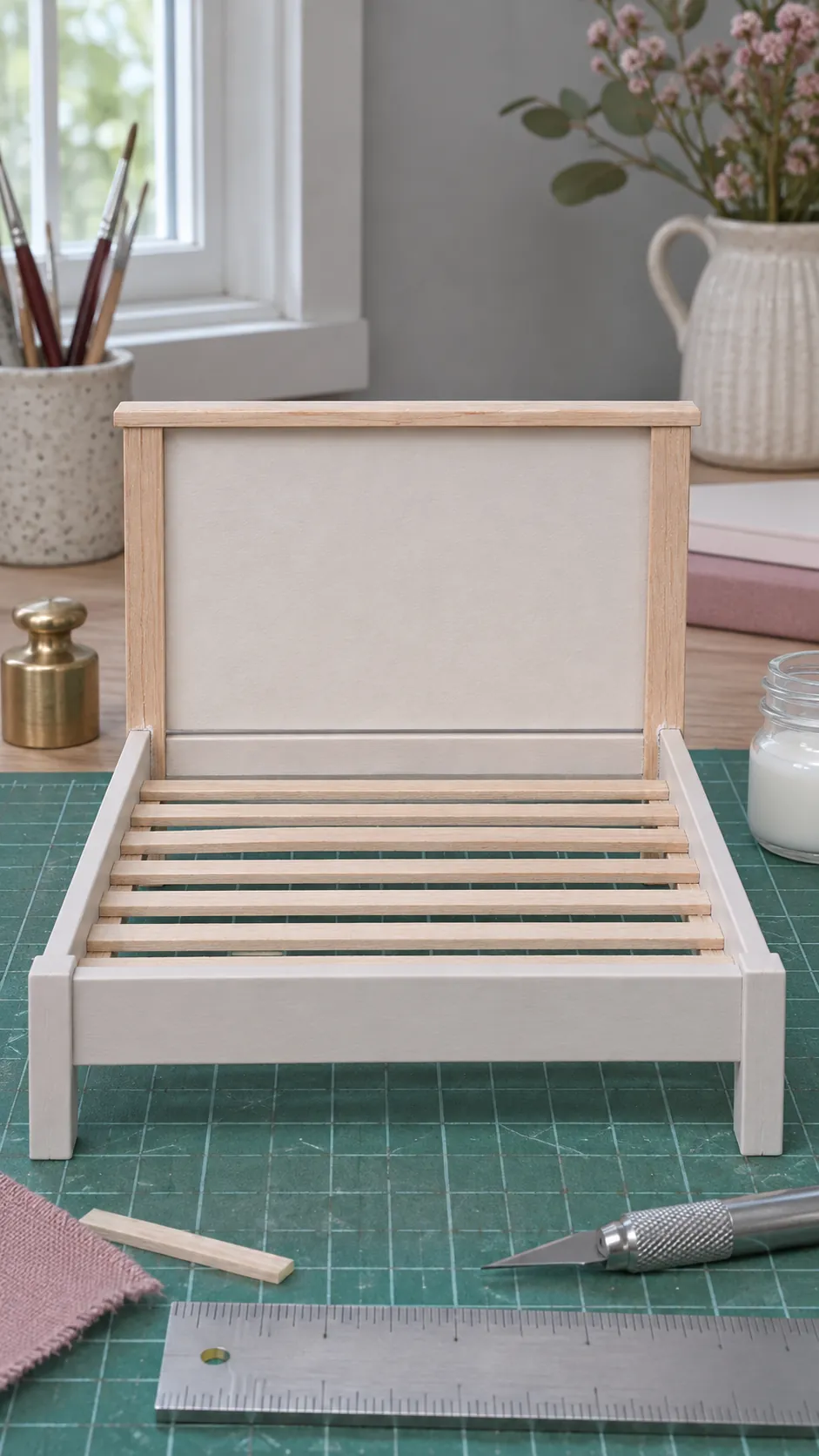
Build the headboard flat on wax paper and let it cure before attaching it to the bed. Glue the posts to the frame or platform where the joint will be hidden by the mattress. Check the front view immediately, since a small lean becomes obvious against a straight dollhouse wall.
Make a no sew foam mattress
Cut dense foam slightly smaller than the frame opening so the fabric wrapped mattress can slide in without bowing. Cover it with fine cotton, pulling the fabric toward the underside and keeping the grain straight. Flatten each corner into one controlled fold rather than stacking several thick tucks.
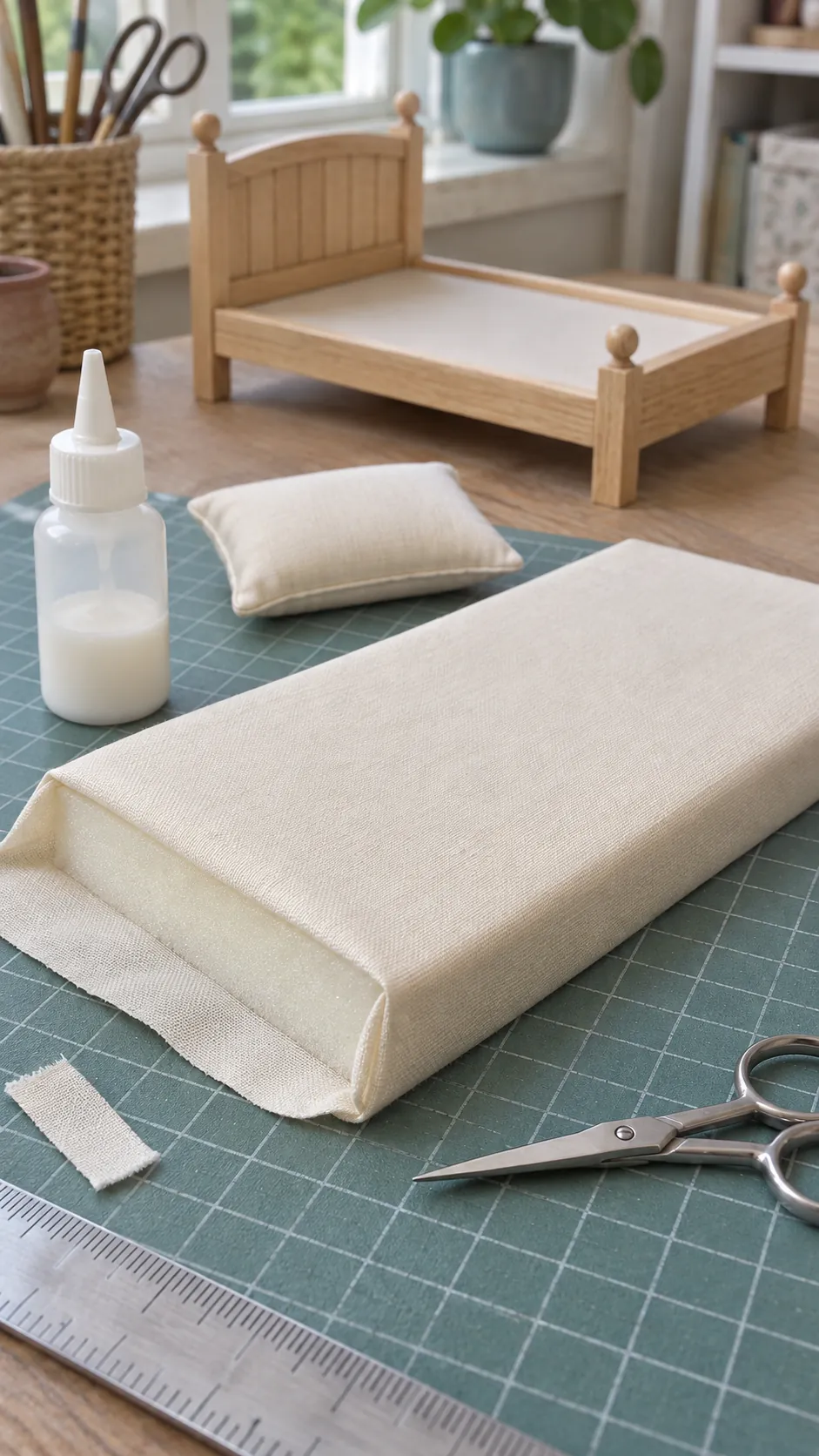
Kitchen sponge can work for a soft no sew mattress when its pores are small and its shape stays even. Add a thin card base below very soft foam so it does not sag between bed rails. Test the wrapped mattress in the frame before the adhesive fully cures.
Dress and finish the miniature bed
Use lightweight fabric for sheets and blankets so the folds stay small. Hem visible edges with a narrow turned fold or a minimal line of fabric sealant, then press the pieces before arranging them. Keep pillows thin enough to rest against the headboard without pushing the mattress forward.
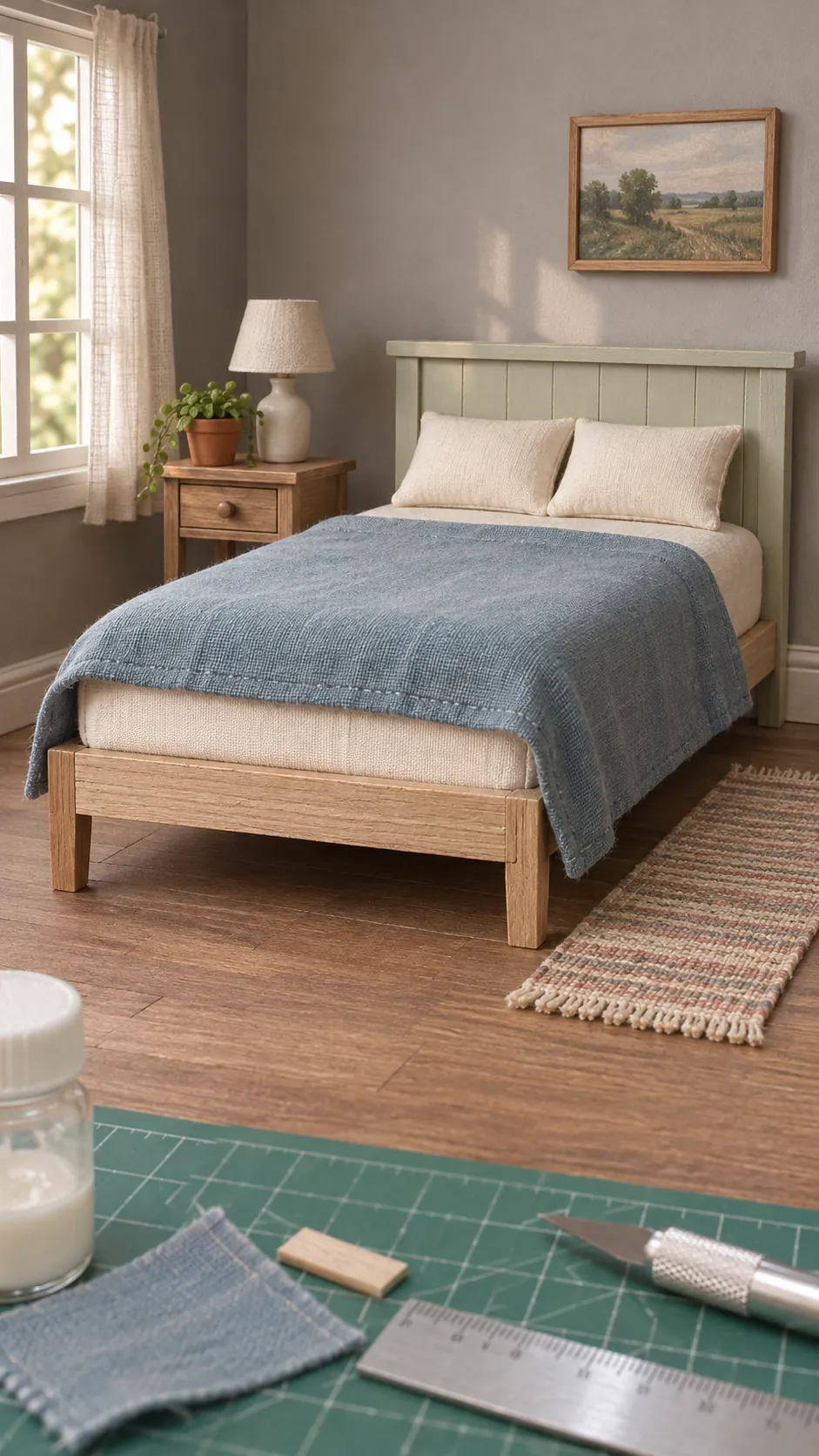
Place the bed in the room and inspect the visible proportions from the open side of the dollhouse. Shorten an oversized blanket or reduce bulky pillows before adding glue. A finished 1:12 bedroom furniture piece looks convincing when the frame, mattress, and textiles each remain visually distinct.