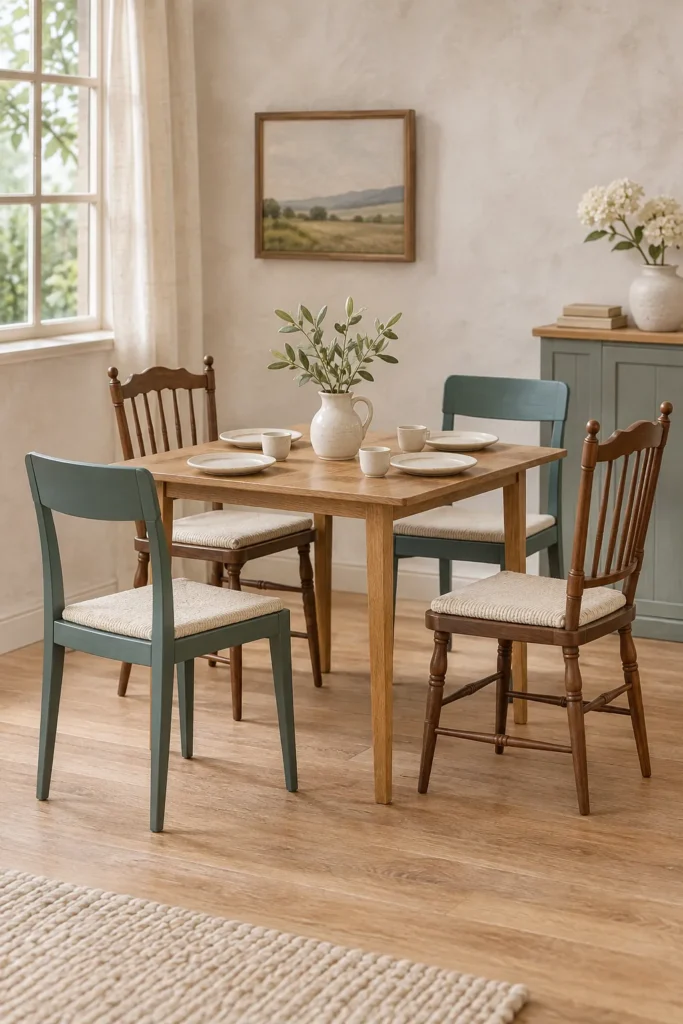
A dining chair multiplies small errors because a set places every leg and back side by side. These patterns give you two practical 1:12 starting points, one modern chair and one classic chair. Print the selected sheet, measure its one inch calibration bar, and adjust the print scale until that bar measures exactly one inch. Only then should you trace the parts onto cardstock, illustration board, or thin wood.
Modern chair printable template
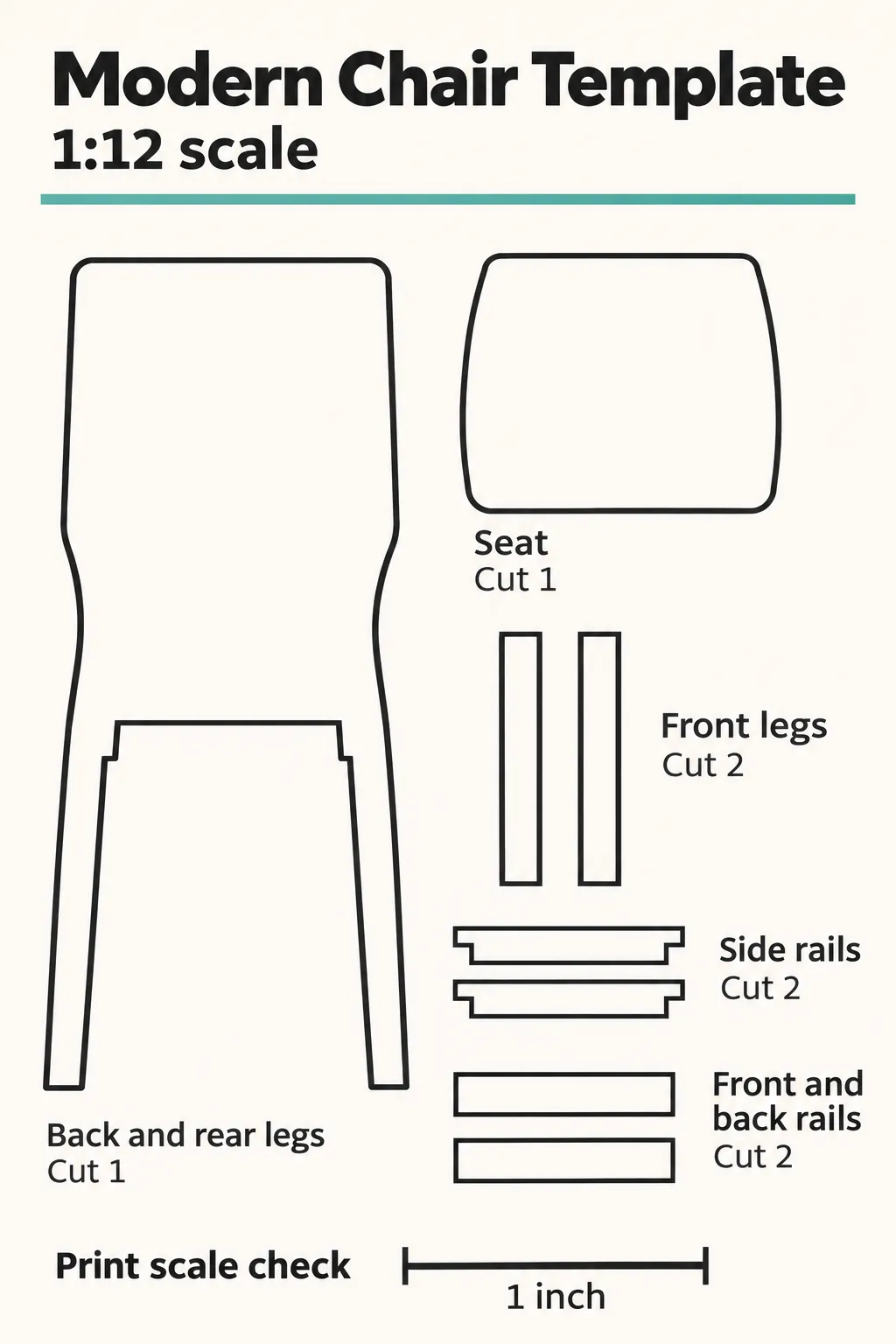
The modern pattern uses a straight back, compact seat, slim front legs, and simple rails. Click the preview to open the full size image or use the download button to open it in a new tab, then save it from there. Confirm the calibration bar before tracing. Cut the matched parts together when possible so every chair in the set keeps the same height.
Download high-resolution printable
Classic chair printable template
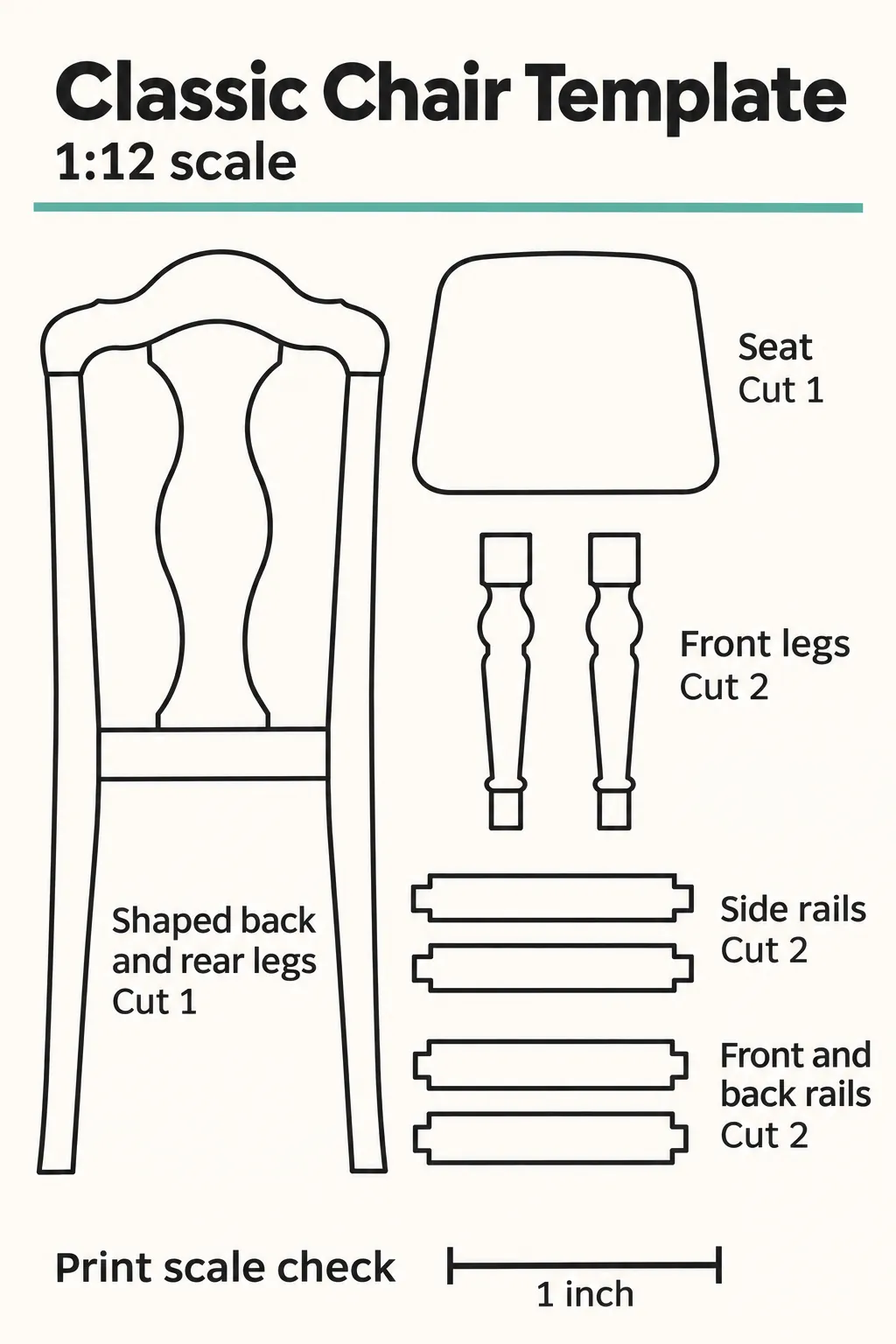
The classic pattern adds a shaped back rail and a broader seat frame while keeping construction manageable. Open and save the full size image in the same way. Adjust the print scale until the calibration bar is correct. Trace the curved back parts carefully and keep the grain running along each narrow piece when you use wood.
Download high-resolution printable
Prepare the material and transfer the parts
For a cardstock chair, laminate two or three thin layers with the grain direction crossed, then press them flat while they dry. For wood, use straight basswood or another fine grained strip. Trace with a sharp pencil and mark every cut count before moving the template. Do not reduce narrow rails until the main seat and back dimensions have been checked.
Cut outside the line and sand to the final edge on a flat block. Pair the front legs, rear legs, and side rails with removable tape while sanding. This method produces matching parts without relying on freehand correction later.
Assemble the seat frame square
Build the front and back rail assemblies first, using a small square and a spacing jig. Join those assemblies with the side rails on a flat glass plate. Measure both diagonals across the seat frame. Equal diagonals show that the frame is square.
Add the seat panel after the frame becomes firm. A card seat can sit on top of the rails, while a wood seat may fit inside or above them. Keep the chosen method consistent across the complete dining set.
Attach the back and finish the chair
Dry fit the back against the seat and compare the chair with a 1:12 table. The seat should sit at a believable height and the back should not dominate the room. Glue the back while the chair rests against a square guide, then check it from the front and side.
Apply thin paint or stain so the rails remain crisp. Test the finished chair on a flat surface and correct one long leg with a few controlled sanding strokes. If you add a cushion, use thin fabric and padding so the seat height does not change too much.