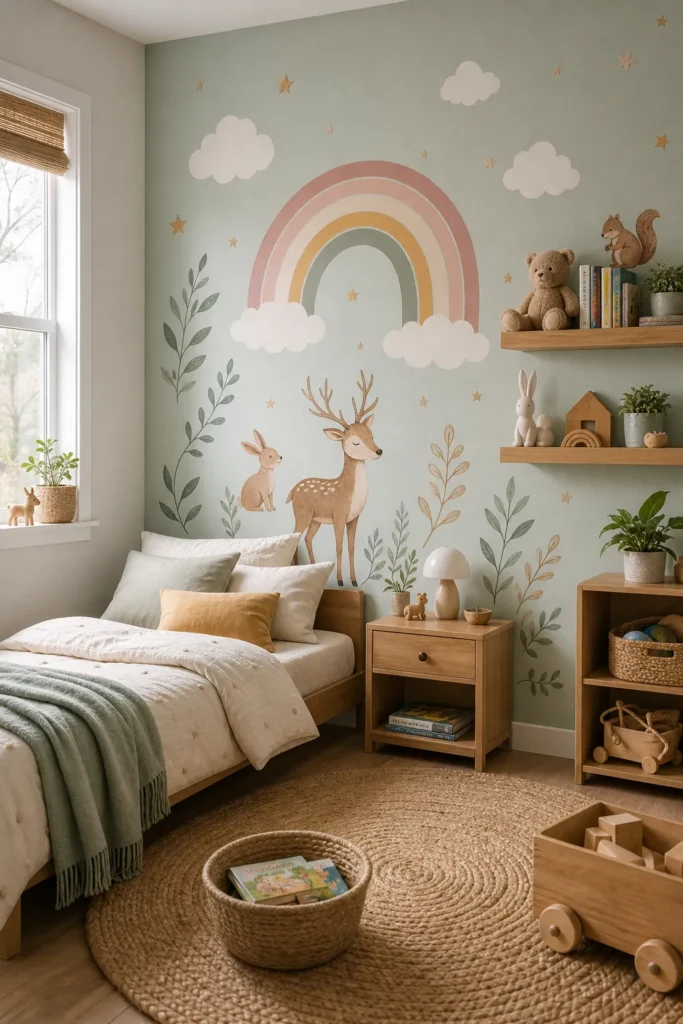
Kids Wall Decals: Choose, Apply, and Remove Them Well
Kids wall decals look simple until you have to choose one for a real room: a nursery with freshly painted walls, a playroom with one long blank wall, or a rental bedroom where the deposit matters. Parents usually want the same three things at once: a room that feels magical, decals that do not peel after a week, and removal that does not turn into a paint repair project.
The smartest approach is not to buy the cutest design first. Start with the wall, the room, and the child. A smooth painted drywall wall in a kids bedroom behaves very differently from old plaster, heavy orange-peel texture, humid nursery walls, or a freshly painted surface that has not cured. Once you understand that, kids room wall stickers become one of the easiest ways to build a playful, removable wall design without committing to paint or pasted wallpaper.
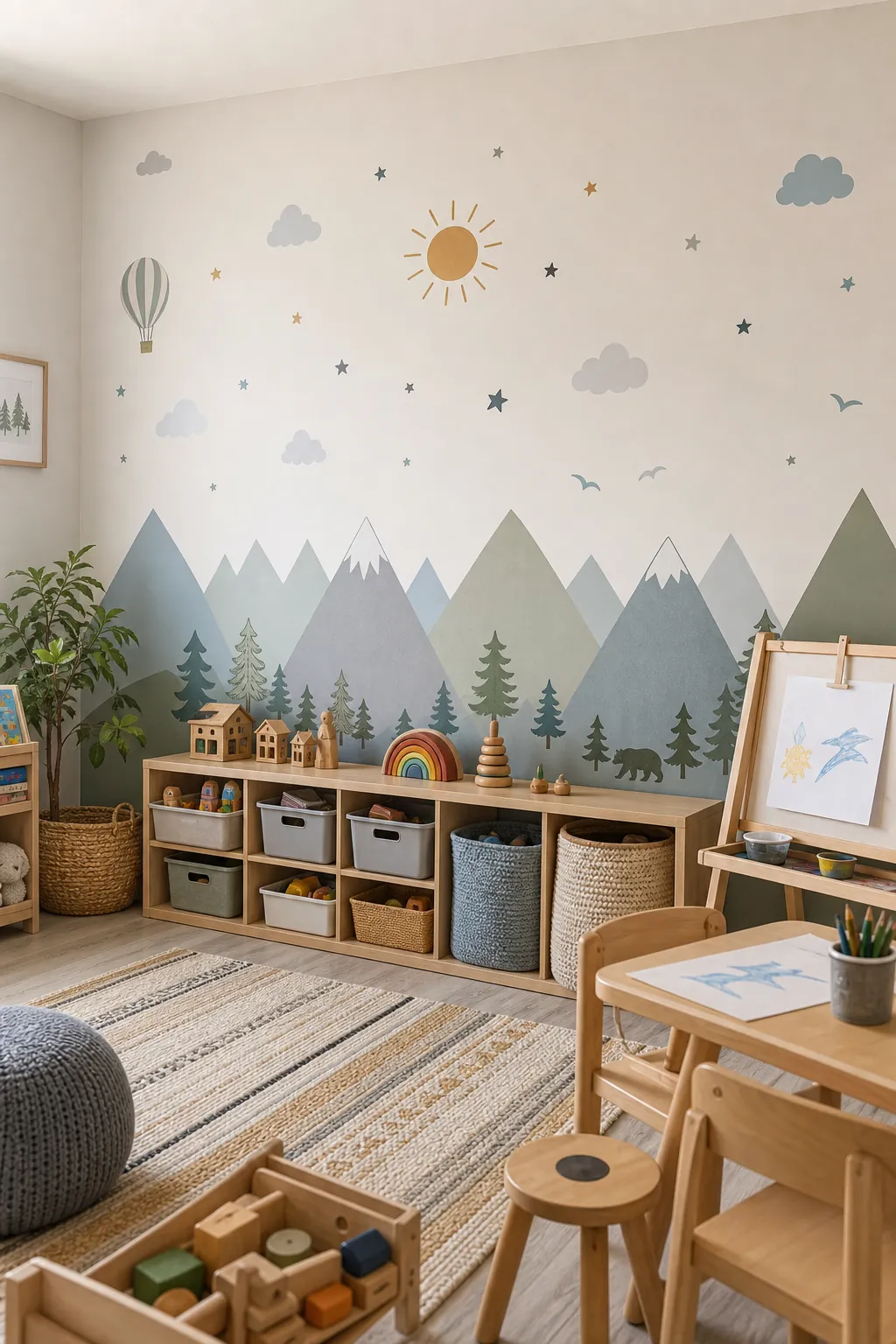
Start With the Wall, Not the Theme
A wall decal can only look as good as the surface underneath it. Before choosing woodland animals, stars, rainbows, sports shapes, or a full playroom wall mural, check the wall the way an installer would.
- Smooth painted drywall is usually the easiest surface for removable wall decals.
- Textured walls can leave tiny air gaps under the vinyl, which makes edges lift sooner.
- Plaster walls in older rentals can be harder to bond to and more expensive to repair.
- Fresh paint needs curing time; a wall that feels dry may still be too new for adhesive.
- Dust, cleaning residue, and humidity can keep decals from sticking cleanly.
This is why two families can buy the same removable wall decals and have completely different results. One gets a crisp nursery wall decal that stays put for years. Another sees peeling corners because the wall was textured, dusty, or recently painted. The design matters, but the surface decides whether the design lasts.
Choose Decal Types by Room Age and Use
Kids room decals fall into a few practical groups. The right choice depends on how often the room will change and how much visual detail you want.
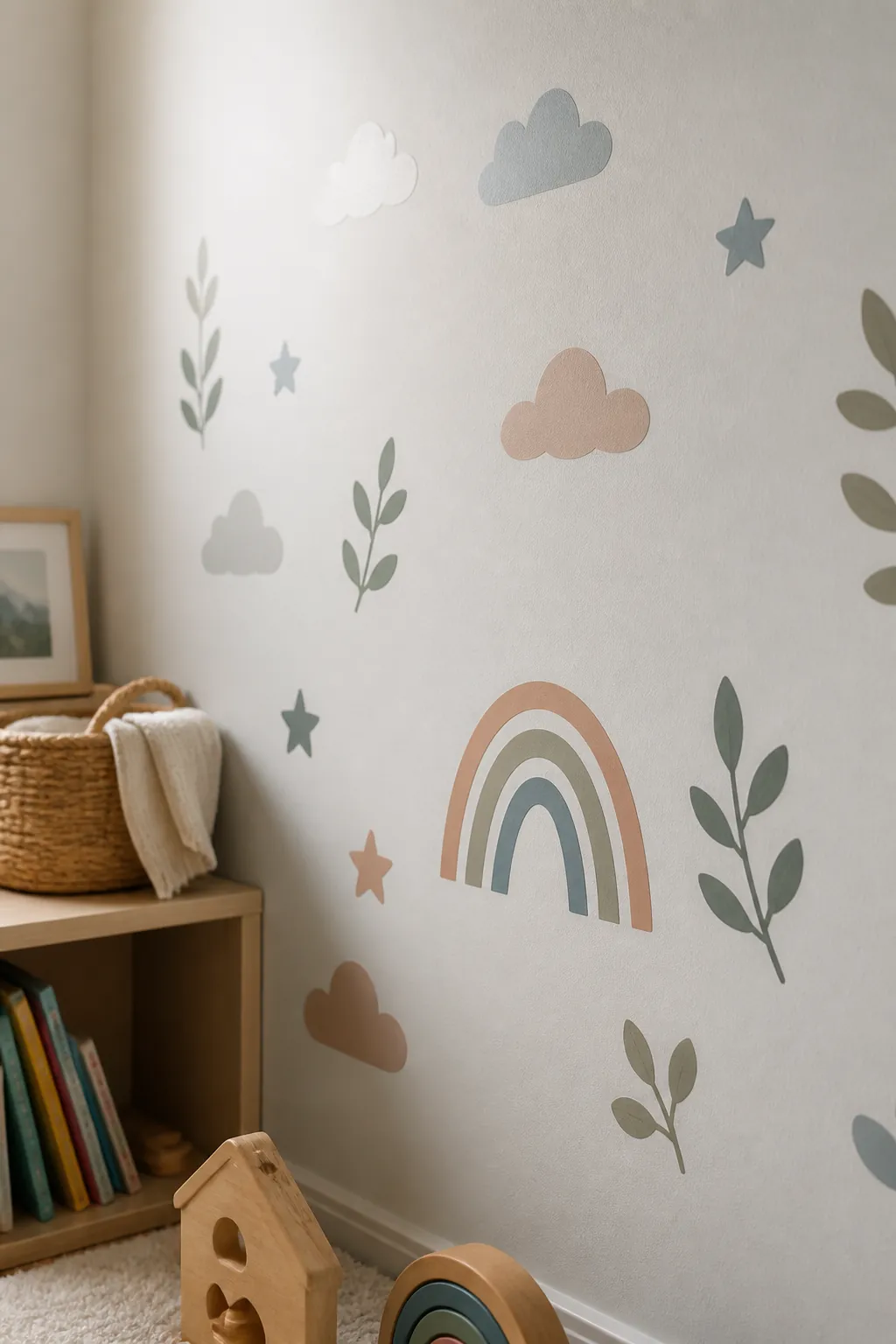
Simple removable vinyl shapes are best for stars, dots, rainbows, mountains, alphabet letters, name wall decals, and graphic patterns. They are flexible, affordable, and easy to scatter across kids bedroom walls. They also work well when you want a kids room wall design that can grow in stages.
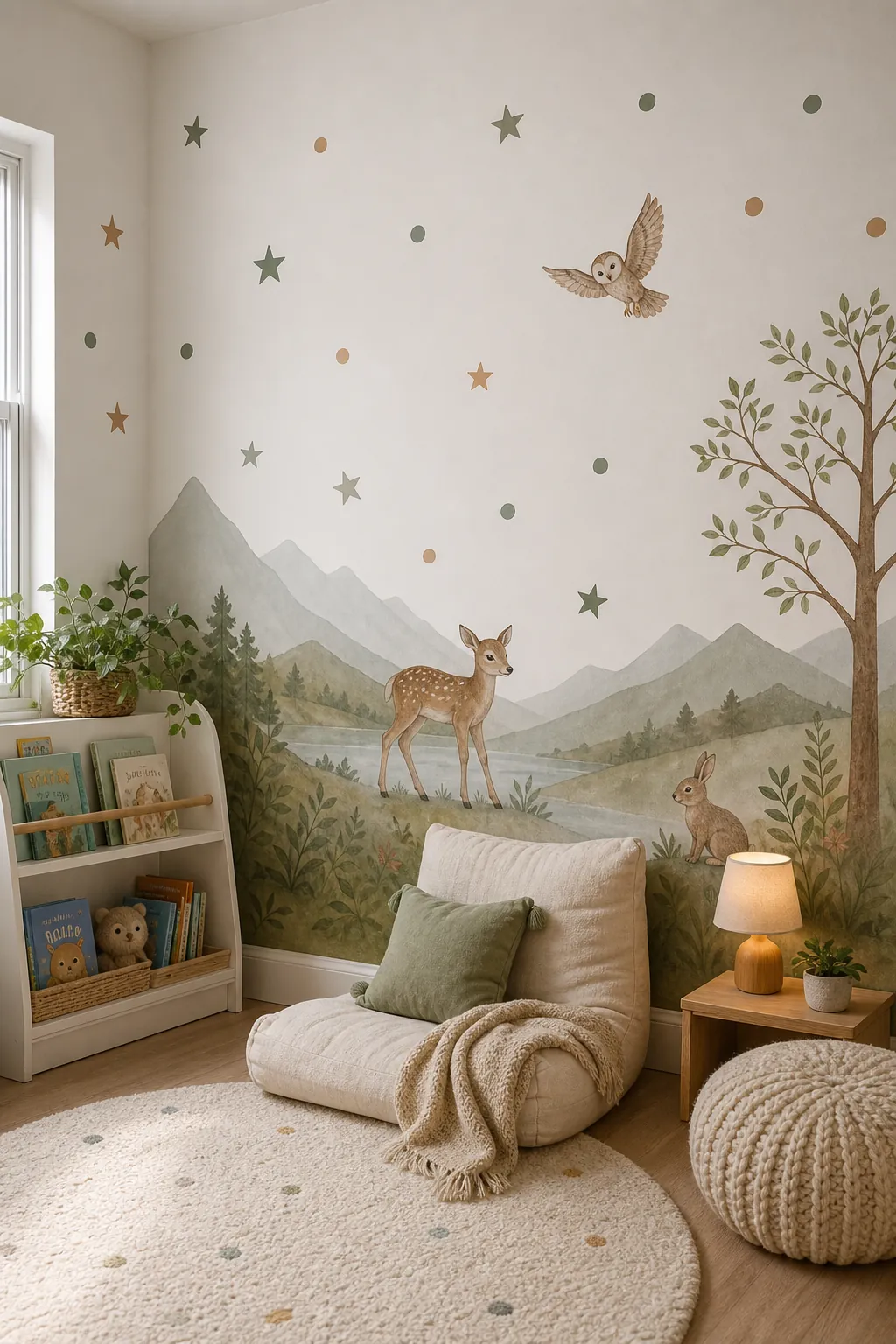
Printed removable decals are better when the artwork needs shading, watercolor texture, realistic animals, or a mural-like scene. If the design looks like a small painting rather than a flat silhouette, it is probably printed vinyl, not layered single-color vinyl.
Large mural panels can create the strongest effect, especially for playroom mural ideas, nursery mural ideas, and reading corners. They also demand more careful measuring because one crooked panel is harder to ignore than one crooked star.
Think in Zones Instead of Covering Every Wall
The most polished kids wall decal rooms usually have one clear focal point. Instead of spreading small stickers evenly around all four walls, build a zone around how the room is used.
- Nursery crib wall: keep the design calm, soft, and safely out of reach.
- Reading nook: frame a chair, book ledges, or floor cushion with trees, clouds, moons, or animals.
- Playroom storage wall: use decals above bins and shelves to make the practical wall feel intentional.
- Homework or craft corner: add alphabet, numbers, maps, gentle geometric shapes, or growth chart wall decals.
- Bed wall: create a headboard effect with arches, stars, name decals, or a painted mural look.
This zone-first approach helps the room feel designed rather than crowded. It also saves money because one strong accent area often works better than covering every blank surface.
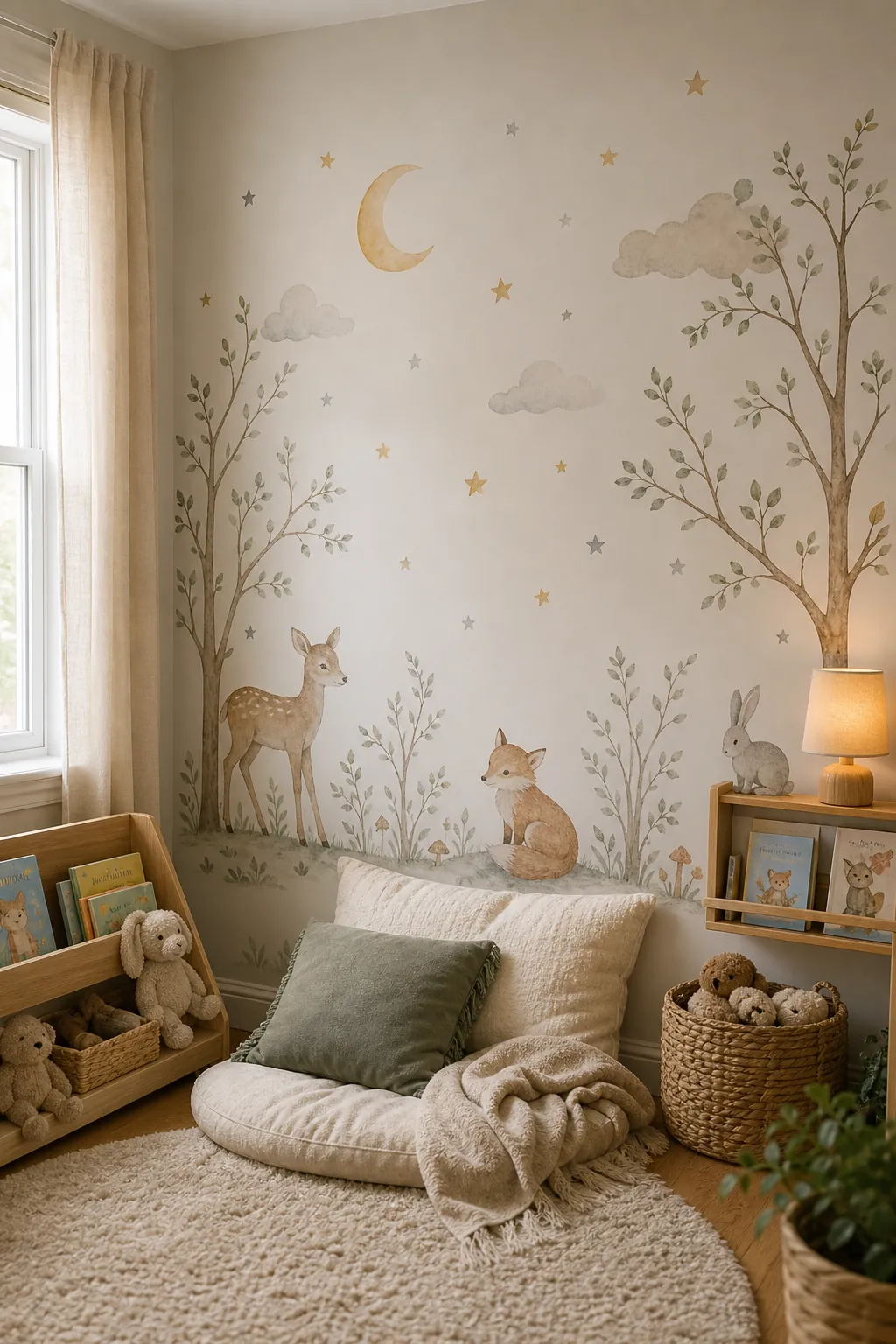
Match the Design to How Fast Kids Change Their Minds
The biggest advantage of kids wall decals is that they can adapt. A toddler who loves moons and stars may want dinosaurs next year. A preschool playroom may become a shared homework space. A baby nursery may need to feel older long before the furniture changes.
For a room that needs to last, choose a base idea that can mature: woodland trees, soft botanicals, clouds, simple arches, abstract shapes, ocean waves, mountain silhouettes, or a starry sky. Then add smaller decals for the current obsession. Let the long-term layer be calm and let the removable layer be playful.
This is especially useful for shared kids bedrooms. A full character wall can make one child happy and another child frustrated. A more flexible theme, such as nature, space, books, sports, or color blocking, gives each child room to add a personal detail without making the wall feel mismatched.
Use Scale to Make Decals Look Custom
Small decals can look scattered if every piece is the same size. Large decals can look awkward if they float without furniture or architecture to anchor them. The fix is scale.
- Use one large anchor, such as a moon, rainbow, tree, animal, arch, or growth chart.
- Add medium supporting decals to connect the anchor to shelves, a crib, a dresser, or a reading nook.
- Finish with small filler pieces, such as stars, leaves, dots, clouds, flowers, or tiny animals.
That mix creates the layered look people often search for when they save kids wall murals painted inspiration. You get the feeling of a custom mural without hiring a painter or committing to permanent color.
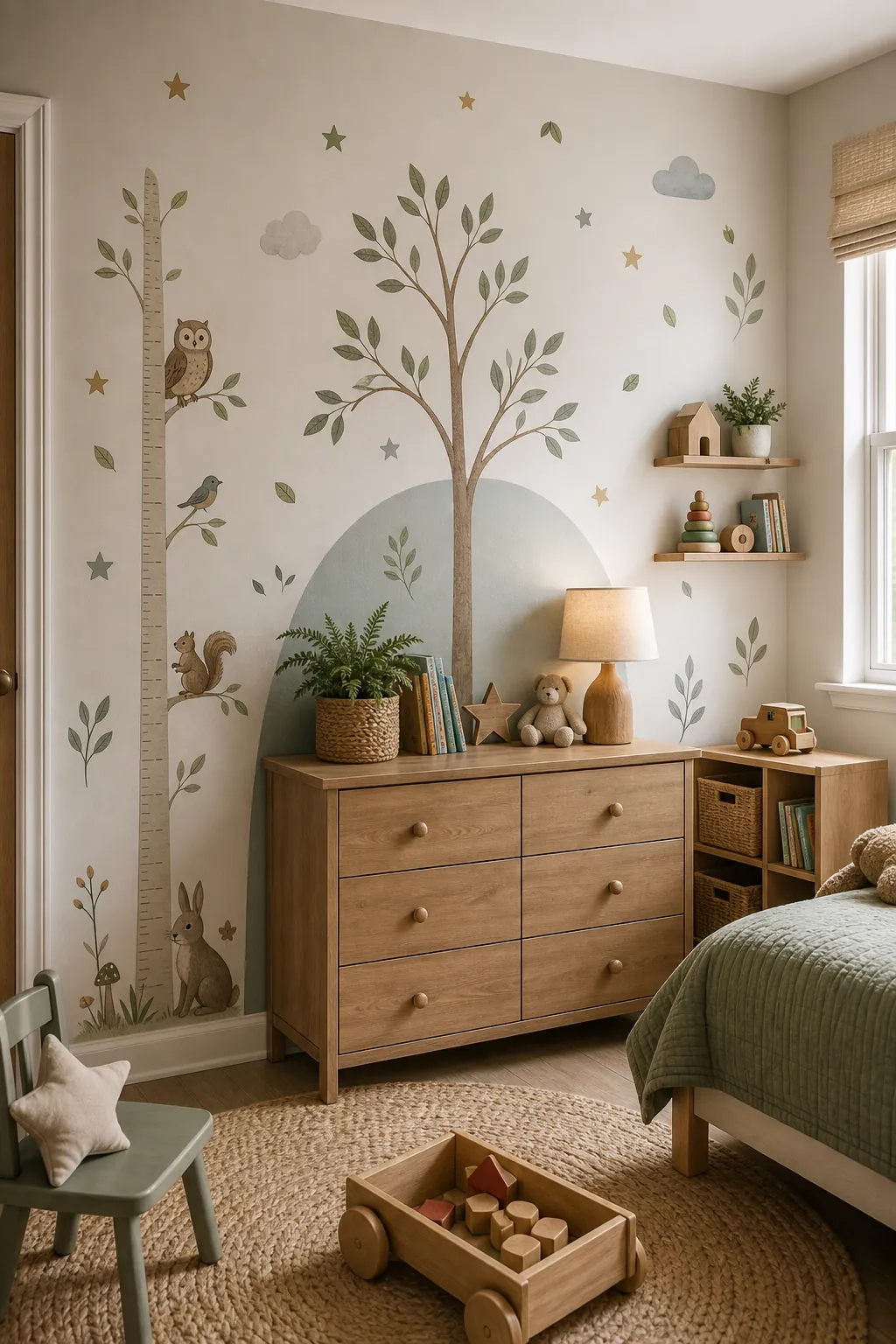
Plan the Layout Before Anything Touches the Wall
Do not rely on eye-balling the layout piece by piece. Removable does not mean endlessly reusable. Every time adhesive picks up dust, lint, or oil from hands, it can lose grip.
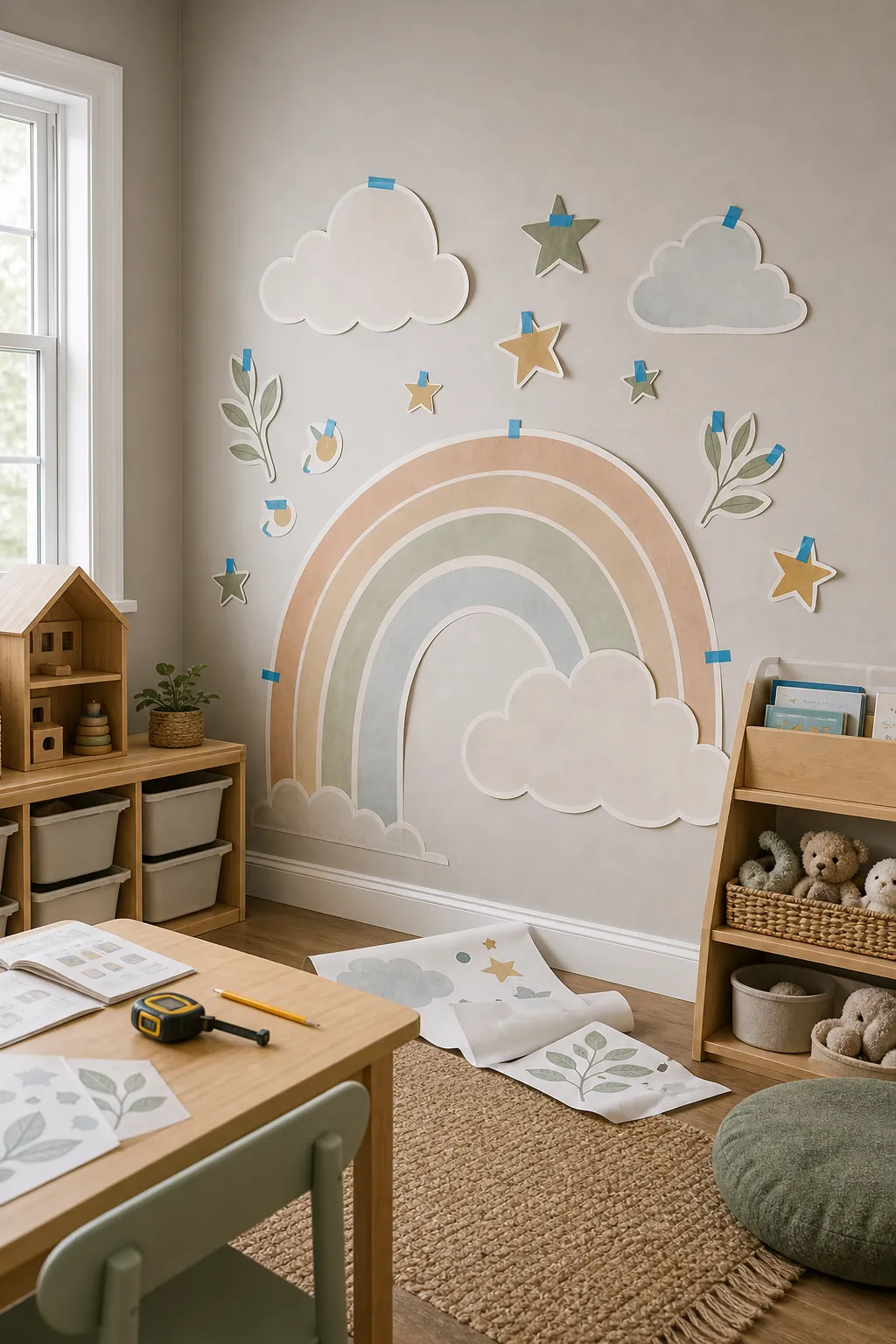
- Lay the decals on the floor in front of the wall.
- Take a phone photo and check the balance from a distance.
- Use painter’s tape to mock up the largest pieces first.
- Keep decals away from crib rails, heat vents, humidifiers, and areas children can constantly pick at.
- Step back before pressing edges firmly.
For a playroom wall mural or a larger nursery wall decal set, measure from fixed points: floor, ceiling, trim, window frames, crib height, and shelf height. The goal is not mathematical perfection; it is avoiding the one placement mistake that bothers you every time you walk in.
Apply Slowly for Better Edges and Fewer Bubbles
The cleanest decal installs come from patience. Wipe the wall with a dry microfiber cloth, let any damp cleaning fully dry, and work from the center outward. Pressing too hard too soon can trap bubbles or stretch delicate shapes.
For larger decals, peel back only part of the liner, place the exposed section, then slowly pull away the backing as you smooth the design. A soft squeegee, wrapped card, or clean cloth can help. For small shapes, keep your hands off the adhesive side as much as possible.
If the decal starts to lift right away, pause before adding stronger glue. A peeling corner can mean the wall was not ready, the room is too humid, the paint is too new, or the surface is too textured. Adding random adhesive may make removal worse later.
Remove Decals Like You Care About the Paint
Even removable wall decals can lift paint, especially on older paint layers, poorly bonded paint, textured walls, or decals that have been in place for years. The safest mindset is: remove slowly, warm gently, and never rip straight out from the wall.
- Warm a small section with a hair dryer on low or medium, keeping it moving.
- Peel from one corner at a low angle, almost parallel to the wall.
- Stop if paint starts lifting and re-warm the area.
- Do not use aggressive scraping tools on nursery or kids bedroom walls.
- Expect small touch-ups if the wall paint was weak before the decal went on.
This is one of the honest tradeoffs of decals. They are easier than paint, easier than pasted wallpaper, and far more flexible than a permanent mural. But no removable product can guarantee perfect removal on every wall. A test decal in a hidden area is boring, but it can save a weekend of patching.
Keep the Room Playful Without Making It Busy
The best kids wall decals give the room a story without fighting the toys, books, bedding, and storage that already bring color. If the furniture is bright, choose decals with calmer colors and larger shapes. If the room is neutral, decals can carry more energy through animals, flowers, planets, waves, or graphic patterns.
For nurseries, softer contrast tends to age better: muted rainbows, simple botanical stems, watercolor animals, moons, clouds, and gentle landscape shapes. For playrooms, stronger color can work because the space is meant to feel active. For kids bedrooms, the sweet spot is usually between those two: expressive enough to feel personal, calm enough for sleep.
When in doubt, choose fewer pieces and place them with intention. A thoughtful decal wall should look like part of the room, not like every sticker from the sheet had to be used.
Quick Buying Checklist
- Surface fit: smooth drywall, texture level, plaster risk, and paint age.
- Room fit: nursery calm, playroom energy, bedroom sleep-friendly balance.
- Material: removable vinyl or printed removable decal from a clear product listing.
- Scale: one anchor piece, supporting pieces, and small fillers.
- Removal plan: test area, gentle heat, and realistic expectations.
- Longevity: choose a base theme that can grow with the child.
Kids wall decals work best when they are treated as a design tool, not a shortcut. Choose the right wall, keep the layout focused, and install with patience. That is how a blank room becomes a nursery, bedroom, or playroom that feels imaginative now and still easy to change later.