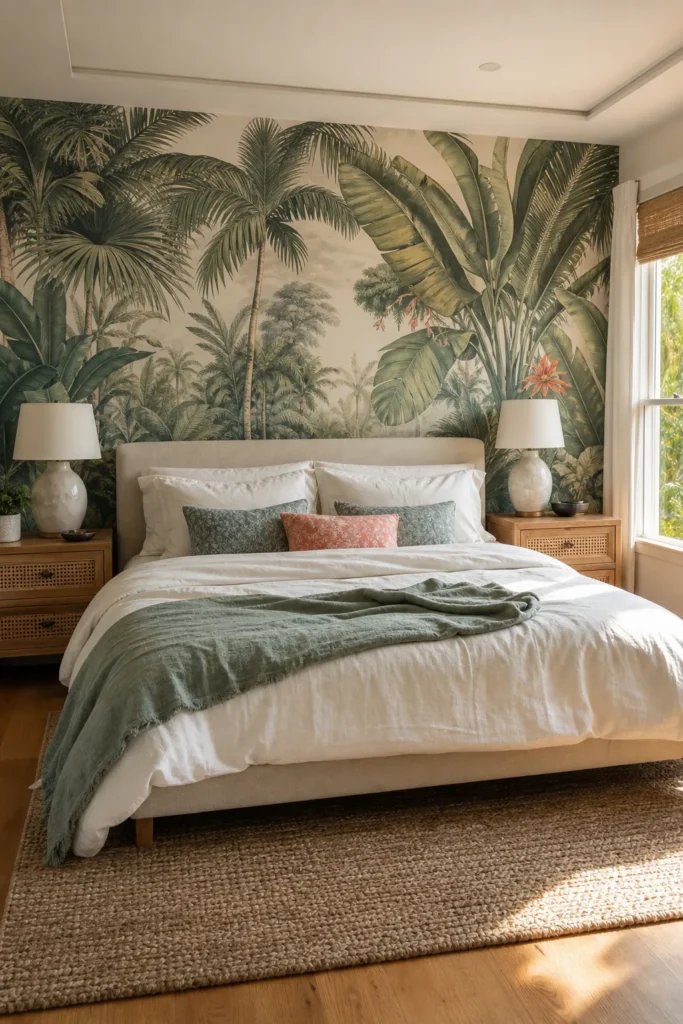
Tropical Wallpaper Bedroom Ideas That Feel Calm, Not Busy
Tropical wallpaper can make a bedroom feel like a private retreat, but it can also tip into visual noise fast. The difference is rarely the palm leaf itself. It is the wall you choose, the scale of the print, the color you repeat in the bedding, and whether the material makes sense for your actual wall. If you want a tropical wallpaper bedroom that feels calm instead of chaotic, start with those practical choices before falling in love with a sample.
Start With the Wall You Actually See From the Door
Most bedrooms handle tropical wallpaper best when the pattern has a clear focal wall. For many rooms, that means the wall behind the headboard because the bed already tells the eye where to land. A lush palm mural behind the bed can feel intentional; the same print wrapped around every wall can feel like the room is closing in, especially if the furniture and bedding are also busy.
Before ordering, stand in the doorway and look at the room the way you see it every day. If the headboard wall is clean, symmetrical, and not chopped up by doors or closets, it is usually the strongest choice. If the bed sits under windows, a tropical leaf wallpaper may work better on the wall opposite the bed, where it reads as a view instead of competing with curtains.
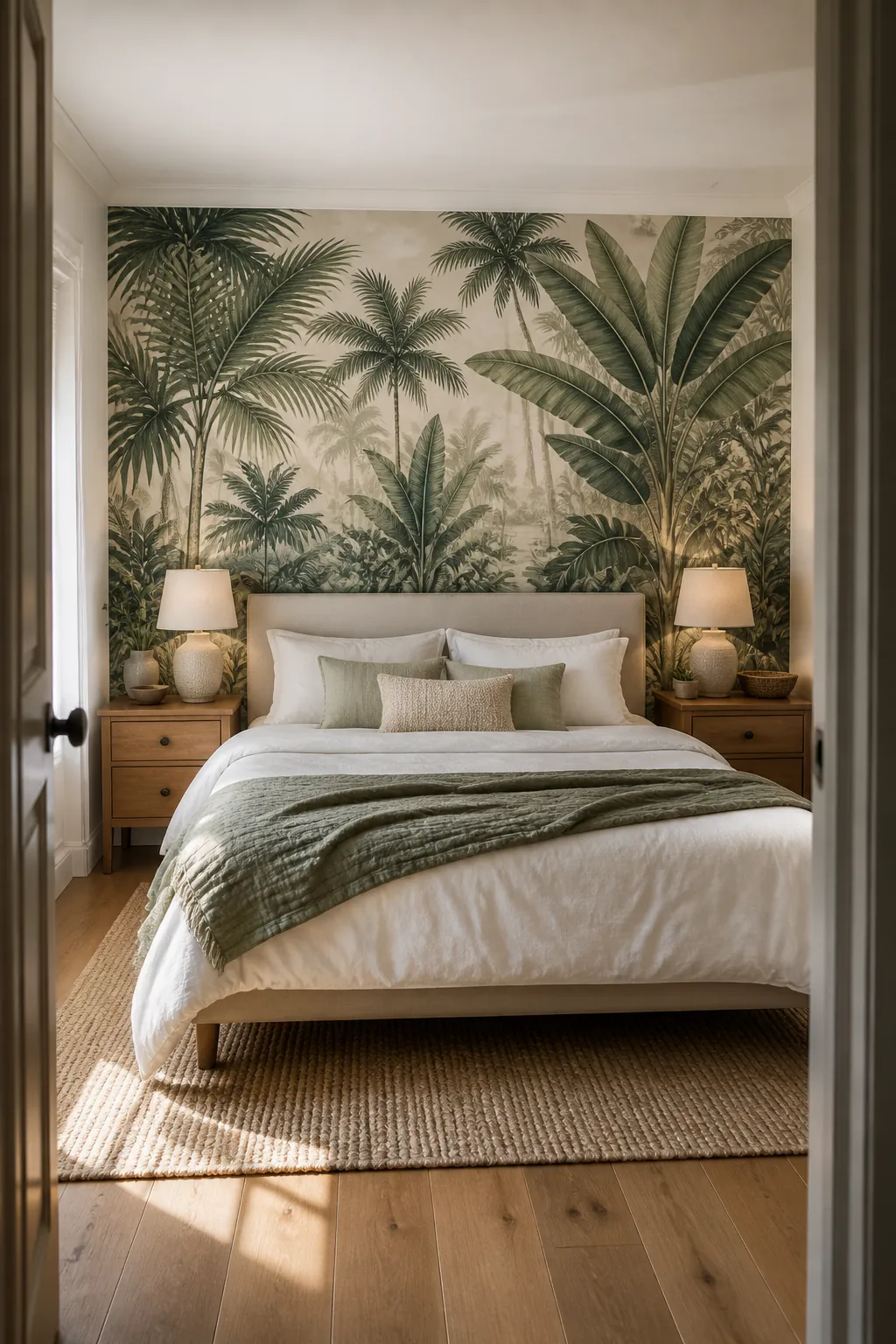
The simplest rule is this: use the wall that already has a job. The headboard wall, a niche, or a flat wall framed by matching nightstands will make a tropical wall mural feel designed. A leftover slice of wall around a corner will make even beautiful wallpaper look accidental.
Choose Leaf Scale Before You Choose Color
People often start with color, but scale is what controls the mood. Oversized banana leaves or monstera forms create a bold resort feeling. Smaller leafy repeats act more like a tropical wallpaper texture, adding movement without becoming the loudest object in the room. Neither is automatically better. The right choice depends on how much pattern the bedroom already has.
If your bed has a tall upholstered headboard, patterned bedding, or layered art, a smaller repeat or softer palm silhouette may be easier to live with. If the bedroom is spare, modern, and low contrast, a large-scale tropical leaf wallpaper bedroom scheme can give the whole room a point of view without requiring much else.
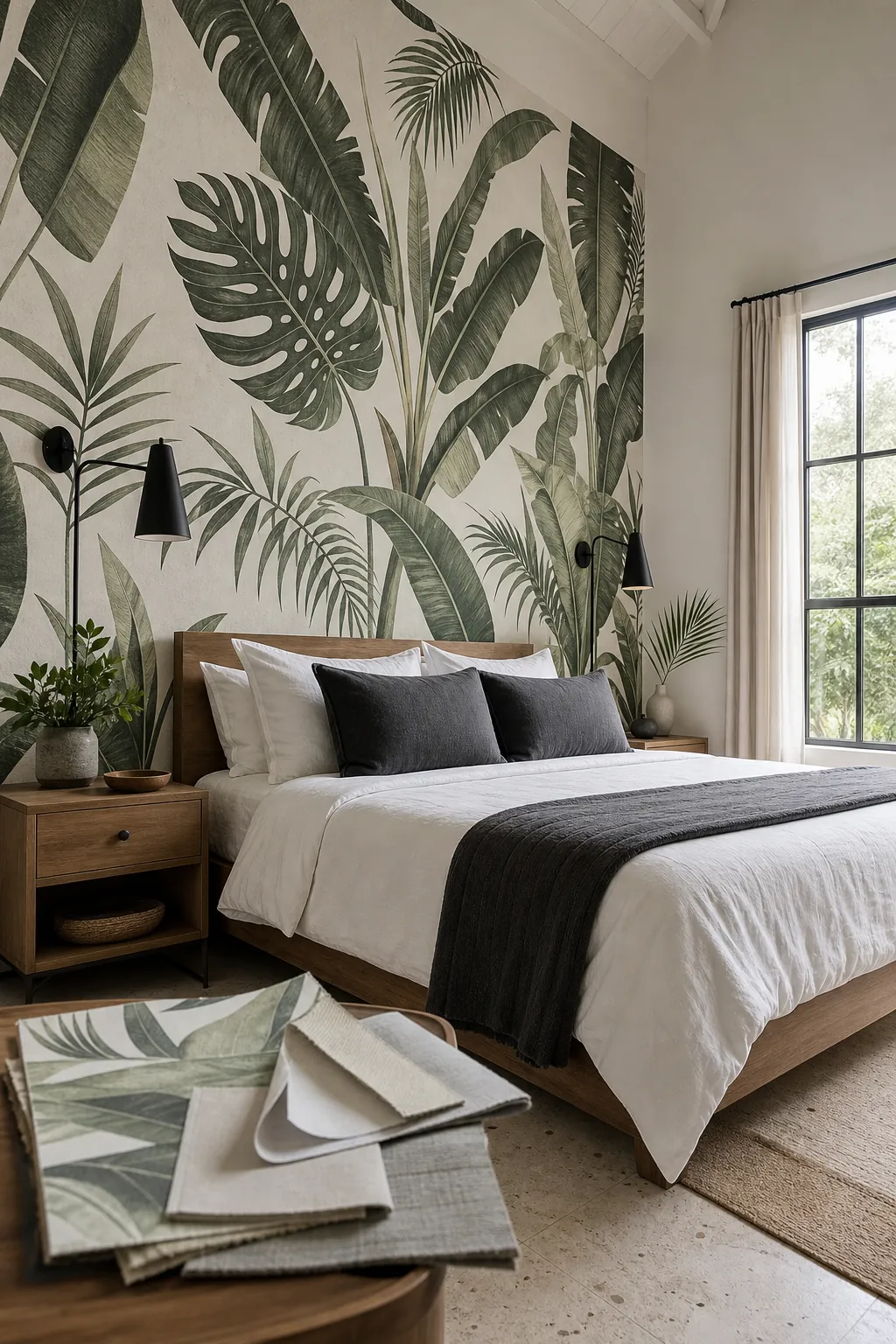
A sample should never be judged only in your hand. Tape it to the wall and step back to the distance where you will actually see it from the bed. A print that looks refined at 12 inches can disappear at 10 feet, while a dramatic leaf that feels huge in the sample may become balanced once the bed, lamps, and curtains are in the frame.
Use a Mural When You Want Depth, Not Just Pattern
A repeat wallpaper decorates the wall. A tropical wall mural can change the perceived depth of the room. That matters in a bedroom because the goal is usually not just pattern, but atmosphere. A misty jungle mural behind the bed can feel like a layered backdrop. A tropical beach wallpaper with soft horizon lines can make a compact room feel more open if the palette stays gentle.
Murals work best when the main visual moment is not blocked by the headboard. If the mural has a central palm trunk, bird, sun, or horizon, check where it will fall behind pillows and lamps. Many disappointing mural installs are not about bad taste; they are about poor placement. Measure the furniture first, then choose the crop.
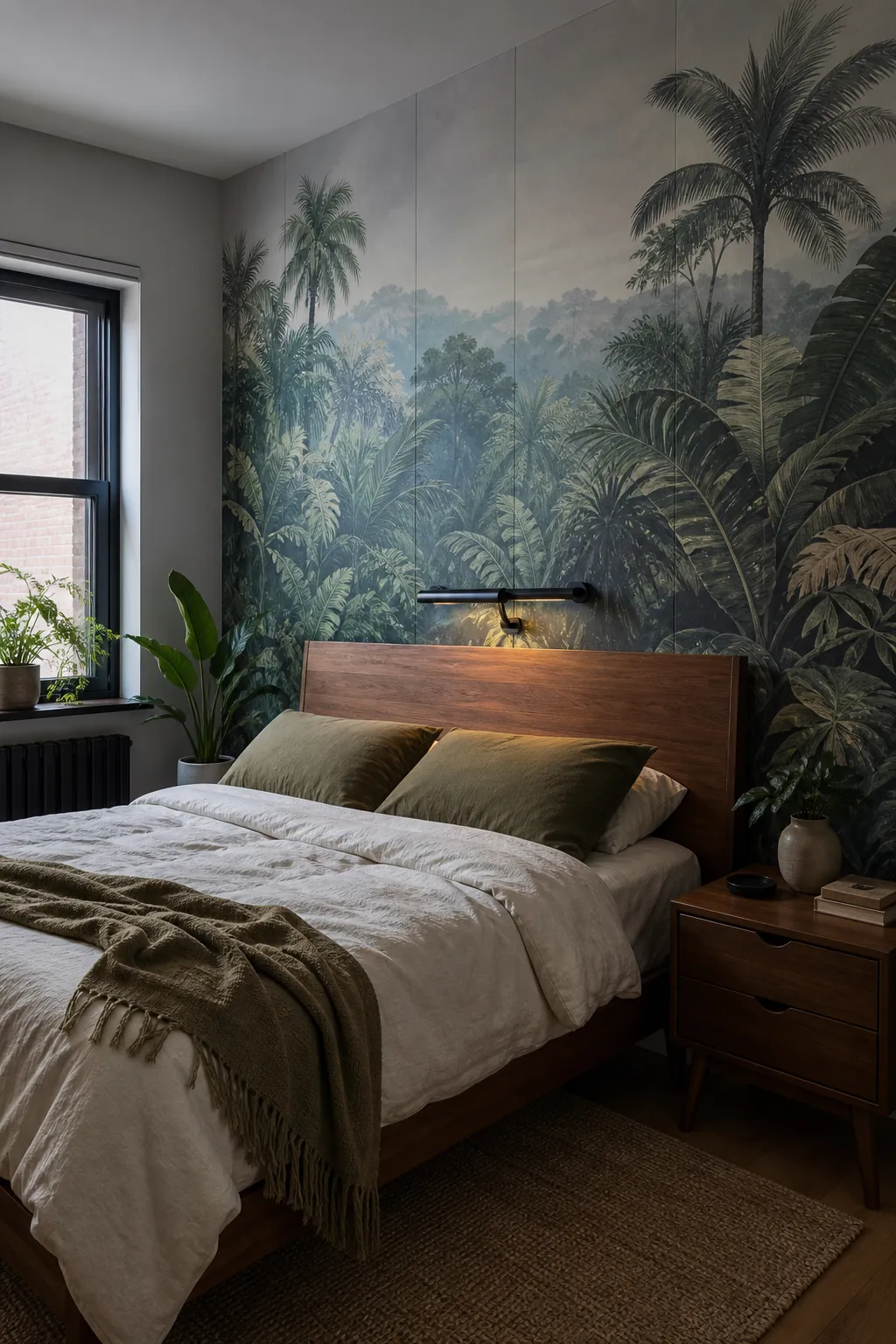
If you are choosing between a tropical wallpaper living room look and a bedroom version, soften the bedroom version. Living rooms can carry sharper contrast because people pass through them. Bedrooms ask you to wake up and fall asleep with the pattern. That usually favors lower contrast, more negative space, and colors that look good in morning and evening light.
Keep the Bedding Quiet So the Wallpaper Can Breathe
The fastest way to make tropical bedroom decor feel cluttered is to add too many competing patterns at the same height. Leaf wallpaper, printed bedding, striped curtains, and a busy rug can all be charming separately. Together, they can make the bedroom feel restless.
Let the wallpaper carry the pattern and use the bed to repeat one or two colors from it. If the paper has deep green leaves and warm ivory highlights, use ivory sheets, a moss throw, and one warm wood tone. If the paper has coral flowers or soft sunset tones, bring that color into one pillow or lampshade instead of repeating it everywhere.
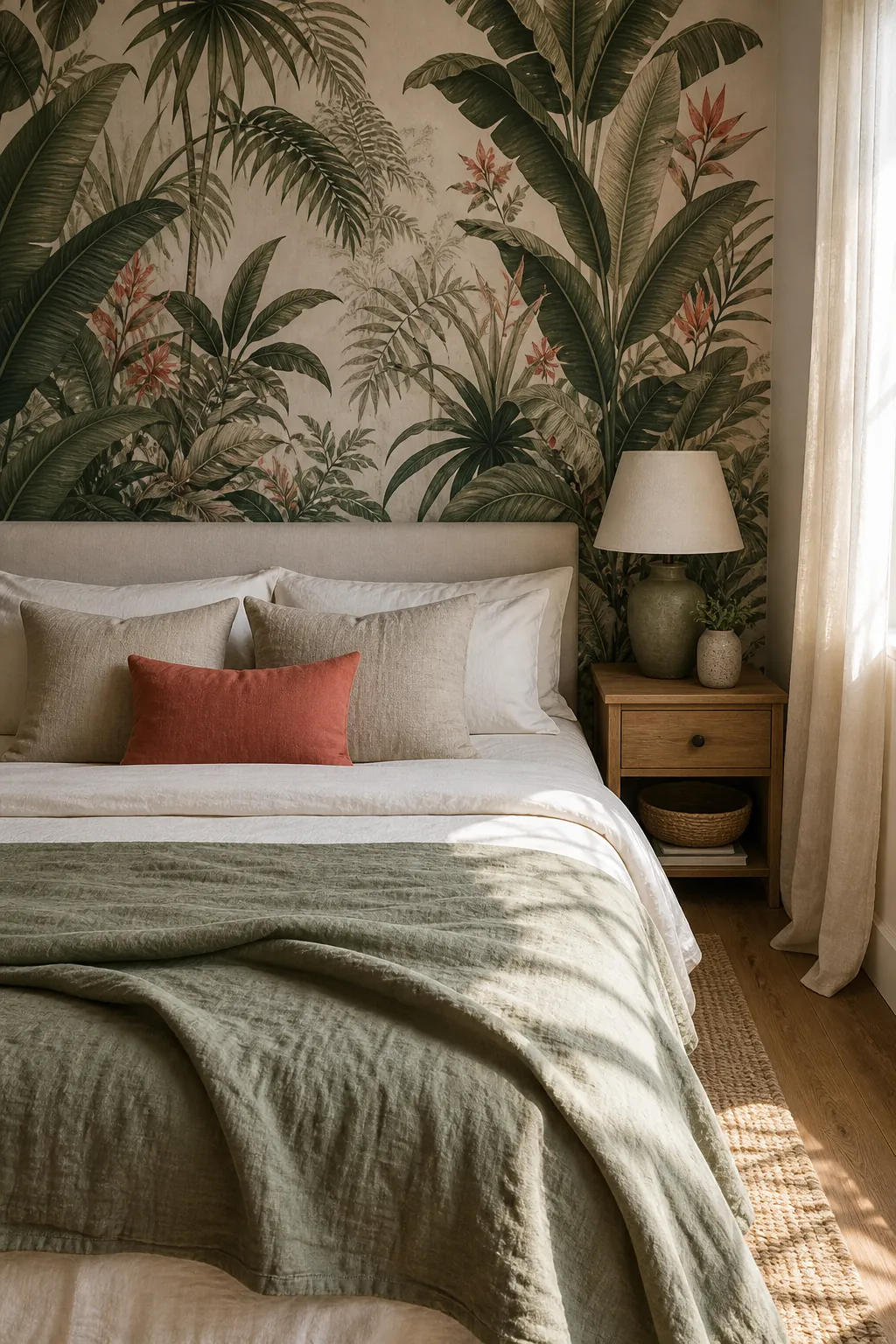
This is where a bedroom tropical style becomes more adult and less theme-room. The room does not need seashells, pineapple lamps, and palm-print everything. One strong tropical surface plus restrained textiles is usually enough.
Let Texture Do the Work in a Modern Tropical Bedroom
A tropical modern bedroom does not have to look like a hotel suite or a beach rental. The more modern route is to keep the furniture simple and let texture carry the warmth. Think matte walls, linen bedding, cane or rattan accents, stone lamps, and wallpaper that has a printed linen, grasscloth, or hand-painted effect.
Texture matters because tropical patterns can easily become flat if everything else is slick. A green palm print next to plastic-looking furniture feels like a set. The same tropical leaf wallpaper beside oak, linen, woven shades, and ceramic lamps feels grounded. Natural materials make the wallpaper feel like part of the room instead of a poster on the wall.
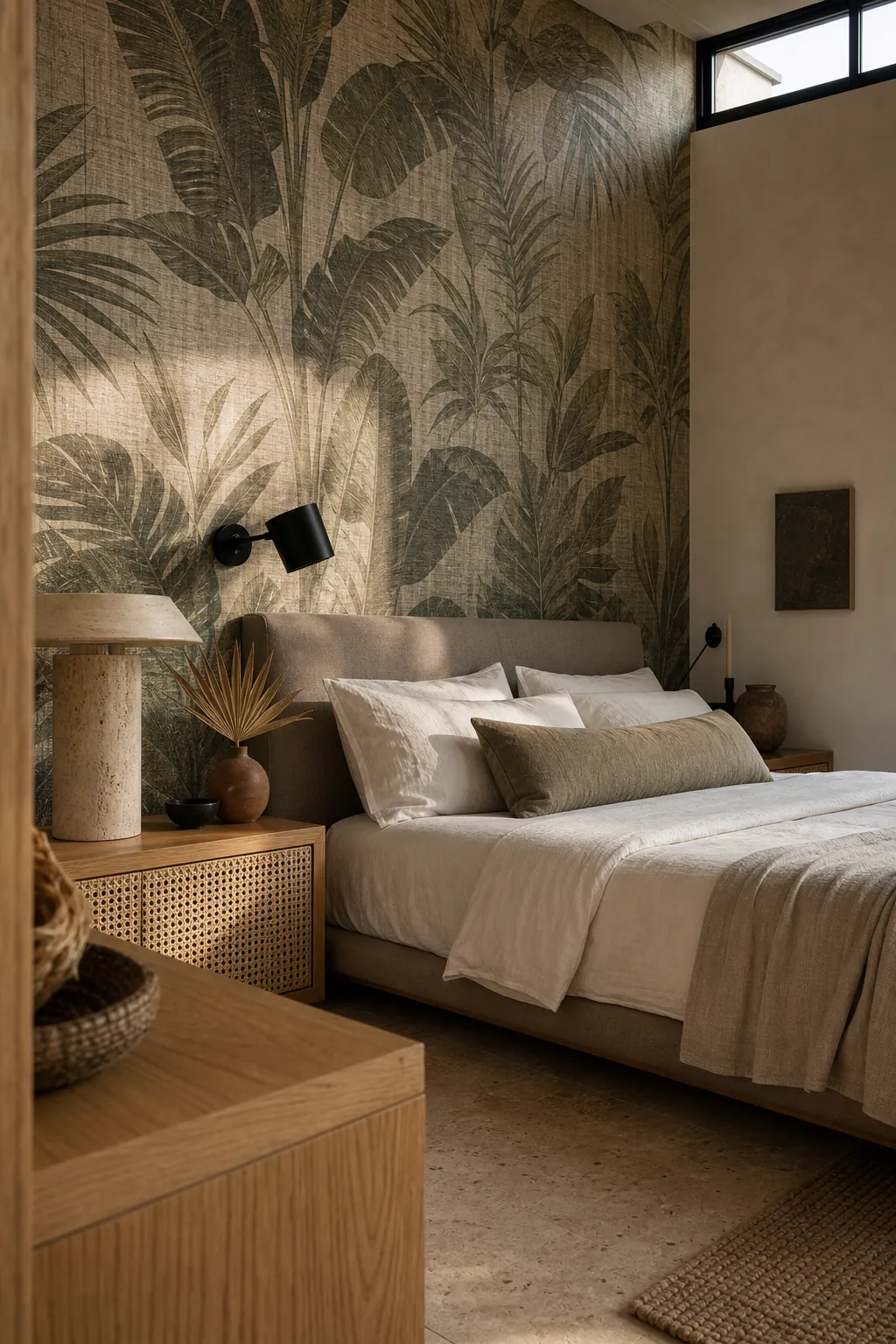
For a cleaner look, choose a wallpaper where the leaf shapes are large but the palette is edited: olive, charcoal, bone, tobacco, soft black, or muted teal. You still get the tropical interior design bedroom feeling, but the room stays easy to style as your bedding and art change over time.
Make a Small Bedroom Feel Deeper Instead of Busier
The common fear is that wallpaper will make a small bedroom feel smaller. It can, but usually only when the print is high contrast, repeated on every wall, and paired with too many small objects. A single tropical wallpaper feature wall can do the opposite by adding depth behind the bed and giving the room a strong center.
Small rooms usually benefit from one of two approaches. The first is a light ground with airy palm leaves, which keeps the room bright. The second is a darker feature wall behind the bed with lighter bedding and simple side tables, which makes the bed wall recede. What tends to fail is the middle ground: a busy mid-tone print, cluttered bedding, and no quiet surfaces.
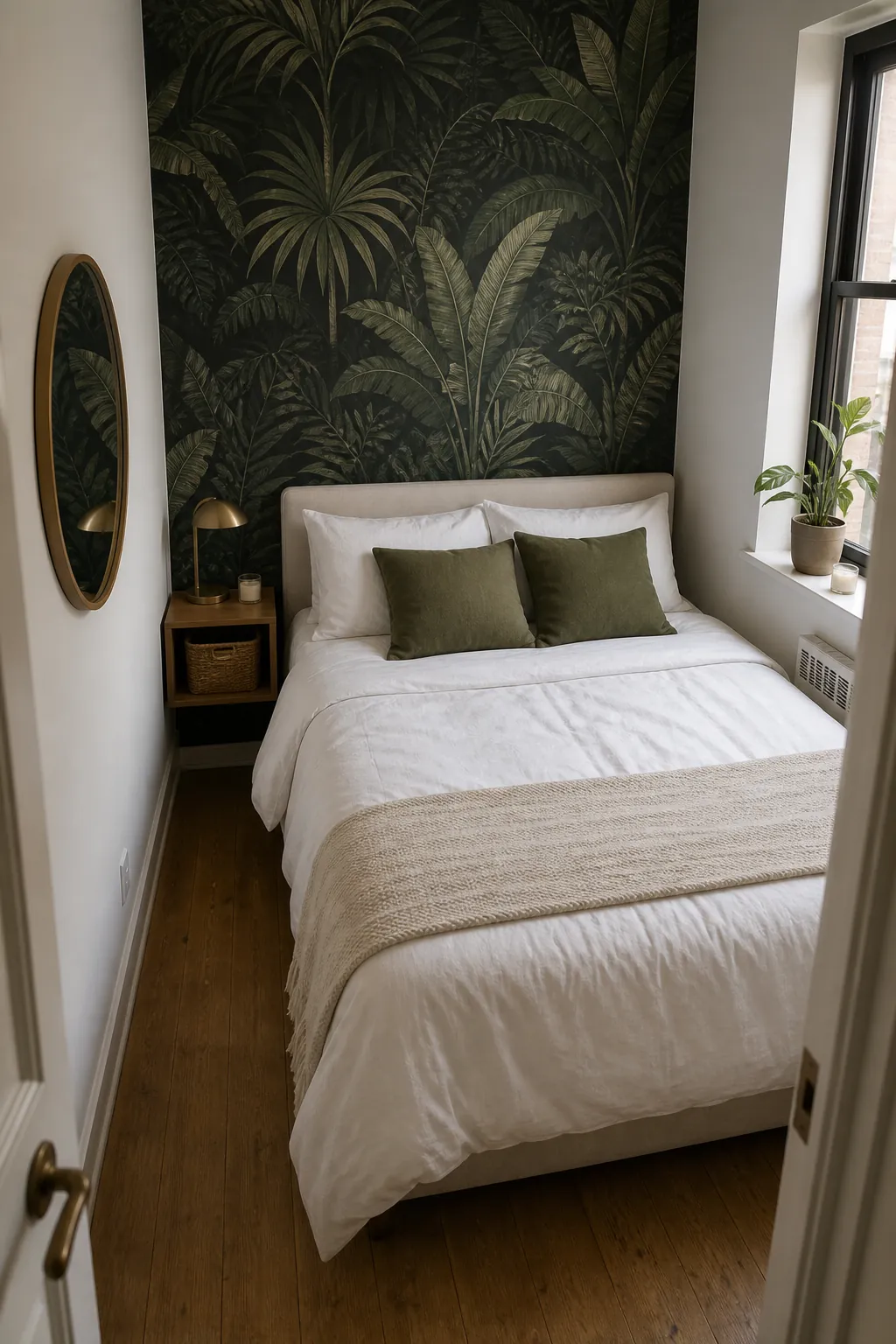
Leave breathing room around the pattern. Use solid bedding, fewer decorative pillows, and a rug that does not fight the wall. If the wallpaper is the main event, the rest of the room should act like a frame. A small bedroom can handle drama when the drama has boundaries.
Check Peel-and-Stick, Wall Texture, and Humidity Before You Buy
Fresh wallpaper searches often turn practical very quickly: Will peel-and-stick damage paint? Will it stay on textured walls? Can renters use it safely? Those questions matter more than the pattern, because a beautiful design that lifts at the edges will make the room feel unfinished.
Peel-and-stick wallpaper needs clean, smooth, well-cured paint and enough surface contact for the adhesive to grip. Heavy orange-peel texture, dusty walls, glossy paint, fresh paint that has not cured, and humid rooms can all cause problems. If your wall is textured, order a sample and test it in a hidden spot before buying panels for the whole room.
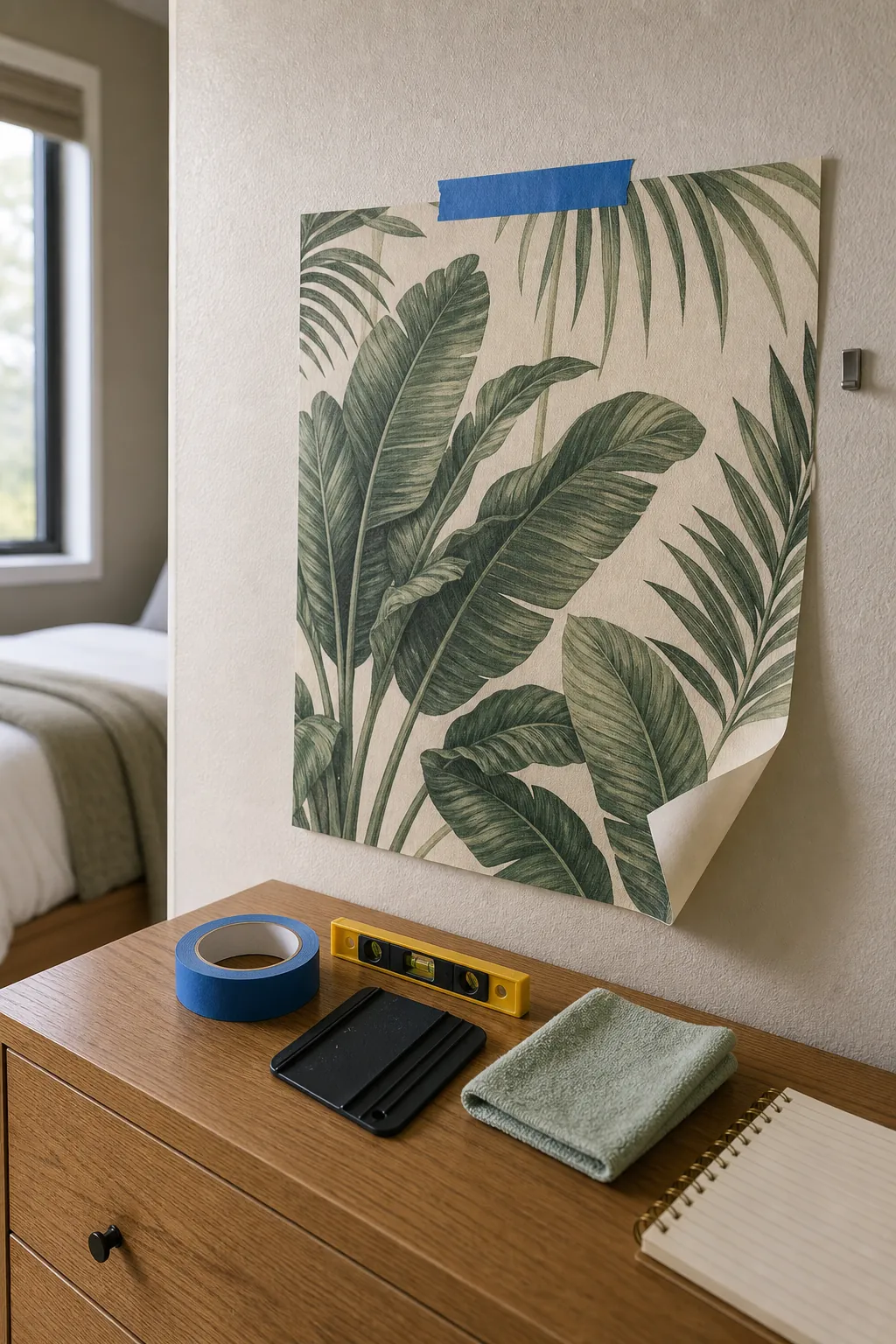
Renters should also check the lease and the paint condition. Some removable products come off cleanly; others pull weak paint with them. Do not treat “renter friendly” as a guarantee. Treat it as a reason to test, photograph the wall before installation, and choose a product suited to your surface.
Measure the Repeat Before You Fall in Love
Tropical wallpaper often has large leaves, vines, birds, flowers, or scenic elements, which means the pattern repeat can affect cost and installation. Two wallpapers can cover the same wall on paper but require different amounts once you account for matching the print from panel to panel.
Measure the wall width and height, note doors and windows, then check the roll width, panel width, mural crop, and repeat. If the design is a drop match or a mural with numbered panels, read the installation notes before you order. The prettiest wallpaper is the one you can install with the main motif where you actually want it.
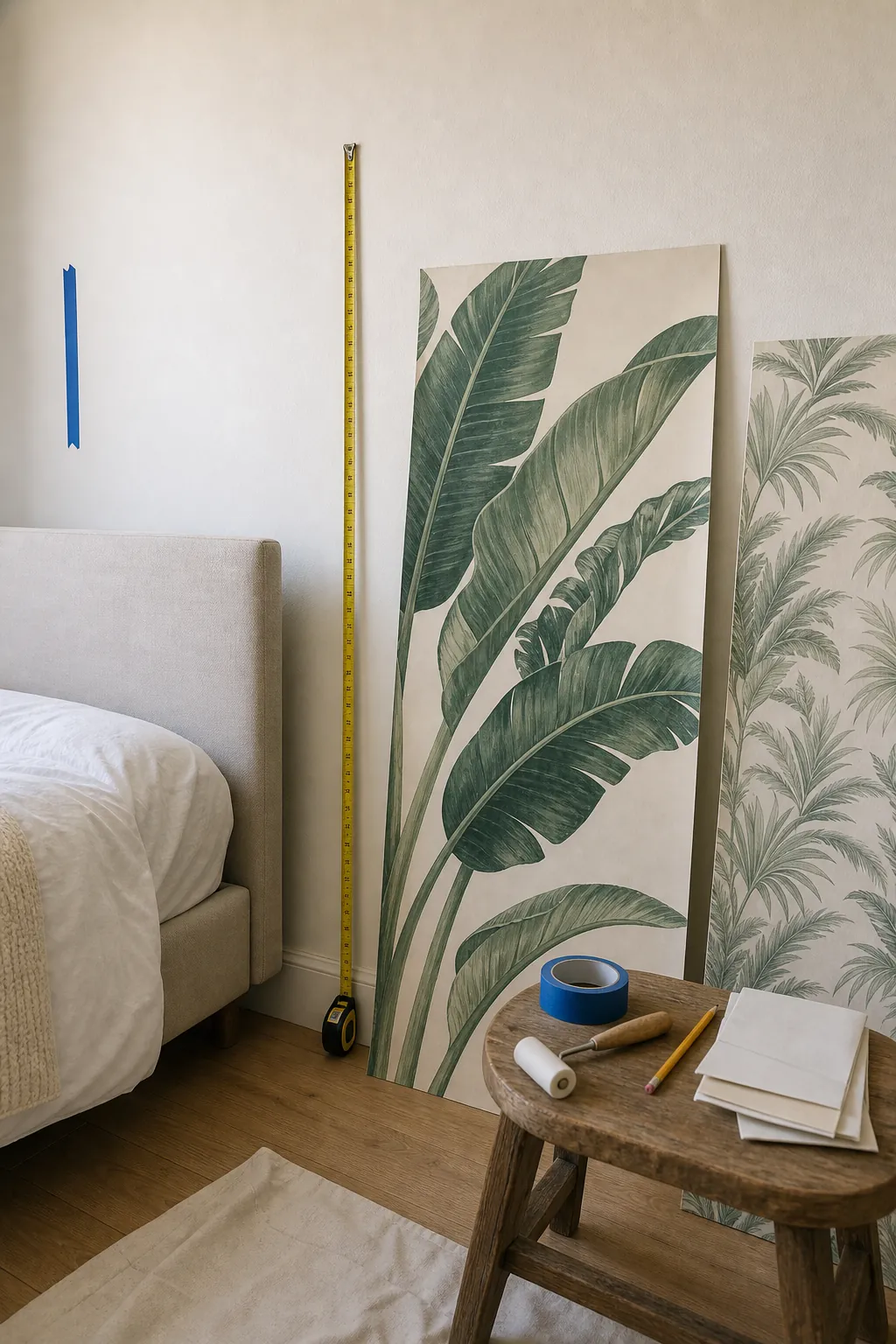
Order a sample large enough to see both color and pattern. Look at it in morning light, afternoon light, and with your bedside lamps on. If the green turns harsh at night or the background goes too gray in shade, keep looking. A bedroom wallpaper has to pass the daily-light test, not just the checkout-page test.
The best tropical wallpaper bedroom is not the loudest one. It is the one that gives the room a clear focal point, works with the wall surface, and leaves enough quiet space for sleep. Before you buy, ask one practical question: will this pattern still feel restful when the bed is unmade, the lamps are on, and the room is being lived in?