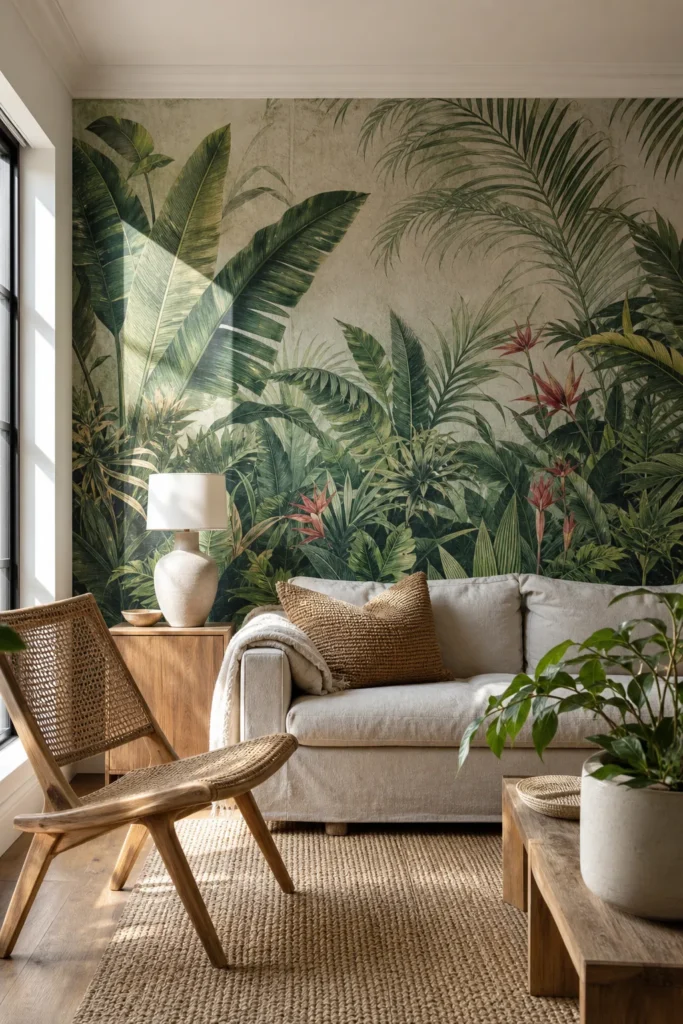
Tropical Wall Mural Ideas That Feel Lush, Not Loud
A tropical wall mural can make a plain room feel alive in one afternoon, but the same mural can also overwhelm the space, fight the furniture, or turn into a frustrating peel-and-stick project. The difference is rarely the leaf pattern itself. It is the wall you choose, the scale of the print, the color temperature of the room, and whether you treat installation as part of the design instead of an afterthought.
The strongest rooms use the mural as the anchor and let everything else support it. That means fewer competing patterns, more natural texture, a calmer palette pulled from the artwork, and honest planning around wall condition. A tropical wall mural should feel immersive, not noisy.
Start With the Wall That Can Carry the Scene
The best wall is not always the biggest wall. Choose the surface people naturally face when they enter the room, sit on the sofa, or walk toward the bed. A clean, uninterrupted wall lets palm fronds, banana leaves, beach views, or a botanical wall mural read as one scene instead of chopped-up decoration.
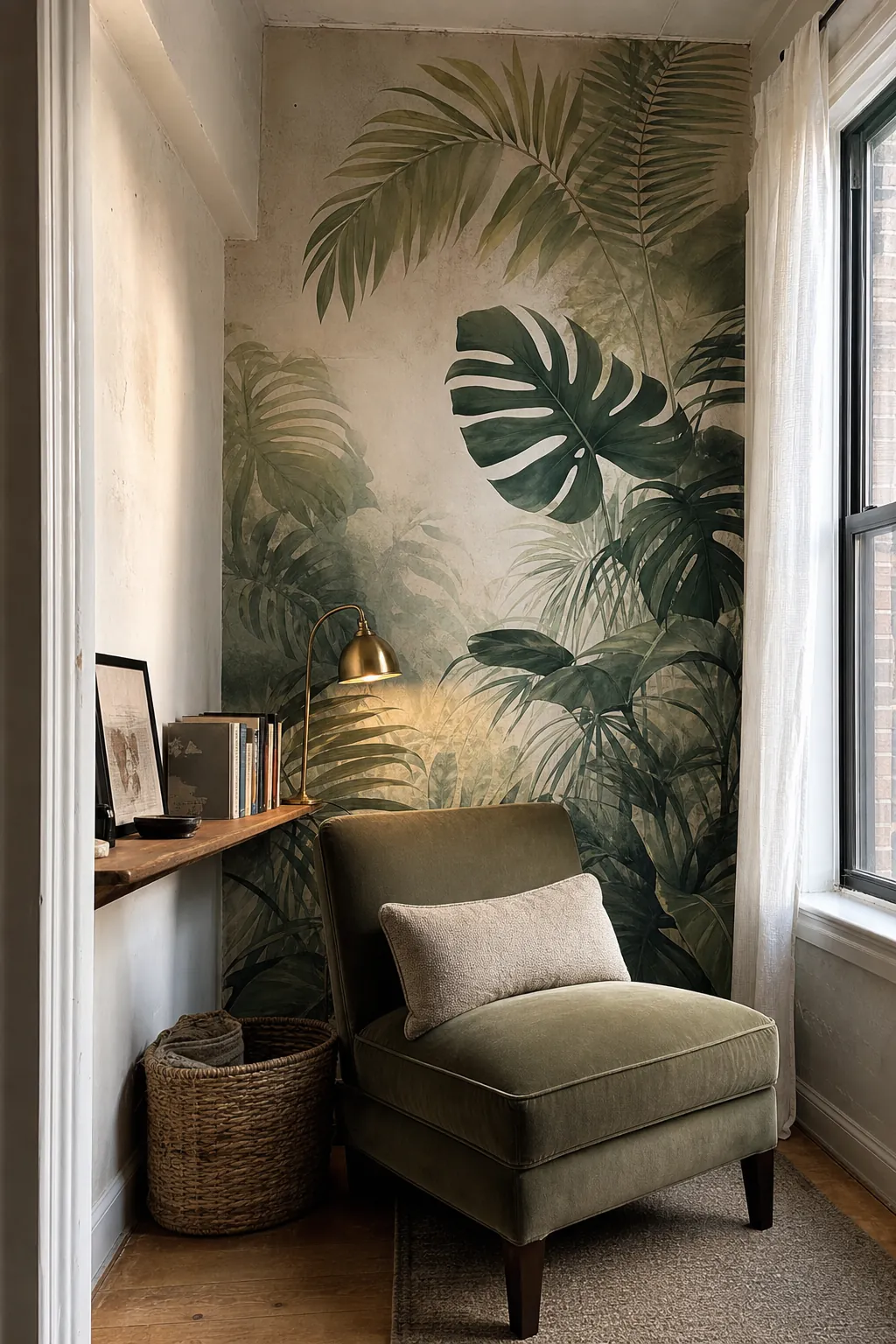
Windows, tall bookcases, television mounts, and wide doorways can break the composition. If your only open wall is narrow, look for a vertical plant mural wall with upward movement instead of a busy jungle panorama. The mural should reward the first glance from across the room. If the design only makes sense from six inches away, it may be too detailed for a feature wall.
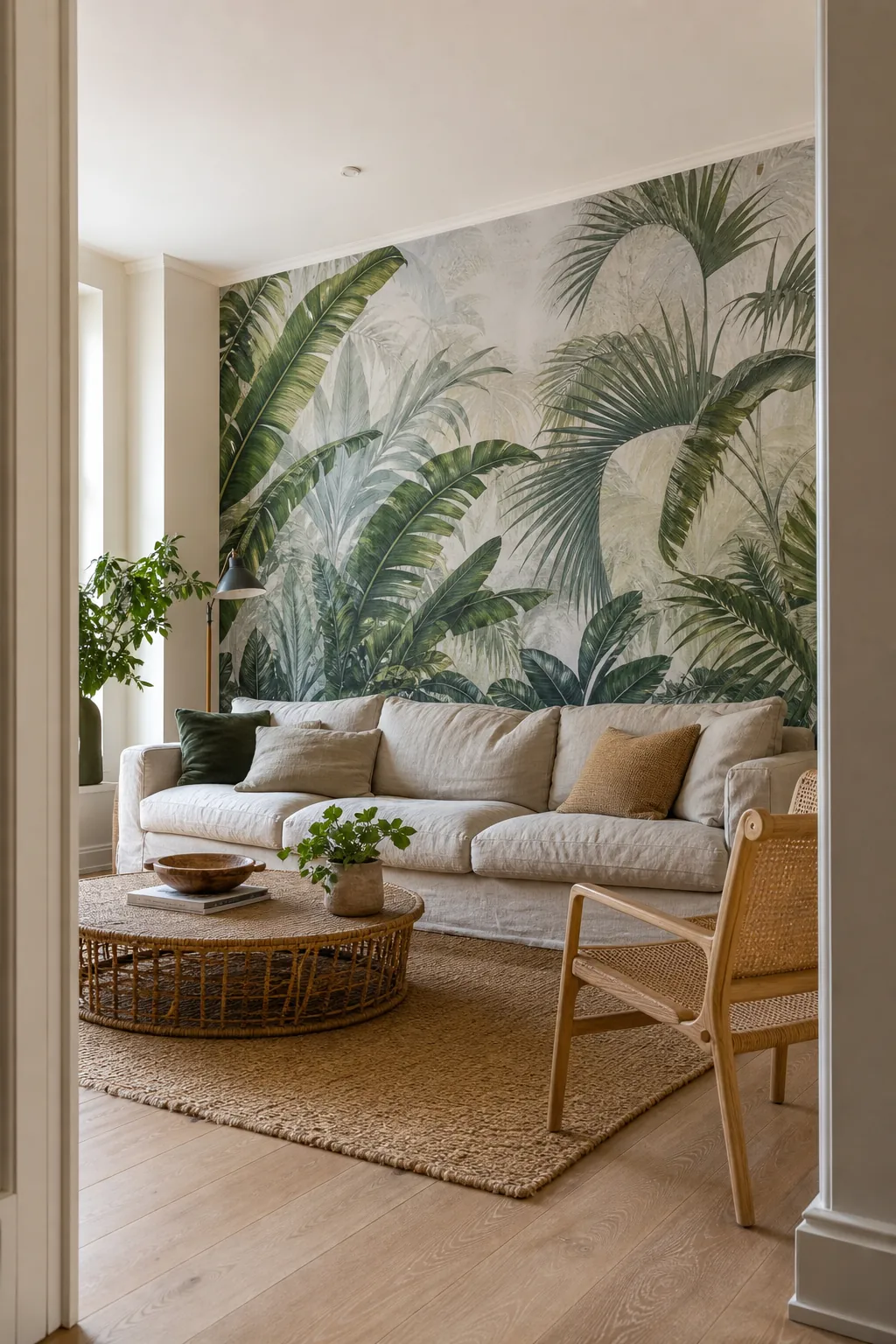
Use Scale to Make the Room Feel Larger
Small rooms do not automatically need tiny prints. In fact, a mural with larger leaves, misty depth, or open negative space can feel calmer than a tight repeat. Oversized fronds give the eye a place to rest, while layered greens can create the impression of distance. That is why nature murals often work in powder rooms, reading corners, and compact bedrooms when the palette is controlled.
Use tighter, busier tropical wallpaper only when the surrounding elements are simple. A narrow room with patterned bedding, gallery art, colorful rugs, and a dense mural will feel crowded fast. If you want one of those cool wall murals that looks dramatic in photos, keep the furniture shapes quiet and let the mural do the work.
Let the Bedroom Stay Restful
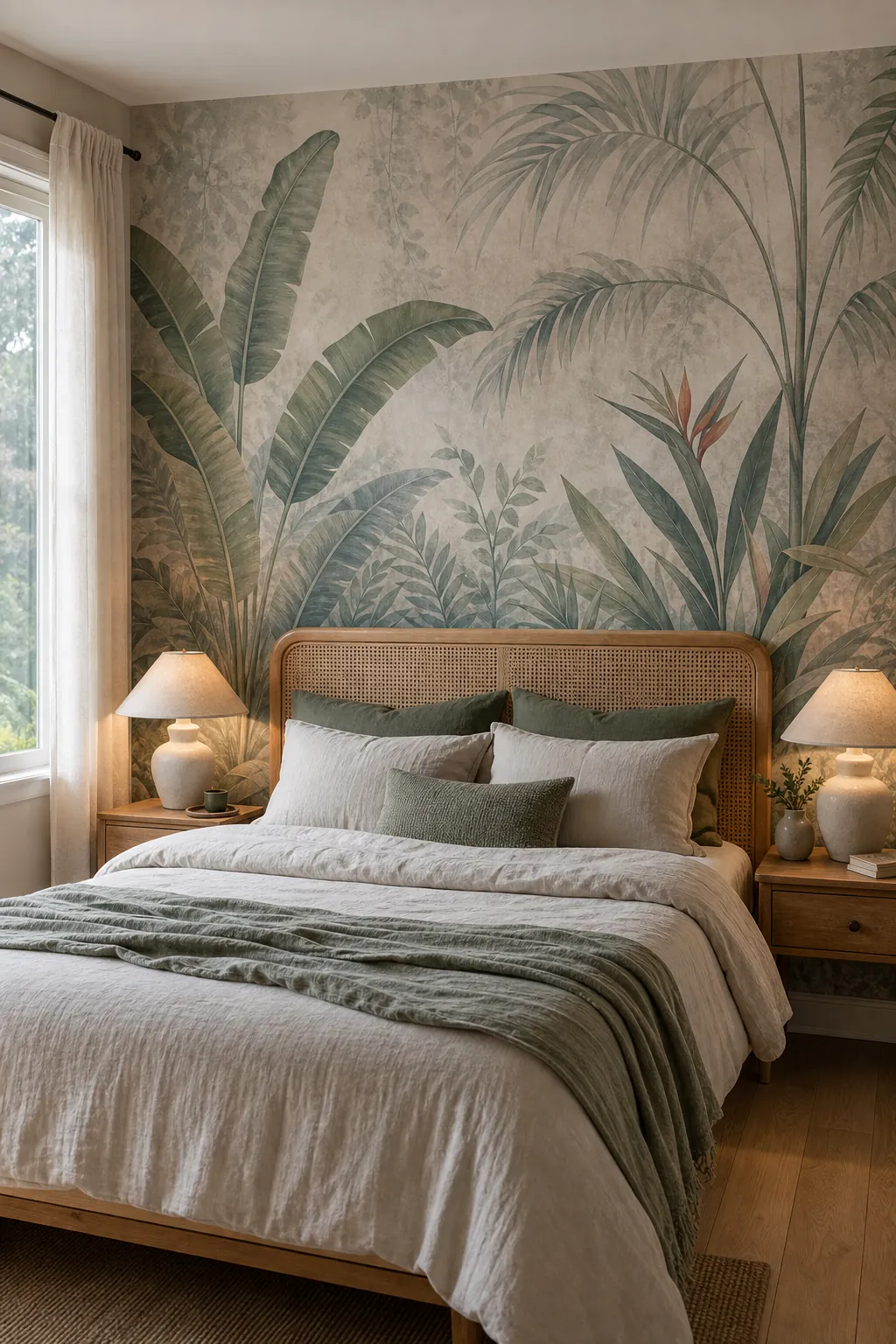
A tropical wallpaper bedroom works best when the mural supports sleep instead of demanding attention all night. Behind the headboard, softer greens, muted teal, sand, clay, cream, and washed botanical shapes are easier to live with than neon leaves or high-contrast black backgrounds. Save the loudest jungle drama for a powder room, bar area, or dining nook where atmosphere matters more than rest.
For bedrooms, repeat only one or two mural colors in bedding or lampshades. A linen duvet, cane headboard, warm wood nightstand, and one leafy accent pillow are usually enough. The goal is a retreat, not a set.
Balance Jungle Green With Natural Texture
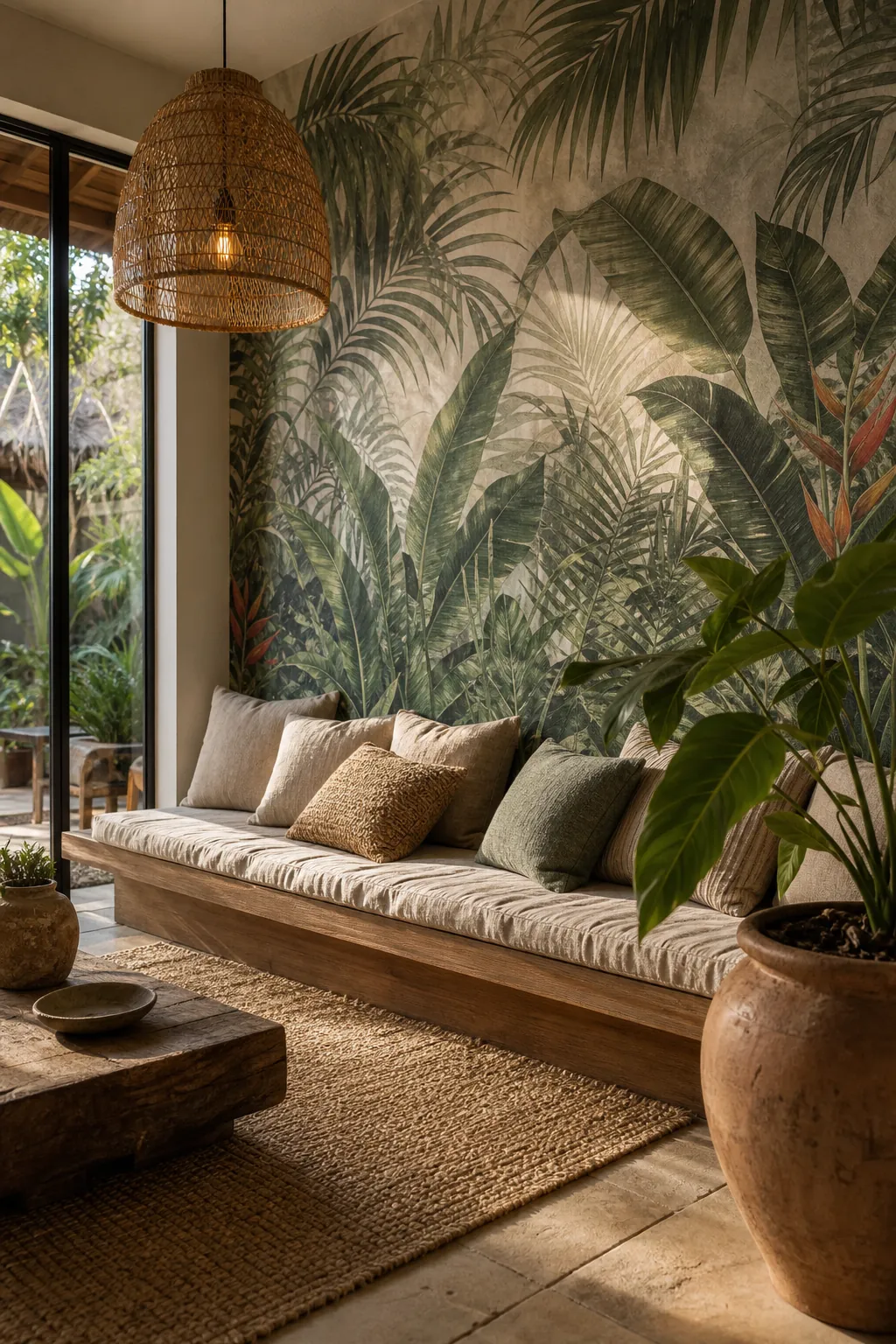
Tropical murals become easier to style when the supporting materials feel organic. Rattan, bamboo, jute, sisal, linen, cane, clay, unfinished wood, and stone keep the room grounded. They also prevent the mural from looking like a flat printed backdrop because the real textures in the room echo the leaves on the wall.
This is where restraint matters. A palm mural plus rattan chairs can look relaxed. A palm mural plus palm pillows, palm artwork, palm lamps, and novelty accessories starts to look themed. Use texture to repeat the tropical mood, not more motifs to repeat the picture.
Make Small Rooms More Intentional
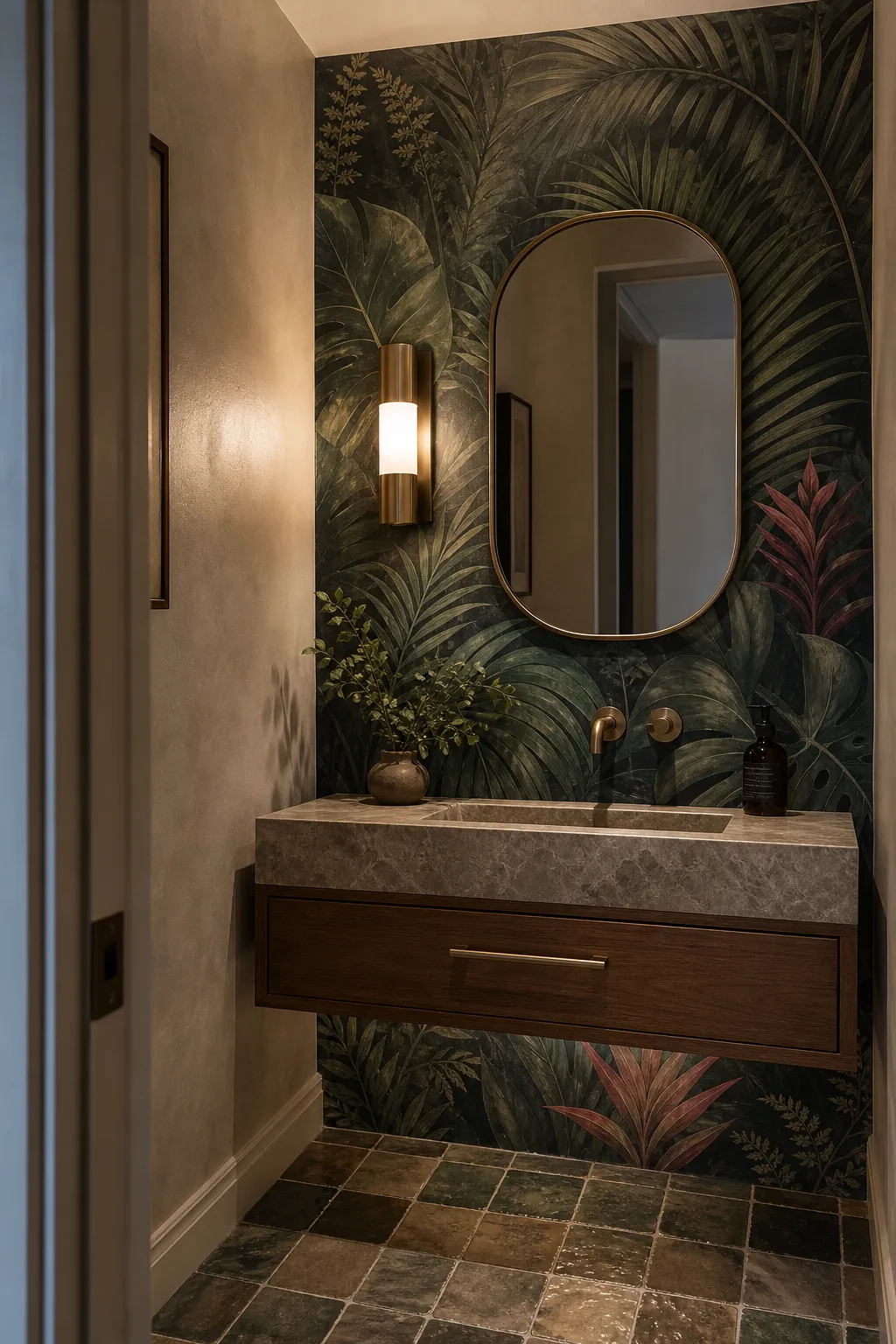
Powder rooms, laundry rooms, and hallways are forgiving places to try a colorful mural wall because people experience them in shorter moments. A dark botanical design can feel polished in a powder room when it is paired with a clean mirror, warm sconces, and a simple vanity. A garden wall mural can make an entry feel memorable if the console and hooks stay visually light.
Moisture and ventilation still matter. Bathrooms need a finish and adhesive suited to humidity, and the mural should stay away from direct splash zones unless the manufacturer says otherwise. If the room has heavy texture, old paint, or repeated landlord paint layers, test before committing. Reddit discussions about removable wallpaper are full of the same warnings: residue, paint lift, bubbles, and panels sticking to themselves usually show up when the wall or process was not ready.
Bring Coastal Color Without Making It Kitsch
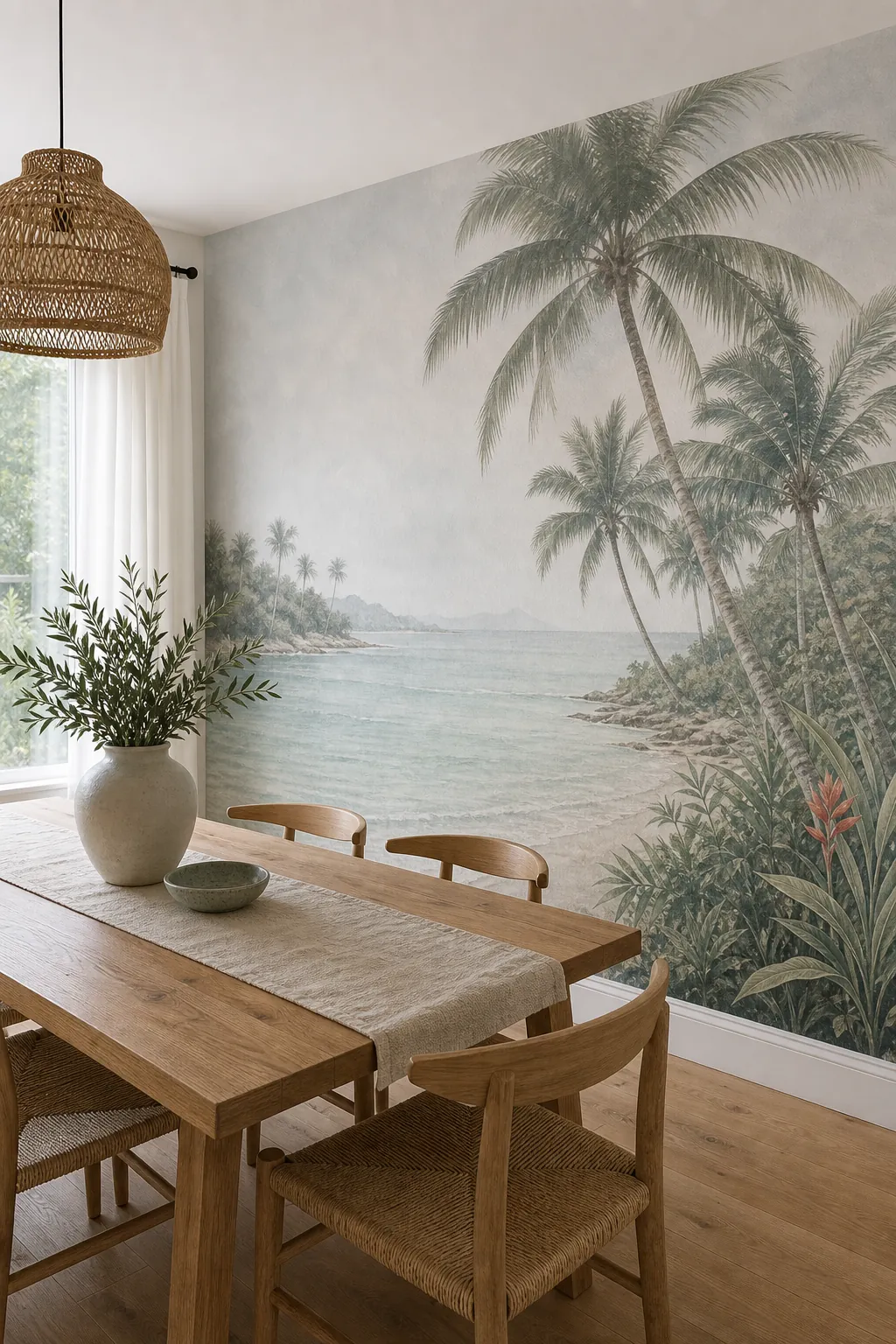
Beach wall murals can be beautiful, but they need editing. Choose one coastal idea: misty palms, shallow turquoise water, a moody rain-forest shoreline, or sun-faded tropical flowers. Then keep the room from turning into a souvenir shop. Natural oak, whitewashed wood, woven pendants, matte ceramics, and a few blue or coral accents are more durable than shell-covered accessories everywhere.
If you want a stronger color story, pull it from the mural itself. A saturated green leaf, a small hibiscus note, or a muted aqua horizon can guide cushions, napkins, lamps, or art in nearby rooms. Color repetition should feel deliberate, not matchy.
Treat Installation as Part of the Design
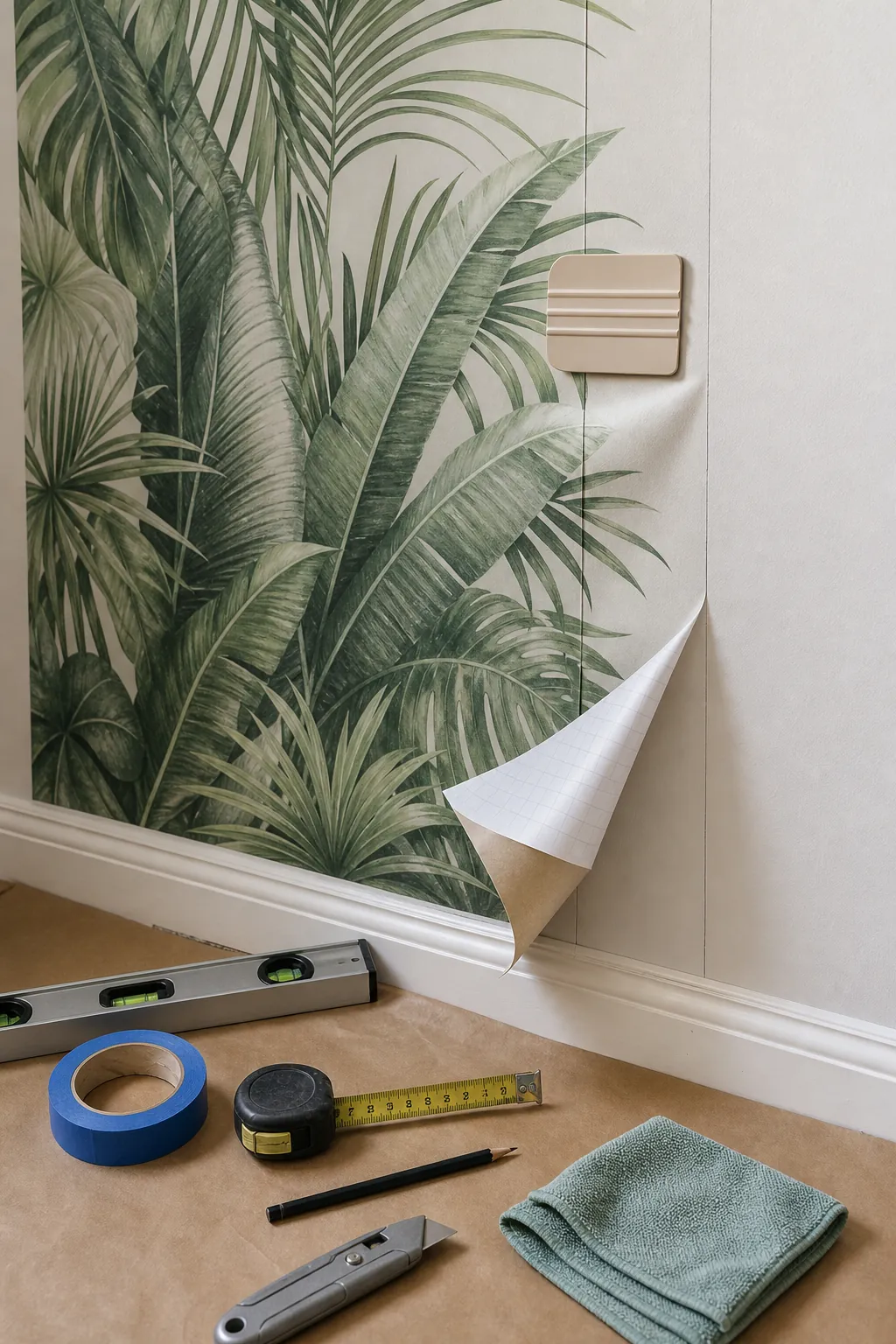
A perfect tropical wall painting effect depends on practical prep. Clean the wall, check for texture, repair holes, sand rough patches, and let fresh paint cure before applying anything adhesive. Many mural installation guides recommend waiting several weeks after painting and letting wallpaper acclimate in the room before installation. Those steps sound boring until a seam curls or a panel pulls paint during removal.
Peel-and-stick can be renter-friendly, but it is not magic. Order a sample, test it on the actual wall, leave it up long enough to see how the adhesive behaves, and remove it slowly. For large panels, plan on two people, a level line, a sharp blade, and a smoother. Peel the backing down gradually instead of exposing the whole sticky sheet at once. The cleaner the first panel lands, the calmer the rest of the mural becomes.
Style the Mural After It Goes Up
Do not buy all the accessories before the mural is on the wall. Printed colors shift under real daylight, lamps, window direction, and flooring. A green that looked bright online may turn olive in a north-facing room. A soft cream background may look warm beside gray carpet. Install the mural, live with it for a few days, then decide what the room actually needs.
Usually the answer is less than expected: one quiet rug, one wood tone, one plant with a different leaf shape, and lighting that washes the wall instead of flattening it. If you like 3d wall murals for their depth, you can create a similar effect with layered lighting, a real plant in the foreground, and furniture pulled slightly off the mural wall.
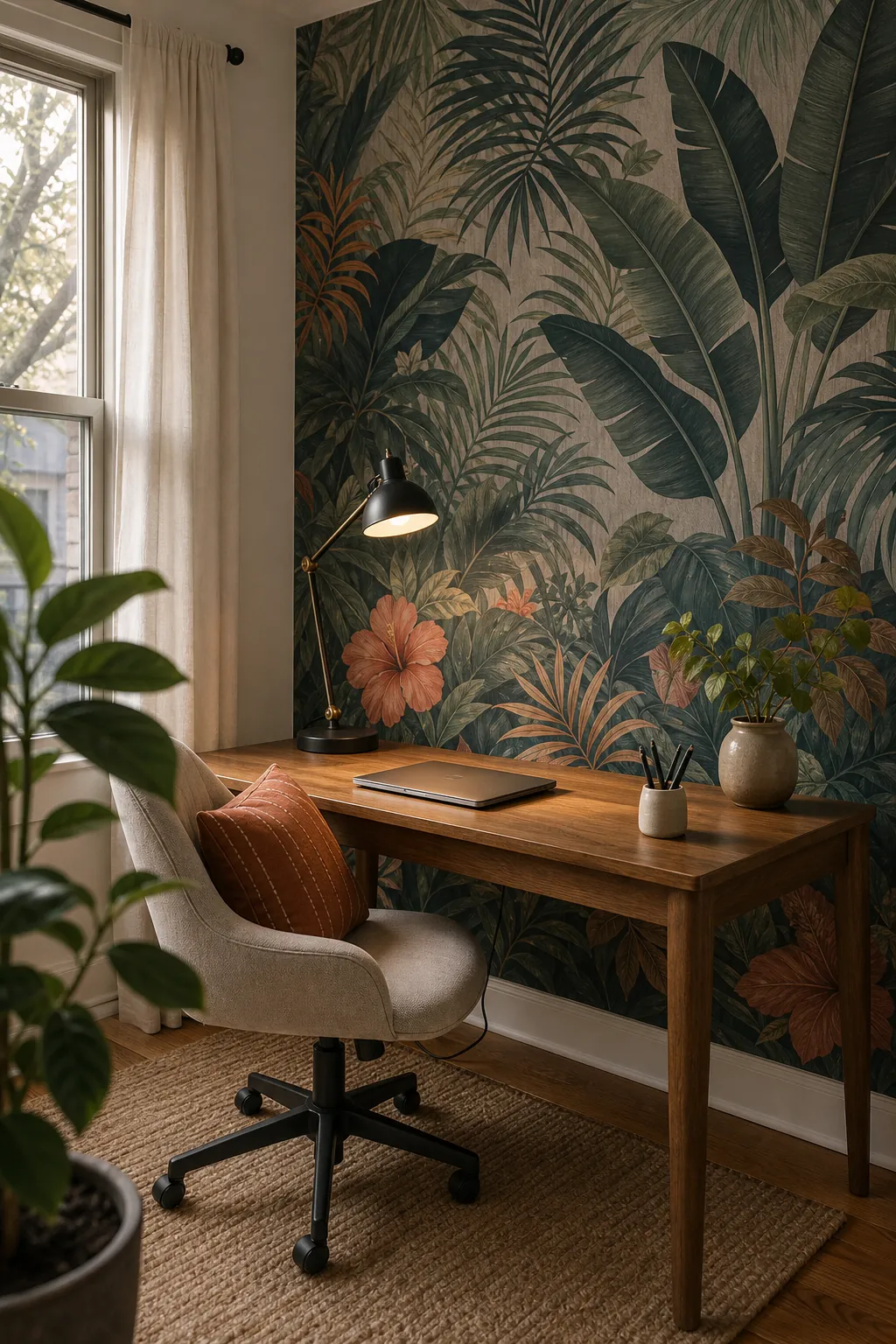
The Best Tropical Mural Looks Designed, Not Decorated
A tropical wall mural works when it solves one clear design job: a restful bedroom backdrop, a bolder dining-room moment, a brighter entry, or a small room with more personality. It struggles when it is asked to carry a room that has not been edited.
Choose the wall first, control the scale, respect the installation, and let the mural set the palette. That is how a lush tropical scene becomes part of the room instead of something pasted onto it.