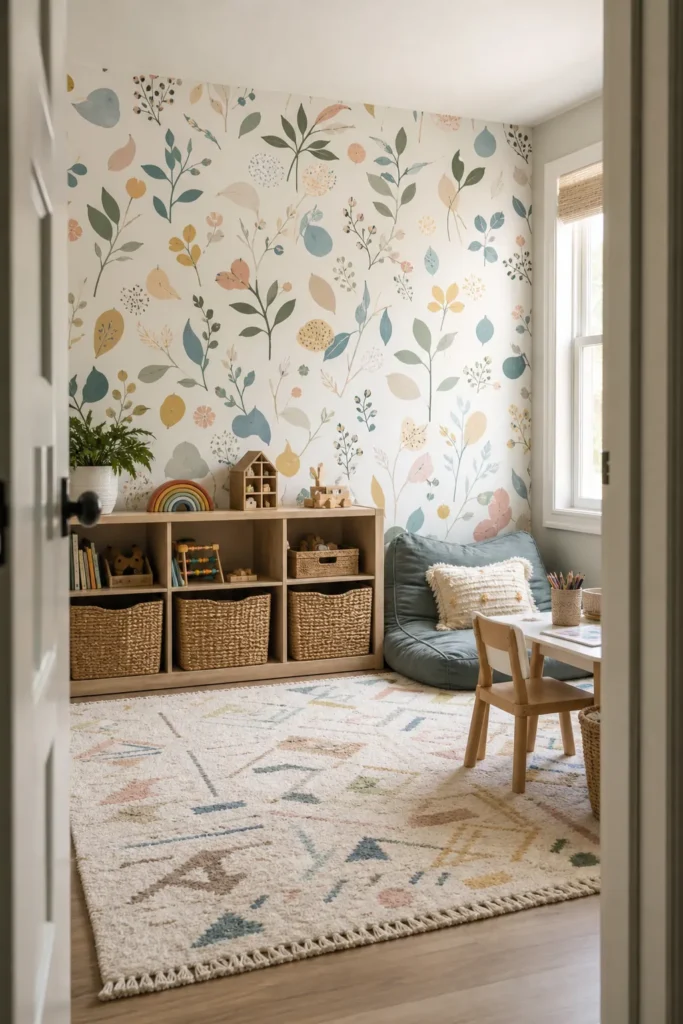
Playroom Wallpaper Ideas That Grow With Kids
A good playroom wall has a difficult job. It needs to feel exciting enough for blocks, crafts, pretend play, and rainy afternoons, but calm enough that the room does not turn into visual noise by bedtime. The best playroom wallpaper does both: it gives the room a clear personality while leaving enough breathing room for toys, storage, rugs, and changing tastes.
The strongest choice is rarely the loudest print in the sample book. Parents tend to worry about the real issues: whether peel-and-stick wallpaper will stay up, whether the pattern will feel babyish in two years, whether crayon marks will wipe off, and whether one busy wall will make a small room feel chaotic. Start with those concerns, and the right wallpaper choice becomes much easier.
Start With One Playroom Accent Wall
If you are unsure how much pattern the room can handle, begin with a playroom accent wall. One wallpapered wall behind a reading nook, storage unit, art table, or play kitchen gives the room a focal point without asking every surface to compete. This is especially useful in shared family spaces where the playroom is part of a basement, bonus room, or living area.
A single wall also makes installation more forgiving. You have fewer seams to line up, fewer outlet cuts, and less pattern matching around corners. For a first wallpaper project, that difference matters. Choose the wall you naturally see when you enter the room, then let paint, shelves, rugs, and baskets carry the rest of the palette.
Match the Pattern to the Messiest Zone
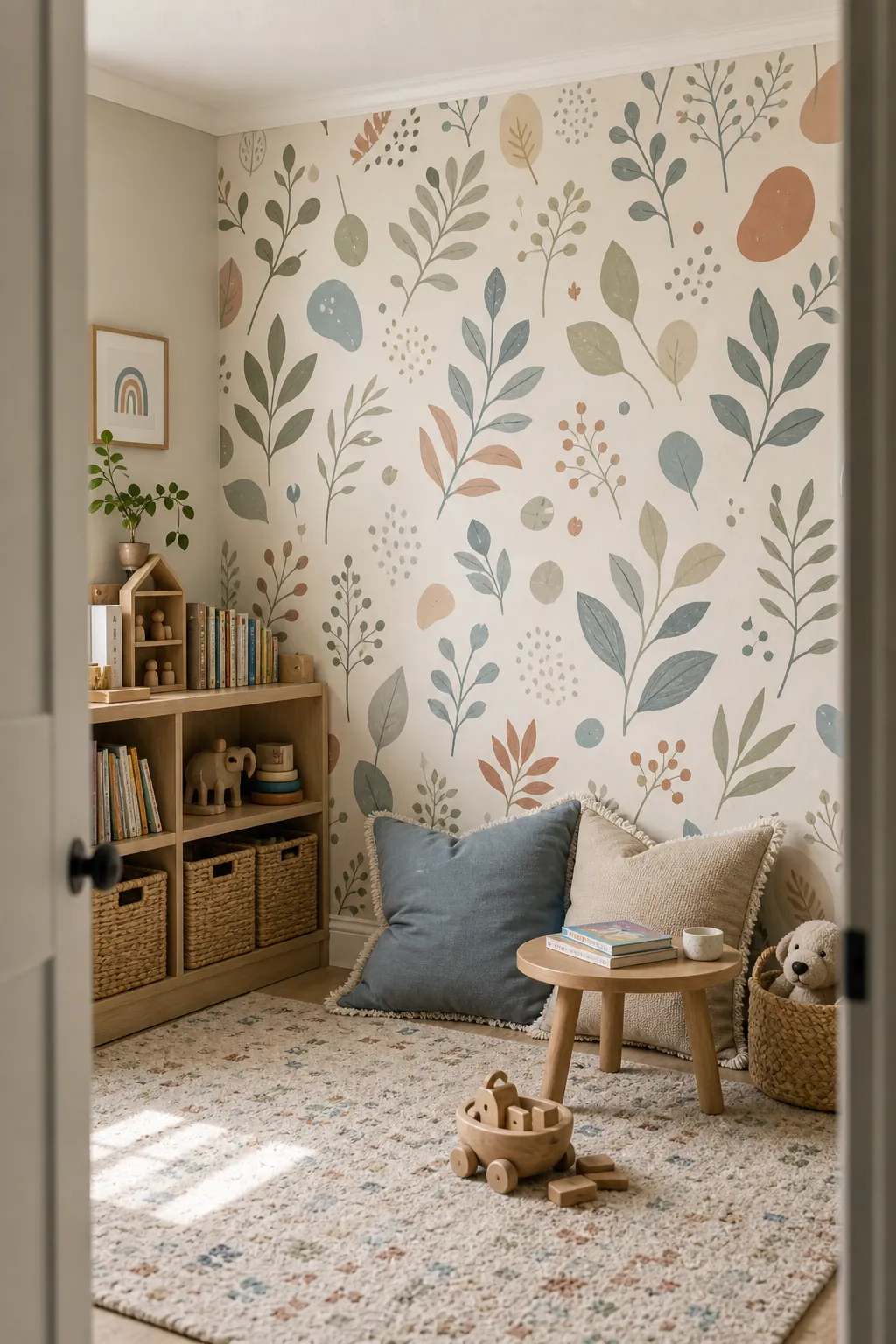
Every playroom has one zone that works harder than the others. It may be the craft table, the pretend-play corner, the toy storage wall, or the spot where toddlers pull every basket onto the floor. Put your boldest kids playroom wallpaper where that energy already exists instead of spreading it across the quiet parts of the room.
For art areas, look for patterns that can visually absorb a little mess: loose brush marks, scattered dots, small geometric shapes, or soft multicolor prints. In a colorful kids room, this kind of wallpaper feels intentional even when crayons, paper scraps, and craft supplies are out. The key is to pair it with simple furniture and clear storage so the wall feels playful, not chaotic.
Use a Mural When the Room Needs a Story
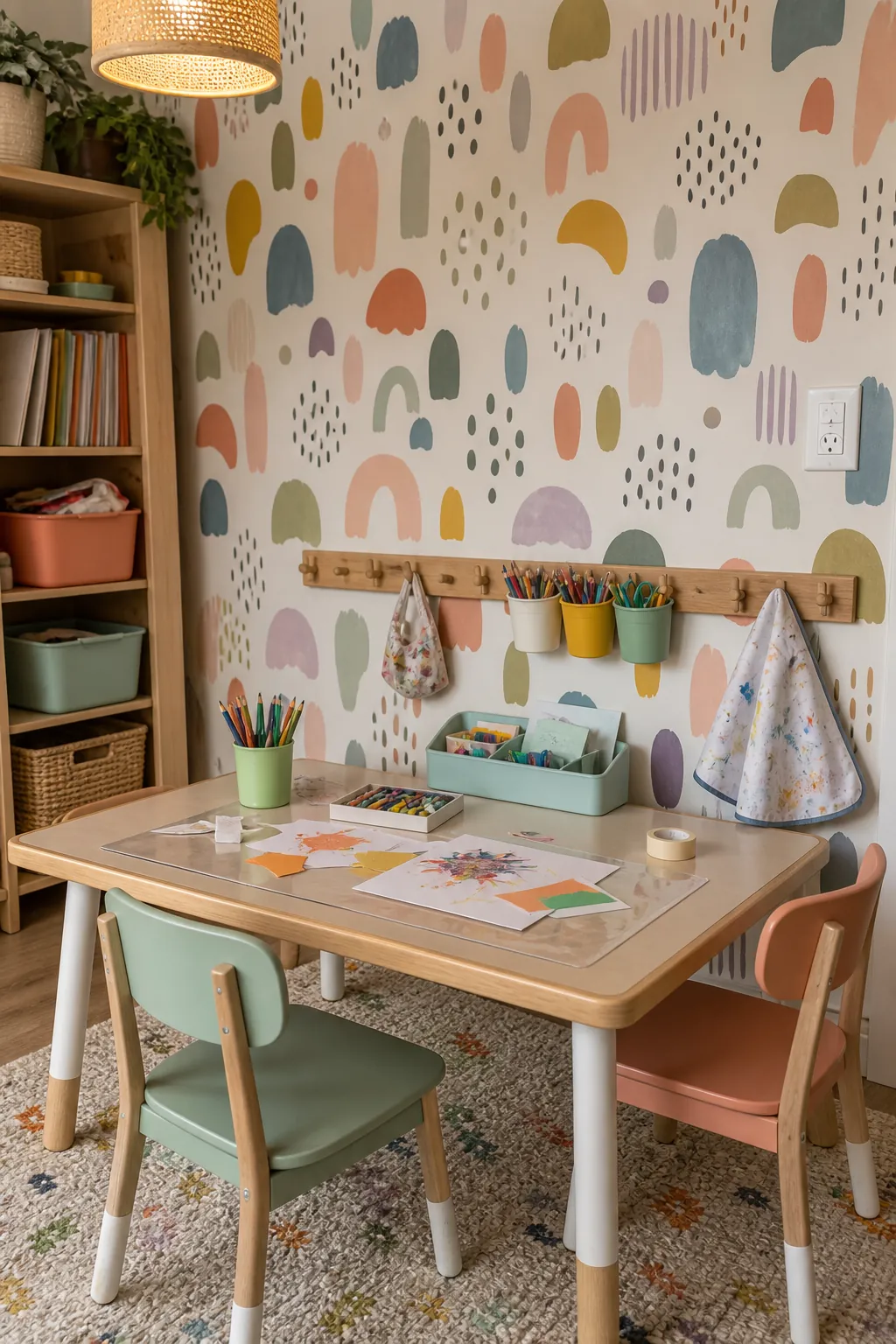
A playroom wall mural works best when the room needs atmosphere more than pattern. Murals can turn a plain storage wall into a woodland corner, sky scene, garden, mountain view, or gentle adventure backdrop. The trick is to keep the furniture grounded and simple so the mural does not fight with every toy in the room.
Good playroom mural ideas are usually less literal than a full theme park wall. A soft meadow, loose botanical print, simple animal scene, or oversized abstract landscape can support pretend play while still looking good with natural wood shelves, woven baskets, and neutral rugs. If the mural is very colorful, keep the rest of the wall decor minimal.
Choose Softer Wallpaper for Toddlers
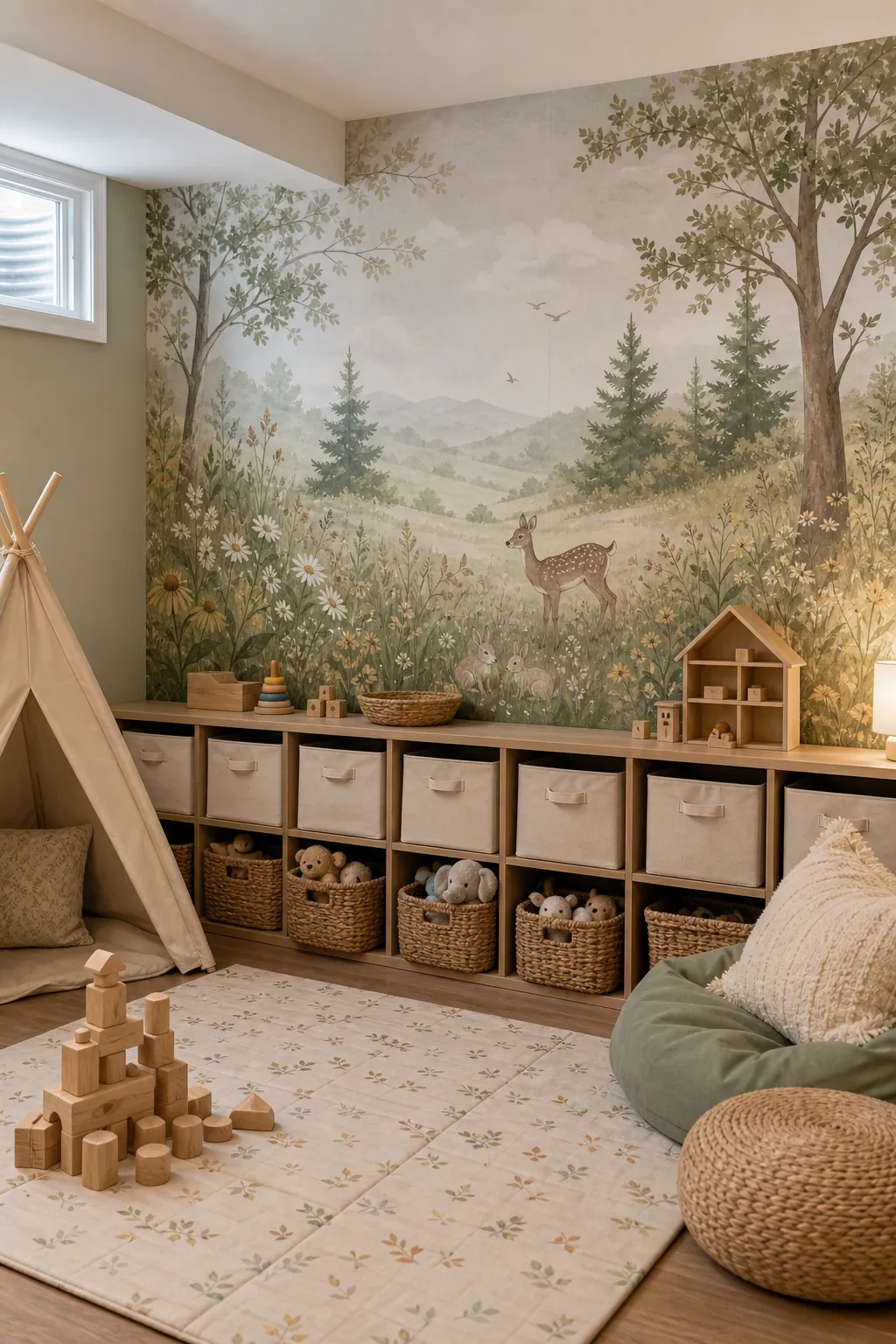
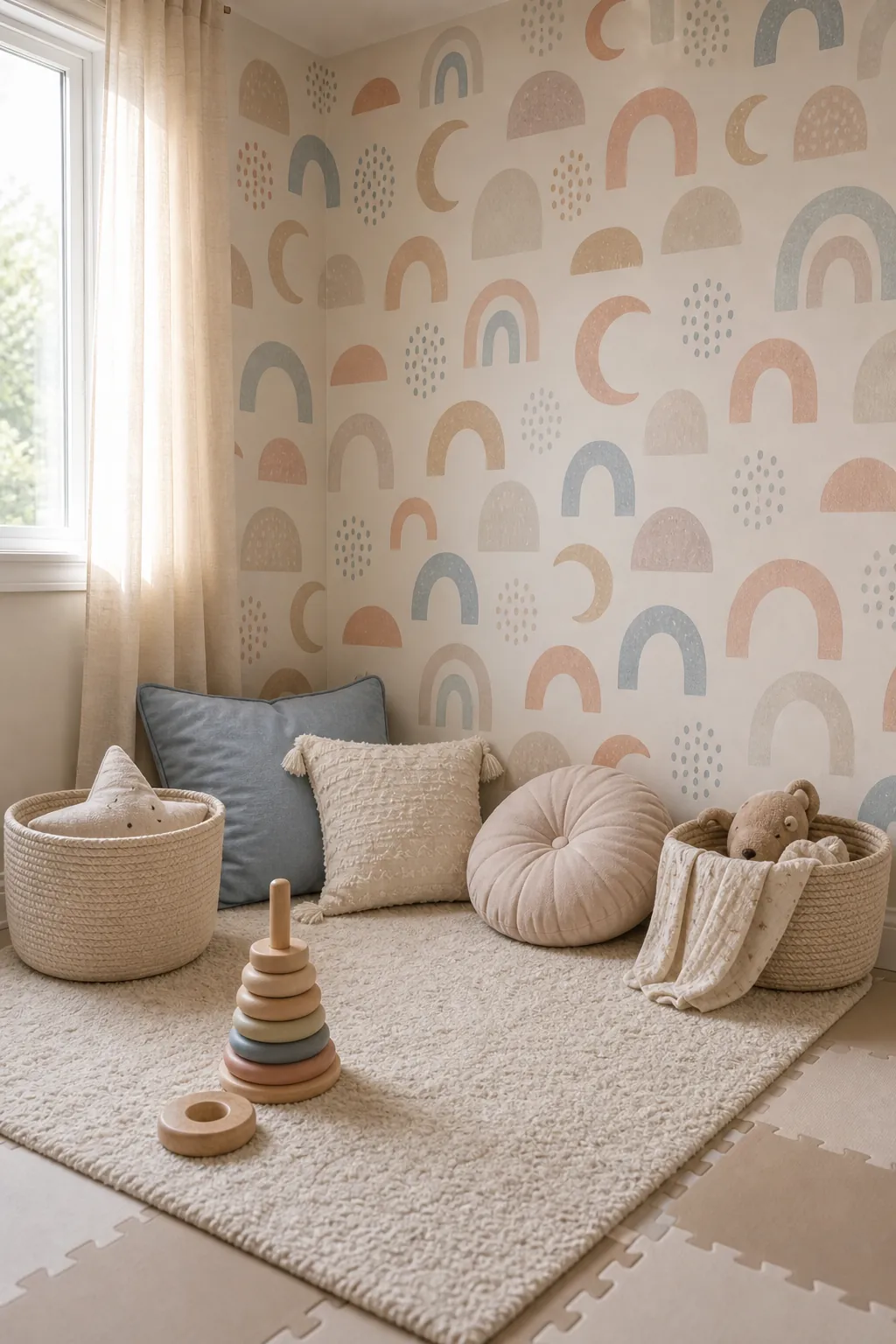
Toddler room wallpaper should be interesting without overstimulating the whole space. Toddlers spend a lot of time close to the floor, so the wallpaper does not need to shout from across the room. Soft arches, moons, dots, little leaves, muted animals, or hand-drawn shapes can make a play corner feel warm while still leaving room for sleepier nursery pieces nearby.
If the playroom doubles as a nursery or younger child’s bedroom, avoid prints that rely on one short-lived obsession. A gentle pattern can work with board books and floor cushions now, then with a small desk or bigger toy storage later. That is where nursery room wallpaper and kids wallpaper overlap: the wall should feel sweet, but not trapped in the baby stage.
Plan for Homework Before It Arrives
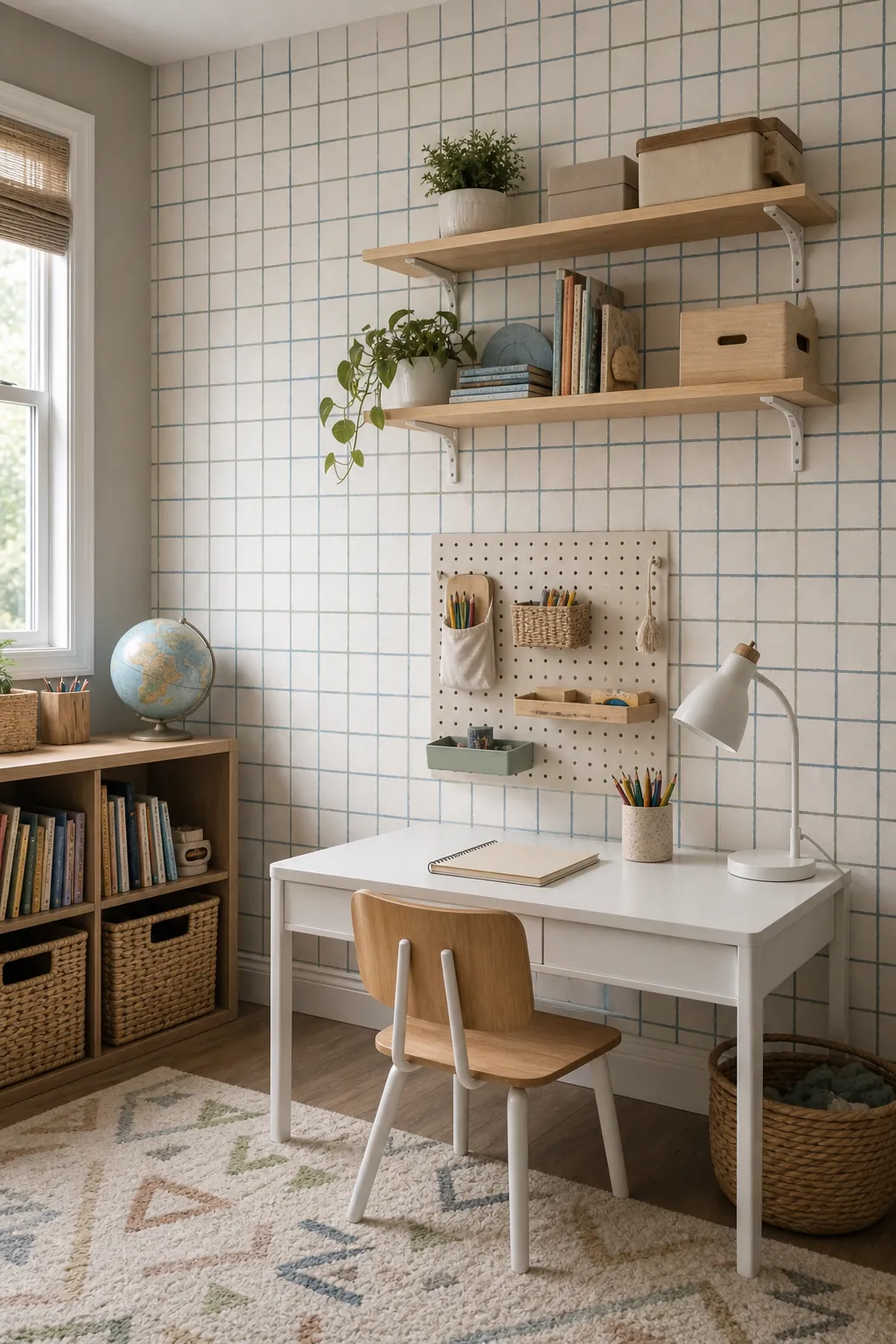
The biggest mistake with wallpaper for kids bedroom and playroom spaces is choosing only for the child’s current age. A toddler playroom often becomes a Lego room, then a reading space, then a homework corner. Wallpaper does not need to be boring to survive that transition, but it does need enough restraint to work with new furniture.
Geometric prints, small checks, hand-drawn stripes, botanical outlines, and muted abstract patterns age better than giant character-style themes. They still feel playful, but they can sit behind a desk, shelves, or a daybed without looking out of place. This is where kid friendly wallpaper should be judged by flexibility, not just cuteness.
Test Bold Wallpaper in a Small Alcove
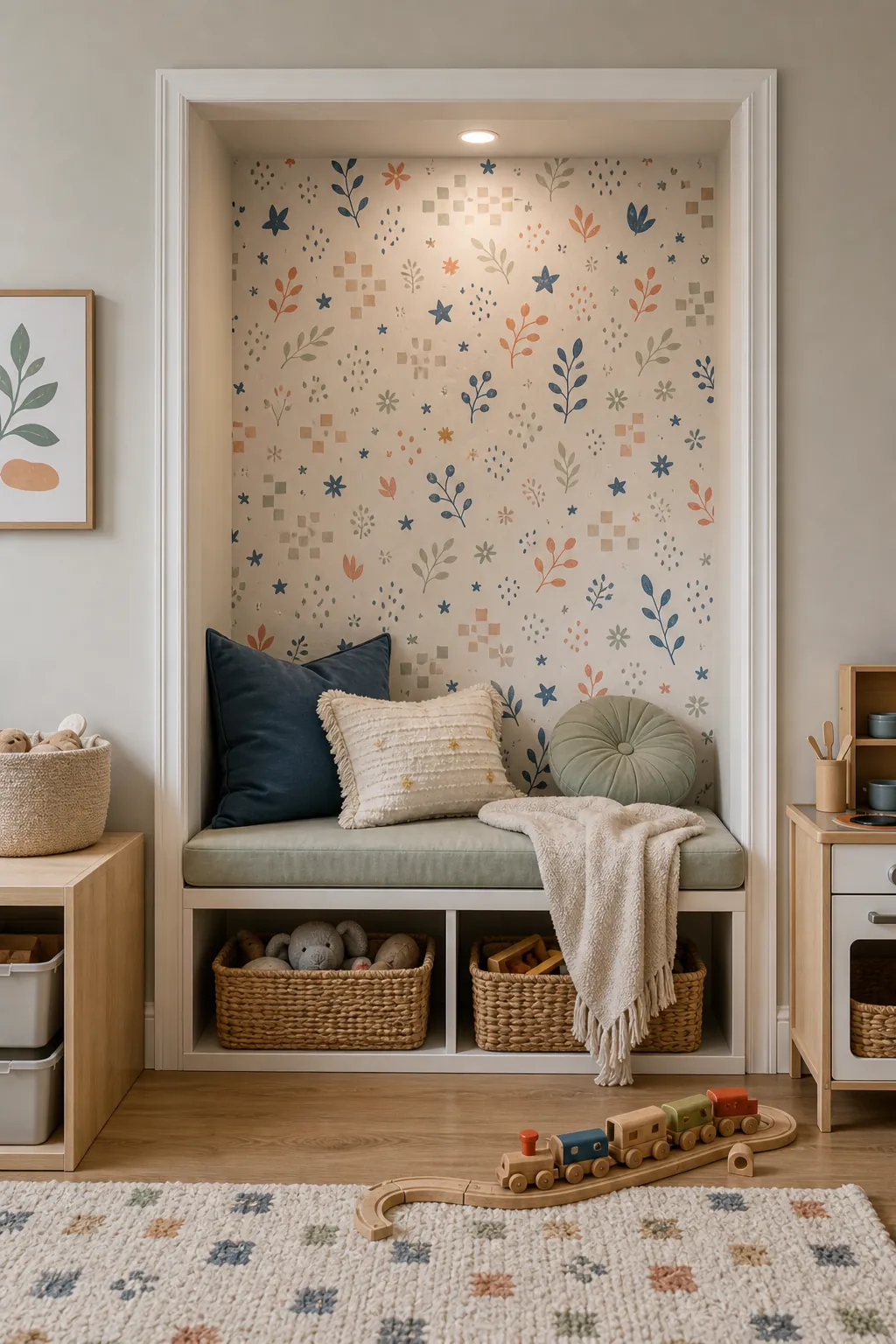
If you love a bold print but worry it will overwhelm the room, try it in a smaller area first. A closet nook, reading alcove, built-in bench, play kitchen backdrop, or the inside of open shelving can handle more personality than a full wall. This is a smart way to use childrens wallpaper when you want charm without a full-room commitment.
Small installations also reveal practical problems before they become expensive. You can see how the adhesive behaves on your wall texture, whether seams stay flat, how the color looks in real light, and whether the surface wipes clean after normal play. If it performs well in a nook, you can repeat the idea on a larger wall with more confidence.
Check the Wall Before You Blame the Wallpaper
Many wallpaper disappointments start before the first panel goes up. Peel-and-stick paper usually wants a smooth, clean, fully cured wall. Heavy texture, dust, fresh paint, high humidity, and glossy or damaged surfaces can all make the adhesive struggle. If your wall has orange-peel texture or old paint that lifts easily, test a sample in a hidden spot before ordering every roll.
For better results, clean the wall, let it dry completely, measure with a level line instead of trusting the ceiling, and avoid stretching the paper while you smooth it down. Work slowly from top to bottom, push bubbles outward, and use a sharp blade for baseboards and trim. A beautiful playroom wall is not just a pattern choice; it is a prep job.
Make the Room Easy to Restyle
The most useful playroom wallpaper gives you a palette, not a permanent script. Pull two or three colors from the pattern into baskets, pillows, rugs, or art supplies, then keep the expensive furniture simple. When your child’s interests change, you can swap the accessories without fighting the wall.
That is the real test: the wallpaper should make the room feel loved today and adaptable tomorrow. Choose a design that supports play, survives normal mess, and leaves space for the child using the room to grow into a new version of it.