Dark Botanical Wallpaper Bedroom Ideas for a Moody Space
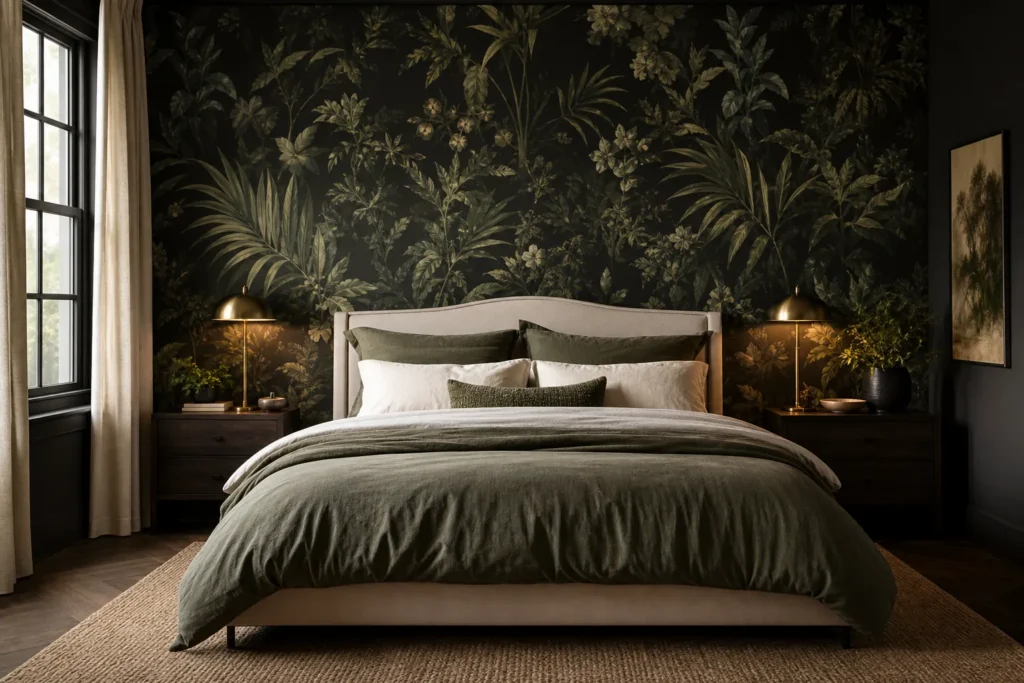
A dark botanical wallpaper bedroom can look calm, grown-up, and personal. It can also go wrong fast. The same print that feels romantic on a sample can feel busy behind a bed, too heavy in a small room, or strangely disconnected from white trim, pale furniture, and cold overhead lighting.
The better question is not whether dark wallpaper is too bold. It is how much darkness the room can carry, where the pattern should stop, and which lighter materials will make the whole space feel intentional. If you want a dark green moody bedroom, a dark forest green wallpaper, or a dark green floral wallpaper that still feels restful at night, build the room in layers instead of choosing the print first and hoping everything else catches up.
Start With The Mood, Then Decide How Much Wall To Cover
For most bedrooms, the safest place to begin is the headboard wall. A botanical wallpaper behind the bed gives the room a clear focal point, frames the pillows, and lets the other walls stay quieter. This works especially well when the print has a black, charcoal, navy, or dark green ground and a strong leaf or floral pattern.
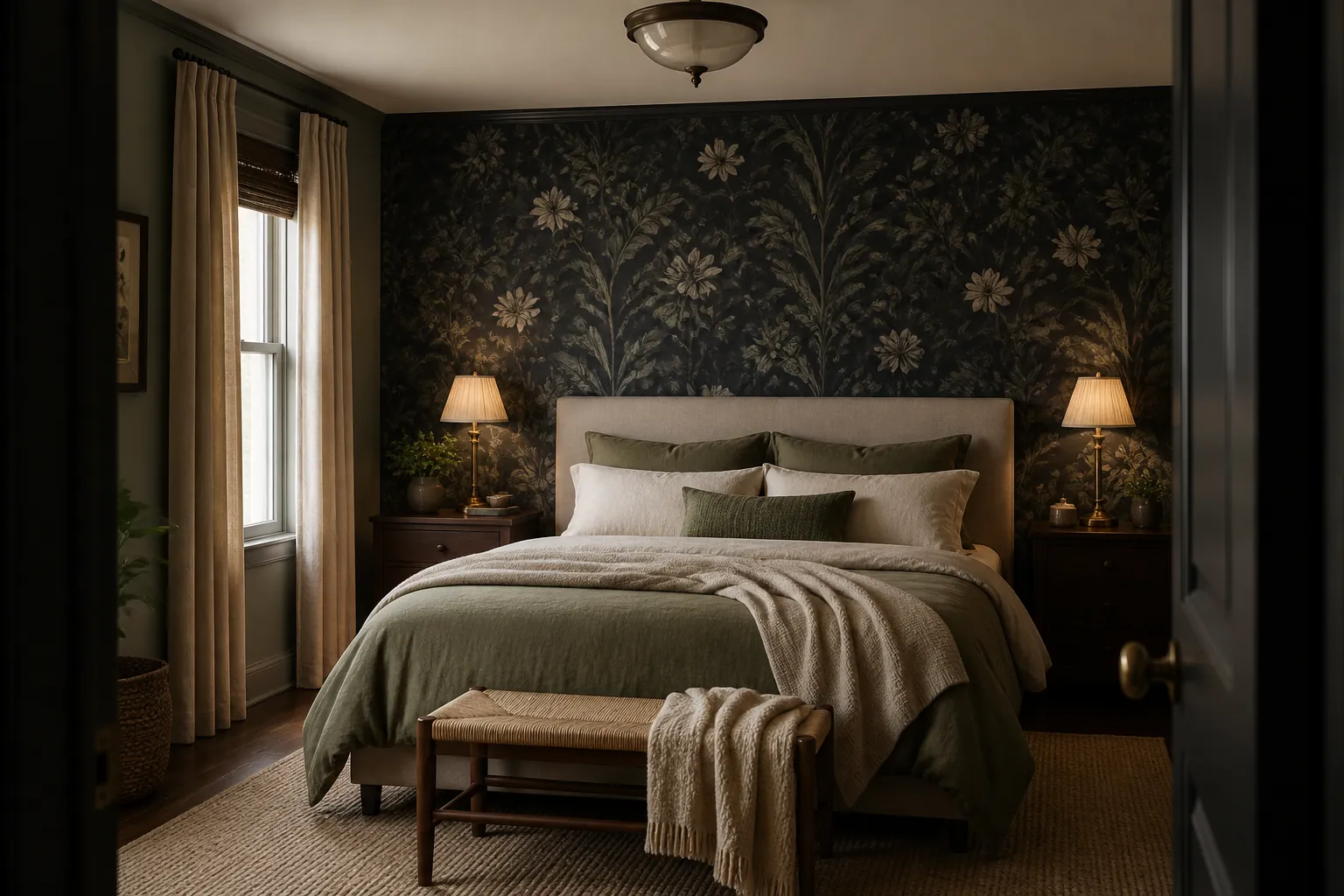
Wrapping all four walls can be beautiful, but it asks more from the room. It works best when the bedroom has decent natural light, simple furniture silhouettes, and trim that is painted to blend rather than shout. If the ceiling slopes, the windows are bright white, or the room is already visually chopped up, start with one wall and repeat the wallpaper color elsewhere through bedding, lamps, or art.
If you already love the idea of a dark room wallpaper look, test the print at night as well as during the day. Bedrooms are judged under lamp light more than showroom light. A pattern that looks dramatic at noon can turn muddy under a cool ceiling bulb.
Choose Pattern Scale Before You Choose Color
Color gets attention first, but scale decides whether the room feels elegant or chaotic. Fine, dense vines can read as texture from across the room. Oversized leaves and blooms feel more like a mural. A dark jungle wallpaper with huge palm leaves makes a stronger statement than a small dark green flower wallpaper, even if the colors are similar.
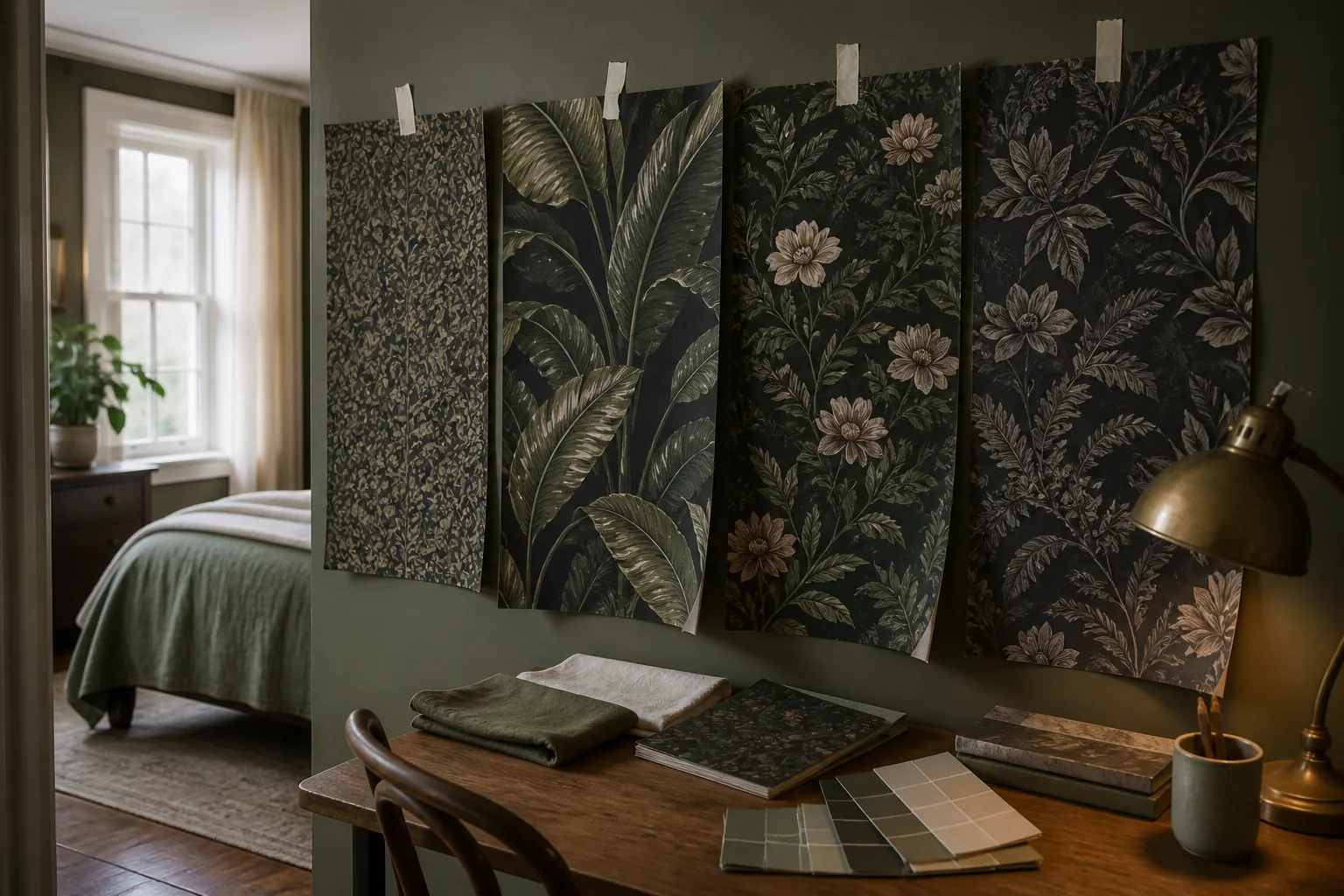
In a small bedroom, avoid a print that has both tiny detail and high color contrast. The wall can start to buzz. Pick one form of drama: a deep background with softer foliage, or a lighter ground with more detailed flowers. In a larger room, a bolder botanical mural can make the bed wall feel designed rather than empty.
The sample should be viewed from the doorway, not only from a desk. Tape it where the headboard will sit and look at it from the hall, the bed, and the mirror. That is how you catch a print that looks lovely up close but too busy when the whole room is in view.
Use Green As A Bridge, Not A Perfect Match
A common mistake with dark botanical wallpaper is trying to match the green exactly. Exact matches often look flat, especially when the wallpaper has several greens in the leaves. Instead, use green as a bridge. Pull one muted green from the print for paint, then let the bedding or curtains move a shade lighter, dustier, or warmer.
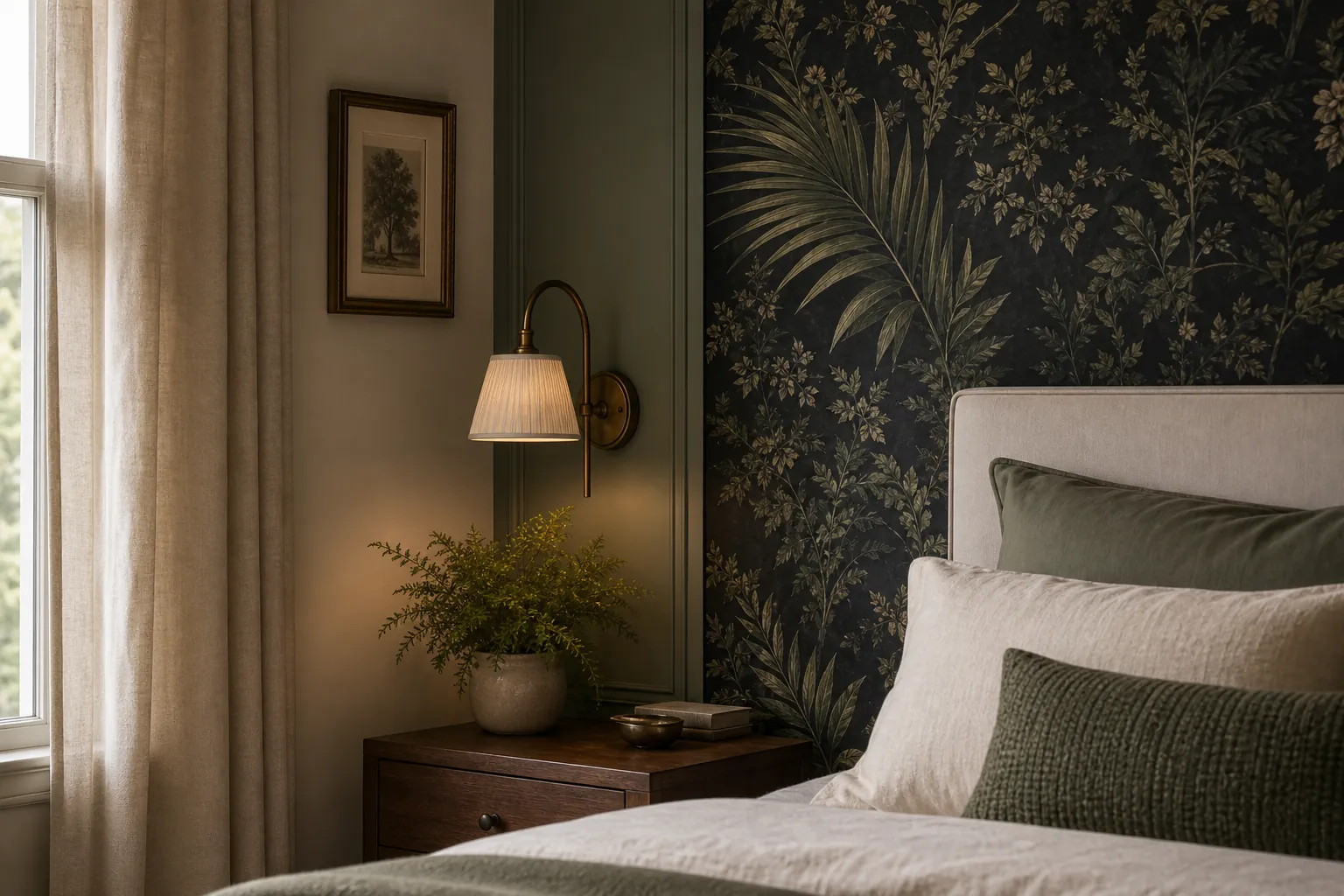
For a dark green moody bedroom, good supporting colors include mushroom, oatmeal, warm white, tobacco leather, antique brass, blackened bronze, and muted blush. These tones soften the dark green without turning the room pastel. If the wallpaper has cream stems or pale flowers, repeat that lighter note in lampshades or sheets so the dark wall does not feel isolated.
Painted trim matters. Bright white trim can be charming with some prints, but in a dark botanical room it often creates hard outlines. A softer off-white, a muddy green, or a deep neutral can make the wallpaper feel built into the room instead of pasted onto it.
Keep The Bed Calm So The Wallpaper Can Lead
The bed is the largest soft surface in the room, so it decides whether the wallpaper feels luxurious or overwhelming. With a dark floral wallpaper bedroom, choose bedding that gives the eye somewhere to rest. Linen, cotton, and velvet all work, but keep the main sheets and duvet simple.
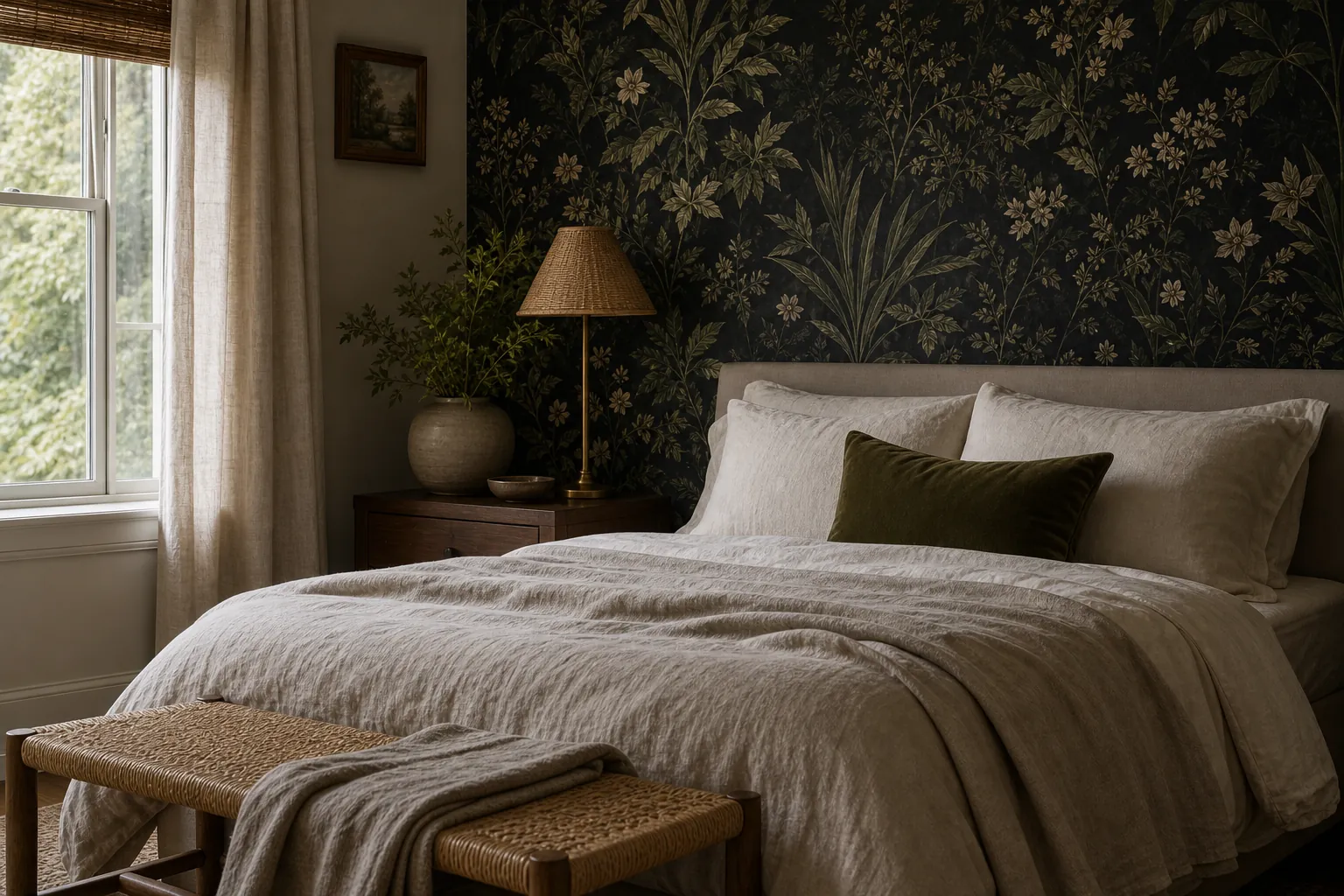
Pattern mixing can work, but it should feel deliberate. If the wallpaper has detailed flowers, use a plain duvet and maybe one small stripe or block-printed pillow. If the wallpaper is leaf-forward and loose, a floral pillow can add softness. The goal is contrast, not competition.
Wood also changes the mood. Pale oak keeps the room fresher. Dark walnut or black furniture makes it moodier. Cane, rattan, or woven shades are useful when the wallpaper feels too formal because they add a relaxed natural texture without fighting the print.
Layer Lighting Before You Judge The Wallpaper
Dark botanical wallpaper needs layered lighting. One bright ceiling fixture usually makes the room feel flatter, not brighter. A pair of bedside lamps, sconces, or small pendants will show the leaf texture and flower color in a warmer way.
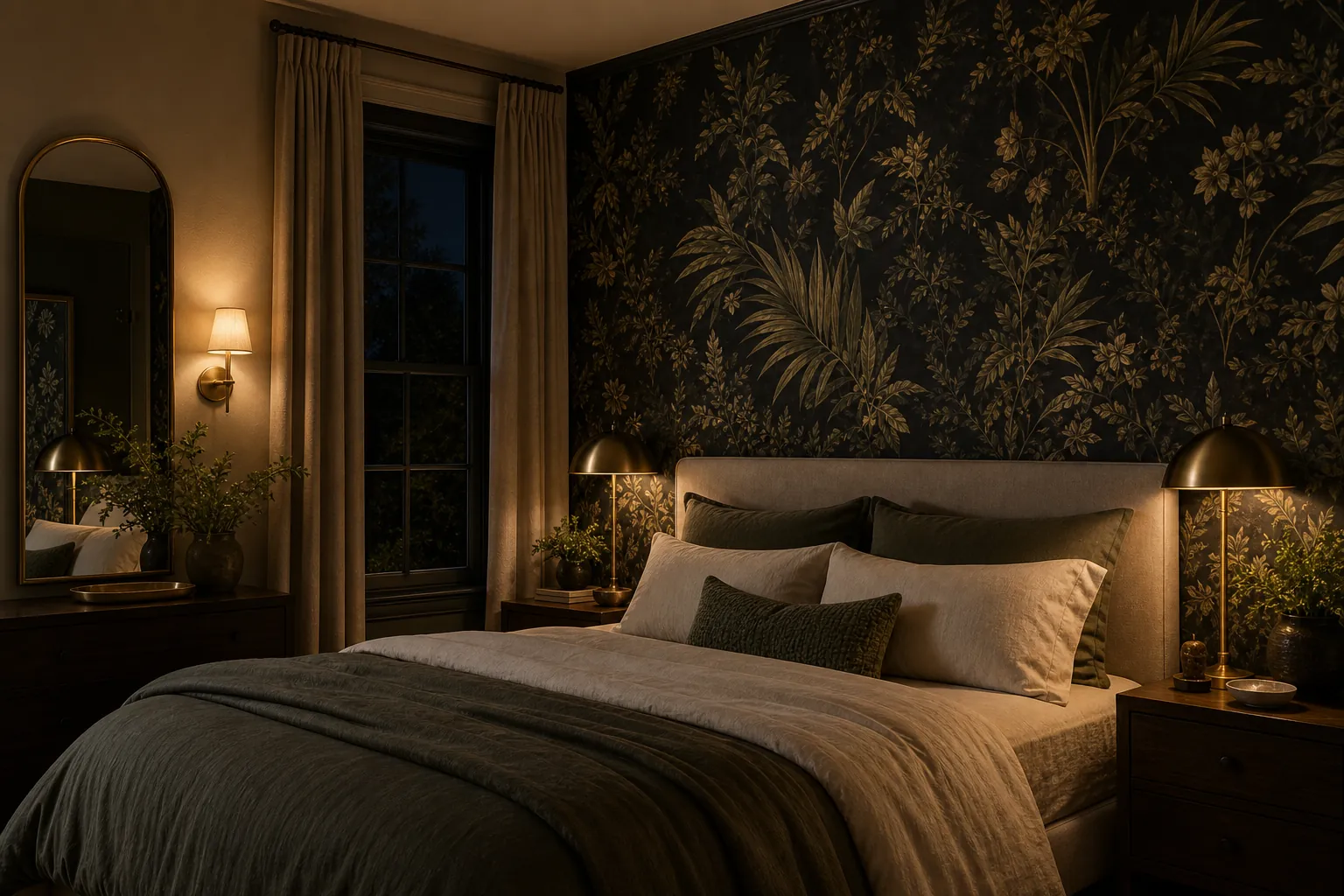
Use warm bulbs, not icy ones. Around 2700K is usually more flattering for deep greens, charcoal grounds, dark florals, and brass or wood accents. If the wallpaper has pale pink, ivory, or ochre details, warm light helps those tones show up instead of disappearing into the background.
Mirrors are useful, but only if they reflect something good. A mirror that bounces daylight or a lamp glow back toward the wallpaper can open the room. A mirror that reflects clutter or a blank ceiling will not help much.
Add Vintage Weight Without Making The Room Feel Old
A moody vintage bedroom pairs naturally with dark botanical wallpaper because the print already has depth and romance. The risk is going too themed. Too much heavy furniture, too many ornate frames, and too many dark textiles can make the bedroom feel staged instead of lived in.
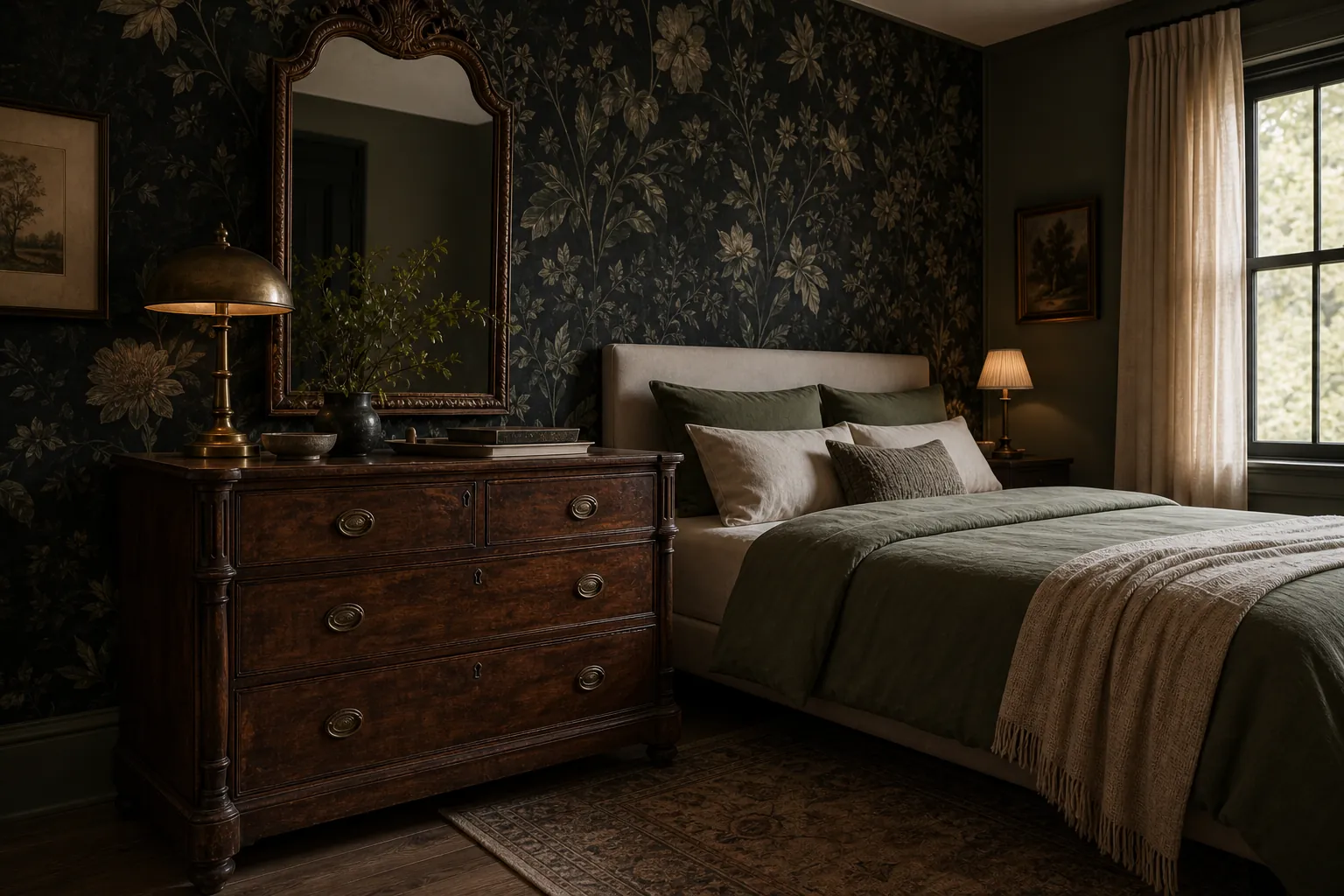
Use one or two vintage anchors: an antique dresser, a brass lamp, a carved mirror, or a traditional rug. Then keep something clean and current, such as a simple upholstered headboard or plain linen curtains. The mix is what keeps a dark moody wallpaper room from feeling like a set piece.
If you love the depth of botanical wallpaper bathroom ideas, bring the same lesson into the bedroom: dark pattern looks best when the edges are controlled. Repeat one metal finish, limit small accessories, and leave visible breathing room around the most decorative pieces.
The Simple Formula For A Restful Dark Botanical Bedroom
Start with the wall that matters most, usually behind the bed. Choose a botanical scale that looks good from the doorway. Pull a supporting green from the print, but do not chase an exact match. Keep the bed quieter than the wall. Add warm lamps before deciding whether the room is too dark. Then use vintage, wood, brass, and natural texture in measured amounts.
That is the difference between a dark botanical wallpaper bedroom that feels heavy and one that feels collected. The wallpaper can be the drama. The rest of the room should make that drama easy to live with.