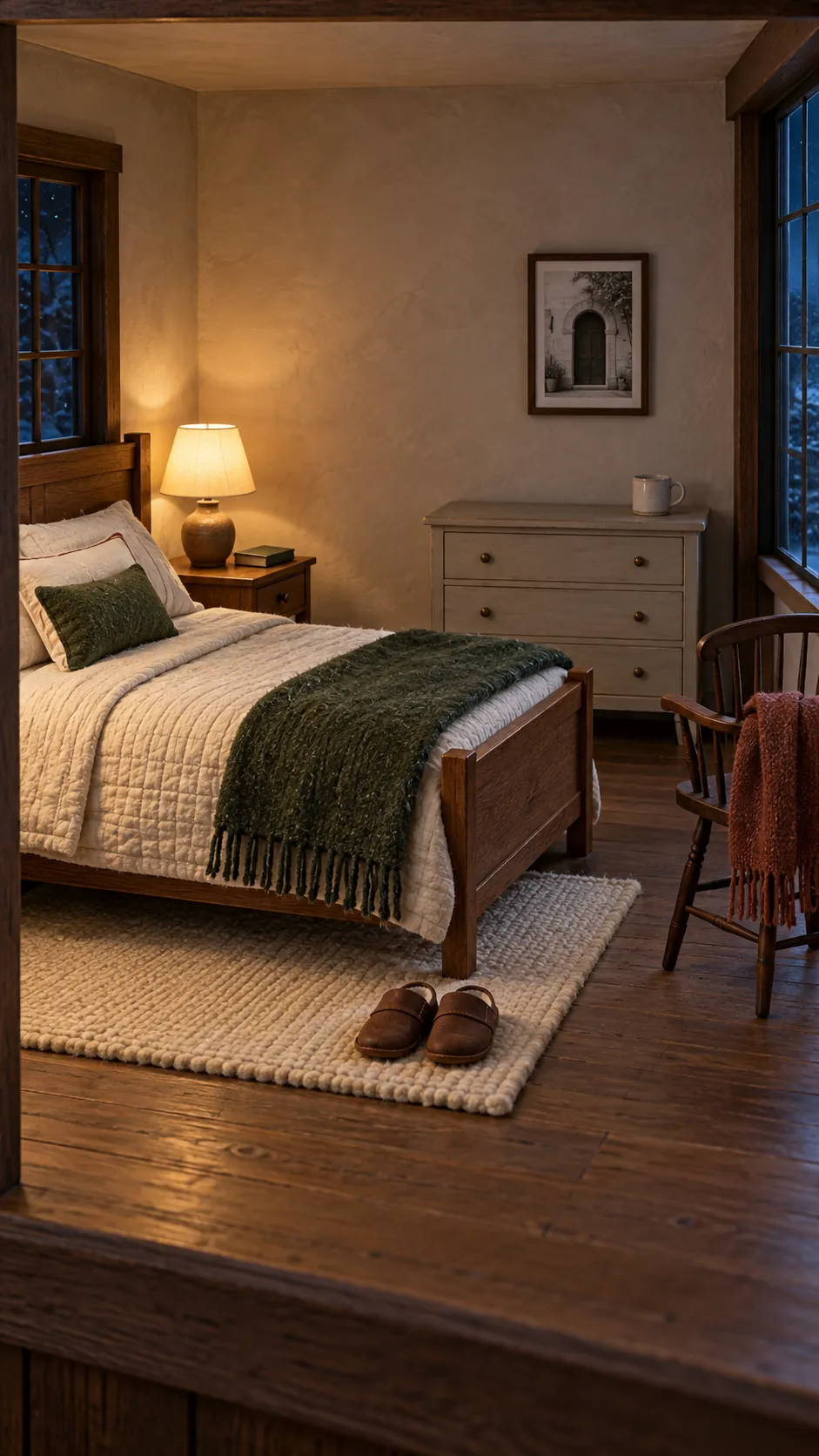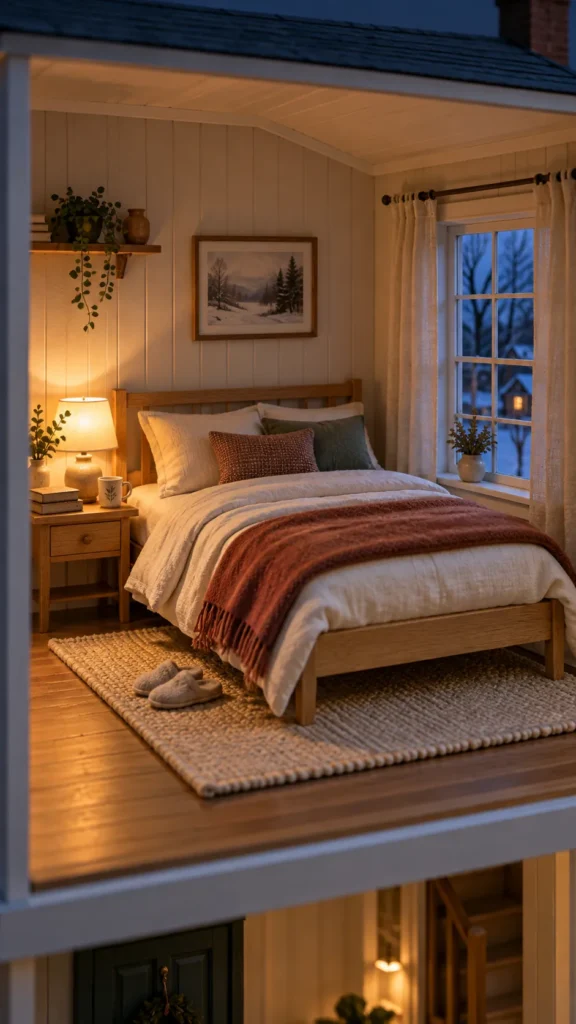
A miniature bedroom can look finished yet still feel cold. The usual cause is not a lack of accessories. It is an imbalance between hard surfaces, flat bedding, and light that is either too bright or too blue.
A convincing winter makeover works from the largest surfaces toward the smallest details. Build warmth through color, scale appropriate layers, and safe low voltage lighting, then stop before the room loses its useful open space.
Set a warm neutral color base
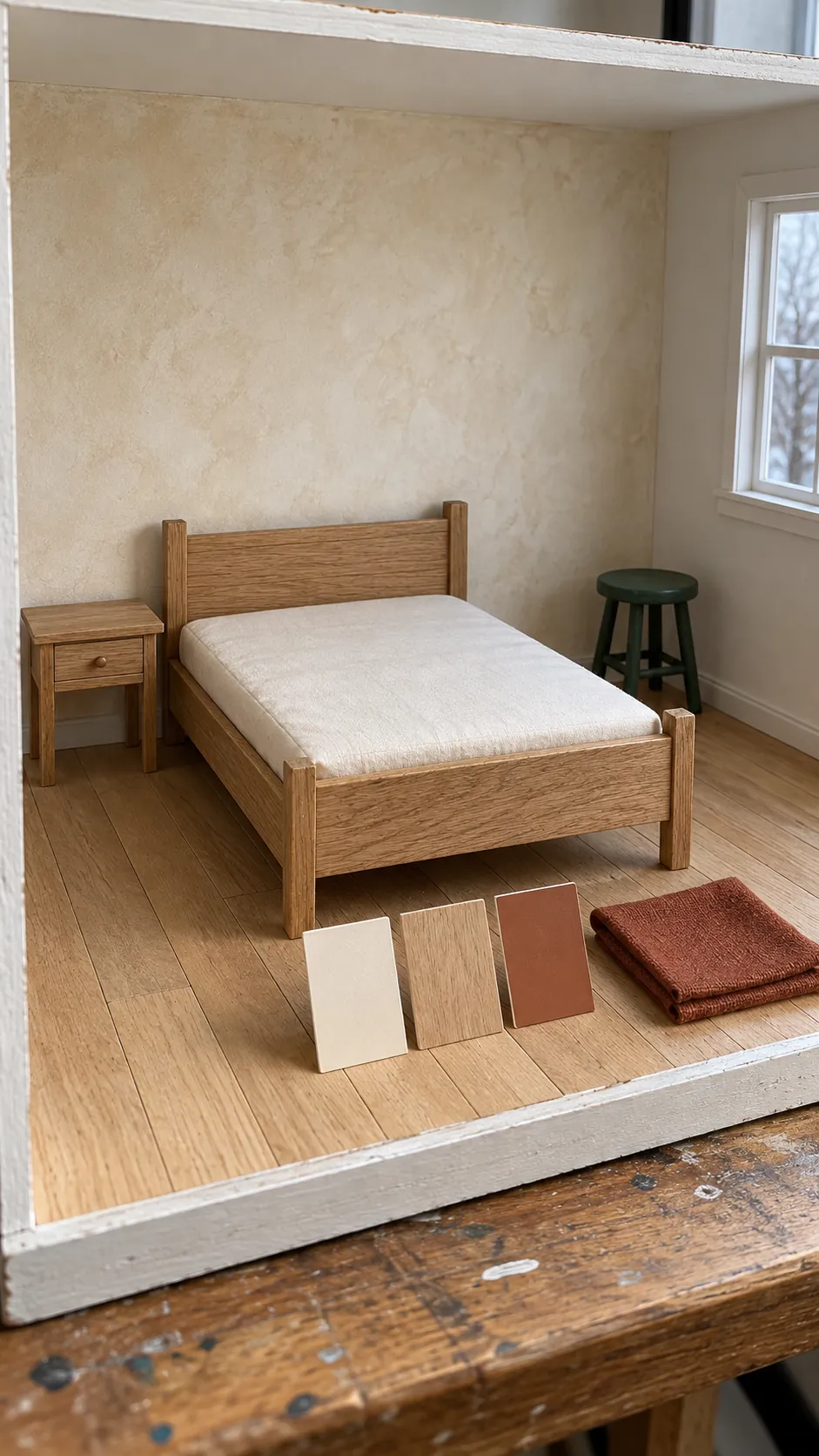
Begin with two quiet colors and one darker accent. Warm cream walls, natural wood furniture, and a muted rust or forest accent create depth without making the room visually busy. Test the palette under the actual dollhouse light because a color that looks soft in daylight can turn orange beneath a warm lamp.
Keep the ceiling and the largest wall slightly lighter than the bedding. This reflects enough light to reveal tiny textures after dark. Use matte finishes on broad surfaces so they do not compete with metal lamp parts or glazed accessories.
Anchor the floor with a miniature wool rug
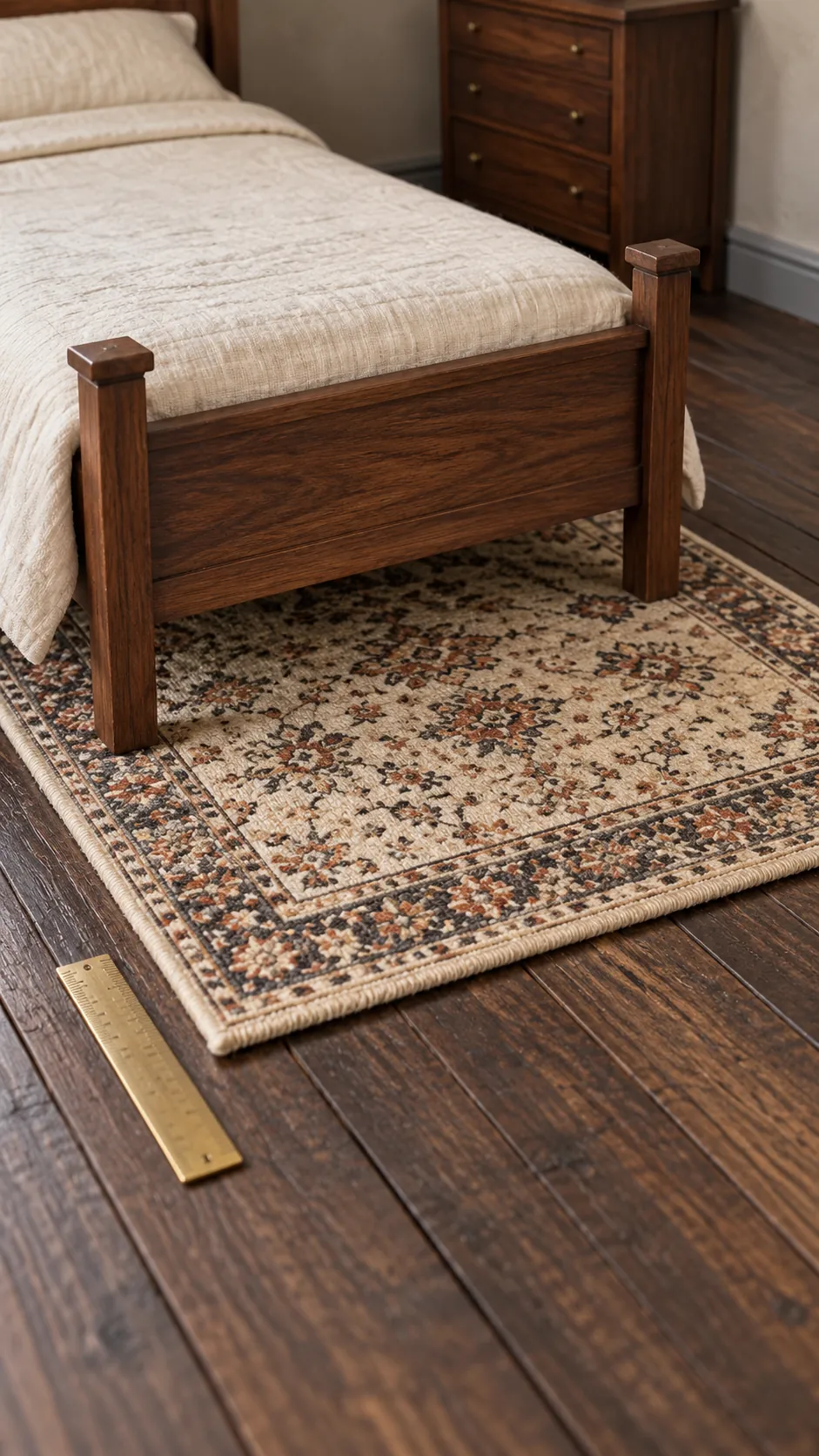
A rug makes the strongest texture change because it softens a large hard surface. Choose a low pile fabric that does not resemble full size shag at 1:12 scale. Place it beneath the lower half of the bed, with an even border visible on both sides.
Thin felt, fine woven wool, and tightly woven upholstery samples can work well. Seal or turn the cut edges so loose fibers do not spread through the room. The rug should lie flat enough that bedside furniture remains stable.
Layer bedding without creating bulk
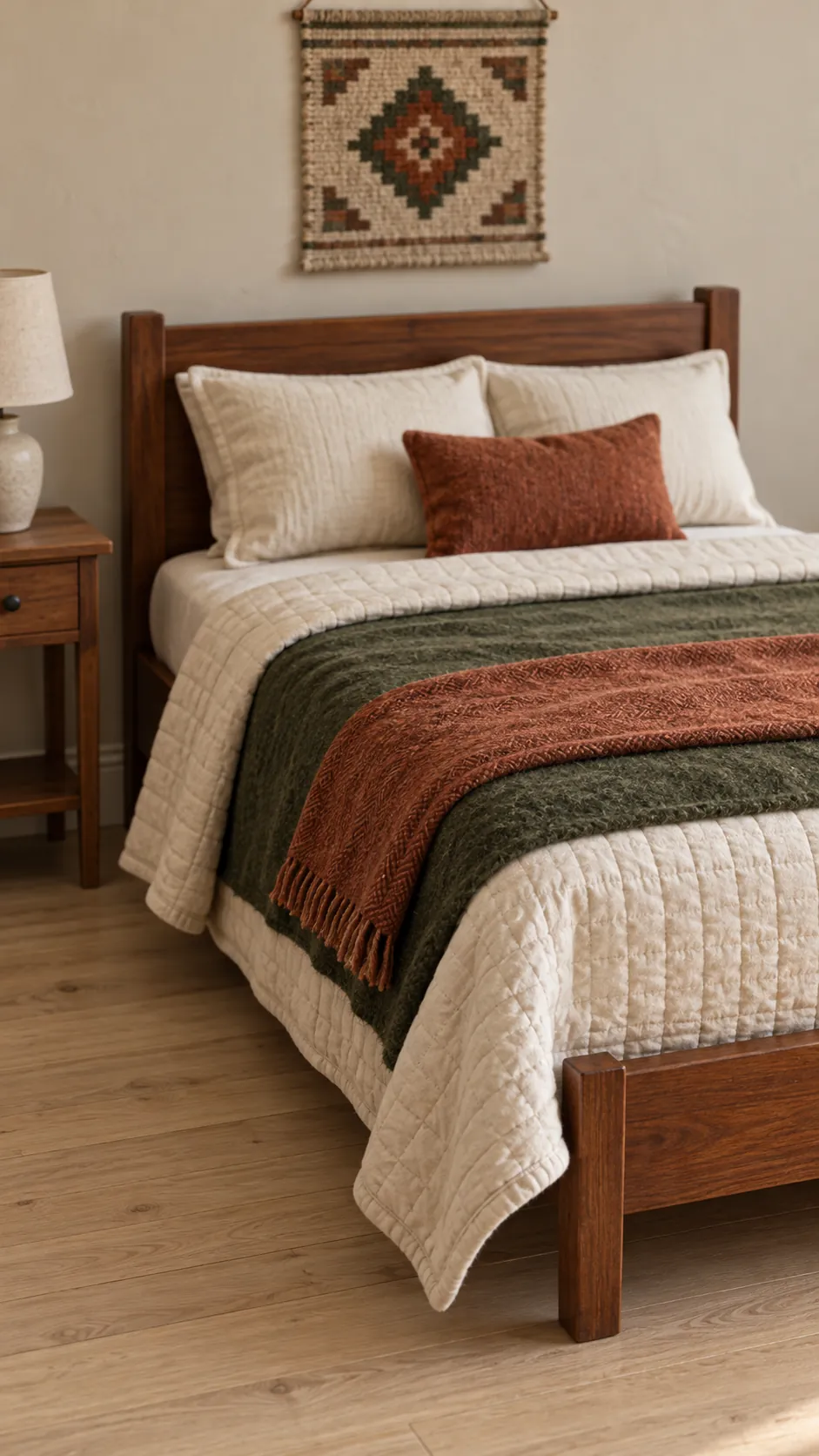
Miniature bedding needs visible layers, but each layer must stay thin. Start with a fitted cream sheet, add a lightly filled quilt, then fold a narrow wool throw across the lower third. Two sleeping pillows and one smaller accent cushion are usually enough for a single bed or compact double bed.
Press fabric before cutting it and use the smallest practical seam allowance. Secure only hidden points, so the folds retain a natural drape. Avoid stuffing the quilt until it rises like a mattress, because exaggerated loft is one of the quickest ways to lose scale.
Soften the window with fine fabric
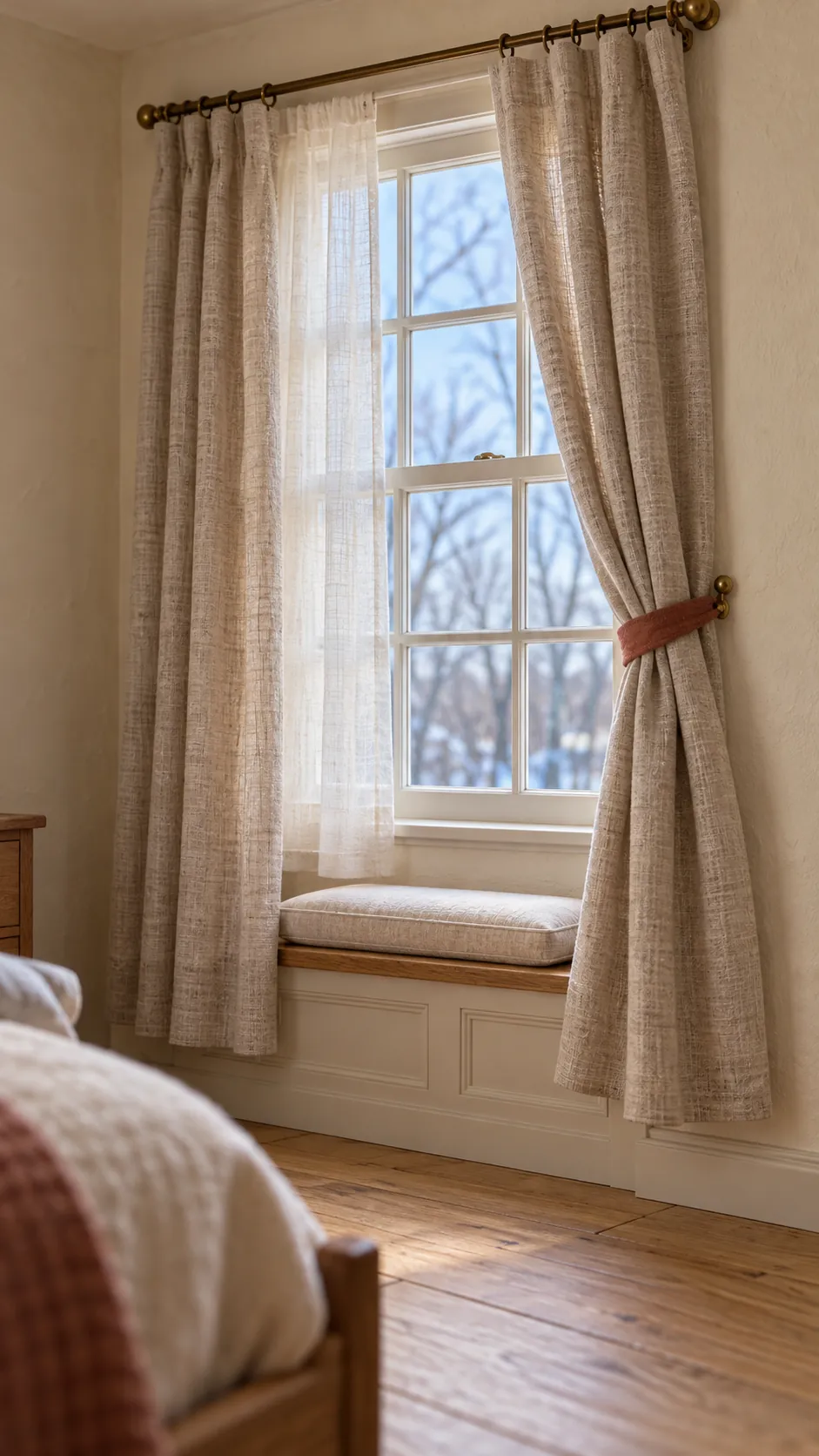
Heavy full size curtain fabric creates stiff folds in a dollhouse. Use cotton lawn, fine linen, or another fabric that forms narrow natural pleats. Hang the panels just outside the window frame so they reveal rather than hide the opening.
A sheer inner panel can diffuse a bright LED or a real window behind the house. Keep the lower edge clear of any heater, wire, or exposed lamp. One simple tieback can open the view and add a small repeated color from the bedding.
Use two small sources of cozy light
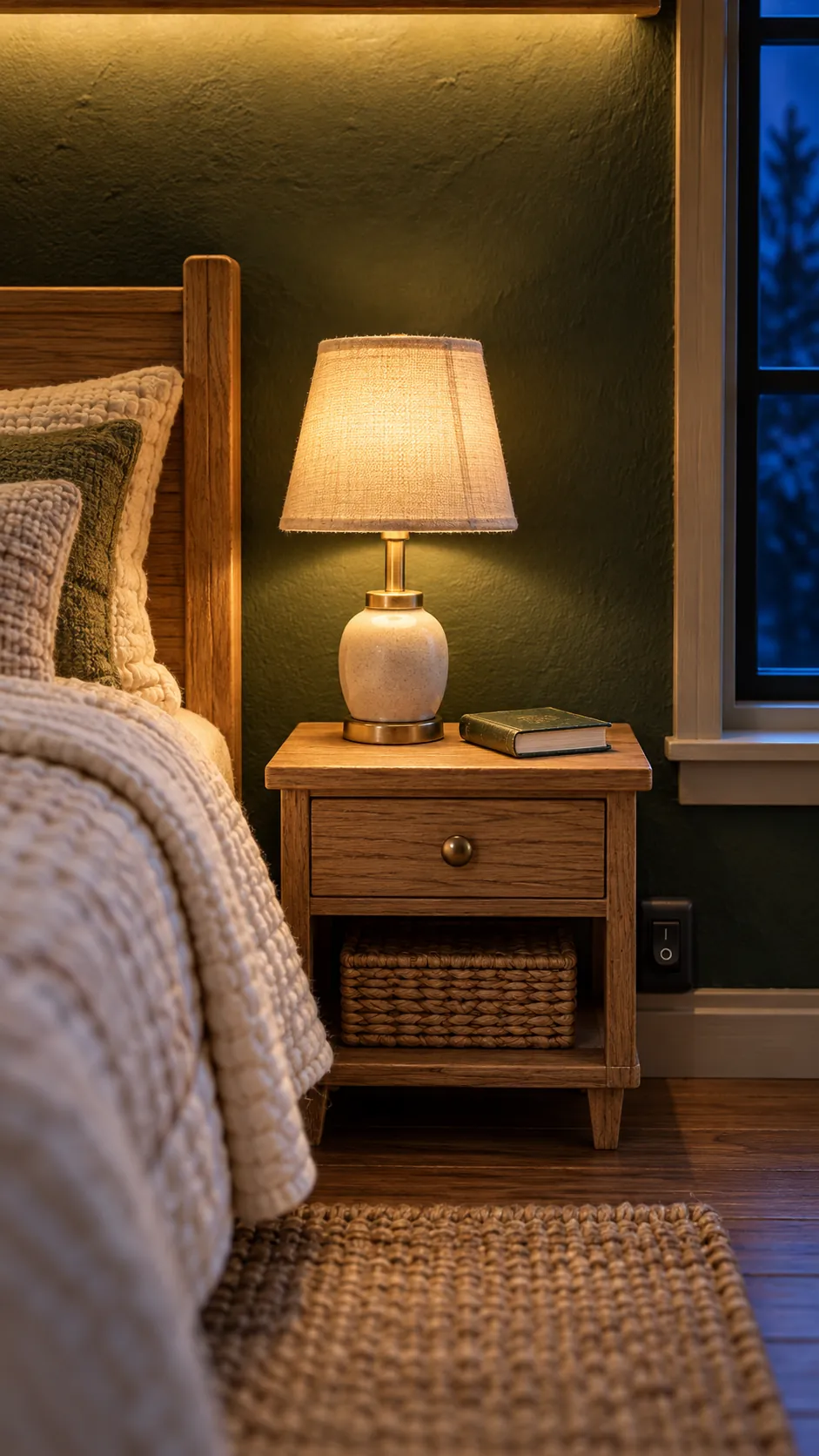
One bright ceiling light can flatten every texture you just added. A soft bedside lamp and a weaker ambient source create more believable depth. Choose warm white low voltage LEDs from a purpose built miniature system, and follow the maker’s wiring and power guidance.
If the house has old wiring, do not guess about its condition or connect an unfamiliar supply. Use a tested replacement system or ask someone with appropriate electrical experience to inspect it. Hide modern components behind furniture only when they remain accessible and have enough ventilation.
Edit the final winter accessories
Finish with objects that suggest use: a tiny book, slippers, a folded scarf, or one ceramic mug. Repeat one bedding color in two small places, then leave the remaining surfaces calm. A room with visible empty space usually feels warmer and more believable than a room covered with themed props.
View the room with its lights on and off, then take a photo from the normal open front. Remove any accessory that merges with another object or blocks the lamp. The finished scene should make the bed, rug, and light easy to read in that order.