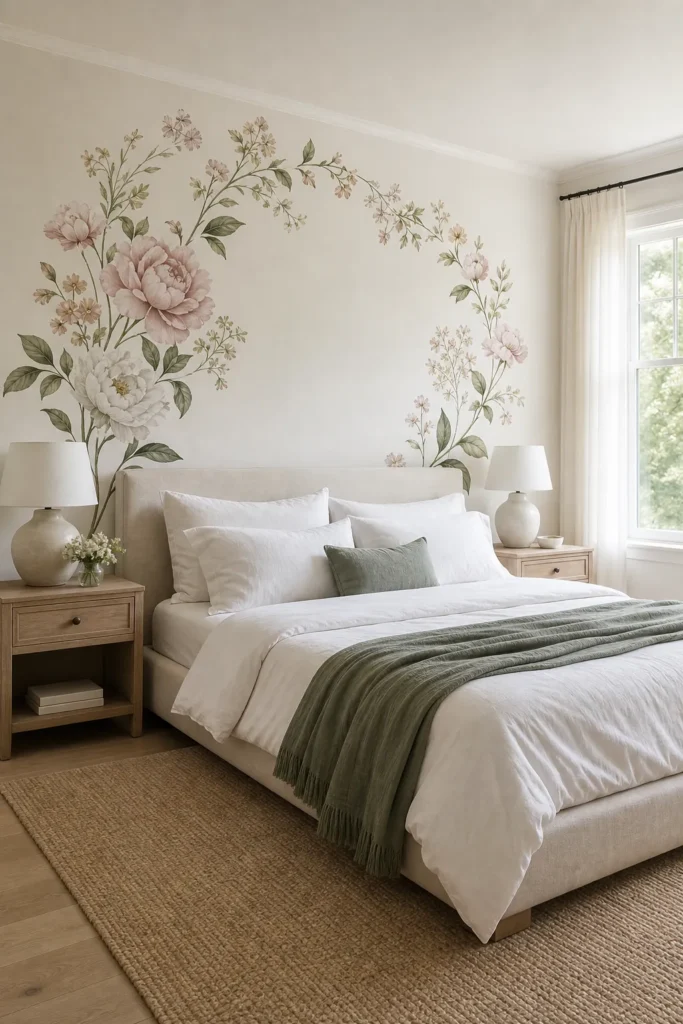
Floral Wall Decals: Grown-Up Ideas for Bedrooms and Living Rooms
Floral wall decals work best when they are treated like a design decision, not a sticker fix. The difference shows up in scale, spacing, finish, and where the flowers meet the furniture. A scattered cluster can look temporary. A planned floral accent wall can make a bedroom feel softer, a living room feel finished, or a rental feel personal without paint cans, ladders, or a permanent mural.
The strongest approach is simple: choose one role for the decals before choosing the pattern. They can frame a bed, soften a sofa wall, imitate hand painted flowers on wall corners, or create a light flower mural wall paintings effect. They should not try to do all of those things at once.
Start With the Wall You Want to Change Most
Most wall decal ideas fail because the decal is chosen first and the room problem is considered later. A plain white wall behind a bed needs a different solution than a long living room wall, a nursery corner, or a rental entryway. Before buying flower wall decals, stand in the doorway and decide which wall already draws your eye. That is usually the wall that can handle pattern.
If the wall is narrow, use a vertical spray of florals climbing from one side. If it is wide, use the decals to frame furniture instead of filling the entire surface. If the room already has busy bedding, art, or curtains, choose larger botanical shapes with more blank space around them. Floral wall decals look more expensive when the wall still has breathing room.
Use Floral Decals as an Accent Wall, Not Wallpaper
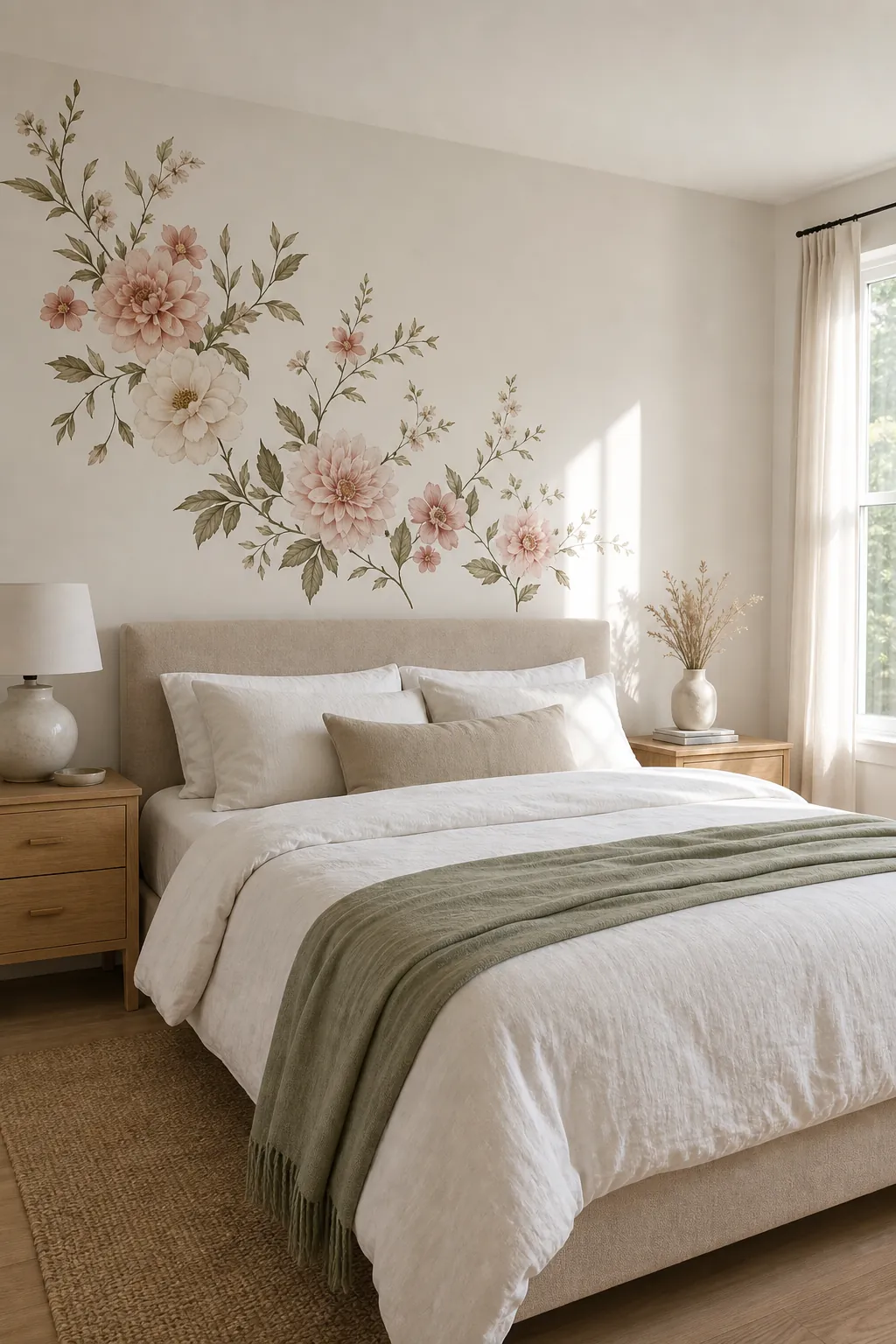
A floral accent wall is not the same as covering every inch with pattern. Decals are strongest when they create movement across a chosen zone: above a headboard, around a reading chair, behind a console table, or on one side of a crib. This keeps the room from feeling themed and gives the flowers a reason to be there.
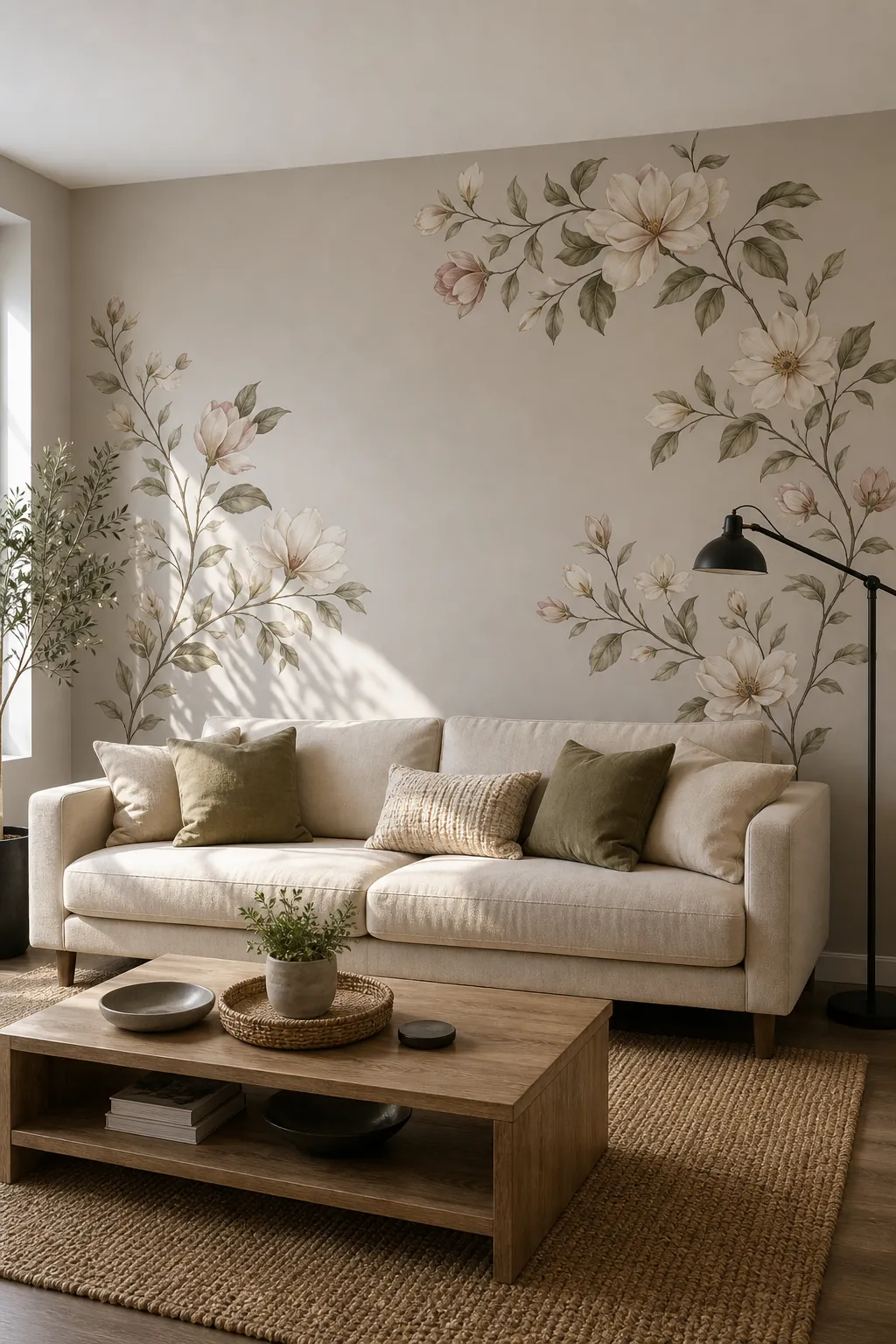
For a mature look, leave a clean margin around ceilings, corners, outlets, and trim. The negative space makes each bloom feel intentional. In bedrooms, the safest layout is a loose arch over the bed or a diagonal branch moving from one upper corner toward the center. In living rooms, let the flowers sit behind the sofa like art, not like a repeating craft project.
Choose a Finish That Does Not Look Like Contact Paper
The quickest way for removable wall decals to look cheap is a shiny plastic finish on a matte painted wall. If the room has soft daylight and calm materials, glossy decals can catch light in a way that announces every edge. A matte or low-sheen finish usually blends better with painted drywall and makes the flowers look closer to a mural.
Scale matters too. Tiny repeated flowers can read as nursery stickers from across the room. Oversized blooms, graceful stems, and fewer pieces feel more like botanical wall decor. If you like floral wall painting ideas but do not want the commitment of paint, choose decals that imitate the looseness of brushwork rather than perfect cartoon outlines.
Match the Flowers to the Room, Not Just the Color Palette
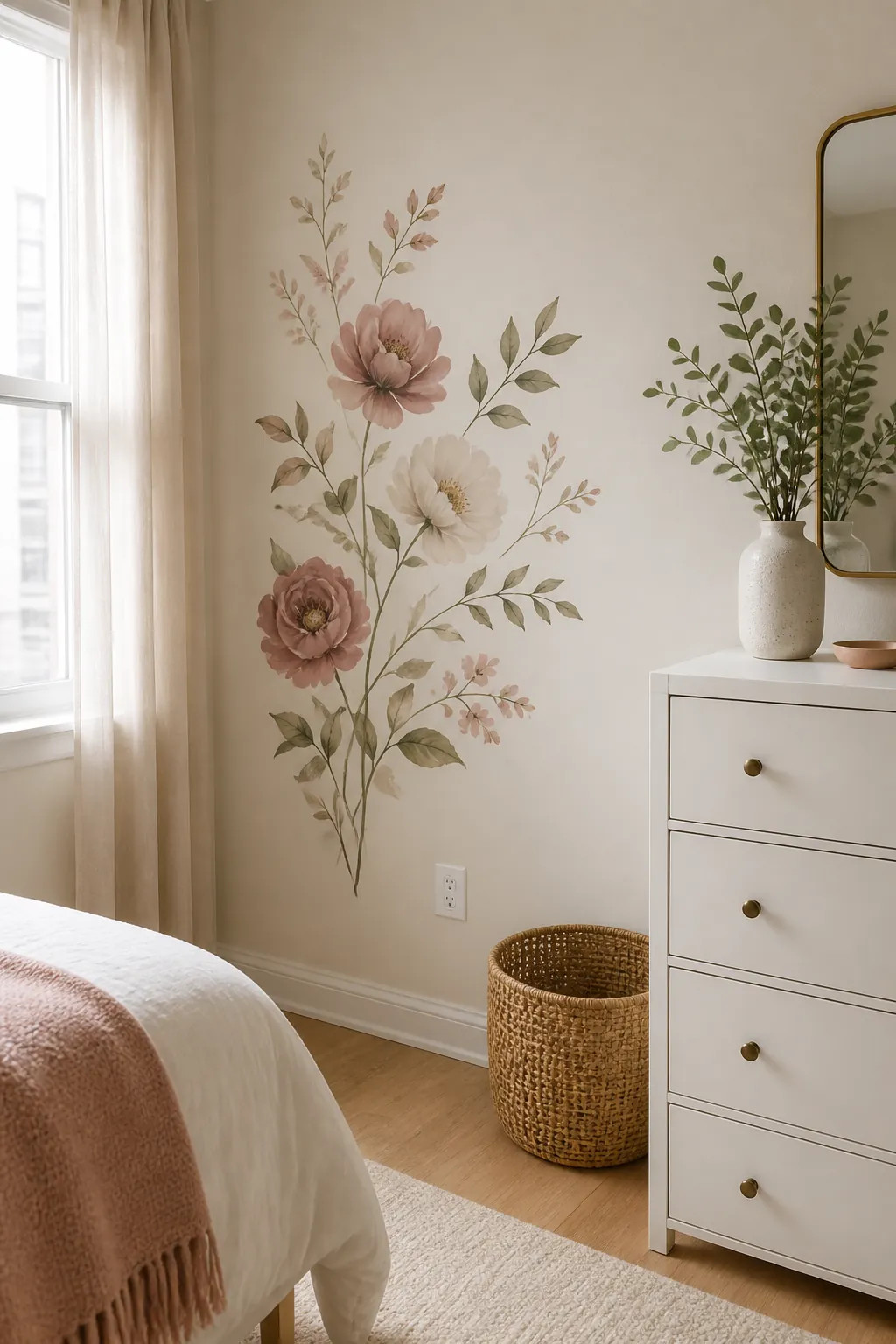
Color is only one part of the choice. The flower style needs to match the room’s shape and mood. Soft watercolor peonies can make a bedroom feel calm, but they may look too sweet in a modern living room. Thin wildflower stems can work in a hallway or home office because they add height without taking over. Large roses can be beautiful, but they need simpler furniture around them.
- For bedrooms: use muted florals, warm neutrals, dusty pinks, sage greens, or soft cream backgrounds.
- For living rooms: try larger branches, line-art flowers, botanical silhouettes, or a restrained mural-style corner.
- For small spaces: keep the florals vertical so the wall feels taller instead of crowded.
- For kids rooms: choose decals that can grow with the room, not only baby-themed flowers.
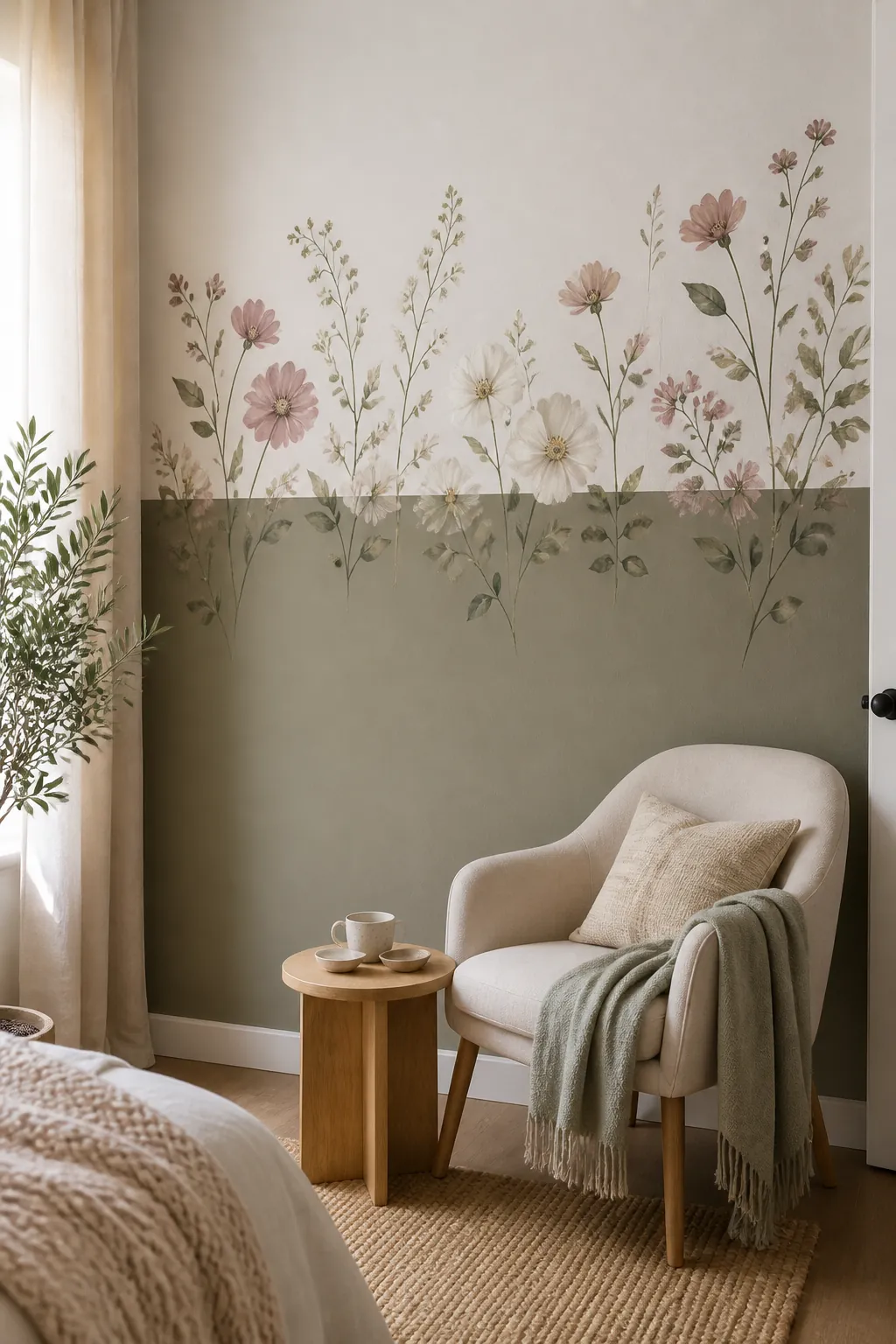
Plan Around Furniture Before You Peel the Backing
Decals are forgiving only until the adhesive touches the wall. Lay the pieces on the floor first and copy the wall proportions with painter’s tape if needed. The most common mistake is placing every bloom at eye level. Real rooms look better when the design has high, middle, and low points. That variation makes the arrangement feel closer to hand painted flowers on wall surfaces.
Use furniture as the anchor. Above a bed, keep the lowest flowers a few inches above the headboard so pillows do not visually crush the design. Behind a sofa, let the tallest stems rise beyond the back cushions. Around a vanity or dresser, keep enough blank space that the mirror, lamp, and hardware still feel important. The decals should support the room layout, not compete with every object in it.
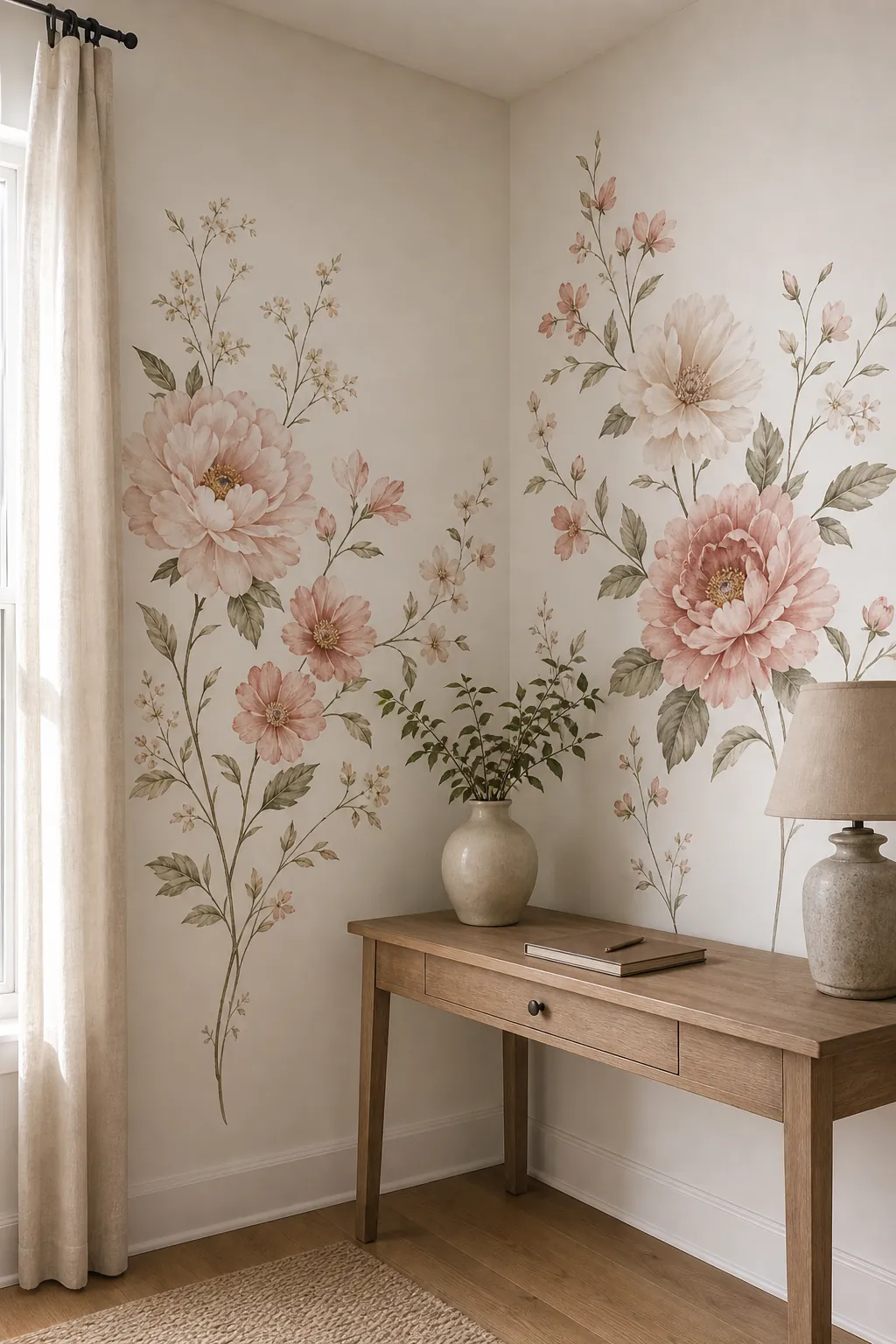
Use Cricut Wall Decals for Custom Details
Cricut wall decals are useful when you want a detail that off-the-shelf sets do not provide: a specific stem length, a monogram, a matching vine, or a small filler shape that completes a larger purchased floral set. Custom vinyl also works well for clean line-art botanicals, but it can look flat if every piece is the same color and size.
If you make your own decals, test one small piece behind a door or low on the wall first. Wall paint, texture, humidity, and adhesive strength all change how removable the final result feels. Use custom pieces as accents rather than covering an entire wall unless you have already tested the material. The best custom floral wall decals feel tailored, not improvised.
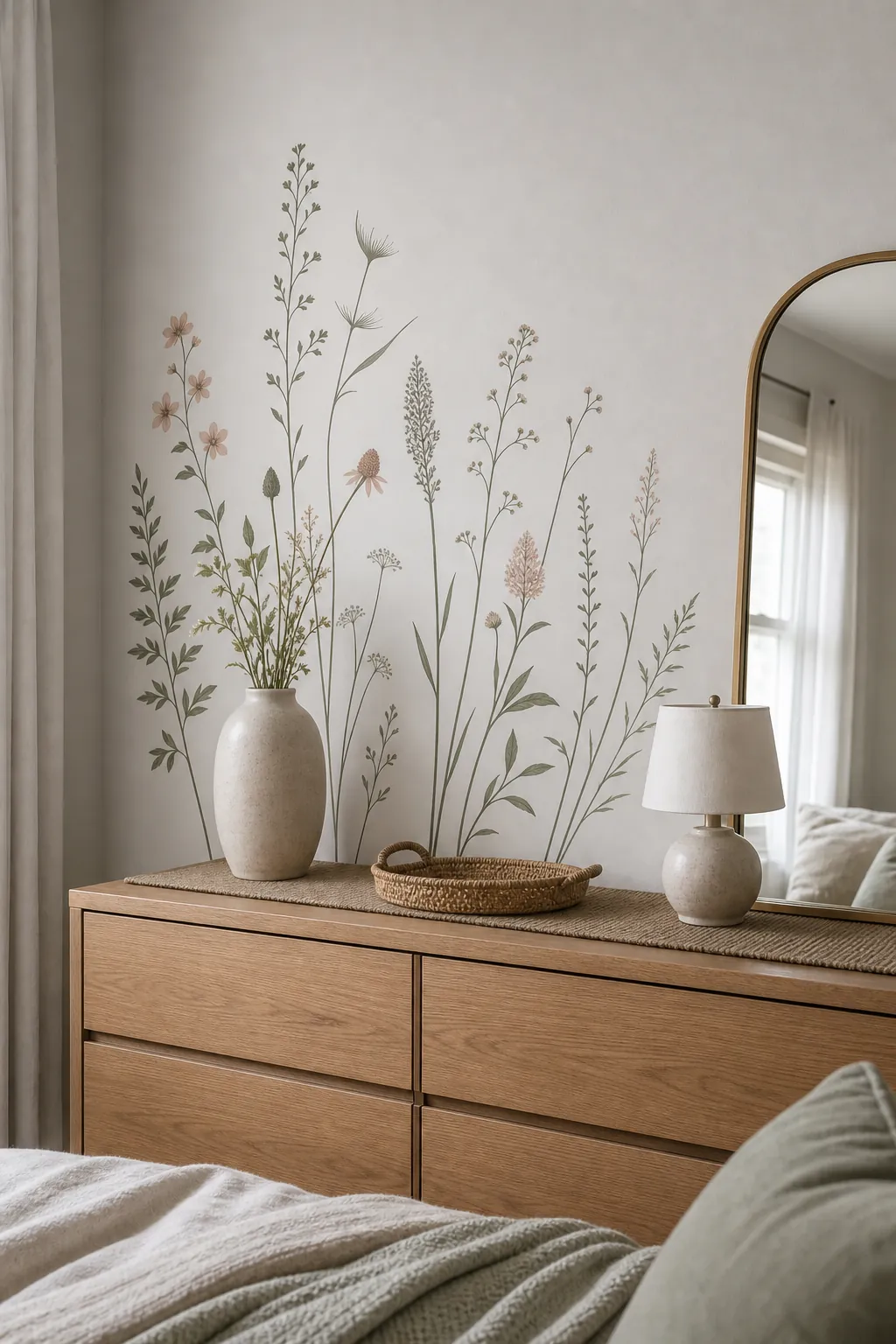
Make Wall Decals for Bedroom Spaces Feel Calm
Wall decals for bedroom spaces should lower visual noise. This is where softer spacing, muted color, and asymmetry help. A floral arch over the bed can replace a heavy headboard. A small branch above a nightstand can make an awkward blank corner feel finished. A loose spray of flowers beside a window can frame natural light without adding curtains or shelves.
Do not place the busiest part of the decal directly where your eyes land from the pillow. Bedrooms feel more restful when the dense flowers sit slightly off center or higher on the wall. If you want a stronger feature, repeat one color from the decals in a throw pillow, quilt, or vase. That small echo makes the floral wall decals look integrated with the room.
Check the Wall Surface Before You Commit
The biggest practical worry is removal. Some renters expect every peel-and-stick product to release cleanly, while homeowners worry about pulling up old paint. Both concerns are valid. Decals behave best on smooth, clean, fully cured paint. Fresh paint should be given time to cure before any adhesive is applied. Heavy texture, dusty walls, damp rooms, and failing paint all make the result less predictable.
Before installing a full set, press a small test piece in a hidden spot and leave it for a few days. Remove it slowly with low heat from a hair dryer if needed. Avoid yanking the vinyl straight out from the wall; pull it back on itself at a low angle. A beautiful decal layout is not worth damaged paint, so test first and install slowly.
Keep the Final Look Edited
The best floral wall decals usually stop earlier than expected. Install the anchor pieces first, step back, and live with the wall for a few minutes before adding every small bloom and leaf. A few unused extras are not a failure. They are often what keeps the wall from tipping into clutter.
If the room already has patterned bedding, a gallery wall, or colorful rugs, let the decals be quieter. If the room is plain, the flowers can carry more scale. The goal is not to prove that the wall is decorated. The goal is to make the room feel as if the florals always belonged there.